POLICY 2419 REGULATIONS FOR THE EDUCATION OF STUDENTS







- Slides: 167
POLICY 2419: REGULATIONS FOR THE EDUCATION OF STUDENTS WITH EXCEPTIONALITIES SUMMARY OF REVISIONS September 2017
Filing Date: July 13, 2017 Effective Date: August 14, 2017 Policy 2419 Is To Be Adopted By Each District’s Board of Education. 2
Background § Revised to bring into compliance with: Ø Every Student Succeeds Act (ESSA); Ø Workforce Innovation and Opportunity Act (WIOA); Ø Federal guidance on Dispute Resolution; and Ø West Virginia College- and Career-Readiness Standards. § Repealed Policy 2419. 11: Rules For Requesting An Exception To The Regulations For The Education of Students with Exceptionalities and incorporated in Policy 2419. § Clarified existing policy. 3
Every Student Succeeds Act (ESSA) • Removed references to No Child Left Behind (NCLB) and Elementary and Secondary Education Act (ESEA). • Removed highly qualified personnel references. • Added State-Defined Alternate Diploma. 4
5
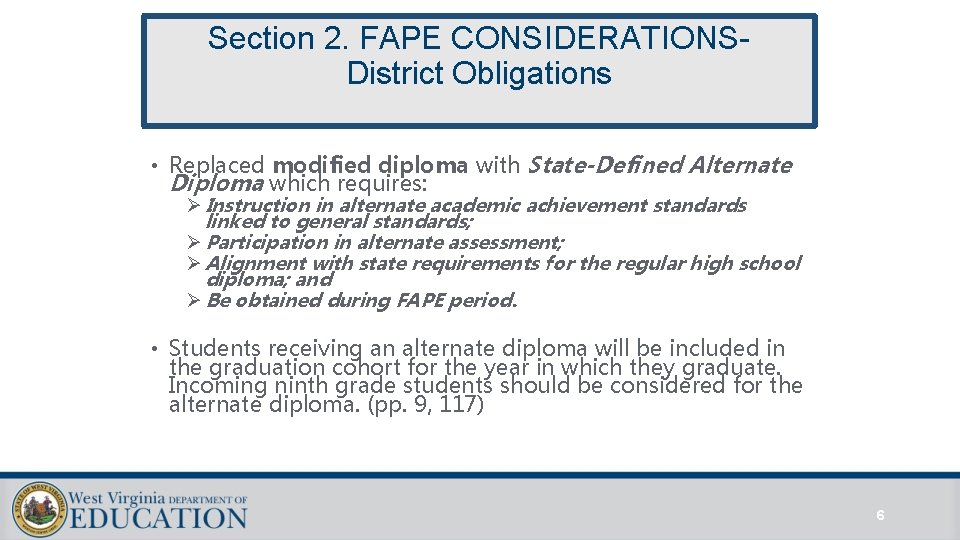
Section 2. FAPE CONSIDERATIONSDistrict Obligations • Replaced modified diploma with State-Defined Alternate Diploma which requires: Ø Instruction in alternate academic achievement standards linked to general standards; Ø Participation in alternate assessment; Ø Alignment with state requirements for the regular high school diploma; and Ø Be obtained during FAPE period. • Students receiving an alternate diploma will be included in the graduation cohort for the year in which they graduate. Incoming ninth grade students should be considered for the alternate diploma. (pp. 9, 117) 6
Requirement #1 Be Standards Based 7
Be Standards Based • Students should have the opportunity to learn academic content based on grade-level content standards. • Students should have the opportunity to learn the same curriculum as their peers without disabilities, one that is “based on the State’s academic content standards” for the grade in which a student is enrolled. • Access to grade-level content is provided with reduced complexity and breadth, and mastered in different ways as measured by standards-based alternate assessment. 8
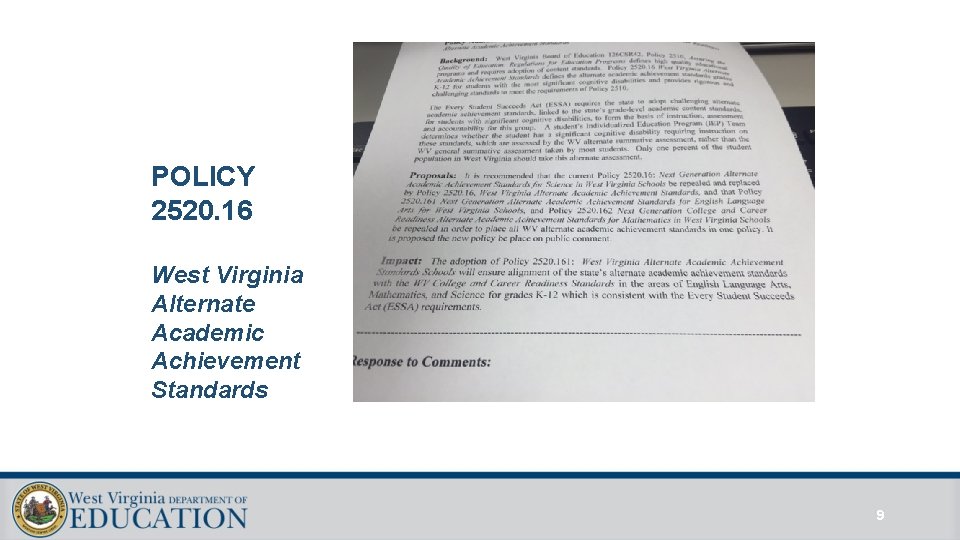
POLICY 2520. 16 West Virginia Alternate Academic Achievement Standards 9
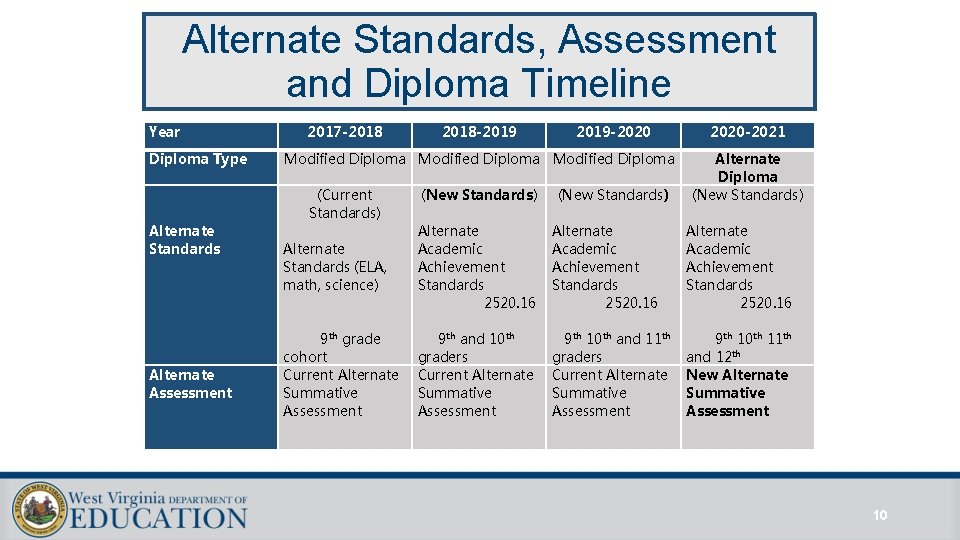
Alternate Standards, Assessment and Diploma Timeline Year Diploma Type Alternate Standards Alternate Assessment 2017 -2018 -2019 -2020 Modified Diploma (Current Standards) (New Standards) 2020 -2021 Alternate Diploma (New Standards) Alternate Standards (ELA, math, science) Alternate Academic Achievement Standards 2520. 16 9 th grade cohort Current Alternate Summative Assessment 9 th and 10 th graders Current Alternate Summative Assessment 9 th 10 th and 11 th graders Current Alternate Summative Assessment 9 th 10 th 11 th and 12 th New Alternate Summative Assessment 10
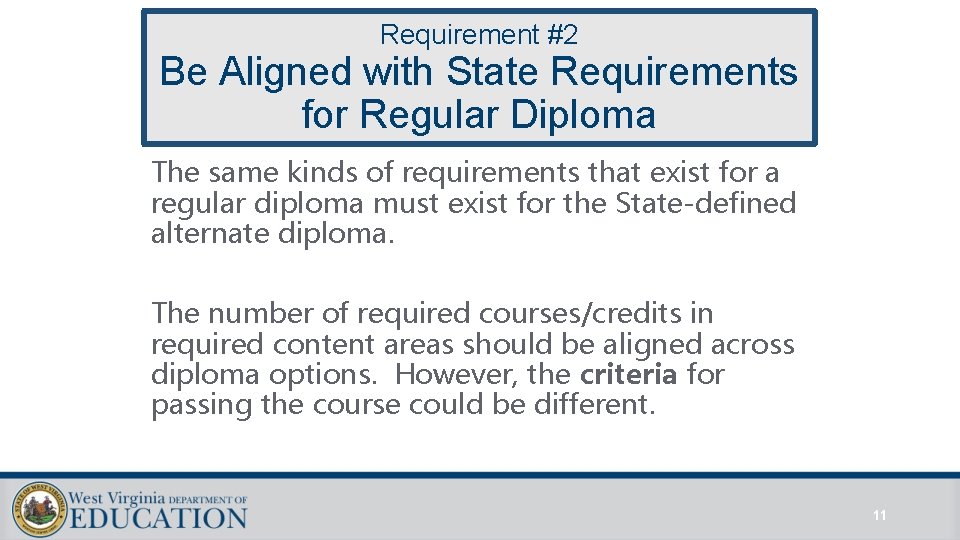
Requirement #2 Be Aligned with State Requirements for Regular Diploma The same kinds of requirements that exist for a regular diploma must exist for the State-defined alternate diploma. The number of required courses/credits in required content areas should be aligned across diploma options. However, the criteria for passing the course could be different. 11
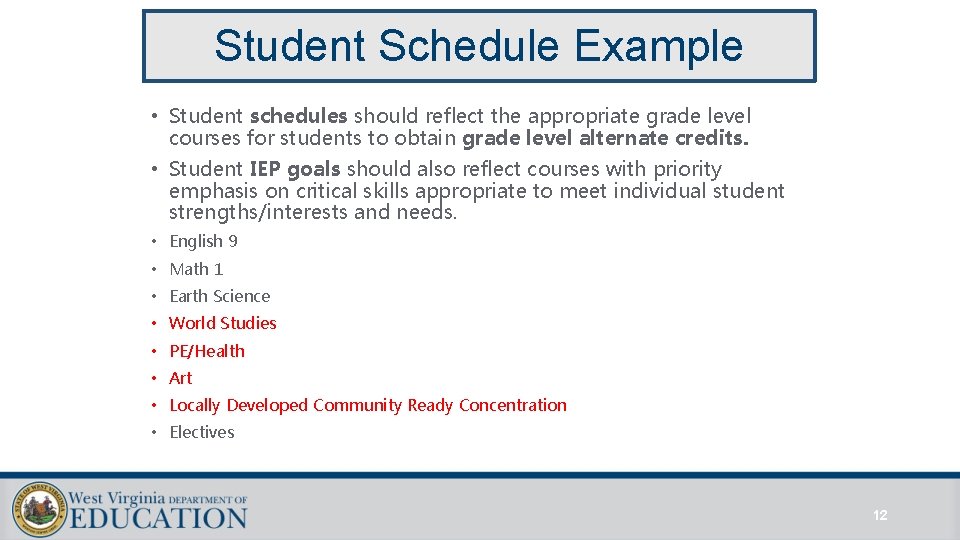
Student Schedule Example • Student schedules should reflect the appropriate grade level courses for students to obtain grade level alternate credits. • Student IEP goals should also reflect courses with priority emphasis on critical skills appropriate to meet individual student strengths/interests and needs. • English 9 • Math 1 • Earth Science • World Studies • PE/Health • Art • Locally Developed Community Ready Concentration • Electives 12
What about the other courses? 13
Requirement #3 Be Obtained During FAPE Period The alternate diploma must be obtained within the time period for which the state ensures the availability of FAPE 14
Workforce Innovation and Opportunity Act (WIOA) • Added Pre-Employment Transition Services. • Included WV Division of Rehabilitation Services in student transition services. • Removed sheltered workshops as transition option. • Added developing transition services prior to 16 years. 15
How does the Vocational Rehabilitation PROGRAM RELATE TO STUDENTS? 16
Workforce Innovation and Opportunity Act § Federal legislation passed July 2014 § Affected Vocational Rehabilitation, Adult Education, and Workforce programs; State Plan now requires all three partners to write a Unified State Plan. § Tremendous focus on services to ‘students’ and ‘youth’ with disabilities § Required and Authorized activities § Pre-Employment Transition Services 17
“Student with a Disability” • Defined by WIOA as individuals with disabilities aged 14 -21, who are currently enrolled in an educational program. • Receiving services under an IEP or a 504 Plan as a result of a disability. Student may also have a disability, but has neither an IEP or 504 Plan. 18
Pre Employment Transition Services • Services provided in collaboration with local educational agencies for all students with disabilities who are eligible or potentially eligible for VR services, and in need of such services. • Can be provided in group settings or to individuals 19
Five Required Activities § Job exploration counseling § Work-based learning experiences (both in-school or after school), provided in an integrated environment to the maximum extent possible, does include internships § Counseling on opportunities for postsecondary training § Job readiness skills training to develop social and independent living skills § Self-advocacy instruction 20
Pre-employment transition services (Examples) § Assessments, including Career Assessment Inventory, Vocational Evaluation, Community-Based Assessment, Work Skills Assessment § Job Shadowing, including POWER and virtual, for the purpose of Career Exploration § Work Exploration opportunities (some schools have such programs already) § Labor Market information exploration § Introduction to Workforce WV 21
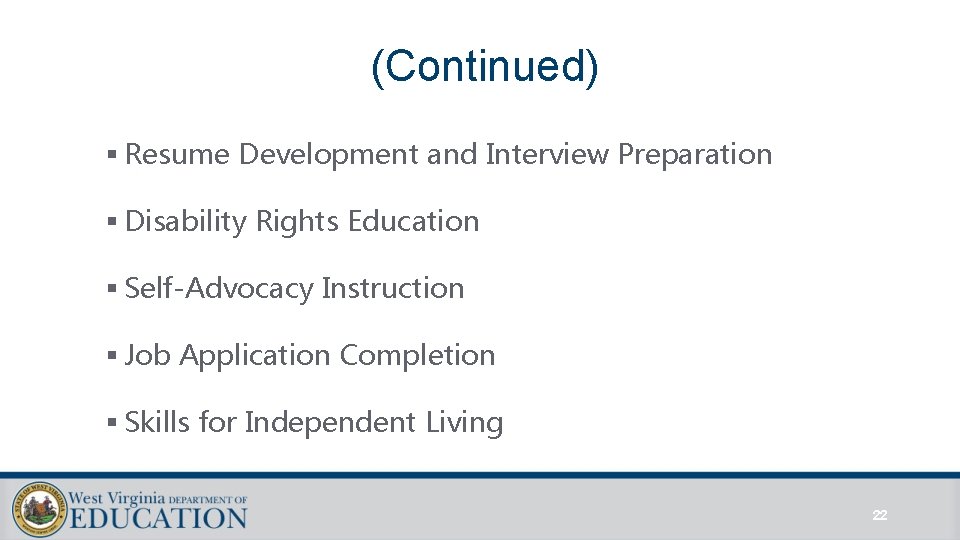
(Continued) § Resume Development and Interview Preparation § Disability Rights Education § Self-Advocacy Instruction § Job Application Completion § Skills for Independent Living 22
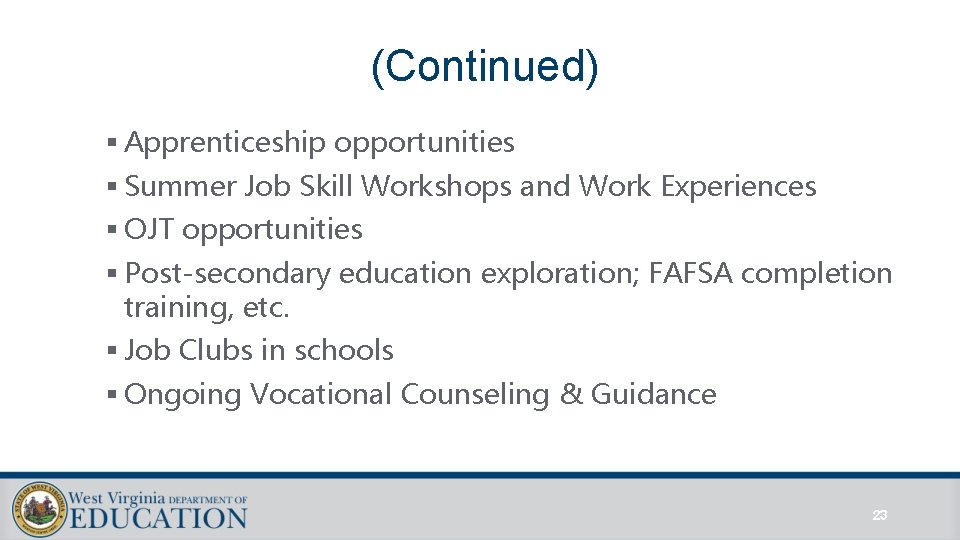
(Continued) § Apprenticeship opportunities § Summer Job Skill Workshops and Work Experiences § OJT opportunities § Post-secondary education exploration; FAFSA completion training, etc. § Job Clubs in schools § Ongoing Vocational Counseling & Guidance 23
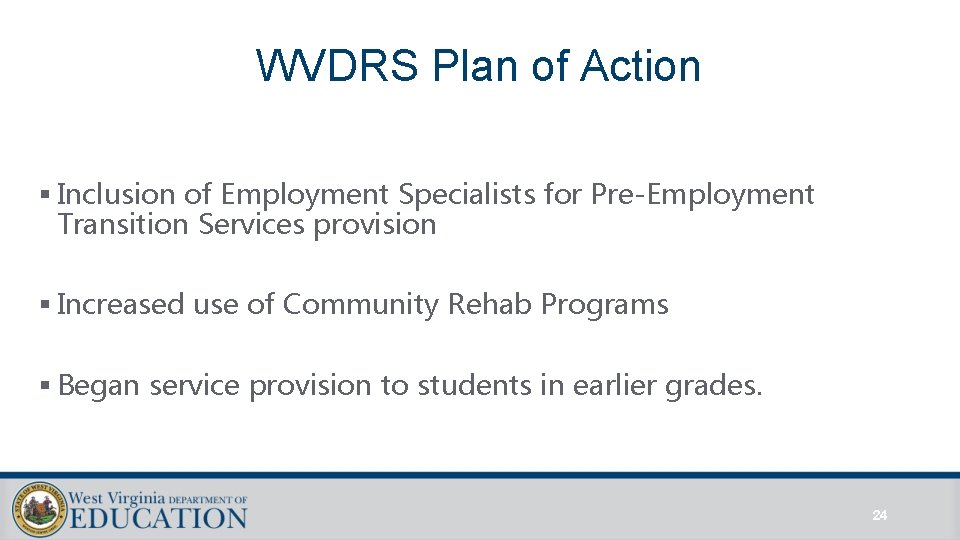
WVDRS Plan of Action § Inclusion of Employment Specialists for Pre-Employment Transition Services provision § Increased use of Community Rehab Programs § Began service provision to students in earlier grades. 24
Pathways to the Future 25
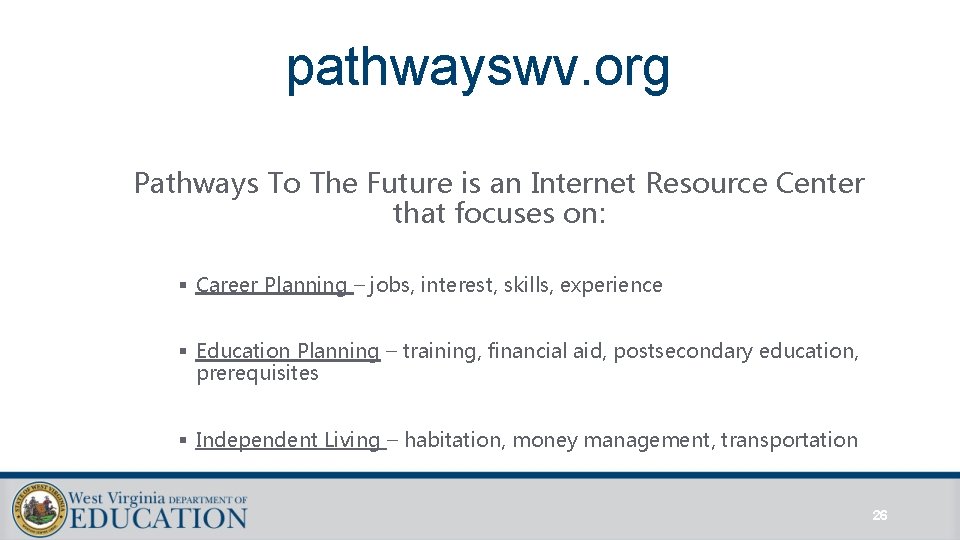
pathwayswv. org Pathways To The Future is an Internet Resource Center that focuses on: § Career Planning – jobs, interest, skills, experience § Education Planning – training, financial aid, postsecondary education, prerequisites § Independent Living – habitation, money management, transportation 26
Purchased Pre-employment Transition Services § Individualized and intensive Pre-ETS services must be authorized by the client’s DRS Counselor. § The DRS Counselor and the client jointly determine the need for the particular service. The service is added to the client’s Individualized Plan for Employment, and a referral for the service is sent to the vendor/provider. 27
College- and Career-Readiness Standards • Replaced West Virginia Content Standards and Objectives with West Virginia College- and Career-Readiness Standards. • Changed ESEA reading components to ELA College- and Career. Readiness Standards-Reading Foundations-Fluency, Phonics and Word Recognition, Phonological Awareness and Print Concepts. • Changed WESTEST 2 to General Summative Assessment. • Changed APTA to Alternate Summative Assessment. 28
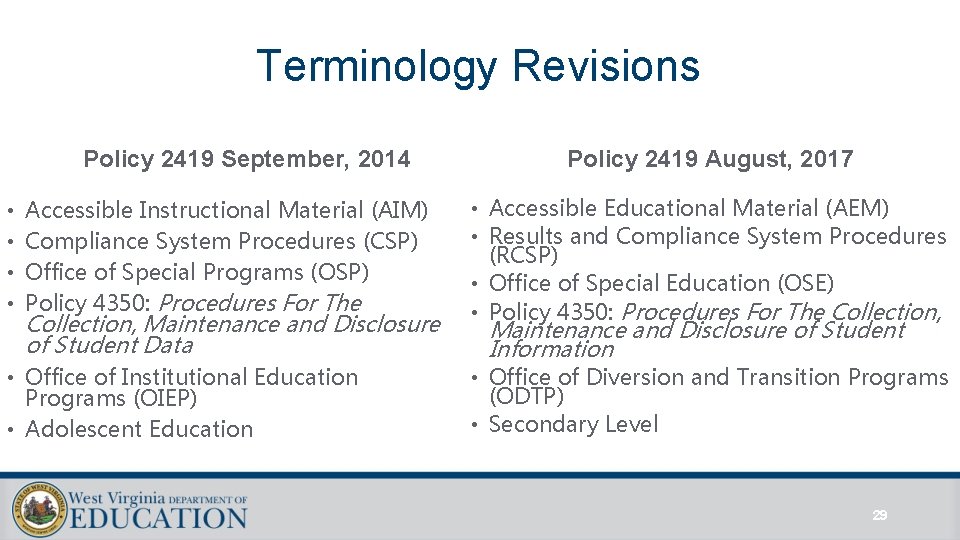
Terminology Revisions Policy 2419 September, 2014 • • Accessible Instructional Material (AIM) Compliance System Procedures (CSP) Office of Special Programs (OSP) Policy 4350: Procedures For The Collection, Maintenance and Disclosure of Student Data • Office of Institutional Education Programs (OIEP) • Adolescent Education Policy 2419 August, 2017 • Accessible Educational Material (AEM) • Results and Compliance System Procedures (RCSP) • Office of Special Education (OSE) • Policy 4350: Procedures For The Collection, Maintenance and Disclosure of Student Information • Office of Diversion and Transition Programs (ODTP) • Secondary Level 29
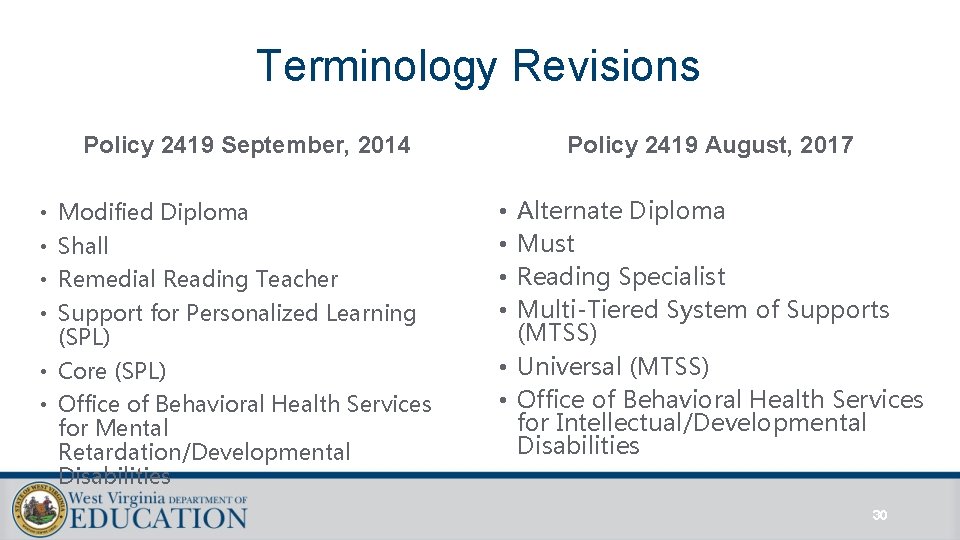
Terminology Revisions Policy 2419 September, 2014 • Modified Diploma • Shall • Remedial Reading Teacher • Support for Personalized Learning (SPL) • Core (SPL) • Office of Behavioral Health Services for Mental Retardation/Developmental Disabilities Policy 2419 August, 2017 Alternate Diploma Must Reading Specialist Multi-Tiered System of Supports (MTSS) • Universal (MTSS) • Office of Behavioral Health Services for Intellectual/Developmental Disabilities • • 30
CHAPTER 1 Free Appropriate Public Education (FAPE) 31
Section 2. FAPE CONSIDERATIONSDistrict Obligations • Replaced modified diploma with State-Defined Alternate Diploma which requires: ØInstruction in alternate academic achievement standards based on general standards; ØParticipation in alternate assessment; ØAlignment with state requirements for the regular high school diploma; and ØBe obtained during FAPE period. • Students receiving an alternate diploma will be included in the graduation cohort for the year in which they graduate. Incoming ninth grade students should be considered for the alternate diploma. (pp. 9, 117) 32
Section 2. FAPE CONSIDERATIONS-Using Private and Public Insurance Funds to Provide FAPE • Clarified parental consent means agreement to access Medicaid. • Changed one-time parental consent to access Medicaid to annual prior consent. • When student moves to another district a new annual prior consent must be obtained. (p. 11)
Section 3. Exceptions to FAPE • Removed that FAPE obligation does not apply to three through five year old students who receive services from West Virginia Birth to Three program. • Added no obligation of FAPE for students who are homeschooled. SB 630 requires students participating in a virtual instruction program to enroll in public school. Home schooled students are not enrolled in public school and not entitled to FAPE. (p. 12) 34
CHAPTER 2 Child Find 35
Section 3. Referrals • Added a member of the SAT must provide written assistance to parents who may need additional help to complete the referral. (p. 14) • SAT members are to receive training in the Multi-Tiered System of Supports (MTSS). (p. 14) • Added SAT’s responsibility to review persistent needs and allow parent review of recommendations regarding student’s program and provide feedback. (p. 15) 36
CHAPTER 3 Evaluation/Reevaluation 37
Section 2. Planning, Conducting and Timelines for a Multidisciplinary Evaluation • Clarified eighty-day timeline does not apply: ØIf parent repeatedly fails or refuses to produce student and ØParent and district must agree in writing that timeline will be extended when students change districts. (p. 18) • Revised timeline from 10 to 5 school days to request parent consent when additional evaluations requested by EC or IEPT. (p. 19) • Revised timeline from 10 to 5 days to provide prior written notice when parent requests additional evaluations. (p. 19) 38
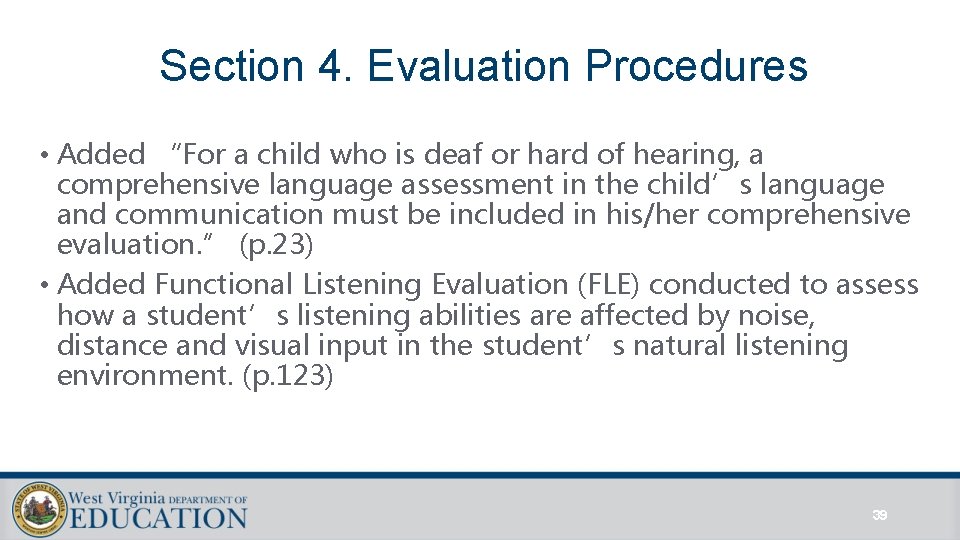
Section 4. Evaluation Procedures • Added “For a child who is deaf or hard of hearing, a comprehensive language assessment in the child’s language and communication must be included in his/her comprehensive evaluation. ” (p. 23) • Added Functional Listening Evaluation (FLE) conducted to assess how a student’s listening abilities are affected by noise, distance and visual input in the student’s natural listening environment. (p. 123) 39
CHAPTER 4 Eligibility 40
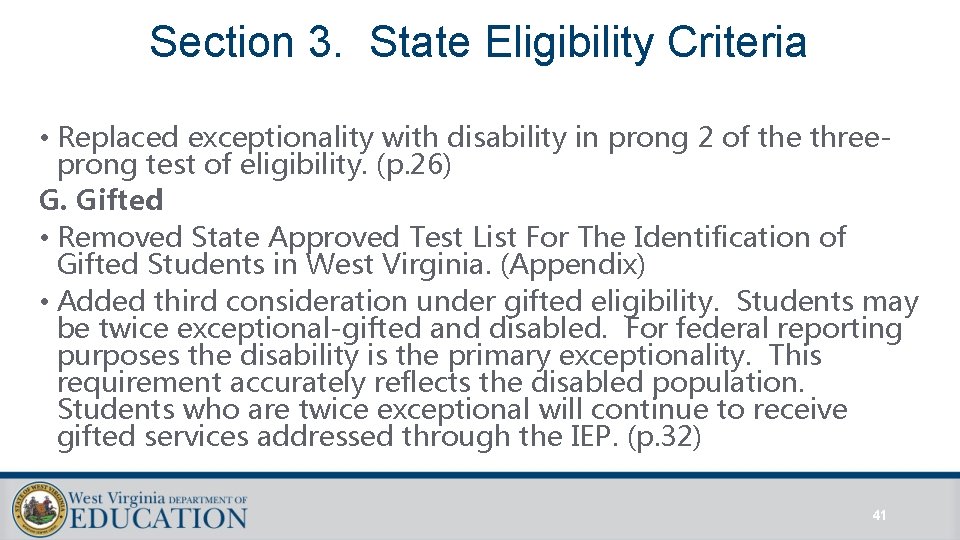
Section 3. State Eligibility Criteria • Replaced exceptionality with disability in prong 2 of the threeprong test of eligibility. (p. 26) G. Gifted • Removed State Approved Test List For The Identification of Gifted Students in West Virginia. (Appendix) • Added third consideration under gifted eligibility. Students may be twice exceptional-gifted and disabled. For federal reporting purposes the disability is the primary exceptionality. This requirement accurately reflects the disabled population. Students who are twice exceptional will continue to receive gifted services addressed through the IEP. (p. 32) 41
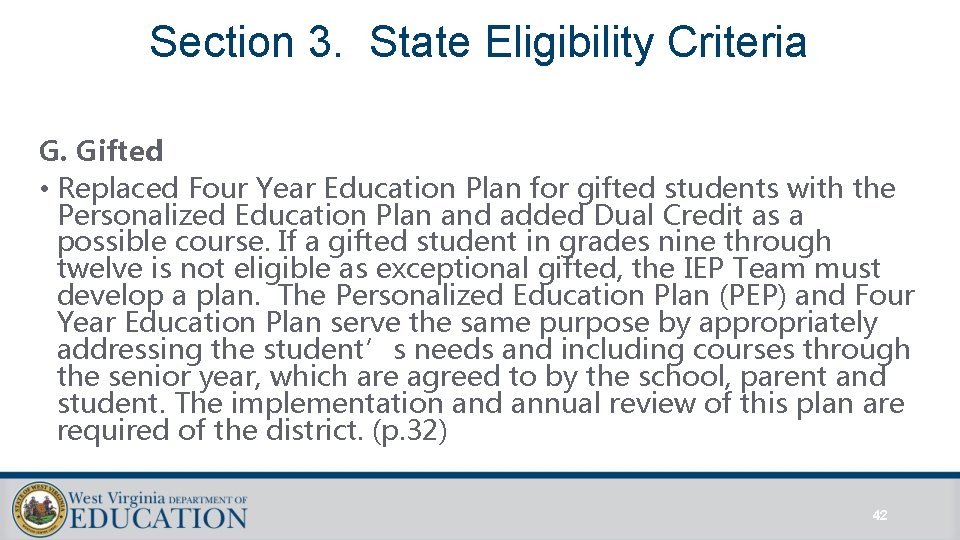
Section 3. State Eligibility Criteria G. Gifted • Replaced Four Year Education Plan for gifted students with the Personalized Education Plan and added Dual Credit as a possible course. If a gifted student in grades nine through twelve is not eligible as exceptional gifted, the IEP Team must develop a plan. The Personalized Education Plan (PEP) and Four Year Education Plan serve the same purpose by appropriately addressing the student’s needs and including courses through the senior year, which are agreed to by the school, parent and student. The implementation and annual review of this plan are required of the district. (p. 32) 42
I. Intellectual Disability • Revised Intellectual Disability by: ØDefining most significant cognitive disabilities (moderate to severe intellectual disability); ØAligning adaptive functioning with the DSM-5 requiring a student to exhibit concurrent deficits in one of the following domains: Conceptual, Social or Practical; ØRequiring an observation if intellectual functioning and adaptive functioning are inconsistent; and ØAdding Severity Levels for Adaptive Functioning. (p. 33) 43
Other Exceptionalities K. Other Health Impairment • Added ADHD diagnosis may be made by a school psychologist or licensed psychologist. (p. 34) L. Specific Learning Disability • Clarified when student participates in MTSS and receives targeted and/or intensive supports district must notify parents. (p. 36) M. Speech/Language Impairment • Replaced Articulation Development Chart with Articulation Development Norms. • Revised Suggested Guidelines for Stuttering Services for preschool and school-age students. (Appendix) 44
CHAPTER 5 Individualized Education Programs (IEPs) 45
Section 2. IEP Development C. Considerations • Removed Consideration 10 and provided Accessible Educational Materials (AEM) Guidance. (p. 51) E. Goals and/or Objectives • Added requirement that lack of progress in receptive or expressive language of deaf or hard of hearing student must be explained in Present Levels of Educational Achievement and Functional Performance and reflected in the Goals and Objectives. (p. 51) 46
F. Transition Services • Added Pre-Employment Transition Services (Pre-ETS) to be considered by the IEPT and provided by the school and Division of Rehabilitation Services to include: ØJob Exploration; ØWork-based learning; ØCounseling for transition and post-secondary programs; ØWorkplace readiness training; and ØSelf-advocacy training. (p. 52) • Added developing secondary transition services prior to 16 years with phase in to be in effect when: ØStudent is fifteen years old by July 1, 2018 and ØStudent is fourteen years old by July 1, 2019. (p. 52) 47
J. Least Restrictive Environment Considerations and Placement Decisions • Removed Note about reassignment of student not being a change of placement. (p. 56) K. Consent for Initial Placement and Revoking Consent • Moved revocation of consent rule which applies to revocation of all special education and related services. Consent cannot be revoked for a particular service. (p. 60) M. Following the Meeting • Read IEP further defined that teachers either “must participate in the meeting to develop the student’s IEP” or read and sign the IEP (Read IEP) and “make modifications for the student, if needed or identified, to help the student succeed in the class or program. ” (p. 61) 48
Section 4. IEPs for Transfer Students • Added that the district may temporarily adopt the previously held IEP from out-of-state until the district conducts an evaluation, if necessary, determines eligibility and develops and implements a new IEP. (p. 62) Section 5. IEPs for children from the West Virginia Birth to Three Program • Clarified IEP must be implemented by third birthday. (p. 63) 49
CHAPTER 6 Administration of Services 50
• Added the Federal Education Department General Accounting Rules requires districts to maintain records to show compliance with the IEP. (p. 65) 51
Section 4. Provisions of Staff-Adequate Staff Class Size Requirements for Instructional Period • Moved from Integrated Classrooms section to Class Size Requirements for Instructional Period section the suggestion that the special educator should meet with the “general educator on a consistent basis to provide support to the students and the general educator. ” (p. 67) 52
• Defined integrated classrooms. Integration occurs in general education when students with exceptional needs are provided required accommodations (supplementary aids and services). Added to policy students requiring accommodations must not exceed 30% of the total class enrollment in the four core academic subjects; i. e. English language arts, science, social studies and math. (p. 68) • Defined co-taught classrooms as two professionals in a single space and added students requiring specially designed instruction (special education) must not exceed 50% of the total class enrollment. (p. 68) • Revised for the co-taught classroom the special educator should not be assigned to more than one co-teaching classroom during one instructional block. (p. 68) 53
Special Education Classrooms for Students with Disabilities LEVEL I NEEDS • Added to Students with Level I needs WV Division of Rehabilitation Services and adult community providers. (p. 68) • For Students with Level I needs on page 69 Note: Close adult supervision may be provided on a temporary or occasional basis to students with Level I needs who are experiencing unique medical needs, specific short-term difficulties or when the close adult supervision is being faded for students previously identified with Level II needs. 54
LEVEL II & III NEEDS • Added to Students with Level II needs community-based work exploration, WV Division of Rehabilitation Services and adult community providers and removed sheltered workshops. (p. 69) • Removed “Optional” and added Division of Rehabilitation Services to Students with Level III needs. (p. 69) 55
Maximum Number of Students per Instructional Period Based on Level of Service • Changed Level I Service Needs for Early Learning Programs Grades K-5: ØK-2 remains 1 instructor to 6 students and Ø 3 -5 changed to 1 instructor to 8 students. (p. 70) 56
CHAPTER 7 Discipline 57
Section 3. Additional Disciplinary Considerations. A. Requesting an Expedited Hearing • Moved Section 2. D pertaining to requesting an expedited hearing to remove a student to an Interim Alternative Educational Setting (IAES), to 3. A. • Added and amended content of 2. D to Section 3. A: Requesting an Expedited Hearing to mirror language in federal regulations, including: Øall applicable timelines for resolution session, disclosure of evidence, due process hearing and DPHO’s decision; and Øthat a DPHO may either return the student to the original placement or order a change of placement to IAES for not more than 45 days. (p. 77) 58
CHAPTER 8 Private School Students 59
Section 2. Students Voluntarily Enrolled by a Parent-I. Dispute Resolution • Moved Section 2. D, regarding a private school official’s right to file a state complaint to section 2. I. Dispute Resolution. • Added to section 2. I, a private school parent’s right to file a state complaint and the opportunity to voluntarily engage in mediation to resolve the matter. • New section 2. I reflects language in federal regulations. (p. 83) 60
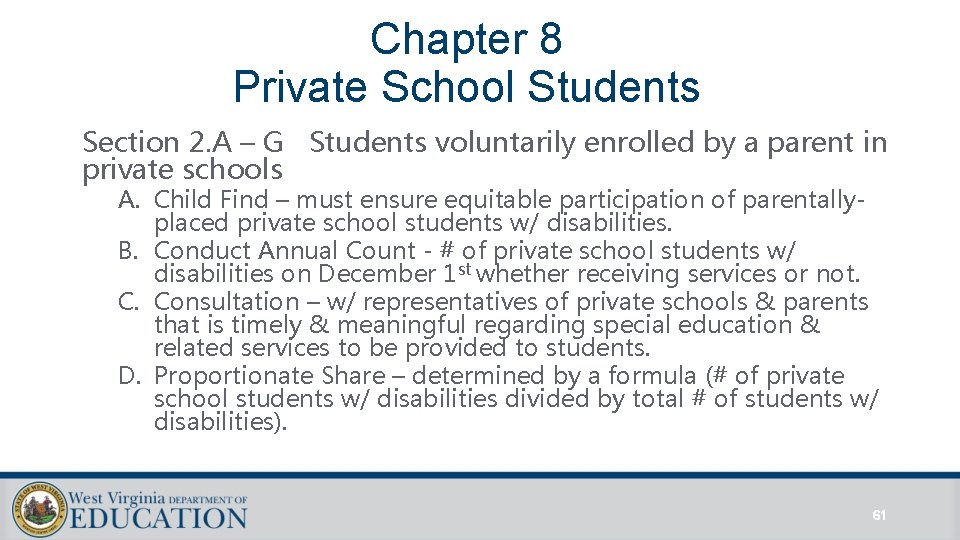
Chapter 8 Private School Students Section 2. A – G Students voluntarily enrolled by a parent in private schools A. Child Find – must ensure equitable participation of parentallyplaced private school students w/ disabilities. B. Conduct Annual Count - # of private school students w/ disabilities on December 1 st whether receiving services or not. C. Consultation – w/ representatives of private schools & parents that is timely & meaningful regarding special education & related services to be provided to students. D. Proportionate Share – determined by a formula (# of private school students w/ disabilities divided by total # of students w/ disabilities). 61
CHAPTER 9 General Supervision and Accountability for Performance and Compliance 62
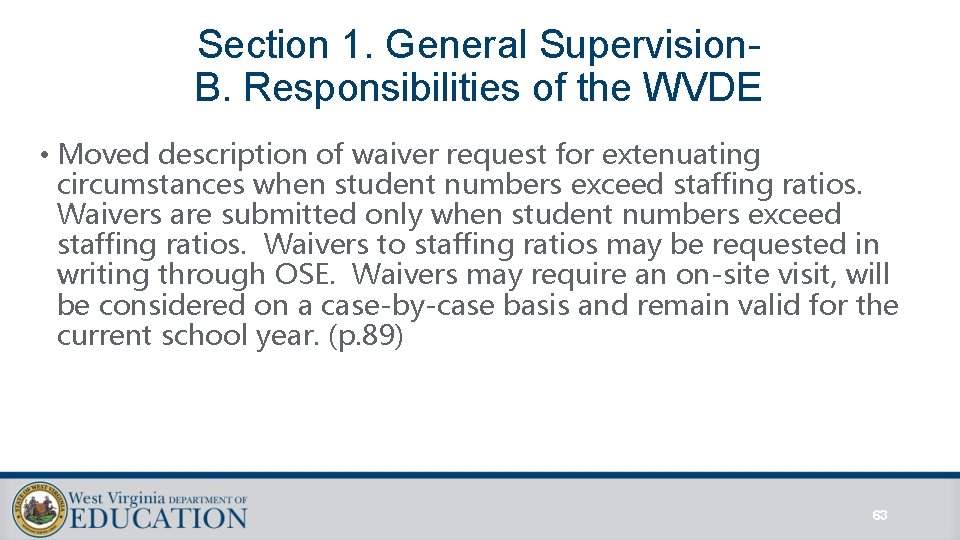
Section 1. General Supervision. B. Responsibilities of the WVDE • Moved description of waiver request for extenuating circumstances when student numbers exceed staffing ratios. Waivers are submitted only when student numbers exceed staffing ratios. Waivers to staffing ratios may be requested in writing through OSE. Waivers may require an on-site visit, will be considered on a case-by-case basis and remain valid for the current school year. (p. 89) 63
CHAPTER 11 Dispute Resolution 64
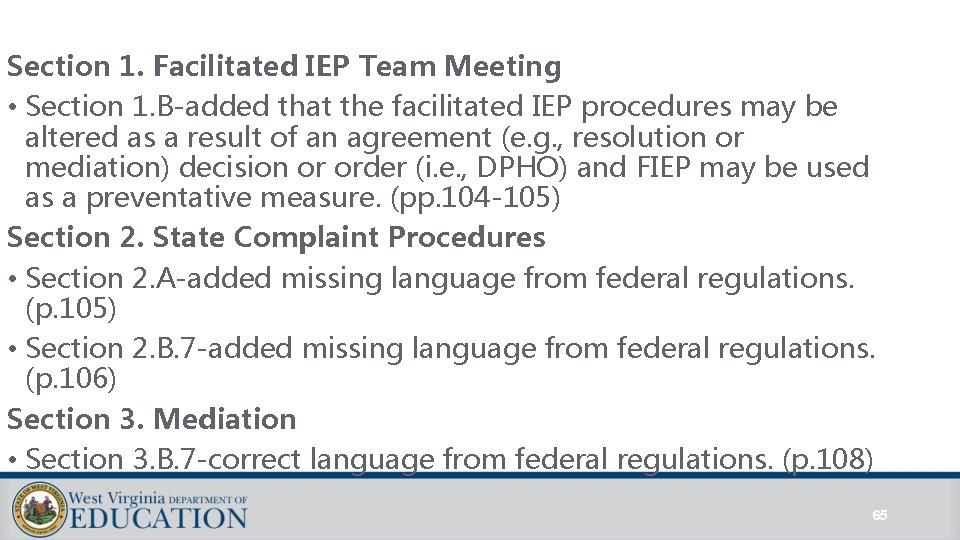
Section 1. Facilitated IEP Team Meeting • Section 1. B-added that the facilitated IEP procedures may be altered as a result of an agreement (e. g. , resolution or mediation) decision or order (i. e. , DPHO) and FIEP may be used as a preventative measure. (pp. 104 -105) Section 2. State Complaint Procedures • Section 2. A-added missing language from federal regulations. (p. 105) • Section 2. B. 7 -added missing language from federal regulations. (p. 106) Section 3. Mediation • Section 3. B. 7 -correct language from federal regulations. (p. 108) 65
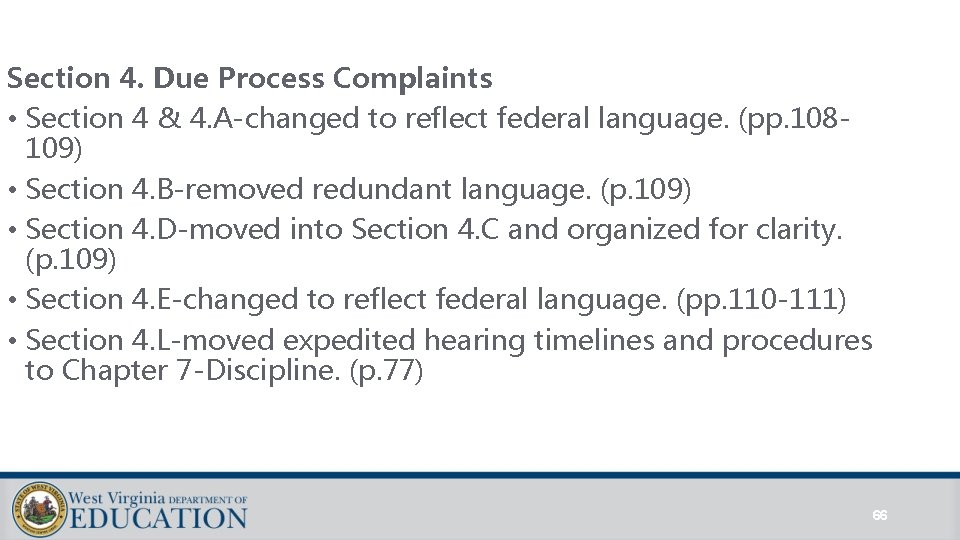
Section 4. Due Process Complaints • Section 4 & 4. A-changed to reflect federal language. (pp. 108109) • Section 4. B-removed redundant language. (p. 109) • Section 4. D-moved into Section 4. C and organized for clarity. (p. 109) • Section 4. E-changed to reflect federal language. (pp. 110 -111) • Section 4. L-moved expedited hearing timelines and procedures to Chapter 7 -Discipline. (p. 77) 66
Facilitated IEP (FIEP) Team Meetings Goals of the FIEP Team Meeting: • Develop an IEP that is supported by the team and benefits the student. • Build & improve relationships among IEP Team members, especially when conflicts arise. • Encourage parents and district personnel to consider new ways to address unresolved issues. • Prevent disagreements and avoid other dispute resolution processes. 67
Facilitated IEP Team Meeting Process • • • Parent(s) or district representative requests an FIEP. The Office of Federal Program (OFP) documents the other party’s agreement (parent(s) & district must agree to have a FIEP Team meeting). The OFP assigns a facilitator. Assigned facilitator contacts parent(s) & district representative to schedule the FIEP Team meeting at a mutually agreed upon time & place, unless an IEP Team meeting has already been scheduled. Convene the FIEP & document final decisions in the IEP. 68
Facilitator’s Role The facilitator: • Develops the agenda and ground rules with the team members; • Maintains open communication among team members; • Guides discussion by asking student-focused questions; • Remains neutral; and • Assists the team to find effective solutions to identified problems; and • Ensures the IEP documents all final decisions made by the IEP Team. 69
State Complaint Process Who may file? Any interested person from in or out of state. What should a complaint include? 1) a written allegation of a violation that occurred not more than 1 year prior to the date it is filed; 2) the state or federal law or regulation that has been violated; 3) signature of the complainant; 4) the facts on which the allegation is based; 5) the name and address of the student and the name of the school district; and 6) a proposed resolution to the issue. *A State Complaint must be forwarded to the school district. 70
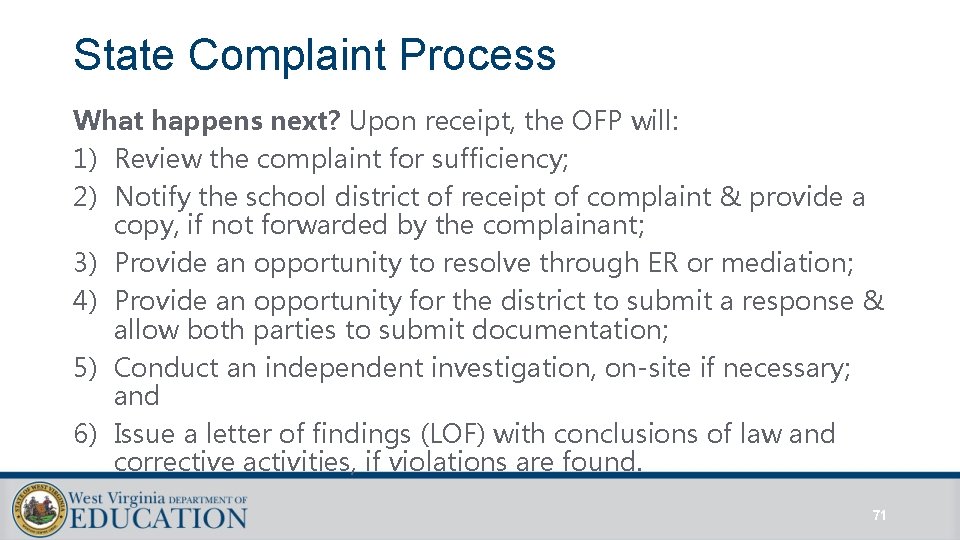
State Complaint Process What happens next? Upon receipt, the OFP will: 1) Review the complaint for sufficiency; 2) Notify the school district of receipt of complaint & provide a copy, if not forwarded by the complainant; 3) Provide an opportunity to resolve through ER or mediation; 4) Provide an opportunity for the district to submit a response & allow both parties to submit documentation; 5) Conduct an independent investigation, on-site if necessary; and 6) Issue a letter of findings (LOF) with conclusions of law and corrective activities, if violations are found. 71
Mediation Process Mediation is: • Informal, non-adversarial, confidential & voluntary. • Requested by either party. • Administered by an qualified & impartial third party. • Held at a time & place mutually agreed upon. • Utilized to resolve a specific issue(s), a state complaint or due process hearing. • Free to the parties. *If resolved, results in a legally binding settlement agreement. 72
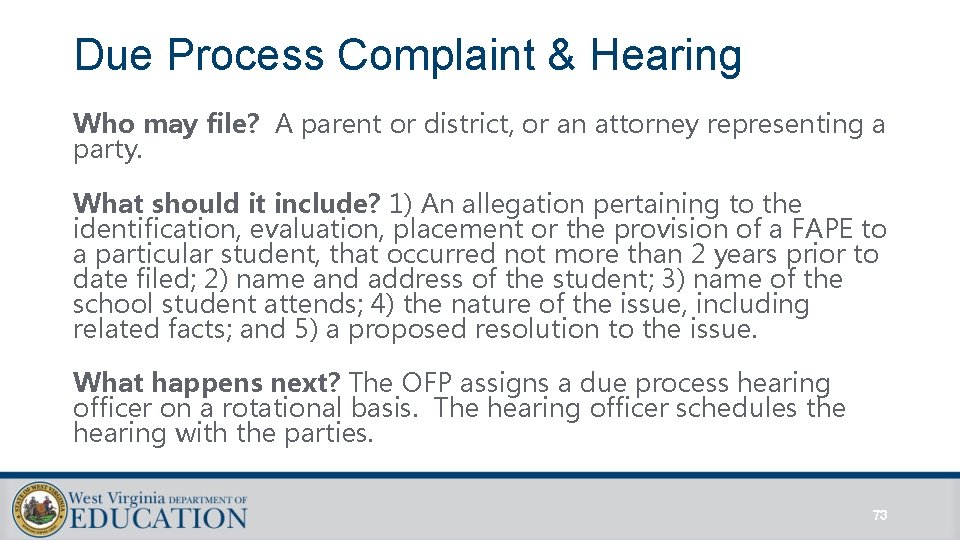
Due Process Complaint & Hearing Who may file? A parent or district, or an attorney representing a party. What should it include? 1) An allegation pertaining to the identification, evaluation, placement or the provision of a FAPE to a particular student, that occurred not more than 2 years prior to date filed; 2) name and address of the student; 3) name of the school student attends; 4) the nature of the issue, including related facts; and 5) a proposed resolution to the issue. What happens next? The OFP assigns a due process hearing officer on a rotational basis. The hearing officer schedules the hearing with the parties. 73
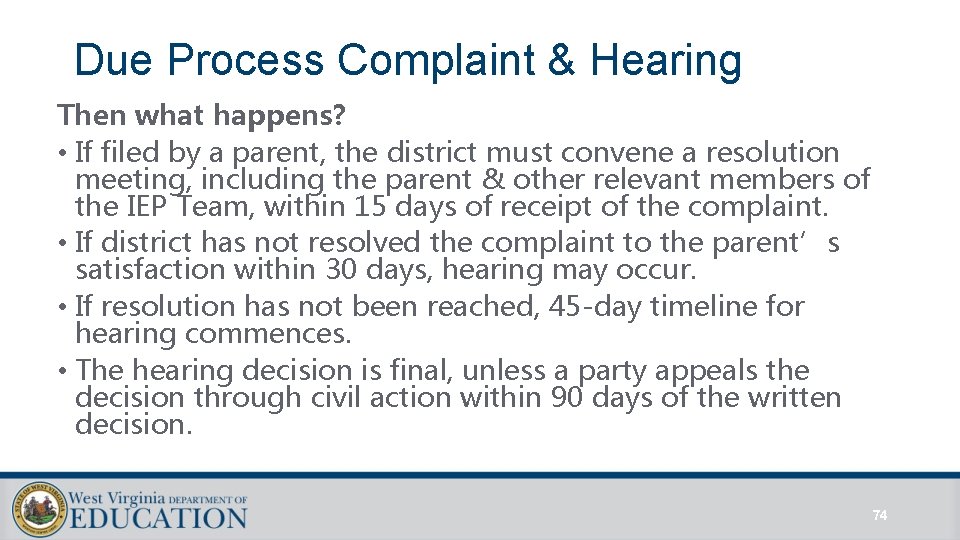
Due Process Complaint & Hearing Then what happens? • If filed by a parent, the district must convene a resolution meeting, including the parent & other relevant members of the IEP Team, within 15 days of receipt of the complaint. • If district has not resolved the complaint to the parent’s satisfaction within 30 days, hearing may occur. • If resolution has not been reached, 45 -day timeline for hearing commences. • The hearing decision is final, unless a party appeals the decision through civil action within 90 days of the written decision. 74
GLOSSARY • Added State-Defined Alternate Diploma (p. 117), Significant Cognitive Disabilities (p. 134), Functional Listening Evaluation (FLE) (p. 123) and Pre-Employment Transition Services (p. 131). 75
APPENDIX • Appendices supplement the body of the manual and are not to be adopted as, or considered to be, policy. (pp. 142 -152) 76
* With Prefilled Demographics!!!* Fillable Forms
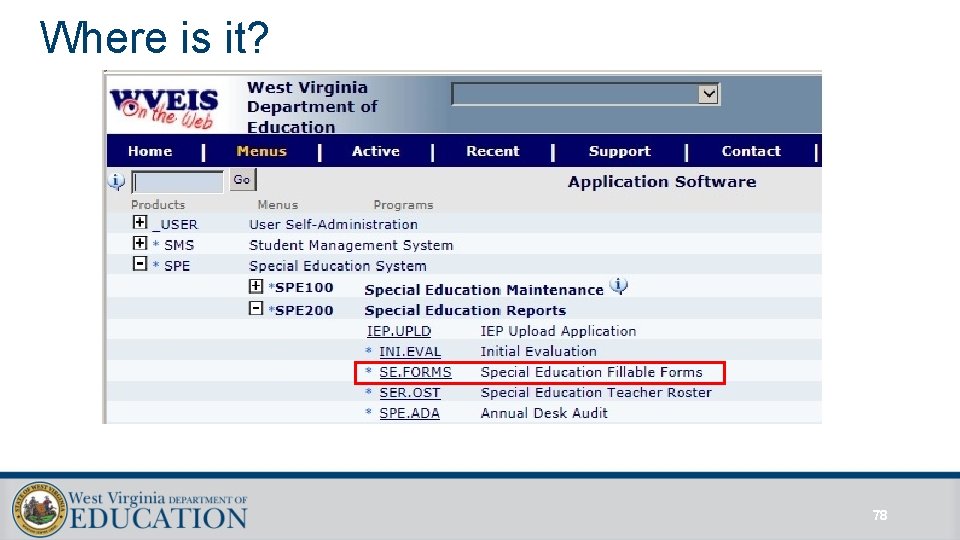
Where is it? 78
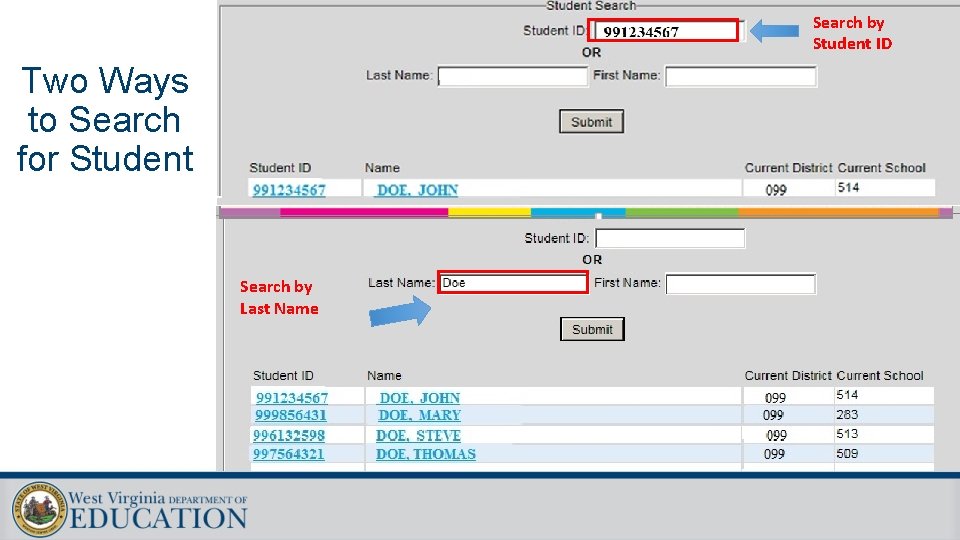
Begin by clicking on Student Search 79
Search by Student ID Two Ways to Search for Student Search by Last Name
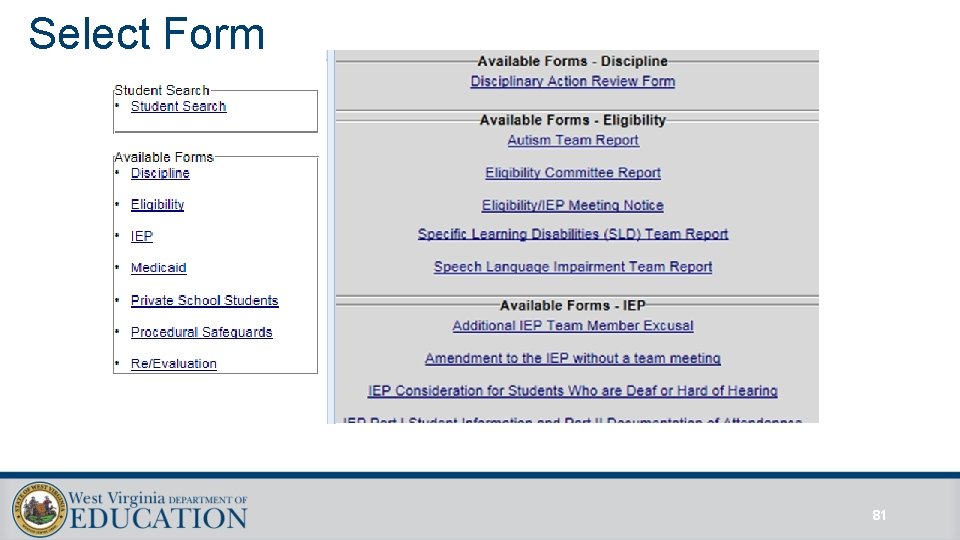
Select Form 81
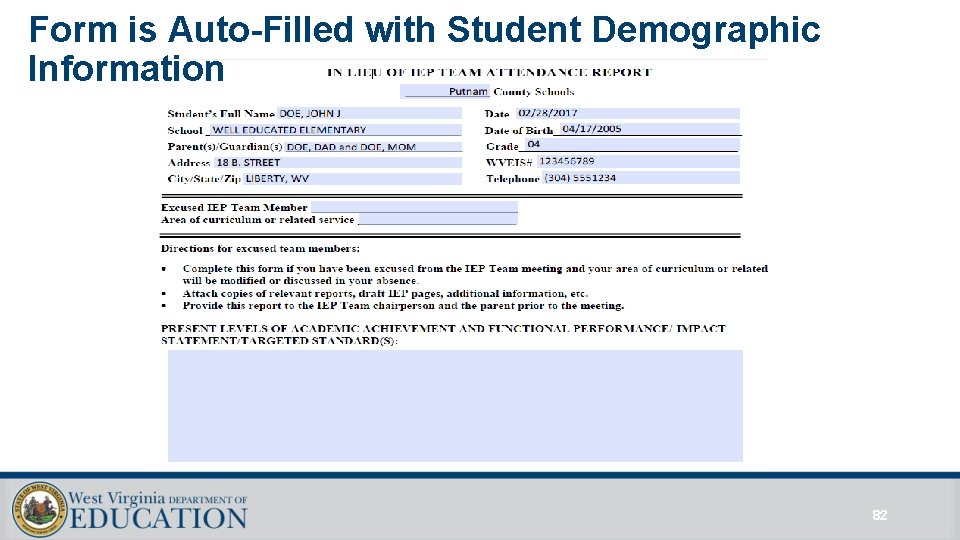
Form is Auto-Filled with Student Demographic Information 82
http: //wvde. state. wv. us/osp/compliance/IDEAProcess. Forms. html Fillable forms with accompanying instructions are also found on the WVDE Special Education website. No data is auto-filled on these forms. 83
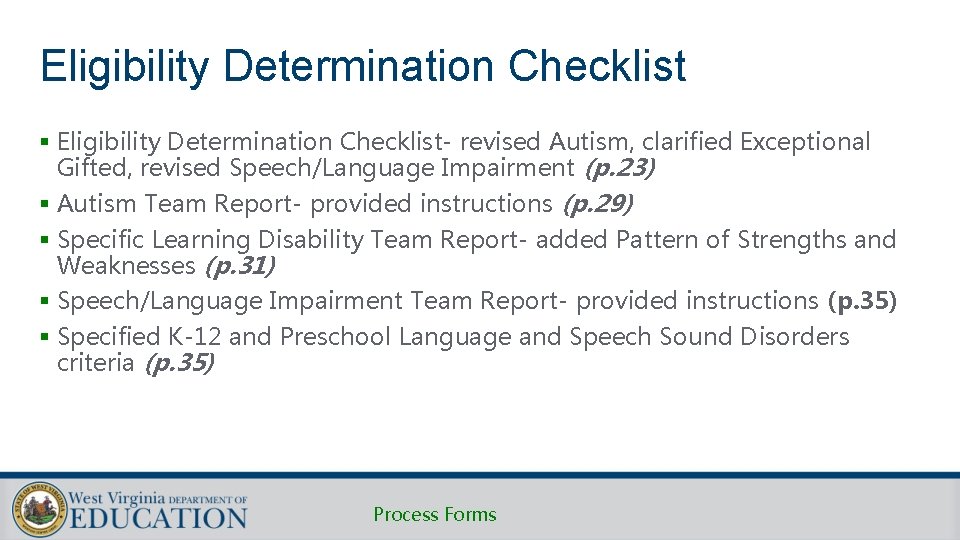
Evaluation/Reevaluation *All forms use the same demographic template § Notice of Individual Evaluation/Reevaluation Request added: § Audiological, § Functional Listening Evaluation, § Physical Therapy, § Occupational Therapy (p. 3) § Reevaluation Determination Plan defined evaluation components (p. 6) § Request for Additional Evaluation - new form generated at IEP Team Meeting (p. 9) § Summary of Performance- added Pre-Employment Transition Services section (p. 11) § Included WV Guidelines to Assist in Development of the Summary of Performance in the instructions (p. 13) Process Forms
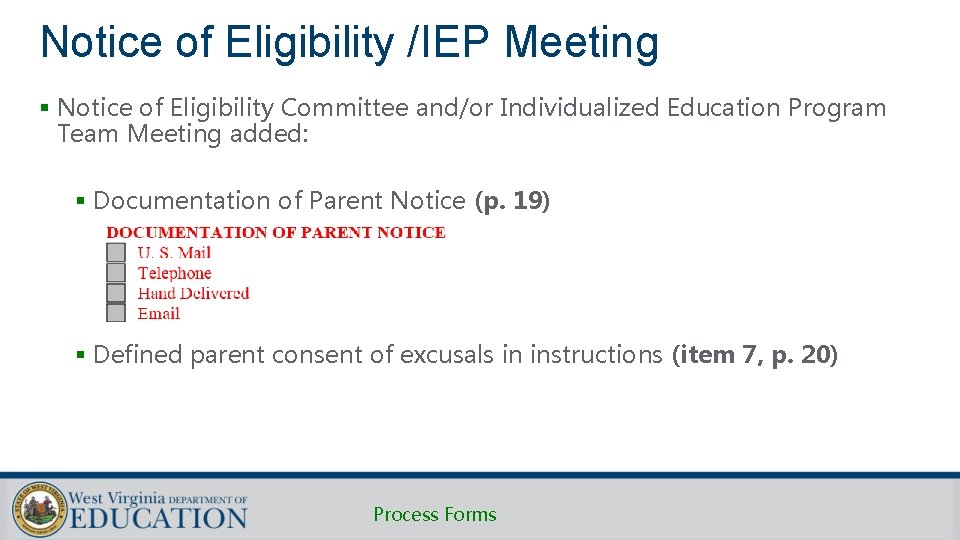
Notice of Eligibility /IEP Meeting § Notice of Eligibility Committee and/or Individualized Education Program Team Meeting added: § Documentation of Parent Notice (p. 19) § Defined parent consent of excusals in instructions (item 7, p. 20) Process Forms
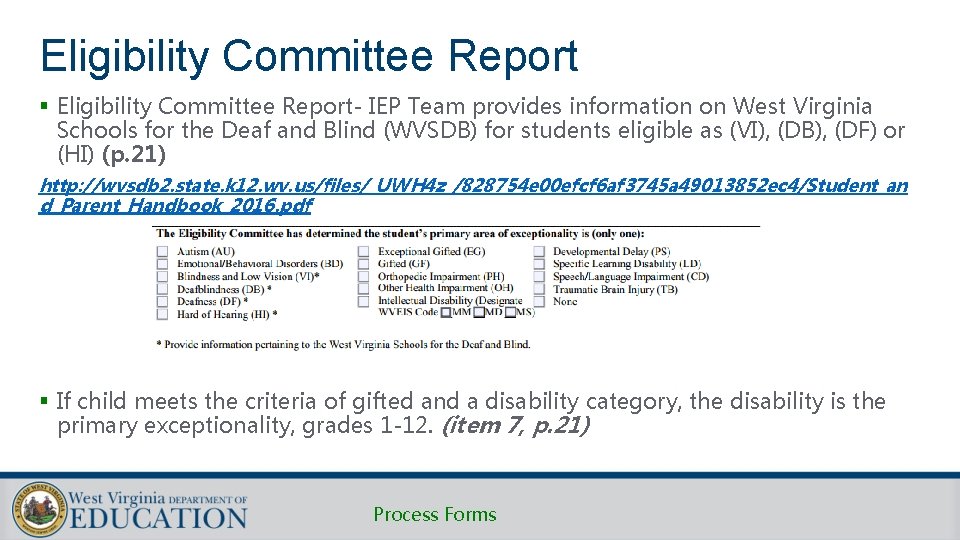
Eligibility Committee Report § Eligibility Committee Report- IEP Team provides information on West Virginia Schools for the Deaf and Blind (WVSDB) for students eligible as (VI), (DB), (DF) or (HI) (p. 21) http: //wvsdb 2. state. k 12. wv. us/files/_UWH 4 z_/828754 e 00 efcf 6 af 3745 a 49013852 ec 4/Student_an d_Parent_Handbook_2016. pdf § If child meets the criteria of gifted and a disability category, the disability is the primary exceptionality, grades 1 -12. (item 7, p. 21) Process Forms
Eligibility Determination Checklist § Eligibility Determination Checklist- revised Autism, clarified Exceptional Gifted, revised Speech/Language Impairment (p. 23) § Autism Team Report- provided instructions (p. 29) § Specific Learning Disability Team Report- added Pattern of Strengths and Weaknesses (p. 31) § Speech/Language Impairment Team Report- provided instructions (p. 35) § Specified K-12 and Preschool Language and Speech Sound Disorders criteria (p. 35) Process Forms
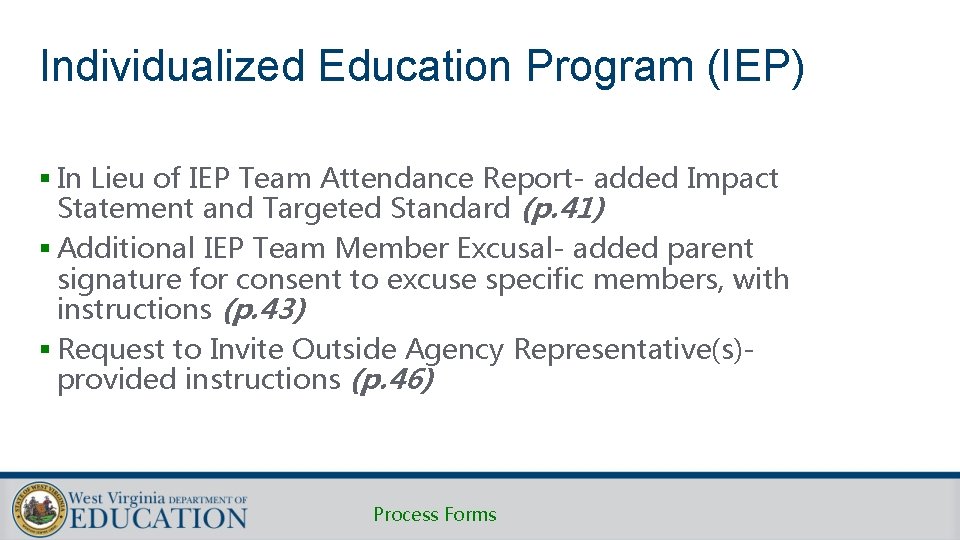
Individualized Education Program (IEP) § In Lieu of IEP Team Attendance Report- added Impact Statement and Targeted Standard (p. 41) § Additional IEP Team Member Excusal- added parent signature for consent to excuse specific members, with instructions (p. 43) § Request to Invite Outside Agency Representative(s)provided instructions (p. 46) Process Forms
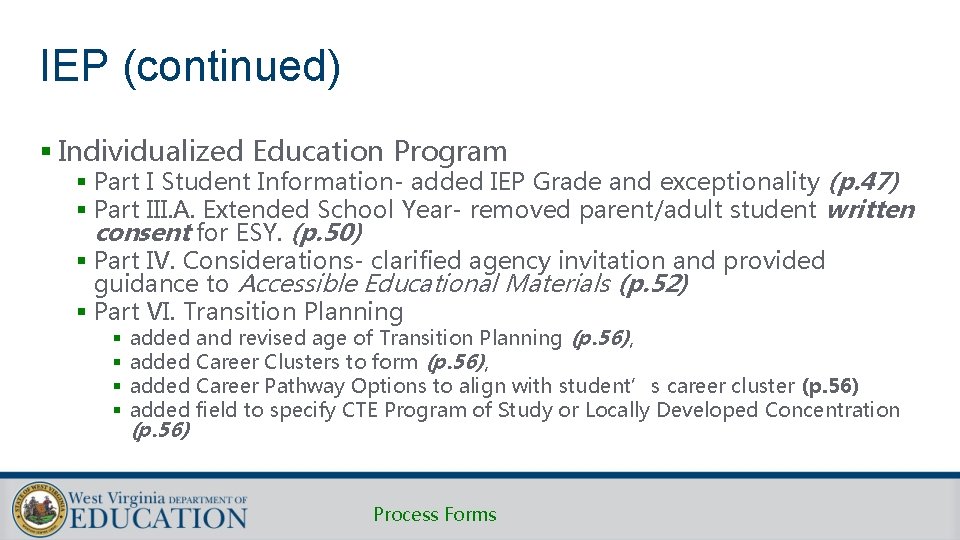
IEP (continued) § Individualized Education Program § Part I Student Information- added IEP Grade and exceptionality (p. 47) § Part III. A. Extended School Year- removed parent/adult student written consent for ESY. (p. 50) § Part IV. Considerations- clarified agency invitation and provided guidance to Accessible Educational Materials (p. 52) § Part VI. Transition Planning § § added and revised age of Transition Planning (p. 56), added Career Clusters to form (p. 56), added Career Pathway Options to align with student’s career cluster (p. 56) added field to specify CTE Program of Study or Locally Developed Concentration (p. 56) Process Forms
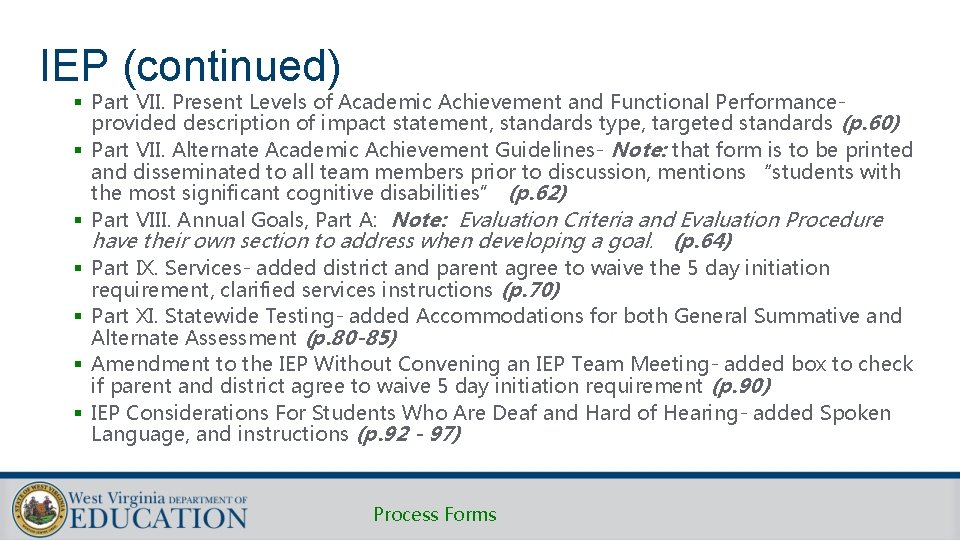
IEP (continued) § Part VII. Present Levels of Academic Achievement and Functional Performanceprovided description of impact statement, standards type, targeted standards (p. 60) § Part VII. Alternate Academic Achievement Guidelines- Note: that form is to be printed and disseminated to all team members prior to discussion, mentions “students with the most significant cognitive disabilities” (p. 62) § Part VIII. Annual Goals, Part A: Note: Evaluation Criteria and Evaluation Procedure have their own section to address when developing a goal. (p. 64) § Part IX. Services- added district and parent agree to waive the 5 day initiation requirement, clarified services instructions (p. 70) § Part XI. Statewide Testing- added Accommodations for both General Summative and Alternate Assessment (p. 80 -85) § Amendment to the IEP Without Convening an IEP Team Meeting- added box to check if parent and district agree to waive 5 day initiation requirement (p. 90) § IEP Considerations For Students Who Are Deaf and Hard of Hearing- added Spoken Language, and instructions (p. 92 - 97) Process Forms
Discipline § Disciplinary Action Review Form- very few changes (p. 101) Process Forms
Private School Students § Student Service Plan For Parentally Placed Private School Students-provided instructions. (p. 105) Process Forms
Procedural Safeguards (private school) Parental Consent For private school & home-schooled students added: § a district cannot use the consent override procedures (mediation, due process complaint, including a resolution meeting, or impartial due process hearing) to obtain parental consent. (p. 8) 93
Procedural Safeguards Prior Written Notice- very few changes to forms (p. 123) Process Forms
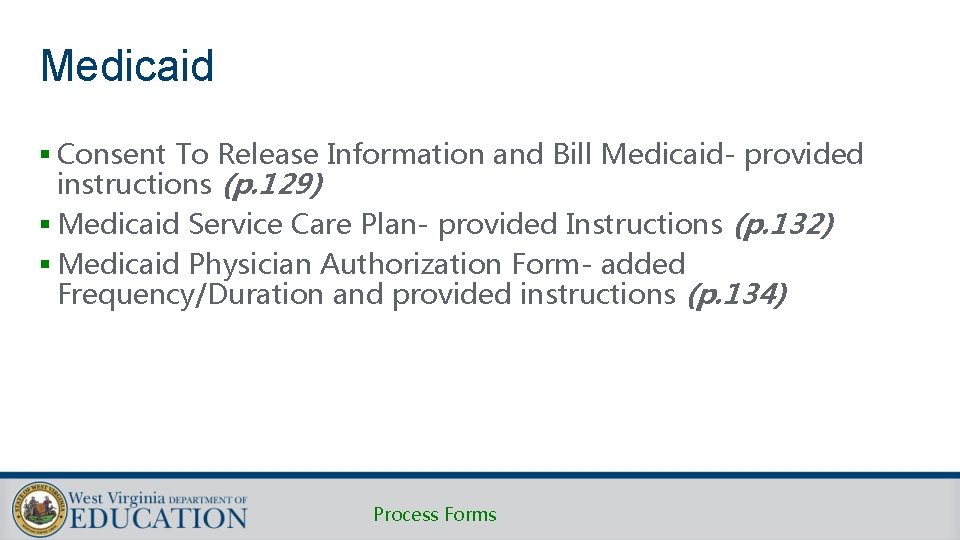
Medicaid § Consent To Release Information and Bill Medicaid- provided instructions (p. 129) § Medicaid Service Care Plan- provided Instructions (p. 132) § Medicaid Physician Authorization Form- added Frequency/Duration and provided instructions (p. 134) Process Forms
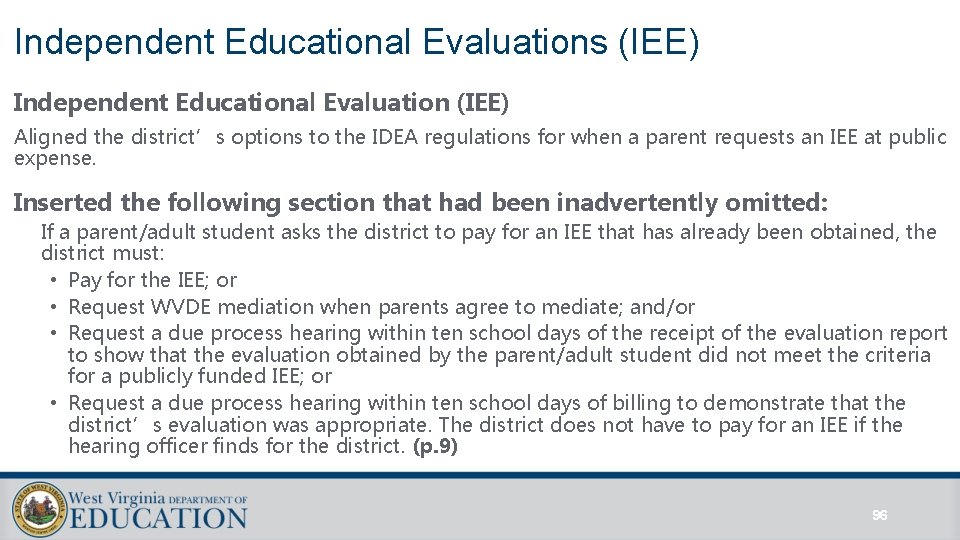
Independent Educational Evaluations (IEE) Independent Educational Evaluation (IEE) Aligned the district’s options to the IDEA regulations for when a parent requests an IEE at public expense. Inserted the following section that had been inadvertently omitted: If a parent/adult student asks the district to pay for an IEE that has already been obtained, the district must: • Pay for the IEE; or • Request WVDE mediation when parents agree to mediate; and/or • Request a due process hearing within ten school days of the receipt of the evaluation report to show that the evaluation obtained by the parent/adult student did not meet the criteria for a publicly funded IEE; or • Request a due process hearing within ten school days of billing to demonstrate that the district’s evaluation was appropriate. The district does not have to pay for an IEE if the hearing officer finds for the district. (p. 9) 96
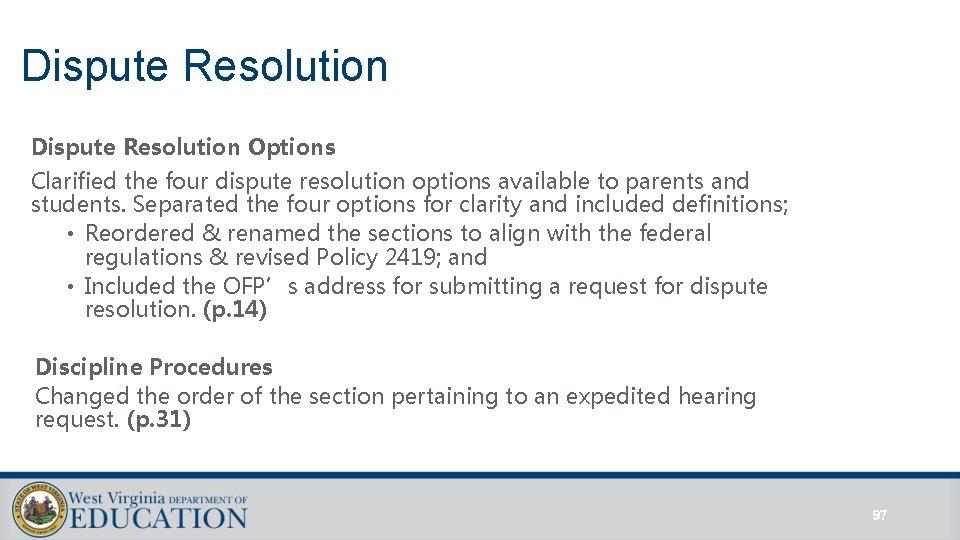
Dispute Resolution Options Clarified the four dispute resolution options available to parents and students. Separated the four options for clarity and included definitions; • Reordered & renamed the sections to align with the federal regulations & revised Policy 2419; and • Included the OFP’s address for submitting a request for dispute resolution. (p. 14) Discipline Procedures Changed the order of the section pertaining to an expedited hearing request. (p. 31) 97
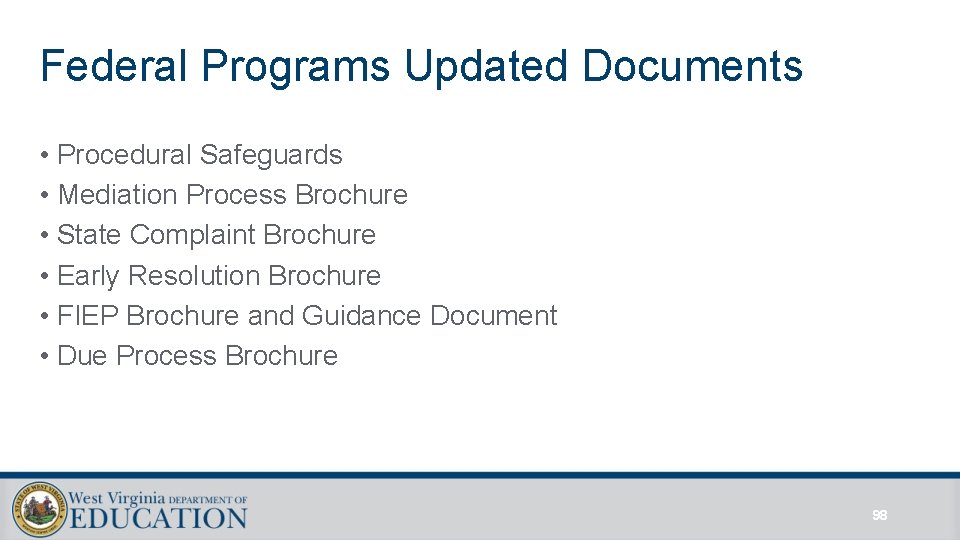
Federal Programs Updated Documents • Procedural Safeguards • Mediation Process Brochure • State Complaint Brochure • Early Resolution Brochure • FIEP Brochure and Guidance Document • Due Process Brochure 98
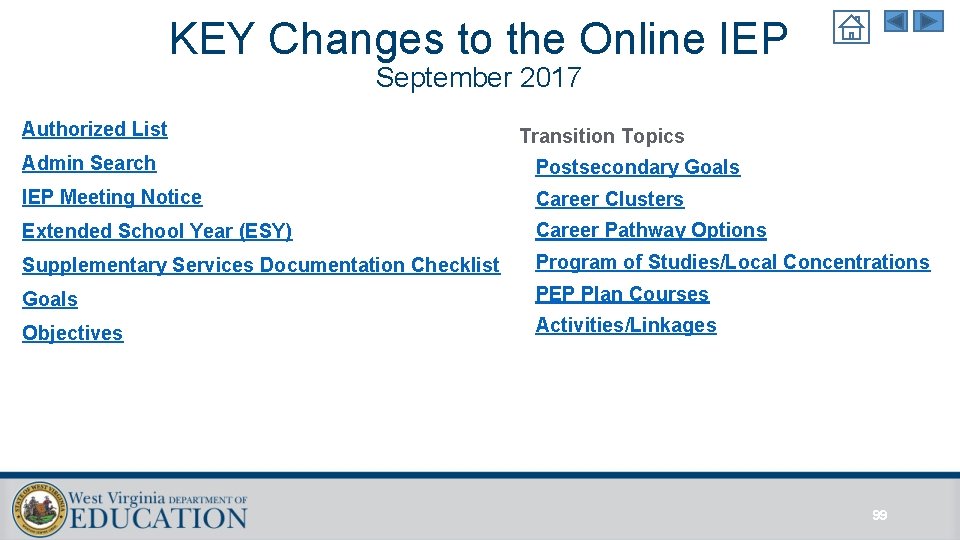
KEY Changes to the Online IEP September 2017 Authorized List Transition Topics Admin Search Postsecondary Goals IEP Meeting Notice Career Clusters Extended School Year (ESY) Career Pathway Options Supplementary Services Documentation Checklist Program of Studies/Local Concentrations Goals PEP Plan Courses Objectives Activities/Linkages 99
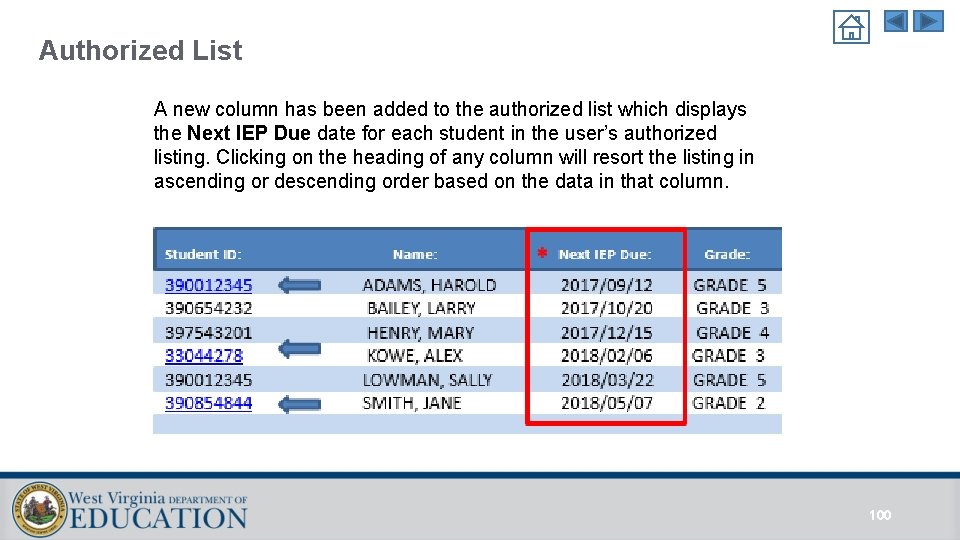
Authorized List A new column has been added to the authorized list which displays the Next IEP Due date for each student in the user’s authorized listing. Clicking on the heading of any column will resort the listing in ascending or descending order based on the data in that column. 100
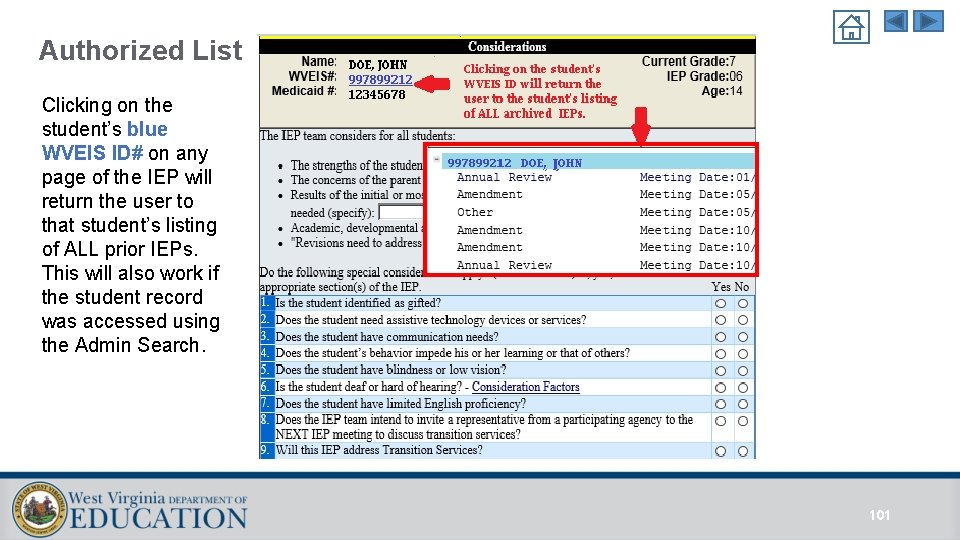
Authorized List Clicking on the student’s blue WVEIS ID# on any page of the IEP will return the user to that student’s listing of ALL prior IEPs. This will also work if the student record was accessed using the Admin Search. 101
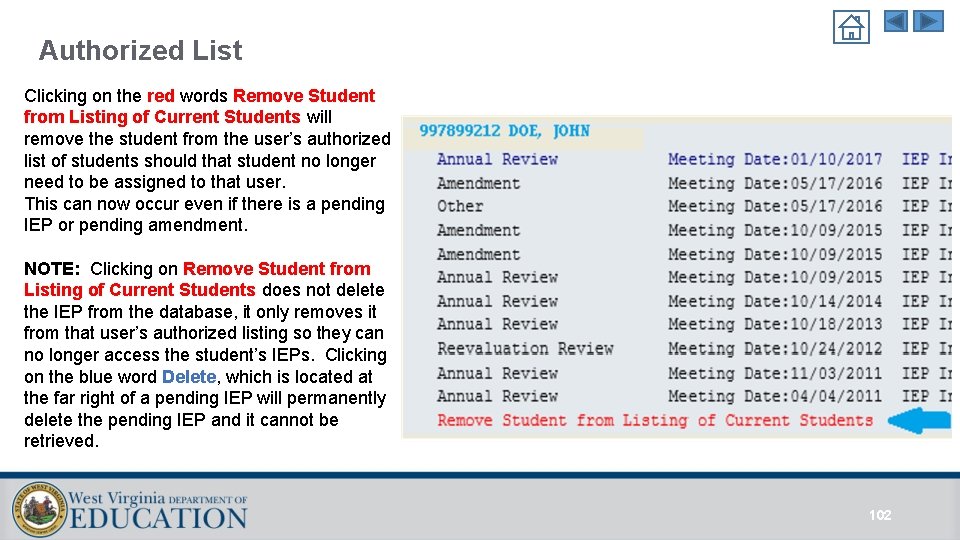
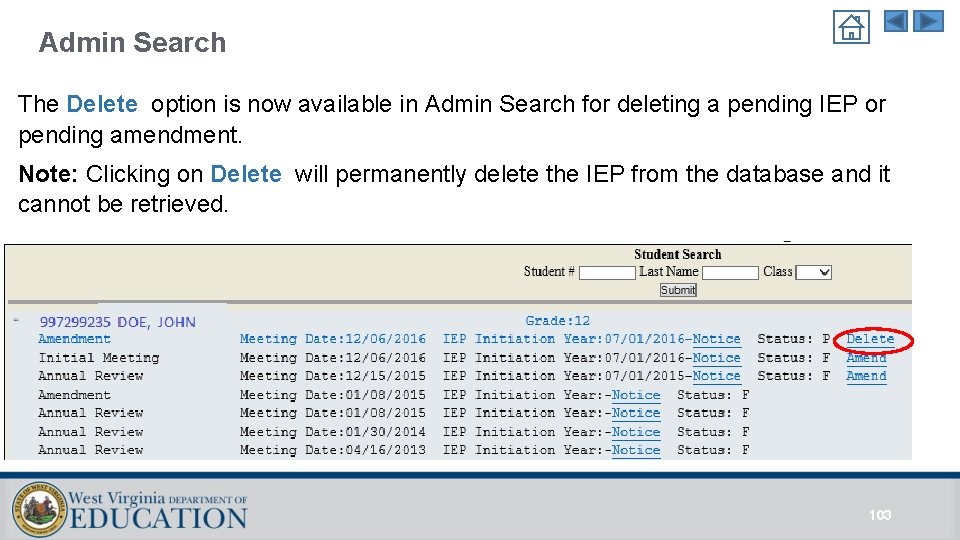
Authorized List Clicking on the red words Remove Student from Listing of Current Students will remove the student from the user’s authorized list of students should that student no longer need to be assigned to that user. This can now occur even if there is a pending IEP or pending amendment. NOTE: Clicking on Remove Student from Listing of Current Students does not delete the IEP from the database, it only removes it from that user’s authorized listing so they can no longer access the student’s IEPs. Clicking on the blue word Delete, which is located at the far right of a pending IEP will permanently delete the pending IEP and it cannot be retrieved. 102
Admin Search The Delete option is now available in Admin Search for deleting a pending IEP or pending amendment. Note: Clicking on Delete will permanently delete the IEP from the database and it cannot be retrieved. 103
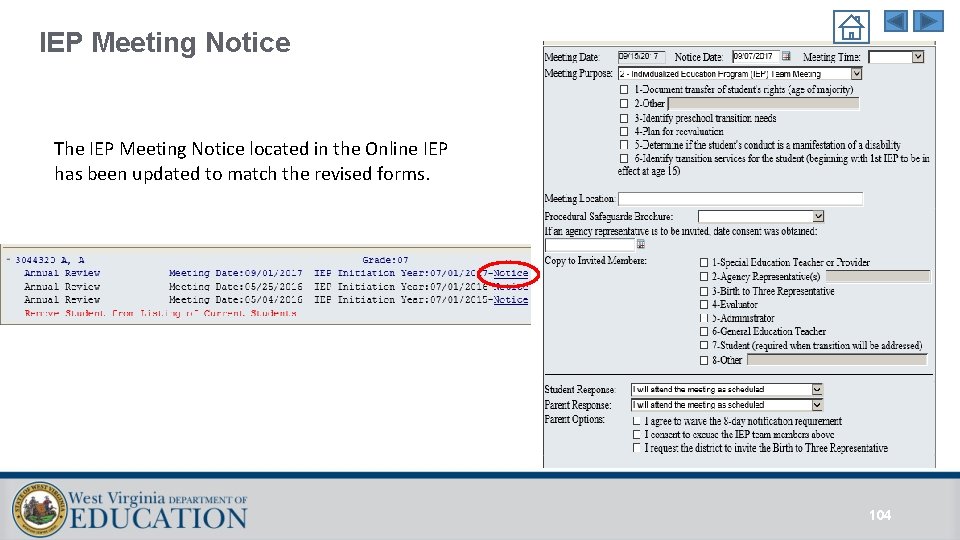
IEP Meeting Notice The IEP Meeting Notice located in the Online IEP has been updated to match the revised forms. 104
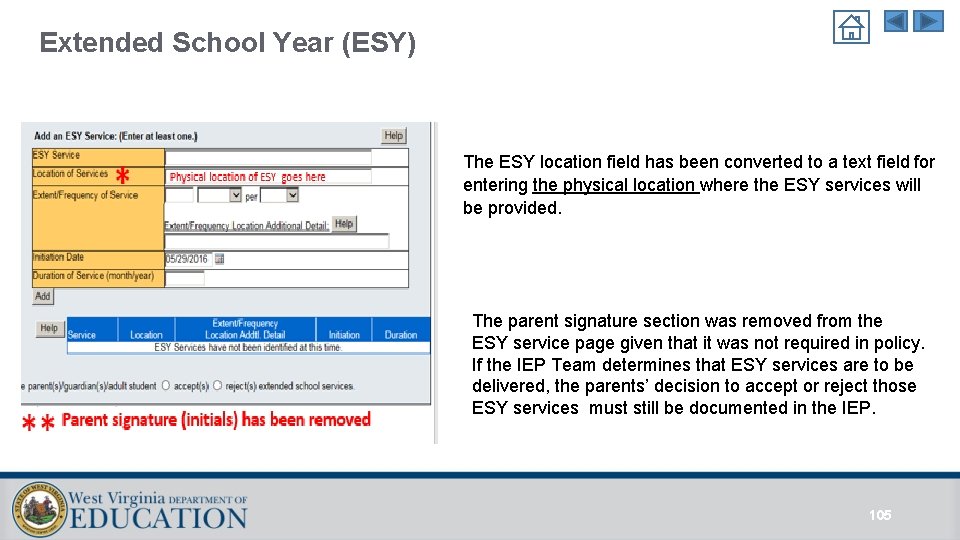
Extended School Year (ESY) The ESY location field has been converted to a text field for entering the physical location where the ESY services will be provided. The parent signature section was removed from the ESY service page given that it was not required in policy. If the IEP Team determines that ESY services are to be delivered, the parents’ decision to accept or reject those ESY services must still be documented in the IEP. 105
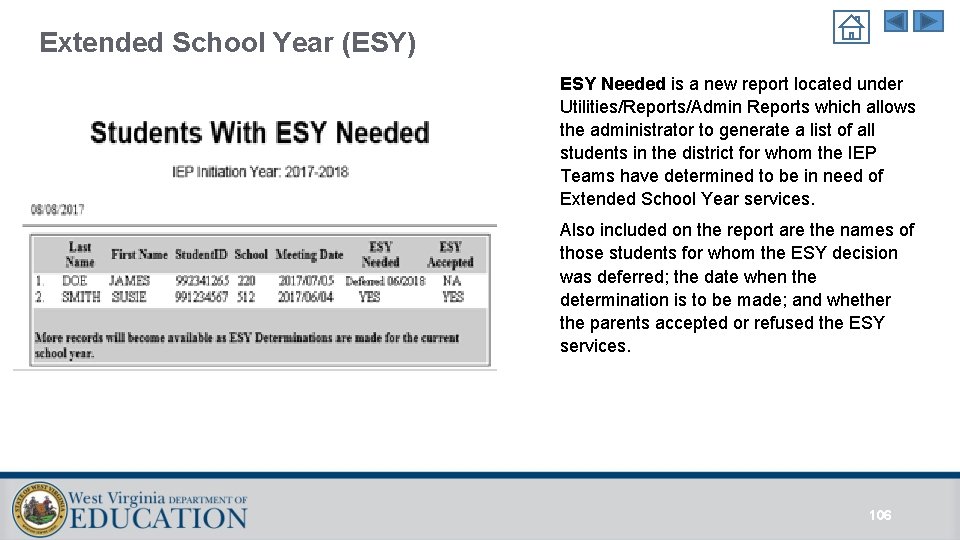
Extended School Year (ESY) ESY Needed is a new report located under Utilities/Reports/Admin Reports which allows the administrator to generate a list of all students in the district for whom the IEP Teams have determined to be in need of Extended School Year services. Also included on the report are the names of those students for whom the ESY decision was deferred; the date when the determination is to be made; and whether the parents accepted or refused the ESY services. 106
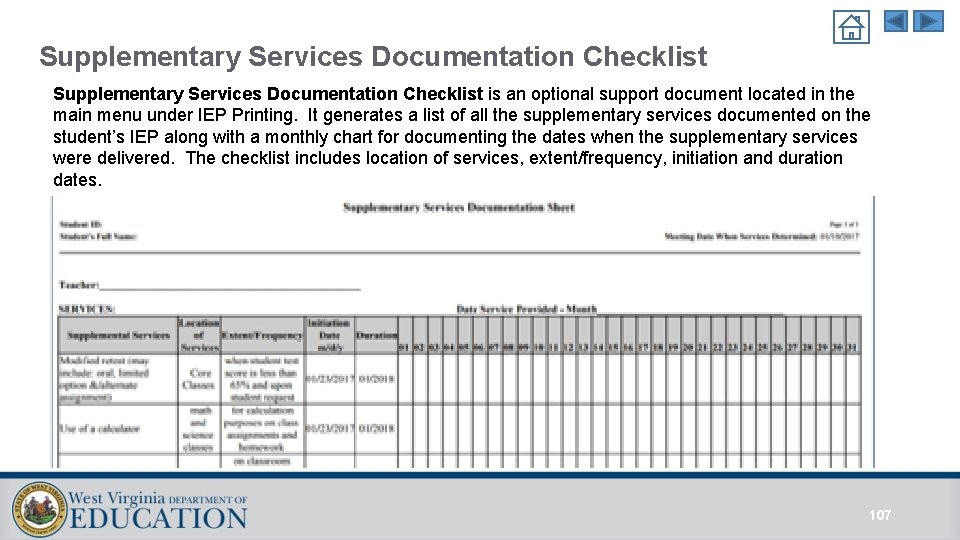
Supplementary Services Documentation Checklist is an optional support document located in the main menu under IEP Printing. It generates a list of all the supplementary services documented on the student’s IEP along with a monthly chart for documenting the dates when the supplementary services were delivered. The checklist includes location of services, extent/frequency, initiation and duration dates. 107
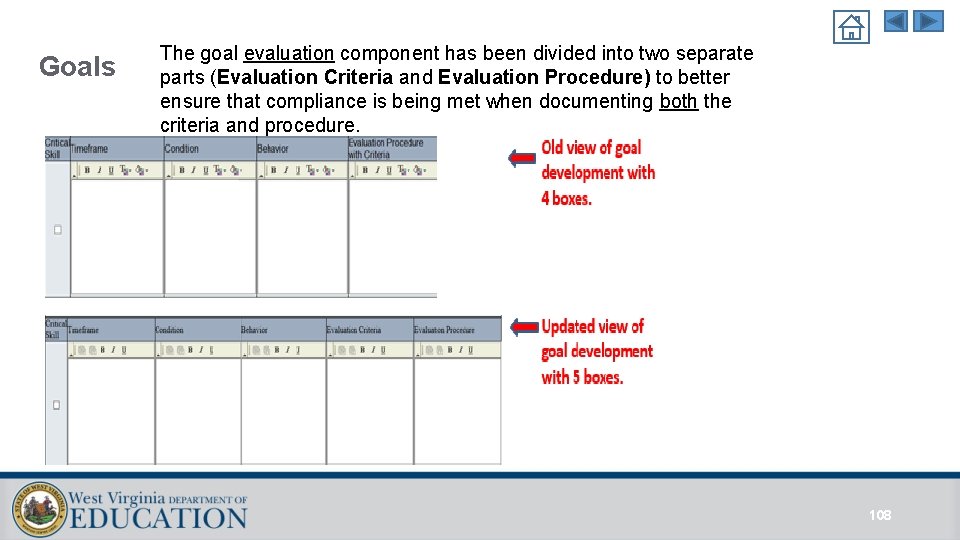
Goals The goal evaluation component has been divided into two separate parts (Evaluation Criteria and Evaluation Procedure) to better ensure that compliance is being met when documenting both the criteria and procedure. 108
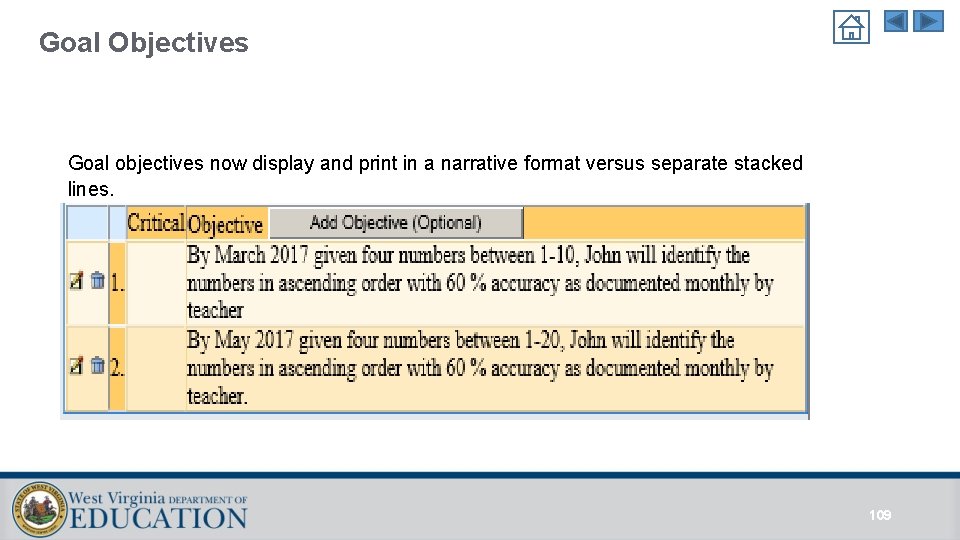
Goal Objectives Goal objectives now display and print in a narrative format versus separate stacked lines. 109
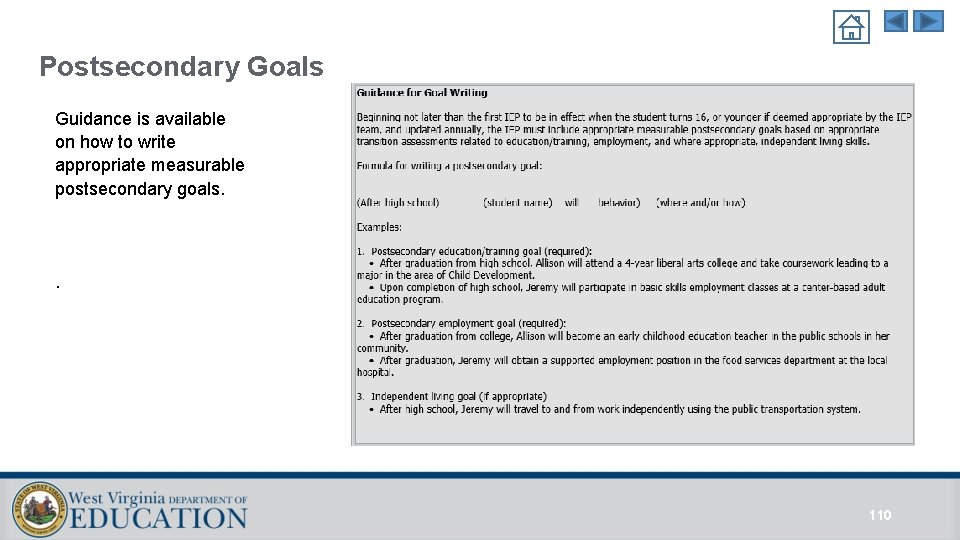
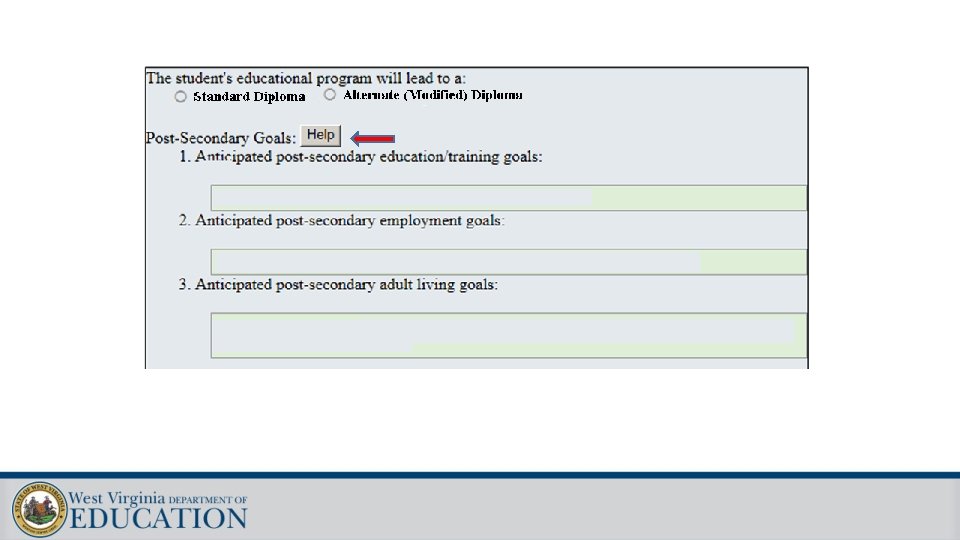
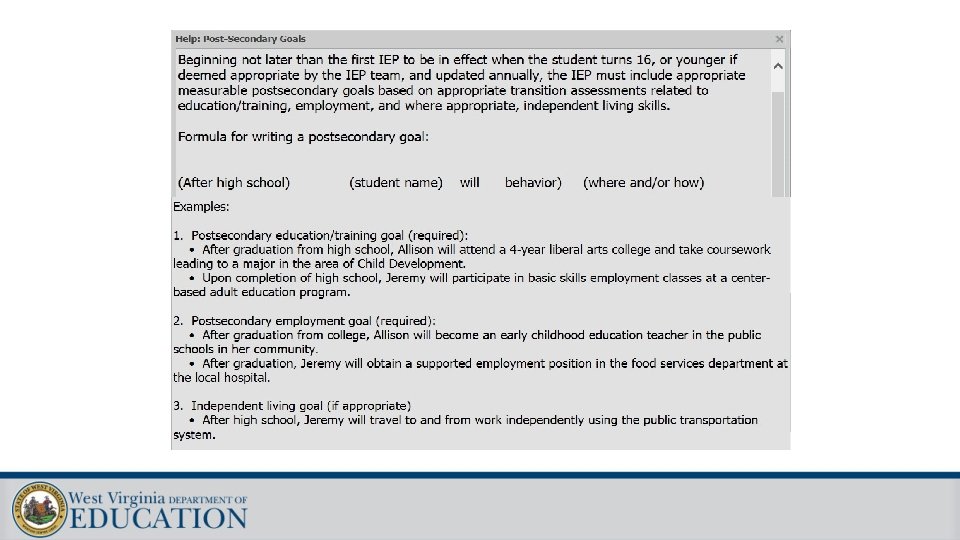
Postsecondary Goals Guidance is available on how to write appropriate measurable postsecondary goals. . 110
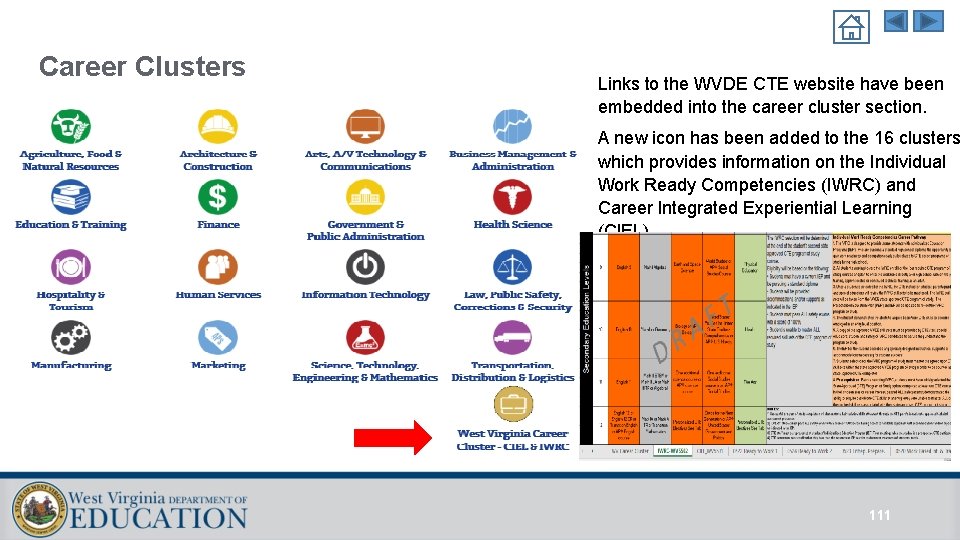
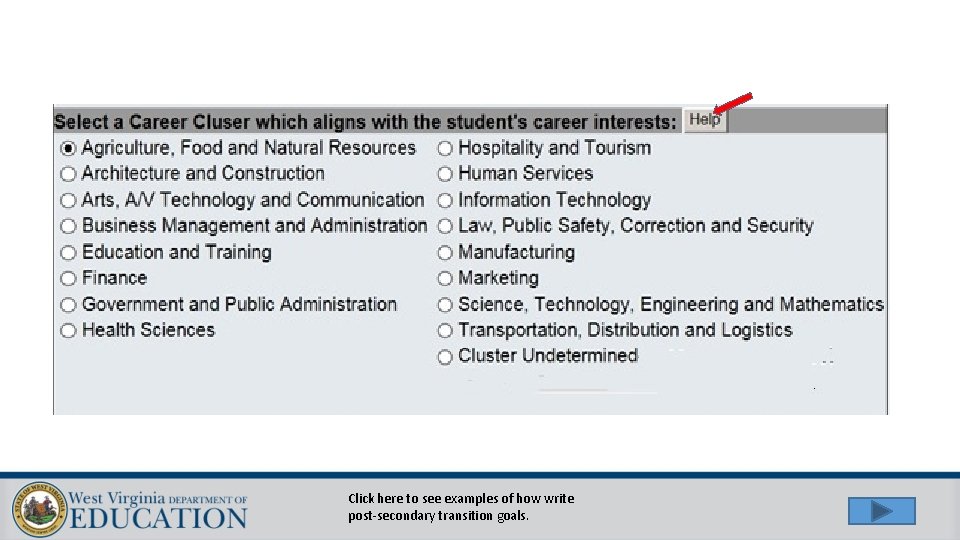
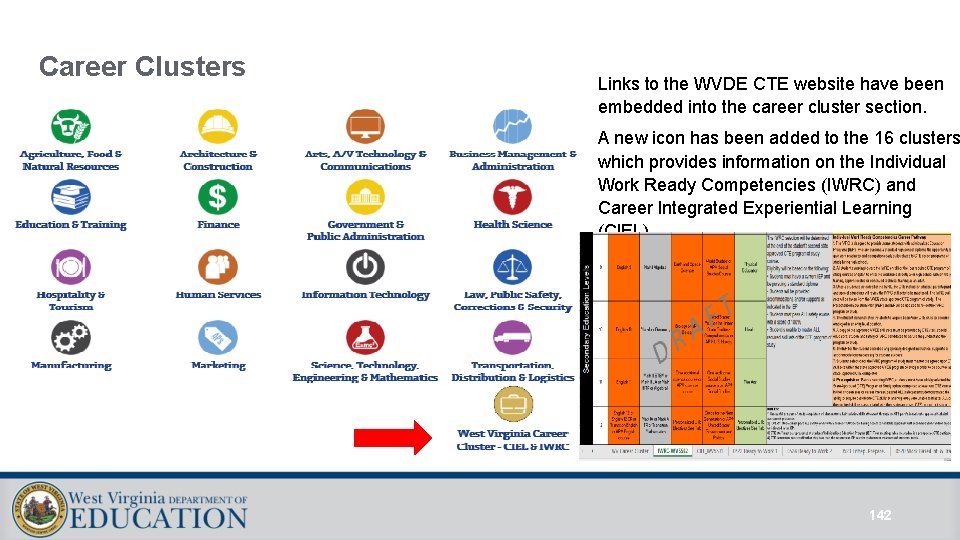
Career Clusters Links to the WVDE CTE website have been embedded into the career cluster section. A new icon has been added to the 16 clusters which provides information on the Individual Work Ready Competencies (IWRC) and Career Integrated Experiential Learning (CIEL). 111
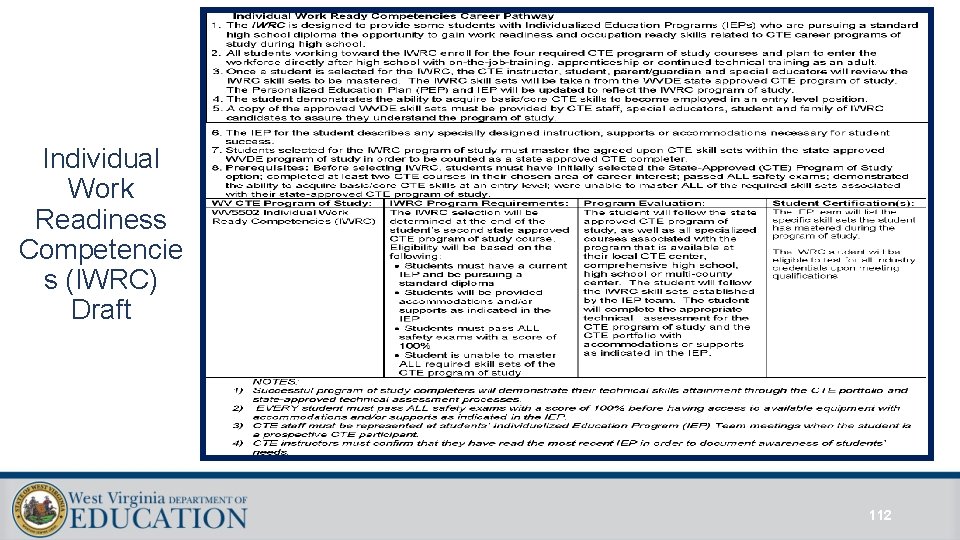
Individual Work Readiness Competencie s (IWRC) Draft 112
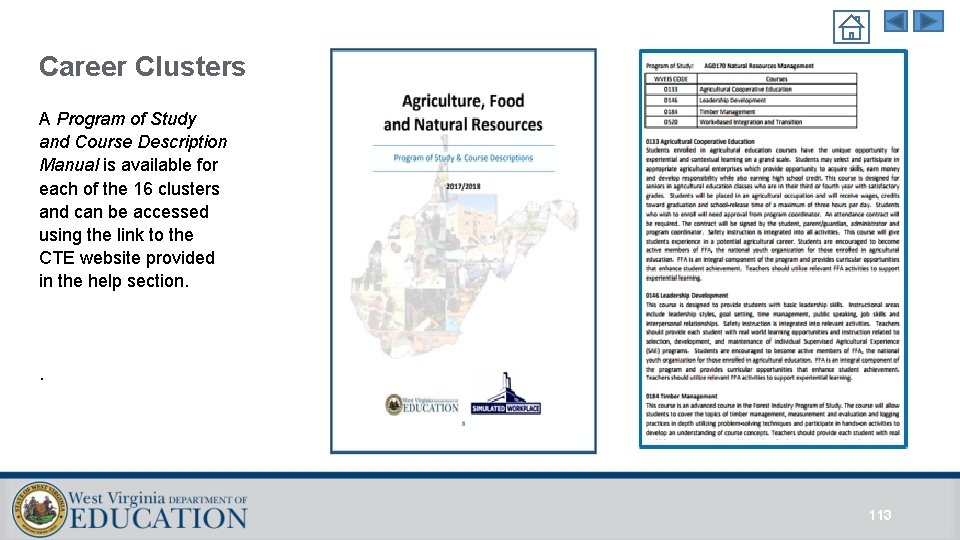
Career Clusters A Program of Study and Course Description Manual is available for each of the 16 clusters and can be accessed using the link to the CTE website provided in the help section. . 113
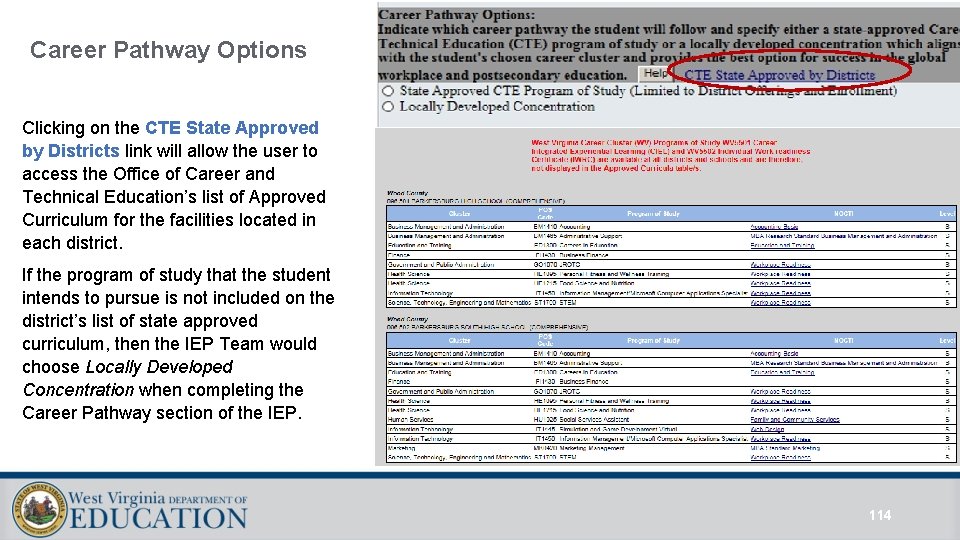
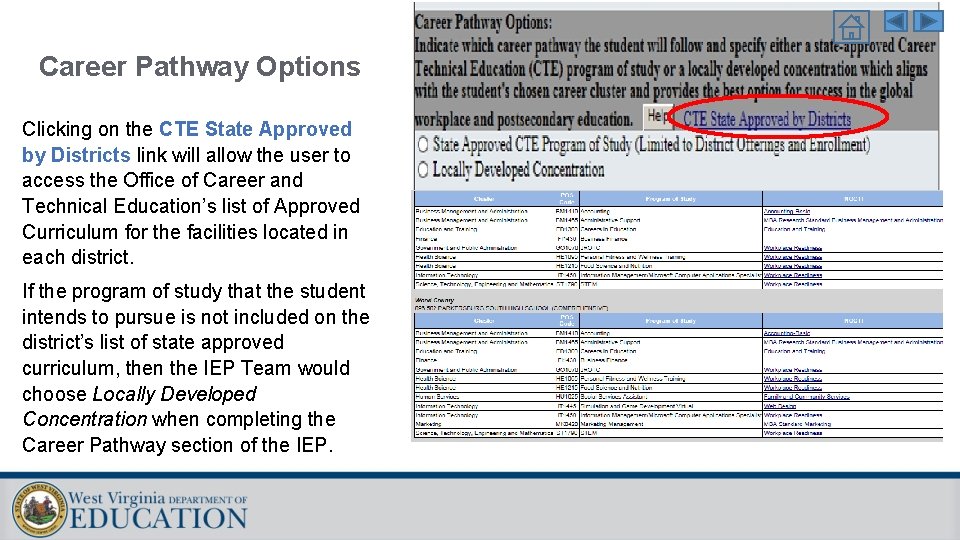
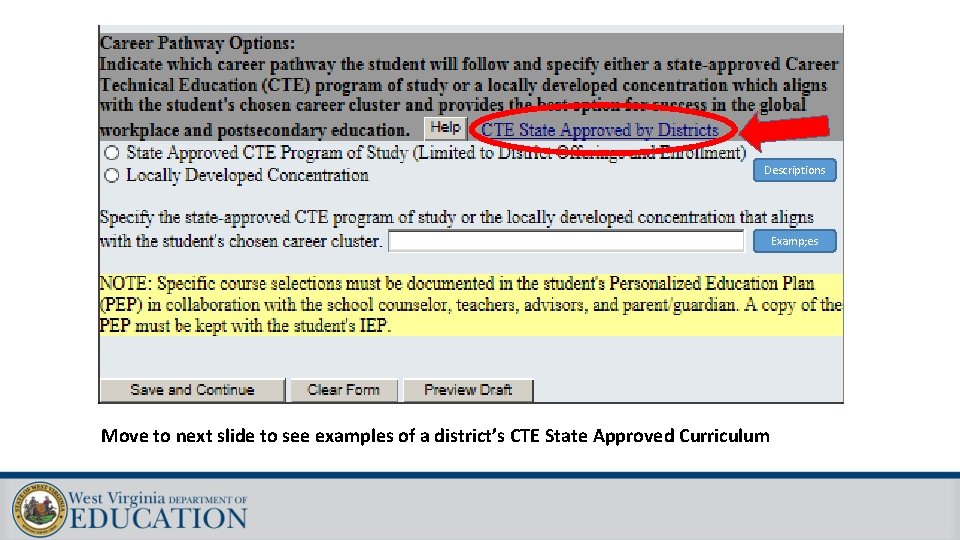
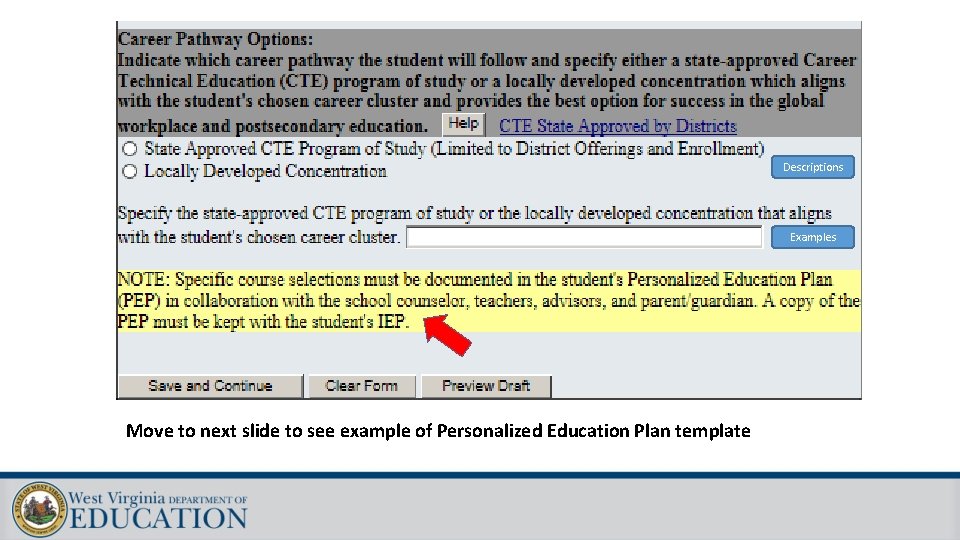
Career Pathway Options Clicking on the CTE State Approved by Districts link will allow the user to access the Office of Career and Technical Education’s list of Approved Curriculum for the facilities located in each district. If the program of study that the student intends to pursue is not included on the district’s list of state approved curriculum, then the IEP Team would choose Locally Developed Concentration when completing the Career Pathway section of the IEP. 114
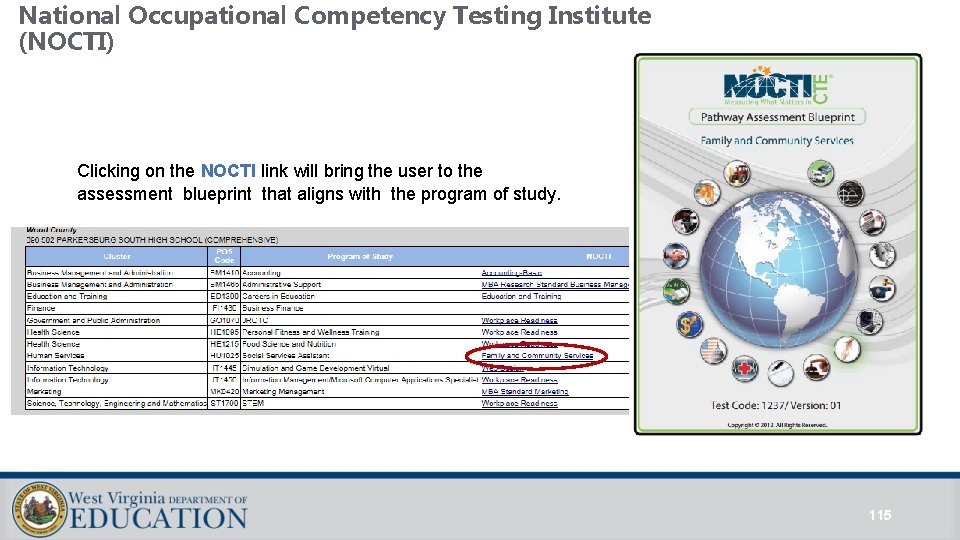
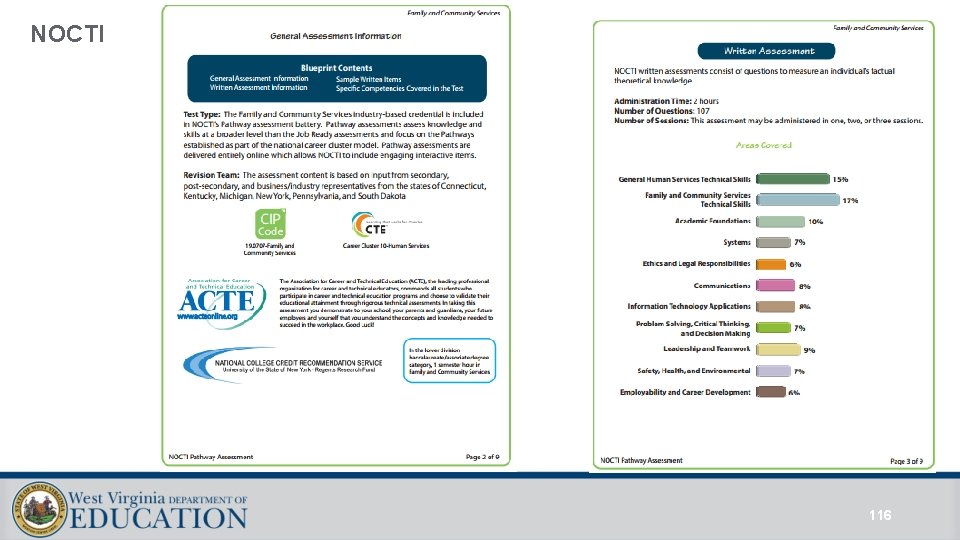
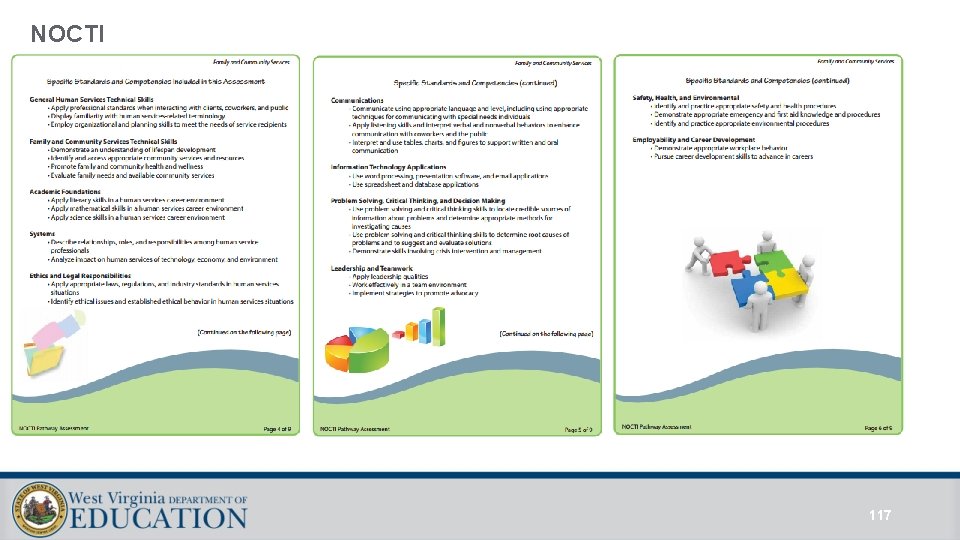
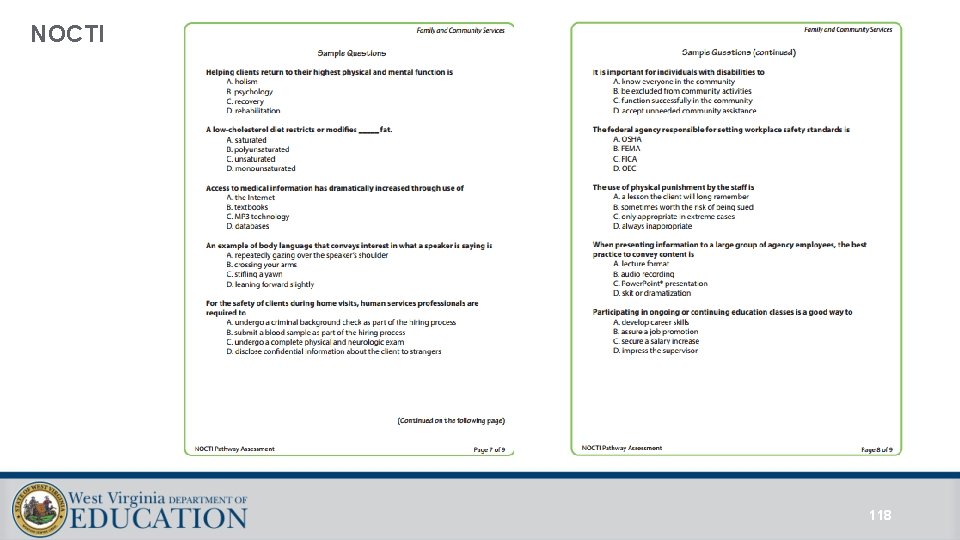
National Occupational Competency Testing Institute (NOCTI) Clicking on the NOCTI link will bring the user to the assessment blueprint that aligns with the program of study. 115
NOCTI 116
NOCTI 117
NOCTI 118
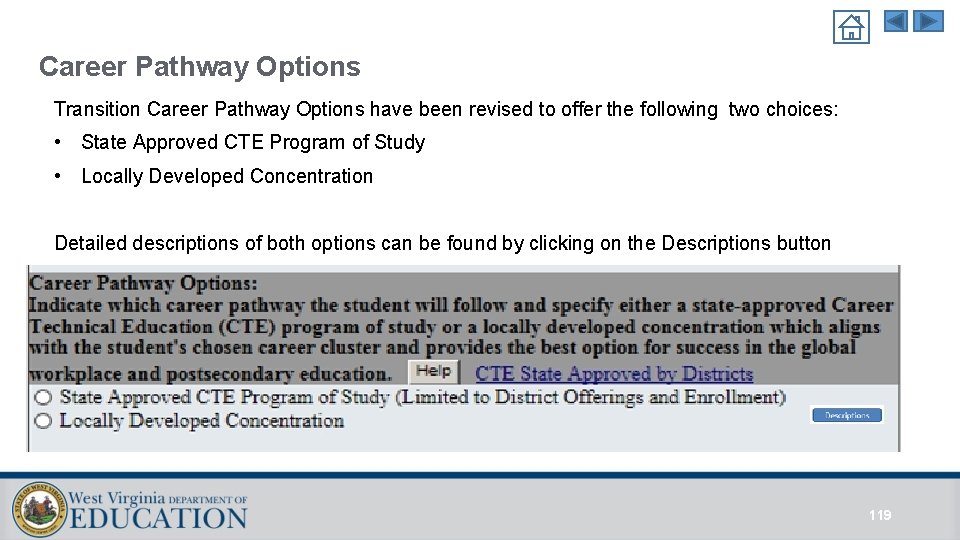
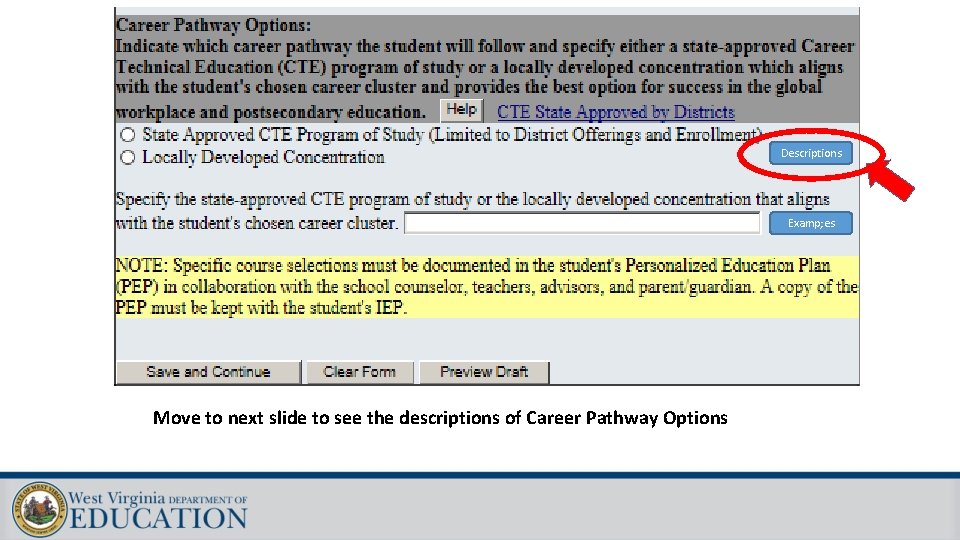
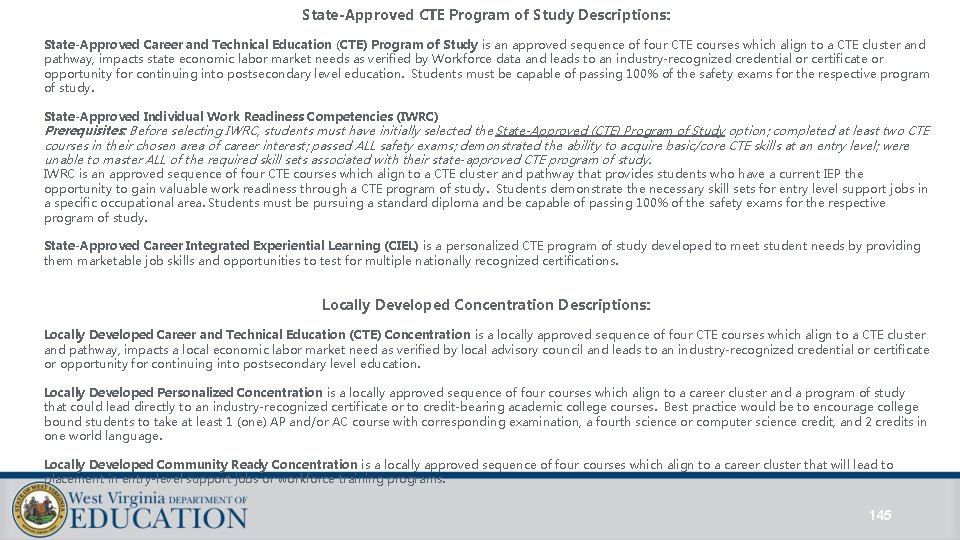
Career Pathway Options Transition Career Pathway Options have been revised to offer the following two choices: • State Approved CTE Program of Study • Locally Developed Concentration Detailed descriptions of both options can be found by clicking on the Descriptions button 119
Career Pathway Options Clicking on the CTE State Approved by Districts link will allow the user to access the Office of Career and Technical Education’s list of Approved Curriculum for the facilities located in each district. If the program of study that the student intends to pursue is not included on the district’s list of state approved curriculum, then the IEP Team would choose Locally Developed Concentration when completing the Career Pathway section of the IEP. 120
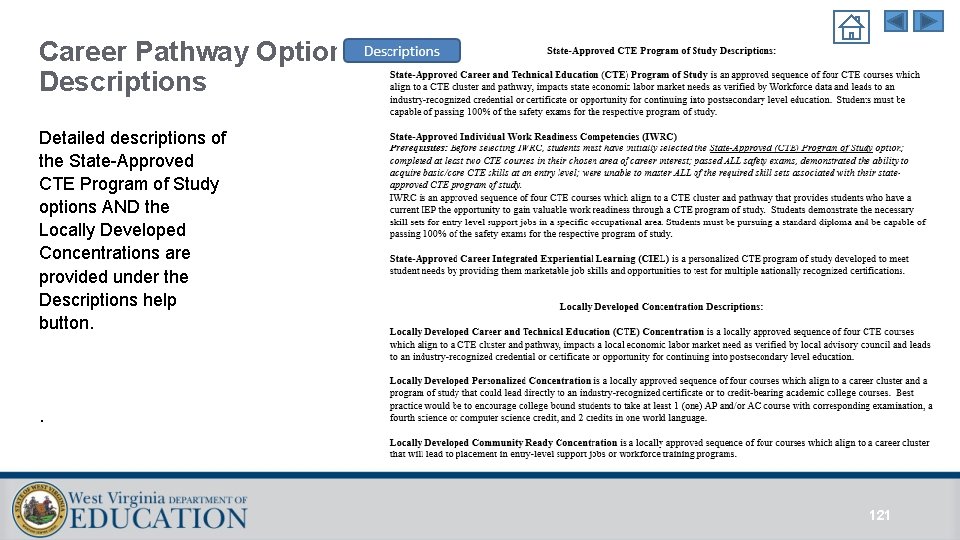
Career Pathway Option Descriptions Detailed descriptions of the State-Approved CTE Program of Study options AND the Locally Developed Concentrations are provided under the Descriptions help button. . 121
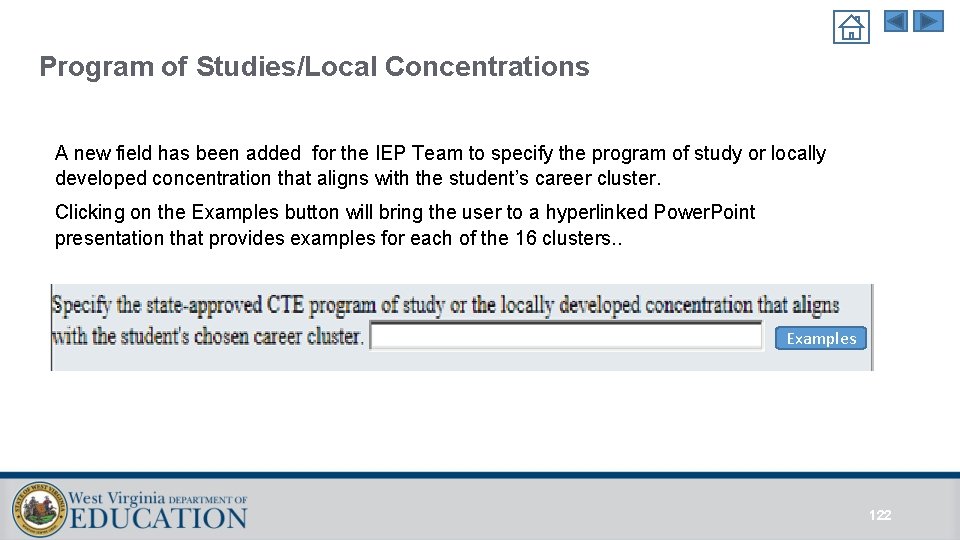
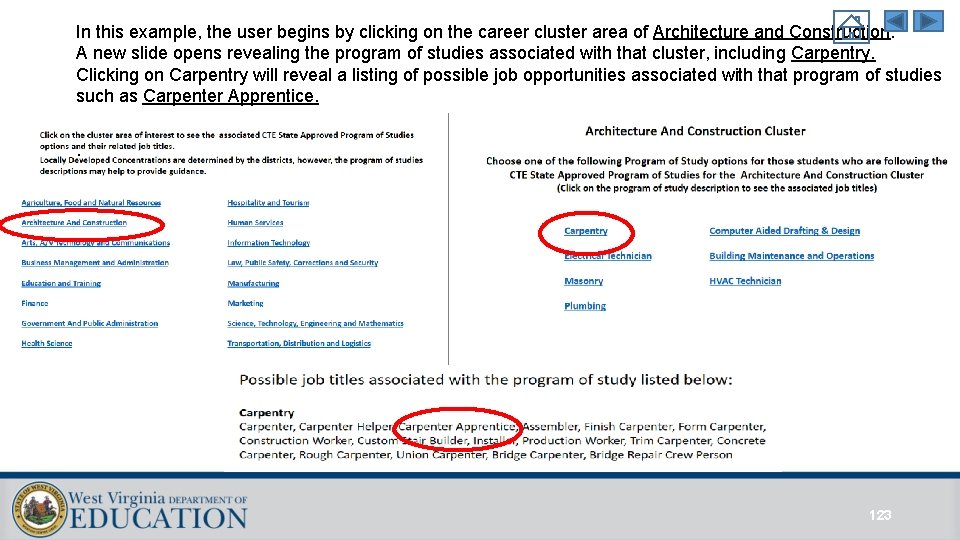
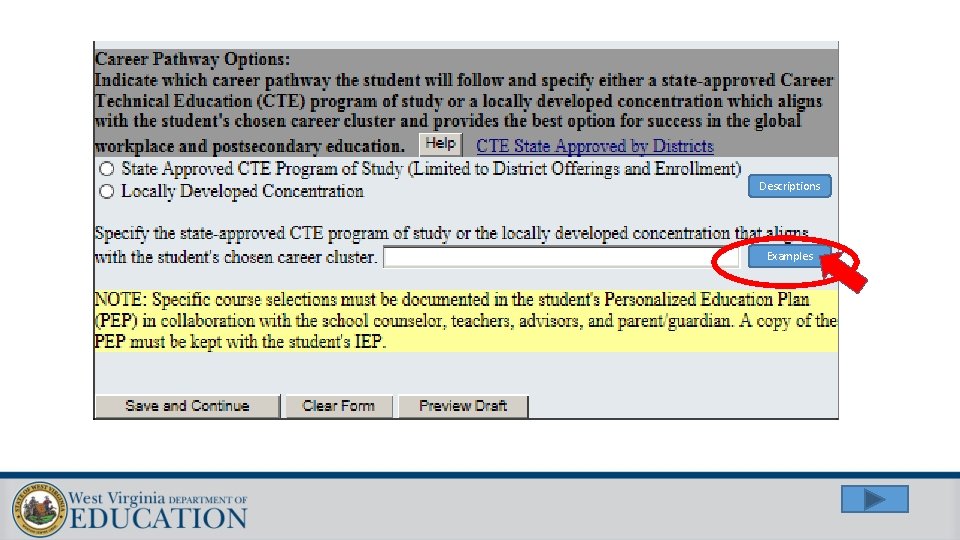
Program of Studies/Local Concentrations A new field has been added for the IEP Team to specify the program of study or locally developed concentration that aligns with the student’s career cluster. Clicking on the Examples button will bring the user to a hyperlinked Power. Point presentation that provides examples for each of the 16 clusters. . . Examples 122
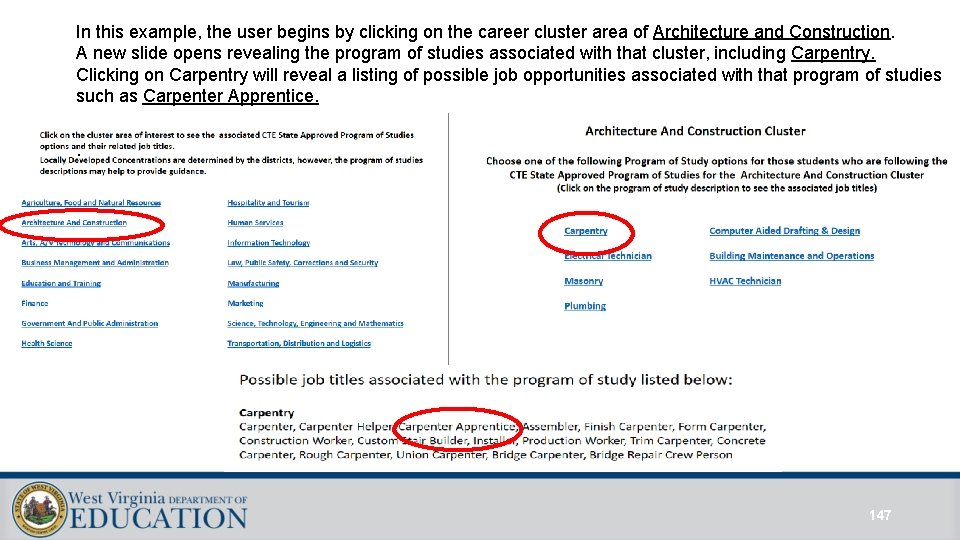
In this example, the user begins by clicking on the career cluster area of Architecture and Construction. A new slide opens revealing the program of studies associated with that cluster, including Carpentry. Clicking on Carpentry will reveal a listing of possible job opportunities associated with that program of studies such as Carpenter Apprentice. . 123
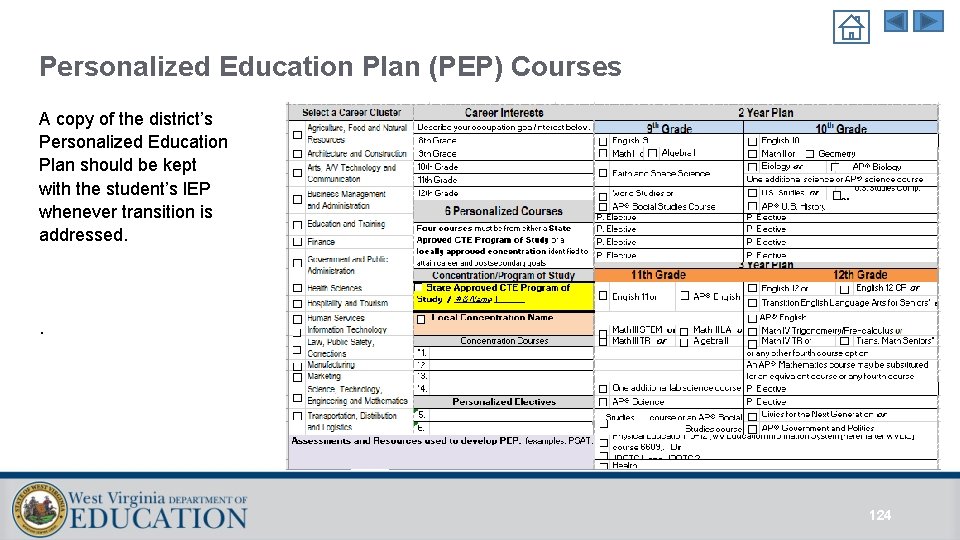
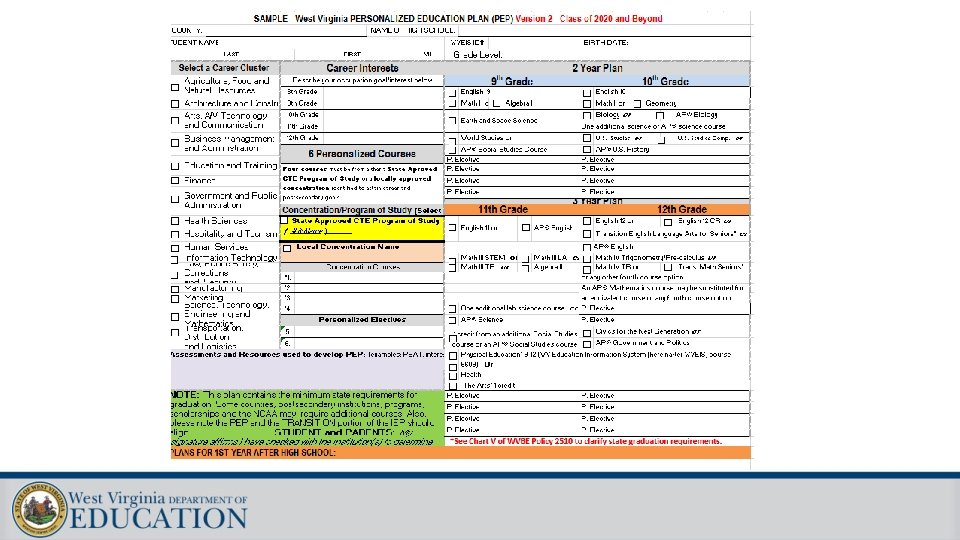
Personalized Education Plan (PEP) Courses A copy of the district’s Personalized Education Plan should be kept with the student’s IEP whenever transition is addressed. . 124
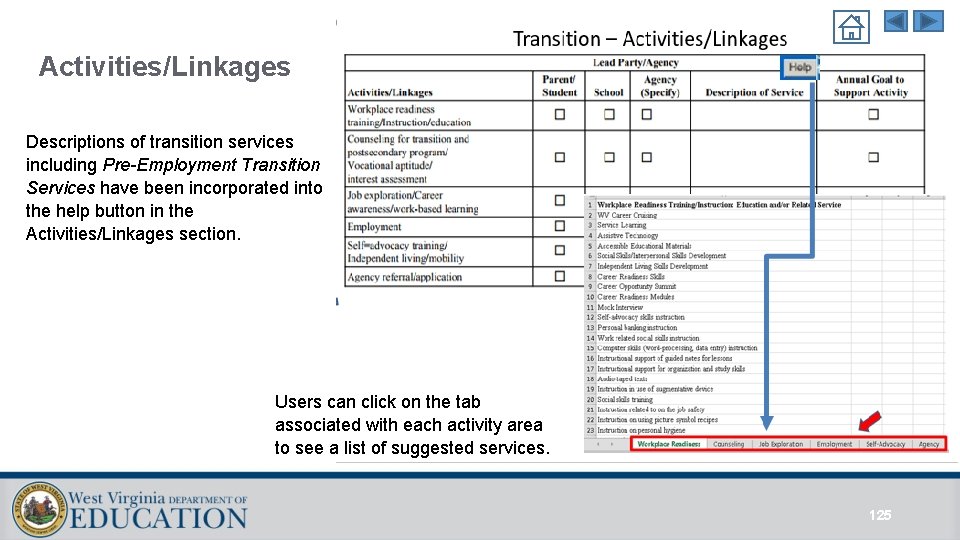
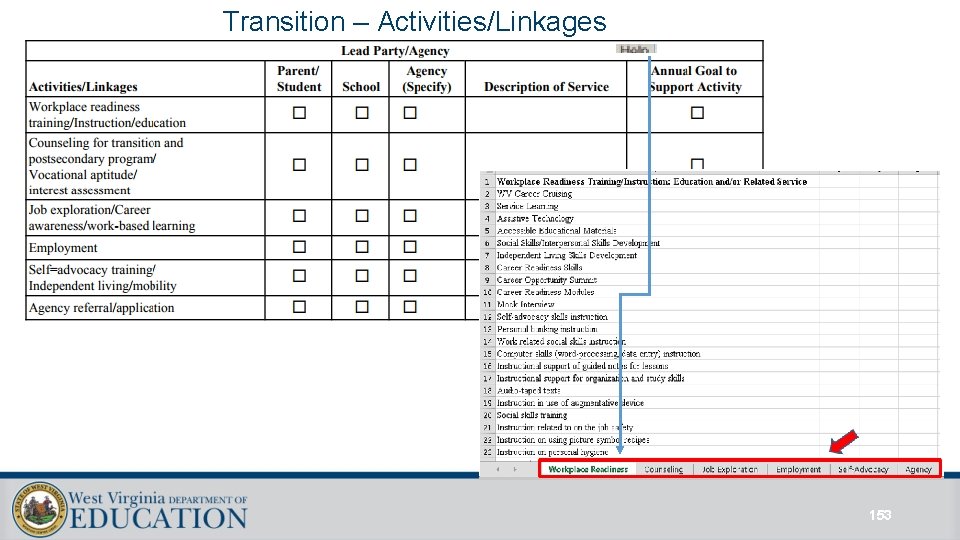
Activities/Linkages Descriptions of transition services including Pre-Employment Transition Services have been incorporated into the help button in the Activities/Linkages section. Users can click on the tab associated with each activity area to see a list of suggested services. 125
Office of Special Education Effective Transition Indicator 13 September 2017
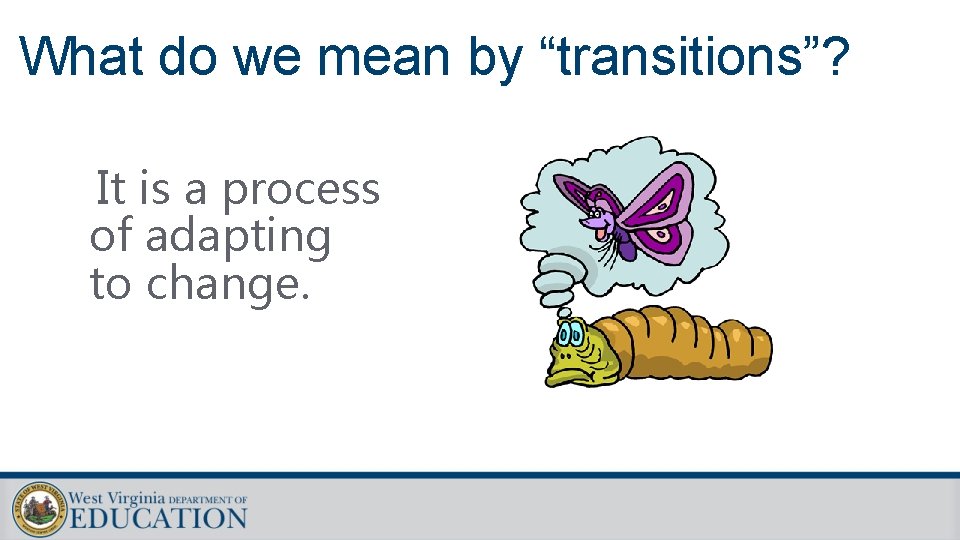
What do we mean by “transitions”? It is a process of adapting to change.
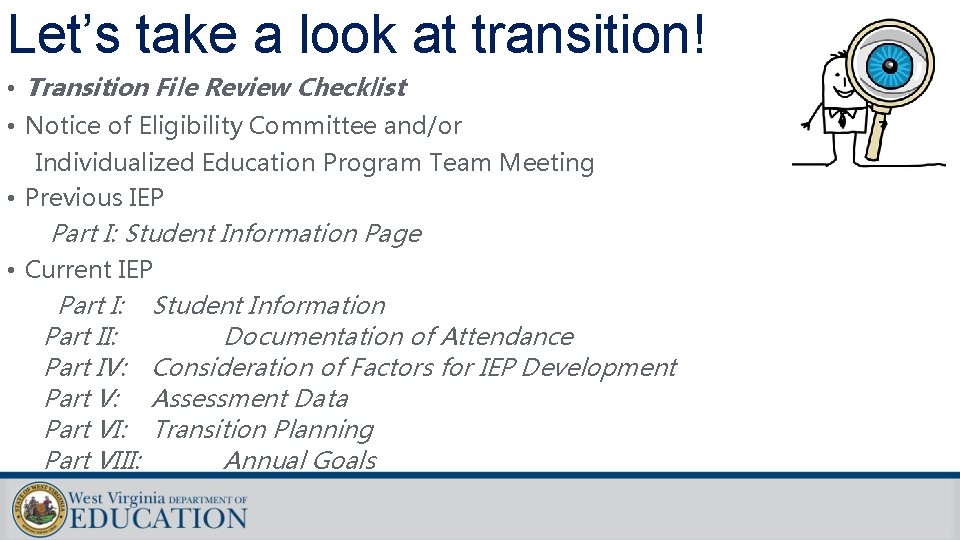
Let’s take a look at transition! • Transition File Review Checklist • Notice of Eligibility Committee and/or Individualized Education Program Team Meeting • Previous IEP Part I: Student Information Page • Current IEP Part I: Student Information Part II: Documentation of Attendance Part IV: Consideration of Factors for IEP Development Part V: Assessment Data Part VI: Transition Planning Part VIII: Annual Goals
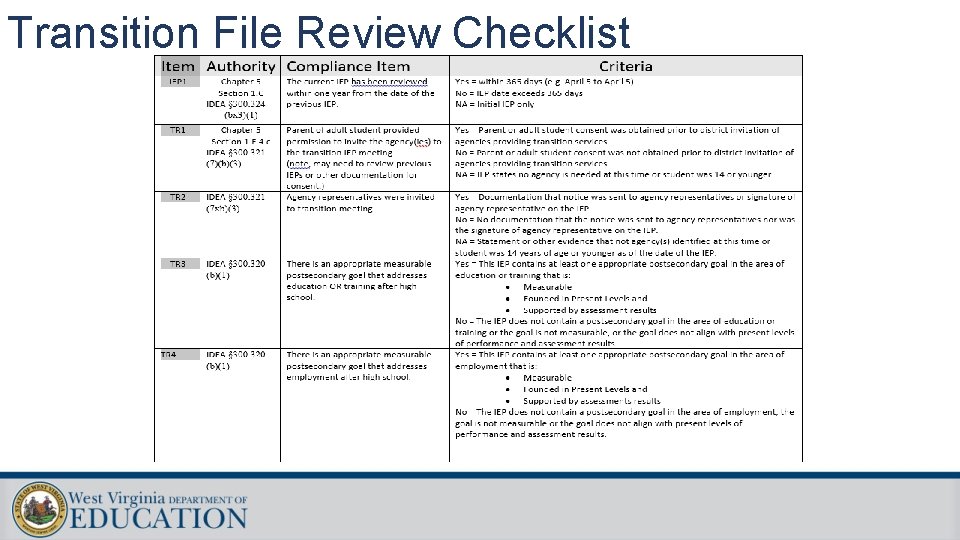
Transition File Review Checklist
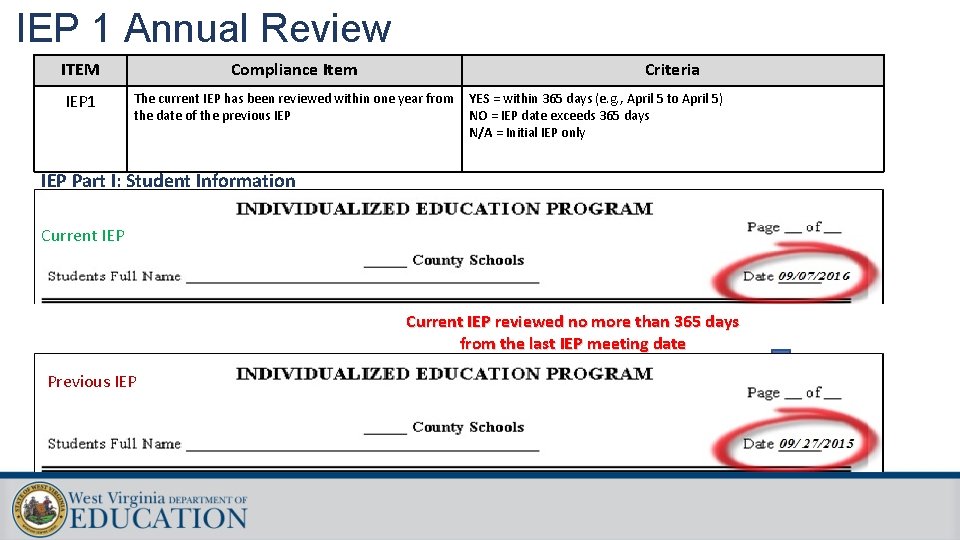
IEP 1 Annual Review ITEM Compliance Item Criteria IEP 1 The current IEP has been reviewed within one year from the date of the previous IEP YES = within 365 days (e. g. , April 5 to April 5) NO = IEP date exceeds 365 days N/A = Initial IEP only IEP Part I: Student Information Current IEP reviewed no more than 365 days from the last IEP meeting date Previous IEP
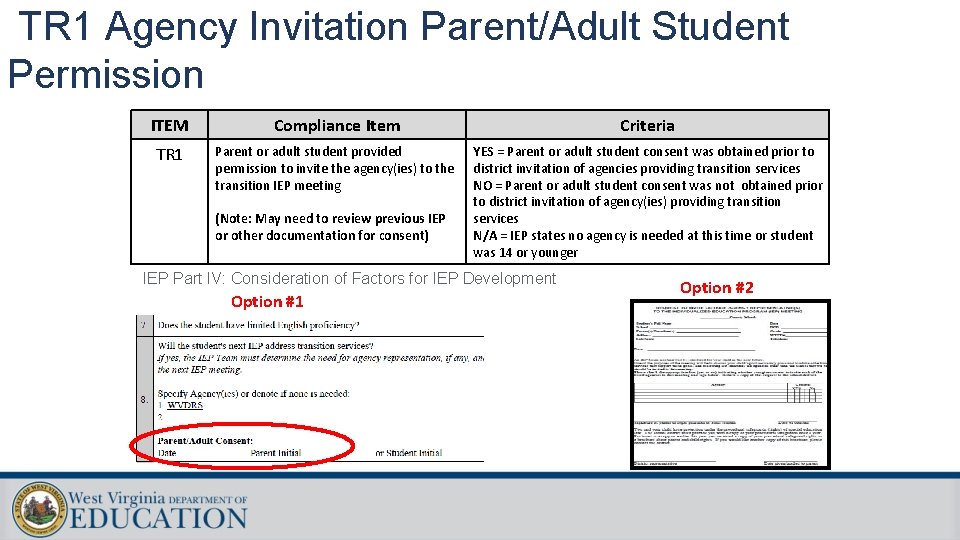
TR 1 Agency Invitation Parent/Adult Student Permission. Agency Invitation TR 1 Agency Invitation Parent/Adult Student Permission ITEM Compliance Item Criteria TR 1 Parent or adult student provided permission to invite the agency(ies) to the transition IEP meeting YES = Parent or adult student consent was obtained prior to district invitation of agencies providing transition services NO = Parent or adult student consent was not obtained prior to district invitation of agency(ies) providing transition services N/A = IEP states no agency is needed at this time or student was 14 or younger (Note: May need to review previous IEP or other documentation for consent) IEP Part IV: Consideration of Factors for IEP Development Option #1 Option #2
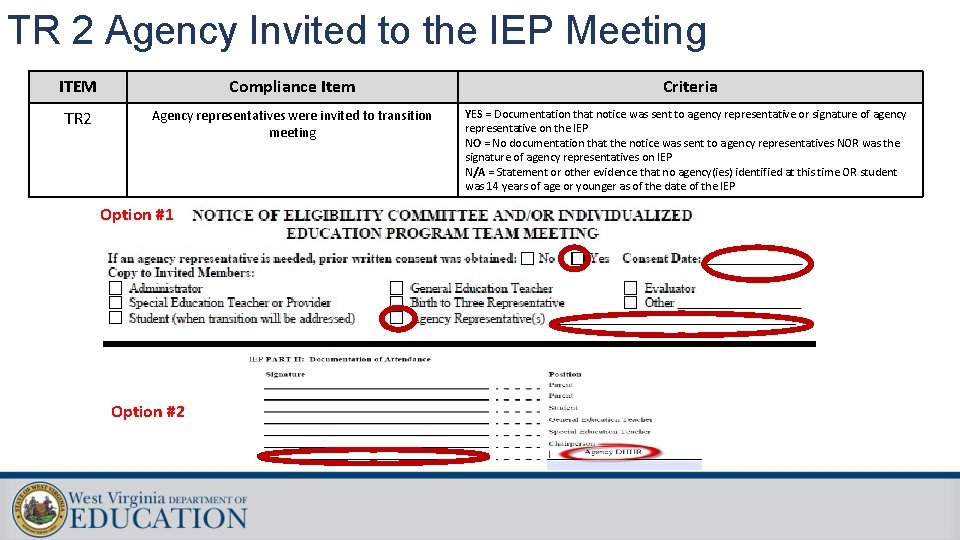
TR 2 Agency Invited IEP Meeting TR 2 Agency Invited to the IEPto the Meeting ITEM Compliance Item TR 2 Agency representatives were invited to transition meeting Option #1 Option #2 Criteria YES = Documentation that notice was sent to agency representative or signature of agency representative on the IEP NO = No documentation that the notice was sent to agency representatives NOR was the signature of agency representatives on IEP N/A = Statement or other evidence that no agency(ies) identified at this time OR student was 14 years of age or younger as of the date of the IEP
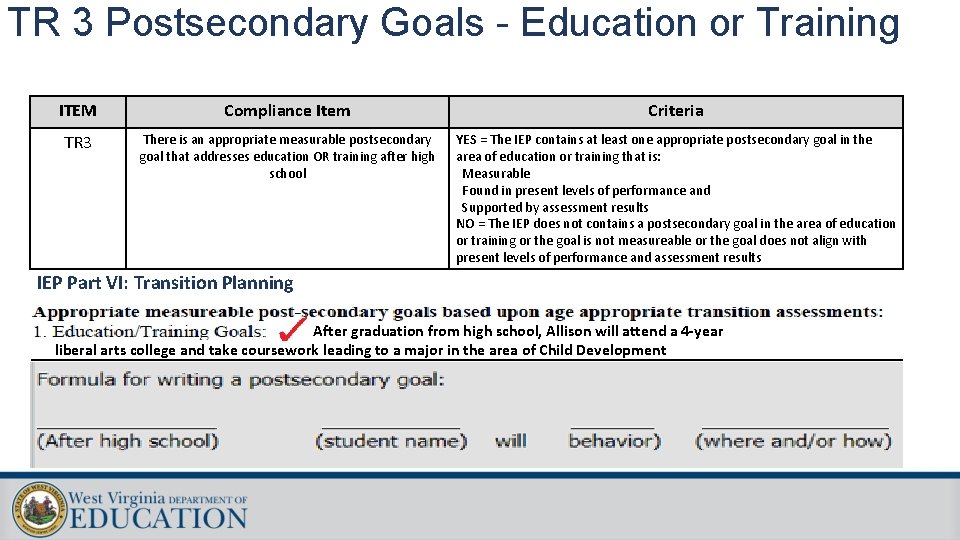
TR 3 Goals - Education or Training TR 3 Postsecondary Education or Training ITEM Compliance Item Criteria TR 3 There is an appropriate measurable postsecondary goal that addresses education OR training after high school YES = The IEP contains at least one appropriate postsecondary goal in the area of education or training that is: Measurable Found in present levels of performance and Supported by assessment results NO = The IEP does not contains a postsecondary goal in the area of education or training or the goal is not measureable or the goal does not align with present levels of performance and assessment results IEP Part VI: Transition Planning After graduation from high school, Allison will attend a 4 -year liberal arts college and take coursework leading to a major in the area of Child Development
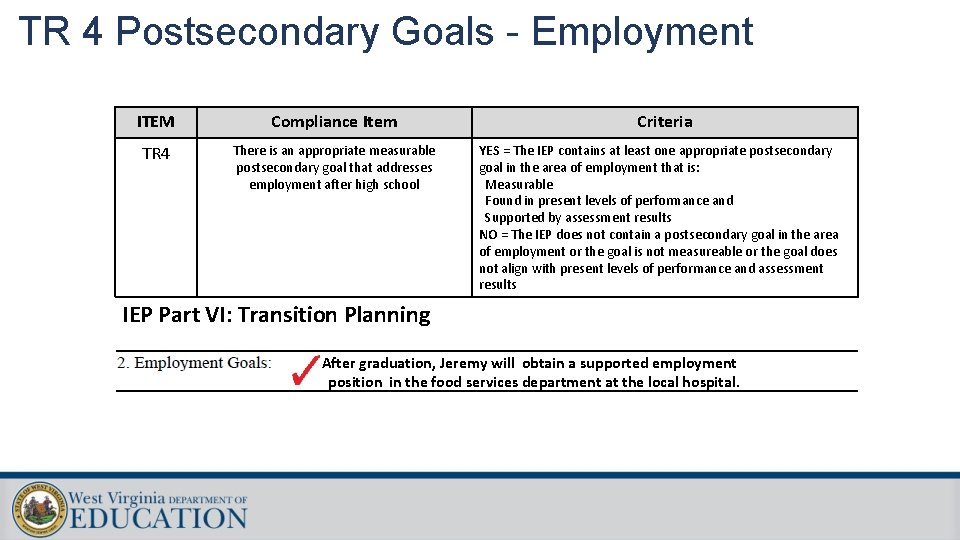
TR 4 Postsecondary Goals Employment TR 4 Postsecondary Goals - Employment ITEM Compliance Item TR 4 There is an appropriate measurable postsecondary goal that addresses employment after high school Criteria YES = The IEP contains at least one appropriate postsecondary goal in the area of employment that is: Measurable Found in present levels of performance and Supported by assessment results NO = The IEP does not contain a postsecondary goal in the area of employment or the goal is not measureable or the goal does not align with present levels of performance and assessment results IEP Part VI: Transition Planning After graduation, Jeremy will obtain a supported employment position in the food services department at the local hospital.
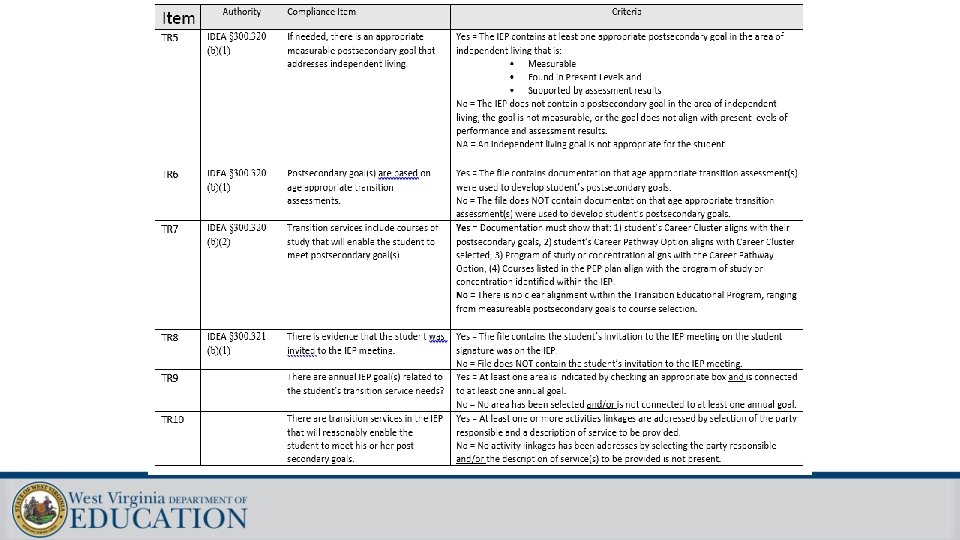
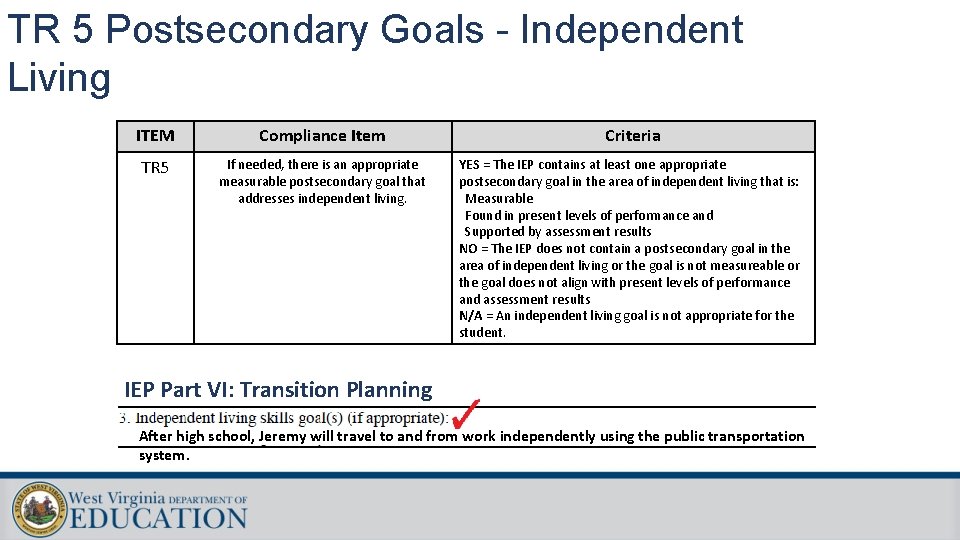
TR 5 Postsecondary Goals Independent Living TR 5 Postsecondary Goals - Independent Living ITEM Compliance Item Criteria TR 5 If needed, there is an appropriate measurable postsecondary goal that addresses independent living. YES = The IEP contains at least one appropriate postsecondary goal in the area of independent living that is: Measurable Found in present levels of performance and Supported by assessment results NO = The IEP does not contain a postsecondary goal in the area of independent living or the goal is not measureable or the goal does not align with present levels of performance and assessment results N/A = An independent living goal is not appropriate for the student. IEP Part VI: Transition Planning After high school, Jeremy will travel to and from work independently using the public transportation system.
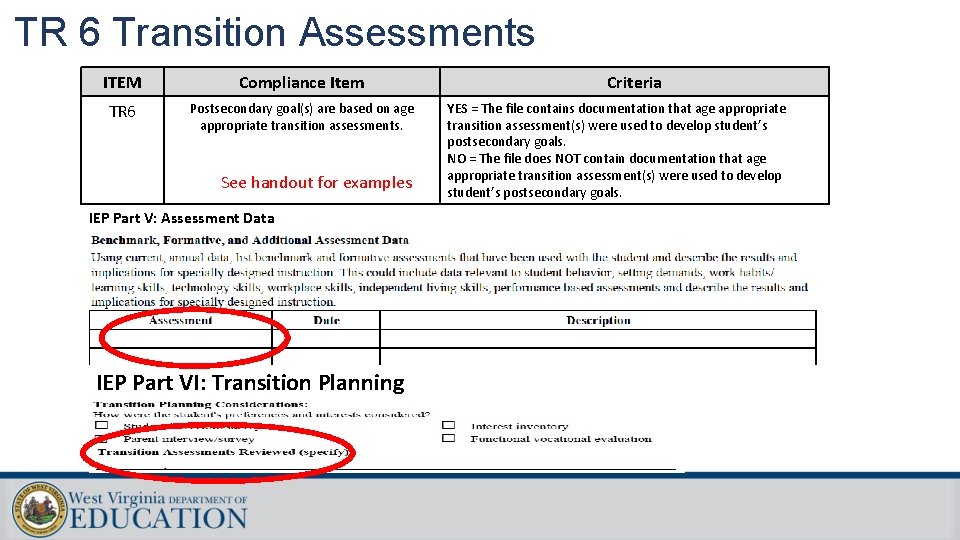
TR Transition Assessments TR 6 Transition Assessments ITEM Compliance Item TR 6 Postsecondary goal(s) are based on age appropriate transition assessments. See handout for examples IEP Part V: Assessment Data IEP Part VI: Transition Planning Criteria YES = The file contains documentation that age appropriate transition assessment(s) were used to develop student’s postsecondary goals. NO = The file does NOT contain documentation that age appropriate transition assessment(s) were used to develop student’s postsecondary goals.
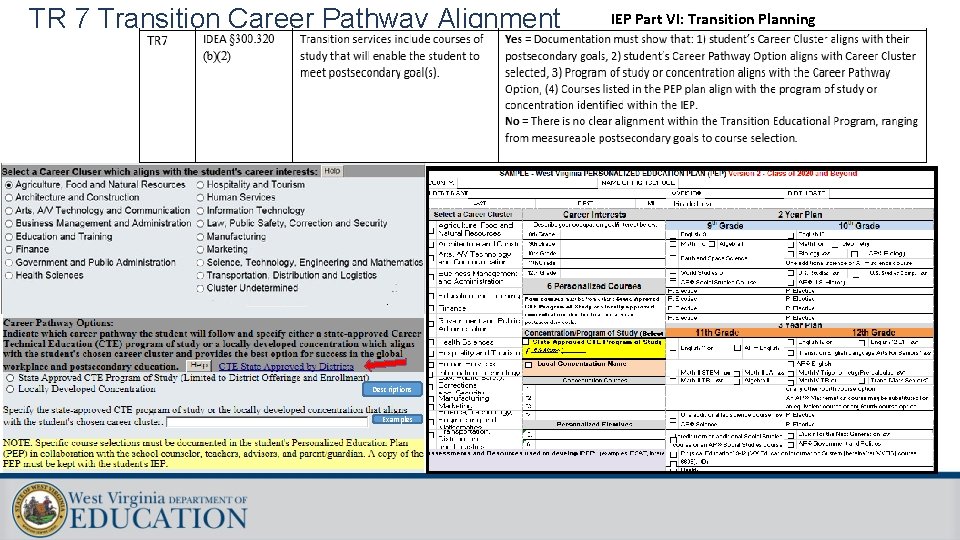
TR 7 Transition Career Pathway Alignment Descriptions Examples IEP Part VI: Transition Planning
Click here to see examples of how write post-secondary transition goals.
Career Clusters Links to the WVDE CTE website have been embedded into the career cluster section. A new icon has been added to the 16 clusters which provides information on the Individual Work Ready Competencies (IWRC) and Career Integrated Experiential Learning (CIEL). 142
Descriptions Examp; es Move to next slide to see examples of a district’s CTE State Approved Curriculum
Descriptions Examp; es Move to next slide to see the descriptions of Career Pathway Options
State-Approved CTE Program of Study Descriptions: State-Approved Career and Technical Education (CTE) Program of Study is an approved sequence of four CTE courses which align to a CTE cluster and pathway, impacts state economic labor market needs as verified by Workforce data and leads to an industry-recognized credential or certificate or opportunity for continuing into postsecondary level education. Students must be capable of passing 100% of the safety exams for the respective program of study. State-Approved Individual Work Readiness Competencies (IWRC) Prerequisites: Before selecting IWRC, students must have initially selected the State-Approved (CTE) Program of Study option; completed at least two CTE courses in their chosen area of career interest; passed ALL safety exams; demonstrated the ability to acquire basic/core CTE skills at an entry level; were unable to master ALL of the required skill sets associated with their state-approved CTE program of study. IWRC is an approved sequence of four CTE courses which align to a CTE cluster and pathway that provides students who have a current IEP the opportunity to gain valuable work readiness through a CTE program of study. Students demonstrate the necessary skill sets for entry level support jobs in a specific occupational area. Students must be pursuing a standard diploma and be capable of passing 100% of the safety exams for the respective program of study. State-Approved Career Integrated Experiential Learning (CIEL) is a personalized CTE program of study developed to meet student needs by providing them marketable job skills and opportunities to test for multiple nationally recognized certifications. Locally Developed Concentration Descriptions: Locally Developed Career and Technical Education (CTE) Concentration is a locally approved sequence of four CTE courses which align to a CTE cluster and pathway, impacts a local economic labor market need as verified by local advisory council and leads to an industry-recognized credential or certificate or opportunity for continuing into postsecondary level education. Locally Developed Personalized Concentration is a locally approved sequence of four courses which align to a career cluster and a program of study that could lead directly to an industry-recognized certificate or to credit-bearing academic college courses. Best practice would be to encourage college bound students to take at least 1 (one) AP and/or AC course with corresponding examination, a fourth science or computer science credit, and 2 credits in one world language. Locally Developed Community Ready Concentration is a locally approved sequence of four courses which align to a career cluster that will lead to placement in entry-level support jobs or workforce training programs. 145
Descriptions Examples
In this example, the user begins by clicking on the career cluster area of Architecture and Construction. A new slide opens revealing the program of studies associated with that cluster, including Carpentry. Clicking on Carpentry will reveal a listing of possible job opportunities associated with that program of studies such as Carpenter Apprentice. . 147
Descriptions Examples Move to next slide to see example of Personalized Education Plan template
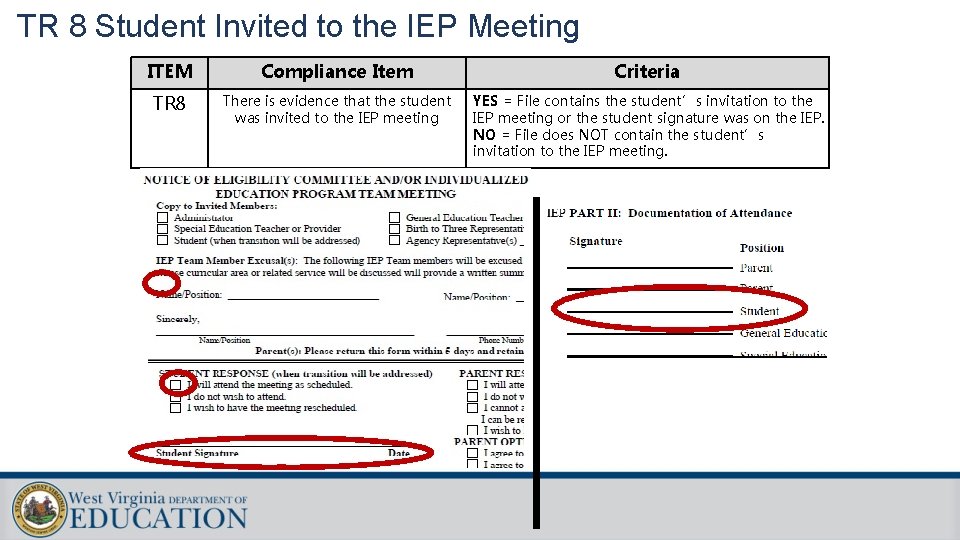
TR 8 Student Invited. TR 8 to Student the IEPInvited Meeting to the IEP Meeting ITEM Compliance Item Criteria TR 8 There is evidence that the student was invited to the IEP meeting YES = File contains the student’s invitation to the IEP meeting or the student signature was on the IEP. NO = File does NOT contain the student’s invitation to the IEP meeting.
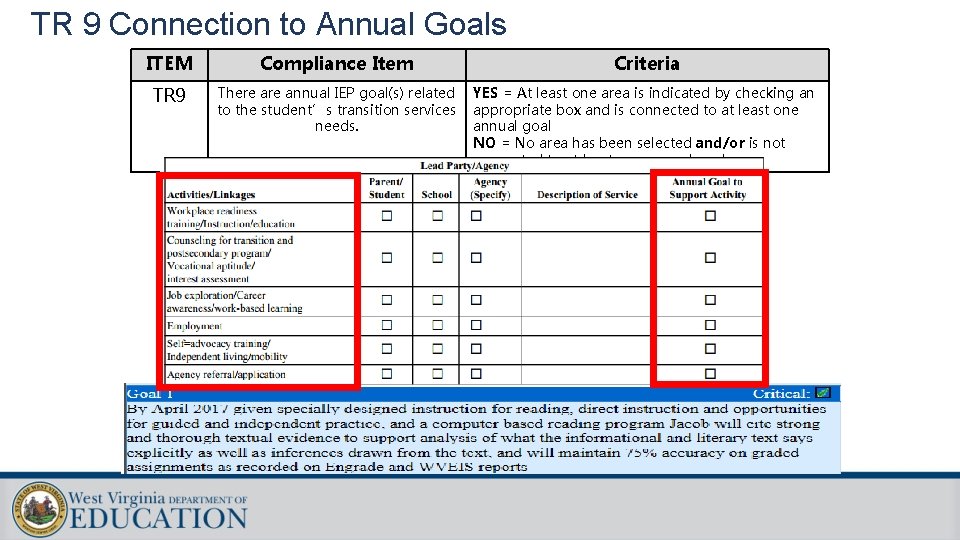
TR 9 Connection to Annual Goals ITEM Compliance Item Criteria TR 9 There annual IEP goal(s) related to the student’s transition services needs. YES = At least one area is indicated by checking an appropriate box and is connected to at least one annual goal NO = No area has been selected and/or is not connected to at least one annual goal
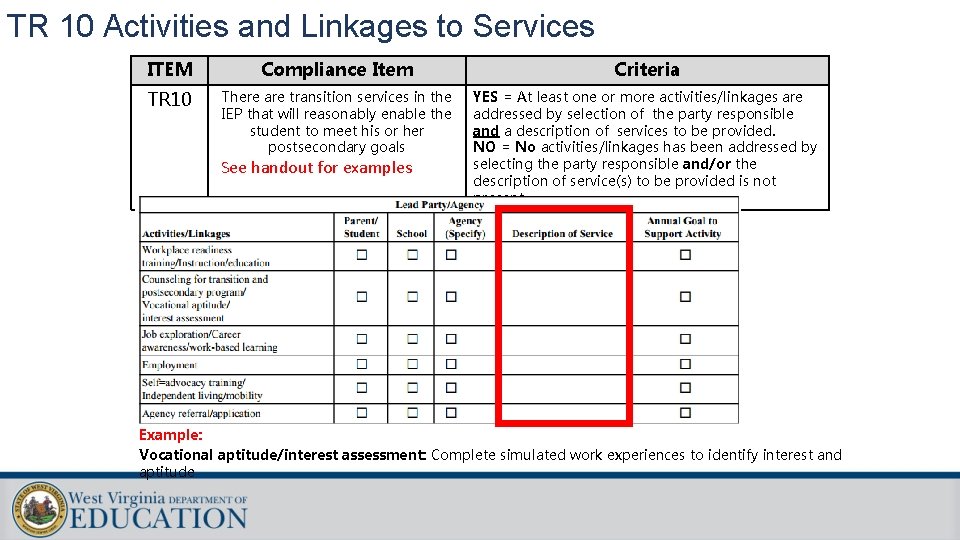
TR 10 Activities and TR 10 Linkages to Services Activities and Linkages to Services ITEM Compliance Item Criteria TR 10 There are transition services in the IEP that will reasonably enable the student to meet his or her postsecondary goals YES = At least one or more activities/linkages are addressed by selection of the party responsible and a description of services to be provided. NO = No activities/linkages has been addressed by selecting the party responsible and/or the description of service(s) to be provided is not present. See handout for examples Example: Vocational aptitude/interest assessment: Complete simulated work experiences to identify interest and aptitude
Transition – Activities/Linkages 153
Why did we create a Transitional Program? • Transition planning is a process that brings together a student and those individuals directly involved in helping the student prepare to enter a post-school environment. . • Unless the transition process is formalized, little thought or planning is given to the student's future service or program needs. 154
Areas that must be discussed when participating in a transition planning meeting: • What is the student’s long term goal in the area of Postsecondary Education or Training? • What is the student’s long term goal in the area of Employment? • What is the student’s long term goal in the area of Independent Living/Community Participation (if appropriate)? 155
WVDE Monitors In-Depth Look at Transition WVDE monitors will be taking a more in-depth look at transition services this school year, which will include the following: • Documentation that written consent was obtained prior to inviting an agency representative to the NEXT IEP meeting and that the subsequent IEP Meeting Notice includes the invited agency representative; • Documentation that the student was invited to the IEP meeting when transition is to be addressed; • Documentation of appropriate measureable postsecondary goals which address education/training, employment, and if needed, independent living; • Documentation that age appropriate transition assessments were used to develop the student’s postsecondary goals; • Documentation of how student preferences and interests were considered when planning for transition; • Documentation that at least one annual goal in the student’s IEP is related to the student’s transition needs; 156
Look at Transition- Continued • Documentation that at least one or more activities/linkages are addressed by selection of the party responsible and a description of services provided; and • Documentation that (1) the student’s identified Career Cluster aligns with the student’s identified career interests; (2) the student’s state approved program of studies or locally developed concentrations align with the Career Cluster, which was selected; (3) the courses of study documented on the student’s Personalized Education Plan (PEP) align with the student’s state approved program of studies or locally developed concentrations. Note: • Information about the PEP Plan is discussed in WV BOE Policy 2315 and Policy 2510. • It is noted at the bottom of the IEP transition page that a copy of the PEP Plan should be kept with the student’s IEP so that the IEP Team and monitors can review the alignment of the courses of study documented on the PEP to determine if they support the program of studies. • If the PEP Plan is not available, the monitors will review the student’s schedule or transcript as evidence that the student is enrolled in the courses of study, which will lead toward achievement of his or her transition goals. 157
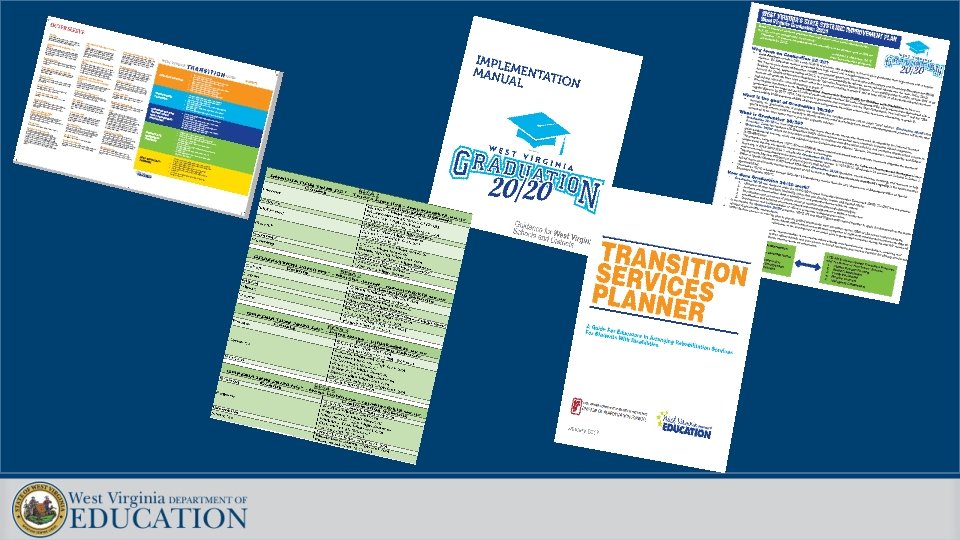
Policy 2419 Added Pre-Employment Transition Services (Pre-ETS): (2419 page 52) Job exploration Work-based learning Counseling for transition and post-secondary programs Workplace readiness training Self-advocacy training Added Division of Rehabilitation Services to Level I and Level II Services. Removed sheltered workshops and replaced with community-based work exploration. Policy 2419
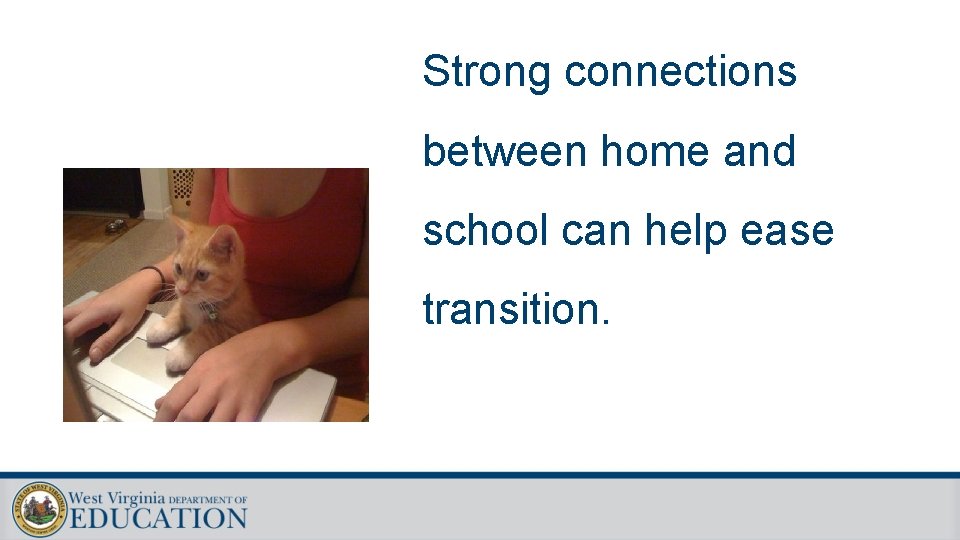
Strong connections between home and school can help ease transition.
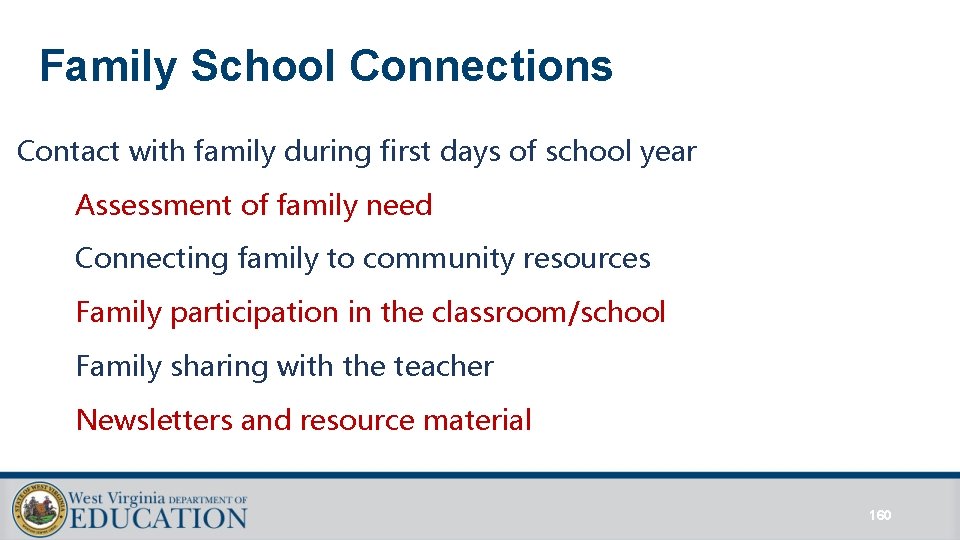
Family School Connections Contact with family during first days of school year Assessment of family need Connecting family to community resources Family participation in the classroom/school Family sharing with the teacher Newsletters and resource material 160
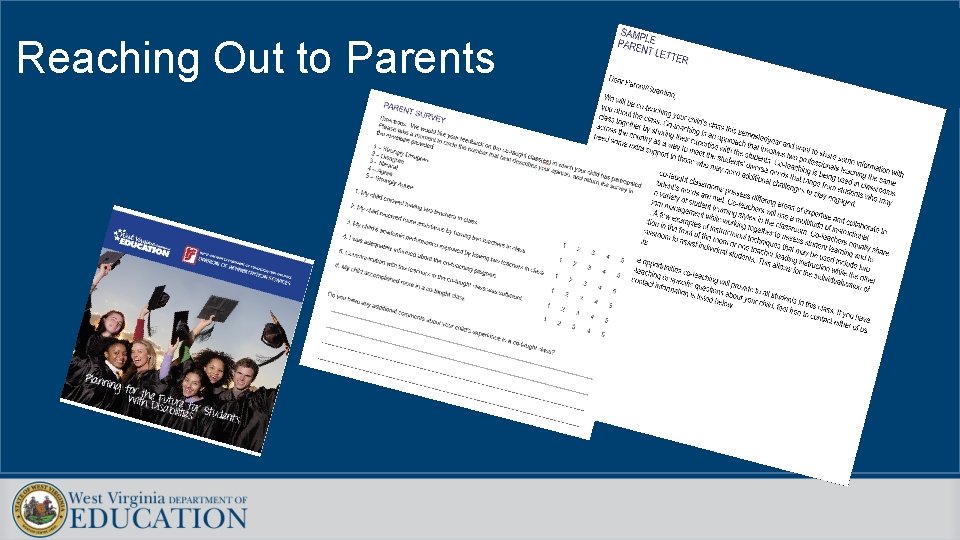
Reaching Out to Parents
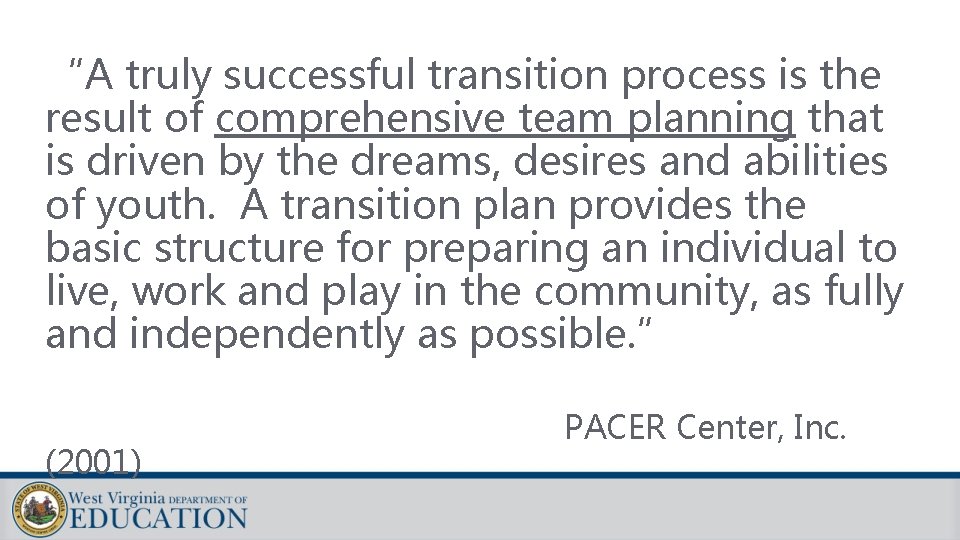
“A truly successful transition process is the result of comprehensive team planning that is driven by the dreams, desires and abilities of youth. A transition plan provides the basic structure for preparing an individual to live, work and play in the community, as fully and independently as possible. ” (2001) PACER Center, Inc.
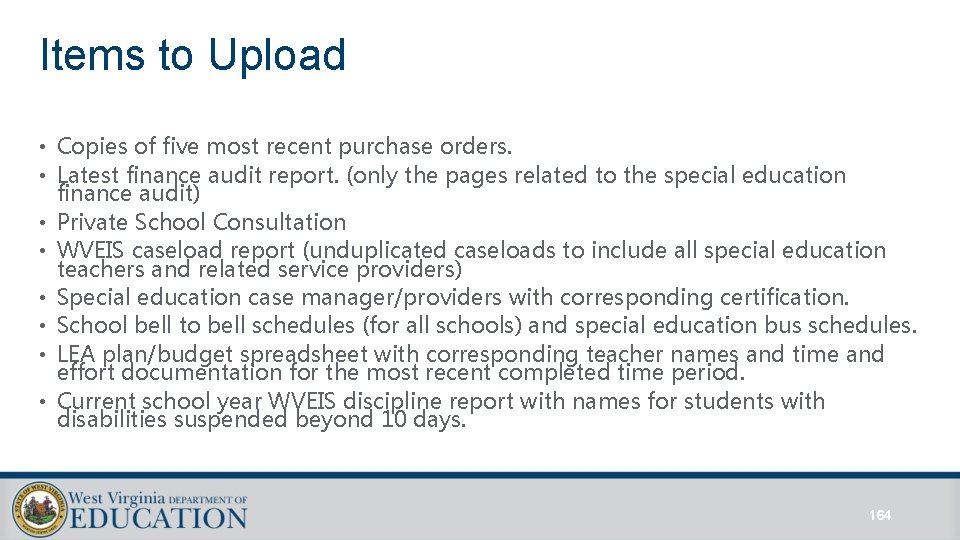
Items to Upload • Copies of five most recent purchase orders. • Latest finance audit report. (only the pages related to the special education finance audit) • Private School Consultation • WVEIS caseload report (unduplicated caseloads to include all special education teachers and related service providers) • Special education case manager/providers with corresponding certification. • School bell to bell schedules (for all schools) and special education bus schedules. • LEA plan/budget spreadsheet with corresponding teacher names and time and effort documentation for the most recent completed time period. • Current school year WVEIS discipline report with names for students with disabilities suspended beyond 10 days. 164
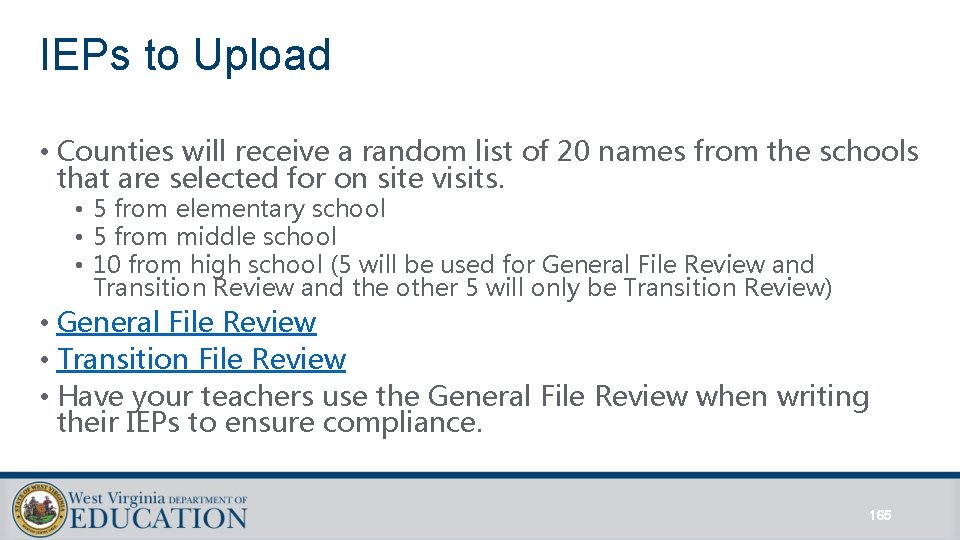
IEPs to Upload • Counties will receive a random list of 20 names from the schools that are selected for on site visits. • 5 from elementary school • 5 from middle school • 10 from high school (5 will be used for General File Review and Transition Review and the other 5 will only be Transition Review) • General File Review • Transition File Review • Have your teachers use the General File Review when writing their IEPs to ensure compliance. 165
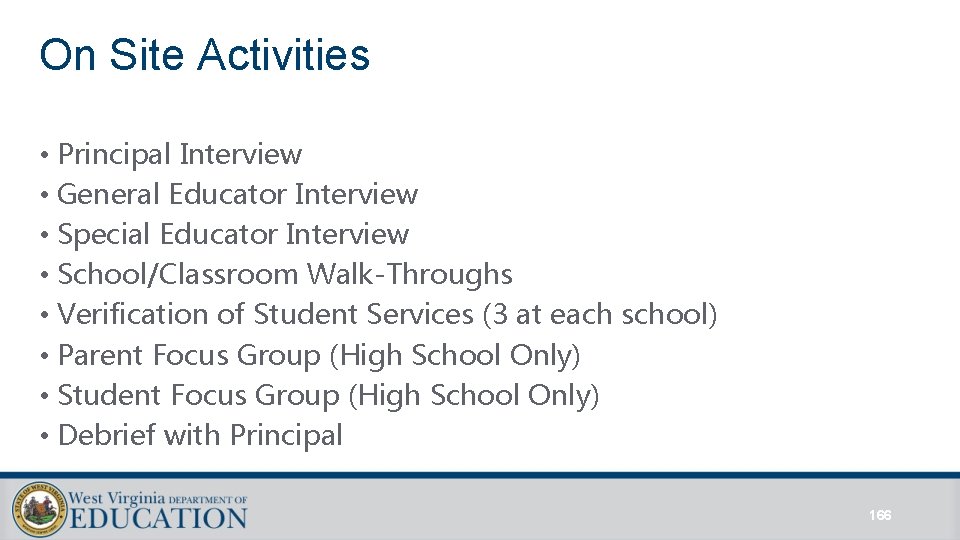
On Site Activities • Principal Interview • General Educator Interview • Special Educator Interview • School/Classroom Walk-Throughs • Verification of Student Services (3 at each school) • Parent Focus Group (High School Only) • Student Focus Group (High School Only) • Debrief with Principal 166
Office of Special Education Office of Federal Programs WV Division of Rehabilitation Services Questions? 167