Definition The Core Emotional Need for Connection and






















- Slides: 140
Definition The Core Emotional Need for Connection and Acceptance can be defined as the state a child lives in when he feels completely attached to his parent in a healthy way, that he belongs, and that he is accepted and loved unconditionally.
Atmosphere In order for the CEN for Connection & Acceptance to be met, children need to consistently and at an emotional level hear and believe the following messages from and/or about their parents:
They are playful and spend time with me. They miss me when I am not around. They care about deep feelings, both mine and theirs. They are proud of me even with my flaws.
They think I am special. They talk to me in a respectful way. They are truthful and honest with me. They believe and guide me.
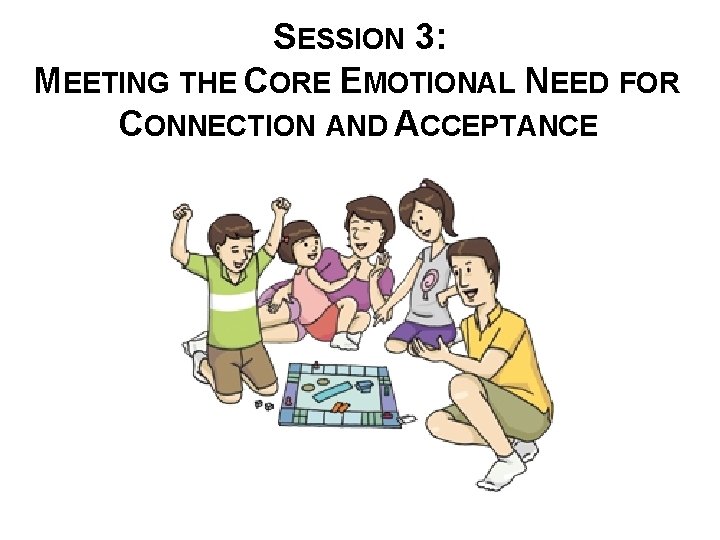
SESSION 3: MEETING THE CORE EMOTIONAL NEED FOR CONNECTION AND ACCEPTANCE
Research Reveals Students who attended Harvard University 1952 and 1954 were asked about the quality of their relationships with their parents. Thirtyfive years later, their medical records were collected. 87% who rated mothers and fathers low in parental caring had been diagnosed with diseases such as coronary artery disease, hypertension, duodenal ulcers and alcoholism in midlife. (cont’d)
Research Reveals (cont’d) Only 25% of them with positive parental experiences had diagnosed diseases. This research took into account of family history, smoking behavior, the death and / or divorce of parents and marital history of the students. Good Enough Parenting, page 70
New Testament Ephesians 6: 1 -3 Children, obey your parents in the Lord, for this is right. “Honour your father and mother”—which is the first commandment with a promise—“so that it may go well with you and that you may enjoy long life on the earth. ” (Ephesians 6: 1 -3)
New Testament Ephesians 6: 4 Paul also admonished parents: Fathers, do not exasperate your children; instead, bring them up in the training and instruction of the Lord. (Ephesians 6: 4)
God knows best…revealed through the Bible.
Connection & Acceptance in Genesis
Connection and Acceptance Read Genesis 25: 19 -34 » What were the strengths and weaknesses of both Esau and Jacob? » In Genesis 25: 28, how much do you think that favoritism from the parents by Isaac and Rebekah on Esau and Jacob respectively affected the relationship between the two sons?
» Did Esau feel different-looking (“red”)? Did he feel accepted by Rebekah, or perhaps flawed inside? Did he feel like he “fit in”? » How did Jacob feel not being able to match up with his brother’s hunting skills and adventurous spirit? Did he feel accepted by Isaac, or perhaps like there was something wrong with him?
» Speculate about how much the subject of the blessing to the oldest son, or birthright, might have been discussed and talked about among and between them as they grew up. » Considering Jacob’s relationship with Isaac, which of Jacob’s core needs were probably not met by his dad?
» How may have this affected Jacob as a teenager growing up and later on as an adult? » Considering Esau’s relationship with Rebekah, which of Esau’s core needs were probably not met? » How may have this affected Esau as a teenager growing up and later on as an adult?
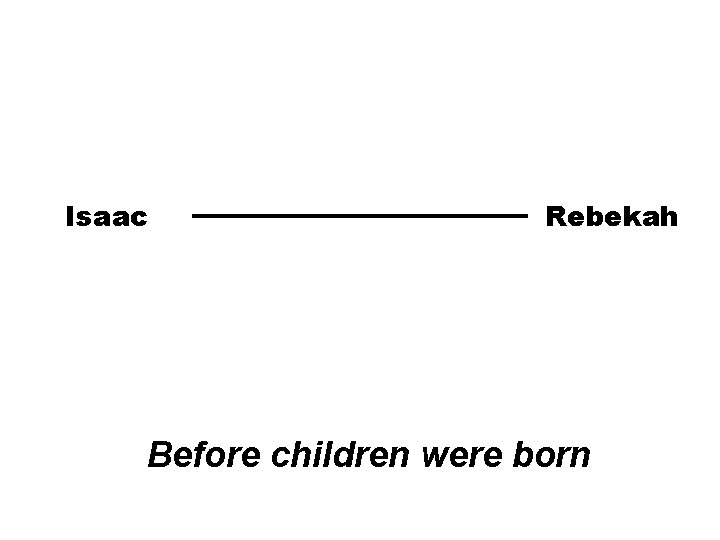
Isaac Rebekah Before children were born
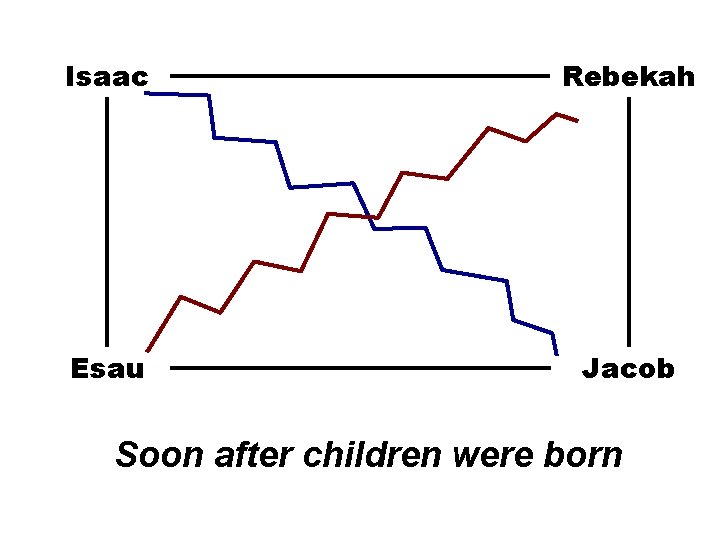
Isaac Rebekah Esau Jacob Soon after children were born
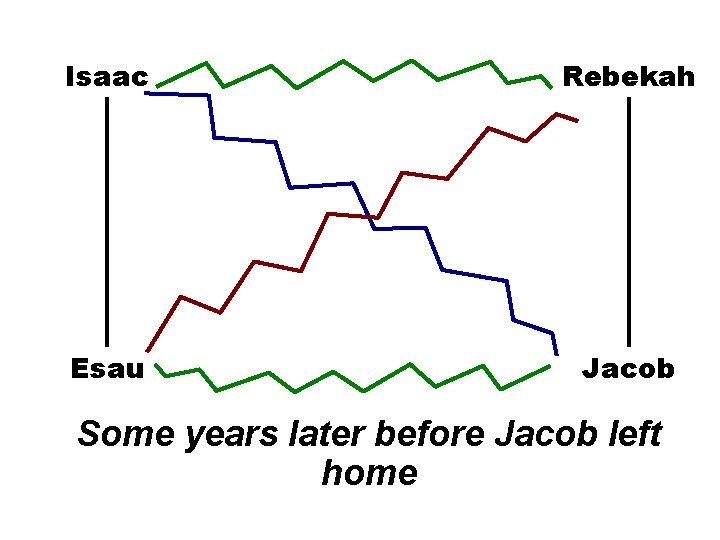
Isaac Rebekah Esau Jacob Some years later before Jacob left home
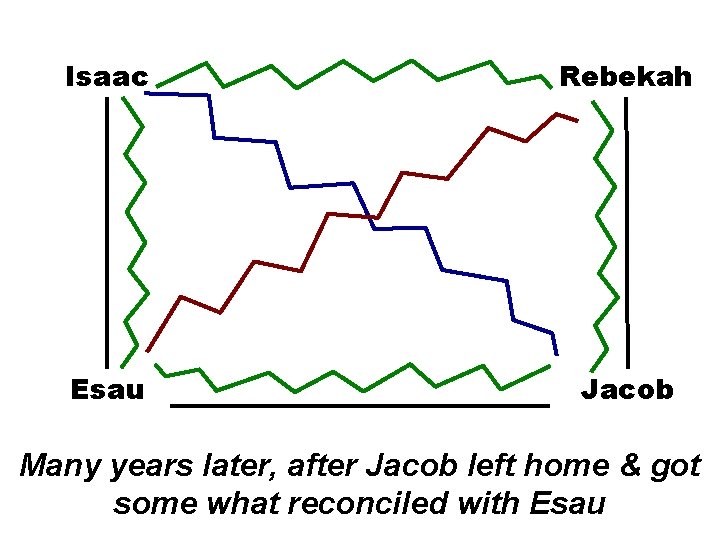
Isaac Rebekah Esau Jacob Many years later, after Jacob left home & got some what reconciled with Esau
So now that you have been introduced to what can happen when parents don’t meet this need, let’s learn how to meet the Core Emotional Need for Connection & Acceptance.
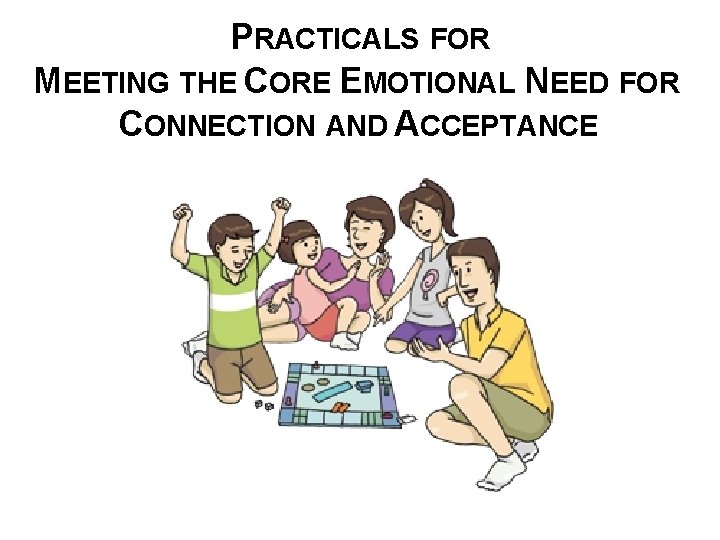
PRACTICALS FOR MEETING THE CORE EMOTIONAL NEED FOR CONNECTION AND ACCEPTANCE
QUALITY TIME TAKES TIME So how do we ensure that we are meeting the first core emotional need of connection and acceptance? It has to do with actually spending time with our children!
QUALITY TIME TAKES TIME Commit to a Regular One-on-One time with Each Child
MOVIE MOMENT Ordinary People Mother likes to spend time with everyone else BUT her son…
MOVIE MOMENT The Prizewinner of Defiance, Ohio Even with ten children, she did her best to spend time with her children. This mum is finally going out with friends, with her daughter driving…
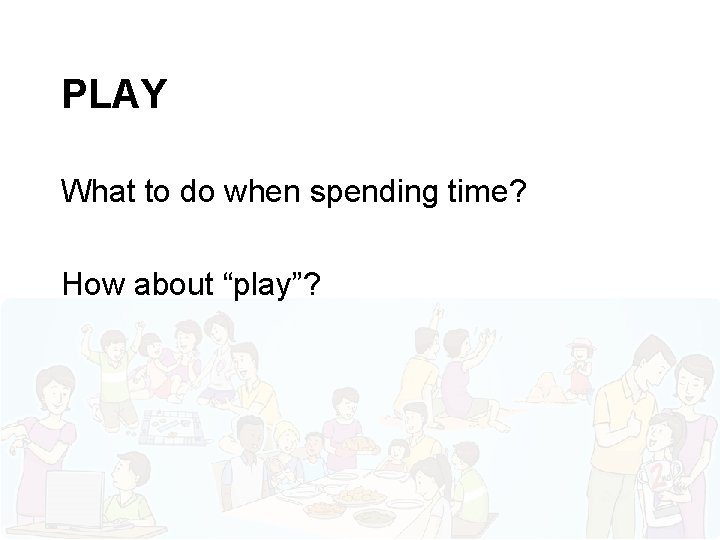
PLAY What to do when spending time? How about “play”?
Research Reveals “Play is one of the most cognitively stimulating things a child can do. ” One study of 814 children between three and six showed that “children who do well in Simon Says-like games do better in math and reading. A smaller study of 65 preschool children found that those who
Research Reveals (cont’d) started the school year with low levels of self-control showed improvement after playing games in class, including a version of Red Light, Green Light. ” What makes the Oregon State study so exciting is that it was a longitudinal study that followed 430 subjects from preschool to the age of 25.
Research Reveals (cont’d) “It turns out that a child’s ability at age 4 to pay attention and complete a task, the very skills learned in game play, were the greatest predictors of whether he or she finished college by age 25. ” Good Enough Parenting, page 126
MOVIE MOMENT Parenthood A good example of father and son spending time, after talking things over with the wife (the son was just diagnosed with Asperger's, a type of autism. )
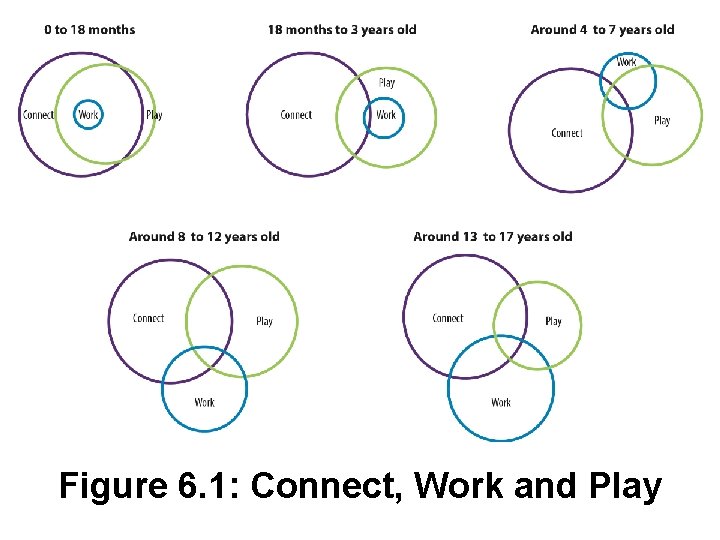
Fathers – capitalize on your strength as a father when it comes to the rough and tumble. For example, Sundays after lunch, small groups can meet for playtime with fathers and children (while mum’s have d-groups).
Figure 6. 1: Connect, Work and Play
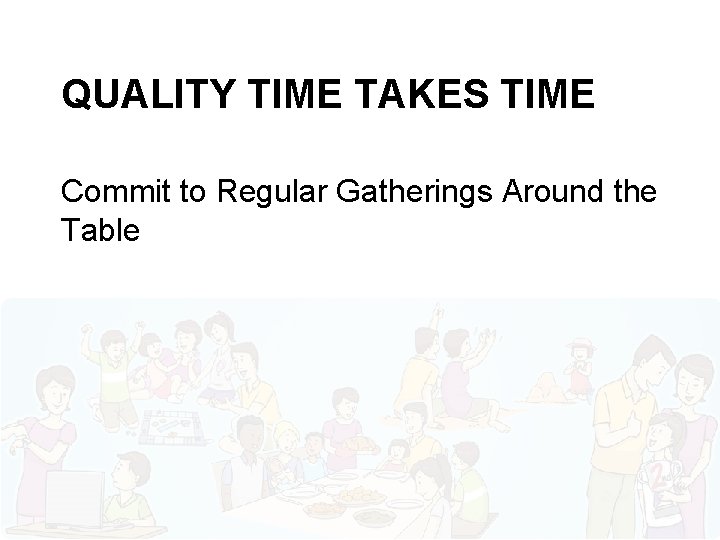
QUALITY TIME TAKES TIME Commit to Regular Gatherings Around the Table
Research Reveals Infrequency of mealtimes, negative climate during shared mealtimes and poor quality of food choices are related to depression, worry, fear, self-injury, social withdrawal and poor academic achievement. (cont’d)
Research Reveals (cont’d) » Also, parents responding to questions from children, and keeping their behavior well regulated is associated with enriched language development and academic achievement. Good Enough Parenting, page 105
EMPATHY AND VALIDATION OF FEELINGS After spending time, the second way we ensure that we are meeting the first core emotional need of connection and acceptance is to have empathy for our children and validate their feelings.
Research Reveals If there was a product that could help children Have better health Score higher academically (math and reading) Have better friends Have fewer behavior problems Be less prone to violence how much would you be willing to pay? Would you be willing to learn about it? Good Enough Parenting, page 72 -73
Definition of Empathy is the ability to "put oneself into another's shoes", or to in some way experience the outlook or emotions of another.
Matthew 7: 12 So in everything, do to others what you would have them do to you, for this sums up the Law and the Prophets.
MOVIE MOMENT Taare Zameen Par What does empathy look like? The boy’s new teacher comes to explain to the parents…
Some possible reasons why we find it hard to show empathy… 1) Our own lifetraps are getting triggered!
MOVIE MOMENT Ordinary People Mother’s lifetraps were getting triggered as she visited Buck’s room…
Some possible reasons why we find it hard to show empathy… 2) We have our own agenda
Some possible reasons why we find it hard to show empathy… 3) We jump to conclusions (don’t take time to listen)
MOVIE MOMENT Taare Zameen Par Fighting scene Not listening to the child, assuming the worst… This invalidates the children’s feelings, making them angry and discouraged.
Some possible reasons why we find it hard to show empathy… 4) We think that “one-way interaction” is conversation…
MOVIE MOMENT I Not Stupid Too What do they see you saying?
Some possible reasons why we find it hard to show empathy… 5) We are too tired and burdened from our own problems
Refer to Appendix 2 Processing Difficult Emotions
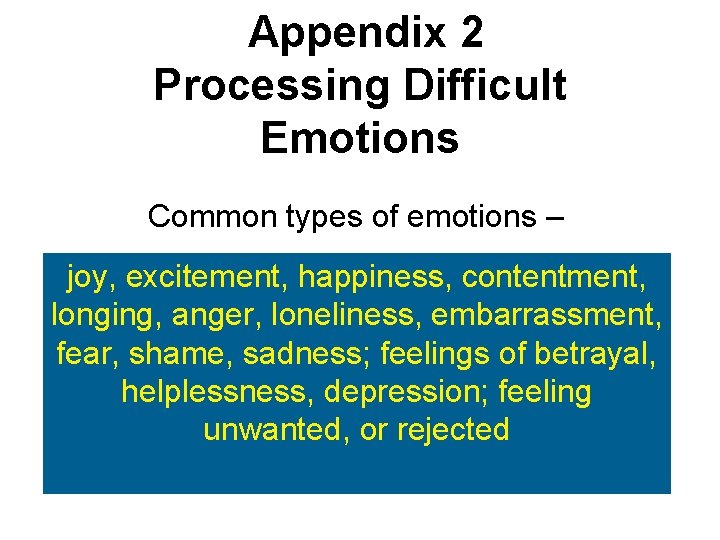
Appendix 2 Processing Difficult Emotions Common types of emotions – joy, excitement, happiness, contentment, longing, anger, loneliness, embarrassment, fear, shame, sadness; feelings of betrayal, helplessness, depression; feeling unwanted, or rejected
MOVIE MOMENT Ordinary People Mother wanted so badly to avoid feeling her feelings – she just couldn’t bring herself to connect.
Which ones are you most uncomfortable dealing with when you see them in your children? What is it about these feelings that makes you uncomfortable? Which of the three broad coping styles (surrendered, avoidant and counterattacking/overcompensating) do you rely on when you see these emotions mentioned above? How do you go about specifically coping with these feelings when you see them in your children?
Do you behave in a similar way each time your child experiences these feelings? Can you remember specific incidents involving these feelings from your childhood? (Maybe you experienced these emotions or someone around you did. ) Did your parents welcome these feelings? In general, how did your parents deal with your emotions? When your parents dealt with you this way, how did that make you feel?
Is there anything you wish that they said or did instead? What did you want from them? So in the end, how did you cope with these feelings when you were a child? What do you remember doing specifically? Why do you think this is so difficult for you? Is this similar or different to how you would deal with your child when he experiences the same feelings?
What do you say to your child when these feelings come out in them? What do you think they wish you would do or say instead? If you did that, how would it make you feel now? Do you see that not talking about feelings with your child can be harmful or do you think it is helpful?
Our favourite three prominent parenting experts in the area of giving valuable guidelines on how to process feelings with children in a healthy way are Ginott, Gottman, and the team of Faber & Mazlish. The principles they advocate apply to both older and younger children. In summary they are:
i) Be aware that the child is experiencing emotions, and have an initial idea of which emotion(s) they might be feeling. This involves interpreting the verbal expressions, tone, and non-verbal expressions of the child. ii) See the child’s feelings as an opportunity to connect with them at an emotional level. This will strengthen the bond between the parent and child. Parents should not rush into giving solutions. Both the tone of voice and body language is crucial in communicating this message to them.
iii) Draw the child out verbally to be able to express these emotions or feelings, and to label these feelings or emotions correctly. This process will train the child (and in the beginning, the parent) to process his feelings, and thereafter cope in a healthy way. iv) Validate the emotion(s), then show empathy and compassion to the child. Again parents should not rush into giving solutions. v) At a suitable time, collaborate with the child and help resolve the issue that triggered the child.
Comes from their “child side”, not from their coping styles Also includes dealing with emotions more often seen as being “positive”, such as peace, happiness and fulfillment.
When your children are experiencing any of these emotions… Understand that these so-called “negative” emotions are an opportunity to teach/coach/ and connect with your children.
What does it look like? » Not poking fun of feelings that make you feel uncomfortable » Empathizing with soothing words and affection » Offering guidance – children have a right to their feelings but behaviour has limits (timing is important) » THIS IS GOOD ENOUGH PARENTING!
Proverbs 17: 22 22 A cheerful heart is good medicine, but a crushed spirit dries up the bones. Proverbs 18: 14 14 A man's spirit sustains him in sickness, but a crushed spirit who can bear?
When you meet the core need for Connection & Acceptance you are conveying to your children: “Your feelings matter…” “Your preferences matter…” And they should feel, “Wow, I am special…”
When you meet this core need, you will: » Value all of your children’s emotions – anger, sadness, fear, etc » See these emotions as an opportunity to teach/connect » Know what needs to be done – giving direction, guidance
Age Appropriate » Explanations/sharing should be shorter for younger children » As children get older, you should ask their opinion more often, and be prepared to admit that you may also be wrong » Share personally about things that happened to you at their age.
Practicals: 1. Empathize with them… 2. “If I felt like this, I would be angry too…” 3. Personal sharing…(Age appropriate) 4. Remember to accept the feelings, not necessarily the behavior. 5. If we had to go back, what could have been different? 6. Remember limits on behavior.
7. Voicing disapproval and anger is NOT wrong, provided it is firm but not contemptuous, character attacking, or punitive (must be age appropriate) 8. Teach and guide (Age appropriate) 9. Closure and reconciliation (Age appropriate).
Important… » Parents determine which behavior is appropriate; Spirituality makes a difference » Appropriate anger shows which values are held dearly » Manipulation is to be avoided – don’t be confused with the need to show empathy.
When it is not appropriate: » In front of others » When in a hurry » Too tired / angry » Serious behavioral problem
» When emotional connection is strong then your children will enjoy being with you, not just respect and love you… » If emotional connection with children is strong then your disapproval and mild anger will already be a form of discipline because they care about your relationship with them. » If weak, then it motivates them to do the opposite – to provoke you instead.
How would your kids rate YOUR communication skills?
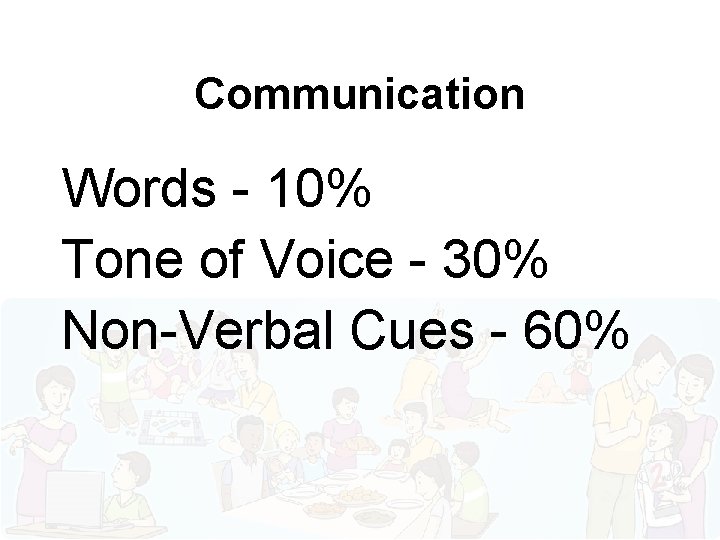
Communication Words - 10% Tone of Voice - 30% Non-Verbal Cues - 60%
Connection and Acceptance Involves Empathic Listening
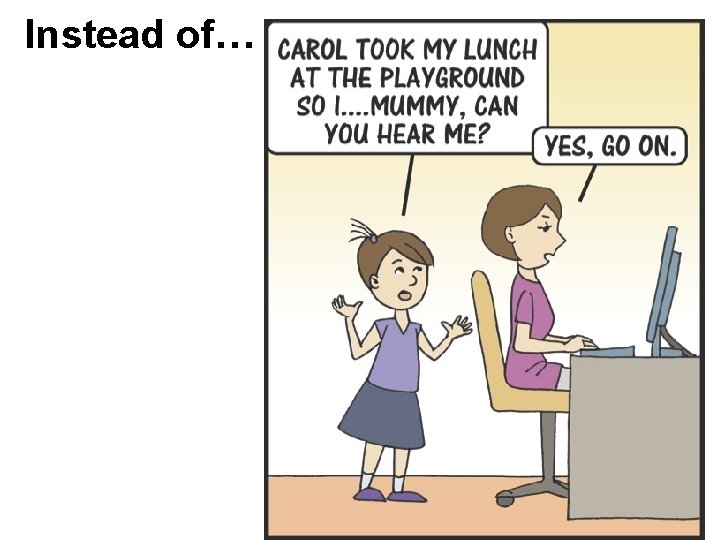
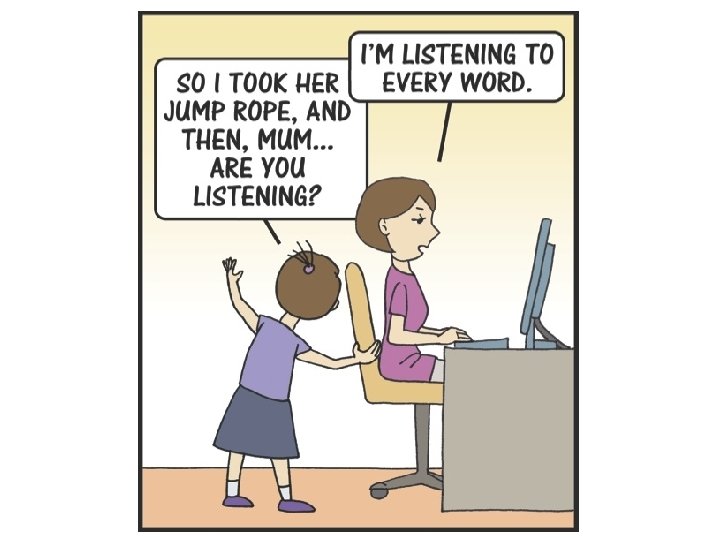
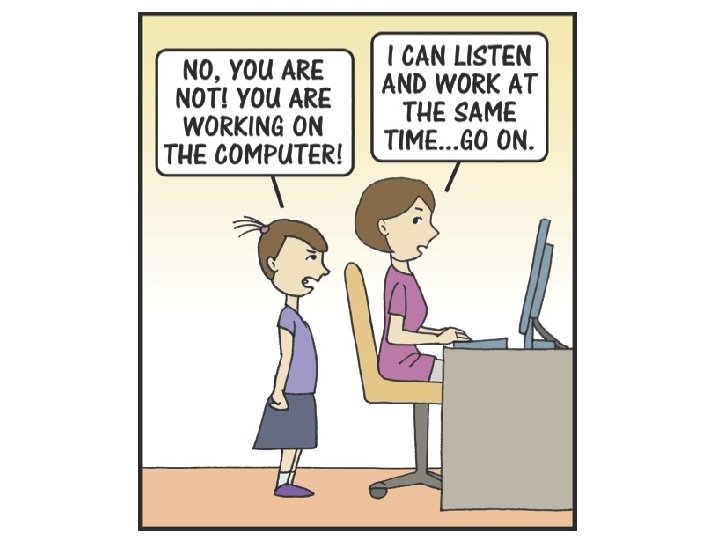
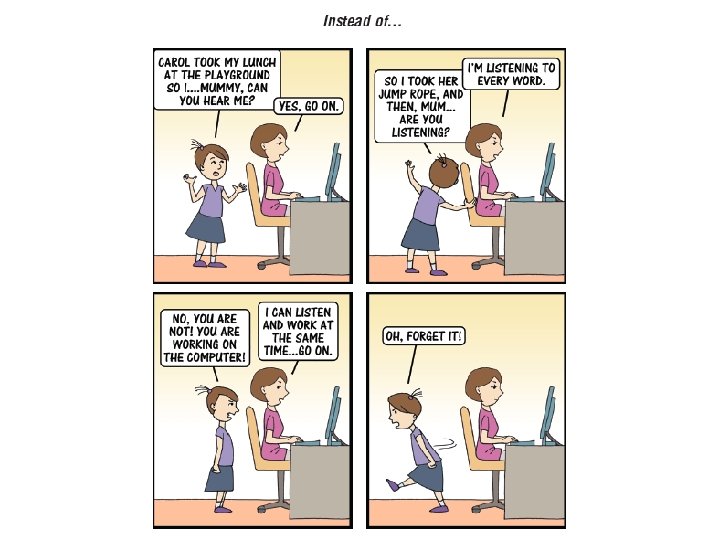
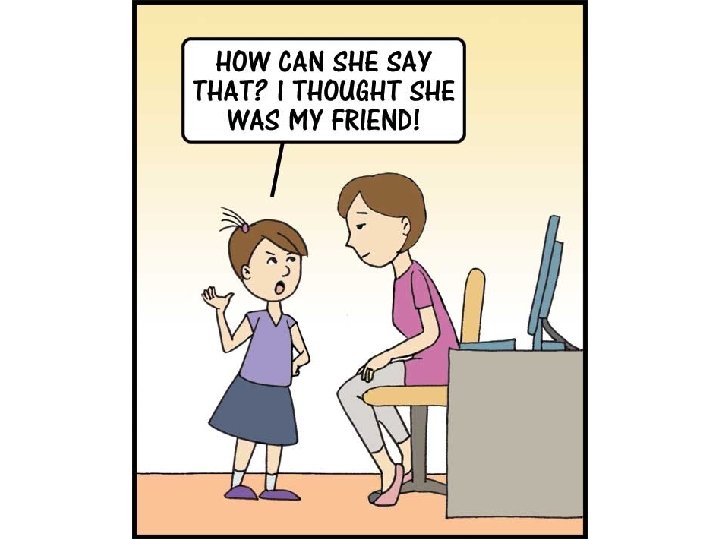
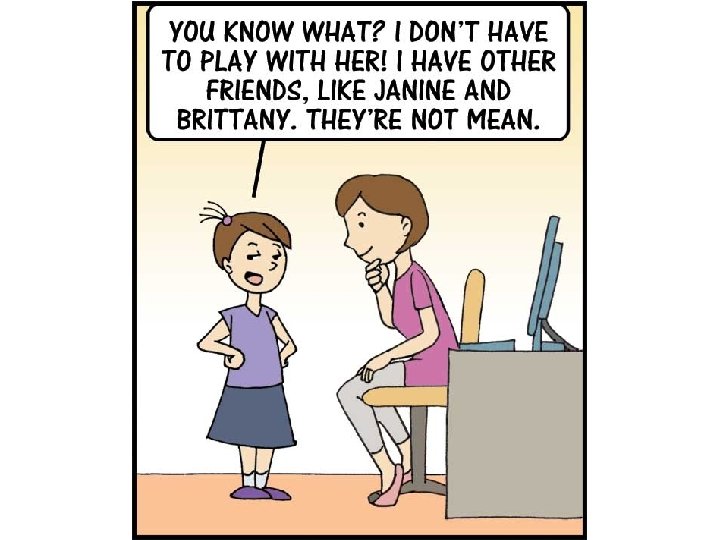
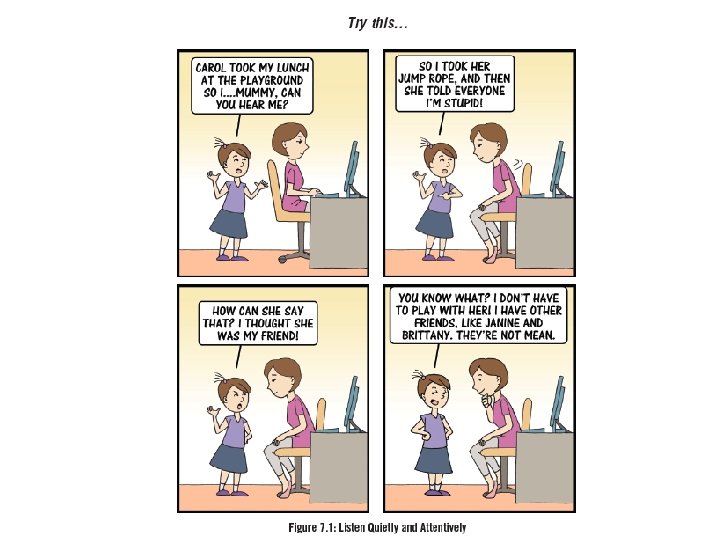
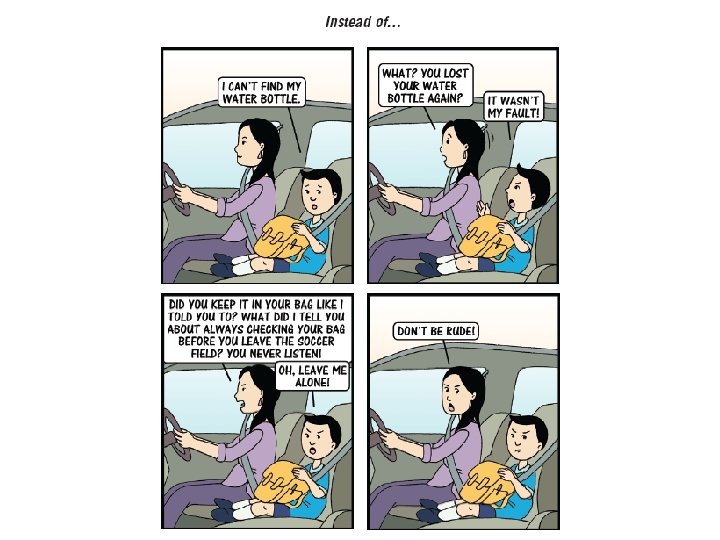
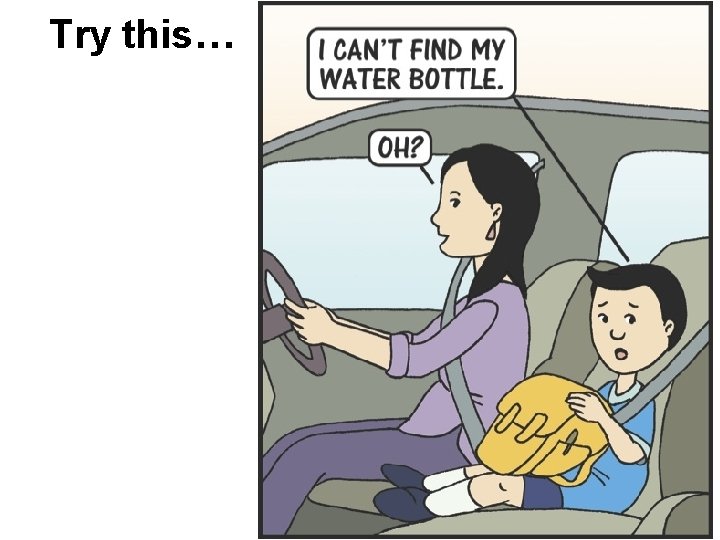
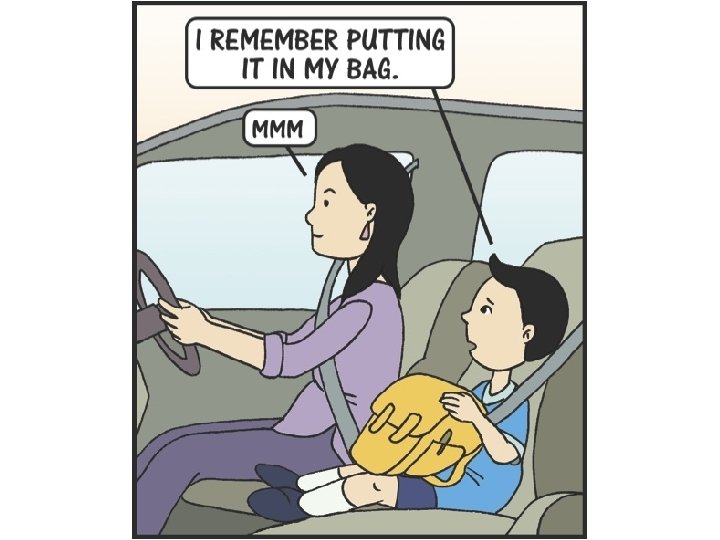
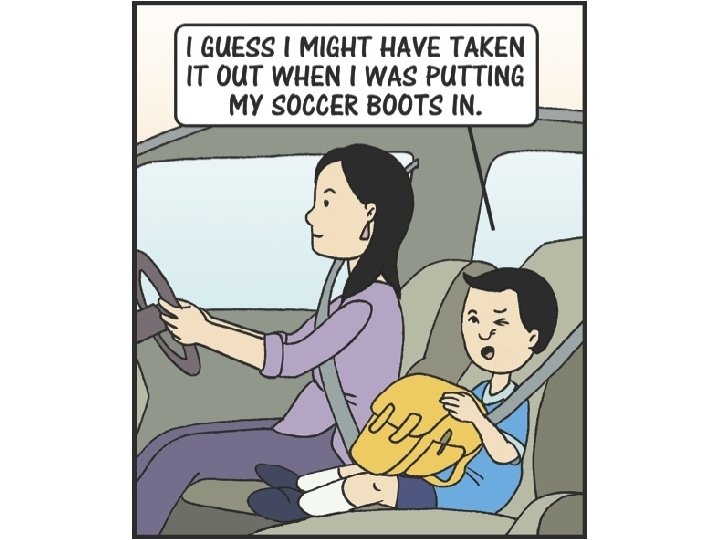
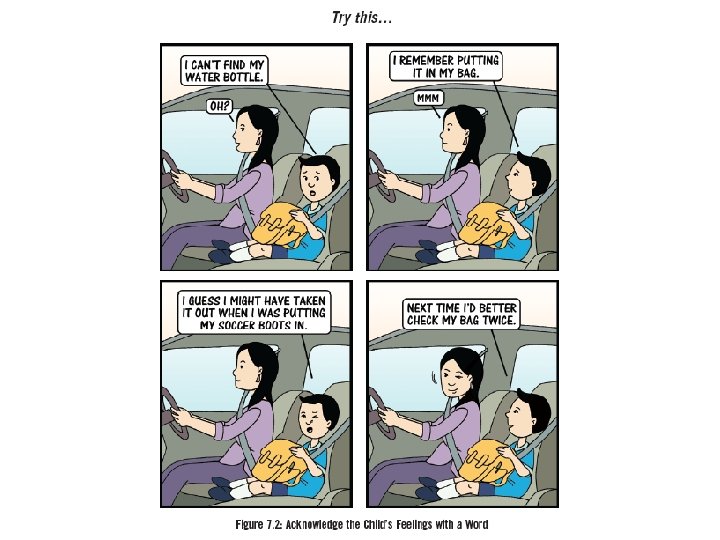
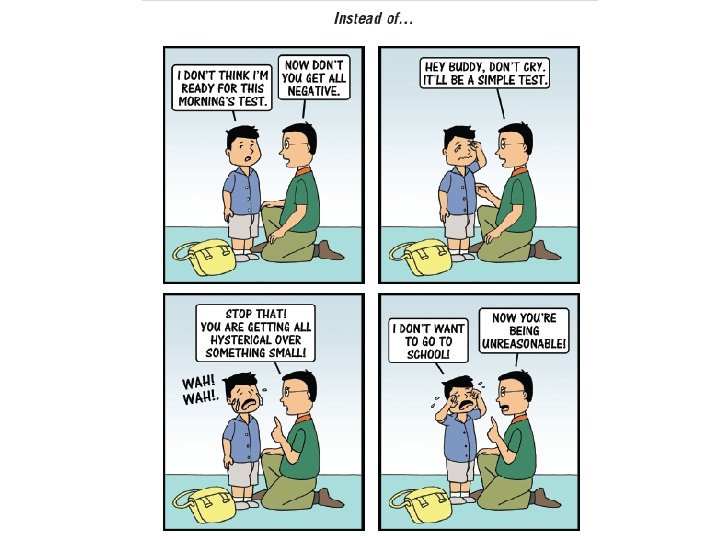
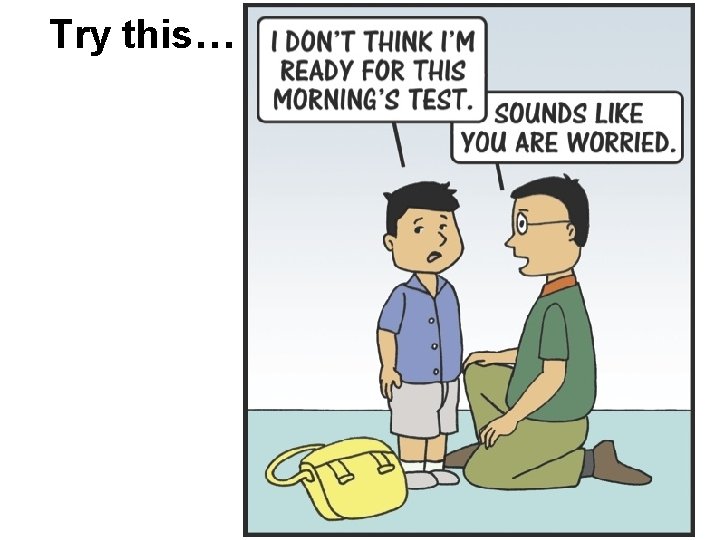
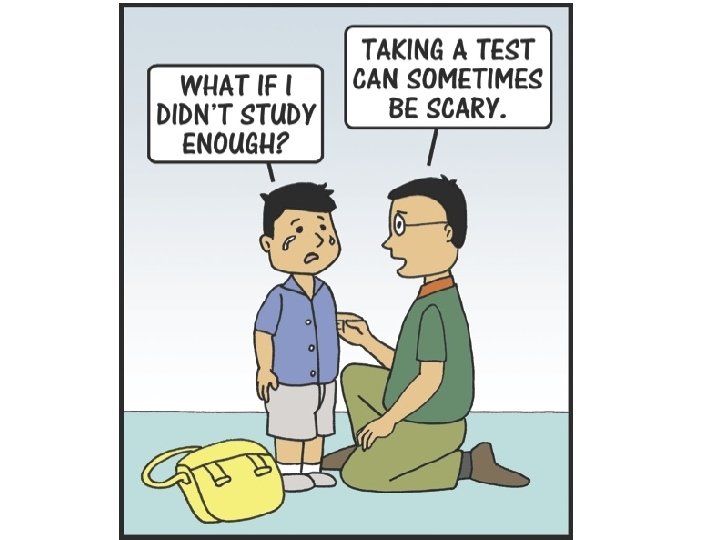
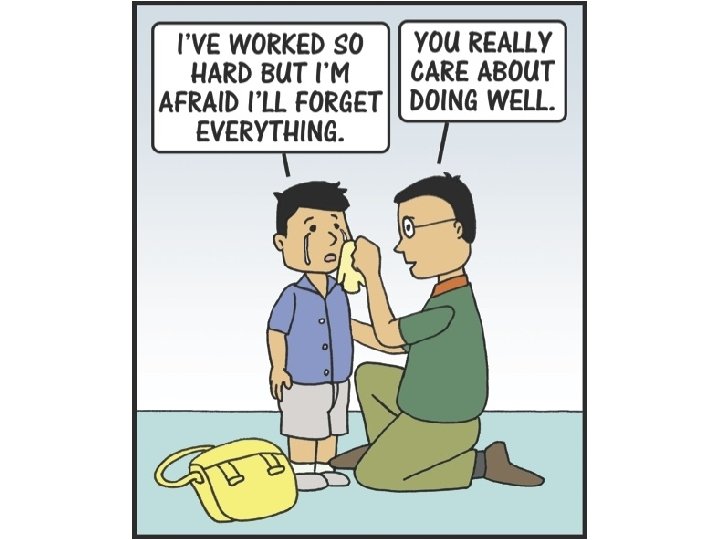
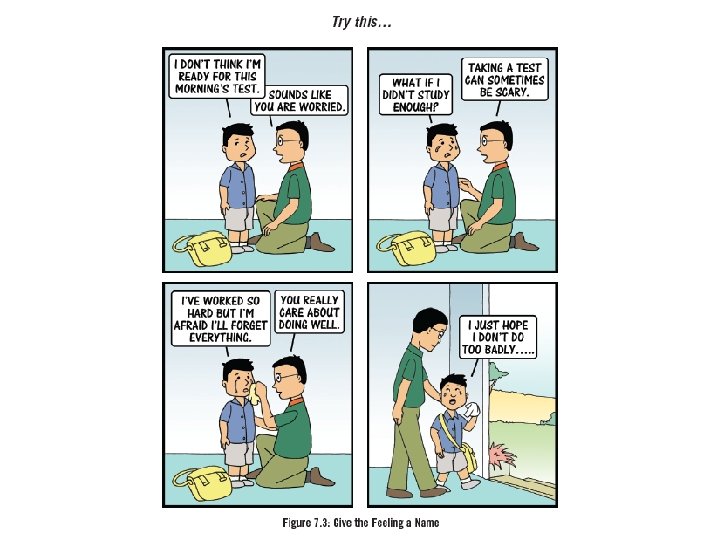
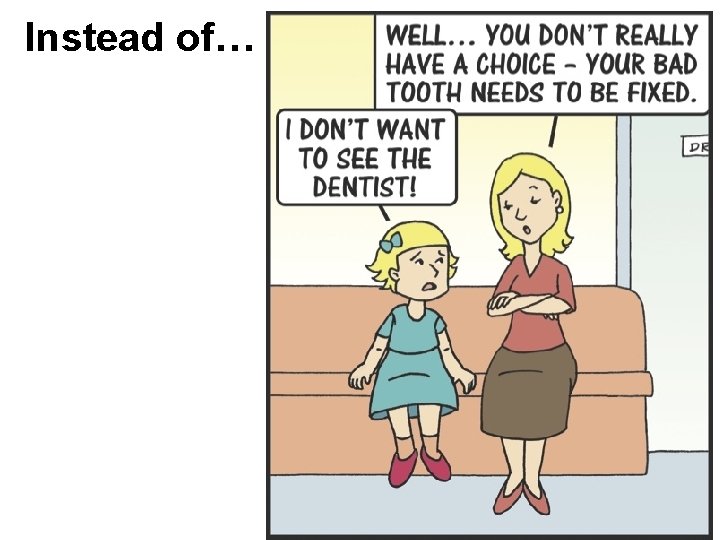
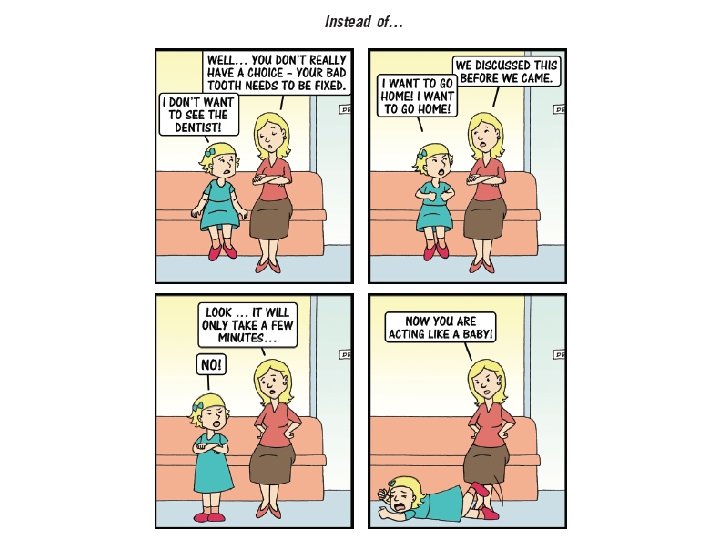
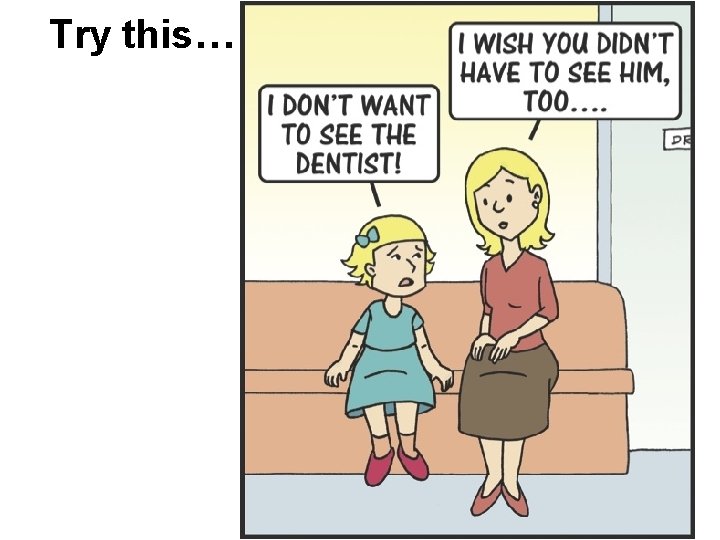
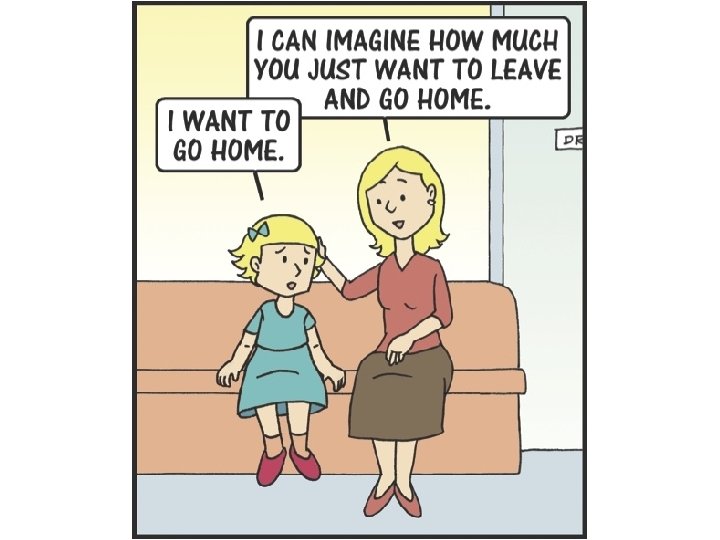
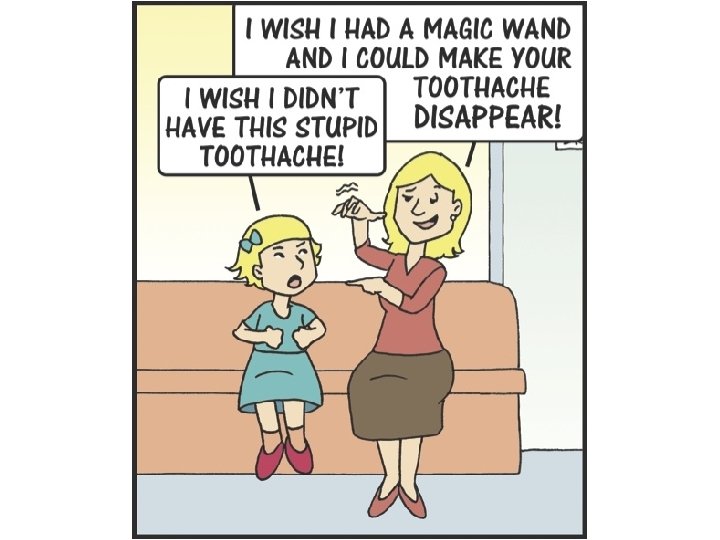
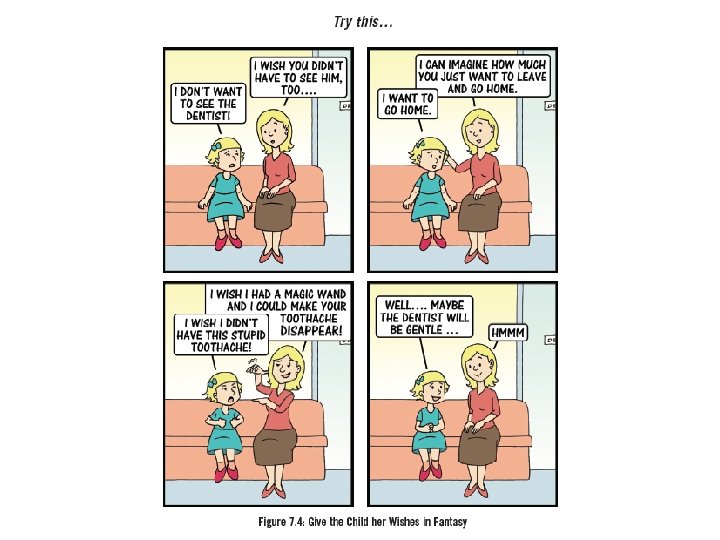
Empathic Listening » Listen Quietly and Attentively » Acknowledge the Child’s Feelings with a Word » Give the Feeling a Name » Give the Child her Wishes in Fantasy
Practicing Listening Quietly and Attentively – With Full Attention
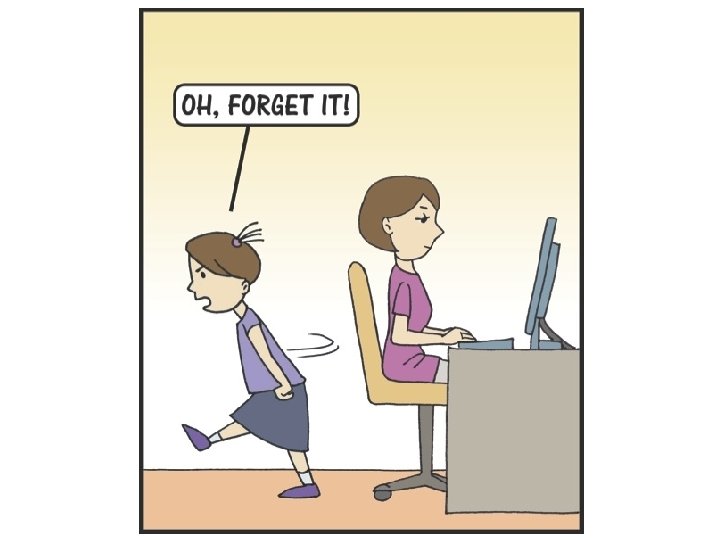
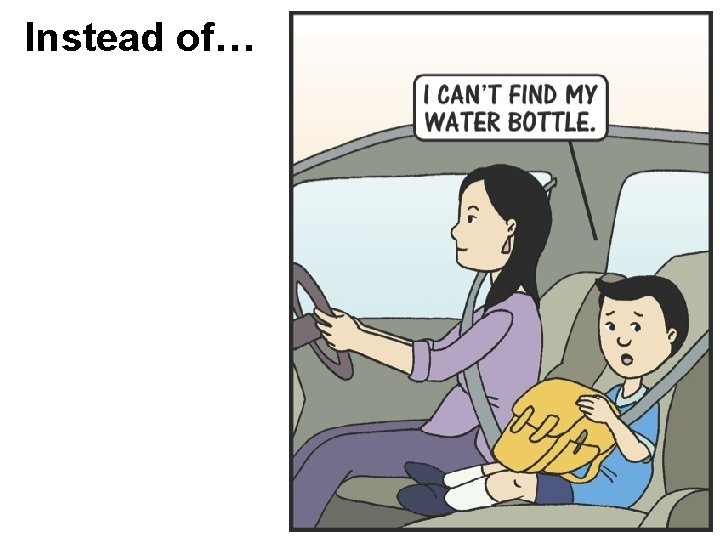
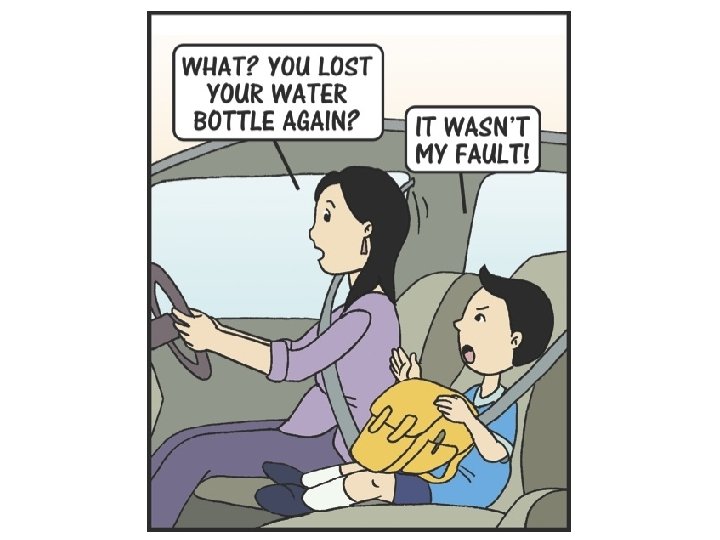
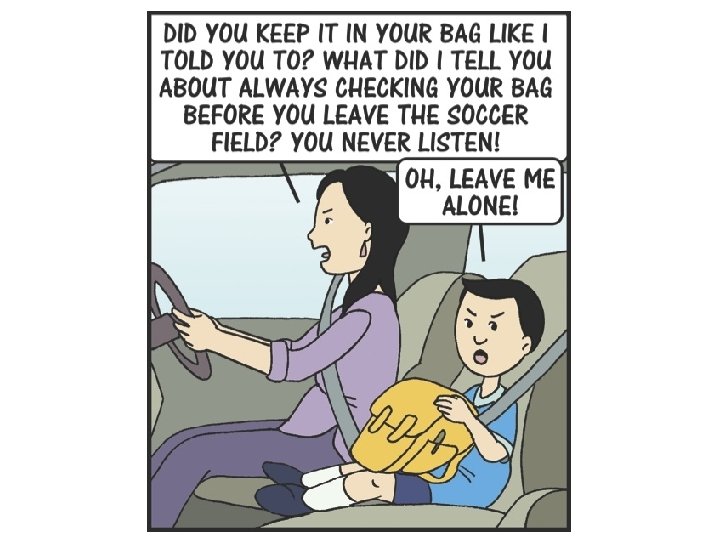
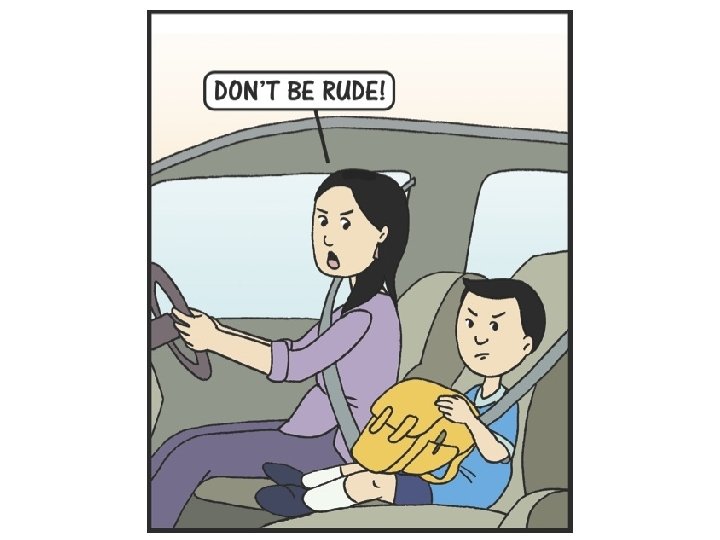
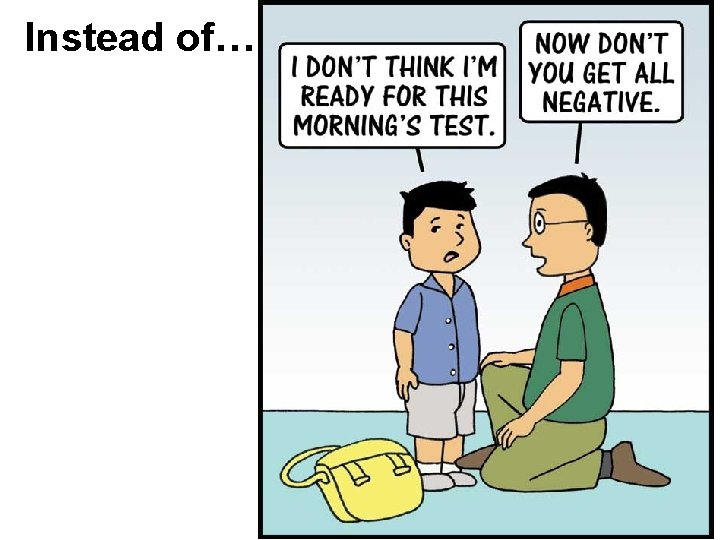
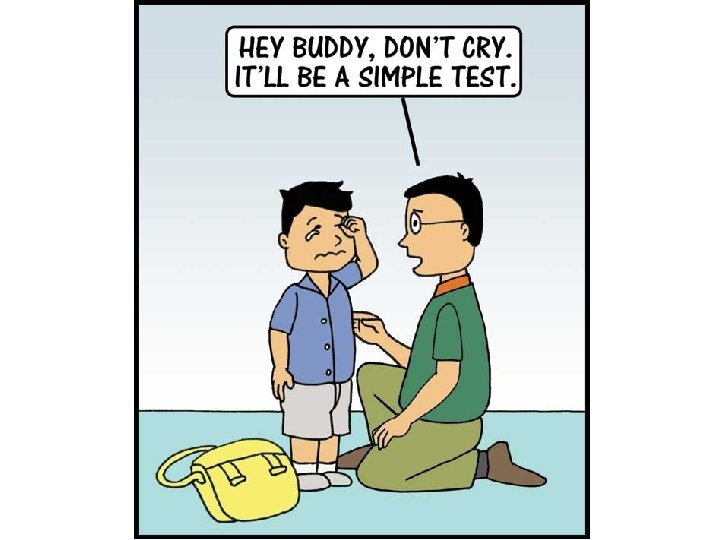
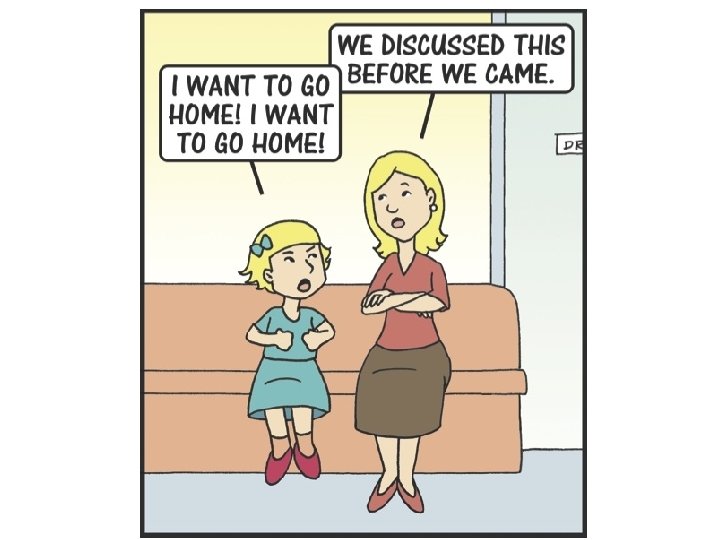
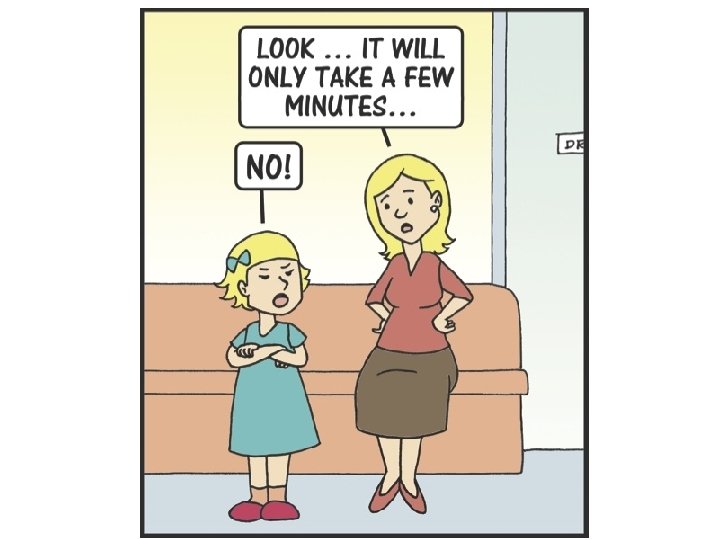
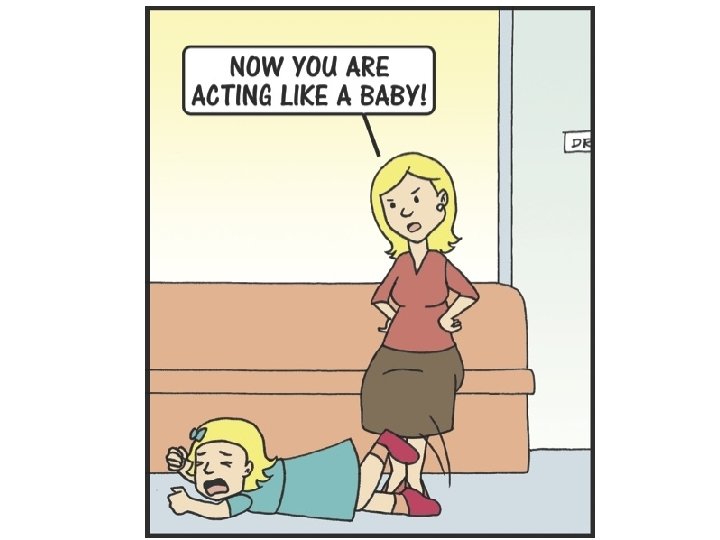
Instead of…
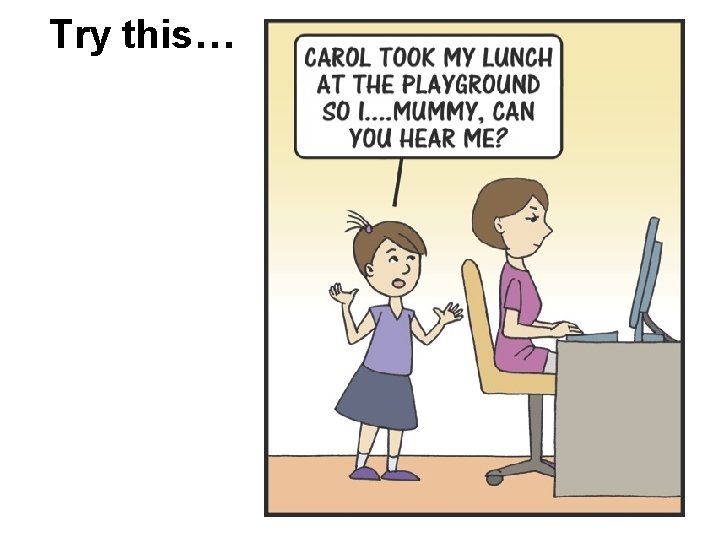
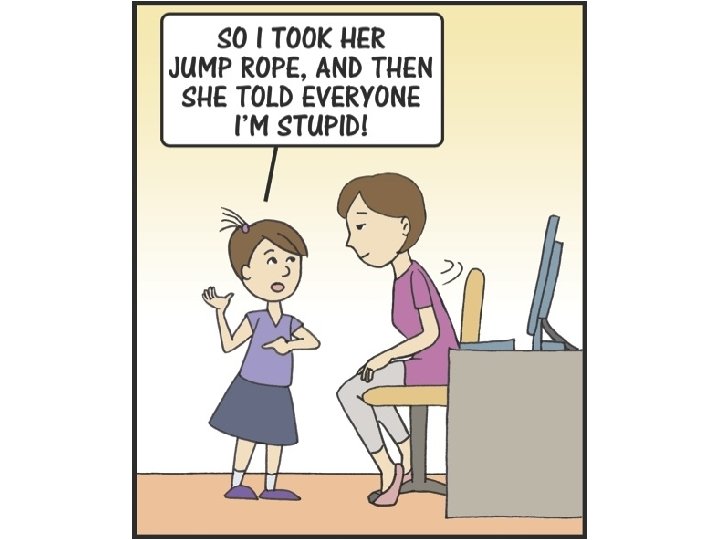
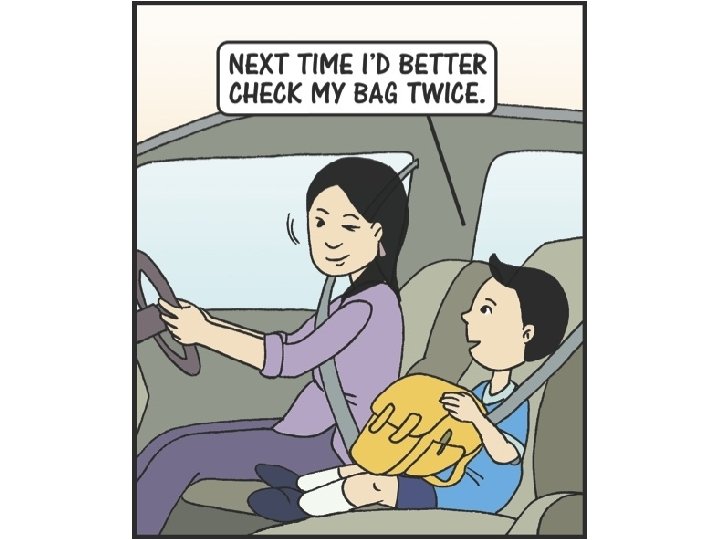
Try this…
Practicing the Skill of Acknowledging their Feelings with a Word
Instead of…
Try this…
Practicing the Skill of Giving their Feelings a Name
Instead of…
Try this…
Practicing the Skill of Giving your Child his Wishes in Fantasy
Instead of…
Try this…
Audience Participation Learn to Identify the Child’s Feelings (Download feelings chart)
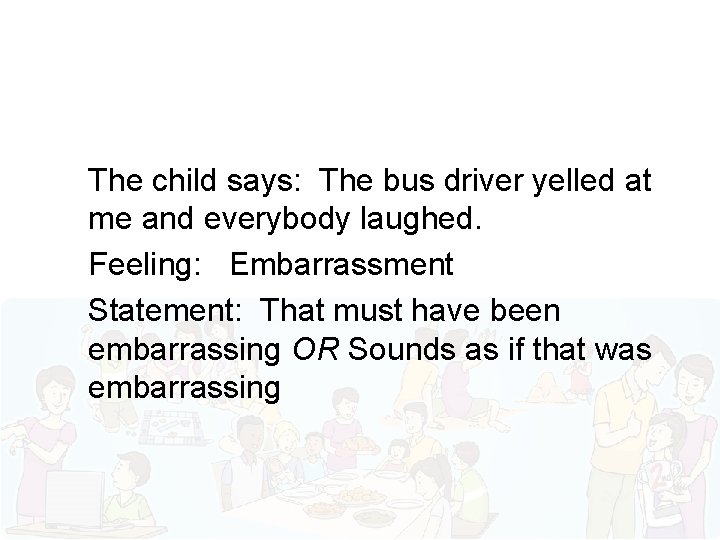
The child says: The bus driver yelled at me and everybody laughed. Feeling: Embarrassment Statement: That must have been embarrassing OR Sounds as if that was embarrassing
The child says: Janie is moving away and she is my best friend. Feeling: Statement: The child says: We had a math test today and I couldn’t get anything right! Feeling: Statement:
The child says: I’d like to punch that Michael in the nose! Feeling: Statement: The child says: Just because of a little rain my teacher said we couldn’t go on our excursion. She’s dumb. Feeling: Statement:
What if you guess the wrong emotion? Never mind, the child will set you right! Son: “Dad, our test was postponed till next week!” Dad: “That must have been a relief for you. ” Son: “No, I was mad cause now I’ll have to study the same stuff over again!” Dad: “I see, you were hoping to get it over with. ” Son: “Yeah!”
Why will this help a child? Same reason it helps with adults – » It helps us to feel accepted and loved » It helps us to diffuse our emotions » It frees us to be clear minded so we can better think of what to do next » Or we feel secure enough to want to ask for help
FAMILY DEVOS “Acting it out”, like The Good Samaritan Luke 10: 25 -37
MOVIE MOMENT The Prizewinner of Defiance, Ohio Remember the diaper change? This one we call, “Flowers for Mum”. What an example of Connection and Acceptance!
Expectations » Each child with each parent once a week » Dinner 5 times a week (with devos for younger children) » Connect with their highs and lows. Accept their feelings but not necessarily their behavior. » Mothers put kids to bed and take time (some of them talk at night)
End Session Three Next two sessions are about the Core Emotional Need for Healthy Autonomy and Performance