Controversies in the Management of Vitreoretinal Diseases An







- Slides: 109
Controversies in the Management of Vitreoretinal Diseases An Update on Retinal Care in 2019 Elias C. Mavrofrides, M. D. Florida Retina Institute
Denotes Slide with Key Information
Background u 35 yo Hispanic Female u Worsening vision over 10 days u Severe headaches u Seen in ER and had Neuroimaging u Vision is 20/200 OD and 20/400 OS
Diagnosis u Vogt-Koyanagi-Harada’s Autoimmune condition v Uveitis v Headaches v Alopecia and Poliosis v Hearing loss v
Treatment u Start oral Prednisone at 40 mg per day u Start topical Prednisolone qid OU u Arrange for Rheumatology evaluation to plan steroid sparring medication
Background u Vision is 20/20 u Laser assisted-cataract extraction with premium intraocular lens u “Vision is horrible and I can barely see!”
Vitrectomy for Floaters “Floaterectomy”
“Floaters” u Age v related changes within the vitreous gel Myopia – earlier and more severe u Inflammation u Post-surgical (esp. after YAG capsulotomy) u Vitreous Hemorrhage u Pigmentation (usually from retinal tear)
Age Related Vitreous Opacities u Part of the natural liquification of the vitreous gel u Usually noticed in late teens and early 20 s u Significant increase when Posterior Vitreous Detachment (PVD) actually occurs (40 -80 years of age)
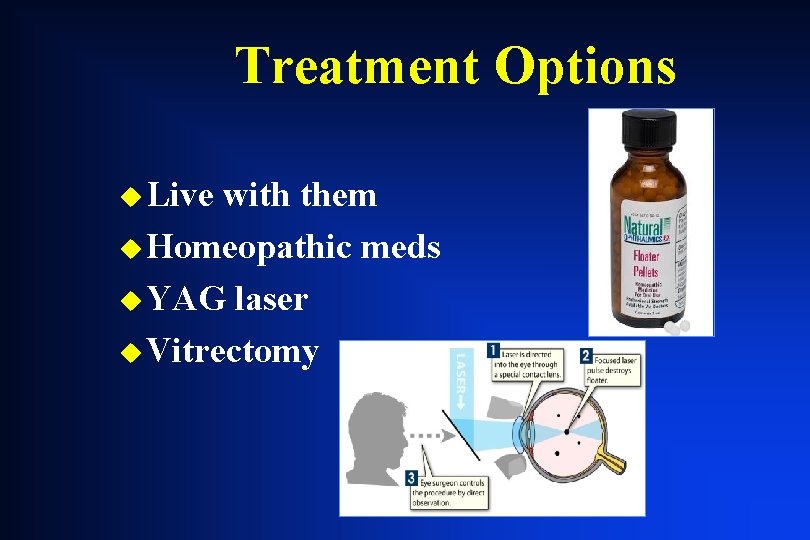
Treatment Options u Live with them u Homeopathic meds u YAG laser u Vitrectomy
Floaterectomy? Why even consider this?
Vitrectomy for Floaters u Many are unable to “ignore” floaters u Increased expectations v Advancements in LASIK and Cataract surgery u Tremendous vision financial investment in
Floaterectomy? Too dangerous or Reasonable?
Vitrectomy for Floaters u Advances in vitrectomy techniques Small gauge, sutureless vitrectomy v Valved cannulas v High speed vitrectomy cutters v Improved fluid dynamics v
Small Gauge Vitrectomy u Newer technique using smaller incisions v 0. 5 mm or 0. 7 mm vs. 0. 9 mm u Still use 3 ports Trocars inserted directly through the conjunctiva and sclera v Smaller incisions usually do NOT require suturing v
Floaterectomy Effectiveness u Patients at the retina specialist are rarely happy! v AMD, Diabetes, Retinal Detachment, Retinal Degenerations, Trauma u Floaterectomy v patients LOVE the results My happiest patients by far!
Floaterectomy Effectiveness u “I feel like I can see in HD” u “My vision is better than when I was 20” u “One of the best medical decisions I have ever made”
Floaterectomy Complications u Iatrogenic break during surgery u Retinal detachment after surgery u Cystoid macular edema (CME) u Vitreous hemorrhage u Endophthalmitis
VERY IMPORTANT SLIDE Selection Criteria is Key Choose the Right Patients!!
Floaterectomy Selection Criteria u True PVD u Pseudophakic u Open posterior capsule u Symptoms persist for 6 months
Floaterectomy Disclaimer u Floaterectomy is NOT for everyone u Young patients without a true PVD need to wait u Must have cataract surgery first
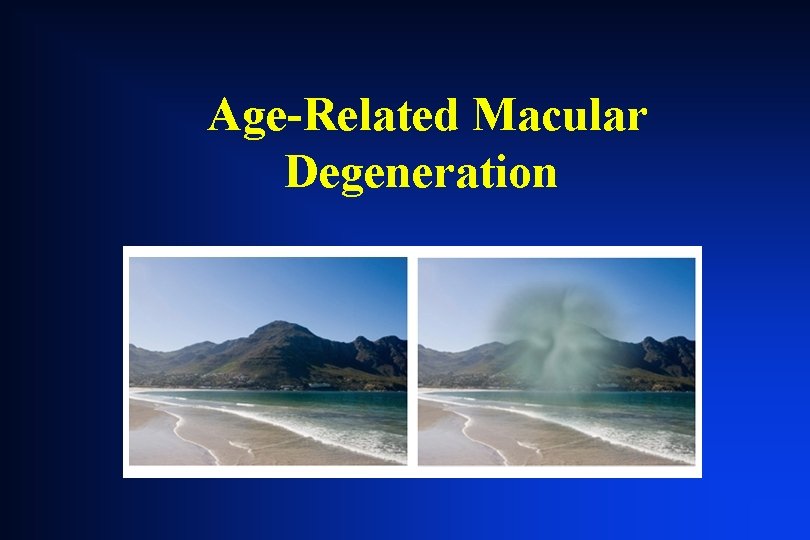
Age-Related Macular Degeneration
Age-Related Macular Degeneration u. Leading cause of legal blindness in Americans over 60 years old u. Wet Macular Degeneration 10% of all cases v 90% of those with severe vision loss v
Dry Macular Degeneration u Drusen develop in the macula u Retinal Pigment Epithelium (RPE) eventually atrophies u Overlying retina also thins and weakens v Vision loss ensues
How Can We Treat Dry Macular Degeneration ?
Dry Macular Degeneration u There are NO treatments available to reverse Dry Macular Degeneration changes
Latest Research for Dry Macular Degeneration Can we do better than just Vitamins?
Dry Macular Degeneration Treatment u Oral v Medications Modulate visual pathway u Injections u Novel therapies
Wet Macular Degeneration
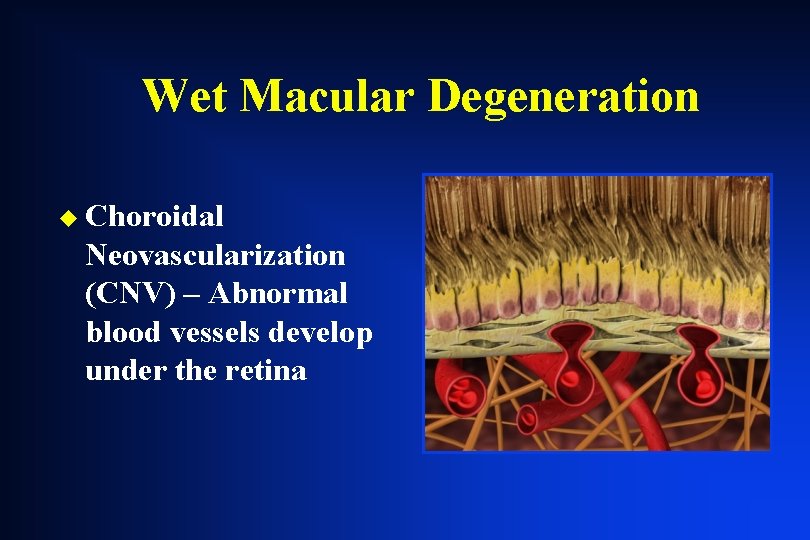
Wet Macular Degeneration u Choroidal Neovascularization (CNV) – Abnormal blood vessels develop under the retina
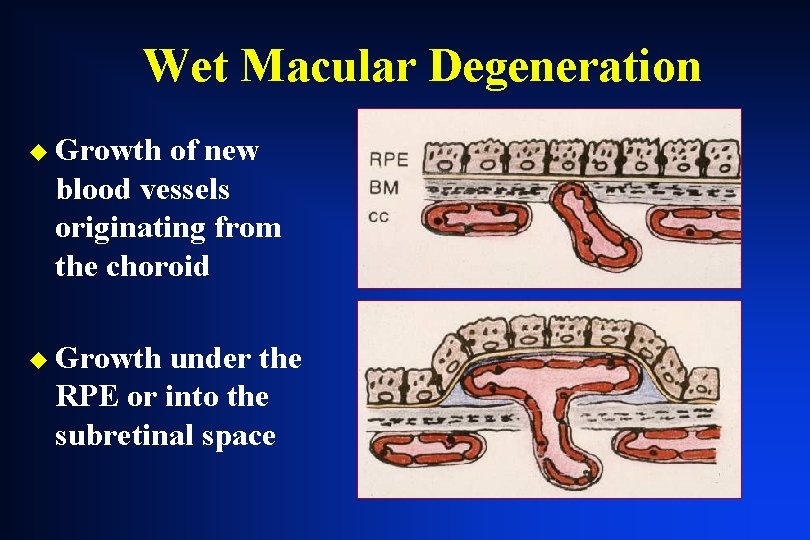
Wet Macular Degeneration u Growth of new blood vessels originating from the choroid u Growth under the RPE or into the subretinal space
Wet Macular Degeneration u These abnormal blood vessels leak fluid and bleed u Eventually these blood vessels form a scar in the macula
How Can We Treat Wet Macular Degeneration ?
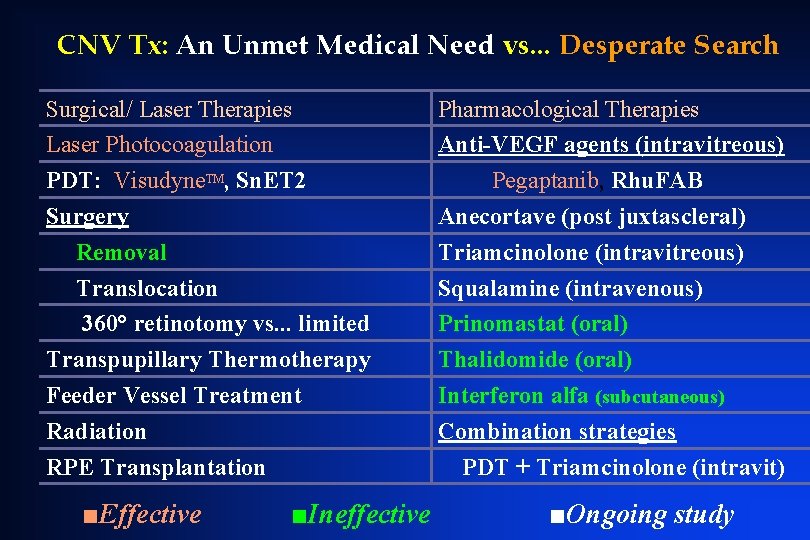
CNV Tx: An Unmet Medical Need vs. . . Desperate Search Surgical/ Laser Therapies Laser Photocoagulation PDT: Visudyne. TM, Sn. ET 2 Surgery Removal Translocation 360° retinotomy vs. . . limited Transpupillary Thermotherapy Feeder Vessel Treatment Radiation RPE Transplantation ■Effective ■Ineffective Pharmacological Therapies Anti-VEGF agents (intravitreous) Pegaptanib, Rhu. FAB Anecortave (post juxtascleral) Triamcinolone (intravitreous) Squalamine (intravenous) Prinomastat (oral) Thalidomide (oral) Interferon alfa (subcutaneous) Combination strategies PDT + Triamcinolone (intravit) ■Ongoing study
It’s All about the Injections!!
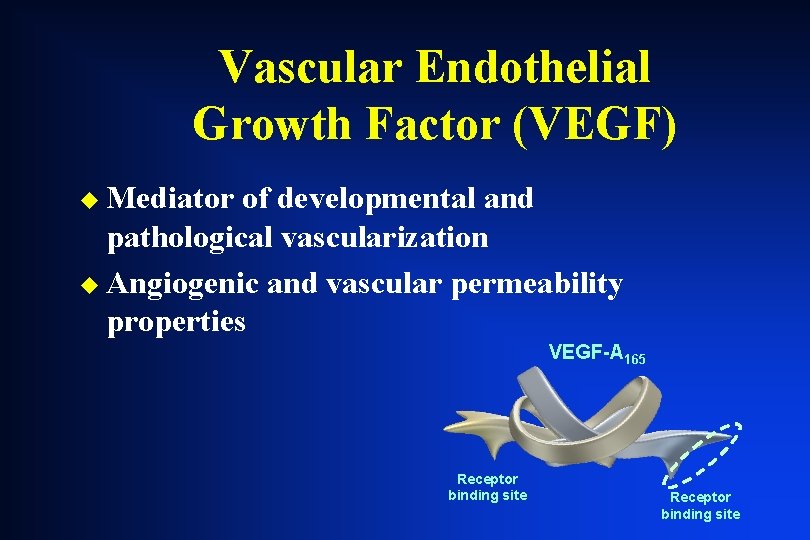
Vascular Endothelial Growth Factor (VEGF) u Mediator of developmental and pathological vascularization u Angiogenic and vascular permeability properties VEGF-A 165 Receptor binding site
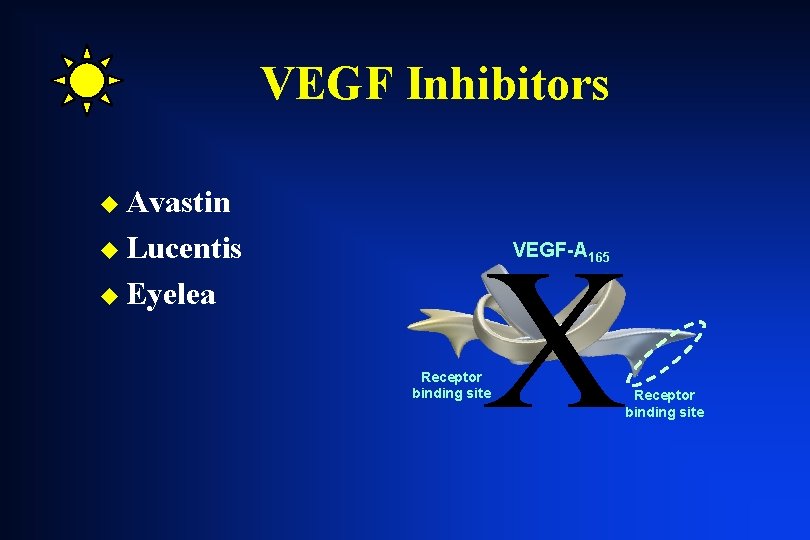
VEGF Inhibitors u Avastin u Lucentis u Eyelea X VEGF-A 165 Receptor binding site
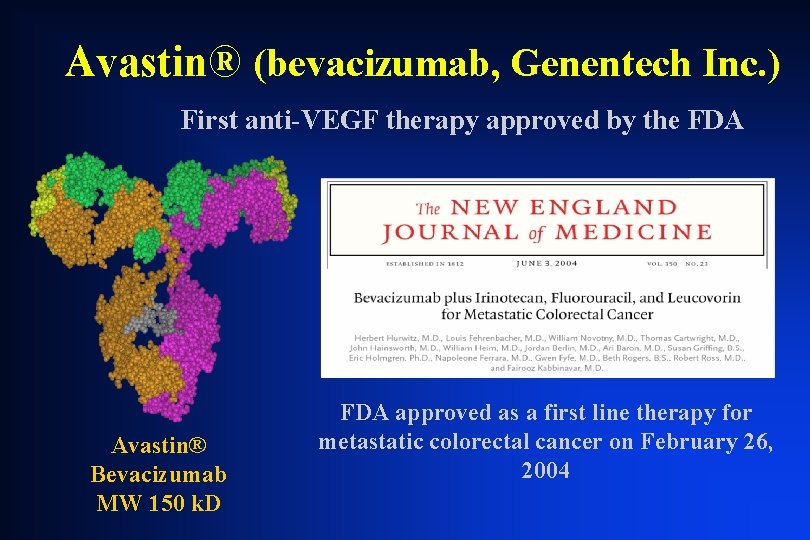
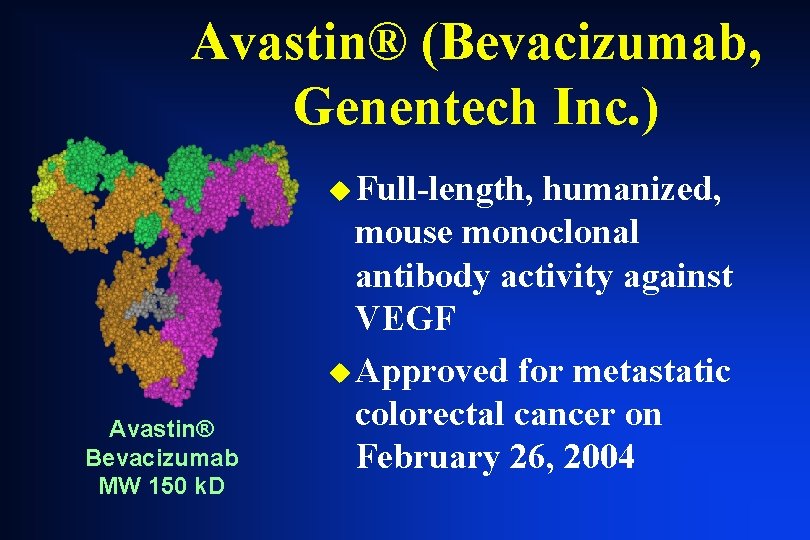
Avastin® (bevacizumab, Genentech Inc. ) First anti-VEGF therapy approved by the FDA Avastin® Bevacizumab MW 150 k. D FDA approved as a first line therapy for metastatic colorectal cancer on February 26, 2004
Avastin® (Bevacizumab, Genentech Inc. ) u Full-length, Avastin® Bevacizumab MW 150 k. D humanized, mouse monoclonal antibody activity against VEGF u Approved for metastatic colorectal cancer on February 26, 2004
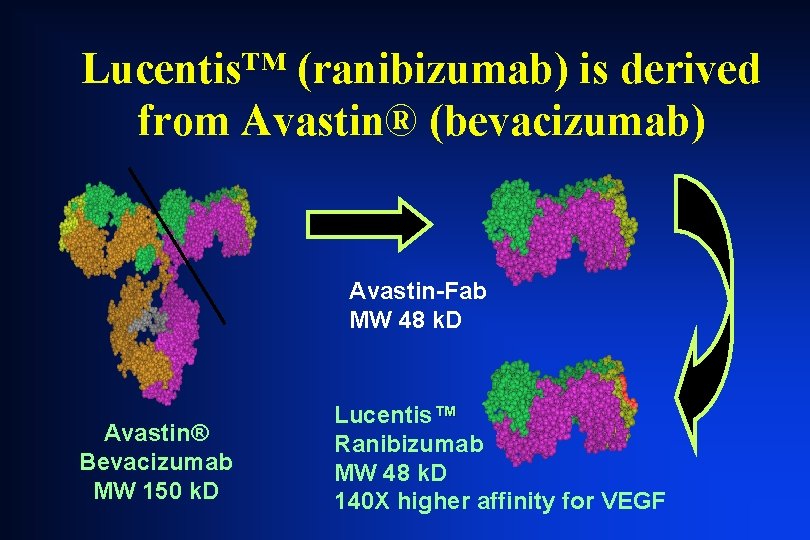
Lucentis™ (ranibizumab) is derived from Avastin® (bevacizumab) Avastin-Fab MW 48 k. D Avastin® Bevacizumab MW 150 k. D Lucentis™ Ranibizumab MW 48 k. D 140 X higher affinity for VEGF
Lucentis (Genentech) u Recombinant humanized antibody “fragment” binds to VEGF v Targets all isoforms of VEGF u Gained FDA approval June 30, 2006
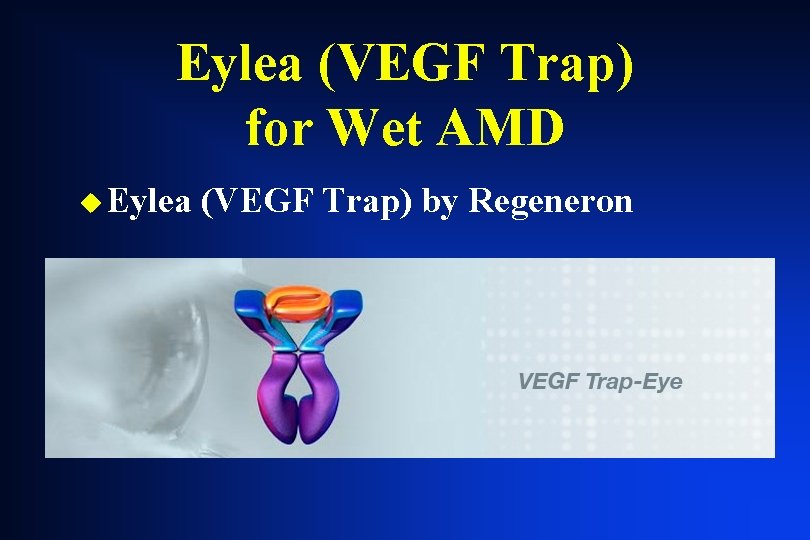
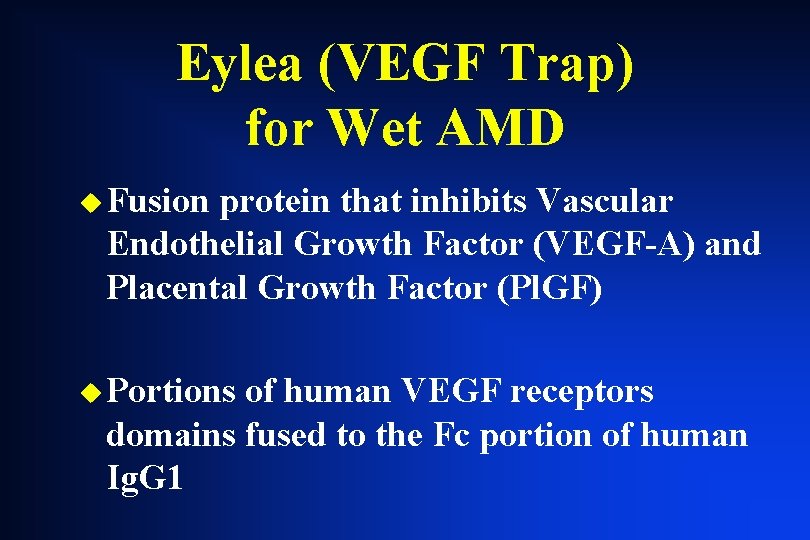
Eylea (VEGF Trap) for Wet AMD u Eylea (VEGF Trap) by Regeneron
Eylea (VEGF Trap) for Wet AMD u Fusion protein that inhibits Vascular Endothelial Growth Factor (VEGF-A) and Placental Growth Factor (Pl. GF) u Portions of human VEGF receptors domains fused to the Fc portion of human Ig. G 1
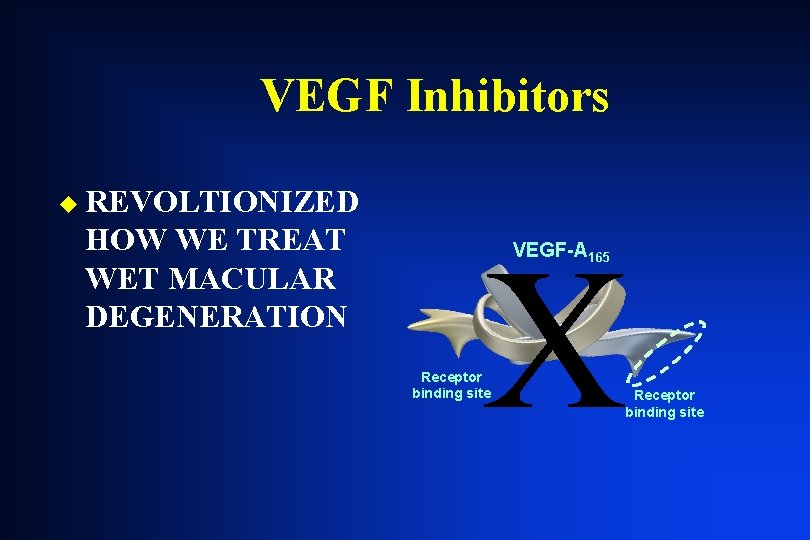
VEGF Inhibitors u REVOLTIONIZED HOW WE TREAT WET MACULAR DEGENERATION X VEGF-A 165 Receptor binding site
VEGF Inhibitors u HOW BAD WAS IT BEFORE VEGF INHIBITORS? ? X VEGF-A 165 Receptor binding site
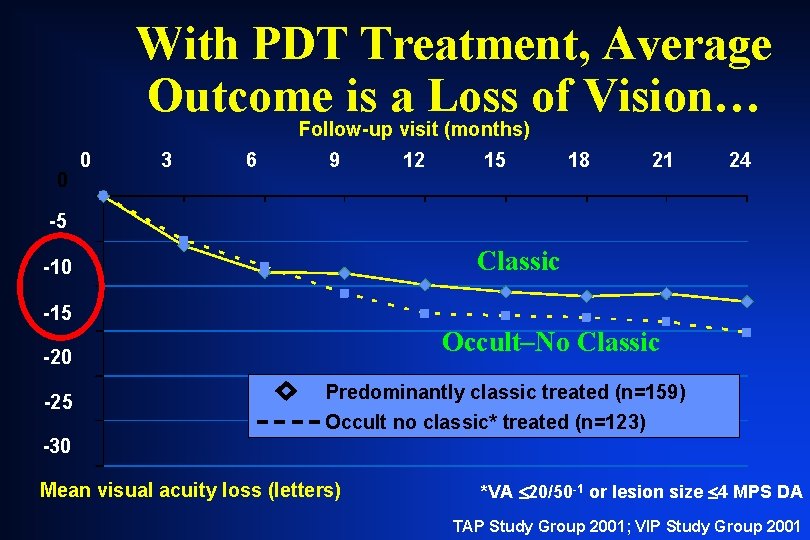
Before the Injections… …There was Phtodynamic Therapy (PDT)
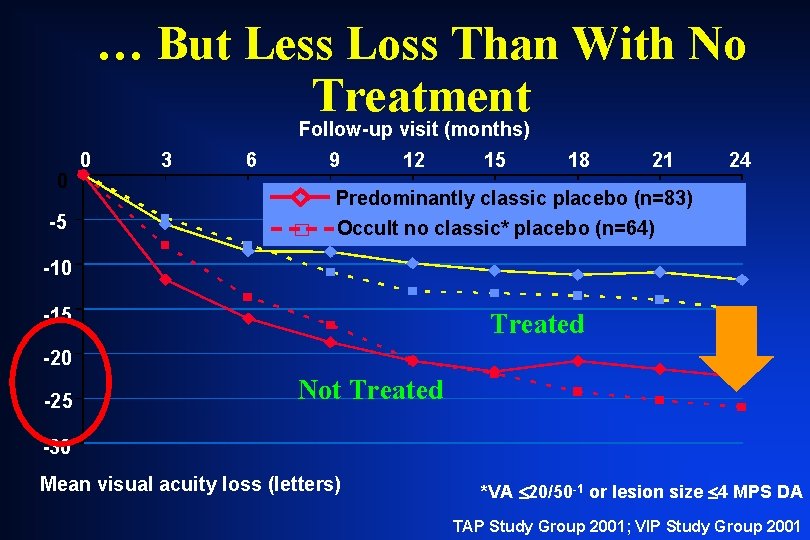
With PDT Treatment, Average Outcome is a Loss of Vision… Follow-up visit (months) 0 0 3 6 9 12 15 18 21 24 -5 Classic -10 -15 Occult–No Classic -20 -25 Predominantly classic treated (n=159) Occult no classic* treated (n=123) -30 Mean visual acuity loss (letters) *VA 20/50 -1 or lesion size 4 MPS DA TAP Study Group 2001; VIP Study Group 2001
… But Less Loss Than With No Treatment Follow-up visit (months) 0 -5 0 3 6 9 12 15 18 21 24 Predominantly classic placebo (n=83) Occult no classic* placebo (n=64) -10 -15 Treated -20 -25 Not Treated -30 Mean visual acuity loss (letters) *VA 20/50 -1 or lesion size 4 MPS DA TAP Study Group 2001; VIP Study Group 2001
With the Injections… We Can Do Much Better!!
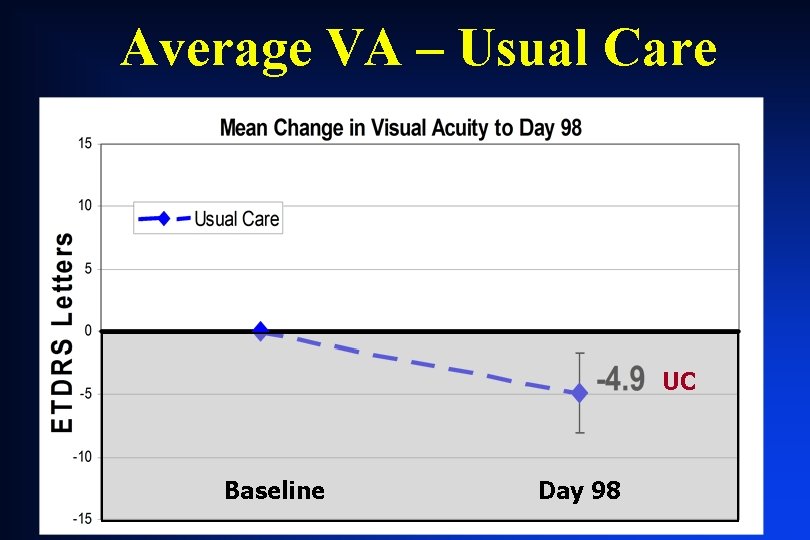
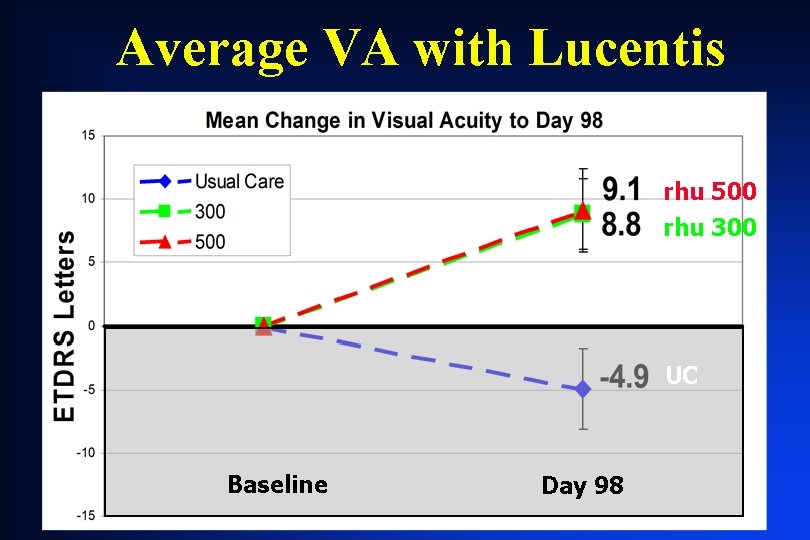
Average VA – Usual Care UC Baseline Day 98
Average VA with Lucentis rhu 500 rhu 300 UC Baseline Day 98
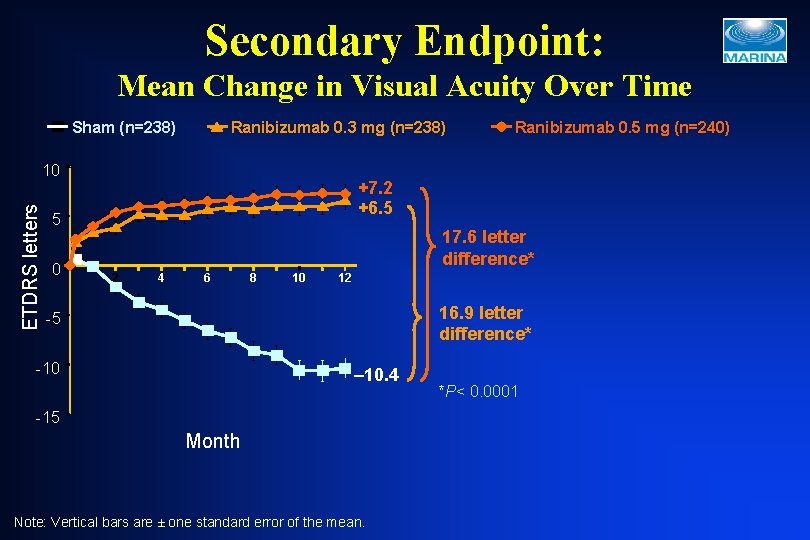
Secondary Endpoint: Mean Change in Visual Acuity Over Time Sham (n=238) Ranibizumab 0. 3 mg (n=238) ETDRS letters 10 +7. 2 +6. 5 5 0 Ranibizumab 0. 5 mg (n=240) 17. 6 letter difference* 2 4 6 8 10 12 16. 9 letter difference* -5 -10 – 10. 4 -15 Month Note: Vertical bars are ± one standard error of the mean. *P< 0. 0001
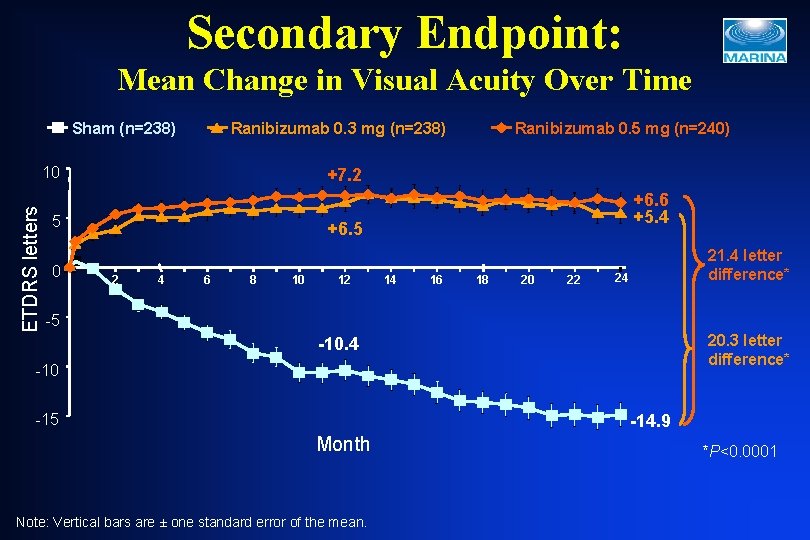
Secondary Endpoint: Mean Change in Visual Acuity Over Time Sham (n=238) Ranibizumab 0. 3 mg (n=238) ETDRS letters 10 +7. 2 5 0 Ranibizumab 0. 5 mg (n=240) +6. 6 +5. 4 +6. 5 2 4 6 8 10 12 14 16 18 20 22 21. 4 letter difference* 24 -5 20. 3 letter difference* -10. 4 -10 -15 -14. 9 Month Note: Vertical bars are ± one standard error of the mean. *P<0. 0001
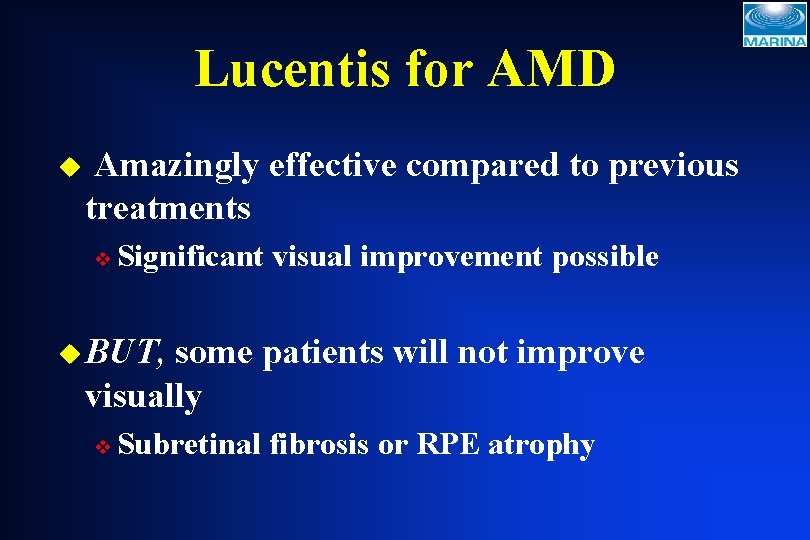
Lucentis for AMD u Amazingly effective compared to previous treatments v Significant visual improvement possible u BUT, some patients will not improve visually v Subretinal fibrosis or RPE atrophy
Lucentis – Benefits Approx 90% chance of stabilization u Approx 40% chance of significant visual u v First AMD treatment resulting in improved visual acuity
Anti-VEGF Therapy Issues u Which one is the best? u Do the injections need to be monthly? u Expense of Lucentis and Eylea u Compounding Avastin
Anti-VEGF Therapy Issues u. Which u Do one is the best? the injections need to be monthly? u Expense of Lucentis and Eylea u Compounding Avastin
Avastin vs. Lucentis u NEI/NIH to sponsor head-to-head trial u Complications of Age-Related Macular Degeneration Treatment Trial (CATT)
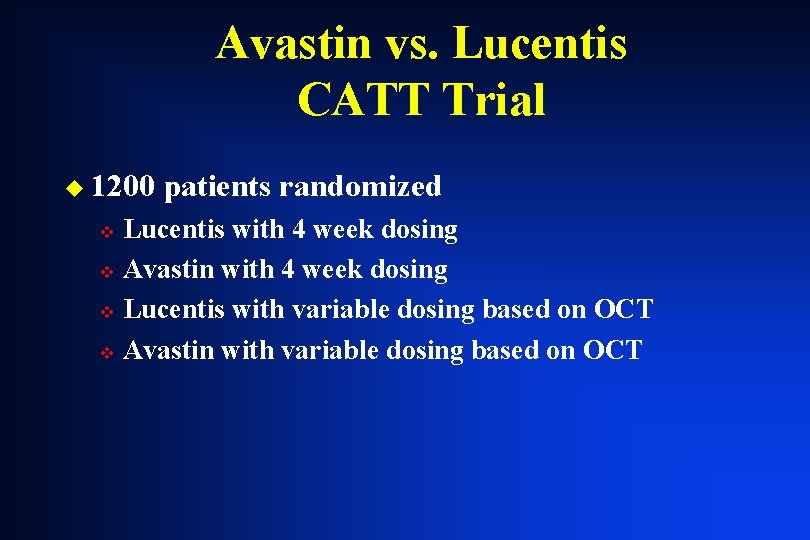
Avastin vs. Lucentis CATT Trial u 1200 patients randomized Lucentis with 4 week dosing v Avastin with 4 week dosing v Lucentis with variable dosing based on OCT v Avastin with variable dosing based on OCT v
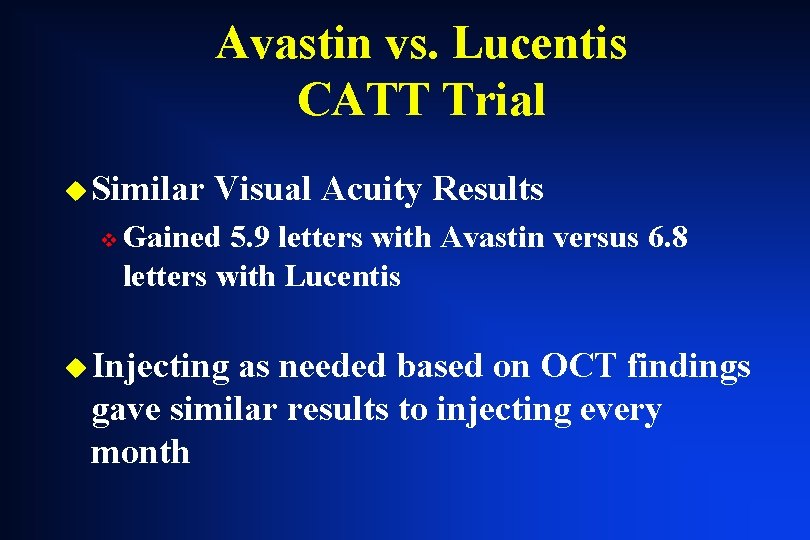
Avastin vs. Lucentis CATT Trial u Similar v Visual Acuity Results Gained 5. 9 letters with Avastin versus 6. 8 letters with Lucentis u Injecting as needed based on OCT findings gave similar results to injecting every month
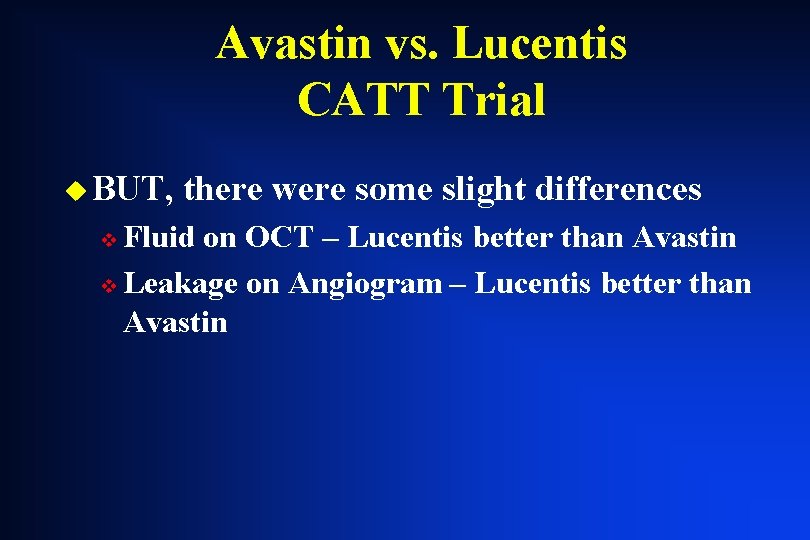
Avastin vs. Lucentis CATT Trial u BUT, there were some slight differences Fluid on OCT – Lucentis better than Avastin v Leakage on Angiogram – Lucentis better than Avastin v
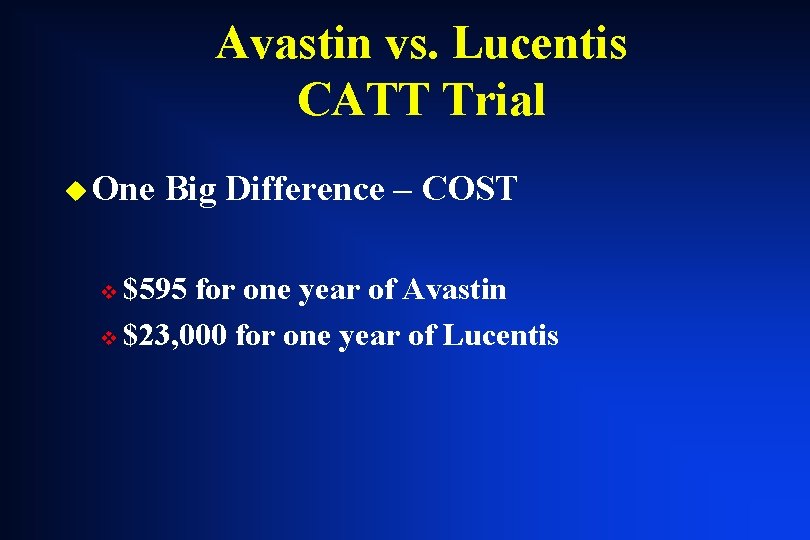
Avastin vs. Lucentis CATT Trial u One Big Difference – COST $595 for one year of Avastin v $23, 000 for one year of Lucentis v
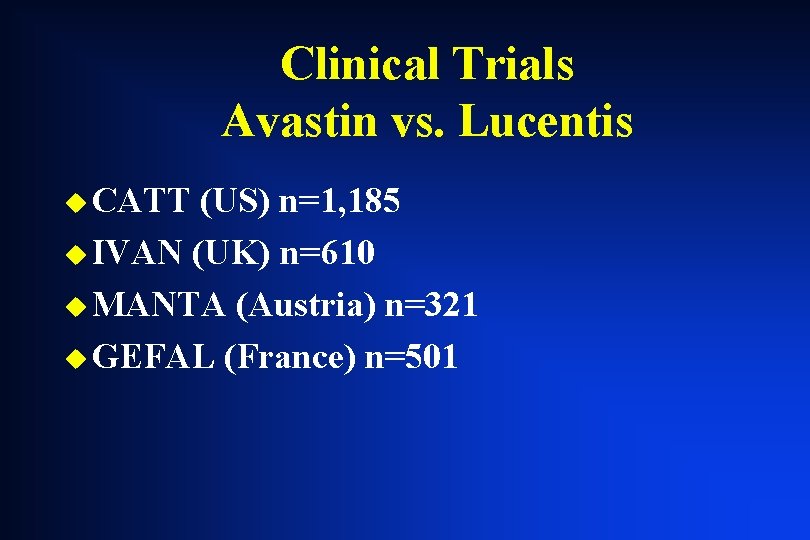
Clinical Trials Avastin vs. Lucentis u CATT (US) n=1, 185 u IVAN (UK) n=610 u MANTA (Austria) n=321 u GEFAL (France) n=501
Eylea for Wet AMD Has NOT been compared to Avastin or Lucentis for AMD
Anti-VEGF Therapy Issues Which one is the best? ?
Anti-VEGF Therapy Issues u Which one is the best? u. Do the injections need to be monthly? u Expense of Lucentis and Eylea u Compounding Avastin
Anti-VEGF Therapy u Continuous Therapy – treat every 4 -8 weeks indefinitely u Treat and Extend – gradually increase interval between injections u As Needed – treat based on OCT
Anti-VEGF Therapy Issues u Which one is the best? u Do the injections need to be monthly? u. Expense of Lucentis and Eylea u Compounding Avastin
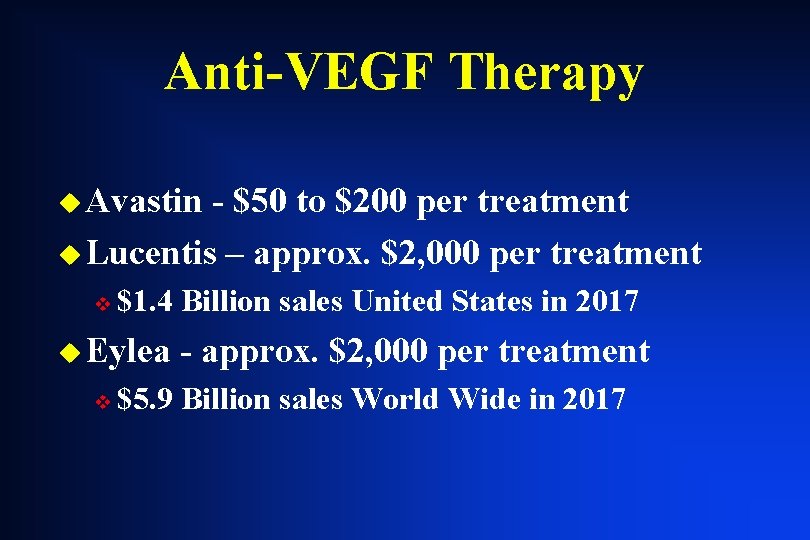
Anti-VEGF Therapy u Avastin - $50 to $200 per treatment u Lucentis – approx. $2, 000 per treatment v $1. 4 Billion sales United States in 2017 u Eylea v - approx. $2, 000 per treatment $5. 9 Billion sales World Wide in 2017
Anti-VEGF Therapy Issues What is Step Therapy?
Anti-VEGF Therapy Issues u Which one is the best? u Do the injections need to be monthly? u Expense of Lucentis and Eylea u. Compounding Avastin
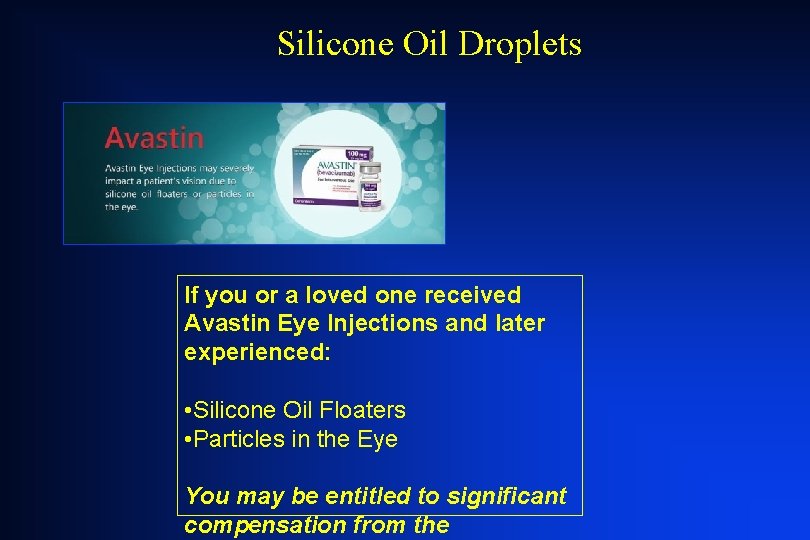
Silicone Oil Droplets If you or a loved one received Avastin Eye Injections and later experienced: • Silicone Oil Floaters • Particles in the Eye You may be entitled to significant compensation from the
Retina Specialist Dilemma
Retina Specialist Delimma u Cost to the “system” u Cost to the patient u Overall effectiveness u Frequency of treatment
Other Therapies for Wet AMD u PDT still used on rare occasions u Steroids for AMD v Periocular or Intraocular injection v Concern for IOP issues v Newer Steroid implants NOT approived
Future Therapies for Wet AMD u Brolucizumab Injections - “the BRO” Anti-VEGF from Novartis v Longer interval between injections v Maybe even more effective than others v Release sometime in 2019 u New
Future Therapies for Wet AMD u Topical v Drops Poor Penetration into Eye u Stem Cell Transplant How to get them where we need them v Organization issues v u Tissue v Transplant How to get the tissue where we need it u Electronic chips
Background u 69 yo WM referred for macular evaluation OS u Patient went for new glasses u He did NOT notice any significant problem
Vitreoretinal Interface Disorders u Epiretinal Membrane (ERM) u Vitreomacular Attachment and Traction (VMA or VMT) u Macular Hole
Vitreoretinal Interface Disorders u Epiretinal Membrane (ERM) When to refer v When do we operate v
Epiretinal Membrane Surgery u Snellen v Visual Acuity There is NO specified number • Some 20/25 ERMs need surgery • Some 20/70 ERMs should be left alone
Epiretinal Membrane Surgery u Appearance on Exam and OCT does NOT dictate the need for surgery
Epiretinal Membrane Surgery u The degree of visual symptoms is most important !!
Epiretinal Membrane Surgery u Cataract surgery is NOT necessary before ERM surgery v But, always access degree of cataract or other visual pathology when assess visual symptoms
Epiretinal Membrane Surgery u Membrane is peeled manually after a standard vitrectomy u The ERM and ILM are usually both removed u Air bubble often injected v But, not longer gases and NO face down positioning needed
Vitreoretinal Interface Disorders Vitreomacular Attachment and Traction (VMA or VMT)
Macular Hole Surgery u Peel the Internal Limiting Membrane (ILM) u Gas Bubble – C 3 F 8 versus SF 6 u Face Down Positioning – Duration?
Macular Hole Surgery u Peel the Internal Limiting Membrane (ILM) improves hole closure
Macular Hole Surgery u Gas v bubble is key to closing hole Surface tension u Air is NOT as effective as other gases SF 6 is short acting and good for most holes v C 3 F 8 lasts much longer and better for larger, more severe holes v
Macular Hole Surgery u Face down positioning helps increase hole closure 80% closure with NO face down positioning v Better closure rates with 3 -5 days of positioning v One or more weeks NOT necessary v
Retinal Tears and Retinal Detachment
Background u 67 yo WM with new onset floaters OD u Seen 2 days earlier by general ophthalmologist with PVD u Today notices increased symptoms
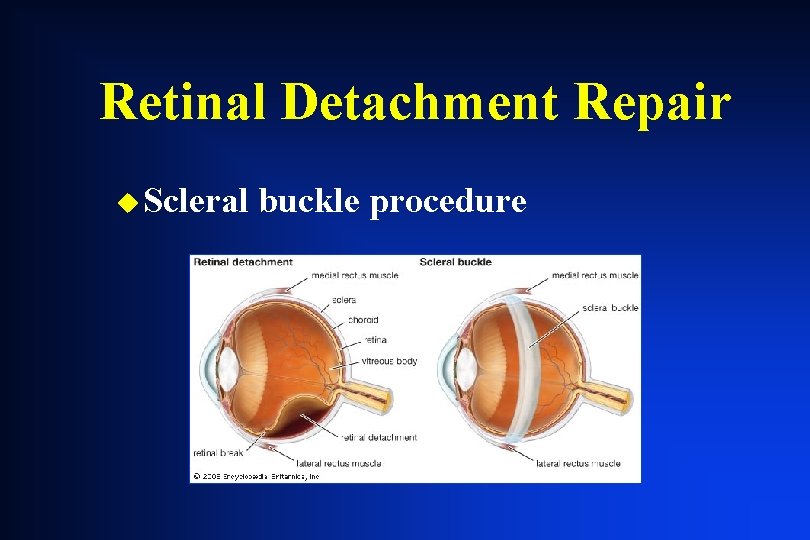
Retinal Detachment Repair u Scleral buckle procedure u Pneumatic retinopexy u Vitrectomy with laser and gas u Combined scleral buckle with vitrectomy
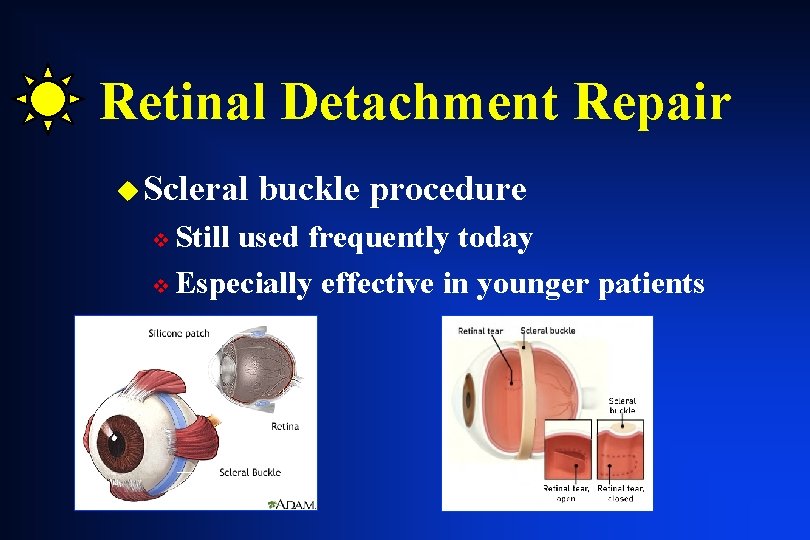
Retinal Detachment Repair u Scleral buckle procedure Still used frequently today v Especially effective in younger patients v
Retinal Detachment Repair u Scleral buckle procedure
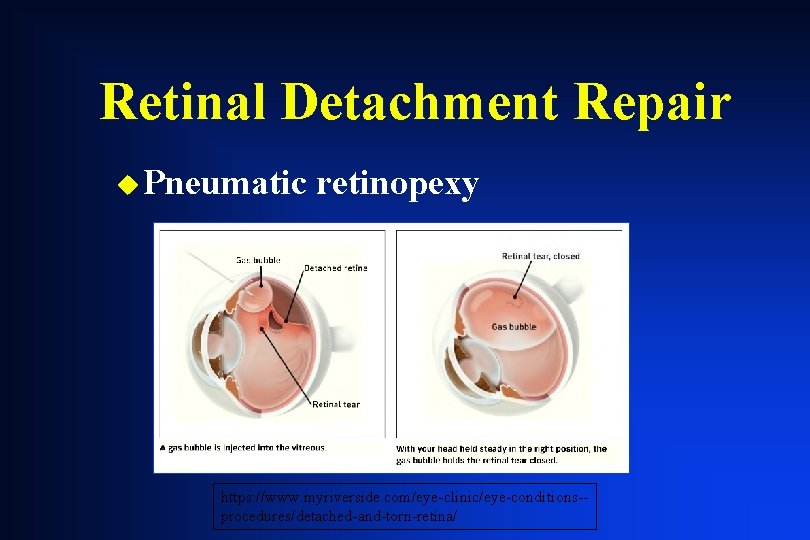
Retinal Detachment Repair u Pneumatic retinopexy Done in office v Patient selection is key v • Superior tear • Multiple tears must be clustered v Can result in excellent outcomes
Retinal Detachment Repair u Pneumatic retinopexy https: //www. myriverside. com/eye-clinic/eye-conditions-procedures/detached-and-torn-retina/
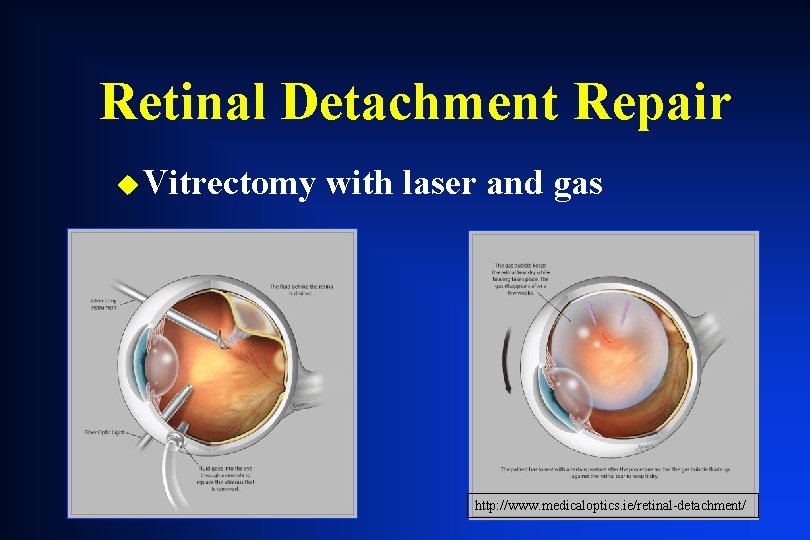
Retinal Detachment Repair u Vitrectomy with laser and gas Very common now that vitrectomy techniques have improved v Treat greater range of pathology including inferior detachments v Combined scleral buckle used much less frequently now v
Retinal Detachment Repair u Vitrectomy with laser and gas http: //www. medicaloptics. ie/retinal-detachment/
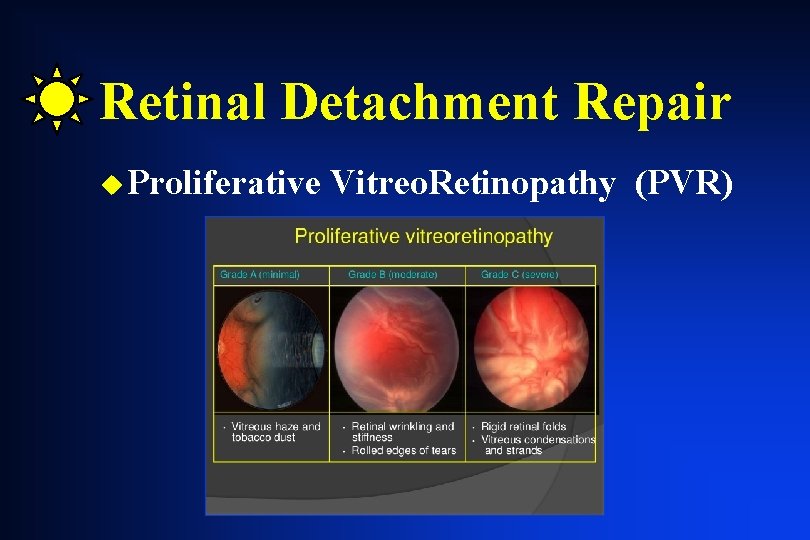
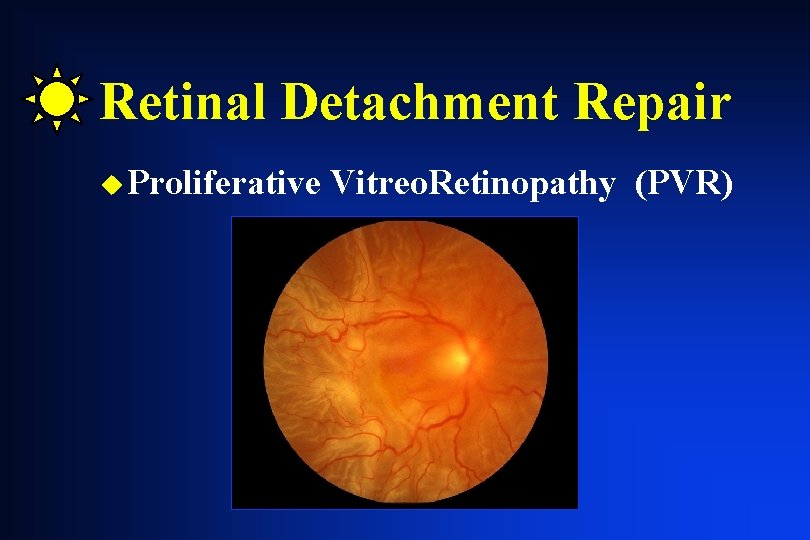
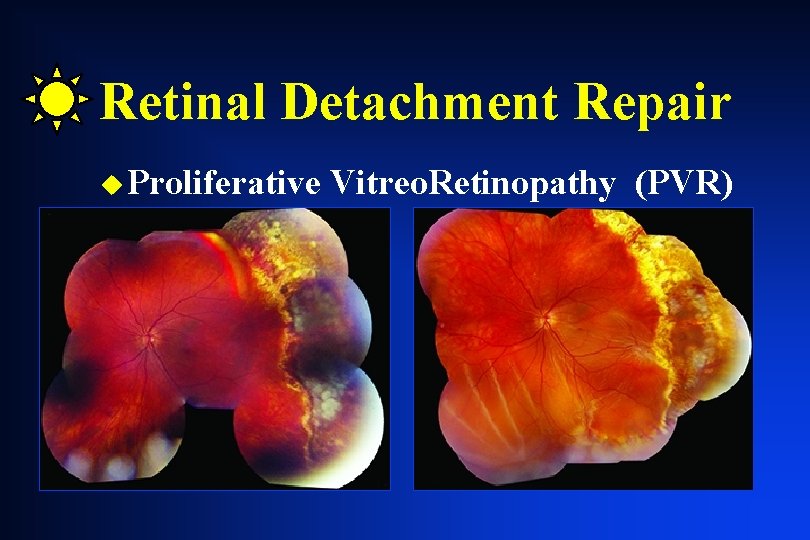
Retinal Detachment Repair u Proliferative Vitreo. Retinopathy (PVR) Biggest concern of retinal detachment repair v Scar tissue reaction that can re-deatch the retina v Occurs about 10% of retinal detachments v Usually results in worse visual outcomes v
Retinal Detachment Repair u Proliferative Vitreo. Retinopathy (PVR) No medications available to prevent this from developing v Timing of surgery and surgical technique not a significant factor v Patient compliance often NOT a factor v
Retinal Detachment Repair u Proliferative v Vitreo. Retinopathy (PVR) Risk factors • Younger patients • Healthier patients • Ethnic and Racial
Retinal Detachment Repair u Proliferative Vitreo. Retinopathy (PVR)
Retinal Detachment Repair u Proliferative Vitreo. Retinopathy (PVR)
Retinal Detachment Repair u Proliferative Vitreo. Retinopathy (PVR)
Diabetic Macular Edema u Focal laser therapy u Intravitreal Anti-VEGF agent v Avastin, Lucentis, Eylea u Periocular and Intavitreal Steroids Triamcinolone v Intravitreal Steroid Implants – Ozurdex or Iluvein v
Proliferative Diabetic Retinopathy u Intravitreal v Anti-VEGF agent Avastin, Lucentis, Eylea u Pan. Retinal Photocoagulation (PRP) u Vitrectomy Surgery
Proliferative Diabetic Retinopathy u Intravitreal v Anti-VEGF agent Significant benefit seen in numerous studies u PRP laser Still has an important role v Often combined with intravitreal Anti. VEGF injection v
Thank You