Nutritional Diseases 4 H Veterinary Science Extension Veterinary
- Slides: 40
Nutritional Diseases 4 -H Veterinary Science Extension Veterinary Medicine Texas Agri. Life Extension Service College of Veterinary Medicine and Biomedical Sciences Texas A&M System http: //aevm. tamu. edu
Objectives n n n Discuss the importance of water in the animal diet Discuss the need for energy in the animal diet Discuss the importance of minerals in animal diets Discuss the importance of vitamins in animal diets Describe the signs of protein deficiency Describe the signs of a phosphorus deficiency Describe the signs and causes of grass tetany Describe the signs and causes of milk fever Describe the signs of vitamin and mineral deficiencies Give examples of nutritional diseases in cats, cattle and horses Discuss conditions that create increased nutritional needs
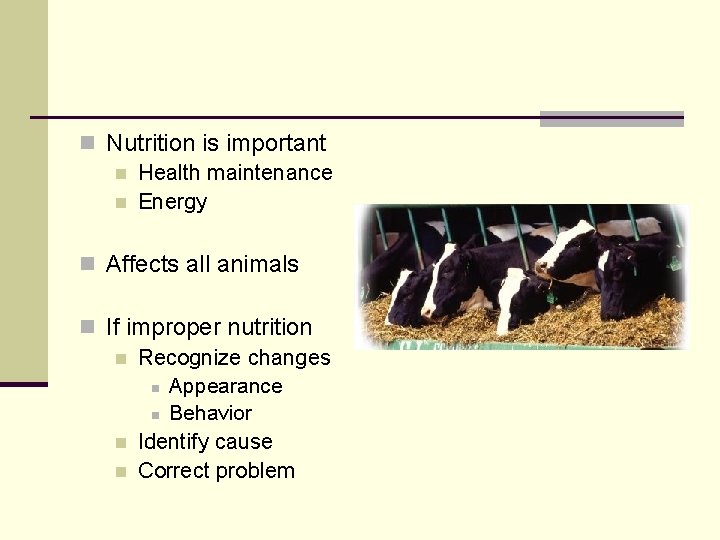
n Nutrition is important n Health maintenance n Energy n Affects all animals n If improper nutrition n Recognize changes n Appearance n Behavior n Identify cause n Correct problem
n Diet n The usual food and drink of a person or animal n Nutrient n A source of nourishment
n Diets are comprised of nutrients n Proteins n Carbohydrates n Fats n Minerals n Vitamins n Water n Depends on n Animal n Activity
Add Additional Nutrients n Cold weather n Parasite infestations n Reduced appetite n Chronic disease n Pregnancy or milk production
Undernourished animals n Improperly fed n Symptoms n Changes in body weight n n n Hair coat n n Low Thin appearance Dull and rough Activity n Weak and depressed
Requirements for Proper Nutrition n Water n Energy n Minerals n Vitamins
Water n Essential n 60% makeup n Continually lost n Constantly replenish n Maintain homeostasis n 60% balance
n Water requirements n Digestive process n n Physiological development n n Ruminants Milk production Diet n Supplements
n Problems n Dehydration n n Excessive loss of water from the body or from an organ or body part, as from illness or fluid deprivation Due to § Diarrhea § Kidney diseases § Sick § Refusal to drink
n Solution n Re-hydration n n IV fluids Stomach tube
Energy n Function n Growth n Body movement n Found in n Proteins n Carbohydrates n Fats
n How supplies n Metabolic breakdown of diet n Fat deposits n Normal conditions n Roughage (producers) n Good quality
n Working animals n Supplement n Protein n Careful with overfeeding protein to pregnant animals
Minerals n Definition n Any of the inorganic elements, as calcium, iron, magnesium, potassium, or sodium, that are essential to the functioning of the human body and are obtained from foods
n Some minerals n Calcium n n Bone structure Cell performance § Muscle contraction § Blood clotting n Phosphorus n n n Organ structure Nutrient transport Energy utilization
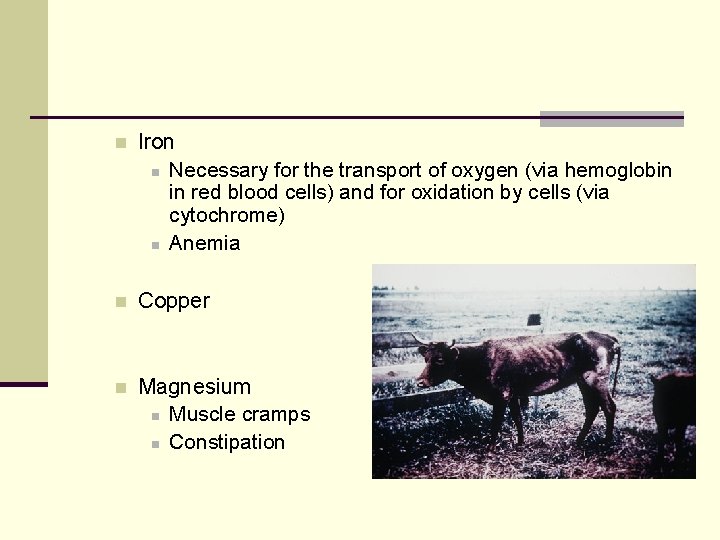
n Iron n Necessary for the transport of oxygen (via hemoglobin in red blood cells) and for oxidation by cells (via cytochrome) n Anemia n Copper n Magnesium n Muscle cramps n Constipation
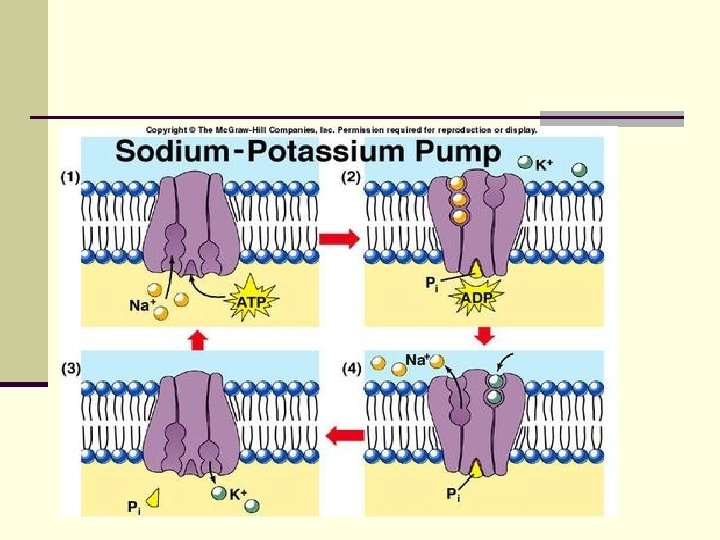
n Potassium n Critical for the normal functioning of the muscles, heart, and nerves n Controlling activity § § Smooth muscle (digestive tract) Skeletal muscle Cardiac muscle Transmission of electrical signals throughout the nervous system
n Normal conditions n Good pastures n Fertilized n Problems n Drought n Non-fertilized fields n Correct n Supplements
n Dogs and cats n Commercial foods balanced n All meat diets n Need supplementation
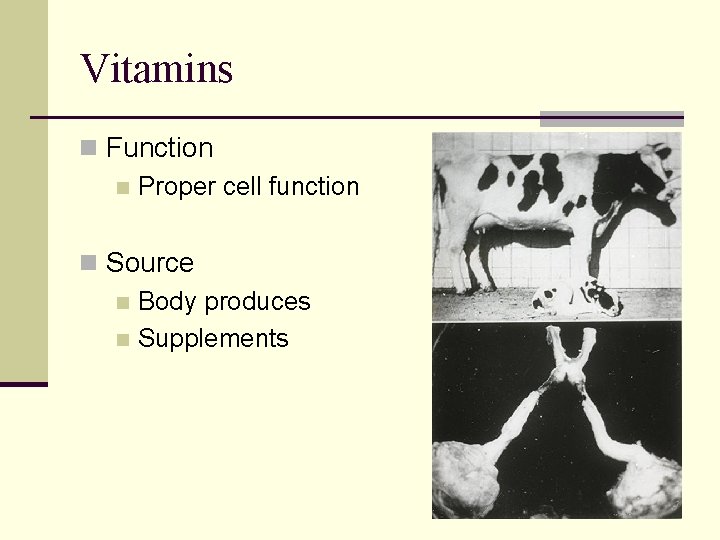
Vitamins n Function n Proper cell function n Source n Body produces n Supplements
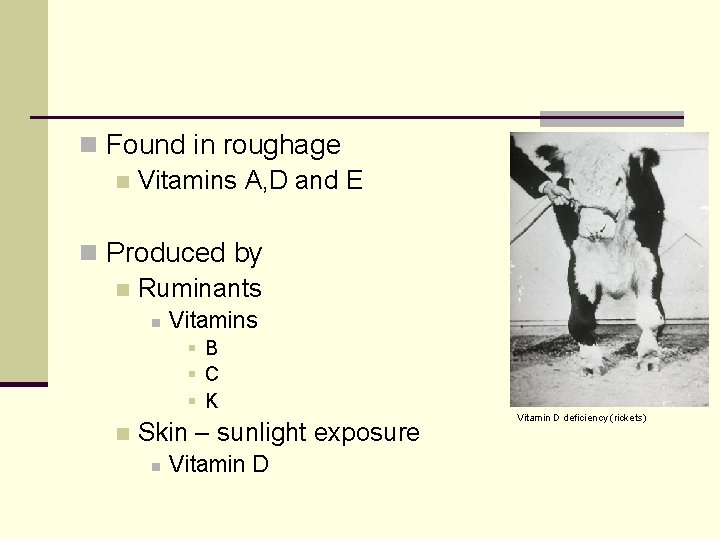
n Found in roughage n Vitamins A, D and E n Produced by n Ruminants n Vitamins § B § C § K n Skin – sunlight exposure n Vitamin D deficiency (rickets)
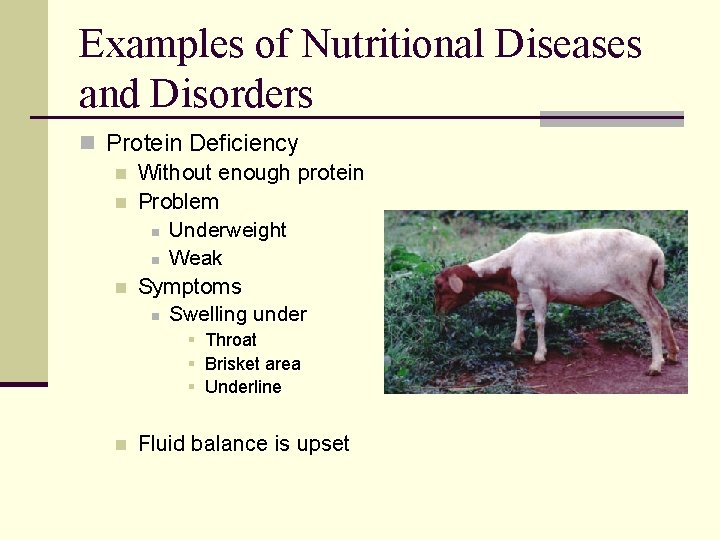
Examples of Nutritional Diseases and Disorders n Protein Deficiency n Without enough protein n Problem n Underweight n Weak n Symptoms n Swelling under § Throat § Brisket area § Underline n Fluid balance is upset
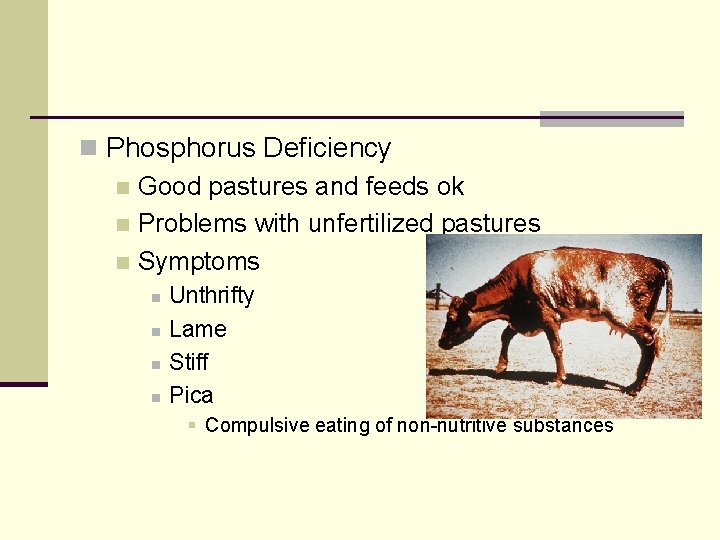
n Phosphorus Deficiency n Good pastures and feeds ok n Problems with unfertilized pastures n Symptoms n n Unthrifty Lame Stiff Pica § Compulsive eating of non-nutritive substances
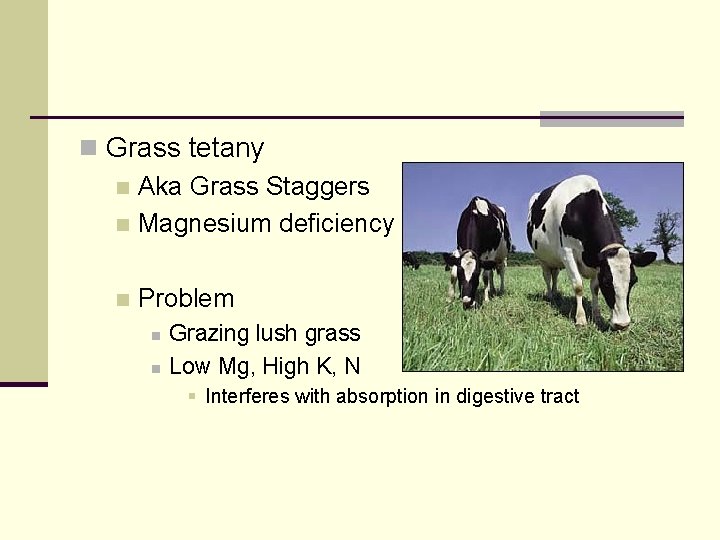
n Grass tetany n Aka Grass Staggers n Magnesium deficiency n Problem n n Grazing lush grass Low Mg, High K, N § Interferes with absorption in digestive tract
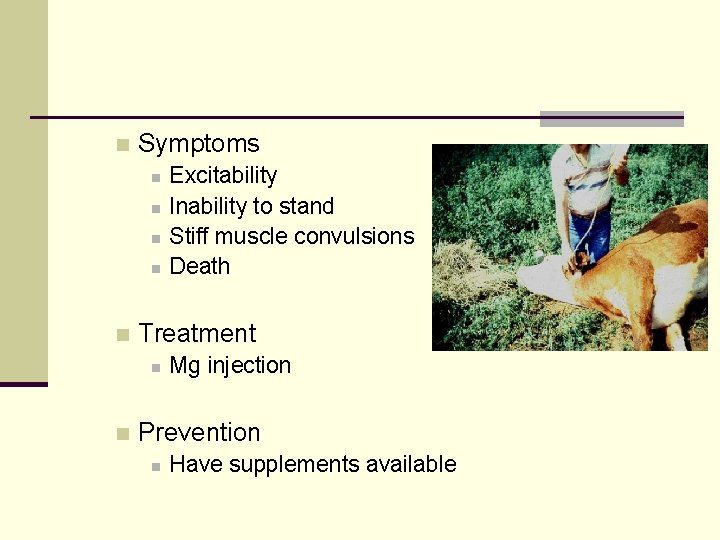
n Symptoms n n n Treatment n n Excitability Inability to stand Stiff muscle convulsions Death Mg injection Prevention n Have supplements available
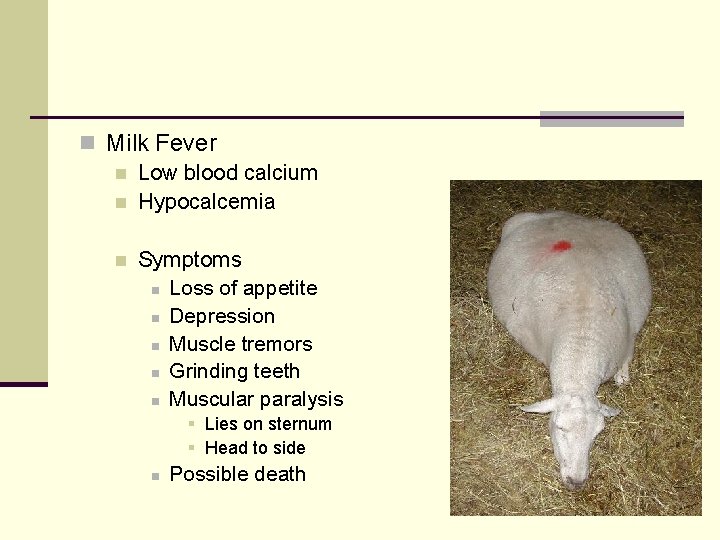
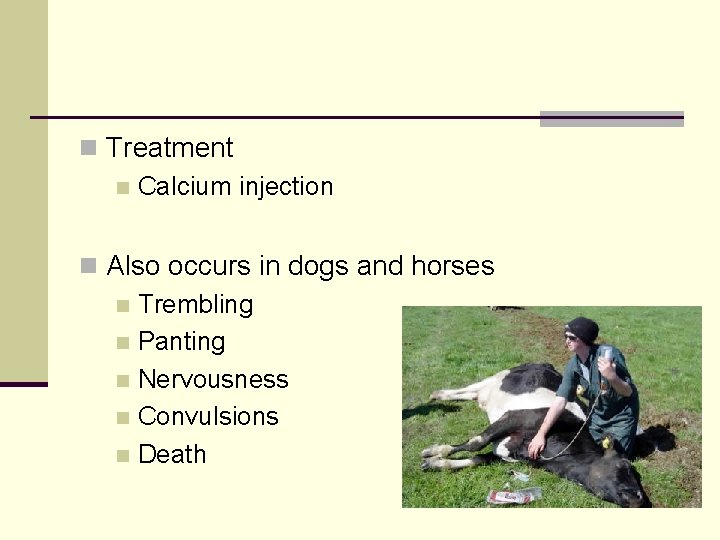
n Milk Fever n Low blood calcium n Hypocalcemia n Symptoms n Loss of appetite n Depression n Muscle tremors n Grinding teeth n Muscular paralysis § Lies on sternum § Head to side n Possible death
n Treatment n Calcium injection n Also occurs in dogs and horses n Trembling n Panting n Nervousness n Convulsions n Death
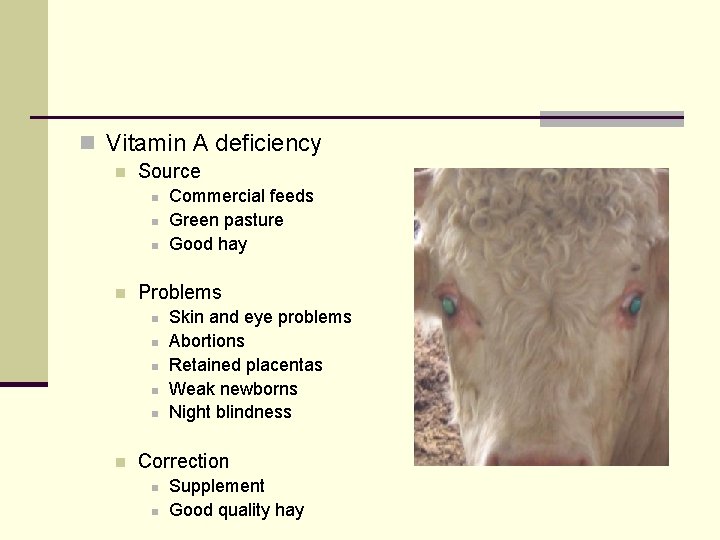
n Vitamin A deficiency n Source n n Problems n n n Commercial feeds Green pasture Good hay Skin and eye problems Abortions Retained placentas Weak newborns Night blindness Correction n n Supplement Good quality hay
n Secondary Hyperparathyroidism n High phosphorus, low calcium diets n Affects n Livestock on high-bran diets § No supplements or hay n Pets § All meat diets § No supplements
n Symptoms n Horses § Bones thicken § Head § Face n Pets § Bones § Weak § Flexible
n Taurine deficiency n Cats n Amino acid n Symptoms n Eye problems § Blindness n n Weakening heart muscle Problem n Cats eating dog food
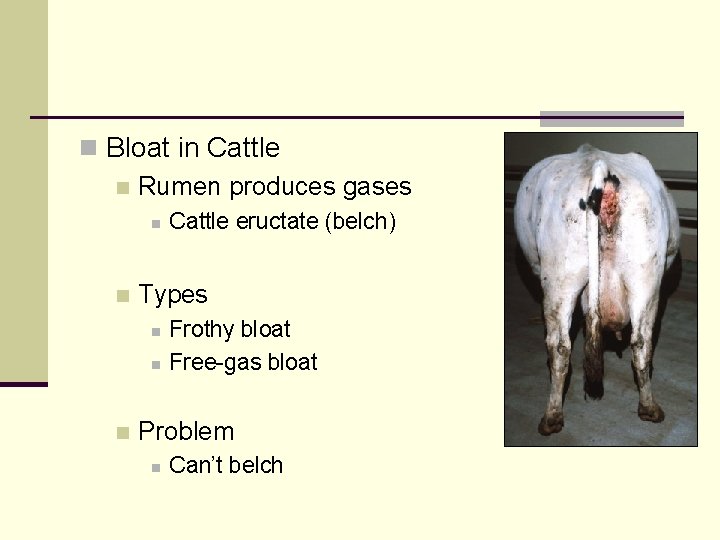
n Bloat in Cattle n Rumen produces gases n n Types n n n Cattle eructate (belch) Frothy bloat Free-gas bloat Problem n Can’t belch
n Treatment n n n Passing tube Abdominal wall puncture Drugs
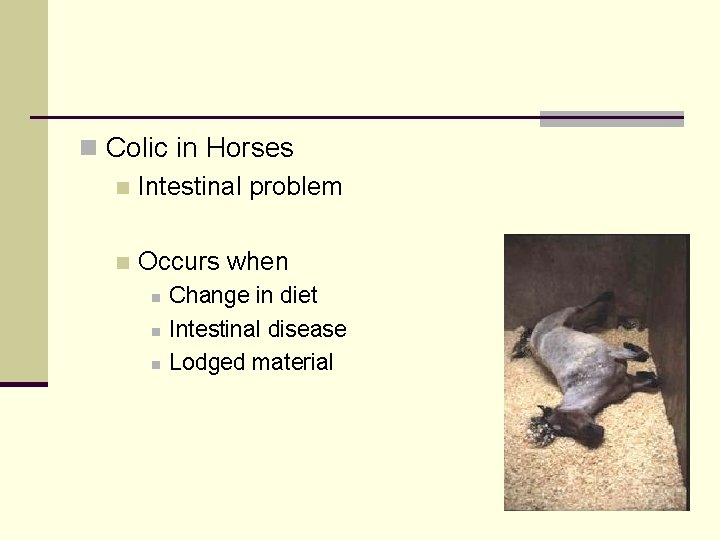
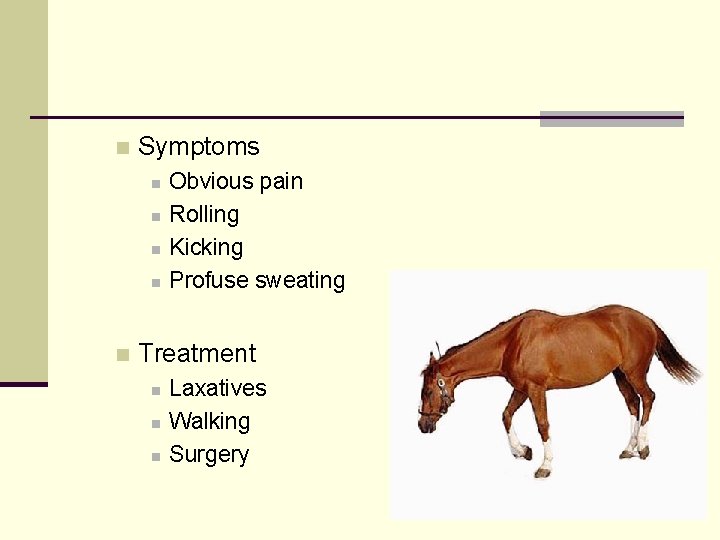
n Colic in Horses n Intestinal problem n Occurs when n Change in diet Intestinal disease Lodged material
n Symptoms n n n Obvious pain Rolling Kicking Profuse sweating Treatment n n n Laxatives Walking Surgery
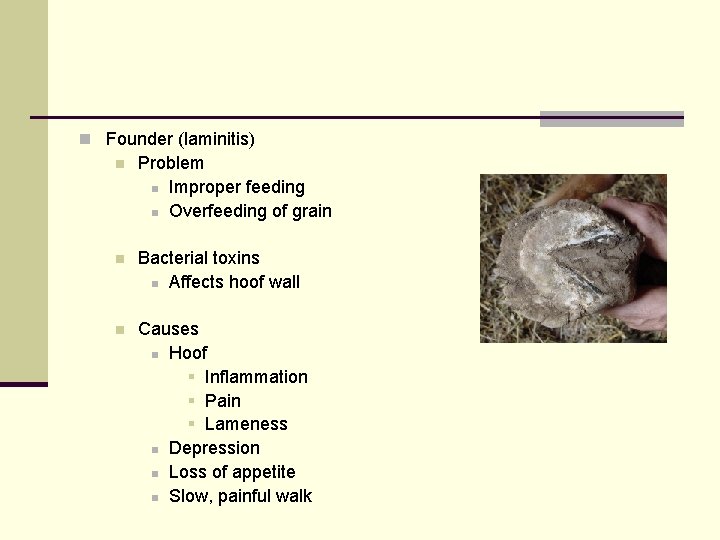
n Founder (laminitis) n Problem n Improper feeding n Overfeeding of grain n Bacterial toxins n Affects hoof wall n Causes n Hoof § Inflammation § Pain § Lameness n Depression n Loss of appetite n Slow, painful walk
n Treatment n Horses § Laxatives n Cattle § Flush feed from rumen § Large stomach tube § Surgery