
Sports in Society Issues and Controversies Chapter 8
- Slides: 32
Sports in Society: Issues and Controversies Chapter 8 Gender and Sports: Does Equity Require Ideological Changes?
Participation and Equity Issues Participation by girls & women has increased dramatically since the early 1980 s because: z. New opportunities z. Government equal rights legislation z. Global women’s rights movement z. Health & fitness movement z. Increased media coverage of women’s sports
Title IX is a US law stating that No person in the United States shall, on the basis of sex, be excluded from participation in, be denied the benefits of, or be subjected to discrimination under any educational program or activity receiving federal financial assistance.
Legal Definitions: Title IX in the US Title IX requires compliance with one of these three tests: z. The proportionality test üA 5 percentage point deviation has been okay z. The history of progress test üJudged by actions & progress over past 3 years z. The accommodation of interest test üPrograms & teams meet the interests and abilities of the under represented sex
Title IX in the US has z Supported dramatic changes in the sport participation opportunities available to girls & women since 1972 z Evoked continuous resistance since it became law z Demonstrated that laws and law enforcement do not exist in a social and cultural vacuum z Demonstrated that when laws challenge the ideas and lifestyles of people with power, the legitimacy and enforcement of those laws will be questioned
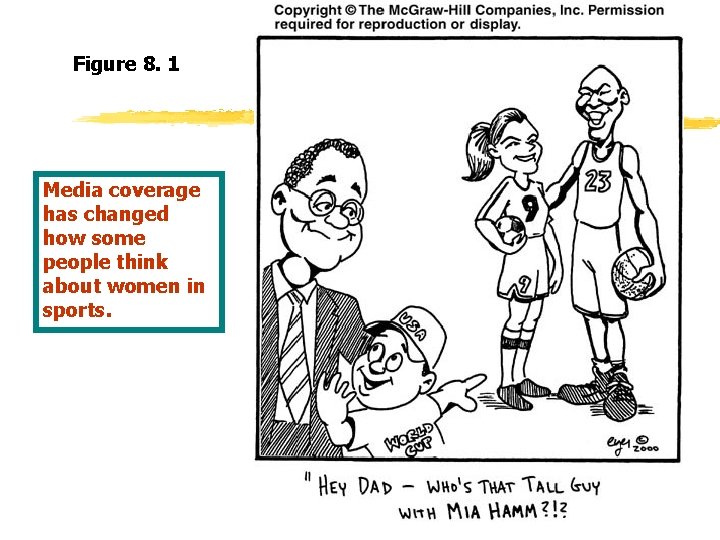
Figure 8. 1 Media coverage has changed how some people think about women in sports.
Reasons For Caution When Predicting Future Participation 1. Budget cutbacks and the privatization of sport programs 2. Resistance to government regulations 3. Backlash among those who resent strong women 4. Under representation of women in decision -making positions in sport programs (continued)
Reasons For Caution When Predicting Future Participation 5. Continued emphasis on “cosmetic fitness” 6. Trivialization of women’s sports 7. Homophobia and the threat of being labeled “lesbian”
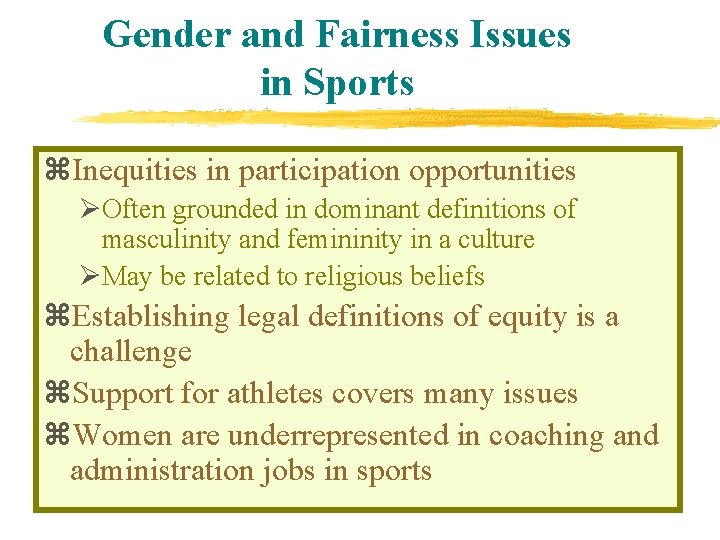
Gender and Fairness Issues in Sports z. Inequities in participation opportunities ØOften grounded in dominant definitions of masculinity and femininity in a culture ØMay be related to religious beliefs z. Establishing legal definitions of equity is a challenge z. Support for athletes covers many issues z. Women are underrepresented in coaching and administration jobs in sports
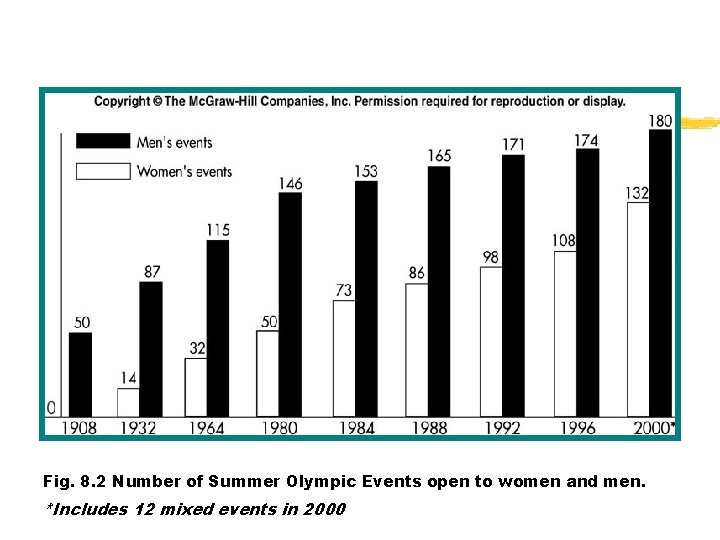
Fig. 8. 2 Number of Summer Olympic Events open to women and men. *Includes 12 mixed events in 2000
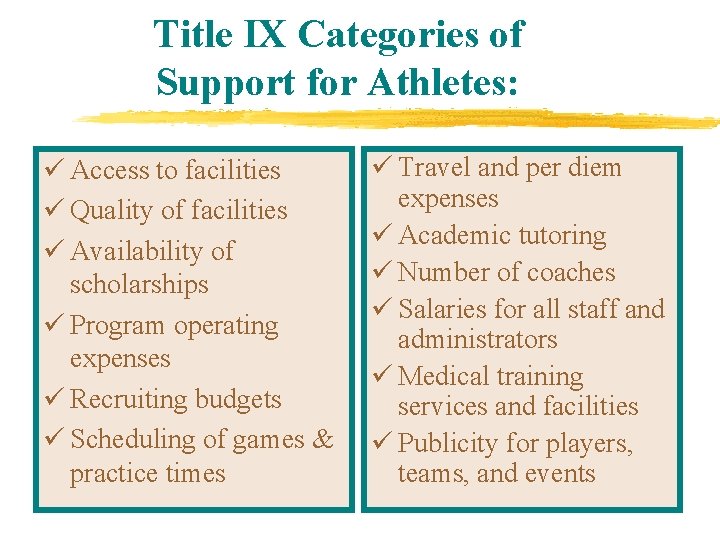
Title IX Categories of Support for Athletes: ü Access to facilities ü Quality of facilities ü Availability of scholarships ü Program operating expenses ü Recruiting budgets ü Scheduling of games & practice times ü Travel and per diem expenses ü Academic tutoring ü Number of coaches ü Salaries for all staff and administrators ü Medical training services and facilities ü Publicity for players, teams, and events
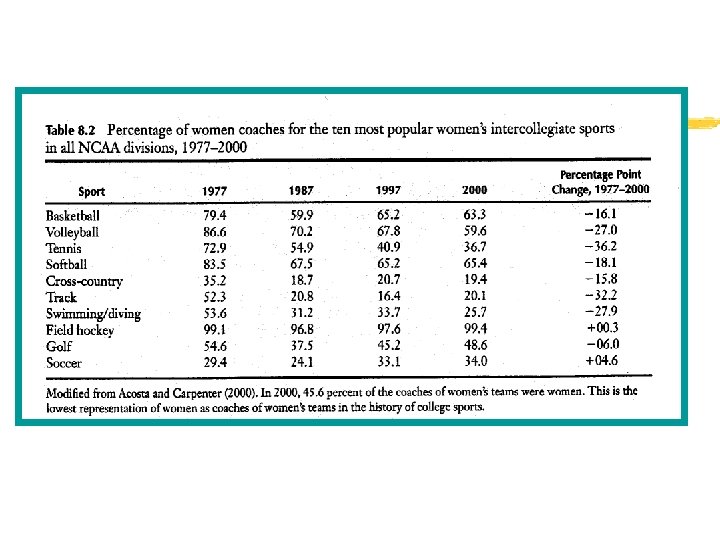
Coaching and Administration: Reasons for Underrepresentation 1. Women have fewer established connections and networks in elite programs 2. Subjective evaluative criteria used by search committees 3. Support systems & professional development opportunities for women have been scarce (continued)
Coaching and Administration: Reasons for Underrepresentation 4. Many women do not see spaces for them in corporate cultures of sport programs 5. Sport organizations are seldom sensitive to family responsibilities among coaches and administrators 6. Women may anticipate sexual harassment and more demanding standards than those used to judge men
Access to Informal and Alternative Sports Gender inequities also exist in player controlled sports: z Girls and women may face greater access challenges than are faced by boys and men z Boys and men often control access to these sports, and they control access on their terms z Title IX does not apply to these sports Question: Do the XGames reflect or perpetuate inequities related to access in these sports?
Strategies to Promote Gender Equity 1. Confront discrimination and be an advocate for women coaches and administrators 2. Be an advocate of fair and open employment practices 3. Keep data on gender equity 4. Learn and educate others about the history of discrimination in sports and how to identify discrimination (continued)
Strategies to Promote Gender Equity 5. Inform media of unfair and discriminatory policies 6. Package women’s sports as revenue producers 7. Recruit women athletes into coaching 8. Use women’s hiring networks 9. Create a supportive climate for women in your organization
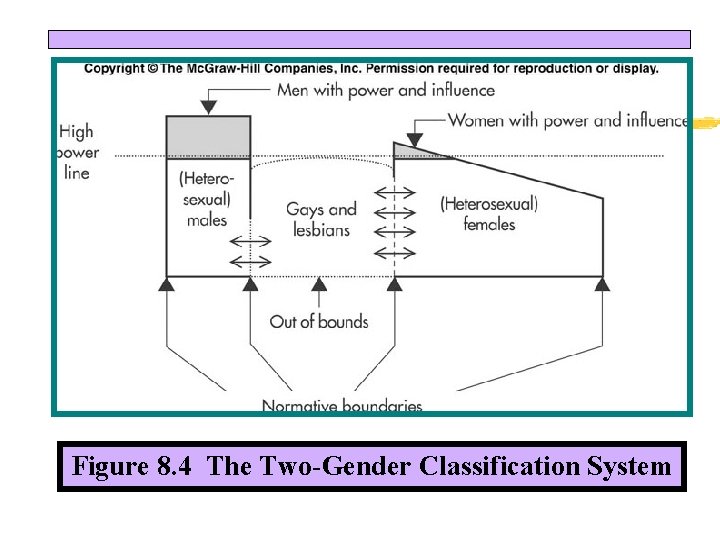
Figure 8. 4 The Two-Gender Classification System
Girls and Women As Agents of Change Sport participation can empower women but z This does not occur automatically z Personal empowerment is not necessarily associated with an awareness of the need for gender transformation in society as a whole z Elite athletes seldom are active agents of change when it comes to gender ideology
Why Elite Athletes Seldom Challenge Traditional Gender Ideology 1. Women athletes often fear being tagged as ungrateful, “man-haters, ” or “lesbians” 2. Corporation-driven “celebrity-feminism” focuses on individualism and consumption, not everyday struggles related to gender 3. “Empowerment discourses” in sports often are tied to fitness and heterosexual attractiveness 4. Women athletes have little control or political voice in sports or society at large
Boys and Men As Agents of Change Gender equity also is a men’s issue: z. Equity involves creating options for men to play sports that are not based exclusively on a power and performance model z. Equity emphasizes relationships based on cooperation rather than conquest and domination
Facing Football: A Challenge for Equity Strategies High profile football teams z Involve more players and more resources than any other sport team z Often promote a culture in which there is resistance to the organizational changes needed to achieve gender equity z Often are supported by boosters who do not want gender equity to interfere with how they have always done things
Changes in Gender Ideology: A Prerequisite for Gender Equity Gender ideology is crucial because: z. Gender is a fundamental organizing principle of social life z. Gender ideology influences how we § § Think of ourselves How we define and relate to others How we present ourselves to others How we think about and plan for our future
Gender Ideology Gender ideology in the U. S. is based on a two-category classification system that z Assumes two mutually exclusive categories: heterosexual male and heterosexual female z Encourages these categories to be perceived in terms of difference, and as “opposites” z Leaves no space for those who do not fit into either of the two categories z Involves inequities when it comes to power and access to power
Facts about Gender Ideology It is defined in ways that üGive some men more access to power while restricting the range of behavior among all men üMarginalize gays and lesbians by categorizing them as being out of normative bounds üLead women to be more apt to push gender boundaries while men are more apt to police gender boundaries for themselves and women
Gender Ideology in Sports z. Gender is not fixed in nature, so people often use sports to maintain dominant definitions z. Sports often are sites for celebrating traditional ideas about masculinity z. Sport images and language often glorify a heroic manhood based on being a warrior z. When sports celebrate masculinity, female athletes often are defined as invaders
Gender Ideology in Sports: Girls and Women As Invaders z. Girls and women in sports often threaten the preservation of traditional ideas about gender z. Through history, myths have been used to discourage participation by girls and women z. Encouragement varies by sport, and whether the sport emphasizes grace or power z. Being a “tomboy” is okay as long as traditional “femininity cues” are presented
Women Bodybuilders: Expanding Definitions of Femininity? Ø Competitive bodybuilding for women did not exist before the 1970 s Ø There is a clear tension between muscularity and ideas about femininity in women’s bodybuilding Ø Women bodybuilders may be perceived as deviant in terms of gender definitions Ø Women bodybuilders challenge traditional definitions of gender, despite commercial images that highlight heterosexual attractiveness Ø Women bodybuilders use femininity insignias to avoid being marginalized as they push boundaries
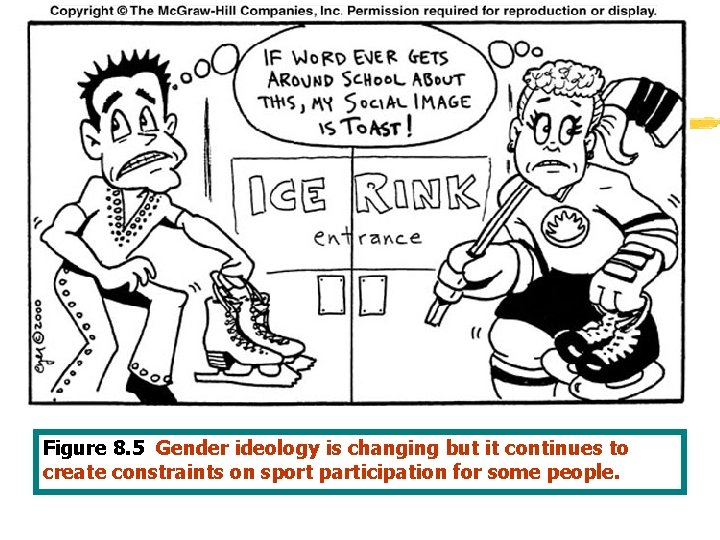
Figure 8. 5 Gender ideology is changing but it continues to create constraints on sport participation for some people.
Gender Ideology and Double Standards in Sports What would happen if: v Mia Hamm beat up a man or a couple of women in a bar fight? v A high profile woman athlete bragged about having numerous sex partners? v A WNBA player had tattoos expressing strength and dominance on her arms? v The captain of the national women’s soccer team was photographed with near naked men ogling and hanging on her?
The Challenge of Being Gay or Lesbian in Sports Ø Popular discourse erases the existence of gay men and lesbians in sports Ø Gay men and lesbians do not have the freedom that heterosexuals have in expressing their sexuality Ø Being “out” in sports creates challenges ü Women risk losing social acceptance ü Men risk physical safety and losing social acceptance Ø Most people in sports support a “Don’t ask, don’t tell” policy about homosexuality
Strategies for Changing Ideology and Culture There is a need for v Alternative definitions of masculinity ü Critically question violent & destructive behavior v Alternative definitions of femininity ü Becoming “like men” is not the goal v Changing the ways we do sports ü Focus on lifetime participation, supportive vocabularies, gender equity, and bringing boys and girls and men and women together to share sport experiences