REC THERAPY FOR CHILDREN AGES 7 TO 12










- Slides: 112
REC THERAPY FOR CHILDREN (AGES 7 TO 12) WITH ABUSEREACTIVE NEEDS AT A RESIDENTIAL PSYCHIATRIC TREATMENT FACILITY Monday, Sept. 12 th, 2016 10: 00 a. m. ATRA Conference
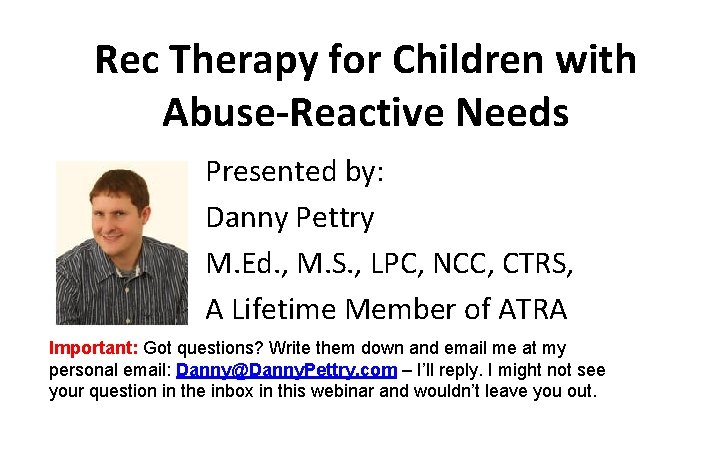
Rec Therapy for Children with Abuse-Reactive Needs Presented by: Danny Pettry M. Ed. , M. S. , LPC, NCC, CTRS, A Lifetime Member of ATRA Important: Got questions? Write them down and email me at my personal email: Danny@Danny. Pettry. com – I’ll reply. I might not see your question in the inbox in this webinar and wouldn’t leave you out.
Here is My Promise To You: • By the end of this session, you’ll know three (3) types of therapy models for helping children with abuse-reactive needs.
This session will provide you with some really helpful tips for helping children with abuse-reactive needs.
You’ll get a lot of information If you stay until the end of this session.
And If You Stay Until The End. . . I’m going to give you several gifts!
Gift # 1 • A discount for my online continuing education program for Recreational Therapists with emphasis on children needs.
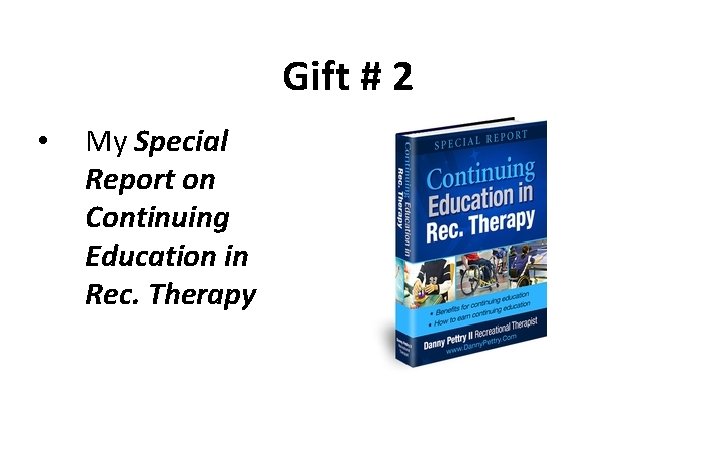
Gift # 2 • My Special Report on Continuing Education in Rec. Therapy
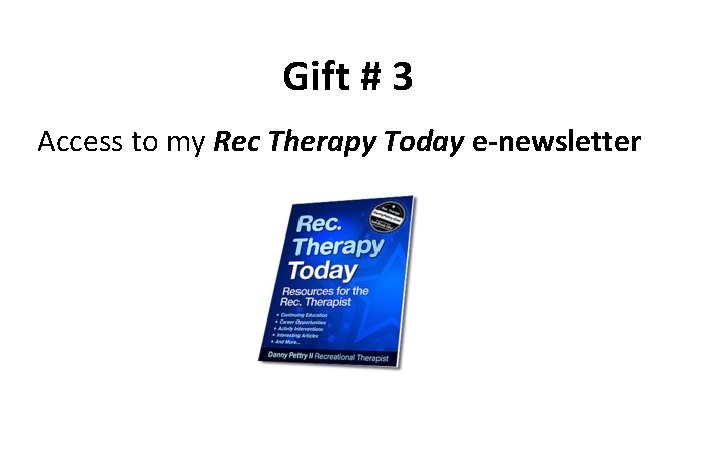
Gift # 3 Access to my Rec Therapy Today e-newsletter
My activity ebooks • You can easily print out pages. They are children-focused: – Exploring emotions through Activities – Learning about leisure through Activities – Fun ways to stay fit through Activities – Building social skills through Activities
Need Your Attention Please. . .
I Need Your Attention Please. . . • Turn off cell phones • Turn off Facebook • If you're a Recreational Therapist and you’re serious about helping children to make positive character choices… then you’re going to want to stay focused…
Why is it good to stay focused? • It makes you smarter • I was recently reading, Dan Hurley’s book: Smarter. • One of the tips was being focused on one thing/ being mindful. • Author, Tim Ferris had a blog entry that said multi-tasking kills brain cells.
Who Are You! • I want to know who you are! • Type in the box how you work with children: in example: at a hospital, as a parent, as a teacher, or rec therapy in schools, etc. Let me know. • What do you hope to learn or gain form this session.
You might be asking yourself: • Who is Danny Pettry? • Why is he qualified to present this session?
I want to briefly discuss my credentials And Then I want to tell you everything I know about trauma-informed care for children.
Who is Danny Pettry? • Professional Practitioner – Completed undergraduate internship (in 2002) with adults and seniors for an acute-care psychiatric unit at a medical center. – First job offer (Aug. 2002) was providing services for children with abuse-reactive needs. I’ve worked there ever since.
About the kids • The kids in this program have had some type of abuse: physical, emotional, sexual, neglect, witness to violence. • These kids have reactive behaviors that consist of: physical aggression, verbal aggression, sometimes sexual acting out behavior, and other self-destructive behaviors.
My Qualifications • I maintained full-time employment while completing two graduate degrees! – M. S. Recreational Therapy, Indiana University, 2006, where I studied with Dr. David Austin. – M. Ed. Mental Health Counseling, Lindsey Wilson College, 2012
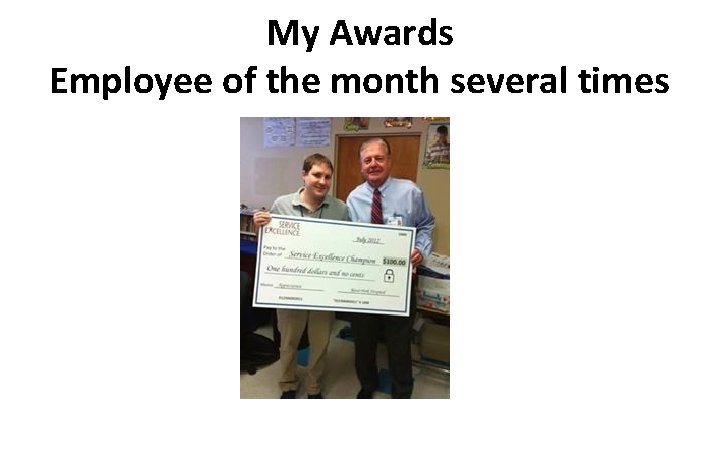
My Awards Employee of the month several times
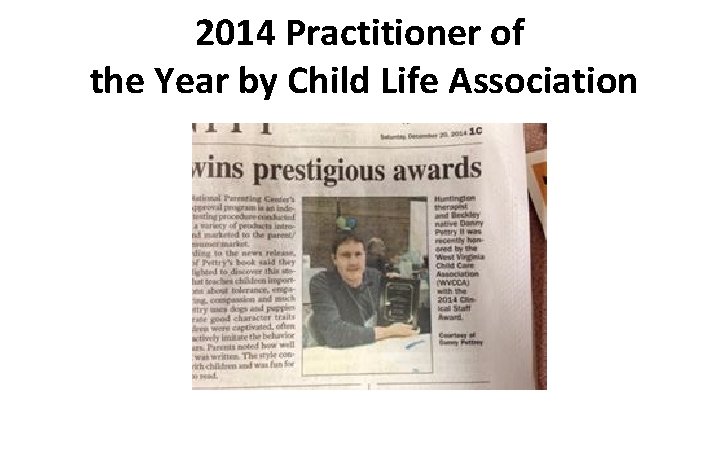
2014 Practitioner of the Year by Child Life Association
My real qualification
Credentials • Certified Therapeutic Recreation Specialist (CTRS) since 2003 • National Certified Counselor (NCC) since 2013. • I am a Licensed Professional Counselor (LPC) in a state that does not license rec therapists yet.
Okay that is way too much about information about me. Because This Session is About YOU and providing you with tips to help children who’ve experienced trauma
Today - you’ll discover what you need to know about trauma-focused Care
RESULTS! / PROOF! • Evidenced-based practices • What works • The models provided today are grounded in evidence.
What We'll Cover: • Introduction: About the Child with Trauma • Part # 1: Trauma-Focused Cognitive Behavior Therapy (TF-CBT) • Part # 2: Dialectical Behavior Therapy (DBT) • Part # 3: Humanistic Approach • Outcomes: A Healthier Functioning Child!
Introduction: About the Child with Trauma
Children • My belief: – All children are good. Charlie Appelstein has a book, “No Such Thing as a Bad Child. ” – Children are born wonderful human beings with the potential to do great things with their life!
And Sometimes… • Bad Things Happen in the child’s life that mess them up. • What is the bad thing? – Child abuse, neglect, major loss, sexual abuse, domestic violence, verbal and emotional abuse, war, and other major life struggles.
The soldier returning from war • If is often easier to understand that a soldier returning from war has struggles from their traumatic experiences. Some soldiers have “PTSD. ” • Sometimes it is difficult to understand that children too can have PTSD too.
The innocence of children • One child had written a note to her mental health therapist and had written To: Laura, M. A. , LPC, RPT, NCC, ALPS and then signed it with her name [Jenny, not real name] ADHD, ODD, PTSD. She thought all people had letters. • OR driving by coal power plant and a girl saying: that is where they make clouds for us
The Better Question • Don’t ask: What is wrong with that child? • Do ask: What happened to you?
Assessments • Trauma Symptom Checklist for Children (TSCC) is often used by mental health counselors. It is valid way to determine symptoms. Six clinical scales: Anxiety, Depression, Posttraumatic Stress, Sexual Concerns, Dissociation, and Anger.
Rec Therapy Focused • Read reports in Medical Records/ patient history (so you won’t trigger by accident). Of course, it will happen and you learn as you go. • Rec Therapy assessment covers: social, emotional, cognitive, physical, and (previously leisure) now functioning. • Strength-based – what is working – build on it
Part # 1: Trauma-Focused Cognitive Behavior Therapy
TF-CBT • There is an easy-acronym for this model. • It is: PRACTICE
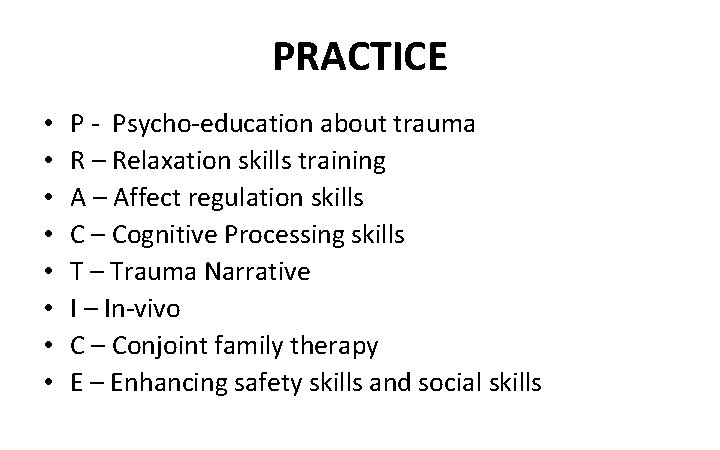
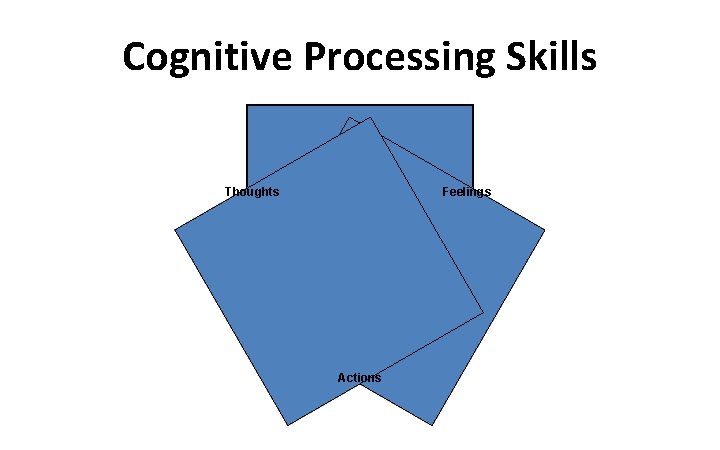
PRACTICE • • P - Psycho-education about trauma R – Relaxation skills training A – Affect regulation skills C – Cognitive Processing skills T – Trauma Narrative I – In-vivo C – Conjoint family therapy E – Enhancing safety skills and social skills
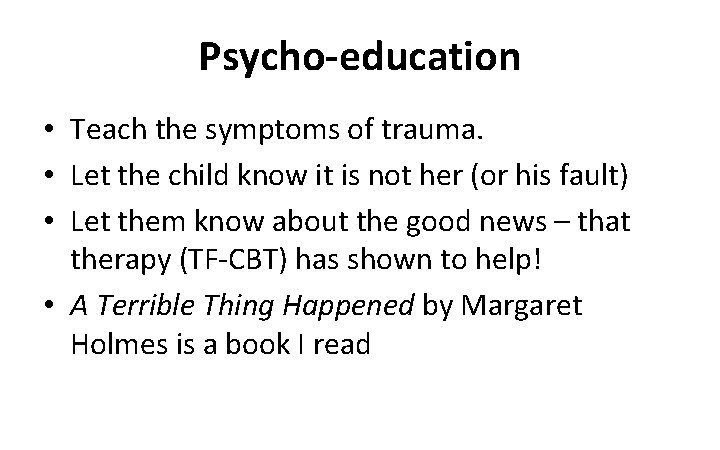
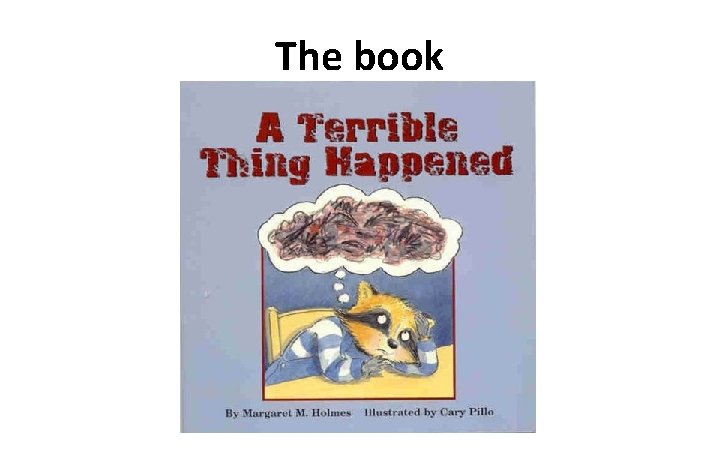
Psycho-education • Teach the symptoms of trauma. • Let the child know it is not her (or his fault) • Let them know about the good news – that therapy (TF-CBT) has shown to help! • A Terrible Thing Happened by Margaret Holmes is a book I read
The book
Relaxation Skills Training • This is major recreational therapy ideas: • Hobbies, music, sports, yoga, imagery, progressive muscle relaxation (PMR), deep breathing, music, (See DBT skills in next section). • Relaxation cards game! • Animal Yoga Cards
Relaxation skills • Healthy distraction to get mind away from dwelling on past or worrying about the future • PMR: kid friendly names – squeeze the lemons, tin man to rag doll, toes in the sand, mad face – relaxed face.
Affect Regulation Skills Training • Learn to identify more feelings. • IT is okay to feel all feelings. • Create emotion cards – how many can you identify • Then ask to share aloud what was going on with each emotion.
Monster emotions • Poster was created by a rec therapist. • Of course facial expressions work • Use pictures from newspapers or magazines with cut out faces
Play therapy – color my heart • List emotions. Add a color for each emotion (like a key) blue could be sad or red could be angry – let kid pick colors for emotions. Good for assessment and evaluation.
Emotions intensity • Scale 1 to 10 • How to bring it down a notch or two
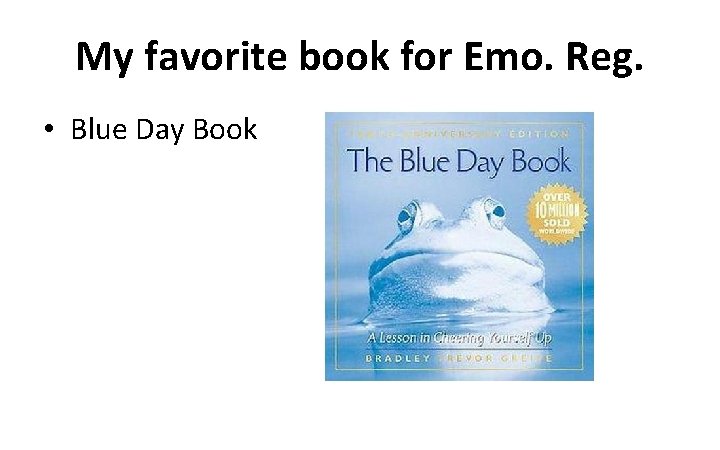
My favorite book for Emo. Reg. • Blue Day Book
Cognitive Processing Skills Feelings Thoughts Actions
Identify Faulty Thinking • Help the child to make healthier changes with: – Thoughts – Feelings – Behaviors People can control those three things. Some radical acceptance about what you can’t control – like the past. Or other people.
Trauma Narrative • • This is the hardest part of therapy The child tells his (or her) story. Complete autonomy. Sometimes this process starts to leak out in rec therapy – self-expression groups.
Autonomy • • • Write a book Set it up in sandbox tray and take photos Act it out – drama Make a comic book And other creative ideas Collages
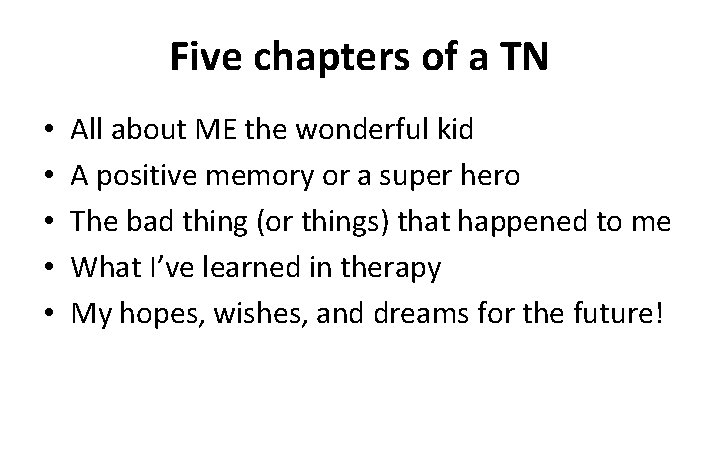
Five chapters of a TN • • • All about ME the wonderful kid A positive memory or a super hero The bad thing (or things) that happened to me What I’ve learned in therapy My hopes, wishes, and dreams for the future!
Never pressure • A child should not be forced into giving a trauma narrative because that could do more harm than good. • Most who complete one share aloud feelings of relief and freedom. It has therapeutic values.
In-Vivo Exposure • This involves identifying triggers. • May be returning home to a place where triggers occurred • And learn ways to use relaxation and cognitive processing skills (from earlier sessions)
Conjoint Sessions • Getting the child and caregiver (legal guardian) person she (or he) is returning (with mental health therapist) • Rec Therapist is often one going on community re-entry passes with the child and family member. Focus on trusted adult, support from adult. Identify concerns.
Enhancing Safety and Social Skills What can you do if. . Situations Simplyfun. com has a really neat key chain with safety skills questions/ and social skills questions. Works great.
Review • PRACTICE – – – – Psycho-education Relaxation Affect/ emotions regulation Cognitive processing TRAUMA Narrative In-vivo Conjoint Family Enhance safety skills and social skills
Part # 2: Dialectical Behavior Therapy (DBT)
Developed by: • Marsha Linehan as a treatment for people with Borderline Personality Disorder. • Previously, in the DSM-IV, personality disorders fell under the Axis II as they were thought un-treatable. • The DSM-5 does not have Axis II. There are treatments for personality disorders- i. e. DBT
Dialectical • Two ends of a pole. Both could be right – Planned a party – but people don’t have fun. • For teens, I like to play, Alanis Morissette’s “Isn’t it ironic. ” – Won lottery – died next day – Good advice – didn’t take.
The focus • Creating a life worth living!
Validation is key • Validate that their emotions are real. Their experiences are real. Their suffering is real.
Four Main Skills are Taught • My internship supervisor in mental health counseling uses an acronym that one of her patients had created for the four skill-sets: • D: distress tolerance skills • I: interpersonal effectiveness skills • M: mindfulness meditation skills • E: Emotional regulation skills
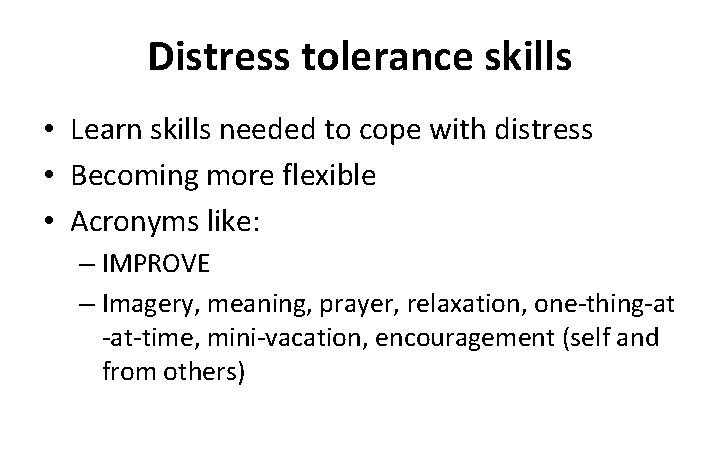
Distress tolerance skills • Learn skills needed to cope with distress • Becoming more flexible • Acronyms like: – IMPROVE – Imagery, meaning, prayer, relaxation, one-thing-at -at-time, mini-vacation, encouragement (self and from others)
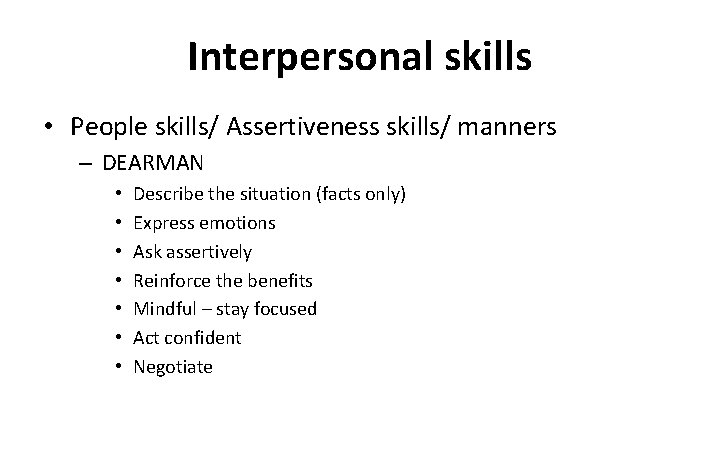
Interpersonal skills • People skills/ Assertiveness skills/ manners – DEARMAN • • Describe the situation (facts only) Express emotions Ask assertively Reinforce the benefits Mindful – stay focused Act confident Negotiate
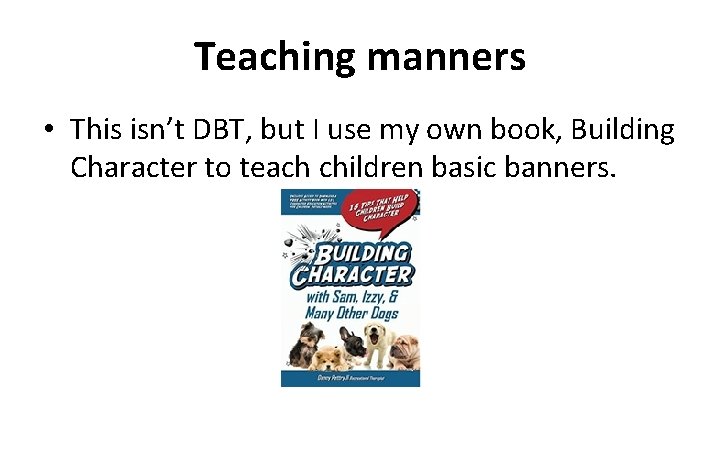
Teaching manners • This isn’t DBT, but I use my own book, Building Character to teach children basic banners.
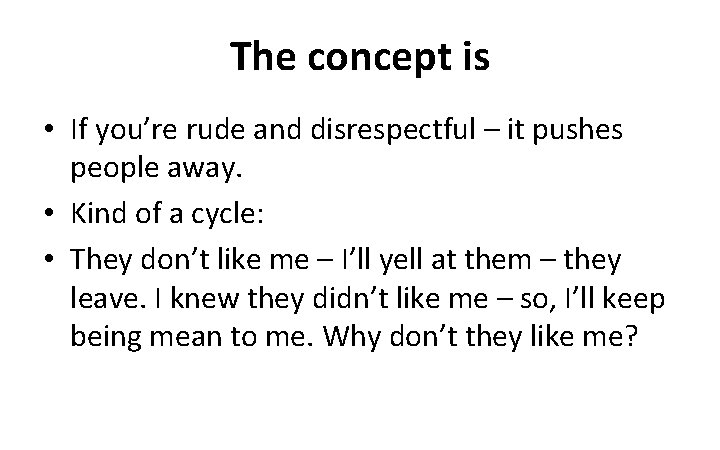
The concept is • If you’re rude and disrespectful – it pushes people away. • Kind of a cycle: • They don’t like me – I’ll yell at them – they leave. I knew they didn’t like me – so, I’ll keep being mean to me. Why don’t they like me?
Mindfulness Meditation • Difficult concept to teach. • I’m still struggling. • I often call it FOCUS time for children.
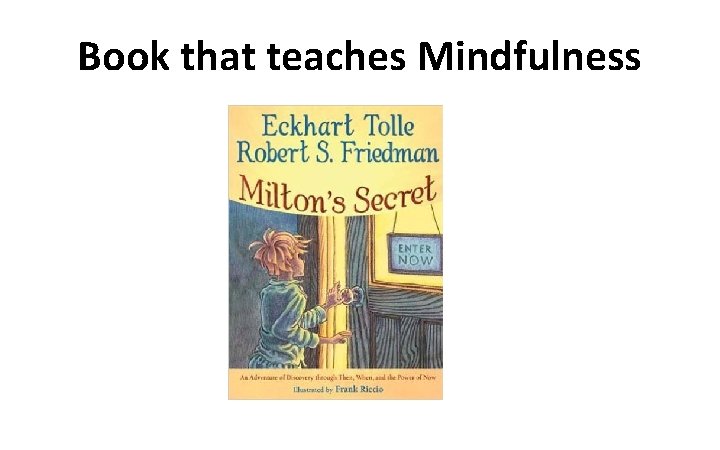
Book that teaches Mindfulness
Focus • On the past: dwelling – feel bad. • On the future: dwelling – feel worried. ? • The focus is here and now. OF course a person could have rough feelings in the moment, but it would be a lot worse if you add the past problems and future worries to the moment. • Just do the moment – get through it.
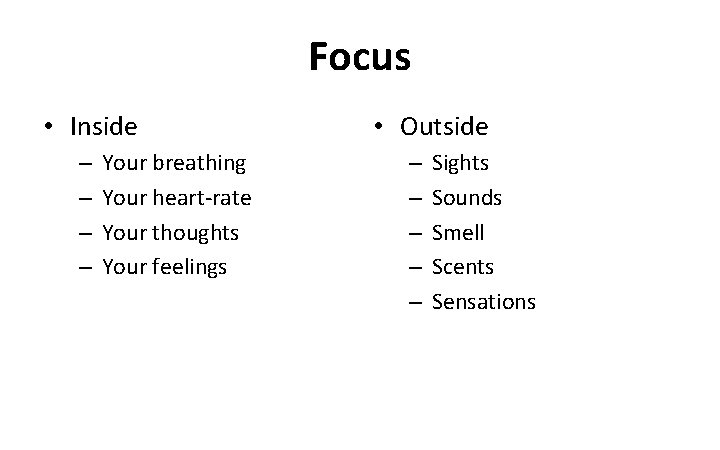
Focus • Inside – – Your breathing Your heart-rate Your thoughts Your feelings • Outside – – – Sights Sounds Smell Scents Sensations
Loss of Focus • It happens. Your mind will start to think of other things. • Someone said it was like training a puppy to sit still in one place – it will get up and go, but you return the puppy to place. – the same with your mind. • Don’t give yourself a hard time.
Sample • On a nature trail – great outdoor experience. • Focus on the moment – it is enjoyable. Nature smells nice. Beautiful colors. Awesome view. And my mind slips to progress notes or bills or family concerns or relationships and I’m like – okay back to relaxing in the moment. • Spend some time in nature! Smell the roses!
Emotional Regulation skills • Learning to cope with emotions – ACCEPTS • • Activities Contribution Compare to worse Distract with opposite emotions – humor? Push away – put problem in a time-out box Distract with thoughts: puzzles Distract with sensations: using senses
Part # 3: Humanistic Approach
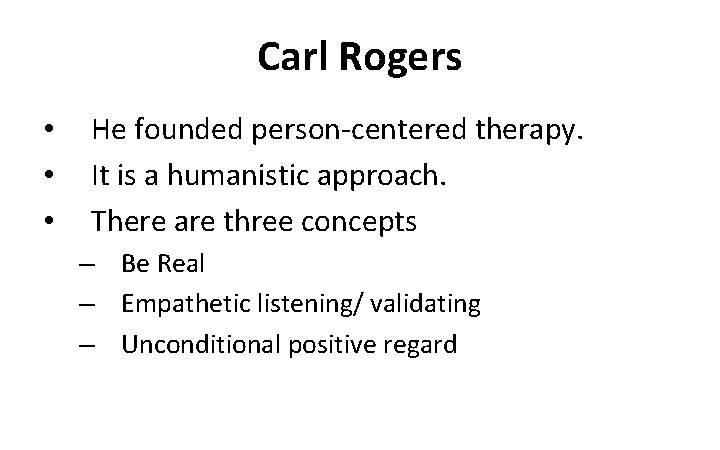
Carl Rogers • • • He founded person-centered therapy. It is a humanistic approach. There are three concepts – Be Real – Empathetic listening/ validating – Unconditional positive regard
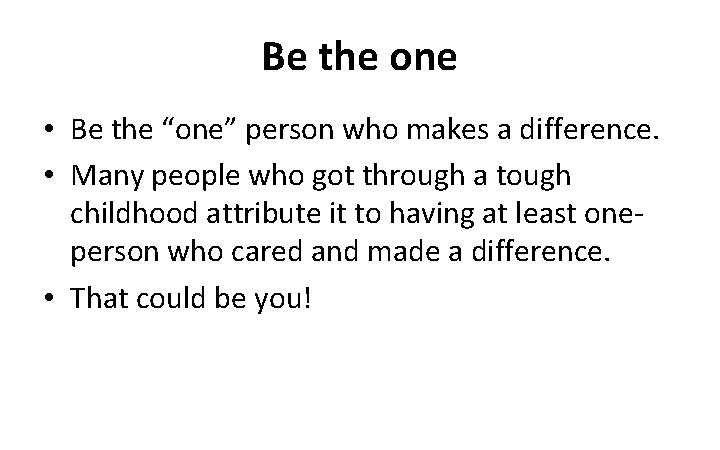
Be the one • Be the “one” person who makes a difference. • Many people who got through a tough childhood attribute it to having at least oneperson who cared and made a difference. • That could be you!
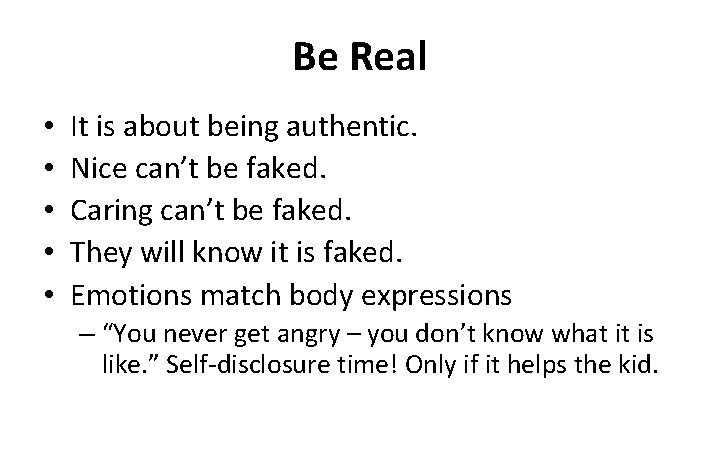
Be Real • • • It is about being authentic. Nice can’t be faked. Caring can’t be faked. They will know it is faked. Emotions match body expressions – “You never get angry – you don’t know what it is like. ” Self-disclosure time! Only if it helps the kid.
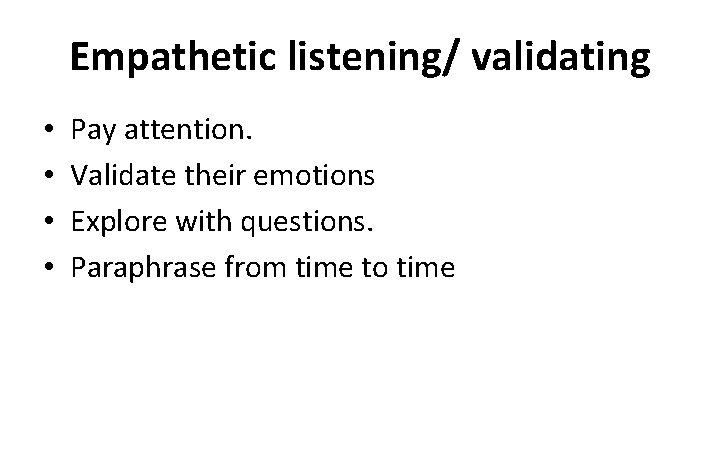
Empathetic listening/ validating • • Pay attention. Validate their emotions Explore with questions. Paraphrase from time to time
Unconditional Positive Regard • Hey kid – No matter what, I’m going to care about you. The truth – you’re going to mess up in the program. Maybe I’ll mess up too. But with you kid – I’m going to care about you no matter what. • Ethically – I don’t try to mess up. • Truth it happens:
Outcomes A Healthier Functioning Child
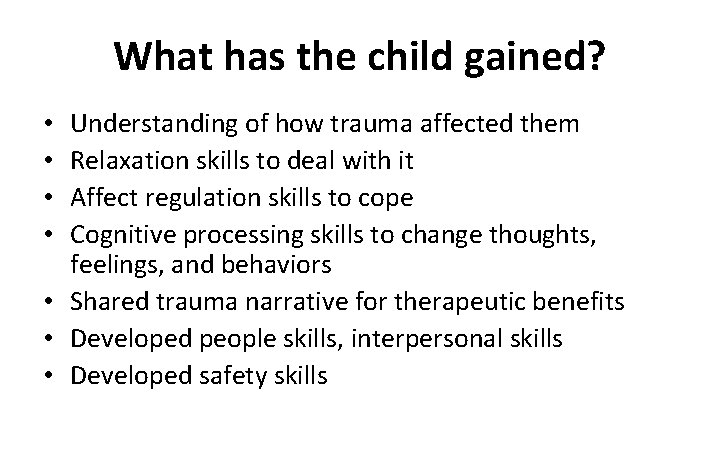
What has the child gained? Understanding of how trauma affected them Relaxation skills to deal with it Affect regulation skills to cope Cognitive processing skills to change thoughts, feelings, and behaviors • Shared trauma narrative for therapeutic benefits • Developed people skills, interpersonal skills • Developed safety skills • •
Let me ask you a question. . . Are you enjoying the webinar so far?
We've covered: • First: Trauma-focused Cognitive Behavior Therapy (TF-CBT) • Second: Dialectical Behavior Therapy (DBT); • Third: Humanistic Approach
So who wants to take things to the next level? Say, "I'm ready!“ Say it louder!
Introducing: Danny Pettry’s Helping Kids Self-Study CEU Bundle Program
Danny Pettry’s “Super-Bundles” are all about… Knocking out a lot of required continuing education hours.
Interesting Topics Many Recreational therapists that provide services for children in mental health or want to work with this population will naturally find these course topics interesting.
Helping Kids - CEU Bundle Responding to Troubled Youth’s Challenging Behavior 5 clock hours (0. 5 CEUs) - Regular Price is $80. 00 Techniques for Helping Children to Decrease Verbal and Physical Aggression 5 clock hours (0. 5 CEUs) - Regular Price is $80. 00 Unconditional Approach to Promoting Positive Behavior Change in Children 5 clock hours (0. 5 CEUs) - Regular Price is $80. 00 Consequences for using extrinsic motivators when teaching children 5 clock hours (0. 5 CEUs) - Regular Price is $80. 00 Benefits and contributions of play in pediatric development 5 clock hours (0. 5 CEUs) - Regular Price is $80. 00
Session content (for the Bundles) are CE Pre-Approved by NCTRC So you’ll know it counts!
BONUS #1 Danny Pettry’s Secret fb group for Rec Therapists
In the fb group Danny and members share exclusive information: discounts, opportunities, book reviews, and other resources that Danny doesn’t share with mailing list.
If You Only Got That Bonus Alone You‘d be getting a great offer
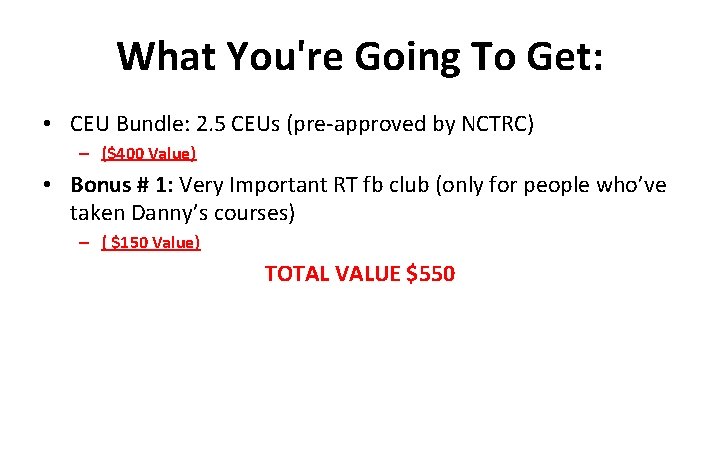
What You're Going To Get: • CEU Bundle: 2. 5 CEUs (pre-approved by NCTRC) – ($400 Value) • Bonus # 1: Very Important RT fb club (only for people who’ve taken Danny’s courses) – ( $150 Value) TOTAL VALUE $550
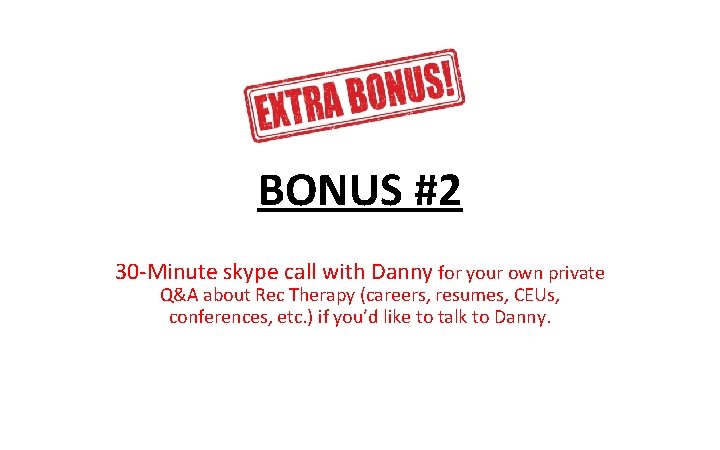
BONUS #2 30 -Minute skype call with Danny for your own private Q&A about Rec Therapy (careers, resumes, CEUs, conferences, etc. ) if you’d like to talk to Danny.
What You're Going To Get: • CEU Bundle: 2. 5 CEUs (pre-approved by NCTRC) – ($400 Value) • Bonus # 1: Very Important RT Club Membership – ( $150 Value) • Bonus # 2: a 30 -Minute skype call with Danny for your own private Q&A about Rec Therapy (careers, resumes, CEUs, conferences, etc. ) if you’d like to talk to Danny. – ($250 Value) TOTAL VALUE $800
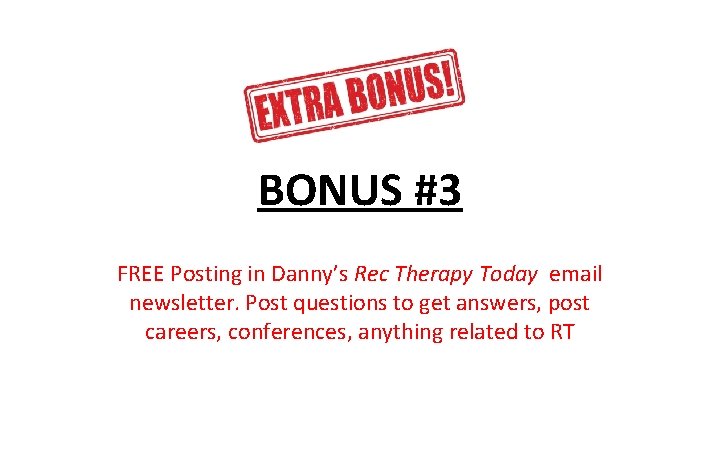
BONUS #3 FREE Posting in Danny’s Rec Therapy Today email newsletter. Post questions to get answers, post careers, conferences, anything related to RT
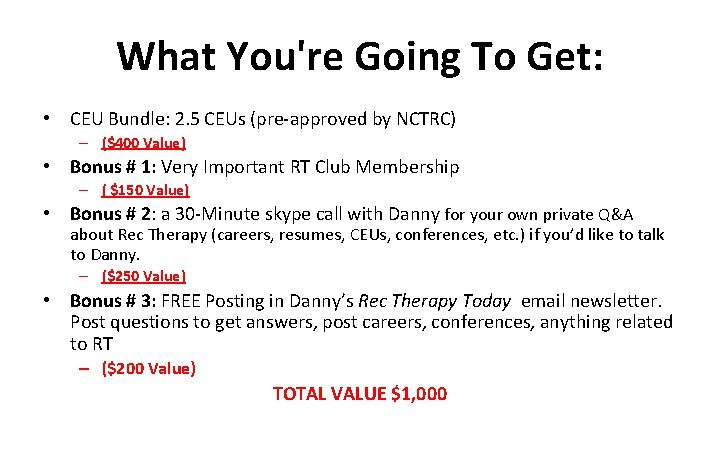
What You're Going To Get: • CEU Bundle: 2. 5 CEUs (pre-approved by NCTRC) – ($400 Value) • Bonus # 1: Very Important RT Club Membership – ( $150 Value) • Bonus # 2: a 30 -Minute skype call with Danny for your own private Q&A about Rec Therapy (careers, resumes, CEUs, conferences, etc. ) if you’d like to talk to Danny. – ($250 Value) • Bonus # 3: FREE Posting in Danny’s Rec Therapy Today email newsletter. Post questions to get answers, post careers, conferences, anything related to RT – ($200 Value) TOTAL VALUE $1, 000
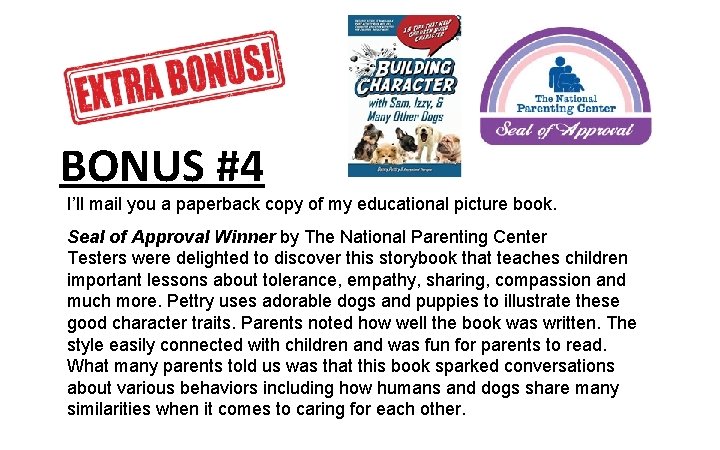
BONUS #4 I’ll mail you a paperback copy of my educational picture book. Seal of Approval Winner by The National Parenting Center Testers were delighted to discover this storybook that teaches children important lessons about tolerance, empathy, sharing, compassion and much more. Pettry uses adorable dogs and puppies to illustrate these good character traits. Parents noted how well the book was written. The style easily connected with children and was fun for parents to read. What many parents told us was that this book sparked conversations about various behaviors including how humans and dogs share many similarities when it comes to caring for each other.
What You're Going To Get: • CEU Bundle: 2. 5 CEUs (pre-approved by NCTRC) – ($400 Value) • Bonus # 1: Very Important RT Club Membership – ( $150 Value) • Bonus # 2: a 30 -Minute skype call with Danny for your own private Q&A about Rec Therapy (careers, resumes, CEUs, conferences, etc. ) if you’d like to talk to Danny. – ($250 Value) • Bonus # 3: FREE Posting in Danny’s Rec Therapy Today email newsletter. Post questions to get answers, post careers, conferences, anything related to RT – ($200 Value) • Bonus # 4: FREE paperback copy of Danny Pettry’s Character Education book which includes access to download a. pdf workbook. – ($30 Value) TOTAL VALUE is over $1, 000
What is the actual cost? • It isn’t $1, 000 • It isn’t even $500 • It is Only $197 for the helping kids CEU bundle + 4 bonuses • Go here: www. dannypettry. com/Super. CEUbundle. html
Guarantee • Danny Pettry offers 100%, 60 -day Money-back guarantee.
Qualifications • Danny Pettry is qualified to teach these courses. • He has been a CTRS since 2002. • He has advanced degrees in both Rec Therapy and Mental Health Counseling.
Pettry Qualifications • Provide online continuing education courses for recreational therapists! • online CEU program, Danny. Pettry. com has had over 1, 000 satisfied students since 2007.
Get Started Now with Danny Pettry’s Super-CEU-Bundle Today http: //www. dannypettry. com/septoffer. html *offer is limited time only. It will end soon.
Get Started Now with Danny Pettry’s CEU Bundles! http: //www. dannypettry. com/septoffer. html
REWARD: • For Those Of You Who Stuck Around! • Here's how to get your four gifts that I promised at the start of this session. • Go here: • http: //www. Danny. Pettry. com/promise. html
Door Prize • Who are the winners today?
Questions and Answers Time