Mathematical Puzzles in the Classroom Paul Turner Ed

- Slides: 125
Mathematical Puzzles in the Classroom Paul Turner & Ed Staples A presentation at the 17 th annual conference of the Canberra Mathematical Association Inc. 17 August 2019 An homage to the renowned puzzler and journalist Martin Gardner
Why puzzles? • PART 1 • The value of puzzles
The value of puzzles Puzzles: • Opportunities for students to think deeply • Fertile ground for the gap left by encroaching technology • Enables connections to be made between distinct areas of mathematics • Allows time and space for students and teachers to collaborate together. • Easily accessible activities to explore.
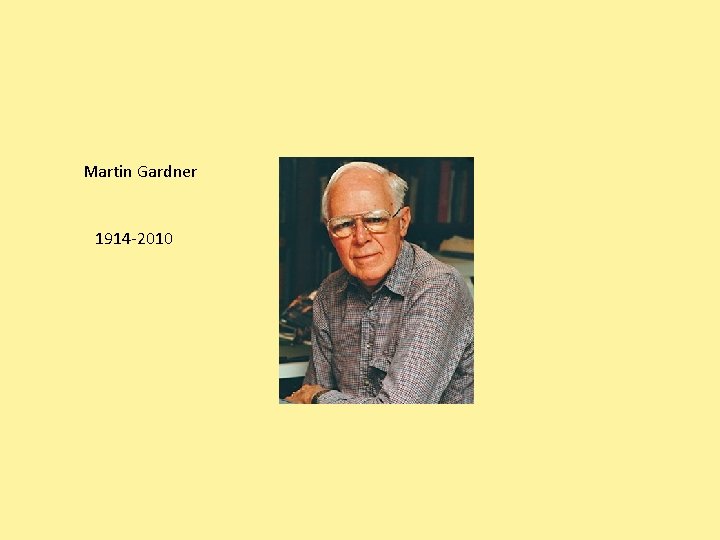
Martin Gardner 1914 -2010
Bellos with M Gardner • “There is a difference between being good at puzzles and appreciating a good puzzle. A puzzle in a sense models what all scientists are doing. ”
Bellos with M Gardner • “They are trying to solve puzzles about the nature of the universe. ” • Puzzles both provoke creative thinking and are a starting point for interesting research. • “Puzzles can lead you into almost every branch of mathematics, ” he added.
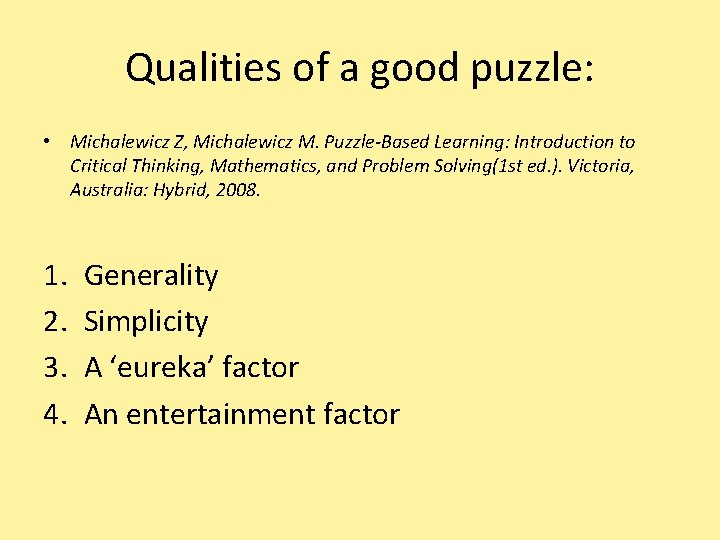
Qualities of a good puzzle: • Michalewicz Z, Michalewicz M. Puzzle-Based Learning: Introduction to Critical Thinking, Mathematics, and Problem Solving(1 st ed. ). Victoria, Australia: Hybrid, 2008. 1. 2. 3. 4. Generality Simplicity A ‘eureka’ factor An entertainment factor
Qualities of a good puzzle • Generality is related to the strategies that the solvers should develop and that will help them to solve other problems in the future.
Qualities of a good puzzle • Considering simplicity, an educational puzzle should be simple and easy to remember, and, in this way, its solution and the content addressed will be easily remembered afterward
Qualities of a good puzzle • The Eureka factor: When an insight or solution is gained, there is a ‘eureka’ hit. • There is a sense of relief; the frustration students felt during the search clears, and they feel a sense of reward for solving the puzzle. This provides students with immediate feedback about their mistakes and successes.
Qualities of a good puzzle • Entertainment is a result of a puzzle’s intriguing simplicity, the student’s frustration, the Eureka moment, and the collaborative ownership of an interesting creation.
Gardner Triples • PART 2 • The puzzle we investigated
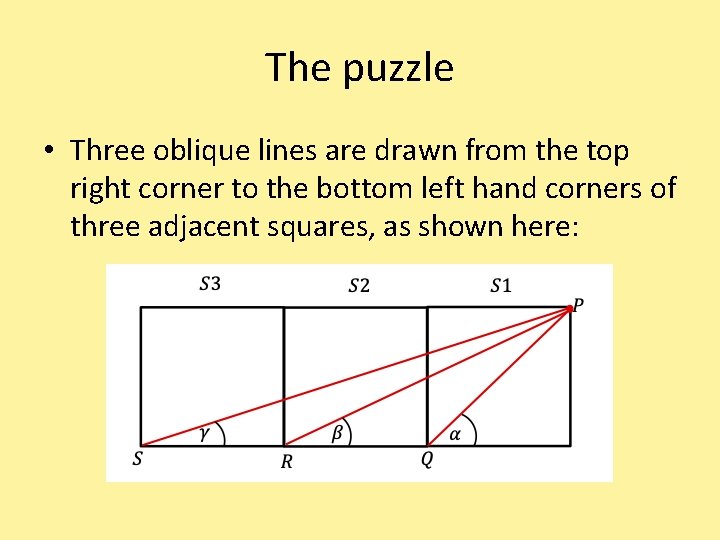
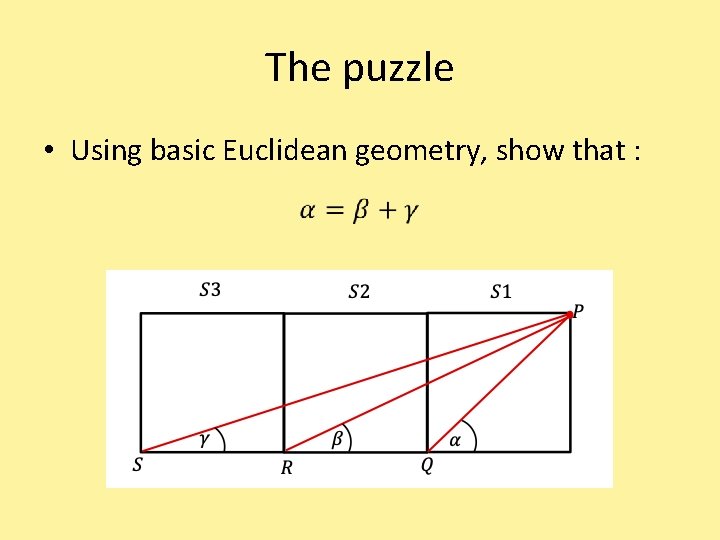
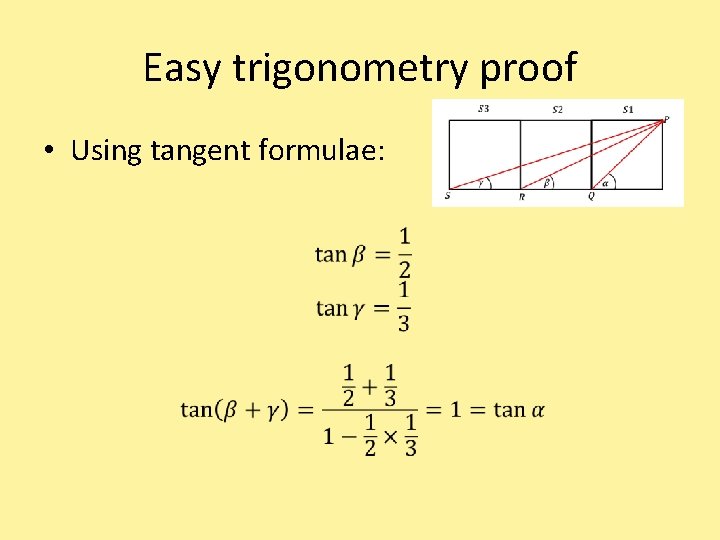
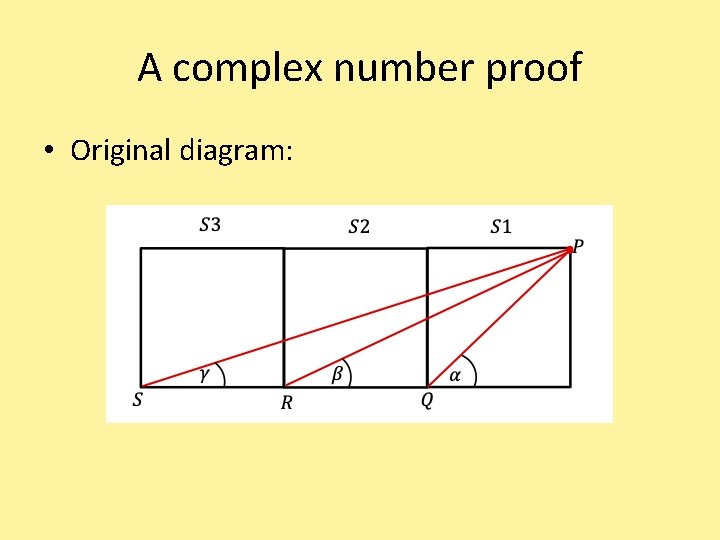
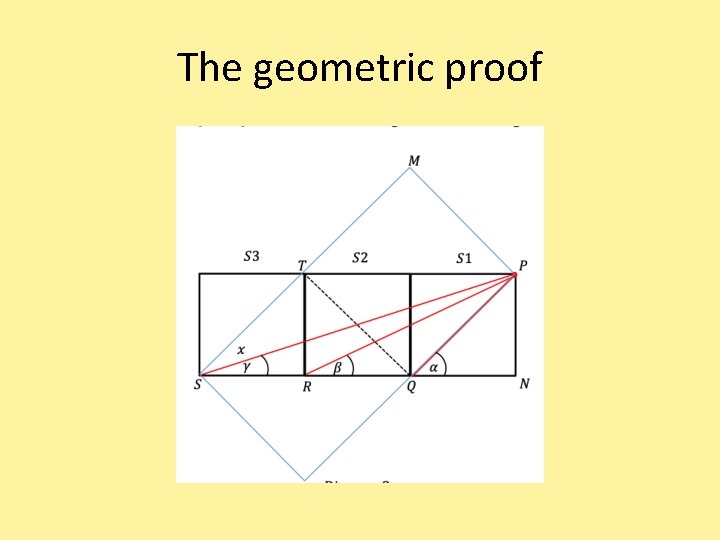
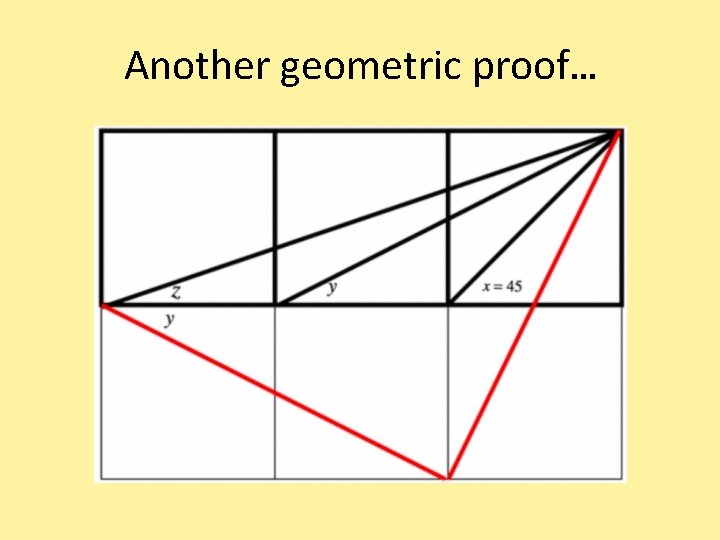
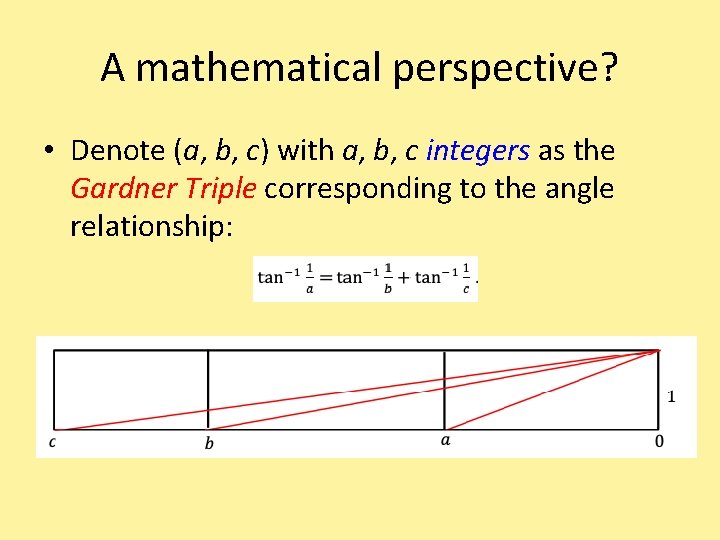
The puzzle • Three oblique lines are drawn from the top right corner to the bottom left hand corners of three adjacent squares, as shown here:
The puzzle • Using basic Euclidean geometry, show that :
Easy trigonometry proof • Using tangent formulae:
A complex number proof • Original diagram:
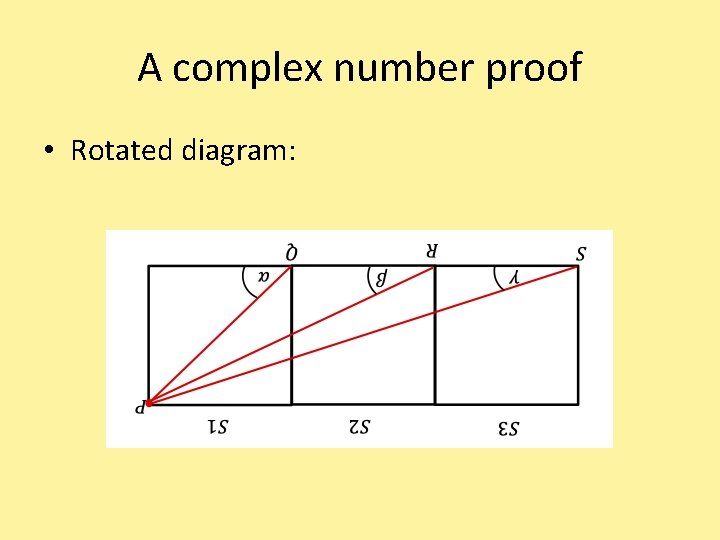
A complex number proof • Rotated diagram:
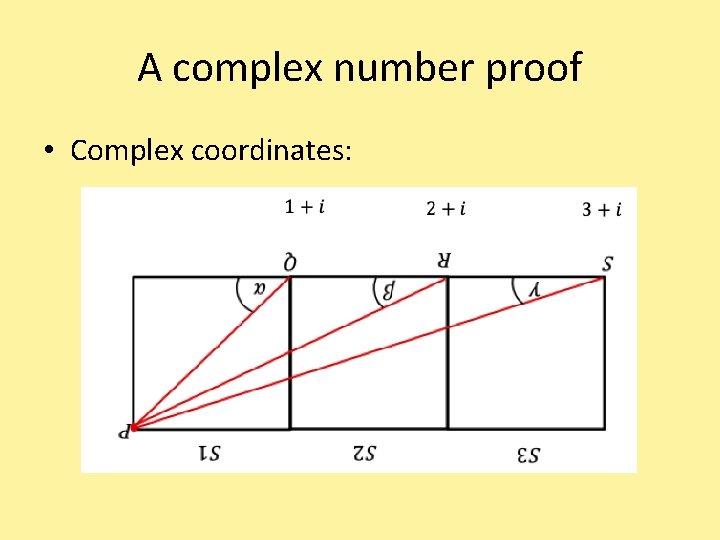
A complex number proof • Complex coordinates:
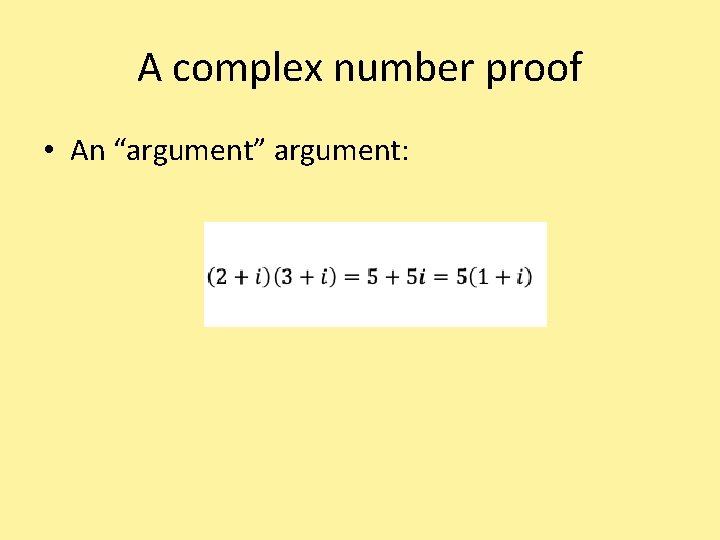
A complex number proof • An “argument” argument:
But …. a simple geometric proof?
The geometric proof
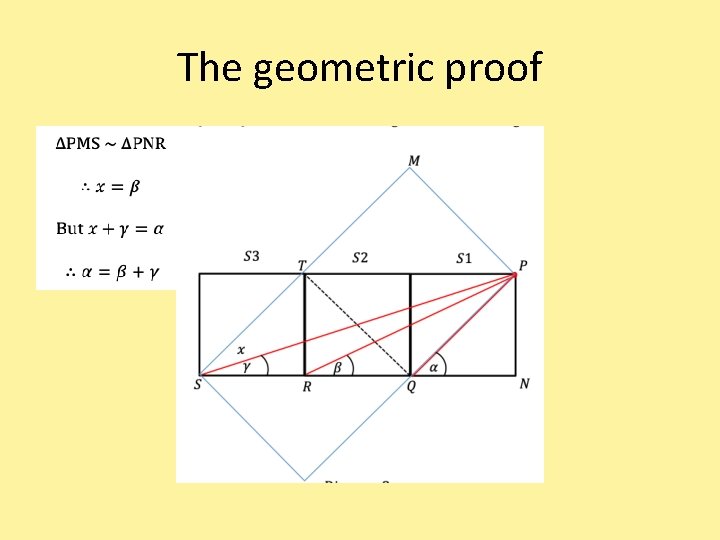
The geometric proof
Another geometric proof…
What had we found so far? • Three proofs answering Gardner’s question – nothing more We suspected there might be a story to uncover.
Gardner Triples • PART 3 • The puzzle beyond the puzzle
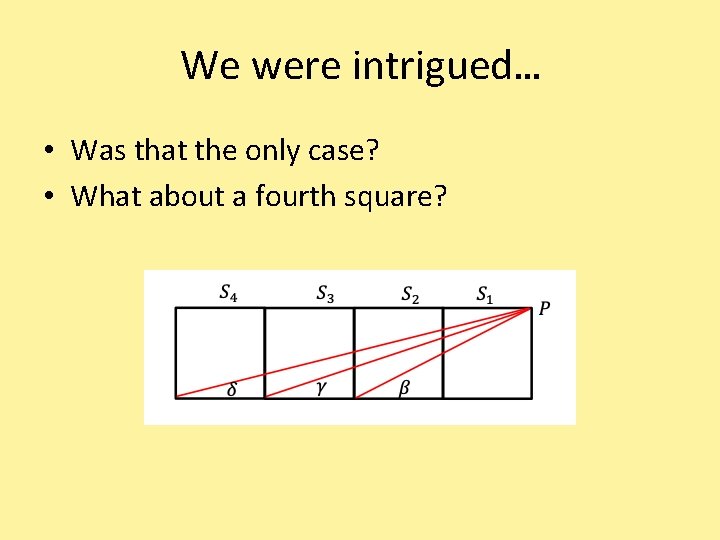
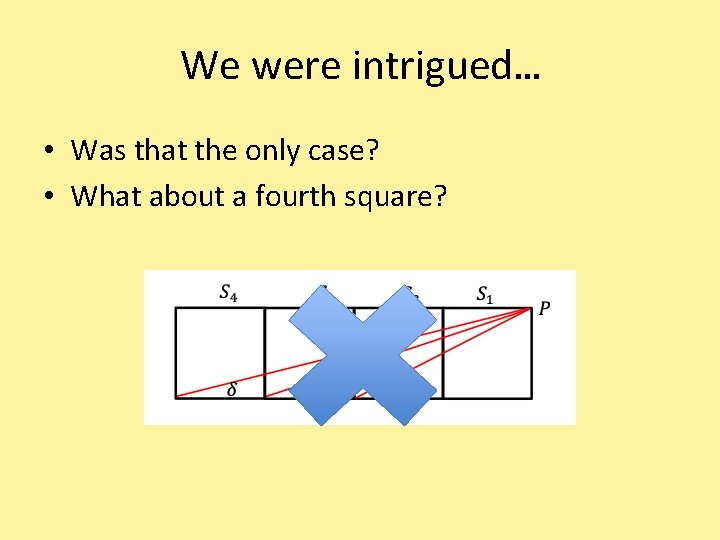
We were intrigued… • Was that the only case? • What about a fourth square?
We were intrigued… • Was that the only case? • What about a fourth square?
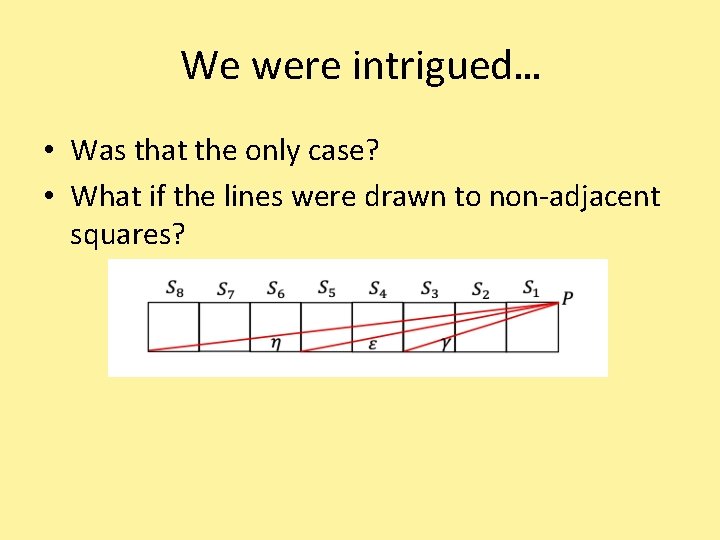
We were intrigued… • Was that the only case? • What if the lines were drawn to non-adjacent squares?
We were intrigued… • Was that the only case? • What if the lines were drawn to non-adjacent squares?
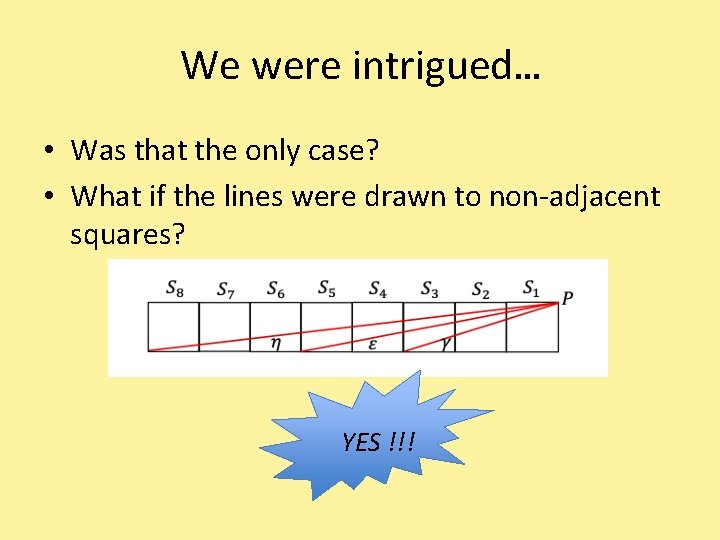
We were intrigued… • Was that the only case? • What if the lines were drawn to non-adjacent squares? YES !!!
intrigue in darkness
Conjecture 1 • Could it be that the angles will add together when the oblique lines are drawn to the squares that are numbered as Fibonacci numbers?
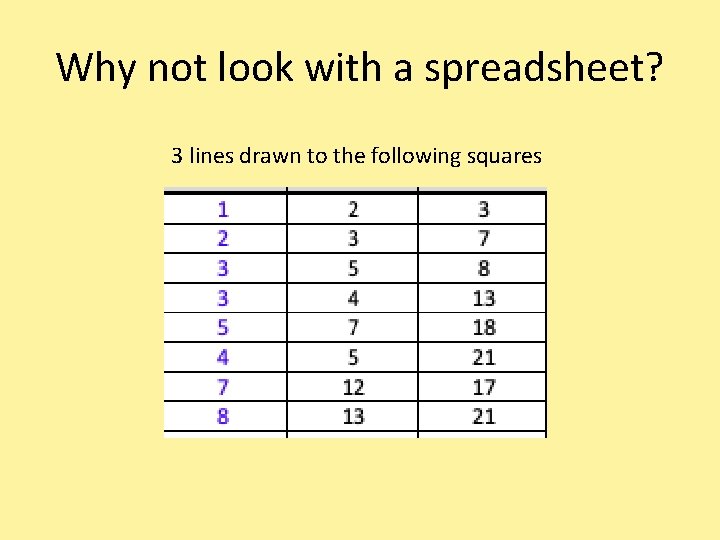
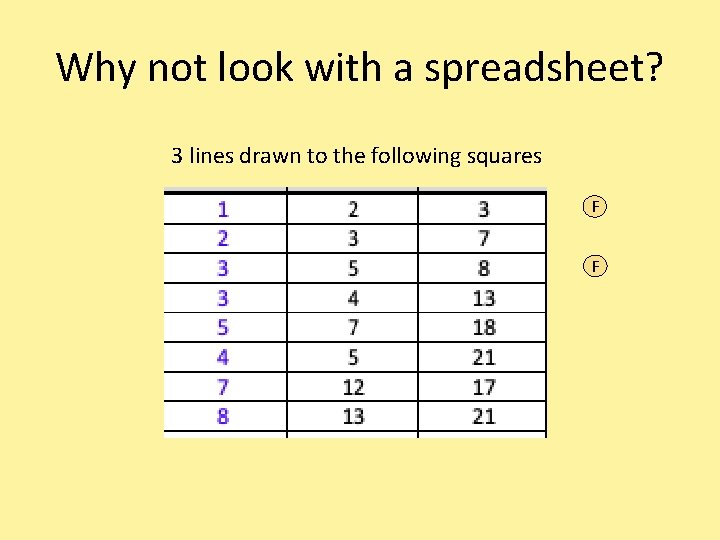
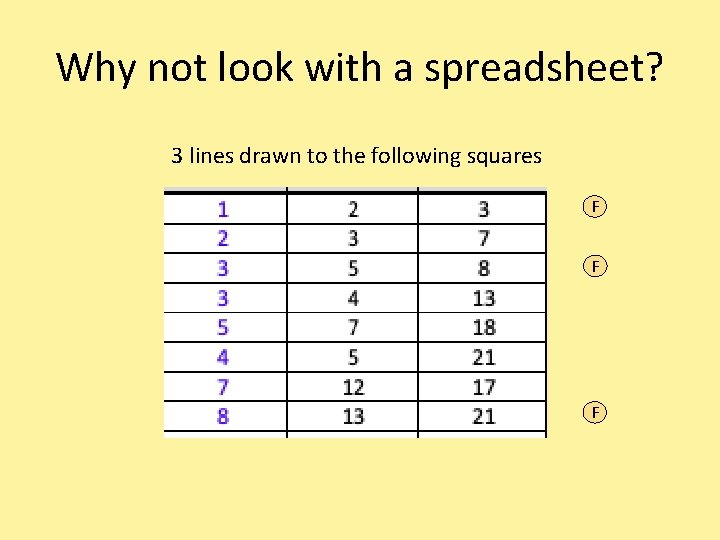
Why not look with a spreadsheet? 3 lines drawn to the following squares
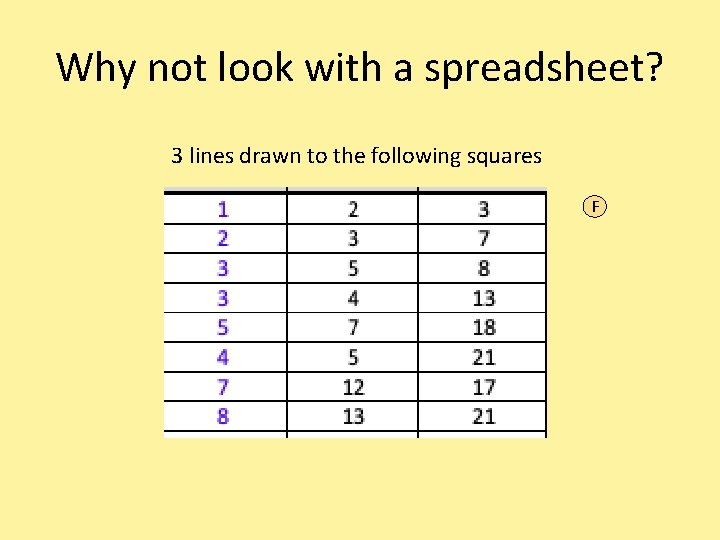
Why not look with a spreadsheet? 3 lines drawn to the following squares F
Why not look with a spreadsheet? 3 lines drawn to the following squares F F
Why not look with a spreadsheet? 3 lines drawn to the following squares F F F
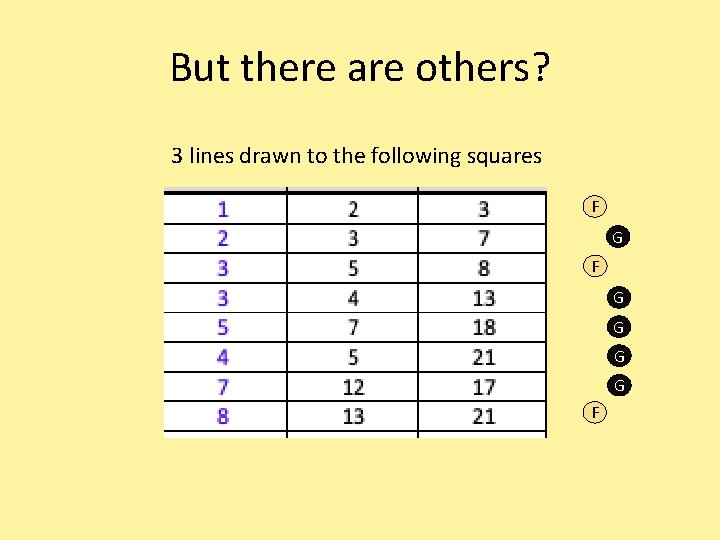
But there are others? 3 lines drawn to the following squares F G G G G F
Conjecture 2 • Maybe there is a more general property at work, and the Fibonacci triples that are showing up in the spreadsheet exhibit that more general property?
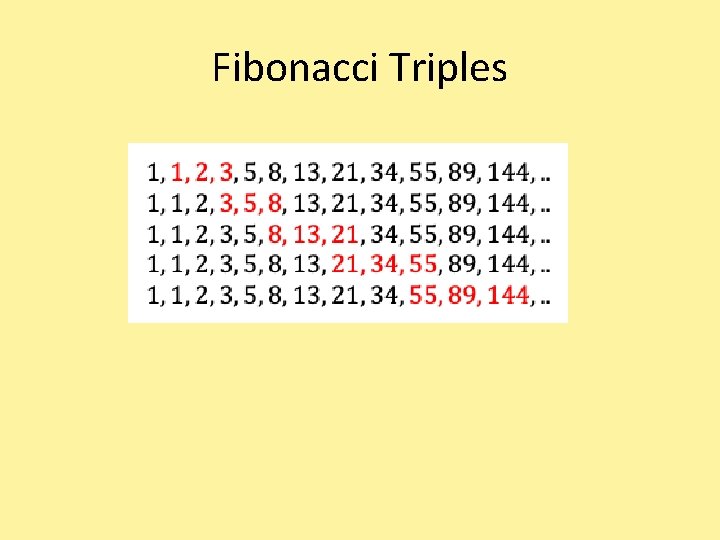
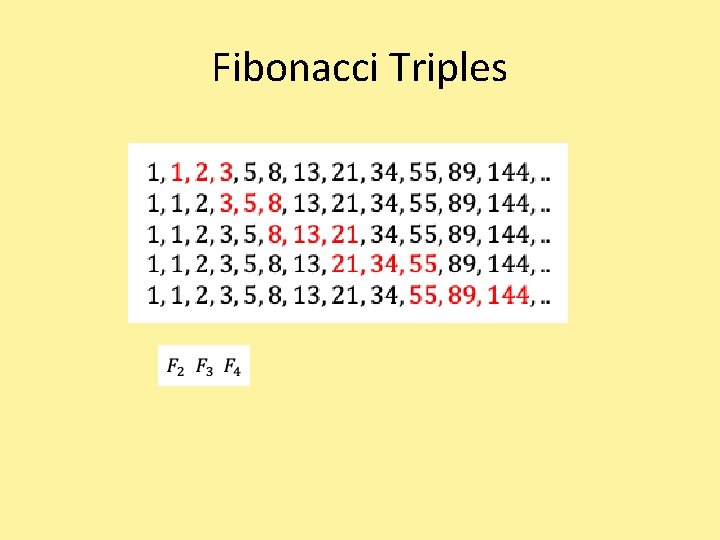
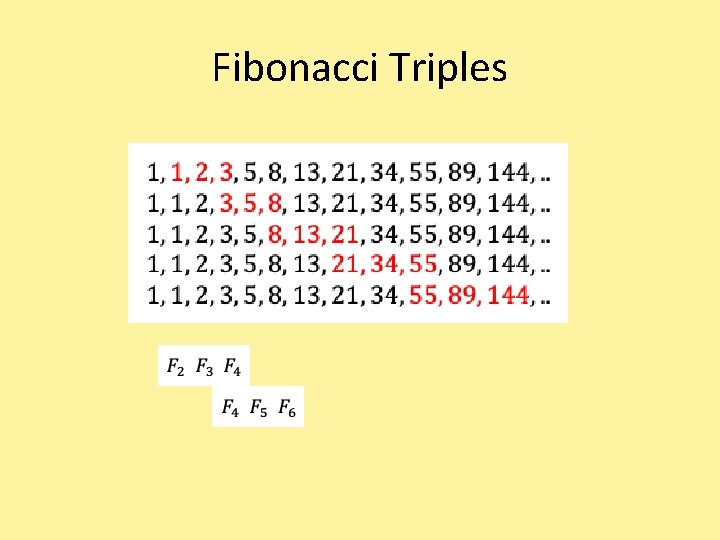
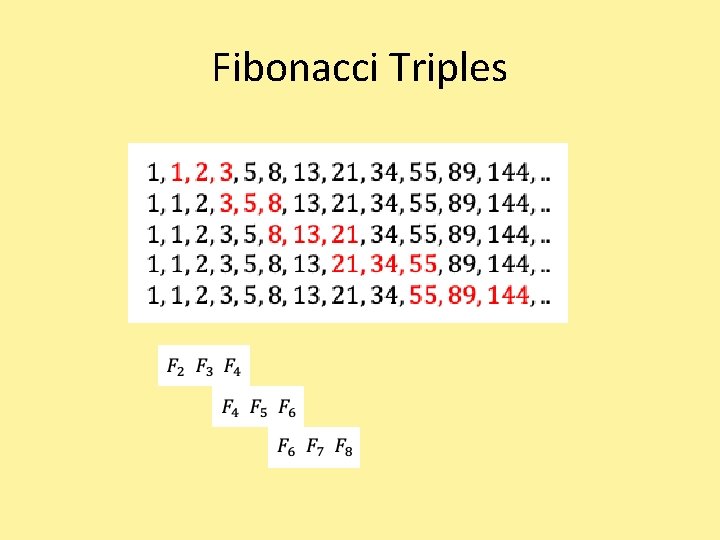
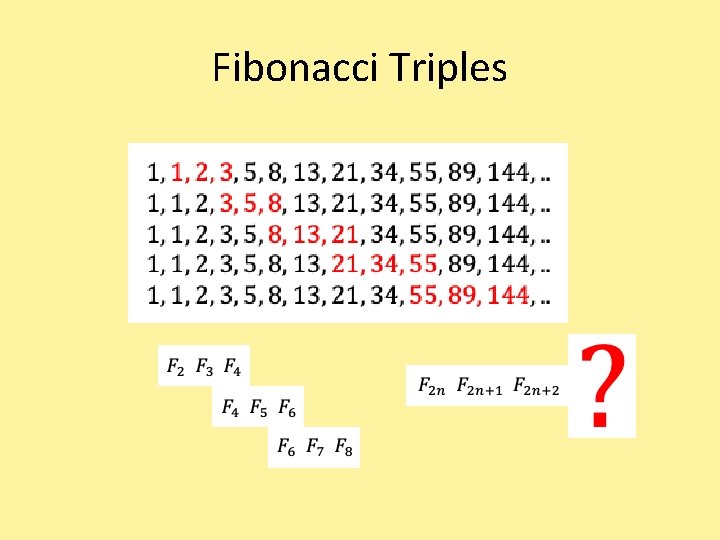
Fibonacci Triples
Fibonacci Triples
Fibonacci Triples
Fibonacci Triples
Fibonacci Triples
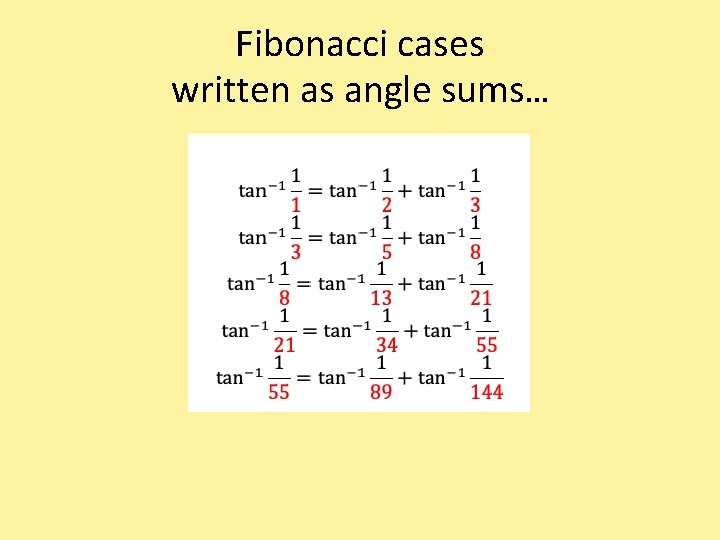
Fibonacci cases written as angle sums…
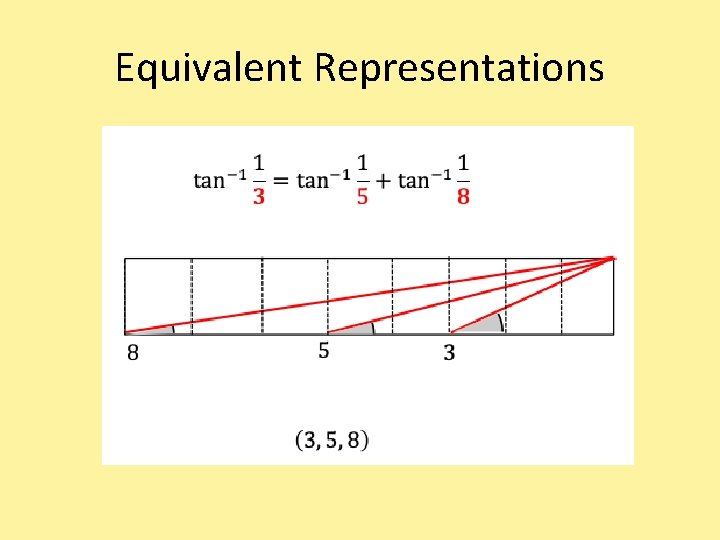
Equivalent Representations
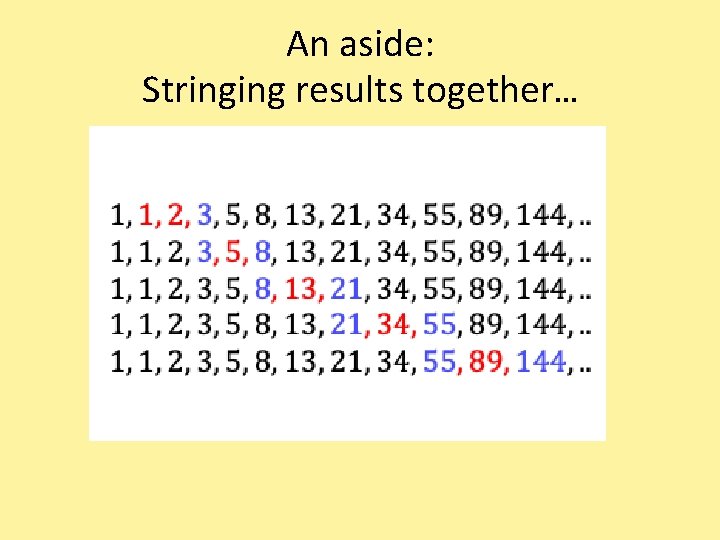
An aside: Stringing results together…
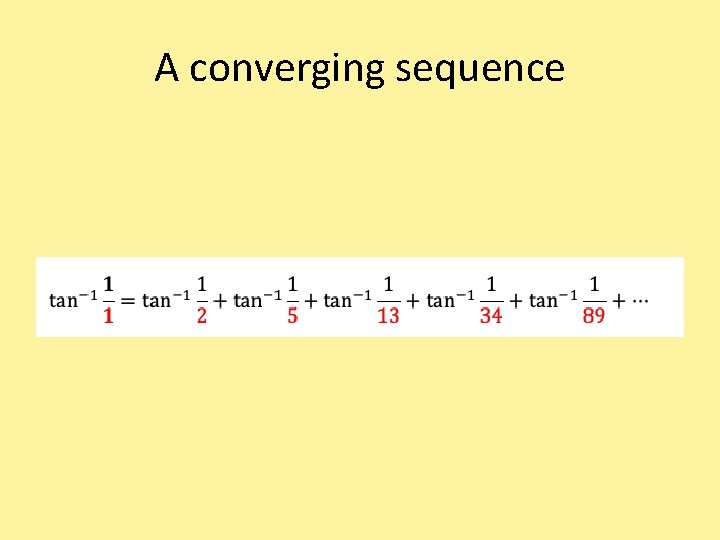
A converging sequence
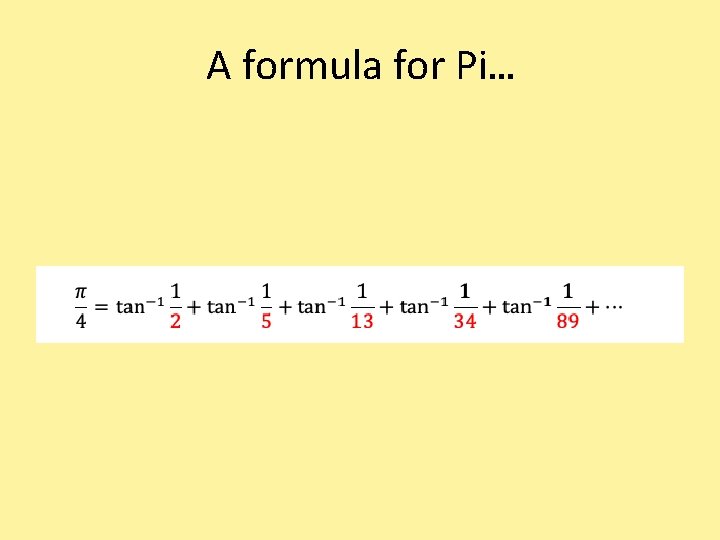
A formula for Pi…
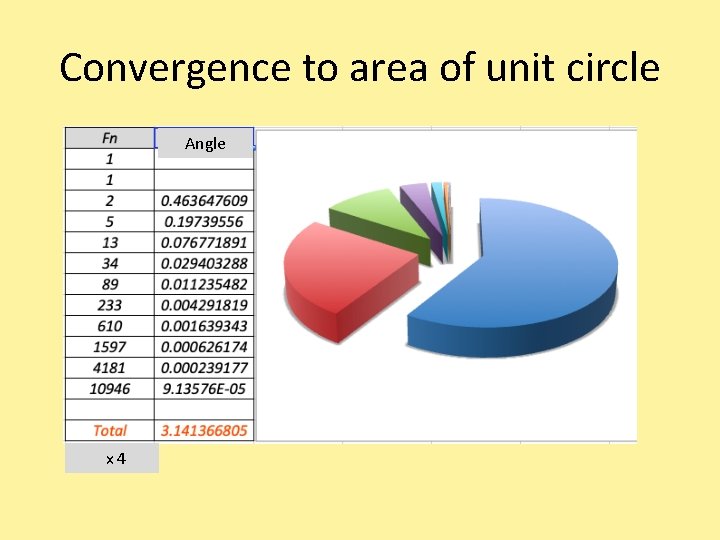
Convergence to area of unit circle Angle x 4
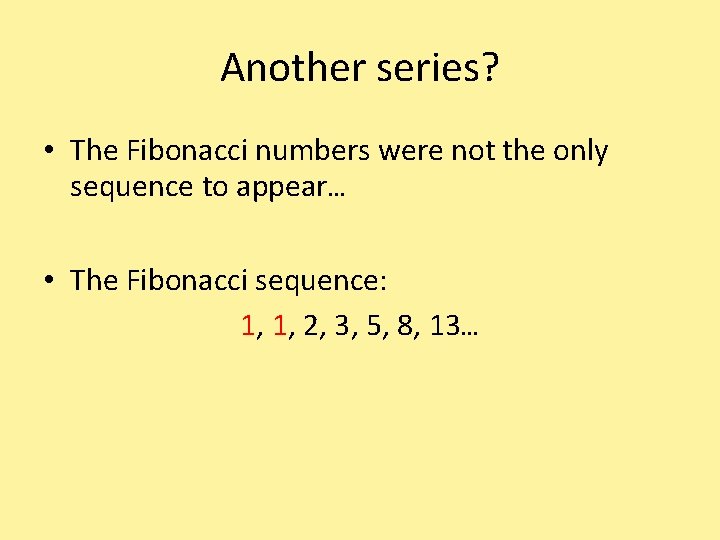
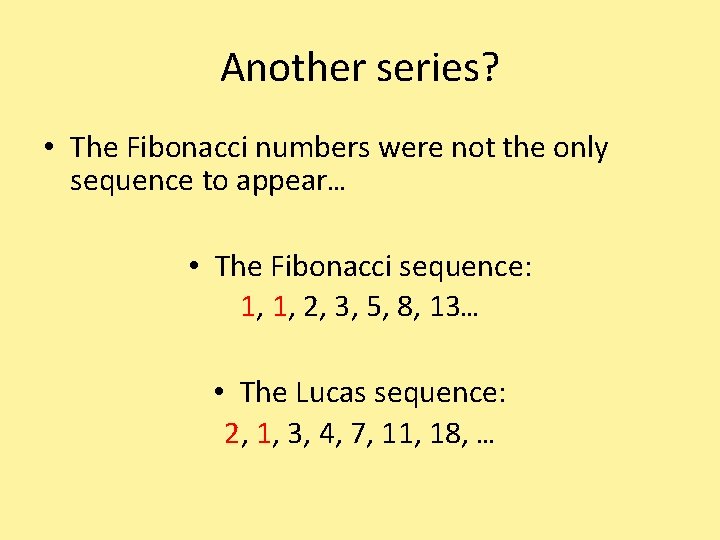
Another series? • The Fibonacci numbers were not the only sequence to appear…
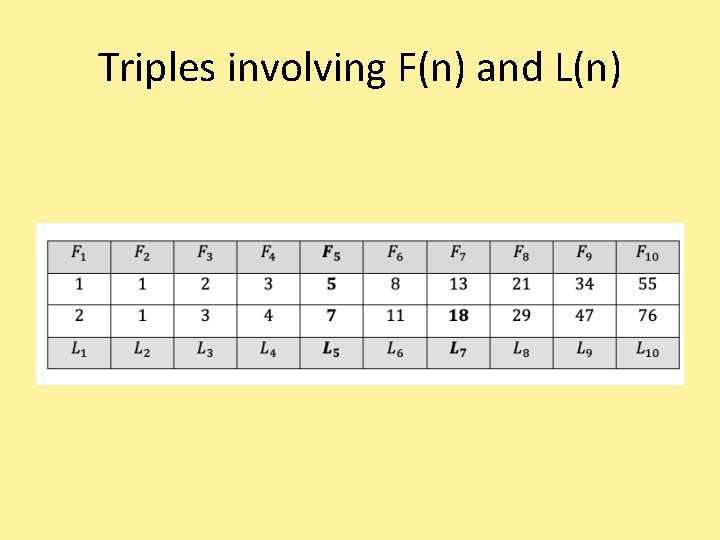
Another series? • The Fibonacci numbers were not the only sequence to appear… • The Fibonacci sequence: 1, 1, 2, 3, 5, 8, 13…
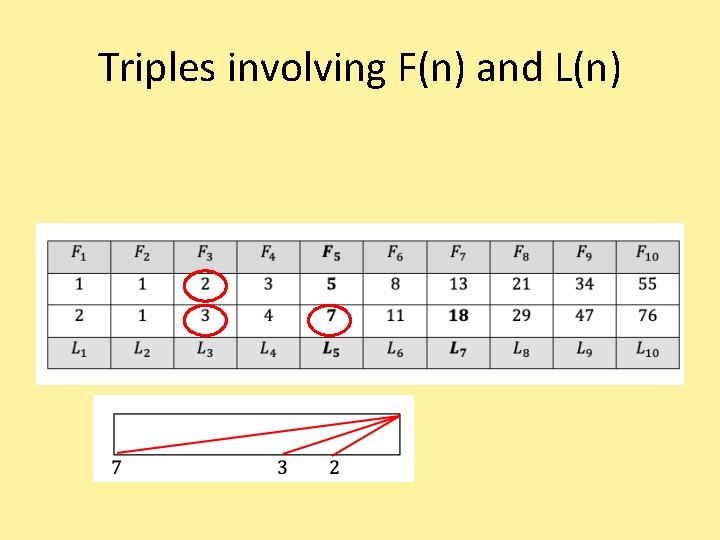
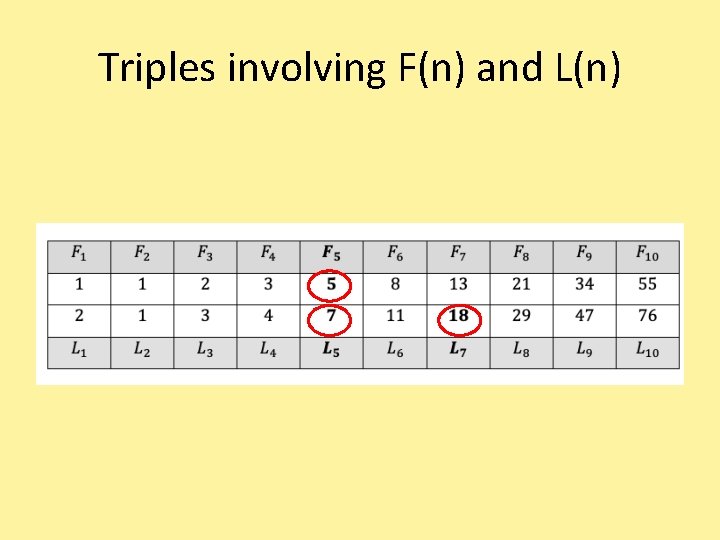
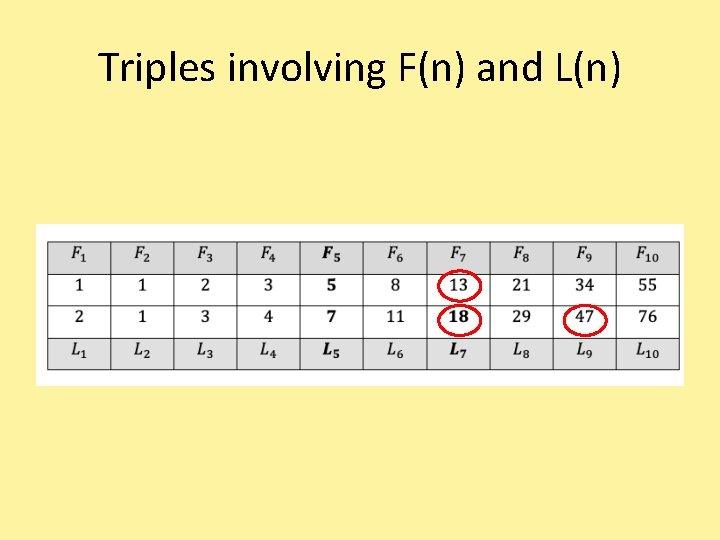
Another series? • The Fibonacci numbers were not the only sequence to appear… • The Fibonacci sequence: 1, 1, 2, 3, 5, 8, 13… • The Lucas sequence: 2, 1, 3, 4, 7, 11, 18, …
Triples involving F(n) and L(n)
Triples involving F(n) and L(n)
Triples involving F(n) and L(n)
Triples involving F(n) and L(n)
Many other triples to account for?
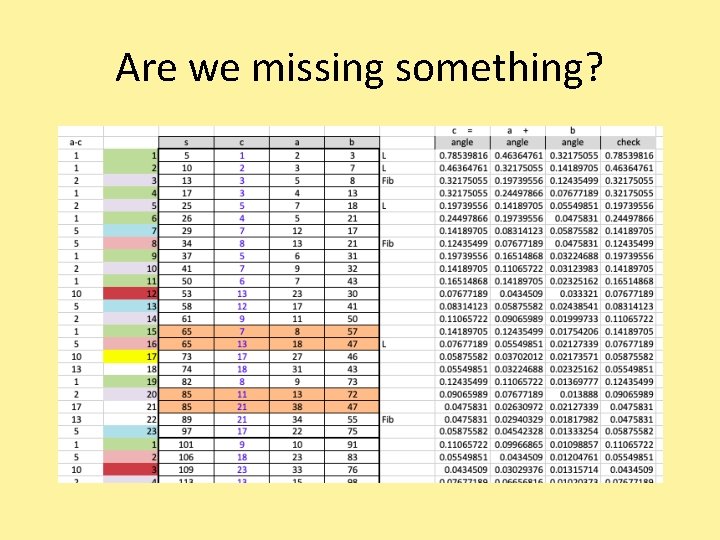
Are we missing something?
A mathematical perspective? • Denote (a, b, c) with a, b, c integers as the Gardner Triple corresponding to the angle relationship:
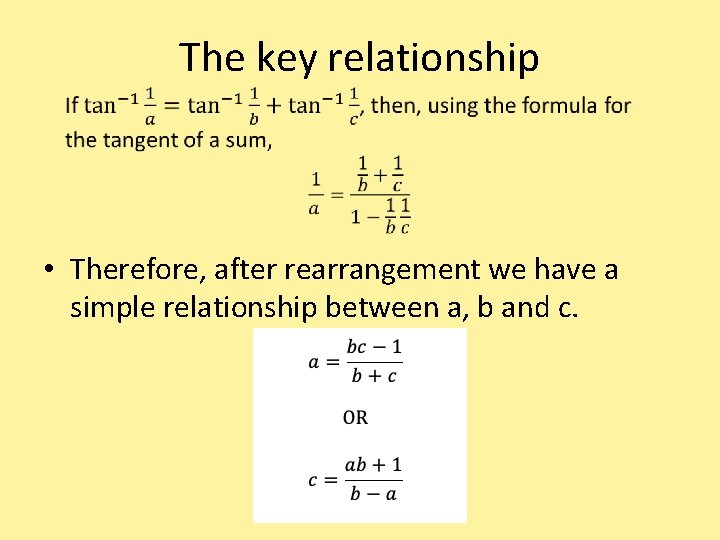
The key relationship • Therefore, after rearrangement we have a simple relationship between a, b and c.
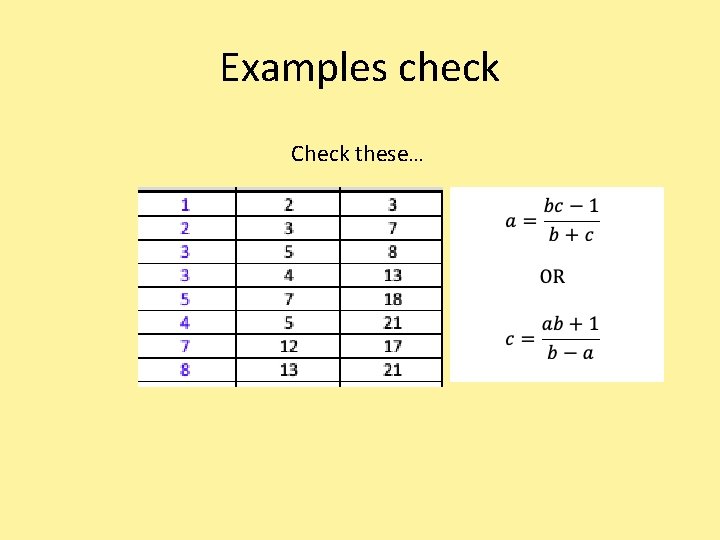
Examples check Check these…
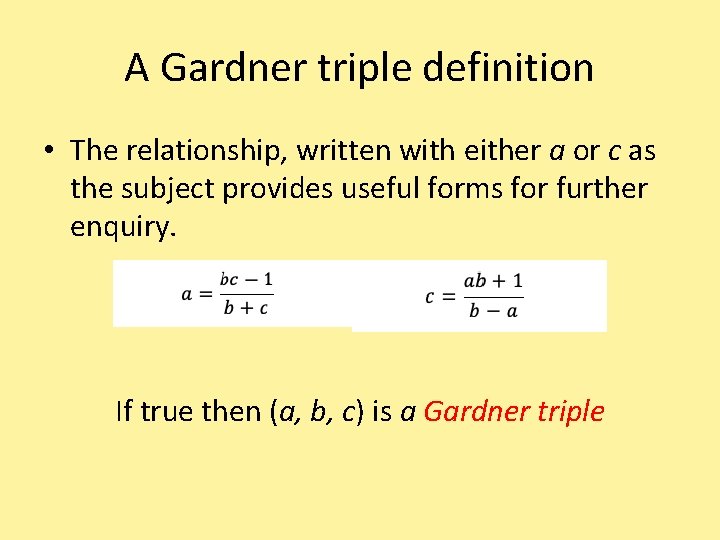
A Gardner triple definition • The relationship, written with either a or c as the subject provides useful forms for further enquiry. If true then (a, b, c) is a Gardner triple
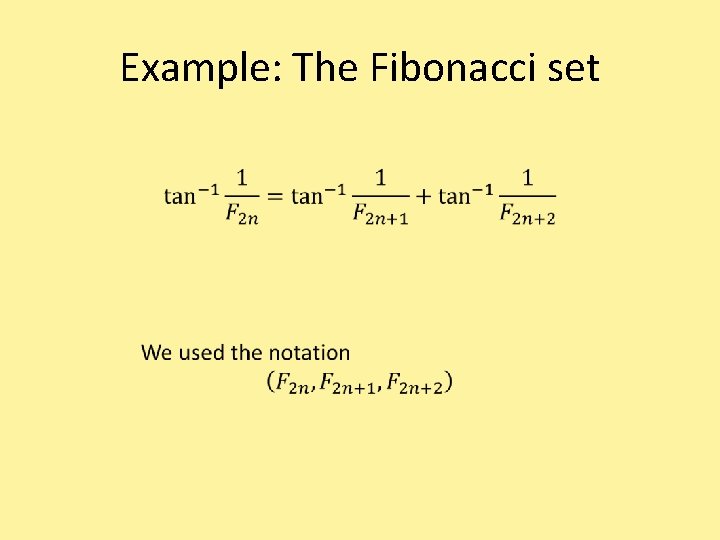
Example: The Fibonacci set
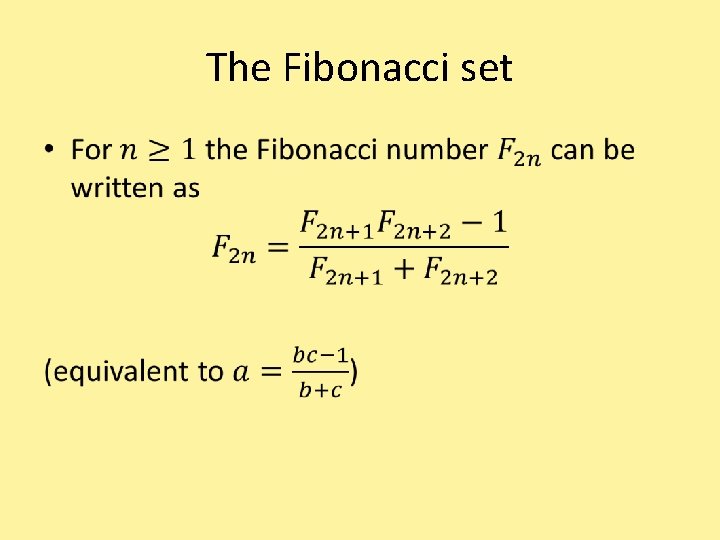
The Fibonacci set •
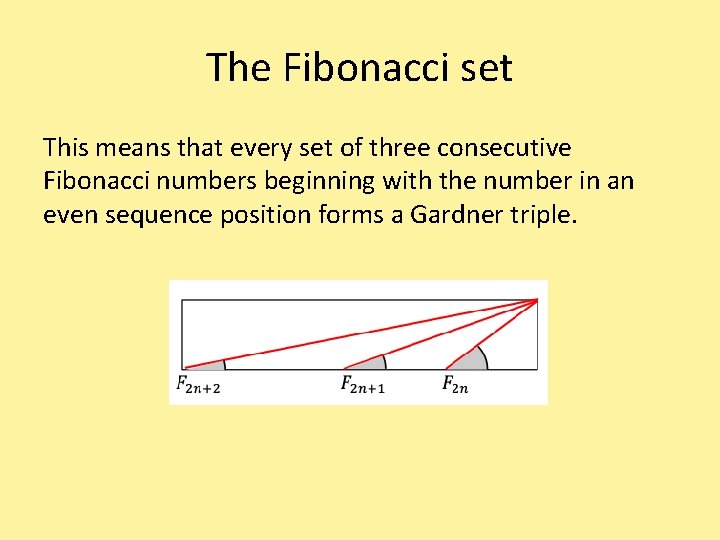
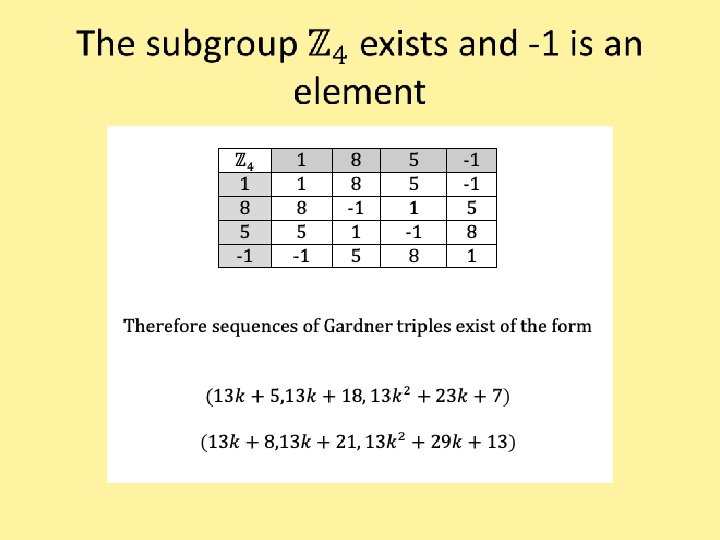
The Fibonacci set This means that every set of three consecutive Fibonacci numbers beginning with the number in an even sequence position forms a Gardner triple.
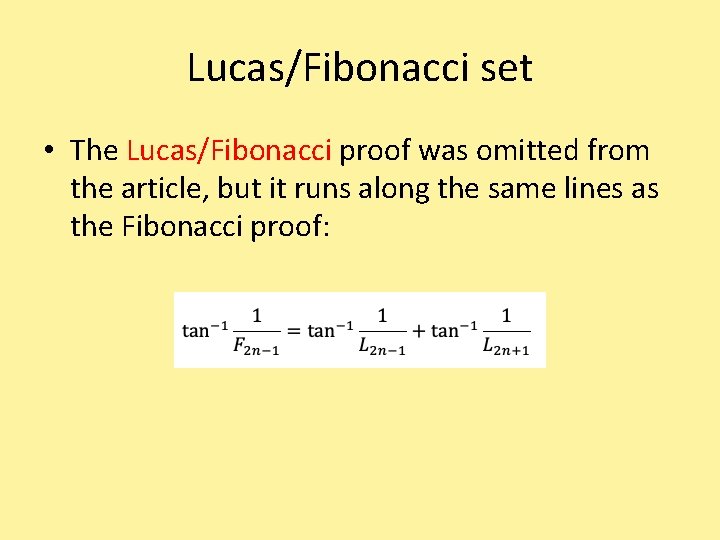
Lucas/Fibonacci set • The Lucas/Fibonacci proof was omitted from the article, but it runs along the same lines as the Fibonacci proof:
What had we found so far? • • Three proofs answering Gardner’s question Infinitely many triples made of Fibonacci and Lucas numbers • Plenty more examples fitting no known pattern We wrote an article because we were excited about our findings.
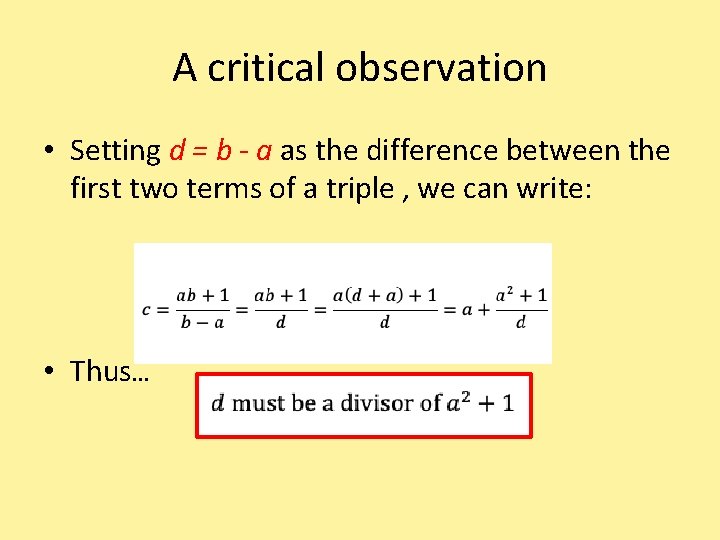
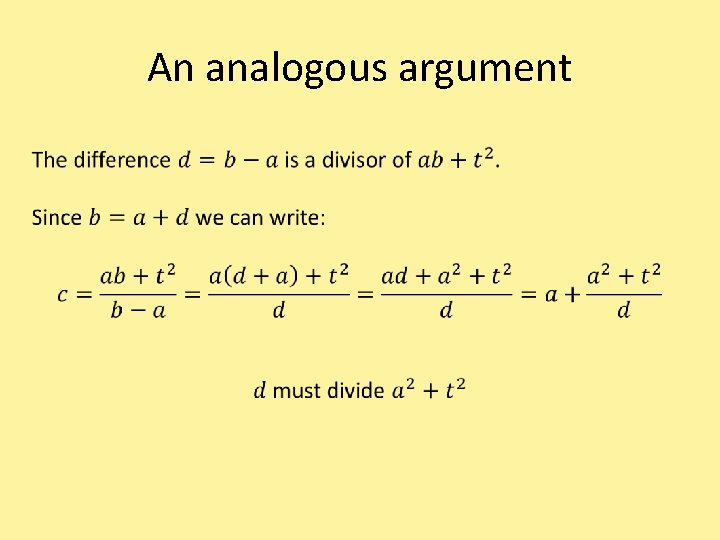
A critical observation • Setting d = b - a as the difference between the first two terms of a triple , we can write: • Thus…
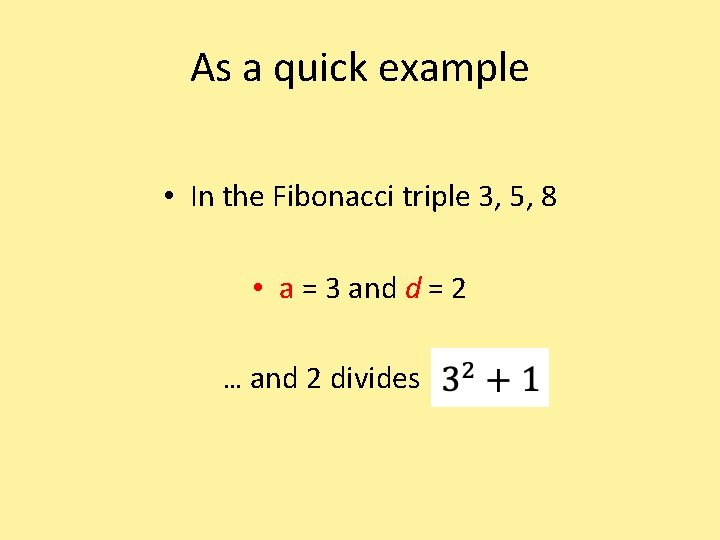
As a quick example • In the Fibonacci triple 3, 5, 8 • a = 3 and d = 2 … and 2 divides
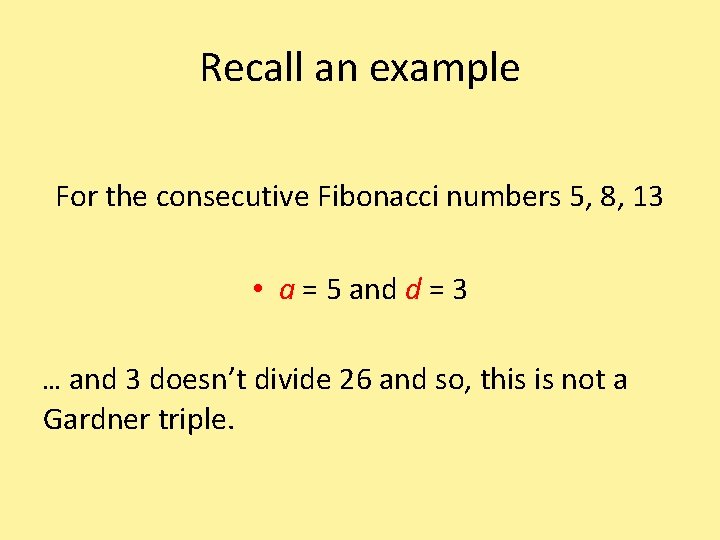
Recall an example For the consecutive Fibonacci numbers 5, 8, 13 • a = 5 and d = 3 … and 3 doesn’t divide 26 and so, this is not a Gardner triple.
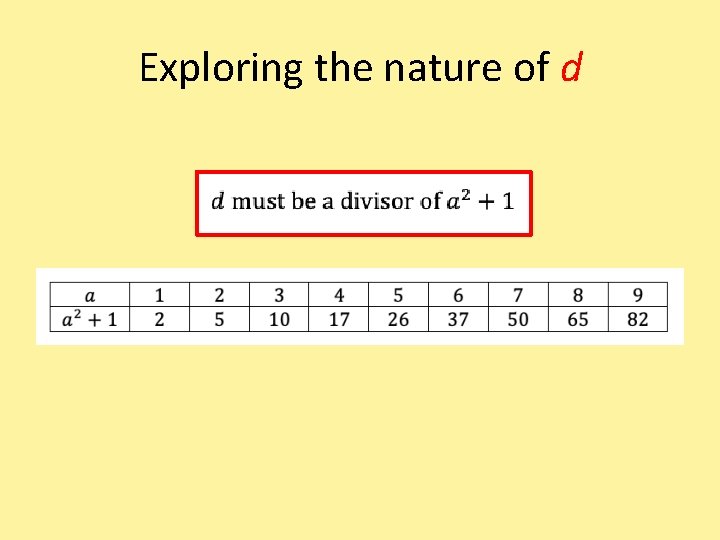
Exploring the nature of d
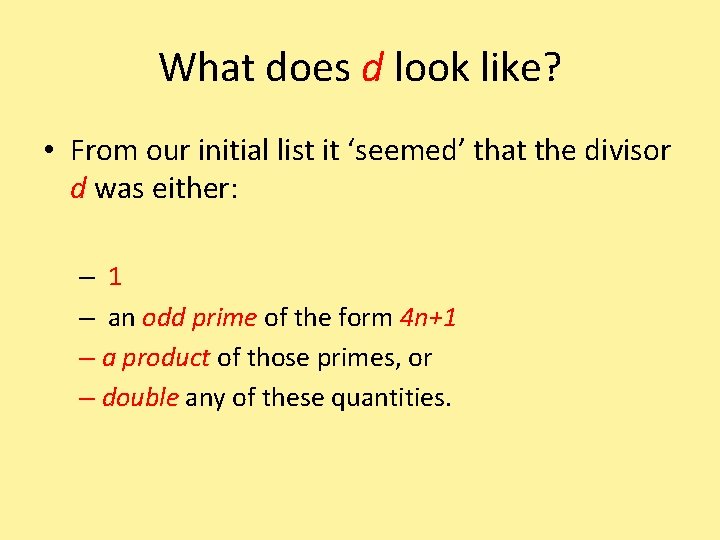
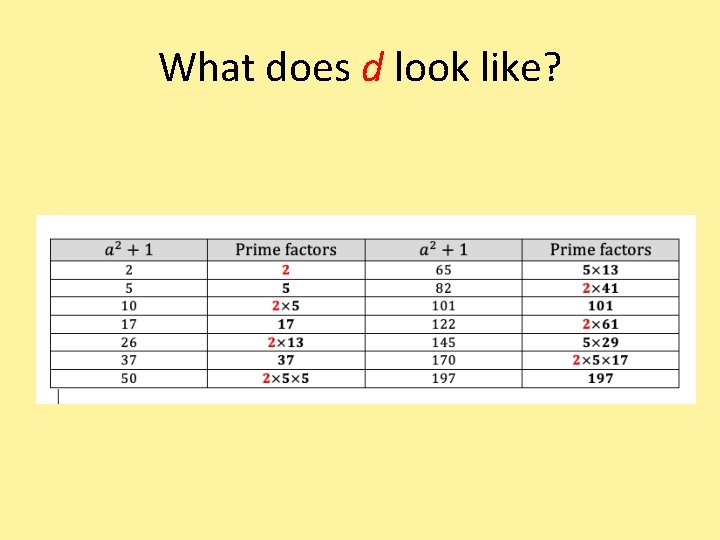
What does d look like? • From our initial list it ‘seemed’ that the divisor d was either: – 1 – an odd prime of the form 4 n+1 – a product of those primes, or – double any of these quantities.
What does d look like?
The nature of the difference d
The nature of the difference d • The search for the exact nature of d became the focus of the puzzle.
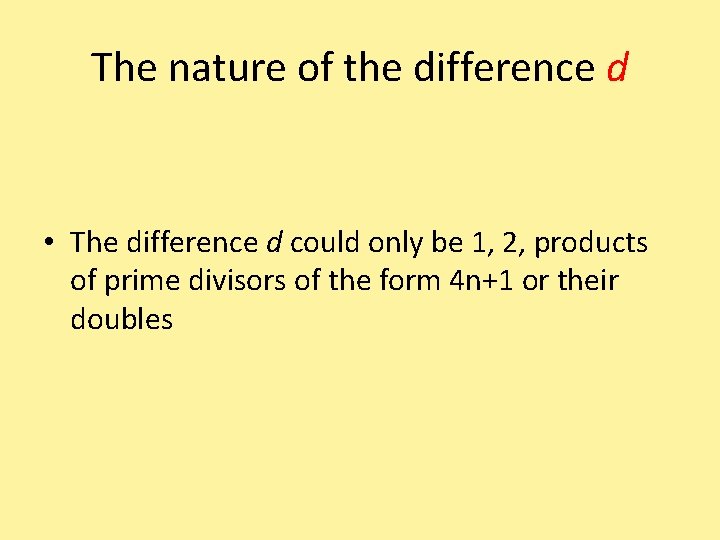
The nature of the difference d • The difference d could only be 1, 2, products of prime divisors of the form 4 n+1 or their doubles
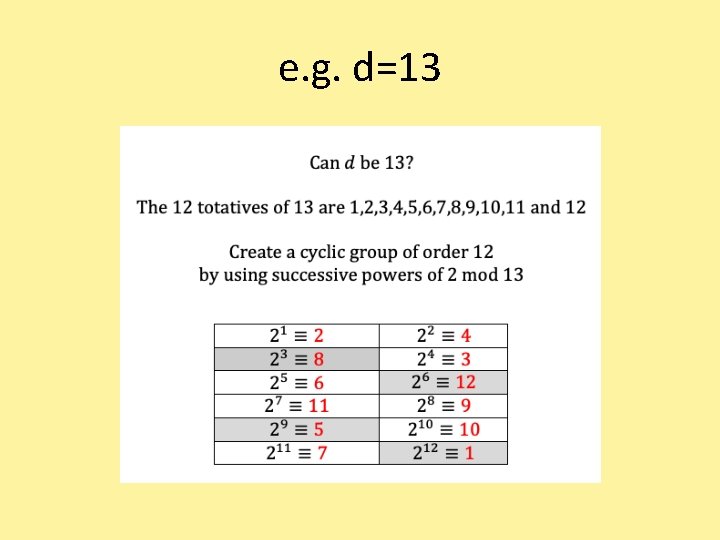
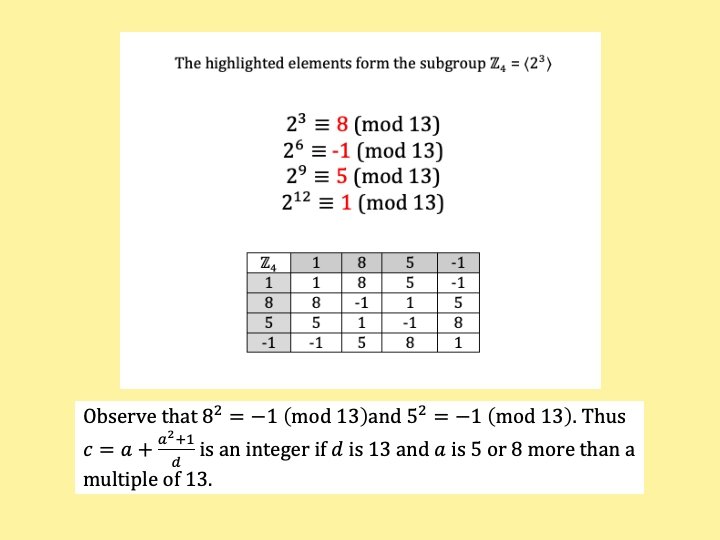
e. g. d=13
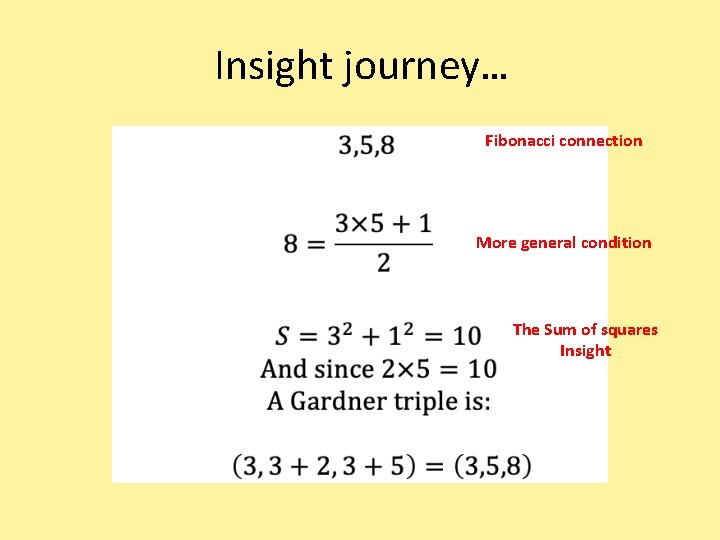
The nature of the difference d • Much later on when the concept of a Gardner triple was extended, an insight was made involving divisors of the sum of two squares.
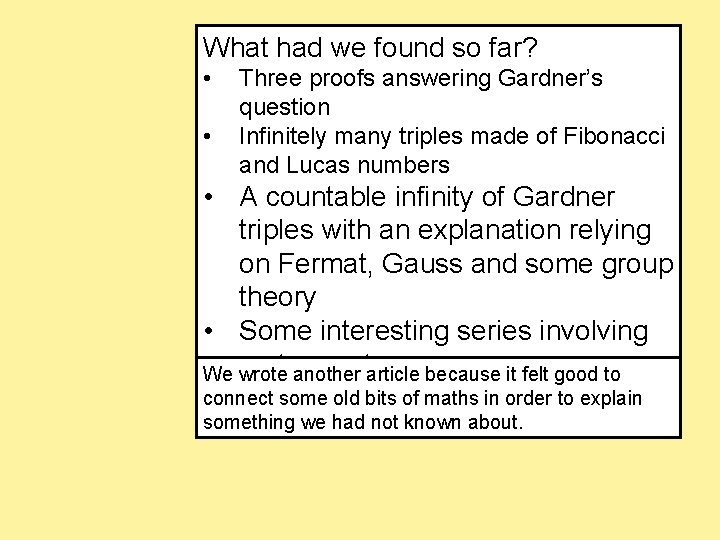
What had we found so far? • • Three proofs answering Gardner’s question Infinitely many triples made of Fibonacci and Lucas numbers • A countable infinity of Gardner triples with an explanation relying on Fermat, Gauss and some group theory • Some interesting series involving arctangent We wrote another article because it felt good to connect some old bits of maths in order to explain something we had not known about.
PART 4 • Onwards and upwards
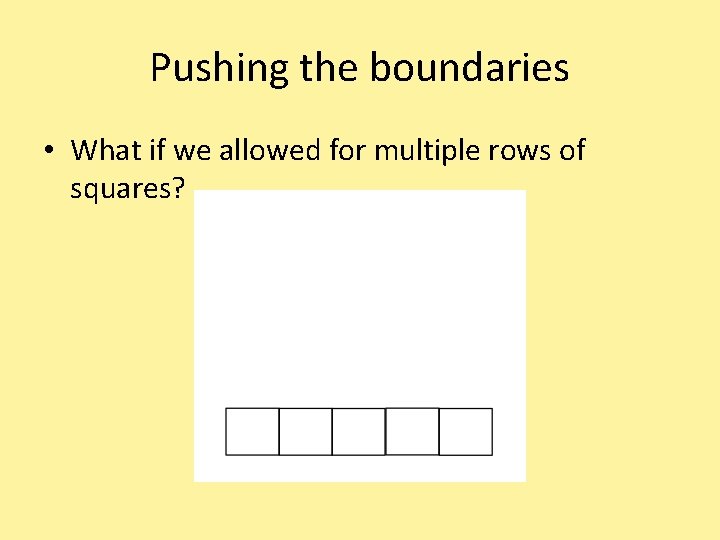
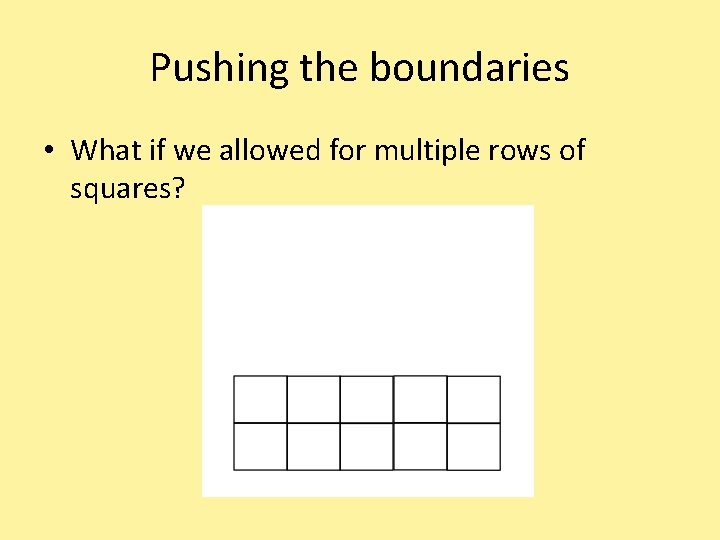
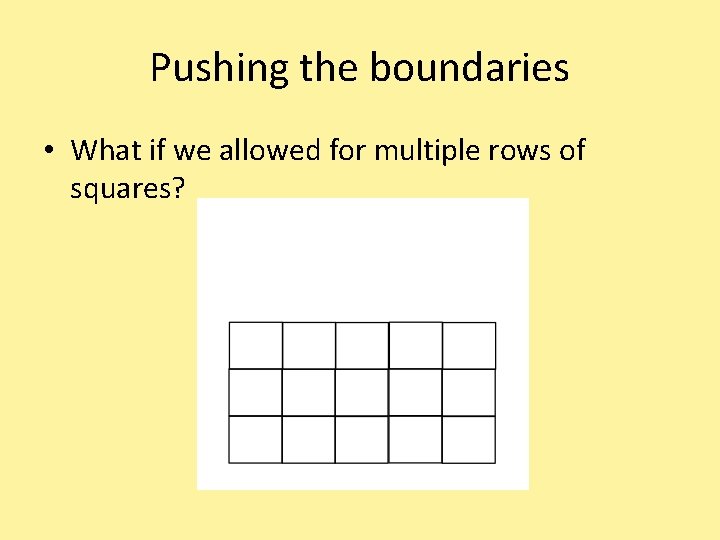
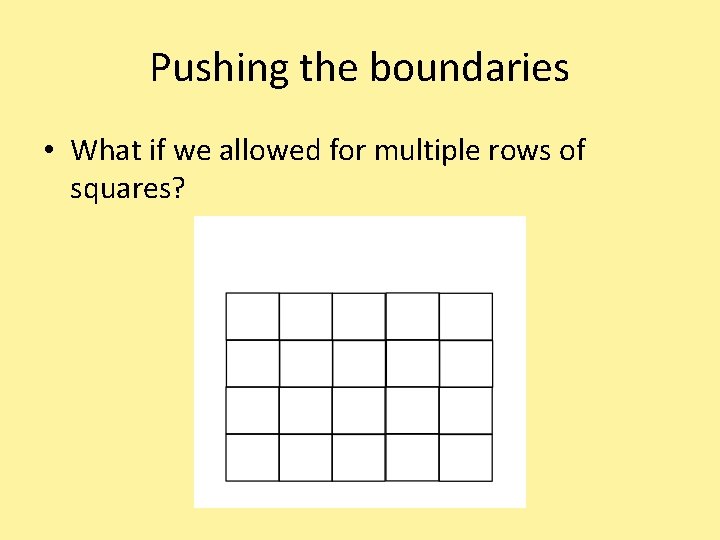
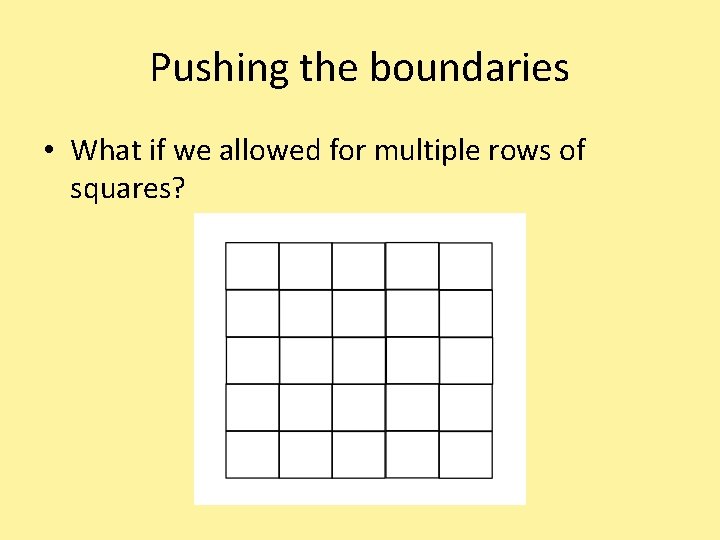
Pushing the boundaries • What if we allowed for multiple rows of squares?
Pushing the boundaries • What if we allowed for multiple rows of squares?
Pushing the boundaries • What if we allowed for multiple rows of squares?
Pushing the boundaries • What if we allowed for multiple rows of squares?
Pushing the boundaries • What if we allowed for multiple rows of squares?
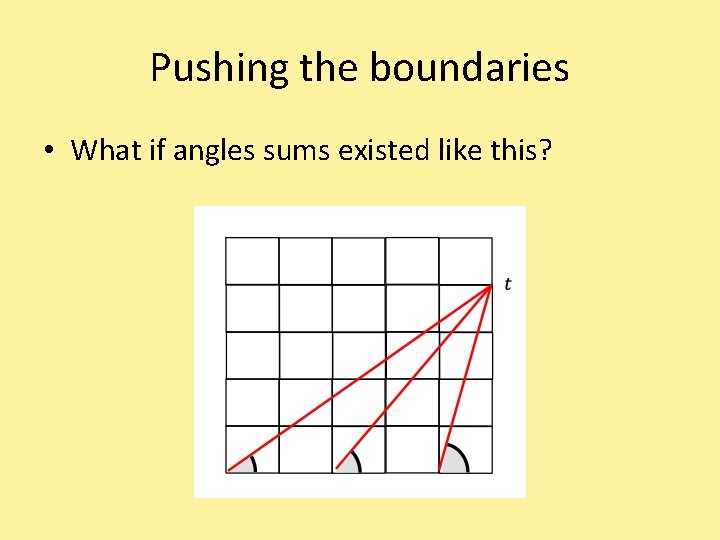
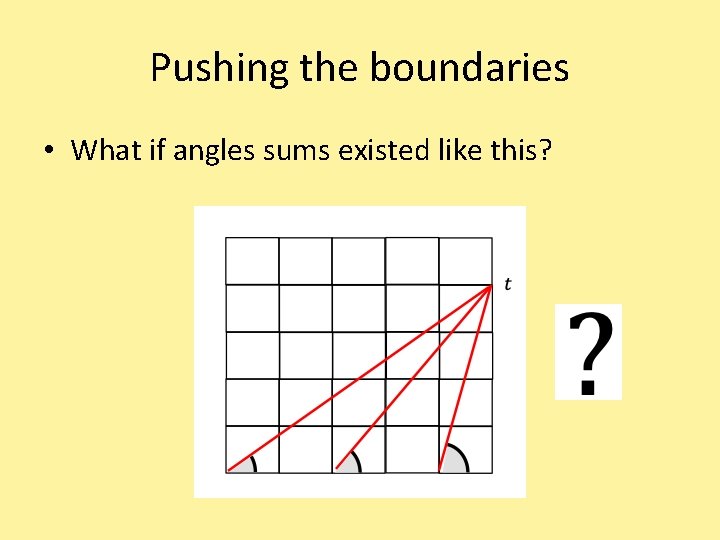
Pushing the boundaries • What if angles sums existed like this?
Pushing the boundaries • What if angles sums existed like this?
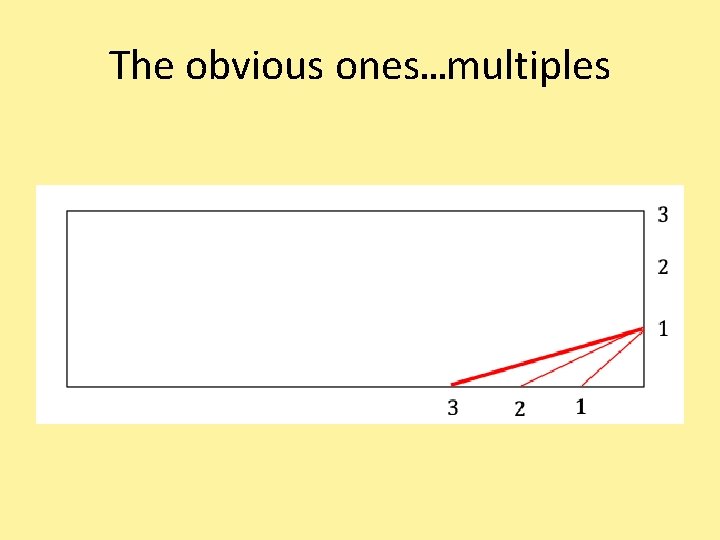
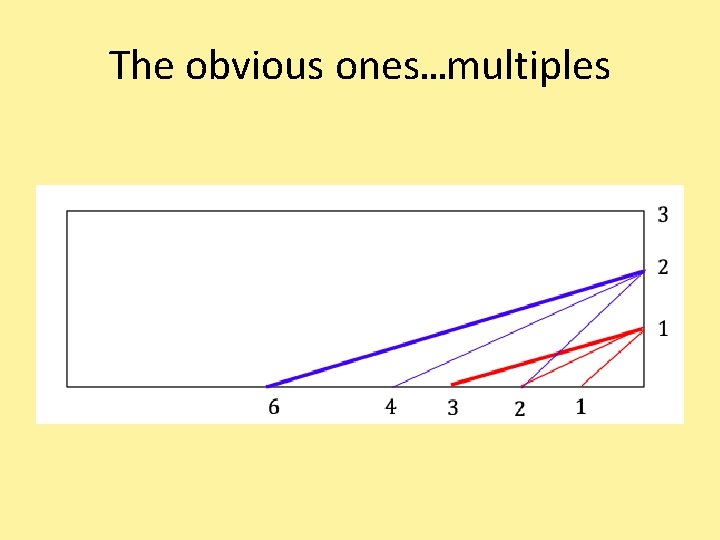
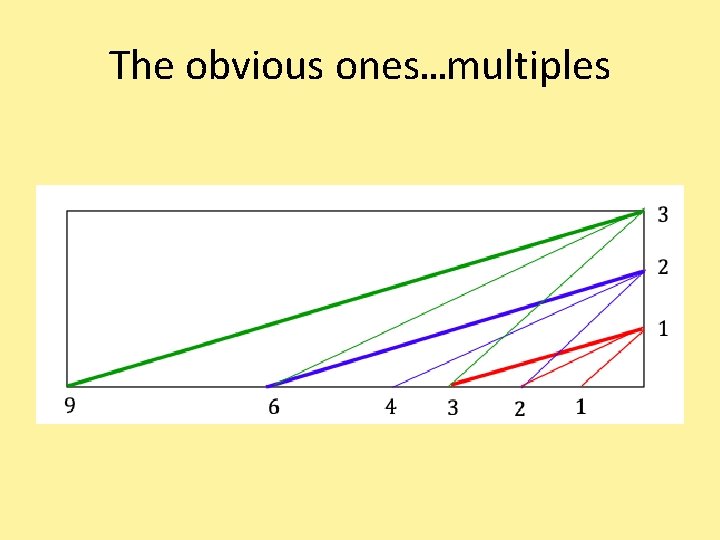
The obvious ones…multiples
The obvious ones…multiples
The obvious ones…multiples
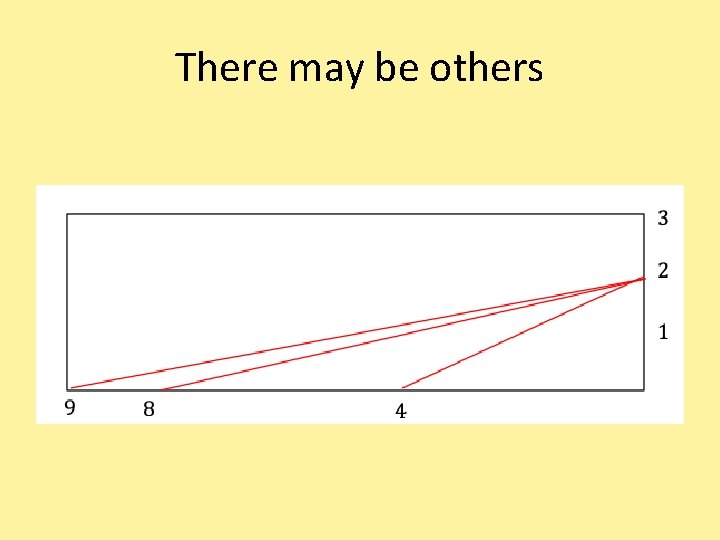
There may be others
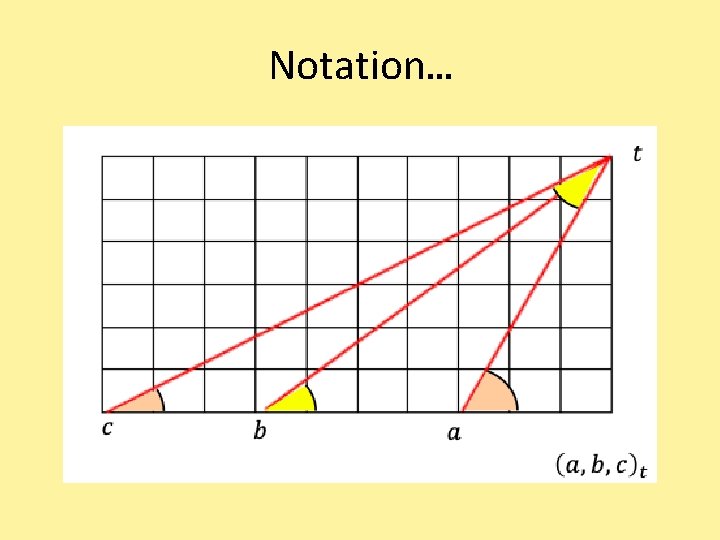
Notation…
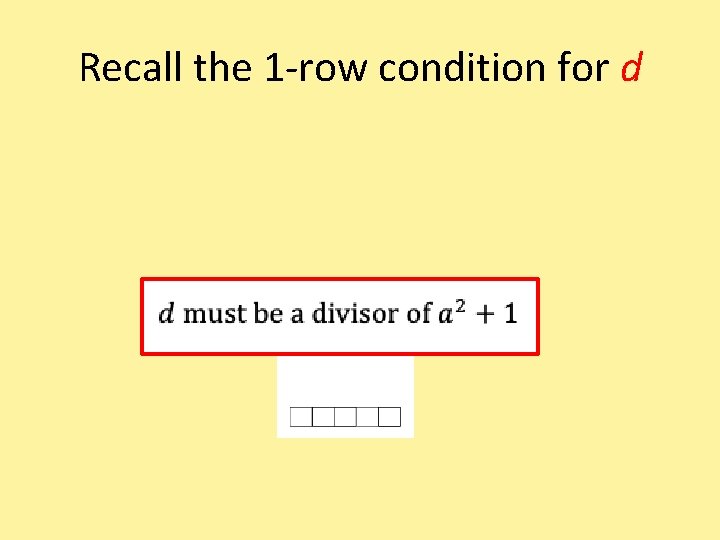
Recall the 1 -row condition for d
An analogous argument
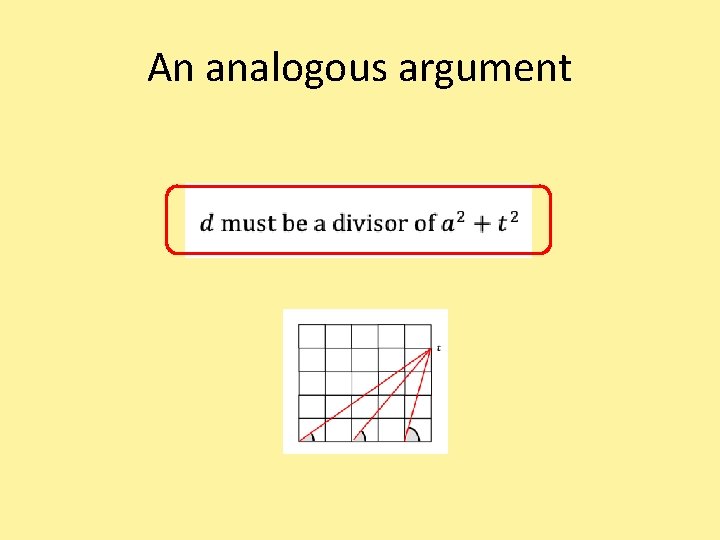
An analogous argument
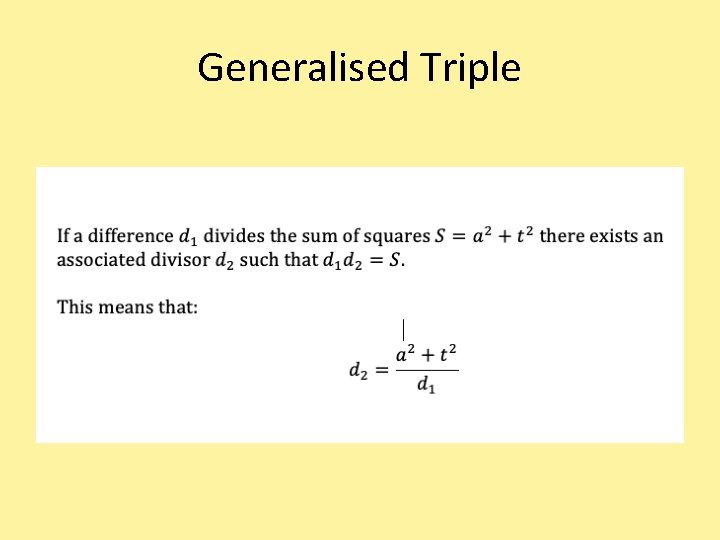
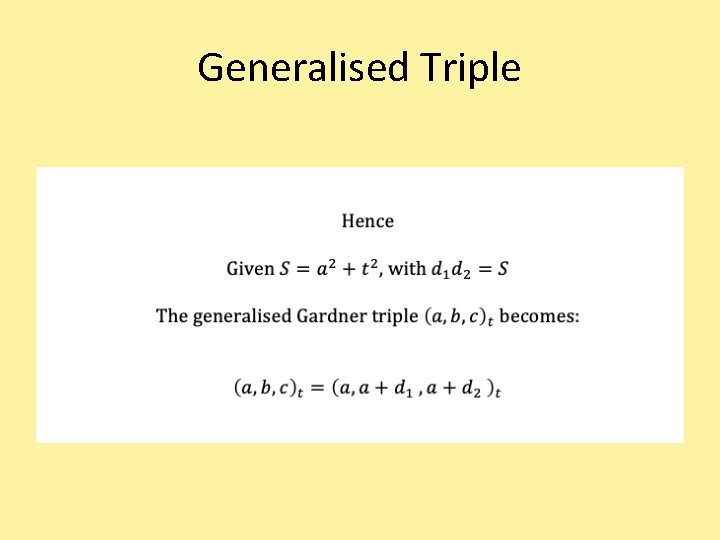
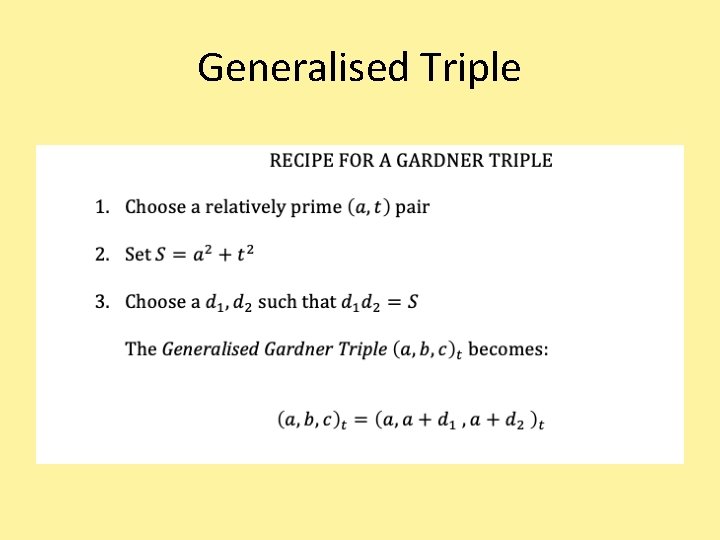
Generalised Triple
Generalised Triple
Generalised Triple
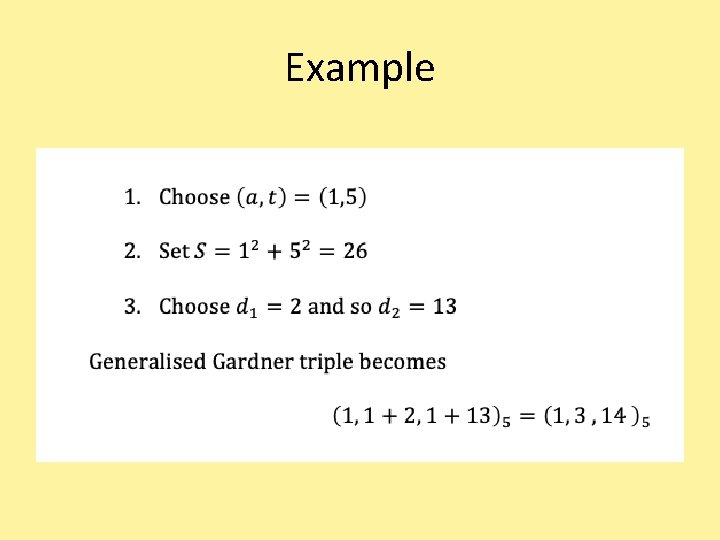
Example
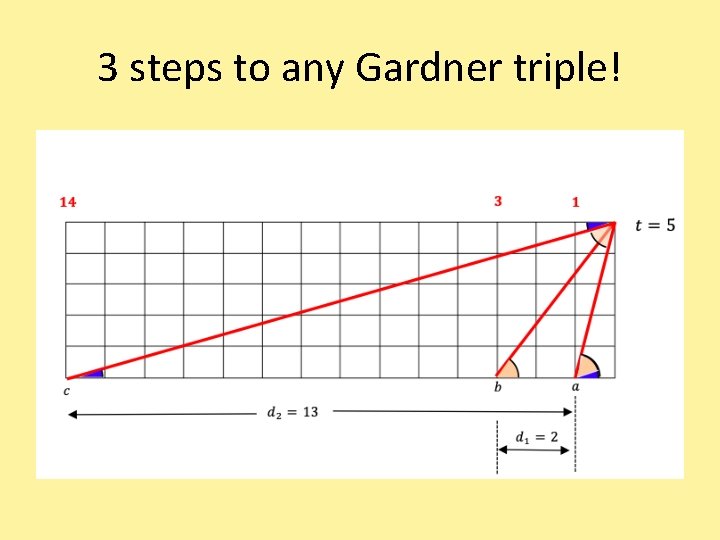
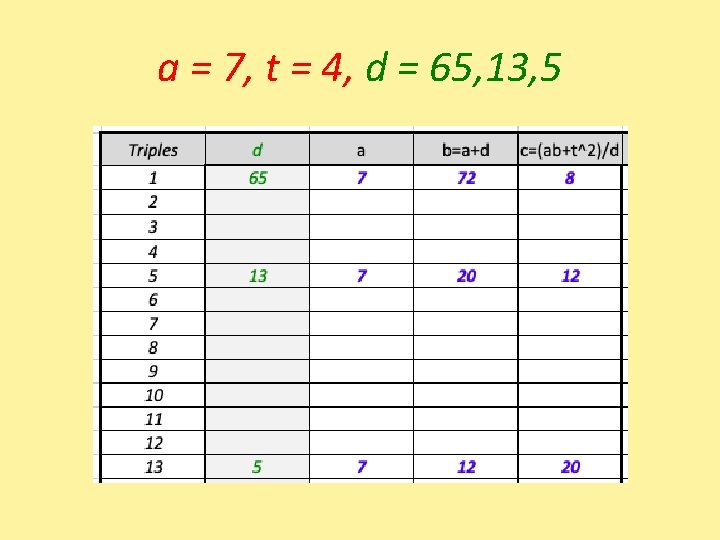
3 steps to any Gardner triple!
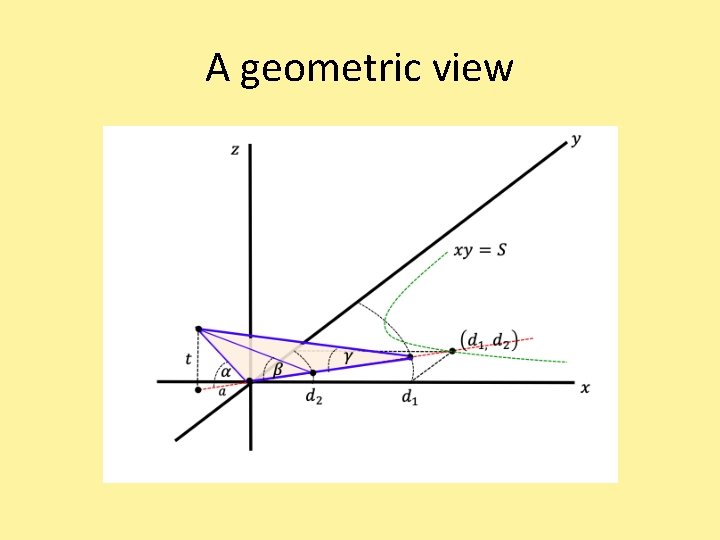
A geometric view
a = 7, t = 4, d = 65, 13, 5
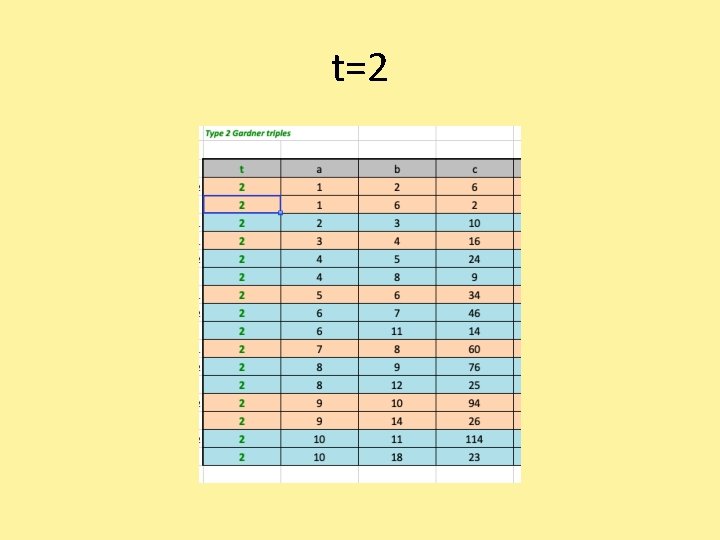
t=2
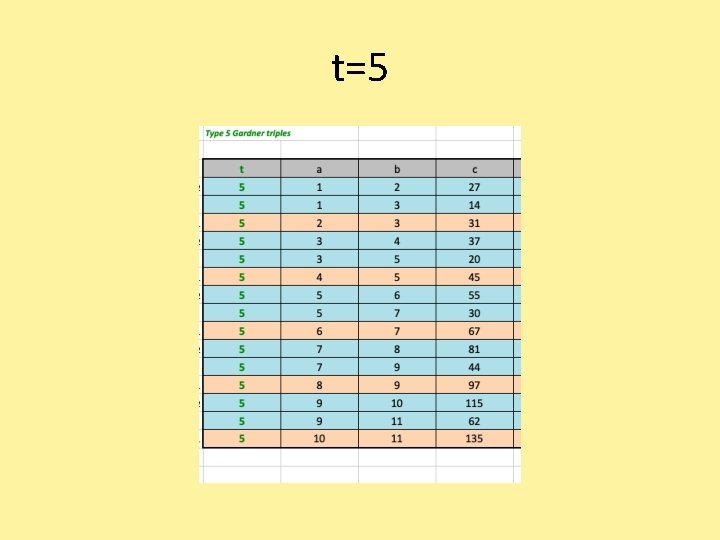
t=5
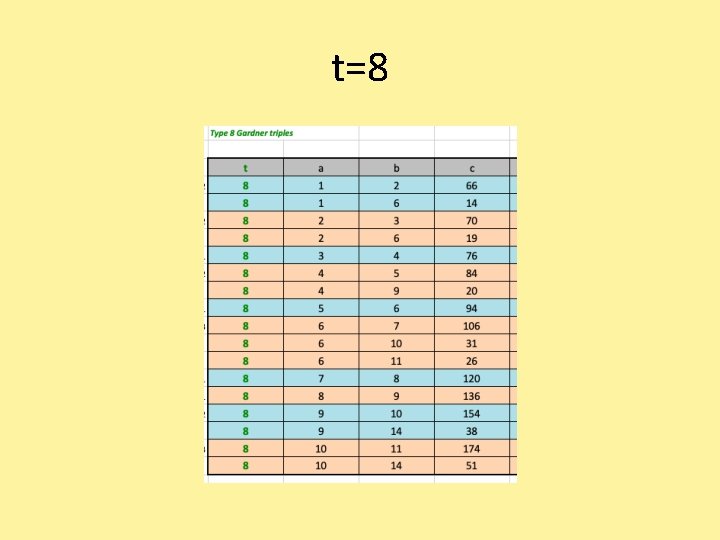
t=8
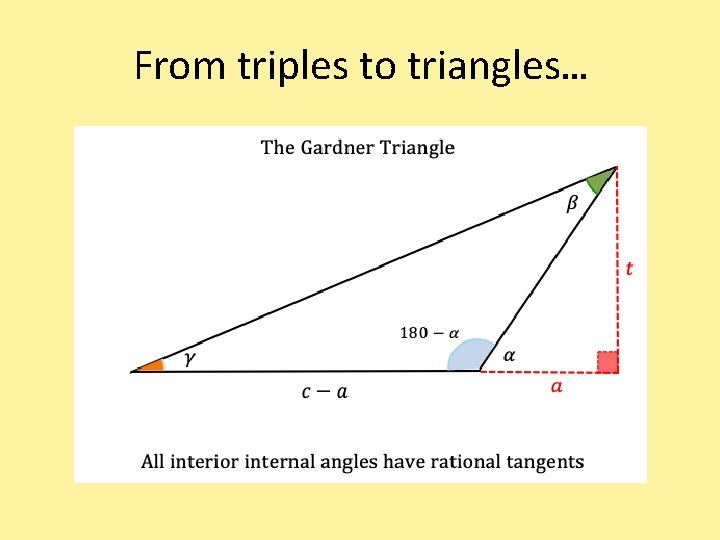
From triples to triangles…
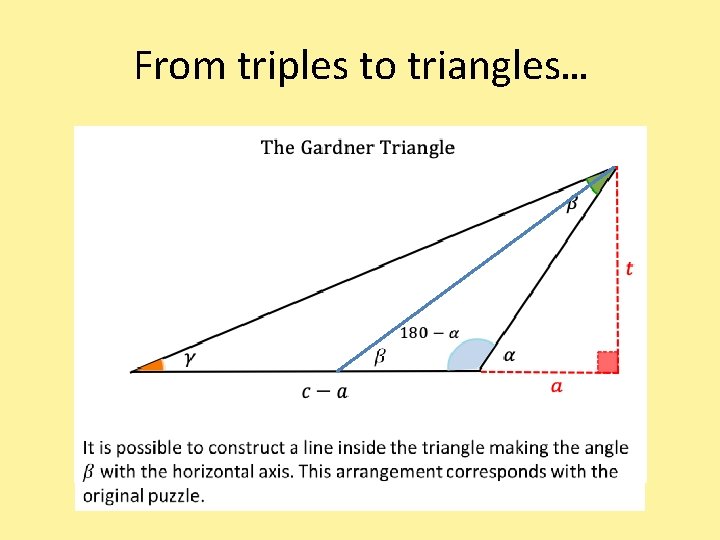
From triples to triangles…
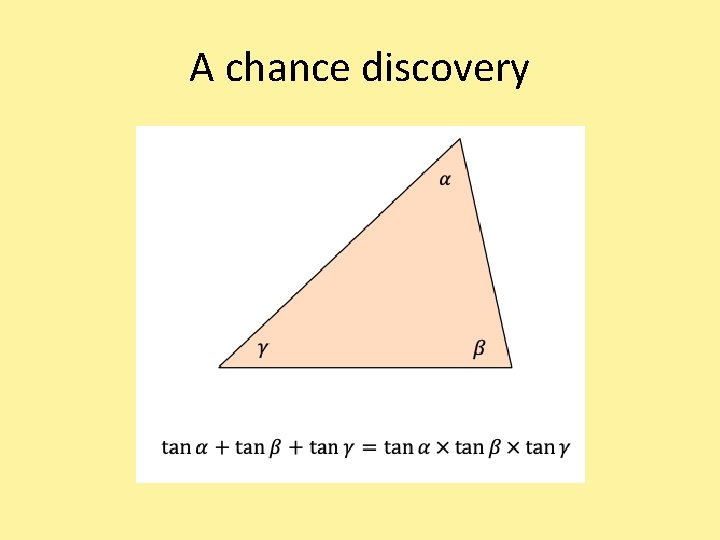
A chance discovery
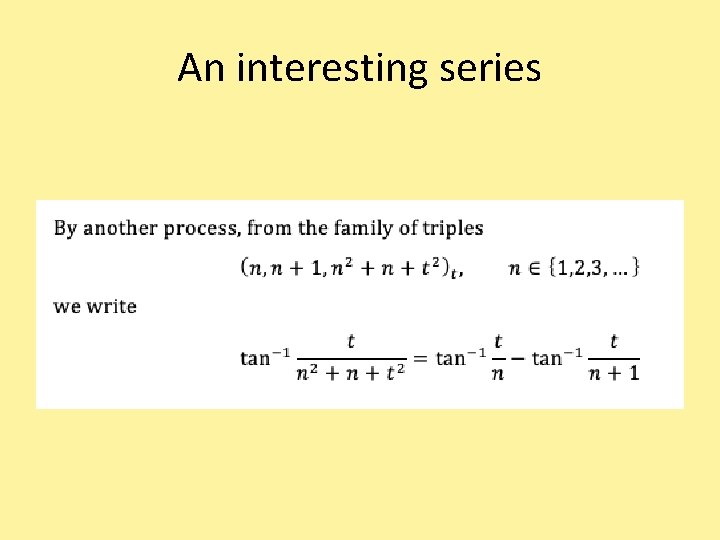
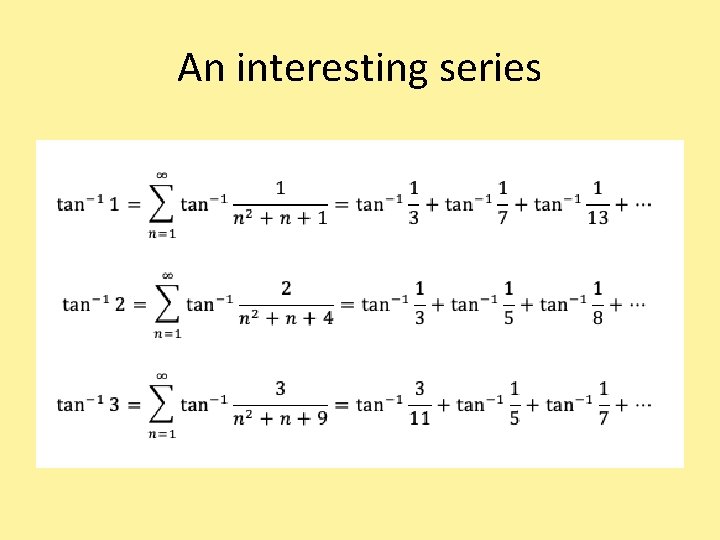
An interesting series
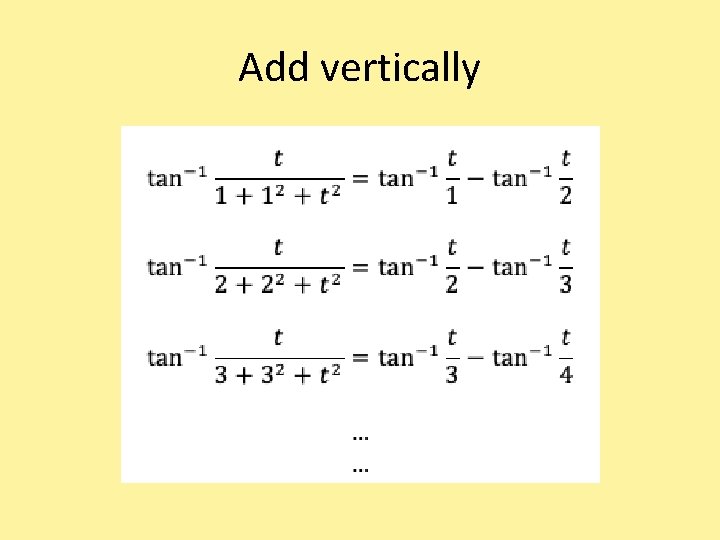
Add vertically
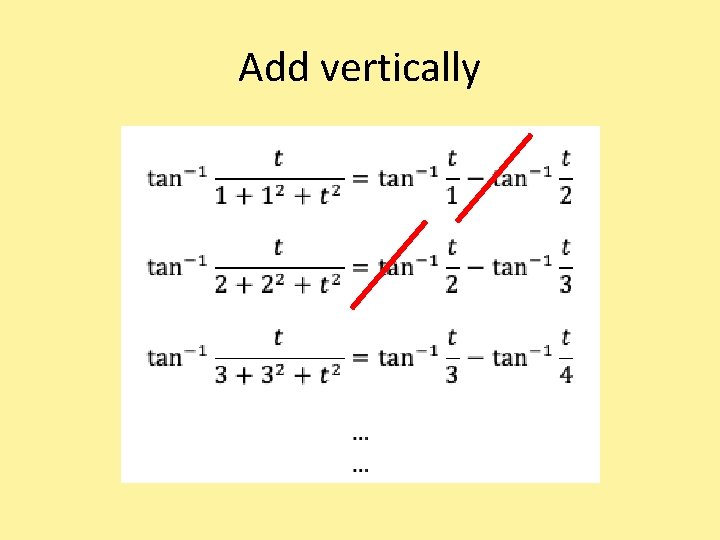
Add vertically
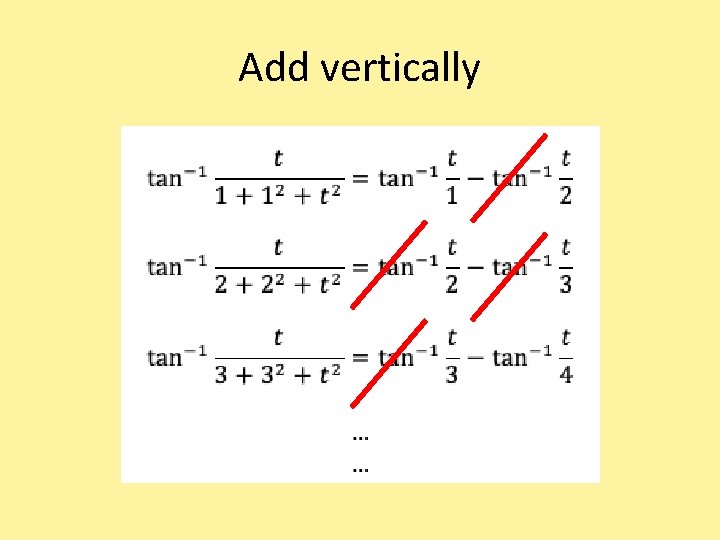
Add vertically
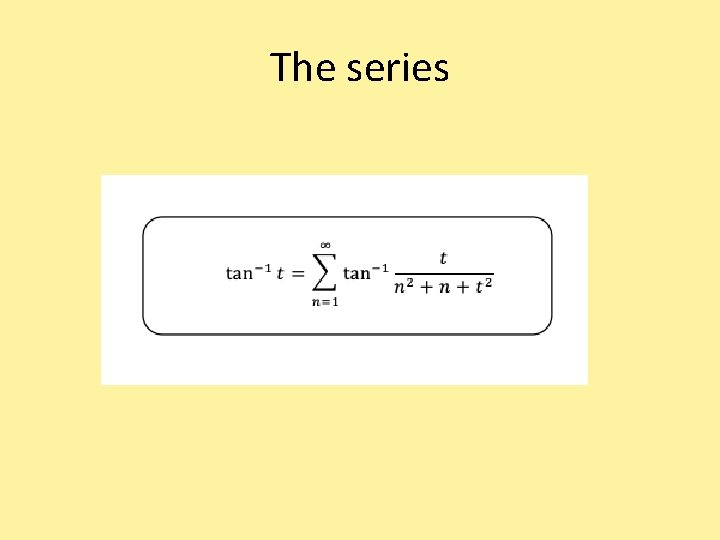
The series
An interesting series
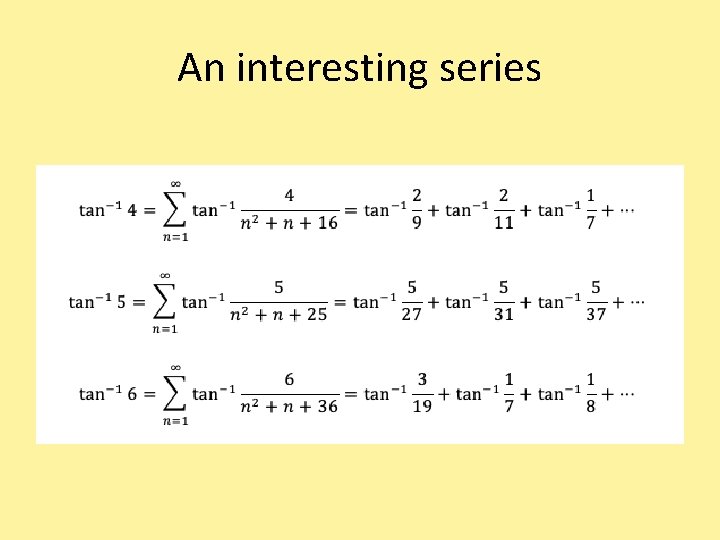
An interesting series
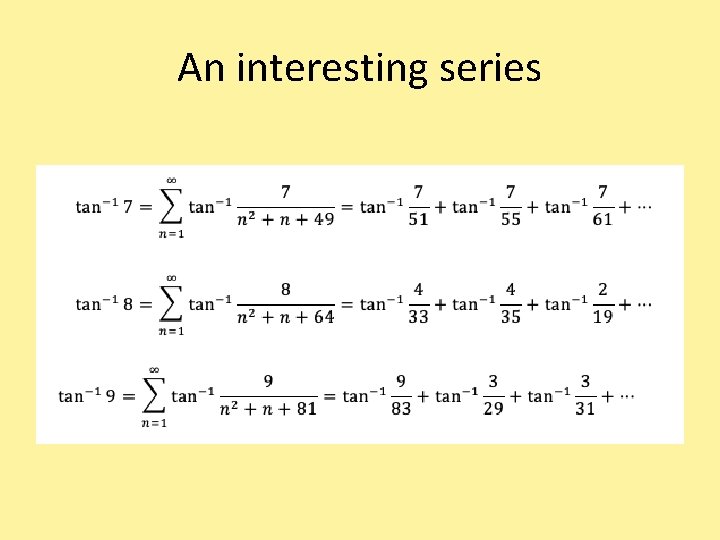
An interesting series
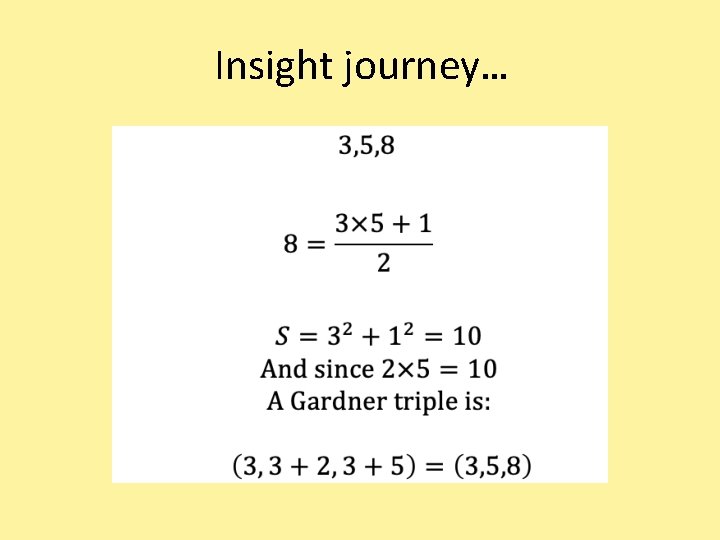
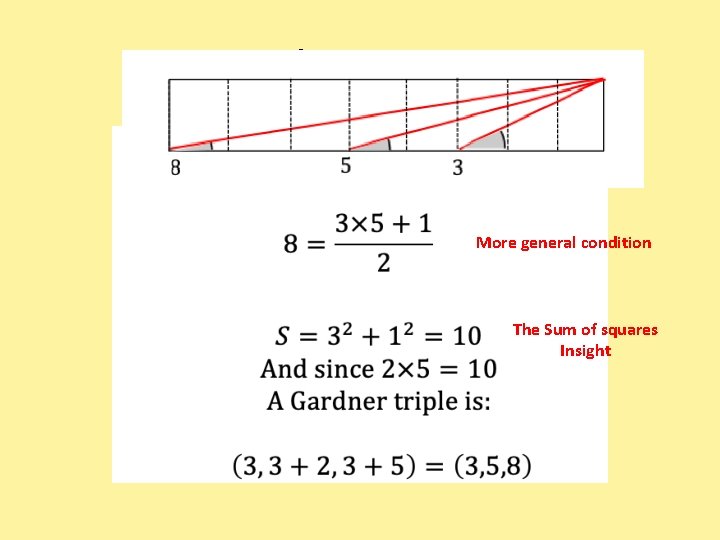
Insight journey…
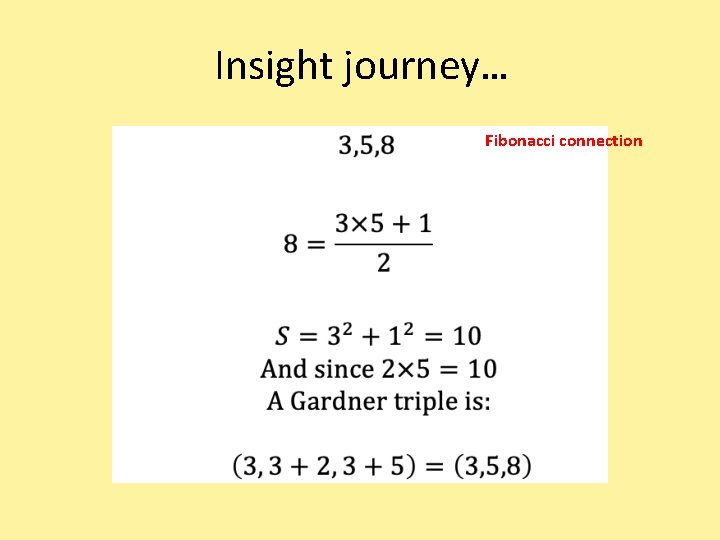
Insight journey… Fibonacci connection
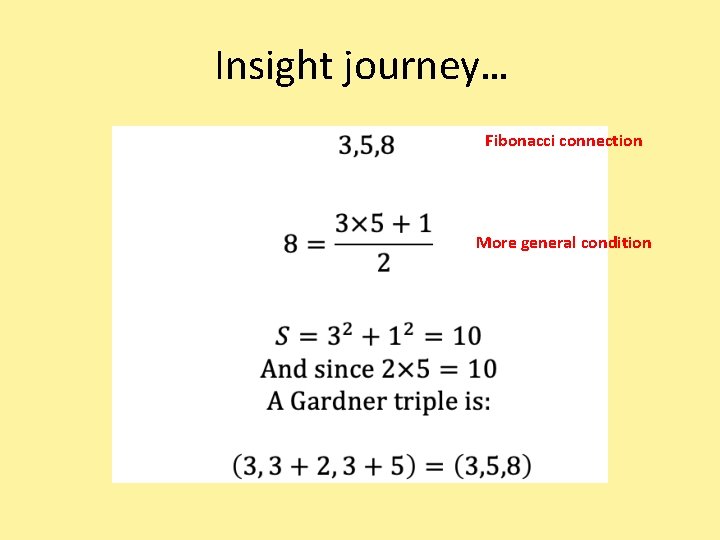
Insight journey… Fibonacci connection More general condition
Insight journey… Fibonacci connection More general condition The Sum of squares Insight
Insight journey… Fibonacci connection More general condition The Sum of squares Insight
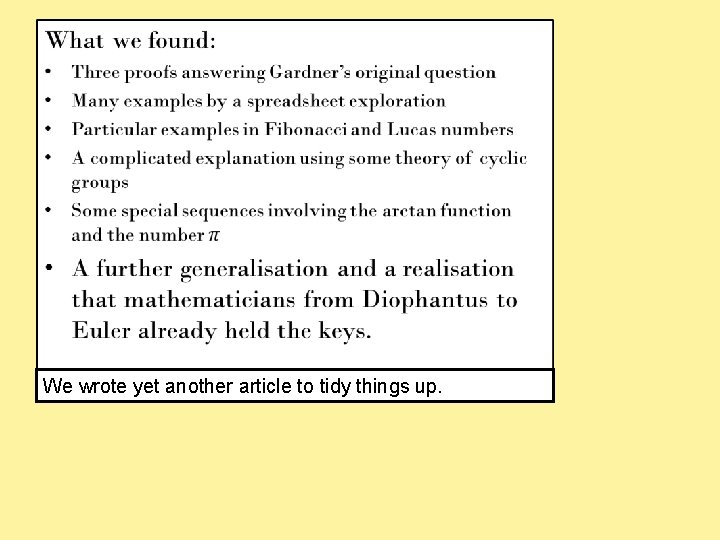
• We wrote yet another article to tidy things up.
Mathematical Puzzles • Paul Turner in the& Ed A presentation at the 17 annual Staples Classroom conference of the Canberra th Mathematical Association Inc. 17 August 2019 An homage to the renowned puzzler and journalist Martin Gardner Messrs Staples and Turner wish to thank you for your attention.