SEX Despite the fact that women are significantly





- Slides: 50
SEX • “Despite the fact that women are significantly different from men, there is considerable reproductive evidence that they belong to the same species” » British Medical Journal
SEX • What are the questions ? • Why sex ? – Virtually all metazoans have it – But why two ? • How is it determined ? – Humans are different from alligators and fruit flies
X and Y chromosomes • The X is BIG (5 -6% of genome) with lots of genes (mostly encoding somatic function) markers, and disease-associated mutations. • The Y is small (though variable in length)…but it does have some genes
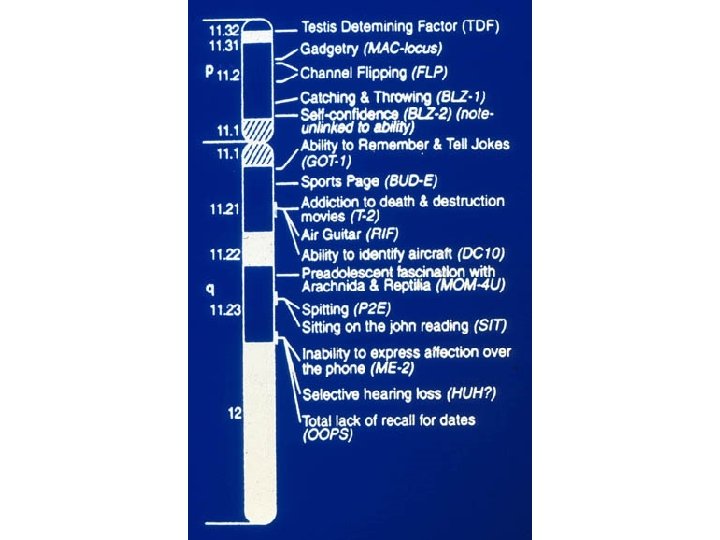
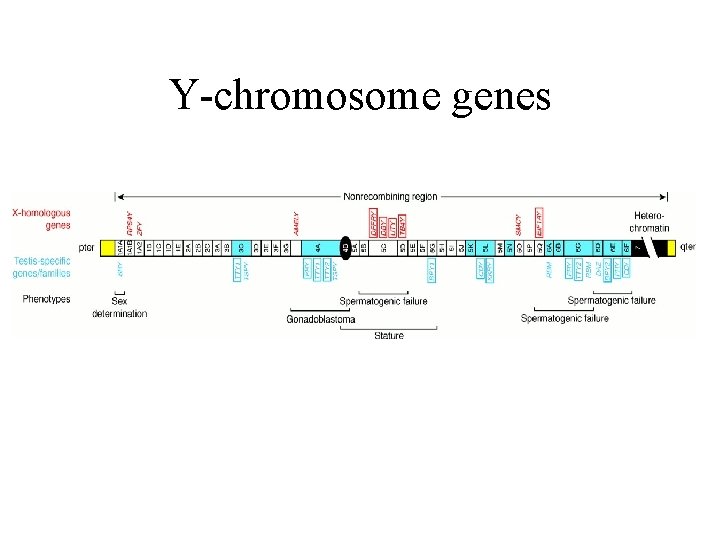
Y-chromosome genes
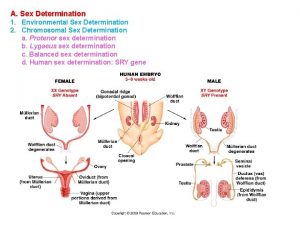
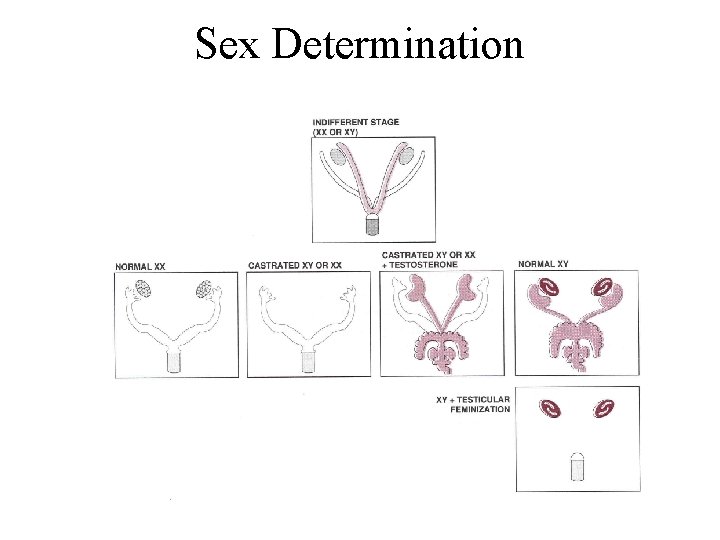
Sex Determination
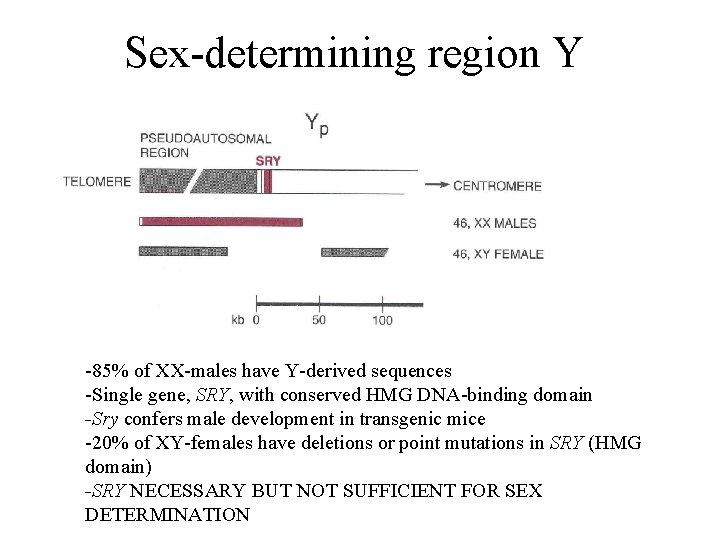
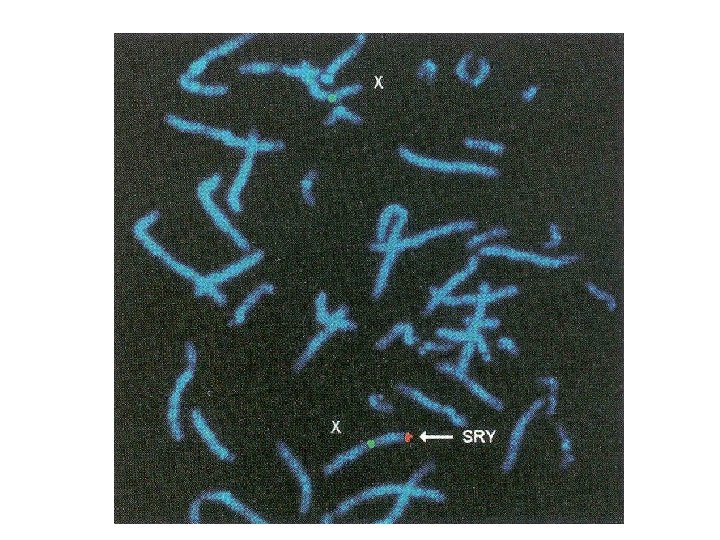
Sex Determination • Humans are different from alligators and fruit flies • Klinefelter syndrome individuals( 47, XXY) have male phenotype • Study rare exceptions to the rule (Sex Reversal: • XX males, XY females) • Hypothesis: Y chromosome material translocated to X in XX males
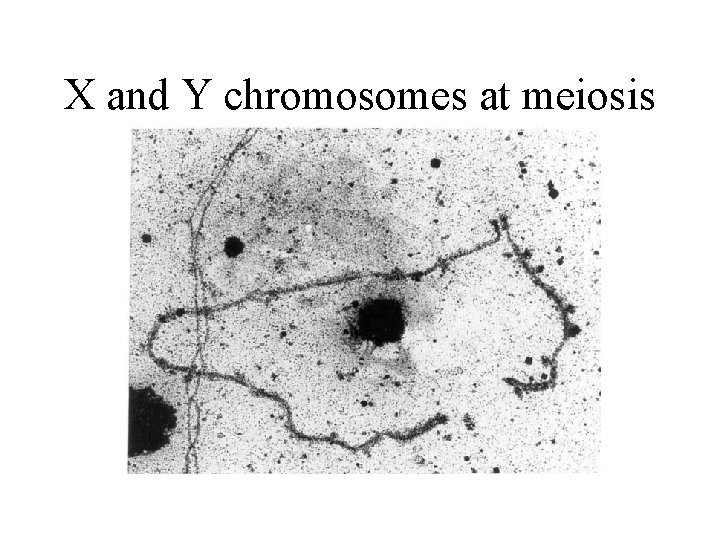
X and Y chromosomes at meiosis
Sex-determining region Y -85% of XX-males have Y-derived sequences -Single gene, SRY, with conserved HMG DNA-binding domain -Sry confers male development in transgenic mice -20% of XY-females have deletions or point mutations in SRY (HMG domain) -SRY NECESSARY BUT NOT SUFFICIENT FOR SEX DETERMINATION
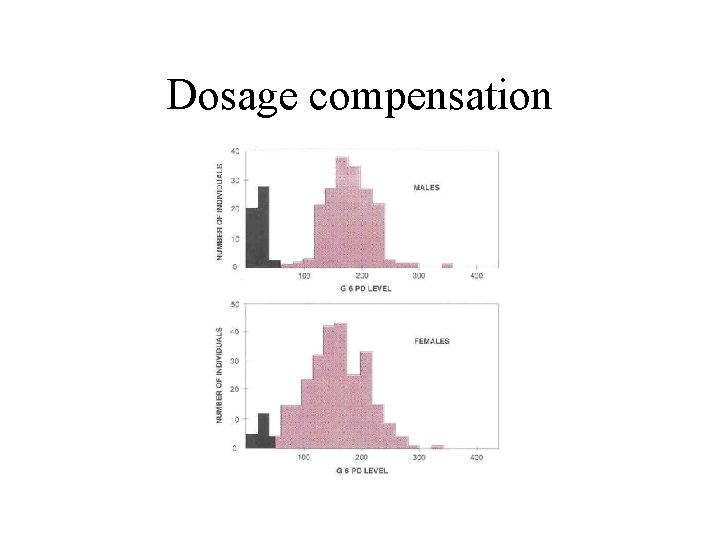
Dosage compensation
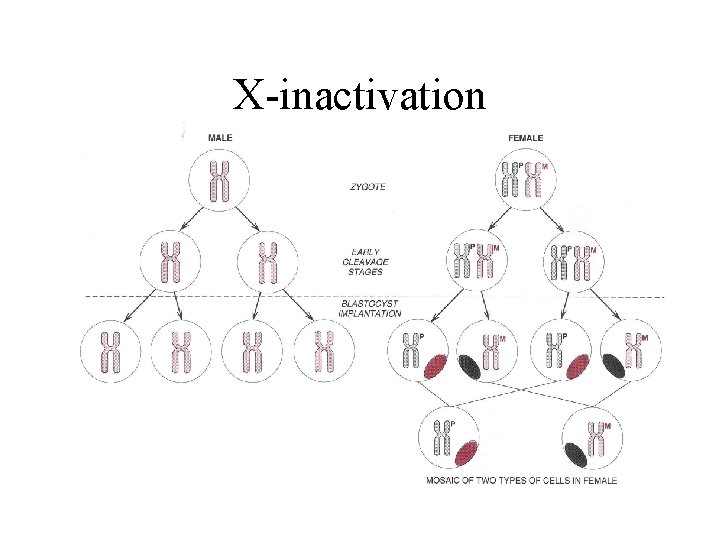
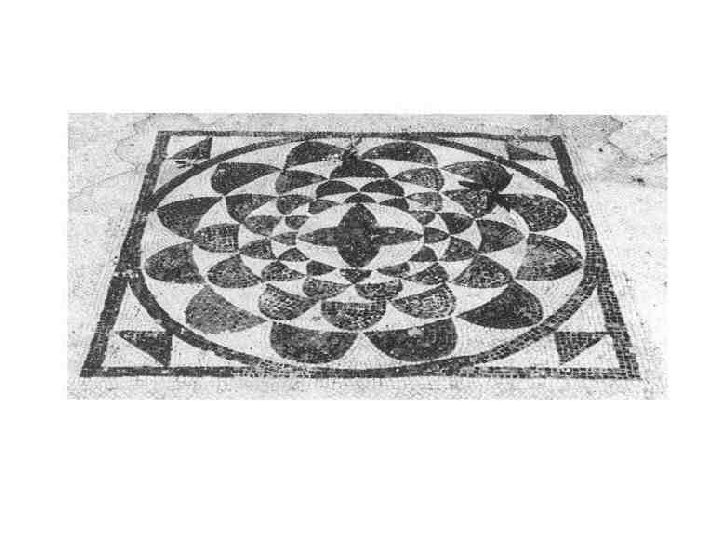
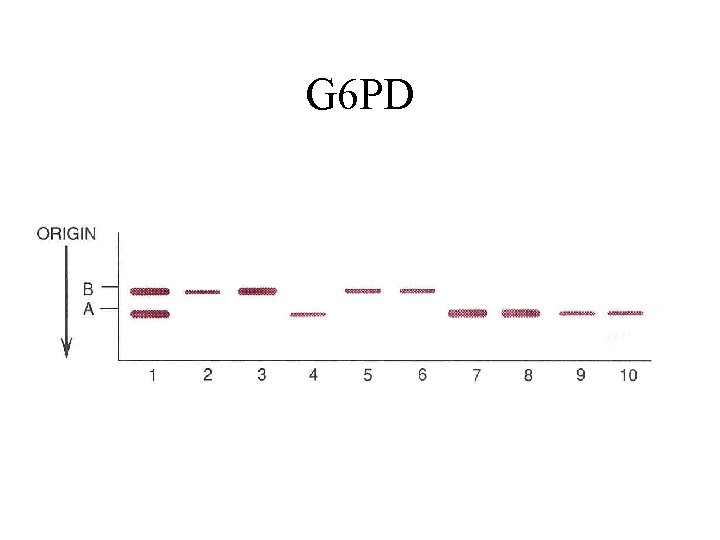
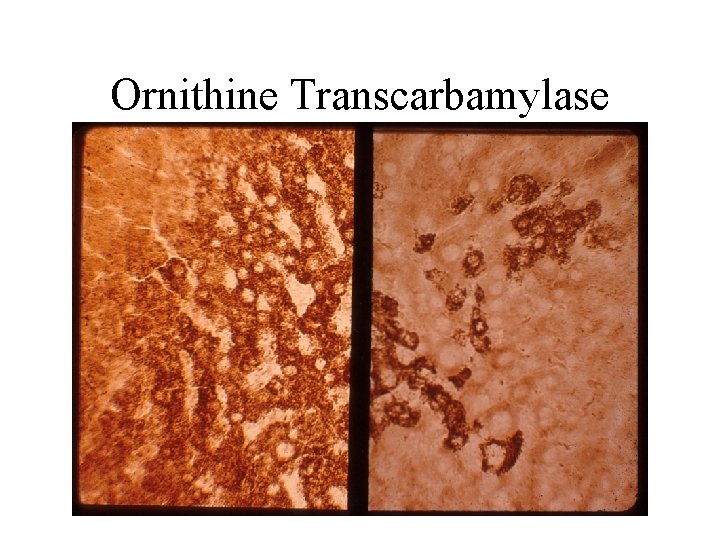
X-inactivation—the Lyon Hypothesis—in Somatic Cells • • Early Random…usually Complete…mostly Permanent and clonally propagated – Female is MOSAIC of cells, each cell is functionally HEMIZYGOUS
X-inactivation
Evidence for X-inactivation • Genetic • Cytologic • Biochemical
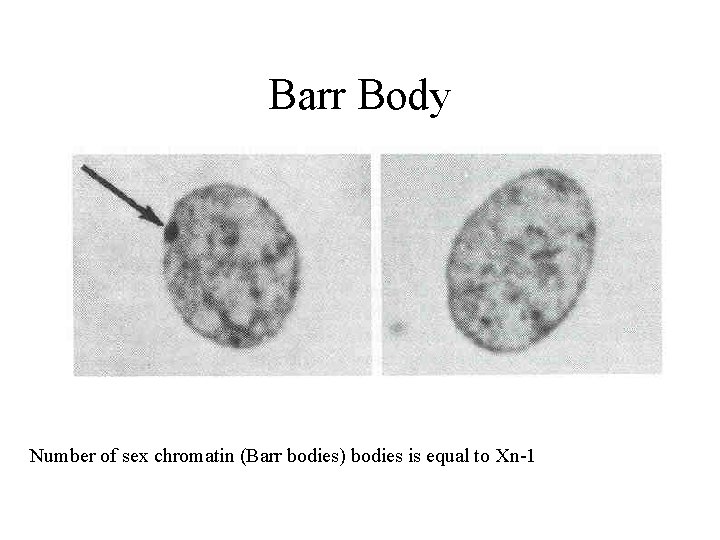
Barr Body Number of sex chromatin (Barr bodies) bodies is equal to Xn-1
G 6 PD
Ornithine Transcarbamylase
Implications of Lyonization • Greater variability of clinical manifestations in heterozygous females than in hemizygous males • Skewed X-inactivation
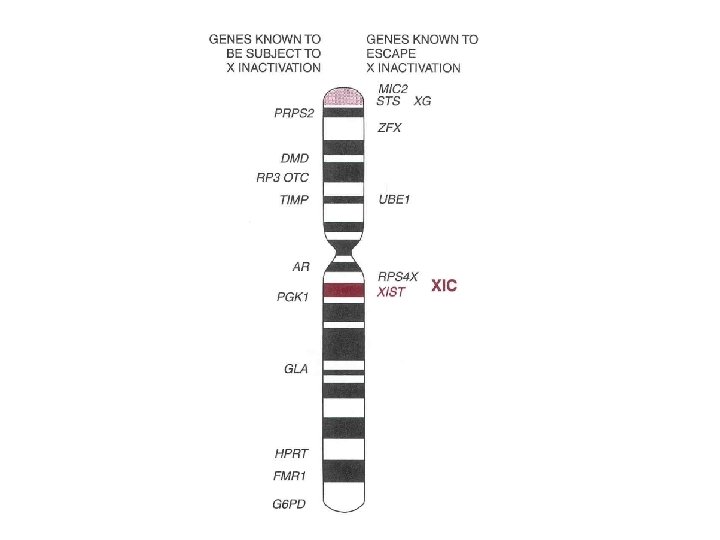
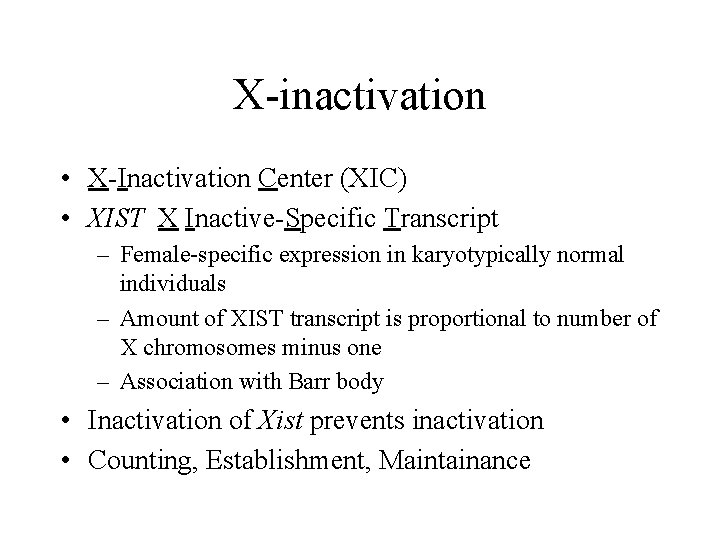
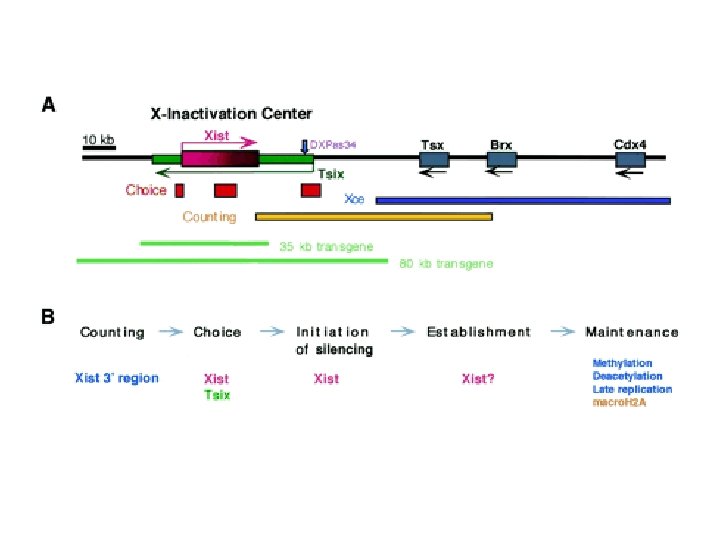
X-inactivation • X-Inactivation Center (XIC) • XIST X Inactive-Specific Transcript – Female-specific expression in karyotypically normal individuals – Amount of XIST transcript is proportional to number of X chromosomes minus one – Association with Barr body • Inactivation of Xist prevents inactivation • Counting, Establishment, Maintainance
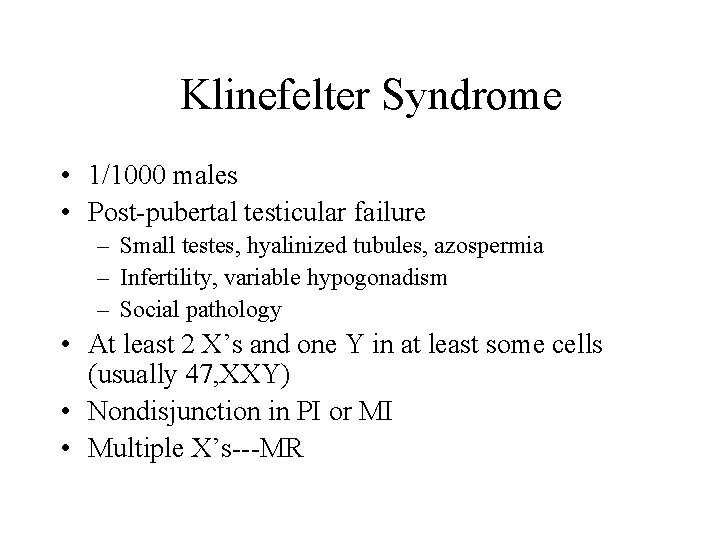
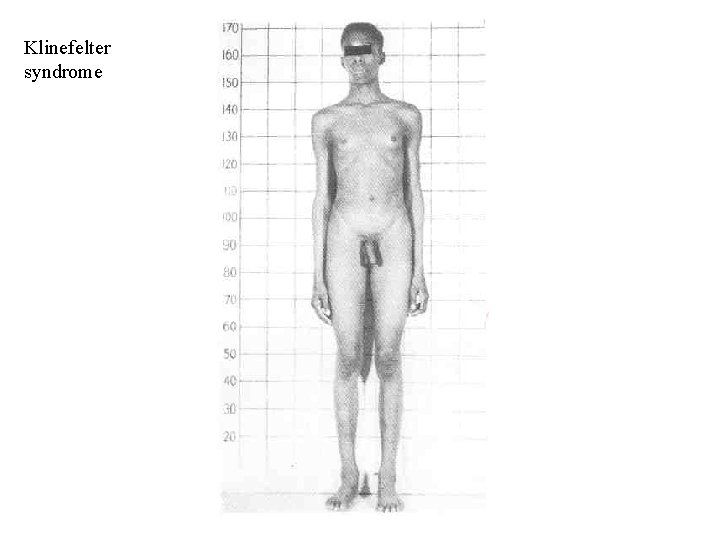
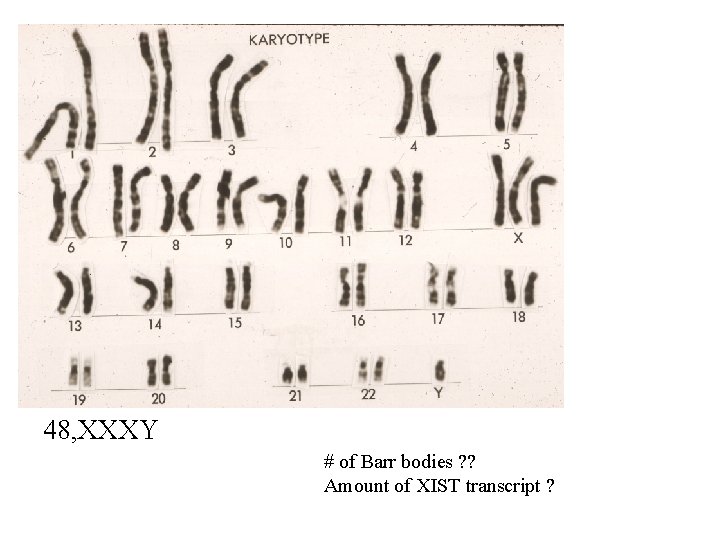
Klinefelter Syndrome • 1/1000 males • Post-pubertal testicular failure – Small testes, hyalinized tubules, azospermia – Infertility, variable hypogonadism – Social pathology • At least 2 X’s and one Y in at least some cells (usually 47, XXY) • Nondisjunction in PI or MI • Multiple X’s---MR
Klinefelter syndrome
48, XXXY # of Barr bodies ? ? Amount of XIST transcript ?
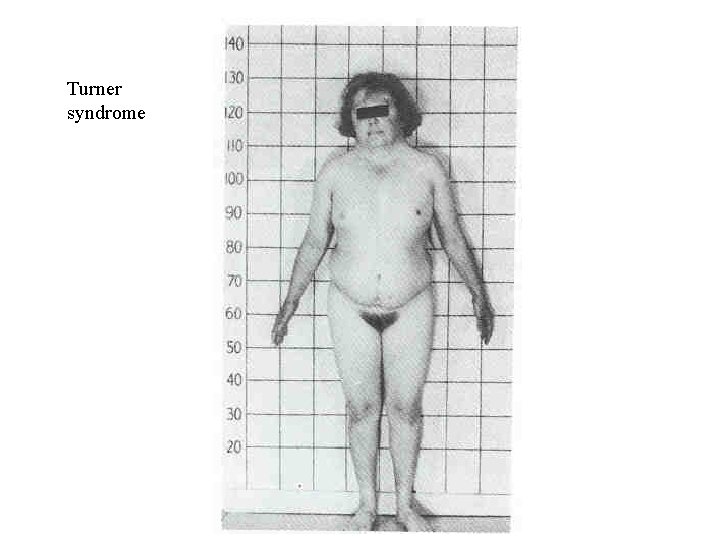
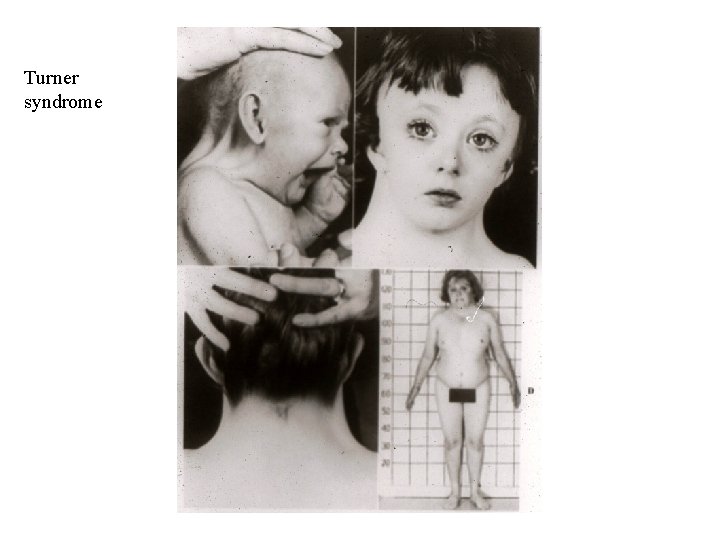
Turner syndrome • 1/5, 000 females • Gonadal dysgenesis, disappearance of eggs • Sexual immaturity – Amenorrhea – Infertility • Short stature • Somatic abnormalities • Something wrong with the second X in some cells
Turner syndrome
Turner syndrome
45, X ~50% chromatin-negative Nondisjunction 80% Paternal (99% of 45, X conceptuses spontaneously aborted) 46 X, abnormal. X ~15% chromatin-positive Mosaicism ~30% 45 X/46 XX or XY or X abnormal X, etc Mitotic nondisjunction XX line mollifies syndrome
Why Turner Syndrome ? • Males don’t have Turner syndrome • Hypothesis: X-linked genes that – 1. escape inactivation – 2. have Y-chromosome homologs
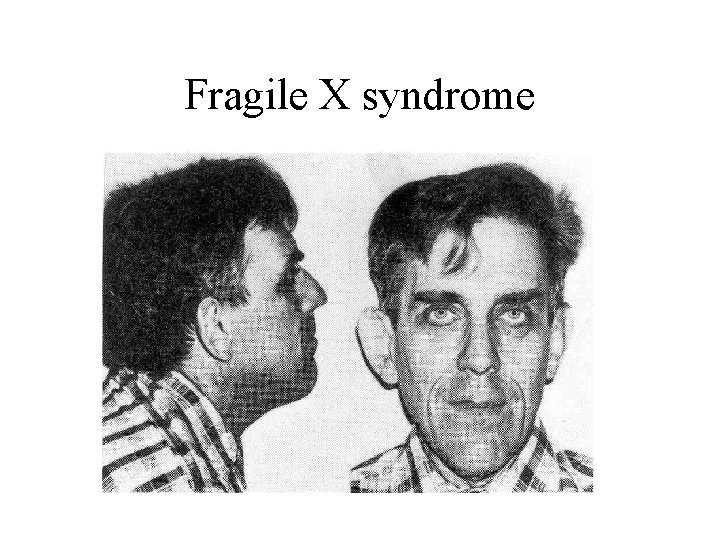
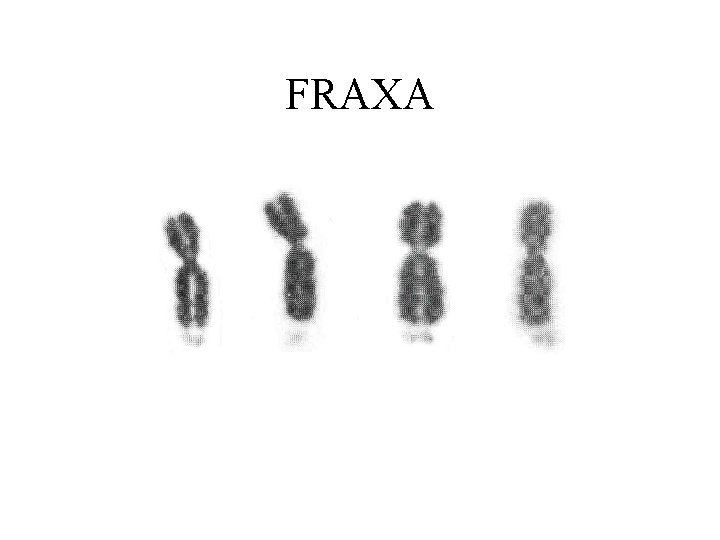
Fragile X Syndrome • Frequency: ~1/3500 males, ~1/6000 females • Phenotype – – Facial abnormalities Macroorchidism Connective tissue abnormalities Moderate mental retardation (mild in females) • (ADDH, autism) • Fragile site (FRAXA) at Xq 27. 3
Fragile X syndrome
FRAXA
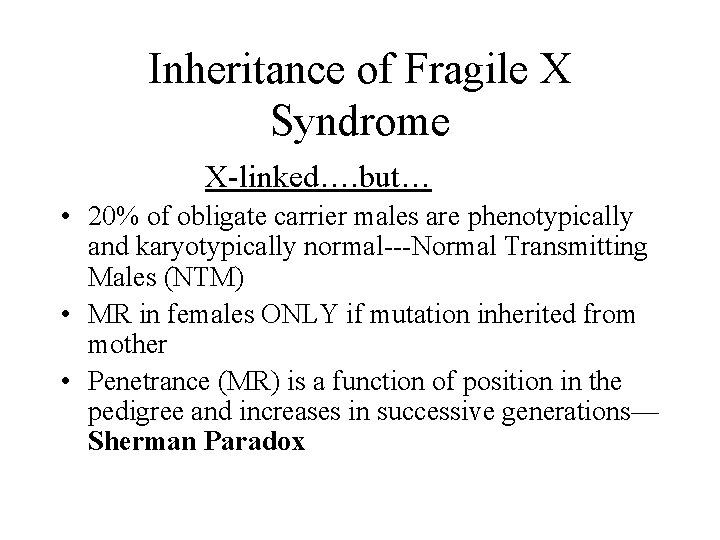
Inheritance of Fragile X Syndrome X-linked…. but… • 20% of obligate carrier males are phenotypically and karyotypically normal---Normal Transmitting Males (NTM) • MR in females ONLY if mutation inherited from mother • Penetrance (MR) is a function of position in the pedigree and increases in successive generations— Sherman Paradox
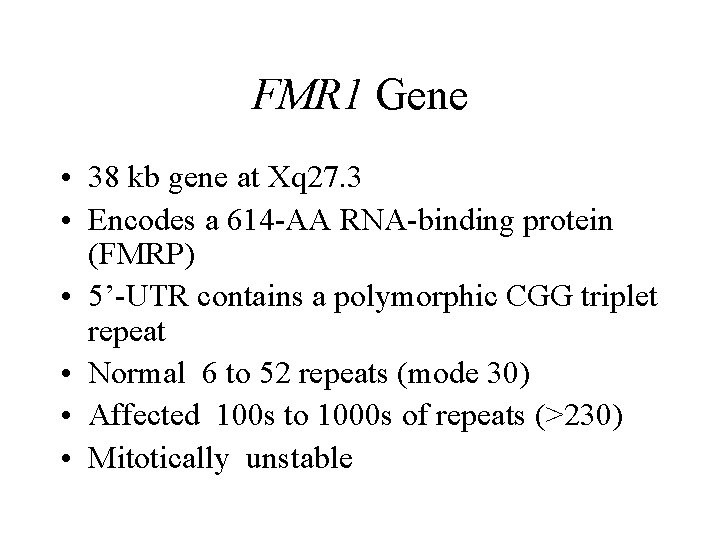
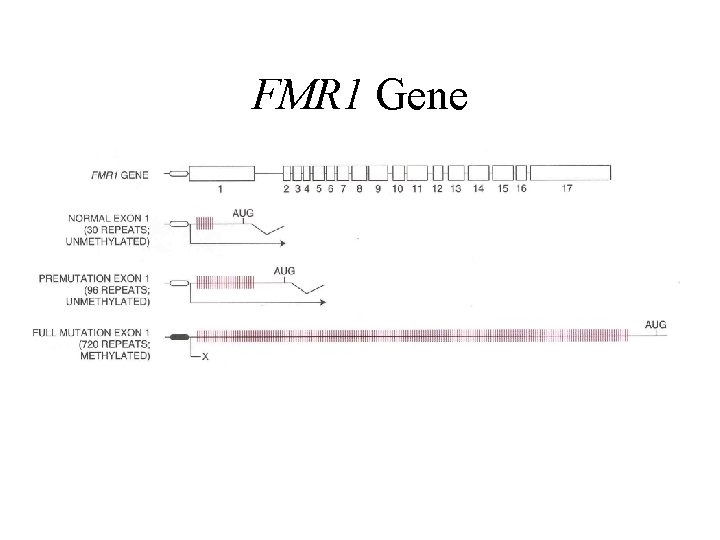
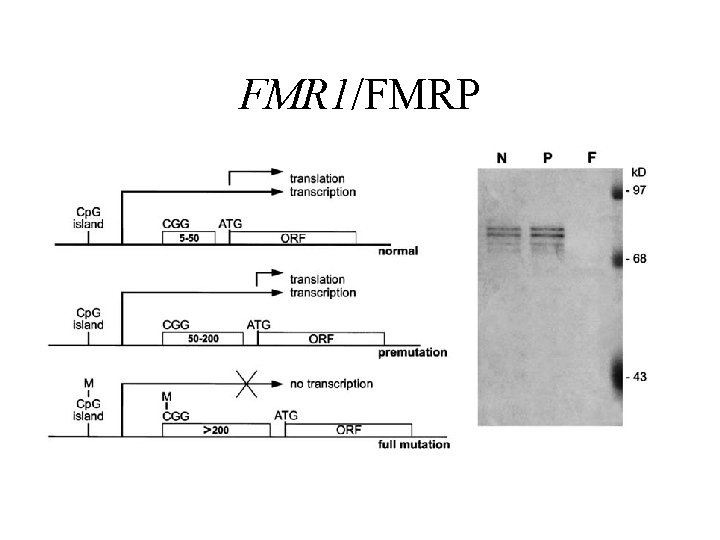
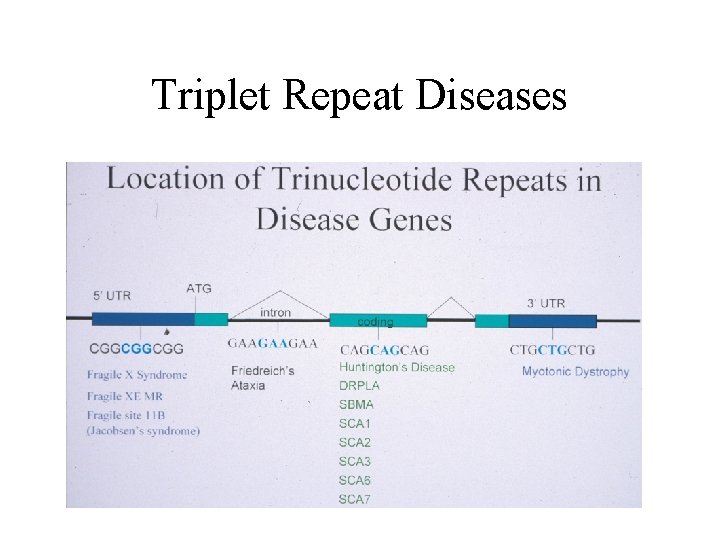
FMR 1 Gene • 38 kb gene at Xq 27. 3 • Encodes a 614 -AA RNA-binding protein (FMRP) • 5’-UTR contains a polymorphic CGG triplet repeat • Normal 6 to 52 repeats (mode 30) • Affected 100 s to 1000 s of repeats (>230) • Mitotically unstable
FMR 1 Gene
FMR 1/FMRP
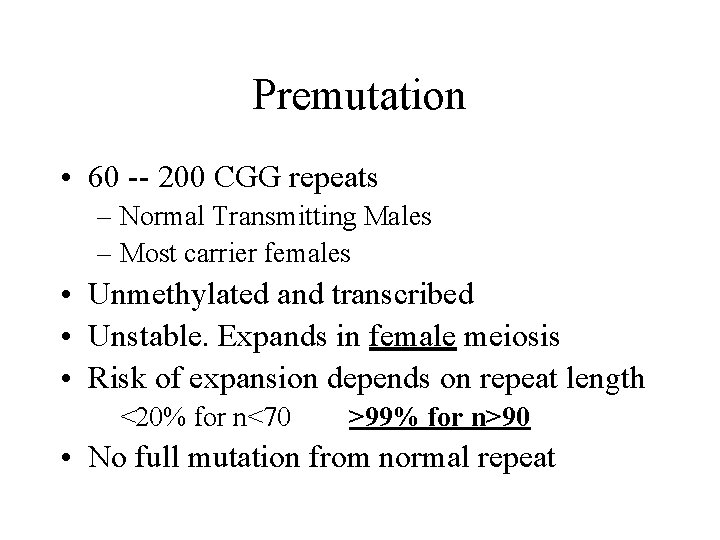
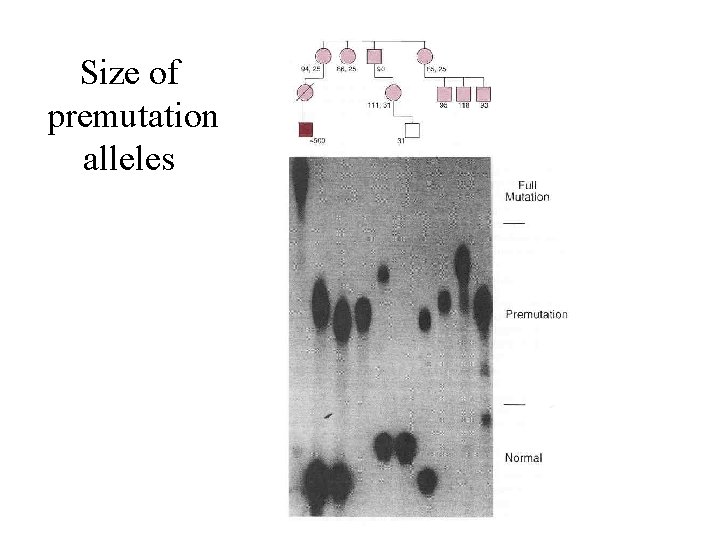
Premutation • 60 -- 200 CGG repeats – Normal Transmitting Males – Most carrier females • Unmethylated and transcribed • Unstable. Expands in female meiosis • Risk of expansion depends on repeat length <20% for n<70 >99% for n>90 • No full mutation from normal repeat
Sherman Paradox
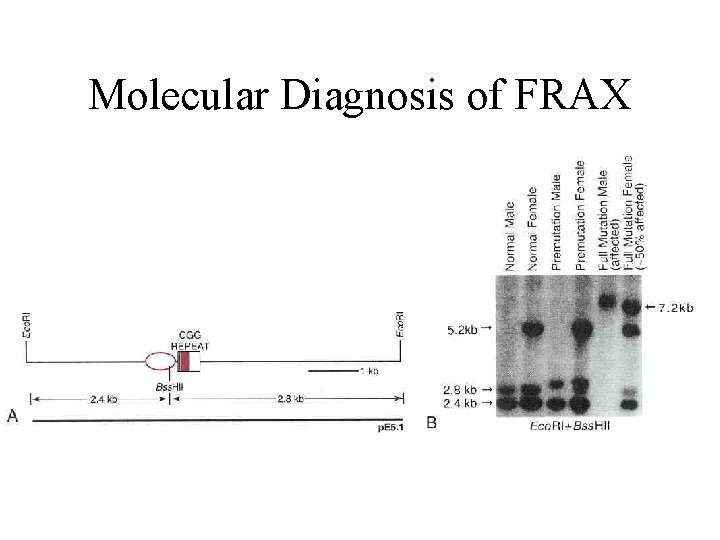
Molecular Diagnosis of FRAX
Size of premutation alleles
Triplet Repeat Diseases
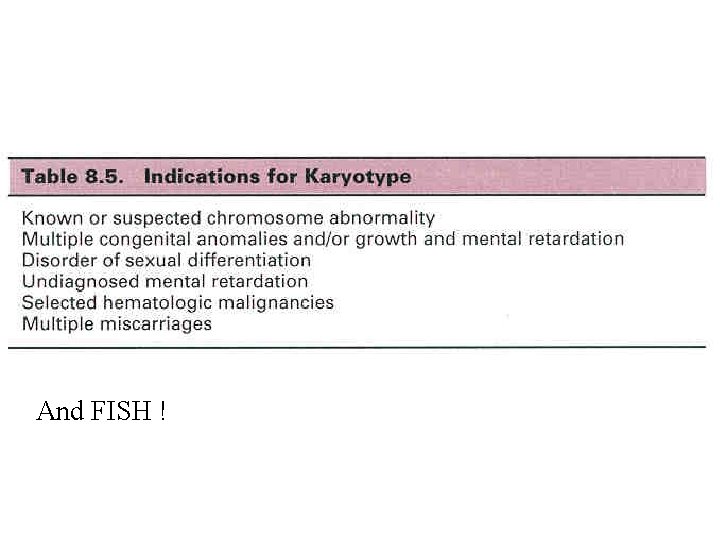
And FISH !
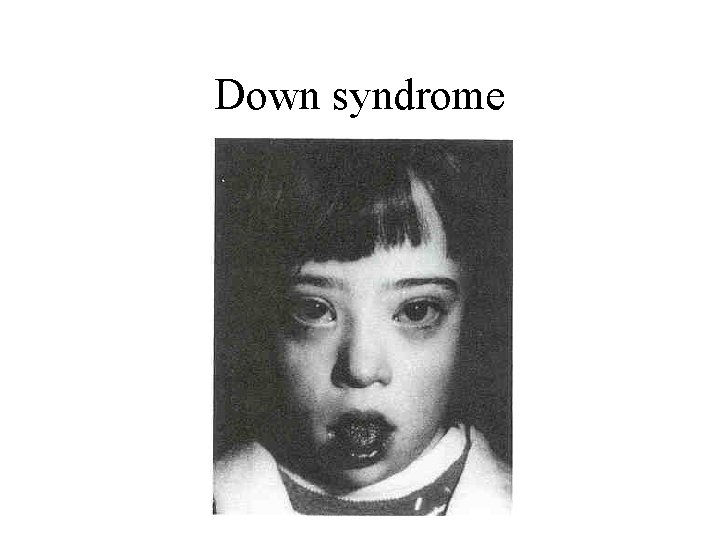
Down Syndrome • Growth retardation • Mental retardation—variable • Somatic abnormalities – Abnormal facies (flattened face and occiput, large tongue, small ears, epicanthal folds) – Congenital heart disease (40%)—AV canal – GI abnormalities (5%)—duodenal stenosis – Leukemia (10 to 20 x increased risk) – Ear infections – Thyroid problems – Premature aging (cataracts, Alzheimer Disease) • Pathogenesis: overexpression of genes on 21 q
Down syndrome
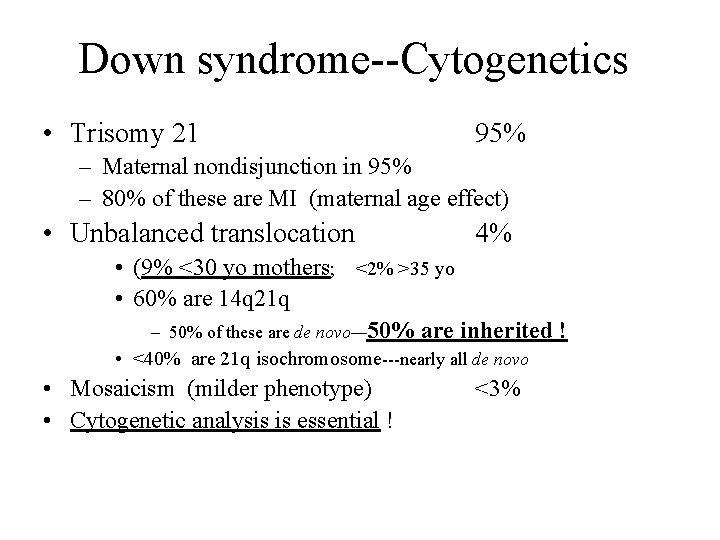
Down syndrome--Cytogenetics • Trisomy 21 95% – Maternal nondisjunction in 95% – 80% of these are MI (maternal age effect) • Unbalanced translocation 4% • (9% <30 yo mothers; <2% >35 yo • 60% are 14 q 21 q – 50% of these are de novo— 50% are inherited ! • <40% are 21 q isochromosome---nearly all de novo • Mosaicism (milder phenotype) • Cytogenetic analysis is essential ! <3%
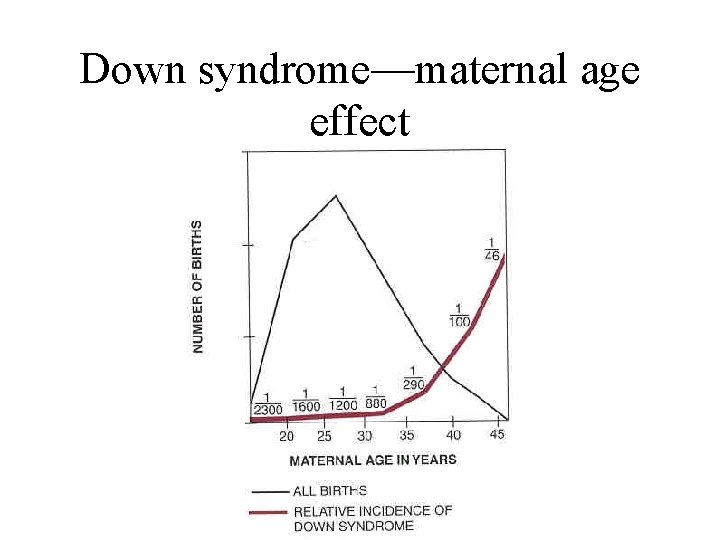
Down syndrome—maternal age effect
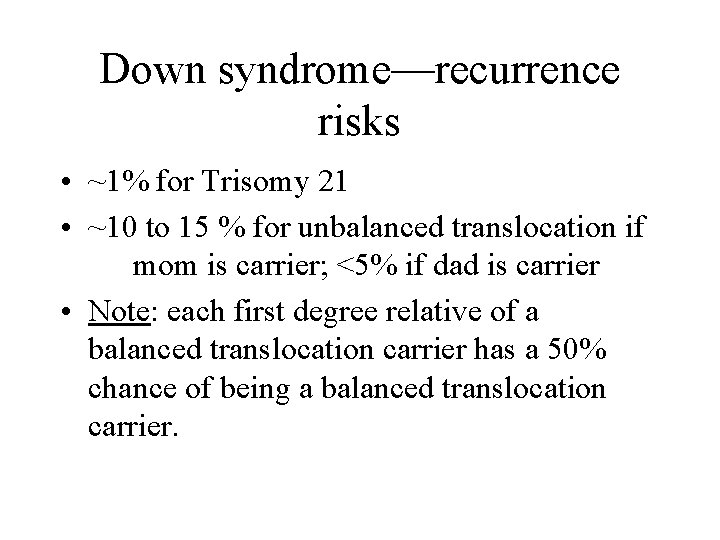
Down syndrome—recurrence risks • ~1% for Trisomy 21 • ~10 to 15 % for unbalanced translocation if mom is carrier; <5% if dad is carrier • Note: each first degree relative of a balanced translocation carrier has a 50% chance of being a balanced translocation carrier.
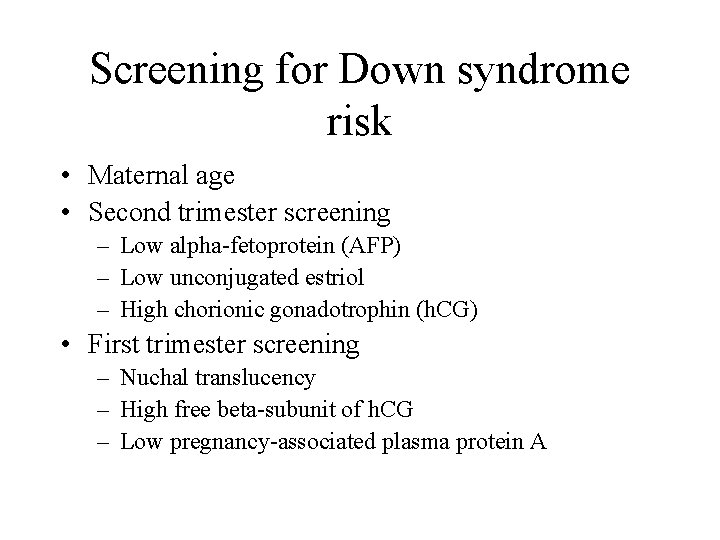
Screening for Down syndrome risk • Maternal age • Second trimester screening – Low alpha-fetoprotein (AFP) – Low unconjugated estriol – High chorionic gonadotrophin (h. CG) • First trimester screening – Nuchal translucency – High free beta-subunit of h. CG – Low pregnancy-associated plasma protein A
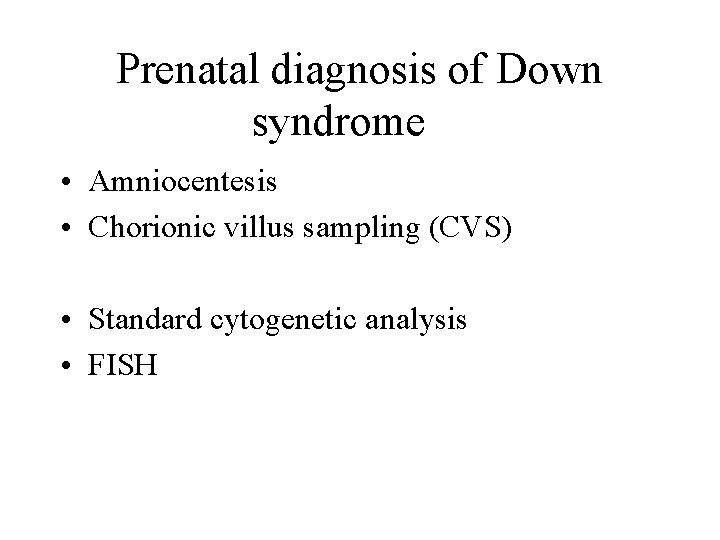
Prenatal diagnosis of Down syndrome • Amniocentesis • Chorionic villus sampling (CVS) • Standard cytogenetic analysis • FISH