
The phase diagrams of the high temperature superconductors
- Slides: 88
The phase diagrams of the high temperature superconductors Talk online: sachdev. physics. harvard. edu HARVARD
Max Metlitski, Harvard Eun Gook Moon, Harvard HARVARD
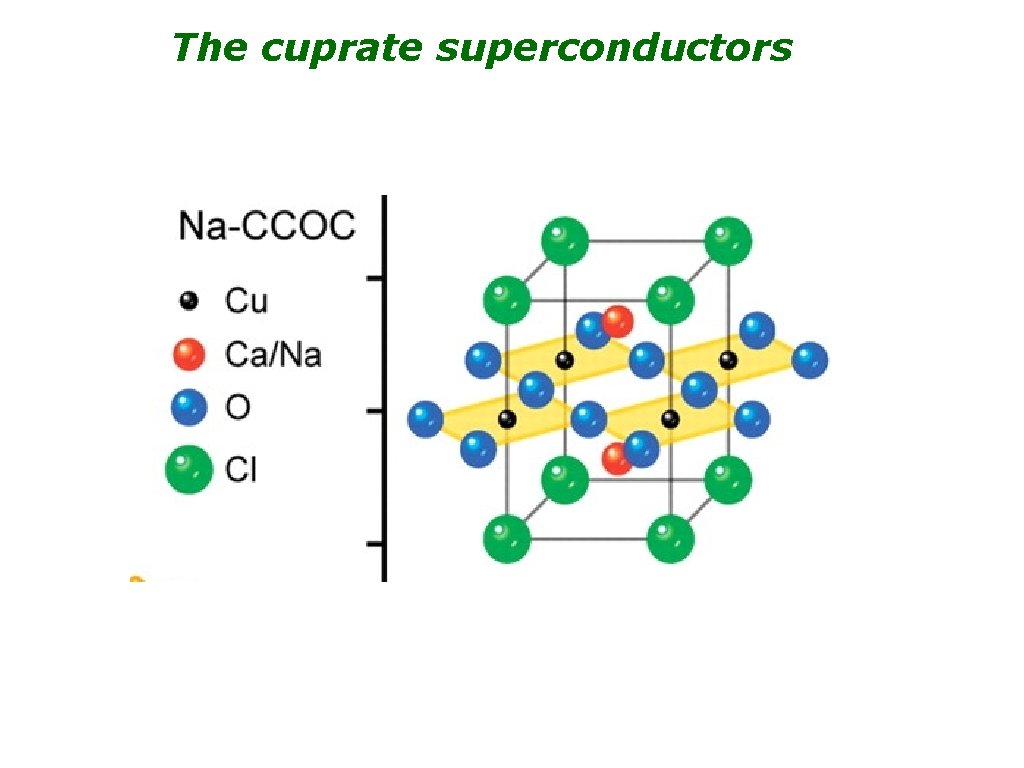
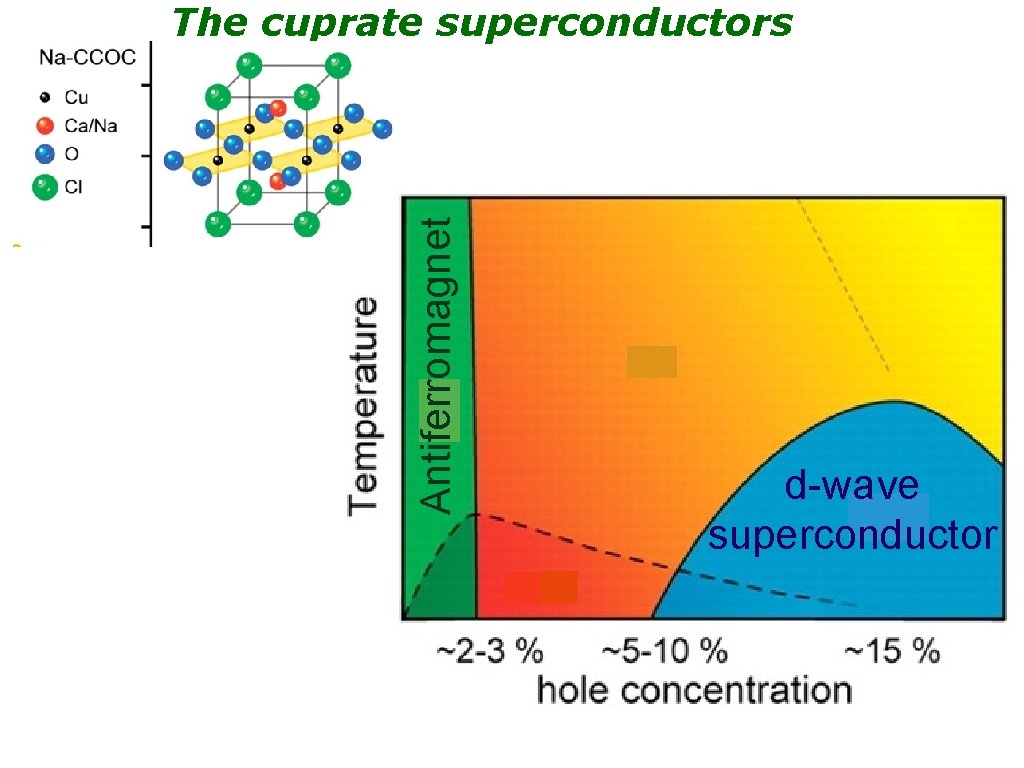
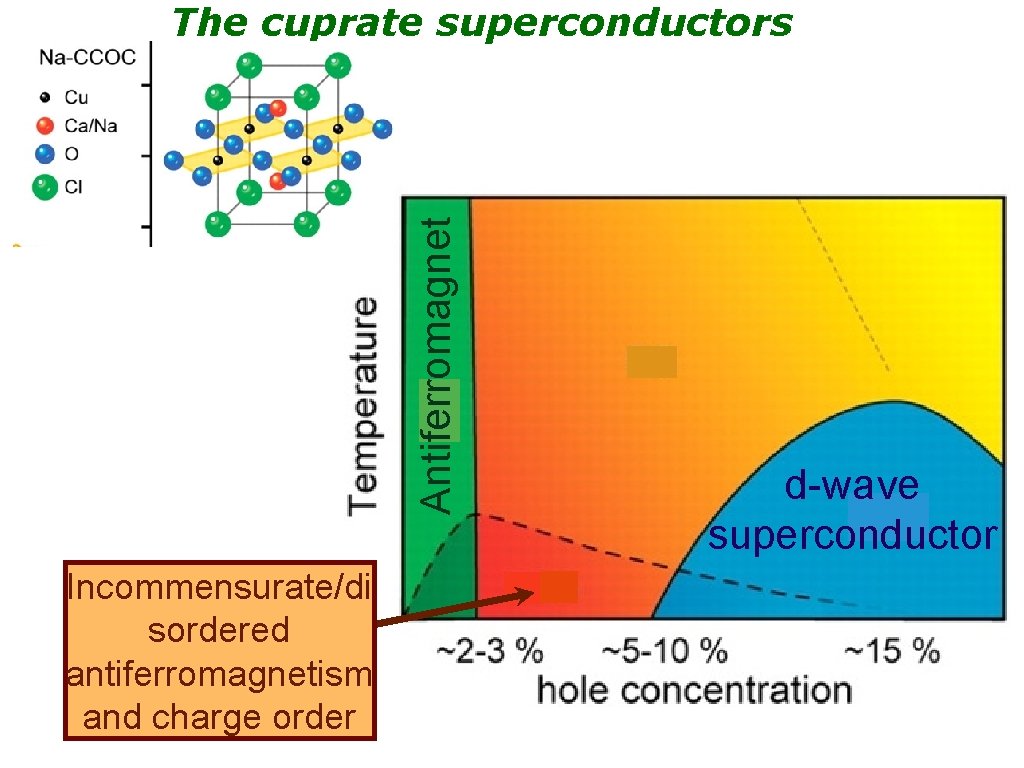
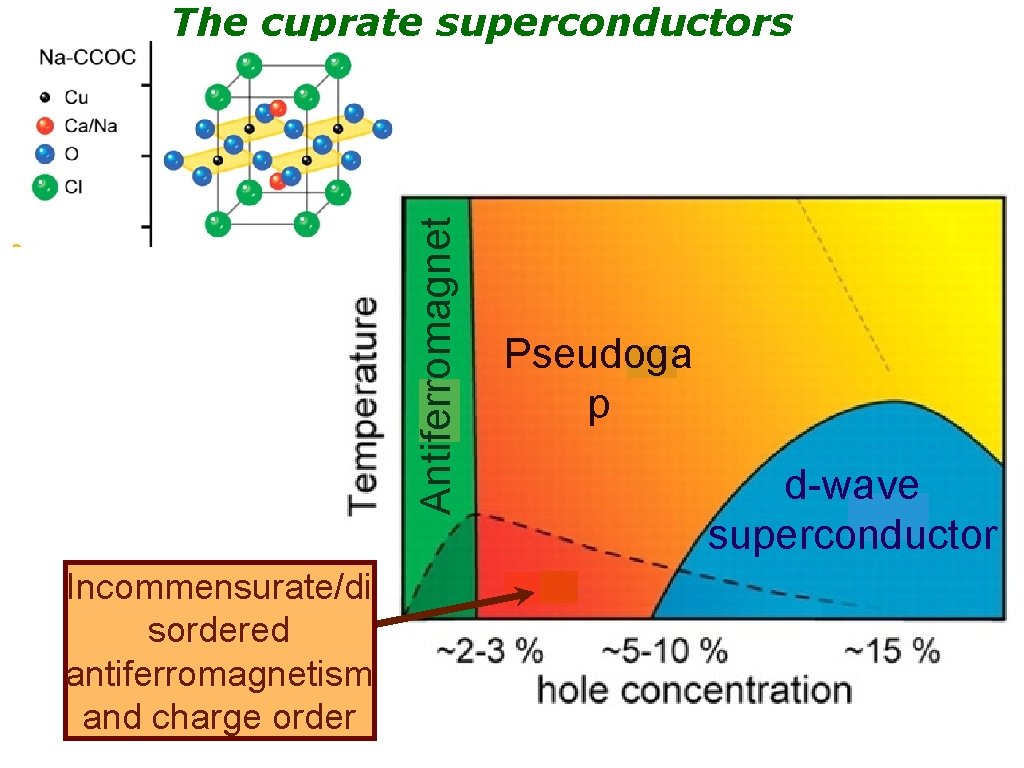
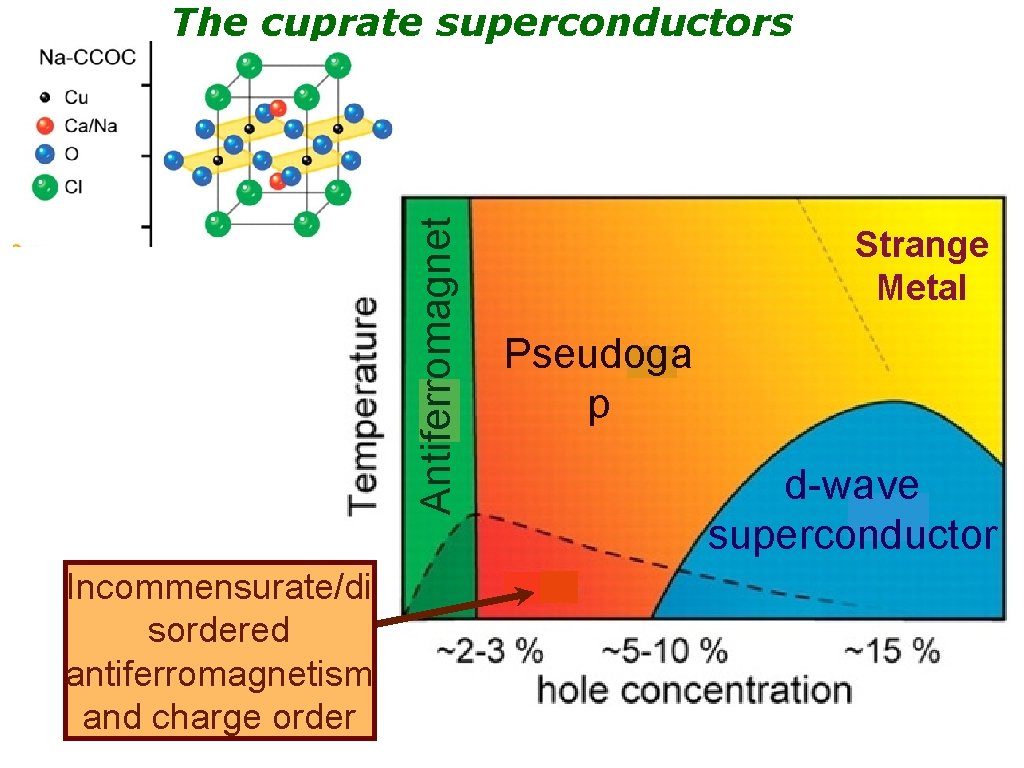
The cuprate superconductors
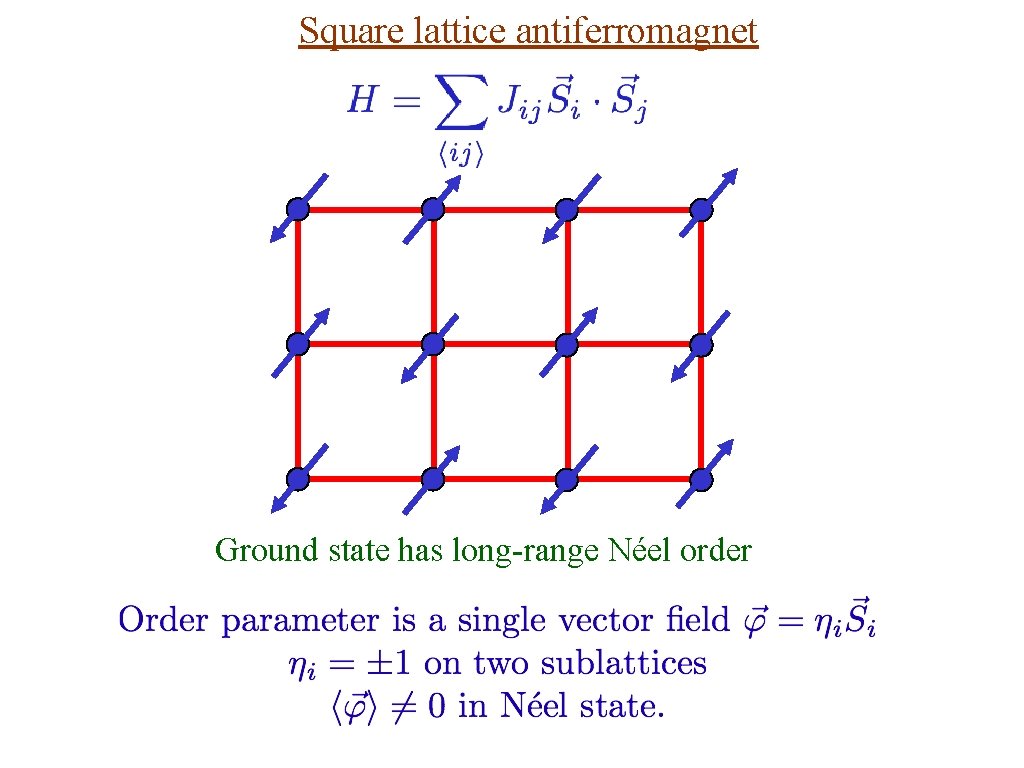
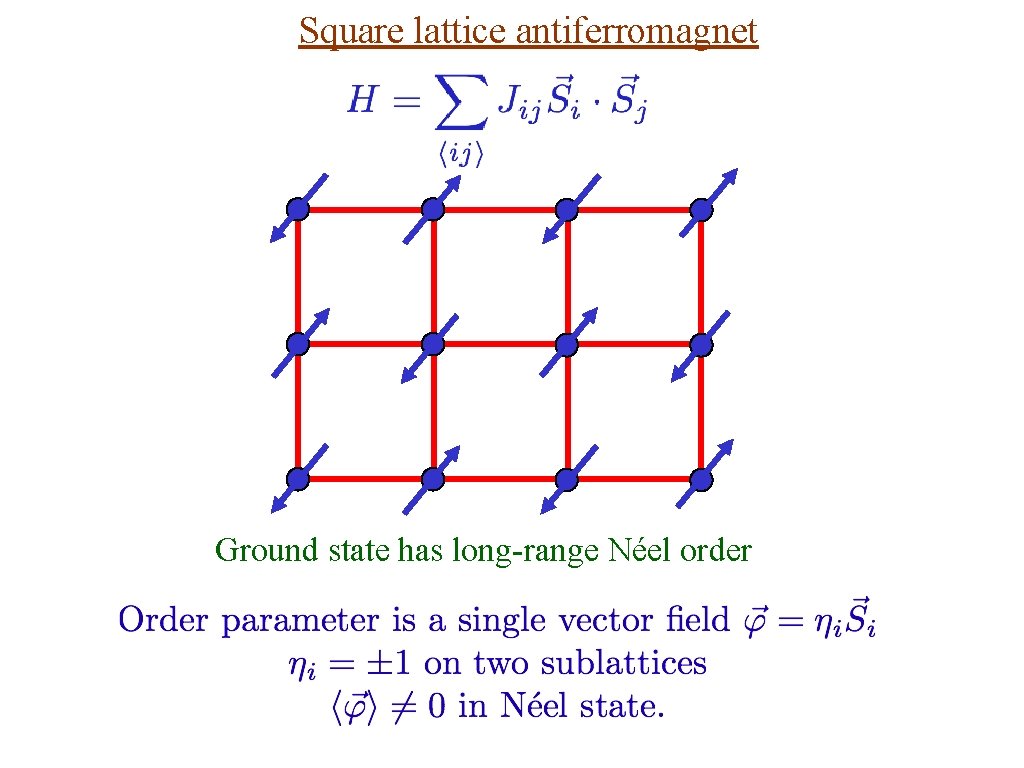
Square lattice antiferromagnet Ground state has long-range Néel order
Antiferromagnet The cuprate superconductors d-wave superconductor
Antiferromagnet The cuprate superconductors Incommensurate/di sordered antiferromagnetism and charge order d-wave superconductor
Antiferromagnet The cuprate superconductors Incommensurate/di sordered antiferromagnetism and charge order Pseudoga p d-wave superconductor
Antiferromagnet The cuprate superconductors Incommensurate/di sordered antiferromagnetism and charge order Strange Metal Pseudoga p d-wave superconductor
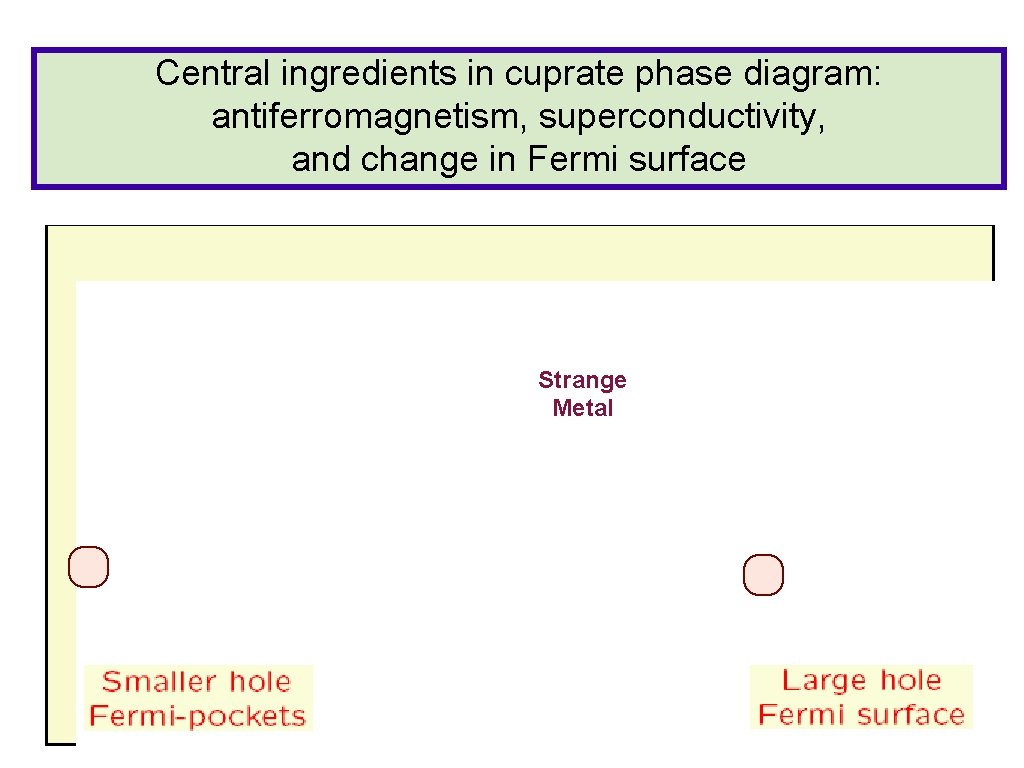
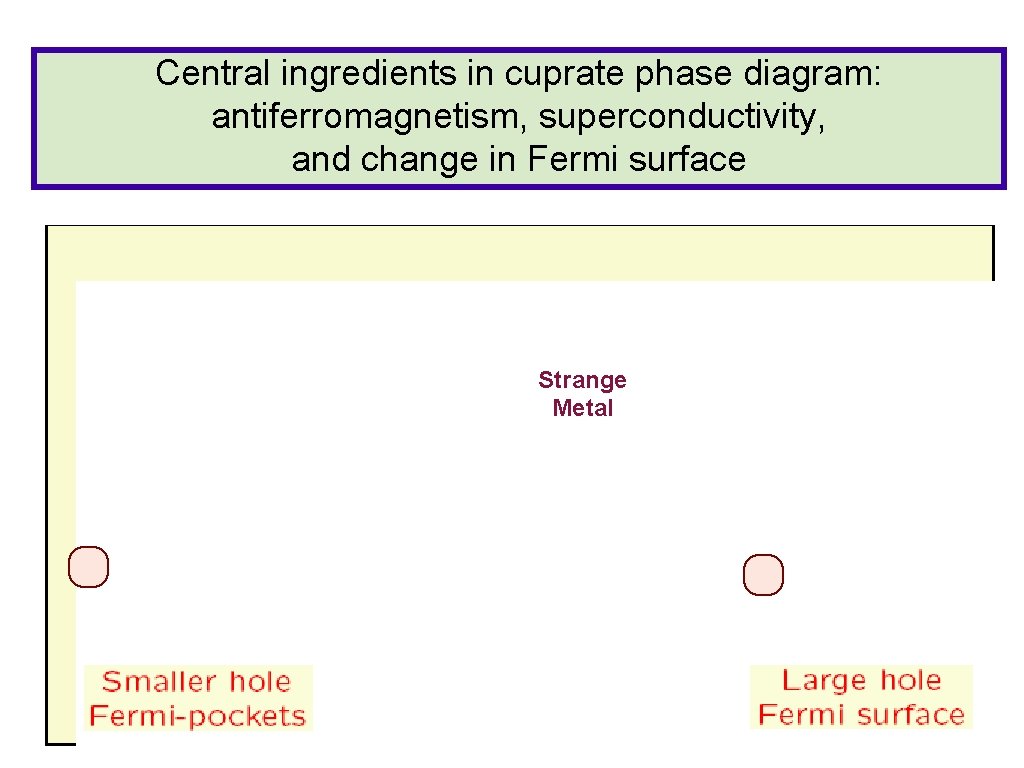
Central ingredients in cuprate phase diagram: antiferromagnetism, superconductivity, and change in Fermi surface Strange Metal
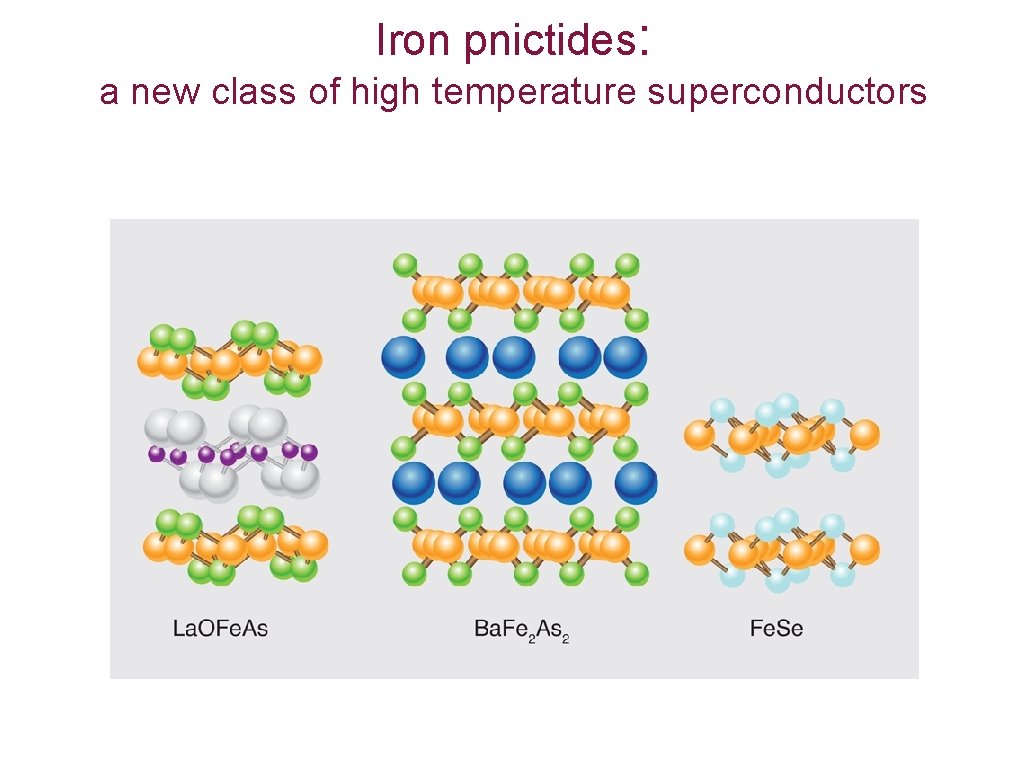
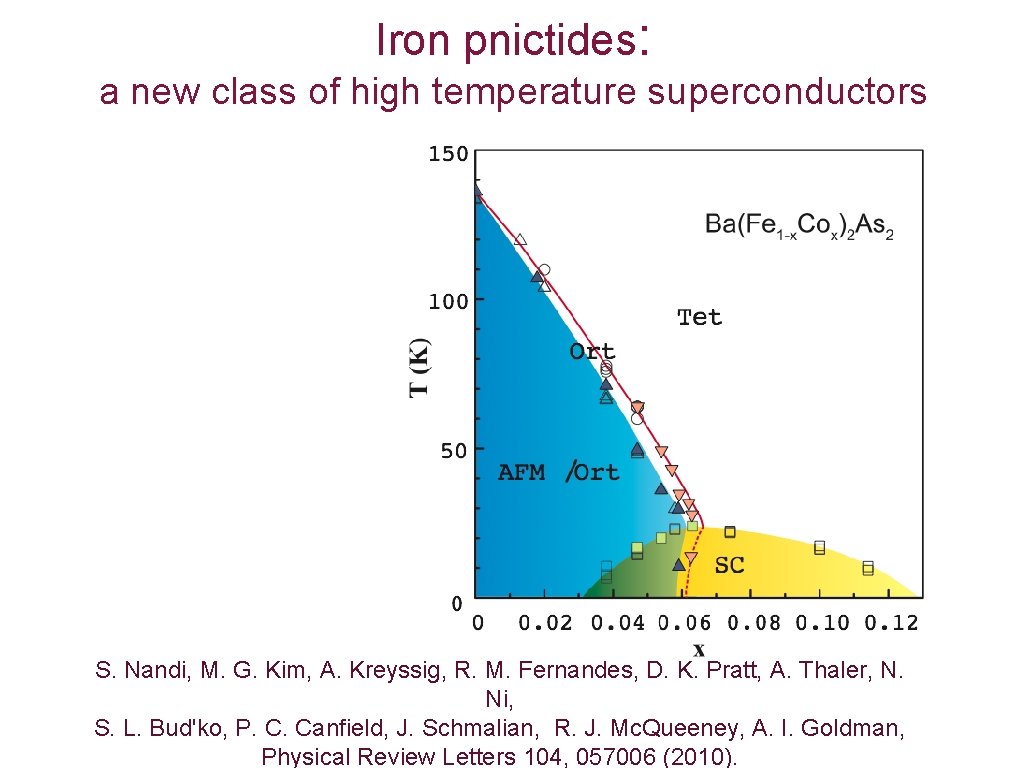
Iron pnictides: a new class of high temperature superconductors
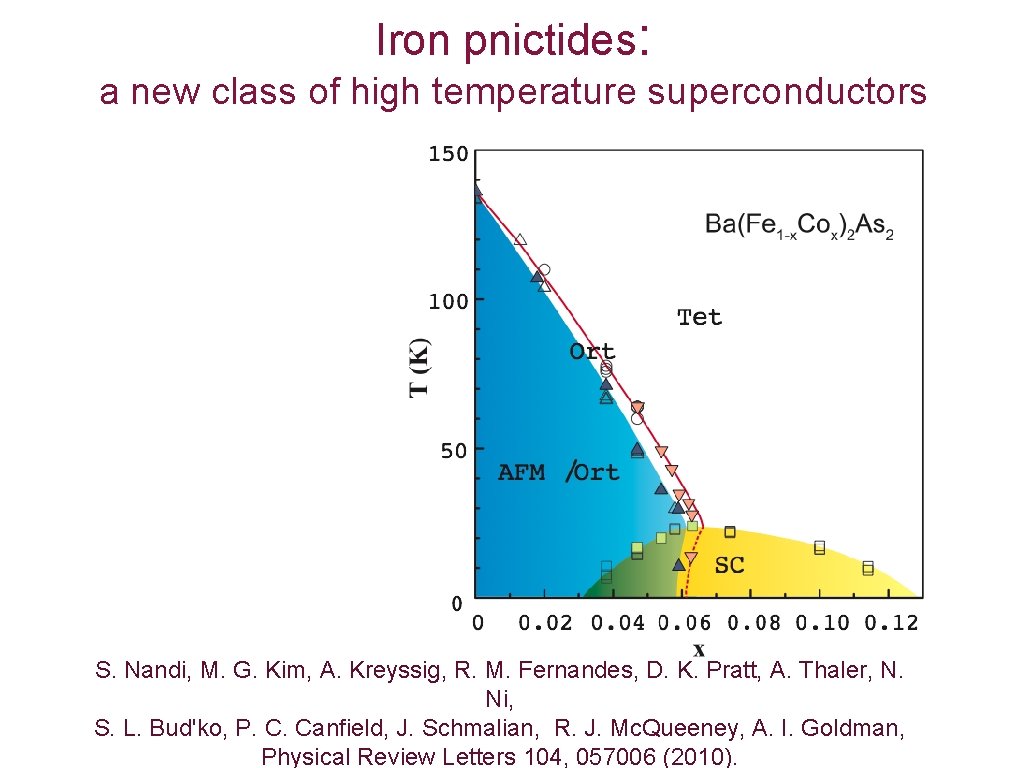
Iron pnictides: a new class of high temperature superconductors Ishida, Nakai, and Hosono ar. Xiv: 0906. 2045 v 1 S. Nandi, M. G. Kim, A. Kreyssig, R. M. Fernandes, D. K. Pratt, A. Thaler, N. Ni, S. L. Bud'ko, P. C. Canfield, J. Schmalian, R. J. Mc. Queeney, A. I. Goldman, Physical Review Letters 104, 057006 (2010).
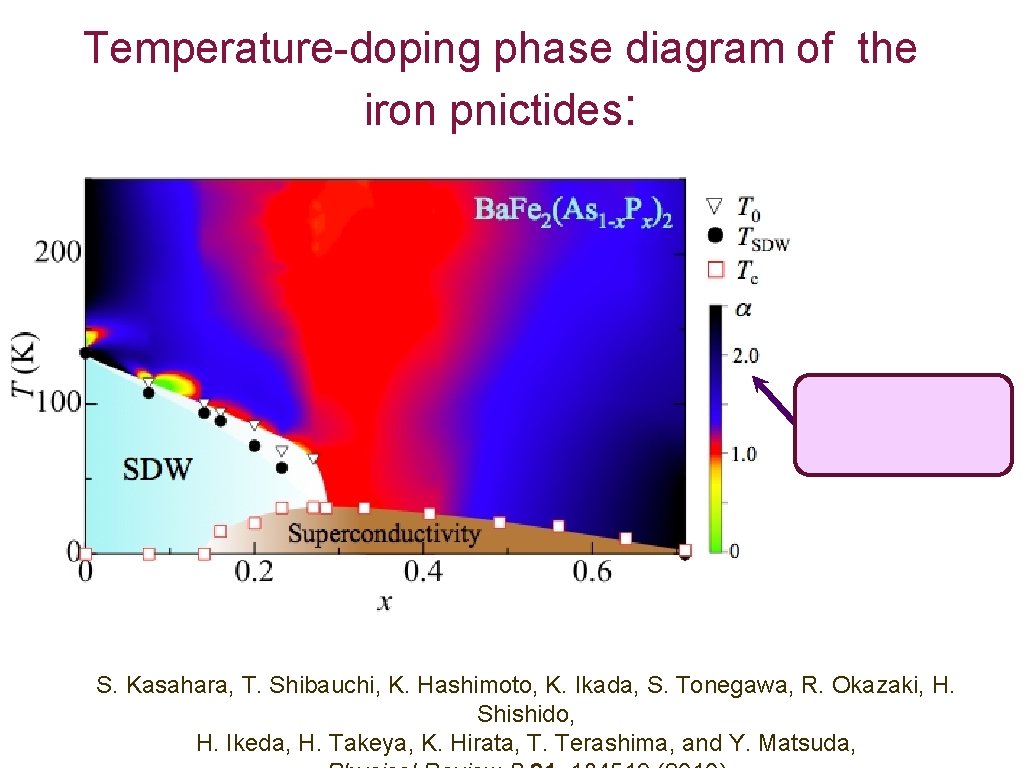
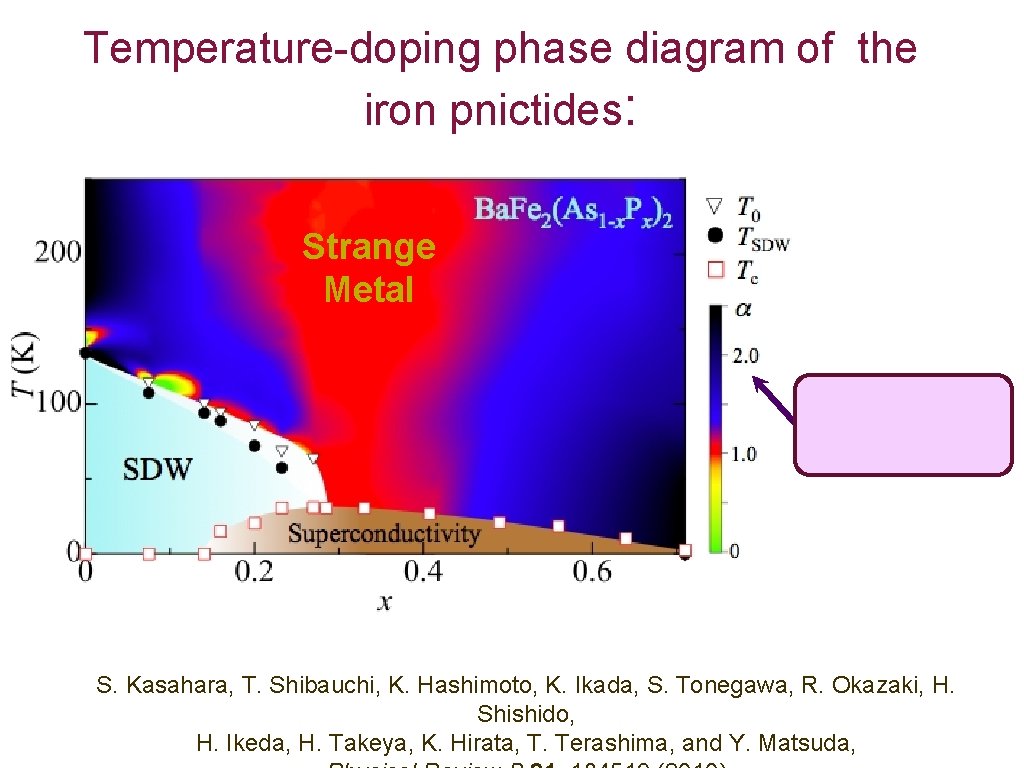
Temperature-doping phase diagram of the iron pnictides: S. Kasahara, T. Shibauchi, K. Hashimoto, K. Ikada, S. Tonegawa, R. Okazaki, H. Shishido, H. Ikeda, H. Takeya, K. Hirata, T. Terashima, and Y. Matsuda,
Temperature-doping phase diagram of the iron pnictides: Strange Metal S. Kasahara, T. Shibauchi, K. Hashimoto, K. Ikada, S. Tonegawa, R. Okazaki, H. Shishido, H. Ikeda, H. Takeya, K. Hirata, T. Terashima, and Y. Matsuda,
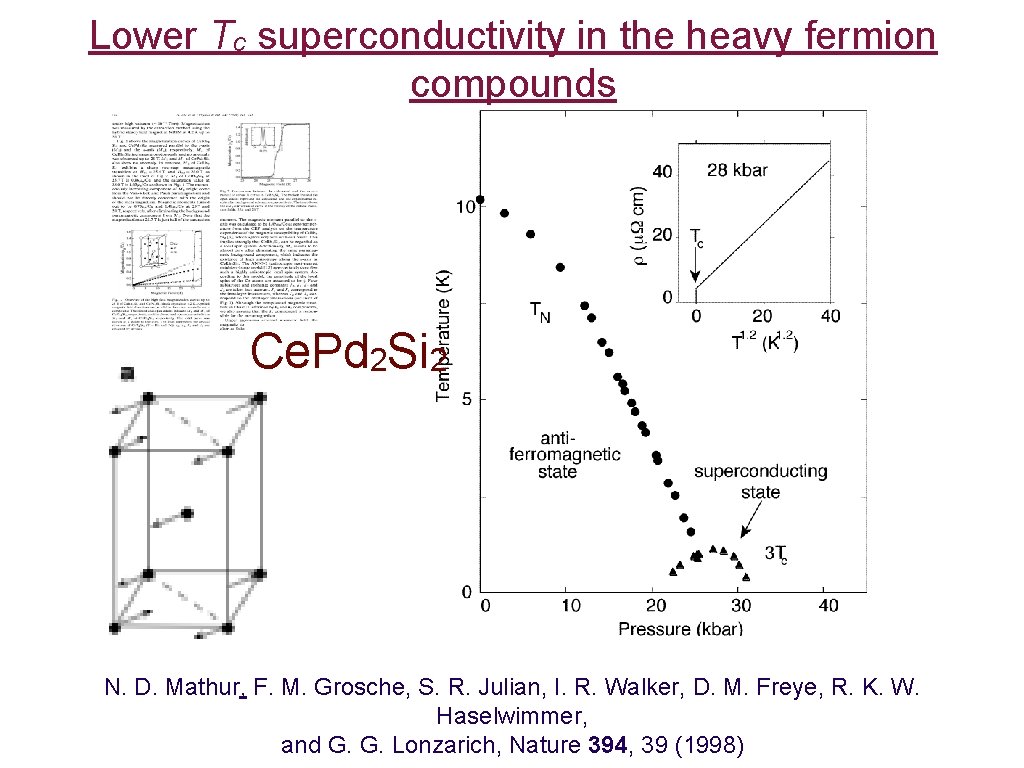
Lower Tc superconductivity in the heavy fermion compounds Ce. Pd 2 Si 2 N. D. Mathur, F. M. Grosche, S. R. Julian, I. R. Walker, D. M. Freye, R. K. W. Haselwimmer, and G. G. Lonzarich, Nature 394, 39 (1998)
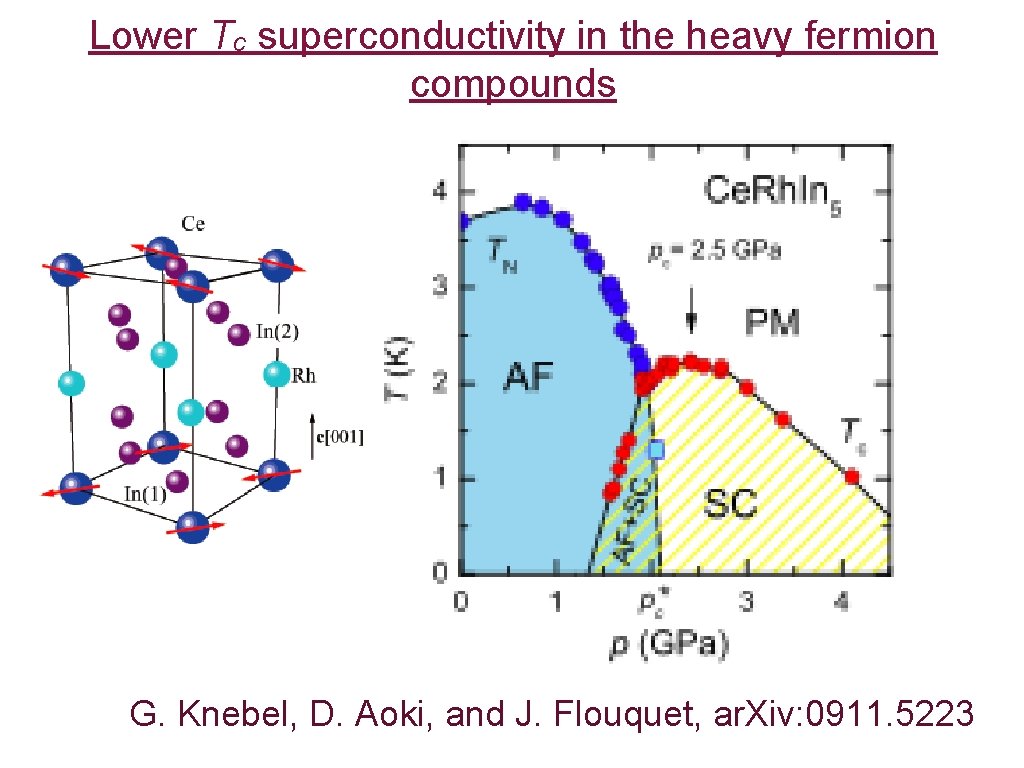
Lower Tc superconductivity in the heavy fermion compounds G. Knebel, D. Aoki, and J. Flouquet, ar. Xiv: 0911. 5223
Questions • Can quantum fluctuations near the loss of antiferromagnetism induce higher temperature superconductivity ?
Questions • Can quantum fluctuations near the loss of antiferromagnetism induce higher temperature superconductivity ? • If so, why is there no antiferromagnetism in the cuprates near the point where the superconductivity is strongest ?
Questions • Can quantum fluctuations near the loss of antiferromagnetism induce higher temperature superconductivity ? • If so, why is there no antiferromagnetism in the cuprates near the point where the superconductivity is strongest ? • What is the physics of the strange metal ?
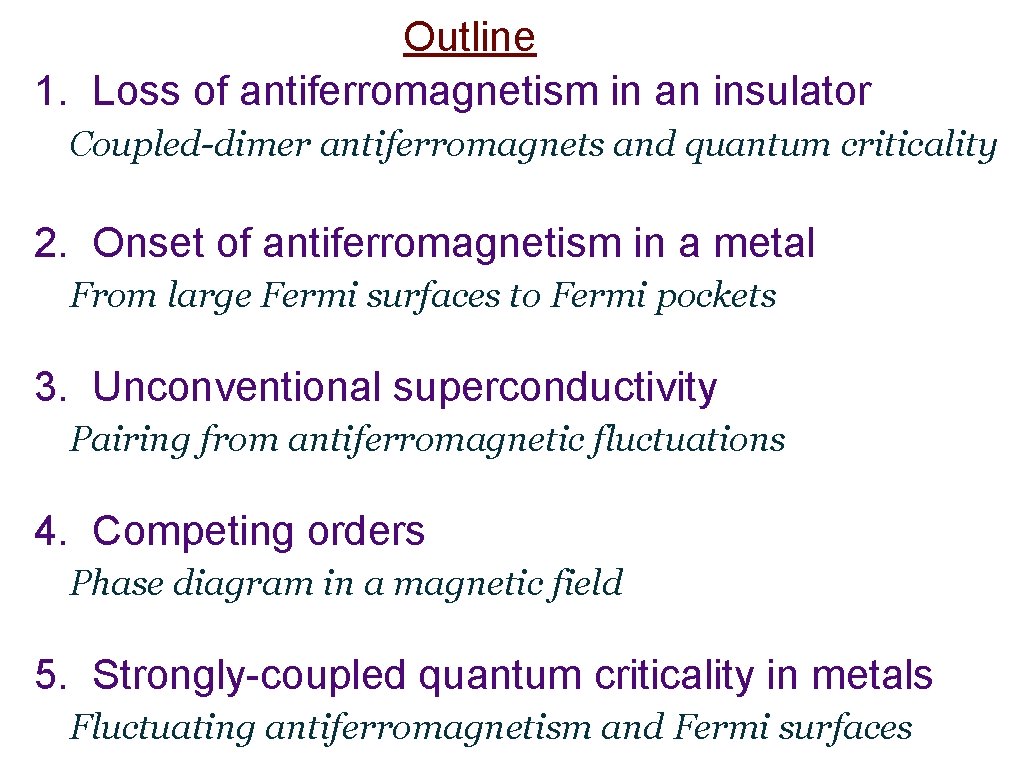
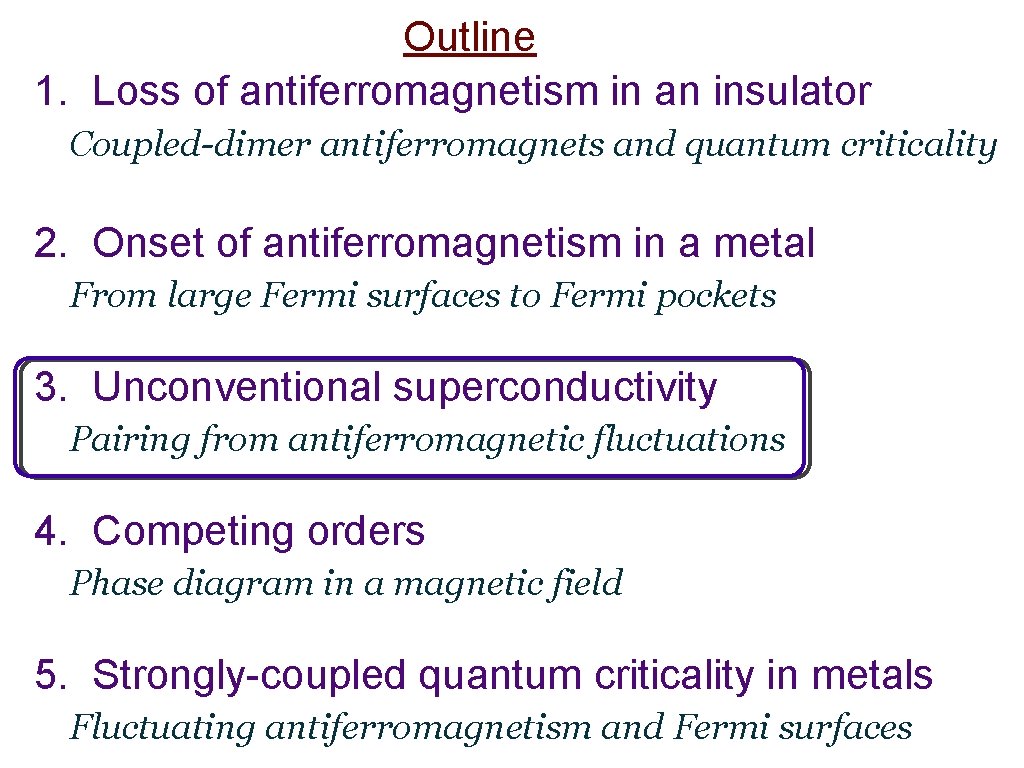
Outline 1. Loss of antiferromagnetism in an insulator Coupled-dimer antiferromagnets and quantum criticality 2. Onset of antiferromagnetism in a metal From large Fermi surfaces to Fermi pockets 3. Unconventional superconductivity Pairing from antiferromagnetic fluctuations 4. Competing orders Phase diagram in a magnetic field 5. Strongly-coupled quantum criticality in metals Fluctuating antiferromagnetism and Fermi surfaces
Outline 1. Loss of antiferromagnetism in an insulator Coupled-dimer antiferromagnets and quantum criticality 2. Onset of antiferromagnetism in a metal From large Fermi surfaces to Fermi pockets 3. Unconventional superconductivity Pairing from antiferromagnetic fluctuations 4. Competing orders Phase diagram in a magnetic field 5. Strongly-coupled quantum criticality in metals Fluctuating antiferromagnetism and Fermi surfaces
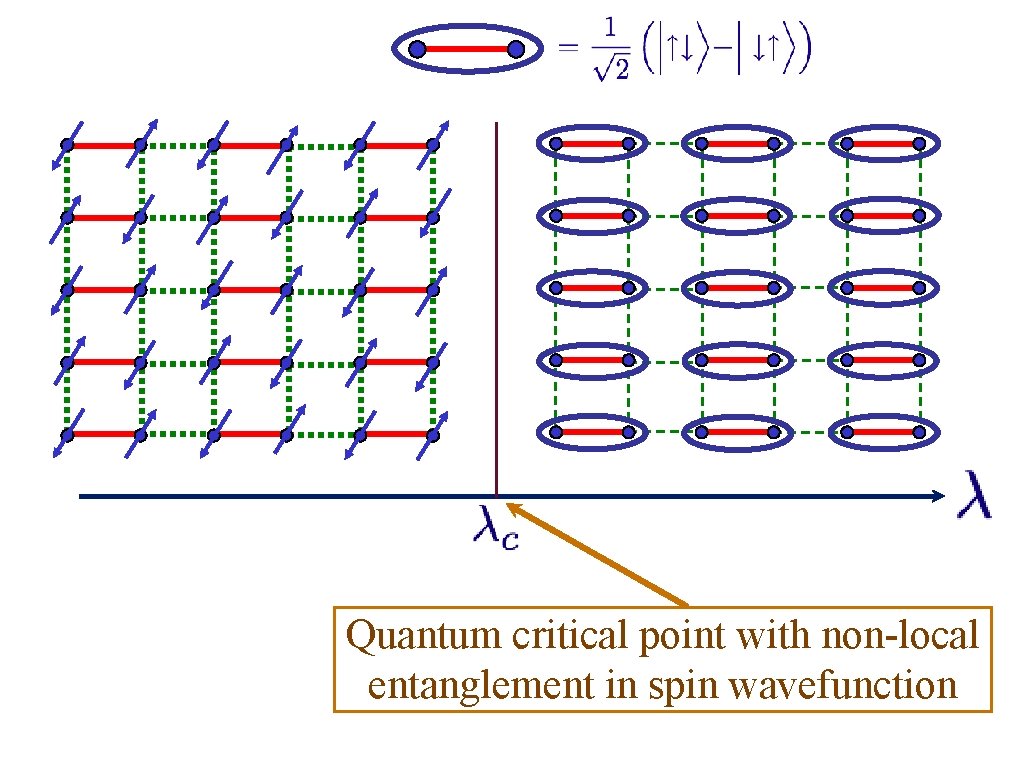
Square lattice antiferromagnet Ground state has long-range Néel order
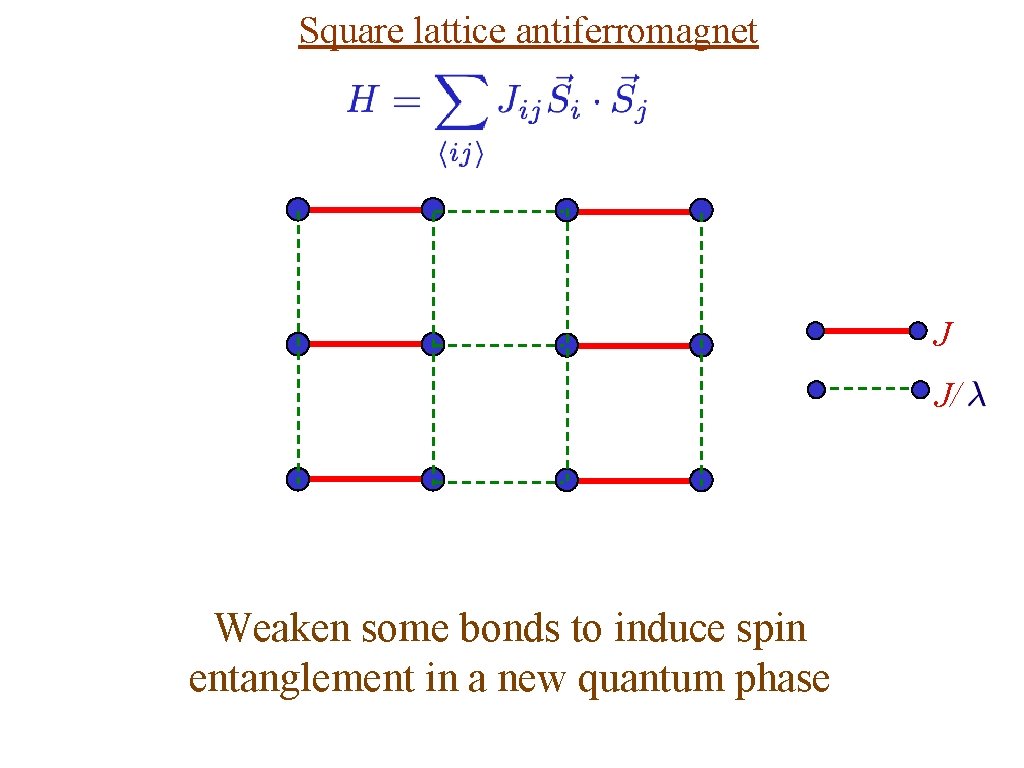
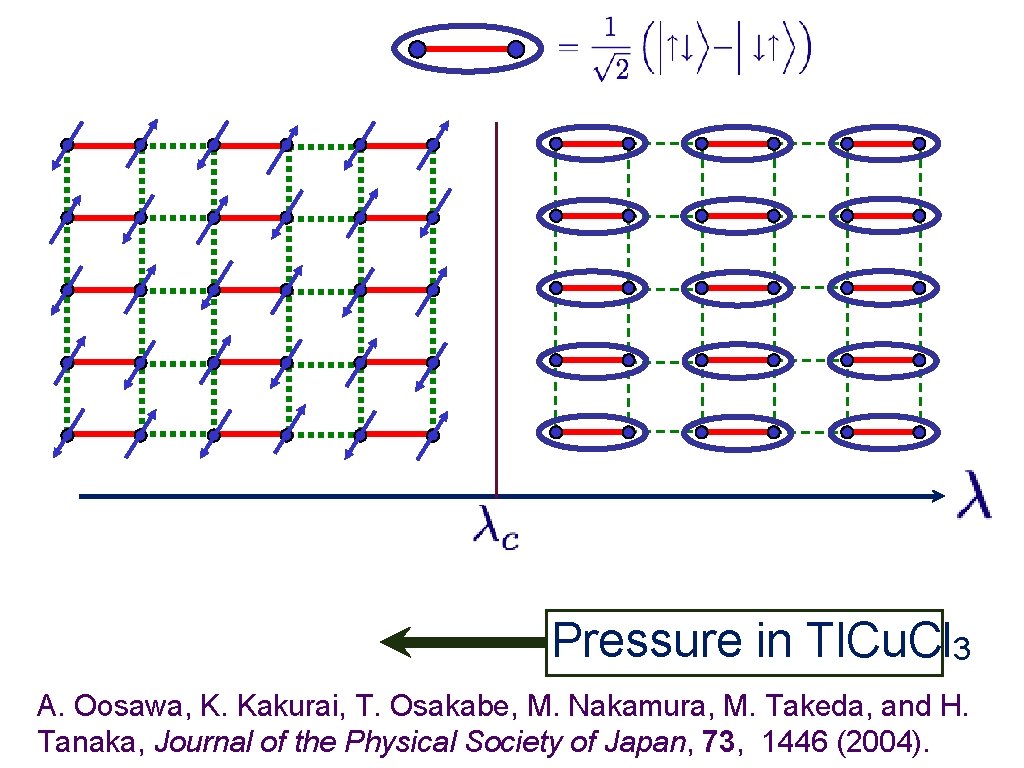
Square lattice antiferromagnet J J/ Weaken some bonds to induce spin entanglement in a new quantum phase
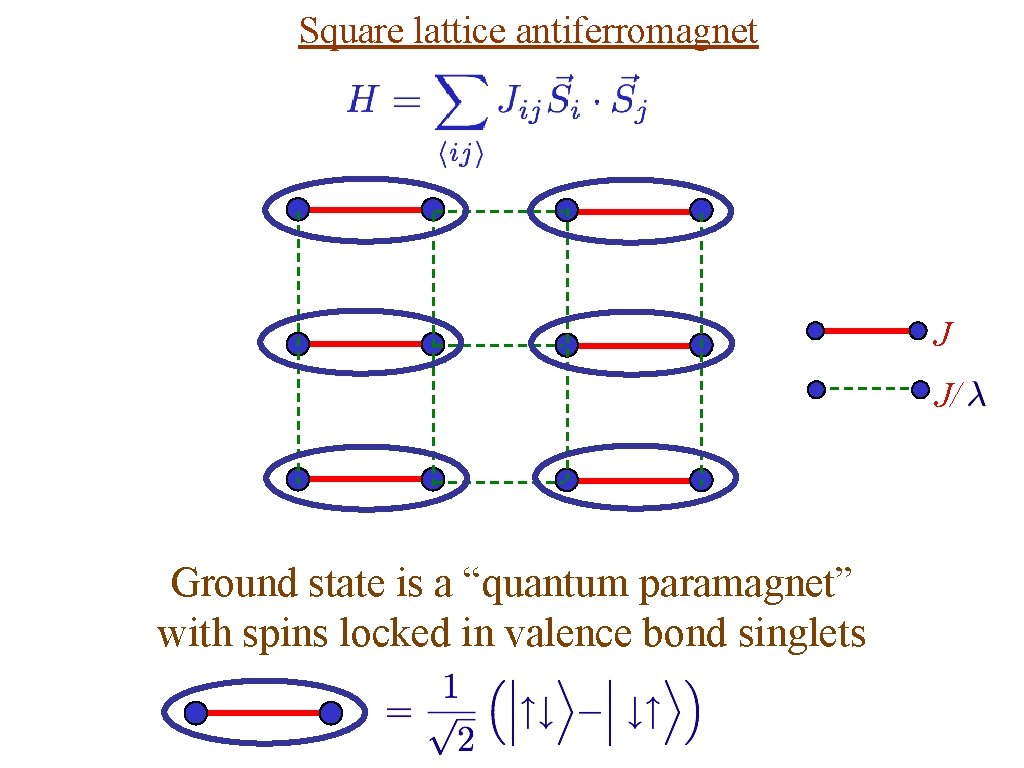
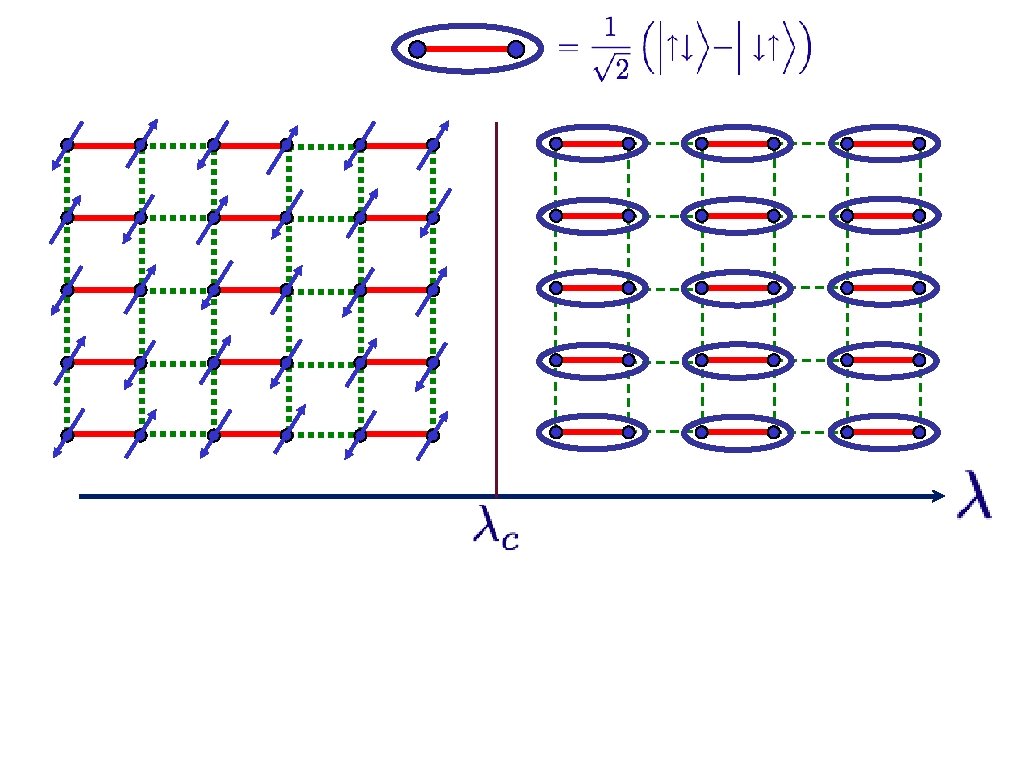
Square lattice antiferromagnet J J/ Ground state is a “quantum paramagnet” with spins locked in valence bond singlets
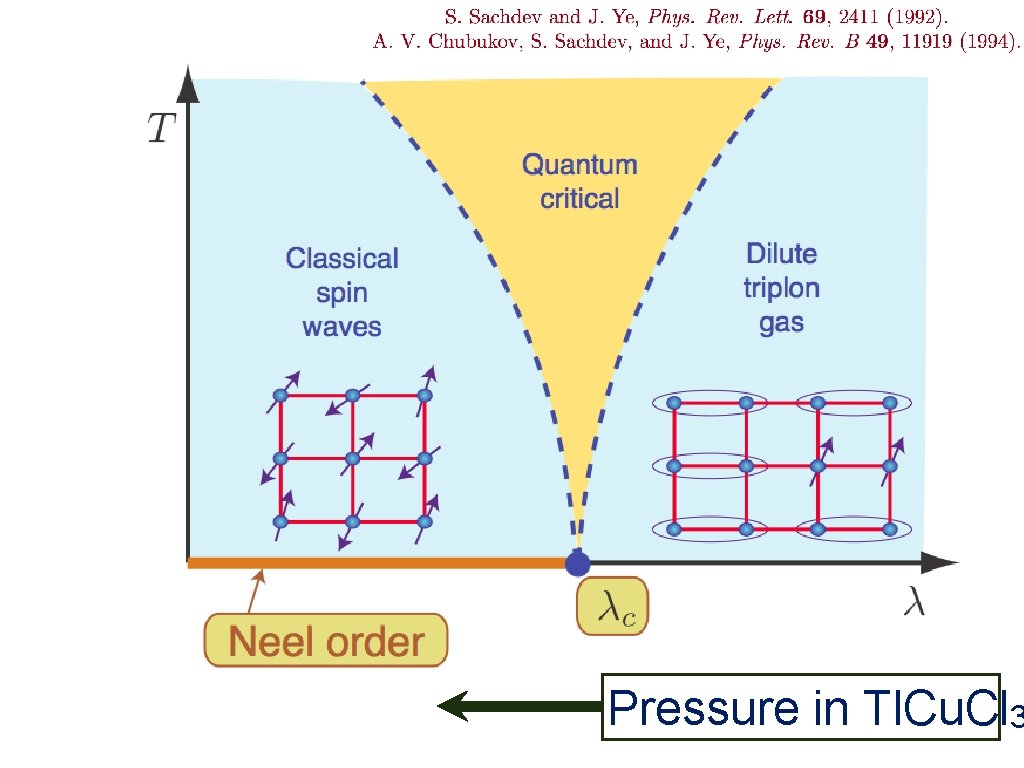
Pressure in Tl. Cu. Cl 3 A. Oosawa, K. Kakurai, T. Osakabe, M. Nakamura, M. Takeda, and H. Tanaka, Journal of the Physical Society of Japan, 73, 1446 (2004).
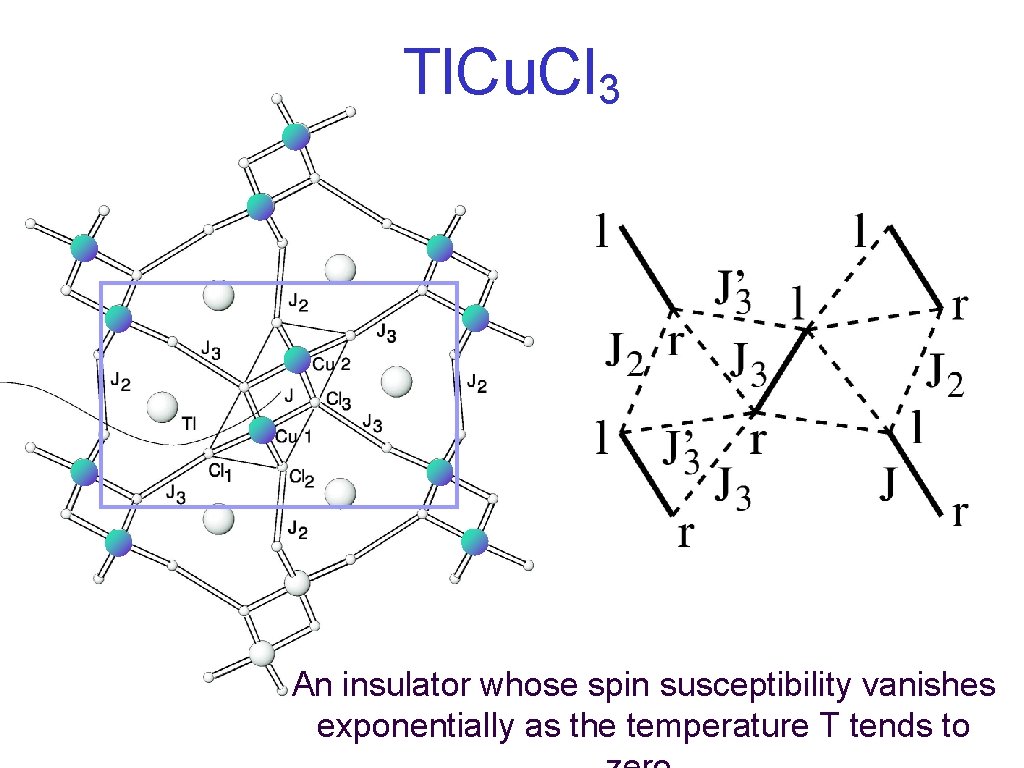
Tl. Cu. Cl 3 An insulator whose spin susceptibility vanishes exponentially as the temperature T tends to
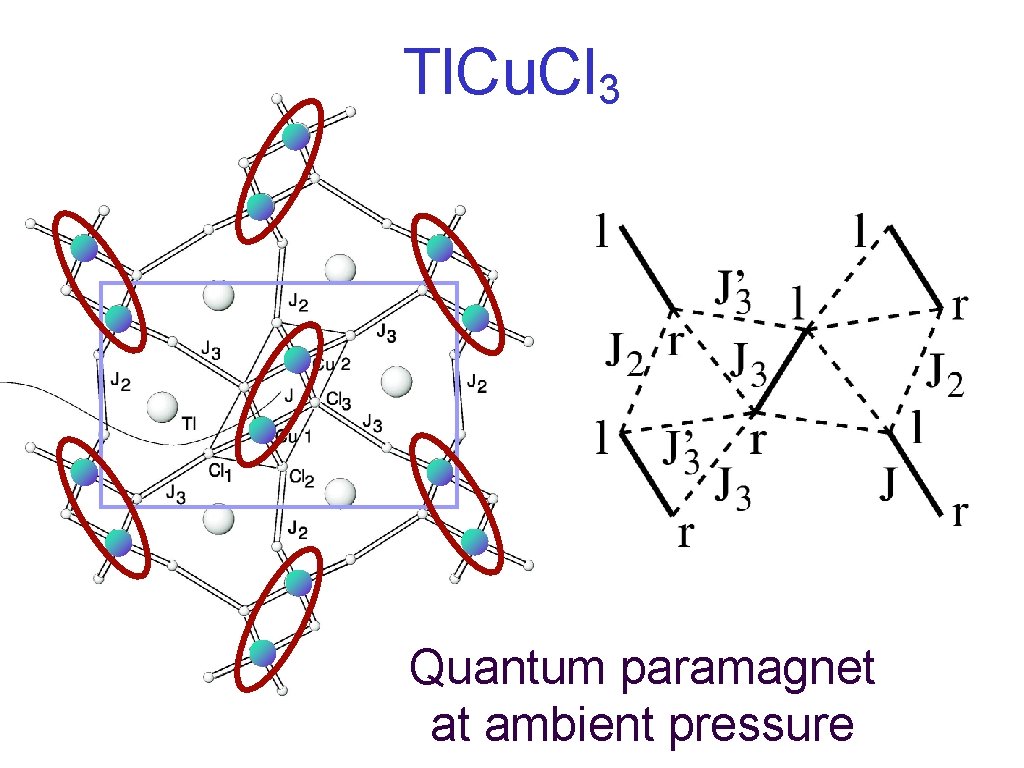
Tl. Cu. Cl 3 Quantum paramagnet at ambient pressure
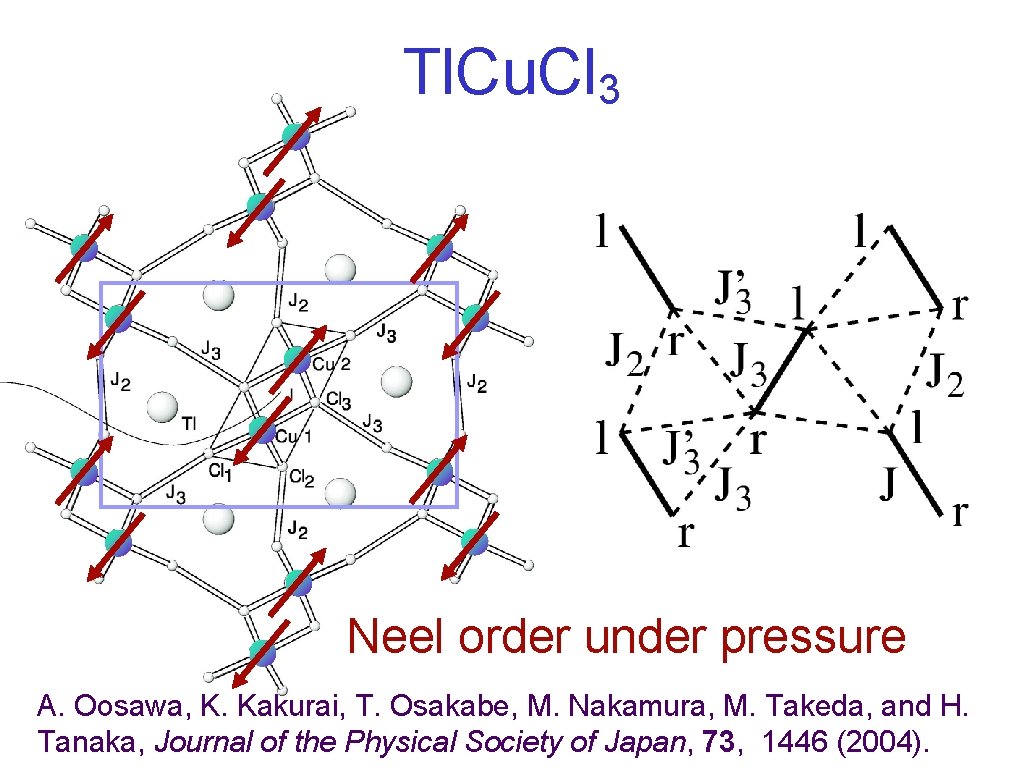
Tl. Cu. Cl 3 Neel order under pressure A. Oosawa, K. Kakurai, T. Osakabe, M. Nakamura, M. Takeda, and H. Tanaka, Journal of the Physical Society of Japan, 73, 1446 (2004).
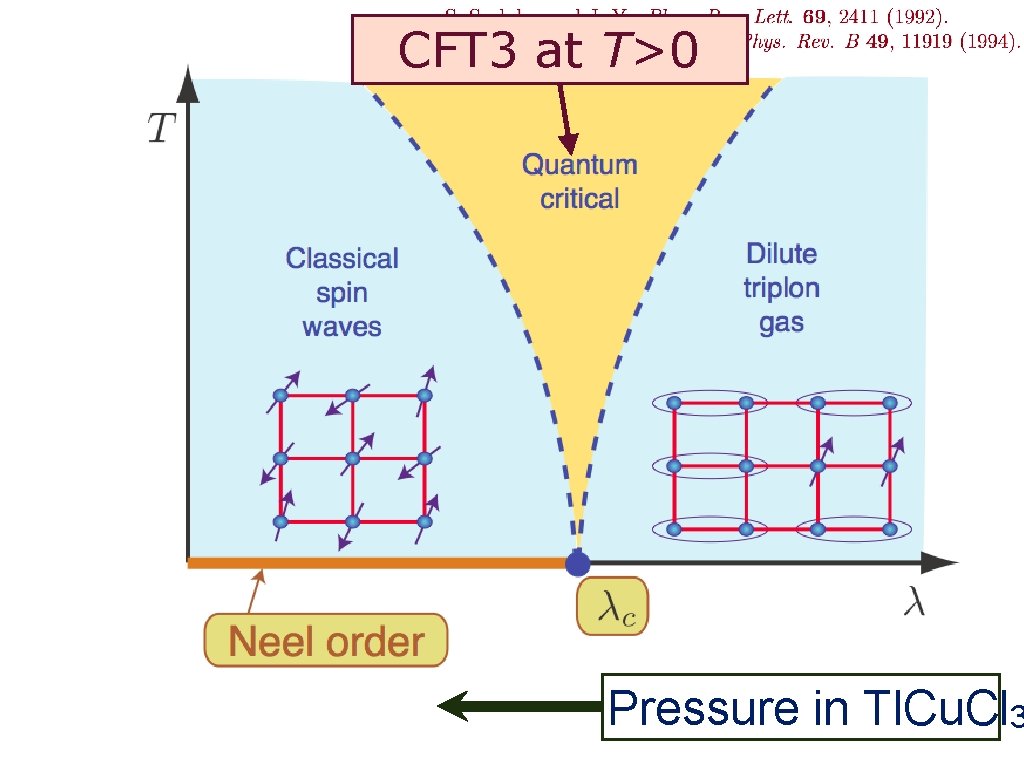
Quantum critical point with non-local entanglement in spin wavefunction
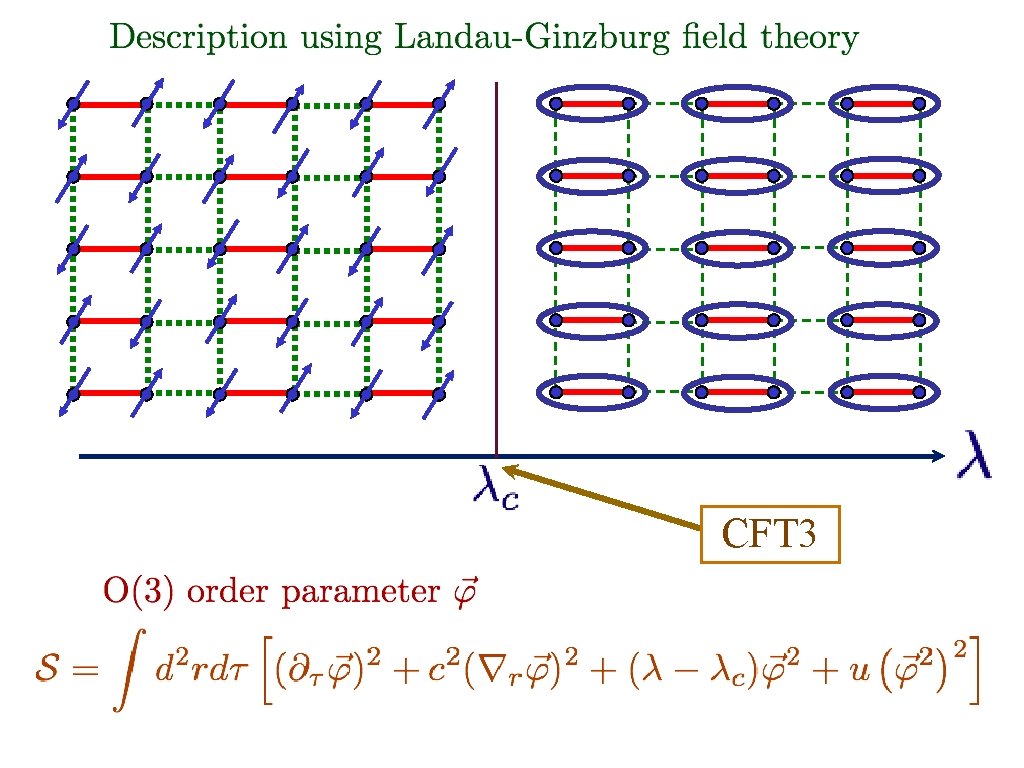
CFT 3
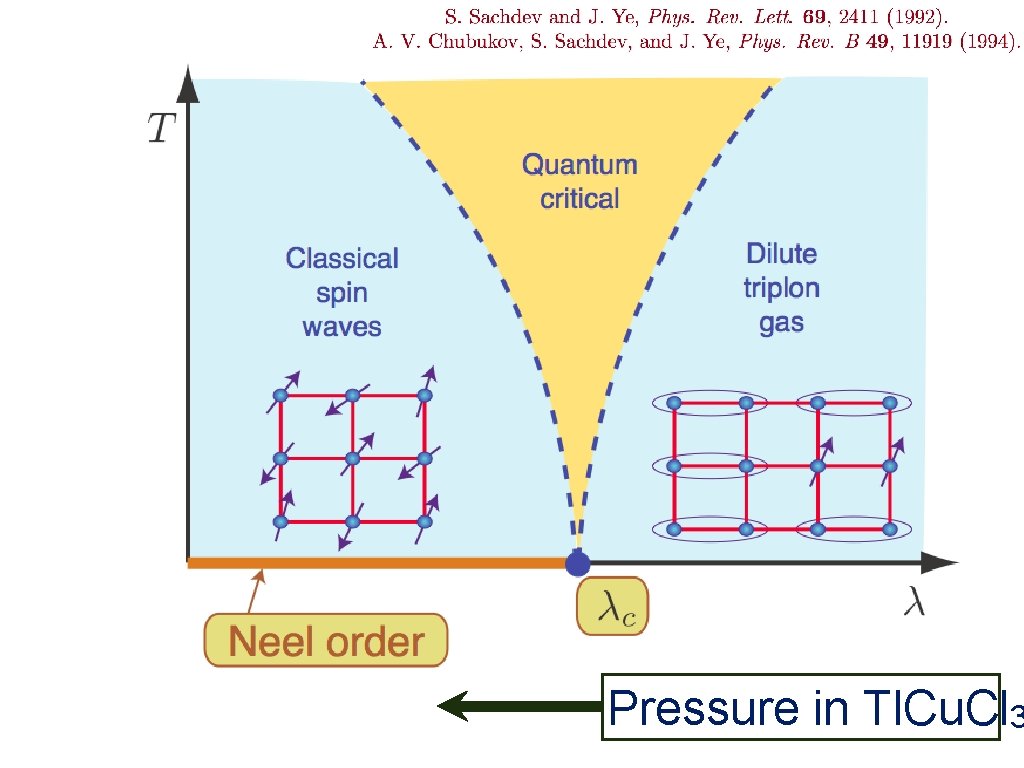
Pressure in Tl. Cu. Cl 3
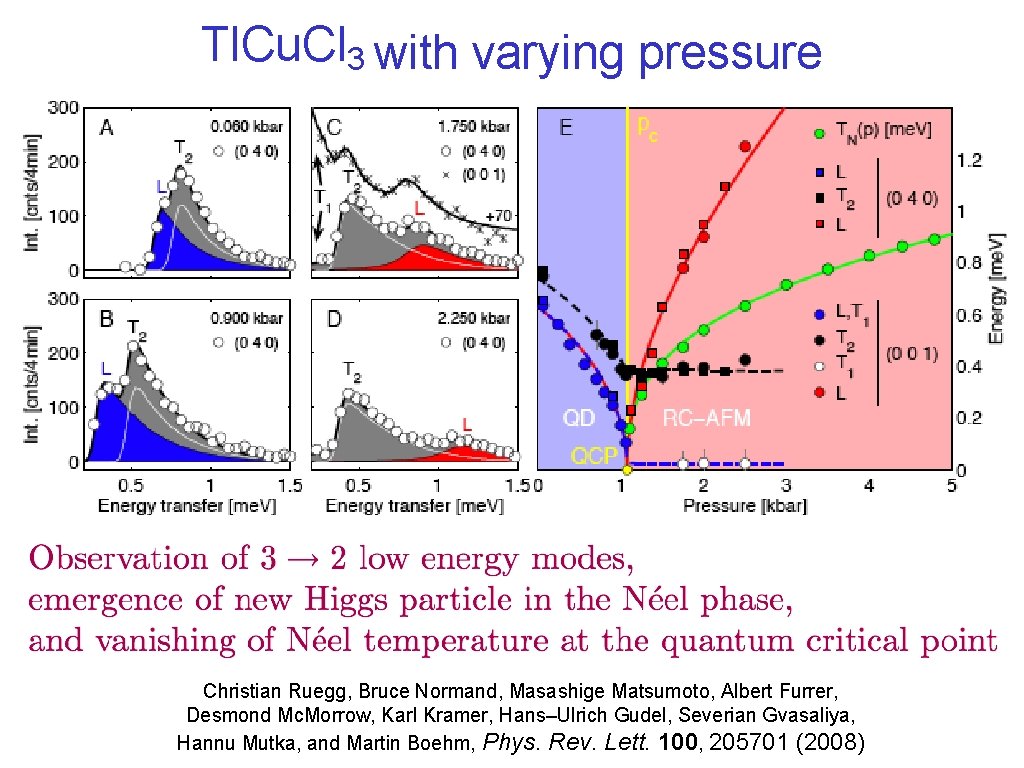
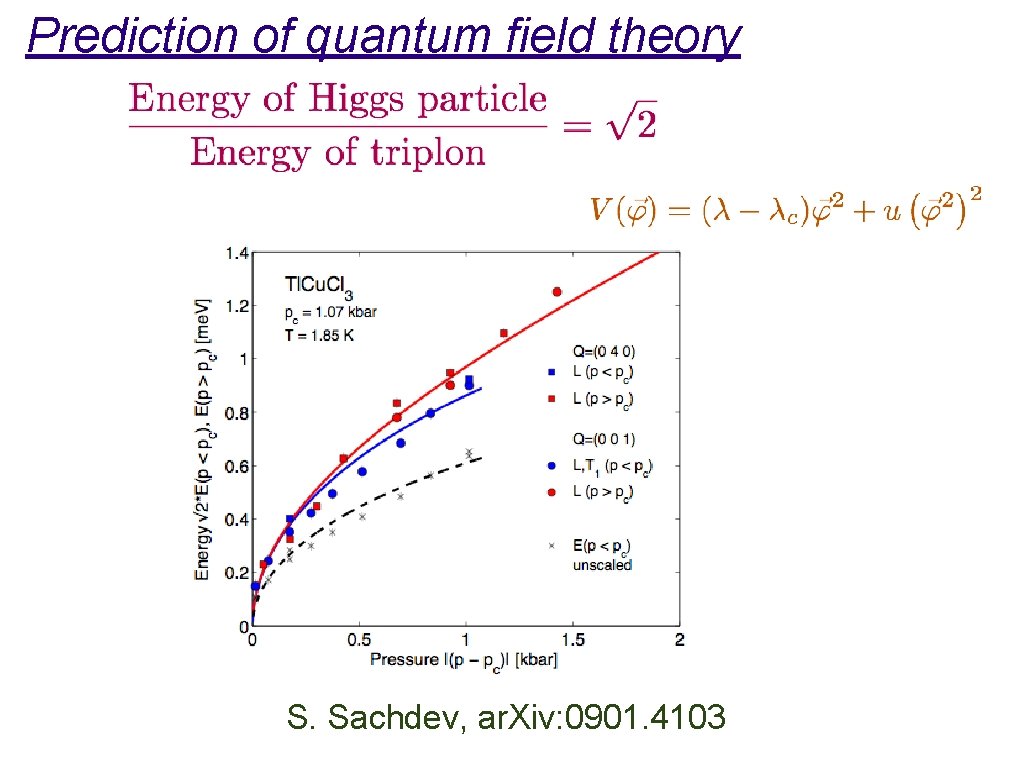
Tl. Cu. Cl 3 with varying pressure Christian Ruegg, Bruce Normand, Masashige Matsumoto, Albert Furrer, Desmond Mc. Morrow, Karl Kramer, Hans–Ulrich Gudel, Severian Gvasaliya, Hannu Mutka, and Martin Boehm, Phys. Rev. Lett. 100, 205701 (2008)
Prediction of quantum field theory S. Sachdev, ar. Xiv: 0901. 4103
Pressure in Tl. Cu. Cl 3
CFT 3 at T>0 Pressure in Tl. Cu. Cl 3
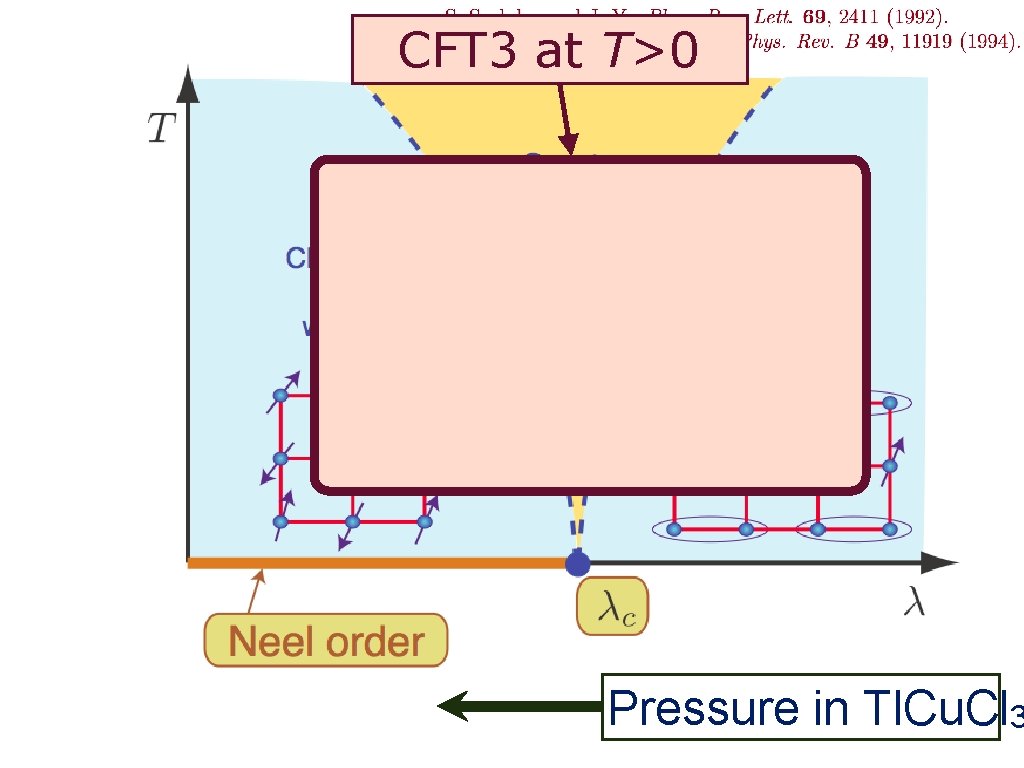
CFT 3 at T>0 Pressure in Tl. Cu. Cl 3
Outline 1. Loss of antiferromagnetism in an insulator Coupled-dimer antiferromagnets and quantum criticality 2. Onset of antiferromagnetism in a metal From large Fermi surfaces to Fermi pockets 3. Unconventional superconductivity Pairing from antiferromagnetic fluctuations 4. Competing orders Phase diagram in a magnetic field 5. Strongly-coupled quantum criticality in metals Fluctuating antiferromagnetism and Fermi surfaces
Outline 1. Loss of antiferromagnetism in an insulator Coupled-dimer antiferromagnets and quantum criticality 2. Onset of antiferromagnetism in a metal From large Fermi surfaces to Fermi pockets 3. Unconventional superconductivity Pairing from antiferromagnetic fluctuations 4. Competing orders Phase diagram in a magnetic field 5. Strongly-coupled quantum criticality in metals Fluctuating antiferromagnetism and Fermi surfaces
Central ingredients in cuprate phase diagram: antiferromagnetism, superconductivity, and change in Fermi surface Strange Metal
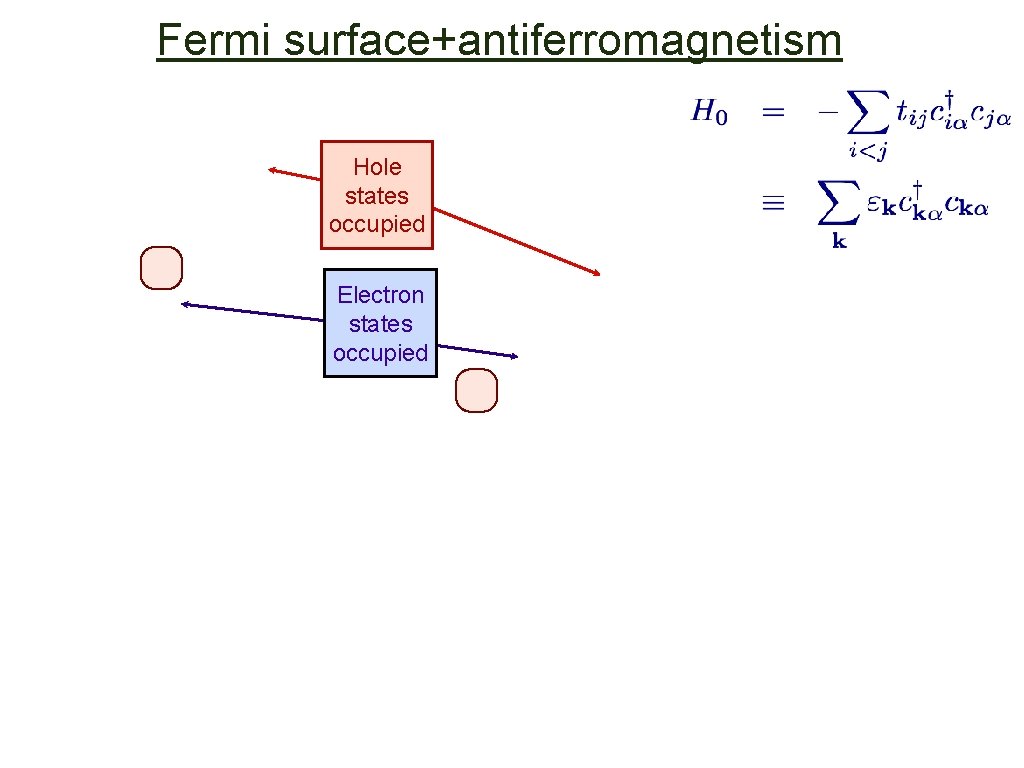
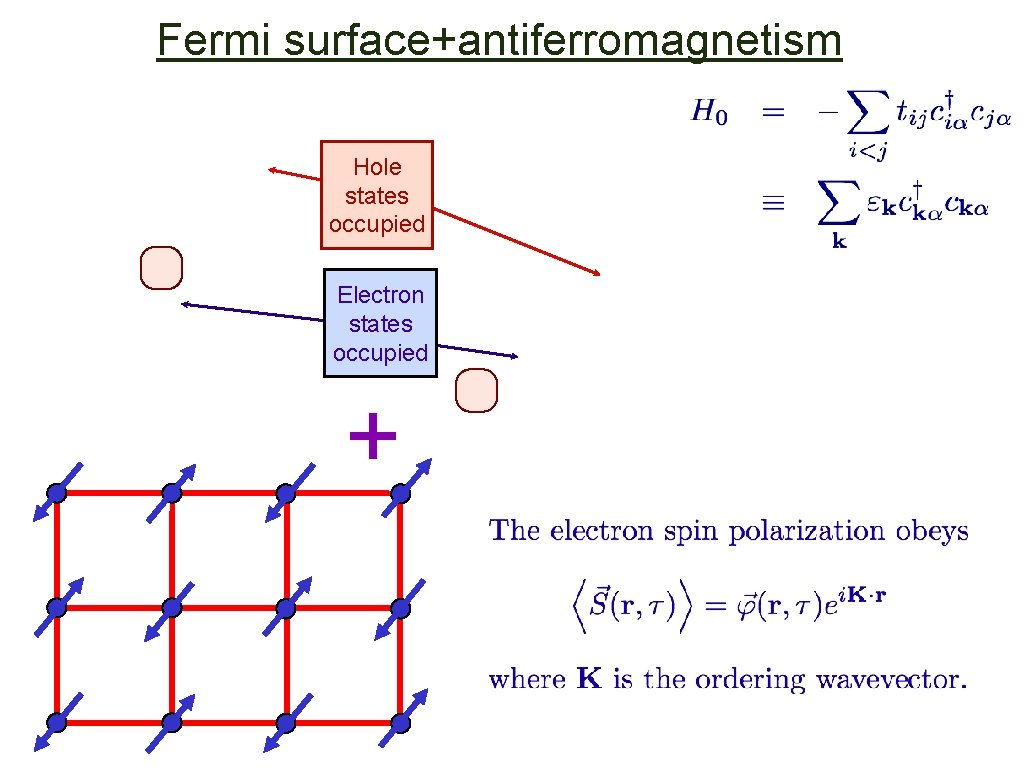
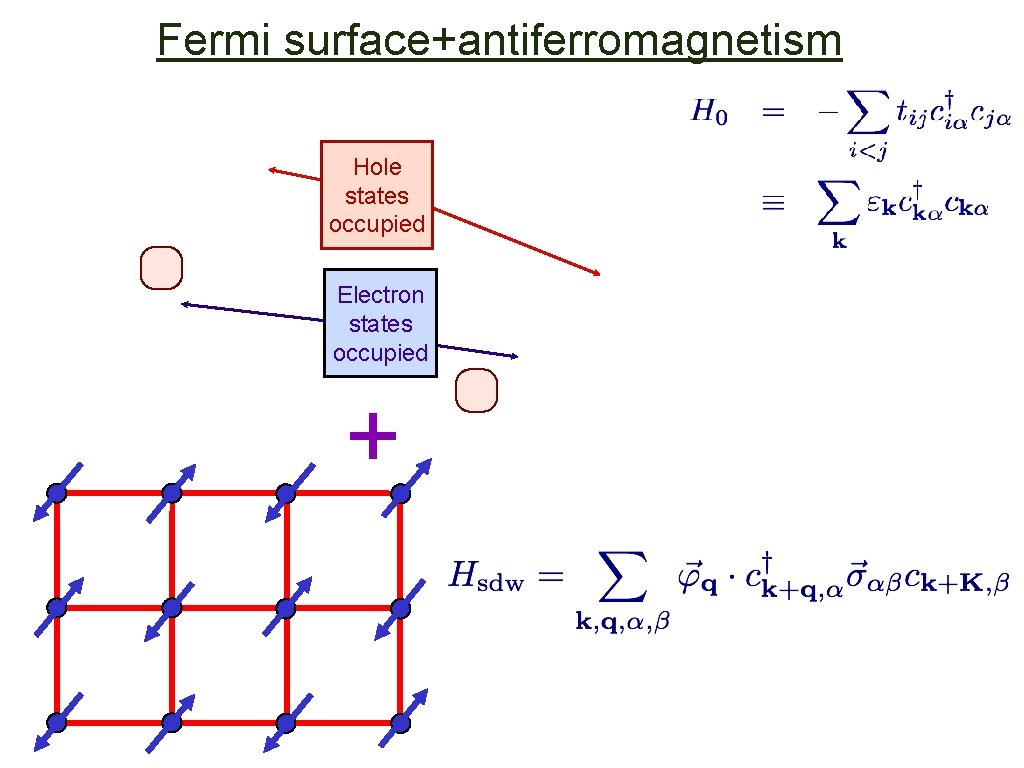
Fermi surface+antiferromagnetism Hole states occupied Electron states occupied
Fermi surface+antiferromagnetism Hole states occupied Electron states occupied +
Fermi surface+antiferromagnetism Hole states occupied Electron states occupied +
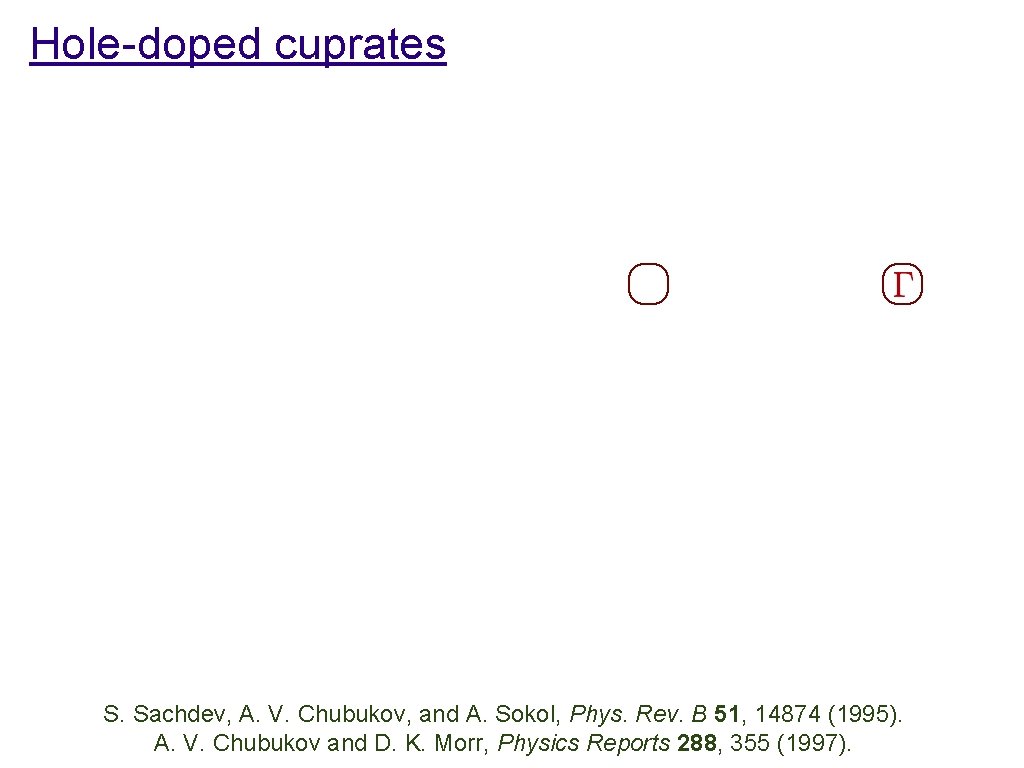
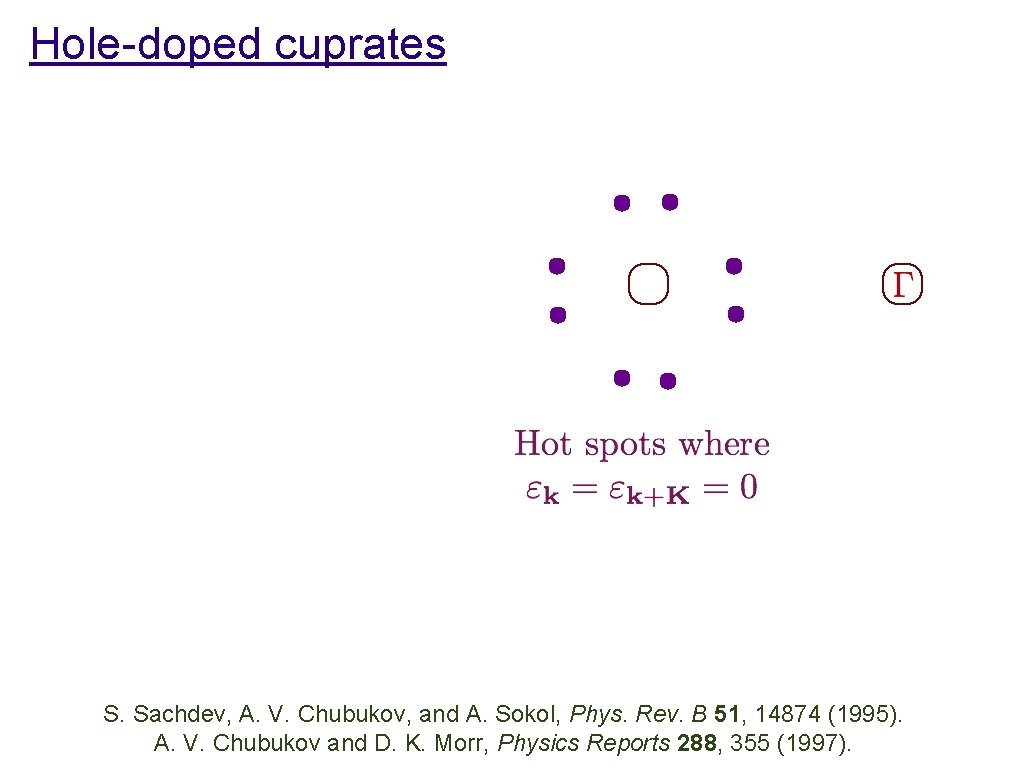
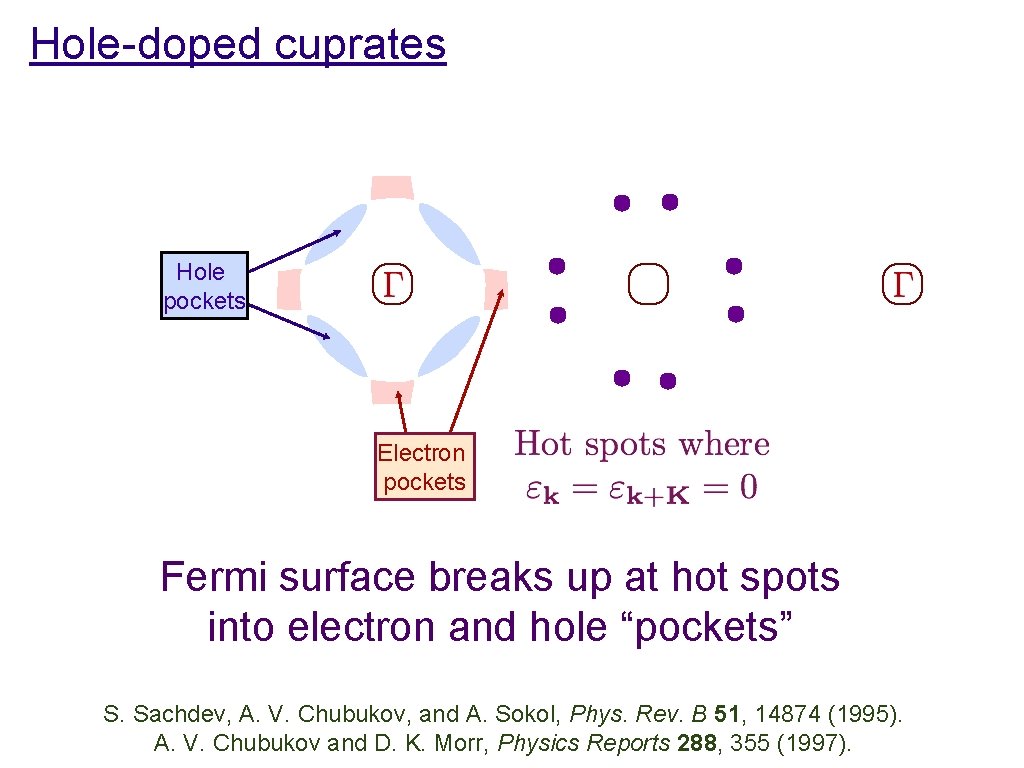
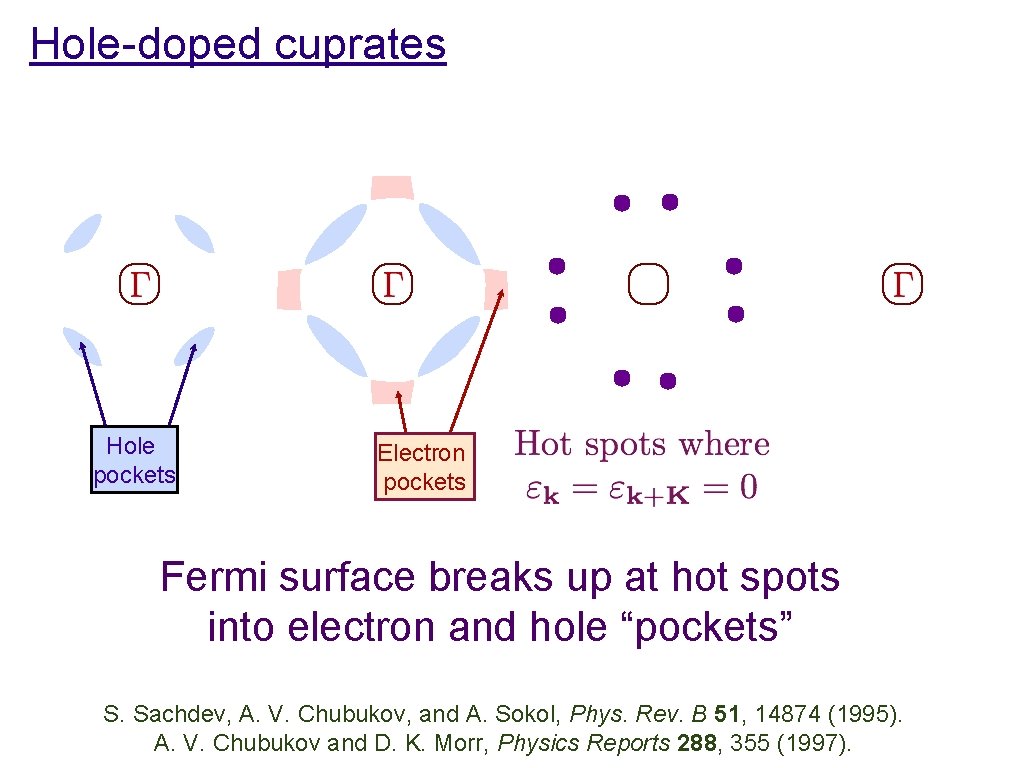
Hole-doped cuprates Hole pockets Electron pockets S. Sachdev, A. V. Chubukov, and A. Sokol, Phys. Rev. B 51, 14874 (1995). A. V. Chubukov and D. K. Morr, Physics Reports 288, 355 (1997).
Hole-doped cuprates Hole pockets Electron pockets S. Sachdev, A. V. Chubukov, and A. Sokol, Phys. Rev. B 51, 14874 (1995). A. V. Chubukov and D. K. Morr, Physics Reports 288, 355 (1997).
Hole-doped cuprates Hole pockets Electron pockets S. Sachdev, A. V. Chubukov, and A. Sokol, Phys. Rev. B 51, 14874 (1995). A. V. Chubukov and D. K. Morr, Physics Reports 288, 355 (1997).
Hole-doped cuprates Hole pockets Electron pockets Fermi surface breaks up at hot spots into electron and hole “pockets” S. Sachdev, A. V. Chubukov, and A. Sokol, Phys. Rev. B 51, 14874 (1995). A. V. Chubukov and D. K. Morr, Physics Reports 288, 355 (1997).
Hole-doped cuprates Hole pockets Electron pockets Fermi surface breaks up at hot spots into electron and hole “pockets” S. Sachdev, A. V. Chubukov, and A. Sokol, Phys. Rev. B 51, 14874 (1995). A. V. Chubukov and D. K. Morr, Physics Reports 288, 355 (1997).
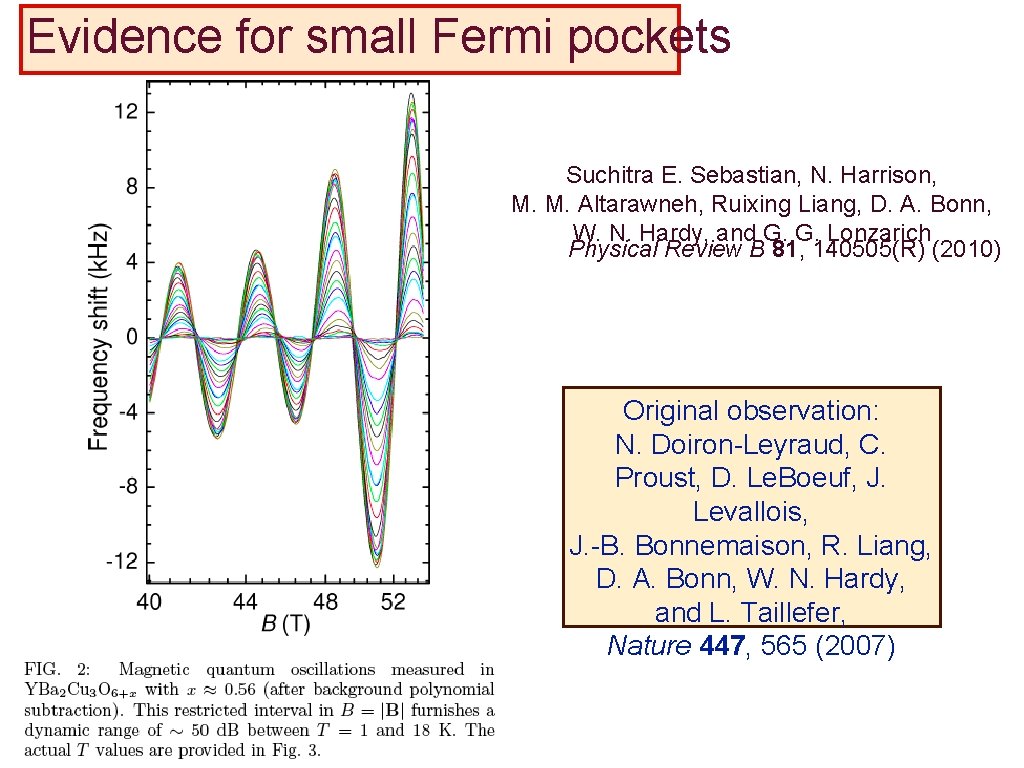
Evidence for small Fermi pockets Suchitra E. Sebastian, N. Harrison, M. M. Altarawneh, Ruixing Liang, D. A. Bonn, W. N. Hardy, and G. G. Lonzarich Physical Review B 81, 140505(R) (2010) Original observation: N. Doiron-Leyraud, C. Proust, D. Le. Boeuf, J. Levallois, J. -B. Bonnemaison, R. Liang, D. A. Bonn, W. N. Hardy, and L. Taillefer, Nature 447, 565 (2007)
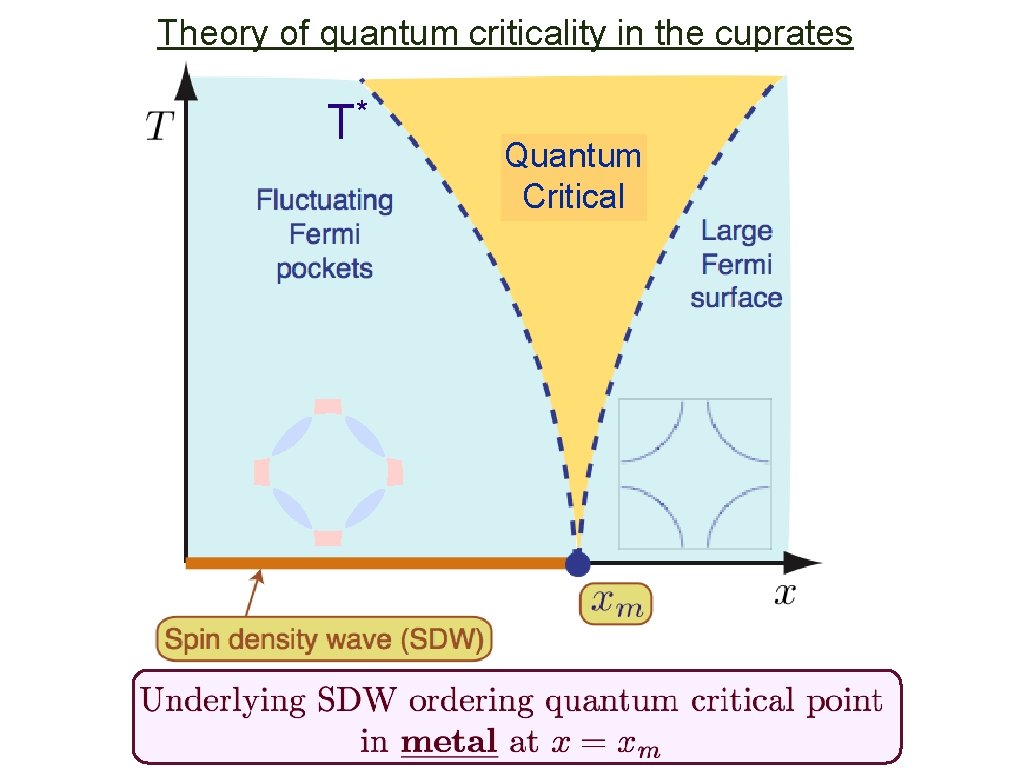
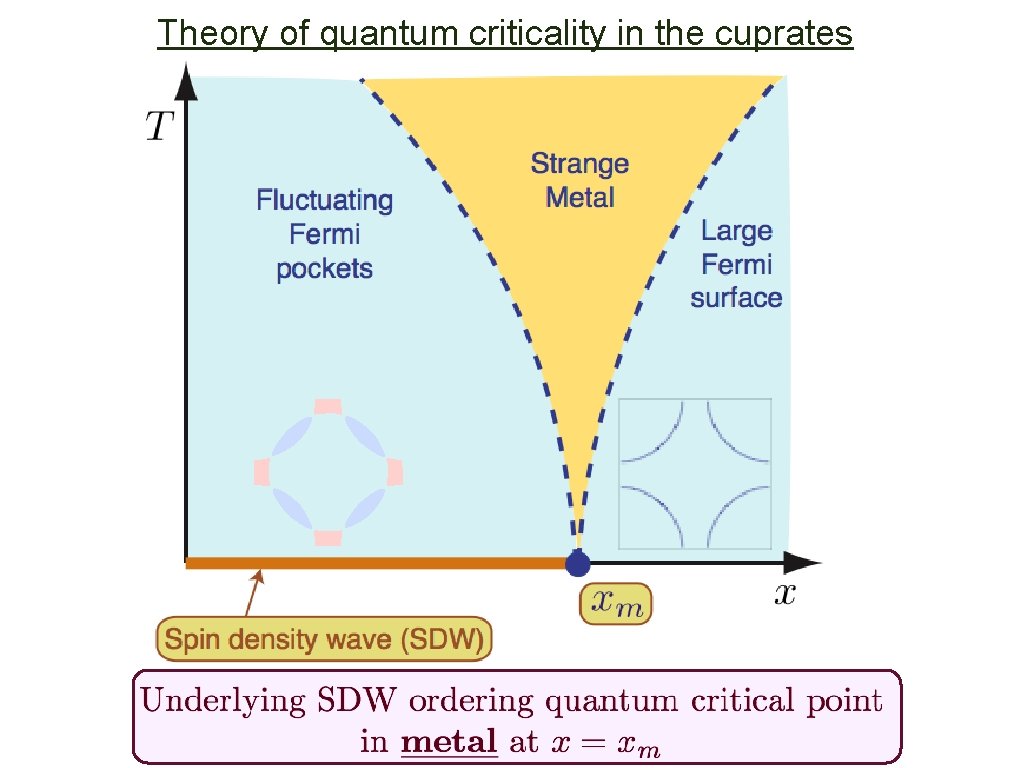
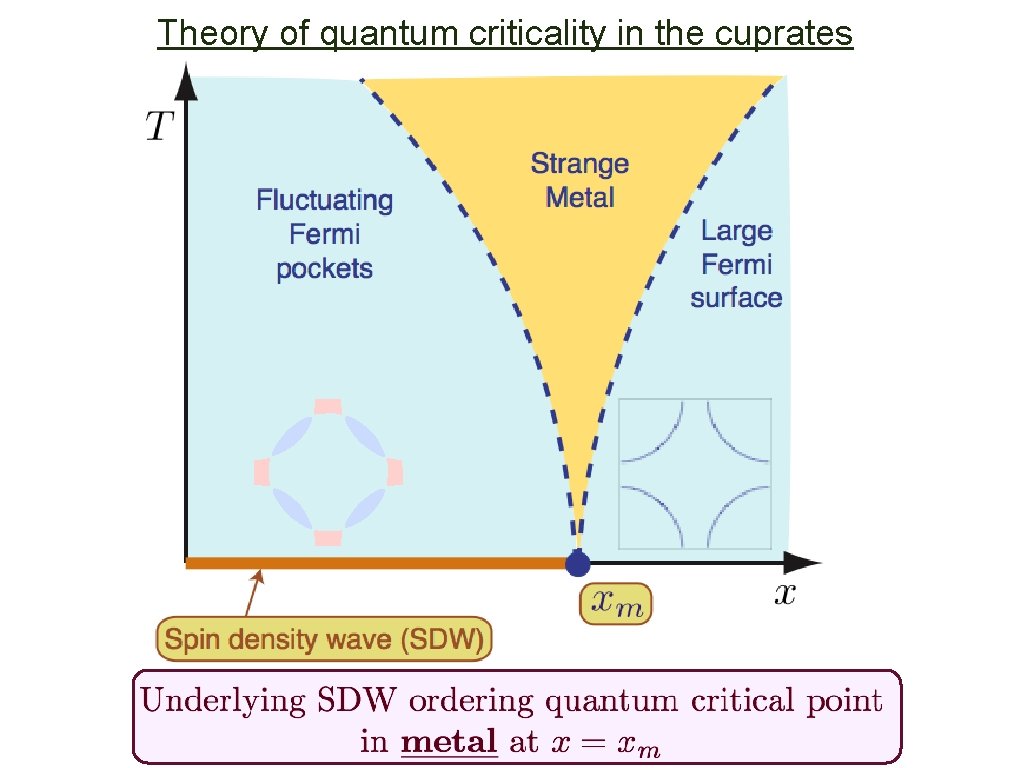
Theory of quantum criticality in the cuprates * T Quantum Critical
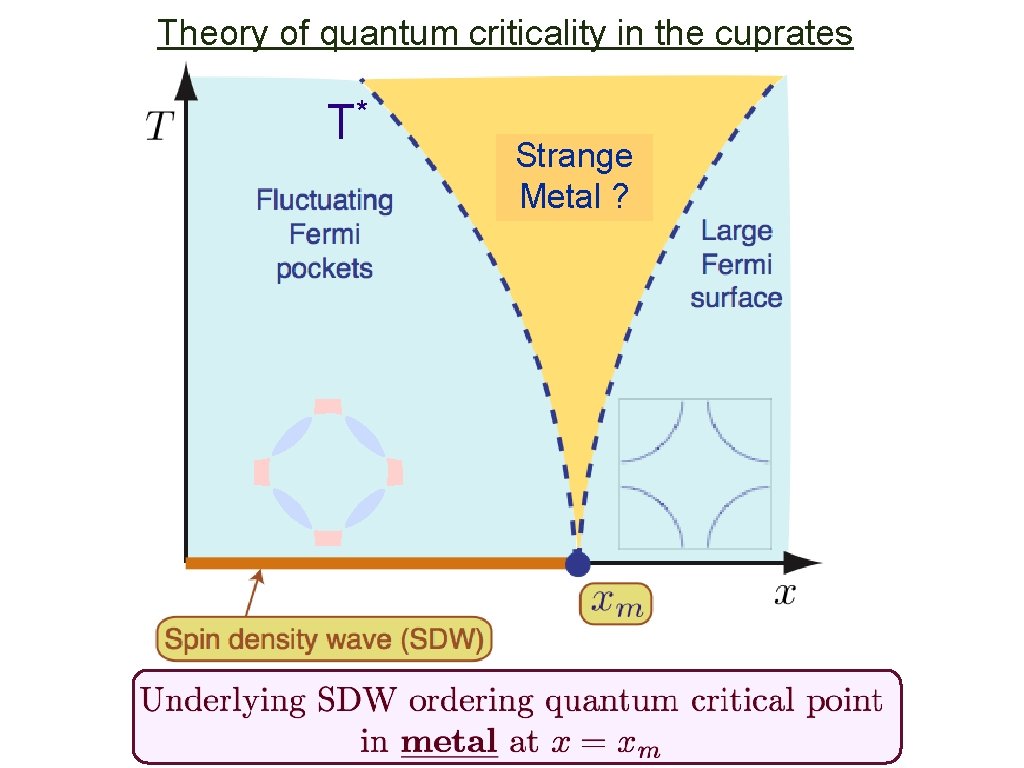
Theory of quantum criticality in the cuprates * T Quantum Strange Metal Critical?
Outline 1. Loss of antiferromagnetism in an insulator Coupled-dimer antiferromagnets and quantum criticality 2. Onset of antiferromagnetism in a metal From large Fermi surfaces to Fermi pockets 3. Unconventional superconductivity Pairing from antiferromagnetic fluctuations 4. Competing orders Phase diagram in a magnetic field 5. Strongly-coupled quantum criticality in metals Fluctuating antiferromagnetism and Fermi surfaces
Outline 1. Loss of antiferromagnetism in an insulator Coupled-dimer antiferromagnets and quantum criticality 2. Onset of antiferromagnetism in a metal From large Fermi surfaces to Fermi pockets 3. Unconventional superconductivity Pairing from antiferromagnetic fluctuations 4. Competing orders Phase diagram in a magnetic field 5. Strongly-coupled quantum criticality in metals Fluctuating antiferromagnetism and Fermi surfaces
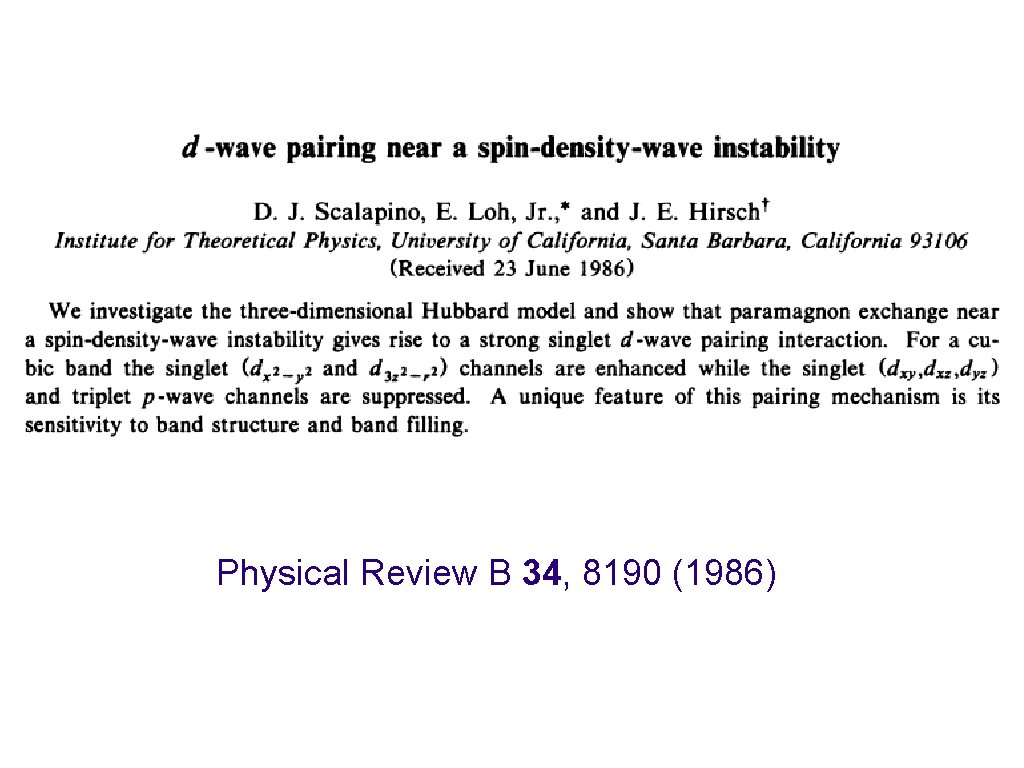
Physical Review B 34, 8190 (1986)
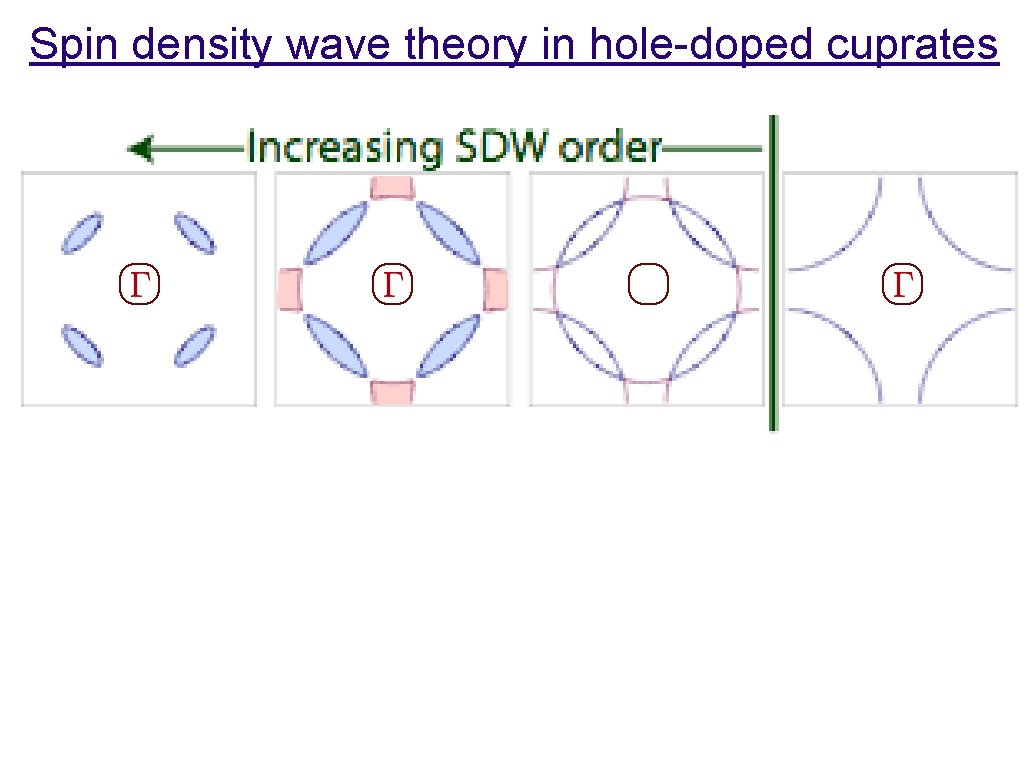
Spin density wave theory in hole-doped cuprates
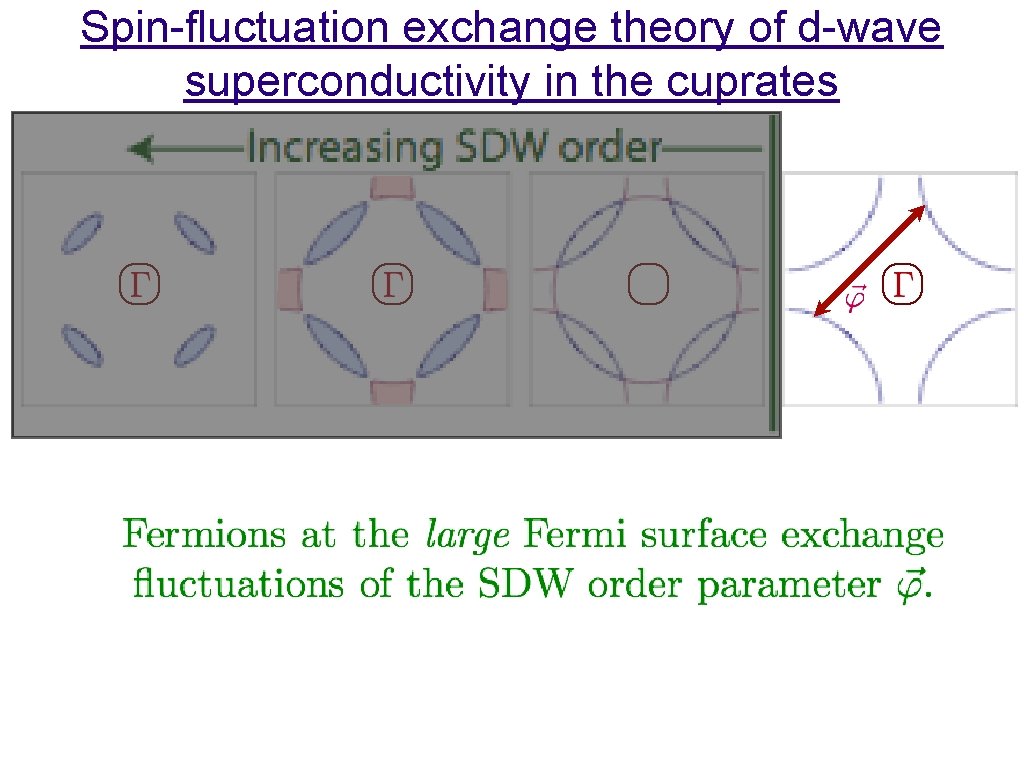
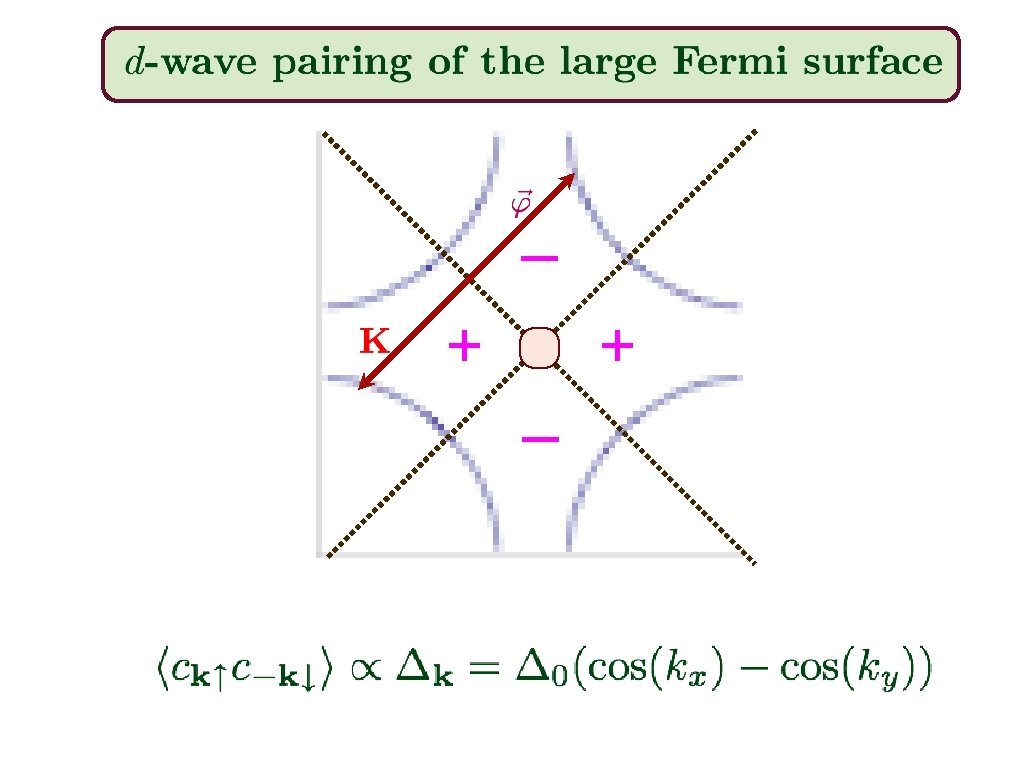
Spin-fluctuation exchange theory of d-wave superconductivity in the cuprates
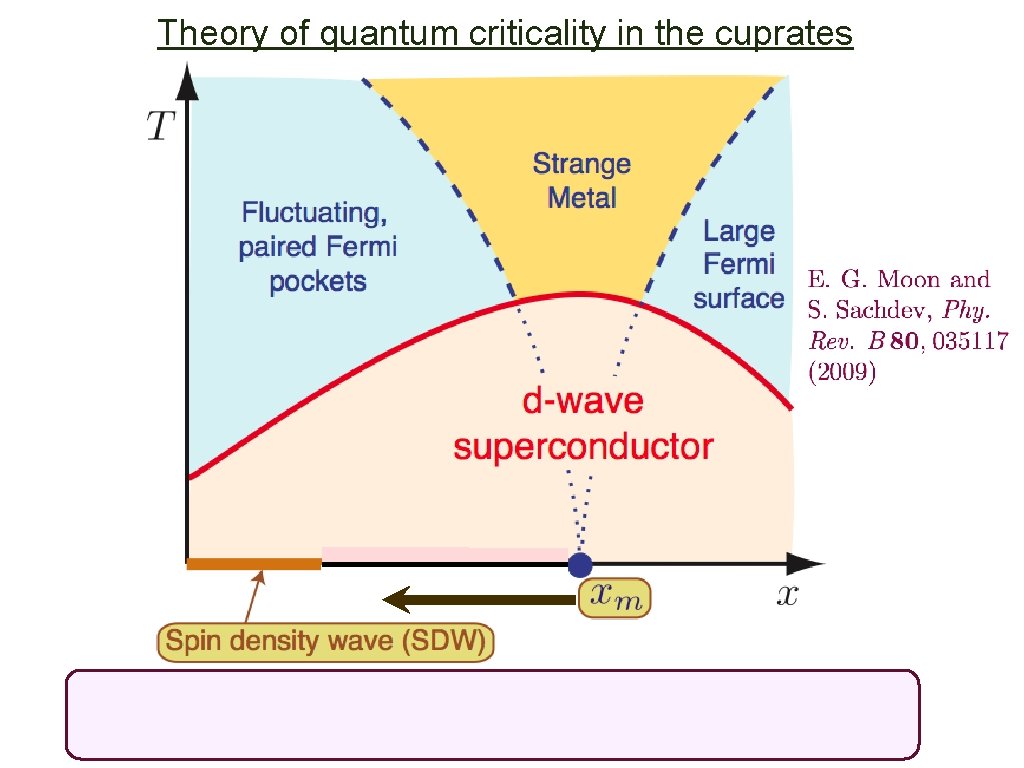
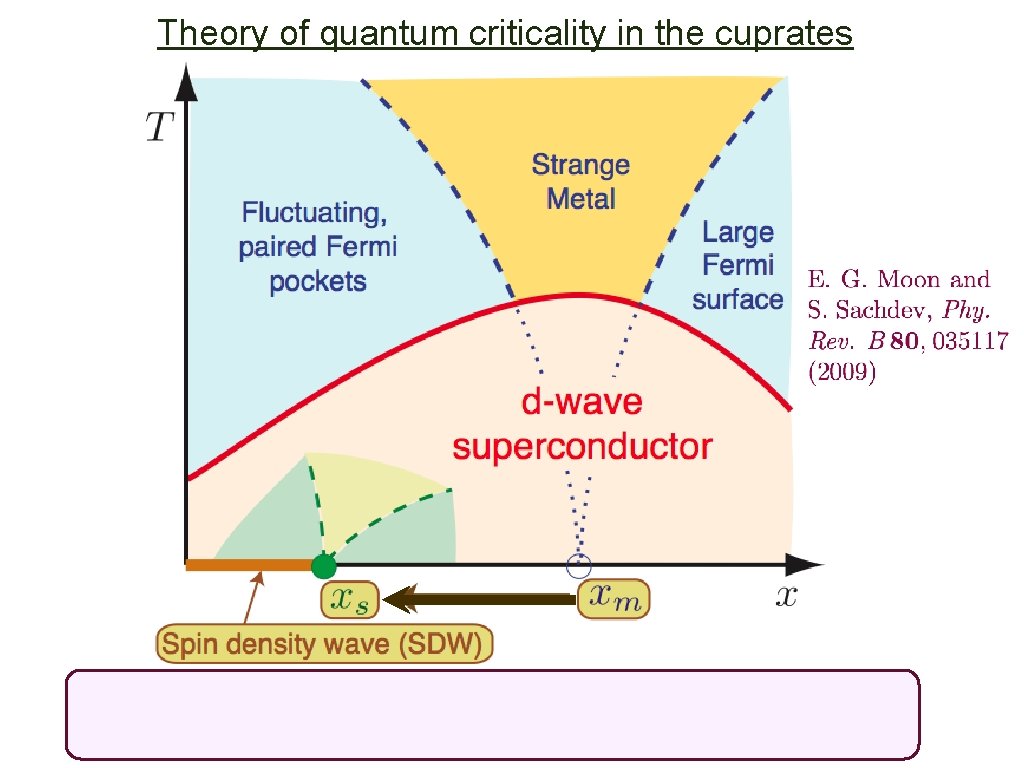
Theory of quantum criticality in the cuprates
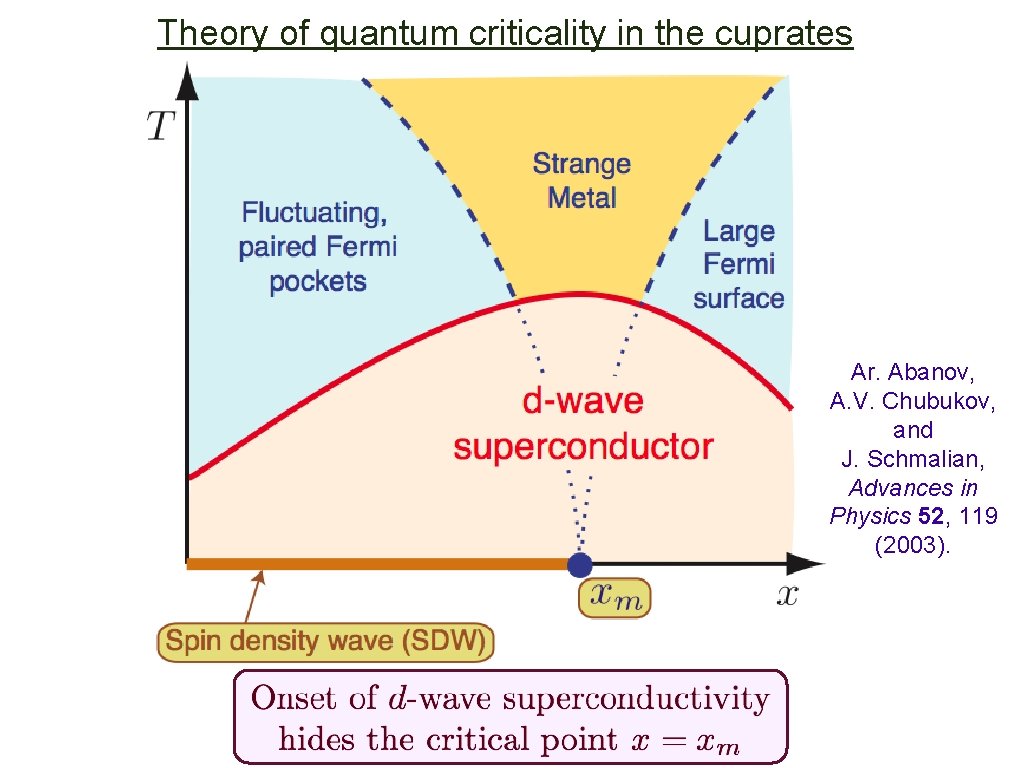
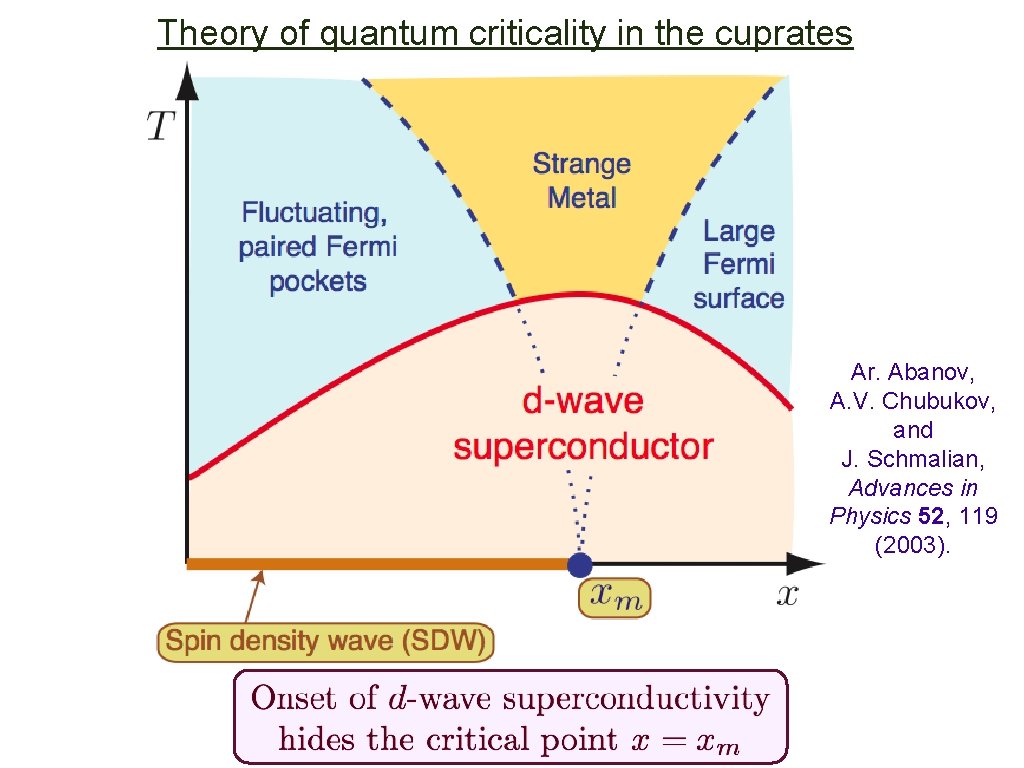
Theory of quantum criticality in the cuprates Ar. Abanov, A. V. Chubukov, and J. Schmalian, Advances in Physics 52, 119 (2003).
Outline 1. Loss of antiferromagnetism in an insulator Coupled-dimer antiferromagnets and quantum criticality 2. Onset of antiferromagnetism in a metal From large Fermi surfaces to Fermi pockets 3. Unconventional superconductivity Pairing from antiferromagnetic fluctuations 4. Competing orders Phase diagram in a magnetic field 5. Strongly-coupled quantum criticality in metals Fluctuating antiferromagnetism and Fermi surfaces
Outline 1. Loss of antiferromagnetism in an insulator Coupled-dimer antiferromagnets and quantum criticality 2. Onset of antiferromagnetism in a metal From large Fermi surfaces to Fermi pockets 3. Unconventional superconductivity Pairing from antiferromagnetic fluctuations 4. Competing orders Phase diagram in a magnetic field 5. Strongly-coupled quantum criticality in metals Fluctuating antiferromagnetism and Fermi surfaces
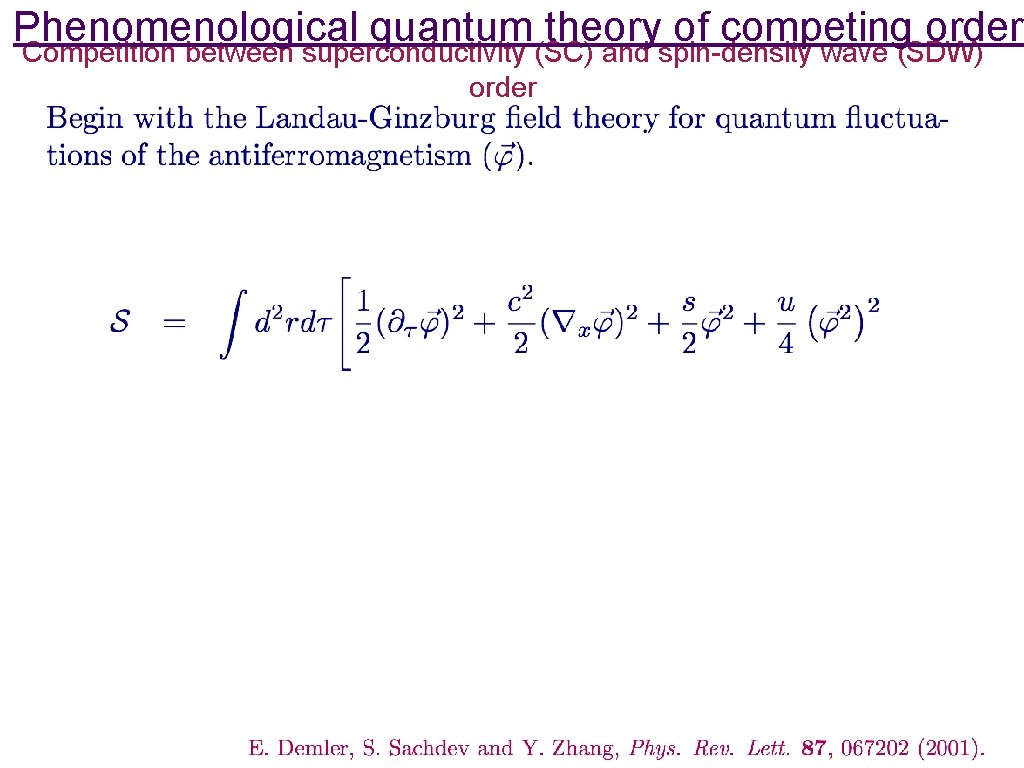
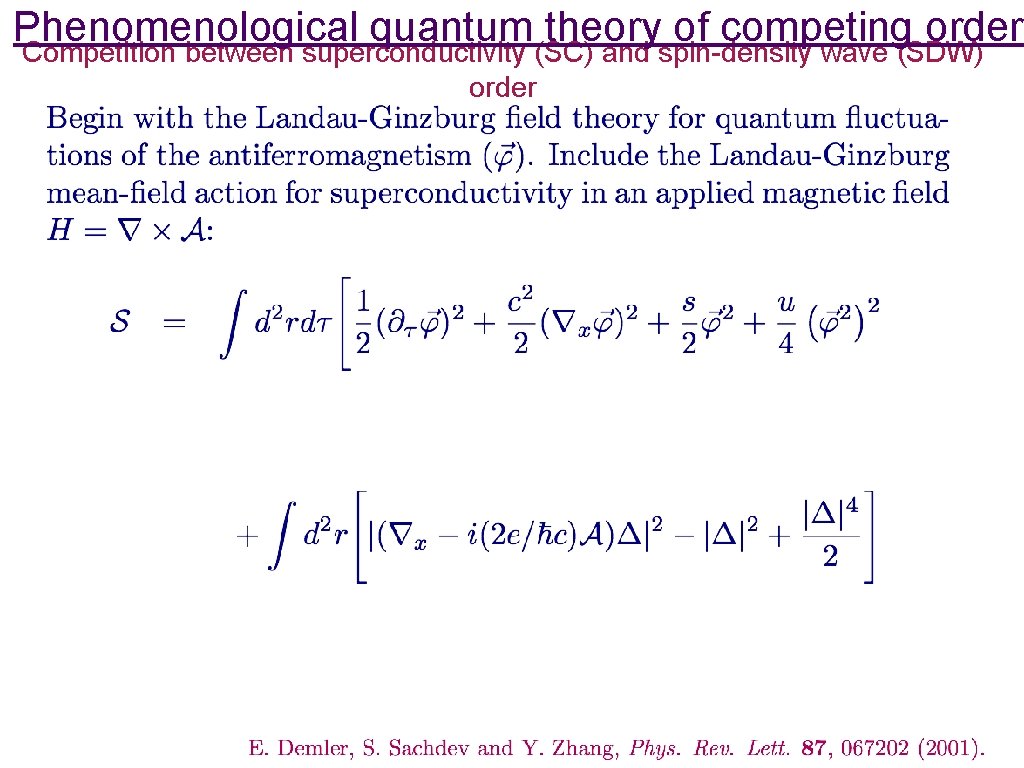
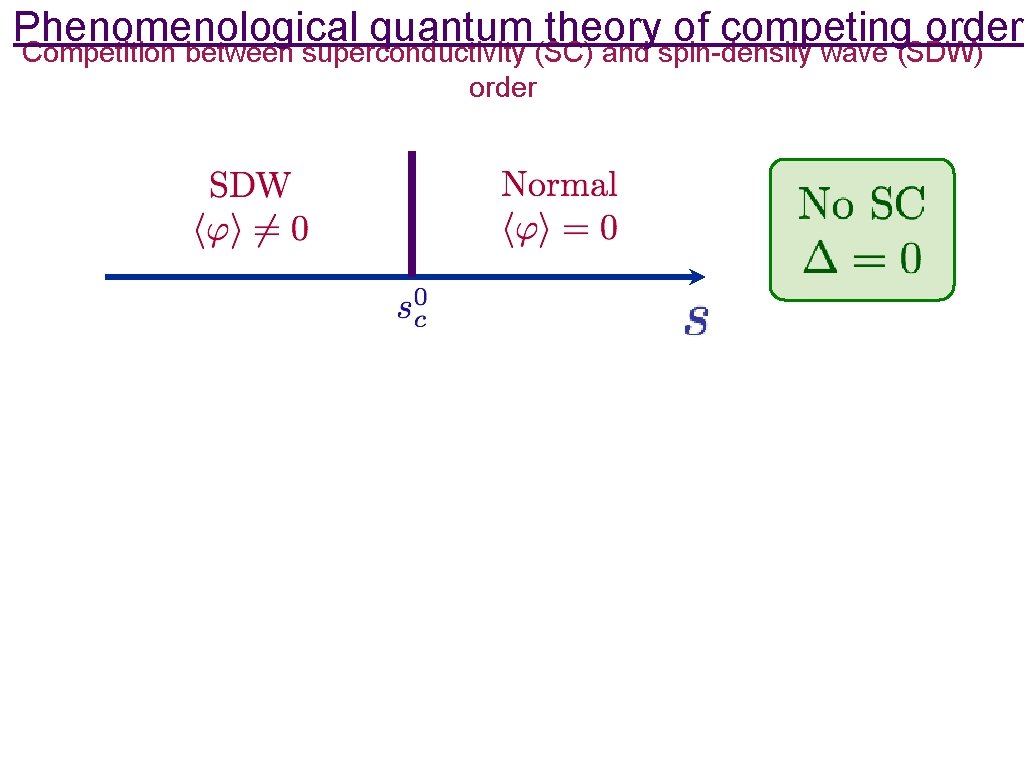
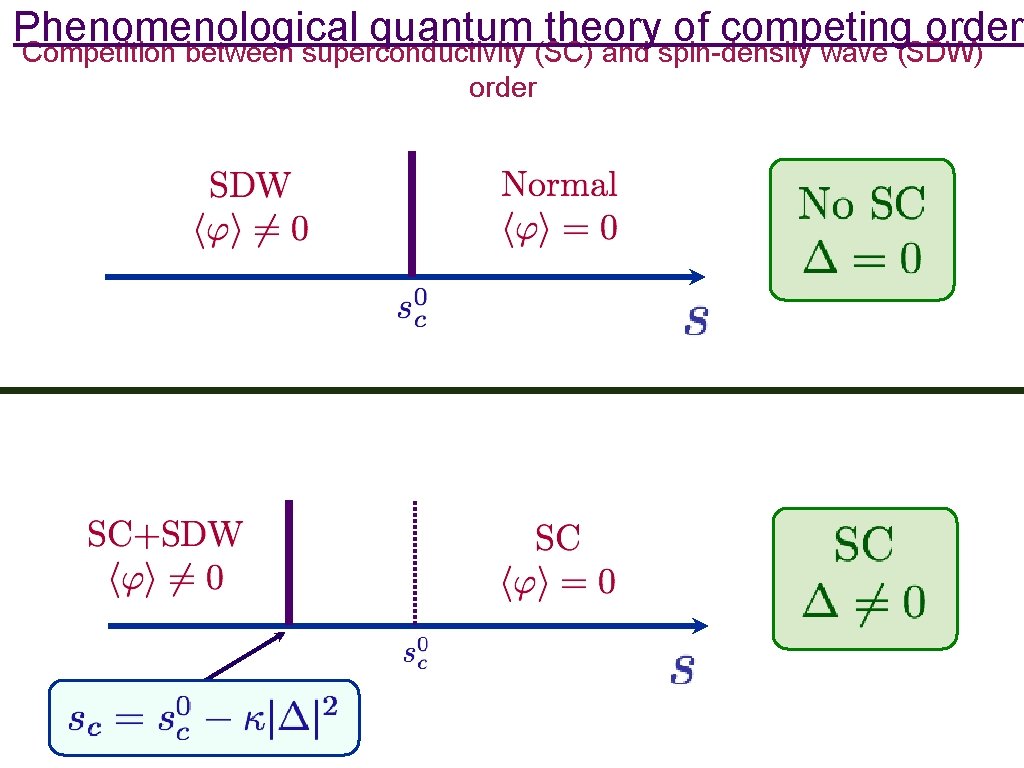
Phenomenological quantum theory of competing orders Competition between superconductivity (SC) and spin-density wave (SDW) order
Phenomenological quantum theory of competing orders Competition between superconductivity (SC) and spin-density wave (SDW) order
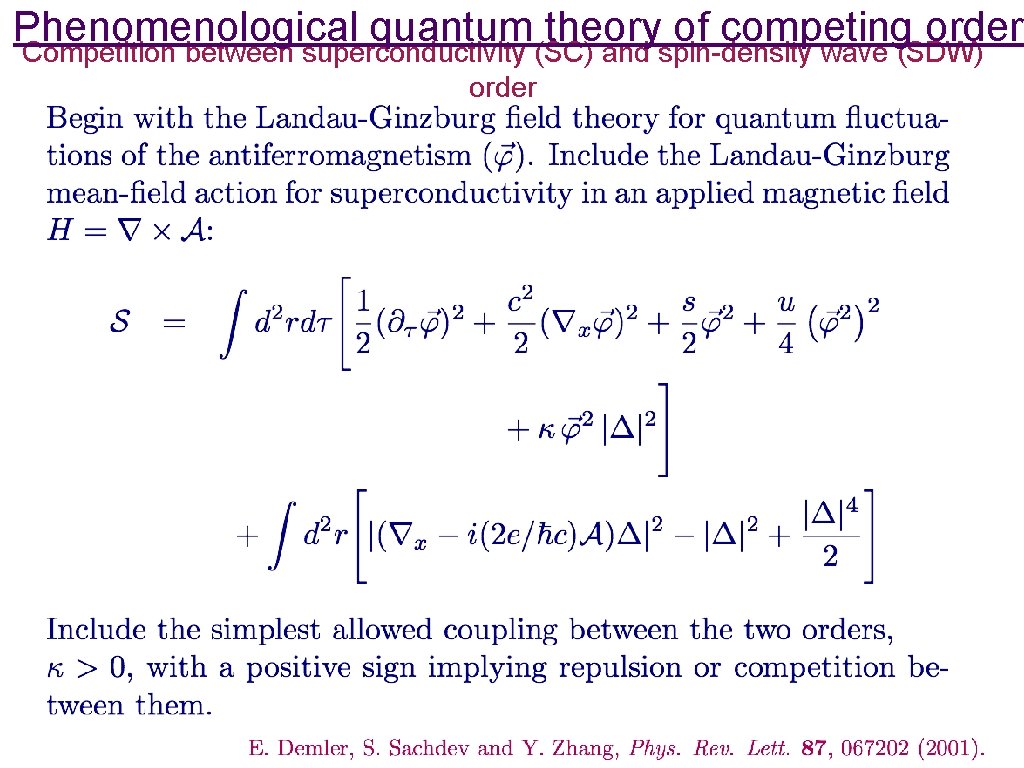
Phenomenological quantum theory of competing orders Competition between superconductivity (SC) and spin-density wave (SDW) order
Phenomenological quantum theory of competing orders Competition between superconductivity (SC) and spin-density wave (SDW) order
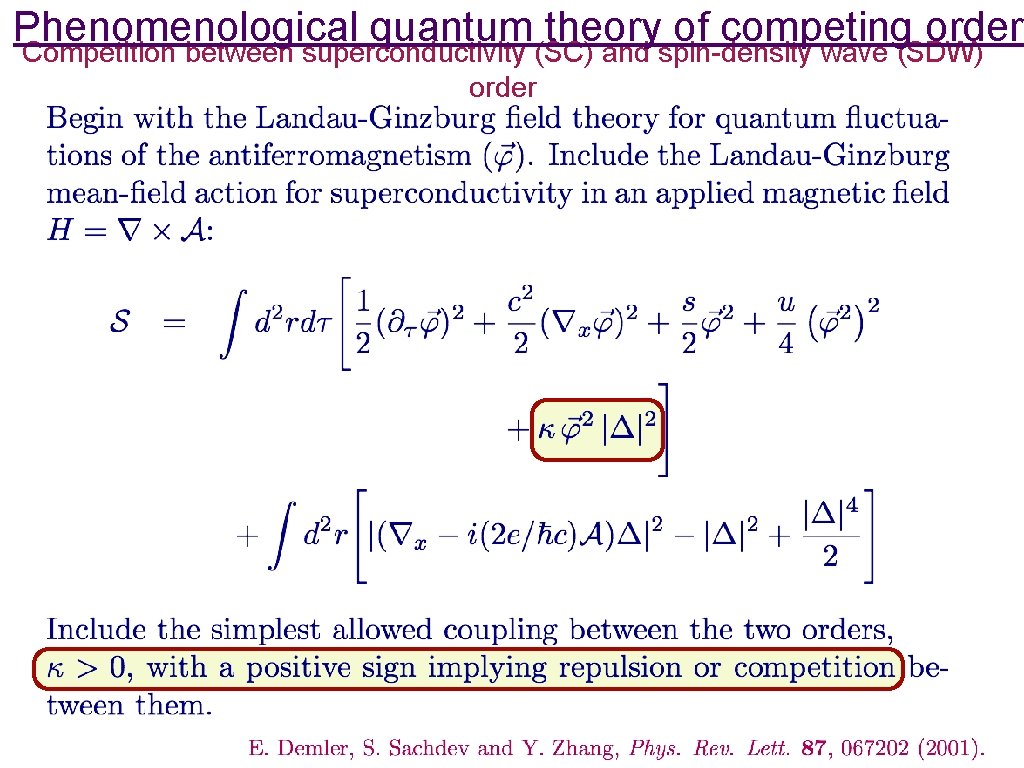
Phenomenological quantum theory of competing orders Competition between superconductivity (SC) and spin-density wave (SDW) order
Phenomenological quantum theory of competing orders Competition between superconductivity (SC) and spin-density wave (SDW) order
Theory of quantum criticality in the cuprates
Theory of quantum criticality in the cuprates Ar. Abanov, A. V. Chubukov, and J. Schmalian, Advances in Physics 52, 119 (2003).
Theory of quantum criticality in the cuprates
Theory of quantum criticality in the cuprates
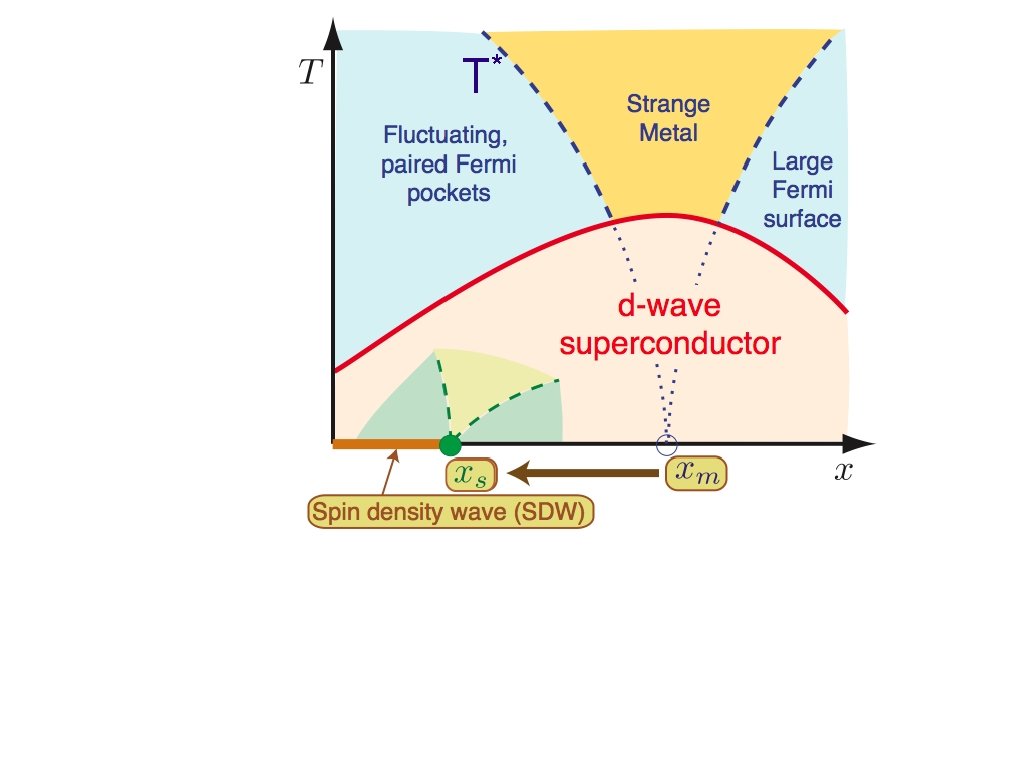
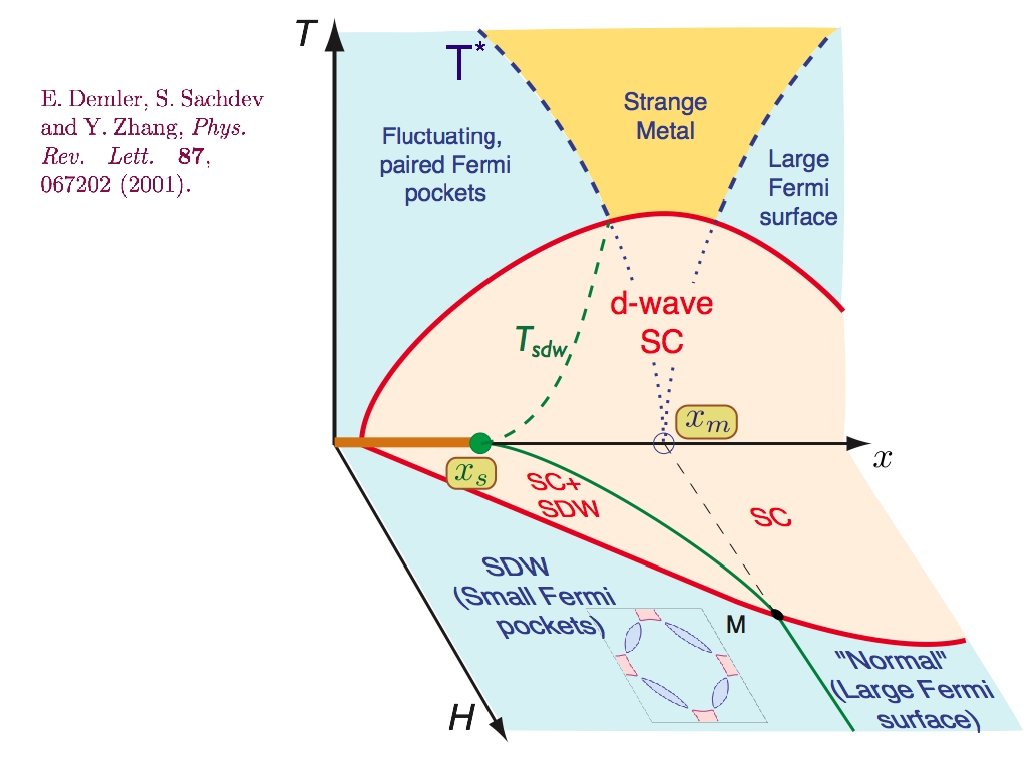
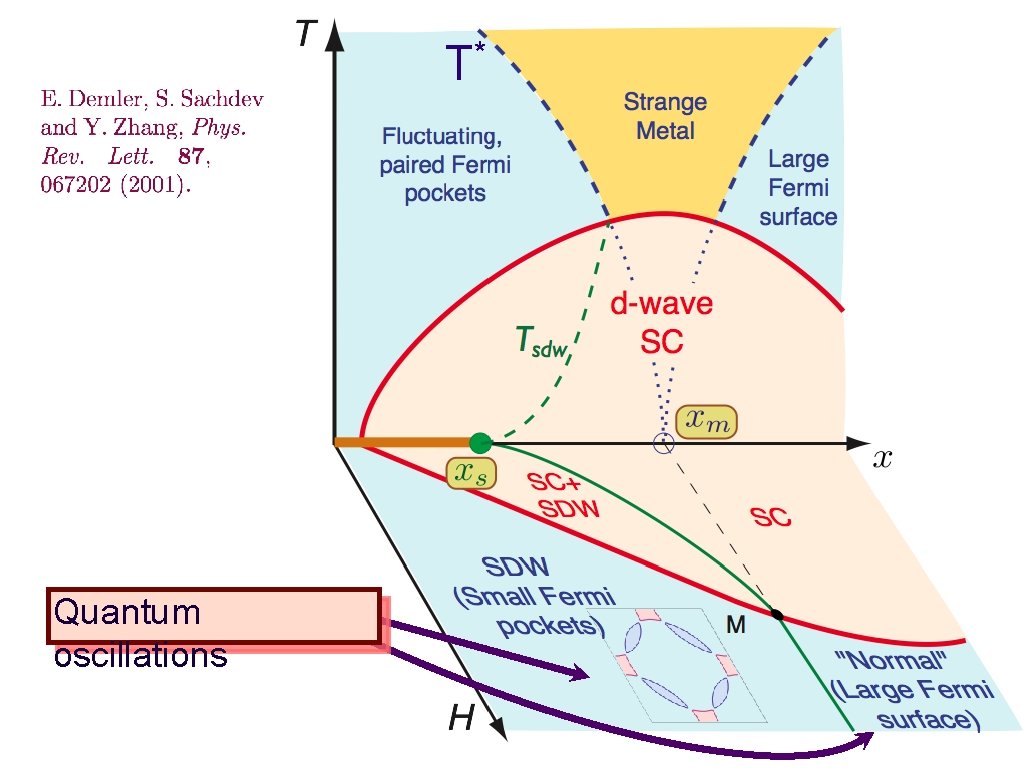
T*
T* Quantum oscillations
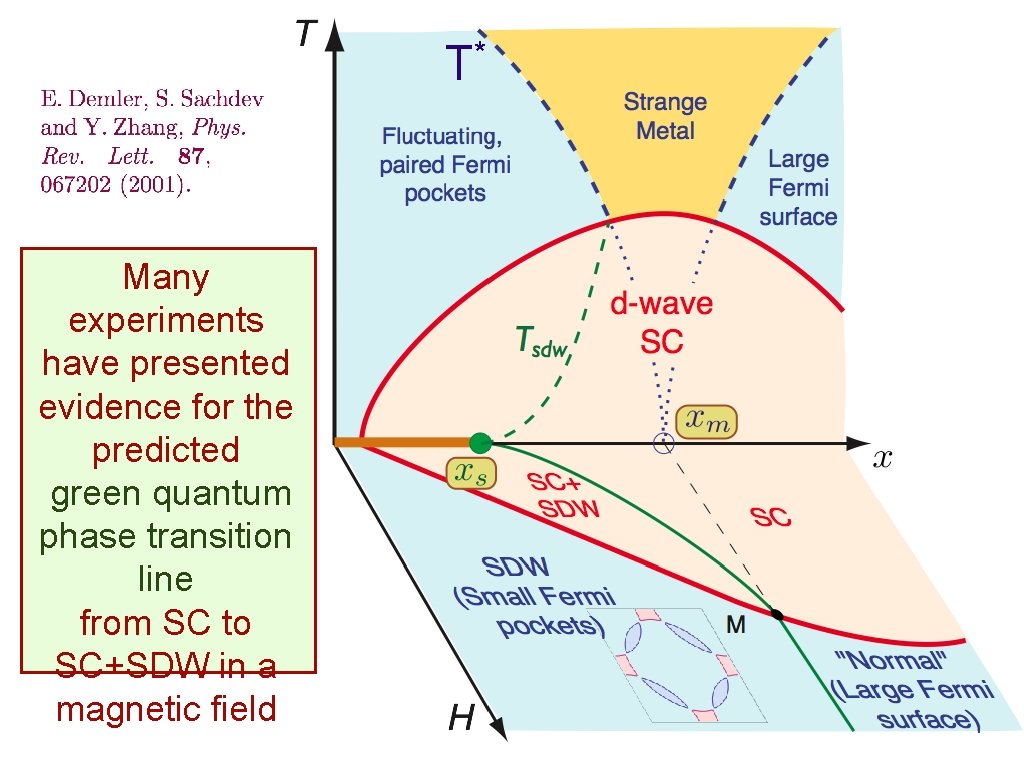
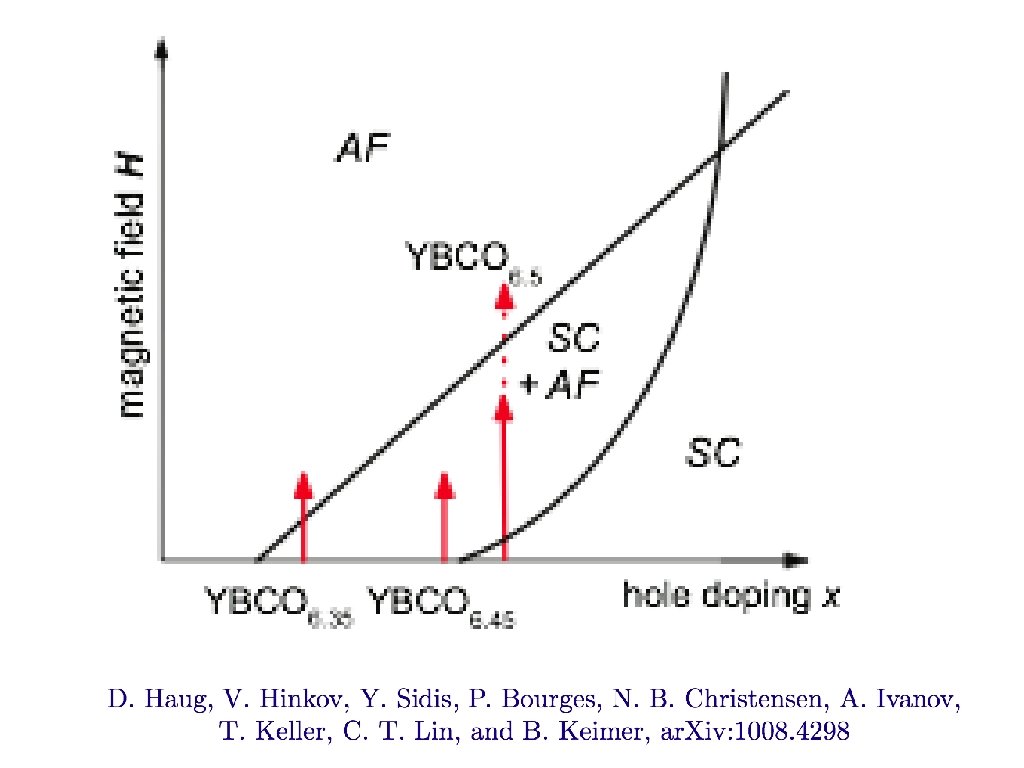
T* Many experiments have presented evidence for the predicted green quantum phase transition line from SC to SC+SDW in a magnetic field
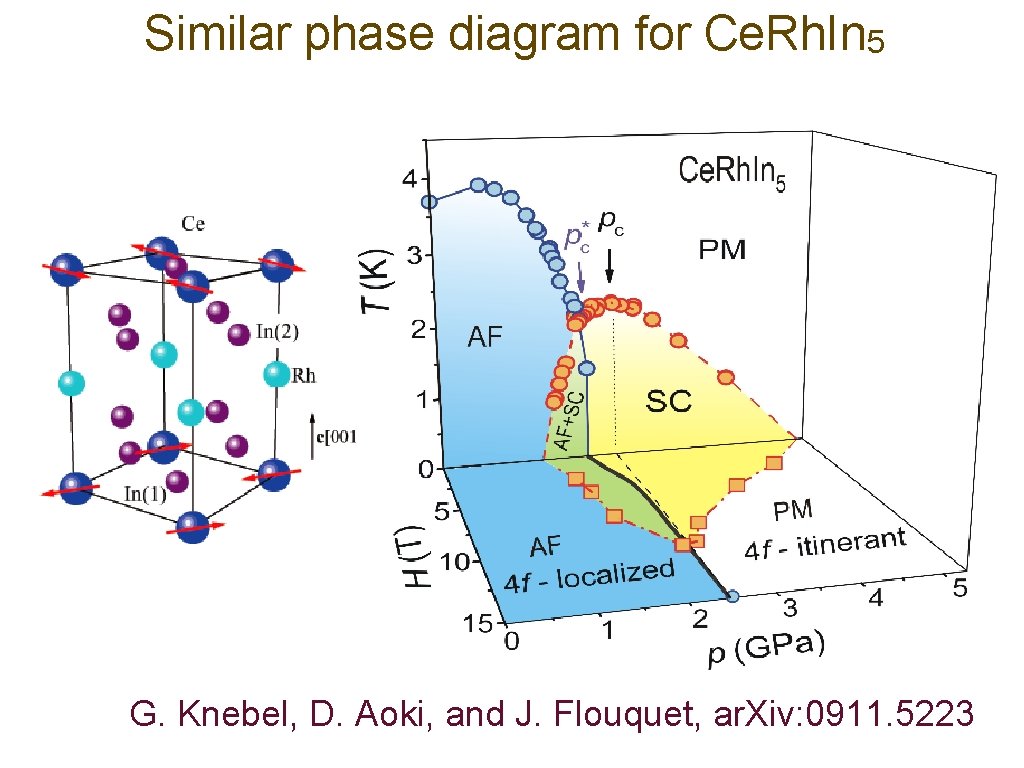
Similar phase diagram for Ce. Rh. In 5 G. Knebel, D. Aoki, and J. Flouquet, ar. Xiv: 0911. 5223
Iron pnictides: a new class of high temperature superconductors Ishida, Nakai, and Hosono ar. Xiv: 0906. 2045 v 1 S. Nandi, M. G. Kim, A. Kreyssig, R. M. Fernandes, D. K. Pratt, A. Thaler, N. Ni, S. L. Bud'ko, P. C. Canfield, J. Schmalian, R. J. Mc. Queeney, A. I. Goldman, Physical Review Letters 104, 057006 (2010).
Outline 1. Loss of antiferromagnetism in an insulator Coupled-dimer antiferromagnets and quantum criticality 2. Onset of antiferromagnetism in a metal From large Fermi surfaces to Fermi pockets 3. Unconventional superconductivity Pairing from antiferromagnetic fluctuations 4. Competing orders Phase diagram in a magnetic field 5. Strongly-coupled quantum criticality in metals Fluctuating antiferromagnetism and Fermi surfaces
Outline 1. Loss of antiferromagnetism in an insulator Coupled-dimer antiferromagnets and quantum criticality 2. Onset of antiferromagnetism in a metal From large Fermi surfaces to Fermi pockets 3. Unconventional superconductivity Pairing from antiferromagnetic fluctuations 4. Competing orders Phase diagram in a magnetic field 5. Strongly-coupled quantum criticality in metals Fluctuating antiferromagnetism and Fermi surfaces
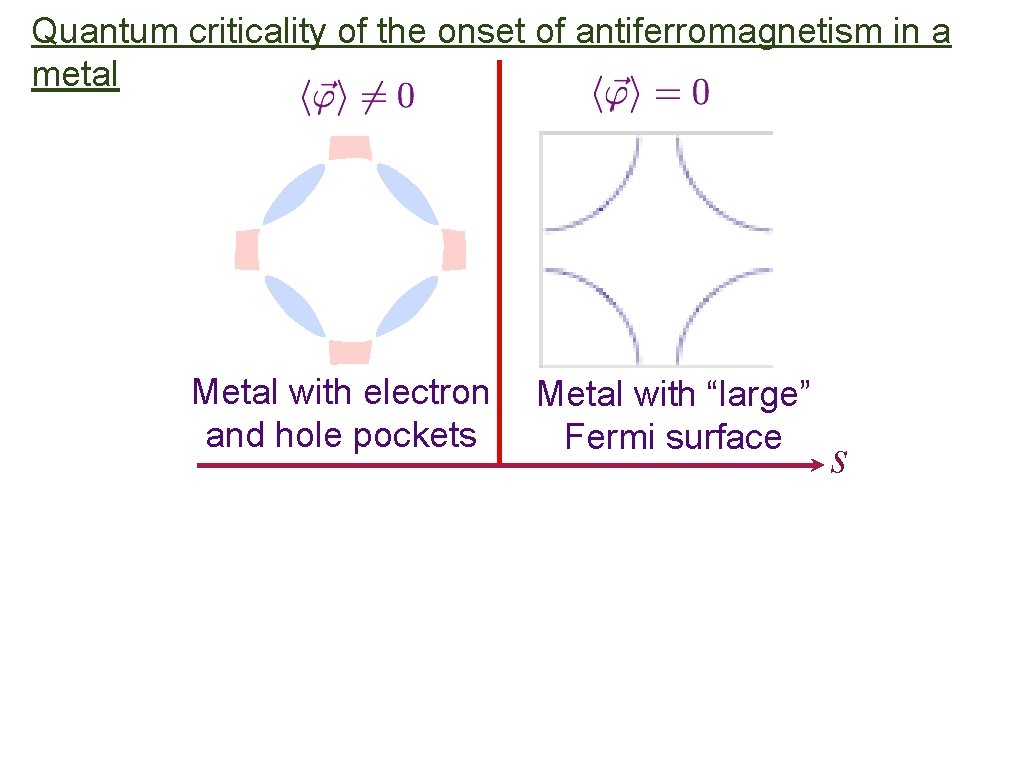
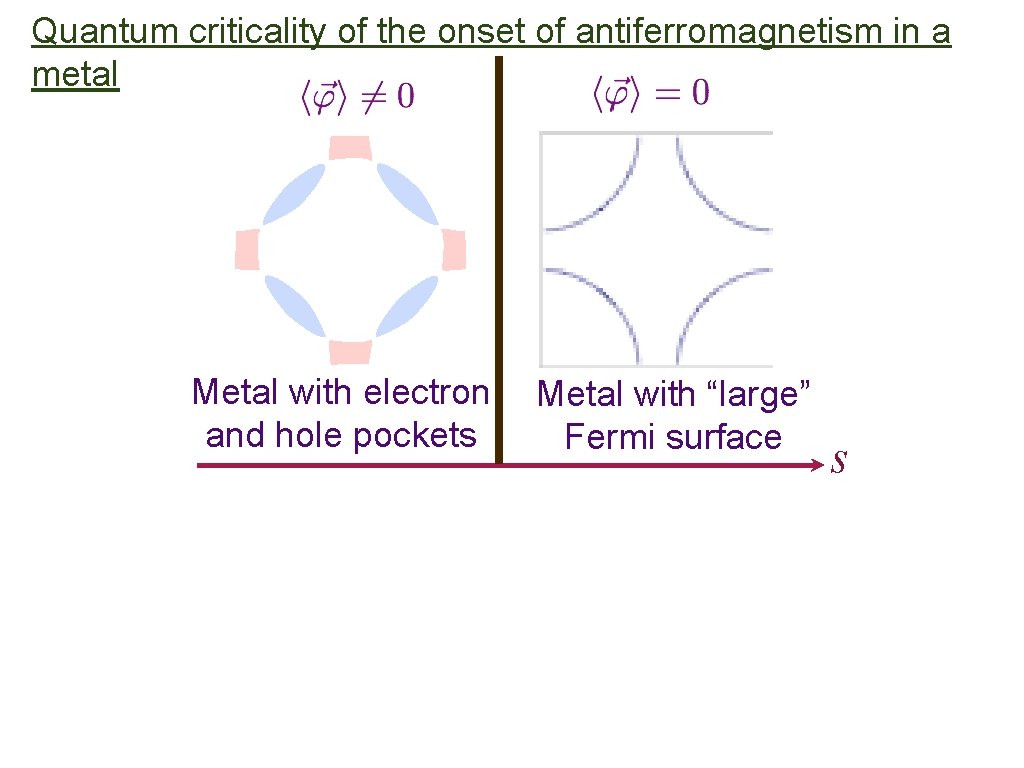
Quantum criticality of the onset of antiferromagnetism in a metal Metal with electron and hole pockets Metal with “large” Fermi surface s
Quantum criticality of the onset of antiferromagnetism in a metal Metal with electron and hole pockets Metal with “large” Fermi surface s
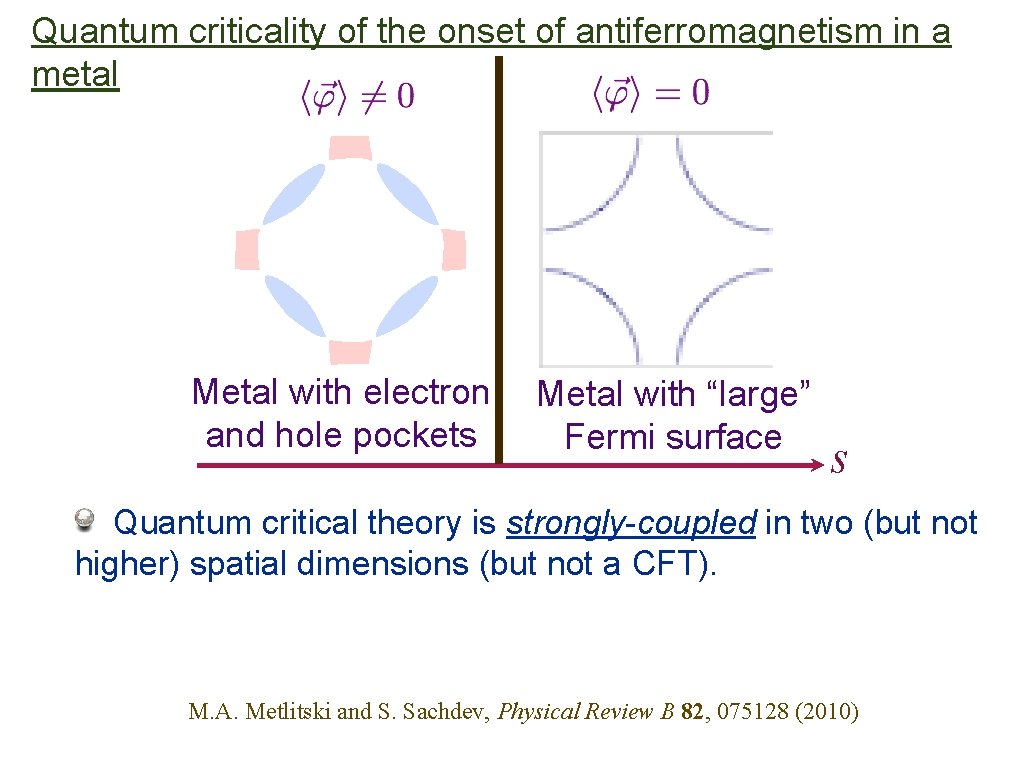
Quantum criticality of the onset of antiferromagnetism in a metal Metal with electron and hole pockets Metal with “large” Fermi surface s Quantum critical theory is strongly-coupled in two (but not higher) spatial dimensions (but not a CFT). M. A. Metlitski and S. Sachdev, Physical Review B 82, 075128 (2010)
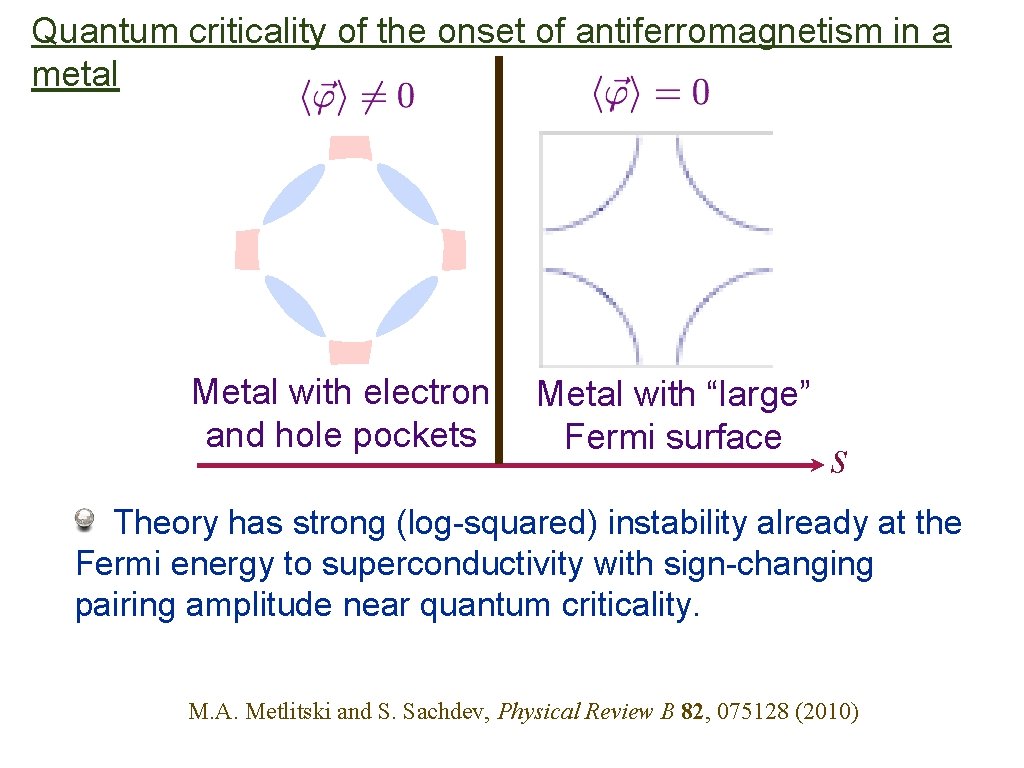
Quantum criticality of the onset of antiferromagnetism in a metal Metal with electron and hole pockets Metal with “large” Fermi surface s Theory has strong (log-squared) instability already at the Fermi energy to superconductivity with sign-changing pairing amplitude near quantum criticality. M. A. Metlitski and S. Sachdev, Physical Review B 82, 075128 (2010)
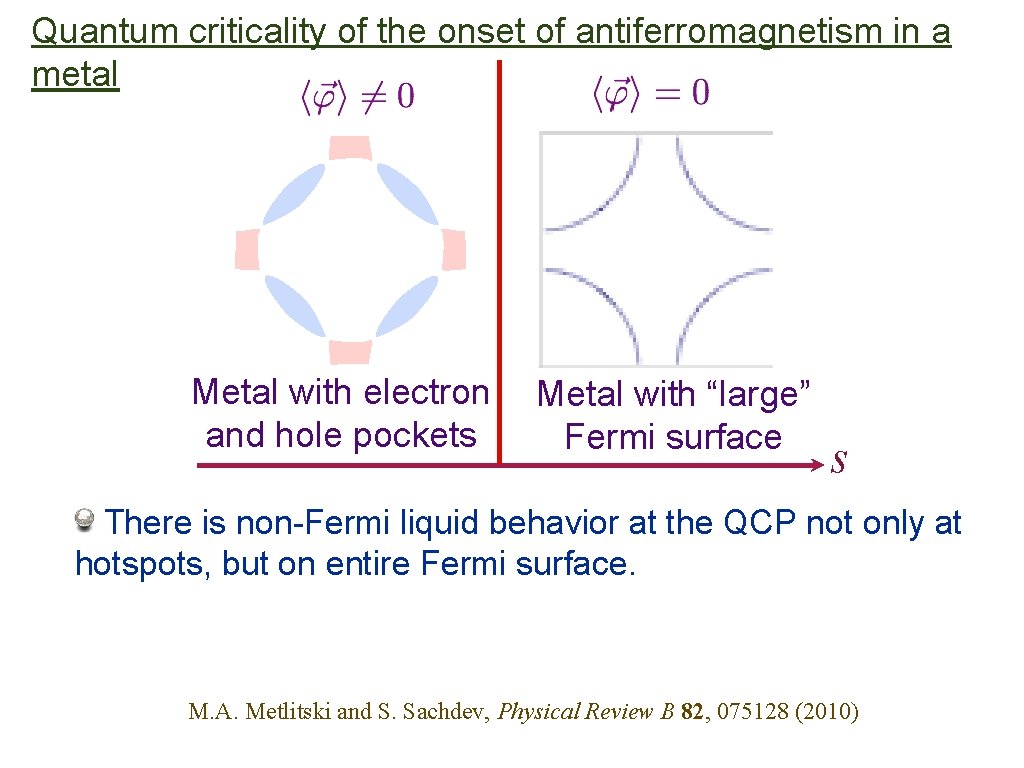
Quantum criticality of the onset of antiferromagnetism in a metal Metal with electron and hole pockets Metal with “large” Fermi surface s There is non-Fermi liquid behavior at the QCP not only at hotspots, but on entire Fermi surface. M. A. Metlitski and S. Sachdev, Physical Review B 82, 075128 (2010)
Questions • Can quantum fluctuations near the loss of antiferromagnetism induce higher temperature superconductivity ? • If so, why is there no antiferromagnetism in the cuprates near the point where the superconductivity is strongest ? • What is the physics of the strange metal ?
Questions and answers • Can quantum fluctuations near the loss of antiferromagnetism induce higher temperature superconductivity ? Yes • If so, why is there no antiferromagnetism in the cuprates near the point where the superconductivity is strongest ? • What is the physics of the strange metal ?
Questions and answers • Can quantum fluctuations near the loss of antiferromagnetism induce higher temperature superconductivity ? Yes • If so, why is there no antiferromagnetism in the cuprates near the point where the superconductivity is strongest ? Competition between antiferromagnetism and superconductivity has shifted the antiferromagnetic quantum-critical point (QCP), and shrunk the region of antiferromagnetism. This QCP shift is largest in the cuprates • What is the physics of the strange metal ?
Questions and answers • Can quantum fluctuations near the loss of antiferromagnetism induce higher temperature superconductivity ? Yes • If so, why is there no antiferromagnetism in the cuprates near the point where the superconductivity is strongest ? Competition between antiferromagnetism and superconductivity has shifted the antiferromagnetic quantum-critical point (QCP), and shrunk the region of antiferromagnetism. This QCP shift is largest in the cuprates • What is the physics of the strange metal ? Proposal: strongly-coupled quantum criticality of fluctuating antiferromagnetism in a metal