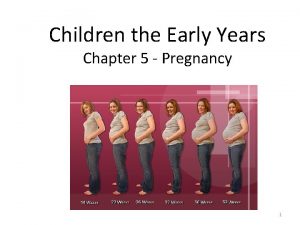
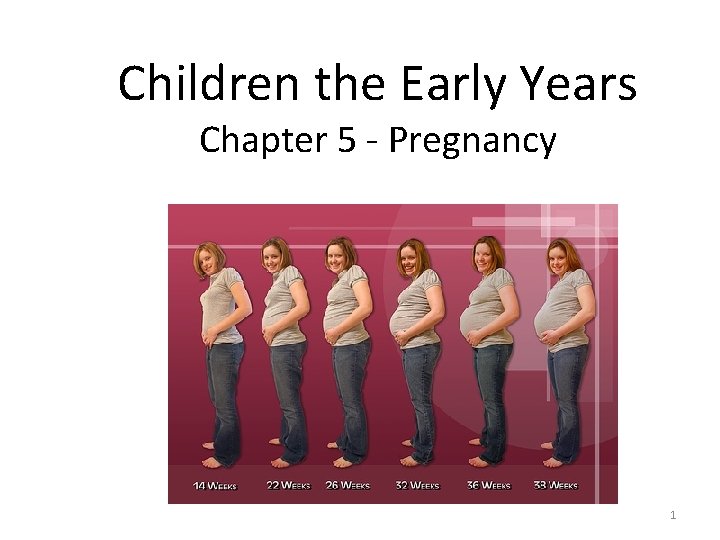
Children the Early Years Chapter 5 Pregnancy 1









- Slides: 123
Children the Early Years Chapter 5 - Pregnancy 1
Terminology • • • Age of viability Amnion Cervix Chorion Conception Embryo Umbilical cord Uterus Zygote Menstrual cycle Ovulation • • • Prenatal development Trimester Embed/Implant Quickening Placenta Ovum Ovaries Fetus Germinal stage Embryonic stage Fetal stage 2
THE MENSTRUAL CYCLE • The average menstrual cycle is 28 to 32 days. • Some women have longer or shorter cycles, so the exact timing of ovulation can vary. • Here's an overview of a typical 28 -day menstrual cycle. http: //www. webmd. com/baby/healthtool-ovulation-calculator 3
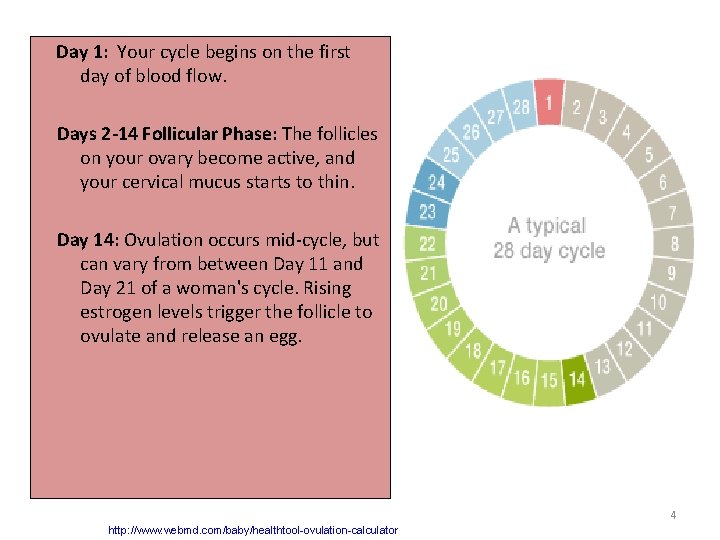
Day 1: Your cycle begins on the first day of blood flow. Days 2 -14 Follicular Phase: The follicles on your ovary become active, and your cervical mucus starts to thin. Day 14: Ovulation occurs mid-cycle, but can vary from between Day 11 and Day 21 of a woman's cycle. Rising estrogen levels trigger the follicle to ovulate and release an egg. 4 http: //www. webmd. com/baby/healthtool-ovulation-calculator
Days 15 -22 Luteal Phase After releasing the egg, the follicle produces progesterone, which thickens the lining of the uterus for implantation. Days 23 to 24 Implantation of a fertilized egg can take place. At this point, hormones produced by pregnancy may be detected by a pregnancy test. Days 25 to 28 If pregnancy does not occur, your hormone levels begin to fall. The uterine lining sheds, resulting in your period. 5 http: //www. webmd. com/baby/healthtool-ovulation-calculator
OMG!! There’s An App for That 6
7
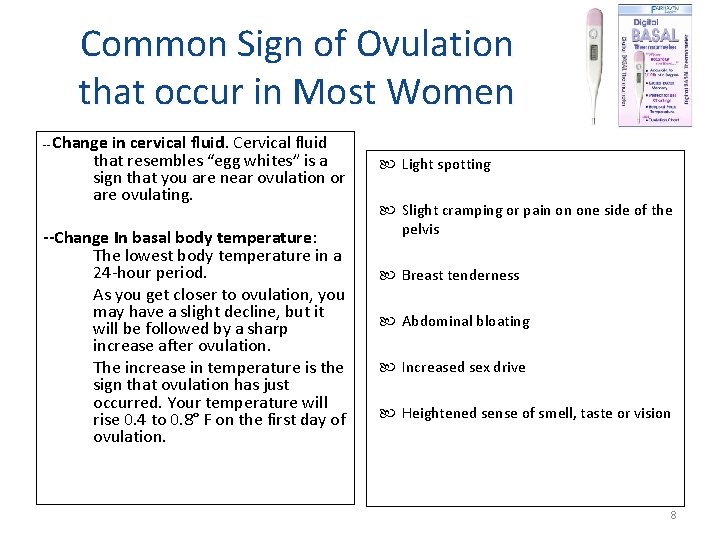
Common Sign of Ovulation that occur in Most Women -- Change in cervical fluid. Cervical fluid that resembles “egg whites” is a sign that you are near ovulation or are ovulating. --Change In basal body temperature: The lowest body temperature in a 24 -hour period. As you get closer to ovulation, you may have a slight decline, but it will be followed by a sharp increase after ovulation. The increase in temperature is the sign that ovulation has just occurred. Your temperature will rise 0. 4 to 0. 8° F on the first day of ovulation. Light spotting Slight cramping or pain on one side of the pelvis Breast tenderness Abdominal bloating Increased sex drive Heightened sense of smell, taste or vision 8
Pregnancy is the process through which a new human preparation to enter the world. • This process begins with conception. • The prenatal period, from conception is birth, last about 280 days (9 months) and is the shortest stage in the lifespan. • This formative (shaping) stage is also the most critical time for a child’s development. • Good prenatal care reduces the risks of complications. 9
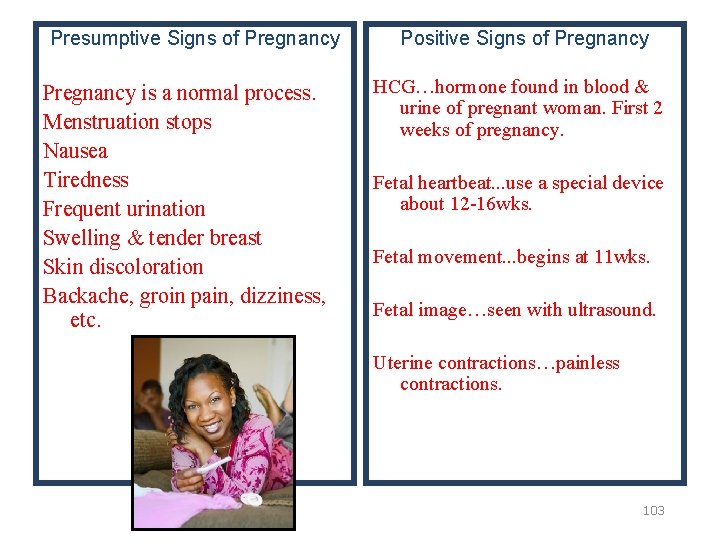
Presumptive signs of pregnancy: • • Menstruation stops Mom experiences nausea and vomiting Constipation and/or dizziness Mom is tired Mom feels the need to urinate often The breasts swell and become very tender Exhaustion Mood swings 10
Positive signs determined by a doctor: • HCG hormone is found in the Mom’s blood • Doctor can hear the fetal heartbeat • Doctor and mom can detect fetal movement Gynecologist – well woman care Obstetrician – pregnant woman care 11
Obstetrician (OB) visits • The first visit to the OB should be when Mom thinks she is pregnant or receives a positive result with a home pregnancy test. • The due date is calculated • Mom should visit the OB once a month for 6 months, then twice a month for 2 months and then once a week the last month until delivery. 12
OB visits During this visit the OB will collect some baseline statistics. – her age – weight – health history – blood pressure – pulse 13
Mom’s age is important • Mother’s age at the time of pregnancy can be a factor of risk. The ideal age is 21 – 28 years old. • Younger or older women are considered High. Risk. • High Risk pregnancies can result in premature births, low birth weight, disabilities and stillborn infants. 14
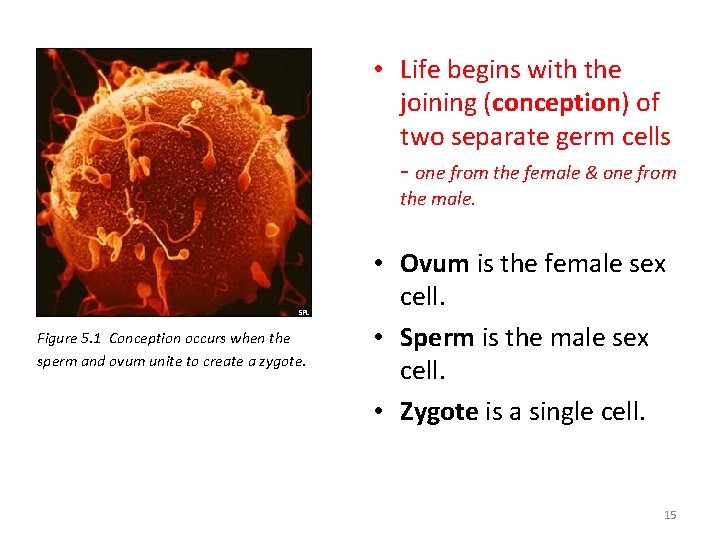
• Life begins with the joining (conception) of two separate germ cells - one from the female & one from the male. Figure 5. 1 Conception occurs when the sperm and ovum unite to create a zygote. • Ovum is the female sex cell. • Sperm is the male sex cell. • Zygote is a single cell. 15
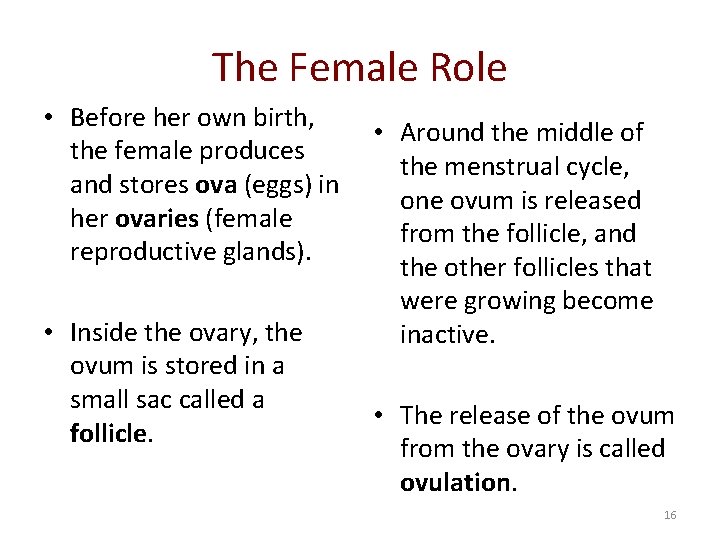
The Female Role • Before her own birth, • Around the middle of the female produces the menstrual cycle, and stores ova (eggs) in one ovum is released her ovaries (female from the follicle, and reproductive glands). the other follicles that were growing become • Inside the ovary, the inactive. ovum is stored in a small sac called a • The release of the ovum follicle. from the ovary is called ovulation. 16
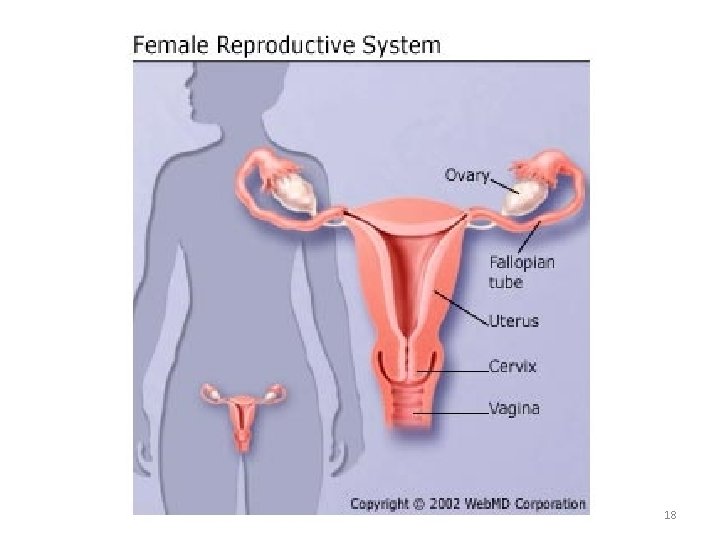
• The fallopian tubes are two hollow tubes that extend from the right and left sides of the uterus. • Once inside the fallopian tube, the ovum moves very slowly down the tube. • The uterus is the organ in which the baby develops and is protected until birth. • The cervix is the lower, narrow portion of the uterus that connects the uterus to the vagina, or birth canal. 17
18
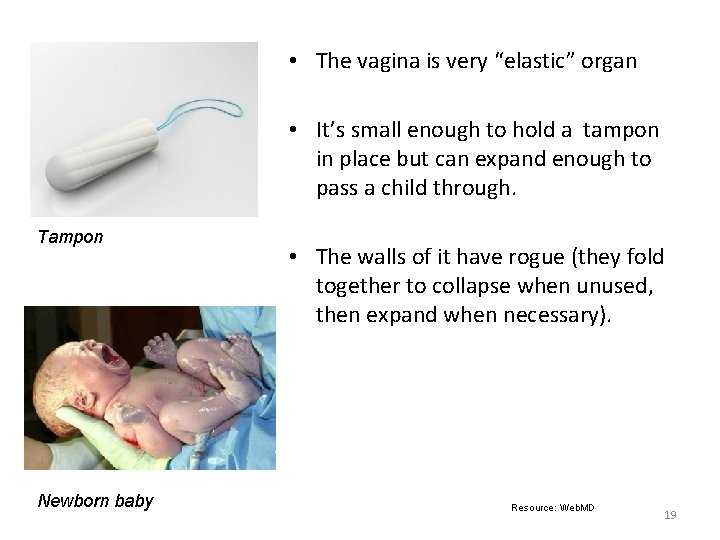
• The vagina is very “elastic” organ • It’s small enough to hold a tampon in place but can expand enough to pass a child through. Tampon Newborn baby • The walls of it have rogue (they fold together to collapse when unused, then expand when necessary). Resource: Web. MD 19
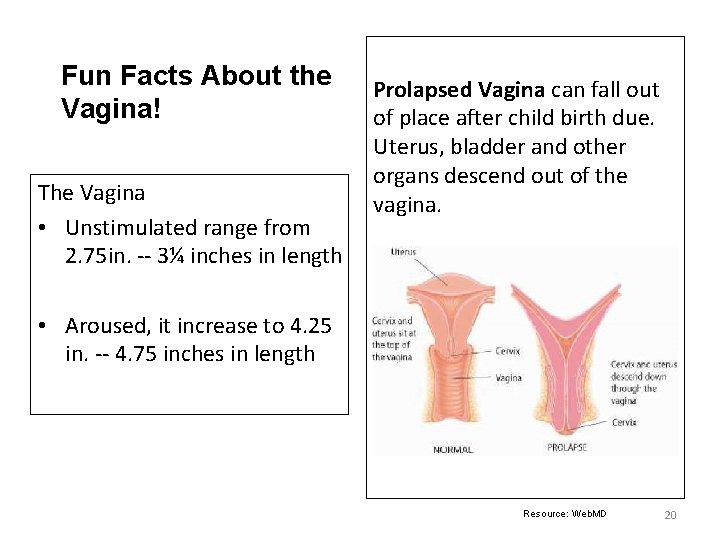
Fun Facts About the Vagina! The Vagina • Unstimulated range from 2. 75 in. -- 3¼ inches in length Prolapsed Vagina can fall out of place after child birth due. Uterus, bladder and other organs descend out of the vagina. • Aroused, it increase to 4. 25 in. -- 4. 75 inches in length Resource: Web. MD 20
The Male’s Role • Unlike a female who has all of her ova at birth, a male’s testes (reproductive glands) do not produce sperm until the body is capable of reproduction. • Sperm production continue throughout his lifetime. Semen, a liquid which contains over 300 million sperm, enters the female’s body during intercourse. • The sperm leaves the male’s penis and enters the female’s vagina. 21
• These sperm travel from the vagina through the cervix and the uterus to reach the fallopian tube. • The sperm’s journey to the ovum lasts only minutes, and many sperm do not survive. • Only 300 to 500 reach the fallopian tube. 22
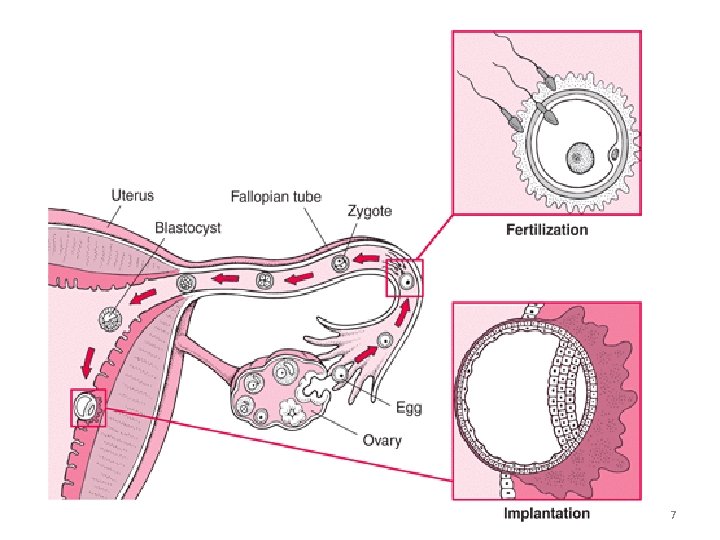
• Conception usually occurs when the ovum is less than one-third of the way down the fallopian tube. The sperm approach the ovum and try to break through its surface. • Only one sperm successfully enters, or fertilizes the egg. Once one sperm is accepted, no other sperm can enter the ovum. • Conception has occurred, and the zygote forms. 23
Mom’s weight gain • The mom’s overall health affects the outcome of the pregnancy. • A healthy mom with a good diet, weight gain of 25 – 35 pounds • Appropriate exercise is most desirable. 24
Emotional health • Unborn babies can detect maternal stress. • Prolonged, severe and frequently stress may result in a more difficult delivery, smaller, fussier and quite active babies. • Pregnant women need lots of emotional support and understanding during their pregnancy. 25
What is a Trimester? • Period of gestation or pregnancy is divided into 3 trimesters – each about 3 months long • First trimester – conception till 12 weeks pregnant. Usually women find out they’re pregnant between 6 – 8 weeks along 26
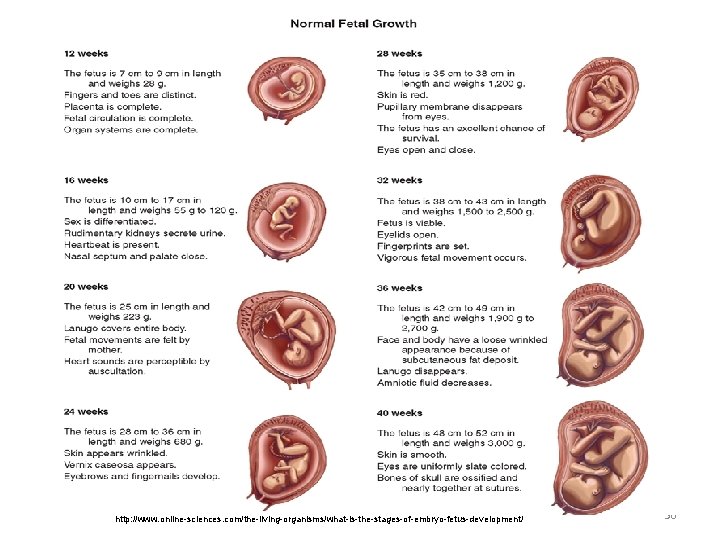
Germinal Stage • Conception marks the beginning of the first stage of prenatal development, the germinal stage. • Once conception occurs, the fertilized egg (zygote) remains a single cell for about 30 hours before the zygote starts to divide. 27
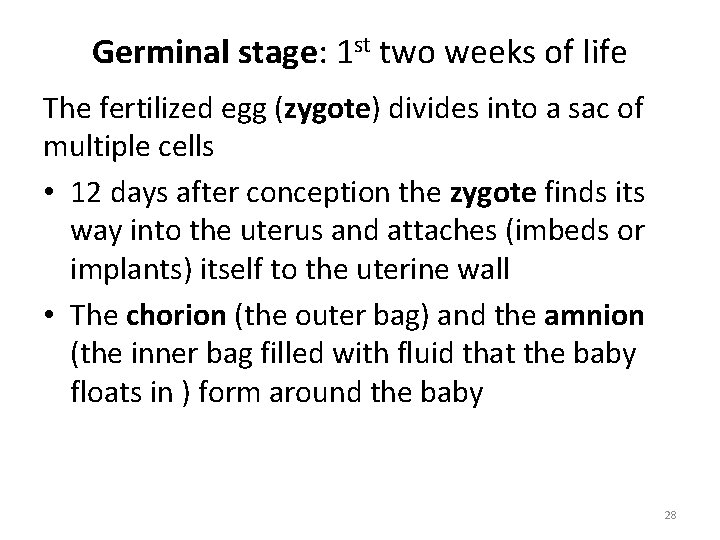
Germinal stage: 1 st two weeks of life The fertilized egg (zygote) divides into a sac of multiple cells • 12 days after conception the zygote finds its way into the uterus and attaches (imbeds or implants) itself to the uterine wall • The chorion (the outer bag) and the amnion (the inner bag filled with fluid that the baby floats in ) form around the baby 28
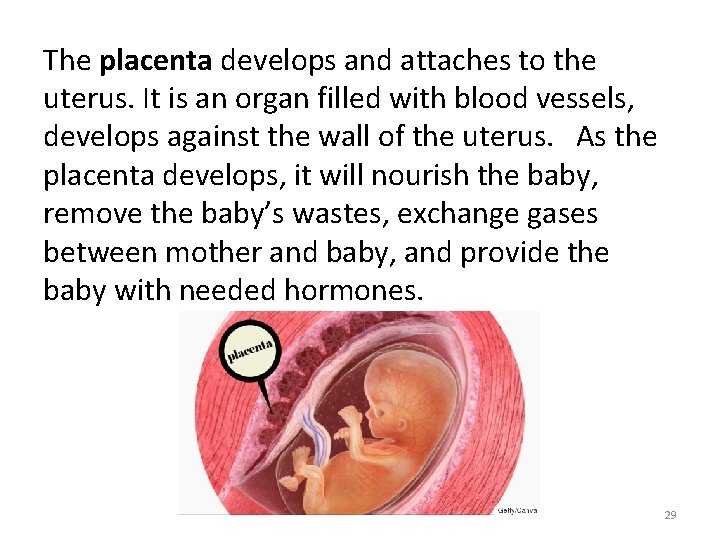
The placenta develops and attaches to the uterus. It is an organ filled with blood vessels, develops against the wall of the uterus. As the placenta develops, it will nourish the baby, remove the baby’s wastes, exchange gases between mother and baby, and provide the baby with needed hormones. 29
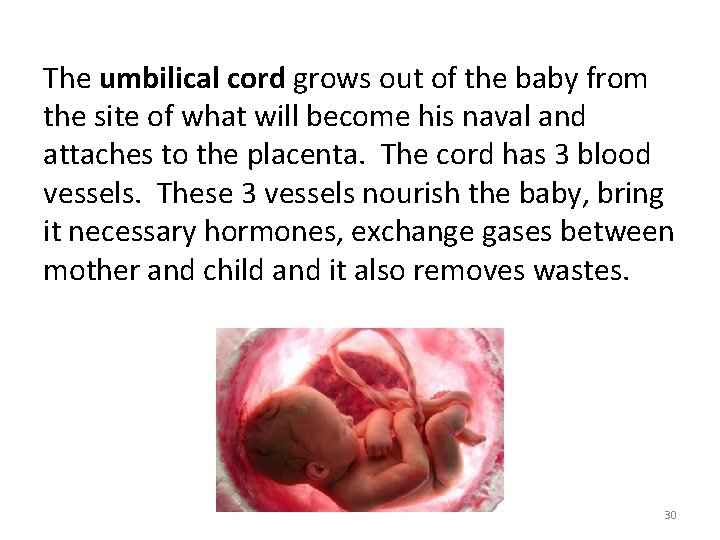
The umbilical cord grows out of the baby from the site of what will become his naval and attaches to the placenta. The cord has 3 blood vessels. These 3 vessels nourish the baby, bring it necessary hormones, exchange gases between mother and child and it also removes wastes. 30
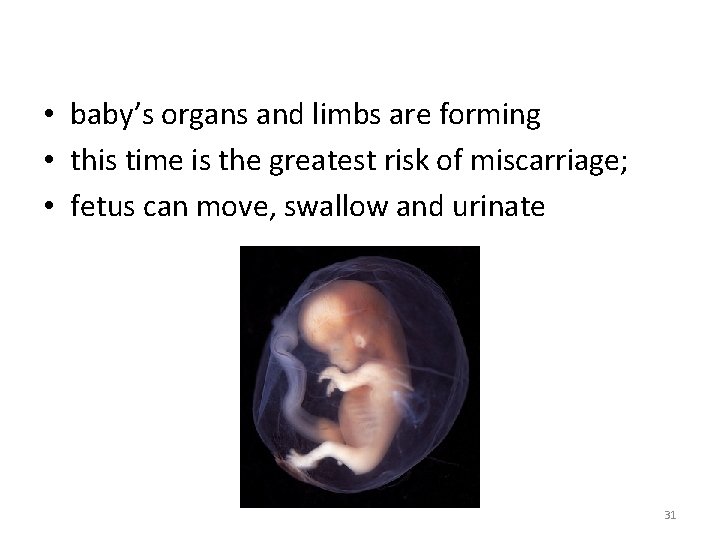
• baby’s organs and limbs are forming • this time is the greatest risk of miscarriage; • fetus can move, swallow and urinate 31
Embryonic Stage The 2 nd stage of prenatal development is the embryonic stage, which last six weeks. The baby is called an embryo. The most critical stage, most of the body systems develop during this time. The mother passes good and harmful substances to the baby through the umbilical cord which can affect the baby for LIFE. Bone instead of cartilage forms. 32
Fetal Stage • The fetal stage of prenatal development begins nine weeks after conception. The baby is referred to as a fetus. • Morning sickness and exhaustion are gone! • Heartbeat can be heard at 16 weeks. Movements is called quickening. First time mothers can feel movement during weeks 18 -20 and weeks 15 -17 for mothers who’ve been pregnant before. Mom should report first movement to OB. Age of viability the time from when a baby can survive if born early. Begins as early as 23 weeks. 33
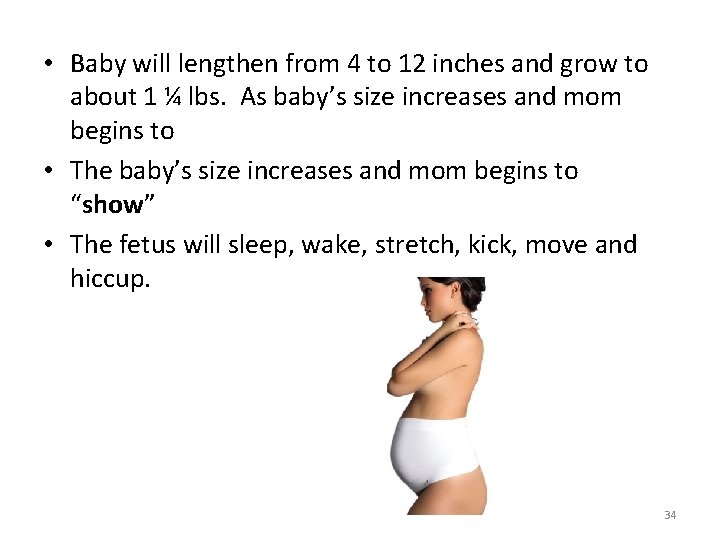
• Baby will lengthen from 4 to 12 inches and grow to about 1 ¼ lbs. As baby’s size increases and mom begins to • The baby’s size increases and mom begins to “show” • The fetus will sleep, wake, stretch, kick, move and hiccup. 34
rd 3 trimester week 28 – 40 • The baby will grow rapidly gaining ½ lb. a week and reaches about 20 inches in total length. • bone begins to replace the cartilage • All body parts mature • A fetus can suck its thumb! • Mom’s cervix begins to soften as baby shifts into position-Lightening. • Vernix (cheesy coating) and Lanugo (fur)develop 35
http: //www. online-sciences. com/the-living-organisms/what-is-the-stages-of-embryo-fetus-development/ 36
Inside Pregnancy Baby. Center on You. Tube • Week 1 -9 – http: //www. babycenter. com/2_inside-pregnancy-weeks-1 -to-9_10302602. bc • Week 10 -14 – http: //www. babycenter. com/2_inside-pregnancy-weeks-10 -to-14_10308108. bc • Week 15 -20 – http: //www. babycenter. com/2_inside-pregnancy-weeks-15 -to-20_10308111. bc • Week 21 -27 – http: //www. babycenter. com/2_inside-pregnancy-weeks-21 -to-27_10312242. bc • Week 28 -37 – http: //www. babycenter. com/2_inside-pregnancy-weeks-28 -to-37_3658874. bc 37
• STOP HERE!!! 38
Lesson 5. 2 Factors That Affect the Unborn Baby 39
Key Terms • • • • • • AIDS Chromosomal disorders Chromosomes Diabetes Dominate traits Down syndrome Environmental factors Fetal alcohol spectrum disorders (FASDs) Genetic disorder Genetic factors HIV Pregnancy-induced hypertension (PIH) Recessive traits Rh factor Rubella Sexually transmitted infections (STIs) Abnormalities Botanist Exert Exponentially Vulnerable 40
41
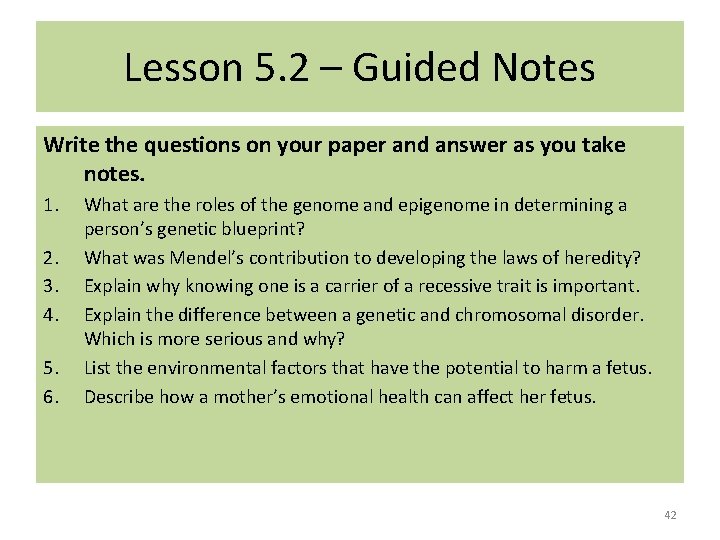
Lesson 5. 2 – Guided Notes Write the questions on your paper and answer as you take notes. 1. 2. 3. 4. 5. 6. What are the roles of the genome and epigenome in determining a person’s genetic blueprint? What was Mendel’s contribution to developing the laws of heredity? Explain why knowing one is a carrier of a recessive trait is important. Explain the difference between a genetic and chromosomal disorder. Which is more serious and why? List the environmental factors that have the potential to harm a fetus. Describe how a mother’s emotional health can affect her fetus. 42
• At the moment the sperm enters the egg, the baby forms traits from both the mother and father. • These inherited traits, including any disorders, are merged into a unique new person with influences the child’s growth and development throughout life. 43
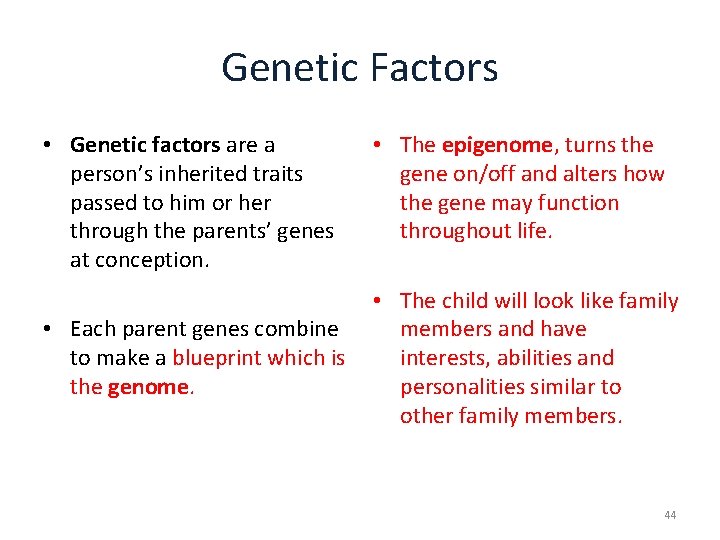
Genetic Factors • Genetic factors are a person’s inherited traits passed to him or her through the parents’ genes at conception. • The epigenome, turns the gene on/off and alters how the gene may function throughout life. • The child will look like family • Each parent genes combine members and have to make a blueprint which is interests, abilities and the genome. personalities similar to other family members. 44
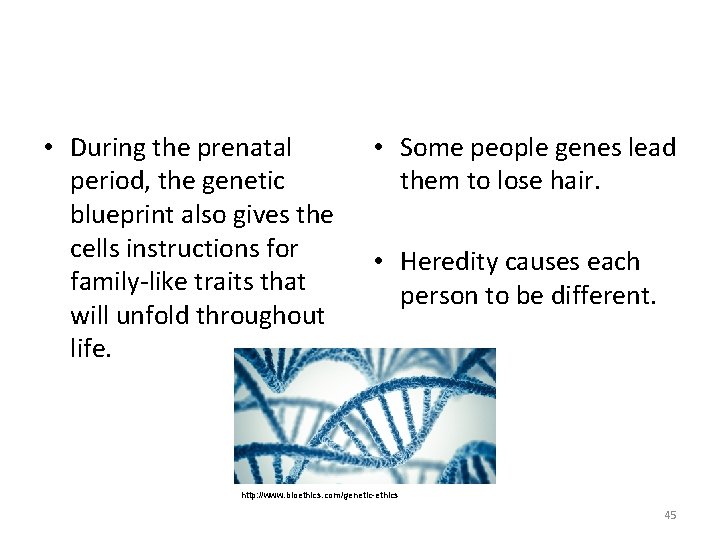
• During the prenatal period, the genetic blueprint also gives the cells instructions for family-like traits that will unfold throughout life. • Some people genes lead them to lose hair. • Heredity causes each person to be different. http: //www. bioethics. com/genetic-ethics 45
Heredity and Genetics • Everyone begin life as a single celled zygote. • The nucleus, or center of this cell contains a set of instructions to build a living being. • These directions are written in what scientist call a genetic code which is stored in DNA. • DNA is a chemical compound found in threadlike structures called chromosomes. 46
Inside pregnancy: Your baby's DNA • Baby. Center Video – http: //www. babycenter. com/2_inside-pregnancy-your-babysdna_10354440. bc 47
Chromosomes and Genes • Each human baby receives a total of 46 chromosomes. 23 from each parent. • When the ovum and sperm meet in fertilization, the single zygote will have 46 chromosomes. • This is what makes each person unique. • These genes work together to determine the child’s specific traits. 48
Dominate and Recessive Traits • Gregor Mendel (1822 -1884) discovered the original laws of heredity. • He was a botanist (person who studies plant life) from Austria. • Laws of Heredity are based on dominate and recessive traits. 49
• Dominate traits are always expressed in a person even if only one gene of the pair is inherited for that trait. • Recessive traits are not typically expressed in a person unless both genes for the trait inherited. • A person who inherits only one recessive gene for a trait becomes a carrier of that trait. 50
Autosomes and Sex Chromosomes • Of the 23 pairs of chromosomes in each cell, 22 pairs (chromosomes 1 -22) are autosomes. • The genes in these autosomes are always matched and passed equally: • 1 from mother • 1 from father • Traits are based on dominant and recessive genes. 51
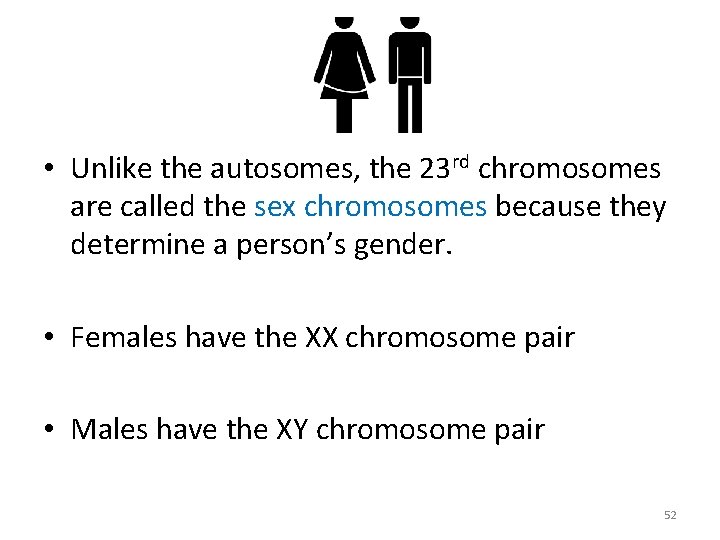
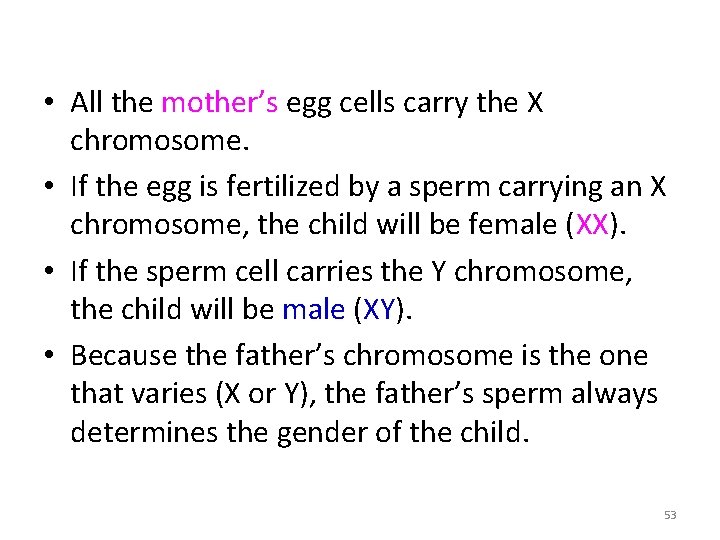
• Unlike the autosomes, the 23 rd chromosomes are called the sex chromosomes because they determine a person’s gender. • Females have the XX chromosome pair • Males have the XY chromosome pair 52
• All the mother’s egg cells carry the X chromosome. • If the egg is fertilized by a sperm carrying an X chromosome, the child will be female (XX). • If the sperm cell carries the Y chromosome, the child will be male (XY). • Because the father’s chromosome is the one that varies (X or Y), the father’s sperm always determines the gender of the child. 53
Inside Pregnancy: Girl or Boy? • Baby. Center Video http: //www. youtube. com/watch? v=Su. Wo. XFIcg. Cg 54
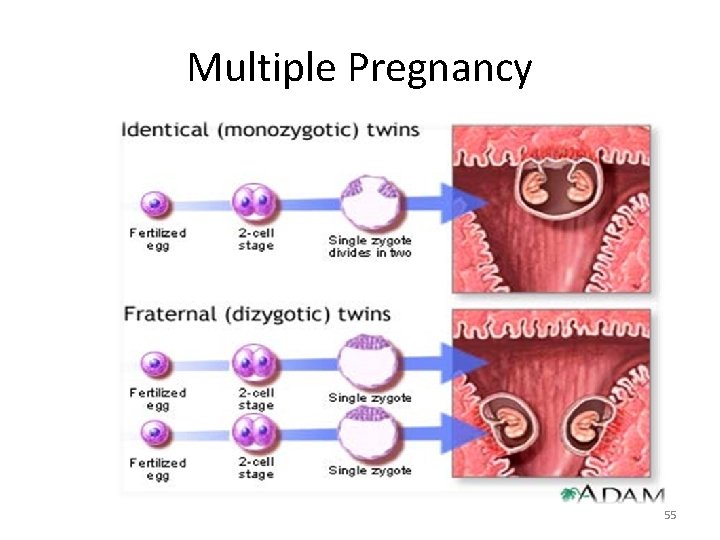
Multiple Pregnancy 55
56
Biracial Couple Gives Birth to Twins: • https: //www. youtube. c om/watch? v=e 5 ODsf_TEk • https: //www. youtube. c om/watch? v=8 b. B 9 PPjp 04 o 57
58
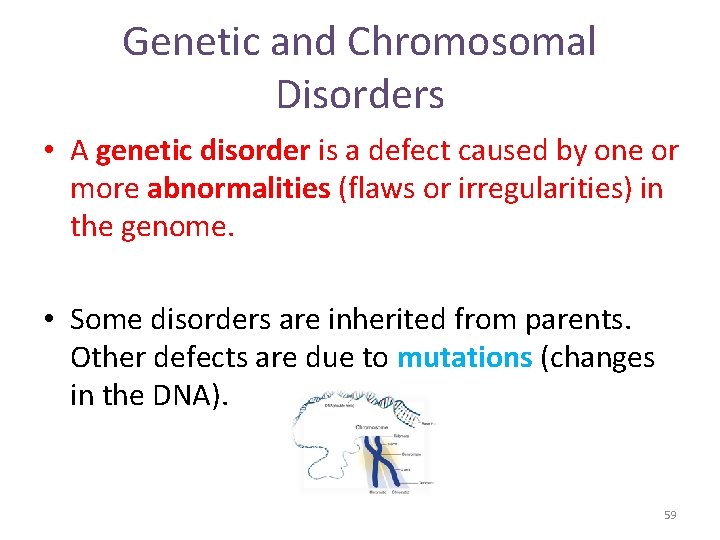
Genetic and Chromosomal Disorders • A genetic disorder is a defect caused by one or more abnormalities (flaws or irregularities) in the genome. • Some disorders are inherited from parents. Other defects are due to mutations (changes in the DNA). 59
• Chromosomal disorders are defects in the chromosomes. Chromosome disorders are caused by changes in the number of chromosomes or by a structural abnormality, such as a deletion or duplication of part of the chromosome. • Down Syndrome occurs when each body cell has three copies of chromosome 21 instead of two copies. 60
Environmental Factors • Environmental Factors are caused by a person’s surroundings. • The prenatal environment is the mother’s body, which affects the baby. 61
• This means the substances a pregnant woman takes into her body also affect the developing baby. • Environmental substances include foods, beverages, drugs, and environmental pollutants, such as lead, chemicals, pesticides, and herbicides. 62
• An unborn baby depends on the mother for a healthy start. • Women with good health habits and a healthy environment before pregnancy most often have healthy babies. • Pregnant women with environmental factors that do not promote a healthy pregnancy are called high-risk mothers-to-be. 63
Parents’ Ages • In regard to health, the ideal time for a woman to have a baby is between 21 and 28 years of age. • Teens and women over 35 years of age are high-risk mothers-to-be. 64
• Women over 35 years of age have a higher rate of babies with health problems, disabilities, and disorders. • Mutations in the sperm occur as men age, and the number of mutations rise exponentially (rapidly). 65
High Risk Pregnancy Indicators and Diagnosis (Q&A) Howard County General Hospital • https: //www. youtube. com/watch? v=4 m. Fv. BQ cyr. Lw 66
Mother’s Physical Health • Good health habits prior • Other problems that are to and during pregnancy of concern to doctors can promote a healthy include certain illnesses pregnancy for both the and diseases, high-risk mother and the baby. behaviors (drug or i. e. eating nutritious alcohol use), and meals, maintaining a emotional stress healthy weight, getting plenty of sleep and rest, and physical activity 67
Illnesses and Diseases in the Mother • Any health problems a woman have before and duing pregnancy may play a role in the pregnancy and affect the baby’s health. • Steps and be taken to protect the unborn baby. 68
Diabetes • Diabetes is a disorder caused by the body’s inability to use sugar properly. The body inadequately produces or uses the hormone insulin. • Gestational diabetes, can occur during pregnancy. Gestational diabetes appears in about 18% of women who did not have diabetes before pregnancy. 69
Diseases or Illnesses in the Mother Diabetes During Pregnancy: What is Gestational Diabetes? http: //www. youtube. com/watch? v=A-8 de 9 Lu. VJQ ● • Diabetes Basics: Create Your Plate http: //www. youtube. com/watch? v=A 6 LZijds. Gu 0 70
Pregnancy-Induced Hypertension (PIH) • Pregnancy-induced hypertension is the name for high blood pressure caused by pregnancy. It’s also referred to as preeclampsia or toxemia. • Appears late in pregnancy. Causes unknown. • It includes a sudden increase in blood pressure, protein in the urine, and swelling. • Early treatment, bed rest, medicine, and/or early delivery. • If untreated, can lead to damage or death in mom, baby or both. 71
Rh factor • Rh factor is a protein substance found on the surface of red blood cells of about 85% of the population, mainly among Caucasians. • People who have it is called Rh+ or Rh-. • Only time it can cause the baby a problem is when the father is Rh-. • If the baby inherits the Rh+ blood type from the father, the baby my develop Rh disease. • Rh disease is a type of blood condition that destroy the baby’s red blood cells. 72
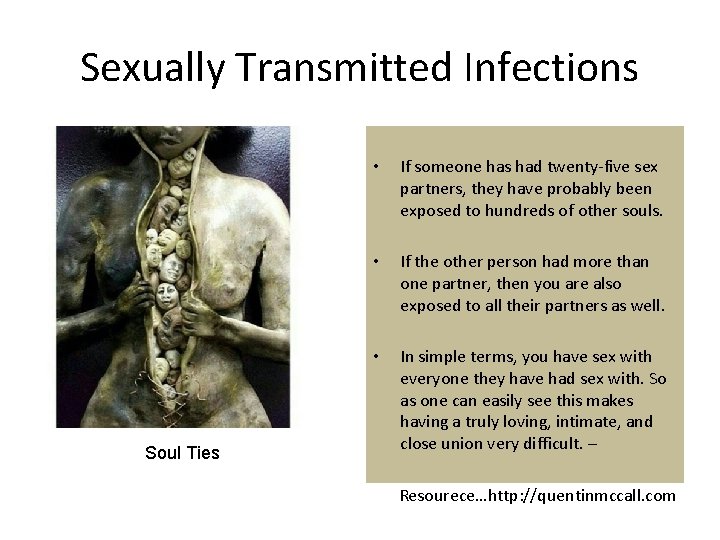
Sexually Transmitted Infections Soul Ties • If someone has had twenty-five sex partners, they have probably been exposed to hundreds of other souls. • If the other person had more than one partner, then you are also exposed to all their partners as well. • In simple terms, you have sex with everyone they have had sex with. So as one can easily see this makes having a truly loving, intimate, and close union very difficult. – Resourece…http: //quentinmccall. com
Sexually Transmitted Infections (STI’s) • Sexually transmitted infections are infections illnesses contracted primarily through sexually intercourse. Also known as sexually transmitted diseases (STD’s). • The most dangerous is is HIV/AIDS. HIV (human immunodeficiency virus) is the STI that causes the disease AIDS (acquired immunodeficiency syndrome). 74
• AIDS develops when HIV attacks the body’s immune system until it is no longer able to fight illness. • HIV is spread through sexual relations or by contact with contaminated blood and bodily fluids. • Among drug users, HIV can spread through the sharing of contaminated IV needles. 75
• Some STIs can enter the bloodstream of the mother and cross the placenta to reach the fetus. • Others infect the mother’s reproductive tract and can pass to the baby during delivery. Still other STIs can be passed from mother to baby during breast feeding. • If a woman thinks she was exposed she need to immediately tell her doctor. 76
Sexually Transmitted Infections • Info on Sexually Transmitted Diseases – http: //www. youtube. com/watch? v=Bazh 6 p 5 r. OFM
Rubella (German Measles) • A virus that can cross the placenta and affect the baby during the first three months of pregnancy. • Infected babies, may be born blind, deaf, with an intellectual disability, and/or with heart problems. • Mother’s must have had the MMR (measles-mumpsrubella) vaccination during childhood. Must be avoided during pregnancy because it’s risky for fetus. 78
Radiation Exposure • X-rays aimed toward the fetus increase the likelihood of childhood cancer. • Some studies link the use of X-rays in pregnancy to congenital disabilities in the fetus. • Inform doctor if you expect you are pregnant. 79
Drug and Alcohol Use • Harmful substances (nicotine, alcohol, medications and drugs) can enter the mother’s body, pass through the placenta and reach an unborn baby. 80
Smoking and Pregnancy I Am Your Child Series with Rob Reiner
Alcohol • Fetal alcohol spectrum disorders (FASDs) is a group of symptoms that occurs in babies whose mothers drank during pregnancy. • There are three conditions they are comprised of. 82
• Fetal Alcohol Syndrome (FAS) is the severe end of the spectrum. • These babies have abnormal – facial features, – growth problems, and – brain disorders ● They can have problems with learning executive functions vision hearing 83
• Alcohol-Related Neurodevelopmental Disorder (ARND). • These babies may have – Learning and behavior problems – Poor judgment and impulse control Often first noted near school-age. 84
• Alcohol-Related Birth Defects (ARBD). • These babies have problems with one or more of the following: – Heart – Kidneys – Bones – Hearing 85
Advisory • Mothers who drink alcohol during pregnancy have a very high risk of having babies with ARND. • These children show mental health problems by the school-age years. 86
Medication • The effects of most medications on the unborn baby is unknown. • A pregnant woman should not take any medications w/o consulting her doctor. • This include prescriptions prior to pregnancy, over the counter, dietary supplements, and herbal products 87
Drugs • A growing number of babies are born to mothers using cocaine, crack, heroin, marijuana, ecstasy, and other hallucinogens, powerful narcotics (pain-relieving or sleepinducing drugs). • Drugs can cross the placenta quickly and reach the baby. If a woman is addicted to drugs, canges are her baby is too. 88
• Some of the effects of drugs can be seen immediately in babies: – Early birth or death before birth – Damage to the baby’s brain, eyes, heart, limbs, intestine, and urinary tract (with cocaine use) – Withdrawal symptoms – – – high pitched cry Shaking Twitching Vomiting, Fever Rubbing the nose until the skin bleeds 89
• By the school-age and teen years, children exposed to drugs during fetal development may show mood disorders and an inability to focus attention. • In other words, the damage was done very early, but there was a “silent period” before the symptoms occurred. 90
Baby Withdrawing from Drugs The Doctors https: //www. youtube. com/watch? v=axn. S 7 T 7 Kf. TM
Advisory • Being exposed to illegal (recreational) drugs, such as cocaine, crack, or heroin, prenatally often results in mental health problems in the school-age and teen years. 92
Discussion • Because so much is known about the dangers of these substances on unborn babies: – do you think drinking alcohol, using nicotine, or taking illegal drugs during pregnancy should be considered child abuse? 93
Letter to Mom • See guidelines. 94
Mother’s Emotional Health • The mother’s emotional health can also impact prenatal development. Positive thoughts and feelings are important for a woman to have a healthy baby. • About 1 in 11 mothers experience depression and excessive stress during pregnancy, called toxic stress. 95
• The mother’s stress hormones cross the placenta to the baby. The baby can detect changes in the mother’s heartbeat and breathing rates, too. • Toxic stress may result in: – Early birth and low birth weight – Lag in brain development – Change in epigenome – Fussy temperament and sleep problems – Development delays and behavioral problems. 96
Lesson 5. 3 Health Habits Prior to and During Pregnancy 97
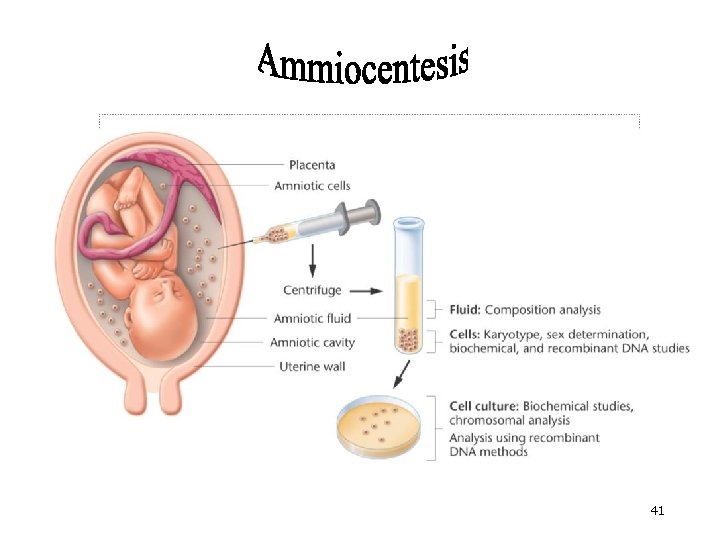
Key Terms • • • Amniocentesis Chorionic Villus Sampling (CVS) Congenital condition Folic Acid My Plate Nutrients Obstetricians Premature Birth Prenatal vitamin Ultrasound 98
Objectives • After studying this lesson, you will be able to: • Analyze the importance of good health habits prior to pregnancy. • Differentiate between presumptive and positive signs of pregnancy. • Explain the relationship between the health of the mothers and the health of the baby. • Assess medical and nutritional needs during pregnancy. • Describe how health practices, such as physical activity, hygiene, and rest and sleep affect the mother and developing fetus. 99
Lesson 5. 3 – Guided Notes Write the questions on your paper and answer as you take notes. 1. How can a woman’s health habits prior to pregnancy affect the health and development of her baby during pregnancy? 2. List the six types of nutrients and their function. 3. What are some presumptive signs of pregnancy? 4. What are some positive signs of pregnancy? 100
• Optimum (the best) health care begins before conception. • Good health habits throughout the younger years help prepare a woman for child-bearing. • It can take time to prepare the woman’s body for a healthy pregnancy. 101
Top 10 signs of pregnancy http: //www. babycenter. com/2_top-10 -signs-of-pregnancy_10379709. bc
Presumptive Signs of Pregnancy is a normal process. Menstruation stops Nausea Tiredness Frequent urination Swelling & tender breast Skin discoloration Backache, groin pain, dizziness, etc. Positive Signs of Pregnancy HCG…hormone found in blood & urine of pregnant woman. First 2 weeks of pregnancy. Fetal heartbeat. . . use a special device about 12 -16 wks. Fetal movement. . . begins at 11 wks. Fetal image…seen with ultrasound. Uterine contractions…painless contractions. 103
I Didn’t Know I was Pregnant • http: //www. youtube. com/watch? v=24_A 2_uh. Bi. Q
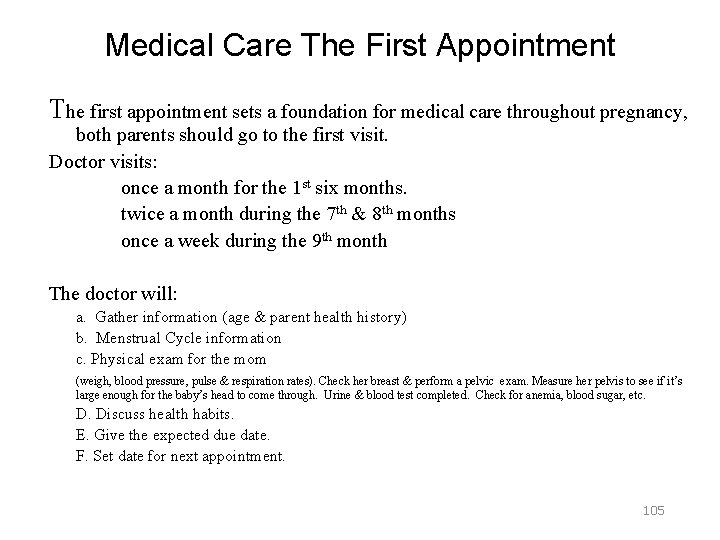
Medical Care The First Appointment The first appointment sets a foundation for medical care throughout pregnancy, both parents should go to the first visit. Doctor visits: once a month for the 1 st six months. twice a month during the 7 th & 8 th months once a week during the 9 th month The doctor will: a. Gather information (age & parent health history) b. Menstrual Cycle information c. Physical exam for the mom (weigh, blood pressure, pulse & respiration rates). Check her breast & perform a pelvic exam. Measure her pelvis to see if it’s large enough for the baby’s head to come through. Urine & blood test completed. Check for anemia, blood sugar, etc. D. Discuss health habits. E. Give the expected due date. F. Set date for next appointment. 105
Ultrasound Exam Baby. Center http: //www. babycenter. com/2_ultrasound-exam_3658842. bc 106
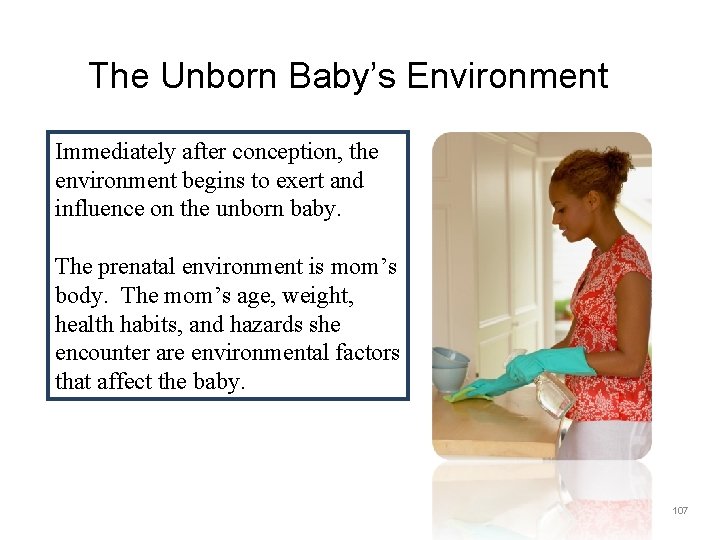
The Unborn Baby’s Environment Immediately after conception, the environment begins to exert and influence on the unborn baby. The prenatal environment is mom’s body. The mom’s age, weight, health habits, and hazards she encounter are environmental factors that affect the baby. 107
ncy Rules • http: //www. babycenter. com/2_5 -surprisingpregnancy-rules_10379132. bc 108
Age a. Best age for women is 21 -28 b. Teens & women over 36 are high risk mom’s to be c. Teens are still developing; there bodies can’t always meet the needs. d. Very young teens tend to have lowbirth or premature babies, have disabilities or born dead. e. Women over 36 tend to have babies with health problems. Physical Health a. Women who are healthy b/4 pregnancy tend to have healthy babies. b. Those with poor health tend to have unhealthy babies. c. Tests can be done to determine the health of the babies. d. You can have problems if you are over or under weight. 109
Emotional Health a. Positive thoughts & feelings are important for pregnant women. b. Negative feelings can stimulate the nervous system & the flow of adrenaline. c. When a mom is happy & relaxed, her adrenaline level is low, her heartbeat & breathing are slow and relaxed muscles. 110
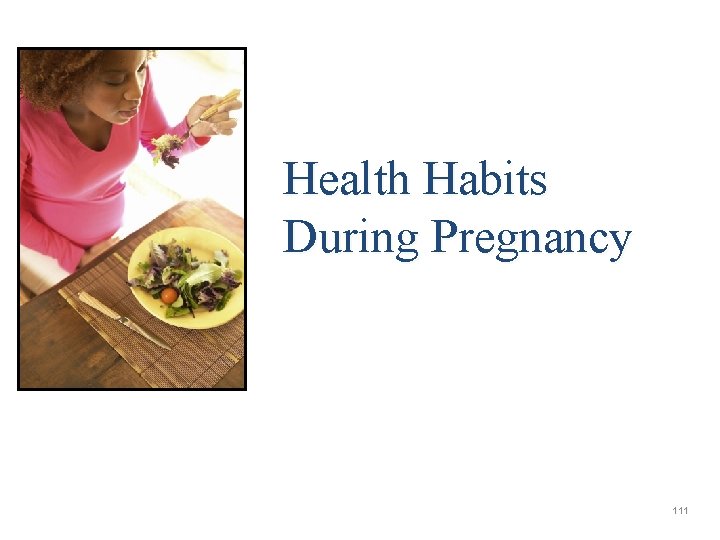
Health Habits During Pregnancy 111
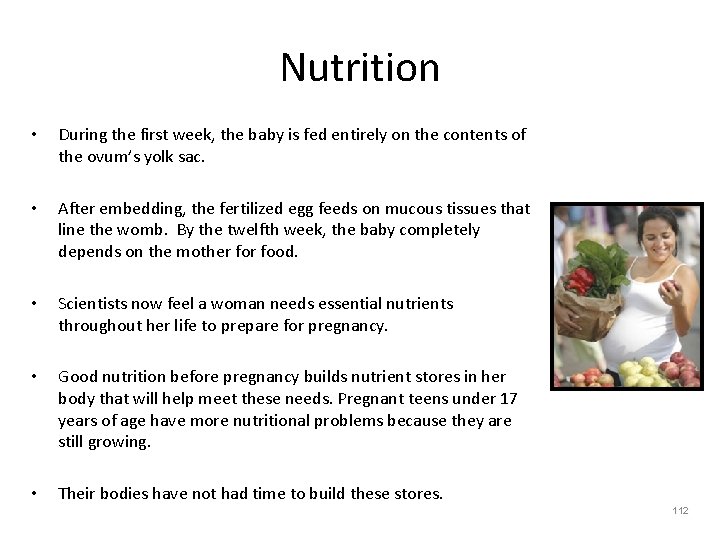
Nutrition • During the first week, the baby is fed entirely on the contents of the ovum’s yolk sac. • After embedding, the fertilized egg feeds on mucous tissues that line the womb. By the twelfth week, the baby completely depends on the mother food. • Scientists now feel a woman needs essential nutrients throughout her life to prepare for pregnancy. • Good nutrition before pregnancy builds nutrient stores in her body that will help meet these needs. Pregnant teens under 17 years of age have more nutritional problems because they are still growing. • Their bodies have not had time to build these stores. 112
• A nutritious diet is essential. • Cells need proteins, fats, carbohydrates, minerals, and vitamins to help them grow. • Diets for pregnant and nursing mothers provide more calcium, iron, folic acid, and protein than diets for non pregnant women. • Folic acid is a B-vitamin that can be found in most enriched breads, pastas, rice, and cereals, as well as multivitamins. • Pregnant women need 600 micrograms of folic acid daily. 113
How to make 3 perfect pregnancy meals • http: //www. babycenter. com/2_how-to-make-3 -perfect -pregnancy-meals_10343215. bc 114
Class Discussion • Food Replicas, plan a meal 115
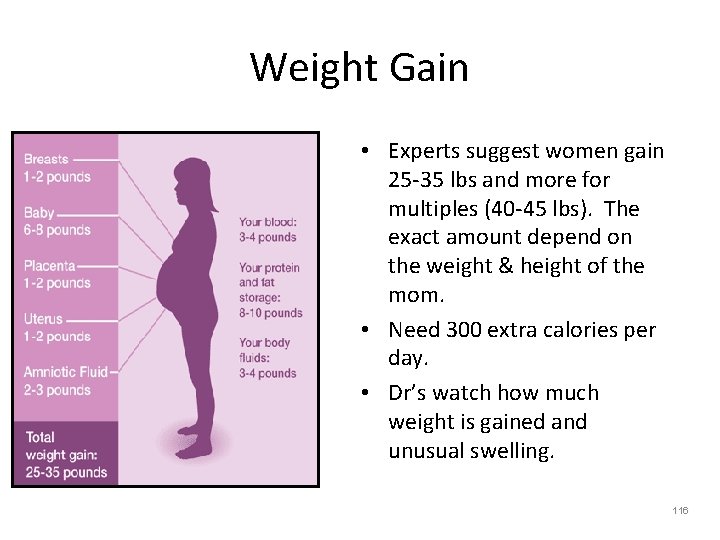
Weight Gain • Experts suggest women gain 25 -35 lbs and more for multiples (40 -45 lbs). The exact amount depend on the weight & height of the mom. • Need 300 extra calories per day. • Dr’s watch how much weight is gained and unusual swelling. 116
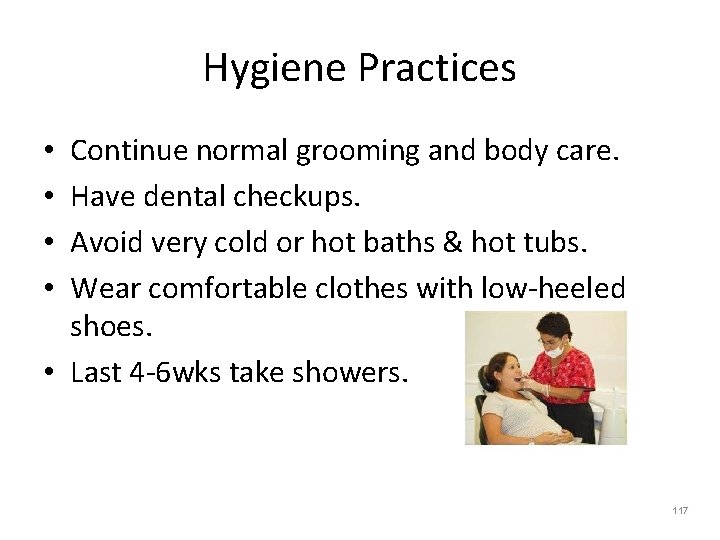
Hygiene Practices Continue normal grooming and body care. Have dental checkups. Avoid very cold or hot baths & hot tubs. Wear comfortable clothes with low-heeled shoes. • Last 4 -6 wks take showers. • • 117
Rest & Sleep • 8 -9 hours of sleep a night. • 15 -30 minutes rest during the day, not necessarily sleep. • NEVER take drugs unless prescribed by the doctor. 118
Physical Activity & Exercise • Unless advised by the doctor to limit physical activity, a pregnant woman can and should be active. • Activity keep weight w/i normal limits, strengthens muscles women use in delivery, increases energy, and relieves tension. 119
Dr’s may advise women to avoid: 1. 2. 3. 4. Avoid contact sports. Activities that jolt the pelvic region. Activities that could result in falls. Walking is good Dr’s may advise women to do: 1. Walking 2. Conditioning exercise to relieve back and leg strain of later pregnancy. 120
Healthy Pregnancy I Am Your Child Series with Rob Reiner
The End 122
123