
Early Years Evaluation EYE Data and Interventions June

- Slides: 15
Early Years Evaluation (EYE) Data and Interventions June 2016
Good Spirit School Division … Who We Are Our Motto …. . Students Come First Our Mission …. . Building Strong Foundations to Create Bright Futures Our Values …. . Responsibility, Our Vision …. . Belonging, Respect, Learning and Nurturing Learning Without Limits… Achievement For All
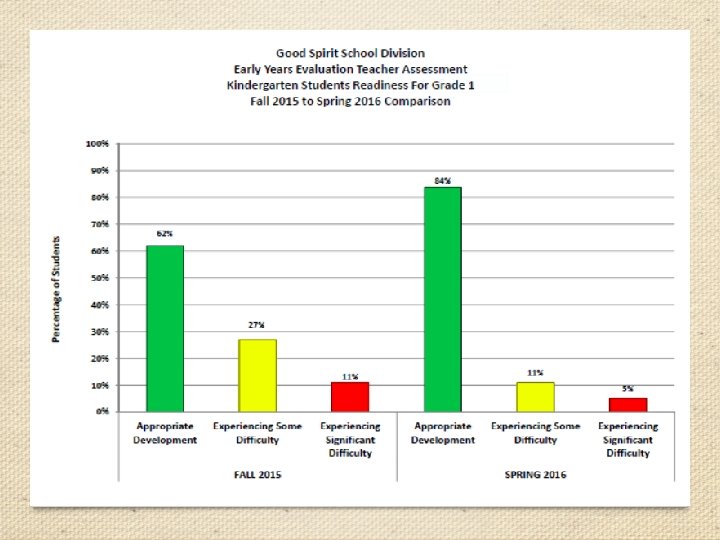
Ministry ESSP Goal By June 30, 2020, children aged 0 – 6 years will be supported in their development to ensure that 90% of students exiting Kindergarten are ready for learning in the primary grades.
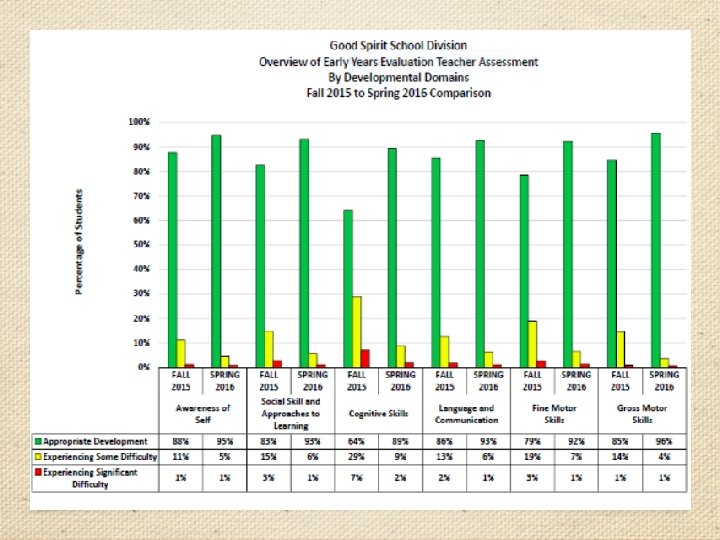
EYE Timelines & Developmental Domains • Awareness of Self and the Environment – understanding of world and connections with home and community • Social Skills and Approaches to Learning – attentiveness, interaction with peers, classroom rules/procedures • Cognitive Skills – pre-reading, problem solving, math • Language and Communication – receptive and expressive • Fine and Gross Motor – eye/hand coordination and large body movements
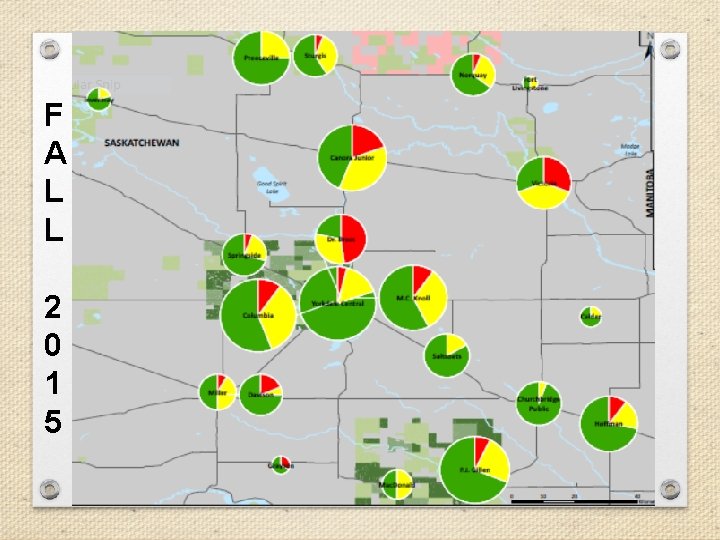
F A L L 2 0 1 5 GSSD Fall EYE Data by Geographic Region
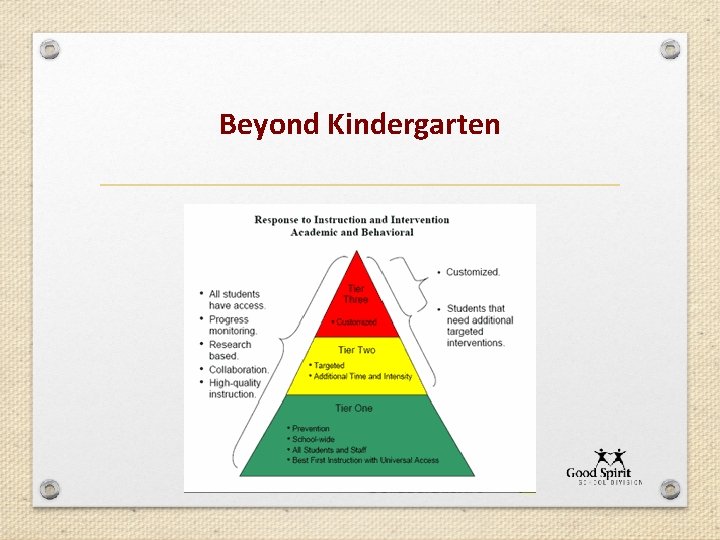
Responding to the Fall Data • Interdisciplinary Team Meetings held at schools to respond to the fall Fall Data • EYE Portal Resources for Kindergarten Teachers • RTI discussions regarding students requiring interventions – class, group, individual
GSSD SLP Interventions • Phonological Awareness Screening for all Kindergarten students • Hearing Screening using new ipad technology – referred to audiologist if hearing issues suspected. • Phonological Awareness Interventions - Chipper Chat and Songs and Rhymes – supported teachers to implement these in K classrooms • Descripto Bingo and Expanding Expression Toolkit – have to describe category, function, appearance, what it’s made of, parts of item, and location • Language Groups in K classroom - concepts, vocabulary, inferencing and predicting, following directions, phonological awareness, social skills language
GSSD Counsellor Interventions • Dino. School – social/emotional awareness, feelings, coping and problem solving skills • CARE Kit – appropriate/inappropriate touching • Zones of Regulation – emotions, coping skills, toolbox of strategies to support regulation • Social Skills – use of Skill Streaming and Model Me Kids • Positive Behavior Supports – acknowledgement of expected behaviors, use of R 360 modules by teachers to support positive behavior
GSSD Psych Interventions • Psych Recommendations for classroom learning activities • Classroom intervention focusing on pre-reading skills using a multi-sensory approach to phonemic awareness, rhyming, beginning sounds, letter formation, hand strengthening and expressive language building (components of Jolly Phonics).
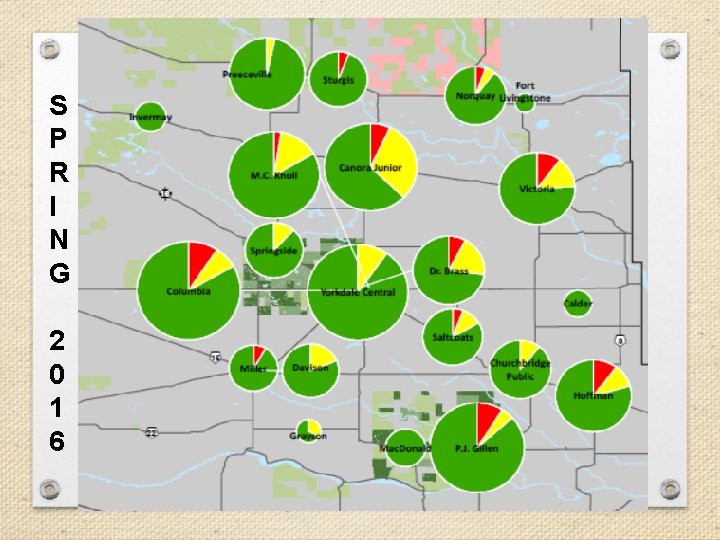
S P R I N G 2 0 1 6
Prior to Kindergarten • Pre. K Vulnerability Criteria used for selection • Interagency Collaboration to identify students needing Pre. K – updated AP as part of this process • IMPACT Events at Yorkton Family Resource Centre and throughout rural communities
Beyond Kindergarten
Questions