
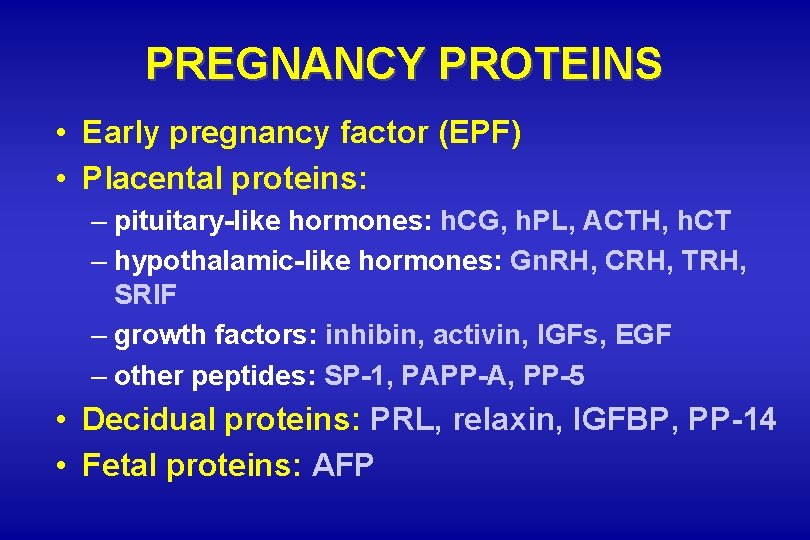
PREGNANCY PROTEINS Early pregnancy factor EPF Placental proteins
- Slides: 24
PREGNANCY PROTEINS • Early pregnancy factor (EPF) • Placental proteins: – pituitary-like hormones: h. CG, h. PL, ACTH, h. CT – hypothalamic-like hormones: Gn. RH, CRH, TRH, SRIF – growth factors: inhibin, activin, IGFs, EGF – other peptides: SP-1, PAPP-A, PP-5 • Decidual proteins: PRL, relaxin, IGFBP, PP-14 • Fetal proteins: AFP
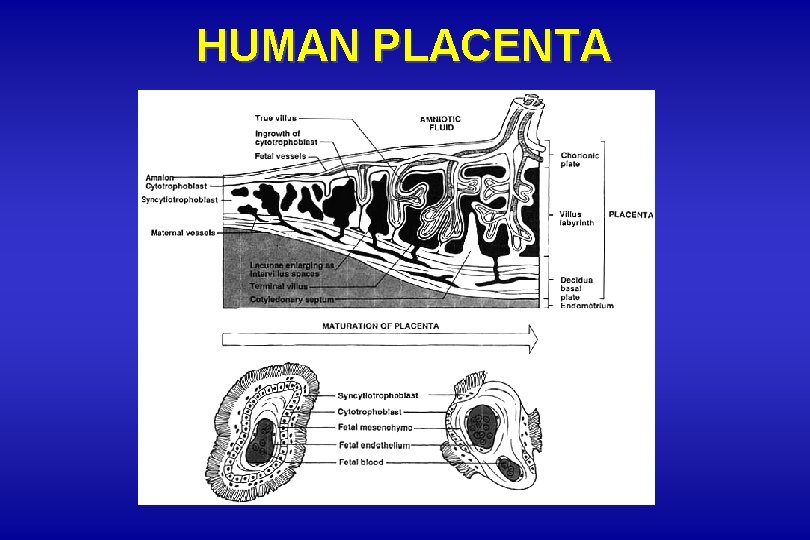
HUMAN PLACENTA
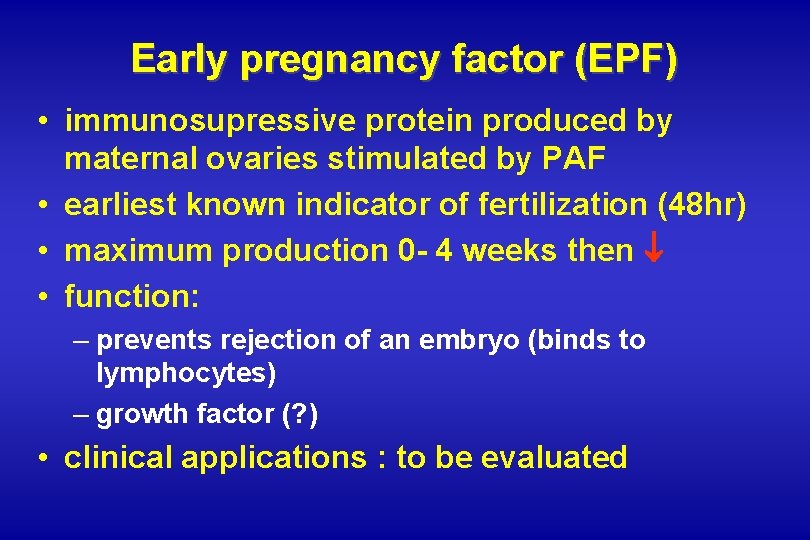
Early pregnancy factor (EPF) • immunosupressive protein produced by maternal ovaries stimulated by PAF • earliest known indicator of fertilization (48 hr) • maximum production 0 - 4 weeks then • function: – prevents rejection of an embryo (binds to lymphocytes) – growth factor (? ) • clinical applications : to be evaluated
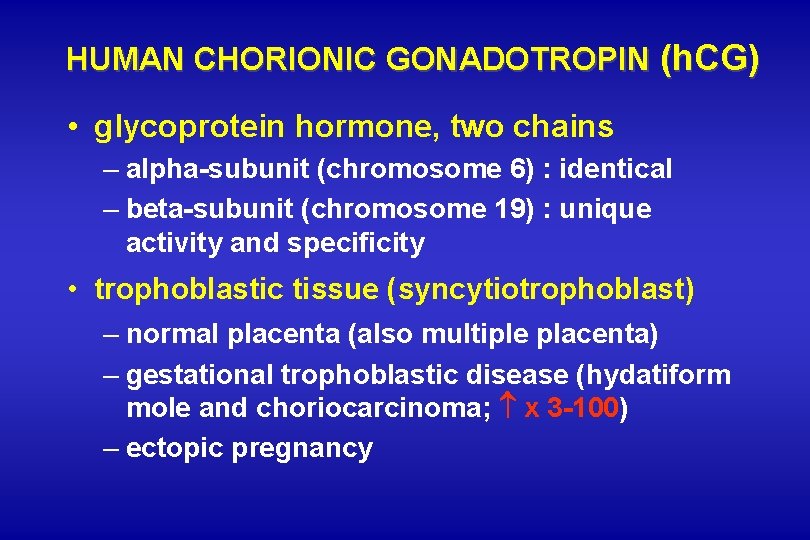
HUMAN CHORIONIC GONADOTROPIN (h. CG) • glycoprotein hormone, two chains – alpha-subunit (chromosome 6) : identical – beta-subunit (chromosome 19) : unique activity and specificity • trophoblastic tissue (syncytiotrophoblast) – normal placenta (also multiple placenta) – gestational trophoblastic disease (hydatiform mole and choriocarcinoma; x 3 -100) – ectopic pregnancy
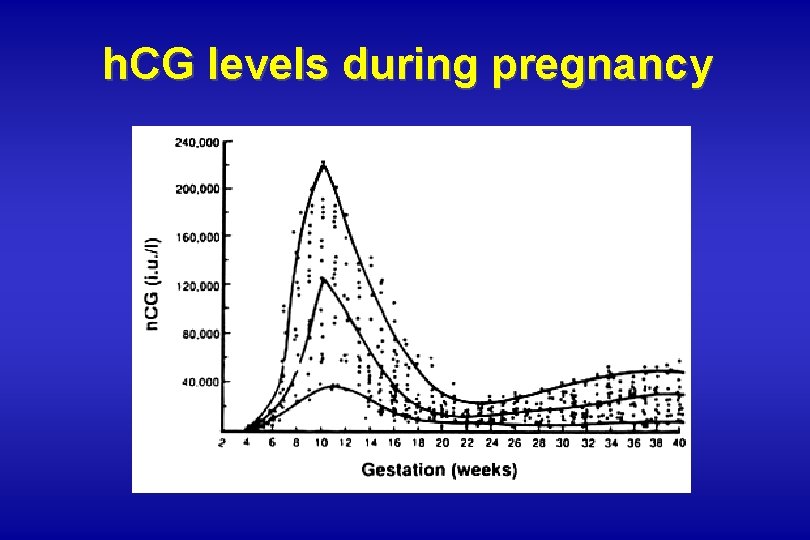
h. CG levels during pregnancy
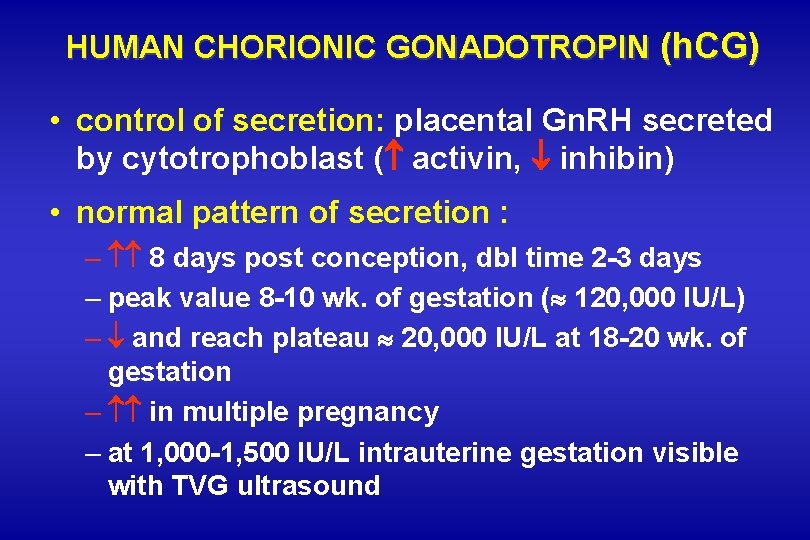
HUMAN CHORIONIC GONADOTROPIN (h. CG) • control of secretion: placental Gn. RH secreted by cytotrophoblast ( activin, inhibin) • normal pattern of secretion : – 8 days post conception, dbl time 2 -3 days – peak value 8 -10 wk. of gestation ( 120, 000 IU/L) – and reach plateau 20, 000 IU/L at 18 -20 wk. of gestation – in multiple pregnancy – at 1, 000 -1, 500 IU/L intrauterine gestation visible with TVG ultrasound
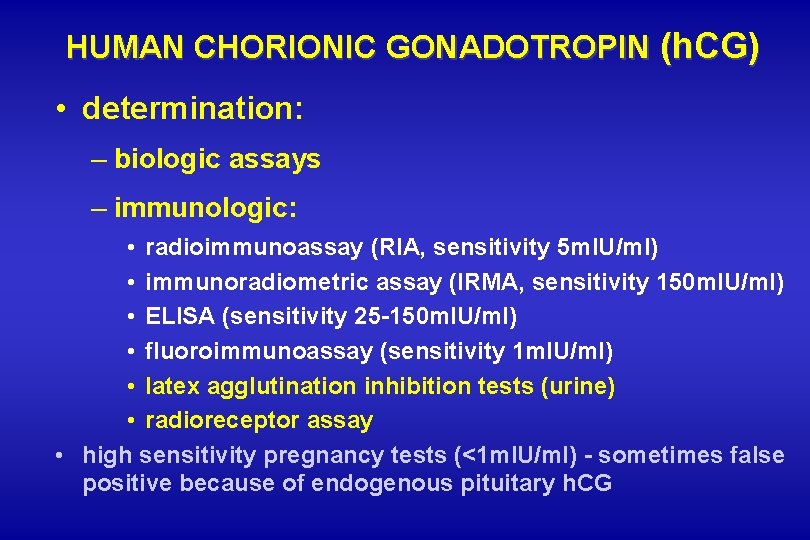
HUMAN CHORIONIC GONADOTROPIN (h. CG) • determination: – biologic assays – immunologic: • radioimmunoassay (RIA, sensitivity 5 m. IU/ml) • immunoradiometric assay (IRMA, sensitivity 150 m. IU/ml) • ELISA (sensitivity 25 -150 m. IU/ml) • fluoroimmunoassay (sensitivity 1 m. IU/ml) • latex agglutination inhibition tests (urine) • radioreceptor assay • high sensitivity pregnancy tests (<1 m. IU/ml) - sometimes false positive because of endogenous pituitary h. CG
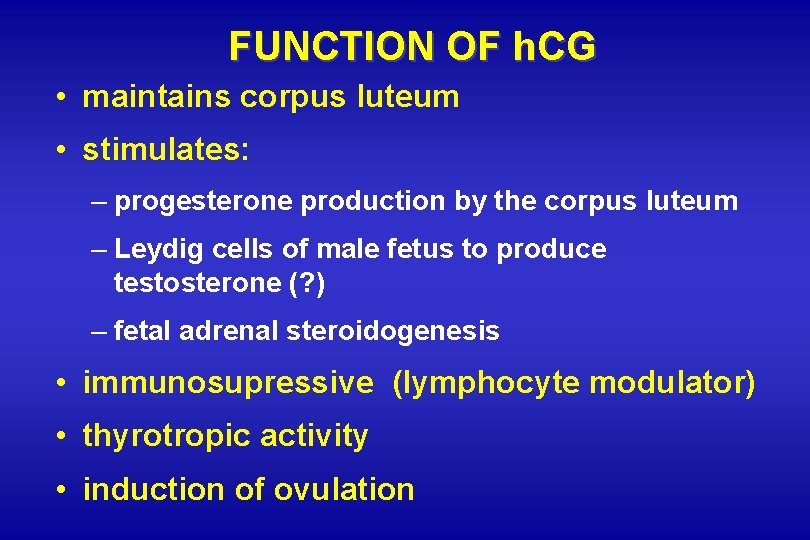
FUNCTION OF h. CG • maintains corpus luteum • stimulates: – progesterone production by the corpus luteum – Leydig cells of male fetus to produce testosterone (? ) – fetal adrenal steroidogenesis • immunosupressive (lymphocyte modulator) • thyrotropic activity • induction of ovulation
HUMAN PLACENTAL LACTOGEN (h. PL) HUMAN SOMMATOMAMMOTROPHIN (h. CS) • single chain polypeptide • produced 3 wk. post conception; detected in serum 5 -6 wk. post conception • highest levels III trimester, disappears after delivery • production proportional to placental mass • determination: RIA
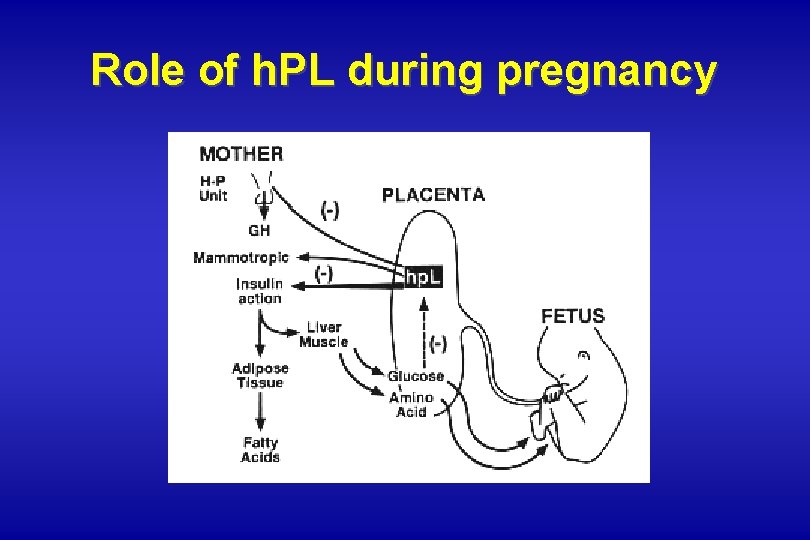
Role of h. PL during pregnancy
HUMAN PLACENTAL LACTOGEN (h. PL) HUMAN SOMMATOMAMMOTROPHIN (h. CS) Growth hormone (GH and PRL-like effects) : – induces lypolysis, plasma FFA – inhibits glucose uptake and gluconeogenesis, glucose intolerance – insulinogenic effect ( insulin) – hyperinsulinemia – plasma IGF-I
CORTICOTROPIN RELEASING HORMONE (CRH) • produced in cytotrophoblast (max. at term) • stimulates placental ACTH release • circulating maternal levels ADRENOCORTICOTROPIN (ACTH) • structurally similar to pituitary ACTH • circulating maternal levels • hypercortisolism
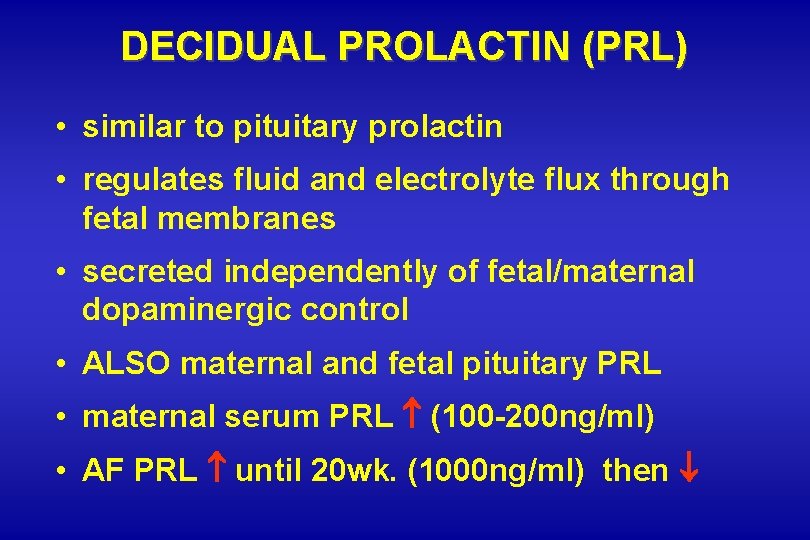
DECIDUAL PROLACTIN (PRL) • similar to pituitary prolactin • regulates fluid and electrolyte flux through fetal membranes • secreted independently of fetal/maternal dopaminergic control • ALSO maternal and fetal pituitary PRL • maternal serum PRL (100 -200 ng/ml) • AF PRL until 20 wk. (1000 ng/ml) then
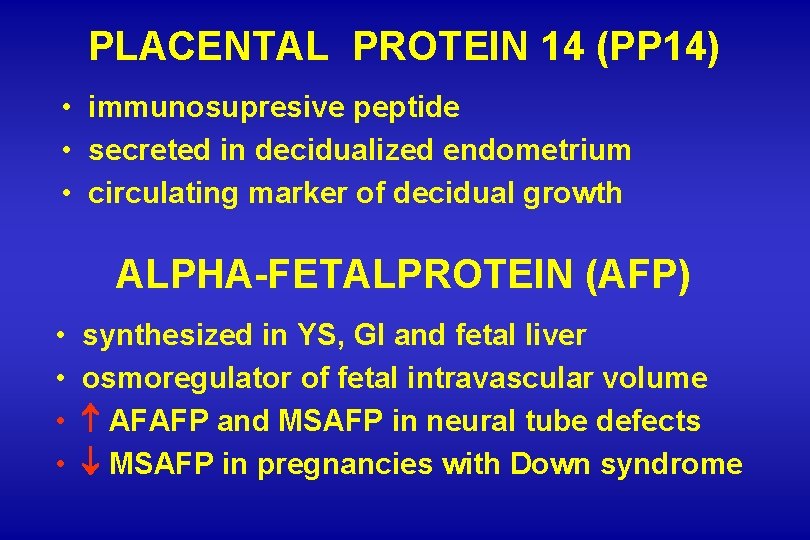
PLACENTAL PROTEIN 14 (PP 14) • immunosupresive peptide • secreted in decidualized endometrium • circulating marker of decidual growth ALPHA-FETALPROTEIN (AFP) • • synthesized in YS, GI and fetal liver osmoregulator of fetal intravascular volume AFAFP and MSAFP in neural tube defects MSAFP in pregnancies with Down syndrome
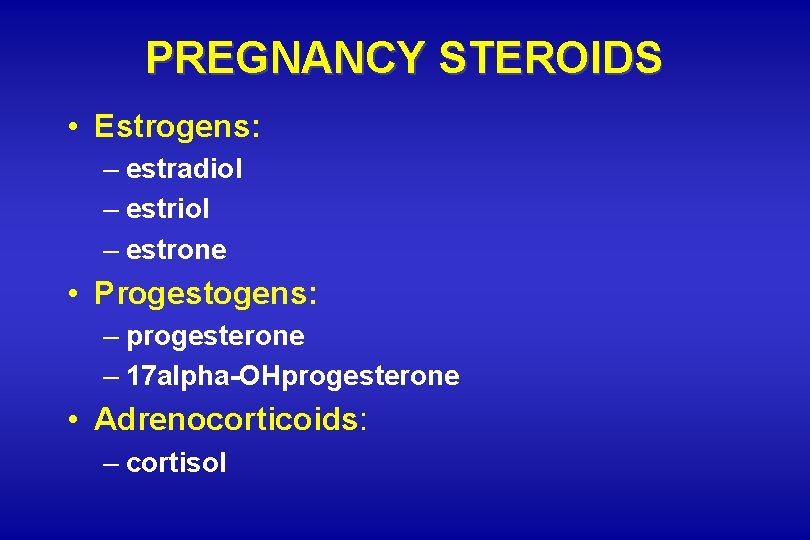
PREGNANCY STEROIDS • Estrogens: – estradiol – estrone • Progestogens: – progesterone – 17 alpha-OHprogesterone • Adrenocorticoids: – cortisol
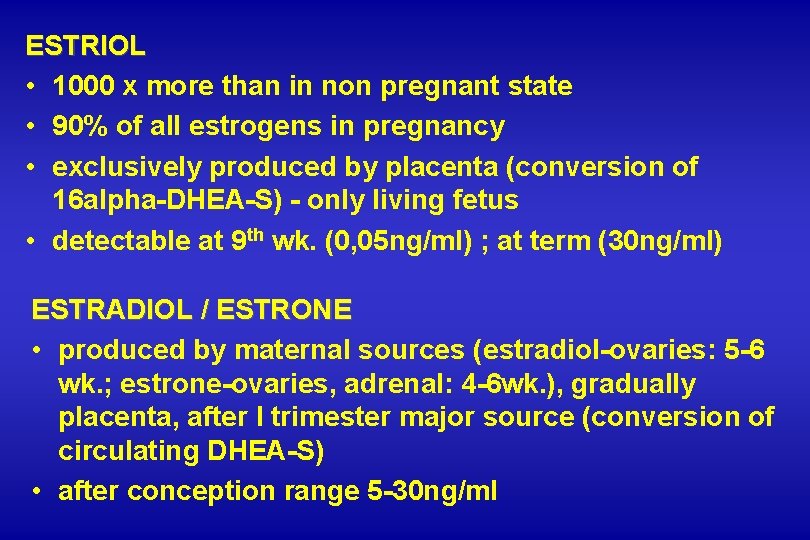
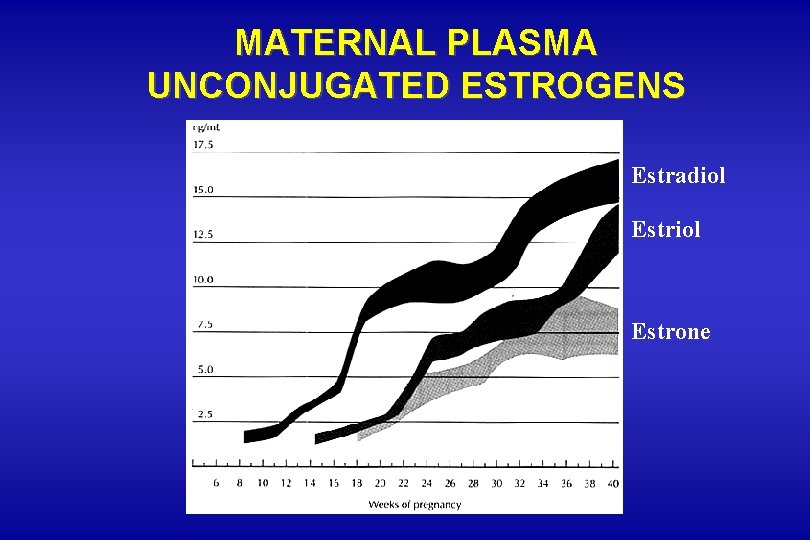
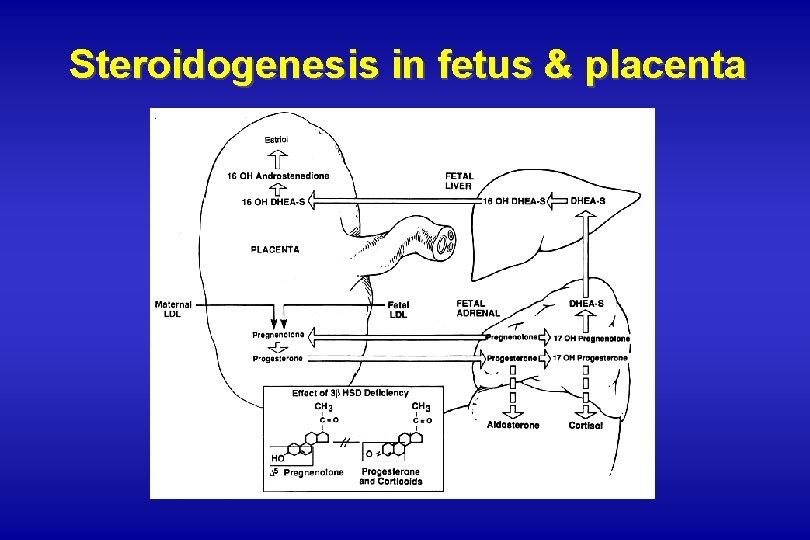
ESTRIOL • 1000 x more than in non pregnant state • 90% of all estrogens in pregnancy • exclusively produced by placenta (conversion of 16 alpha-DHEA-S) - only living fetus • detectable at 9 th wk. (0, 05 ng/ml) ; at term (30 ng/ml) ESTRADIOL / ESTRONE • produced by maternal sources (estradiol-ovaries: 5 -6 wk. ; estrone-ovaries, adrenal: 4 -6 wk. ), gradually placenta, after I trimester major source (conversion of circulating DHEA-S) • after conception range 5 -30 ng/ml
MATERNAL PLASMA UNCONJUGATED ESTROGENS Estradiol Estrone
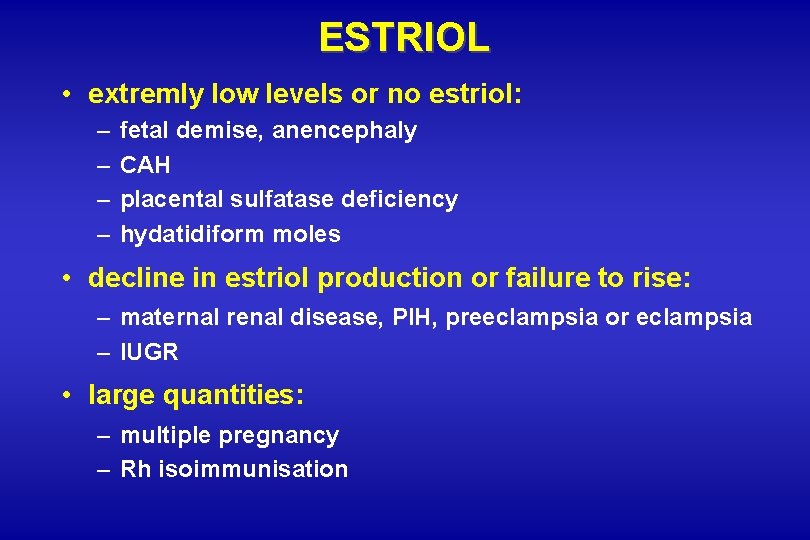
ESTRIOL • extremly low levels or no estriol: – – fetal demise, anencephaly CAH placental sulfatase deficiency hydatidiform moles • decline in estriol production or failure to rise: – maternal renal disease, PIH, preeclampsia or eclampsia – IUGR • large quantities: – multiple pregnancy – Rh isoimmunisation
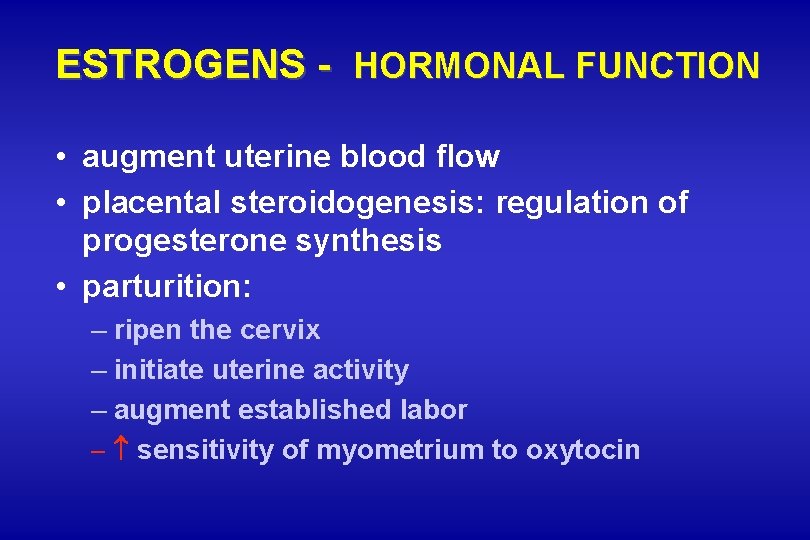
ESTROGENS - HORMONAL FUNCTION • augment uterine blood flow • placental steroidogenesis: regulation of progesterone synthesis • parturition: – ripen the cervix – initiate uterine activity – augment established labor – sensitivity of myometrium to oxytocin
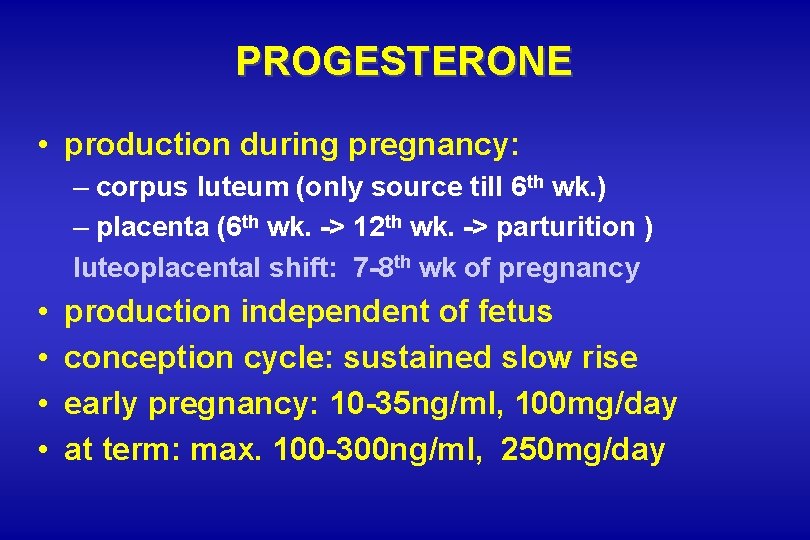
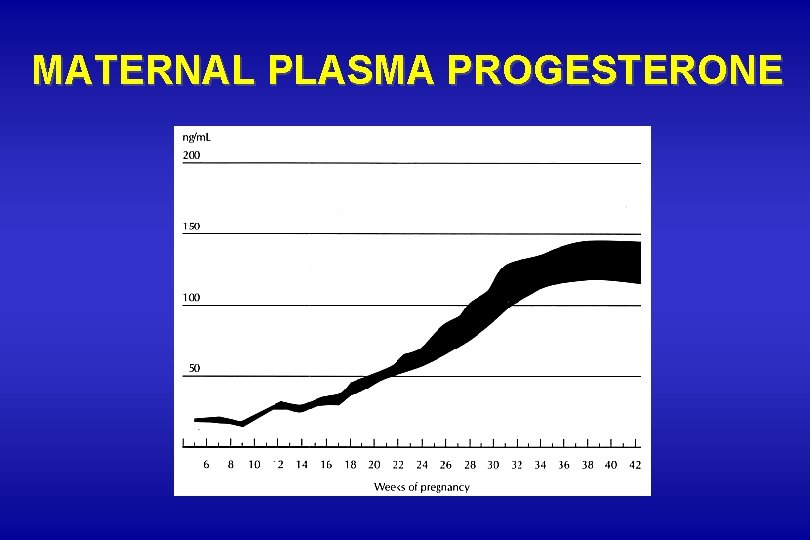
PROGESTERONE • production during pregnancy: – corpus luteum (only source till 6 th wk. ) – placenta (6 th wk. -> 12 th wk. -> parturition ) luteoplacental shift: 7 -8 th wk of pregnancy • • production independent of fetus conception cycle: sustained slow rise early pregnancy: 10 -35 ng/ml, 100 mg/day at term: max. 100 -300 ng/ml, 250 mg/day
MATERNAL PLASMA PROGESTERONE
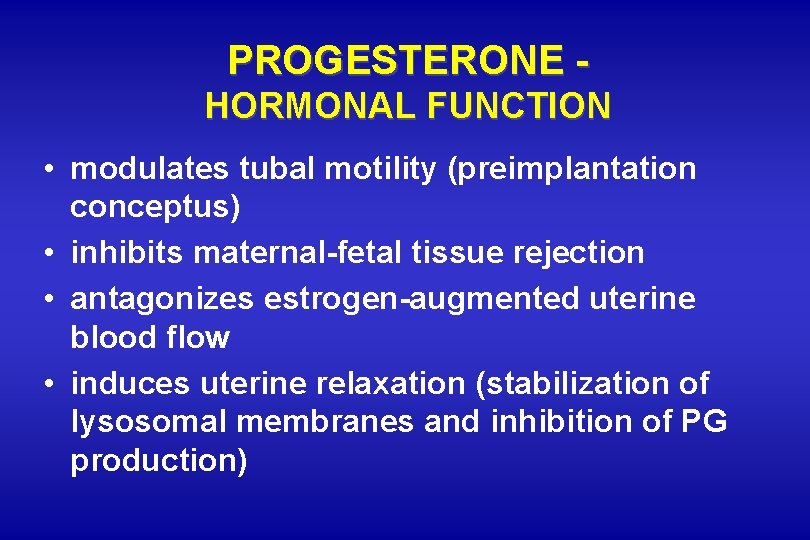
PROGESTERONE HORMONAL FUNCTION • modulates tubal motility (preimplantation conceptus) • inhibits maternal-fetal tissue rejection • antagonizes estrogen-augmented uterine blood flow • induces uterine relaxation (stabilization of lysosomal membranes and inhibition of PG production)
Steroidogenesis in fetus & placenta
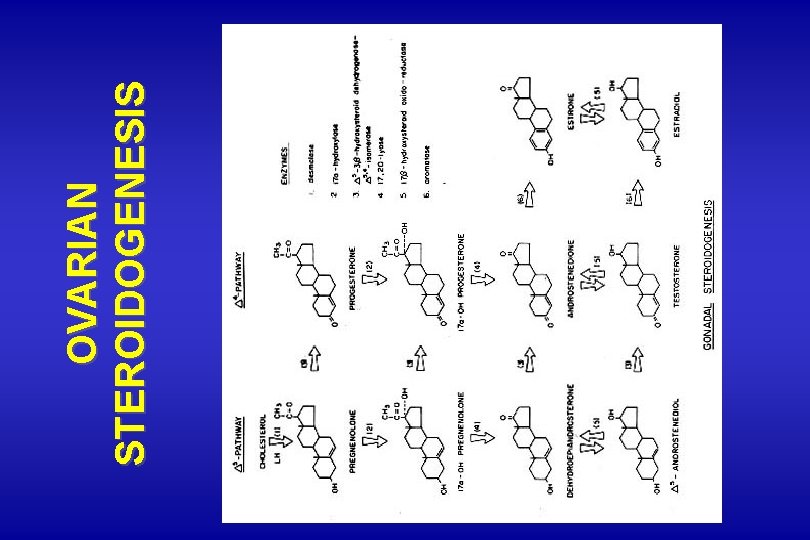
OVARIAN STEROIDOGENESIS