Notes to the User The Active Pilot Monitoring


- Slides: 103
Notes to the User The Active Pilot Monitoring Working Group (WG) feels strongly that changing how pilots think about monitoring is a comprehensive endeavor that cannot rely on any singular module of instruction. Effective monitoring can be improved in any aviation operation only to the extent that: – Management buys in and supports the effort – Operational philosophies, policies, procedures and practices are designed to support effective monitoring – Operational philosophies, policies, procedures and practices involving monitoring are trained in context, throughout a pilot’s career as part of a pilot’s basic flying skills Slide intended to be hidden during presentation
Notes to the User This module only represents the beginning of the training noted in the third bullet in the preceding slide. It is an introductory module intended to bring an awareness to the pilot of the importance of monitoring in flight path management. This awareness is brought about by educating pilots as to the data that clearly show that poor monitoring puts flight safety at risk, that there are barriers working against them to become consistently effective monitors and that there are ways to improve their monitoring. Slide intended to be hidden during presentation
Notes to the User There are 20 recommendations to improve monitoring performance in the Practical Guide to Effective Flight Path Monitoring. This training module highlights many, but not all, of these recommendations. Training managers should augment this training with subsequent modules highlighting other recommendations adopted from the Guide or other monitoring training deemed appropriate. Slide intended to be hidden during presentation
Improving Flight Path Monitoring A Training Aid
The Goal • The goal of this training aid is to reduce errors in flight path management through improved monitoring performance.
Learning Objectives • • • Industry concerns around monitoring Fight path monitoring is a primary responsibility Need to control and monitor the aircraft’s flight path Dual responsibility for monitoring the flight path Predictable areas where flight-path risk is increased Effective crew-resource allocation Decoupling tasks that interfere with flight path monitoring Increased flight path monitoring feedback Recommended monitoring practices
Our Scope
Monitoring Definition • Monitoring is adequately watching, observing, keeping track of, or cross-checking.
Monitoring Definition The word monitoring is a general term that has been applied to a large variety of specific activities that are very different in nature.
Spectrum of Monitoring Activities – The list of things pilots attend to in the course of a flight is large. • They passively monitor systems that have internal monitoring and alerting. • They deliberately check critical system configurations such as flaps. • They actively monitor the changing status of their flight path. • They time-share all of this with other activities.
Spectrum of Monitoring Activities – The list of things pilots attend to in the course of a flight is large. • They passively monitor systems that have internal monitoring and alerting. • They deliberately check critical system configurations such as flaps. • They actively monitor the changing status of their flight path. • They time-share all of this with other activities. This presentation focuses on issues related to flight path monitoring
Flight Path Management • Confusion arises because many pilots associate managing the flight path with simply controlling the flight path, either through manual control inputs or through automated flight guidance inputs. – This view is dangerously incomplete, as it contains no provision to validate outputs. – Validating that the aircraft is doing “what (you think) it was told it to do” is at least as important as control/guidance inputs. – Ensuring the aircraft is on the intended flight path is accomplished by effective flight path monitoring by both pilots.
Today’s Topic • This module focuses on completing the flight management task cycle by improving pilot monitoring of the flight path so that crews are effective in discovering and correcting flight path management errors. • Discovering and correcting flight path management errors is called Effective Flight Path Monitoring, or EFPM.
The Central Fallacy
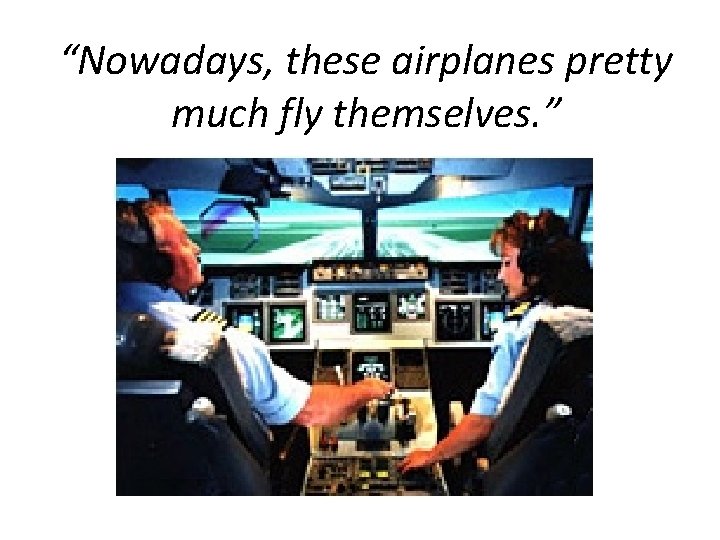
“Nowadays, these airplanes pretty much fly themselves. ”
The airplane does not fly itself.
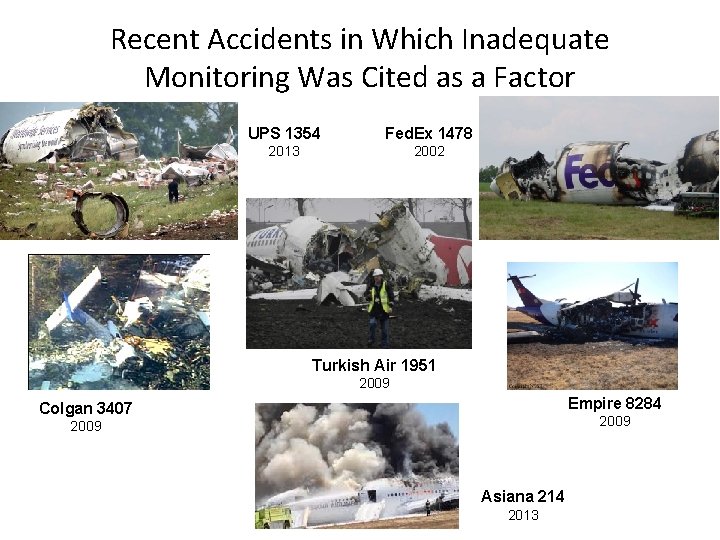
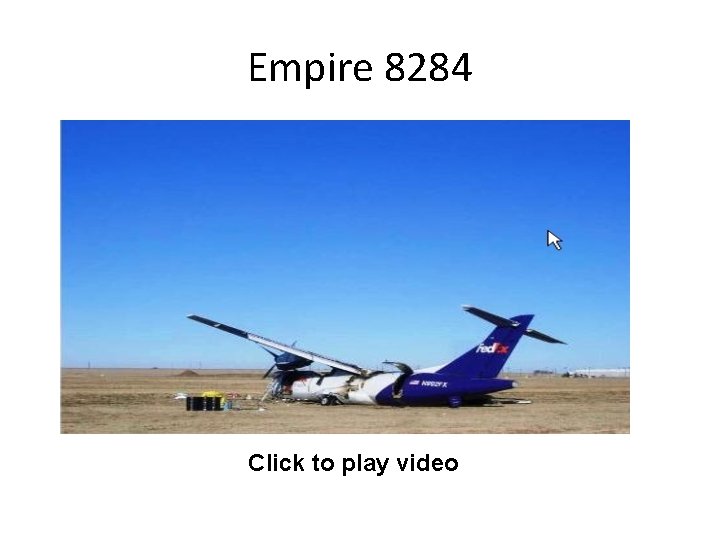
Recent Accidents in Which Inadequate Monitoring Was Cited as a Factor UPS 1354 Fed. Ex 1478 2013 2002 Turkish Air 1951 2009 Empire 8284 Colgan 3407 2009 Asiana 214 2013
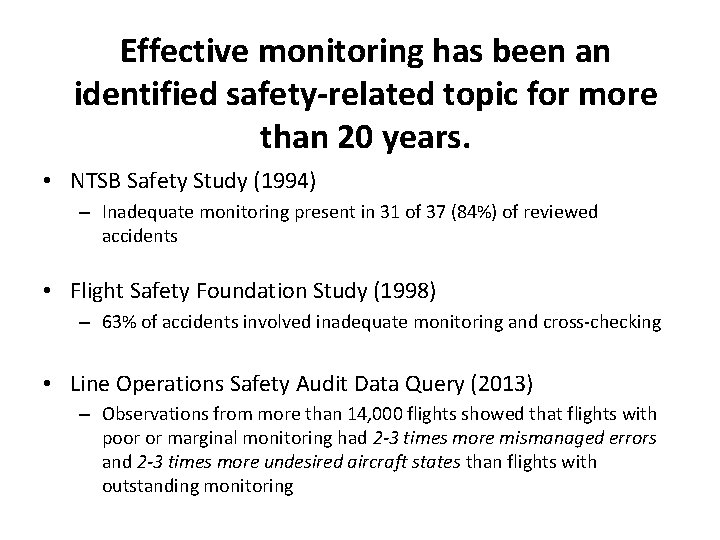
Effective monitoring has been an identified safety-related topic for more than 20 years. • NTSB Safety Study (1994) – Inadequate monitoring present in 31 of 37 (84%) of reviewed accidents • Flight Safety Foundation Study (1998) – 63% of accidents involved inadequate monitoring and cross-checking • Line Operations Safety Audit Data Query (2013) – Observations from more than 14, 000 flights showed that flights with poor or marginal monitoring had 2 -3 times more mismanaged errors and 2 -3 times more undesired aircraft states than flights with outstanding monitoring
Flight Path Monitoring The need to address this issue has been highlighted as a major industry concern by several flight safety organizations.
Automated aircraft do not “fly themselves. ”
Please participate in the following monitoring challenge …
1. Silently, count the number of times the white team passes the basketball. 2. After the video, write the number of passes on a piece of paper large enough for the instructor to see.
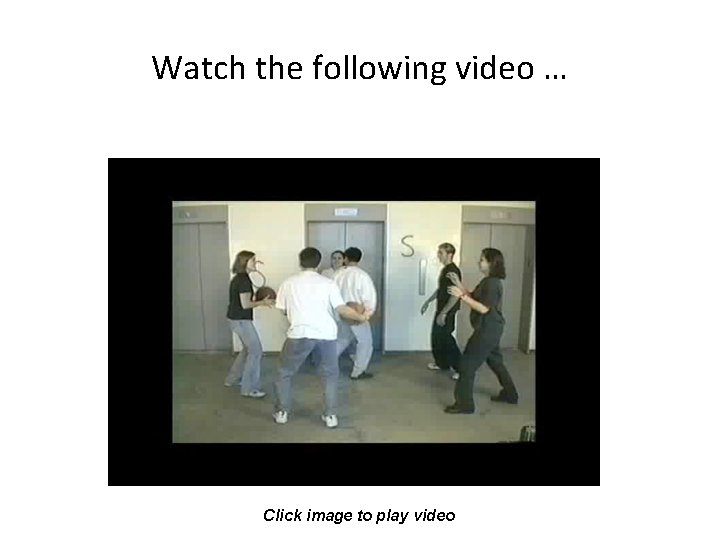
Watch the following video … Click image to play video
How many passes did you count?
By show of hands, did you see anything unusual during the game?
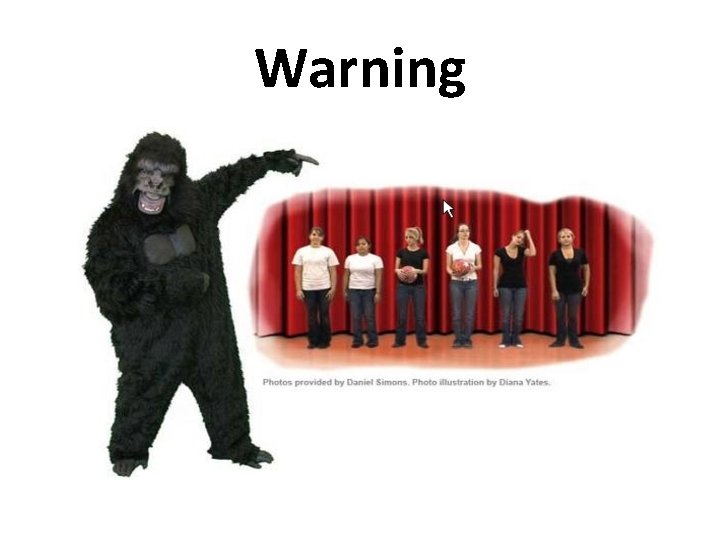
Warning
Warning Perception is highly selective.
Warning We do not see everything happening in front of us. We see what is most relevant to the task we choose to focus on.
Warning Thinking we see everything in front of us, when in fact we don’t, can lead us to make poor choices as to how we prioritize and allocate our attention.
Both pilots are responsible for monitoring the flight path.
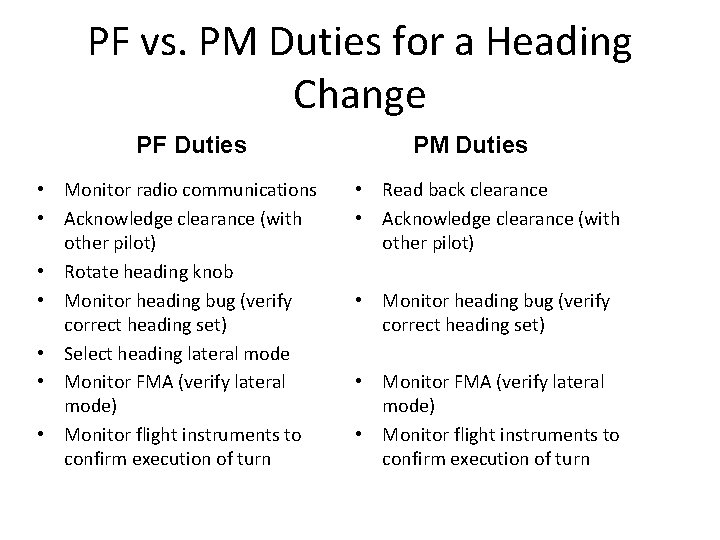
PF vs. PM Duties for a Heading Change PF Duties • Monitor radio communications • Acknowledge clearance (with other pilot) • Rotate heading knob • Monitor heading bug (verify correct heading set) • Select heading lateral mode • Monitor FMA (verify lateral mode) • Monitor flight instruments to confirm execution of turn PM Duties • Read back clearance • Acknowledge clearance (with other pilot) • Monitor heading bug (verify correct heading set) • Monitor FMA (verify lateral mode) • Monitor flight instruments to confirm execution of turn
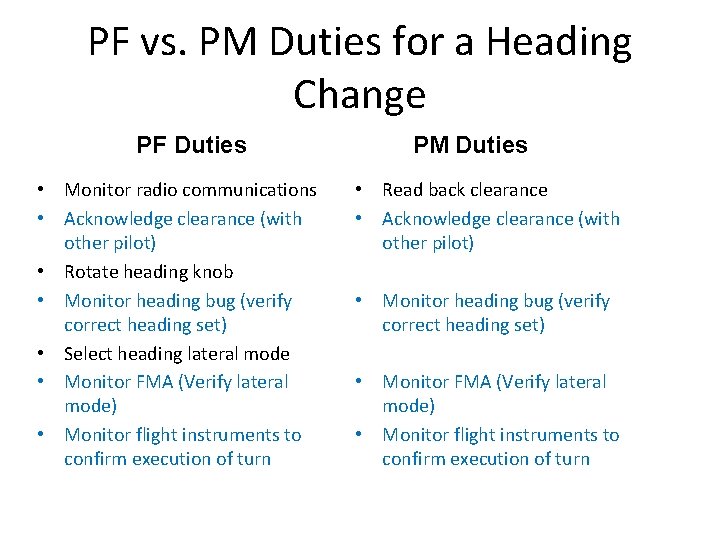
PF vs. PM Duties for a Heading Change PF Duties • Monitor radio communications • Acknowledge clearance (with other pilot) • Rotate heading knob • Monitor heading bug (verify correct heading set) • Select heading lateral mode • Monitor FMA (Verify lateral mode) • Monitor flight instruments to confirm execution of turn PM Duties • Read back clearance • Acknowledge clearance (with other pilot) • Monitor heading bug (verify correct heading set) • Monitor FMA (Verify lateral mode) • Monitor flight instruments to confirm execution of turn
Areas Where Flight Path Needs Elevated Prioritization
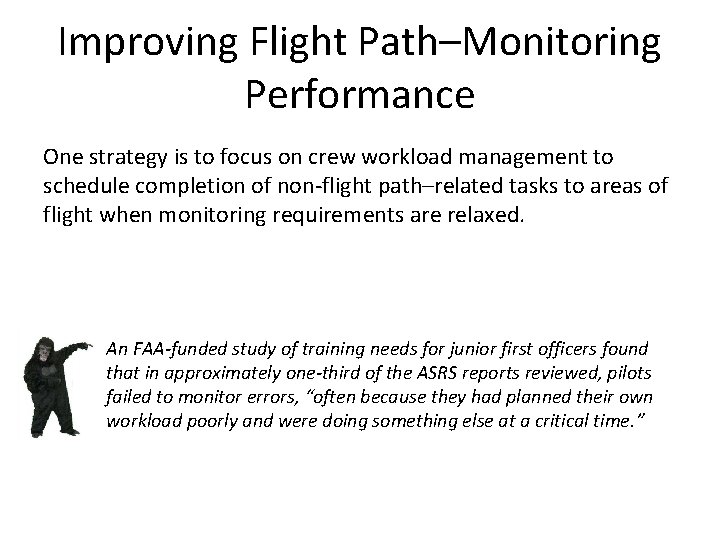
Improving Flight Path–Monitoring Performance One strategy is to focus on crew workload management to schedule completion of non-flight path–related tasks to areas of flight when monitoring requirements are relaxed. An FAA-funded study of training needs for junior first officers found that in approximately one-third of the ASRS reports reviewed, pilots failed to monitor errors, “often because they had planned their own workload poorly and were doing something else at a critical time. ”
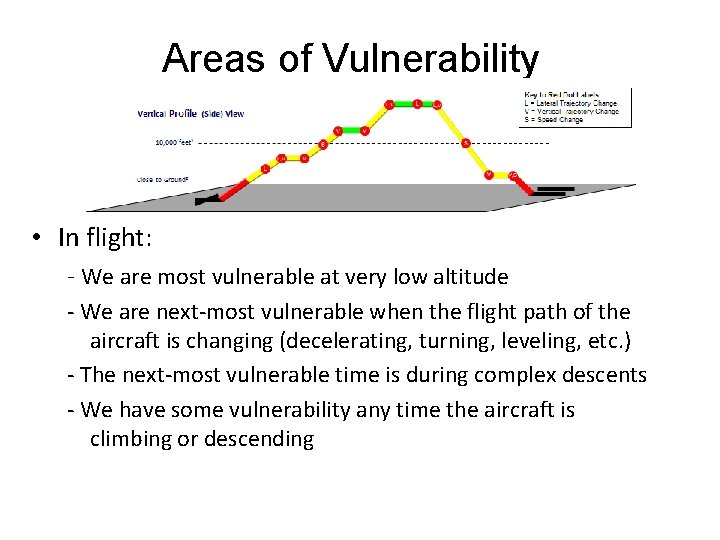
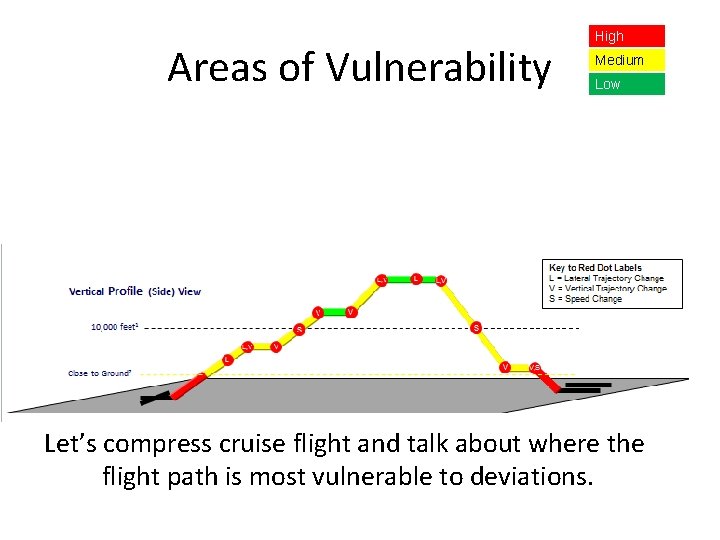
Areas of Vulnerability If pilots could recognize those flight phases when they are most vulnerable to flight path deviations, they could strategically plan workload and manage distractions to maximize monitoring during those areas of vulnerability (AOV). Similarly, if pilots could recognize those flight phases where they are least vulnerable to flight path deviations, they could relax monitoring to some degree and complete non-flight–related tasks.
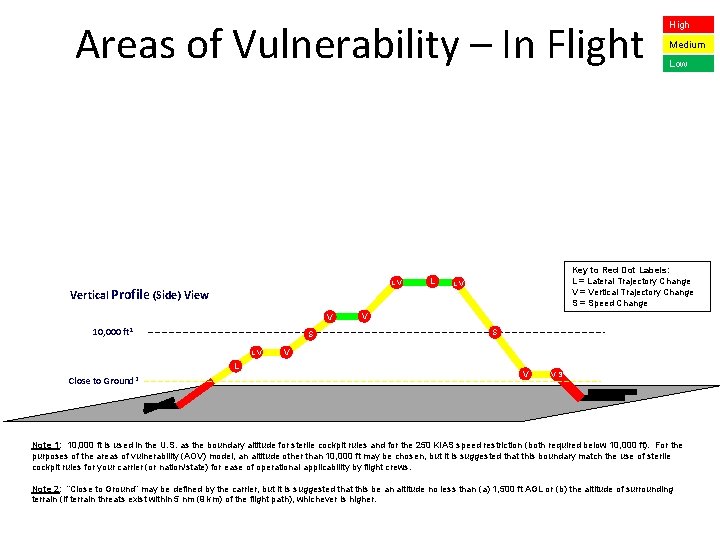
When is the flight path most vulnerable? • The flight path is most vulnerable when: – Your trajectory or energy is changing, or – Your available time to intervene is limited • Let’s use a simple visual model to represent our flight path threat environment …
Areas of Vulnerability – In Flight L, V Vertical Profile (Side) View V 10, 000 ft 1 S L, V L Close to Ground 2 L High Medium Low Key to Red Dot Labels: L = Lateral Trajectory Change V = Vertical Trajectory Change S = Speed Change L, V V S V V V, S Note 1: 10, 000 ft is used in the U. S. as the boundary altitude for sterile cockpit rules and for the 250 KIAS speed restriction (both required below 10, 000 ft). For the purposes of the areas of vulnerability (AOV) model, an altitude other than 10, 000 ft may be chosen, but it is suggested that this boundary match the use of sterile cockpit rules for your carrier (or nation/state) for ease of operational applicability by flight crews. Note 2: “Close to Ground” may be defined by the carrier, but it is suggested that this be an altitude no less than (a) 1, 500 ft AGL or (b) the altitude of surrounding terrain (if terrain threats exist within 5 nm (9 km) of the flight path), whichever is higher.
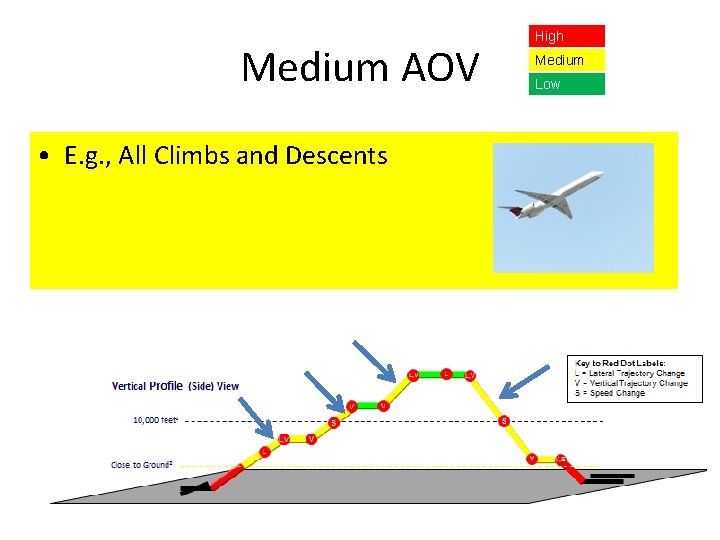
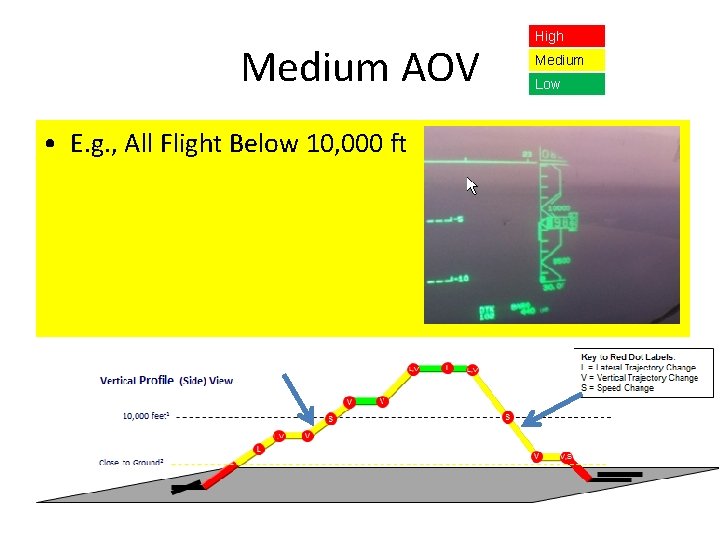
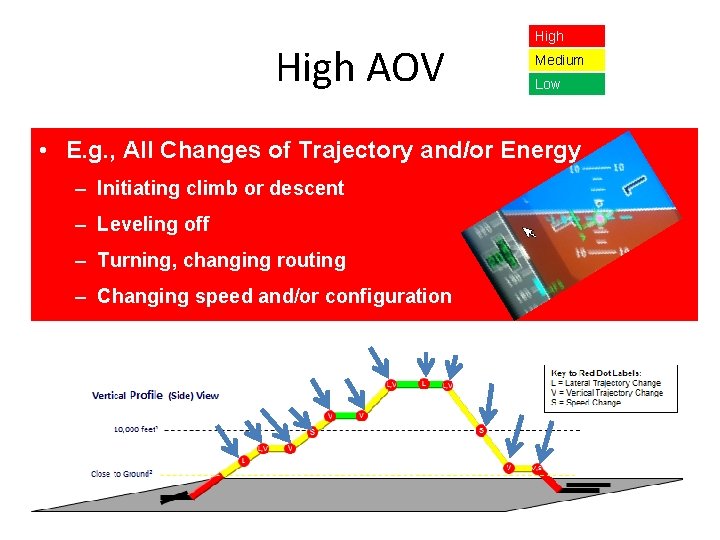
Areas of Vulnerability • In flight: - We are most vulnerable at very low altitude - We are next-most vulnerable when the flight path of the aircraft is changing (decelerating, turning, leveling, etc. ) - The next-most vulnerable time is during complex descents - We have some vulnerability any time the aircraft is climbing or descending
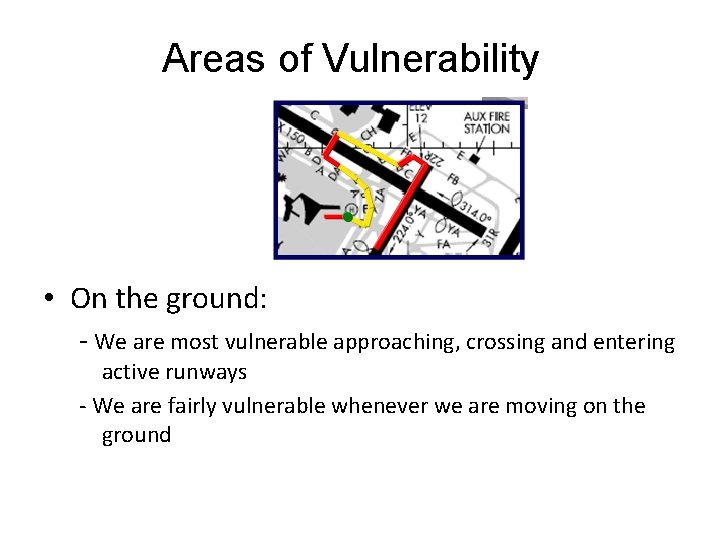
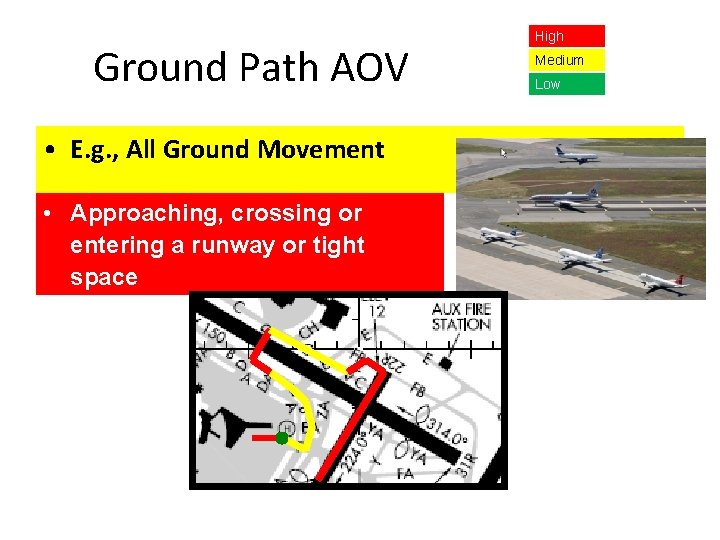
Areas of Vulnerability • On the ground: - We are most vulnerable approaching, crossing and entering active runways - We are fairly vulnerable whenever we are moving on the ground
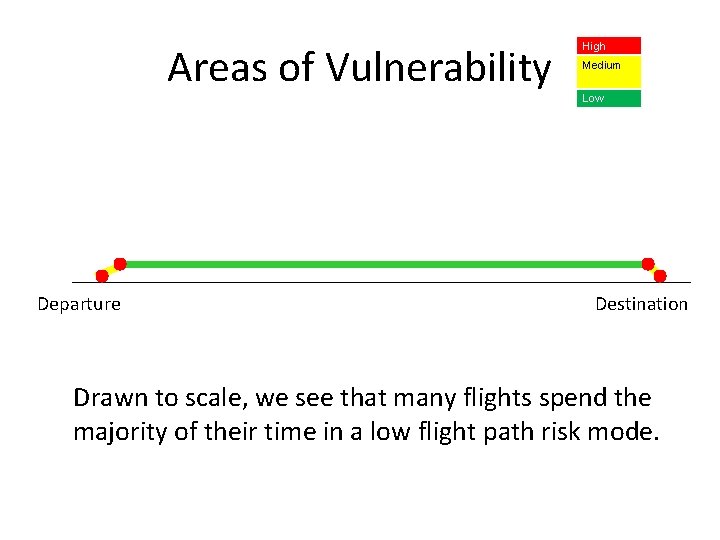
Areas of Vulnerability Departure High Medium Low Destination Drawn to scale, we see that many flights spend the majority of their time in a low flight path risk mode.
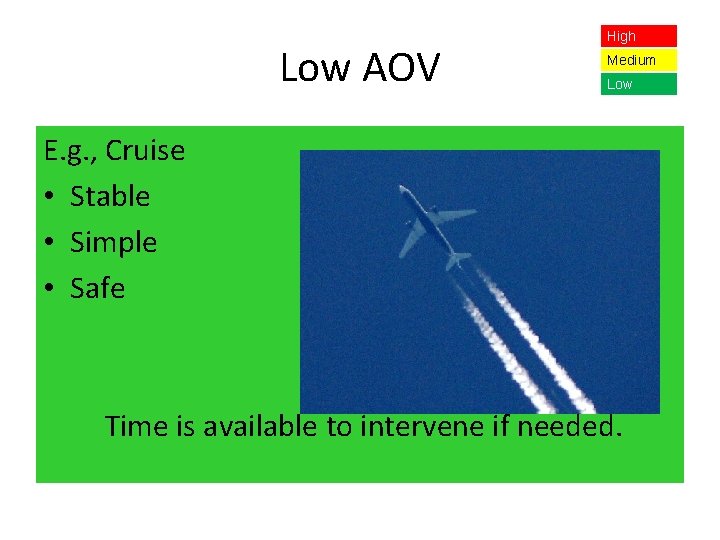
Low AOV High Medium Low E. g. , Cruise • Stable • Simple • Safe Time is available to intervene if needed.
Areas of Vulnerability High Medium Low Let’s compress cruise flight and talk about where the flight path is most vulnerable to deviations.
Medium AOV • E. g. , All Climbs and Descents High Medium Low
Medium AOV • E. g. , All Flight Below 10, 000 ft High Medium Low
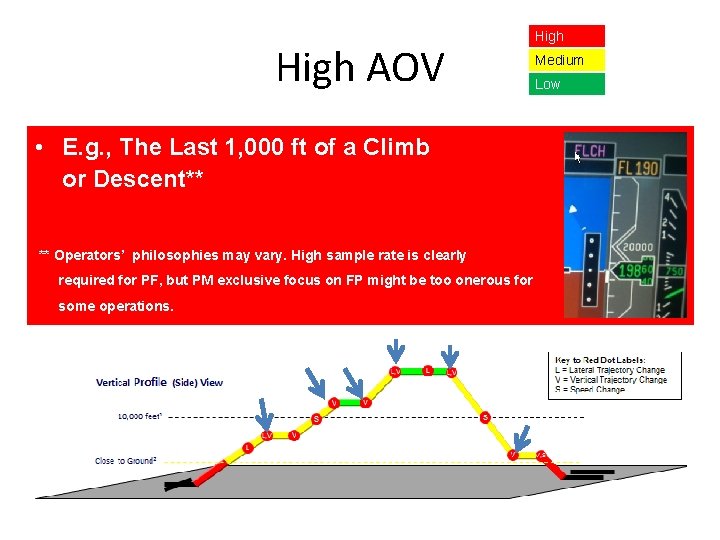
High AOV High Medium Low • E. g. , All Changes of Trajectory and/or Energy – Initiating climb or descent – Leveling off – Turning, changing routing – Changing speed and/or configuration
High AOV • E. g. , The Last 1, 000 ft of a Climb or Descent** ** Operators’ philosophies may vary. High sample rate is clearly required for PF, but PM exclusive focus on FP might be too onerous for some operations. High Medium Low
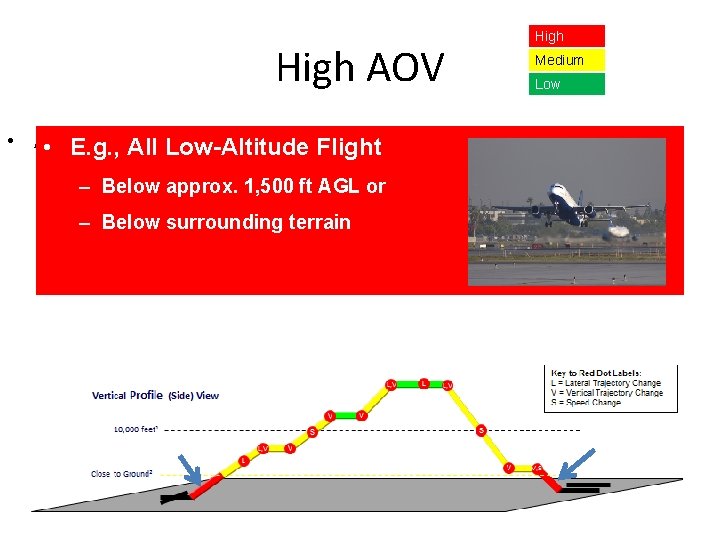
High AOV • All below • flight E. g. , All MSA Low-Altitude Flight – Below approx. 1, 500 ft AGL or – Below surrounding terrain High Medium Low
Ground Path AOV • E. g. , All Ground Movement • Approaching, crossing or entering a runway or tight space High Medium Low
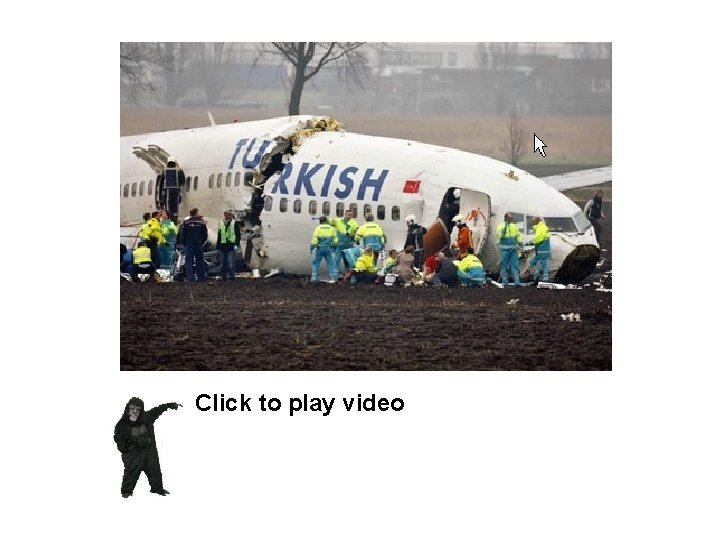
Click to play video
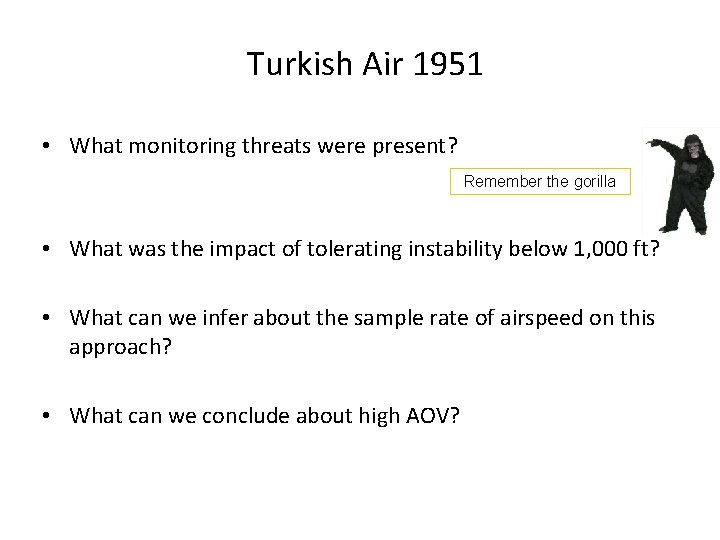
Turkish Air 1951 • What monitoring threats were present? Remember the gorilla • What was the impact of tolerating instability below 1, 000 ft? • What can we infer about the sample rate of airspeed on this approach? • What can we conclude about high AOV?
Allocate adequate crew resources to managing the flight path.
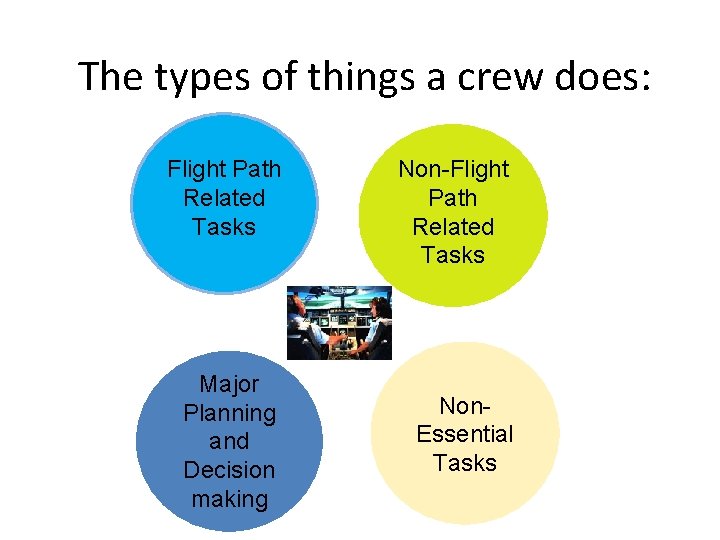
The types of things a crew does: Flight Path Related Tasks Major Planning and Decision making Non-Flight Path Related Tasks Non. Essential Tasks
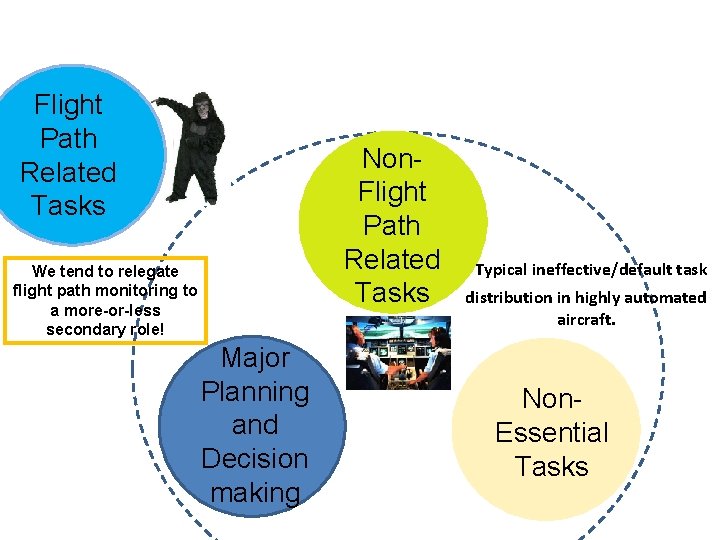
Flight Path Related Tasks Non. Flight Path Related Tasks We tend to relegate flight path monitoring to a more-or-less secondary role! Major Planning and Decision making Typical ineffective/default task distribution in highly automated aircraft. Non. Essential Tasks
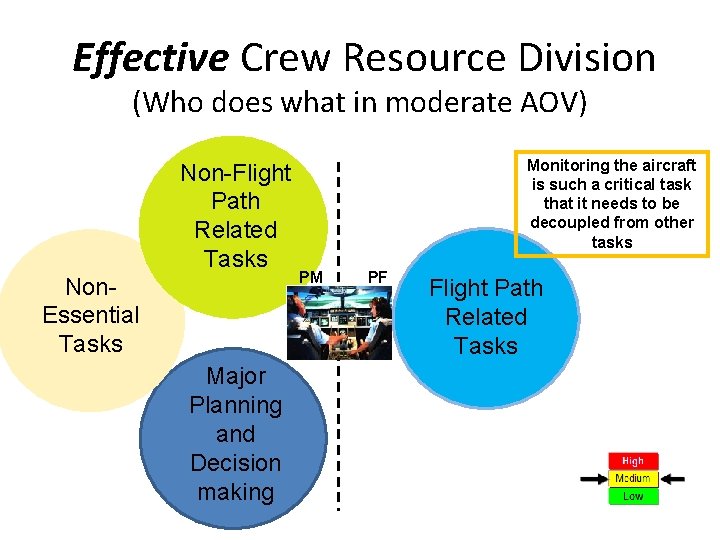
Effective Crew Resource Division (Who does what in moderate AOV) Non-Flight Path Related Tasks Non. Essential Tasks Major Planning and Decision making Monitoring the aircraft is such a critical task that it needs to be decoupled from other tasks PM PF Flight Path Related Tasks
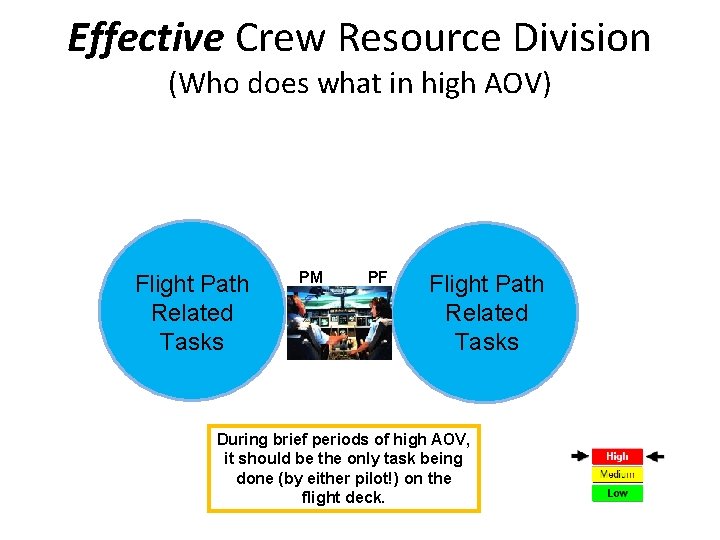
Effective Crew Resource Division (Who does what in high AOV) Flight Path Related Tasks PM PF Flight Path Related Tasks During brief periods of high AOV, it should be the only task being done (by either pilot!) on the flight deck.
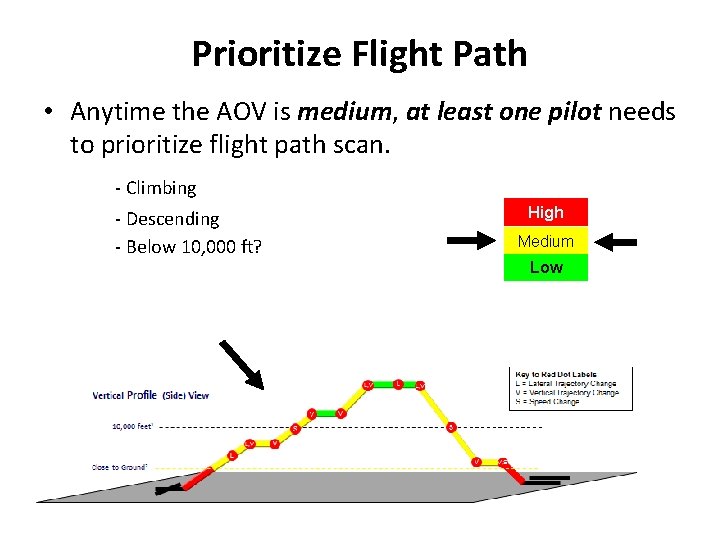
Prioritize Flight Path • Anytime the AOV is medium, at least one pilot needs to prioritize flight path scan. - Climbing - Descending - Below 10, 000 ft? High Medium Low
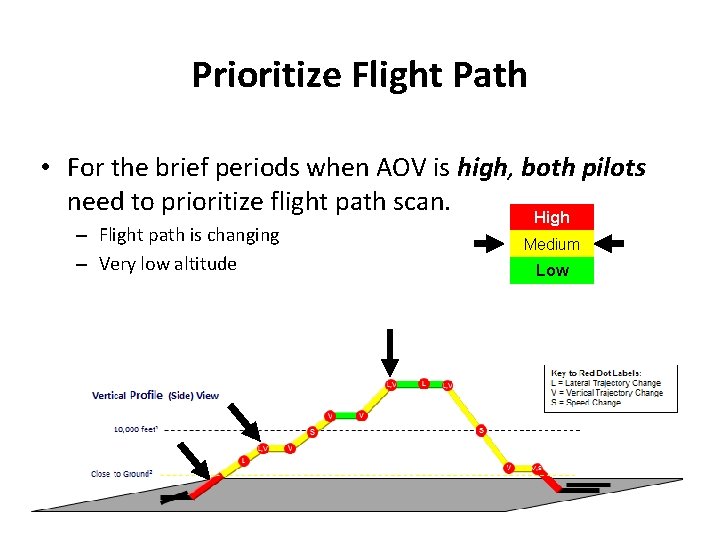
Prioritize Flight Path • For the brief periods when AOV is high, both pilots need to prioritize flight path scan. High – Flight path is changing – Very low altitude Medium Low
Decouple Tasks From Flight Path
Plan Your Workload • Many tasks can be done when you choose: – – – Talking on the PA Talking to dispatch Running W&B calculations Reviewing ABG, manuals Stowing charts Do these tasks during low flight path vulnerability.
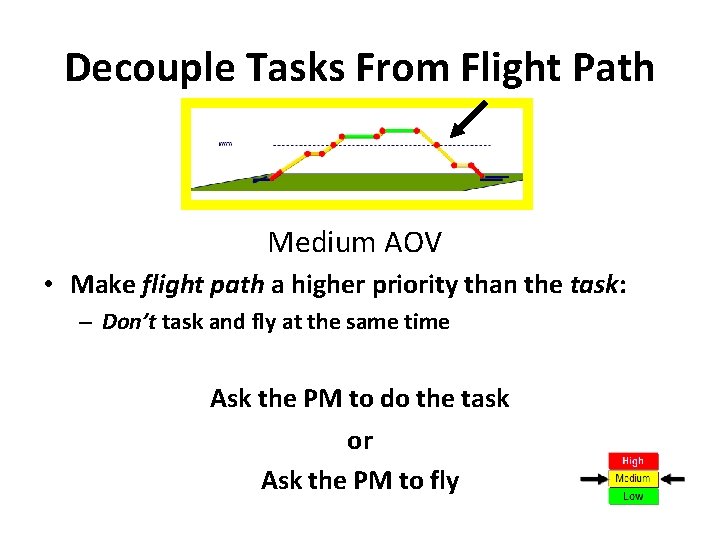
Decouple Tasks From Flight Path Medium AOV • Make flight path a higher priority than the task: – Don’t task and fly at the same time Ask the PM to do the task or Ask the PM to fly
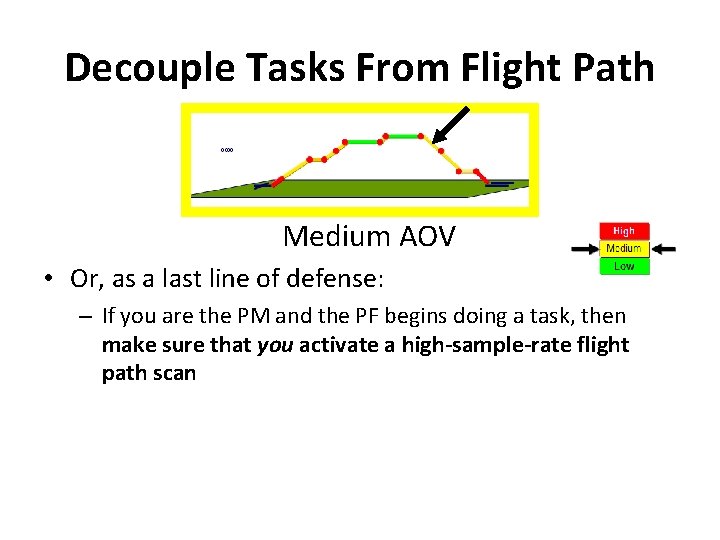
Decouple Tasks From Flight Path Medium AOV • Or, as a last line of defense: – If you are the PM and the PF begins doing a task, then make sure that you activate a high-sample-rate flight path scan
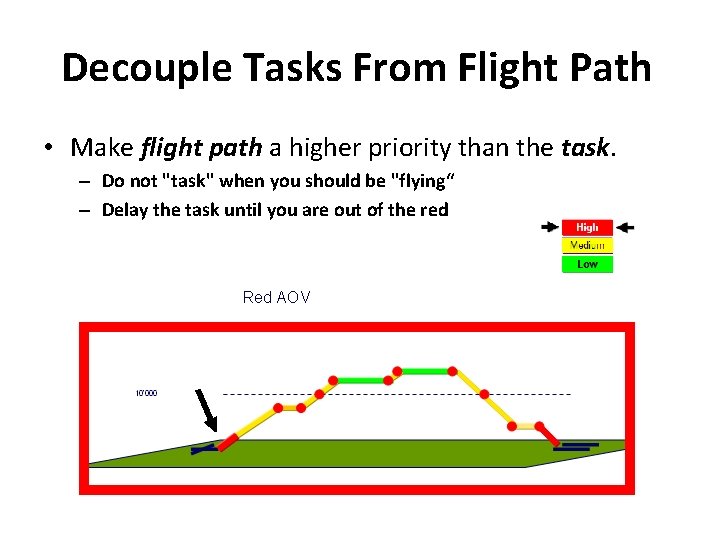
Decouple Tasks From Flight Path • Make flight path a higher priority than the task. – Do not "task" when you should be "flying“ – Delay the task until you are out of the red Red AOV
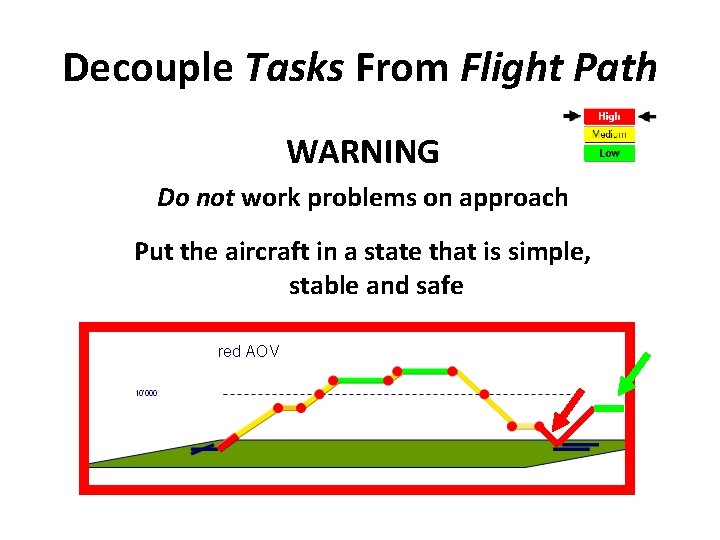
Decouple Tasks From Flight Path WARNING Do not work problems on approach Put the aircraft in a state that is simple, stable and safe red AOV
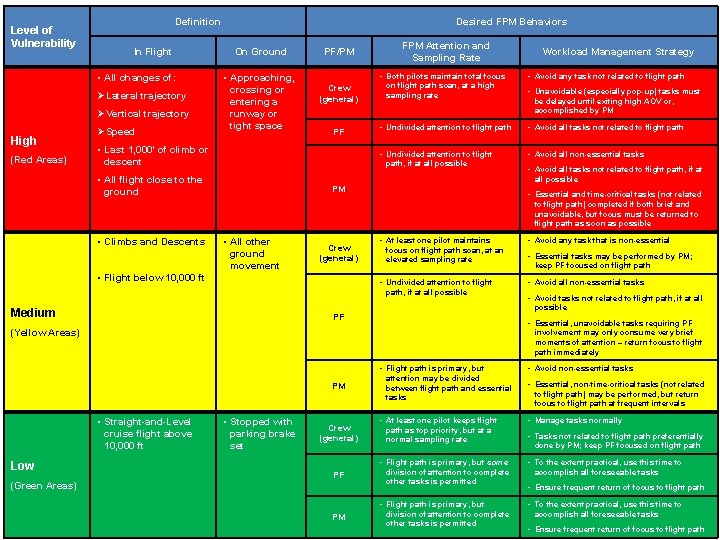
Level of Vulnerability Definition In Flight • All changes of: ØLateral trajectory ØVertical trajectory High (Red Areas) ØSpeed Desired FPM Behaviors On Ground • Approaching, crossing or entering a runway or tight space PF/PM FPM Attention and Sampling Rate • Both pilots maintain total focus Crew (general) PF • Last 1, 000’ of climb or descent on flight path scan, at a high sampling rate • Avoid any task not related to flight path • Unavoidable (especially pop-up) tasks must be delayed until exiting high AOV or, accomplished by PM • Undivided attention to flight path • Avoid all tasks not related to flight path • Undivided attention to flight • Avoid all non-essential tasks path, if at all possible • All flight close to the ground Workload Management Strategy • Avoid all tasks not related to flight path, if at all possible PM • Essential and time-critical tasks (not related to flight path) completed if both brief and unavoidable, but focus must be returned to flight path as soon as possible • Climbs and Descents • All other ground movement Crew (general) • Flight below 10, 000 ft • At least one pilot maintains focus on flight path scan, at an elevated sampling rate • Undivided attention to flight path, if at all possible PF keep PF focused on flight path • Avoid all non-essential tasks • Avoid tasks not related to flight path, if at all • Essential, unavoidable tasks requiring PF (Yellow Areas) involvement may only consume very brief moments of attention – return focus to flight path immediately • Flight path is primary, but PM • Straight-and-Level cruise flight above 10, 000 ft (Green Areas) • Essential tasks may be performed by PM; possible Medium Low • Avoid any task that is non-essential • Stopped with parking brake set Crew (general) attention may be divided between flight path and essential tasks • At least one pilot keeps flight path as top priority, but at a normal sampling rate • Flight path is primary, but some PF division of attention to complete other tasks is permitted • Flight path is primary, but PM division of attention to complete other tasks is permitted • Avoid non-essential tasks • Essential, non-time-critical tasks (not related to flight path) may be performed, but return focus to flight path at frequent intervals • Manage tasks normally • Tasks not related to flight path preferentially done by PM; keep PF focused on flight path • To the extent practical, use this time to accomplish all foreseeable tasks • Ensure frequent return of focus to flight path
Empire 8284 Think about prioritizing flight path as we watch the following NTSB video that recreates the accident of Empire Flight 8284.
Empire 8284 Click to play video
Empire 8284 • Describe the captain’s workload strategy for managing this event. • What was the AOV? What should the captain’s priority have been? Remember the gorilla
Increase Your Sensitivity to Monitoring Feedback
Monitor Your Monitoring • Noticing when you are not doing something is hard. • How do you know when you (or your partner) are not monitoring the flight path?
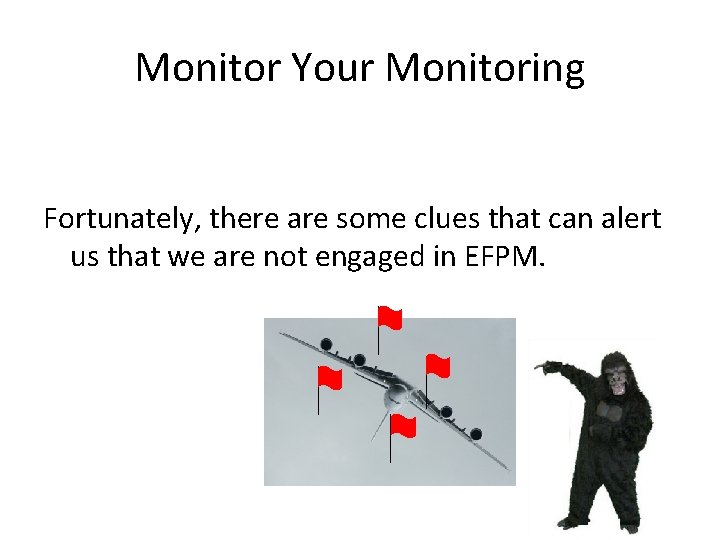
Monitor Your Monitoring Fortunately, there are some clues that can alert us that we are not engaged in EFPM.
Monitor Your Monitoring Is your flight instrument sample rate adequate? • High sample rate Equivalent to hand flying • Adequate sample rate Sample rate at or above which you do not encounter indications of inadequate monitoring
Indications of Inadequate Sample Rate • Missed (or late) flight path callouts: – “ 3, 000 for 2, 000” – “Glide slope intercept altitude 1, 500, checked” – “ 1, 000 stable, cleared to land”
Indications of Inadequate Sample Rate • If a change in pitch, roll or power occurs … and you were not actively looking for it
Indications of Inadequate Sample Rate • If a mode change occurs … and you were not actively looking for it
Indications of Inadequate Sample Rate • If you are late to recognize terrain, traffic or weather
Indications of Inadequate Sample Rate • If you notice yourself performing concurrent (nonflight path–related) tasks during flight path transitions
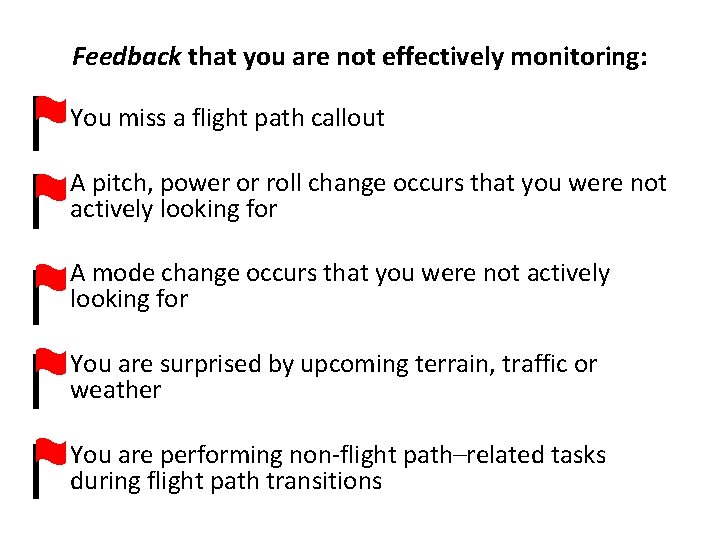
Feedback that you are not effectively monitoring: You miss a flight path callout A pitch, power or roll change occurs that you were not actively looking for A mode change occurs that you were not actively looking for You are surprised by upcoming terrain, traffic or weather You are performing non-flight path–related tasks during flight path transitions
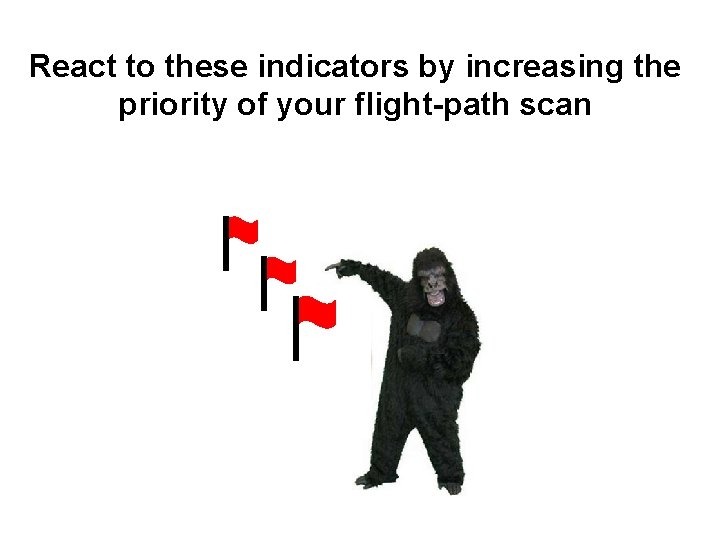
React to these indicators by increasing the priority of your flight-path scan
Recommended Practices
Recommended FPM Practices • Exhibit good monitoring practices • In the following slides, we will talk about the tools that are tried and true: – Tools are not SOPs, but they are agreed-upon practices that you apply in the way that best fits your current situation
Recommended FPM Practices First and foremost, adhere to SOPs: – SOPs are not optional tools – SOPs are items that are agreed to be so important that they are mandatory unless superseded by emergency authority
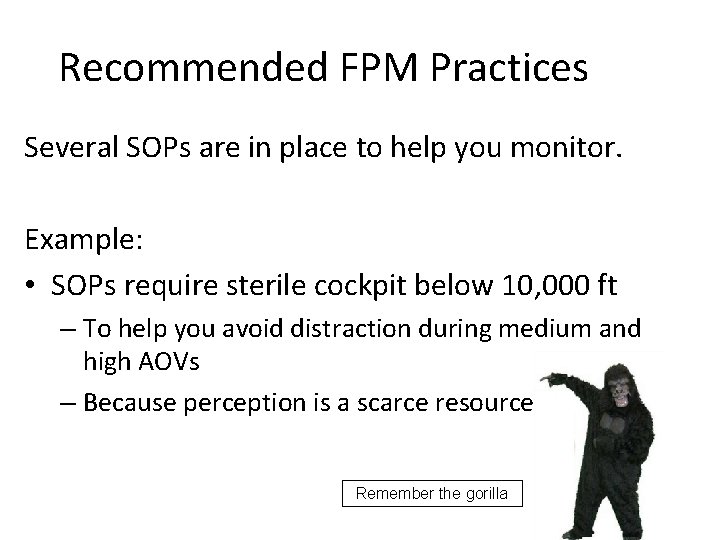
Recommended FPM Practices Several SOPs are in place to help you monitor. Example: • SOPs require sterile cockpit below 10, 000 ft – To help you avoid distraction during medium and high AOVs – Because perception is a scarce resource Remember the gorilla
Practices That Enhance the Awareness Necessary for EFPM
Recommended FPM Practices Mentally Fly the Airplane • Scan the flight instruments and anticipate control inputs exactly as you would when hand-flying — even when the autopilot (or the other pilot) is flying. High AOV – always a good idea Medium AOV – often a good idea
Recommended FPM Practices Stay ahead of the aircraft Predictive awareness comes from thinking ahead.
Recommended FPM Practices Hand-Fly • Hand-flying requires a sound instrument cross-check and is a good way to hone your monitoring skills Many operators require pilots to maintain proficiency with manual flight skills: - Use good judgment about when to hand-fly
Recommended FPM Practices Set/Check Targets • Examples include intermediate altitude targets during descents to crossing restrictions, and altitude targets/DME targets on approach
Recommended FPM Practices Plan your workload to protect AOVs • Anticipate foreseeable task loading and get work done early
Practices That Maintain and/or Reestablish Critical Flight Path Targets in Working Memory
Recommended FPM Practices Restate constraints/restrictions periodically • Thinking out loud is a good way to stay on the same page with the other pilot … – But there is also another benefit: Audibly refreshing restrictions/constraints helps you keep important intentions from dropping out of your pattern of attention
Recommended FPM Practices Restate constraints/restrictions periodically • When does it make sense to do this? – When there is a long time between the clearance and the constraint – When the environment is very busy or distracting – When you are tired – At the beginning and end of a large pop-up task – After completing a checklist while taxiing – After unusual or distracting events
Recommended FPM Practices State clearances in a loud, clear voice This practice: • Helps encode the clearance in your memory • Helps the other pilot remember it, too - Use this tool when the clearance is important and must be held in memory - Commonly used for approach and landing clearances
Recommended FPM Practices Verbally acknowledge when distraction events occur Saying something triggers both pilots to deliberately review last steps: “Hey, we just got sidetracked (or similar words). … We were just about to start down to make Providence at 11. ”
Recommended FPM Practices Use an external reminder (i. e. , an actual written note) • Do not use mental notes – Write down any clearance that can not be immediately entered into the MCP (or MCDU) • There have been a number of ASAP reports stating: “I made a mental note. ”
Practices to Intervene Effectively
Recommended FPM Practices Deviation Callouts • Make specific deviation callouts • Encourage deviation callouts – Call your own deviations if the other pilot is reluctant – Thank the other pilot for deviation callouts
Recommended FPM Practices Refuse problematic clearances • Pilots have the authority to tell ATC “unable” if a clearance will jeopardize the ability to manage the flight path
Participation Request • Identify the effective monitoring practices used by the flight crew in the following story …
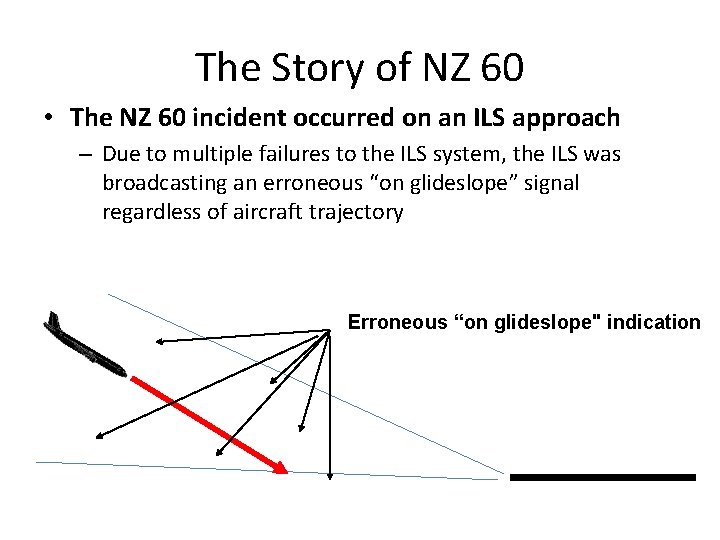
The Story of NZ 60 • The NZ 60 incident occurred on an ILS approach – Due to multiple failures to the ILS system, the ILS was broadcasting an erroneous “on glideslope” signal regardless of aircraft trajectory Erroneous “on glideslope" indication
The Story of NZ 60
NZ 60 • What threats to EFPM were present? • What recommended practices resulted in effective monitoring? • What are some differences in practices between NZ 60 and TKY 1951?
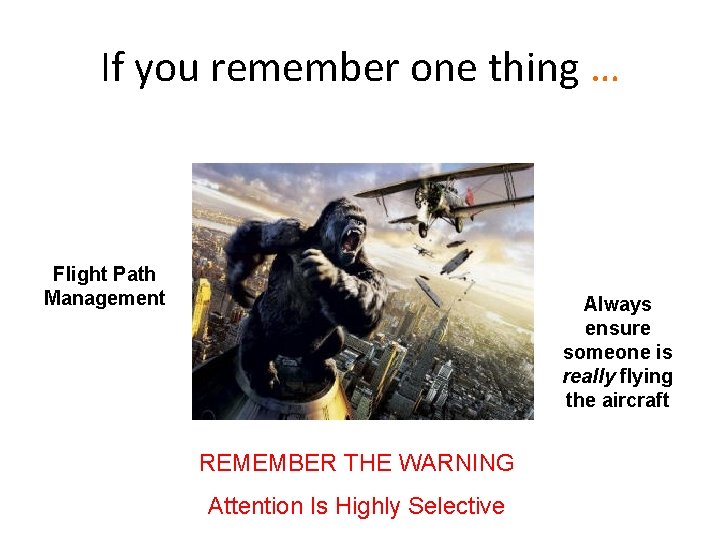
If you remember one thing … Flight Path Management …means… REMEMBER THE WARNING Attention Is Highly Selective Always ensure someone is really flying the aircraft
Questions?