Community Pharmacy Service for uncomplicated LUTIs in women
- Slides: 21
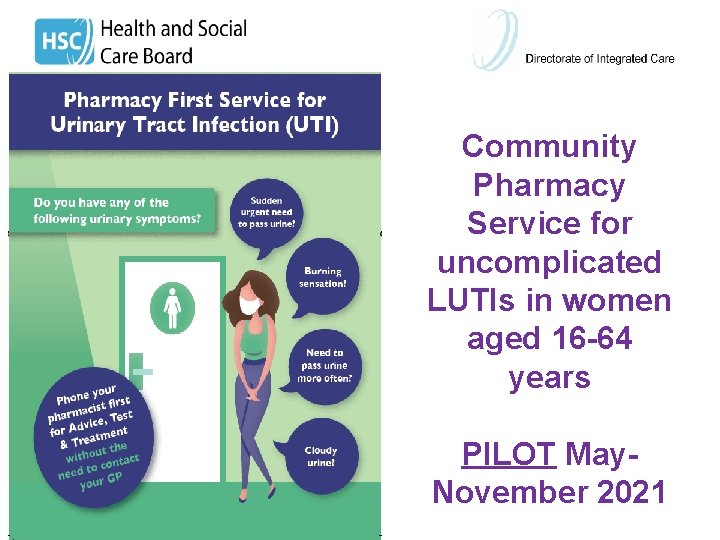
Community Pharmacy Service for uncomplicated LUTIs in women aged 16 -64 years PILOT May. November 2021
Pharmacy First Pilot Service – Uncomplicated LUTIs The service will facilitate the assessment and treatment of women aged 16 - 64 years presenting with symptoms of LUTI in the community pharmacy in line with: v NI Management of Infection Guidelines v Public Health England Quick Reference Tool (endorsed by NICE to align with treatment guidance) v Promoting self-care for all patients
Slides will cover v v Brief overview of the service Referring eligible patients to the service Managing consultations that have taken place in community pharmacy Managing patients who the pharmacist need to refer back to the GP practice
The aims of the Pharmacy First Service 1. 2. 3. 4. 5. To displace activity including consultation, advice and treatment from GP practice to community pharmacy Provide a timely and appropriate service for women in the treatment of their condition and to identify patients who need onward referral to another healthcare professional To utilise the clinical skills of Independent Prescribing Pharmacists in community pharmacy To pilot if the introduction of a diagnostic test impacts on the prescribing decision To pilot access to NIECR by pharmacists working in the community
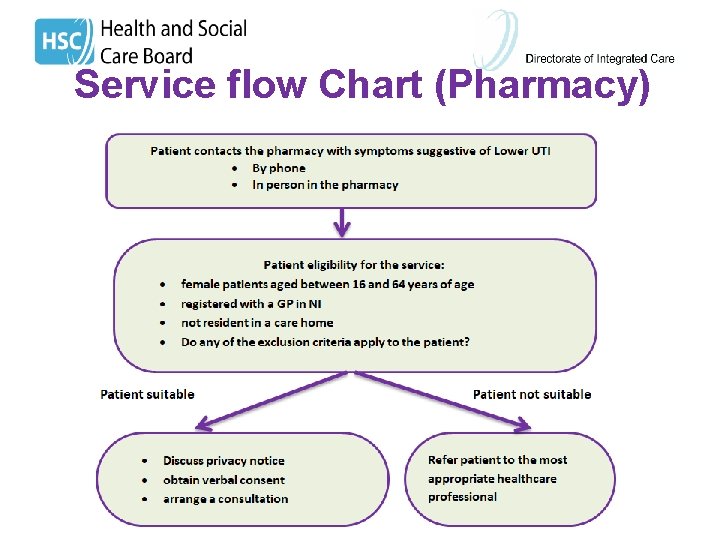
Service flow Chart (Pharmacy)
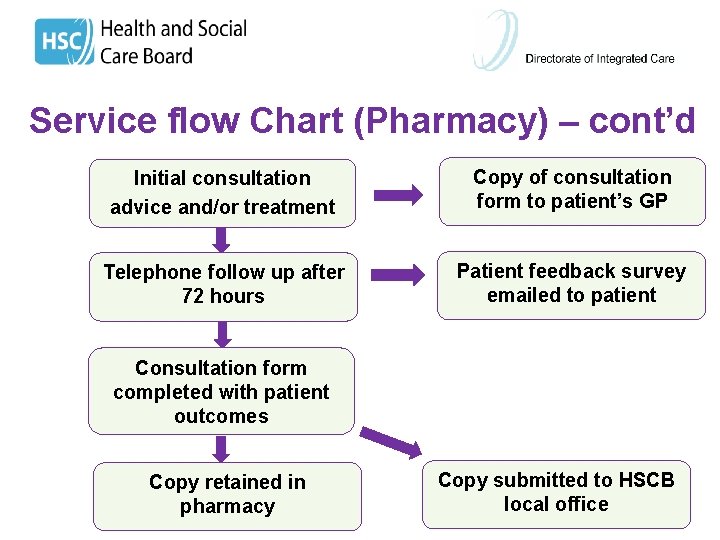
Service flow Chart (Pharmacy) – cont’d Initial consultation advice and/or treatment Copy of consultation form to patient’s GP Telephone follow up after 72 hours Patient feedback survey emailed to patient Consultation form completed with patient outcomes Copy retained in pharmacy Copy submitted to HSCB local office
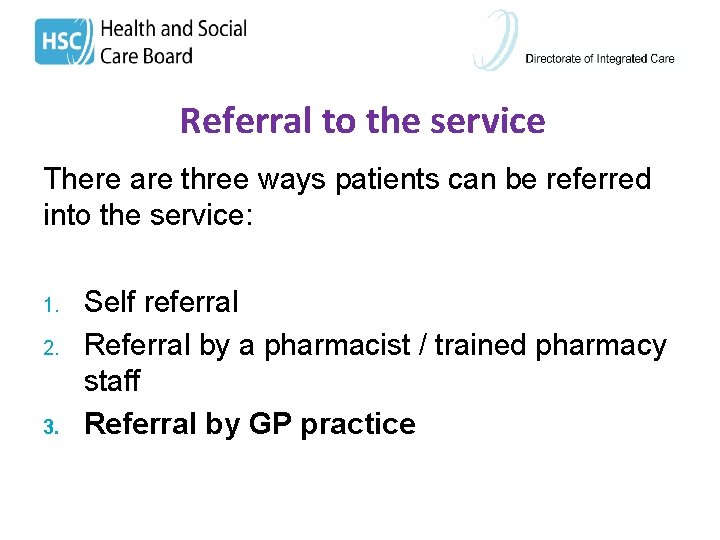
Referral to the service There are three ways patients can be referred into the service: 1. 2. 3. Self referral Referral by a pharmacist / trained pharmacy staff Referral by GP practice
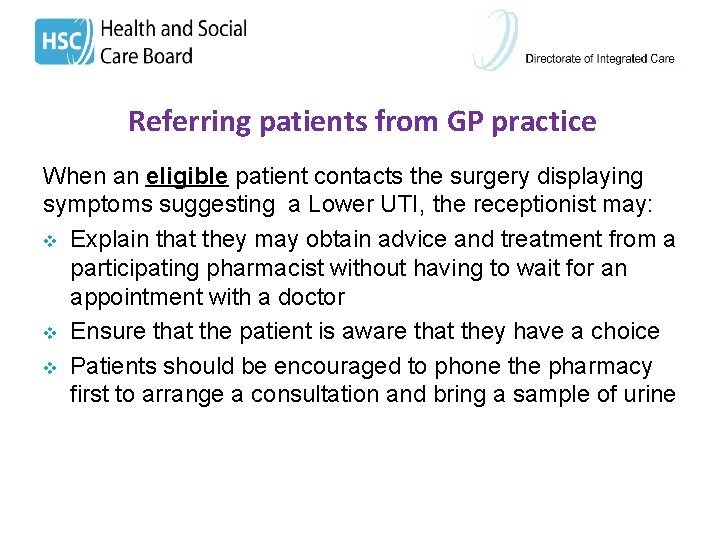
Referring patients from GP practice When an eligible patient contacts the surgery displaying symptoms suggesting a Lower UTI, the receptionist may: v Explain that they may obtain advice and treatment from a participating pharmacist without having to wait for an appointment with a doctor v Ensure that the patient is aware that they have a choice v Patients should be encouraged to phone the pharmacy first to arrange a consultation and bring a sample of urine
Referring patients from GP practice cont’d For all patients: v Patients will be offered a consultation with the pharmacist in person, by phone or video v Patients may receive advice only, or advice and treatment after appropriate assessment by the pharmacist. v If a patient chooses not to take advantage of the Service then an appointment with the GP practice should be made in the normal way. v Advise patients that the service is only available in pharmacies contracted to provide the service (this may not be their usual pharmacy)
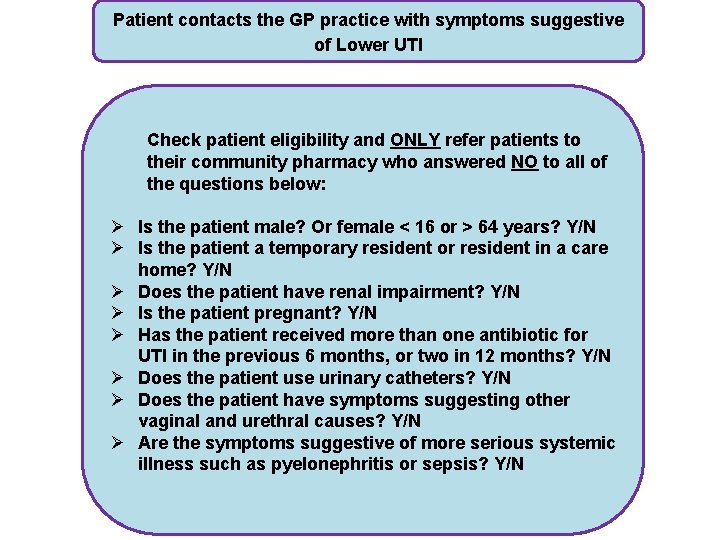
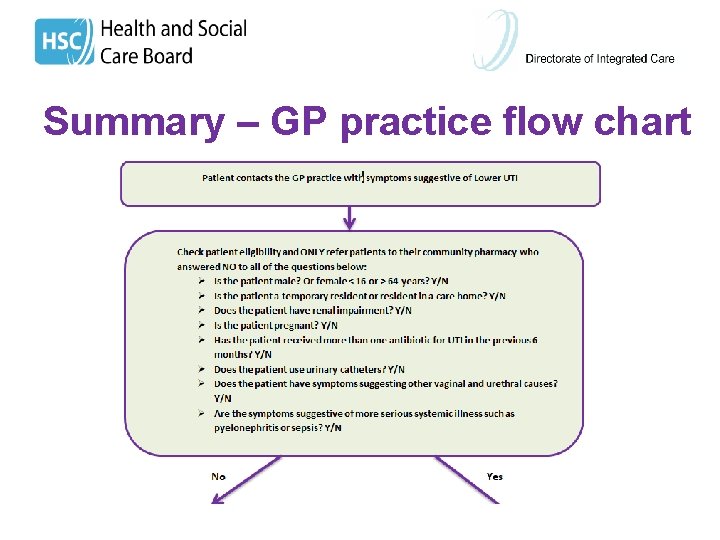
Patient contacts the GP practice with symptoms suggestive of Lower UTI Check patient eligibility and ONLY refer patients to their community pharmacy who answered NO to all of the questions below: Is the patient male? Or female < 16 or > 64 years? Y/N Is the patient a temporary resident or resident in a care home? Y/N Does the patient have renal impairment? Y/N Is the patient pregnant? Y/N Has the patient received more than one antibiotic for UTI in the previous 6 months, or two in 12 months? Y/N Does the patient use urinary catheters? Y/N Does the patient have symptoms suggesting other vaginal and urethral causes? Y/N Are the symptoms suggestive of more serious systemic illness such as pyelonephritis or sepsis? Y/N
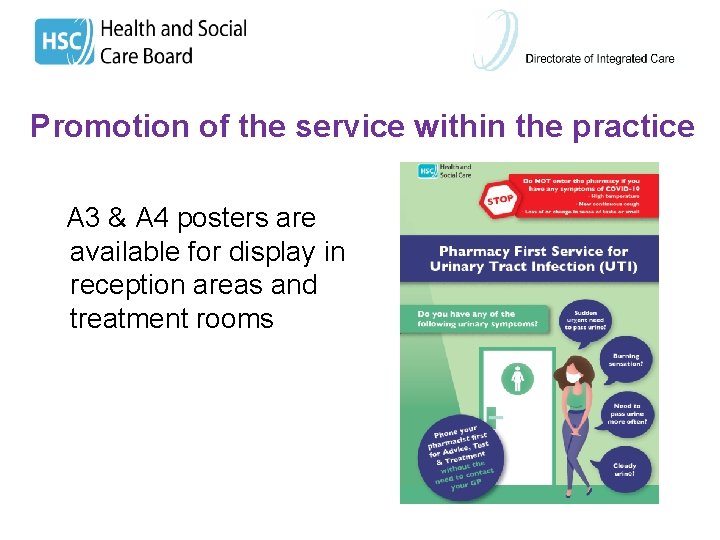
Promotion of the service within the practice A 3 & A 4 posters are available for display in reception areas and treatment rooms
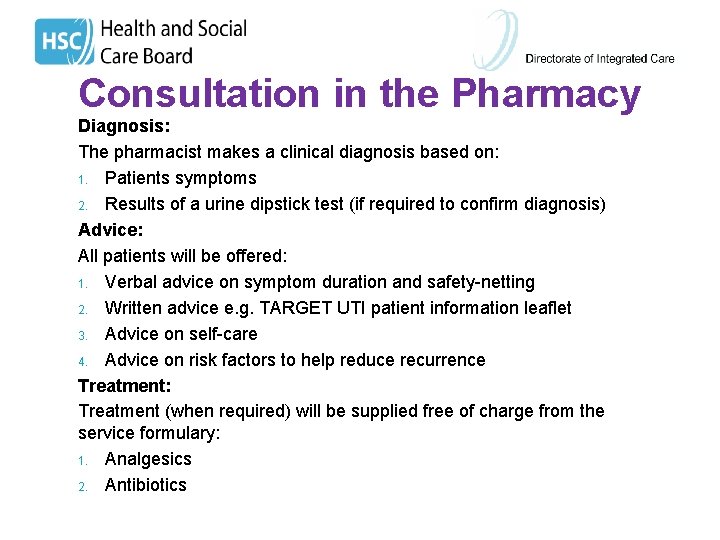
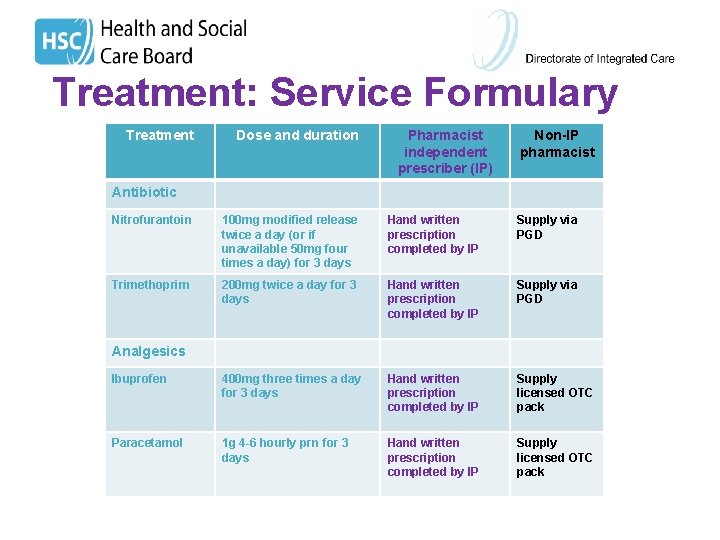
Consultation in the Pharmacy Diagnosis: The pharmacist makes a clinical diagnosis based on: 1. Patients symptoms 2. Results of a urine dipstick test (if required to confirm diagnosis) Advice: All patients will be offered: 1. Verbal advice on symptom duration and safety-netting 2. Written advice e. g. TARGET UTI patient information leaflet 3. Advice on self-care 4. Advice on risk factors to help reduce recurrence Treatment: Treatment (when required) will be supplied free of charge from the service formulary: 1. Analgesics 2. Antibiotics
Treatment: Service Formulary Treatment Dose and duration Pharmacist independent prescriber (IP) Non-IP pharmacist Antibiotic Nitrofurantoin 100 mg modified release twice a day (or if unavailable 50 mg four times a day) for 3 days Hand written prescription completed by IP Supply via PGD Trimethoprim 200 mg twice a day for 3 days Hand written prescription completed by IP Supply via PGD Ibuprofen 400 mg three times a day for 3 days Hand written prescription completed by IP Supply licensed OTC pack Paracetamol 1 g 4 -6 hourly prn for 3 days Hand written prescription completed by IP Supply licensed OTC pack Analgesics
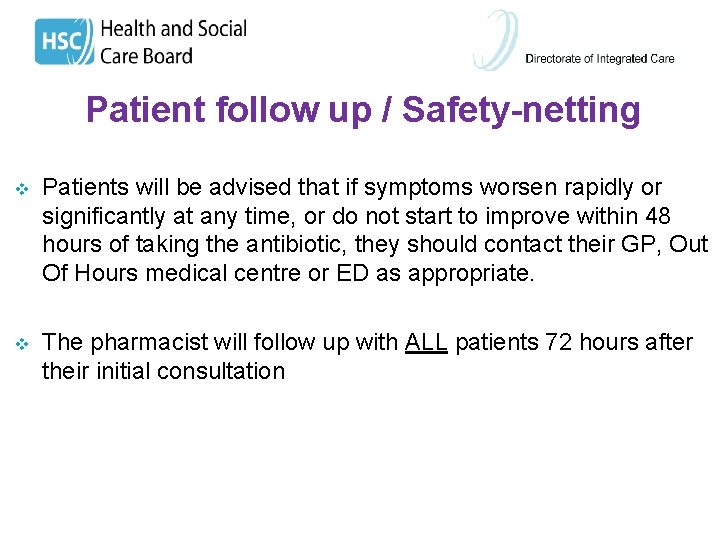
Patient follow up / Safety-netting v Patients will be advised that if symptoms worsen rapidly or significantly at any time, or do not start to improve within 48 hours of taking the antibiotic, they should contact their GP, Out Of Hours medical centre or ED as appropriate. v The pharmacist will follow up with ALL patients 72 hours after their initial consultation
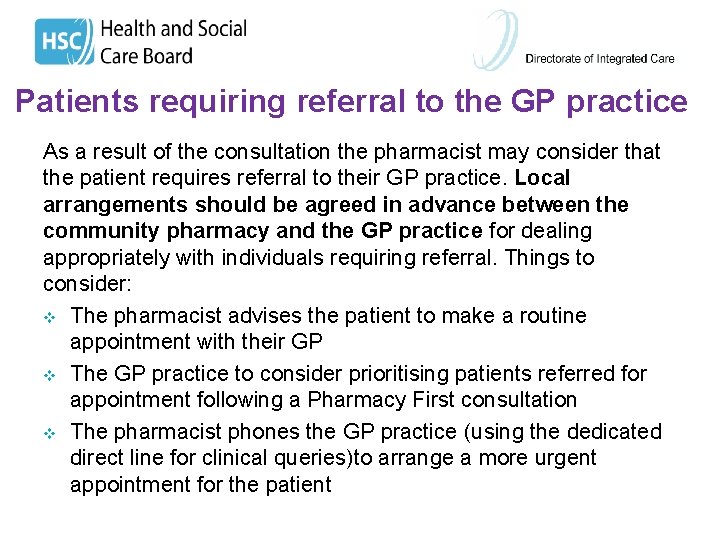
Patients requiring referral to the GP practice As a result of the consultation the pharmacist may consider that the patient requires referral to their GP practice. Local arrangements should be agreed in advance between the community pharmacy and the GP practice for dealing appropriately with individuals requiring referral. Things to consider: v The pharmacist advises the patient to make a routine appointment with their GP v The GP practice to consider prioritising patients referred for appointment following a Pharmacy First consultation v The pharmacist phones the GP practice (using the dedicated direct line for clinical queries)to arrange a more urgent appointment for the patient
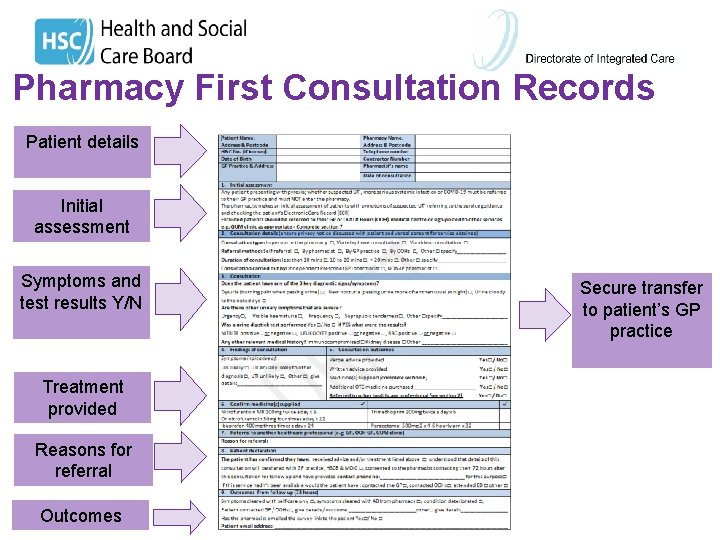
Pharmacy First Consultation Records Patient details Initial assessment Symptoms and test results Y/N Treatment provided Reasons for referral Outcomes Secure transfer to patient’s GP practice
Service Evaluation will be undertaken by HSCB / MOIC On-Line surveys for: v Patients v Community Pharmacists v GP practices As this is a pilot service and robust evaluation will inform the potential for a future service across all community pharmacies in NI. GP feedback will be an important aspect of the evaluation.
Participating pharmacists Approximately 40 Pharmacist Independent Prescribers will be offering the service in pharmacies across NI Other pharmacies will be offering the service via PGD, these include: § Northern Pharmacies Ltd § Contracted pharmacies in the Newry & Mourne ICP A full list of participating pharmacies is available on the BSO website and on the PCI
Summary – GP practice flow chart
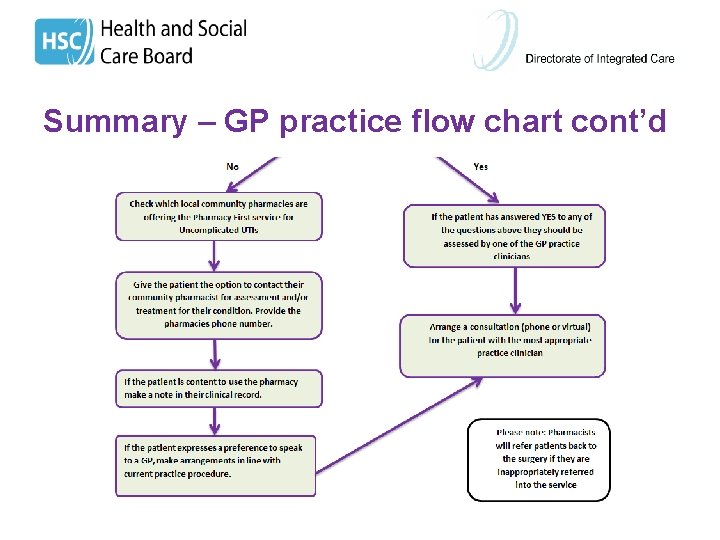
Summary – GP practice flow chart cont’d
Further Information v Further information is available on the BSO website http: //www. hscbusiness. hscni. net/services/2800. htm and on the Primary Care Intranet. v Any queries please contact siobhan. o’hare-smith@hscni. net or 07887501131