Invasive Weeds on the Middle Fork Snoqualmie Sasha

- Slides: 107
Invasive Weeds on the Middle Fork Snoqualmie Sasha Shaw Education Specialist King County Noxious Weed Program
Agenda Ø Weed Definitions Ø Middle Fork Weed Priorities Ø Priority Weeds Present in the Watershed l l Class A and B Noxious Weeds Other Priority Invasive Weeds Ø Other Widespread Weeds and Lower Priority Plants Present but not Surveyed Ø Noxious Weeds Threatening to Invade
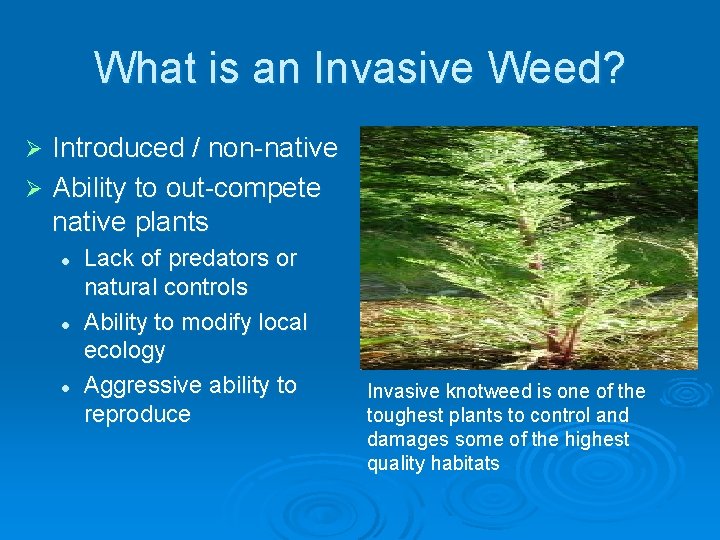
What is an Invasive Weed? Introduced / non-native Ø Ability to out-compete native plants Ø l l l Lack of predators or natural controls Ability to modify local ecology Aggressive ability to reproduce Invasive knotweed is one of the toughest plants to control and damages some of the highest quality habitats
What is a Noxious Weed? Ø Non-native plant that impacts agriculture, wildlife, human health, land values or natural resources Ø Defined and regulated by state law (RCW 17. 10) county lists are chosen from the state list l regulated in parts of the state where they have limited distribution l
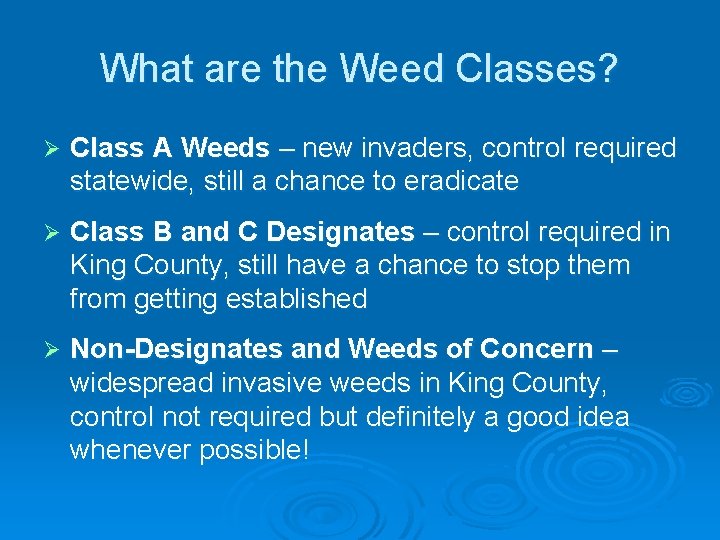
What are the Weed Classes? Ø Class A Weeds – new invaders, control required statewide, still a chance to eradicate Ø Class B and C Designates – control required in King County, still have a chance to stop them from getting established Ø Non-Designates and Weeds of Concern – widespread invasive weeds in King County, control not required but definitely a good idea whenever possible!
Middle Fork Snoqualmie Weed Priorities Ø King County Noxious Weeds l l Class A’s, B-designates, and C-selects Non-designates and Weeds of Concern that are limited in distribution and still controllable Ø Non-native species newly introduced or not previously reported in the valley Ø Excluded from the survey: species that are already pervasive in the valley and unlikely to be controlled valley-wide
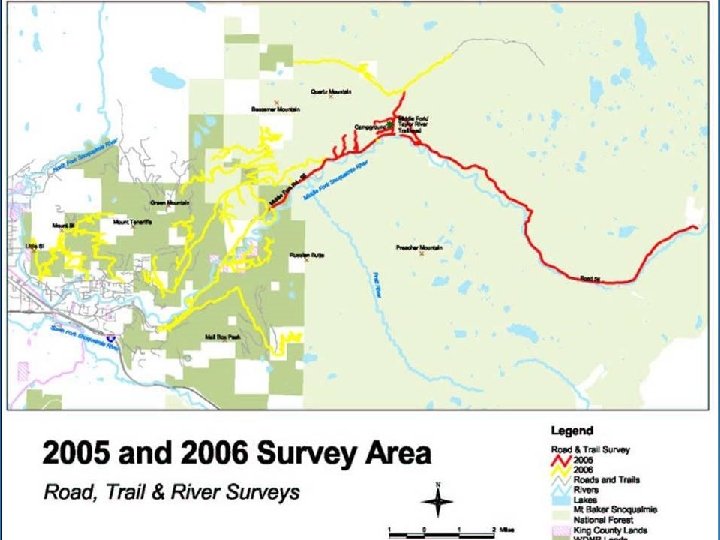
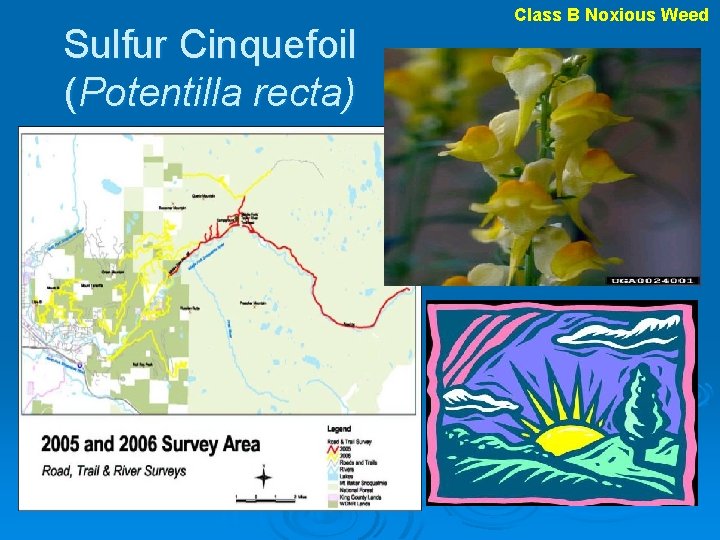
Middle Fork Snoqualmie Weed Surveys Completed 2005 and 2006 Ø Roadsides (10 ft in on both sides) l Farther in where disturbance or weed infestations were observed Ø Disturbed Sites l l Quarries, cut banks, logging landings Camping sites, pullouts, trailheads, parking lots Ø Open talus fields, stream crossings Ø River by raft and river bars on foot
Priority Weeds Identified in the Middle Fork Valley Ø Ø Ø Ø Ø Himalayan and Evergreen Blackberry Bohemian Knotweed Scotch Broom Reed Canary Grass English Holly English Ivy Butterfly Bush Tansy Ragwort* Yellow Hawkweed* Ø Ø Ø Ø Ø Canada Thistle Hedge Bindweed Common Tansy Yellow Archangel Yellow Flag Iris European Mountain-Ash Spotted Knapweed* Bittersweet Nightshade Poison-hemlock Listed in order of total area found. Weeds with * are designated for control in King County.
Class A and B Noxious Weeds (Please notify the county noxious weed program if these are found)
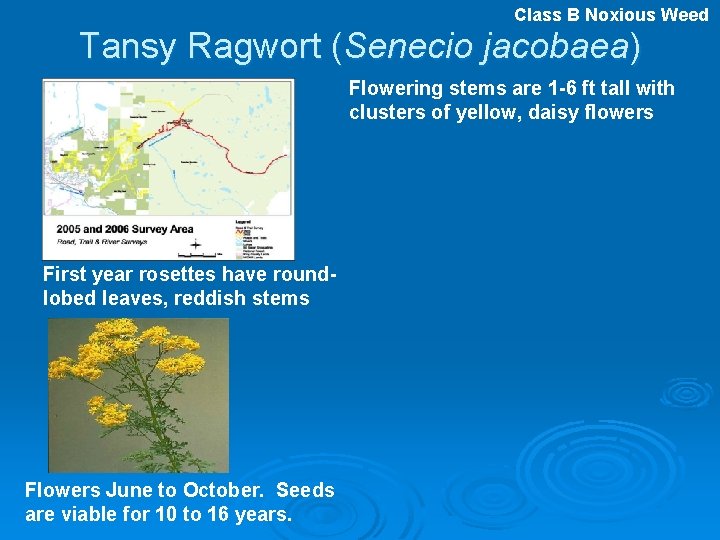
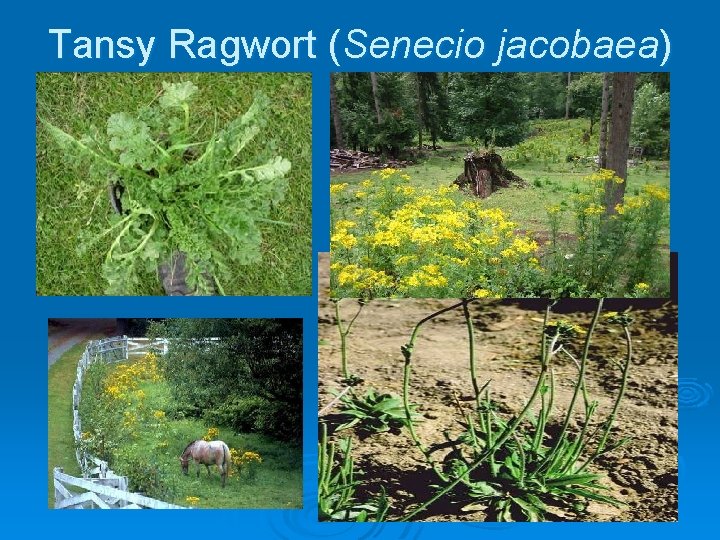
Class B Noxious Weed Tansy Ragwort (Senecio jacobaea) Flowering stems are 1 -6 ft tall with clusters of yellow, daisy flowers First year rosettes have roundlobed leaves, reddish stems Flowers June to October. Seeds are viable for 10 to 16 years.
Tansy Ragwort (Senecio jacobaea)
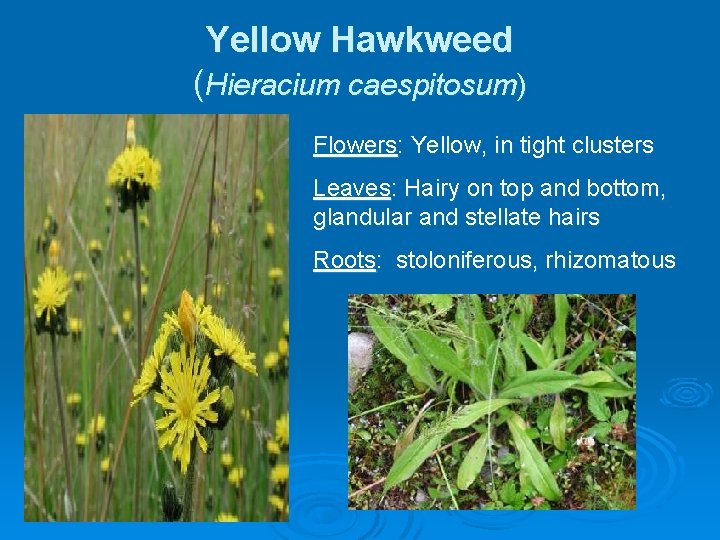
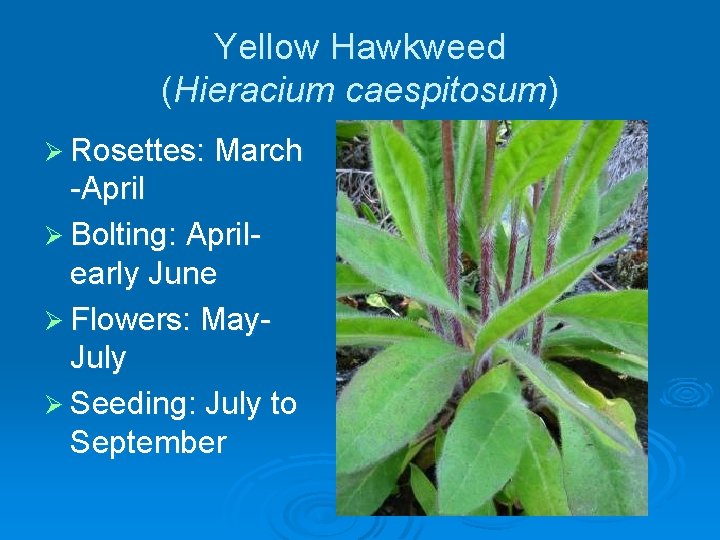
Yellow Hawkweed (Hieracium caespitosum) Flowers: Yellow, in tight clusters Leaves: Hairy on top and bottom, glandular and stellate hairs Roots: stoloniferous, rhizomatous
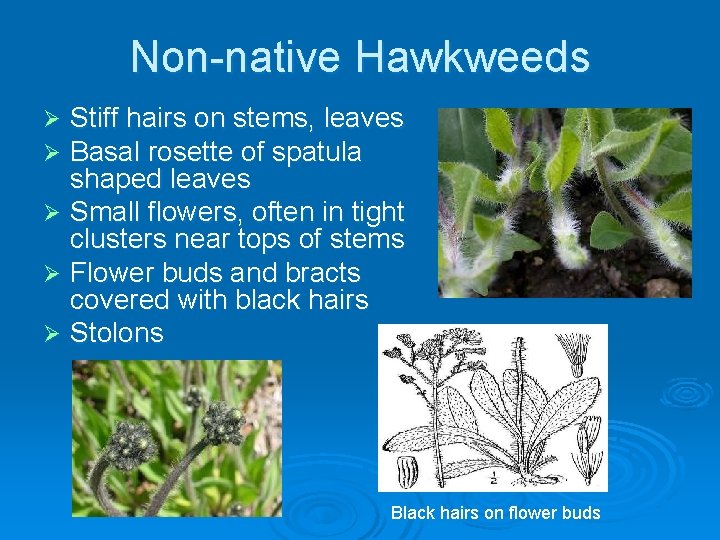
Non-native Hawkweeds Stiff hairs on stems, leaves Basal rosette of spatula shaped leaves Ø Small flowers, often in tight clusters near tops of stems Ø Flower buds and bracts covered with black hairs Ø Stolons Ø Ø Black hairs on flower buds
Yellow Hawkweed (Hieracium caespitosum) Ø Rosettes: March -April Ø Bolting: Aprilearly June Ø Flowers: May. July Ø Seeding: July to September
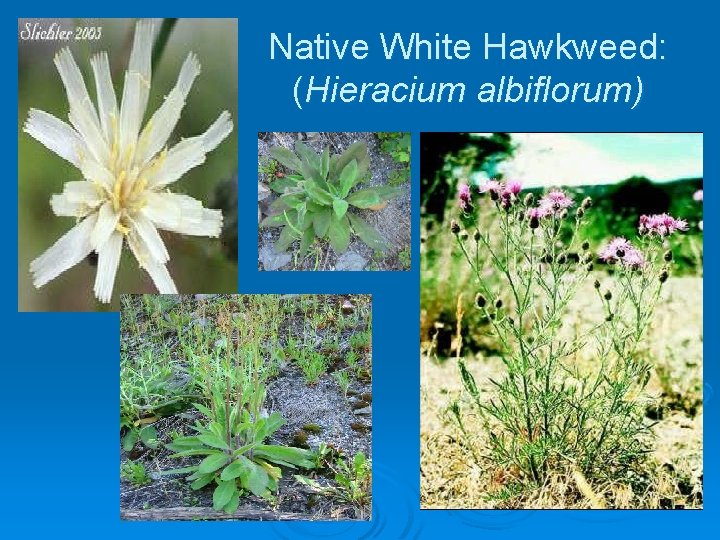
Native White Hawkweed: (Hieracium albiflorum)
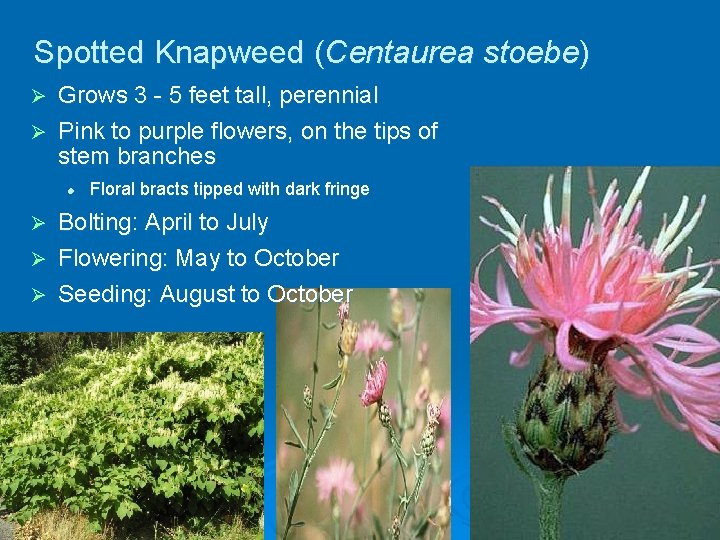
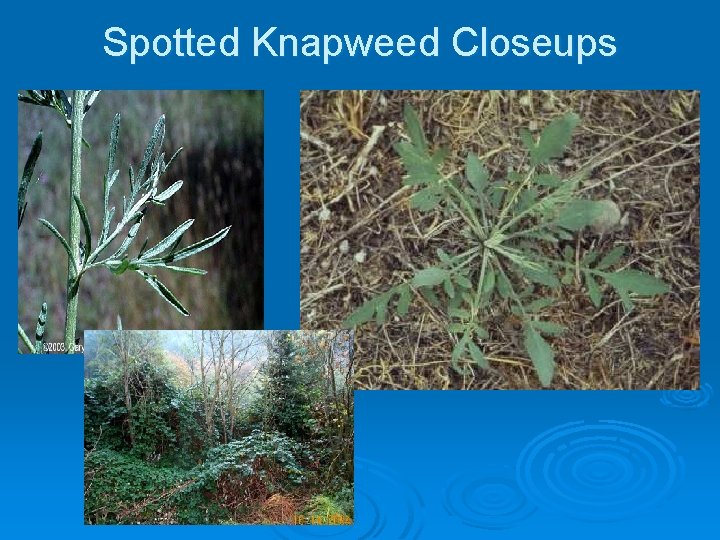
Spotted Knapweed (Centaurea stoebe) Grows 3 - 5 feet tall, perennial Ø Pink to purple flowers, on the tips of stem branches Ø l Floral bracts tipped with dark fringe Bolting: April to July Ø Flowering: May to October Ø Seeding: August to October Ø
Spotted Knapweed Closeups
Other Priority Invasive Weeds in the MF
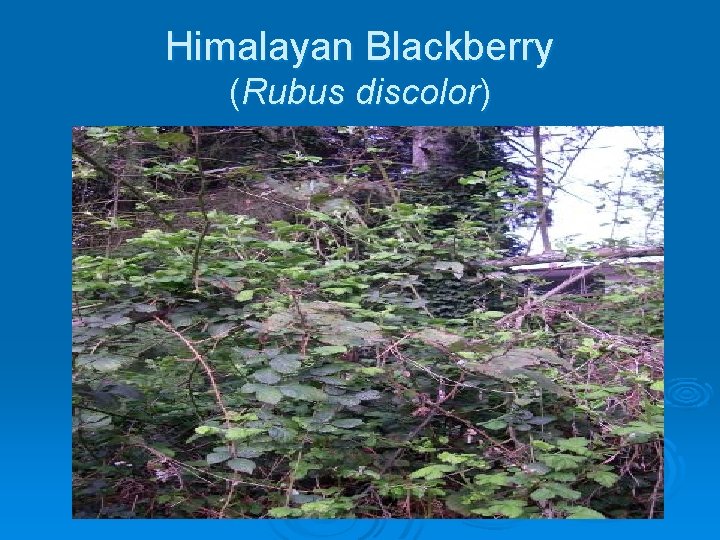
Himalayan Blackberry (Rubus discolor)
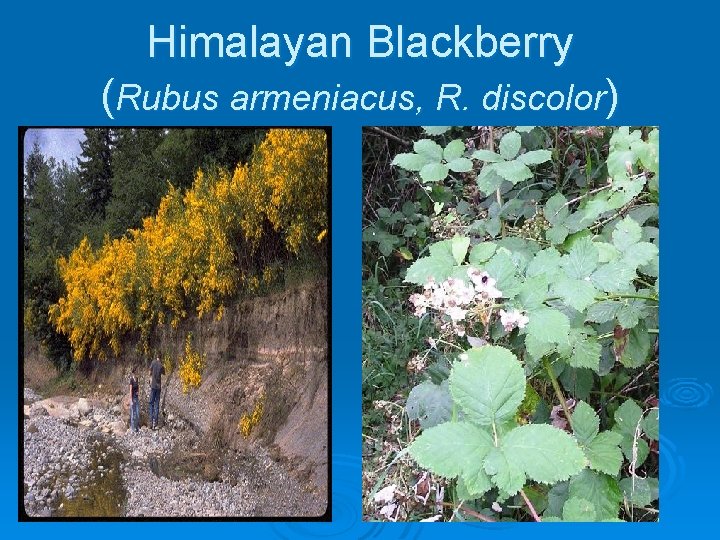
Himalayan Blackberry (Rubus armeniacus, R. discolor)
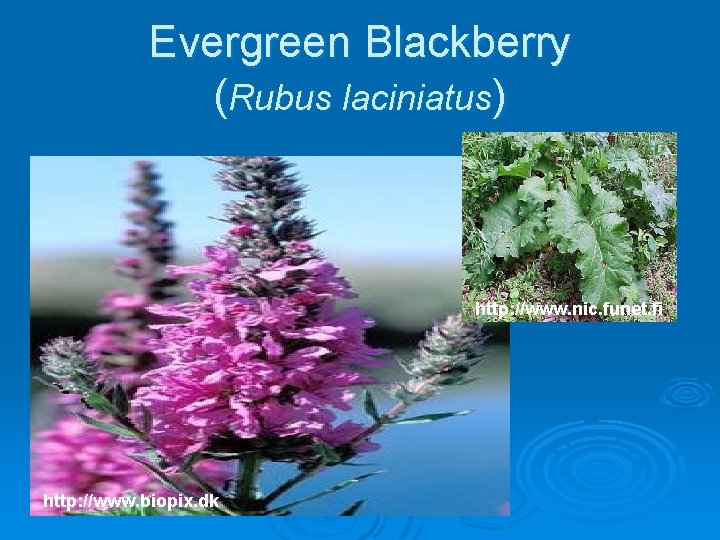
Evergreen Blackberry (Rubus laciniatus) http: //www. nic. funet. fi http: //www. biopix. dk
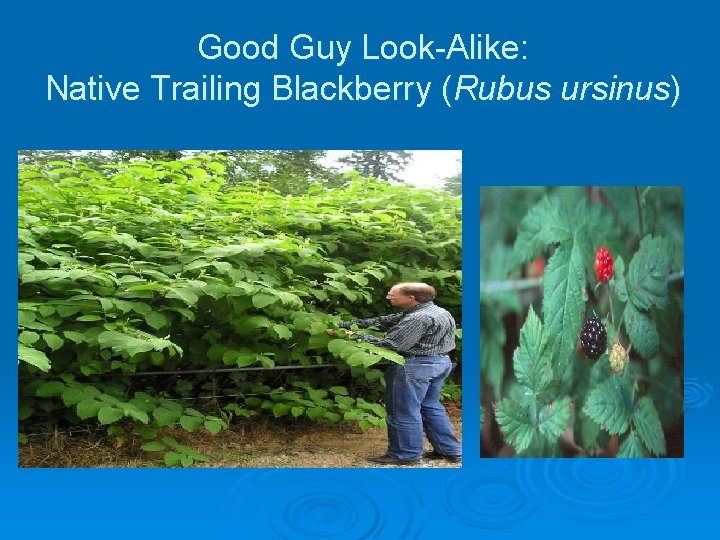
Good Guy Look-Alike: Native Trailing Blackberry (Rubus ursinus)
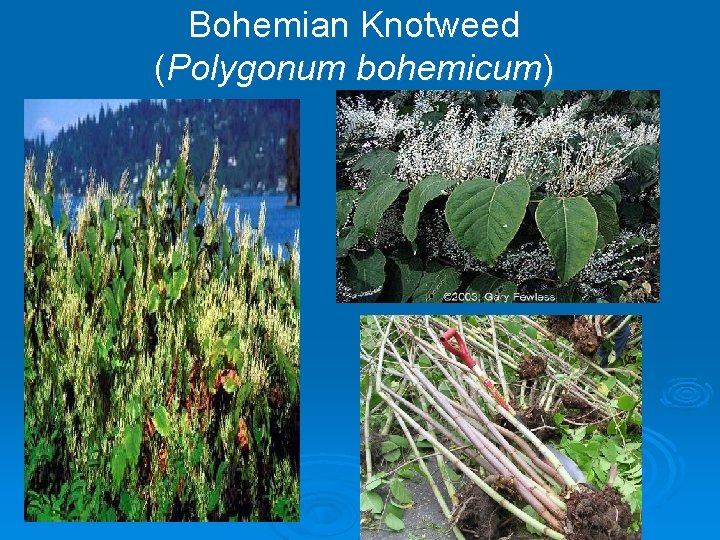
Bohemian Knotweed (Polygonum bohemicum)
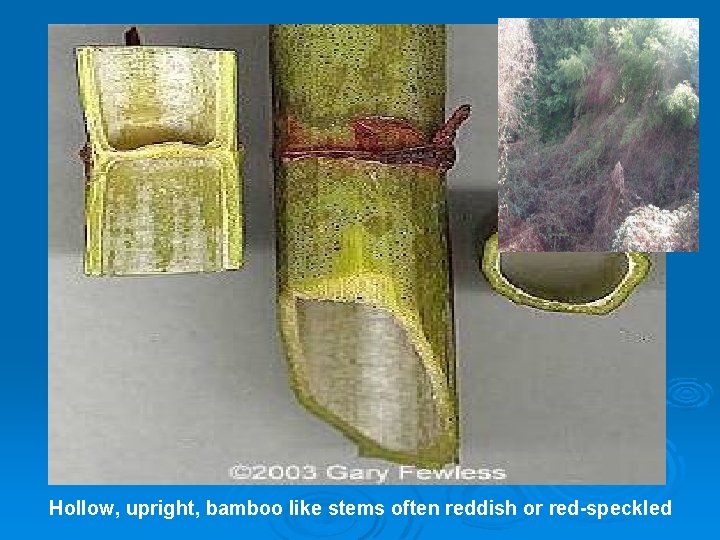
Hollow, upright, bamboo like stems often reddish or red-speckled
Typical stand of Bohemian knotweed
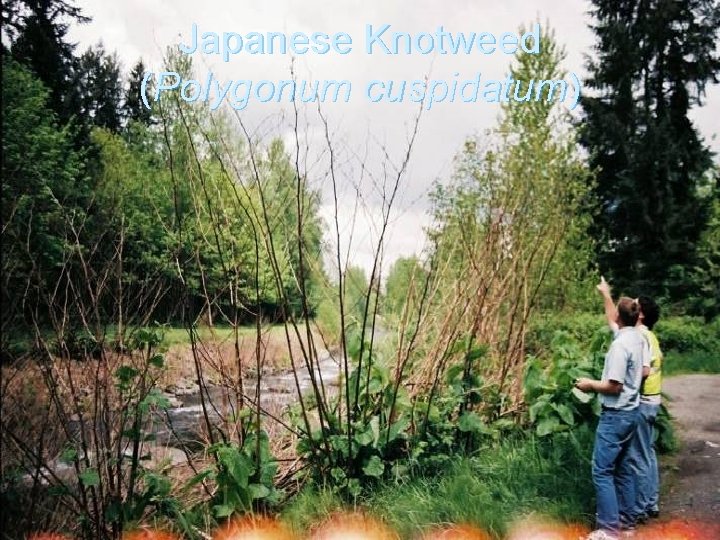
Japanese Knotweed (Polygonum cuspidatum)
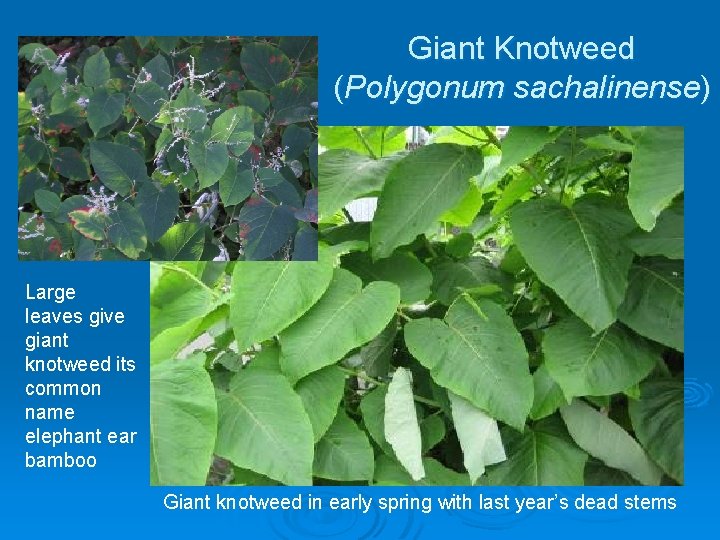
Giant Knotweed (Polygonum sachalinense) Large leaves give giant knotweed its common name elephant ear bamboo Giant knotweed in early spring with last year’s dead stems
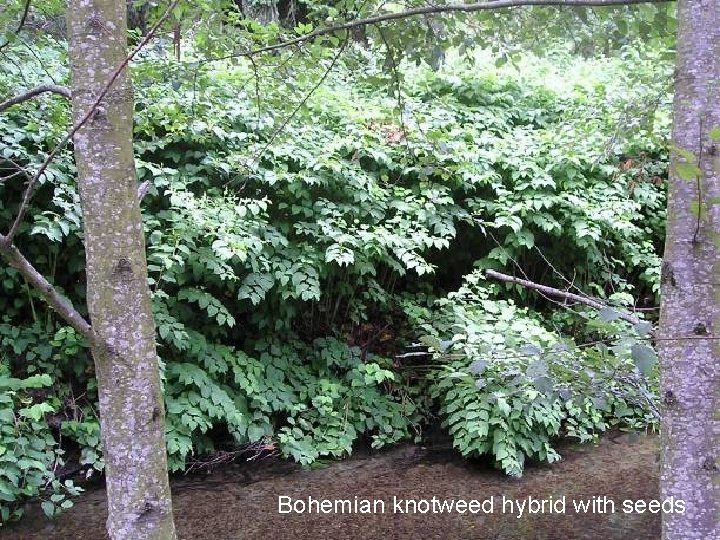
Bohemian knotweed hybrid with seeds
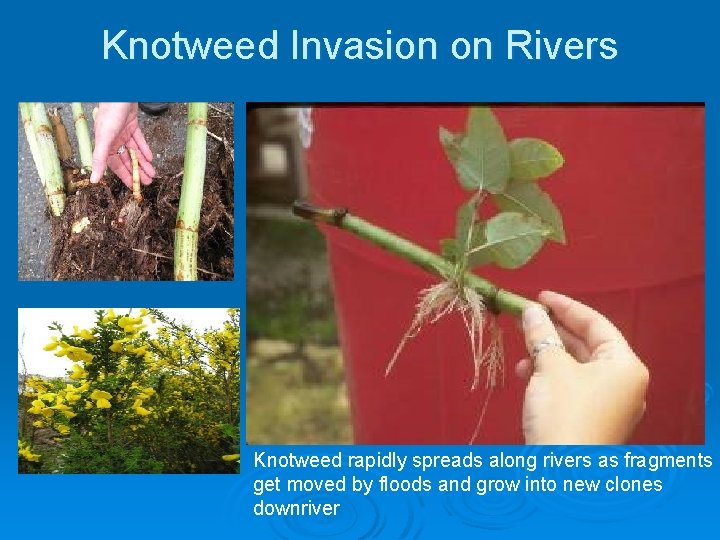
Knotweed Invasion on Rivers Knotweed rapidly spreads along rivers as fragments get moved by floods and grow into new clones downriver
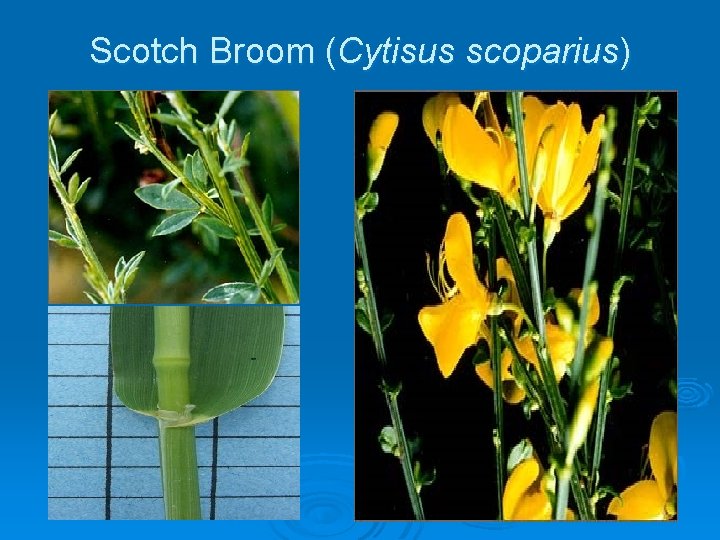
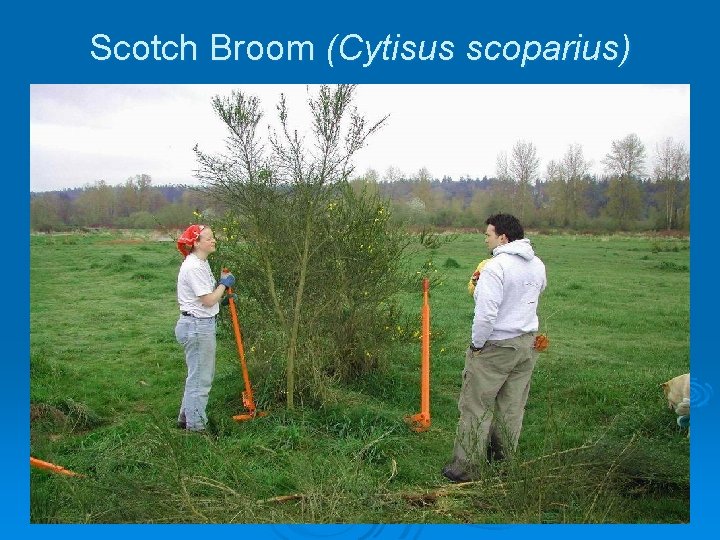
Scotch Broom (Cytisus scoparius)
Scotch Broom (Cytisus scoparius)
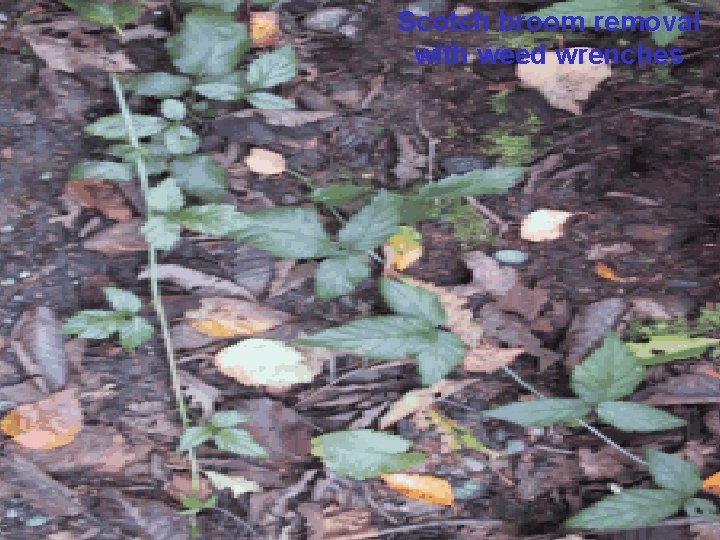
Scotch broom removal with weed wrenches
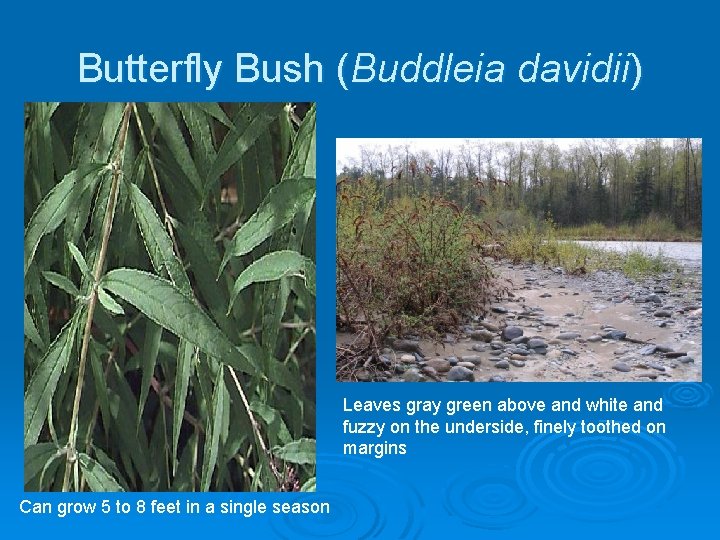
Butterfly Bush (Buddleia davidii) Leaves gray green above and white and fuzzy on the underside, finely toothed on margins Can grow 5 to 8 feet in a single season
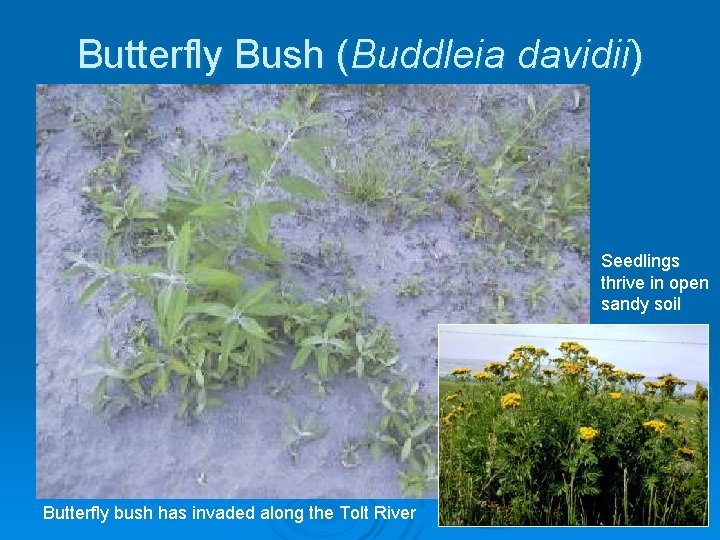
Butterfly Bush (Buddleia davidii) Seedlings thrive in open sandy soil Butterfly bush has invaded along the Tolt River
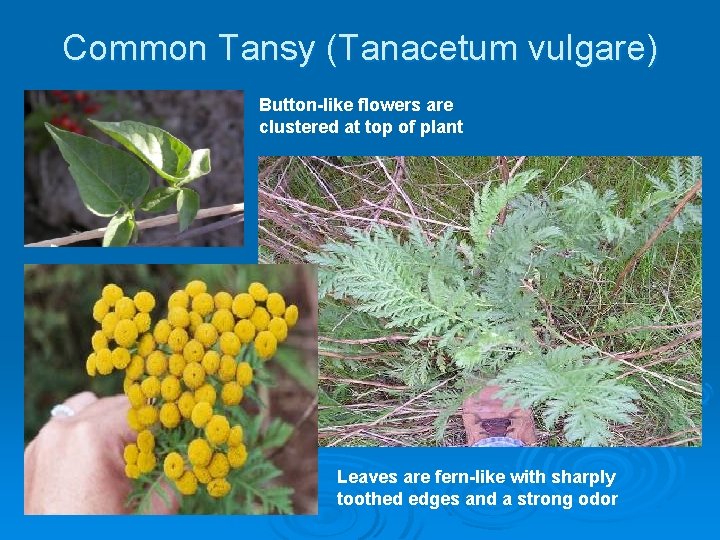
Common Tansy (Tanacetum vulgare) Button-like flowers are clustered at top of plant Leaves are fern-like with sharply toothed edges and a strong odor
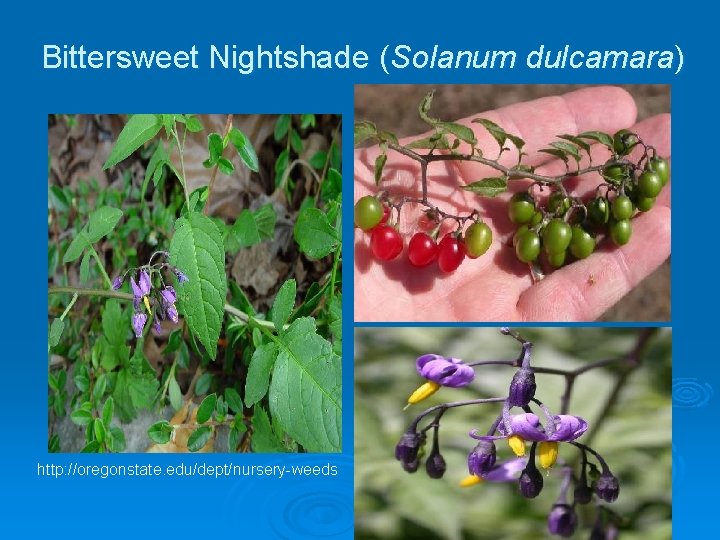
Bittersweet Nightshade (Solanum dulcamara) http: //oregonstate. edu/dept/nursery-weeds
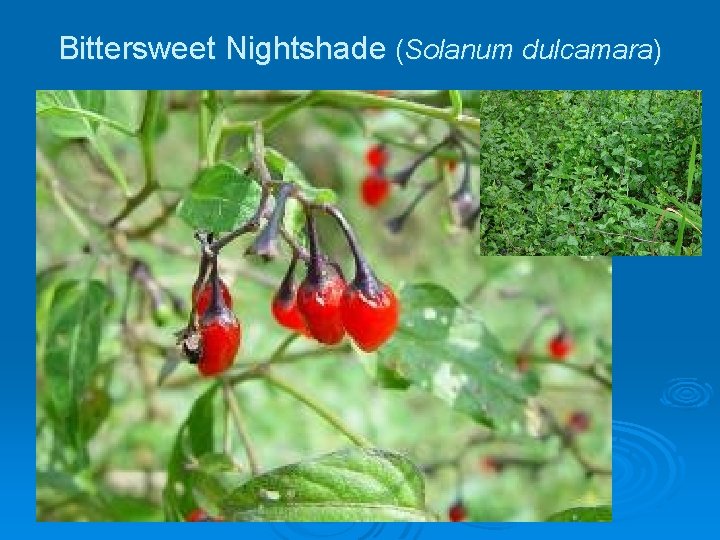
Bittersweet Nightshade (Solanum dulcamara)
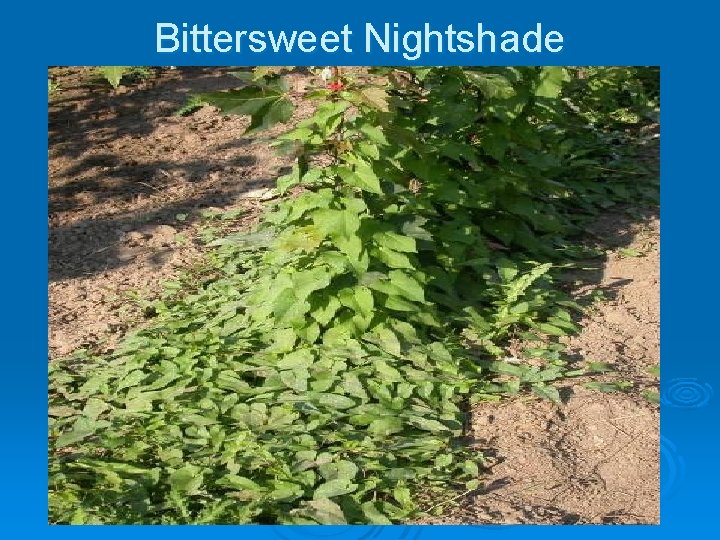
Bittersweet Nightshade
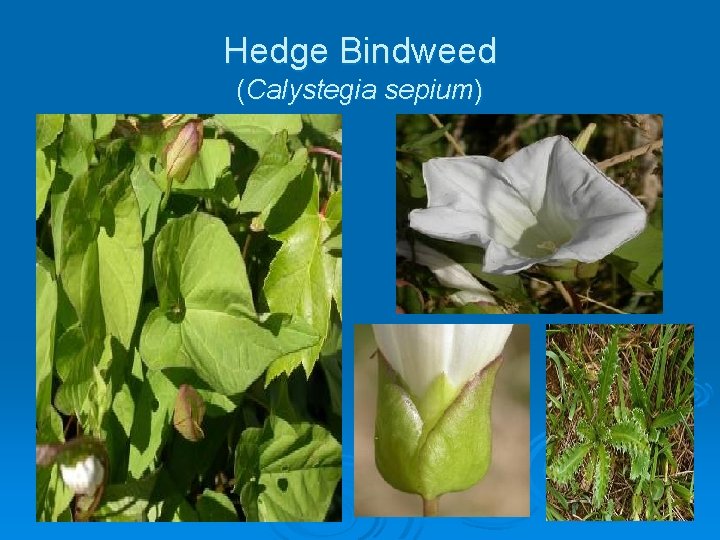
Hedge Bindweed (Calystegia sepium)
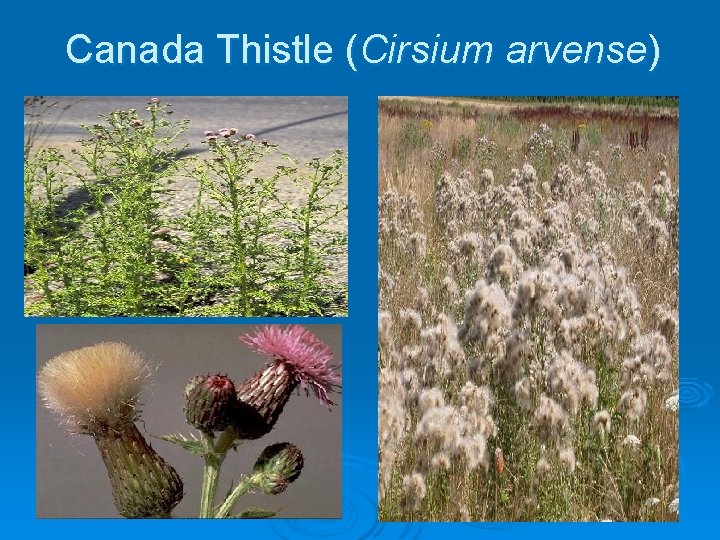
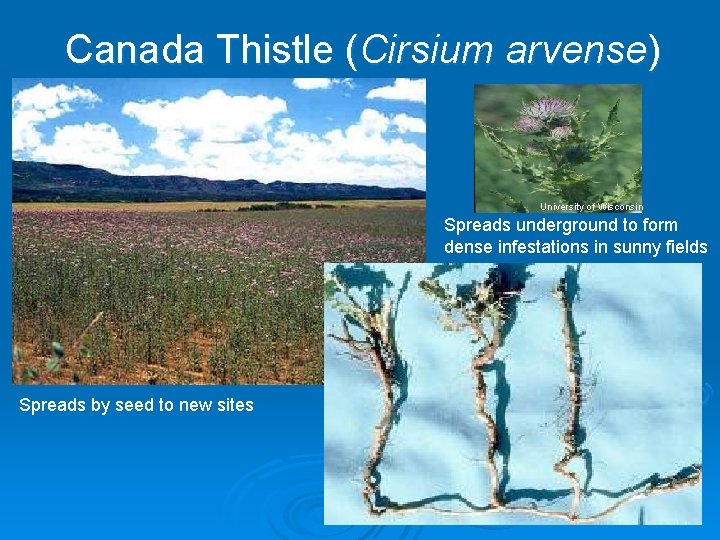
Canada Thistle (Cirsium arvense)
Canada Thistle (Cirsium arvense) University of Wisconsin Spreads underground to form dense infestations in sunny fields Spreads by seed to new sites
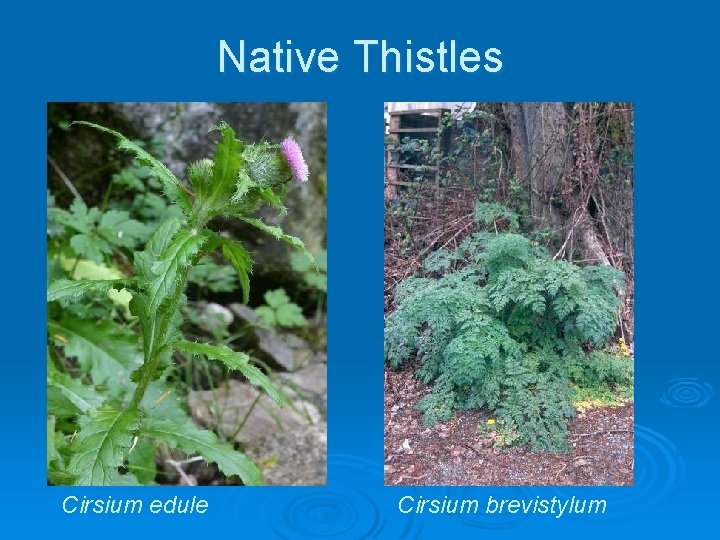
Native Thistles Cirsium edule Cirsium brevistylum
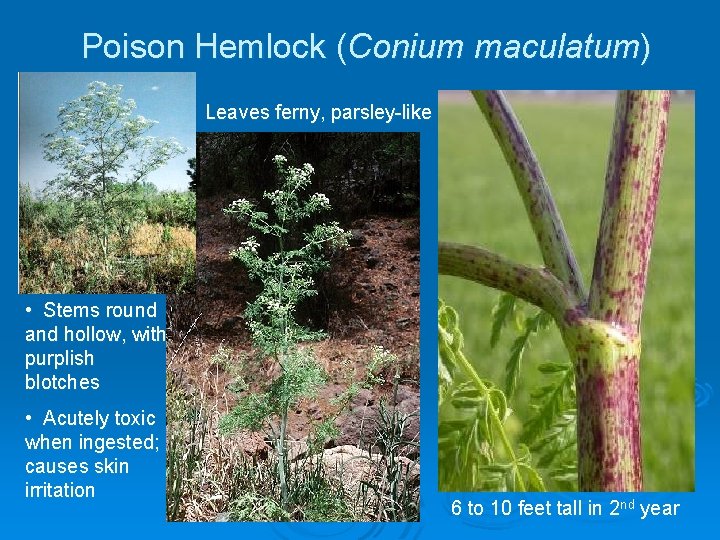
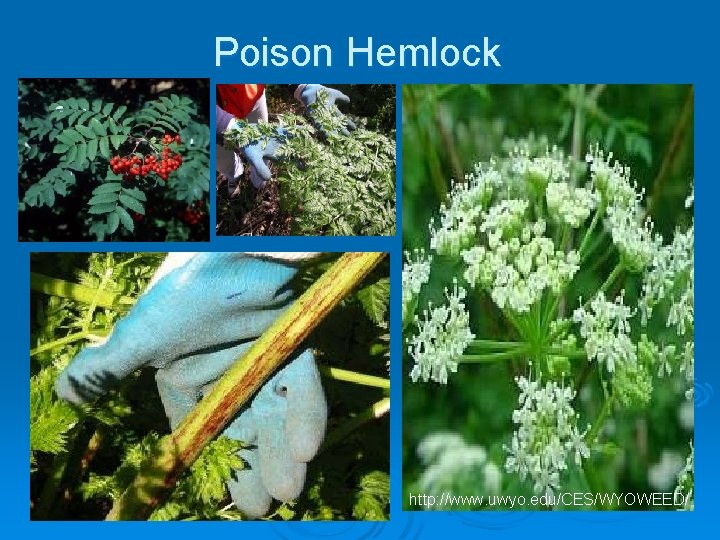
Poison Hemlock (Conium maculatum) Leaves ferny, parsley-like • Stems round and hollow, with purplish blotches • Acutely toxic when ingested; causes skin irritation 6 to 10 feet tall in 2 nd year
Poison Hemlock http: //www. uwyo. edu/CES/WYOWEED/
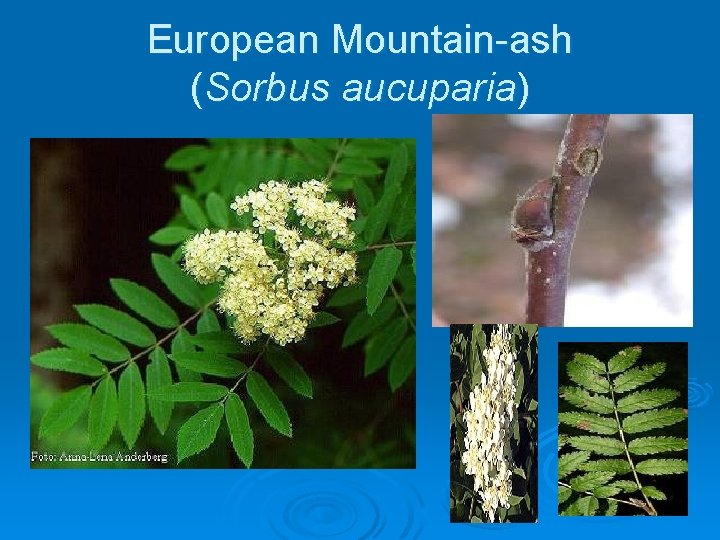
European Mountain-ash (Sorbus aucuparia)
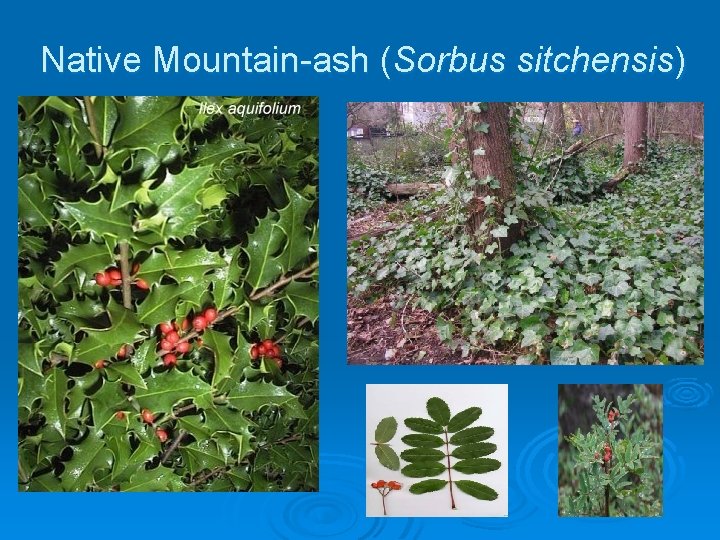
Native Mountain-ash (Sorbus sitchensis)
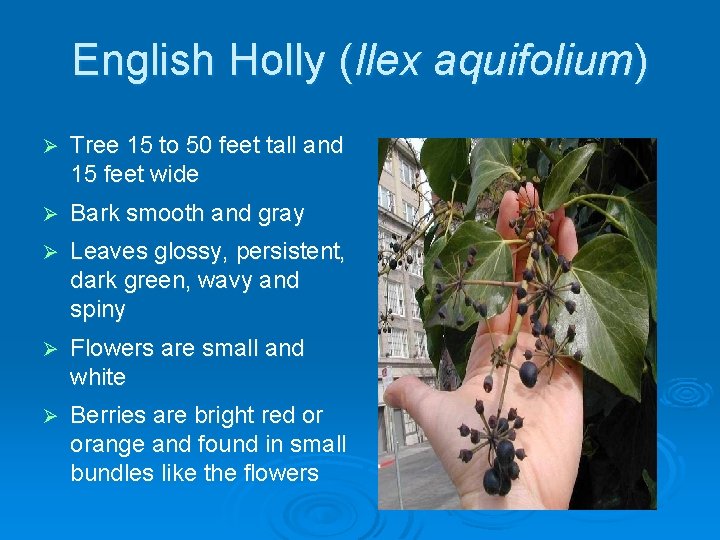
English Holly (Ilex aquifolium) Ø Tree 15 to 50 feet tall and 15 feet wide Ø Bark smooth and gray Ø Leaves glossy, persistent, dark green, wavy and spiny Ø Flowers are small and white Ø Berries are bright red or orange and found in small bundles like the flowers
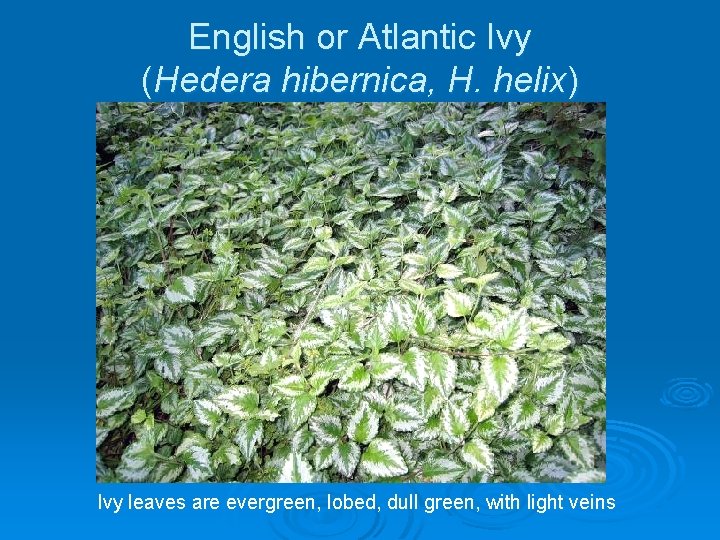
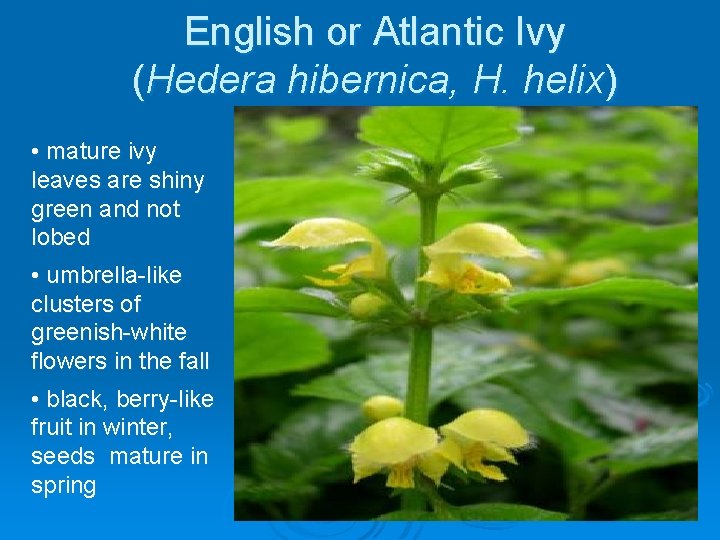
English or Atlantic Ivy (Hedera hibernica, H. helix) Ivy leaves are evergreen, lobed, dull green, with light veins
English or Atlantic Ivy (Hedera hibernica, H. helix) • mature ivy leaves are shiny green and not lobed • umbrella-like clusters of greenish-white flowers in the fall • black, berry-like fruit in winter, seeds mature in spring
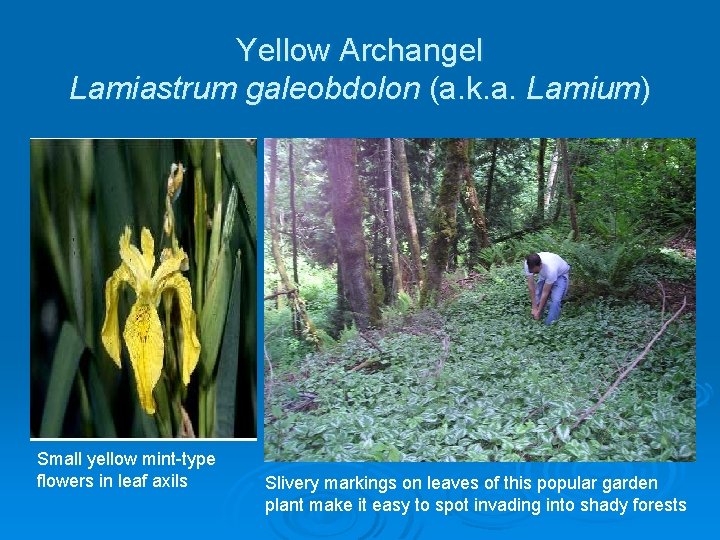
Yellow Archangel Lamiastrum galeobdolon (a. k. a. Lamium) Small yellow mint-type flowers in leaf axils Slivery markings on leaves of this popular garden plant make it easy to spot invading into shady forests
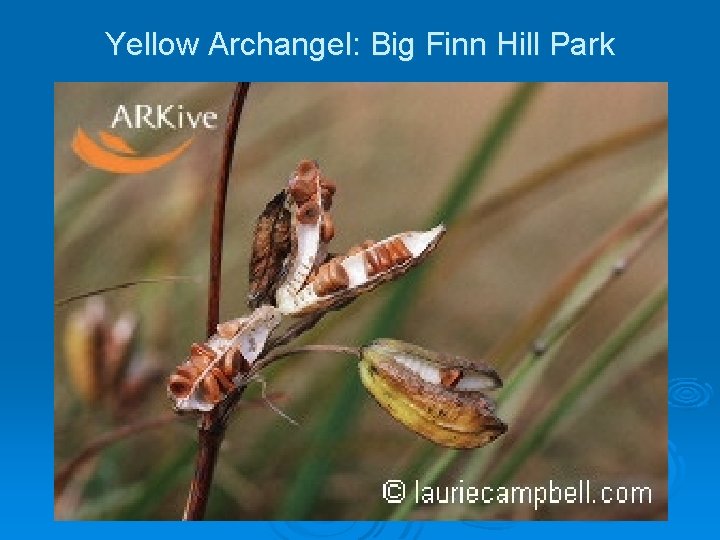
Yellow Archangel: Big Finn Hill Park
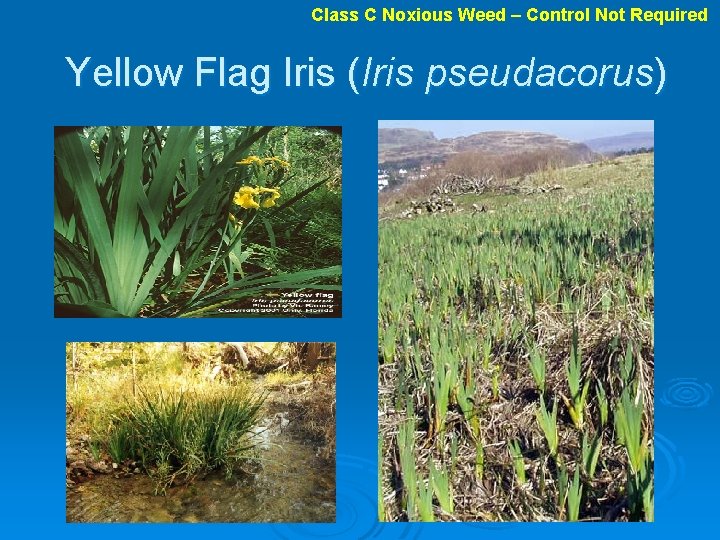
Class C Noxious Weed – Control Not Required Yellow Flag Iris (Iris pseudacorus)
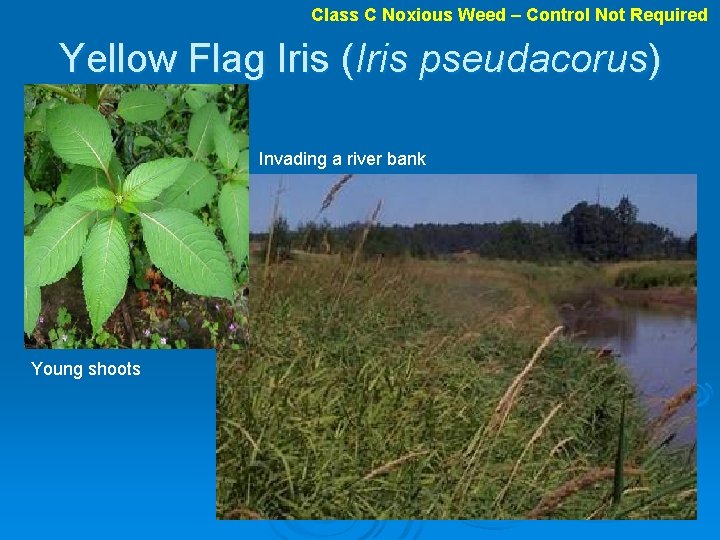
Class C Noxious Weed – Control Not Required Yellow Flag Iris (Iris pseudacorus) Invading a river bank Young shoots
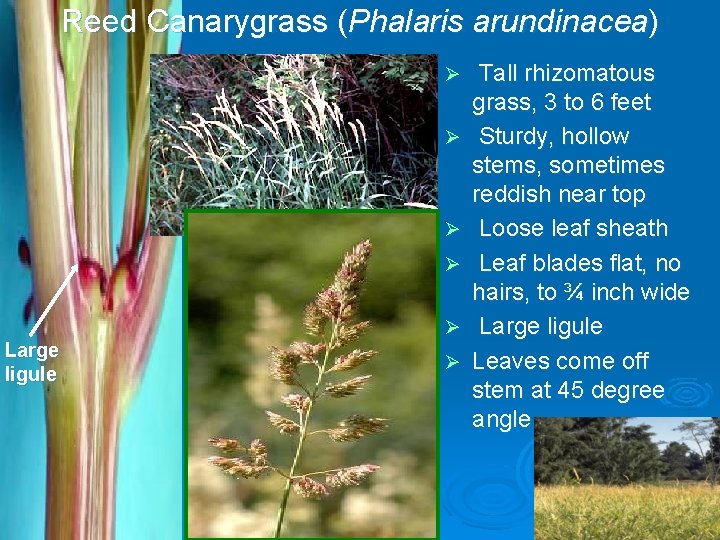
Reed Canarygrass (Phalaris arundinacea) Ø Ø Ø Large ligule Ø Loose leaf sheath Tall rhizomatous grass, 3 to 6 feet Sturdy, hollow stems, sometimes reddish near top Loose leaf sheath Leaf blades flat, no hairs, to ¾ inch wide Large ligule Leaves come off stem at 45 degree angle
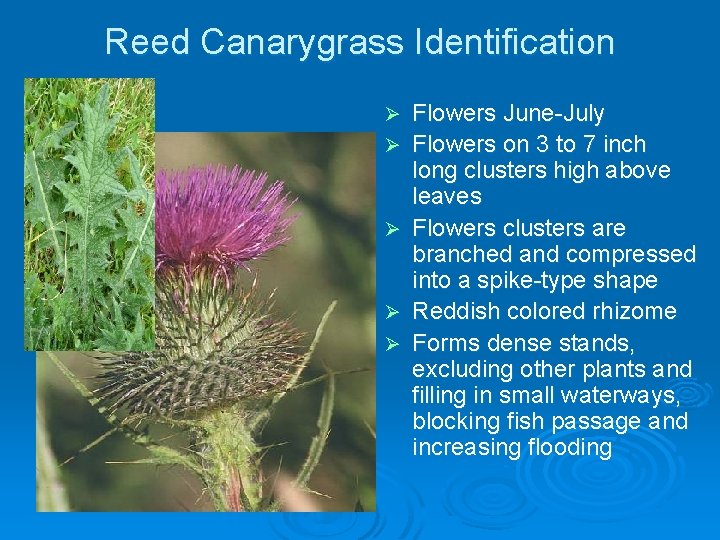
Reed Canarygrass Identification Ø Ø http: //popgen. unimaas. nl/~ jlindsey/commanster Ø Flowers June-July Flowers on 3 to 7 inch long clusters high above leaves Flowers clusters are branched and compressed into a spike-type shape Reddish colored rhizome Forms dense stands, excluding other plants and filling in small waterways, blocking fish passage and increasing flooding
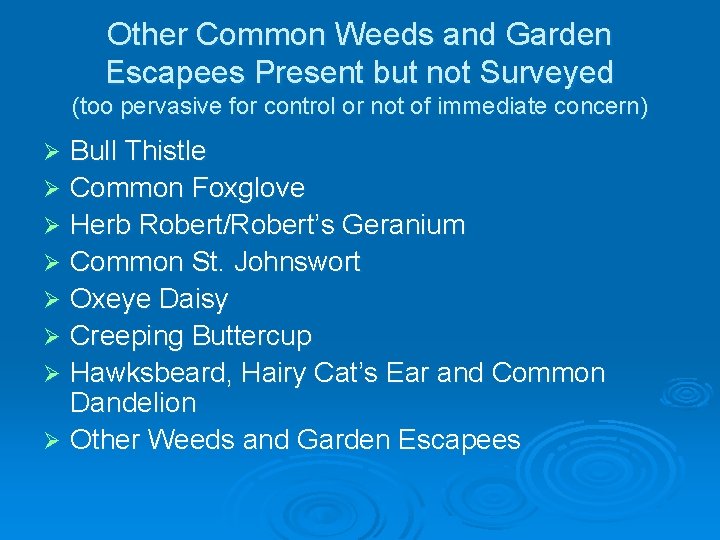
Other Common Weeds and Garden Escapees Present but not Surveyed (too pervasive for control or not of immediate concern) Bull Thistle Ø Common Foxglove Ø Herb Robert/Robert’s Geranium Ø Common St. Johnswort Ø Oxeye Daisy Ø Creeping Buttercup Ø Hawksbeard, Hairy Cat’s Ear and Common Dandelion Ø Other Weeds and Garden Escapees Ø
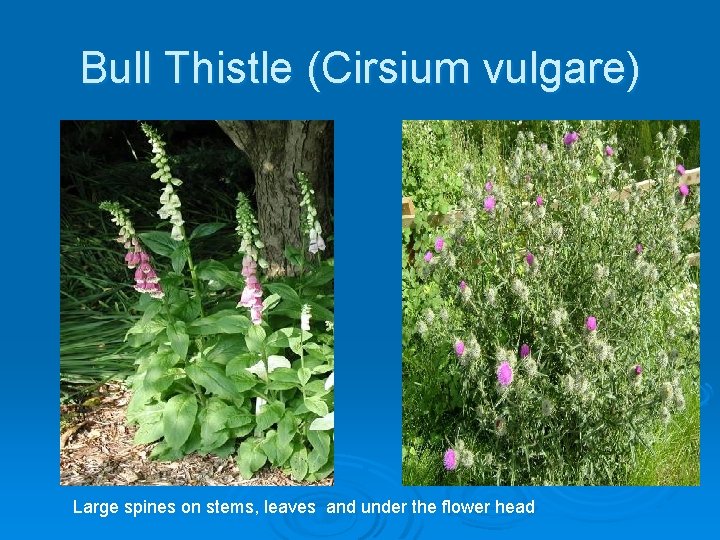
Bull Thistle (Cirsium vulgare) Large spines on stems, leaves and under the flower head
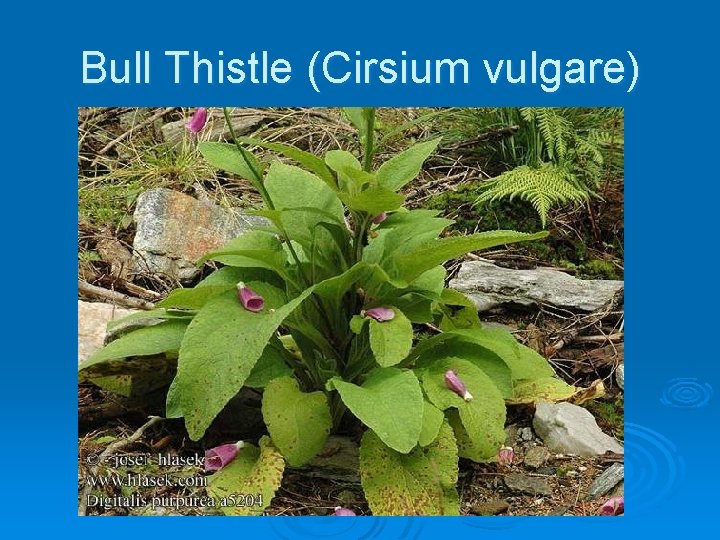
Bull Thistle (Cirsium vulgare)
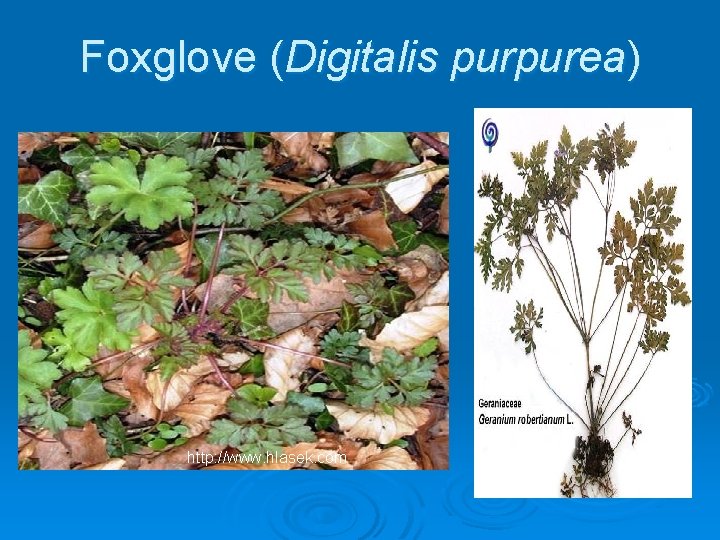
Foxglove (Digitalis purpurea) http: //www. hlasek. com
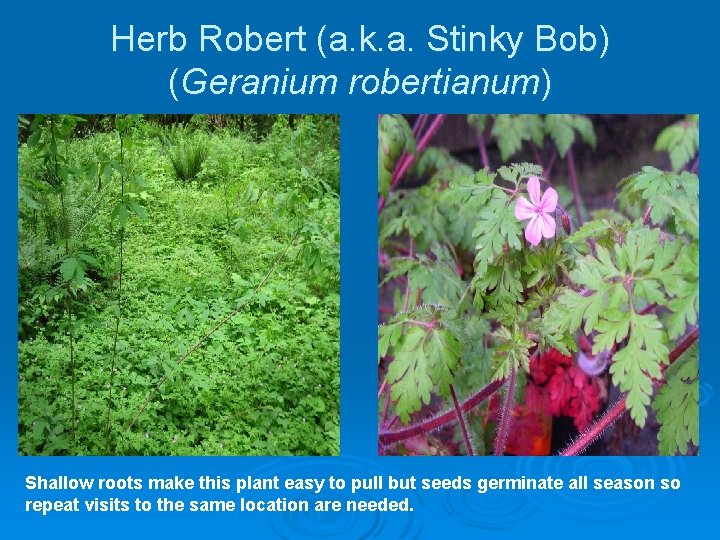
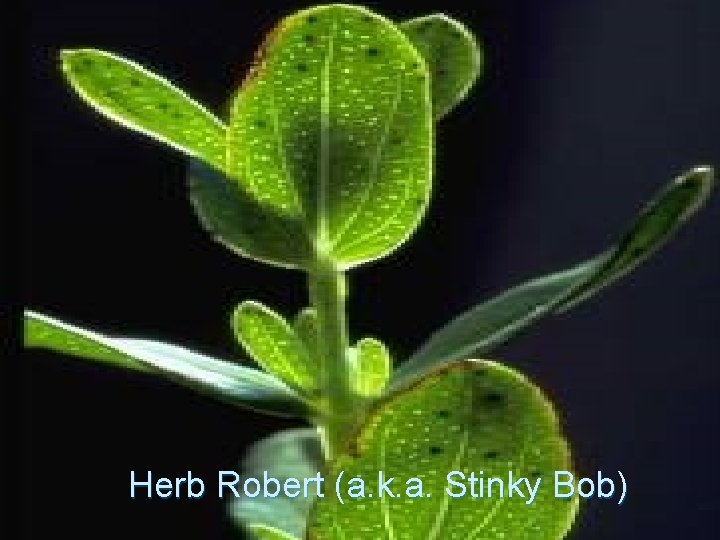
Herb Robert (a. k. a. Stinky Bob) (Geranium robertianum) Shallow roots make this plant easy to pull but seeds germinate all season so repeat visits to the same location are needed.
Herb Robert (a. k. a. Stinky Bob)
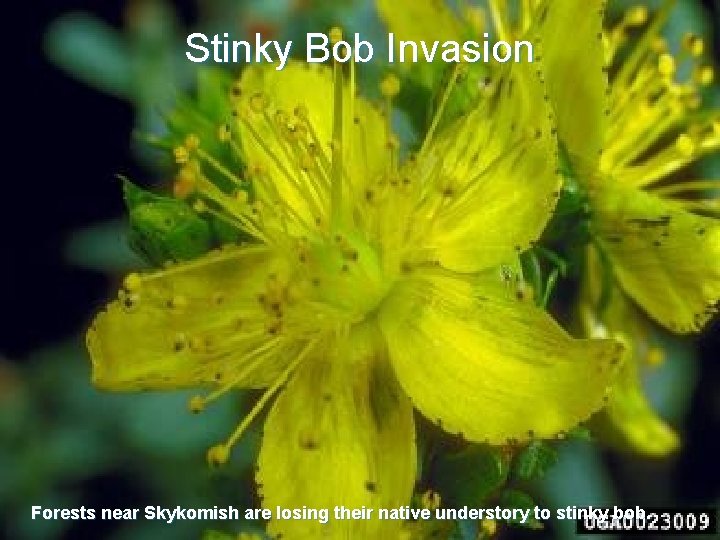
Stinky Bob Invasion Forests near Skykomish are losing their native understory to stinky bob.
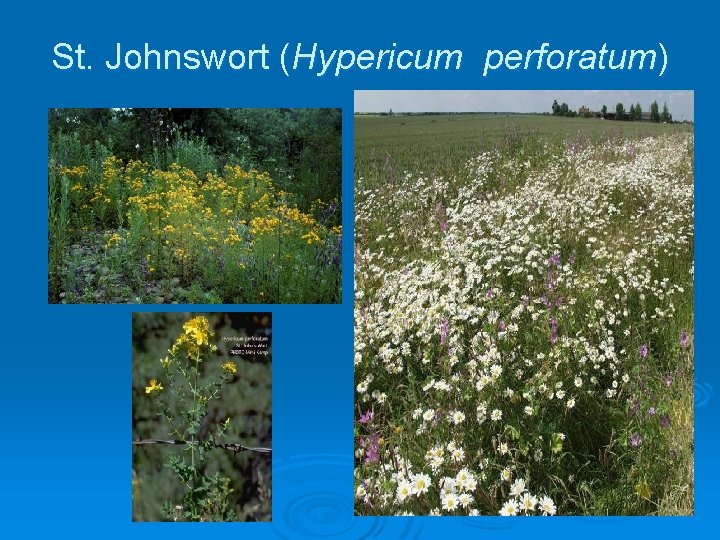
St. Johnswort (Hypericum perforatum)
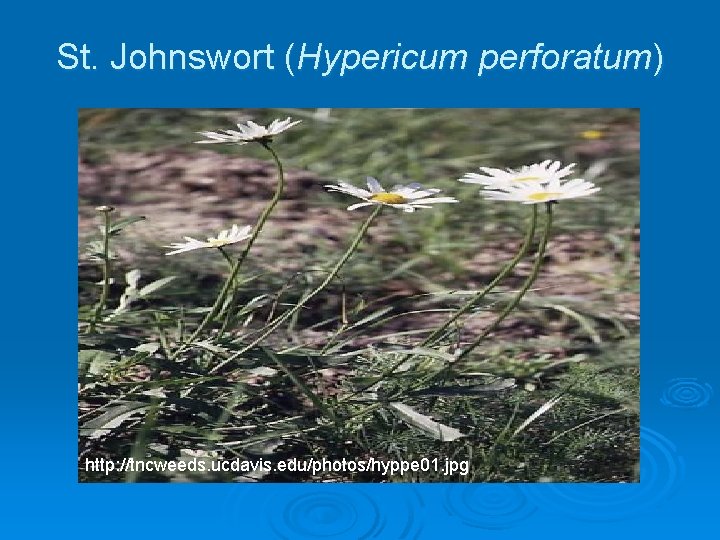
St. Johnswort (Hypericum perforatum) http: //tncweeds. ucdavis. edu/photos/hyppe 01. jpg
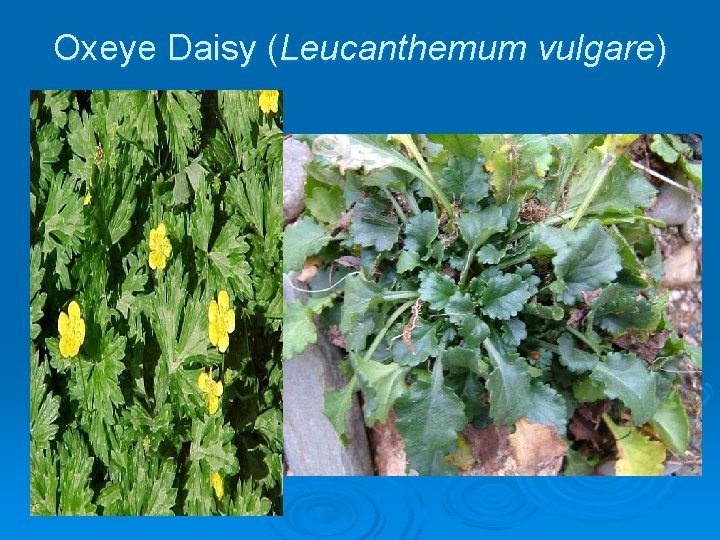
Oxeye Daisy (Leucanthemum vulgare)
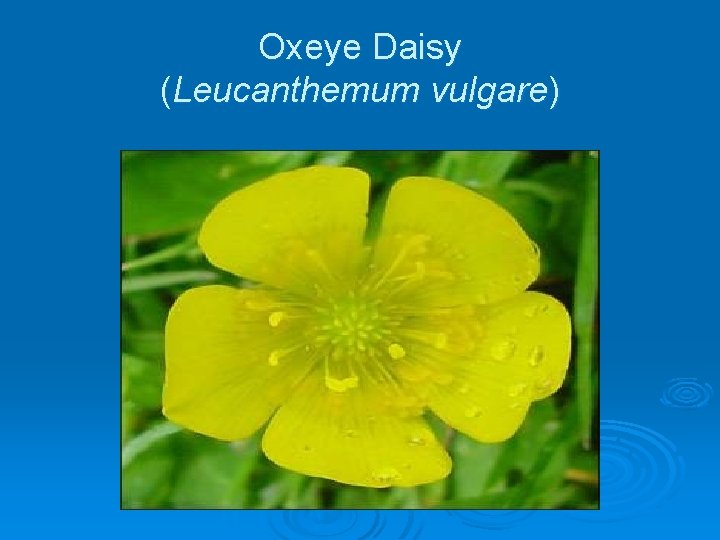
Oxeye Daisy (Leucanthemum vulgare)
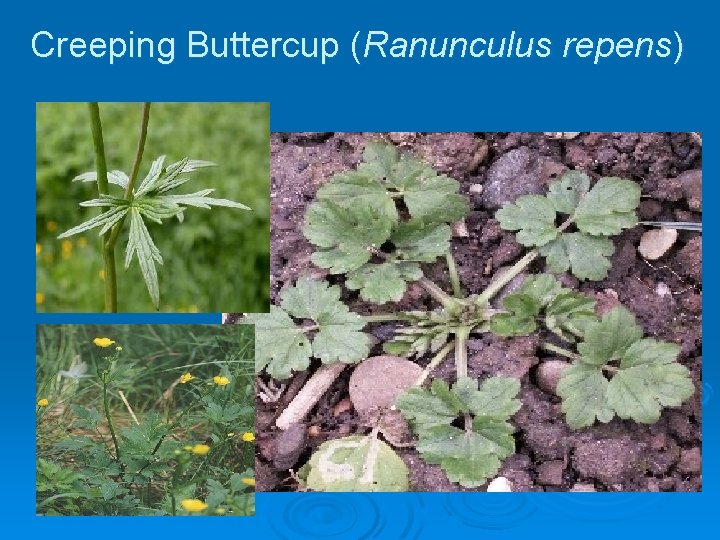
Creeping Buttercup (Ranunculus repens)
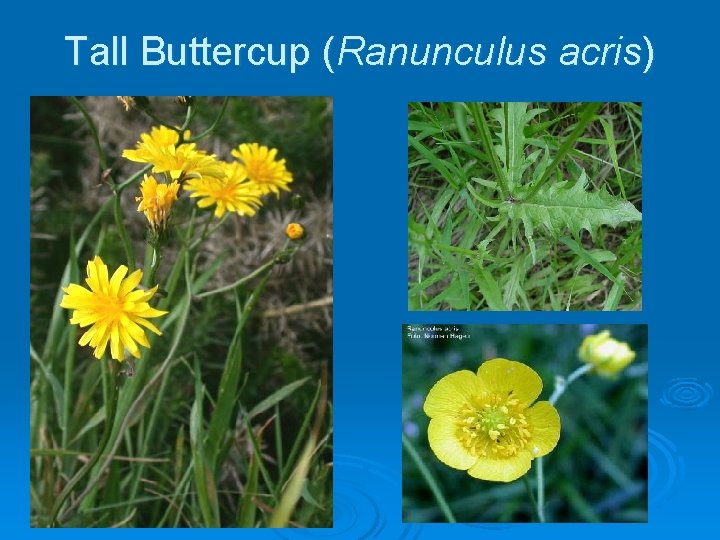
Tall Buttercup (Ranunculus acris)
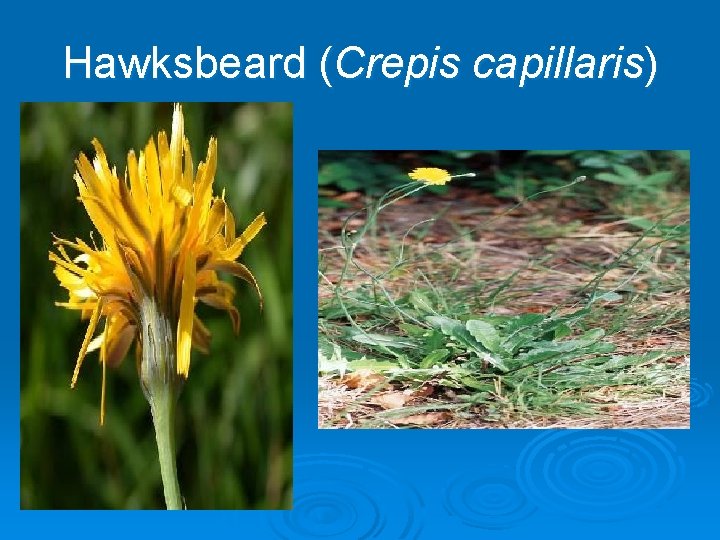
Hawksbeard (Crepis capillaris)
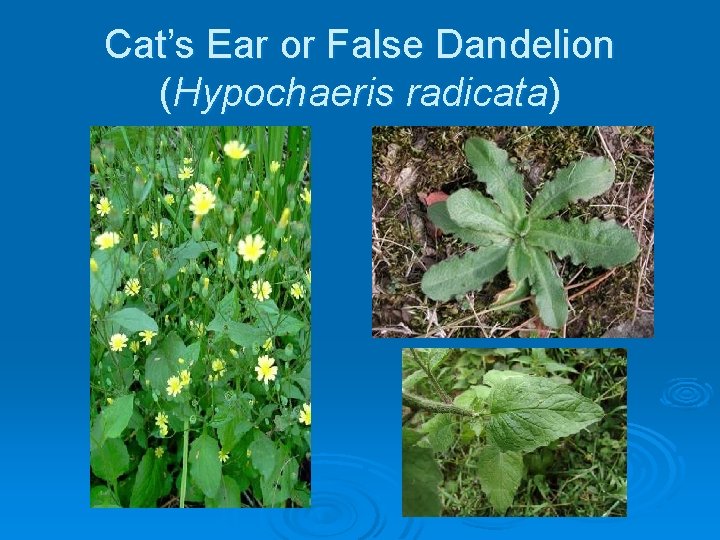
Cat’s Ear or False Dandelion (Hypochaeris radicata)
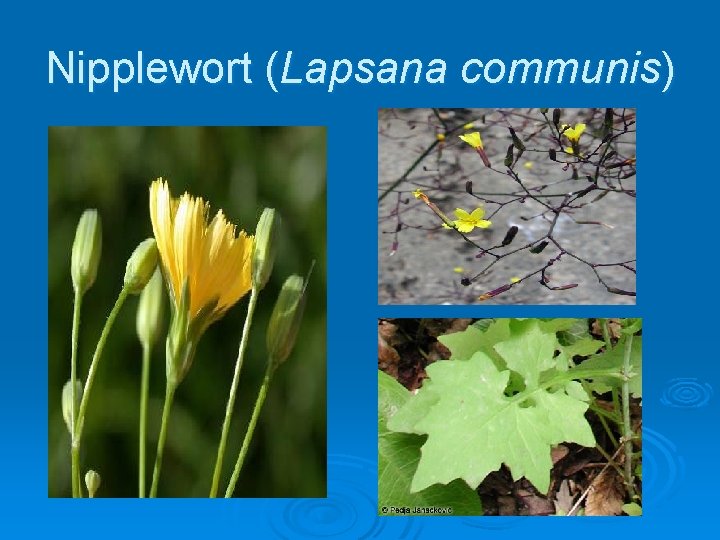
Nipplewort (Lapsana communis)
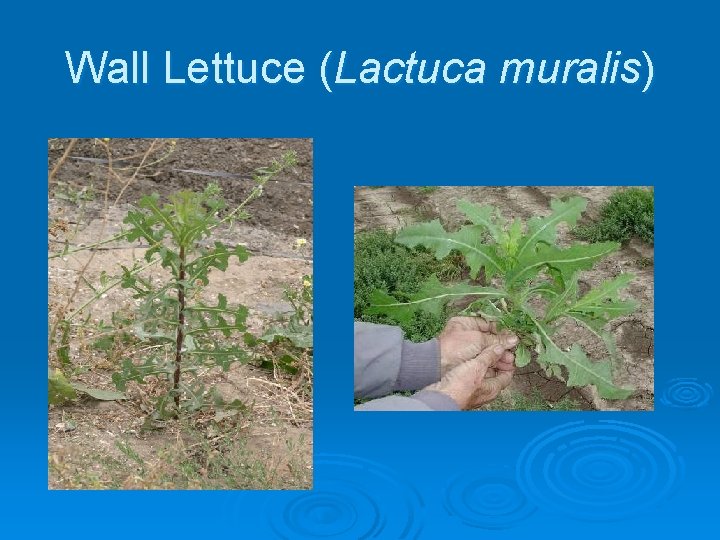
Wall Lettuce (Lactuca muralis)
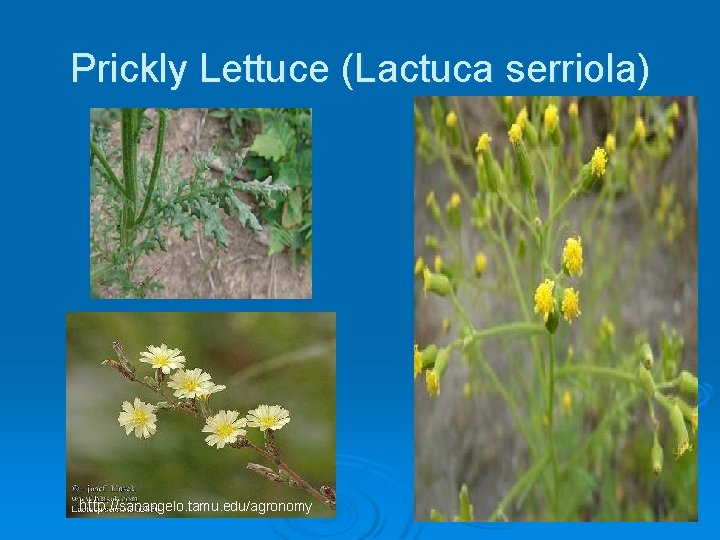
Prickly Lettuce (Lactuca serriola) http: //sanangelo. tamu. edu/agronomy
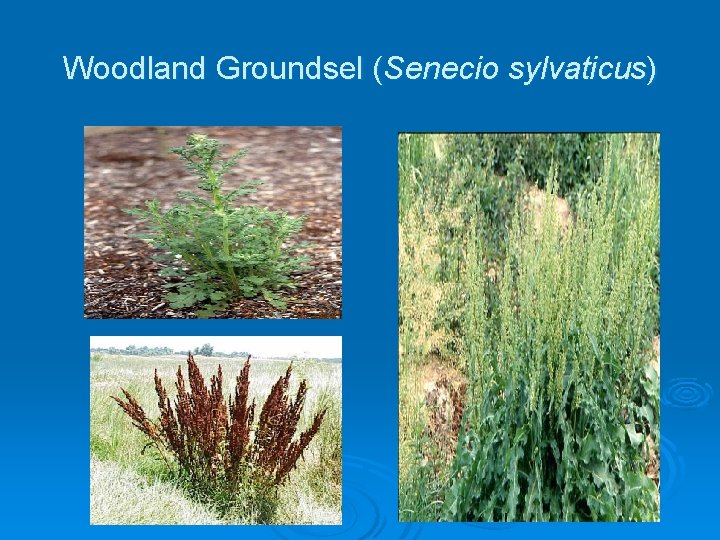
Woodland Groundsel (Senecio sylvaticus)
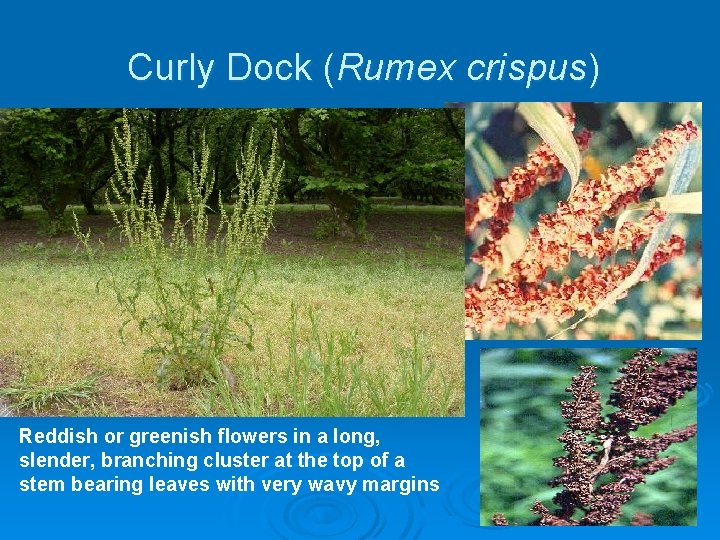
Curly Dock (Rumex crispus) Reddish or greenish flowers in a long, slender, branching cluster at the top of a stem bearing leaves with very wavy margins
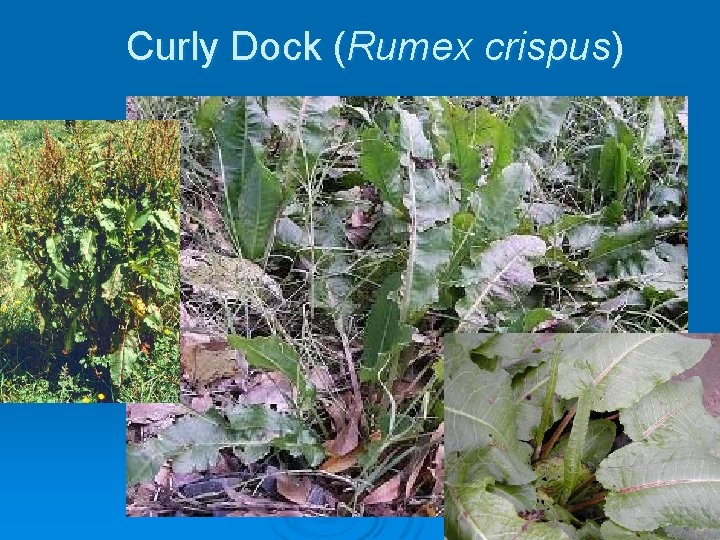
Curly Dock (Rumex crispus)
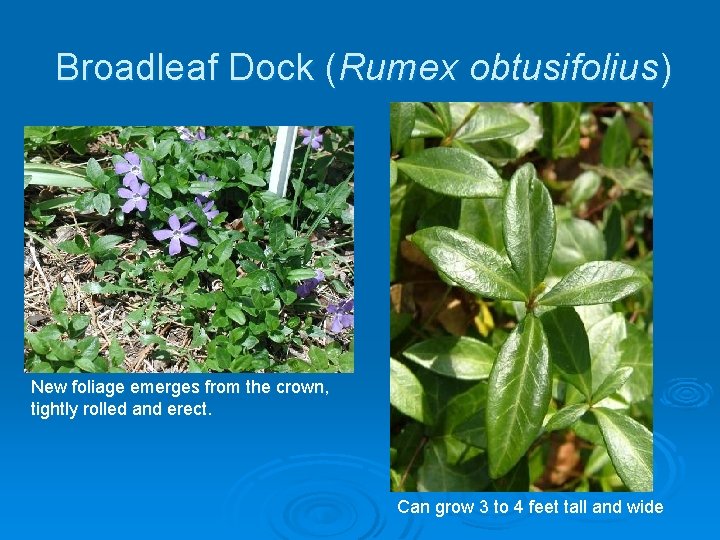
Broadleaf Dock (Rumex obtusifolius) New foliage emerges from the crown, tightly rolled and erect. Can grow 3 to 4 feet tall and wide
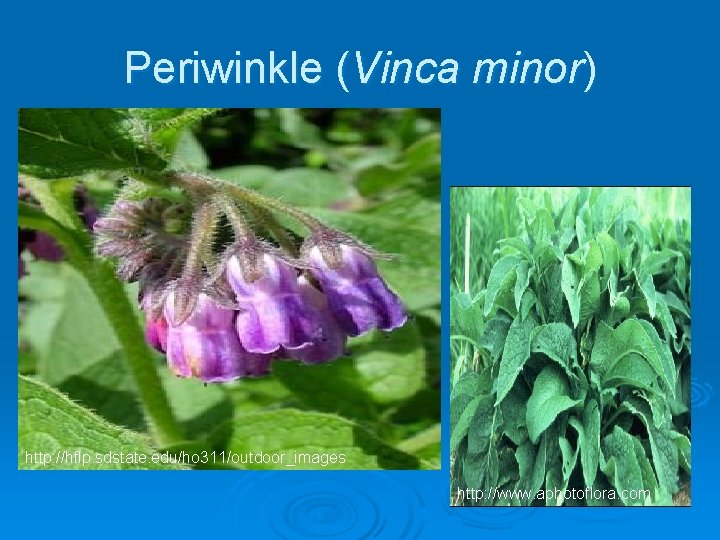
Periwinkle (Vinca minor) http: //hflp. sdstate. edu/ho 311/outdoor_images http: //www. aphotoflora. com
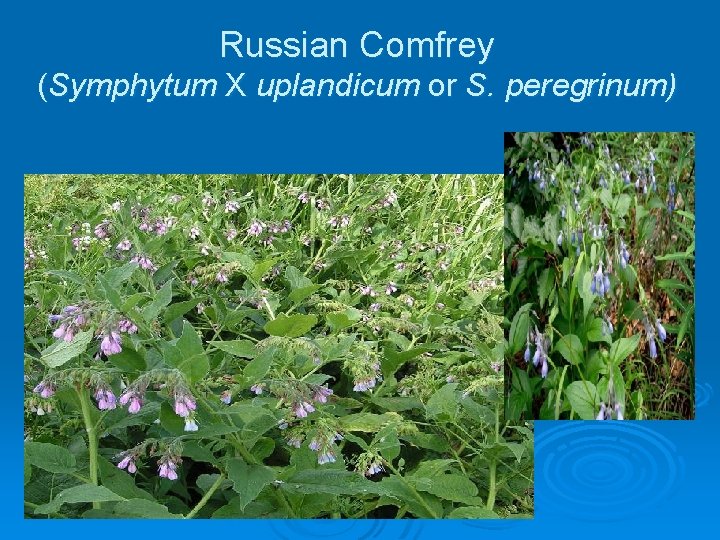
Russian Comfrey (Symphytum X uplandicum or S. peregrinum)
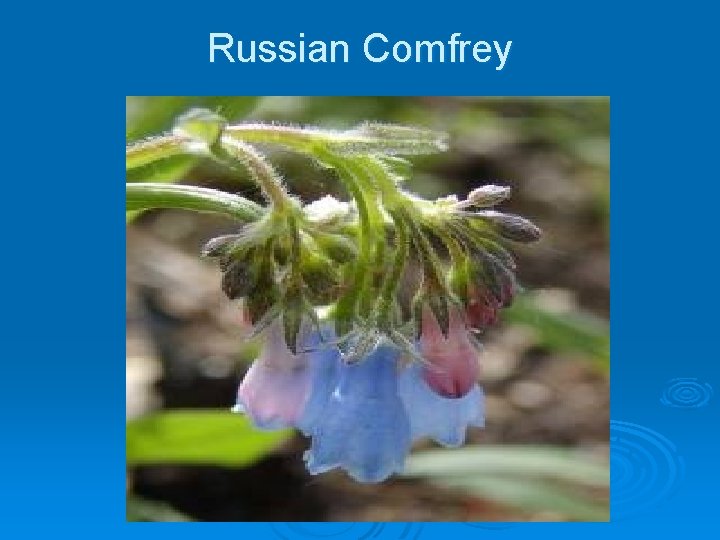
Russian Comfrey
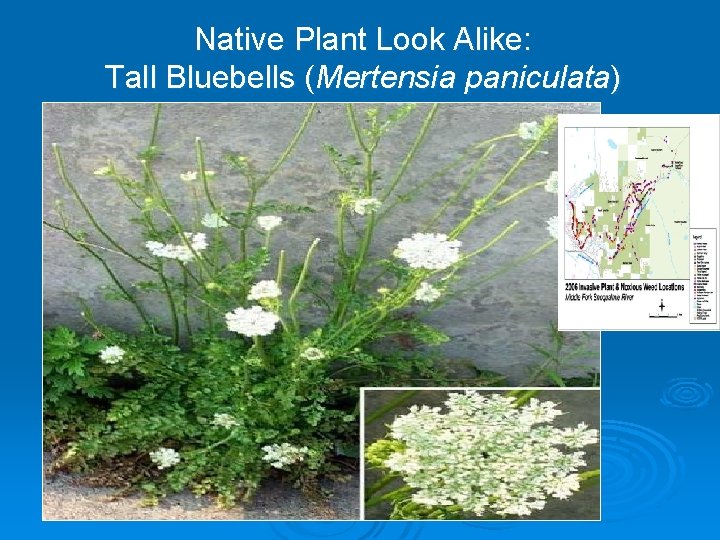
Native Plant Look Alike: Tall Bluebells (Mertensia paniculata)
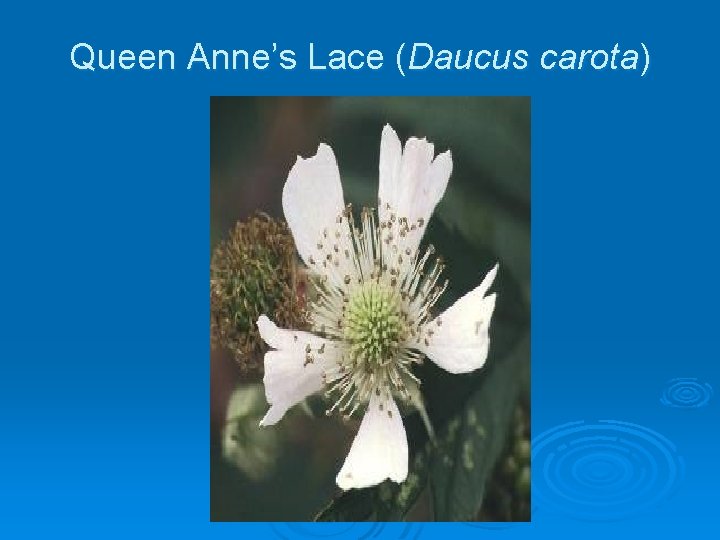
Queen Anne’s Lace (Daucus carota)
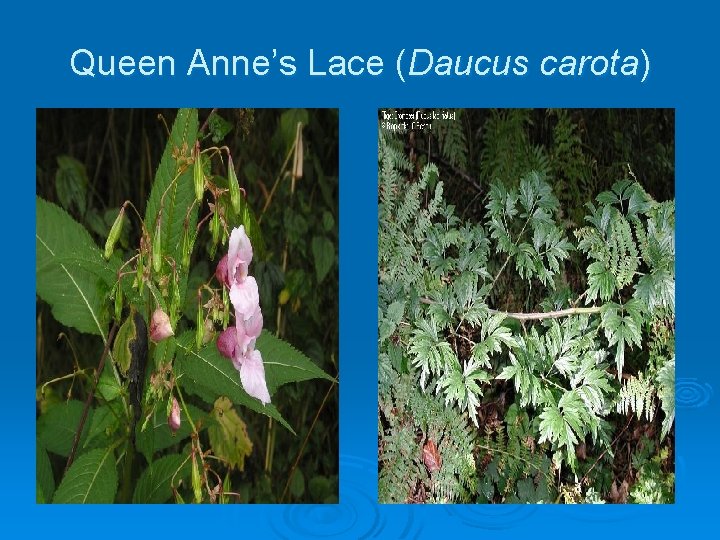
Queen Anne’s Lace (Daucus carota)
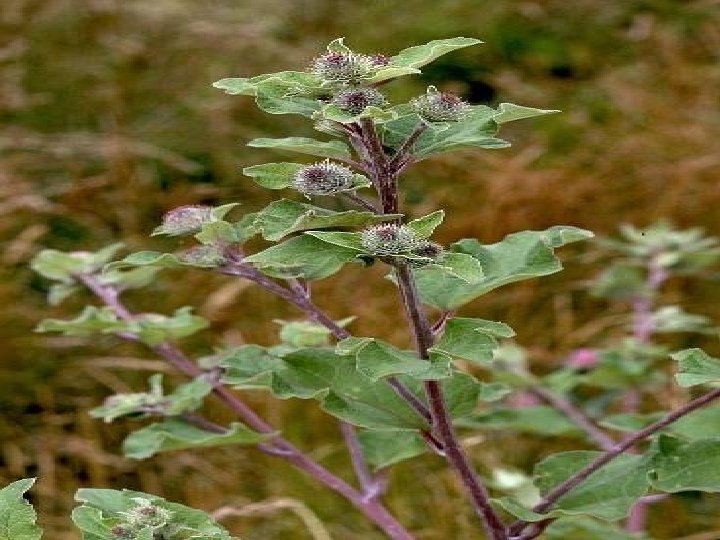
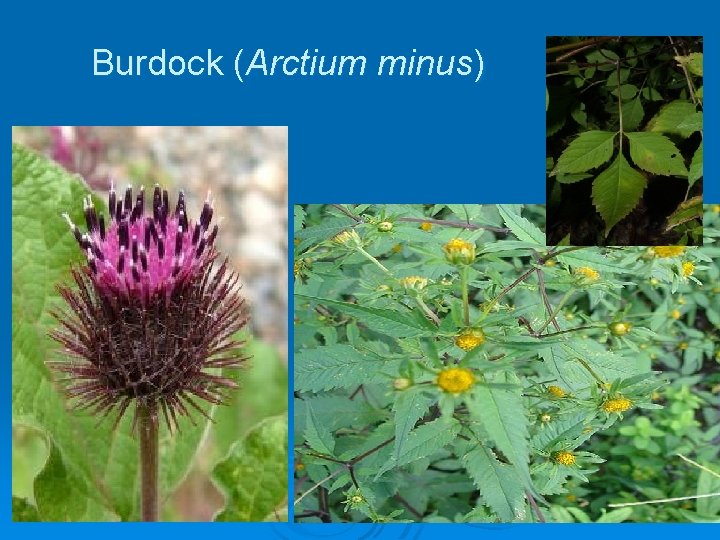
Burdock (Arctium minus)
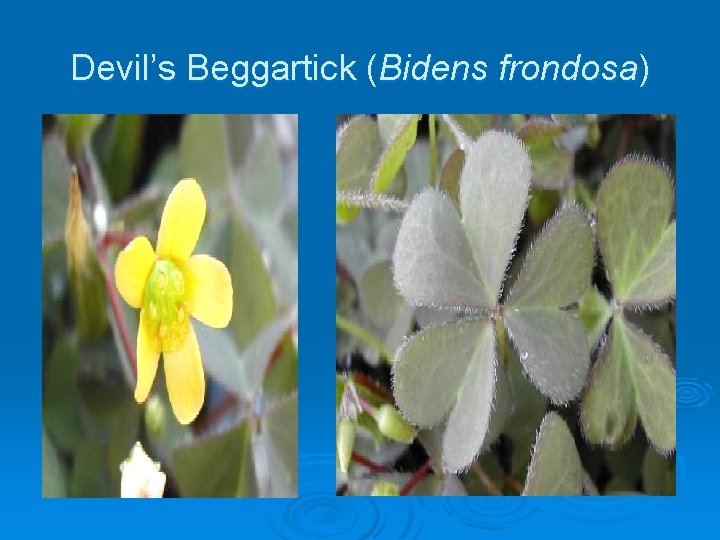
Devil’s Beggartick (Bidens frondosa)
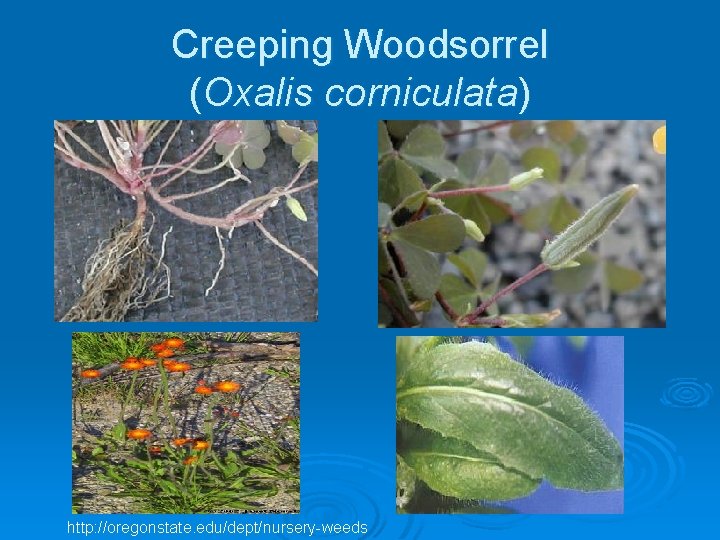
Creeping Woodsorrel (Oxalis corniculata) http: //oregonstate. edu/dept/nursery-weeds
Noxious Weeds threatening to Invade (present nearby) Ø Ø Ø Ø Ø Purple Loosestrife (wetlands, rivers in area) Garden Loosestrife (on Snoqualmie River) Policeman’s Helmet (garden sites) Gorse (forests, fields) Orange Hawkweed (meadows, gardens, roads) Common Hawkweed (roadsides) Sulfur Cinquefoil (roadsides) Dalmatian Toadflax (roadsides) Yellow Toadflax (roads and trails) Old Man’s Beard (forest edges, trails)
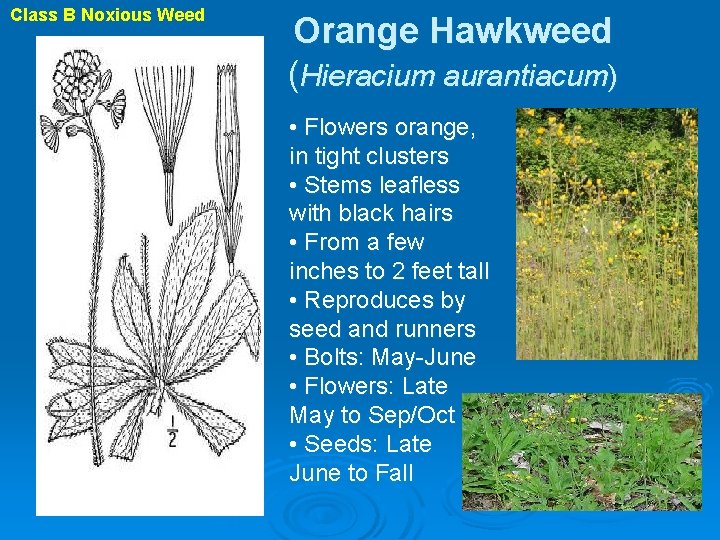
Class B Noxious Weed Orange Hawkweed (Hieracium aurantiacum) • Flowers orange, in tight clusters • Stems leafless with black hairs • From a few inches to 2 feet tall • Reproduces by seed and runners • Bolts: May-June • Flowers: Late May to Sep/Oct • Seeds: Late June to Fall
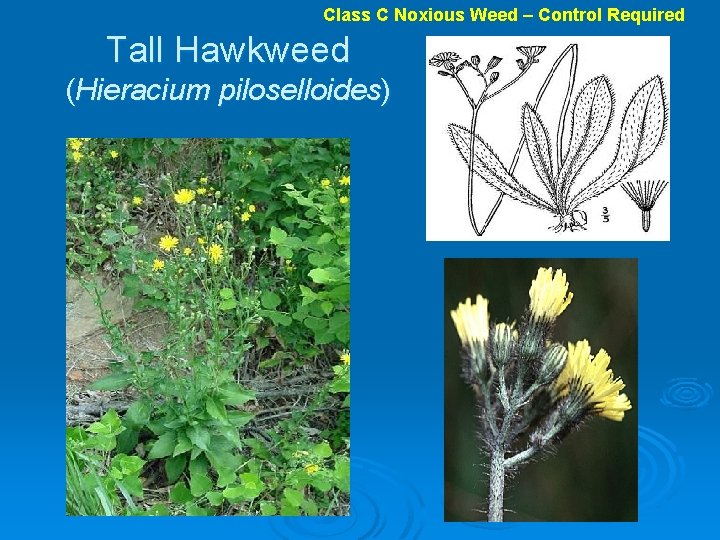
Class C Noxious Weed – Control Required Tall Hawkweed (Hieracium piloselloides)
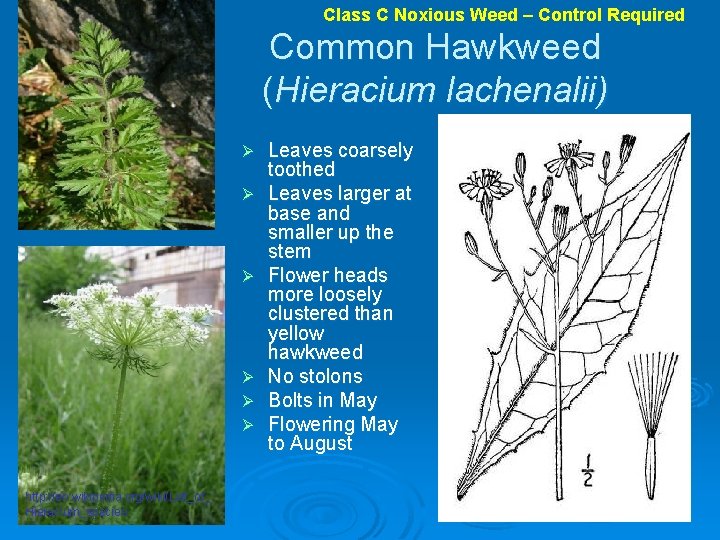
Class C Noxious Weed – Control Required Common Hawkweed (Hieracium lachenalii) Ø Ø Ø http: //en. wikipedia. org/wiki/List_of_ Hieracium_species Leaves coarsely toothed Leaves larger at base and smaller up the stem Flower heads more loosely clustered than yellow hawkweed No stolons Bolts in May Flowering May to August
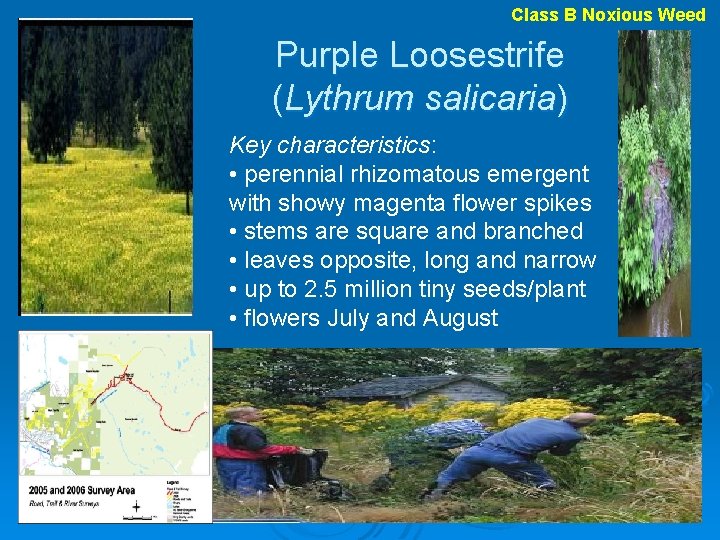
Class B Noxious Weed Purple Loosestrife (Lythrum salicaria) Key characteristics: • perennial rhizomatous emergent with showy magenta flower spikes • stems are square and branched • leaves opposite, long and narrow • up to 2. 5 million tiny seeds/plant • flowers July and August
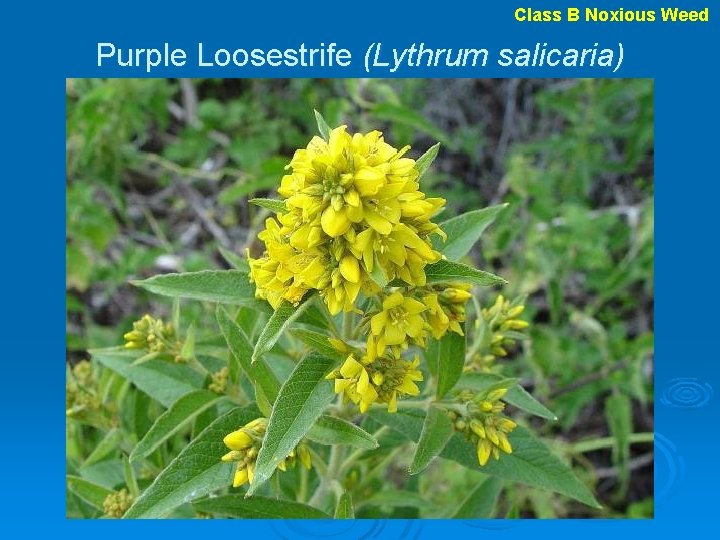
Class B Noxious Weed Purple Loosestrife (Lythrum salicaria)
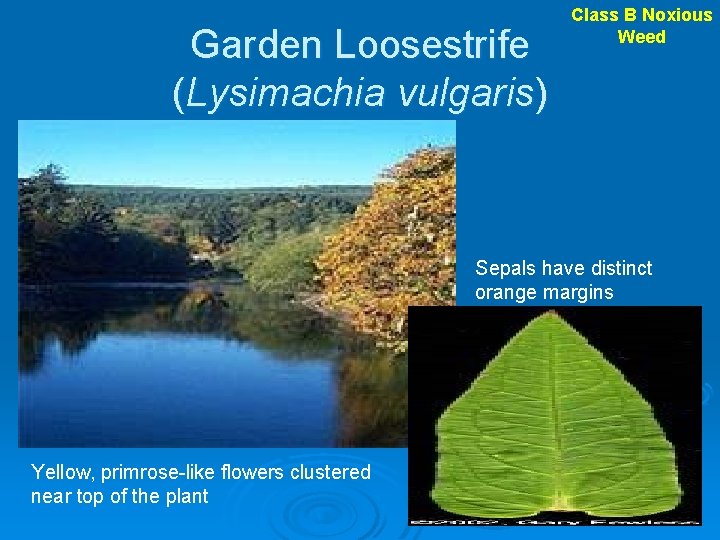
Garden Loosestrife (Lysimachia vulgaris) Class B Noxious Weed Sepals have distinct orange margins Yellow, primrose-like flowers clustered near top of the plant
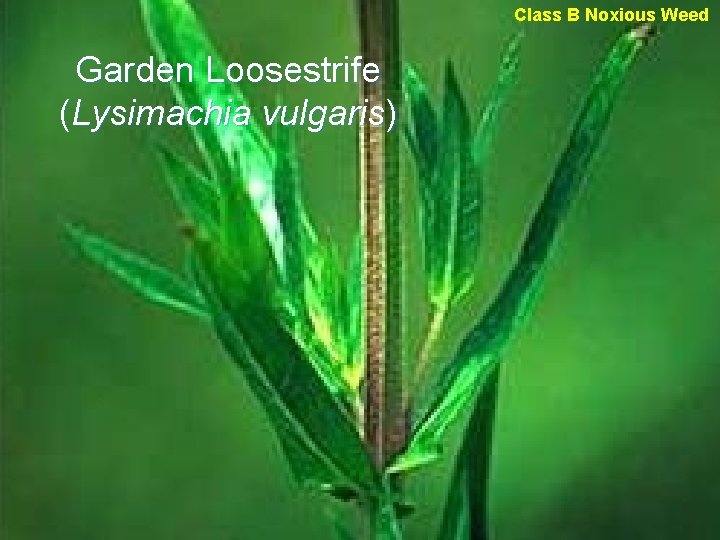
Class B Noxious Weed Garden Loosestrife (Lysimachia vulgaris)
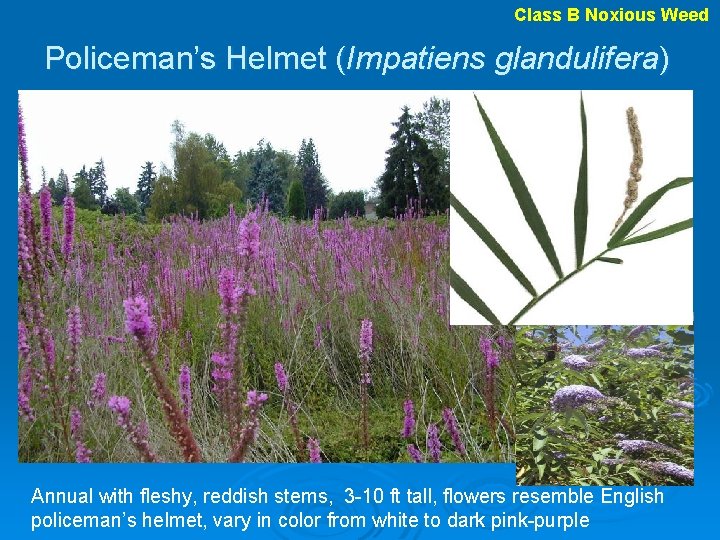
Class B Noxious Weed Policeman’s Helmet (Impatiens glandulifera) Annual with fleshy, reddish stems, 3 -10 ft tall, flowers resemble English policeman’s helmet, vary in color from white to dark pink-purple
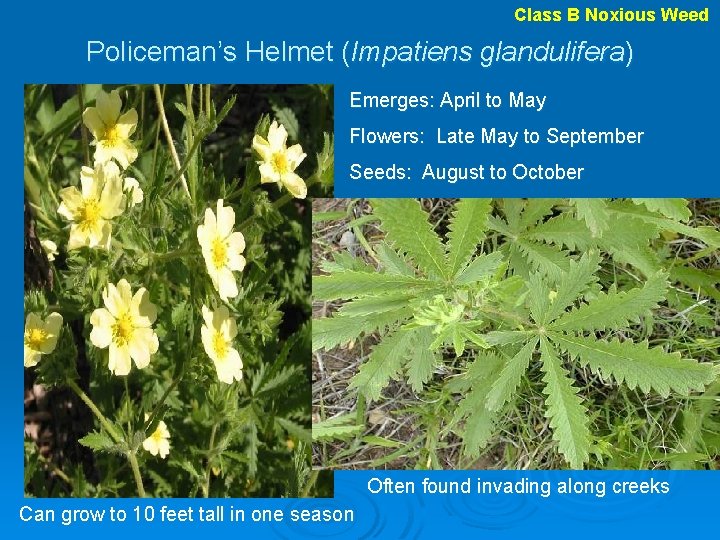
Class B Noxious Weed Policeman’s Helmet (Impatiens glandulifera) Emerges: April to May Flowers: Late May to September Seeds: August to October Often found invading along creeks Can grow to 10 feet tall in one season
Sulfur Cinquefoil (Potentilla recta) Class B Noxious Weed
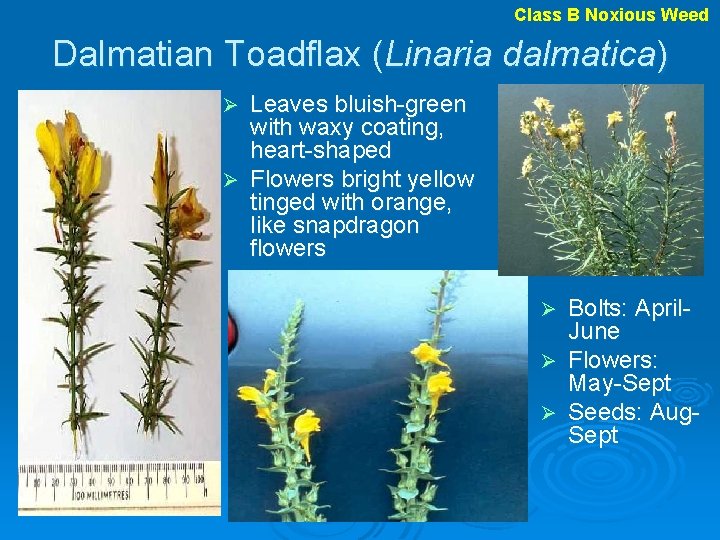
Class B Noxious Weed Dalmatian Toadflax (Linaria dalmatica) Leaves bluish-green with waxy coating, heart-shaped Ø Flowers bright yellow tinged with orange, like snapdragon flowers Ø Bolts: April. June Ø Flowers: May-Sept Ø Seeds: Aug. Sept Ø
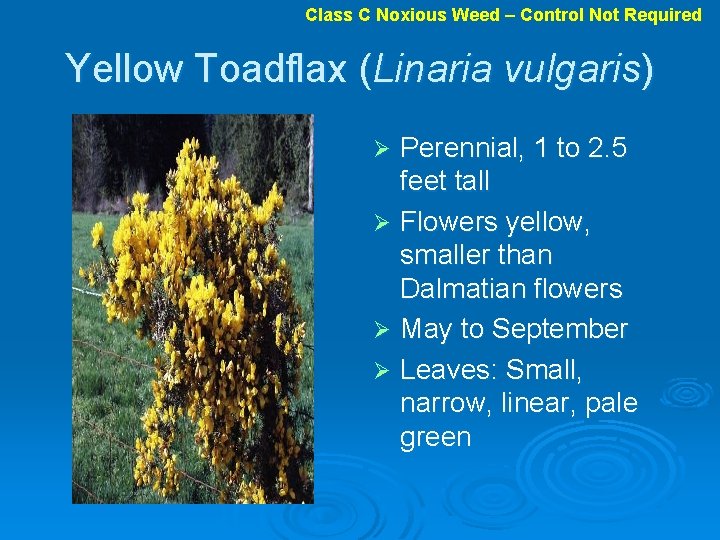
Class C Noxious Weed – Control Not Required Yellow Toadflax (Linaria vulgaris) Perennial, 1 to 2. 5 feet tall Ø Flowers yellow, smaller than Dalmatian flowers Ø May to September Ø Leaves: Small, narrow, linear, pale green Ø
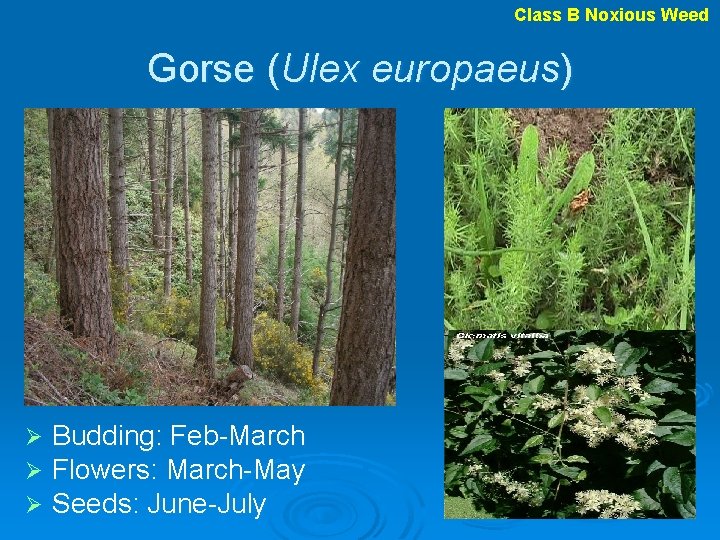
Class B Noxious Weed Gorse (Ulex europaeus) Ø Ø Ø Budding: Feb-March Flowers: March-May Seeds: June-July
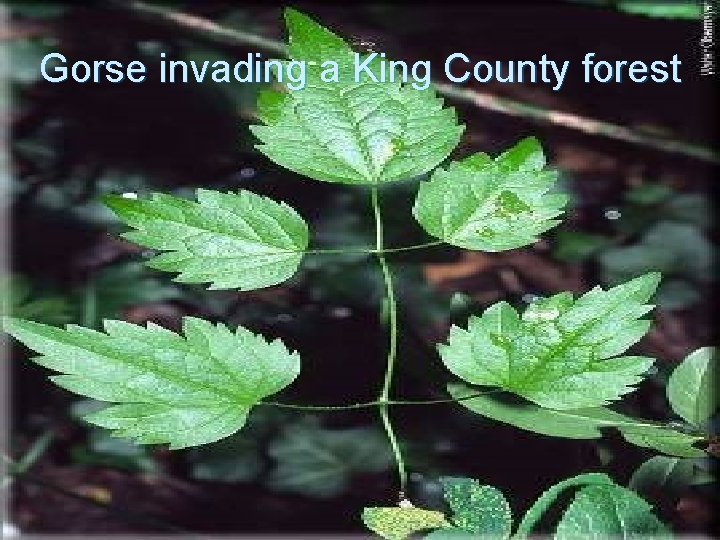
Gorse invading a King County forest
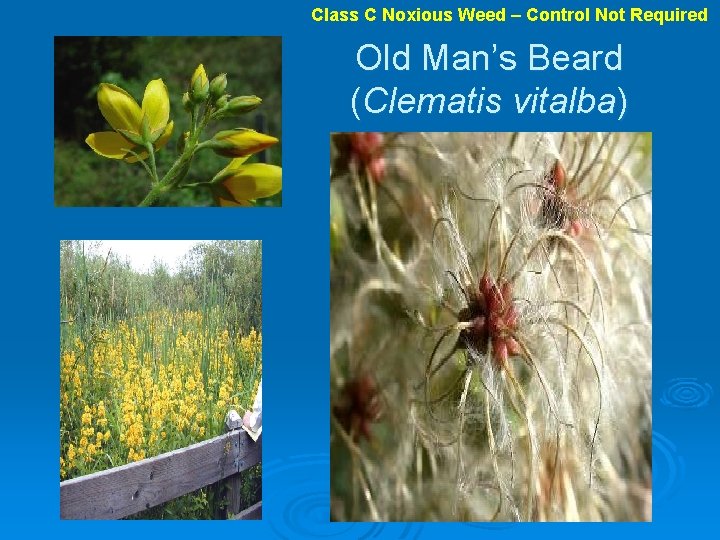
Class C Noxious Weed – Control Not Required Old Man’s Beard (Clematis vitalba)
Class C Noxious Weed – Control Not Required Old Man’s Beard or Wild Clematis Old Man’s Beard on trees in Ravenna Park Old Man’s Beard covering trees at Magnuson Park
King County Noxious Weed Control Program Website http: //kingcounty. gov/weeds Weed Photo Page: Search by Common Name or Latin Name Click thumbnail picture of plant
Sasha Shaw King County Noxious Weed Program 201 South Jackson St, Suite 600 Seattle, WA 98104 206 -263 -6468 sasha. shaw@kingcounty. gov www. kingcounty. gov/weeds