
Identification and Control of Difficult Pasture Weeds Dr




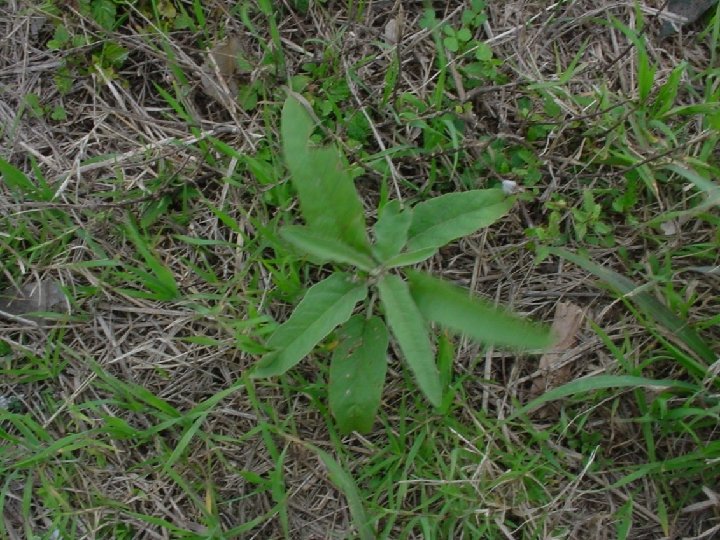
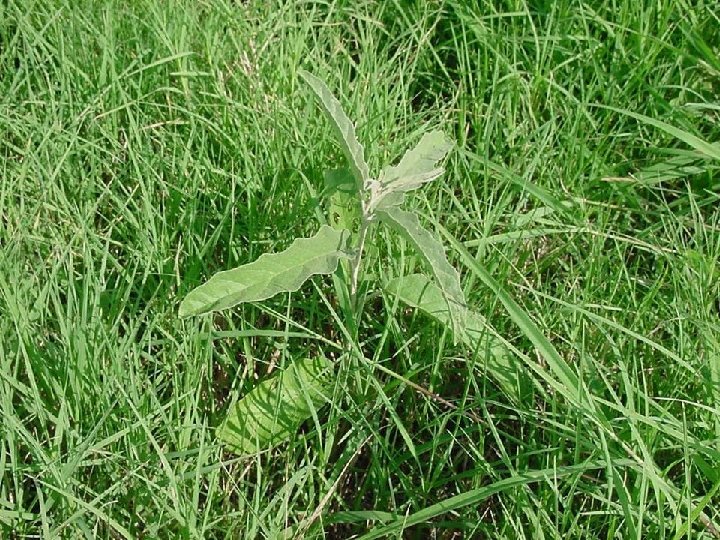
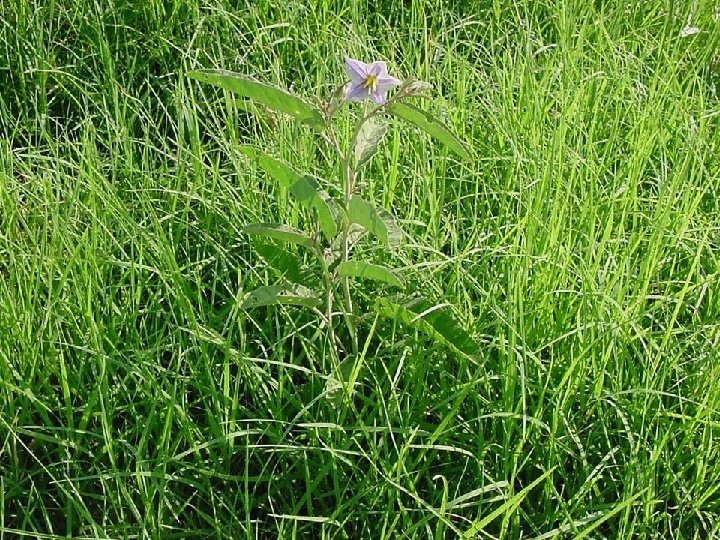
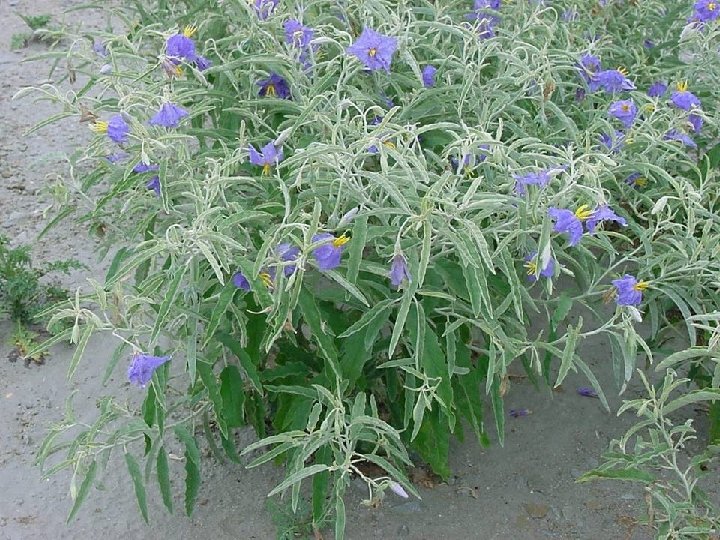








- Slides: 143
Identification and Control of Difficult Pasture Weeds Dr. Steve Livingston Professor and Extension Agronomist Texas Cooperative Extension Corpus Christi, Texas
Topics to Cover • Identification • Improved pastures & introduced grasses • Native grasses • Invader grasses • Undesirable grasses • Chemical weed control • Keeping the stand
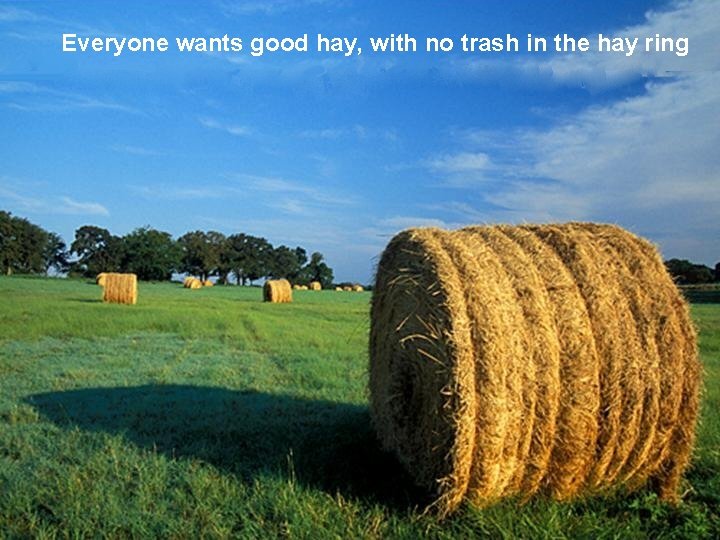
Everyone wants good hay, with no trash in the hay ring
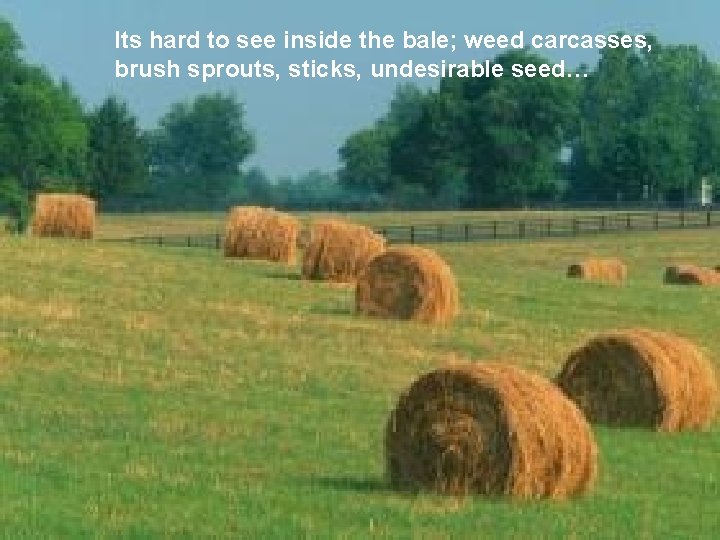
Its hard to see inside the bale; weed carcasses, brush sprouts, sticks, undesirable seed…
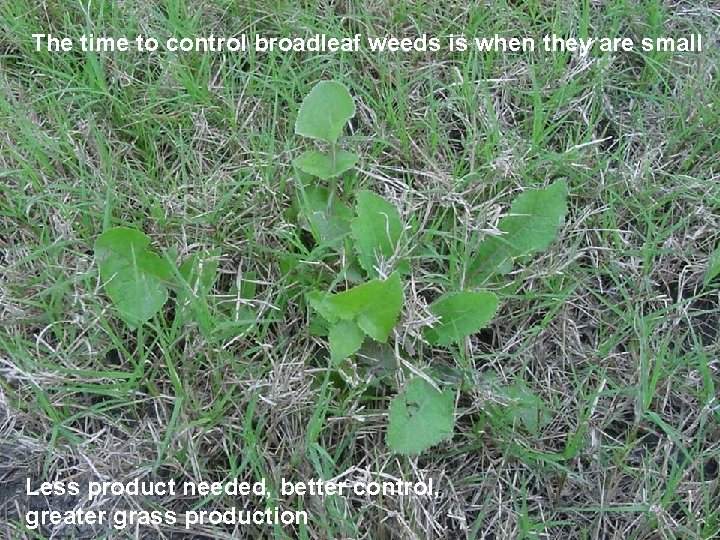
The time to control broadleaf weeds is when they are small Less product needed, better control, greater grass production
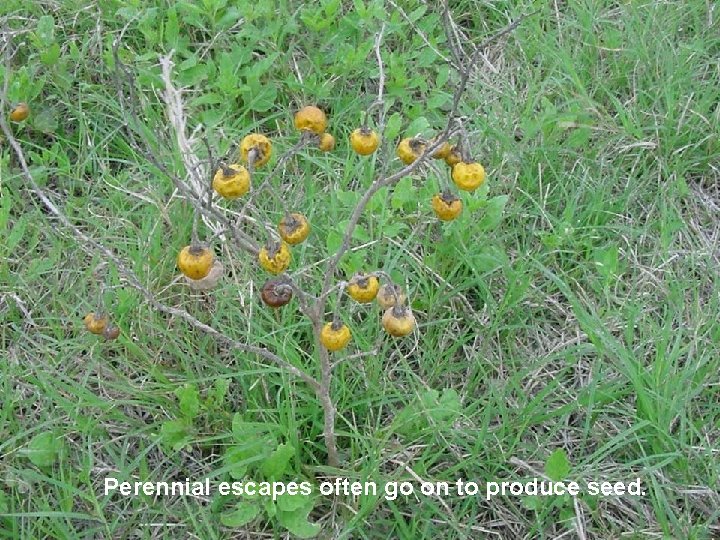
Perennial escapes often go on to produce seed.
Bermudagrass Weed Control (establishing the stand) • 1 qt 2, 4 -D amine (not labeled) • 1 -2 qt of Weedmaster for newly established bermudagrass. Up to a week after planting • Roots growing in 7 -10 days • With 6 inches of stolon-growth, apply up to 1. 5 pints of Grazon P+D
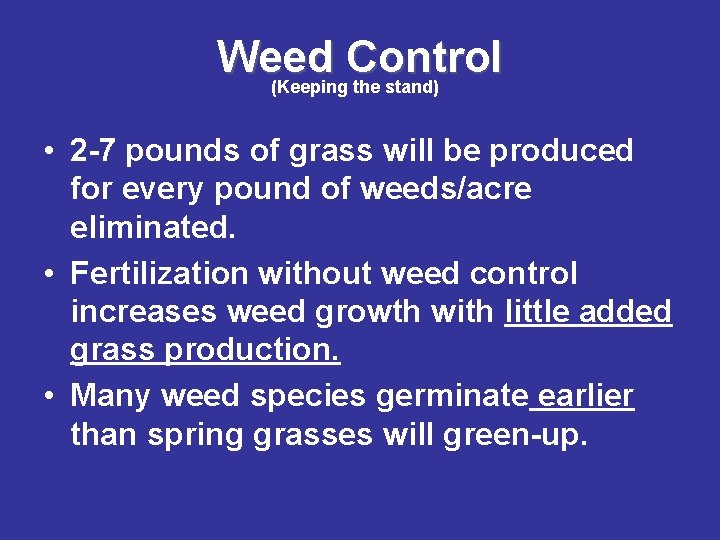
Weed Control (Keeping the stand) • 2 -7 pounds of grass will be produced for every pound of weeds/acre eliminated. • Fertilization without weed control increases weed growth with little added grass production. • Many weed species germinate earlier than spring grasses will green-up.
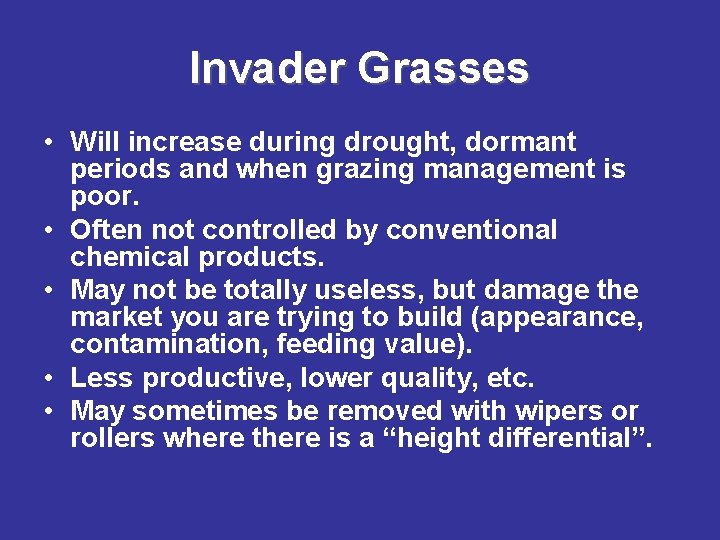
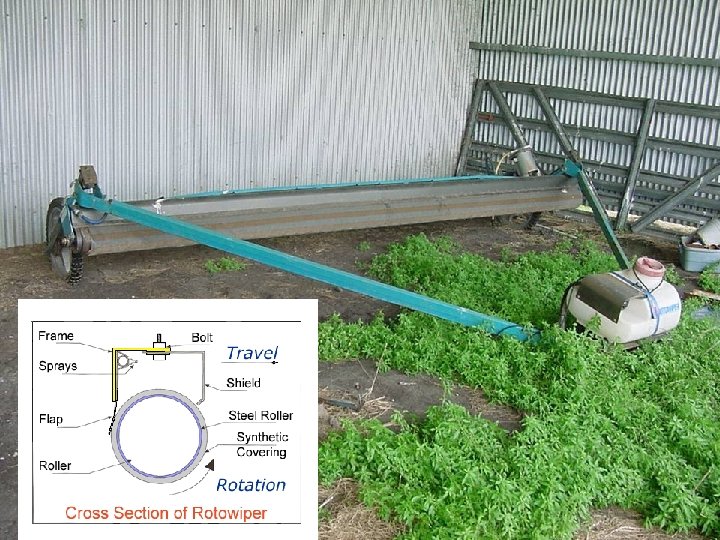
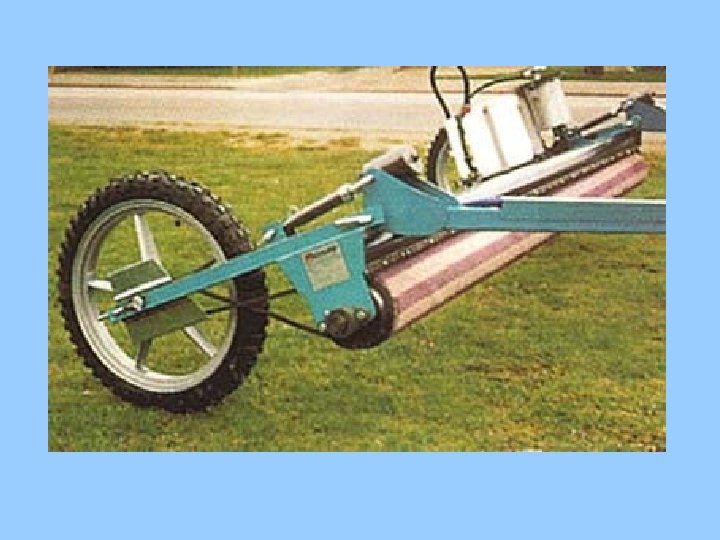
Invader Grasses • Will increase during drought, dormant periods and when grazing management is poor. • Often not controlled by conventional chemical products. • May not be totally useless, but damage the market you are trying to build (appearance, contamination, feeding value). • Less productive, lower quality, etc. • May sometimes be removed with wipers or rollers where there is a “height differential”.
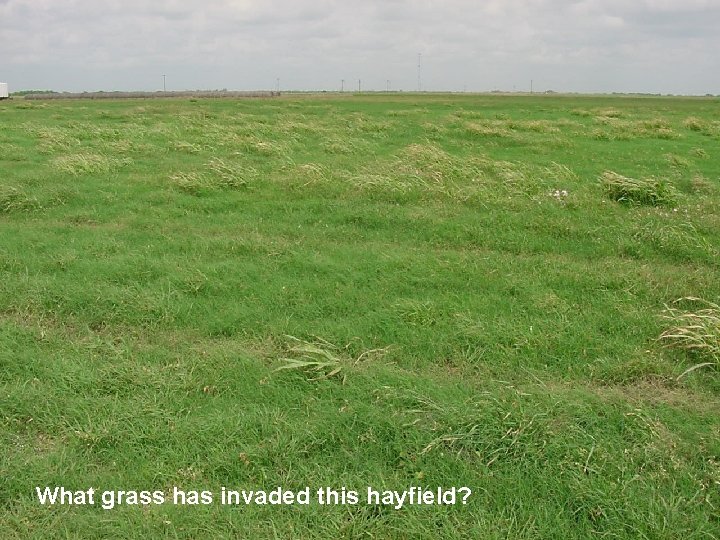
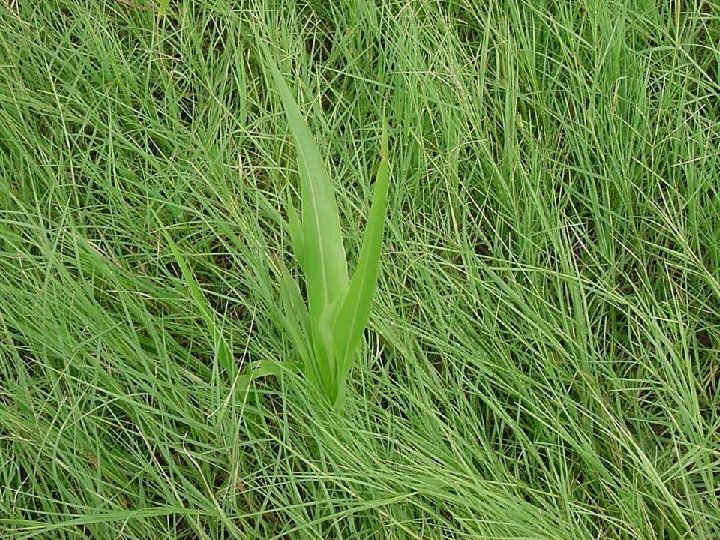
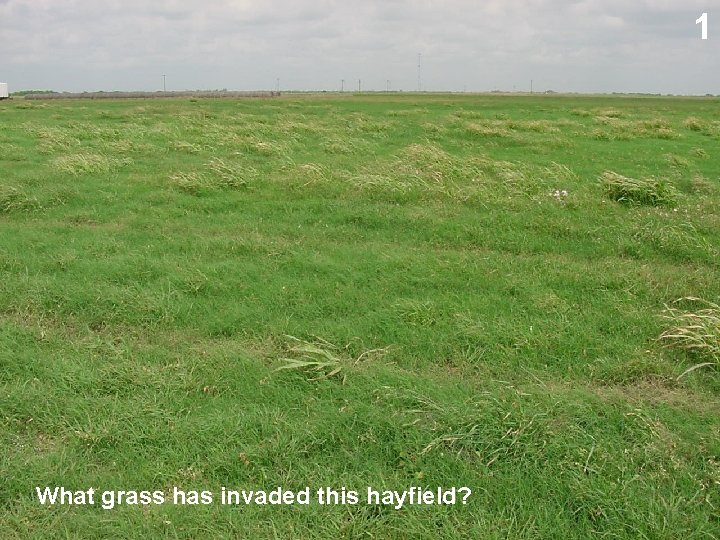
What grass has invaded this hayfield?
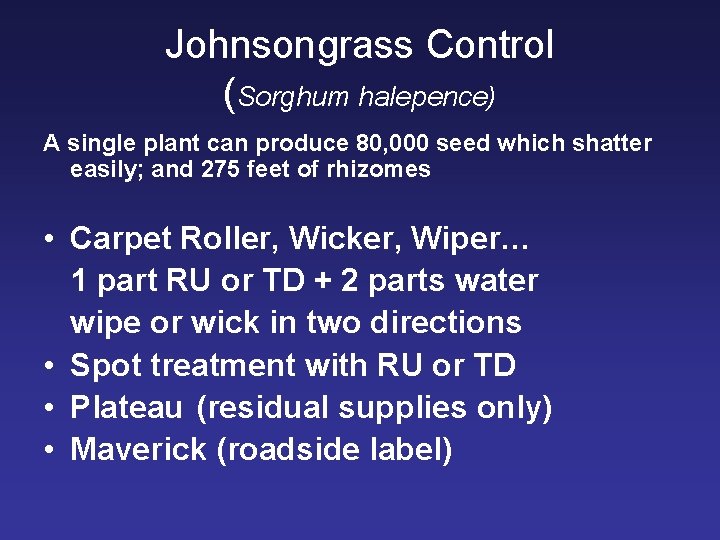
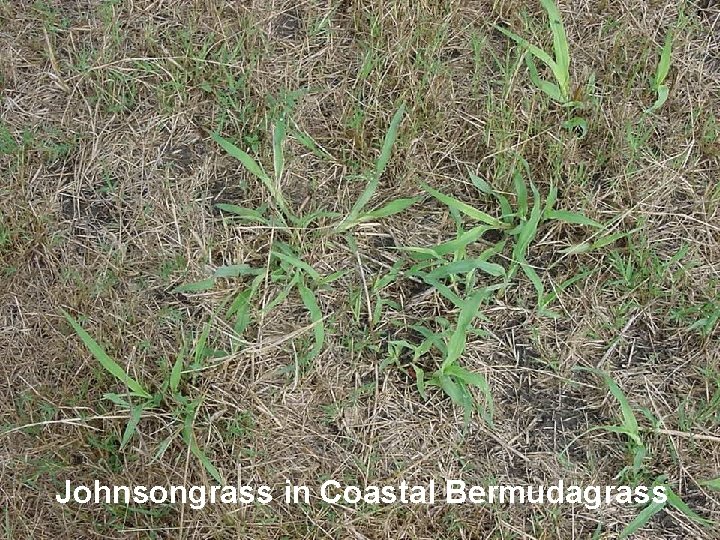
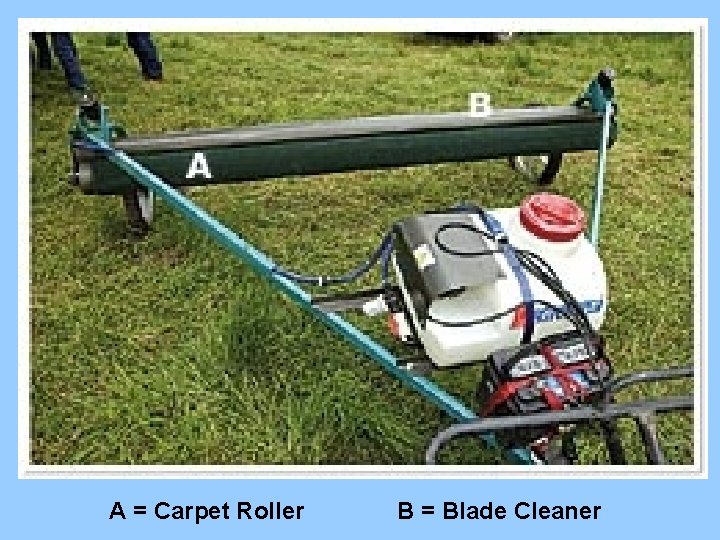
Johnsongrass Control (Sorghum halepence) A single plant can produce 80, 000 seed which shatter easily; and 275 feet of rhizomes • Carpet Roller, Wicker, Wiper… 1 part RU or TD + 2 parts water wipe or wick in two directions • Spot treatment with RU or TD • Plateau (residual supplies only) • Maverick (roadside label)
Johnsongrass in Coastal Bermudagrass
A = Carpet Roller B = Blade Cleaner
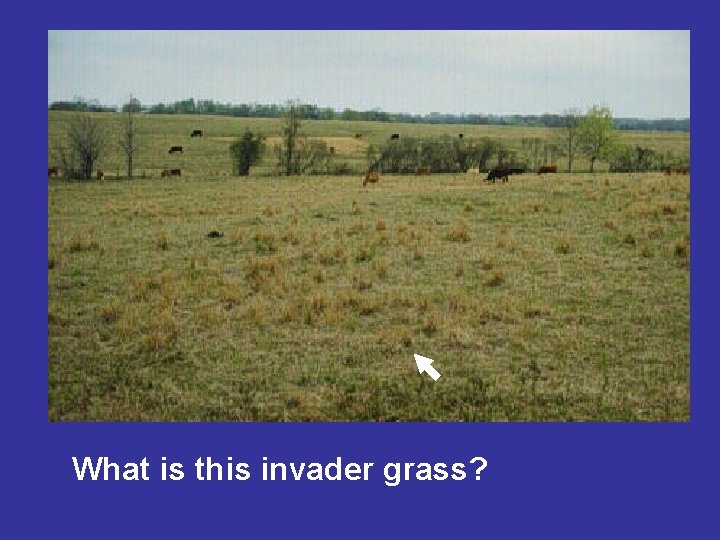
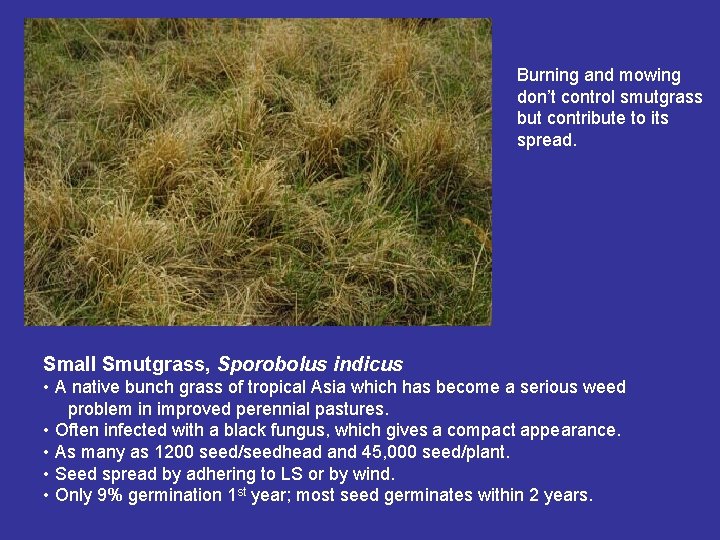
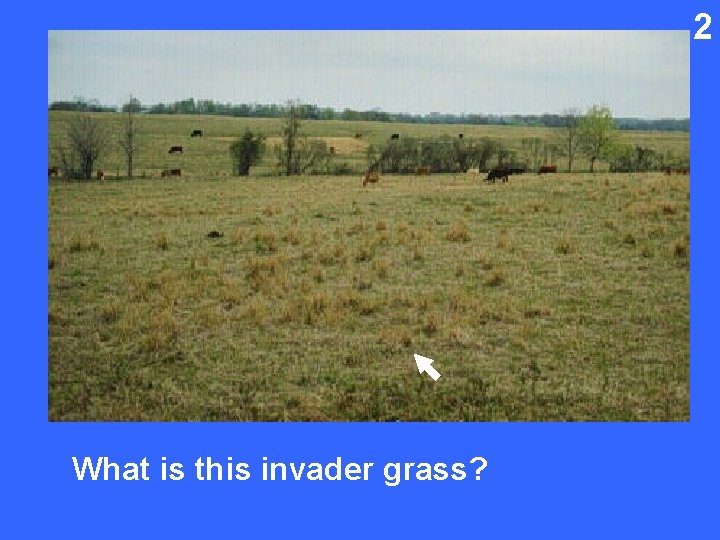
What is this invader grass?
Burning and mowing don’t control smutgrass but contribute to its spread. Small Smutgrass, Sporobolus indicus • A native bunch grass of tropical Asia which has become a serious weed problem in improved perennial pastures. • Often infected with a black fungus, which gives a compact appearance. • As many as 1200 seed/seedhead and 45, 000 seed/plant. • Seed spread by adhering to LS or by wind. • Only 9% germination 1 st year; most seed germinates within 2 years.
General Smutgrass Control Recommendations 1. Do not apply Velpar® within 100 feet of oak trees because it will cause death. 2. Read the Velpar® label for complete instructions on re-application/ interval, safety and cattle withdrawal interval. 3. If the initial smutgrass density covers greater than 80% of the area, (if 8 out of 10 regular steps touch the base of smutgrass plants), complete renovation should be considered, since little other bahia or bermudagrass would be available for recovery. 4. However, studies indicate that bahiagrass will do an excellent job of recovery at 70 to 80% smutgrass infestation. 5. Perennial grasses will turn slightly yellow within 15 -20 days of application, and will turn dark green (darker than the untreated grass) in about 40 days following the Velpar® application.
Chemical Control of Smutgrass Broadcast spraying with 1. 5 qt/A (1. 0 lb a. i. /A) Velpar® plus 0. 1% NIS v/v to actively growing plants between July and early September results in 90% control of small smutgrass in perennial pastures. Greater than 90% control of giant can be made with the 2. 0 qt/A rate. Mowing giant smutgrass to a 3 -inch stubble and allowing the plants to re-grow back to a 12 -inch height before spraying with 2. 0 qt/A Velpar® did not provide better smutgrass control than a non-mowed treatment. Mowing 3 X at 30 -day intervals did not improve giant smutgrass control The timing of the Velpar® application during the summer months is extremely important because rainflal is a necessary component of good smutgrass control. It is equally important to read the Velpar® label for complete instructions on application, safety, and casttle withdrawal (60 days).
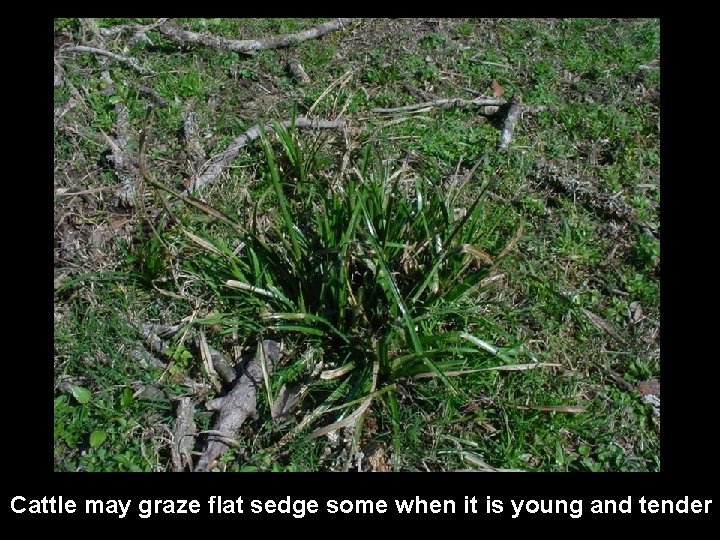
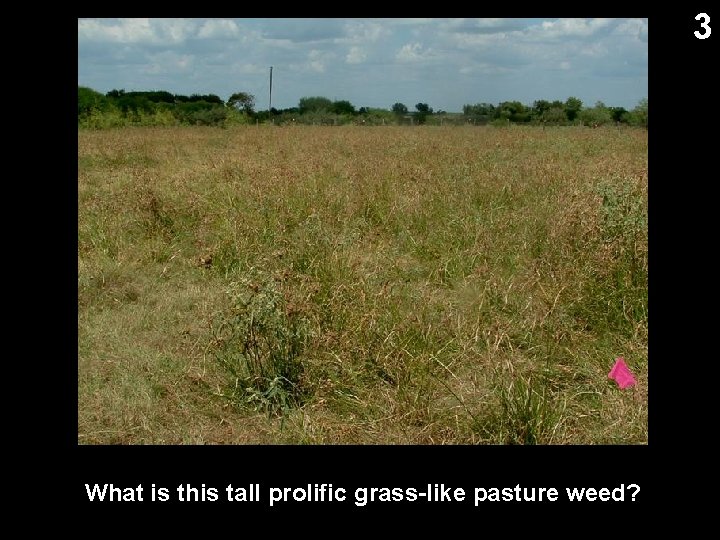
What is this tall prolific grass-like pasture weed?
Cattle may graze flat sedge some when it is young and tender
Chemical Flat Sedge Control • There are several types of sedges that are appearing in pastures due to wet weather, flooding and poor drainage. Sedges favor wet conditions and will grow where other grasses cannot. . Four states have received Section 18's for Maverick or Outrider. Maverick is a wheat pasture herbicide and Outrider is a roadside herbicide. Neither is labeled for bermudagrass pastures. In experimental plots, a 1 oz/A treatment, post emergence, will cause sedge to react in about 7 days. In 14 -21 days, it is a “crispy critter”. The best time to treat is when it is 6 -8 inches tall or less. I cannot recommend these products until a Section 18 is approved for Texas.
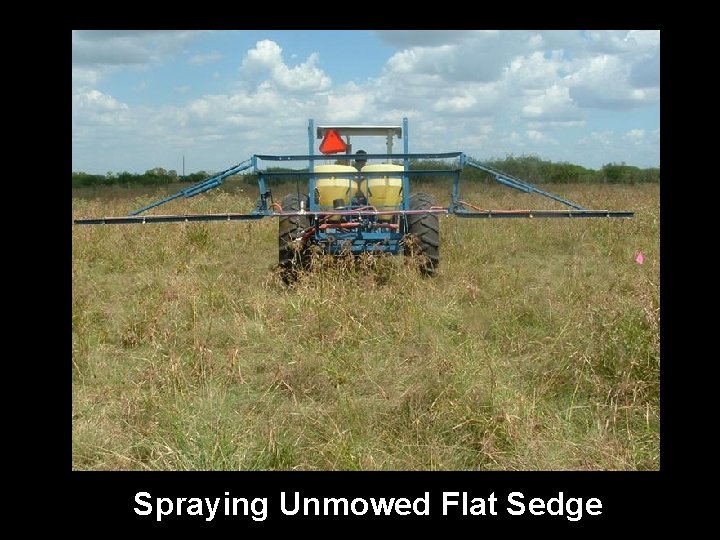
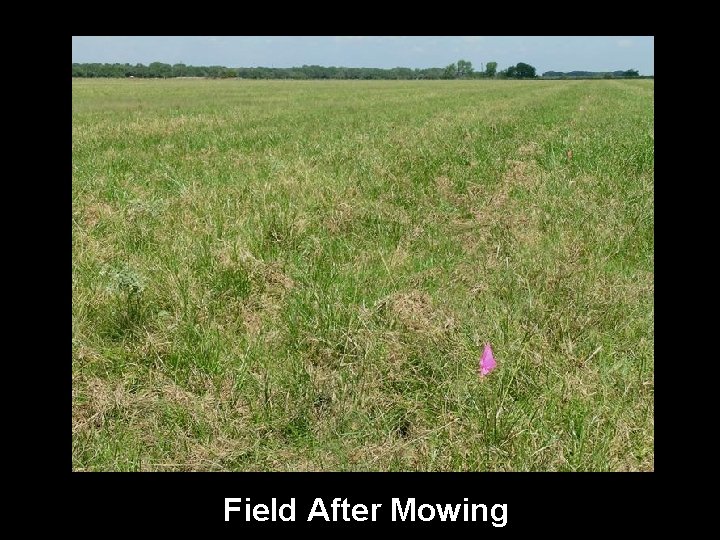
Practical Control Includes Mowing • Green Flatsedge, Cyperus virens, a sedge weed that is overtaking rangeland in Victoria County. • On rangeland, applications of Grazon P+D and 2, 4 -D have proven effective at reducing populations when shredded prior to application, and where a spring and fall application was made (see Victoria County 1998 sedge test).
Spraying Unmowed Flat Sedge
Field After Mowing
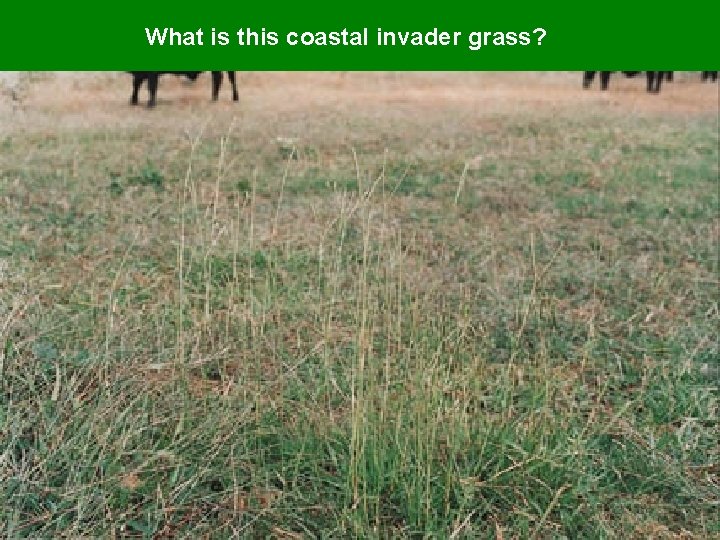
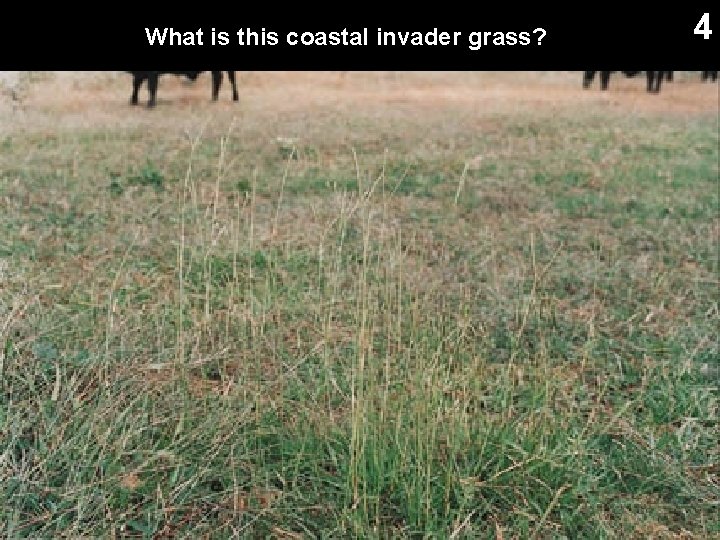
What is this coastal invader grass?
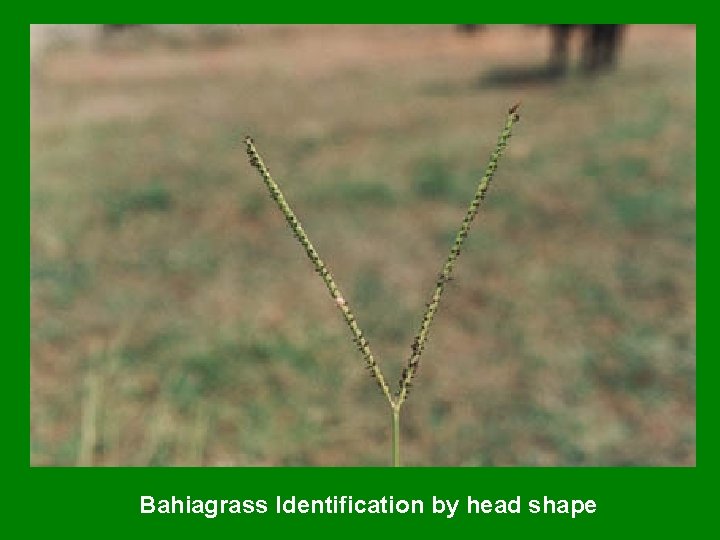
Bahiagrass Identification by head shape
Bahiagrass Control Paspalum notatum • Apply 3/10 oz/A Ally (Dupont Cimarron), Feb-May, after green-up, but before bahiagrass seed formation. Best results when adequate moisture is available. • Apply 6 oz/A Plateau (residual supplies) Apply after the bermudagrass has greened-up. Most BGs will be yellowed and will lose one cutting.
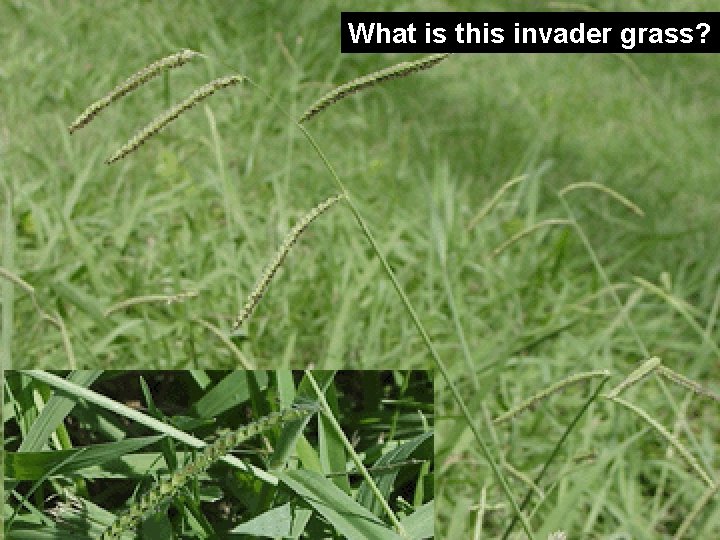
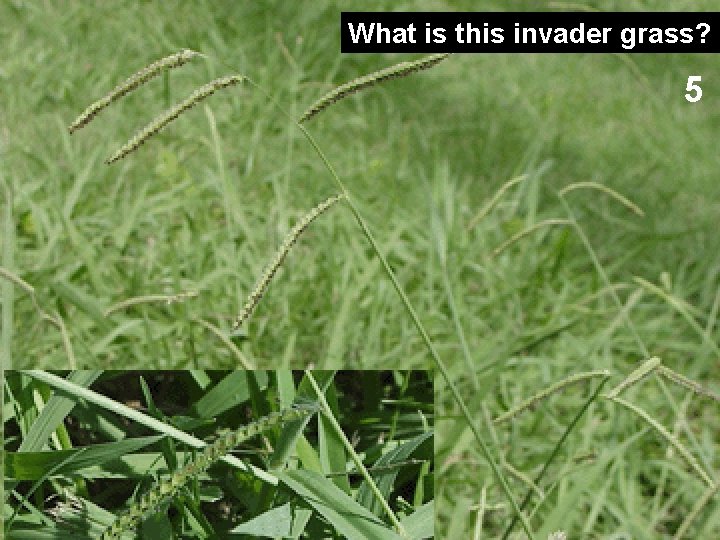
What is this invader grass?
Control of Dallisgrass (Paspalum dilitatum) • Plateau (residual supplies) applied at 8 -12 oz/A (suppression). • MSMA (can be toxic to some warm season grasses) • Glyphosate (tough on non-target plants) • Revolver, Monument (turf only, not labeled pasture) •
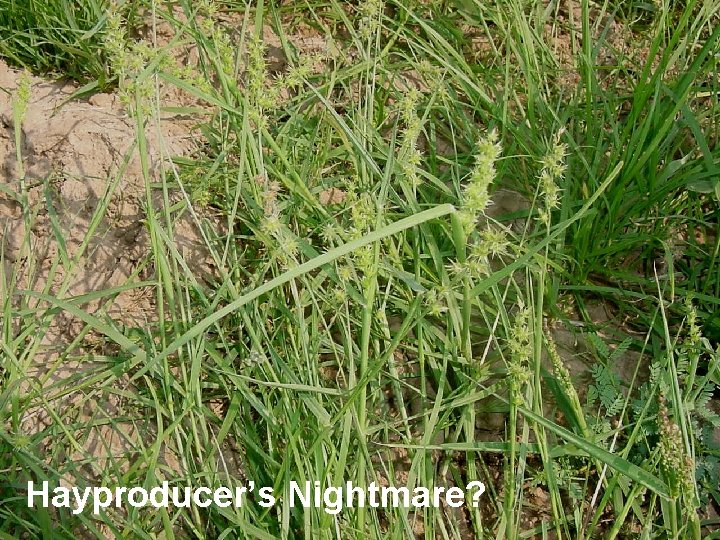
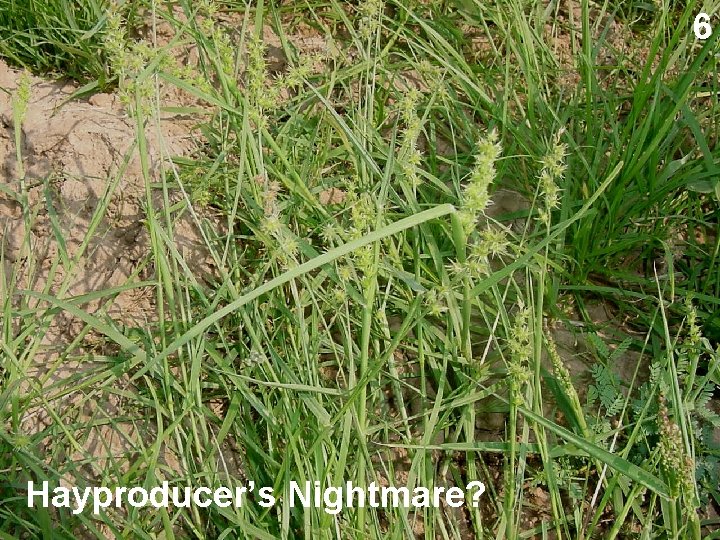
Hayproducer’s Nightmare?
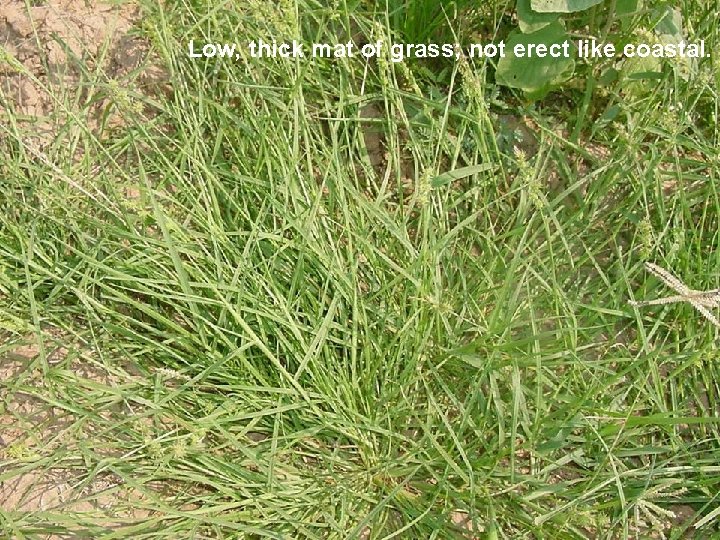
Low, thick mat of grass; not erect like coastal.
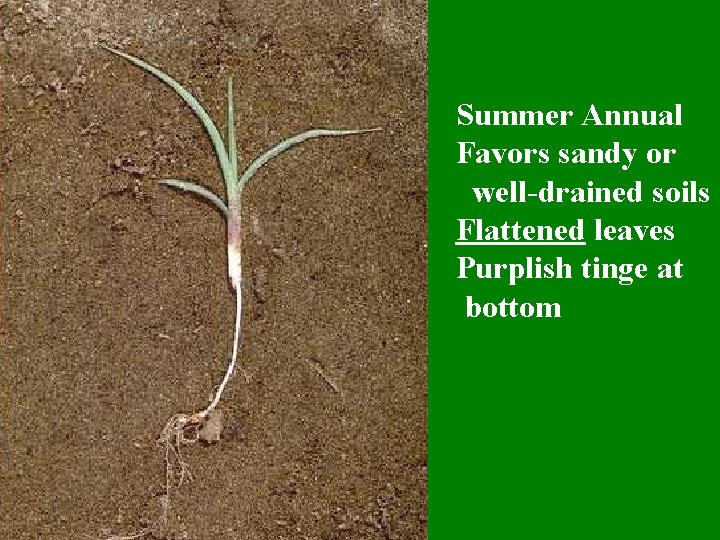
Summer Annual Favors sandy or well-drained soils Flattened leaves Purplish tinge at bottom
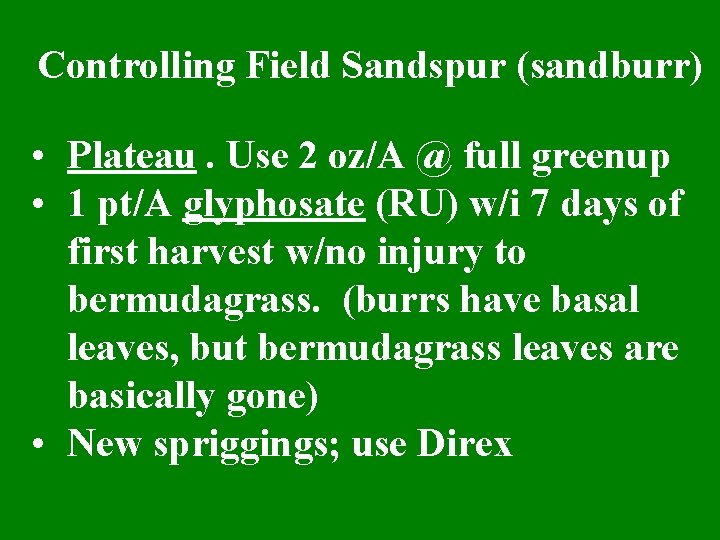
Controlling Field Sandspur (sandburr) • Plateau. Use 2 oz/A @ full greenup • 1 pt/A glyphosate (RU) w/i 7 days of first harvest w/no injury to bermudagrass. (burrs have basal leaves, but bermudagrass leaves are basically gone) • New spriggings; use Direx
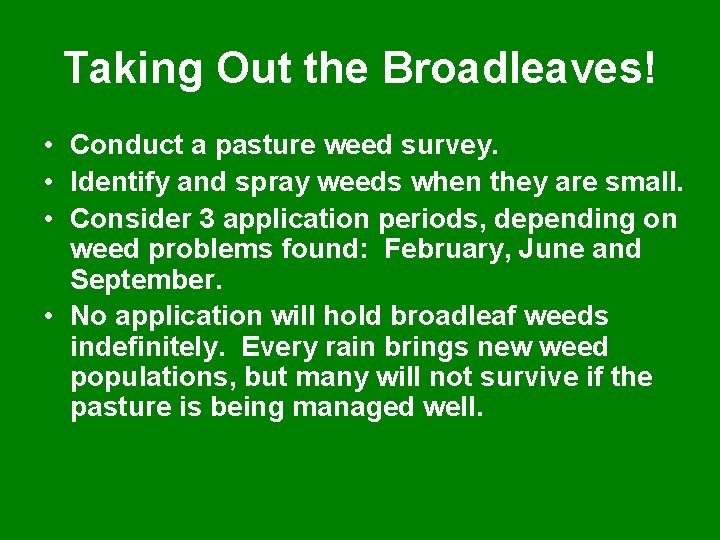
Taking Out the Broadleaves! • Conduct a pasture weed survey. • Identify and spray weeds when they are small. • Consider 3 application periods, depending on weed problems found: February, June and September. • No application will hold broadleaf weeds indefinitely. Every rain brings new weed populations, but many will not survive if the pasture is being managed well.
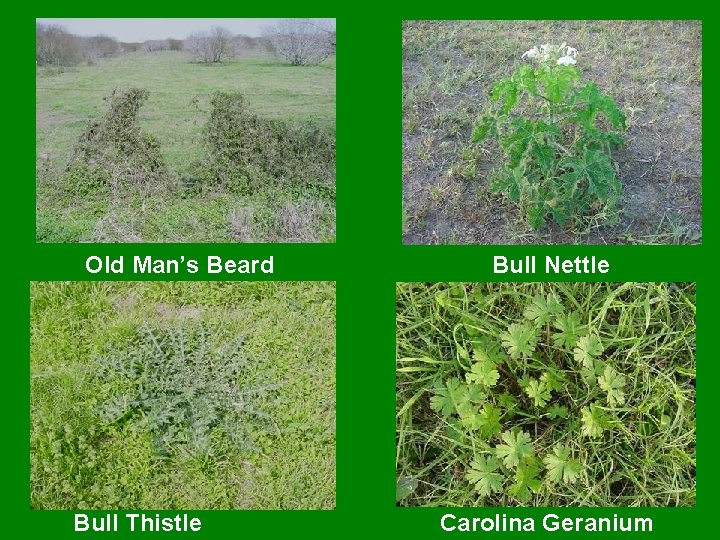
Old Man’s Beard Bull Thistle Bull Nettle Carolina Geranium
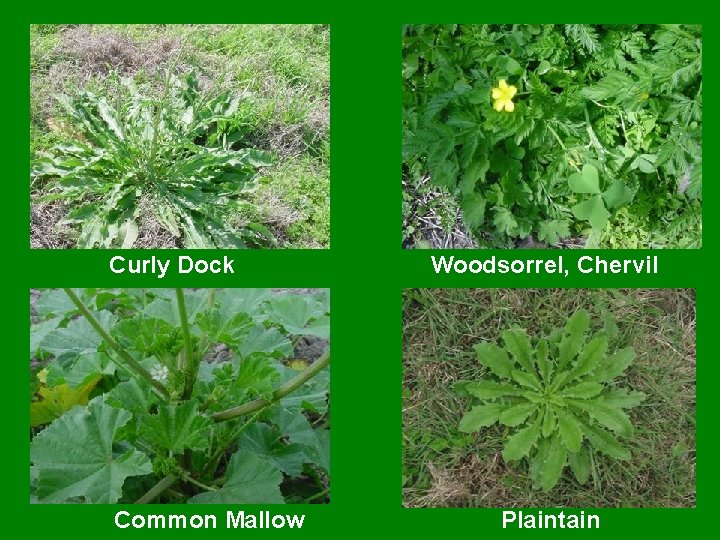
Curly Dock Common Mallow Woodsorrel, Chervil Plaintain
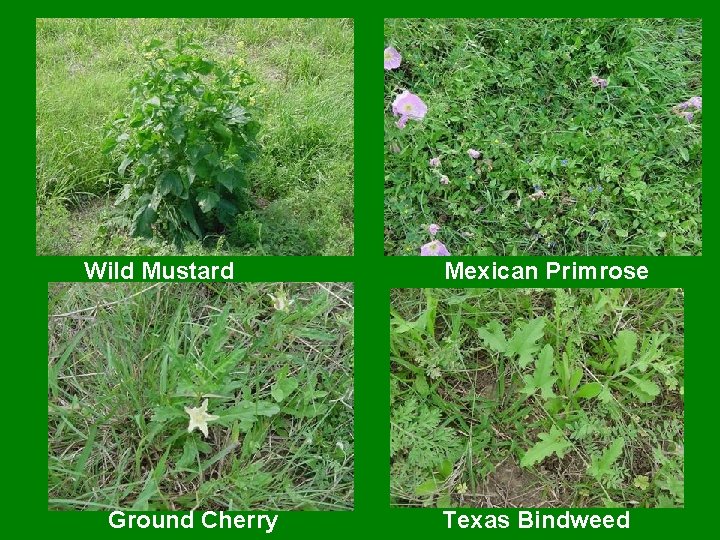
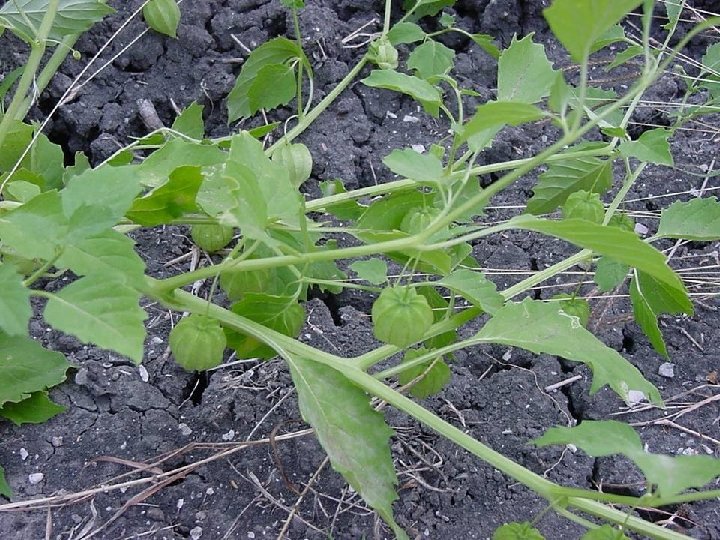
Wild Mustard Ground Cherry Mexican Primrose Texas Bindweed
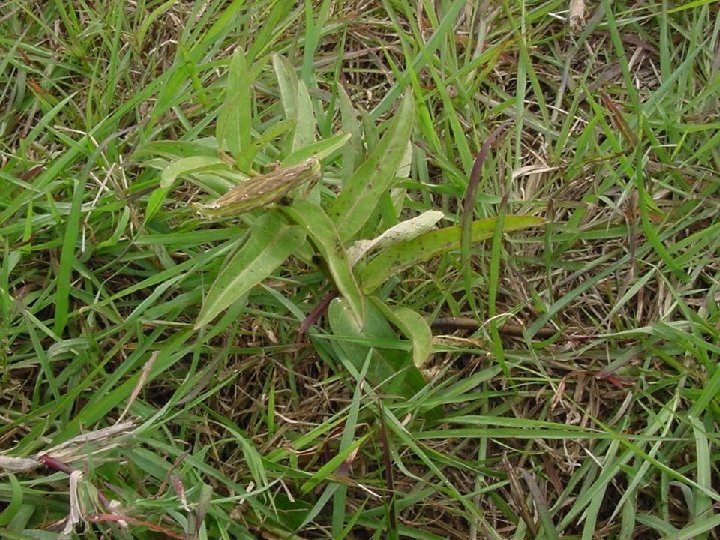
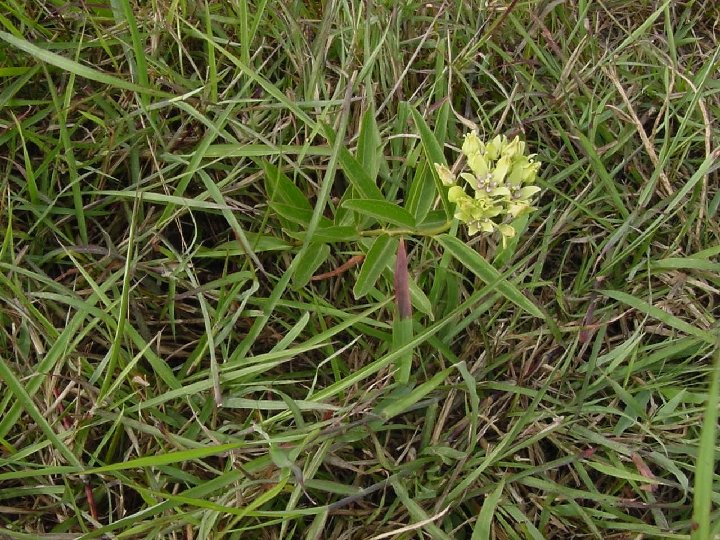
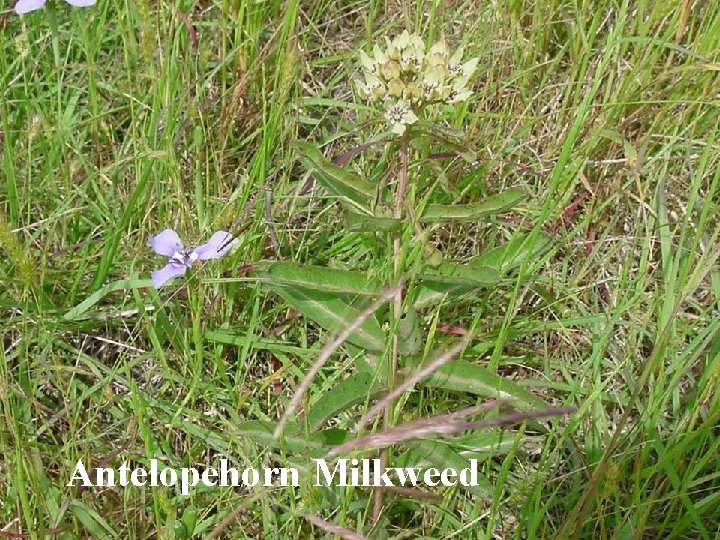
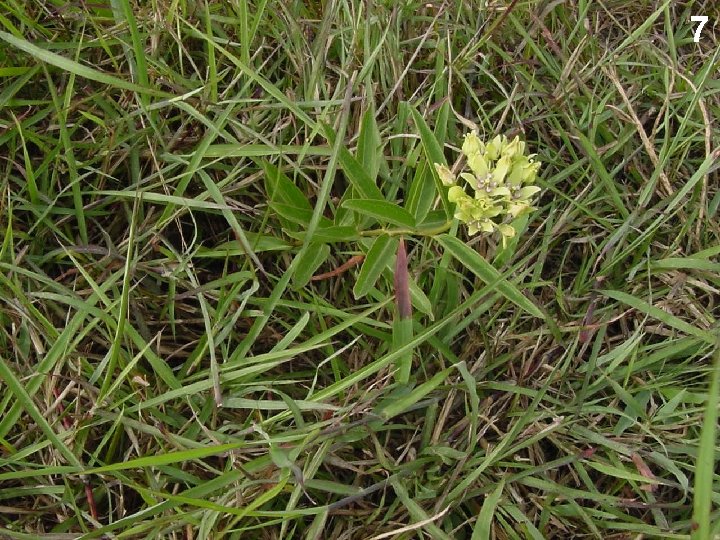
Antelopehorn Milkweed
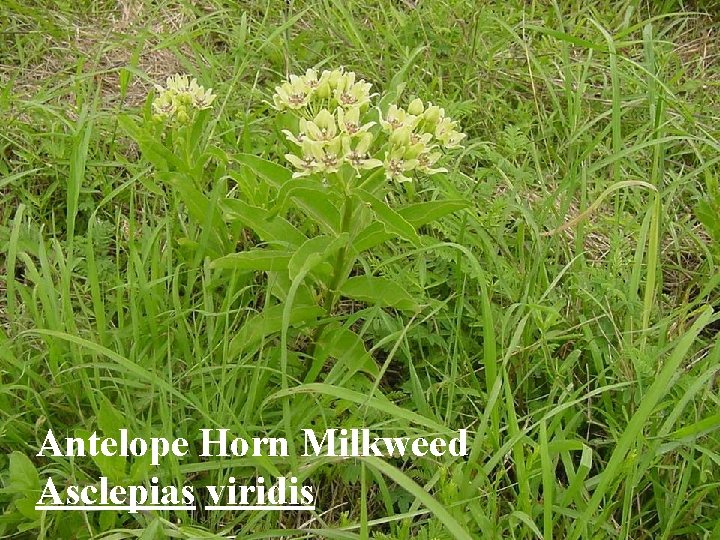
Antelope Horn Milkweed Asclepias viridis
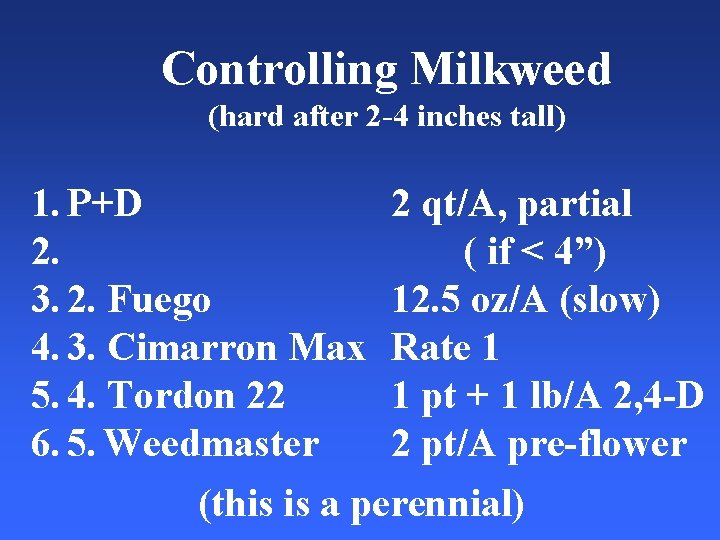
Controlling Milkweed (hard after 2 -4 inches tall) 1. P+D 2 qt/A, partial 2. ( if < 4”) 3. 2. Fuego 12. 5 oz/A (slow) 4. 3. Cimarron Max Rate 1 5. 4. Tordon 22 1 pt + 1 lb/A 2, 4 -D 6. 5. Weedmaster 2 pt/A pre-flower (this is a perennial)
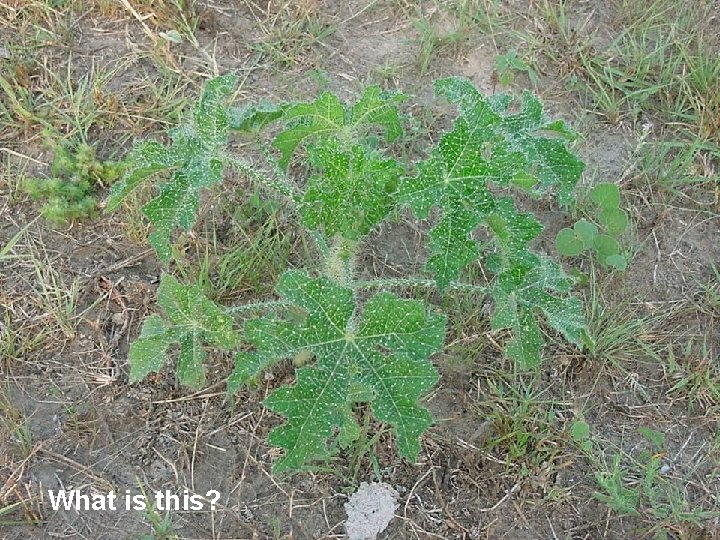
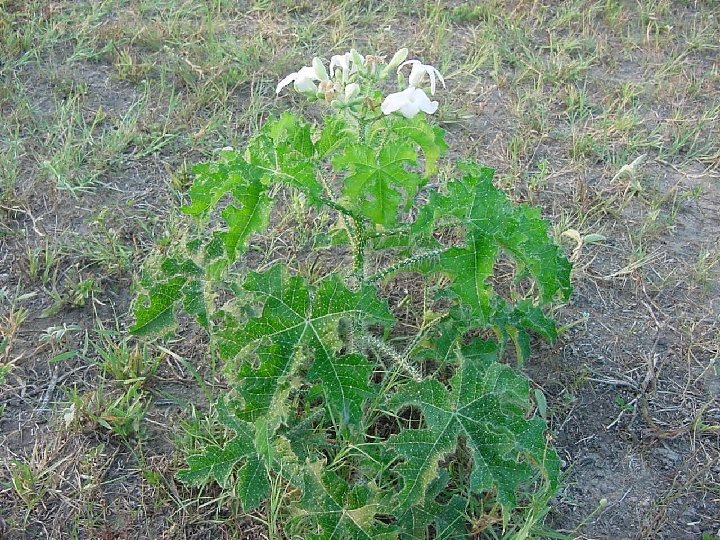
What is this?
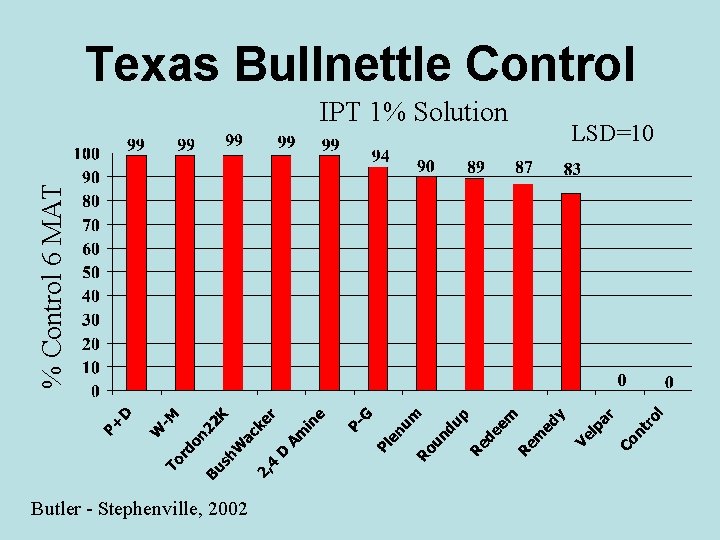
Texas Bullnettle Control % Control 6 MAT IPT 1% Solution Butler - Stephenville, 2002 LSD=10
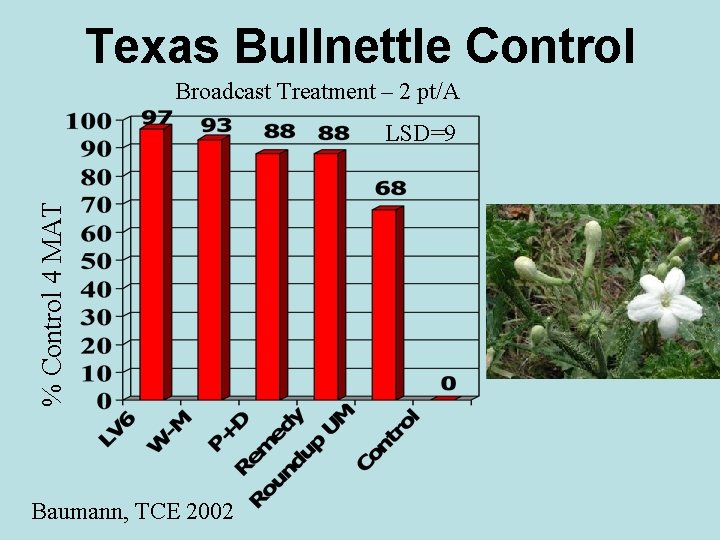
Texas Bullnettle Control Broadcast Treatment – 2 pt/A % Control 4 MAT LSD=9 Baumann, TCE 2002
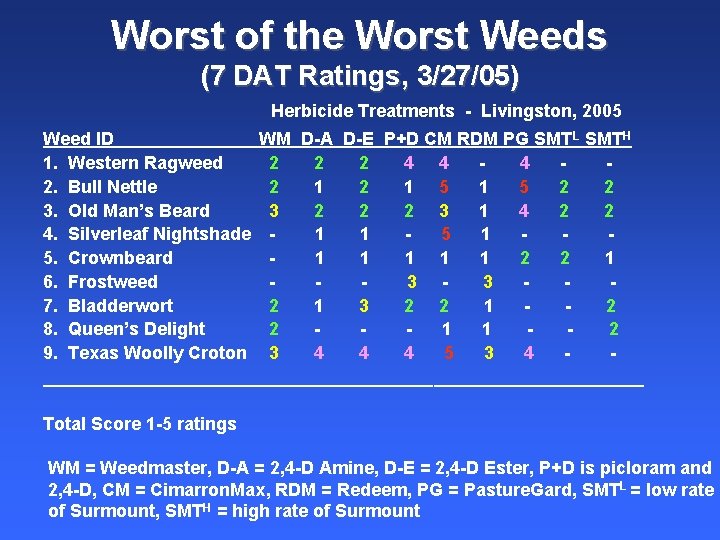
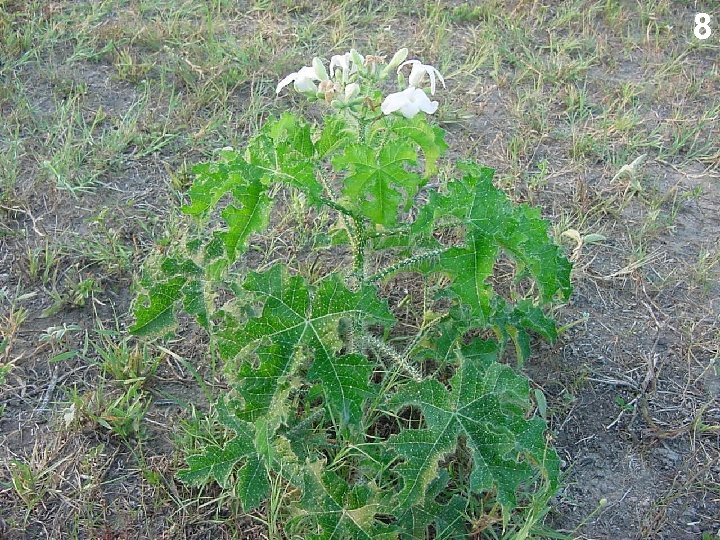
Worst of the Worst Weeds (7 DAT Ratings, 3/27/05) Herbicide Treatments - Livingston, 2005 Weed ID WM D-A D-E P+D CM RDM PG SMTL SMTH 1. Western Ragweed 2 2 2 4 4 4 2. Bull Nettle 2 1 5 1 5 2 2 3. Old Man’s Beard 3 2 2 2 3 1 4 2 2 4. Silverleaf Nightshade 1 1 5. Crownbeard 1 1 1 2 2 1 6. Frostweed 3 3 7. Bladderwort 2 1 3 2 2 1 2 8. Queen’s Delight 2 1 1 2 9. Texas Woolly Croton 3 4 4 4 5 3 4 ______________________________ Total Score 1 -5 ratings WM = Weedmaster, D-A = 2, 4 -D Amine, D-E = 2, 4 -D Ester, P+D is picloram and 2, 4 -D, CM = Cimarron. Max, RDM = Redeem, PG = Pasture. Gard, SMTL = low rate of Surmount, SMTH = high rate of Surmount
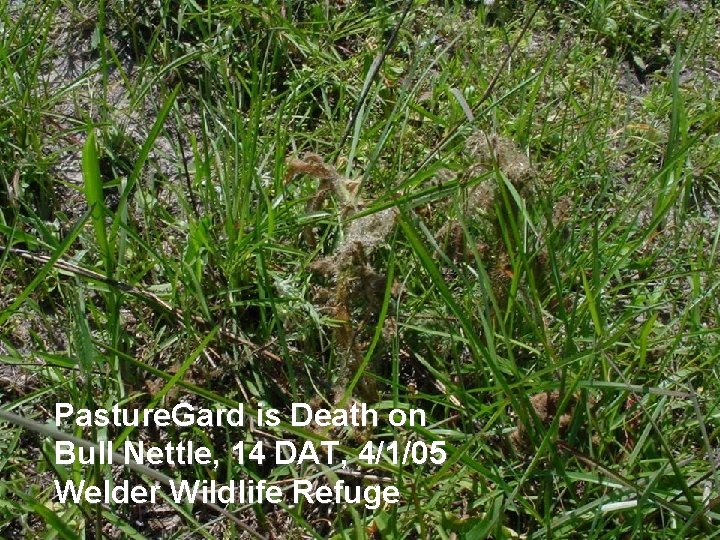
Pasture. Gard is Death on Bull Nettle, 14 DAT, 4/1/05 Welder Wildlife Refuge
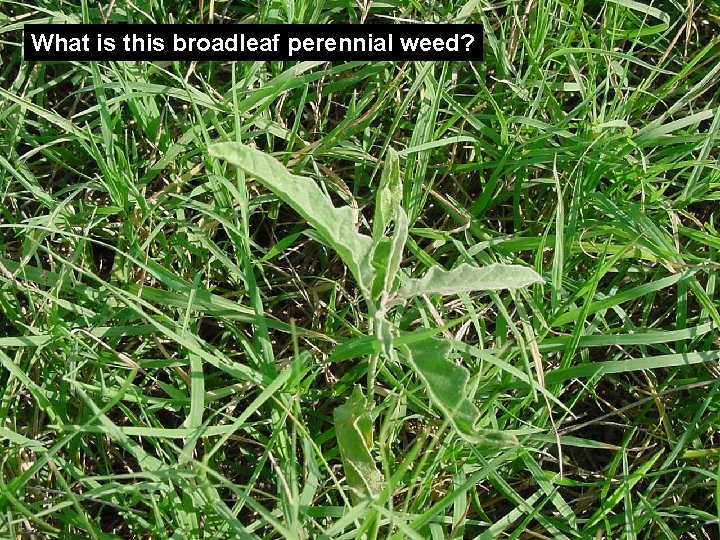
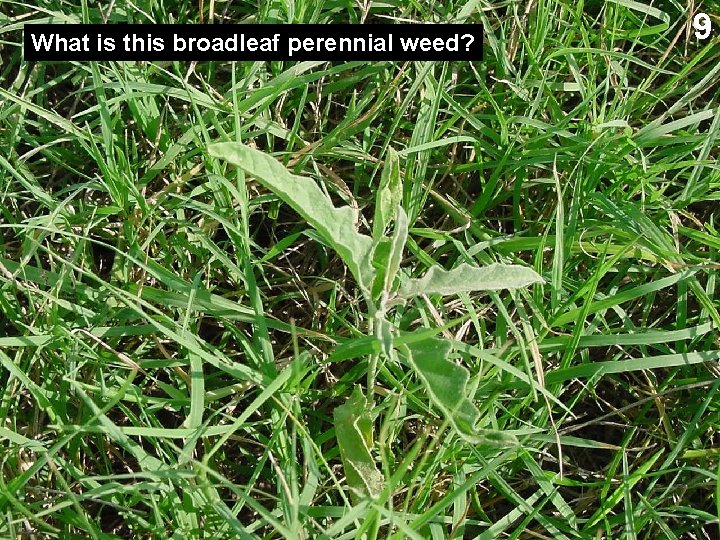
What is this broadleaf perennial weed?
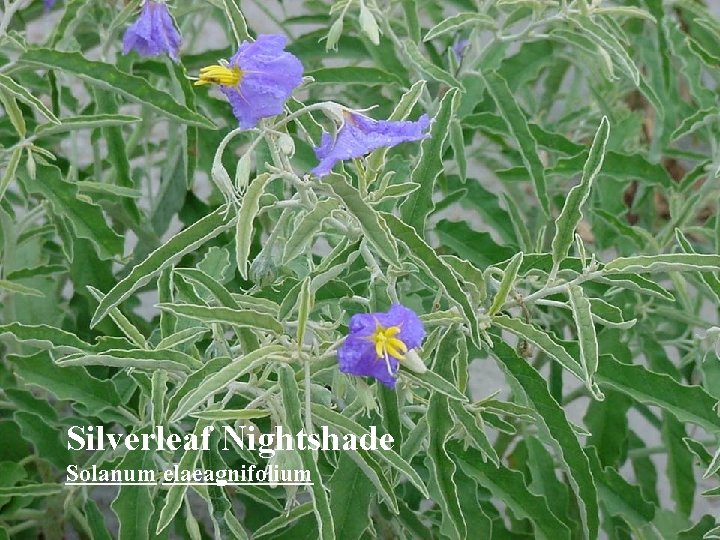
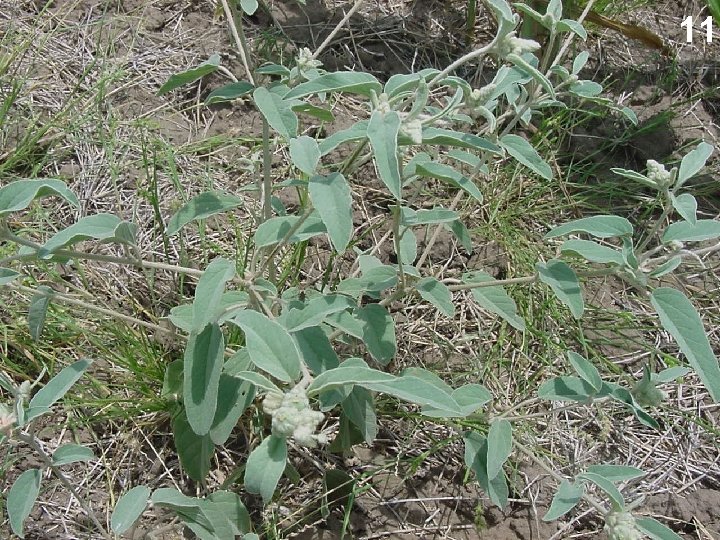
Silverleaf Nightshade Solanum elaeagnifolium
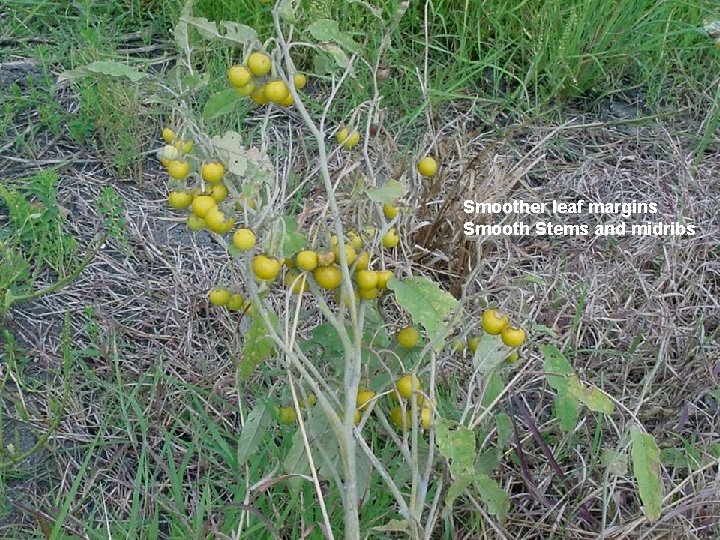
Smoother leaf margins Smooth Stems and midribs
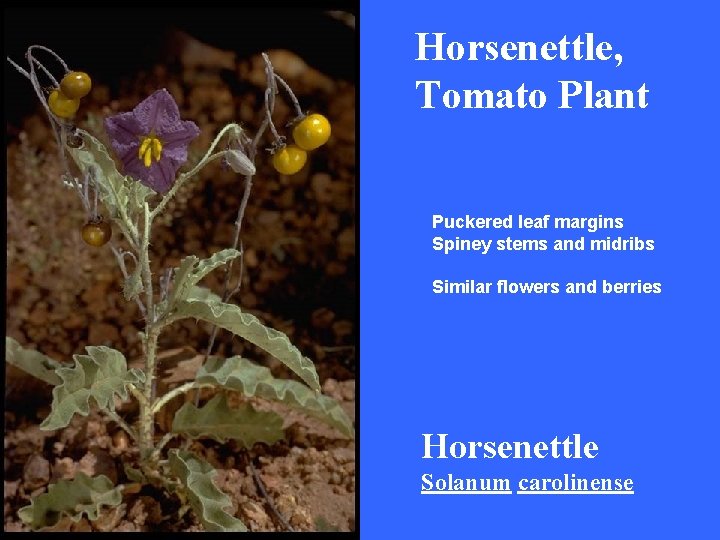
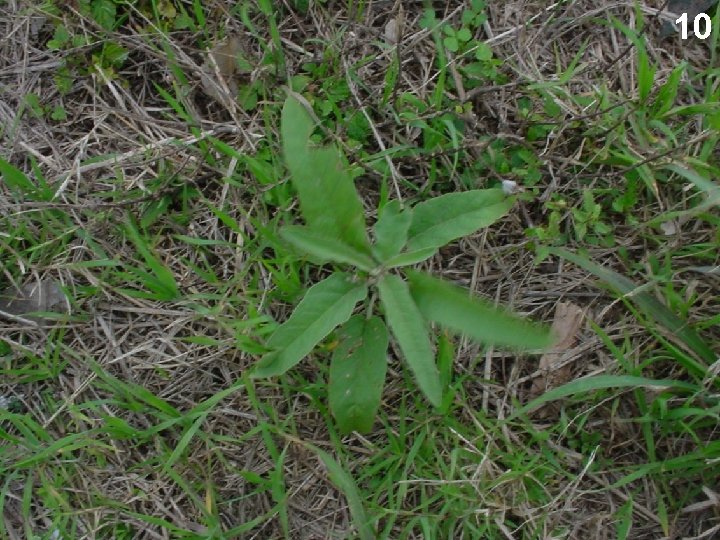
Horsenettle, Tomato Plant Puckered leaf margins Spiney stems and midribs Similar flowers and berries Horsenettle Solanum carolinense
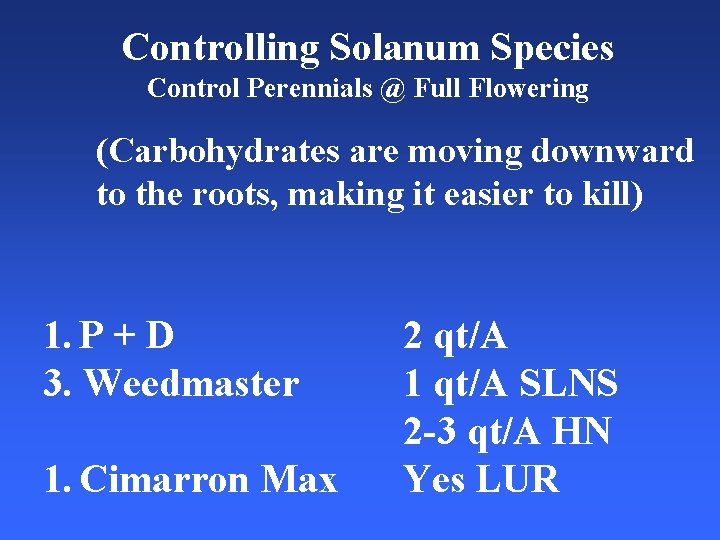
Controlling Solanum Species Control Perennials @ Full Flowering (Carbohydrates are moving downward to the roots, making it easier to kill) 1. P + D 3. Weedmaster 1. Cimarron Max 2 qt/A 1 qt/A SLNS 2 -3 qt/A HN Yes LUR
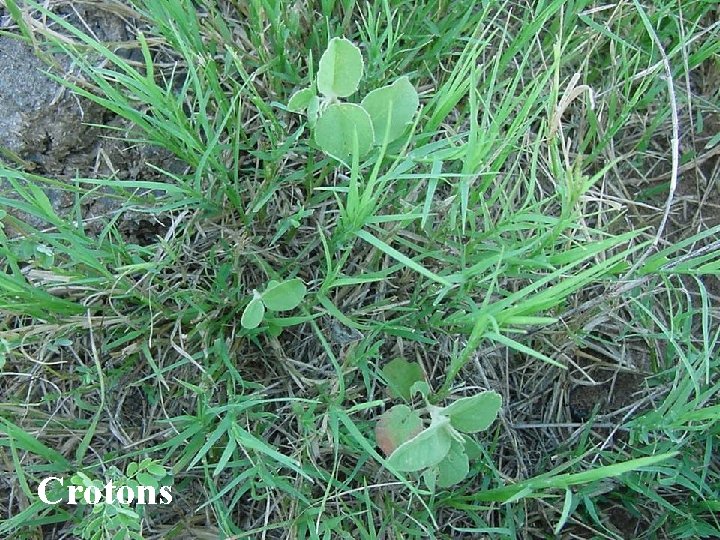
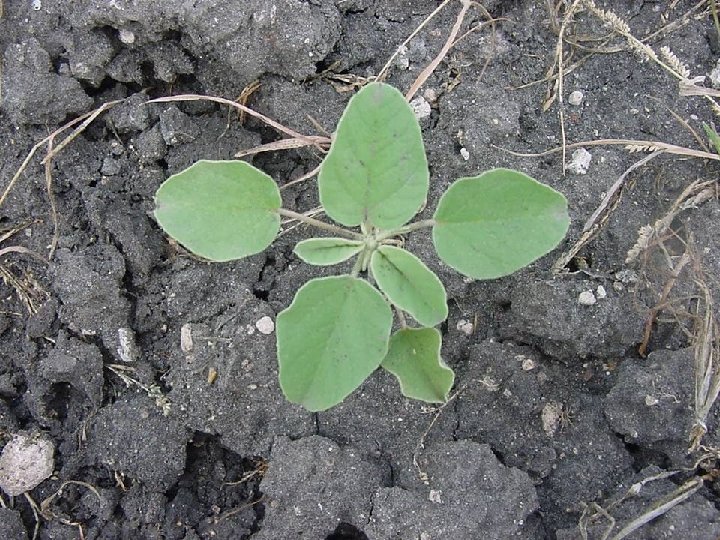
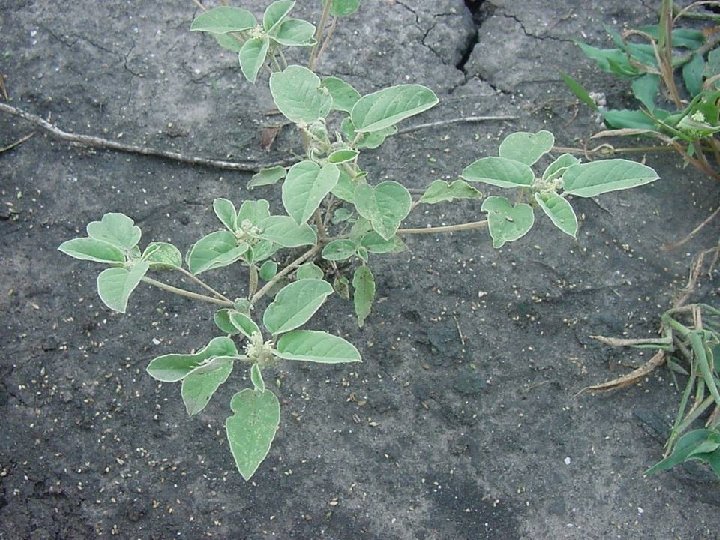
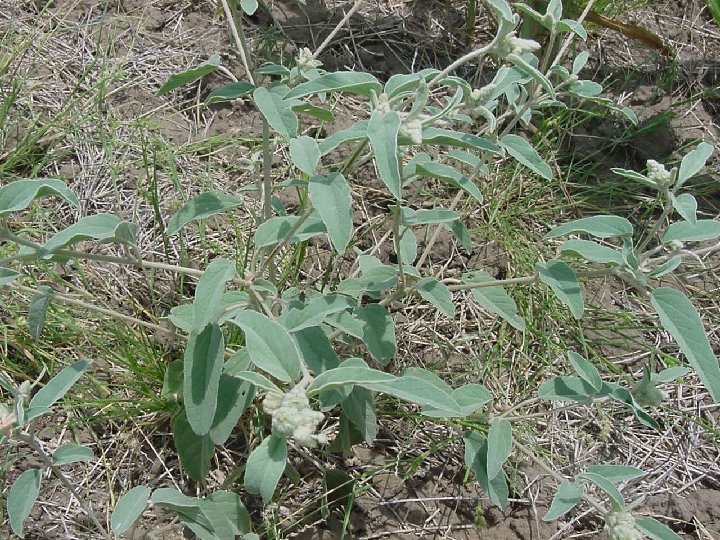
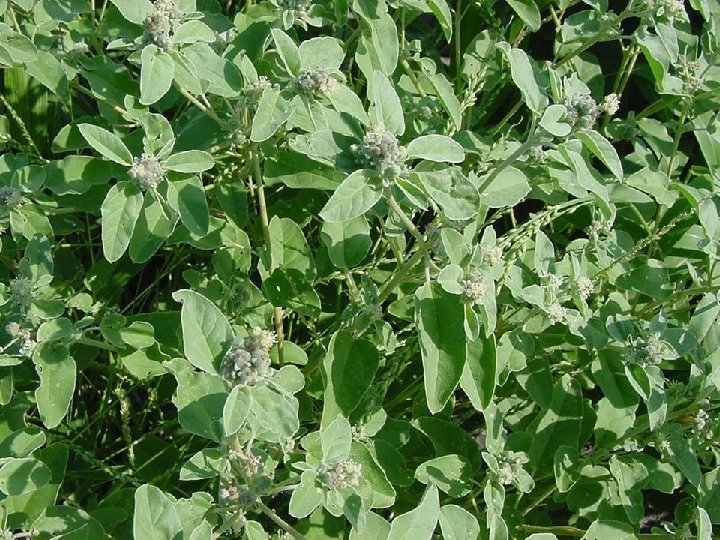
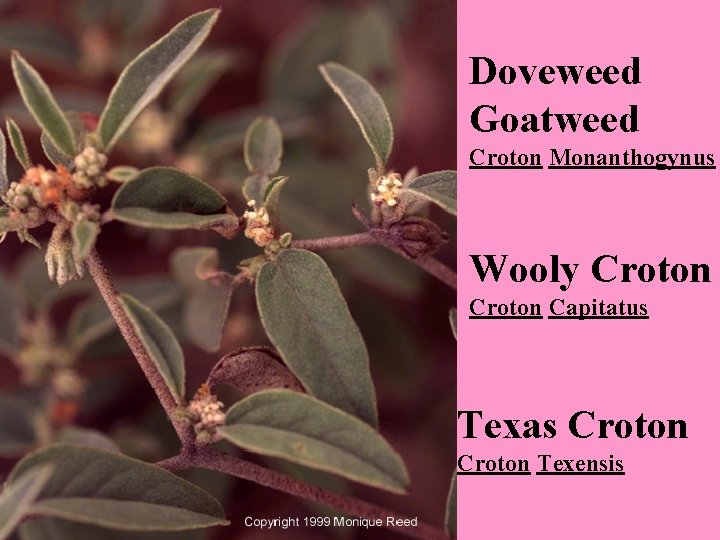
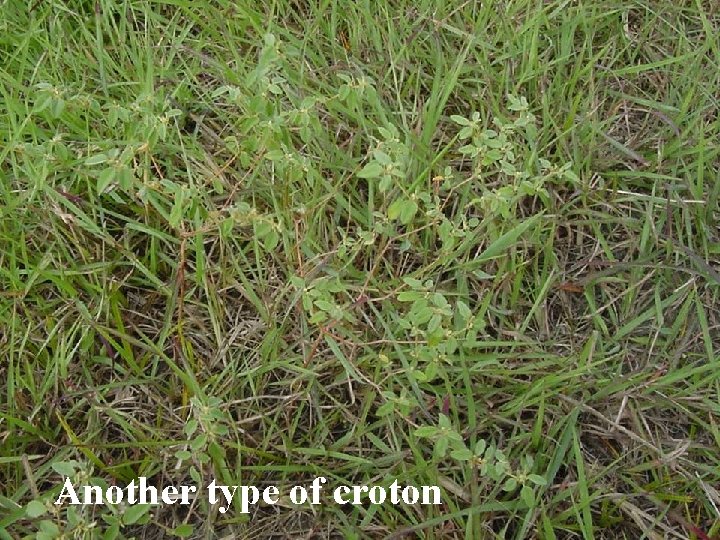
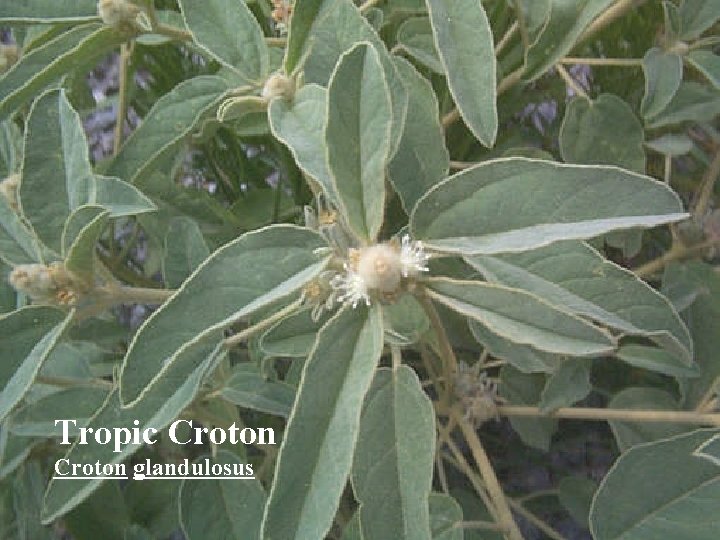
Crotons
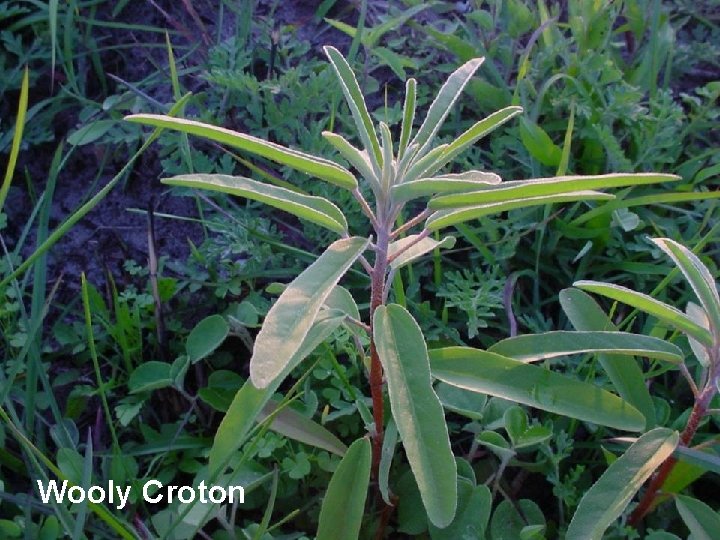
Doveweed Goatweed Croton Monanthogynus Wooly Croton Capitatus Texas Croton Texensis
Another type of croton
Tropic Croton glandulosus
Wooly Croton
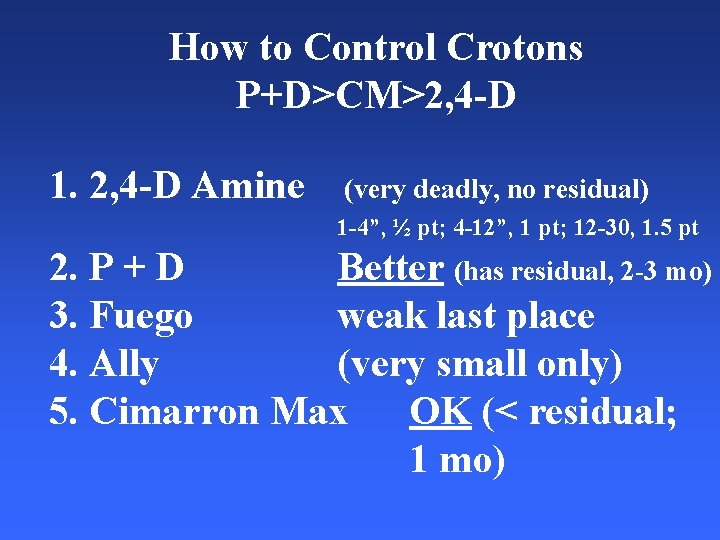
How to Control Crotons P+D>CM>2, 4 -D 1. 2, 4 -D Amine (very deadly, no residual) 1 -4”, ½ pt; 4 -12”, 1 pt; 12 -30, 1. 5 pt 2. P + D Better (has residual, 2 -3 mo) 3. Fuego weak last place 4. Ally (very small only) 5. Cimarron Max OK (< residual; 1 mo)
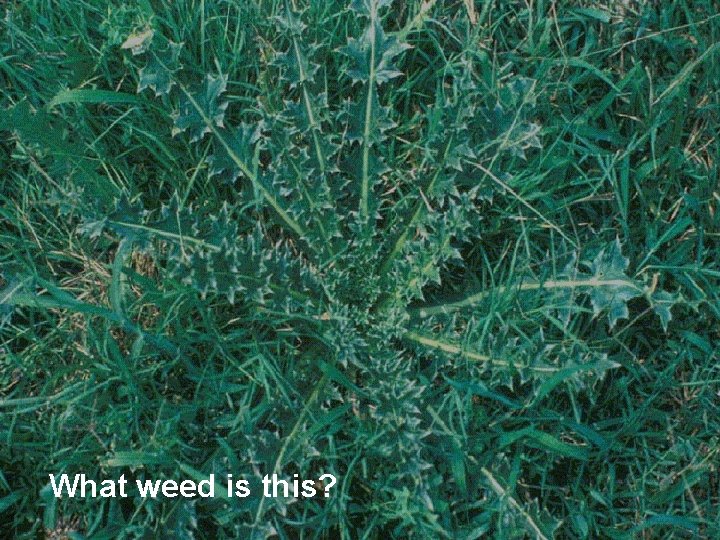
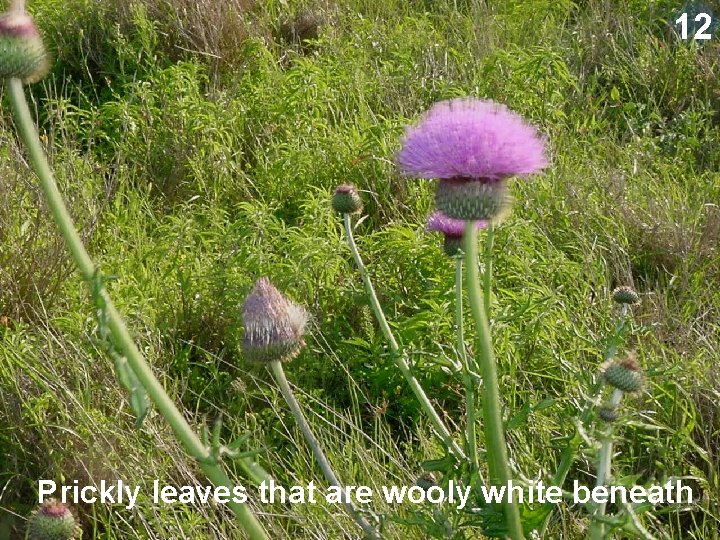
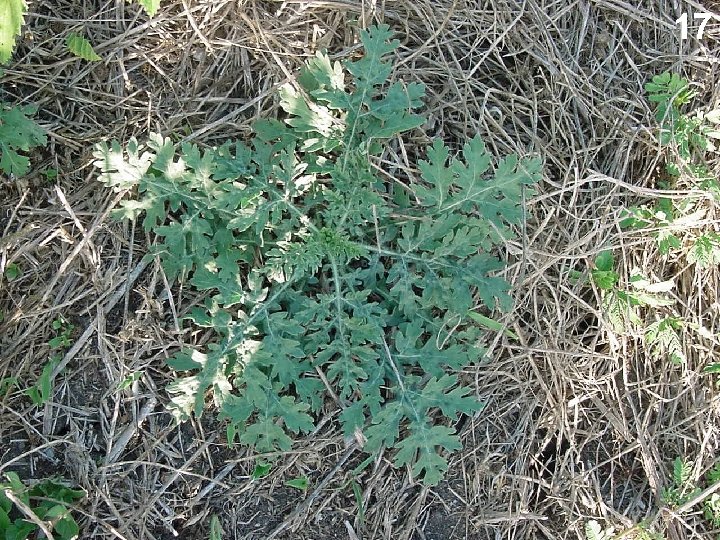
What weed is this?
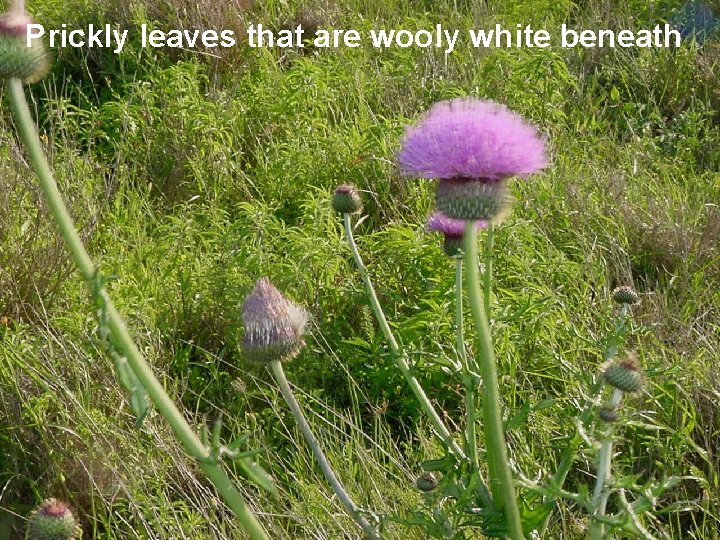
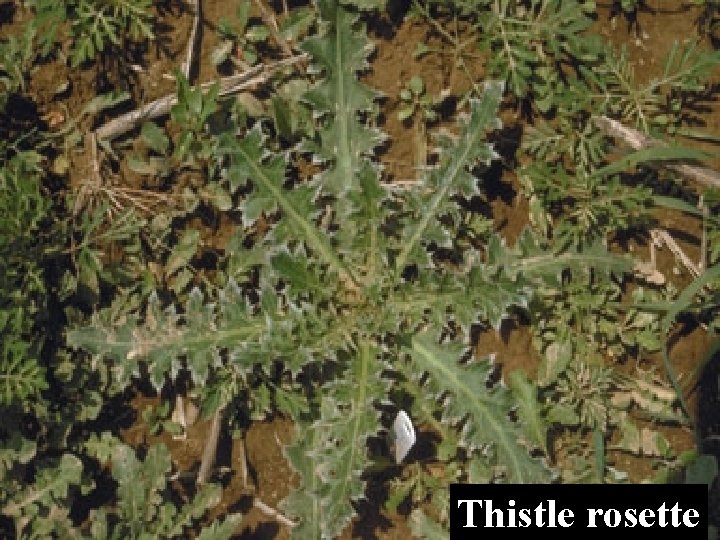
Prickly leaves that are wooly white beneath
Thistle rosette
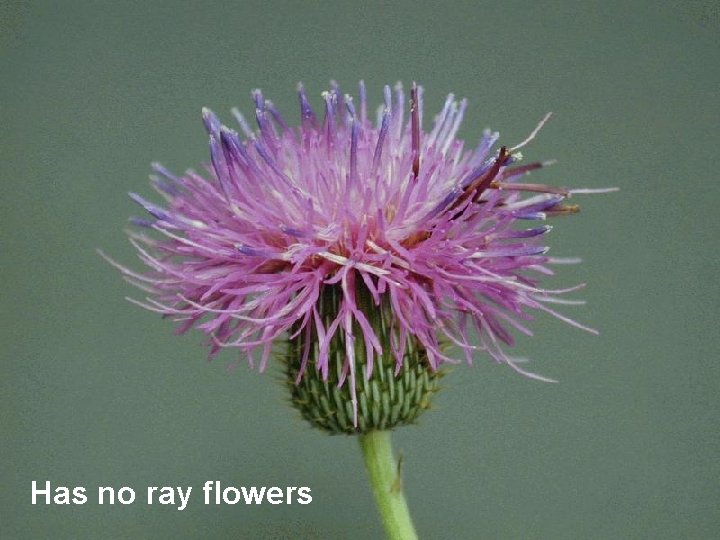
Texas Thistle Circium texanum
Has no ray flowers
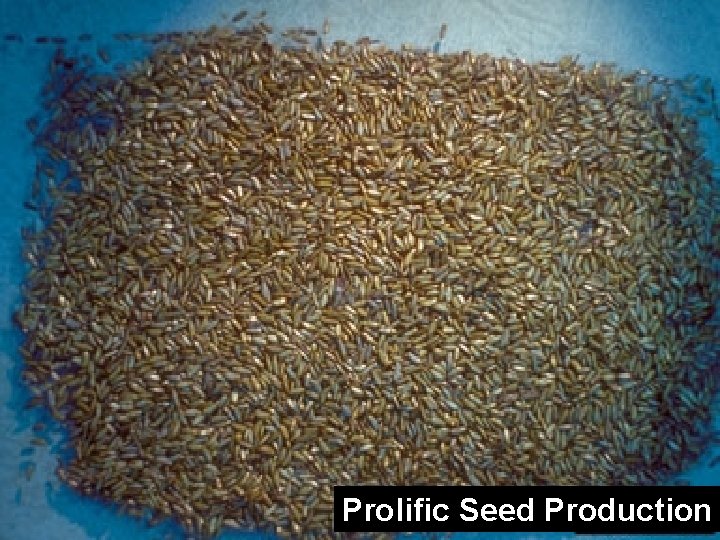
Prolific Seed Production
Controlling Texas Thistle • • 2, 4 -D Amine P+D Cimarron Max WM 11 1 qt/A at rosette stage 1 qt/A E spring; 2 X later Rates 1 -3 (1 -4 pt/A) 2 pt/A in rosette
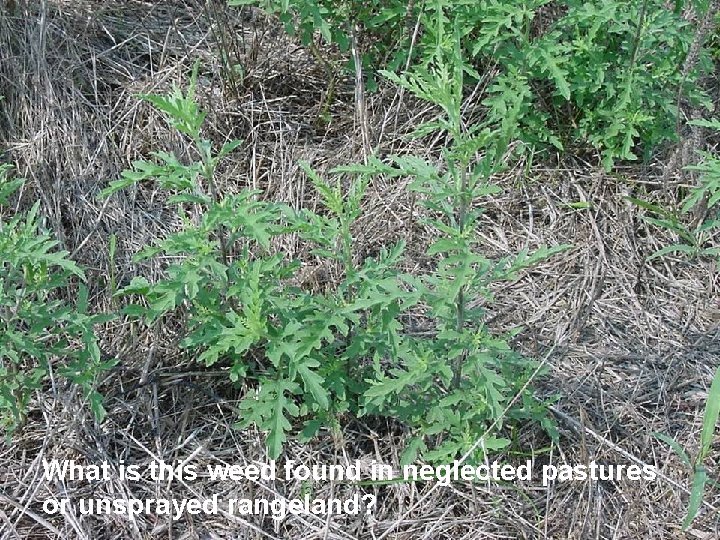
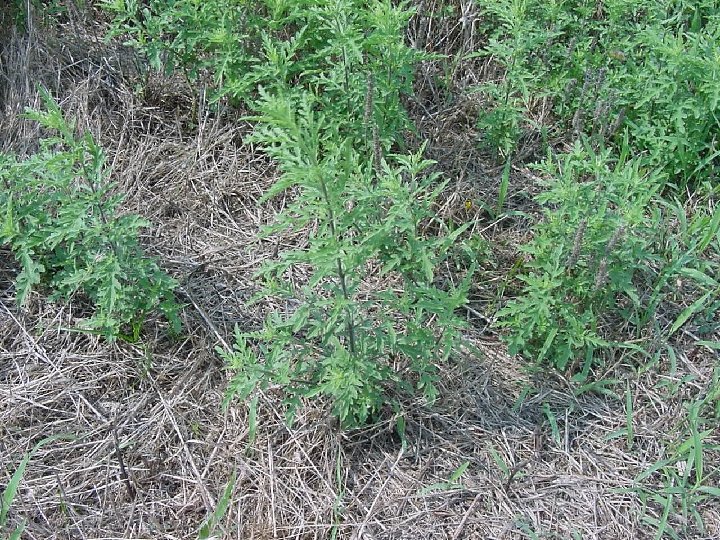
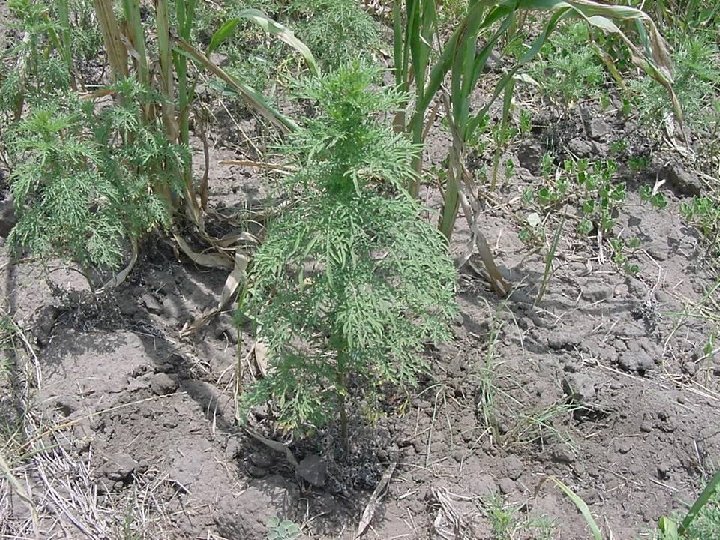
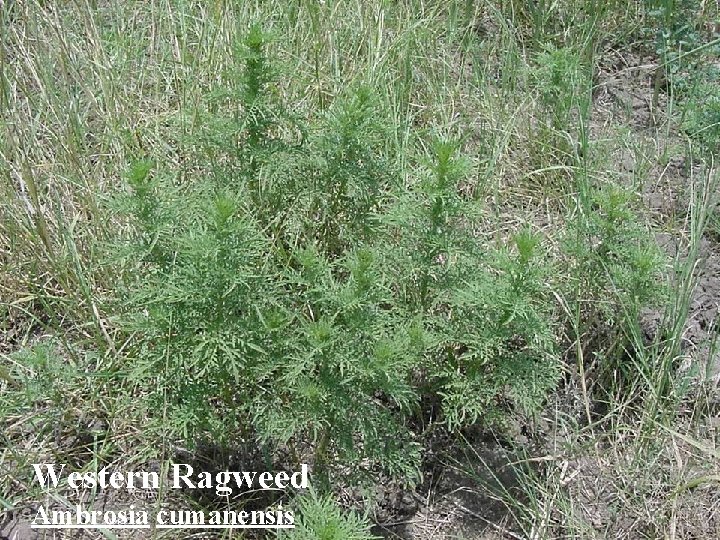
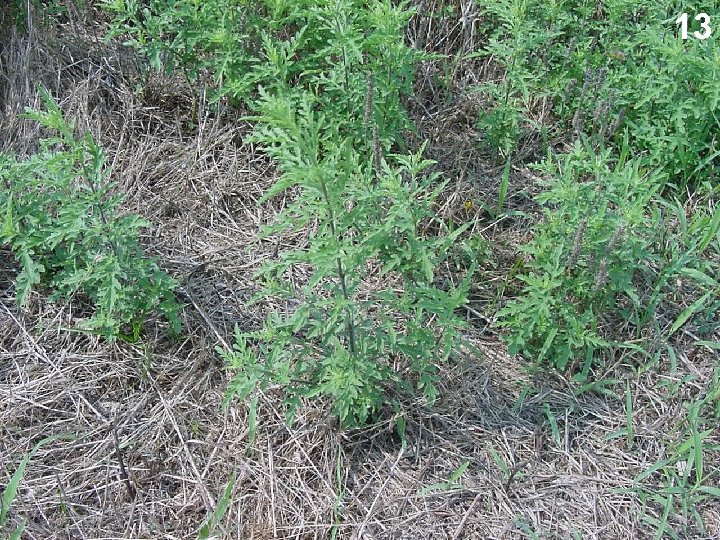
What is this weed found in neglected pastures or unsprayed rangeland?
Western Ragweed Ambrosia cumanensis
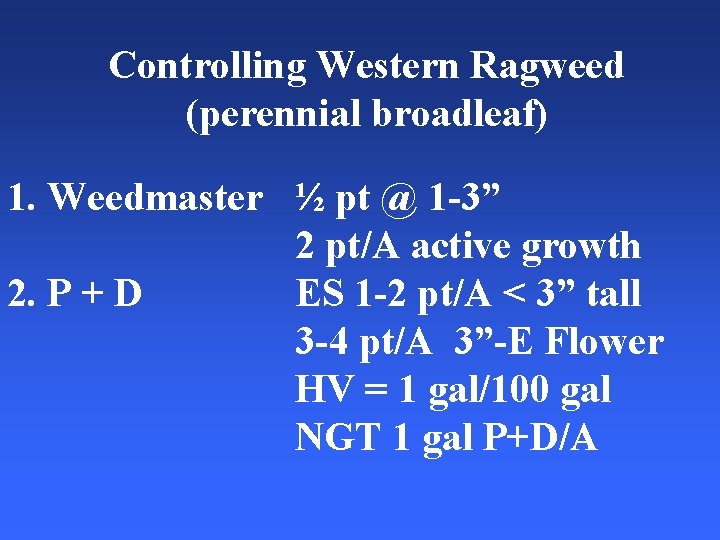
Controlling Western Ragweed (perennial broadleaf) 1. Weedmaster ½ pt @ 1 -3” 2 pt/A active growth 2. P + D ES 1 -2 pt/A < 3” tall 3 -4 pt/A 3”-E Flower HV = 1 gal/100 gal NGT 1 gal P+D/A
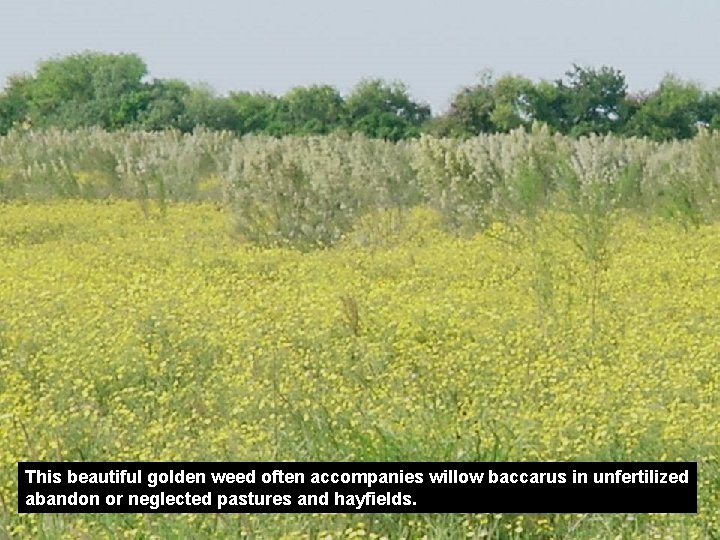
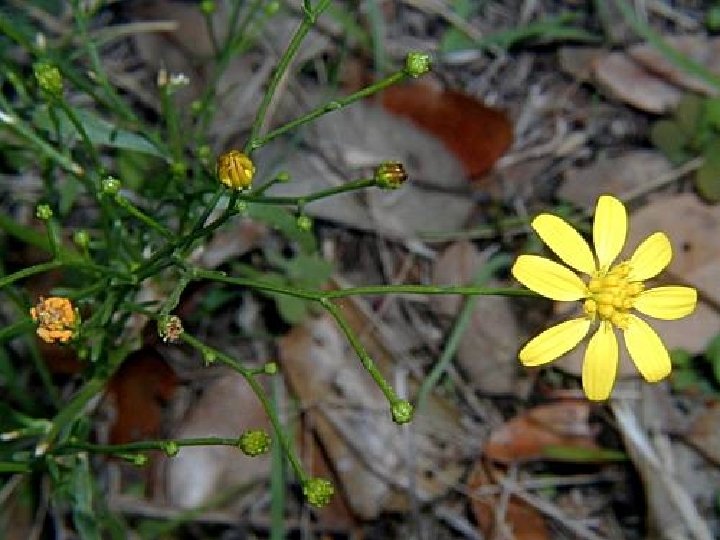
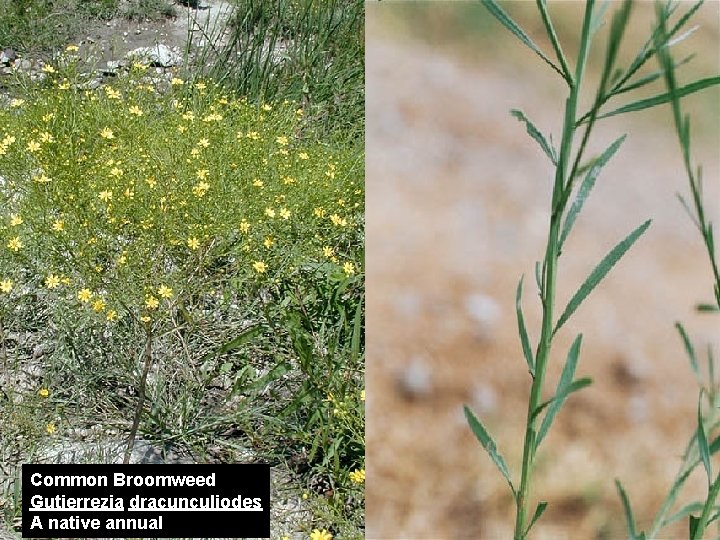
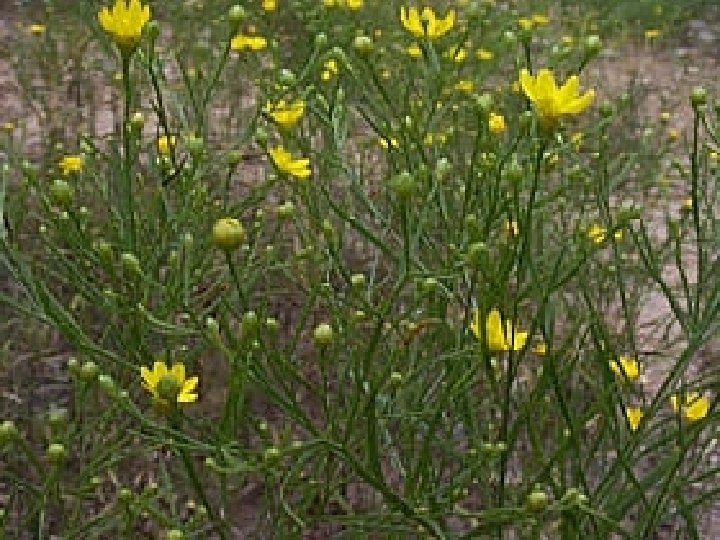
This beautiful golden weed often accompanies willow baccarus in unfertilized abandon or neglected pastures and hayfields.
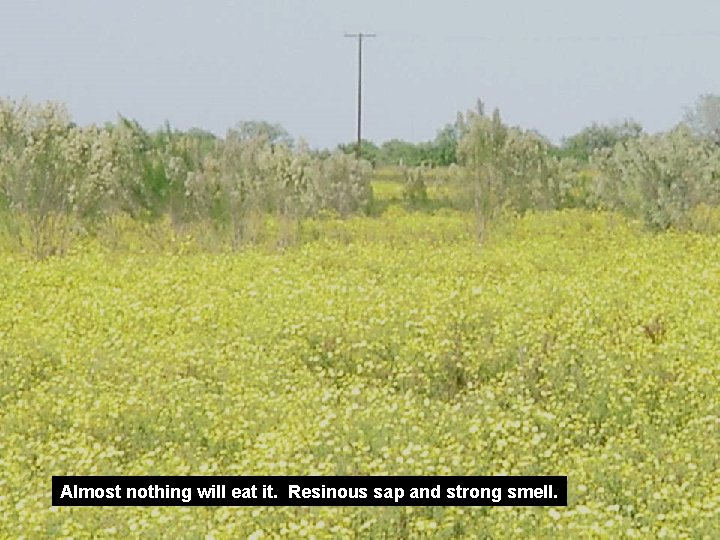
Almost nothing will eat it. Resinous sap and strong smell.
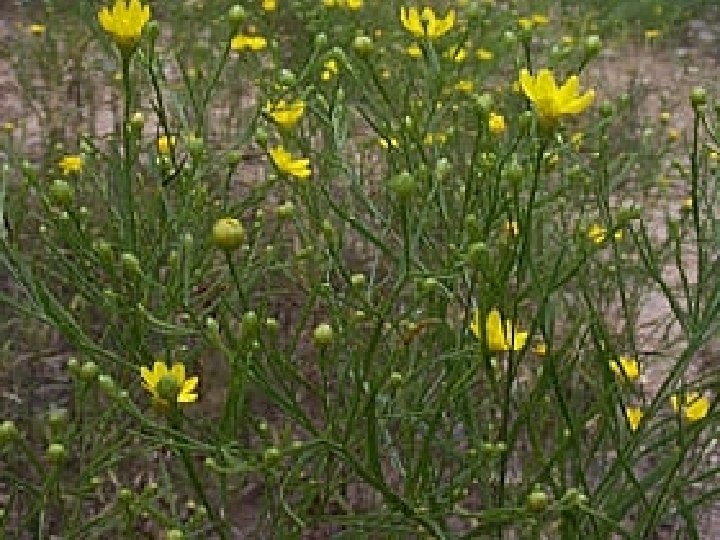
Broomweed
Common Broomweed Gutierrezia dracunculiodes A native annual
Controlling Common Broomweed 1. Cimarron Max 2. Weed. Master 3. 4. 2, 4 -D Amine 5. P + D 6. Fuego 7. Rate 1 ½ pt/A @ 1 -3 inches (4 pts post branchin (if young) same rates as WM 12 oz/A?
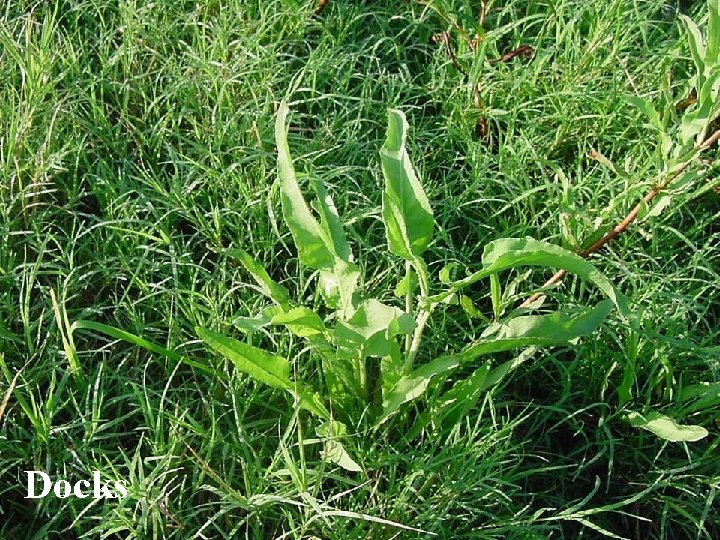
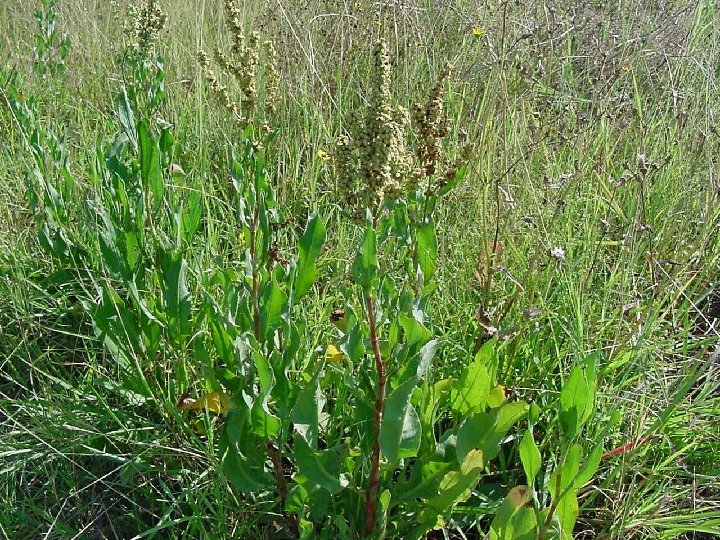
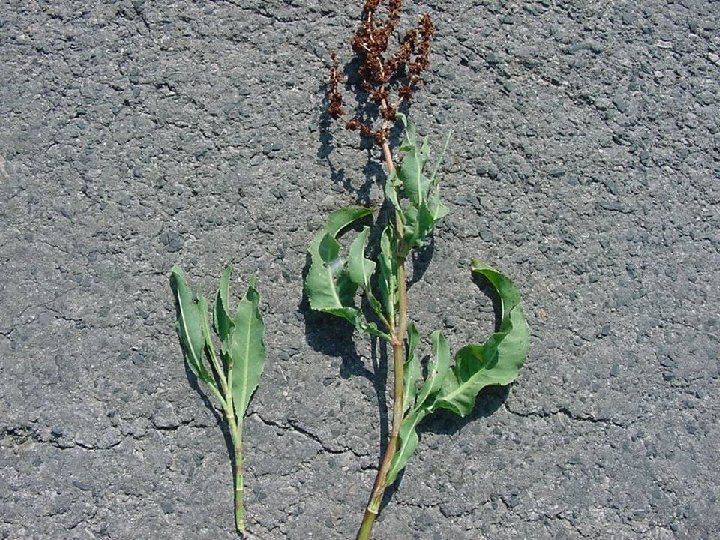
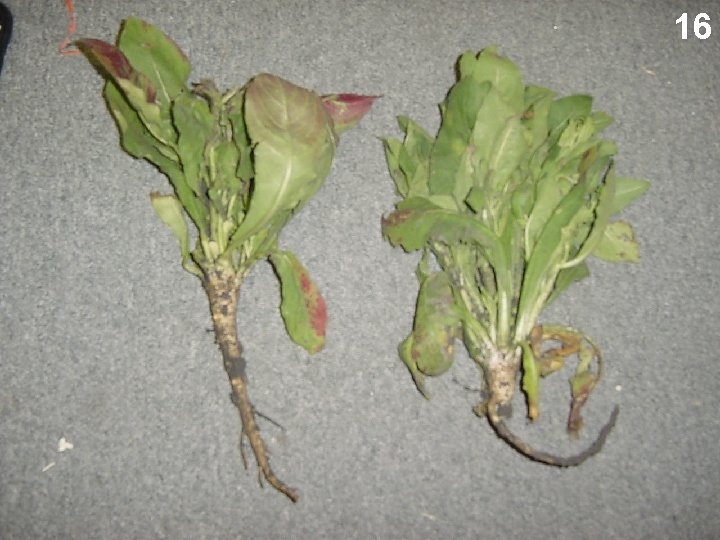
Docks
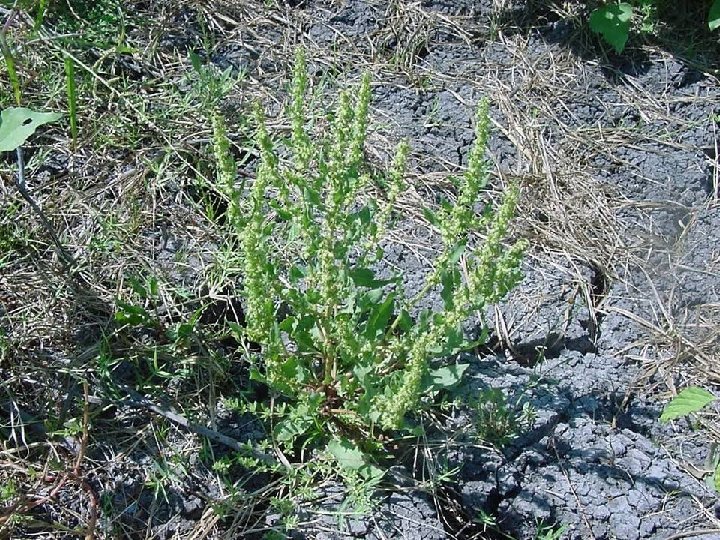
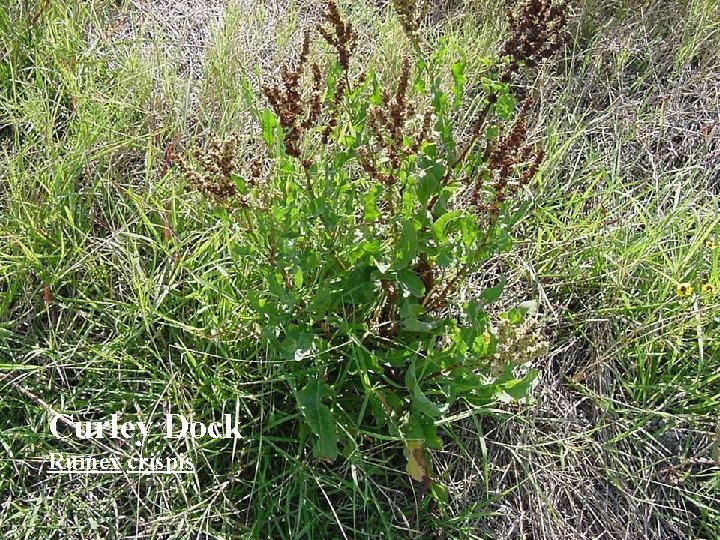
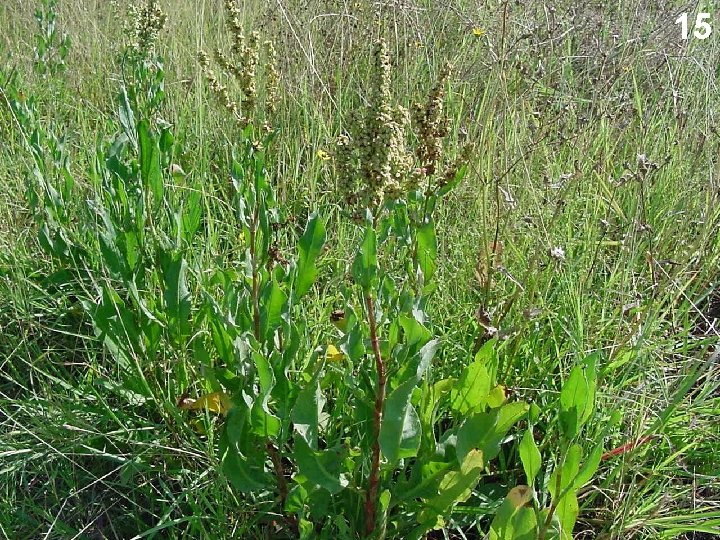
Curley Dock Rumex crispis
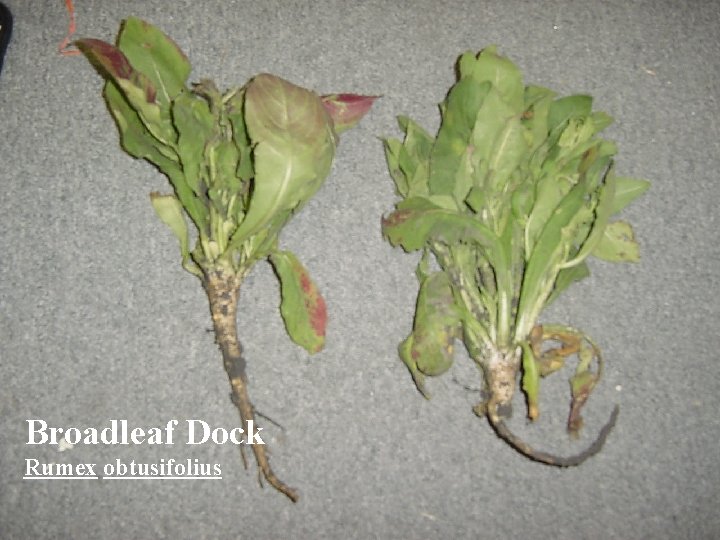
Broadleaf Dock Rumex obtusifolius
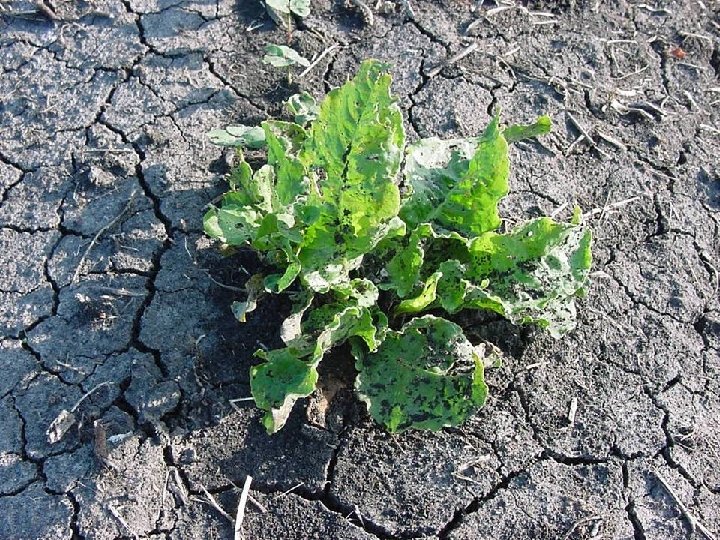
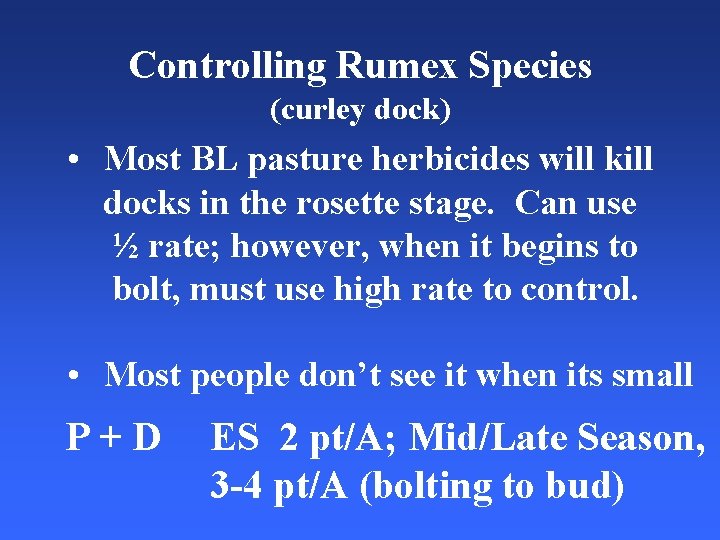
Controlling Rumex Species (curley dock) • Most BL pasture herbicides will kill docks in the rosette stage. Can use ½ rate; however, when it begins to bolt, must use high rate to control. • Most people don’t see it when its small P+D ES 2 pt/A; Mid/Late Season, 3 -4 pt/A (bolting to bud)
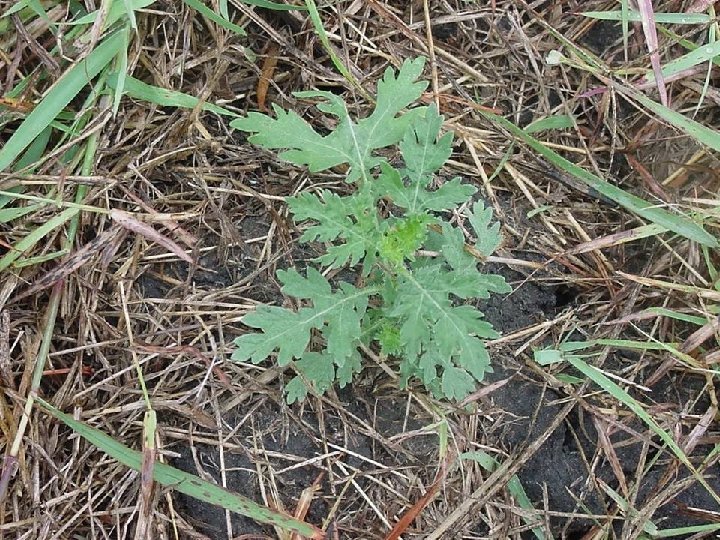
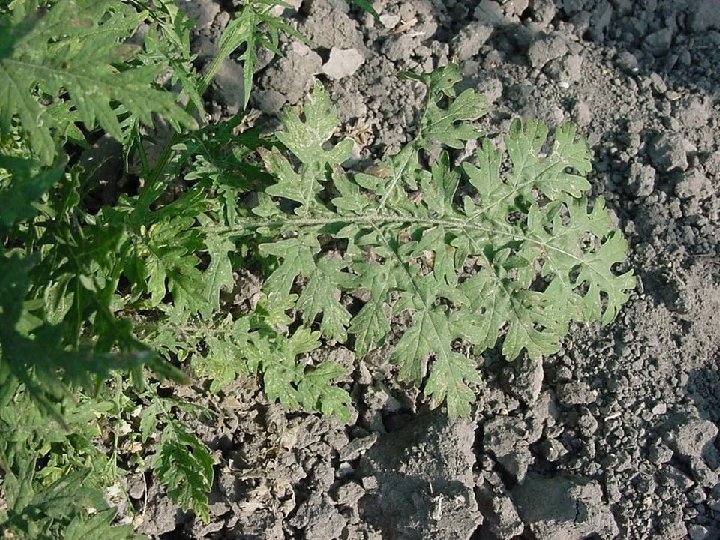
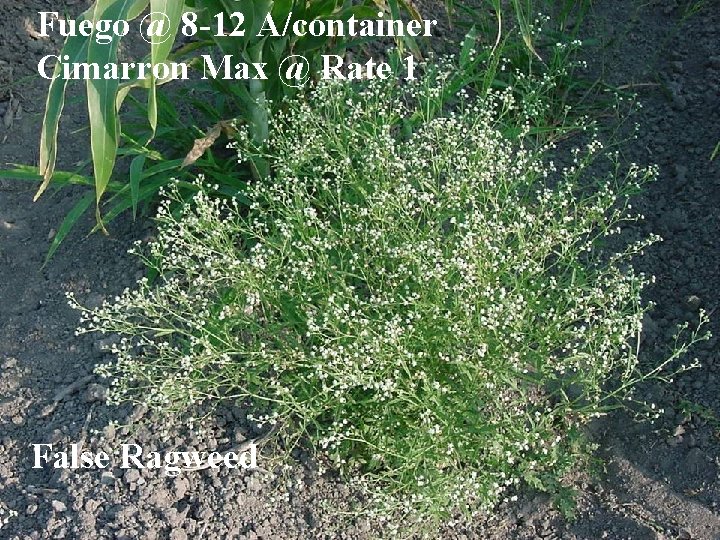
Fuego @ 8 -12 A/container Cimarron Max @ Rate 1 False Ragweed
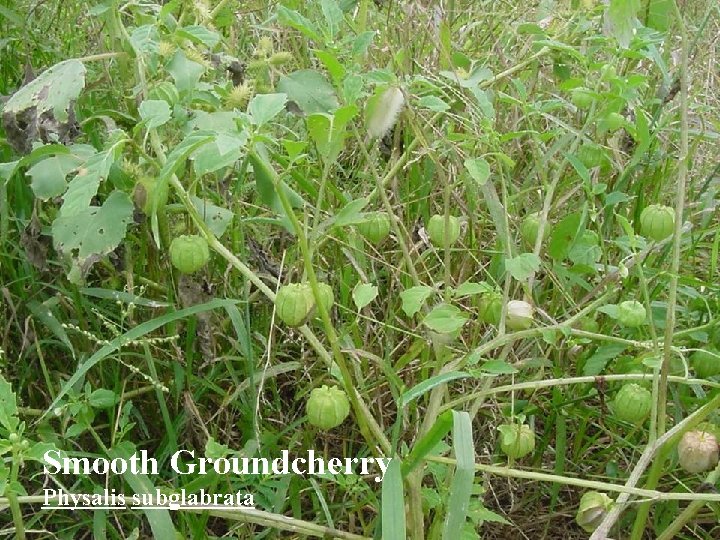
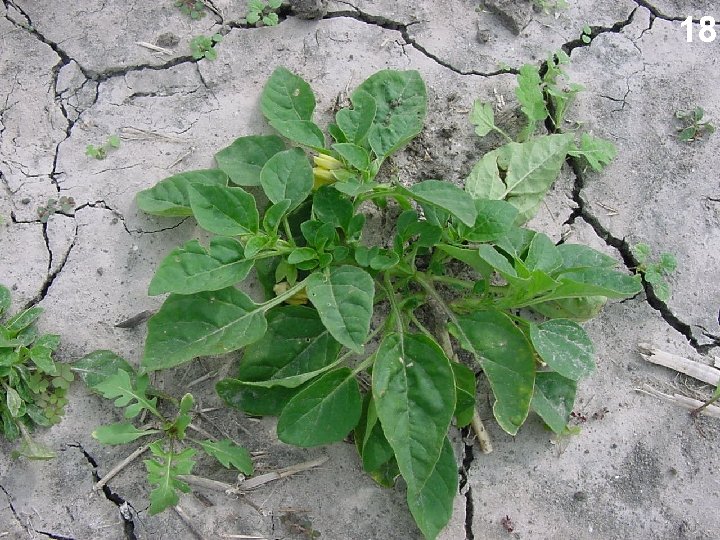
Smooth Groundcherry Physalis subglabrata
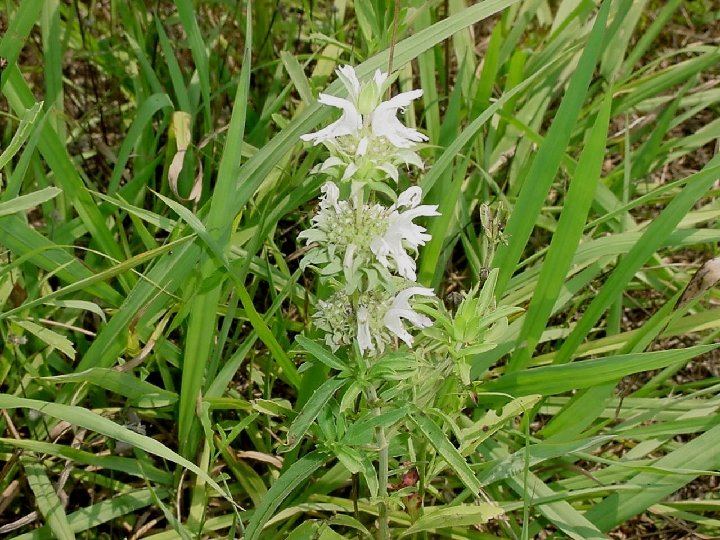
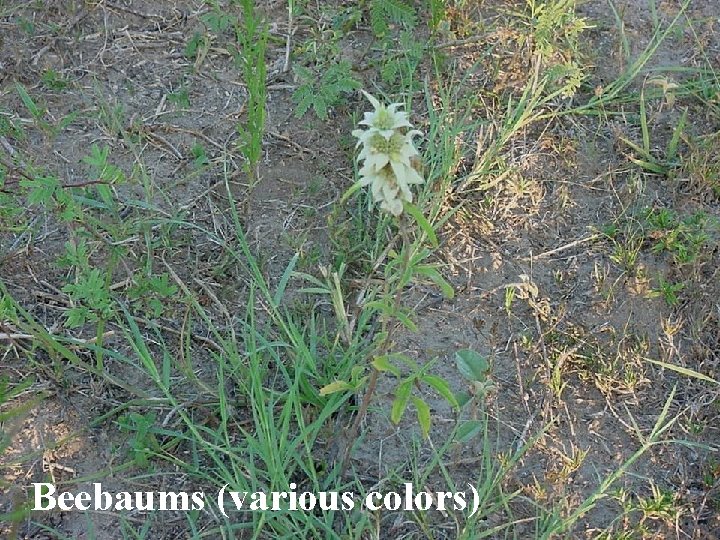
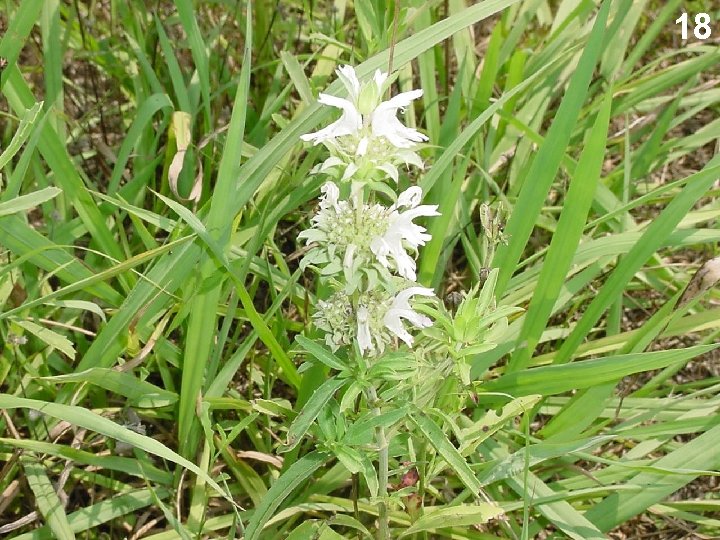
Beebaums (various colors)
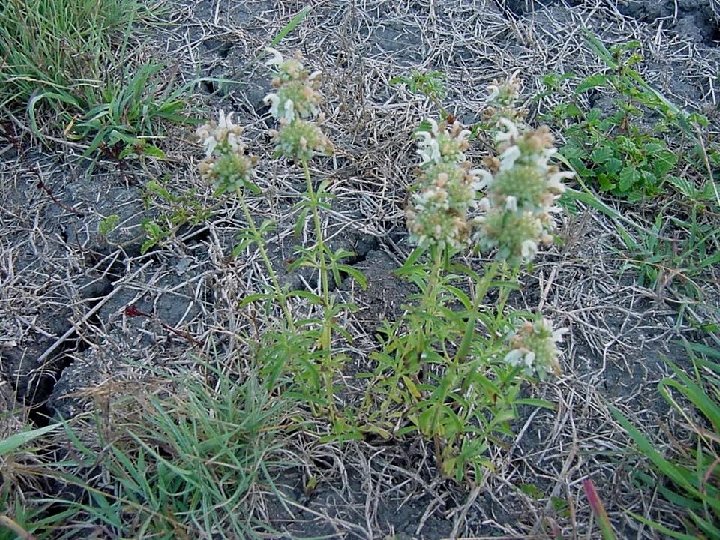
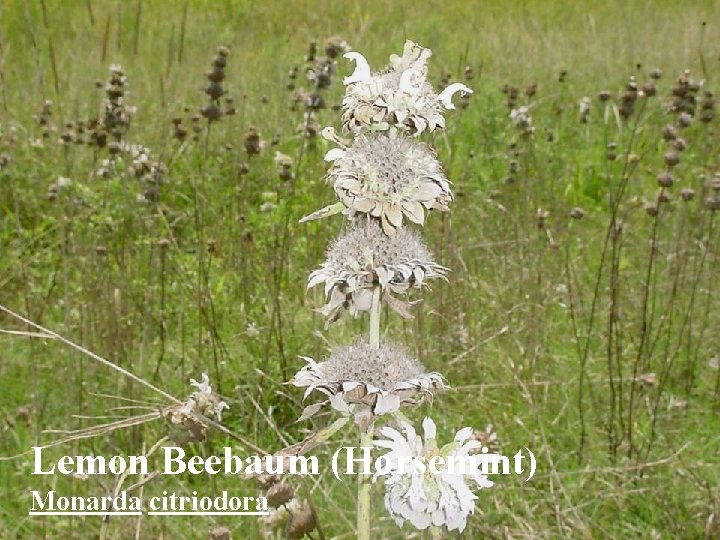
Lemon Beebaum (Horsemint) Monarda citriodora
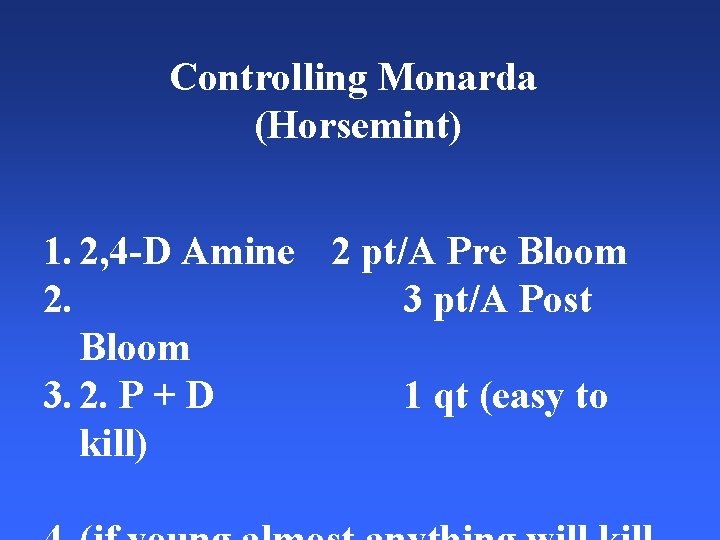
Controlling Monarda (Horsemint) 1. 2, 4 -D Amine 2 pt/A Pre Bloom 2. 3 pt/A Post Bloom 3. 2. P + D 1 qt (easy to kill)
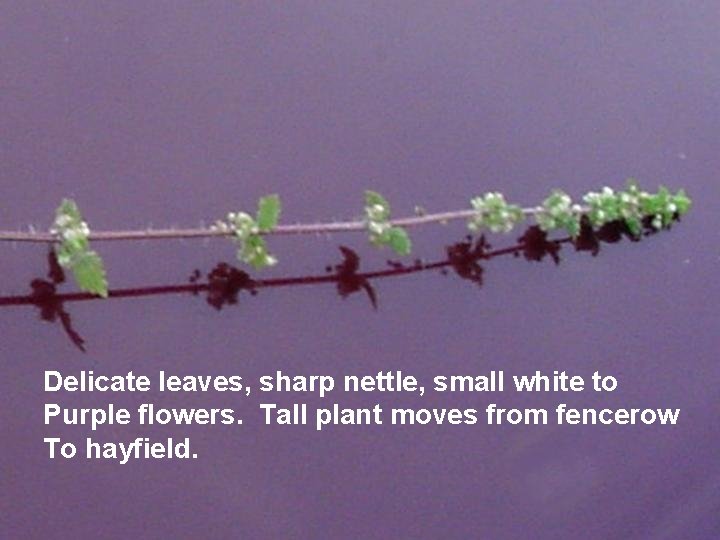
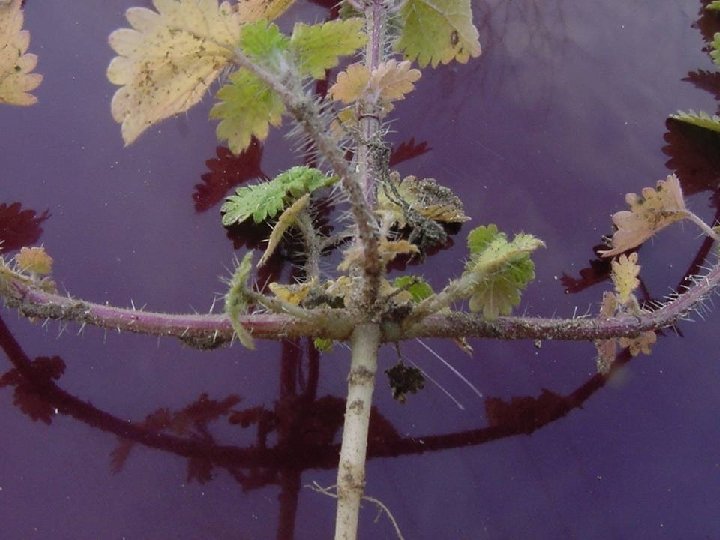
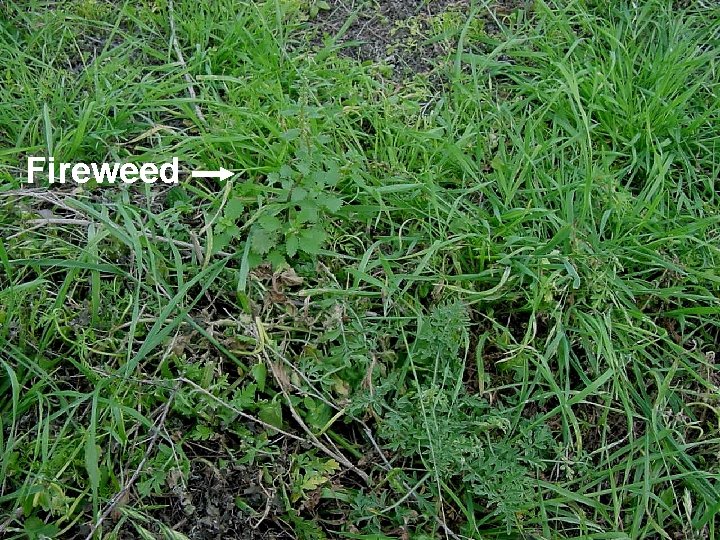
Delicate leaves, sharp nettle, small white to Purple flowers. Tall plant moves from fencerow To hayfield.
Fireweed
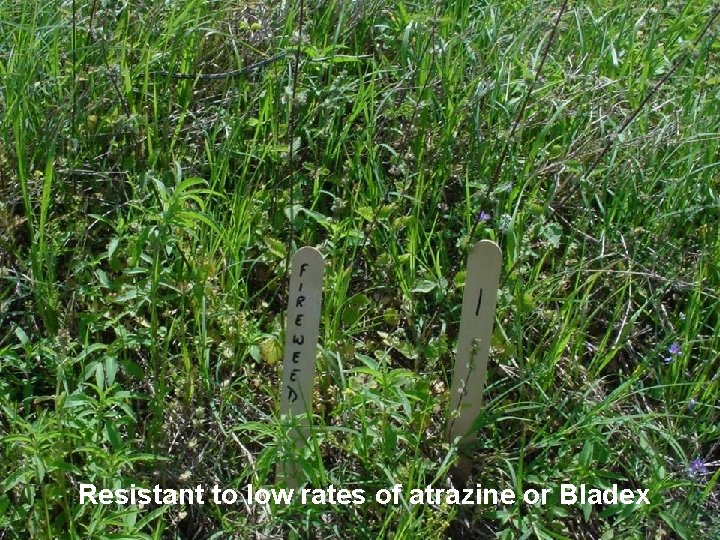
Resistant to low rates of atrazine or Bladex
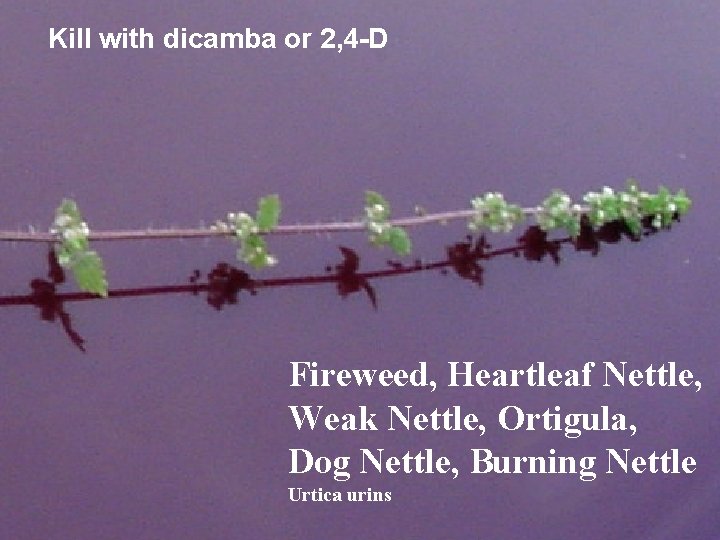
Kill with dicamba or 2, 4 -D Fireweed, Heartleaf Nettle, Weak Nettle, Ortigula, Dog Nettle, Burning Nettle Urtica urins
Quiz Time; Gotcha!
If you’ve come to drink at the fountain of knowledge, this is good for 1 CEU IPM
Good students have their markers ready!
1 What grass has invaded this hayfield?
2 What is this invader grass?
3 What is this tall prolific grass-like pasture weed?
What is this coastal invader grass? 4
What is this invader grass? 5
6 Hayproducer’s Nightmare?
7
8
What is this broadleaf perennial weed? 9
10
11
12 Prickly leaves that are wooly white beneath
13
14
15
16
17
18
18
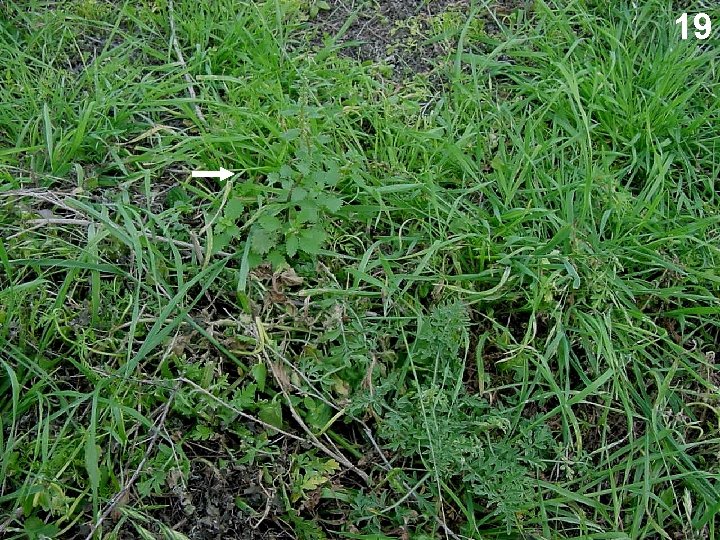
19
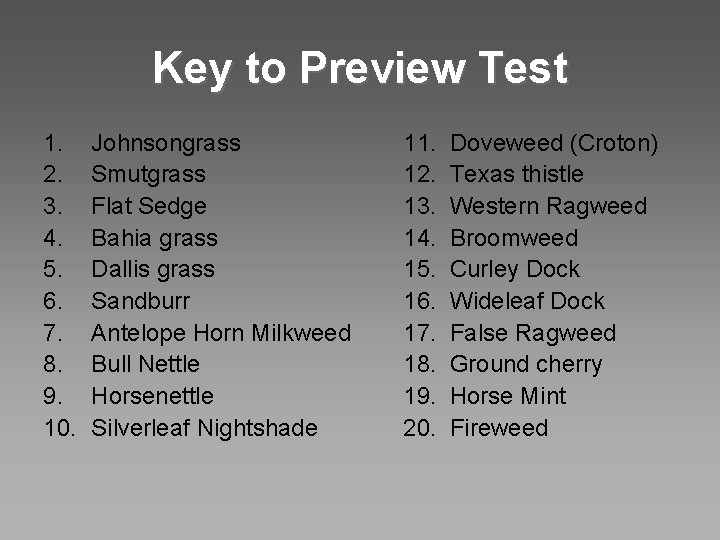
Key to Preview Test 1. 2. 3. 4. 5. 6. 7. 8. 9. 10. Johnsongrass Smutgrass Flat Sedge Bahia grass Dallis grass Sandburr Antelope Horn Milkweed Bull Nettle Horsenettle Silverleaf Nightshade 11. 12. 13. 14. 15. 16. 17. 18. 19. 20. Doveweed (Croton) Texas thistle Western Ragweed Broomweed Curley Dock Wideleaf Dock False Ragweed Ground cherry Horse Mint Fireweed
The End