Lecture 32 Galaxies We see that scattered through

- Slides: 32
Lecture 32: Galaxies We see that scattered through space out to infinite distances, there exist similar systems of stars, and that all of creation, in the whole extent of its infinite grandeur, is everywhere organized into systems whose members are in relation with one another… -- Immanuel Kant, 1755
Topics: n Different types of galaxies n Finding the distances to far away galaxies n Hubble’s Law and the expansion of the Universe
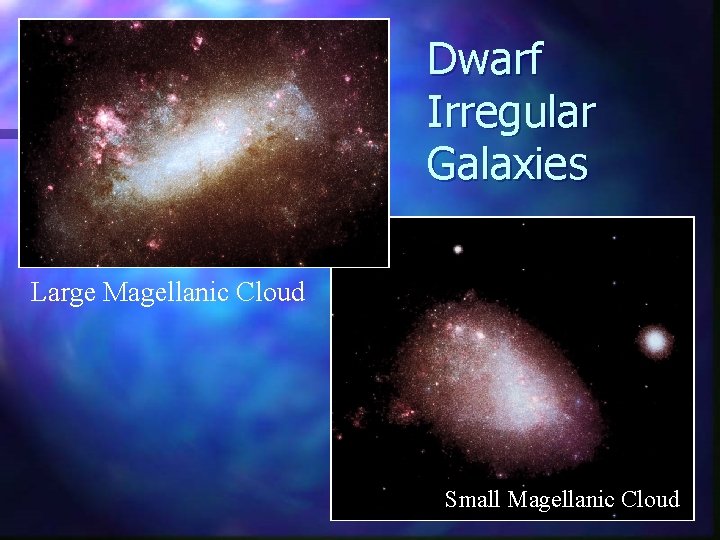
Dwarf Irregular Galaxies Large Magellanic Cloud Small Magellanic Cloud
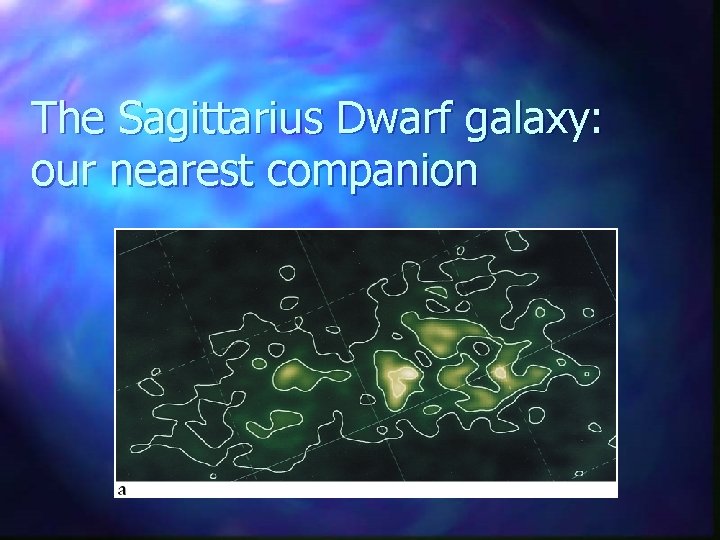
The Sagittarius Dwarf galaxy: our nearest companion
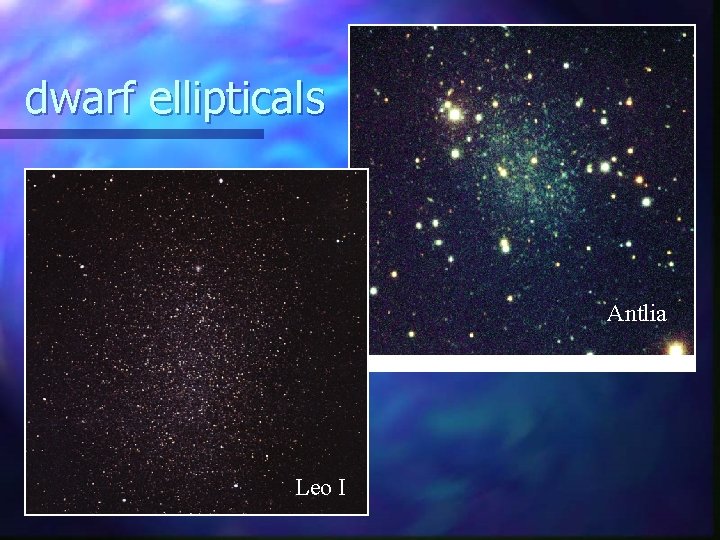
dwarf ellipticals Antlia Leo I
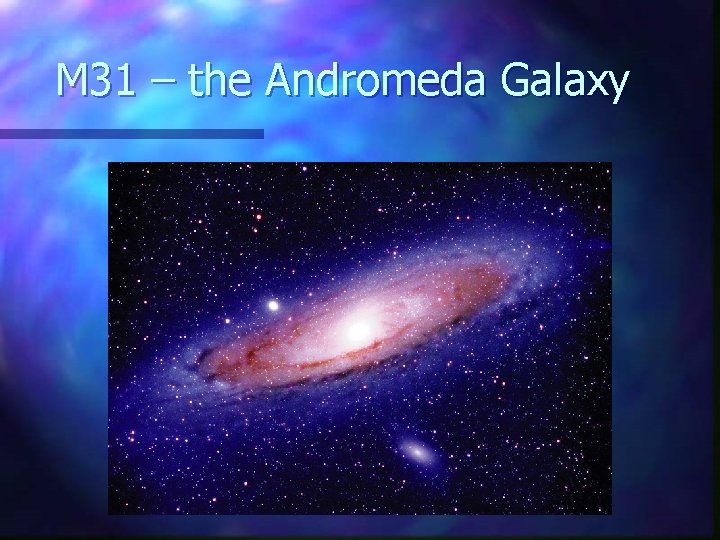
M 31 – the Andromeda Galaxy
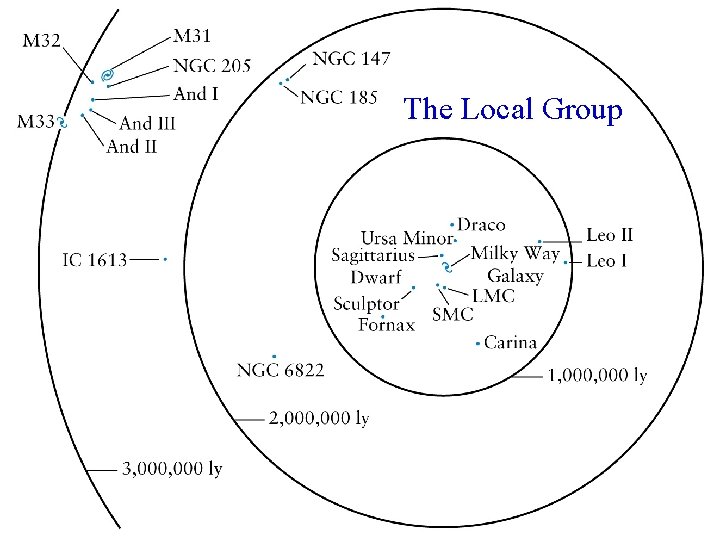
The Local Group
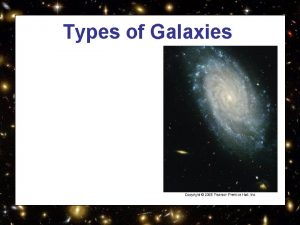
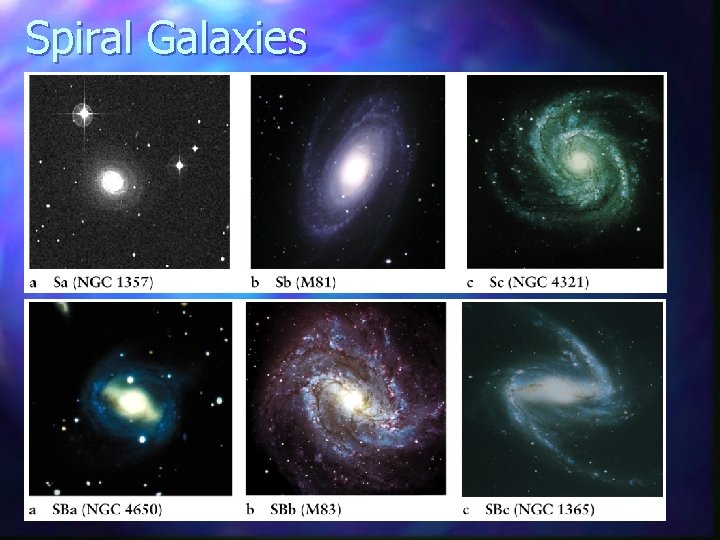
Spiral Galaxies
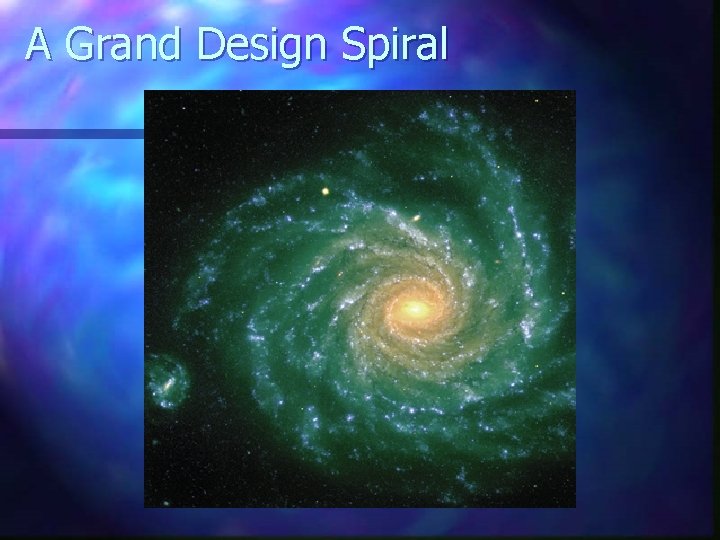
A Grand Design Spiral
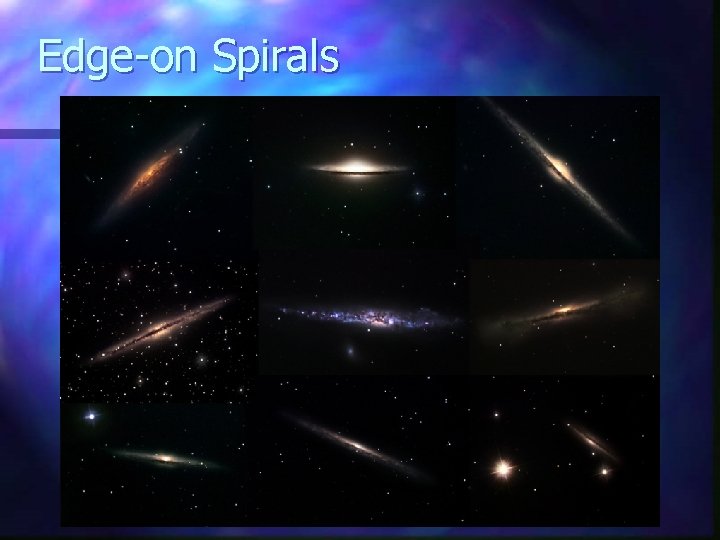
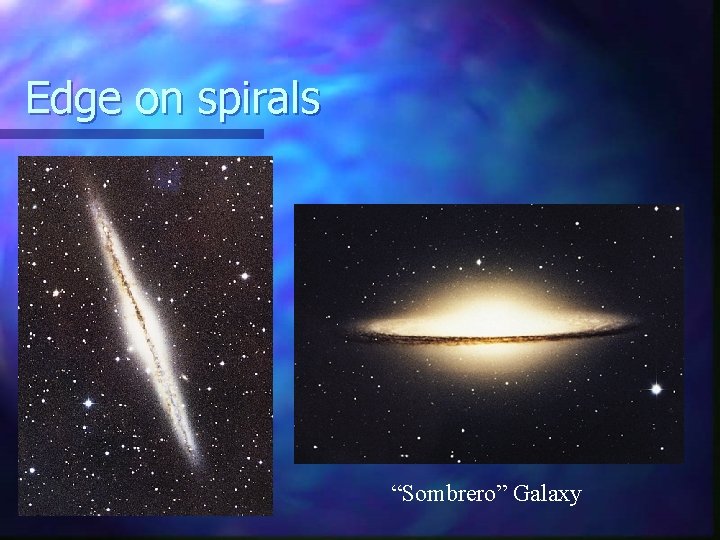
Edge-on Spirals
Edge on spirals “Sombrero” Galaxy
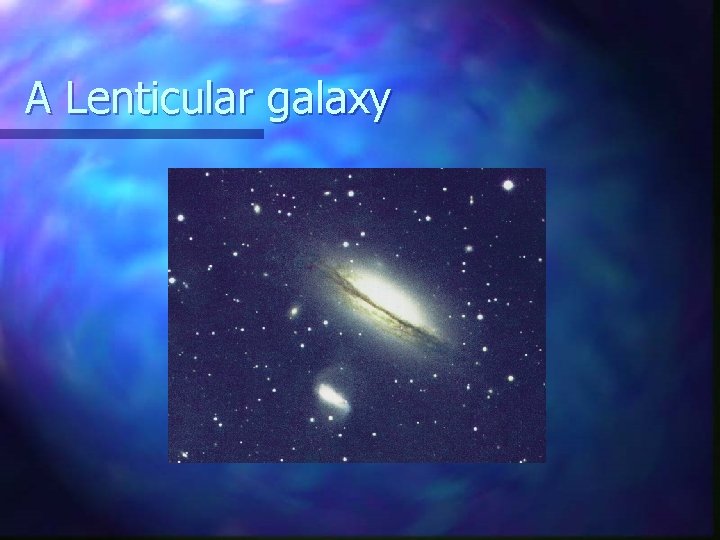
A Lenticular galaxy
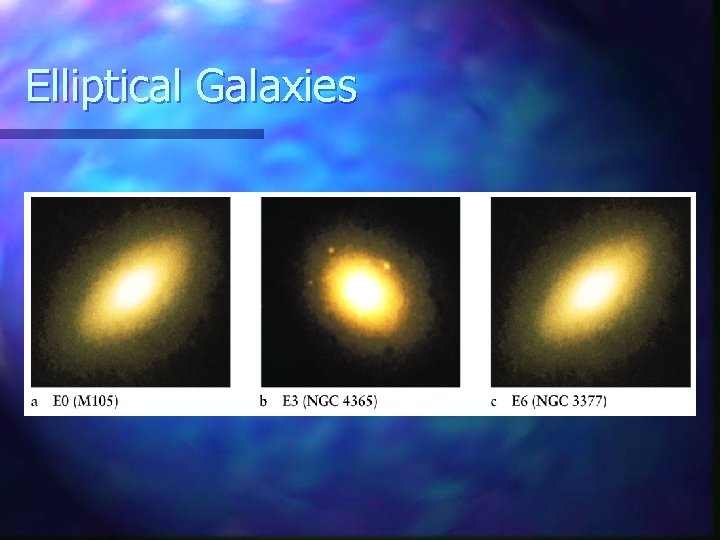
Elliptical Galaxies
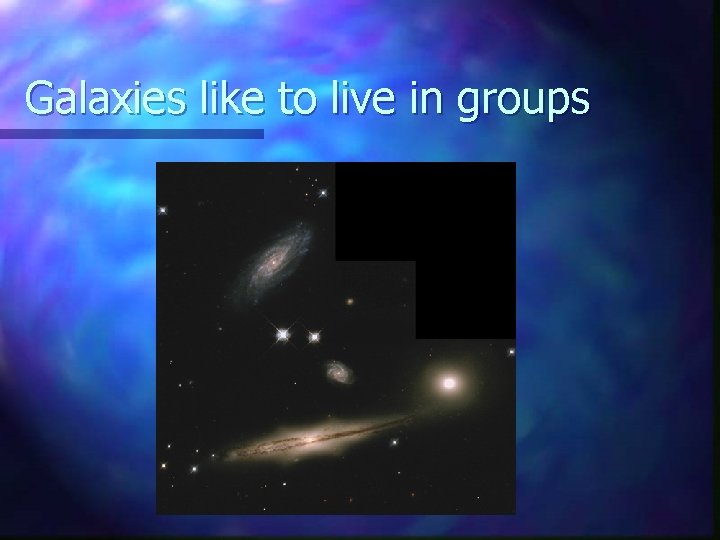
Galaxies like to live in groups
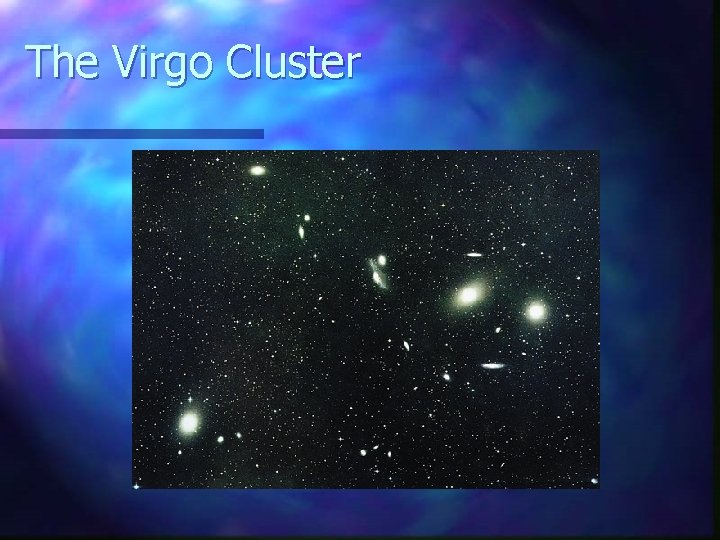
The Virgo Cluster
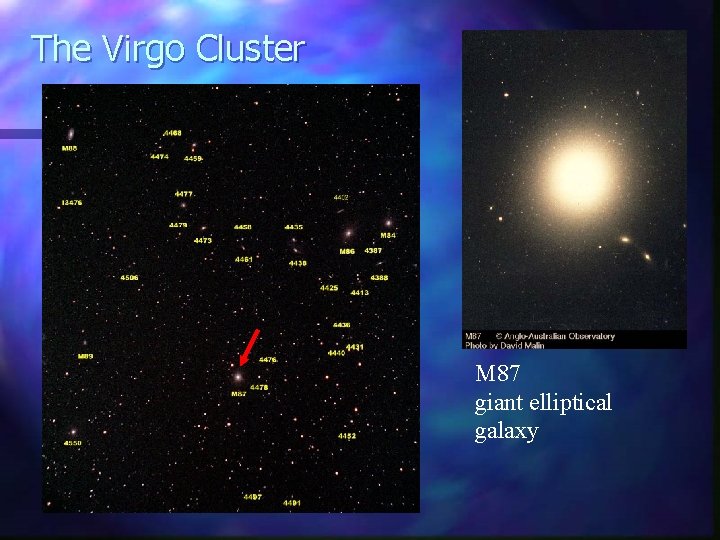
The Virgo Cluster M 87 giant elliptical galaxy
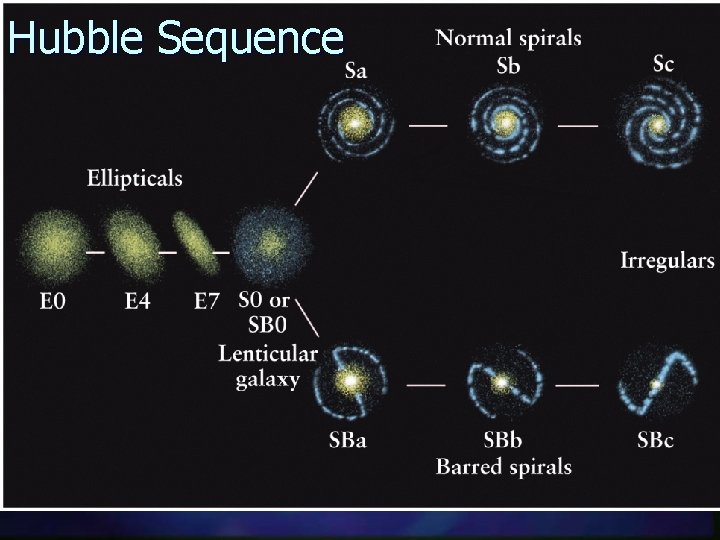
Hubble Sequence
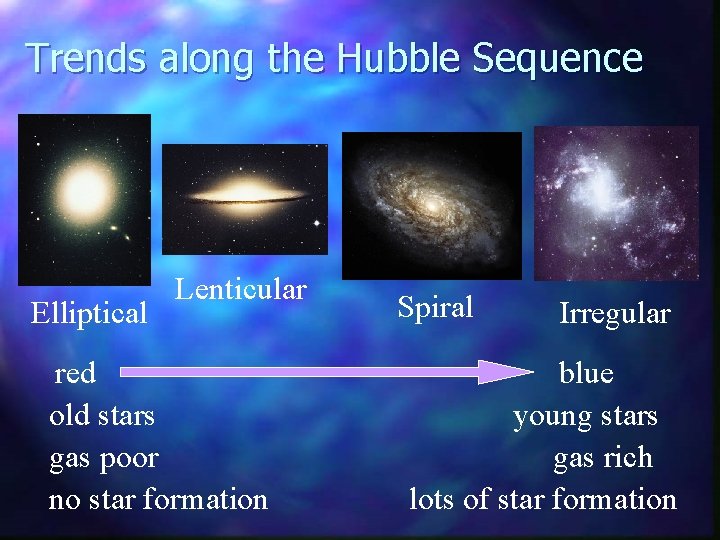
Trends along the Hubble Sequence Elliptical Lenticular red old stars gas poor no star formation Spiral Irregular blue young stars gas rich lots of star formation
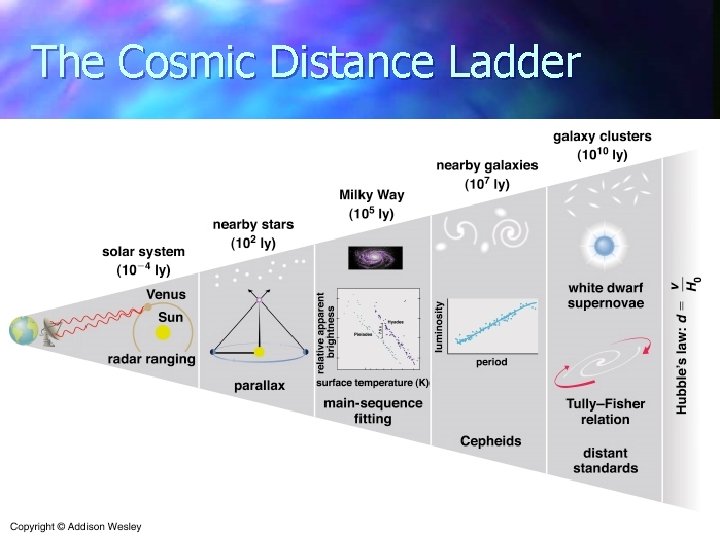
Measuring distances to far away galaxies n many techniques for measuring distances in astronomy rely on finding standard candles n these are objects that always have the same luminosity n if we know the luminosity, we can measure the flux and find the distance
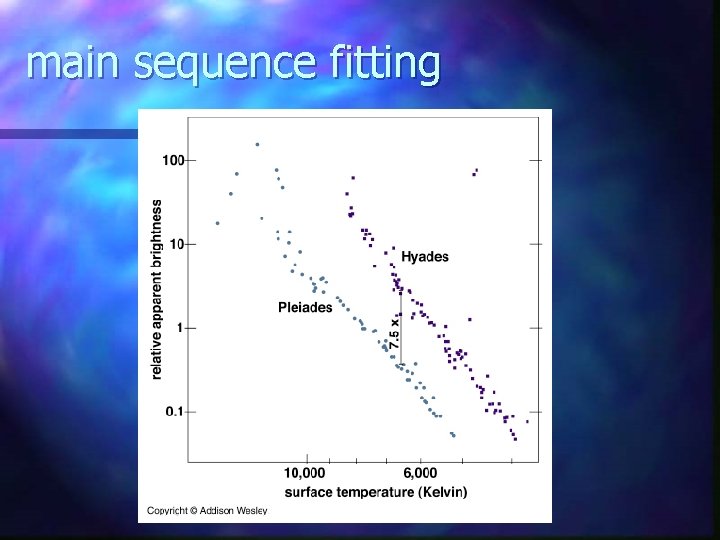
Example: main sequence fitting n an example of a standard candle is a star of a particular spectral type – for example, a G-type star like the Sun n we plot the main sequence for a nearby cluster of stars, for which we can find the distance by parallax n then we assume that all main sequence stars of the same spectral type have the same luminosity.
main sequence fitting
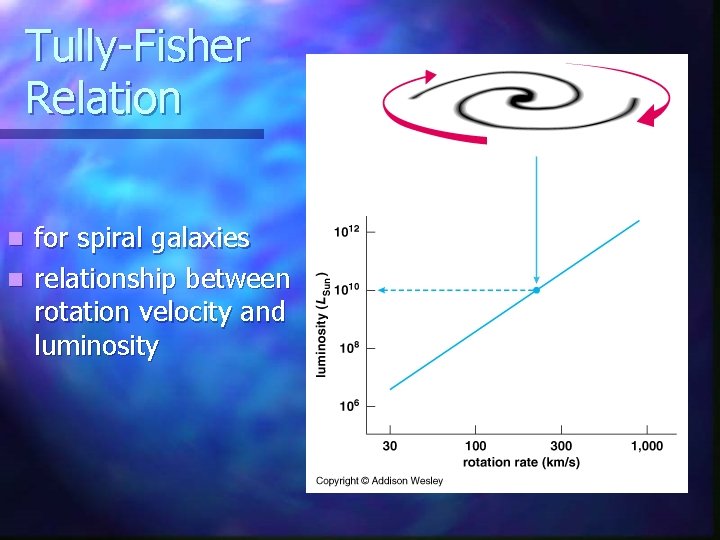
other ways to measure distances n Cepheid variable stars (periodluminosity relation) n white-dwarf supernovae used as standard candles n Tully-Fisher relation
Tully-Fisher Relation for spiral galaxies n relationship between rotation velocity and luminosity n
The Cosmic Distance Ladder
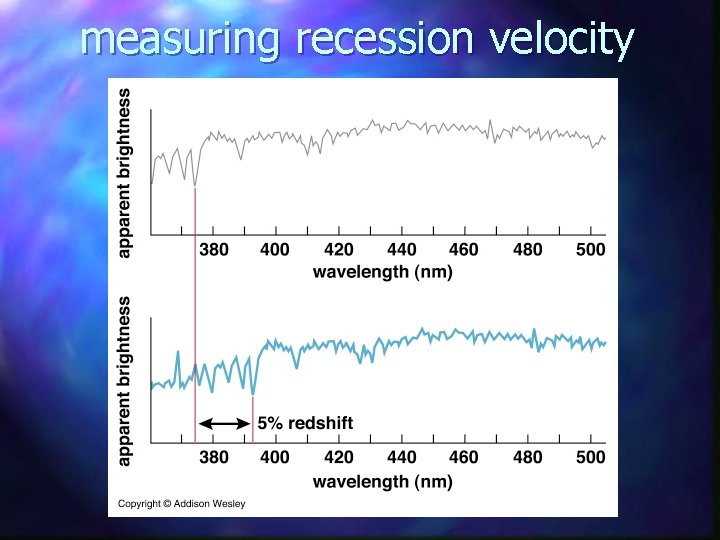
measuring recession velocity
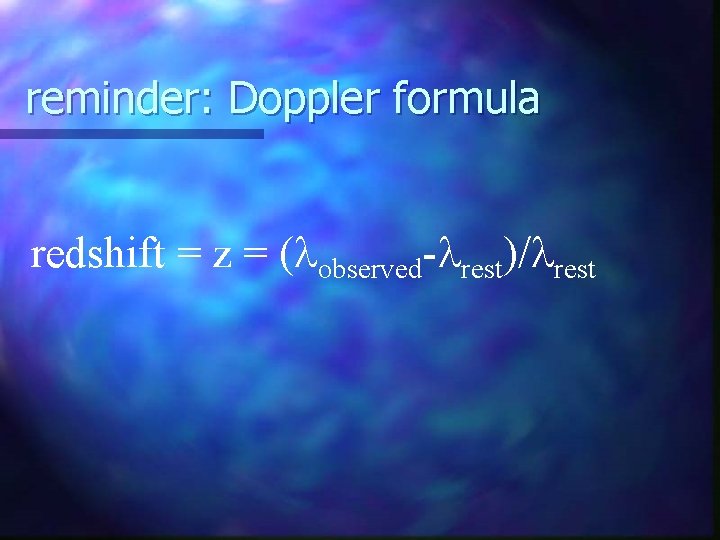
reminder: Doppler formula redshift = z = (lobserved-lrest)/lrest
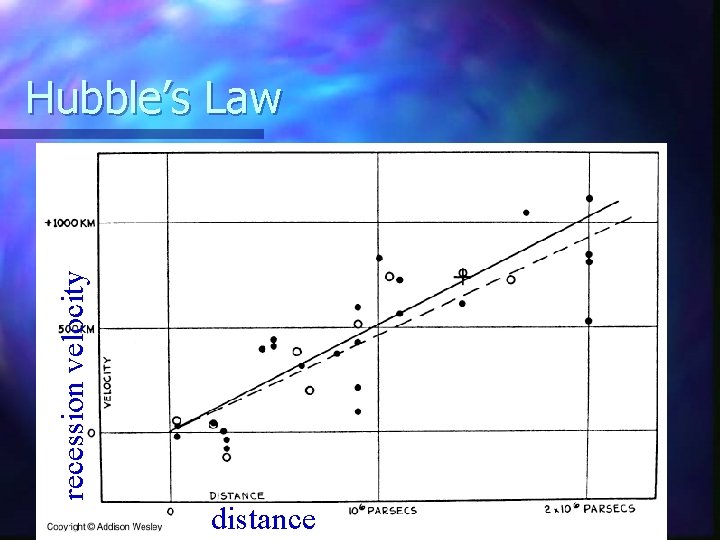
recession velocity Hubble’s Law distance
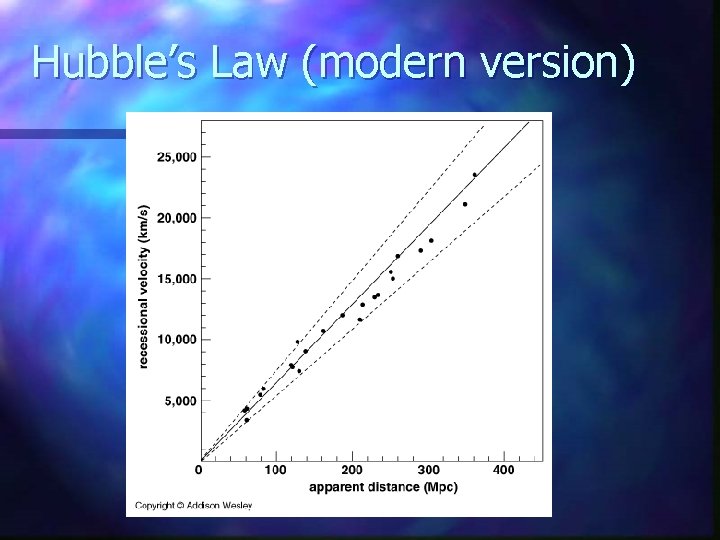
Hubble’s Law (modern version)
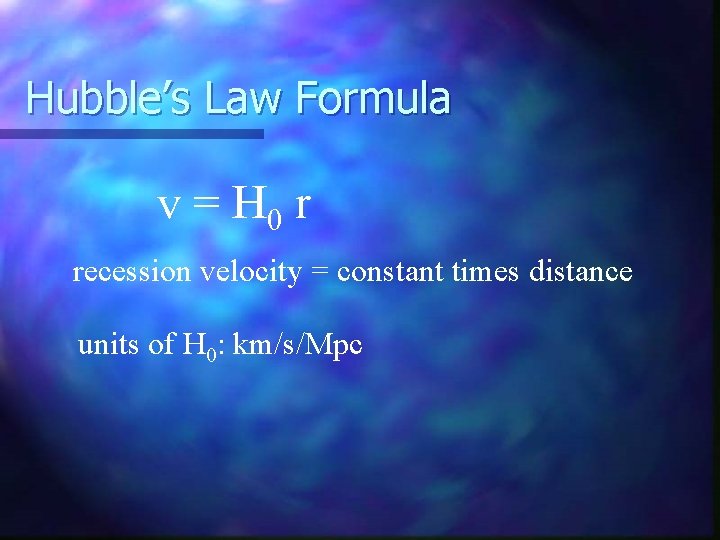
Hubble’s Law Formula v = H 0 r recession velocity = constant times distance units of H 0: km/s/Mpc
The expanding Universe n Hubble’s Law implies that all galaxies are moving away from us n the farther away they are the faster they are moving away from us n this makes sense if the whole fabric of space-time is expanding
Please finish reading Ch. 19 over break!