2017 Guidelines of the American Thyroid Association for

- Slides: 108
2017 Guidelines of the American Thyroid Association for the Diagnosis and Management of Thyroid Disease during Pregnancy and the Postpartum
I. Introduction Pregnancy has a profound impact on the thyroid gland its function. During pregnancy, the thyroid gland increases in size by 10% in iodine replete countries, but by 20% to 40% in areas of iodine deficiency. Production of the thyroid hormones, thyroxine (T 4) and triiodothyronine (T 3), increases by nearly 50%, in conjunction with a separate 50% increase in the daily iodine requirement. These physiological changes happen seamlessly in healthy women, but thyroid
III. Thyroid Function Testing and Pregnancy QUESTION 1 -HOW DO THYROID FUNCTION TESTS CHANGE DURING PREGNANCY?
Normal pregnancy is associated with an increase in renal iodine excretion, an increase in thyroxine binding proteins, an increase in thyroid hormone production, and thyroid stimulatory effects of h. CG. All of these factors influence
Following conception, circulating thyroxine binding globulin (TBG) and total T 4 (TT 4) concentrations increase by week 7 of gestation, and reach a peak by approximately week 16 of gestation. These
QUESTION 2 - WHAT IS THE NORMAL REFERENCE RANGE FOR SERUM TSH CONCENTRATIONS IN EACH TRIMESTER OF PREGNANCY?
There is a downward shift of the TSH reference range during pregnancy, with a reduction in both the lower (decreased by about 0. 1 -0. 2 m. U/L) and the upper limit of maternal TSH (decreased by about 0. 5 -1. 0 m. U/L), relative to the typical non-pregnant
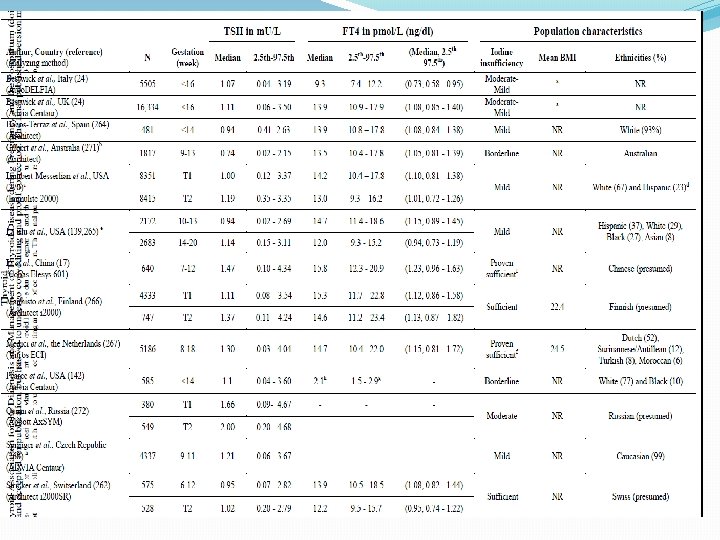
The largest decrease in serum TSH is observed during the first trimester, due to elevated levels of serum h. CG directly stimulating the TSH receptor and thereby increasing thyroid hormone production (Table 4). There after, serum TSH and its reference range gradually rise in the 2 nd and 3 rd trimesters, but
Since h. CG concentrations are higher in multiple pregnancies than in singleton pregnancies, the downward shift in the
Although the downward shift in TSH reference ranges is seen in essentially all populations, the extent of this reduction varies significantly between different racial and ethnic groups. Initial studies of pregnant women in the United States (U. S. ) and Europe first led to recommendations for a TSH upper reference limit of 2. 5 m. U/L
However, more recent studies in pregnant women in Asia, India, and the Netherlands, have demonstrated only a modest reduction in the upper reference limit.
The task force recognizes the limited availability of trimesterspecific reference ranges calculated for most ethnic and racial populations with adequate iodine intake who are free of thyroid autoantibodies. Nonetheless, to provide guidance to all patients and clinicians, the panel recommends use of the following trimesterspecific ranges and cutoffs when local assessments are not available. In the first trimester, the lower reference range of TSH can be reduced by approximately 0. 4 m. U/L, while the upper reference range is reduced by approximately 0. 5 m. U/L. For the typical patient in early pregnancy, this corresponds to a TSH upper reference limit of 4. 0 m. U/L. This reference limit should generally be applied beginning with the late
There is significant geographic and ethnic diversity in TSH concentrations during pregnancy, as shown in Table 4.
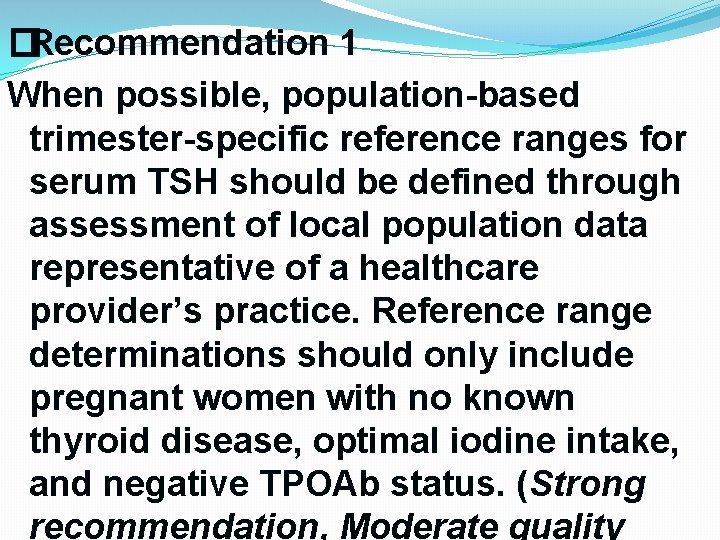
�Recommendation 1 When possible, population-based trimester-specific reference ranges for serum TSH should be defined through assessment of local population data representative of a healthcare provider’s practice. Reference range determinations should only include pregnant women with no known thyroid disease, optimal iodine intake, and negative TPOAb status. (Strong recommendation, Moderate quality
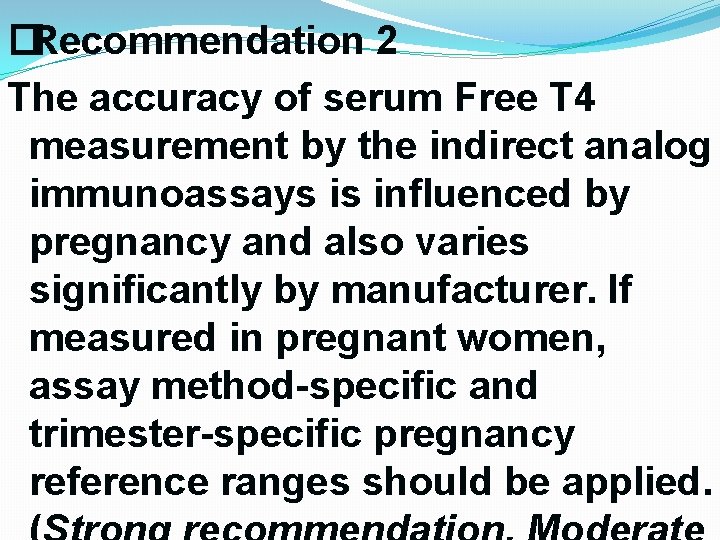
�Recommendation 2 The accuracy of serum Free T 4 measurement by the indirect analog immunoassays is influenced by pregnancy and also varies significantly by manufacturer. If measured in pregnant women, assay method-specific and trimester-specific pregnancy reference ranges should be applied.
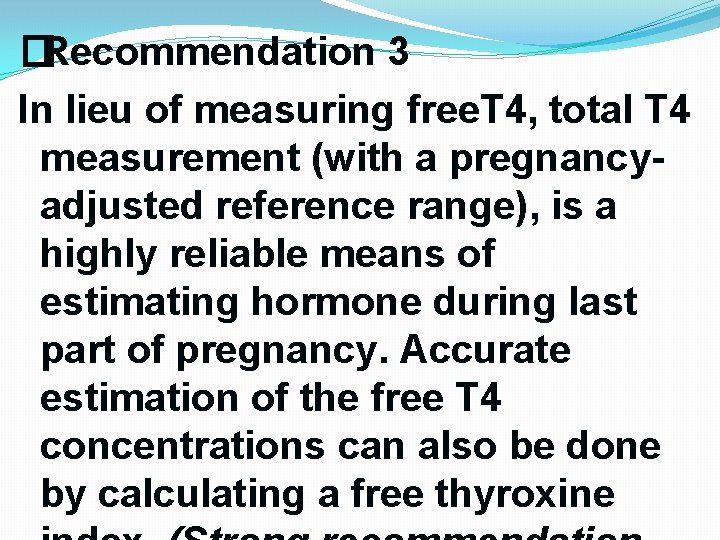
�Recommendation 3 In lieu of measuring free. T 4, total T 4 measurement (with a pregnancyadjusted reference range), is a highly reliable means of estimating hormone during last part of pregnancy. Accurate estimation of the free T 4 concentrations can also be done by calculating a free thyroxine
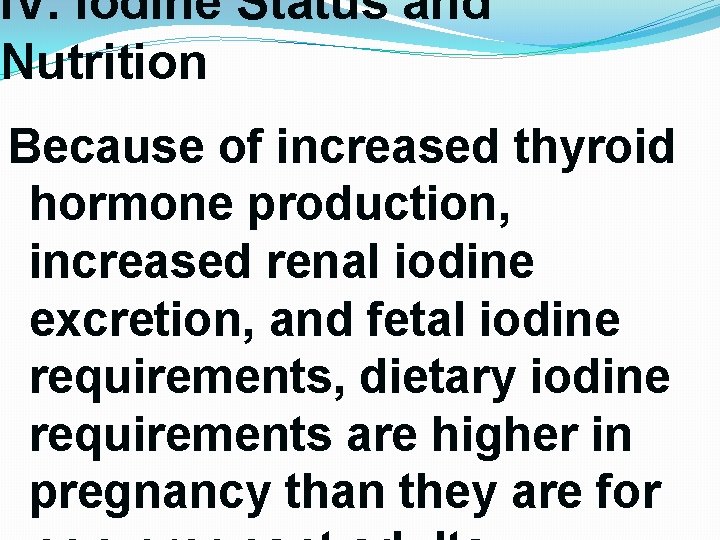
IV. Iodine Status and Nutrition Because of increased thyroid hormone production, increased renal iodine excretion, and fetal iodine requirements, dietary iodine requirements are higher in pregnancy than they are for
�Recommendation 4 Median urinary iodine concentrations can be used to assess the iodine status of populations, but single spot or 24 hour urine iodine concentrations are not a valid marker for the iodine nutritional status of individual patients. (Strong recommendation, High quality
QUESTION 4 - WHAT IS THE IMPACT OF SEVERE IODINE DEFICIENCY ON THE MOTHER, FETUS, AND CHILD? Maternal dietary iodine deficiency results in impaired maternal and fetal thyroid hormone synthesis. Low thyroid hormone values stimulate increased pituitary TSH production, and the increased TSH stimulates thyroid growth, resulting in maternal and fetal goiter. Severe iodine deficiency in pregnant women has been associated with
THE RECOMMENDED DAILY IODINE INTAKE IN WOMEN PLANNING PREGNANCY, WOMEN WHO ARE PREGNANT, AND WOMEN WHO ARE BREASTFEEDING?
Iodine is an essential nutrient required for thyroid hormone production and is primarily derived from the diet and from vitamin/mineral preparations. The U. S. Institute of Medicine recommended dietary allowances to be used as goals for individual total daily iodine intake (dietary and supplement), are 150 μg/d for women planning a pregnancy, 220 μg/d for pregnant women, and 290 μg/d for women who are breastfeeding. The WHO recommends 250 μg/d for pregnant and
Recommendation 5 All pregnant women should ingest approximately 250 μg iodine daily. To achieve a total of 250 μg iodine ingestion daily, strategies may need to be varied based on country of origin. (Strong recommendation, Highquality evidence)
Recommendation 6 In most regions, including the United States, women who are planning pregnancy or currently pregnant, should supplement their diet with a daily oral supplement that contains 150 μg of iodine in the form of potassium iodide. This is optimally started 3 months in advance of planned pregnancy. (Strong
Recommendation 7 In low-resource countries and regions where neither salt iodization nor daily iodine supplements are feasible, a single annual dose of ~400 mg iodized oil for pregnant women and women of childbearing age can be used as a temporary measure to protect vulnerable populations. This should not be employed as a long-term strategy or in regions where other options are available. (Weak Recommendation,
Recommendation 8 There is no need to initiate iodine supplementation in pregnant women who are being treated for hyperthyroidism or who are taking LT 4. (Weak recommendation, Low quality evidence)
QUESTION 11 - WHAT IS THE SAFE UPPER LIMIT FOR IODINE CONSUMPTION IN PREGNANT AND BREASTFEEDING WOMEN? Most people are tolerant of chronic excess dietary iodine intake due to a homeostatic mechanism known as the Wolff–Chaikoff effect. In response to a large iodine load, there is a transient inhibition of thyroid hormone synthesis. Following several days of continued exposure to high iodine levels, escape from the acute Wolff– Chaikoff effect is mediated by a decrease in the active transport of iodine into the
Some individuals do not appropriately escape from the acute Wolff–Chaikoff effect, making them susceptible to hypothyroidism in the setting of high iodine intake. The fetus may be particularly susceptible, since the ability to escape from the acute Wolff–Chaikoff effect does not fully mature until about week
Recommendation 9 Excessive doses of iodine exposure during pregnancy should be avoided, except in preparation for the surgical treatment of Graves' disease. Clinicians should carefully weigh the risks and benefits when ordering medications or diagnostic tests that will result in high iodine exposure. (Strong
Recommendation 10 Sustained iodine intake from diet and dietary supplements exceeding 500 μg daily should be avoided during pregnancy due to concerns about the potential for fetal thyroid dysfunction. (Strong recommendation,
V. Thyroid Auto-Antibodies & Pregnancy Complications QUESTION 12 - WHAT IS THE PREVALENCE OF THYROID AUTOANTIBODIES IN PREGNANT WOMEN? Anti-thyroperoxidase or antithyroglobulin thyroid autoantibodies are present in 2 to 17% of unselected pregnant women. The prevalence of antibodies varies with ethnicity.
TPO antibodies are able to cross the placenta. At the time of delivery, cord blood TPOAb levels strongly correlate with third-trimester maternal TPOAb concentrations. However, maternal passage of either TPOAb or Tg. Ab is not associated with fetal thyroid
Recommendation 11 Euthyroid, but TPO or Tg antibody positive pregnant women should have measurement of serum TSH concentration performed at time of pregnancy confirmation, and every 4 weeks through midpregnancy. (Strong
QUESTION 15 - SHOULD EUTHYROID WOMEN WITH THYROID AUTOIMMUNITY BE TREATED WITH SELENIUM? Recommendation 12 Selenium supplementation is not recommended for the treatment of TPOAb positive women during pregnancy. (Weak recommendation, Moderate quality evidence)
QUESTION 16 - IS THERE AN ASSOCIATION BETWEEN THYROID ANTIBODIES AND SPORADIC SPONTANEOUS PREGNANCY LOSS IN EUTHYROID WOMEN? Spontaneous pregnancy loss (miscarriage), occurs in 17 -31% of all gestations. A spontaneous pregnancy loss is usually defined as one occurring at less than 20 weeks of gestation. The individual risk varies according to clinical factors including maternal age, family history, environmental
Endocrine disorders have been previously recognized as risk factors for spontaneous pregnancy loss. Patients with poorly controlled diabetes mellitus may have up to a 50 % risk of loss. Thyroid dysfunction has similarly been associated with increased
QUESTION 17 - IS THERE AN ASSOCIATION BETWEEN THYROID ANTIBODIES AND RECURRENT SPONTANEOUS PREGNANCY LOSS IN EUTHYROID WOMEN? Recurrent pregnancy loss is defined as either two consecutive spontaneous losses, or three or more spontaneous losses and may occur in up to 1% of all women. Several causes have been reported, including parental chromosomal anomalies, immunologic derangements, uterine pathology,
QUESTION 18 - DOES TREATMENT WITH LT 4 OR IVIG DECREASE THE RISK FOR PREGNANCY LOSS IN EUTHYROID WOMEN WITH THYROID AUTOIMMUNITY? Recommendation 13 Intravenous immunoglobulin treatment of euthyroid women with a history of recurrent pregnancy loss is not recommended. (Weak recommendation, Low quality evidence)
Recommendation 14 There is insufficient evidence to conclusively determine whether levothyroxine therapy decreases pregnancy loss risk in TPOAb positive, euthyroid women who are newly pregnant. However, administration of levothyroxine to TPOAb positive, euthyroid pregnant women with a prior history of loss may be considered given its potential benefits in comparison to its minimal risk. In such cases, 25 -50 mcg of levothyroxine is a
QUESTION 20 - DOES TREATMENT OF EUTHYROID, THYROID AUTOANTIBODY POSITIVE WOMEN WITH LEVOTHYROXINE REDUCE RISK FOR PREMATURE DELIVERY?
Recommendation 15 There is insufficient evidence to recommend for or against treating euthyroid, thyroid autoantibody positive pregnant women with levothyroxine to prevent preterm delivery. (No
VI. The Impact of Thyroid illness upon Infertility and Assisted Reproduction Infertility is defined as the failure to achieve a clinical pregnancy after 12 or more months of regular unprotected sexual intercourse. Infertility affects 7. 4% of U. S. women aged 15 - 44 years. Infertility is due to female factors in about 35% of cases, due to male factors in 30% of cases, and due to both female and male factors in 20% of cases. In
QUESTION 22 - IS OVERT THYROID DYSFUNCTION ASSOCIATED WITH INFERTILITY IN WOMEN? QUESTION 23 - IS SUBCLINICAL HYPOTHYROIDISM ASSOCIATED WITH INFERTILITY IN WOMEN? QUESTION 24 - IS THYROID AUTOIMMUNITY LINKED TO
Recommendation 16 Evaluation of serum TSH concentration is recommended for all women seeking care for infertility. (Weak recommendation, Moderate quality evidence) Recommendation 17 Levothyroxine treatment is recommended for infertile women with overt hypothyroidism who desire pregnancy. (Strong recommendation,
Recommendation 18 There is insufficient evidence to determine if levothyroxine therapy improves fertility in subclinically hypothyroid, thyroid autoantibody negative women who are attempting natural conception (not undergoing ART). However, administration of levothyroxine may be considered in this setting given its ability to prevent progression to more significant hypothyroidism once pregnancy is achieved. Furthermore, low dose levothyroxine therapy (25 -50 mcg daily) carries minimal risk. (Weak
Recommendation 19 There is insufficient evidence to determine if levothyroxine therapy improves fertility in non pregnant, euthyroid, thyroid autoantibody positive women who are attempting natural conception (not undergoing ART). Therefore, no recommendation can be made for levothyroxine therapy in this
Recommendation 20 Subclinically hypothyroid women undergoing IVF or ICSI should be treated with levothyroxine. The goal of treatment is to achieve a TSH concentration <2. 5 m. U/L. (Strong recommendation, Moderate quality evidence)
Recommendation 21 There is insufficient evidence to determine whether levothyroxine therapy improves the success of pregnancy following ART in TPOAb positive, euthyroid women. However, administration of levothyroxine to TPOAb positive, euthyroid women undergoing ART may be considered given its potential benefits in comparison to its minimal risk. In such cases, 25 - 50 mcg of levothyroxine is a
Recommendation 22 Glucocorticoid therapy is not recommended for euthyroid, thyroid autoantibody positive women undergoing ART. (Weak recommendation, Moderate quality evidence)
QUESTION 30 - DOES OVARIAN HYPERSTIMULATION ALTER THYROID FUNCTION? ovarian hyperstimulation syndrome (OHSS) is a complication of controlled ovarian hyperstimulation in which increased vascular permeability results in fluid shifts from intravascular to third space
�Recommendation 23 When possible, thyroid function testing should be performed either before or 1 -2 weeks after controlled ovarian hyperstimulation, since results obtained during the course of controlled ovarian stimulation may be difficult to interpret. (Weak recommendation,
Recommendation 24 In women who achieve pregnancy following controlled ovarian hyperstimulation, TSH elevations should be treated according to the recommendations outlined in Section VII. In non-pregnant women with mild TSH elevations following controlled ovarian stimulation, serum TSH measurements should be repeated in 2 -4 weeks, since levels may normalize. (Weak recommendation, Moderate quality
VII. Hypothyroidism and Pregnancy Primary overt maternal hypothyroidism is generally defined as the presence of an elevated TSH and a decreased serum FT 4 concentration during gestation, with both concentrations outside the (trimester-specific) reference ranges. In very rare cases, it is important to exclude other causes of abnormal thyroid function such as TSH-secreting pituitary tumors, thyroid hormone resistance, or central hypothyroidism with biologically inactive TSH. Several investigations report that at least 2 -3% of healthy, non-pregnant women of childbearing age have an elevated serum TSH. The prevalence may be higher in areas of iodine insufficiency. When iodine nutrition is adequate, the most frequent cause of hypothyroidism is
In the 2011 ATA guidelines, the upper reference limit for serum TSH concentration during pregnancy was defined as 2. 5 m. U/l in the first trimester, and 3. 0 m. U/l in the second and third trimesters. These cutoffs were predominantly based on the published reference ranges obtained from six pregnancy studies together comprising a total cohort of approximately 5500 subjects. Since that publication, additional much larger cohorts have published center- and trimester specific pregnancy reference ranges. These analyses combine data from
These differences may be partly attributable to differences in the iodine status between populations, as well as the TSH assays used for analysis. However, these data also demonstrate important influences of BMI, geography, and ethnicity upon ‘normalcy’of TSH concentrations in pregnant women. In summary, substantial variation exists between populations, with many recent investigations confirming a more
QUESTION 31 - WHAT IS THE DEFINITION OF HYPOTHYROIDISM IN PREGNANCY? Elevations in serum TSH concentrations during pregnancy should ideally be defined using pregnancy- and populationspecific reference ranges. It is important to note that detection of an increased TSH concentration is not always synonymous with decreased FT 4
Frequently, elevated maternal TSH is detected when FT 4 concentrations are normal. Conversely, low FT 4 concentrations can be detected despite normal TSH concentrations. The latter situation is referred to as isolated hypothyroxinemia.
Excepting the very rare scenarios noted above, serum TSH measurement remains the principal determinant of maternal thyroid status at the present time, and should be used to guide treatment decisions and goals.
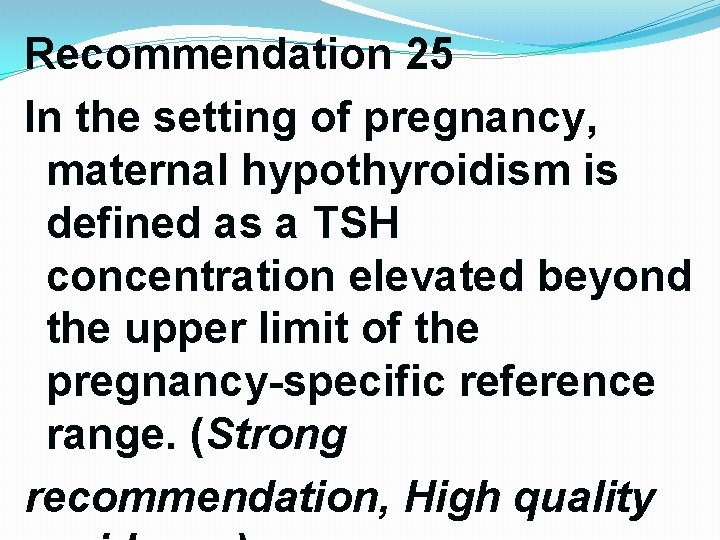
Recommendation 25 In the setting of pregnancy, maternal hypothyroidism is defined as a TSH concentration elevated beyond the upper limit of the pregnancy-specific reference range. (Strong recommendation, High quality
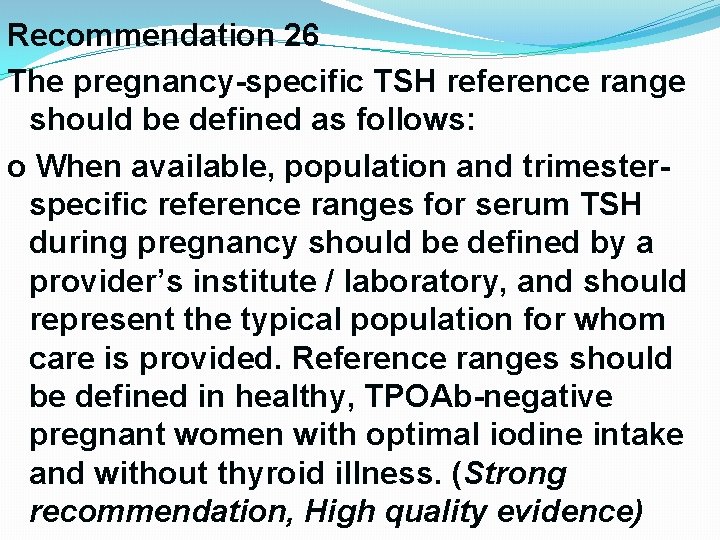
Recommendation 26 The pregnancy-specific TSH reference range should be defined as follows: o When available, population and trimesterspecific reference ranges for serum TSH during pregnancy should be defined by a provider’s institute / laboratory, and should represent the typical population for whom care is provided. Reference ranges should be defined in healthy, TPOAb-negative pregnant women with optimal iodine intake and without thyroid illness. (Strong recommendation, High quality evidence)
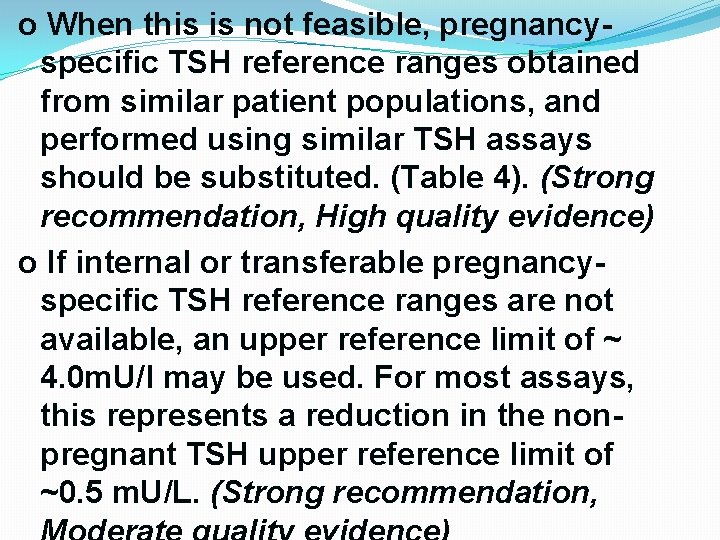
o When this is not feasible, pregnancyspecific TSH reference ranges obtained from similar patient populations, and performed using similar TSH assays should be substituted. (Table 4). (Strong recommendation, High quality evidence) o If internal or transferable pregnancyspecific TSH reference ranges are not available, an upper reference limit of ~ 4. 0 m. U/l may be used. For most assays, this represents a reduction in the nonpregnant TSH upper reference limit of ~0. 5 m. U/L. (Strong recommendation,
Recommendation 27 Treatment of overt hypothyroidism is recommended during pregnancy. (Strong recommendation, Moderate quality evidence)
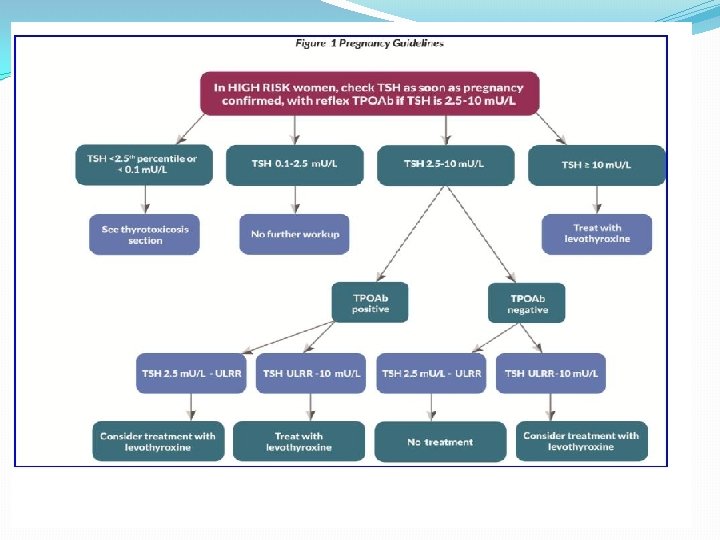
Recommendation 28. Pregnant women with TSH concentrations >2. 5 m. U/L should be evaluated for TPO antibody status.
Recommendation 29 Subclinical hypothyroidism in pregnancy should be approached as follows: a) Levothyroxine therapy is recommended for: - TPO antibody positive women with a TSH greater than the pregnancy specific reference range (see Recommendation 1) (Strong recommendation, Moderate quality evidence) - TPO antibody negative women with a TSH greater than 10. 0 m. U/L.
b) Levothyroxine therapy may be considered for: - TPO antibody positive women with TSH concentrations > 2. 5 m. U/L and below the upper limit of the pregnancy specific reference range. (Weak recommendation, Moderate quality evidence) - women TPO antibody negative women with TSH concentrations greater than the pregnancy specific reference range and below 10. 0 m. U/L. (Weak
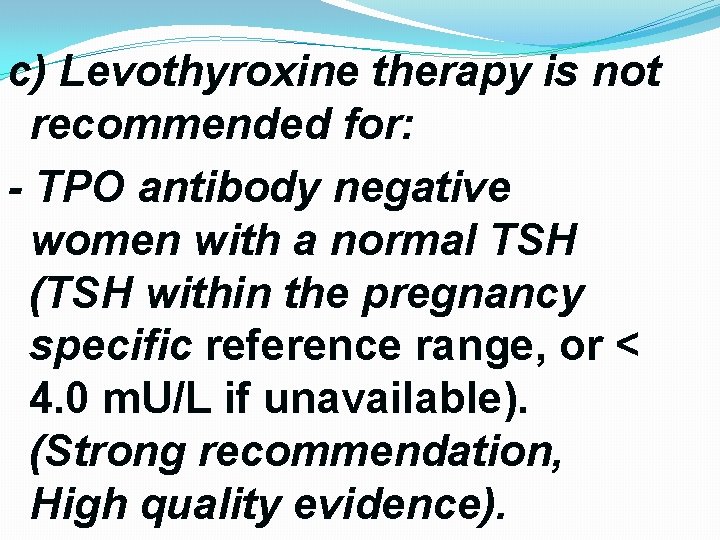
c) Levothyroxine therapy is not recommended for: - TPO antibody negative women with a normal TSH (TSH within the pregnancy specific reference range, or < 4. 0 m. U/L if unavailable). (Strong recommendation, High quality evidence).
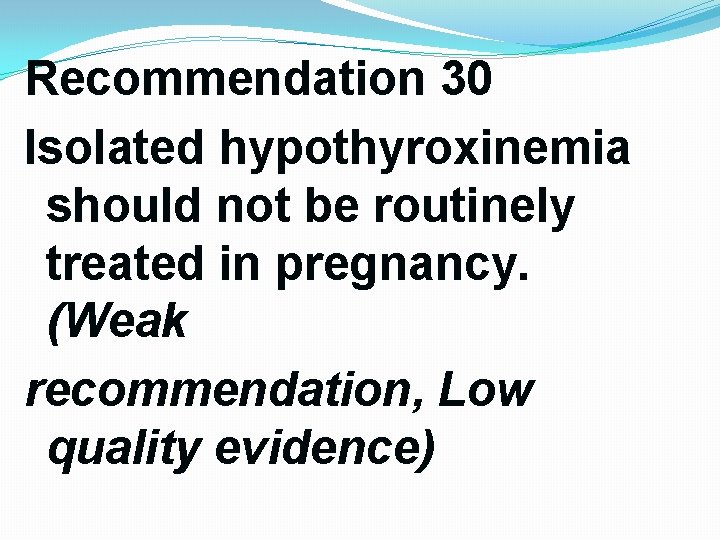
Recommendation 30 Isolated hypothyroxinemia should not be routinely treated in pregnancy. (Weak recommendation, Low quality evidence)
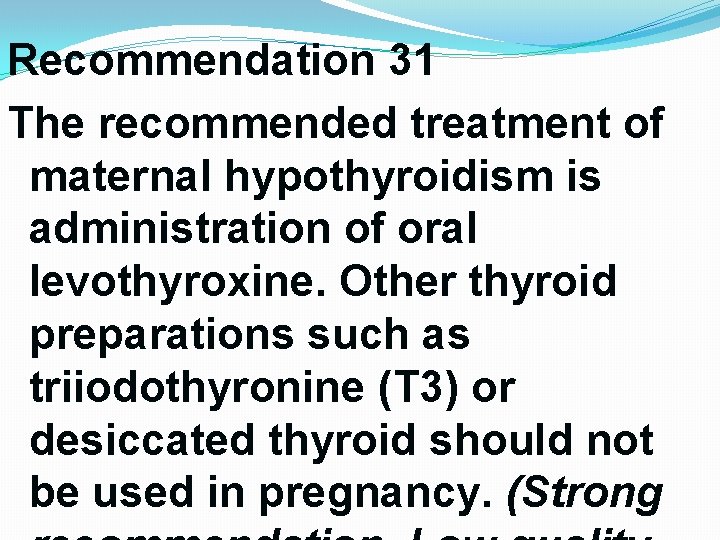
Recommendation 31 The recommended treatment of maternal hypothyroidism is administration of oral levothyroxine. Other thyroid preparations such as triiodothyronine (T 3) or desiccated thyroid should not be used in pregnancy. (Strong
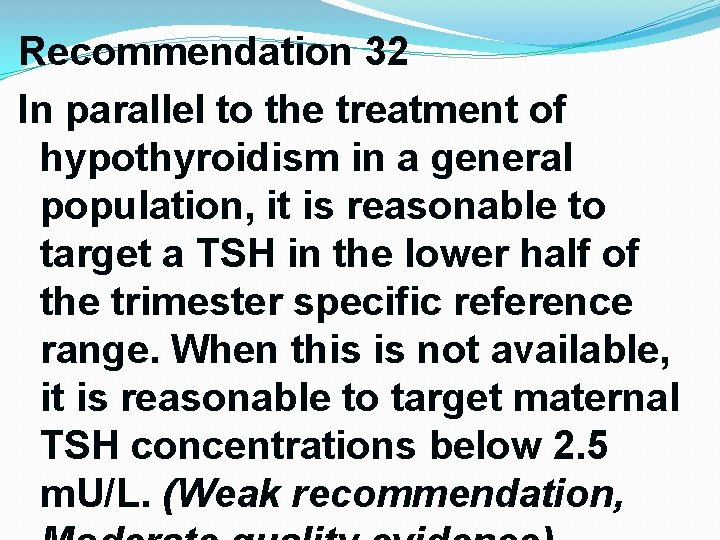
Recommendation 32 In parallel to the treatment of hypothyroidism in a general population, it is reasonable to target a TSH in the lower half of the trimester specific reference range. When this is not available, it is reasonable to target maternal TSH concentrations below 2. 5 m. U/L. (Weak recommendation,
Recommendation 33 Women with overt and subclinical hypothyroidism (treated or untreated), or those at risk for hypothyroidism (e. g. patients who are euthyroid but TPO or TGAb positive, posthemithyroidectomy, or treated with radioactive iodine) should be monitored with a serum TSH measurement approximately every 4 weeks until mid-gestation, and at least once near 30 weeks gestation. (Strong
Recommendation 34 Treated hypothyroid women of reproductive age should be counseled regarding the likelihood of increased demand for levothyroxine during pregnancy. Such women should also be counseled to contact their caregiver immediately upon a confirmed or suspected
Recommendation 35 In hypothyroid women treated with levothyroxine who are planning pregnancy, serum TSH should be evaluated preconception, and levothyroxine dose adjusted to achieve a TSH value between the lower reference limit and 2. 5
Recommendation 36 Hypothyroid patients receiving LT 4 treatment with a suspected or confirmed pregnancy (e. g. positive home pregnancy test) should independently increase their dose of LT 4 by ~20 -30% and urgently notify their caregiver for prompt testing and further evaluation. One means of accomplishing this is to administer 2 additional tablets weekly of the patient’s current daily levothyroxine
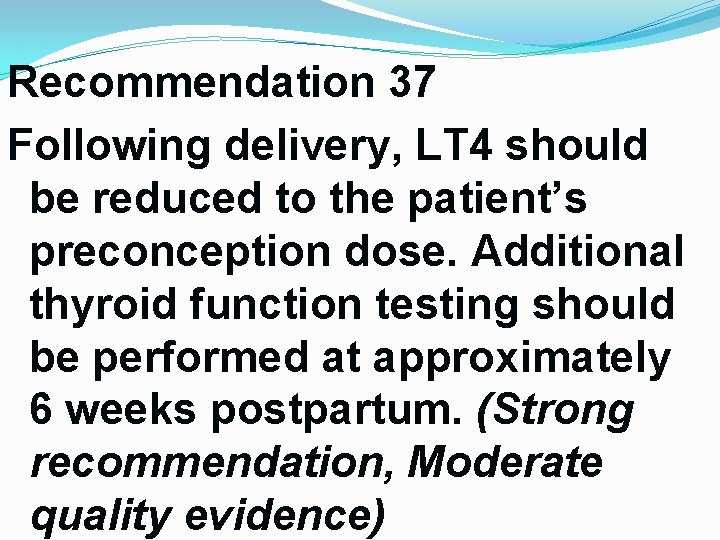
Recommendation 37 Following delivery, LT 4 should be reduced to the patient’s preconception dose. Additional thyroid function testing should be performed at approximately 6 weeks postpartum. (Strong recommendation, Moderate quality evidence)
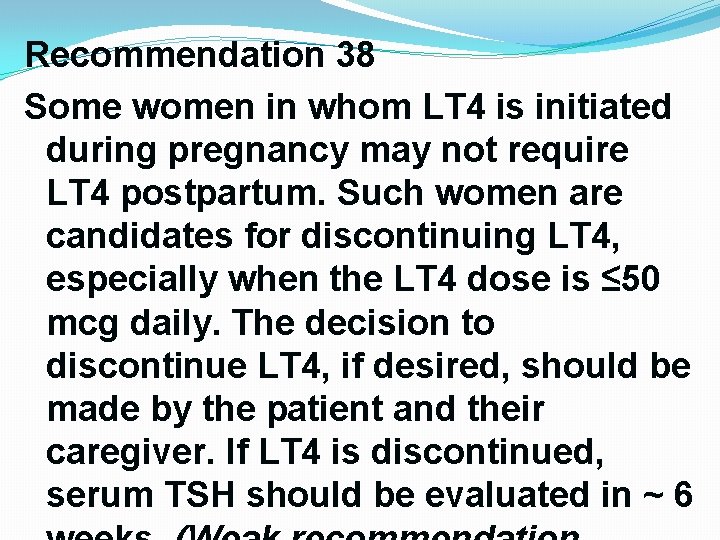
Recommendation 38 Some women in whom LT 4 is initiated during pregnancy may not require LT 4 postpartum. Such women are candidates for discontinuing LT 4, especially when the LT 4 dose is ≤ 50 mcg daily. The decision to discontinue LT 4, if desired, should be made by the patient and their caregiver. If LT 4 is discontinued, serum TSH should be evaluated in ~ 6
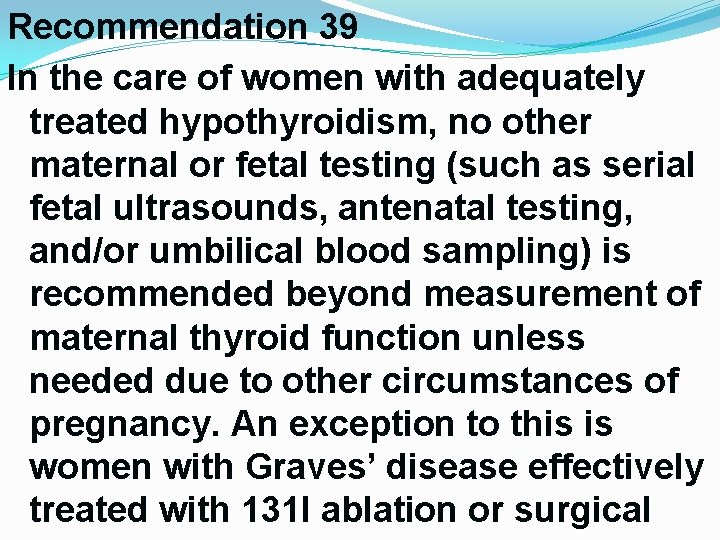
Recommendation 39 In the care of women with adequately treated hypothyroidism, no other maternal or fetal testing (such as serial fetal ultrasounds, antenatal testing, and/or umbilical blood sampling) is recommended beyond measurement of maternal thyroid function unless needed due to other circumstances of pregnancy. An exception to this is women with Graves’ disease effectively treated with 131 I ablation or surgical
VIII. Thyrotoxicosis in Pregnancy Thyrotoxicosis is the clinical syndrome of hypermetabolism and hyperactivity that results when a person is exposed to supraphysiological amounts of thyroid hormones. The most common cause of thyrotoxicosis is hyperfunction of the thyroid gland (hyperthyroidism), and the most common cause of hyperthyroidism in women of childbearing age is autoimmune Graves’ disease (GD) occurring before pregnancy in 0. 4 -1. 0 % of women and in approximately 0. 2 % during pregnancy.
More frequent than GD as the cause of thyroid function tests demonstrating hyperthyroxinemia is ‘gestational transient thyrotoxicosis’, which is limited to the first half of pregnancy. This condition, characterized by elevated FT 4 and suppressed serum TSH, is diagnosed in about 1 -3% of
This frequency depends on the geographic area and is secondary to elevated h. CG levels. Often it is associated with hyperemesis gravidarum, defined as severe nausea and vomiting in early pregnancy with more than 5% weight loss, dehydration, and ketonuria. Hyperemesis gravidarum occurs in 310 per 1000 pregnancies. Other conditions associated with h. CGinduced thyrotoxicosis include
QUESTION 51 - HOW CAN GESTATIONAL TRANSIENT THYROTOXICOSIS BE DIFFERENTIATED FROM GRAVES’ HYPERTHYROIDISM IN PREGNANCY? Diagnosing the cause of the disease is essential in any patient with thyrotoxicosis. In early pregnancy, the differential diagnosis in the majority of cases is between Graves’ hyperthyroidism and gestational transient thyrotoxicosis. In both situations, common clinical manifestations include palpitations, anxiety, tremor, and heat intolerance.
A careful history and physical examination is of utmost importance in establishing the etiology. The findings of no prior history of thyroid disease, no stigmata of Graves’ disease (goiter, orbitopathy), a selflimited mild disorder, and symptoms of emesis favor the
If other causes for thyrotoxicosis are suspected, measurement of TSH receptor antibody (TRAb) is indicated. If this is negative or thyroid nodules are suspected based on clinical examination, a thyroid ultrasound should be performed to evaluate
Recommendation 40 When a suppressed serum TSH is detected in the first trimester (TSH less than the reference range), a medical history, physical examination, and measurement of maternal serum Free T 4 or total T 4 concentrations should be performed. Measurement of TSH receptor antibodies (TRAb), and maternal total T 3, may prove helpful in clarifying the etiology of thyrotoxicosis. (Strong recommendation, Moderate
Recommendation 41 Radionuclide scintigraphy or radioiodine uptake determination should not be performed in pregnancy. (Strong recommendation, High quality evidence)
Recommendation 42 The appropriate management of abnormal maternal thyroid tests attributable to gestational transient thyrotoxicosis and/or hyperemesis gravidarum includes supportive therapy, management of dehydration, and hospitalization if needed. Antithyroid drugs are not recommended, though betablockers may be considered.
QUESTION 53 - HOW SHOULD WOMEN WITH GRAVES’ DISEASE SEEKING FUTURE PREGNANCY BE COUNSELED? The planning of therapy in relation to possible future pregnancy should be discussed with all women of childbearing age who develop thyrotoxicosis. In general, pregnancy should be postponed until a stable, euthyroid state is reached. As a guide, two sets of thyroid function test within the reference range, at least one month apart, and with no change in therapy between tests, can be used to define ‘a stable euthyroid state’. The use
Recommendation 43 In all women of childbearing age who are thyrotoxic, the possibility of future pregnancy should be discussed. Women with Graves’ disease seeking future pregnancy should be counseled regarding the complexity of disease management during future gestation, including the association of birth defects with antithyroid drug use. Preconception counseling should review the risks and benefits of all treatment options, and the patient’s desired timeline to conception. (Strong
Recommendation 44 Thyrotoxic women should be rendered stably euthyroid before attempting pregnancy. Several treatment options exist, each of which are associated with risks and benefits. These include 131 I ablation, surgical thyroidectomy, or ATD therapy. (Strong recommendation, Moderate quality
Recommendation 45 Women taking MMI or PTU should be instructed to confirm potential pregnancy as soon as possible. If the pregnancy test is positive, pregnant women should contact their caregiver immediately. (Strong
Recommendation 46 a. In a newly-pregnant woman with Graves’ disease, who is euthyroid on a low dose of MMI (≤ 5 -10 mg/day) or PTU (≤ 100 -200 mg/day), the physician should consider discontinuing all antithyroid medication given potential teratogenic effects. The decision to stop medication should take into account the disease history, goiter size, duration of therapy, results of recent thyroid function tests, TRAb
b. Following cessation of antithyroid medication, maternal thyroid function testing (TSH, and FT 4 or TT 4) and clinical examination should be performed every 1 -2 weeks to assess maternal and fetal thyroid status. If the pregnant woman remains clinically and biochemically euthyroid, test intervals may be extended to 2 -4 weeks during the
c. At each assessment, the decision to continue conservative management (withholding antithyroid medication) should be guided both by the clinical and the biochemical assessment of maternal thyroid status.
Recommendation 47 In pregnant women with a high risk of developing thyrotoxicosis if antithyroid drugs were to be discontinued, continued antithyroid medication may be necessary. Factors predicting high clinical risk include being currently hyperthyroid, or requirement of> 510 mg/day MMI or > 100 -200 mg/day PTU to maintain a euthyroid state.
a. PTU is recommended for the treatment of maternal hyperthyroidism through 16 weeks of pregnancy. (Strong recommendation, Moderate quality evidence) b. Pregnant women receiving MMI who are in need of continuing therapy during pregnancy should be switched to PTU as early as
c. When shifting from MMI to PTU, a dose ratio of approximately 1: 20 should be used (e. g. MMI 5 mg daily = PTU 100 mg twice daily). (Strong recommendation, Moderate quality evidence)
d. If ATD therapy is required after 16 weeks gestation, it remains unclear whether PTU should be continued or therapy changed to MMI. As both medications are associated with potential adverse effects and shifting potentially may lead to a period of less-tight control, no recommendation regarding switching antithyroid
Recommendation 48 a. In women being treated with antithyroid drugs in pregnancy, FT 4/TT 4 and TSH should be monitored approximately every 4 weeks. (Strong recommendation, Moderate quality evidence) b. Antithyroid medication during pregnancy should be administered at the lowest effective dose of MMI or PTU, targeting maternal serum FT 4/TT 4 at or moderately above the reference
Recommendation 49 A combination regimen of levothyroxine and an antithyroid drug should not be used in pregnancy, except in the rare situation of isolated fetal hyperthyroidism. (Strong recommendation, High quality evidence)
Recommendation 50 Thyroidectomy in pregnancy may be indicated for unique scenarios. If required, the optimal time for thyroidectomy is in the second trimester of pregnancy. If maternal TRAb concentration is high (> 3 x upper reference for the assay) the fetus should be carefully monitored for development of fetal hyperthyroidism throughout pregnancy, even if the mother is euthyroid post-
Recommendation 51 We concur with the American College of Obstetricians and Gynecologists' Committee on Obstetric Practice consensus guidelines (written in 2011 and revised in 2015) (408) which state the following: “ 1) A pregnant woman should never be denied indicated surgery, regardless of trimester. 2) Elective surgery should be postponed until after delivery. 3) If possible, nonurgent surgery should be performed in the second trimester when preterm contractions and spontaneous abortion are least likely. ” In the setting of a patient with Graves’ Disease undergoing urgent, non-thyroid surgery, if the patient is well controlled on ATD, no other
Recommendation 52 a. If the patient has a past history of Graves’ disease treated with ablation (radioiodine or surgery), a maternal serum determination of TRAb is recommended at initial thyroid function testing during early pregnancy. (Strong recommendation, Moderate quality evidence) b. If maternal TRAb concentration is elevated in early pregnancy, repeat testing should occur at weeks 18 -22.
c. If maternal TRAb is undetectable or low in early pregnancy, no further TRAb testing is needed. (Weak recommendation, Moderate quality evidence) d. If a patient is taking ATDs for treatment of Graves’ hyperthyroidism when pregnancy is confirmed, a maternal serum determination of TRAb is recommended. (Weak
e. If the patient requires treatment with ATDs for Graves’ disease through mid pregnancy, a repeat determination of TRAb is again recommended at weeks 18 -22. (Strong recommendation, Moderate quality evidence) f. If elevated TRAb is detected at weeks 1822 or the mother is taking ATD in the third trimester, a TRAb measurement should again be performed in late pregnancy (weeks 30 - 34) to evaluate the need for neonatal and postnatal monitoring.
Recommendation 53 Fetal surveillance should be performed in women who have uncontrolled hyperthyroidism in the second half of pregnancy, and in women with high TRAb levels detected at any time during pregnancy (greater than 3 x the upper limit of normal). A consultation with an experienced obstetrician or maternal-fetal medicine specialist is recommended. Monitoring may include ultrasound to assess heart rate, growth, amniotic fluid volume, and the presence of fetal goiter.
�Recommendation 54 Cordocentesis should be used in rare circumstances and performed in an appropriate setting. It may occasionally be of use when fetal goiter is detected in women taking antithyroid drugs to help determine whether the fetus is hyperthyroid or hypothyroid. (Weak recommendation, Low quality evidence)
Recommendation 55 If ATD therapy is given for hyperthyroidism caused by autonomous nodules, the fetus should be carefully monitored for goiter and signs of hypothyroidism during the 2 nd half of pregnancy. A low dose of ATD should be administered with the goal of maternal FT 4 or TT 4 concentration at or moderately above the reference