
Basic Antenatal Care Package in South Africa Antenatal
Basic Antenatal Care Package in South Africa

Antenatal Care • The health care of pregnant women. • The care is aimed at detecting problems. • Once problems are detected they can be addressed. • Interventions during pregnancy can have beneficial effects later in life.
Routine antenatal care • 12 visits: Traditional schedule • 2001: RCT showed no difference between the standard Western model of antenatal care and a model that limited the number of visits.
Routine antenatal care • Focused ANC introduced in SA in 2008 (BANC) • Specifically designed for non-midwife ANC providers. • 5 critically timed visits. • Antenatal visits integrated multiple evidence-based interventions (1 st visit, 20, 28, 34, 38 weeks)
Why is improvement in antenatal care needed? • The stillbirth rate is a reflection of the quality of antenatal care. • Surveys have indicated shortcomings in the performance of antenatal care. • Patient factors? -95% of pregnant women attend antenatal care-
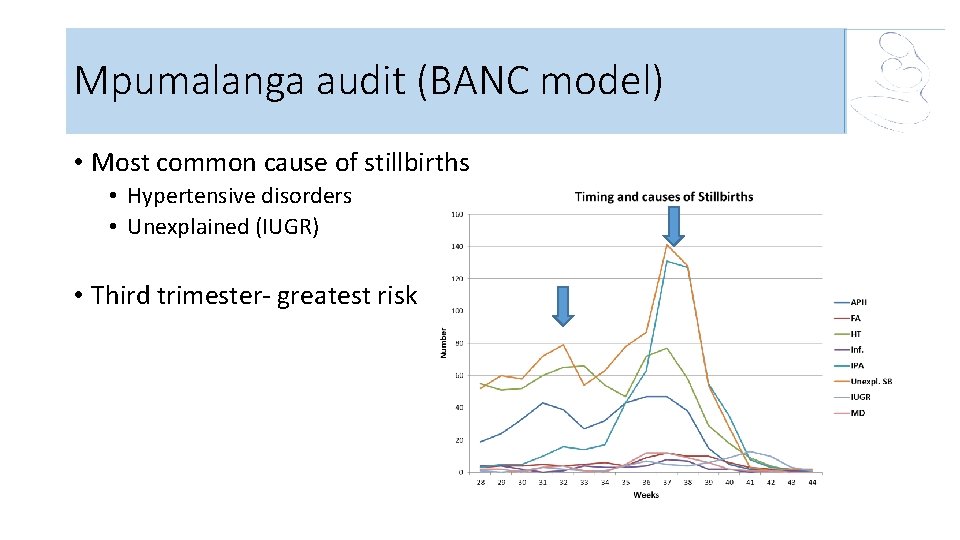
Mpumalanga audit (BANC model) • Most common cause of stillbirths • Hypertensive disorders • Unexplained (IUGR) • Third trimester- greatest risk
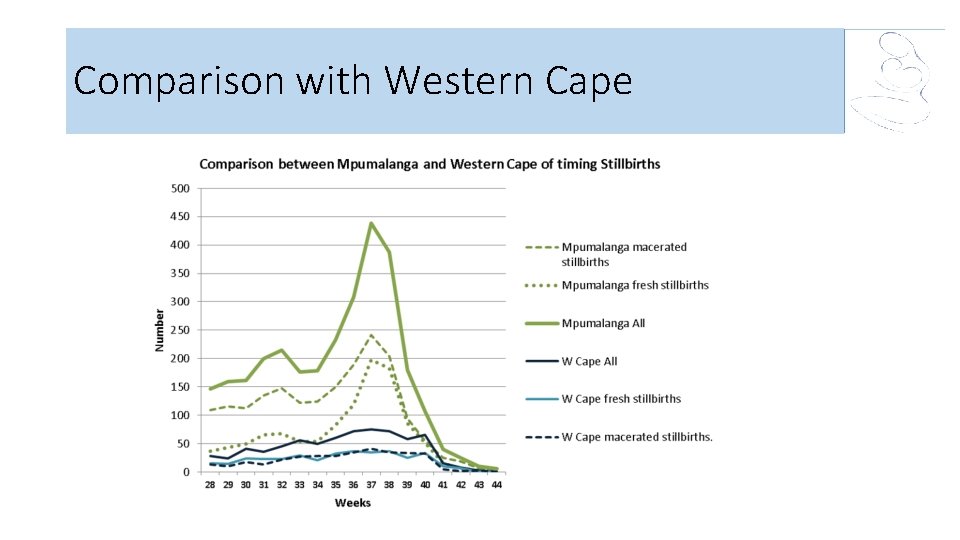
Comparison with Western Cape

BANC: Reduced number of visits • An updated Cochrane review was published in 2015. • For low and middle income countries, the perinatal mortality rate was significantly higher in the reduced visit group. • WHO: 5 -visit FANC model no longer recommended.
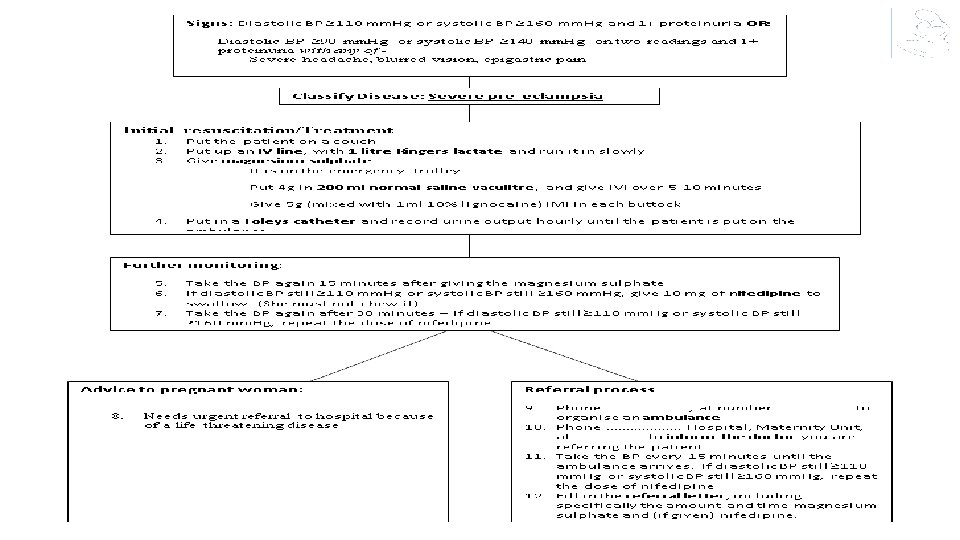
What should antenatal care do? • Evidence based interventions that leads to improved outcomes. • How can these practices be delivered?

BANC Plus • BANC visits to 8 (booking plus 7) • Improve the quality of antenatal care package • Provide support for primary care clinics performing basic antenatal care. • Reduce preventable morbidity and mortality

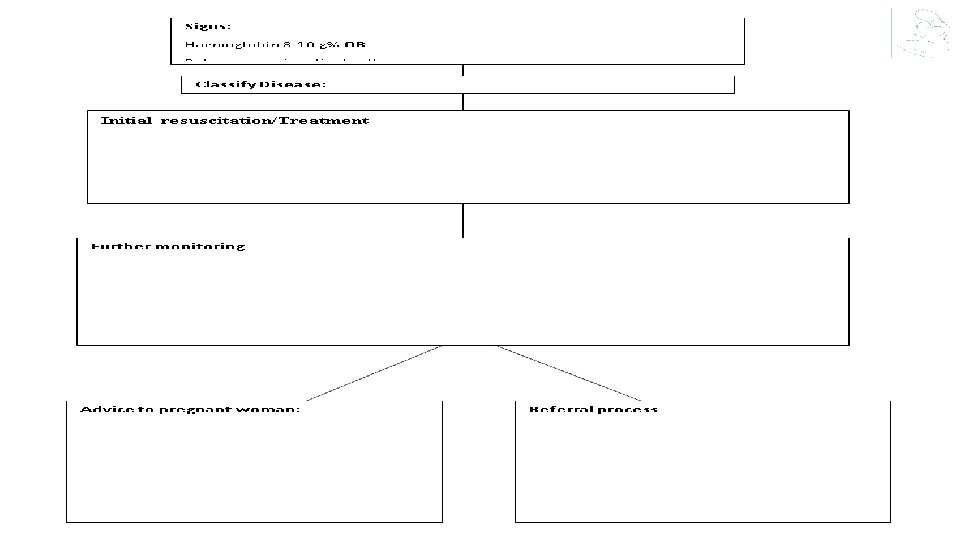
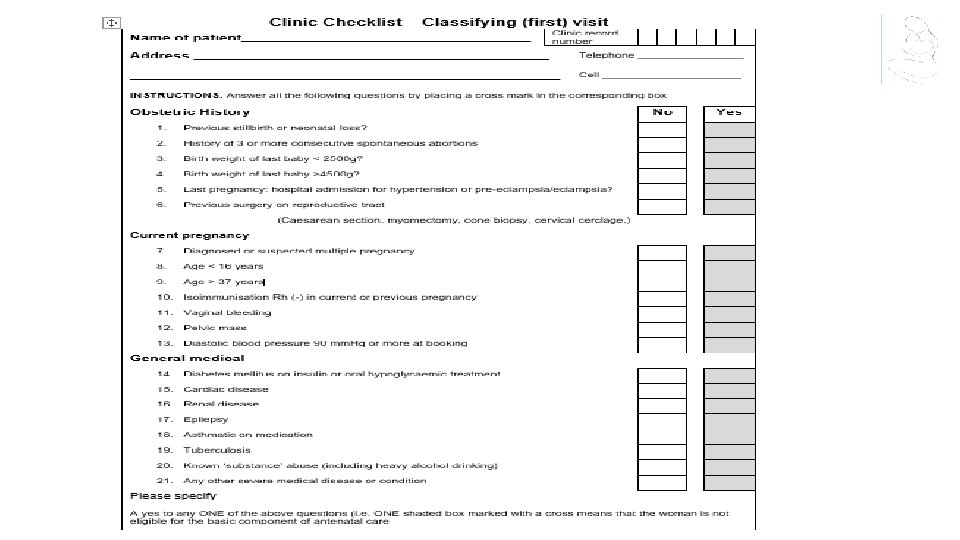
BANC Plus • The care has been simplified to a minimum. • Use of flow charts and Protocols • Use of Checklists: demonstrated to improve the quality of care. • Women requiring additional care should be identified and referred to the next level.
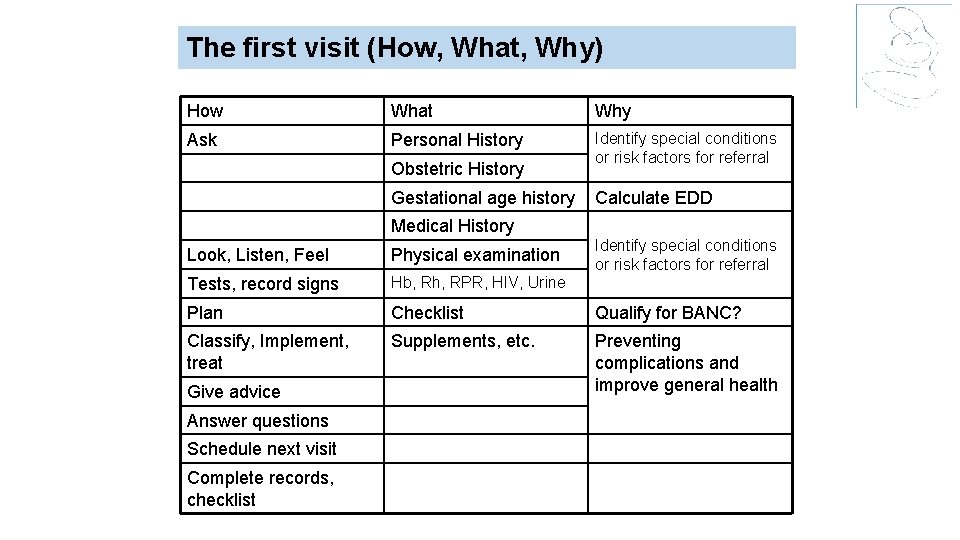
The first visit (How, What, Why) How What Why Ask Personal History Identify special conditions or risk factors for referral Obstetric History Gestational age history Calculate EDD Medical History Identify special conditions or risk factors for referral Look, Listen, Feel Physical examination Tests, record signs Hb, Rh, RPR, HIV, Urine Plan Checklist Qualify for BANC? Classify, Implement, treat Supplements, etc. Preventing complications and improve general health Give advice Answer questions Schedule next visit Complete records, checklist
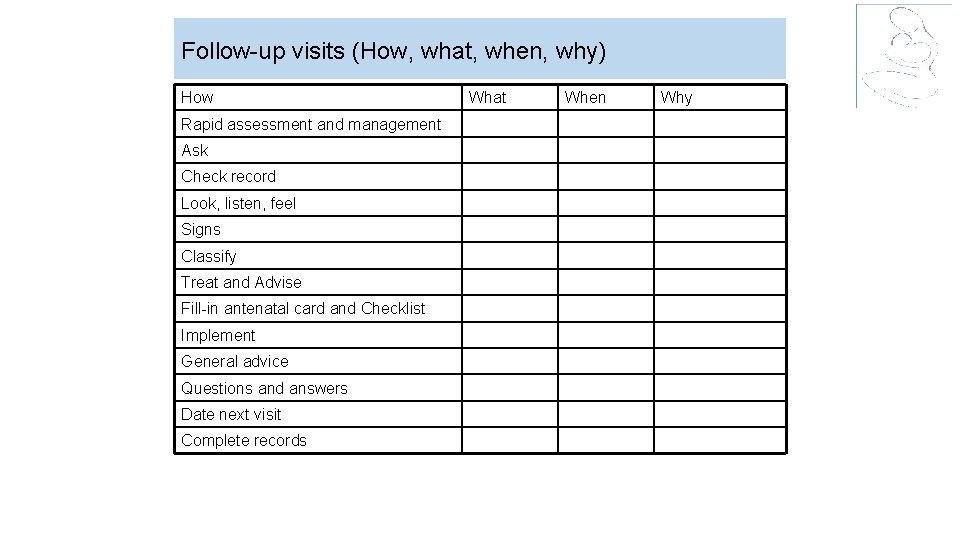
Follow-up visits (How, what, when, why) How Rapid assessment and management Ask Check record Look, listen, feel Signs Classify Treat and Advise Fill-in antenatal card and Checklist Implement General advice Questions and answers Date next visit Complete records What When Why

BANC Plus visits schedule
BANC Plus Issues • Implementation: in with the new, evidence based medicine • Training: Quality improvement package • Protocol book: Ownership • Checklists
Objective • Enable a positive pregnancy experience • If women’s experience of care is positive, they will attend more visits
- Slides: 19