The Nursing Process and Drug Therapy Karen Ruffin



- Slides: 113
The Nursing Process and Drug Therapy Karen Ruffin RN, MSN Ed.
The Nursing Process • An organizational framework for the practice of nursing • Orderly, systematic • Central to all nursing care • Encompasses all steps taken by the nurse in caring for a patient • Flexibility is important
The Nursing Process (cont'd) • • • Assessment Nursing diagnosis Planning (with outcome criteria) • Implementation • Evaluation
The Nursing Process (cont'd) Assessment • Data collection – Subjective, objective – Data collected on the patient, drug, environment • • Medication history Nursing assessment Physical assessment Data analysis
The Nursing Process (cont'd) Nursing diagnosis • Judgment or conclusion about the need/problem (actual or at risk for) of the patient • Based upon an accurate assessment • NANDA format
The Nursing Process (cont'd) Planning • Identification of goals and outcome criteria • Prioritization • Time frame
The Nursing Process (cont'd) Goals • Objective, measurable, realistic • Time frame specified Outcome criteria • Specific standard(s) of measure • Patient oriented
The Nursing Process (cont'd) Implementation • Initiation and completion of the nursing care plan as defined by the nursing diagnoses and outcome criteria • Follow the “five rights” of medication administration
The “Five Rights” • • • Right drug Right dose Right time Right route Right patient
Another “Right”—Constant System Analysis • A “double-check” • The entire “system” of medication administration • Ordering, dispensing, preparing, administering, documenting • Involves the physician, nurse, nursing unit, pharmacy department, and patient education
Other “Rights” • • • Proper drug storage Proper documentation Accurate dosage calculation • Accurate dosage preparation • Careful checking of transcription of orders • Patient safety
Other “Rights” (cont'd) • Close consideration of special situations • Prevention and reporting of medication errors • Patient teaching • Monitoring for therapeutic effects, side effects, toxic effects • Refusal of medication
Evaluation • Ongoing part of the nursing process • Determining the status of the goals and outcomes of care • Monitoring the patient’s response to drug therapy – Expected and unexpected responses
Pharmacologic Principles
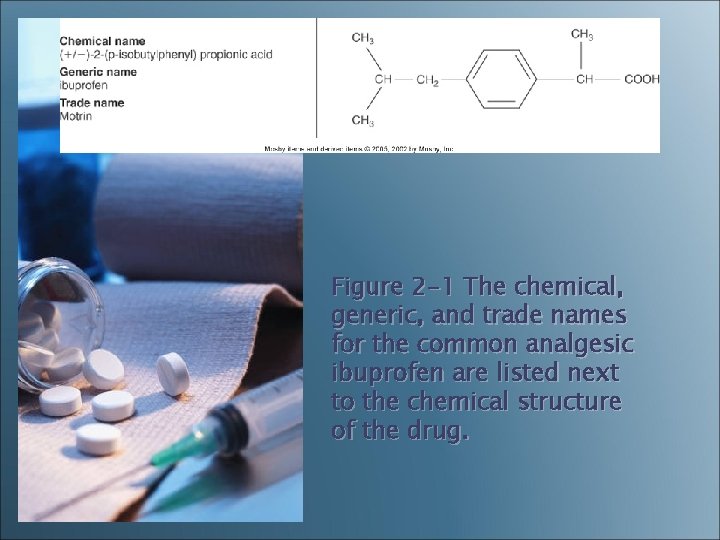
Drug Names Chemical name • Describes the drug’s chemical composition and molecular structure Generic name (nonproprietary name) • Name given by the United States Adopted Name Council Trade name (proprietary name) • The drug has a registered trademark; use of the name restricted by the drug’s patent owner (usually the manufacturer)
Drug Names (cont'd) Chemical name • (+/-)-2 -(p-isobutylphenyl) propionic acid Generic name • ibuprofen Trade name • Motrin®, Advil®
Figure 2 -1 The chemical, generic, and trade names for the common analgesic ibuprofen are listed next to the chemical structure of the drug.
Pharmacologic Principles • • • Pharmaceutics Pharmacokinetics Pharmacodynamics Pharmacotherapeutics Pharmacognosy
Pharmaceutics The study of how various drug forms influence pharmacokinetic and pharmacodynamic activities
Pharmacokinetics • The study of what the body does to the drug – Absorption – Distribution – Metabolism – Excretion
Pharmacodynamics • The study of what the drug does to the body – The mechanism of drug actions in living tissues
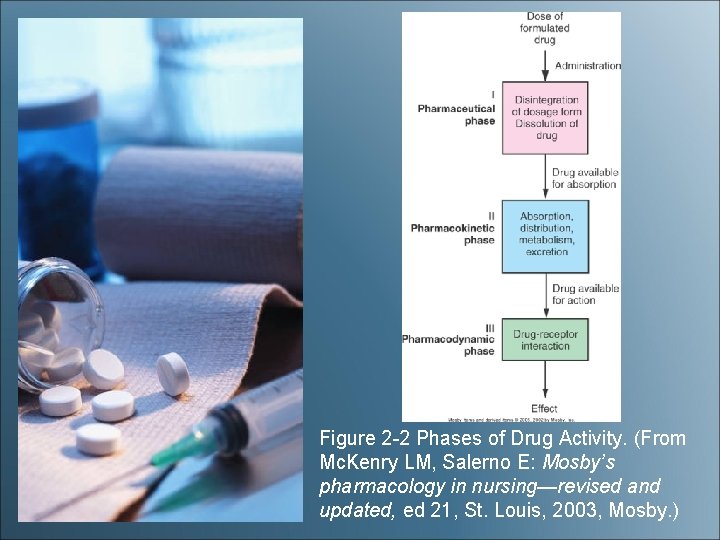
Figure 2 -2 Phases of Drug Activity. (From Mc. Kenry LM, Salerno E: Mosby’s pharmacology in nursing—revised and updated, ed 21, St. Louis, 2003, Mosby. )
Pharmacotherapeutics The use of drugs and the clinical indications for drugs to prevent and treat diseases
Pharmacognosy The study of natural (plant and animal) drug sources
Pharmacokinetics: Absorption • The rate at which a drug leaves its site of administration, and the extent to which absorption occurs – Bioavailability – Bioequivalent
Factors That Affect Absorption • Administration route of the drug • Food or fluids administered with the drug • Dosage formulation • Status of the absorptive surface • Rate of blood flow to the small intestine • Acidity of the stomach • Status of GI motility
Routes • A drug’s route of administration affects the rate and extent of absorption of that drug – Enteral (GI tract) – Parenteral – Topical
Enteral Route • Drug is absorbed into the systemic circulation through the oral or gastric mucosa, the small intestine, or rectum – Oral – Sublingual – Buccal – Rectal
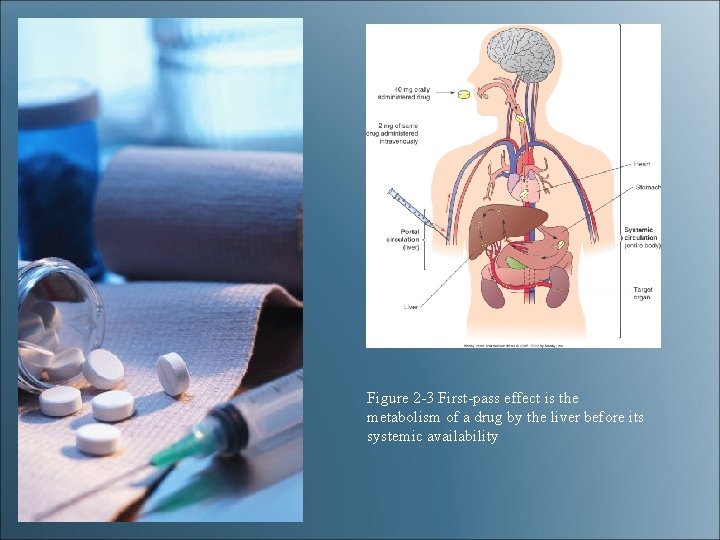
First-Pass Effect • The metabolism of a drug and its passage from the liver into the circulation – A drug given via the oral route may be extensively metabolized by the liver before reaching the systemic circulation (high firstpass effect) – The same drug—given IV— bypasses the liver, preventing the first-pass effect from taking place, and more drug reaches the circulation
Figure 2 -3 First-pass effect is the metabolism of a drug by the liver before its systemic availability
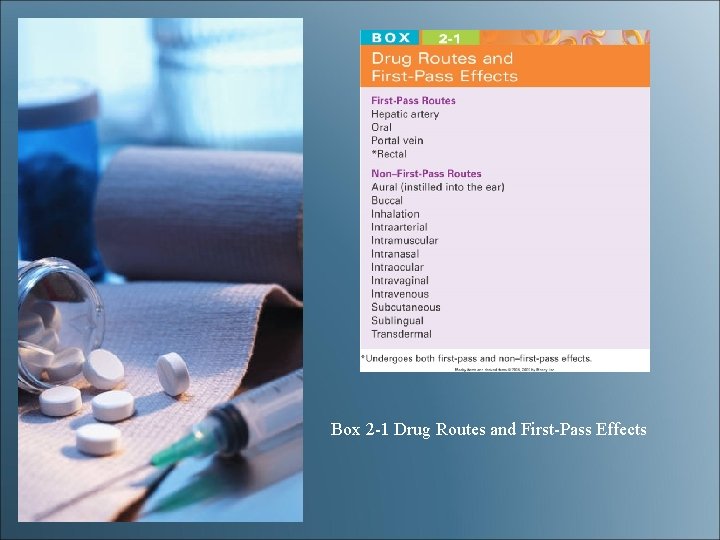
Box 2 -1 Drug Routes and First-Pass Effects
Parenteral Route • Intravenous (fastest delivery into the blood circulation) • Intramuscular • Subcutaneous • Intradermal • Intrathecal • Intraarticular
Topical Route • Skin (including transdermal patches) • Eyes • Ears • Nose • Lungs (inhalation) • Vagina
Distribution The transport of a drug in the body by the bloodstream to its site of action • Protein-binding • Water soluble vs. fat soluble • Blood-brain barrier • Areas of rapid distribution: heart, liver, kidneys, brain • Areas of slow distribution: muscle, skin, fat
Metabolism (Also Known As Biotransformation) The biologic transformation of a drug into an inactive metabolite, a more soluble compound, or a more potent metabolite • • • Liver (main organ) Kidneys Lungs Plasma Intestinal mucosa
Metabolism/Biotransformation (cont'd) Delayed drug metabolism results in: • Accumulation of drugs • Prolonged action of the drugs Stimulating drug metabolism causes: • Diminished pharmacologic effects
Excretion The elimination of drugs from the body • Kidneys (main organ) • Liver • Bowel – Biliary excretion – Enterohepatic circulation
Half-life • The time it takes for one half of the original amount of a drug in the body to be removed • A measure of the rate at which drugs are removed from the body
Onset, Peak, and Duration Onset • The time it takes for the drug to elicit a therapeutic response Peak • The time it takes for a drug to reach its maximum therapeutic response Duration • The time a drug concentration is sufficient to elicit a therapeutic response
The Movement of Drugs Through the Body Drug actions • The cellular processes involved in the drug and cell interaction Drug effect • The physiologic reaction of the body to the drug
Ways Drugs Produce Therapeutic Effects • Once the drug is at the site of action, it can modify the rate (increase or decrease) at which the cells or tissues function • A drug cannot make a cell or tissue perform a function it was not designed to perform
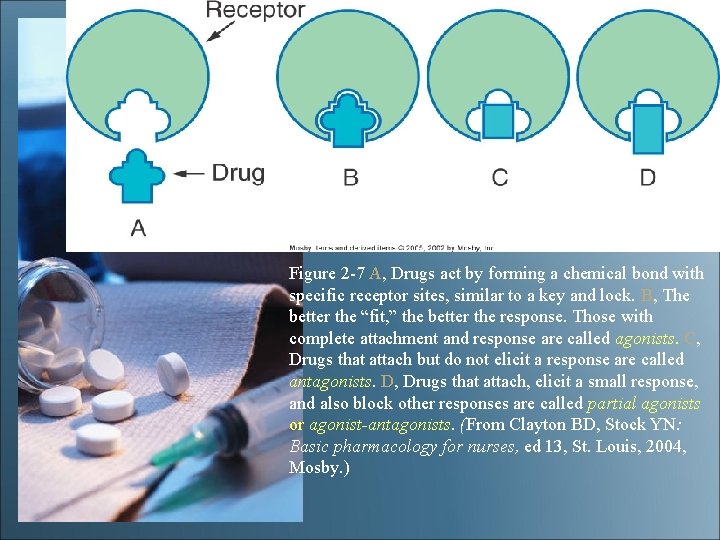
Figure 2 -7 A, Drugs act by forming a chemical bond with specific receptor sites, similar to a key and lock. B, The better the “fit, ” the better the response. Those with complete attachment and response are called agonists. C, Drugs that attach but do not elicit a response are called antagonists. D, Drugs that attach, elicit a small response, and also block other responses are called partial agonists or agonist-antagonists. (From Clayton BD, Stock YN: Basic pharmacology for nurses, ed 13, St. Louis, 2004, Mosby. )
Pharmacotherapeutics: Types of Therapies • • Acute therapy Maintenance therapy Supplemental therapy Palliative therapy Supportive therapy Prophylactic therapy Empiric therapy
Monitoring • The effectiveness of the drug therapy must be evaluated • One must be familiar with the drug’s: – Intended therapeutic action (beneficial) – Unintended but potential side effects (predictable, adverse reactions)
Monitoring (cont'd) • Therapeutic index – The ratio between a drug’s therapeutic benefits and its toxic effects
Monitoring (cont'd) • Tolerance – A decreasing response to repetitive drug doses
Monitoring (cont'd) • Dependence – A physiologic or psychological need for a drug
Monitoring (cont'd) Interactions may occur with other drugs or food • Drug interactions: the alteration of action of a drug by: – Other prescribed drugs – Over-the-counter medications – Herbal therapies
Monitoring (cont'd) • Drug interactions – Additive effect – Synergistic effect – Antagonistic effect – Incompatibility
Monitoring (cont'd) • Medication misadventures – Adverse drug events – Adverse drug reactions – Medication errors
Monitoring (cont'd) Some adverse drug reactions are classified as side effects • Expected, well-known reactions that result in little or no change in patient management • Predictable frequency • The effect’s intensity and occurrence are related to the size of the dose
Adverse Drug Reaction An adverse outcome of drug therapy in which a patient is harmed in some way • • Pharmacologic reactions Idiosyncratic reactions Hypersensitivity reactions Drug interactions
Other Drug. Related Effects • • • Teratogenic Mutagenic Carcinogenic
Toxicology The study of poisons and unwanted responses to therapeutic agents
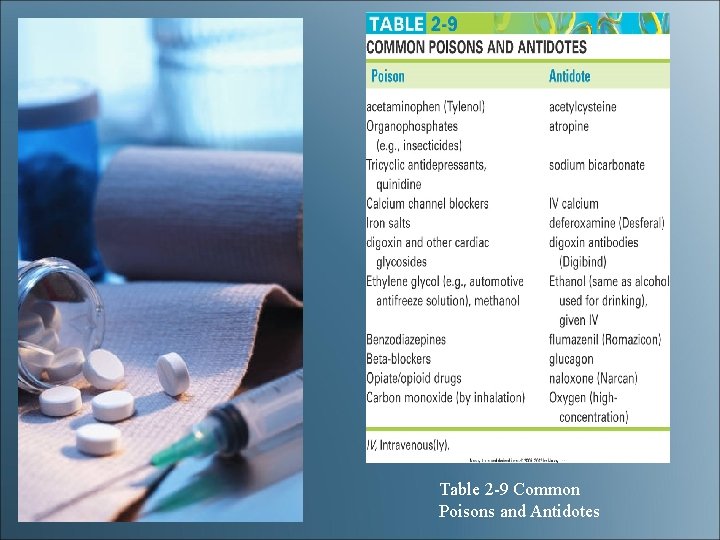
Table 2 -9 Common Poisons and Antidotes
Life Span Considerations
Life Span Considerations • • • Pregnancy Breast-feeding Neonatal Pediatric Geriatric
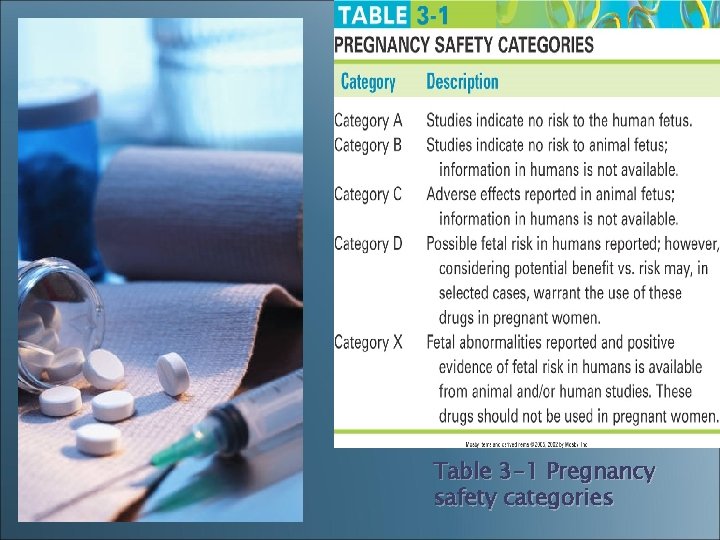
Pregnancy • First trimester is the period of greatest danger for drug-induced developmental defects • Drugs diffuse across the placenta • FDA pregnancy safety categories
Table 3 -1 Pregnancy safety categories
Breast-feeding • Breast-fed infants are at risk for exposure to drugs consumed by the mother • Consider risk-to-benefit ratio
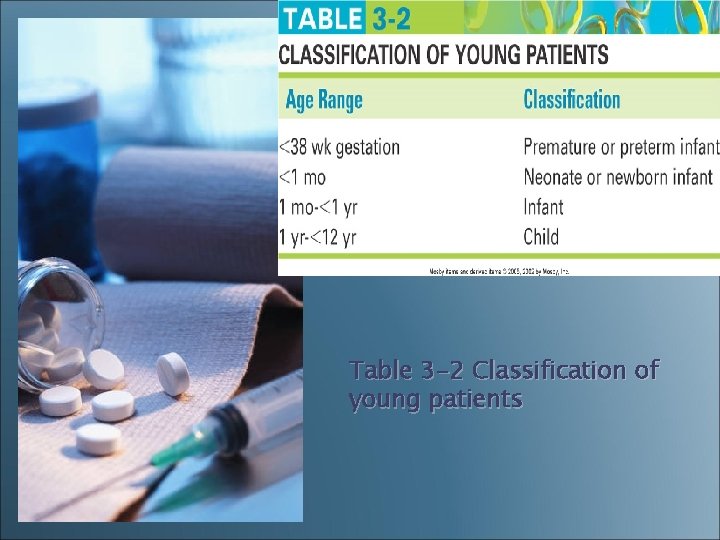
Table 3 -2 Classification of young patients
Pediatric Considerations: Pharmacokinetics • Absorption – Gastric p. H less acidic – Gastric emptying is slowed – Topical absorption faster through the skin – Intramuscular absorption faster and irregular
Pediatric Considerations: Pharmacokinetics (cont'd) • Distribution – TBW 70% to 80% in fullterm infants, 85% in premature newborns, 64% in children 1 to 12 years of age – Greater TBW means fat content is lower – Decreased level of protein binding – Immature blood-brain barrier
Pediatric Considerations: Pharmacokinetics (cont'd) • Metabolism – Liver immature, does not produce enough microsomal enzymes – Older children may have increased metabolism, requiring higher doses – Other factors
Pediatric Considerations: Pharmacokinetics (cont'd) • Excretion – Kidney immaturity affects glomerular filtration rate and tubular secretion – Decreased perfusion rate of the kidneys
Summary of Pediatric Considerations • Skin is thin and permeable • Stomach lacks acid to kill bacteria • Lungs lack mucus barriers • Body temperatures poorly regulated and dehydration occurs easily • Liver and kidneys are immature, impairing drug metabolism and excretion
Methods of Dosage Calculation for Pediatric Patients • Body weight dosage calculations • Body surface area method
Geriatric Considerations • Geriatric: older than age 65 – Healthy People 2010: older than age 55 • Use of OTC medications • Polypharmacy
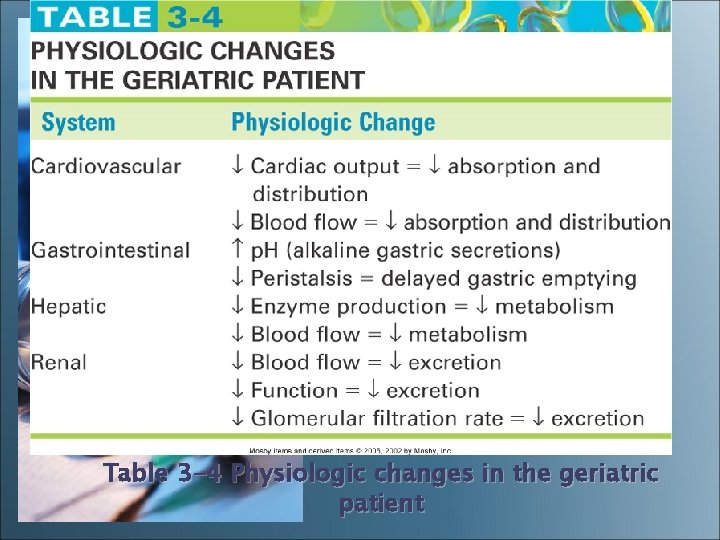
Table 3 -4 Physiologic changes in the geriatric patient
Geriatric Considerations: Pharmacokinetics • Absorption – Gastric p. H less acidic – Slowed gastric emptying – Movement through GI tract slower – Reduced blood flow to the GI tract – Reduced absorptive surface area due to flattened intestinal villi
Geriatric Considerations: Pharmacokinetics (cont'd) • Distribution – TBW percentages lower – Fat content increased – Decreased production of proteins by the liver, resulting in decreased protein binding of drugs
Geriatric Considerations: Pharmacokinetics (cont'd) • Metabolism – Aging liver produces less microsomal enzymes, affecting drug metabolism – Reduced blood flow to the liver
Geriatric Considerations: Pharmacokinetics (cont'd) • Excretion – Decreased glomerular filtration rate – Decreased number of intact nephrons
Geriatric Considerations: Problematic Medications • Analgesics • Anticoagulants • Anticholinergics • Antihypertensives • Digoxin • Sedatives and hypnotics • Thiazide diuretics
Legal, Ethical, and Cultural Considerations
U. S. Drug Legislation • 1906: Federal Food and Drug Act • 1912: Sherley Amendment (to the Federal Food and Drug Act of 1906) • 1914: Harrison Narcotic Act • 1938: Federal Food, Drug, and Cosmetic Act (revision of 1906 Act)
U. S. Drug Legislation (cont'd) • 1951: Durham. Humphrey Amendment (to the 1938 act) • 1962: Kefauver-Harris Amendment (to the 1938 act) • 1970: Controlled Substance Act
U. S. Drug Legislation (cont'd) • 1983: Orphan Drug Act • 1991: Accelerated drug approval
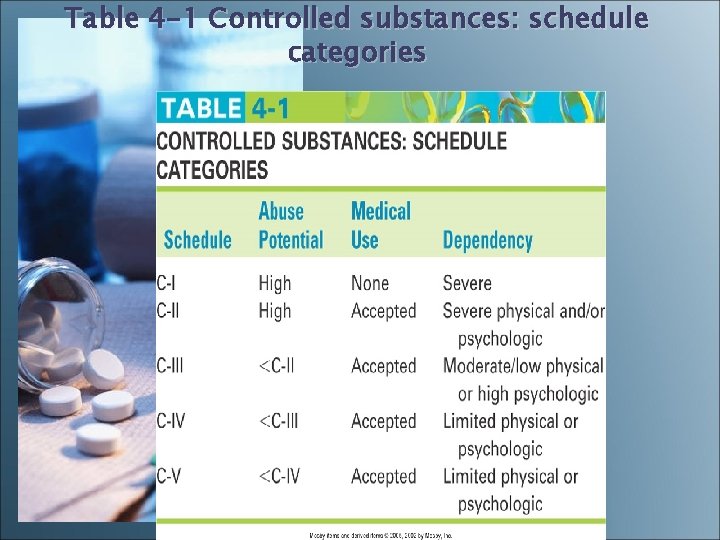
Table 4 -1 Controlled substances: schedule categories
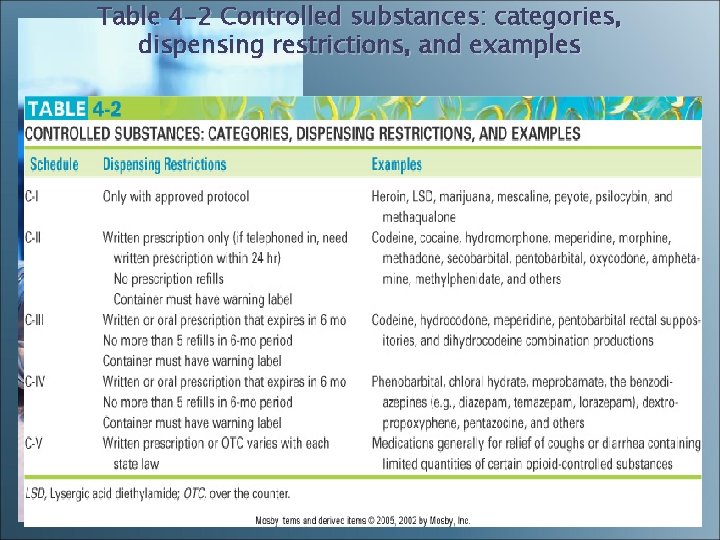
Table 4 -2 Controlled substances: categories, dispensing restrictions, and examples
New Drug Development • Investigational new drug (IND) application • Informed consent • Investigational drug studies • Expedited drug approval
U. S. FDA Drug Approval Process • Preclinical investigational drug studies • Clinical phases of investigational drug studies – Phase III – Phase IV
Ethical Nursing Practice • American Nurses Association (ANA) Code of Ethics for Nurses
Cultural Considerations • Assess the influence of a patient’s cultural beliefs, values, and customs • Drug polymorphism • Compliance level with therapy • Environmental considerations • Genetic factors • Varying responses to specific agents
Cultural Assessment • Health beliefs and practices • Past uses of medicine • Folk remedies • Home remedies • Use of nonprescription drugs and herbal remedies • OTC treatments
Cultural Assessment (cont'd) • Usual response to treatment • Responsiveness to medical treatment • Religious practices and beliefs • Dietary habits
Medication Errors: Preventing and Responding
Medication Misadventures • Medication errors (MEs) • Adverse drug events (ADEs) • Adverse drug reactions (ADRs)
Medication Misadventures (cont'd) • By definition, all ADRs are also ADEs • But all ADEs are not ADRs • Two types of ADRs – Allergic reactions – Idiosyncratic reactions
Medication Errors • Preventable • Common cause of adverse health care outcomes • Effects can range from no significant effect to directly causing disability or death
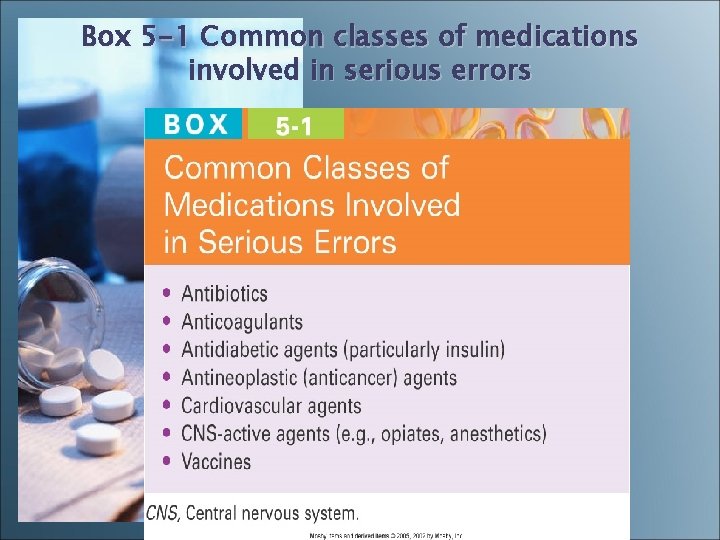
Box 5 -1 Common classes of medications involved in serious errors
Preventing Medication Errors • Minimize verbal or telephone orders – Repeat order to prescriber – Spell drug name aloud – Speak slowly and clearly • List indication next to each order • Avoid medical shorthand, including abbreviations and acronyms
Preventing Medication Errors (cont'd) • Never assume anything about items not specified in a drug order (i. e. , route) • Do not hesitate to question a medication order for any reason when in doubt • Do not try to decipher illegibly written orders; contact prescriber for clarification
Preventing Medication Errors (cont'd) • NEVER use “trailing zeros” with medication orders • Do not use 1. 0 mg; use 1 mg • 1. 0 mg could be misread as 10 mg, resulting in a tenfold dose increase
Preventing Medication Errors (cont'd) • ALWAYS use a “leading zero” for decimal dosages • Do not use. 25 mg; use 0. 25 mg • . 25 mg may be misread as 25 mg • “. 25” is sometimes called a “naked decimal”
Preventing Medication Errors (cont'd) • Check medication order and what is available while using the “ 5 rights” • Take time to learn special administration techniques of certain dosage forms
Preventing Medication Errors (cont'd) • Always listen to and honor any concerns expressed by patients regarding medications • Check patient allergies and identification
Medication Errors • Possible consequences to nurses • Reporting and responding to MEs – ADE monitoring programs – USPMERP (United States Pharmacopeia Medication Errors Reporting Program) – Med. Watch, sponsored by the FDA – Institute for Safe Medication Practices (ISMP) • Notification of patient regarding MEs
Drug Administration
Preparing for Drug Administration • Check the “ 5 rights” • Standard Precautions: Wash your hands! • Double-check if unsure about anything • Check for drug allergies • Prepare drugs for one patient at a time • Check three times
Preparing for Drug Administration (cont'd) • Check expiration dates • Check the patient’s identification • Give medications on time • Explain medications to the patient • Open the medications at the bedside • Document the medications given before going to the next patient
Enteral Drugs • • • Giving oral medications Giving sublingual or buccal medications Liquid medications Giving oral medications to infants Administering drugs through a nasogastric or gastrostomy tube Rectal administration
Parenteral Drugs • Never recap a used needle! • May recap an unused needle with the “scoop method” • Prevention of needlesticks • Filter needles
Parenteral Drugs (cont'd) • Removing medications from ampules • Removing medications from vials • Disposal of used needles and syringes
Injections • Needle angles for various injections – Intramuscular (IM) – Subcutaneous (SC or SQ) – Intradermal (ID) • Z-track method for IM injections • Air-lock technique
Injection Techniques • Intradermal injections • Subcutaneous injections – Insulin administration – Heparin administration
Injection Techniques (cont'd) • Intramuscular injections – Ventrogluteal site (preferred) – Vastus lateralis site – Dorsogluteal site – Deltoid site
Preparing Intravenous Medications • • Needleless systems Compatibility issues Expiration dates Mixing intravenous piggyback (IVPB) medications • Labeling intravenous (IV) infusion bags when adding medications
Intravenous Medications • Adding medications to a primary infusion bag • IVPB medications (secondary line) • IV push medications (bolus) – Through an IV lock – Through an existing IV infusion
Intravenous Medications (cont'd) • Volume-controlled administration set • Using electronic infusion pumps • Patient-controlled analgesia (PCA) pumps
Topical Drugs • Eye medications – Drops – Ointments • Ear drops – Adults – Infant or child younger than 3 years of age
Topical Drugs (cont'd) • Nasal drugs – Drops – Spray • Inhaled drugs – Metered-dose inhalers – Small-volume nebulizers
Topical Drugs (cont'd) • Administering medications to the skin – Lotions, creams, ointments, powders – Transdermal patches • Vaginal medications – Creams, foams, gels – Suppositories