
Which Clinical Prediction Rules have been taken up
Which Clinical Prediction Rules have been taken up by guidelines? Clare Bankhead, Grainne Cousins, Rose Galvin, Karen Kearley, Claire Keogh, Dan Lasserson, Uriell Malanda, Susan Mallett , Ivan Moschetti, Sharon Sanders, Richard Stevens, Danielle Van der Windt, Emma Wallace Amsterdam, Dublin, Keele, Milan, Oxford and Queensland
Hypotheses • CPRs are making an impact on clinical practice in some specific areas • We do not know the factors that allow a CPR to make an impact in practice
Background • Ivan Moschetti and Daniel Brandt Vegas systematically reviewed guidelines for managing CVD risk factors, looking for evidence base for monitoring programmes • Can we do something similar for CPRs?
Aims In prespecified clinical areas for which CPRs have been developed • systematically search for clinical guidelines • examine guidelines for use of CPRs
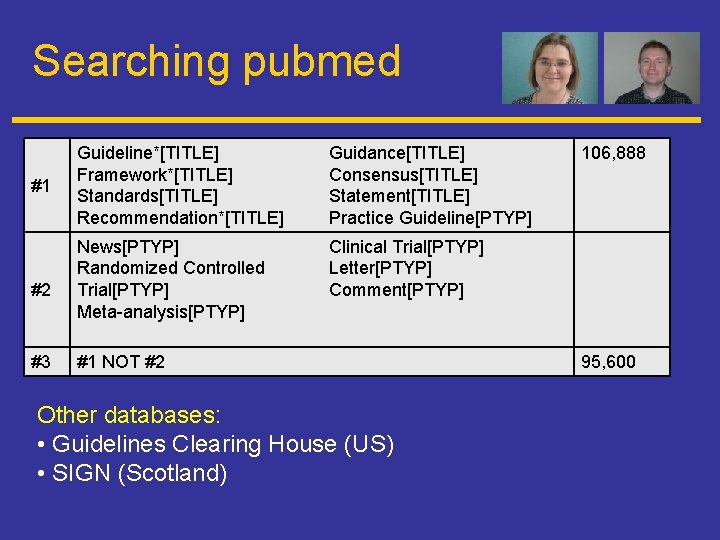
Searching pubmed #1 #2 #3 Guideline*[TITLE] Framework*[TITLE] Standards[TITLE] Recommendation*[TITLE] Guidance[TITLE] Consensus[TITLE] Statement[TITLE] Practice Guideline[PTYP] News[PTYP] Randomized Controlled Trial[PTYP] Meta-analysis[PTYP] Clinical Trial[PTYP] Letter[PTYP] Comment[PTYP] #1 NOT #2 Other databases: • Guidelines Clearing House (US) • SIGN (Scotland) 106, 888 95, 600
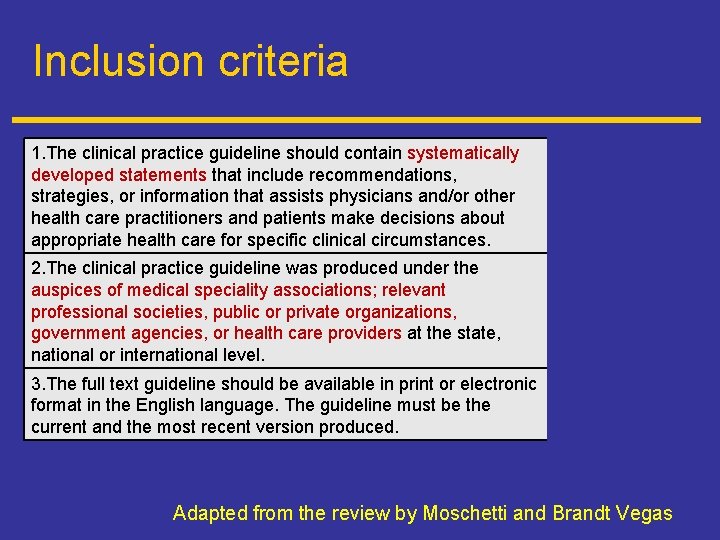
Inclusion criteria 1. The clinical practice guideline should contain systematically developed statements that include recommendations, strategies, or information that assists physicians and/or other health care practitioners and patients make decisions about appropriate health care for specific clinical circumstances. 2. The clinical practice guideline was produced under the auspices of medical speciality associations; relevant professional societies, public or private organizations, government agencies, or health care providers at the state, national or international level. 3. The full text guideline should be available in print or electronic format in the English language. The guideline must be the current and the most recent version produced. Adapted from the review by Moschetti and Brandt Vegas
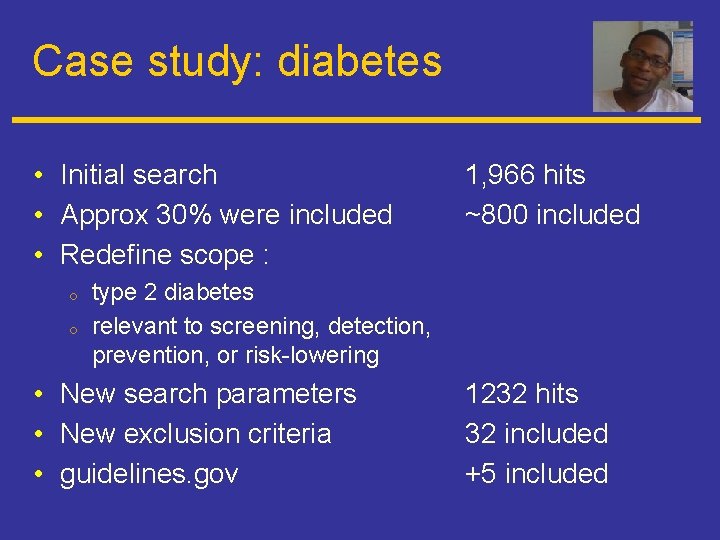
Case study: diabetes • Initial search • Approx 30% were included • Redefine scope : o o 1, 966 hits ~800 included type 2 diabetes relevant to screening, detection, prevention, or risk-lowering • New search parameters • New exclusion criteria • guidelines. gov 1232 hits 32 included +5 included
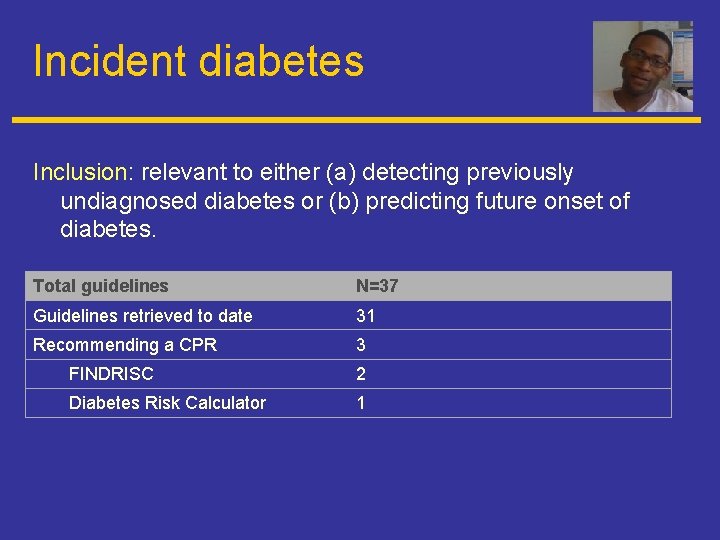
Incident diabetes Inclusion: relevant to either (a) detecting previously undiagnosed diabetes or (b) predicting future onset of diabetes. Total guidelines N=37 Guidelines retrieved to date 31 Recommending a CPR 3 FINDRISC 2 Diabetes Risk Calculator 1
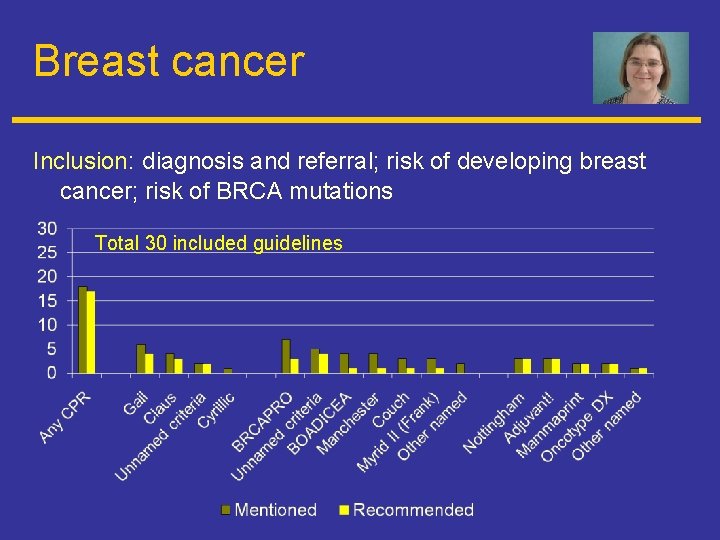
Breast cancer Inclusion: diagnosis and referral; risk of developing breast cancer; risk of BRCA mutations Total 30 included guidelines
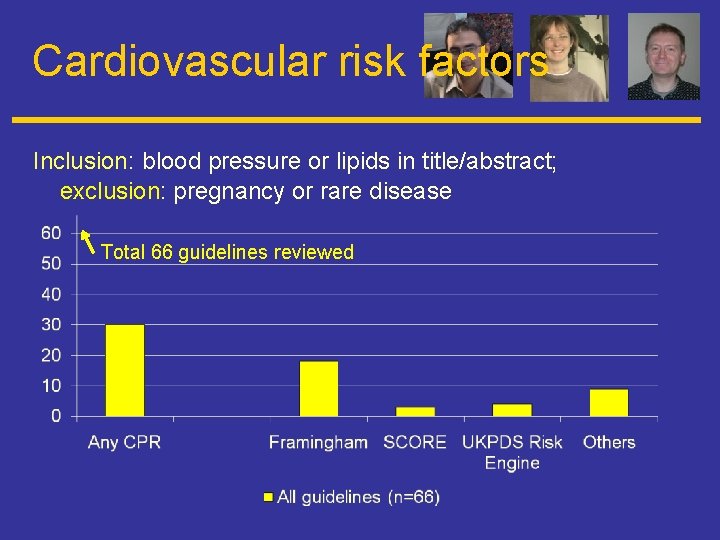
Cardiovascular risk factors Inclusion: blood pressure or lipids in title/abstract; exclusion: pregnancy or rare disease Total 66 guidelines reviewed
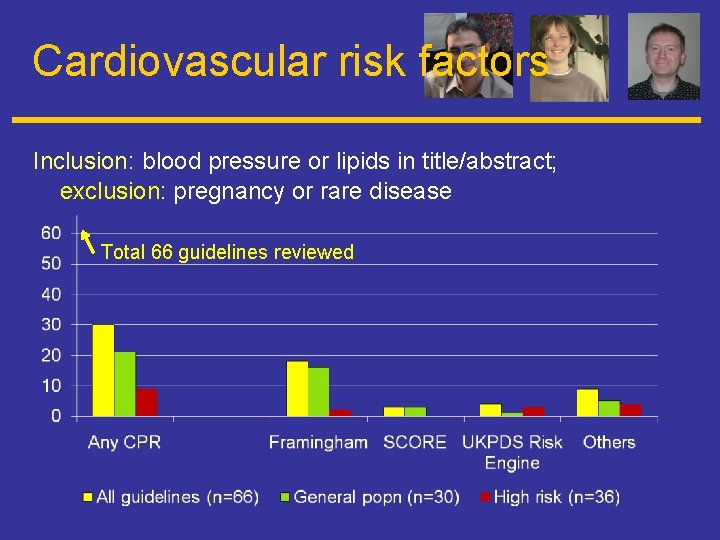
Cardiovascular risk factors Inclusion: blood pressure or lipids in title/abstract; exclusion: pregnancy or rare disease Total 66 guidelines reviewed
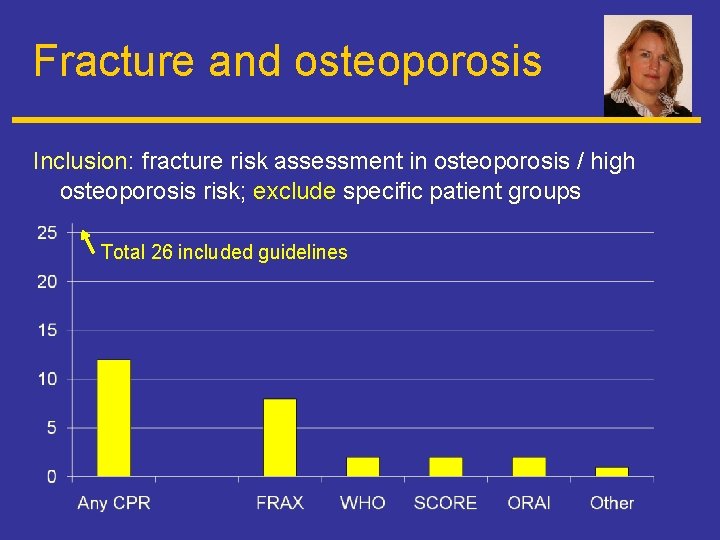
Fracture and osteoporosis Inclusion: fracture risk assessment in osteoporosis / high osteoporosis risk; exclude specific patient groups Total 26 included guidelines
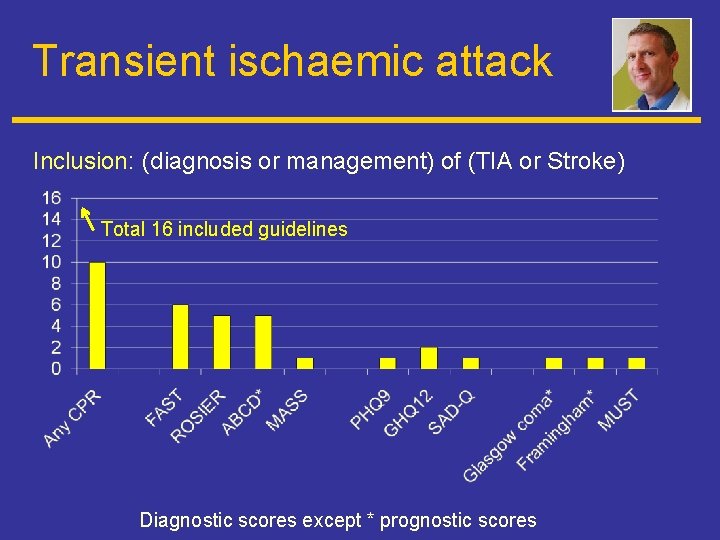
Transient ischaemic attack Inclusion: (diagnosis or management) of (TIA or Stroke) Total 16 included guidelines Diagnostic scores except * prognostic scores
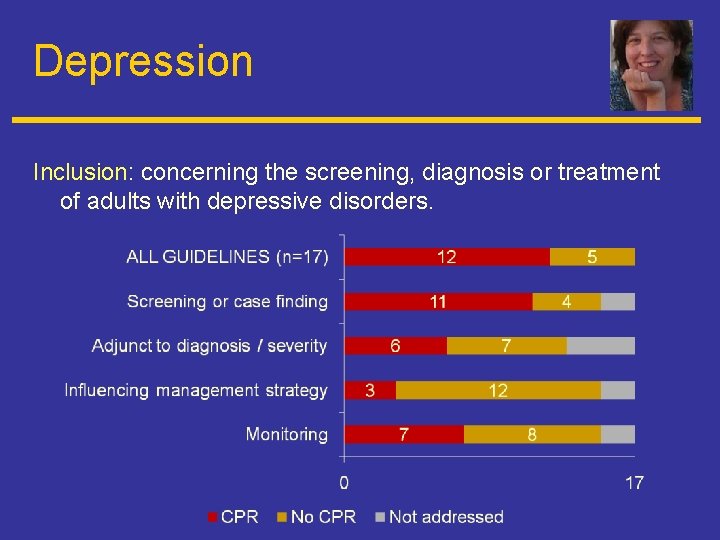
Depression Inclusion: concerning the screening, diagnosis or treatment of adults with depressive disorders.
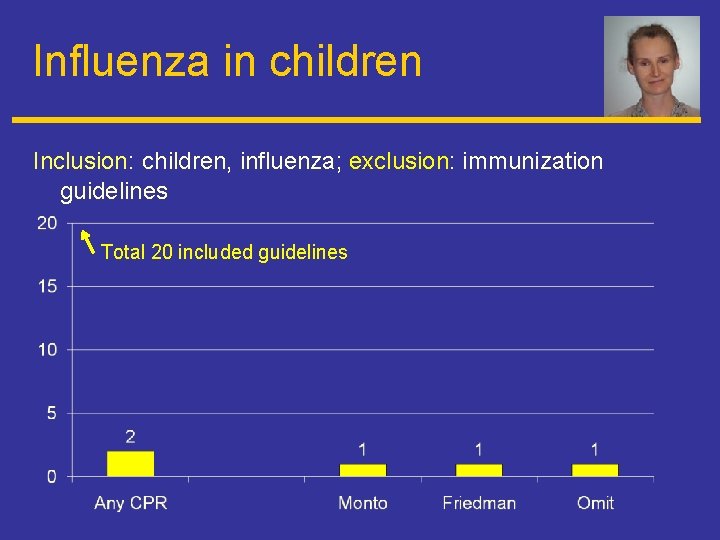
Influenza in children Inclusion: children, influenza; exclusion: immunization guidelines Total 20 included guidelines
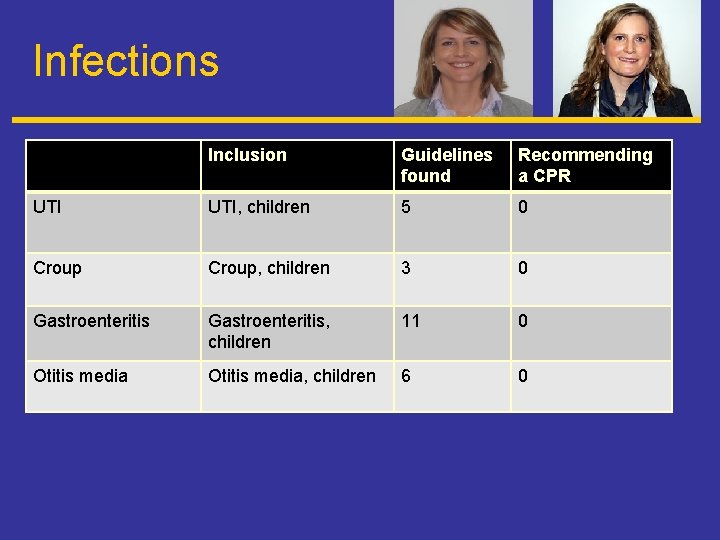
Infections Inclusion Guidelines found Recommending a CPR UTI, children 5 0 Croup, children 3 0 Gastroenteritis, children 11 0 Otitis media, children 6 0
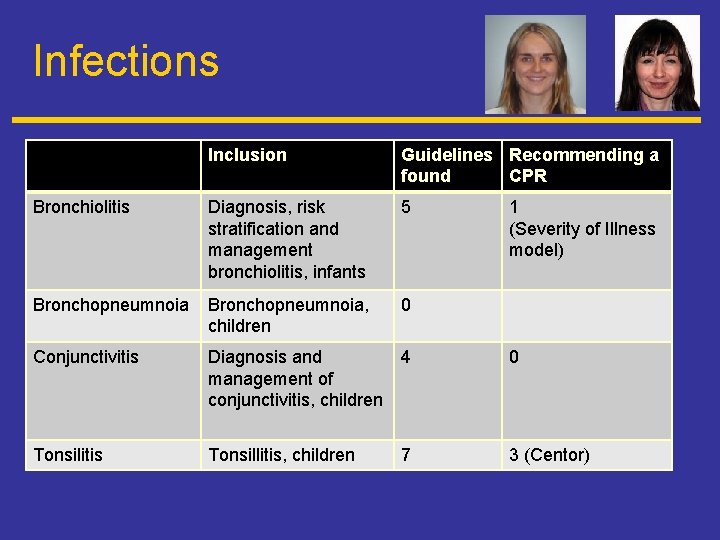
Infections Inclusion Guidelines Recommending a found CPR Bronchiolitis Diagnosis, risk stratification and management bronchiolitis, infants 5 Bronchopneumnoia, children 0 Conjunctivitis Diagnosis and 4 management of conjunctivitis, children 0 Tonsilitis Tonsillitis, children 3 (Centor) 7 1 (Severity of Illness model)
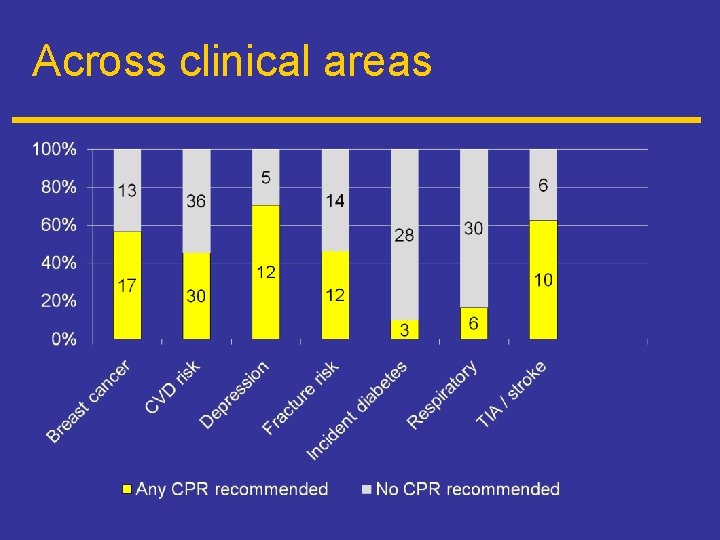
Across clinical areas
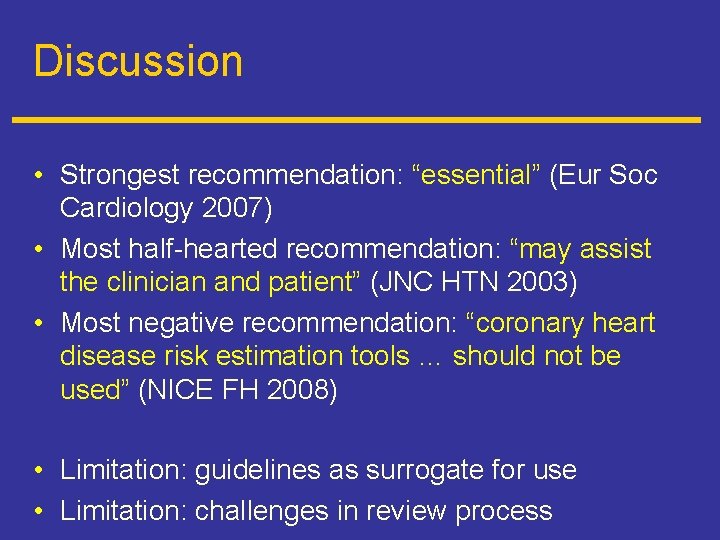
Discussion • Strongest recommendation: “essential” (Eur Soc Cardiology 2007) • Most half-hearted recommendation: “may assist the clinician and patient” (JNC HTN 2003) • Most negative recommendation: “coronary heart disease risk estimation tools … should not be used” (NICE FH 2008) • Limitation: guidelines as surrogate for use • Limitation: challenges in review process
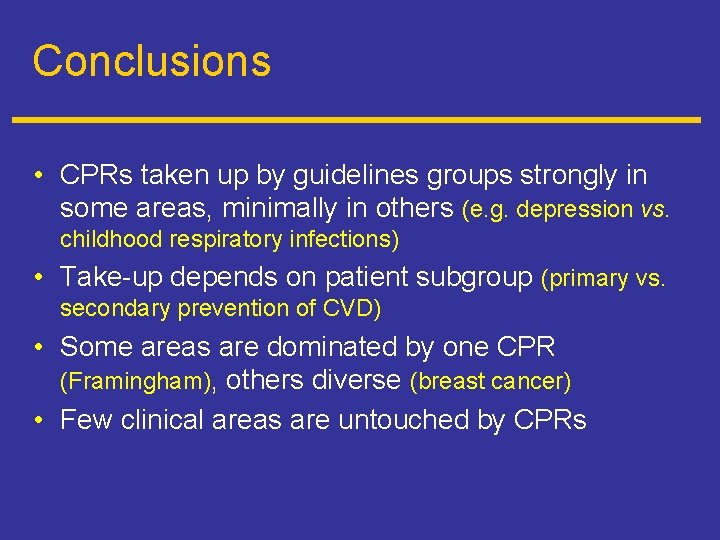
Conclusions • CPRs taken up by guidelines groups strongly in some areas, minimally in others (e. g. depression vs. childhood respiratory infections) • Take-up depends on patient subgroup (primary vs. secondary prevention of CVD) • Some areas are dominated by one CPR (Framingham), others diverse (breast cancer) • Few clinical areas are untouched by CPRs
- Slides: 20