Group Process Nursing 4206 Cheryl Smith Group n
- Slides: 16
Group Process Nursing 4206 Cheryl Smith
Group n Two or more individuals that develop interactive relationships and share common goals
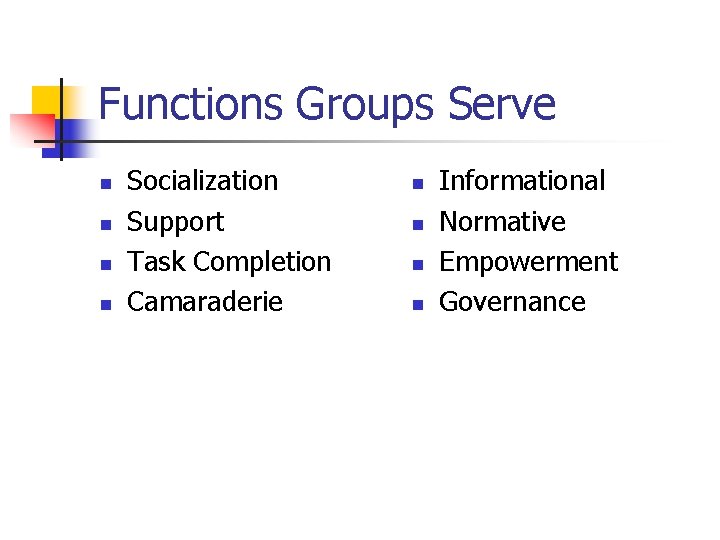
Functions Groups Serve n n Socialization Support Task Completion Camaraderie n n Informational Normative Empowerment Governance
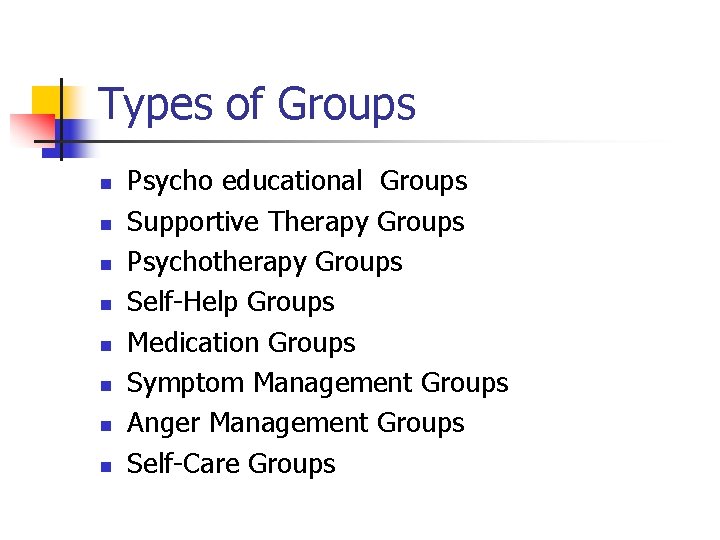
Types of Groups n n n n Psycho educational Groups Supportive Therapy Groups Psychotherapy Groups Self-Help Groups Medication Groups Symptom Management Groups Anger Management Groups Self-Care Groups
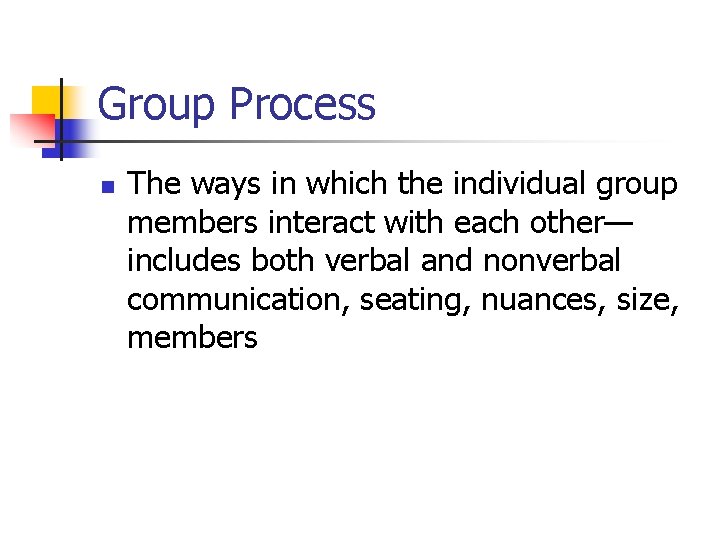
Group Process n The ways in which the individual group members interact with each other— includes both verbal and nonverbal communication, seating, nuances, size, members
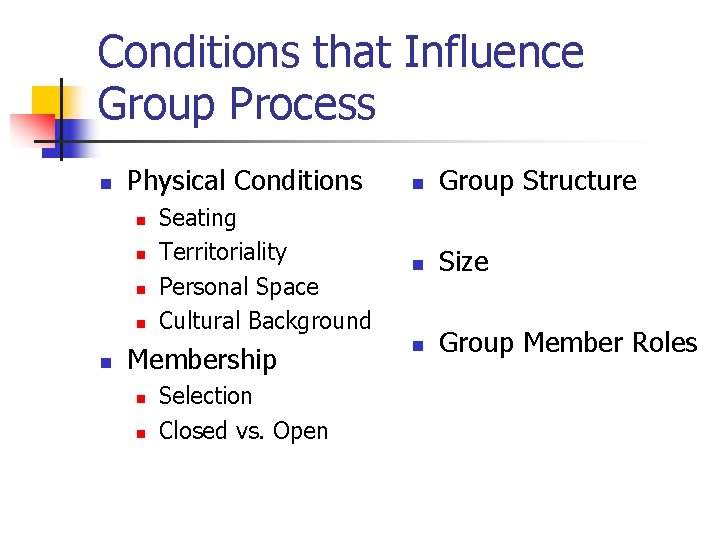
Conditions that Influence Group Process n Physical Conditions n n n Seating Territoriality Personal Space Cultural Background Membership n n Selection Closed vs. Open n Group Structure n Size n Group Member Roles
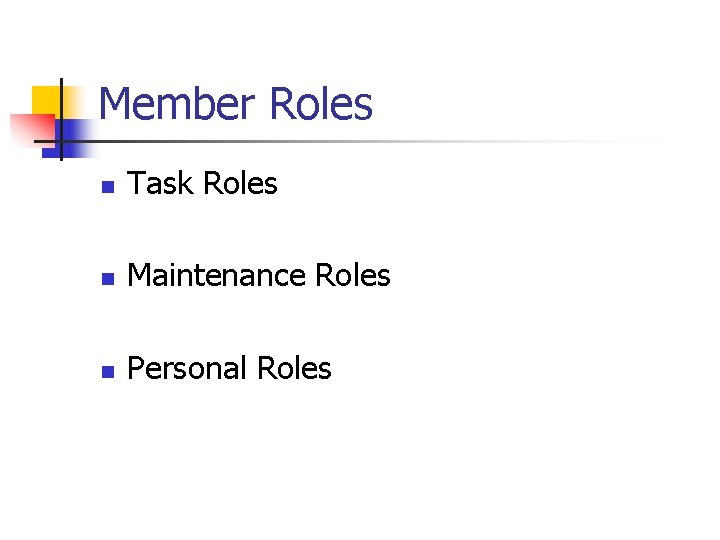
Member Roles n Task Roles n Maintenance Roles n Personal Roles
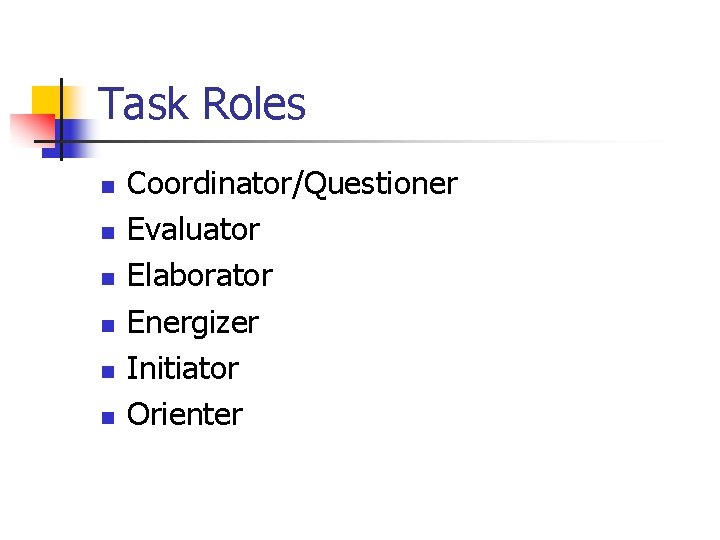
Task Roles n n n Coordinator/Questioner Evaluator Elaborator Energizer Initiator Orienter
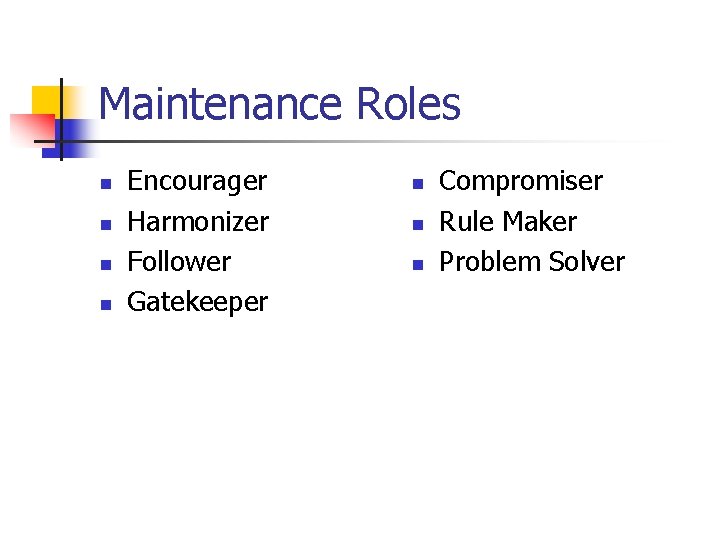
Maintenance Roles n n Encourager Harmonizer Follower Gatekeeper n n n Compromiser Rule Maker Problem Solver
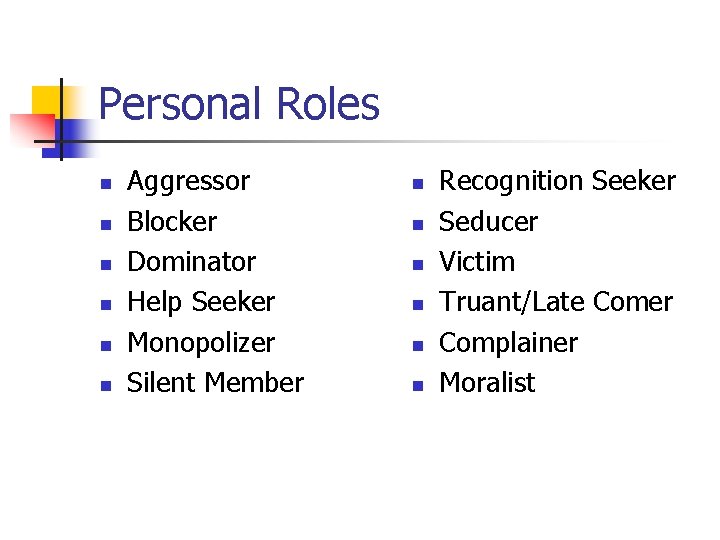
Personal Roles n n n Aggressor Blocker Dominator Help Seeker Monopolizer Silent Member n n n Recognition Seeker Seducer Victim Truant/Late Comer Complainer Moralist
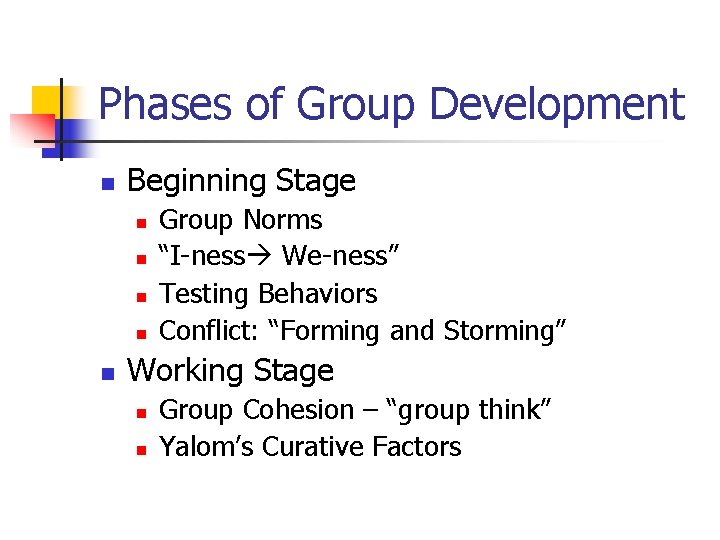
Phases of Group Development n Beginning Stage n n n Group Norms “I-ness We-ness” Testing Behaviors Conflict: “Forming and Storming” Working Stage n n Group Cohesion – “group think” Yalom’s Curative Factors
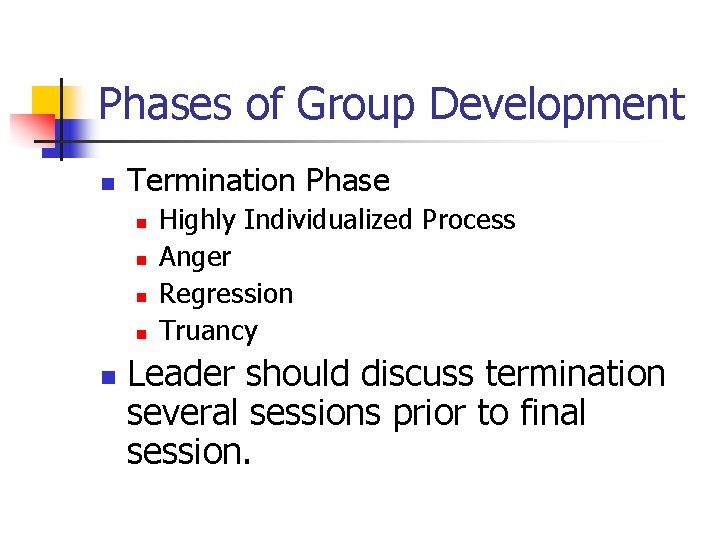
Phases of Group Development n Termination Phase n n n Highly Individualized Process Anger Regression Truancy Leader should discuss termination several sessions prior to final session.
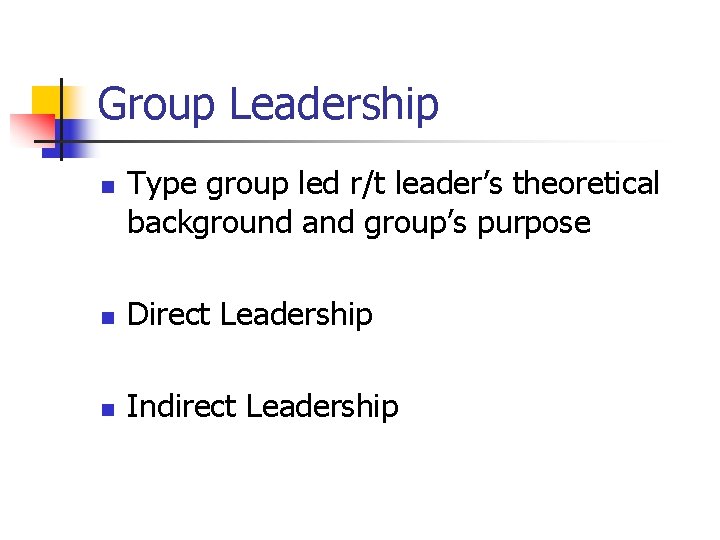
Group Leadership n Type group led r/t leader’s theoretical background and group’s purpose n Direct Leadership n Indirect Leadership
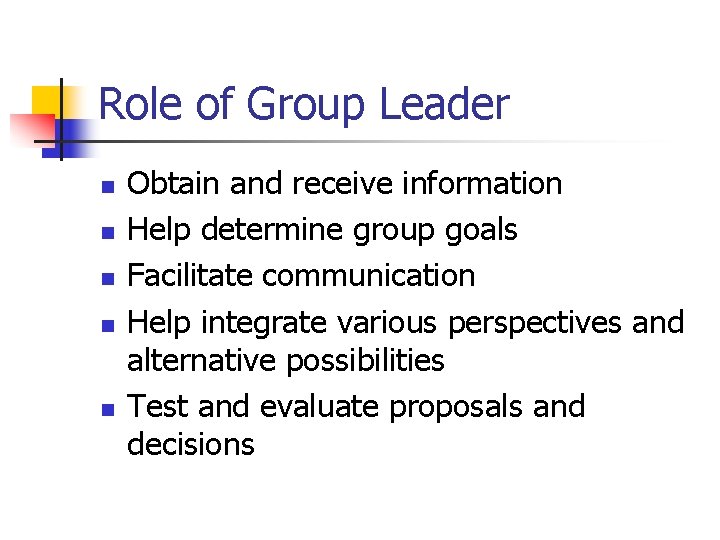
Role of Group Leader n n n Obtain and receive information Help determine group goals Facilitate communication Help integrate various perspectives and alternative possibilities Test and evaluate proposals and decisions
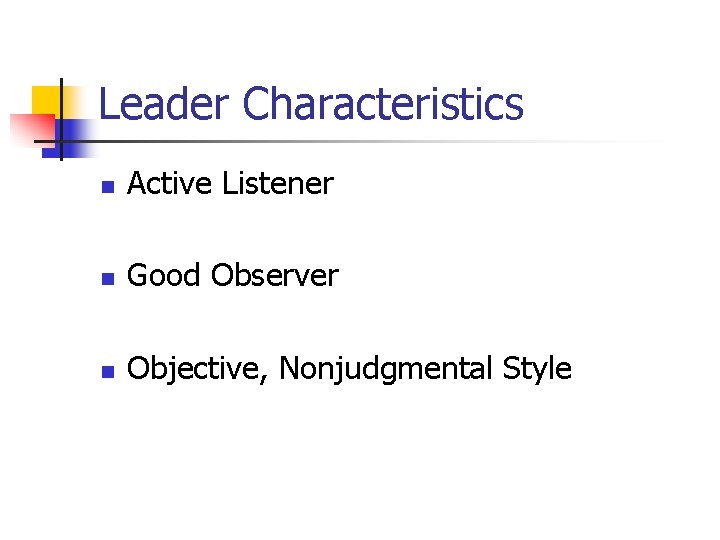
Leader Characteristics n Active Listener n Good Observer n Objective, Nonjudgmental Style
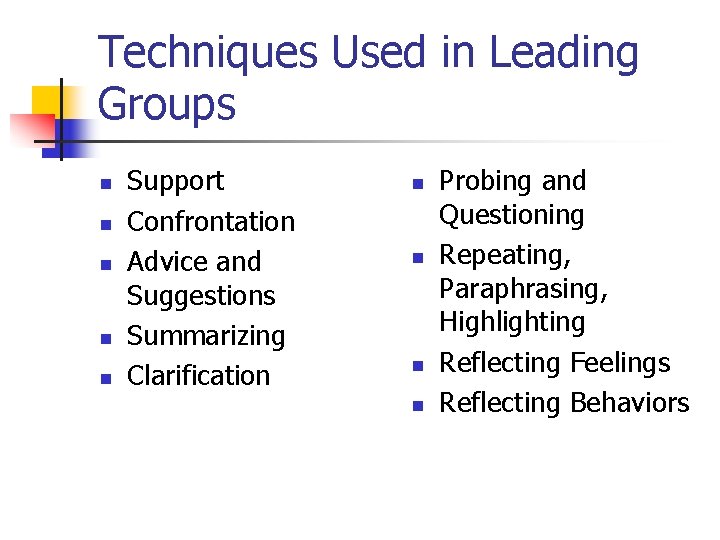
Techniques Used in Leading Groups n n n Support Confrontation Advice and Suggestions Summarizing Clarification n n Probing and Questioning Repeating, Paraphrasing, Highlighting Reflecting Feelings Reflecting Behaviors