Roll Assignment 116 Q Look at the energy
- Slides: 79
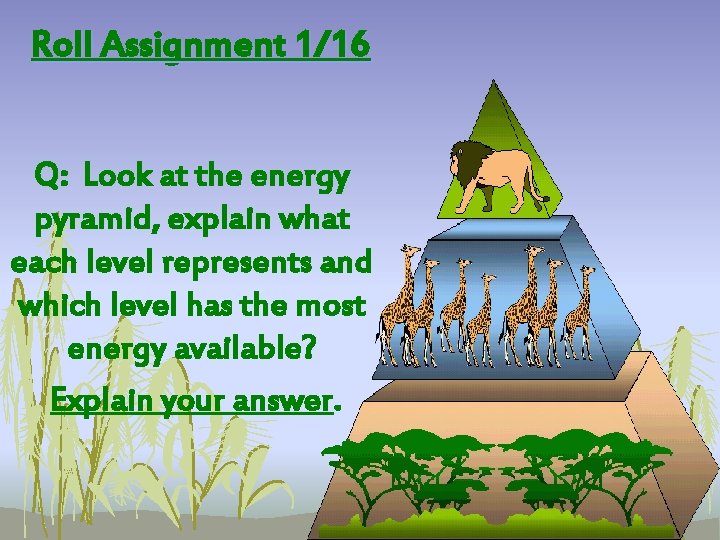
Roll Assignment 1/16 Q: Look at the energy pyramid, explain what each level represents and which level has the most energy available? Explain your answer.
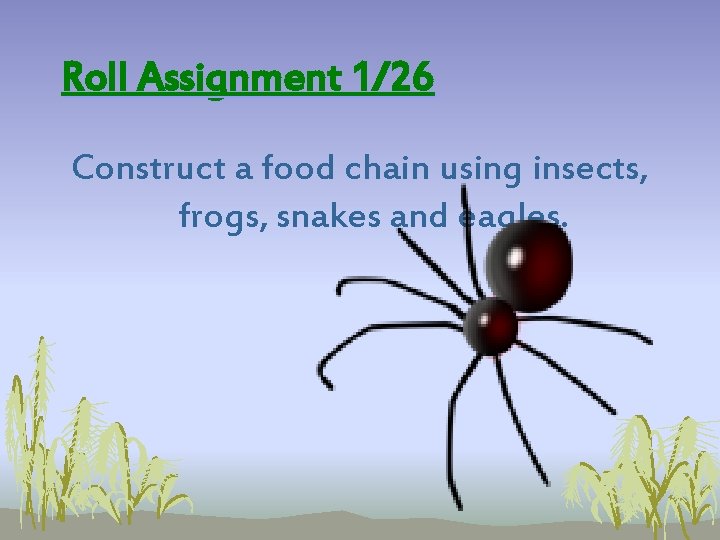
Roll Assignment 1/26 Construct a food chain using insects, frogs, snakes and eagles.
EST DAY! Staple everything in this order! • • • Test Vocabulary Primates of Evolution E. C Extinction and Evolution E. C Evolution Controversy (pink) E. C
What is the difference between a food chain and a food web? • FOOD CHAINS FOLLOW A SINGLE PATH AS ANIMALS EAT EACH OTHER • FOOD WEBS SHOW PLANTS & ANIMALS ARE INTERCONNECTED BY DIFFERENT PATHS.
What does abiotic mean? Abiotic factors are those non-living physical and chemical factors which affect the ability of organisms to survive and reproduce.
What does abiotic mean? • Abiotic factors are those that are classified as non-living. Such as light, temperature, water, atmospheric gasses as well as soil. • These factors affect different plants, animals and fungi to different extents.
What does biotic mean? Biotic means relating to, produced by, or caused by living organisms.
What does biotic mean? • biotic components are the living things that shape an ecosystem. They are in entirety, anything that affects a living organism that is itself alive. Such things include animals which consume the organism in question, and the living food that the organism consumes.
Roll Assignment 1/7 Question: Use Darwin’s theory of natural selection and explain how the giraffe got its neck. Stamps: Turn In D. A for a stamp! Homework: Black Pepper Moth Reading & Questions due Tomorrow!
Roll Assignment 1/8 Question: Why is Darwin’s theory of natural selection sometimes described as “survival of the fittest”? Stamps: Turn in “Black Pepper Moth” Readingbefore Roll Assignment Homework: “Evidence for Evolution”- use notes to complete At home.
Roll Assignment 1/9 Question: Using an example, explain how Butterflies could have evolved into what they are today. Stamps: Save Evidence for Evolution for discussion! Homework: Vocabulary 6. 2 due with Test on the 26 th.
Roll Assignment 1/13 Take out your “Blending Butterflies” and begin to total the number of butterflies you see in the classroom by walking around silently. Your Lab is due in class today! Your vocabulary and extra credit isnt due until the day of your Test! Homework: Yellow WASL reading due tomorrow!
Mechanisms of Evolution • Evolution: change in the hereditary features of species over time. • Species: a group of organisms that successfully reproduce among themselves. • There are two kinds of evolution:
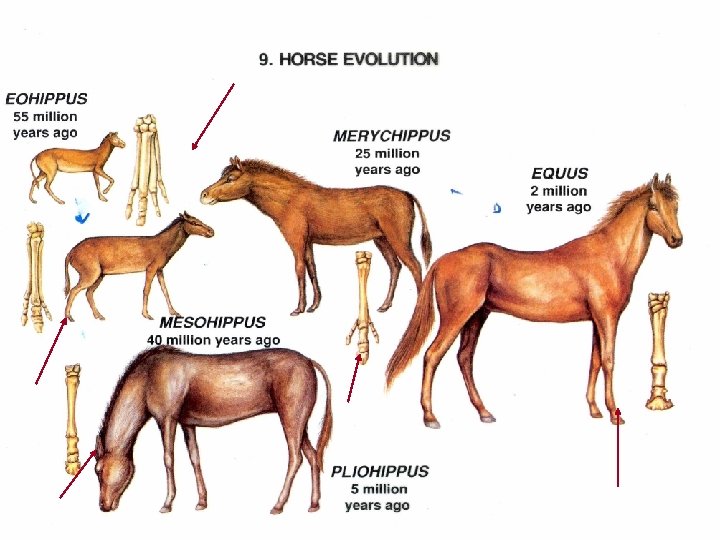
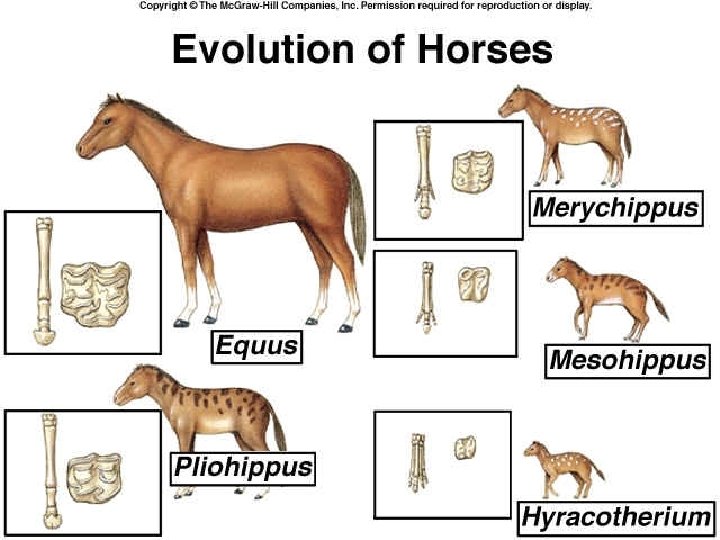
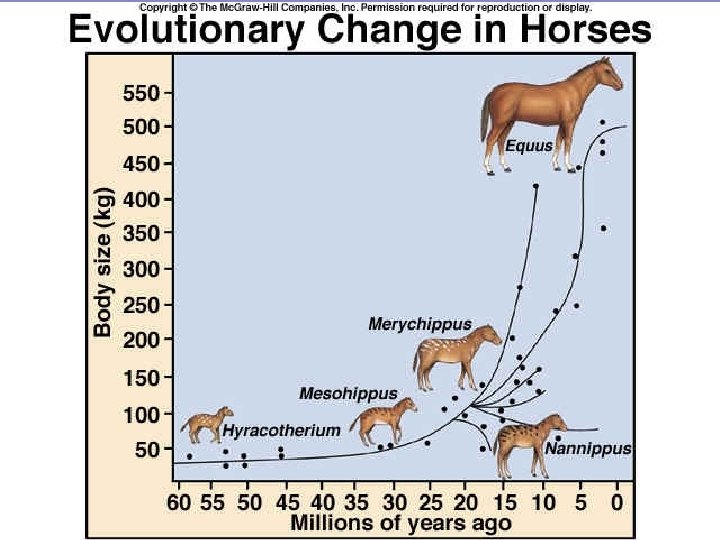
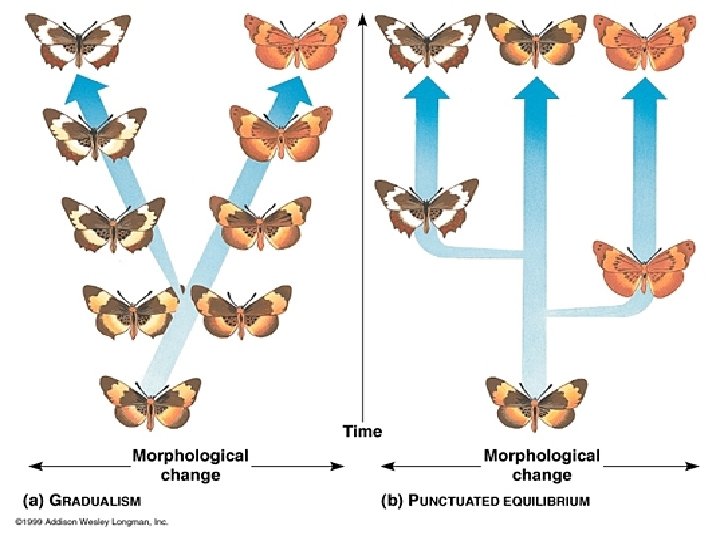
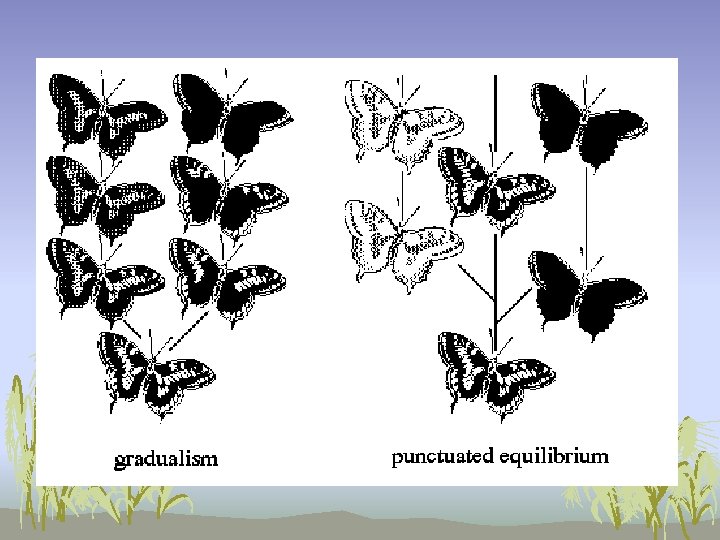
1. Gradualism: slow change of one species to another new species. In this theory, there are intermediate forms of the species • Example: horses
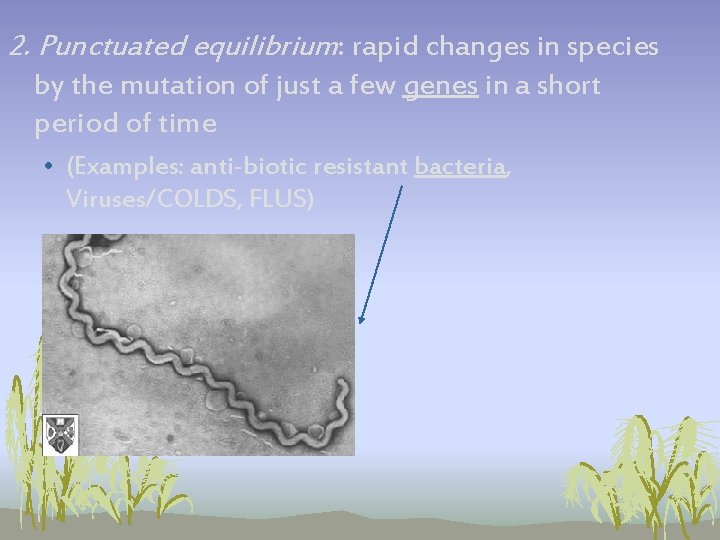
2. Punctuated equilibrium: rapid changes in species by the mutation of just a few genes in a short period of time • (Examples: anti-biotic resistant bacteria, Viruses/COLDS, FLUS)
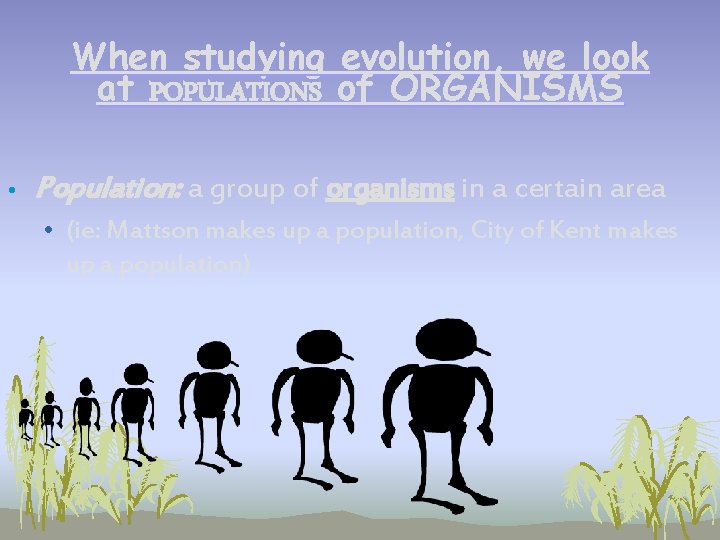
When studying evolution, we look at POPULATIONS of ORGANISMS • Population: a group of organisms in a certain area • (ie: Mattson makes up a population, City of Kent makes up a population)
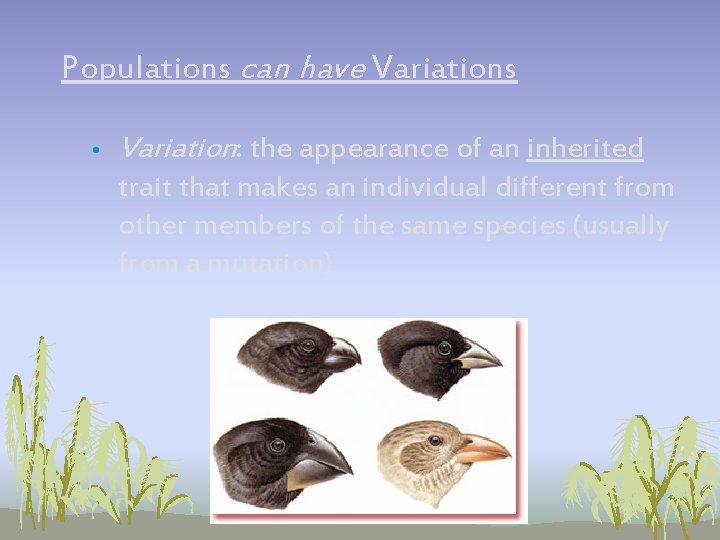
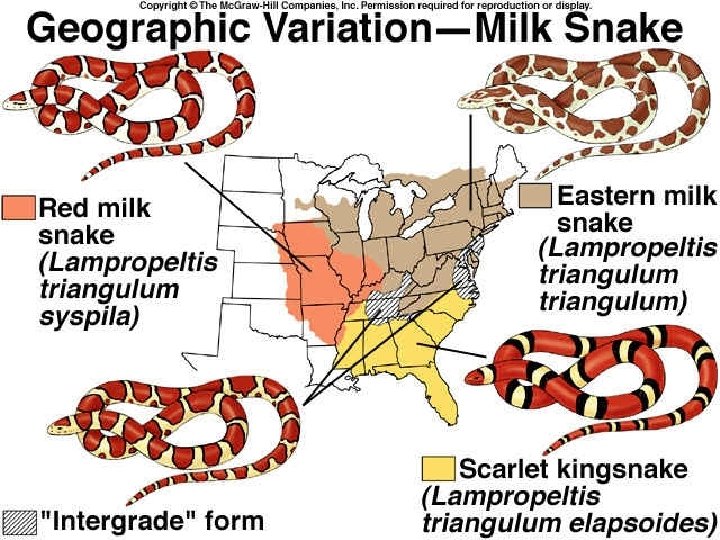
Populations can have Variations • Variation: the appearance of an inherited trait that makes an individual different from other members of the same species (usually from a mutation)
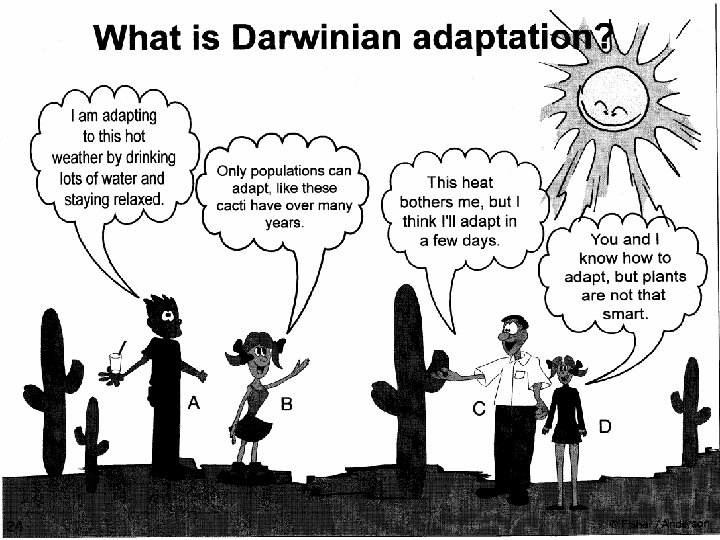
Sometimes, Variations are considered Adaptations • Adaptation: any variation that makes an organism better suited to it’s environment. (examples could be in the organism’s color, shape, behavior, or chemical makeup. )
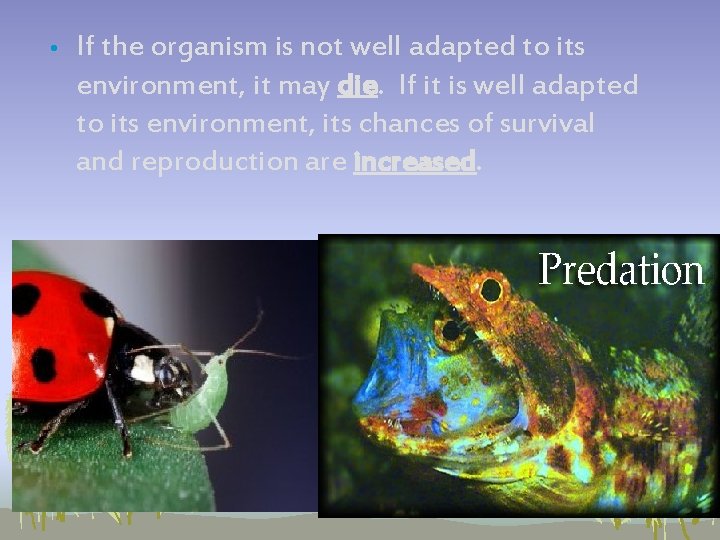
• If the organism is not well adapted to its environment, it may die. If it is well adapted to its environment, its chances of survival and reproduction are increased.
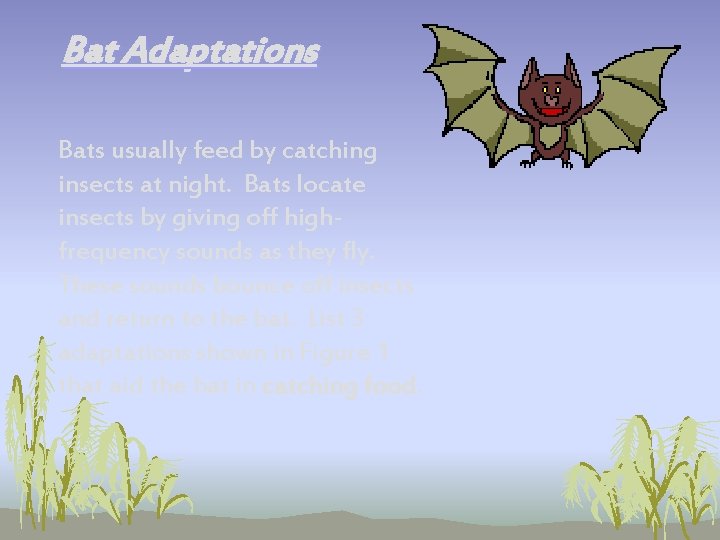
Bat Adaptations Bats usually feed by catching insects at night. Bats locate insects by giving off highfrequency sounds as they fly. These sounds bounce off insects and return to the bat. List 3 adaptations shown in Figure 1 that aid the bat in catching food.
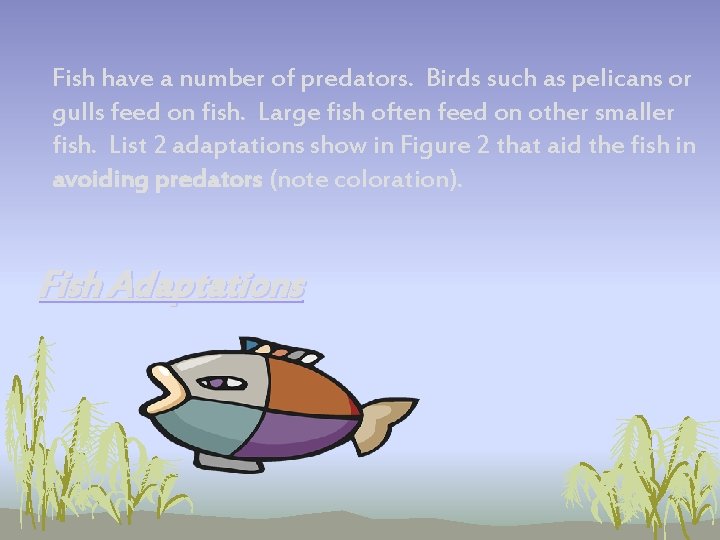
Fish have a number of predators. Birds such as pelicans or gulls feed on fish. Large fish often feed on other smaller fish. List 2 adaptations show in Figure 2 that aid the fish in avoiding predators (note coloration). Fish Adaptations
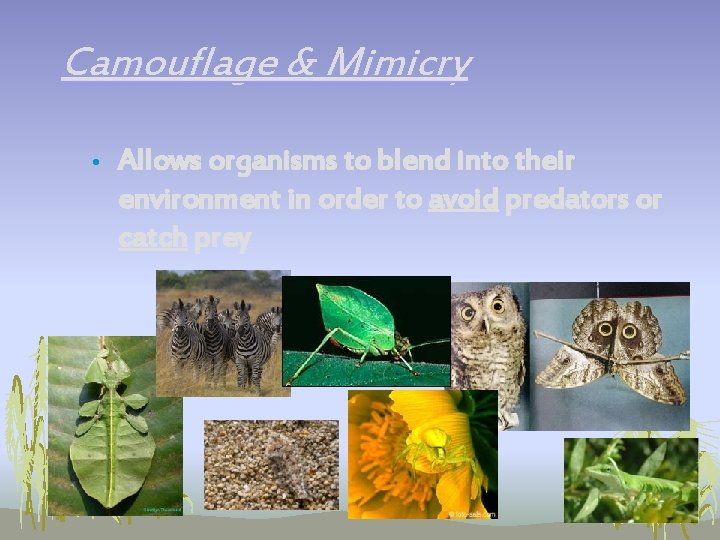
Camouflage & Mimicry • Allows organisms to blend into their environment in order to avoid predators or catch prey
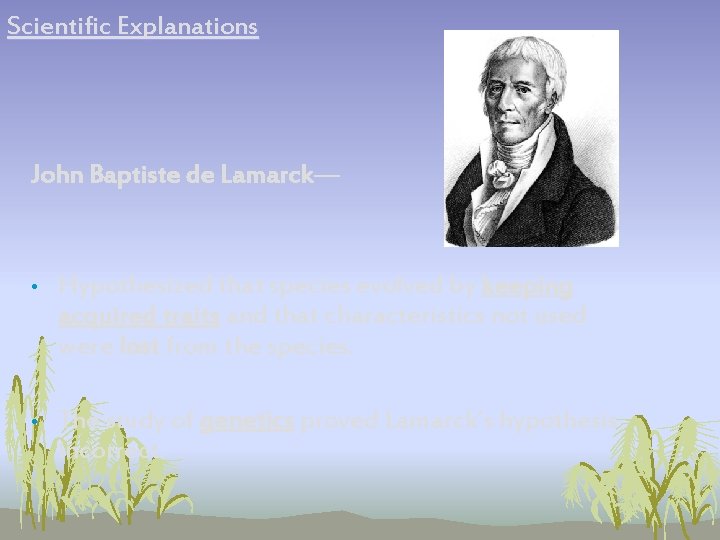
Scientific Explanations John Baptiste de Lamarck— • Hypothesized that species evolved by keeping acquired traits and that characteristics not used were lost from the species. • The study of genetics proved Lamarck’s hypothesis incorrect.
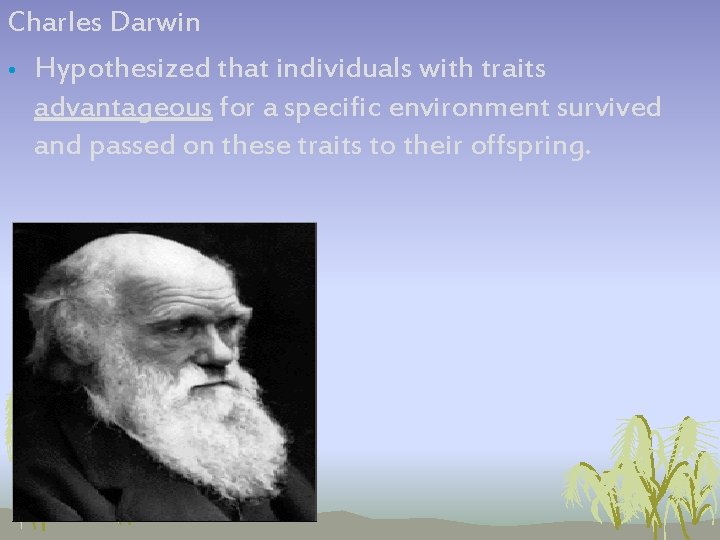
Charles Darwin • Hypothesized that individuals with traits advantageous for a specific environment survived and passed on these traits to their offspring.
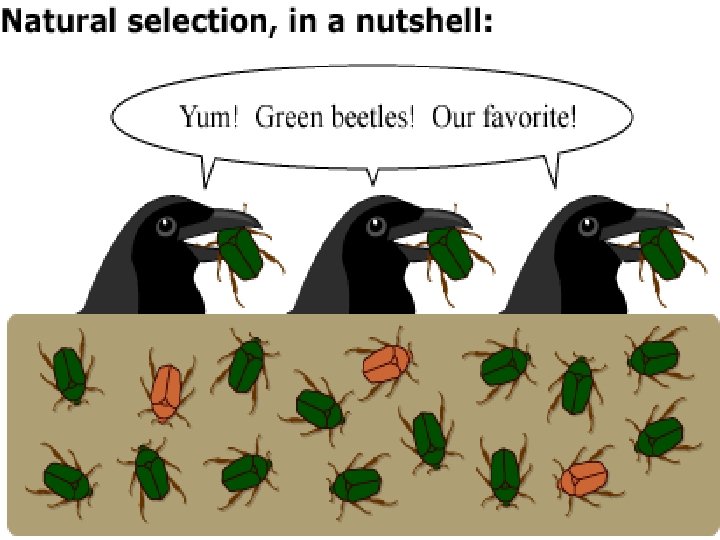
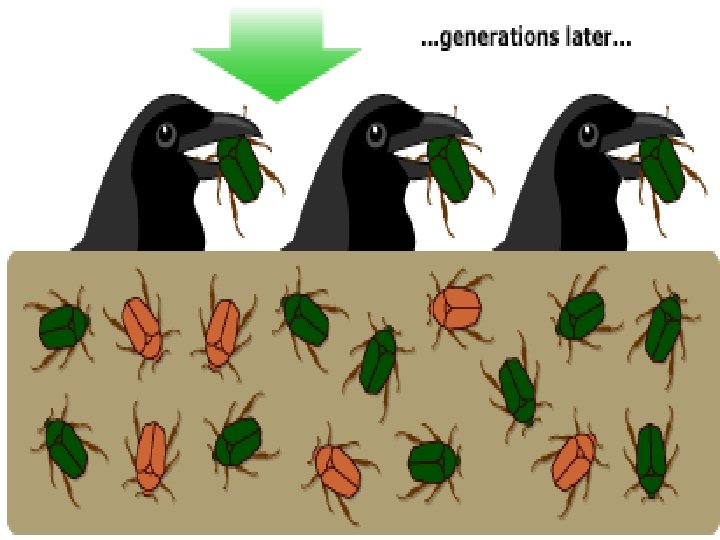
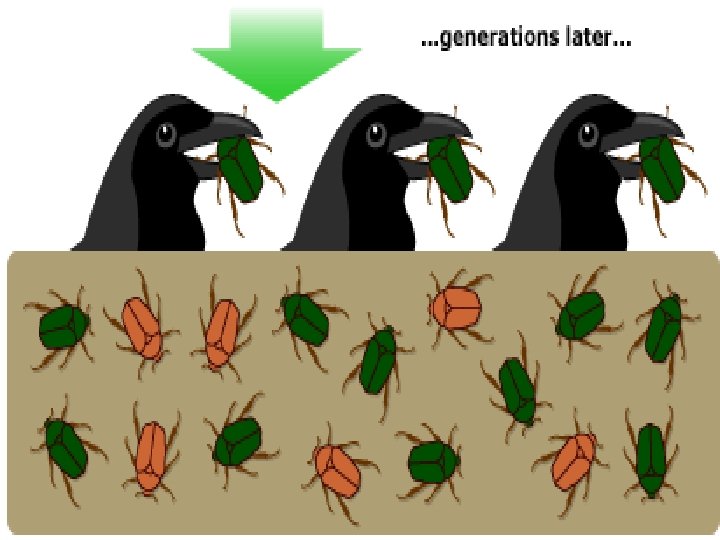
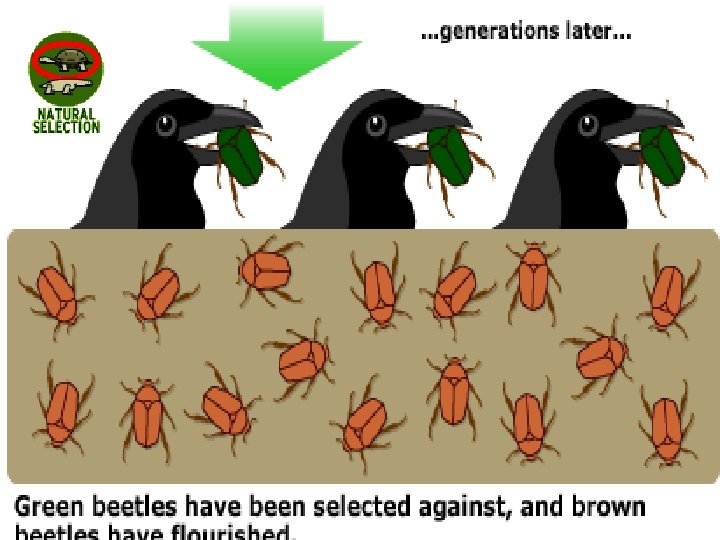
• Also known as theory of evolution by “natural selection”. (means that only organisms with the traits best suited for their environments are more likely to survive. …(and therefore pass on those traits)
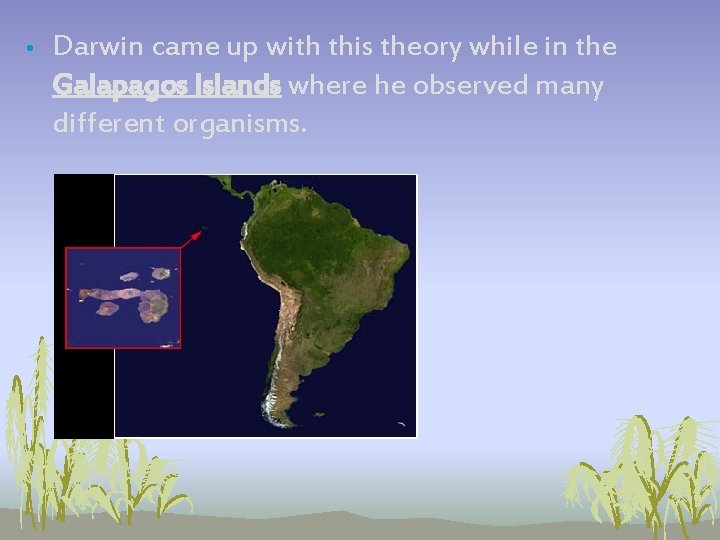
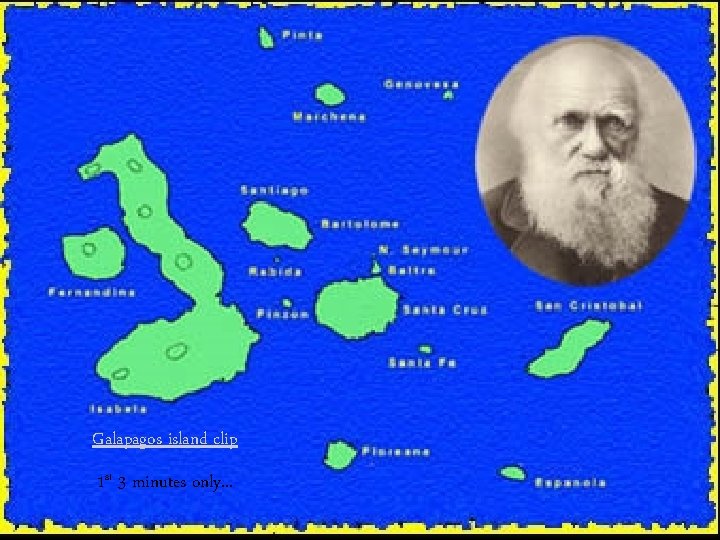
• Darwin came up with this theory while in the Galapagos Islands where he observed many different organisms.
Galapagos island clip 1 st 3 minutes only. . .
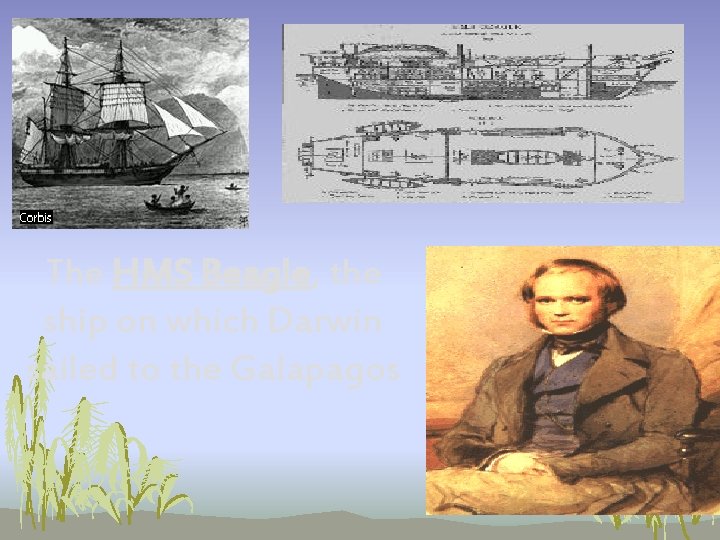
The HMS Beagle, the ship on which Darwin sailed to the Galapagos
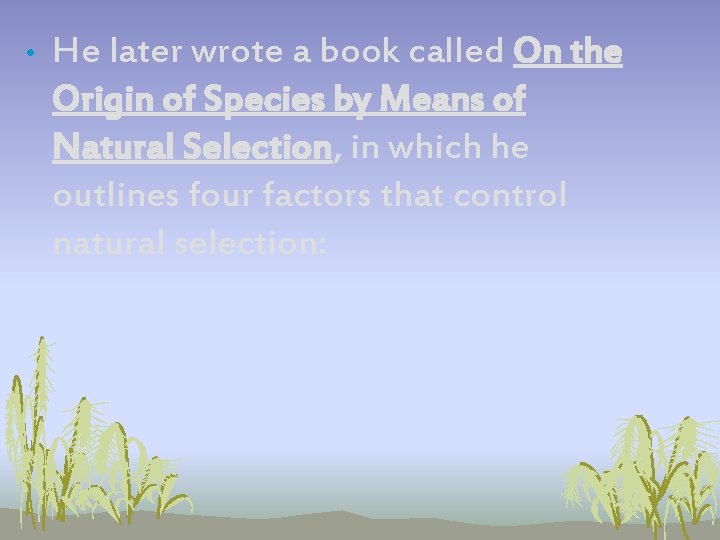
• He later wrote a book called On the Origin of Species by Means of Natural Selection, in which he outlines four factors that control natural selection:
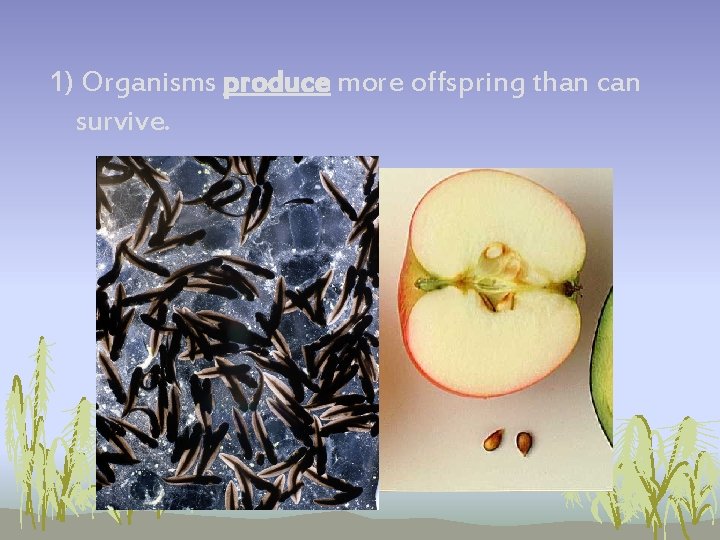
1) Organisms produce more offspring than can survive.
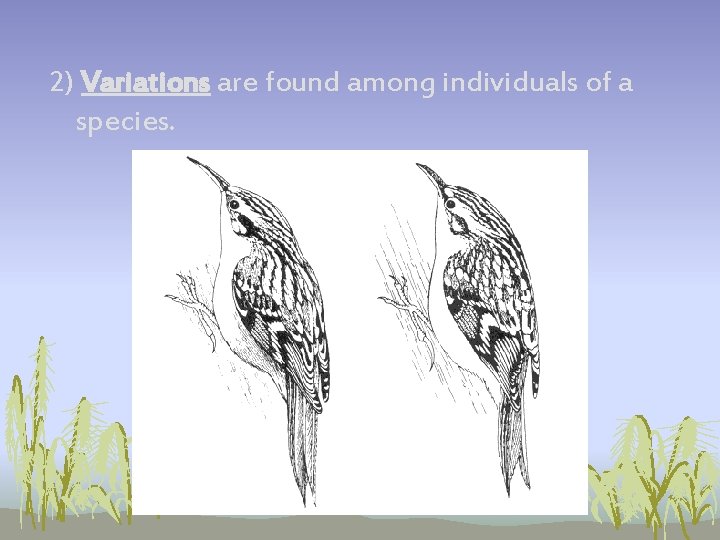
2) Variations are found among individuals of a species.
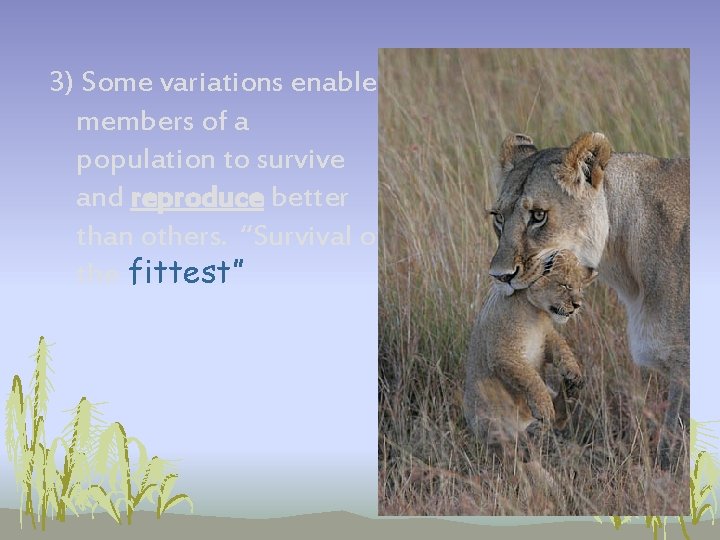
3) Some variations enable members of a population to survive and reproduce better than others. “Survival of the fittest”
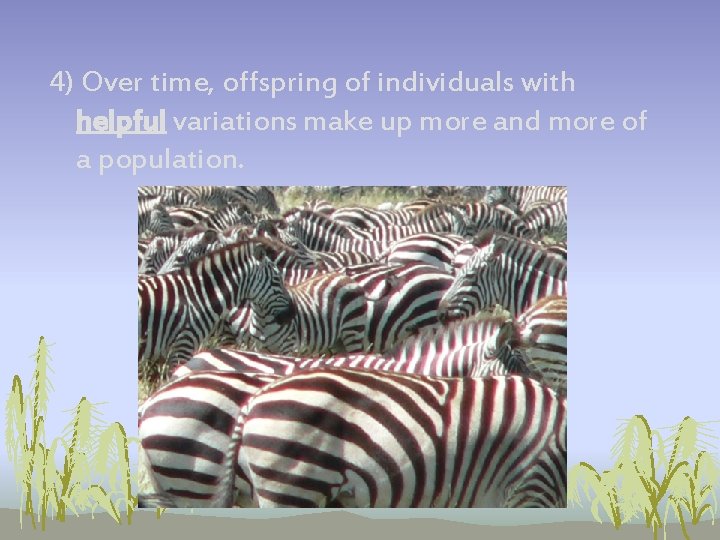
4) Over time, offspring of individuals with helpful variations make up more and more of a population.
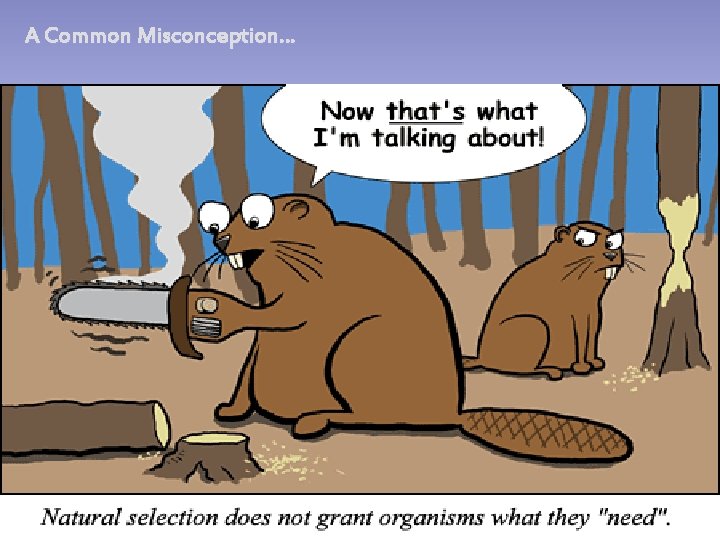
A Common Misconception…
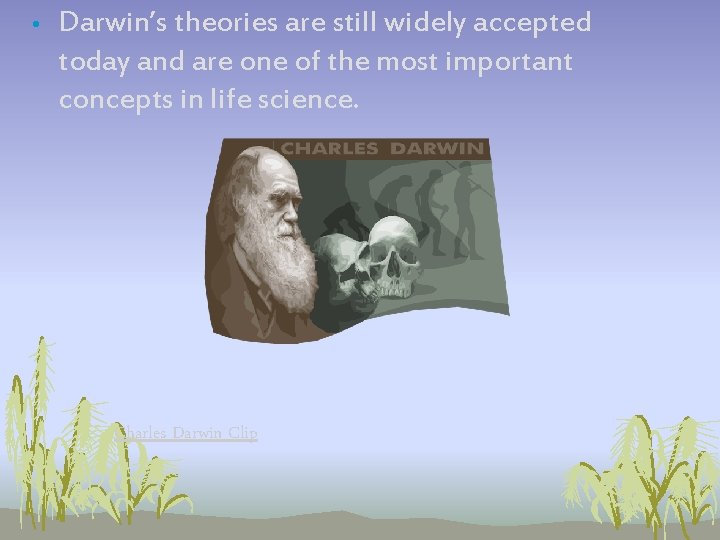
• Darwin’s theories are still widely accepted today and are one of the most important concepts in life science. Charles Darwin Clip
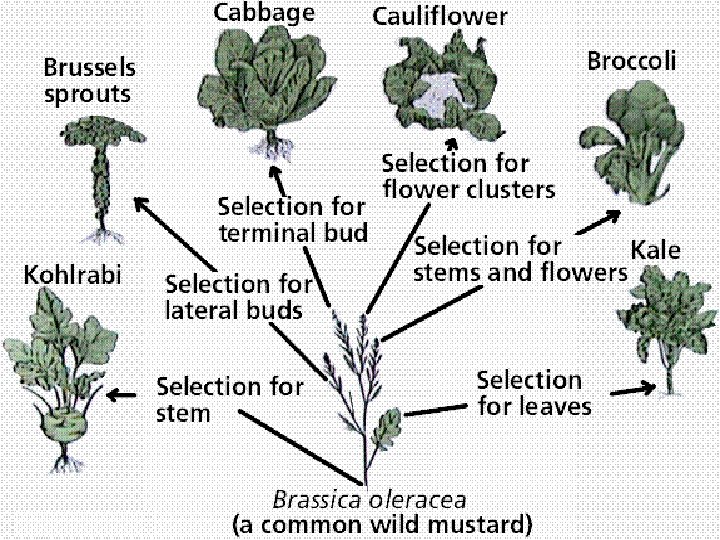
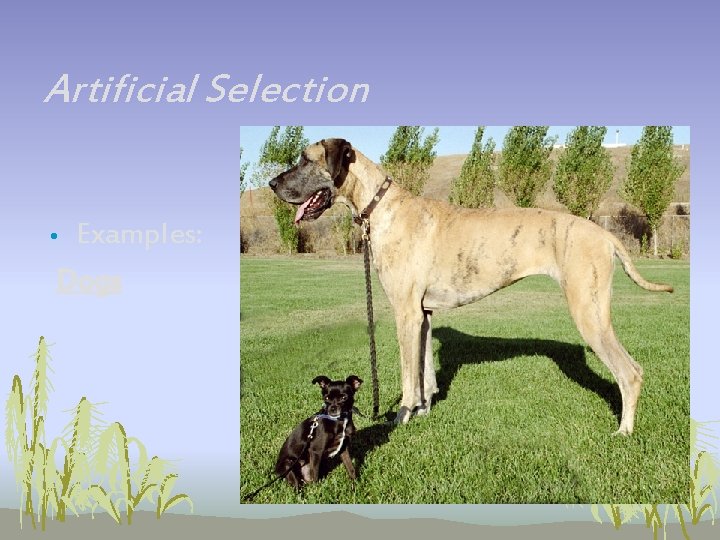
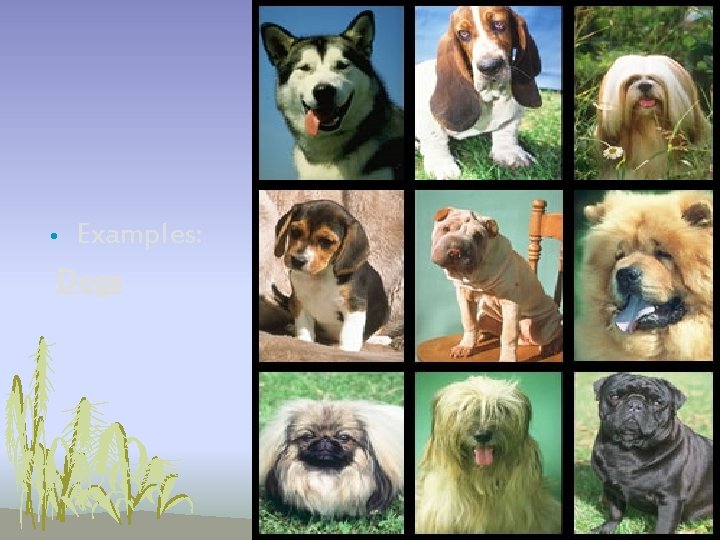
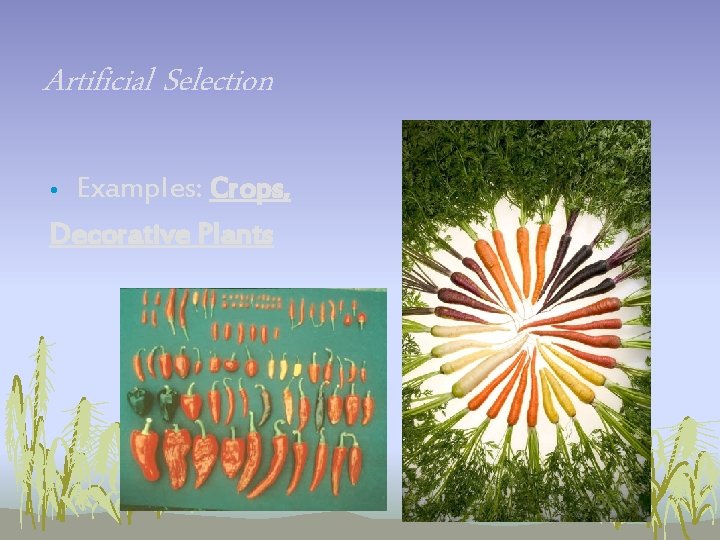
Artificial Selection • • The process of intentional or unintentional modification of a species through human actions which encourage the breeding of certain traits over others Also known as “selective breeding”
Artificial Selection Examples: Dogs •
Examples: Dogs •
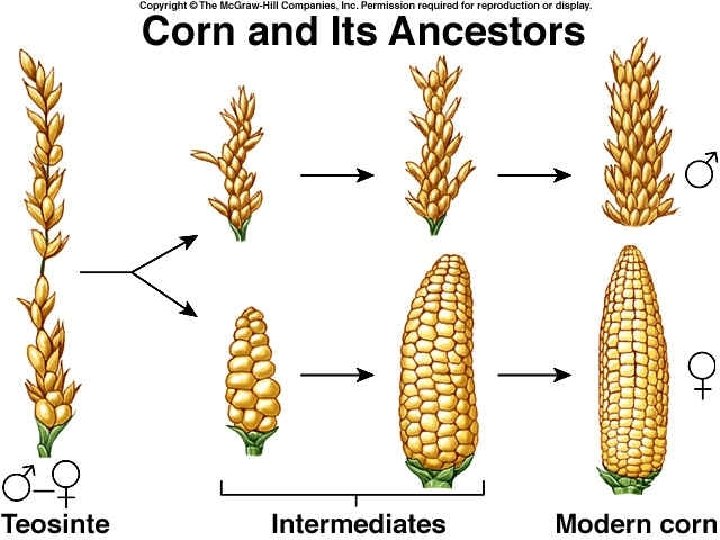
Artificial Selection Examples: Crops, Decorative Plants •
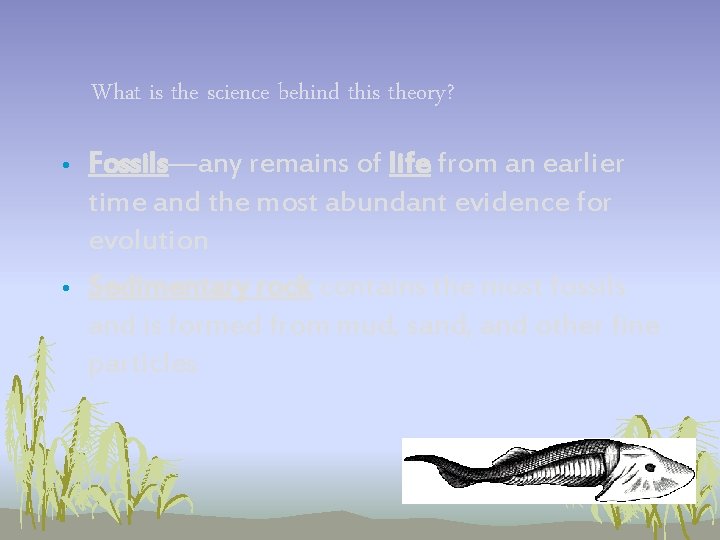
What is the science behind this theory? • • Fossils—any remains of life from an earlier time and the most abundant evidence for evolution Sedimentary rock contains the most fossils and is formed from mud, sand, and other fine particles
http: //www. pbs. org/wgbh/evolution/library/ 03/4/l_034_05. html
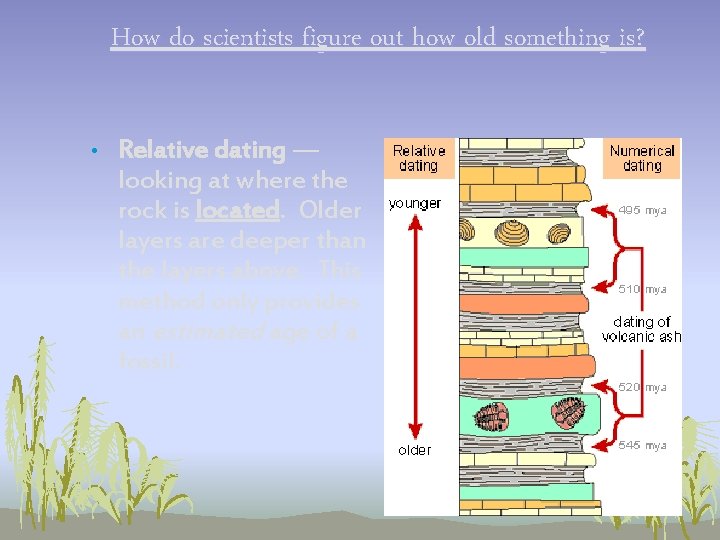
How do scientists figure out how old something is? • Relative dating — looking at where the rock is located. Older layers are deeper than the layers above. This method only provides an estimated age of a fossil.
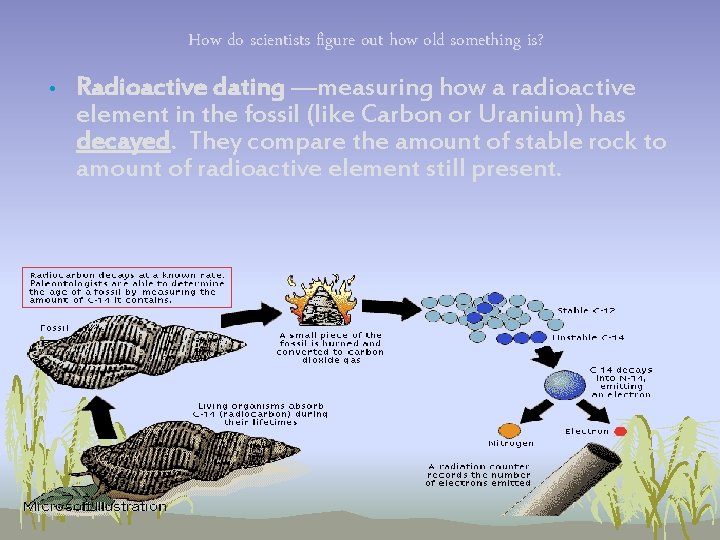
How do scientists figure out how old something is? • Radioactive dating —measuring how a radioactive element in the fossil (like Carbon or Uranium) has decayed. They compare the amount of stable rock to amount of radioactive element still present.
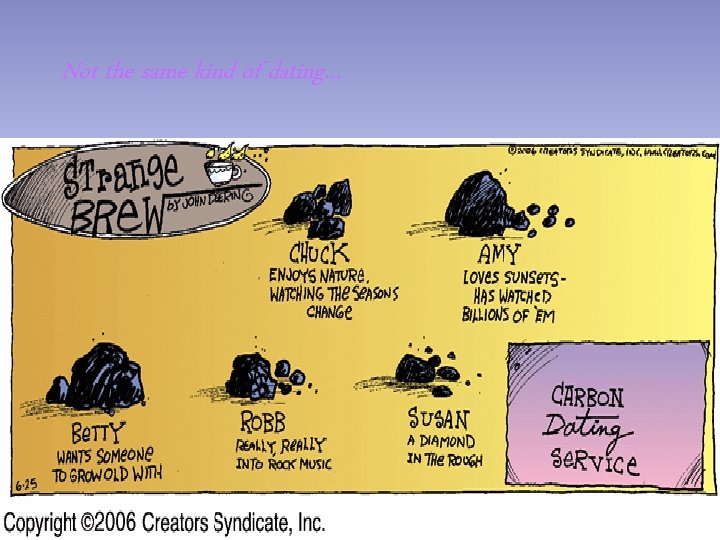
Not the same kind of dating…
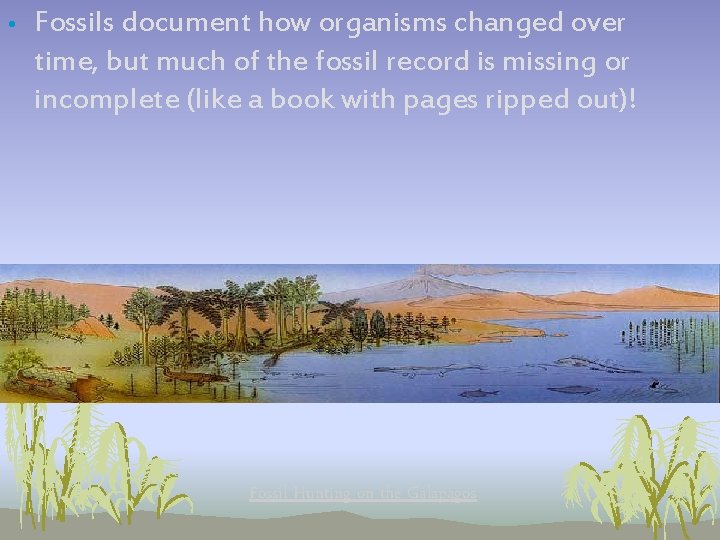
• Fossils document how organisms changed over time, but much of the fossil record is missing or incomplete (like a book with pages ripped out)! Fossil Hunting on the Galapagos
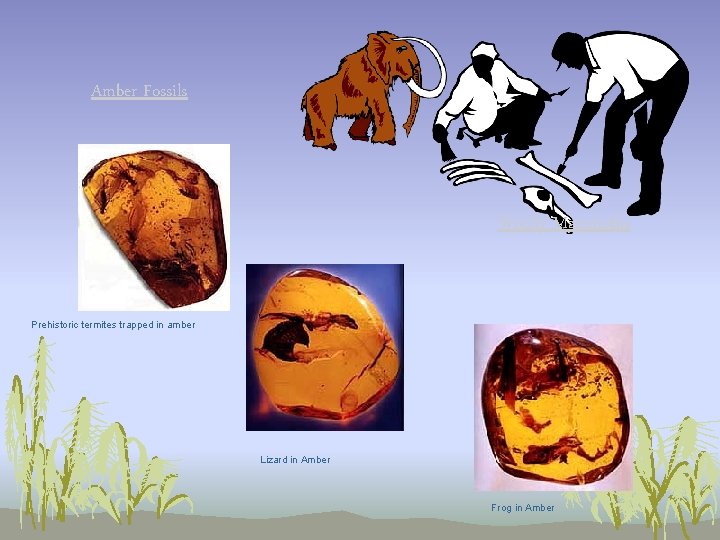
Amber Fossils Woolly Mammoths Prehistoric termites trapped in amber Lizard in Amber Frog in Amber
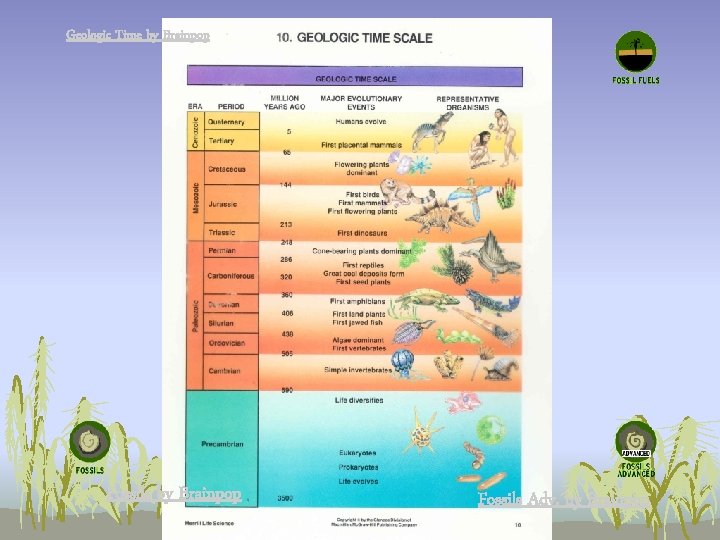
Geologic Time by Brainpop Fossils Adv. by Brainpop
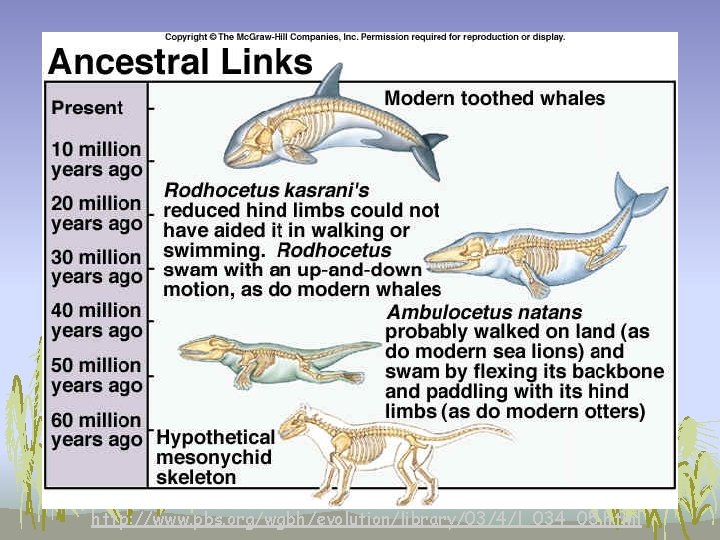
http: //www. pbs. org/wgbh/evolution/library/03/4/l_034_05. html
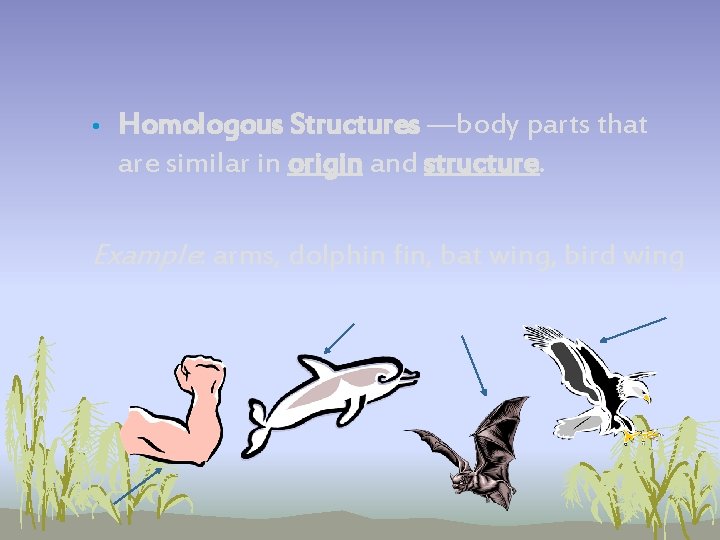
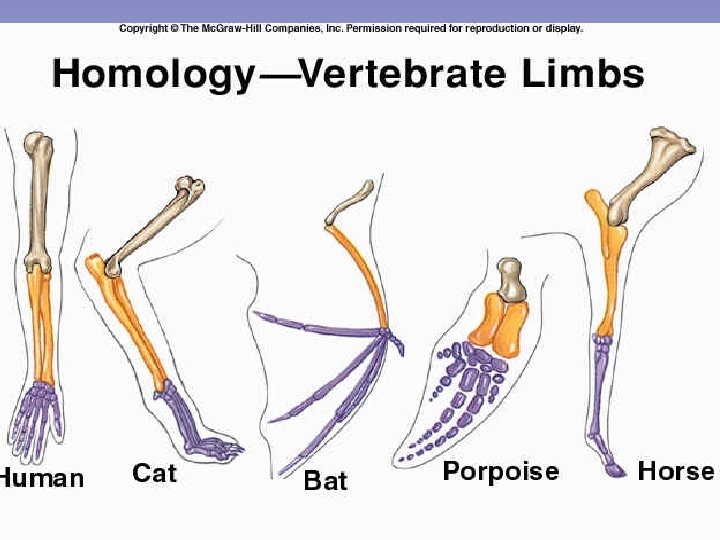
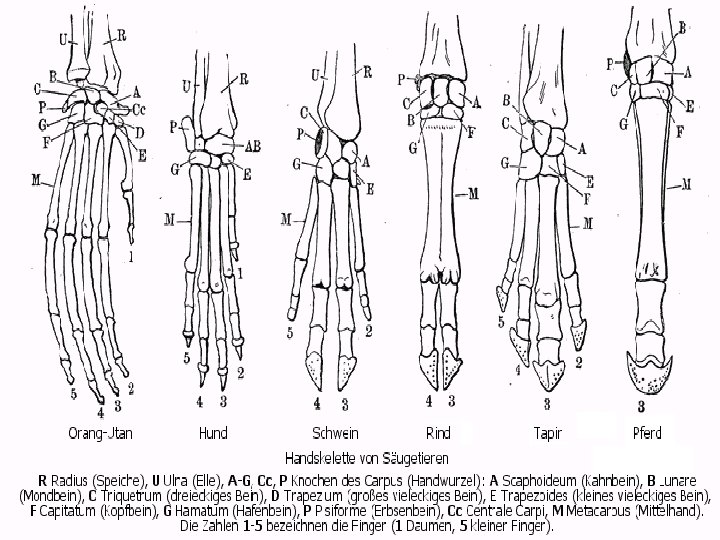
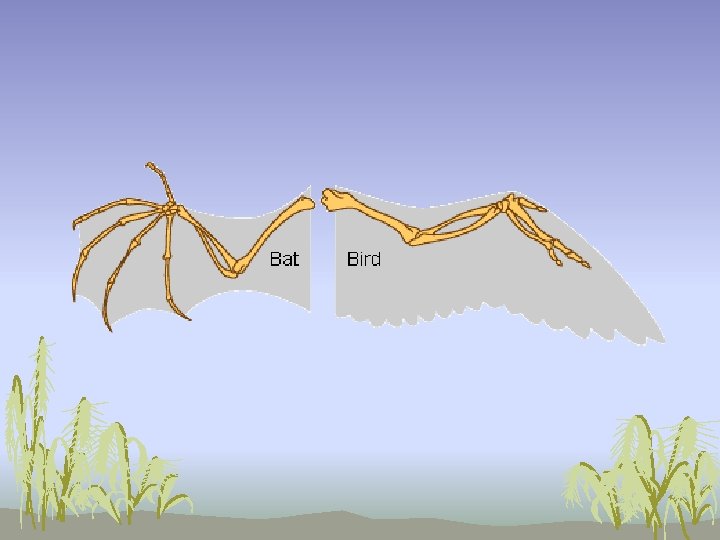
• Homologous Structures —body parts that are similar in origin and structure. Example: arms, dolphin fin, bat wing, bird wing
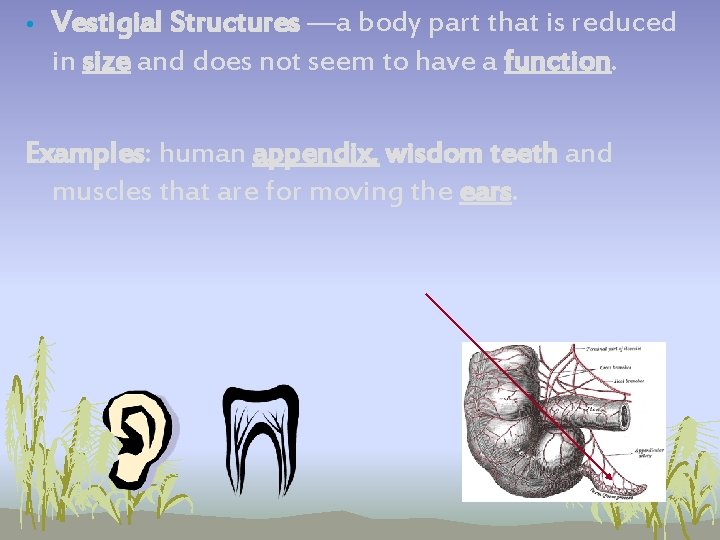
• Vestigial Structures —a body part that is reduced in size and does not seem to have a function. Examples: human appendix, wisdom teeth and muscles that are for moving the ears.
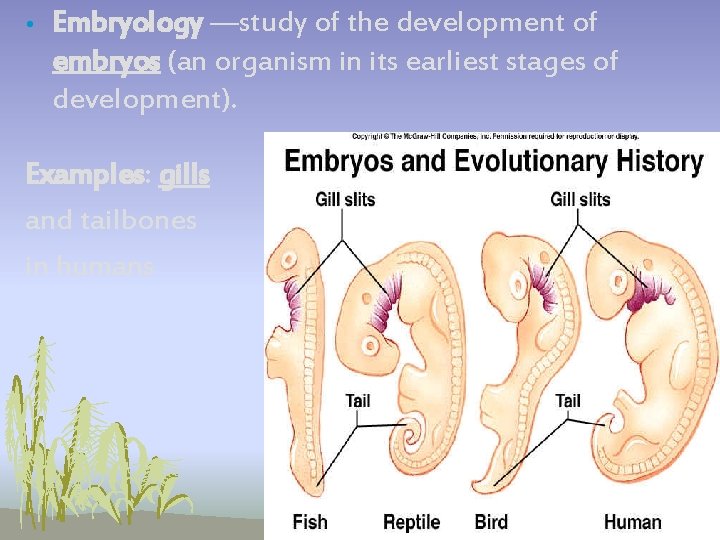
• Embryology —study of the development of embryos (an organism in its earliest stages of development). Examples: gills and tailbones in humans
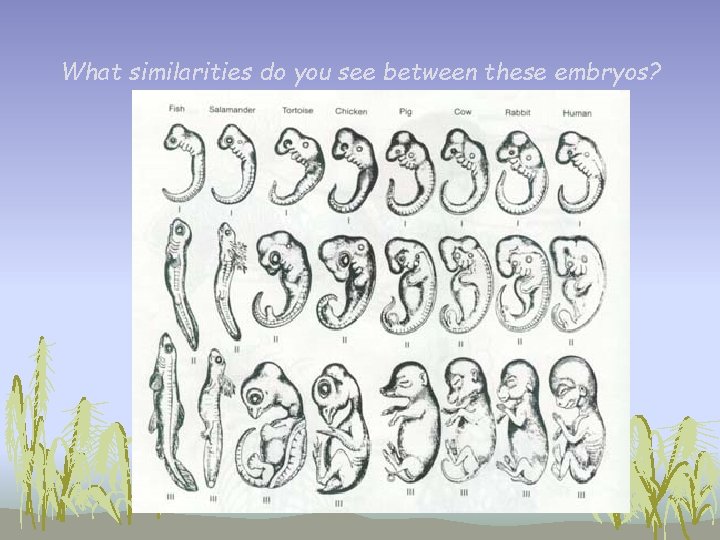
What similarities do you see between these embryos?
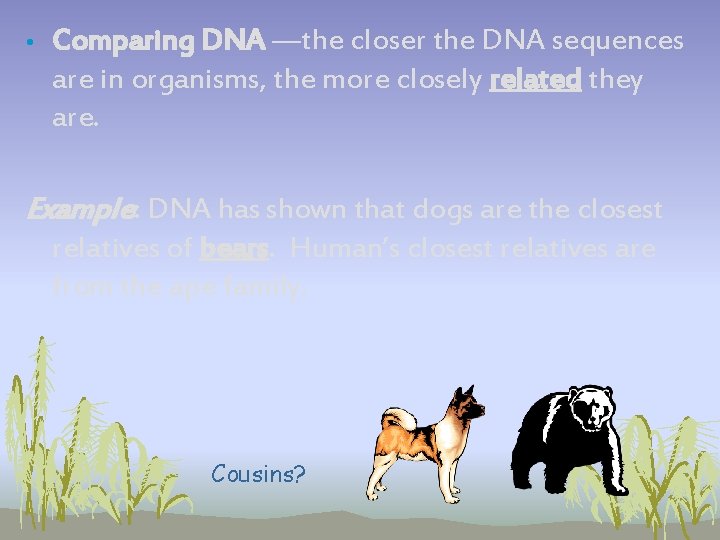
• Comparing DNA —the closer the DNA sequences are in organisms, the more closely related they are. Example: DNA has shown that dogs are the closest relatives of bears. Human’s closest relatives are from the ape family. Cousins?
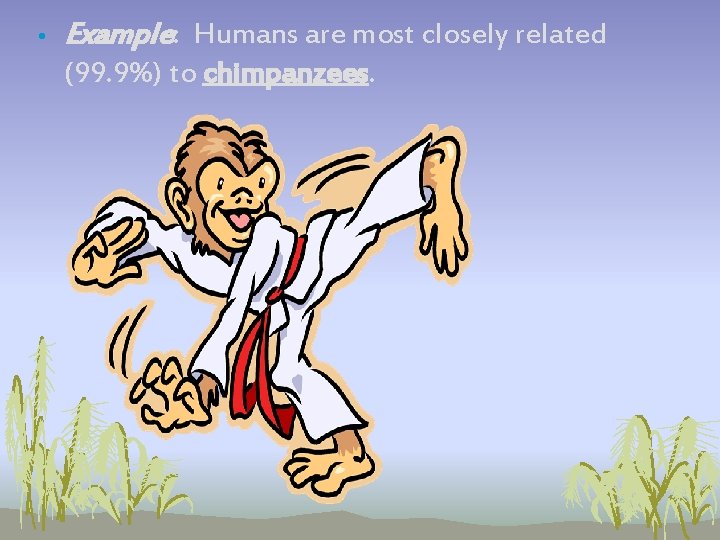
• Example: Humans are most closely related (99. 9%) to chimpanzees.
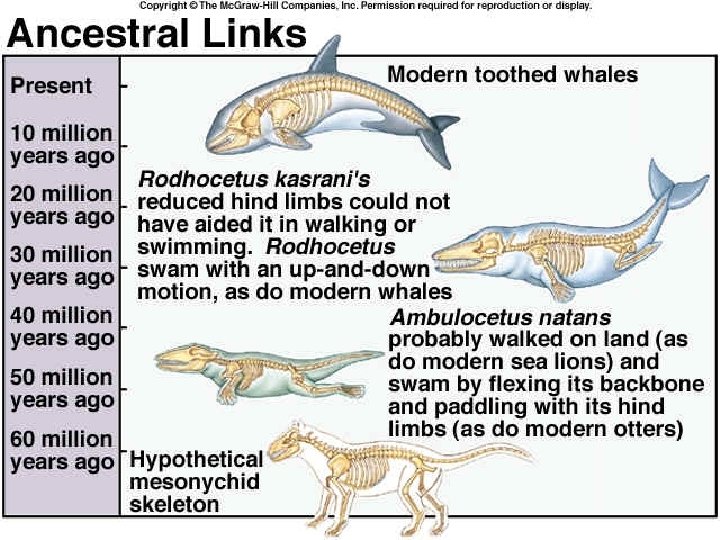
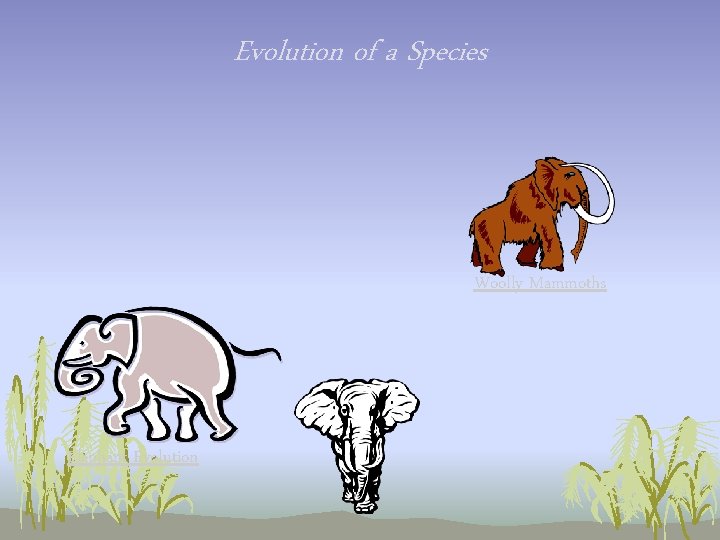
Evolution of a Species Woolly Mammoths Elephant Evolution
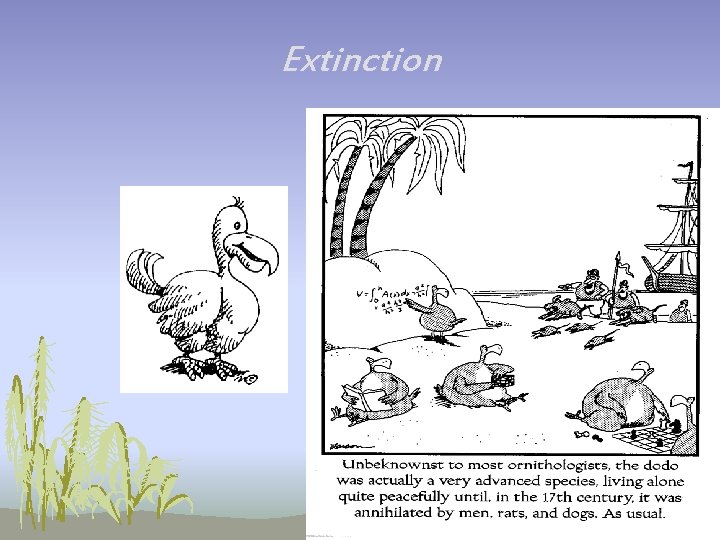
Extinction
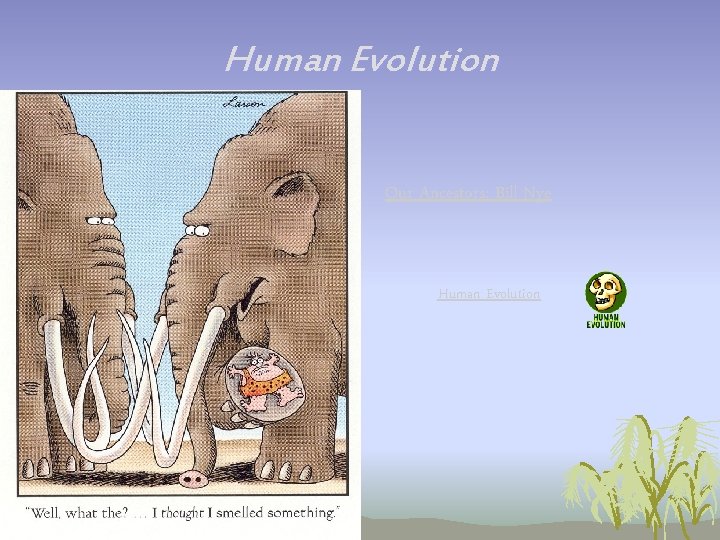
Human Evolution Our Ancestors: Bill Nye Human Evolution