Please note these are the actual videorecorded proceedings












- Slides: 73
Please note, these are the actual videorecorded proceedings from the live CME event and may include the use of trade names and other raw, unedited content. Select slides from the original presentation are omitted where Research To Practice was unable to obtain permission from the publication source and/or author. Links to view the actual reference materials have been provided for your use in place of any omitted slides.
Challenging Cases in Metastatic Colorectal Cancer (CRC) Oncologist and Nurse Investigators Consult on Actual Patients from the Practices of the Invited Faculty Wednesday, April 24, 2013 6: 00 PM – 8: 00 PM Washington, DC Faculty Charles S Fuchs, MD, MPH Axel Grothey, MD Jessica Mitchell, RN, CNP, MPH Tammy Triglianos, RN, MS, APRN, BC, AOCNP Moderator Neil Love, MD
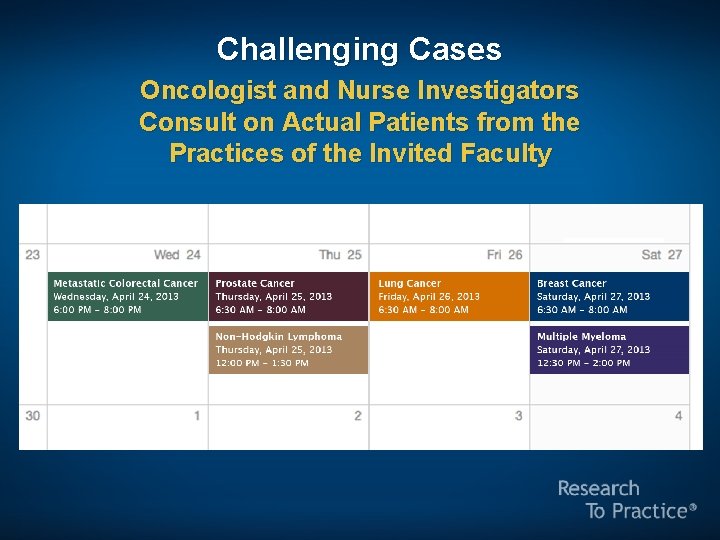
Challenging Cases Oncologist and Nurse Investigators Consult on Actual Patients from the Practices of the Invited Faculty
Themes — Challenging Cases in Oncology A 10 -Hour Integrated Curriculum • Challenges associated with the incorporation of new research findings and newly approved agents into practice • Patient education on potential risks and benefits of specific oncologic treatments • Monitoring and management of treatment side effects and toxicities
Themes — Challenging Cases in Oncology A 10 -Hour Integrated Curriculum • Participation in ongoing clinical trials as an important patient option • Psychosocial impact of cancer diagnosis and treatment — why all patients, even those with the same disease, are different • Strategies to cope with the stress of being an oncology professional
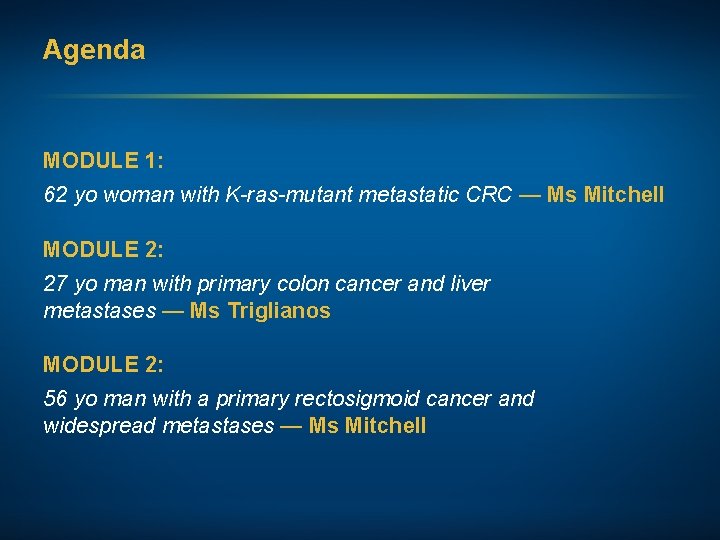
Agenda MODULE 1: 62 yo woman with K-ras-mutant metastatic CRC — Ms Mitchell MODULE 2: 27 yo man with primary colon cancer and liver metastases — Ms Triglianos MODULE 2: 56 yo man with a primary rectosigmoid cancer and widespread metastases — Ms Mitchell
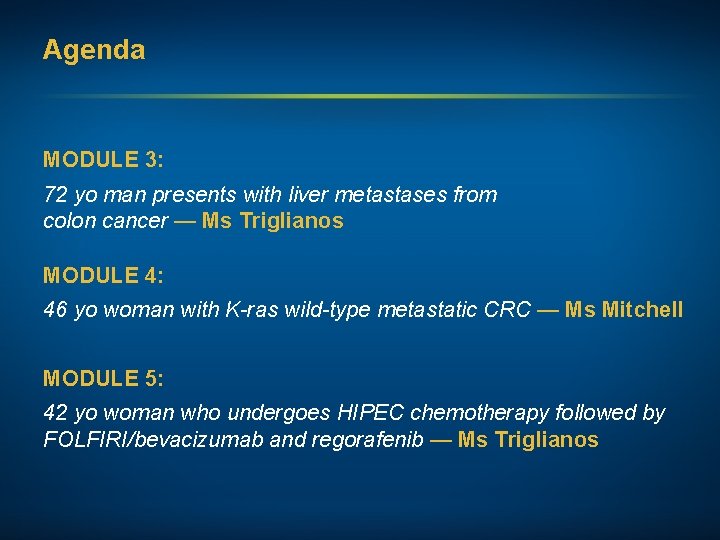
Agenda MODULE 3: 72 yo man presents with liver metastases from colon cancer — Ms Triglianos MODULE 4: 46 yo woman with K-ras wild-type metastatic CRC — Ms Mitchell MODULE 5: 42 yo woman who undergoes HIPEC chemotherapy followed by FOLFIRI/bevacizumab and regorafenib — Ms Triglianos
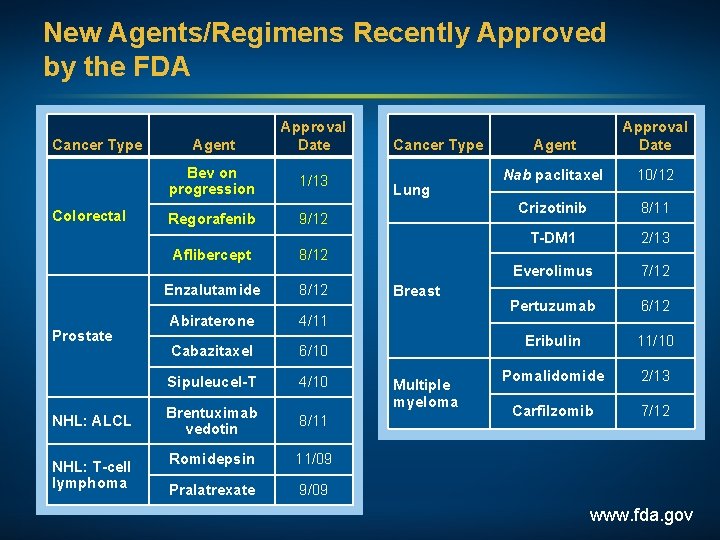
New Agents/Regimens Recently Approved by the FDA Cancer Type Colorectal Prostate NHL: ALCL NHL: T-cell lymphoma Agent Approval Date Bev on progression 1/13 Regorafenib 9/12 Aflibercept 8/12 Enzalutamide 8/12 Abiraterone 4/11 Cabazitaxel 6/10 Sipuleucel-T 4/10 Brentuximab vedotin 8/11 Romidepsin 11/09 Pralatrexate 9/09 Cancer Type Lung Breast Multiple myeloma Agent Approval Date Nab paclitaxel 10/12 Crizotinib 8/11 T-DM 1 2/13 Everolimus 7/12 Pertuzumab 6/12 Eribulin 11/10 Pomalidomide 2/13 Carfilzomib 7/12 www. fda. gov
MODULE 1: NEW AGENTS AND TREATMENT STRATEGIES FOR METASTATIC COLORECTAL CANCER (m. CRC)
Case (from the practice of Ms Mitchell) • 62 yo married woman is followed for a year with anemia – Develops metastatic K-ras-mutant CRC to the liver and lungs • Received multiple lines of systemic treatment including various chemo agents plus bevacizumab – Hypertension requiring 3 medications • Currently receiving regorafenib – Continued hypertension, very mild hand-foot syndrome • Patient and family deeply resentful at the lost opportunity for earlier diagnosis and took legal action against the primary care team
Impact of K-ras Mutation Status on Selection of Systemic Treatment
Impact of K-ras Status on Treatment Selection for m. CRC • K-ras mutations in codons 12 and 13 predict for lack of response to EGFR antibodies cetuximab or panitumumab • K-ras mutant and wild type responsive to anti-VEGF agents
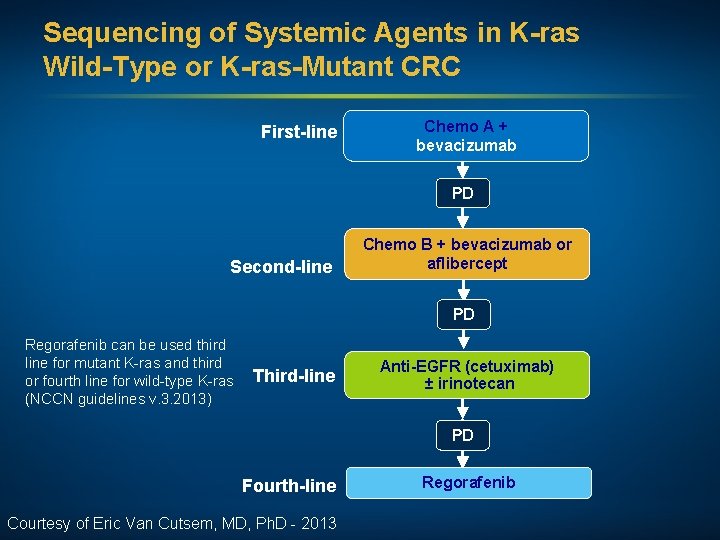
Sequencing of Systemic Agents in K-ras Wild-Type or K-ras-Mutant CRC First-line Chemo A + bevacizumab PD Second-line Chemo B + bevacizumab or aflibercept PD Regorafenib can be used third line for mutant K-ras and third or fourth line for wild-type K-ras (NCCN guidelines v. 3. 2013) Third-line Anti-EGFR (cetuximab) ± irinotecan PD Fourth-line Courtesy of Eric Van Cutsem, MD, Ph. D - 2013 Regorafenib
Recent Clinical Trial Data Evaluating the Continuation of Bevacizumab for Patients with Disease Progression on First-Line Chemotherapy/Bevacizumab
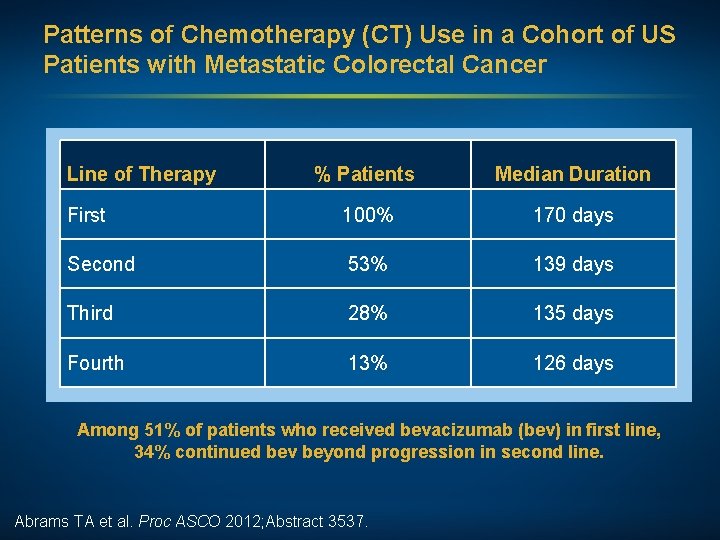
Patterns of Chemotherapy (CT) Use in a Cohort of US Patients with Metastatic Colorectal Cancer Line of Therapy % Patients Median Duration First 100% 170 days Second 53% 139 days Third 28% 135 days Fourth 13% 126 days Among 51% of patients who received bevacizumab (bev) in first line, 34% continued bev beyond progression in second line. Abrams TA et al. Proc ASCO 2012; Abstract 3537.
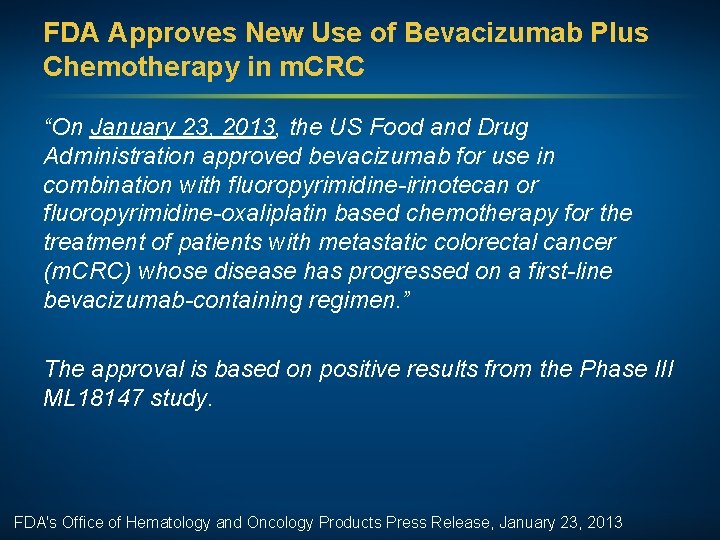
FDA Approves New Use of Bevacizumab Plus Chemotherapy in m. CRC “On January 23, 2013, the US Food and Drug Administration approved bevacizumab for use in combination with fluoropyrimidine-irinotecan or fluoropyrimidine-oxaliplatin based chemotherapy for the treatment of patients with metastatic colorectal cancer (m. CRC) whose disease has progressed on a first-line bevacizumab-containing regimen. ” The approval is based on positive results from the Phase III ML 18147 study. FDA's Office of Hematology and Oncology Products Press Release, January 23, 2013
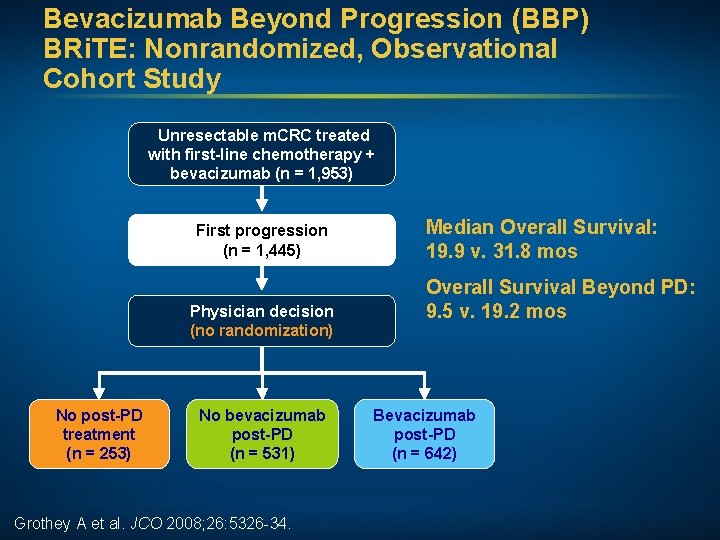
Bevacizumab Beyond Progression (BBP) BRi. TE: Nonrandomized, Observational Cohort Study Unresectable m. CRC treated with first-line chemotherapy + bevacizumab (n = 1, 953) First progression (n = 1, 445) Physician decision (no randomization) No post-PD treatment (n = 253) No bevacizumab post-PD (n = 531) Grothey A et al. JCO 2008; 26: 5326 -34. Median Overall Survival: 19. 9 v. 31. 8 mos Overall Survival Beyond PD: 9. 5 v. 19. 2 mos Bevacizumab post-PD (n = 642)
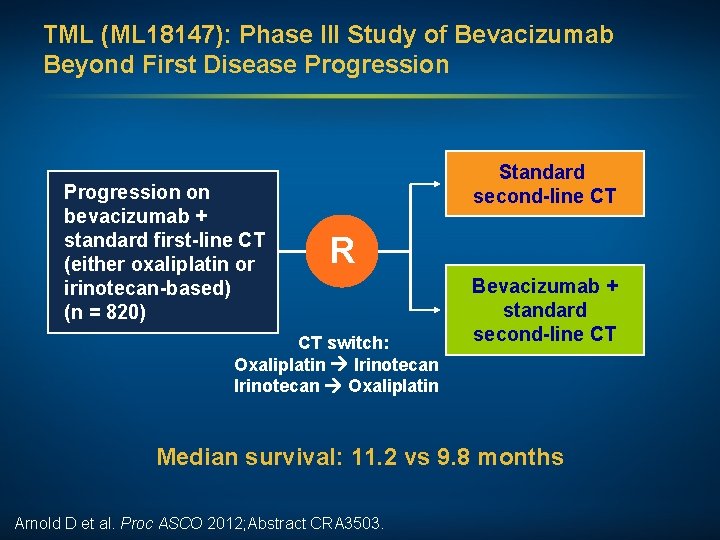
TML (ML 18147): Phase III Study of Bevacizumab Beyond First Disease Progression on bevacizumab + standard first-line CT (either oxaliplatin or irinotecan-based) (n = 820) Standard second-line CT R CT switch: Oxaliplatin Irinotecan Oxaliplatin Bevacizumab + standard second-line CT Median survival: 11. 2 vs 9. 8 months Arnold D et al. Proc ASCO 2012; Abstract CRA 3503.
Toxicities Associated with Long-Term Anti-VEGF Therapy; Selection and Use of Antihypertensive Medications
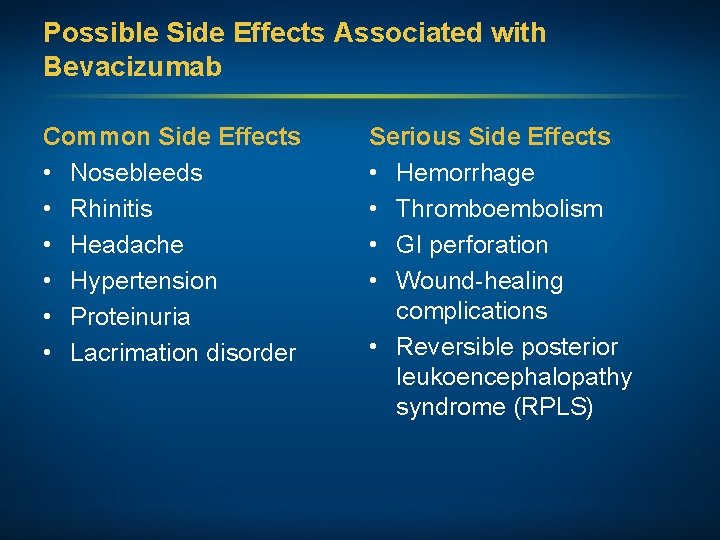
Possible Side Effects Associated with Bevacizumab Common Side Effects • Nosebleeds • Rhinitis • Headache • Hypertension • Proteinuria • Lacrimation disorder Serious Side Effects • Hemorrhage • Thromboembolism • GI perforation • Wound-healing complications • Reversible posterior leukoencephalopathy syndrome (RPLS)
Selection of Second-Line Therapy
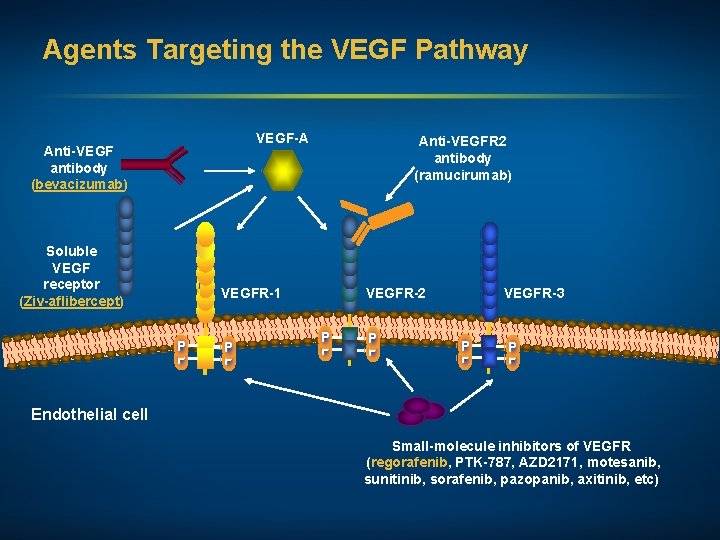
Agents Targeting the VEGF Pathway VEGF-A Anti-VEGF antibody (bevacizumab) Soluble VEGF receptor (Ziv-aflibercept) Anti-VEGFR 2 antibody (ramucirumab) VEGFR-1 P P VEGFR-2 P P VEGFR-3 P P Endothelial cell Small-molecule inhibitors of VEGFR (regorafenib, PTK-787, AZD 2171, motesanib, sunitinib, sorafenib, pazopanib, axitinib, etc)
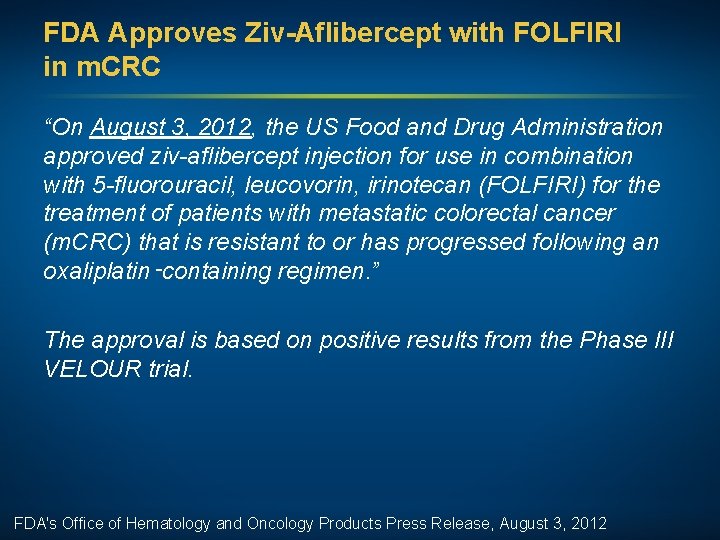
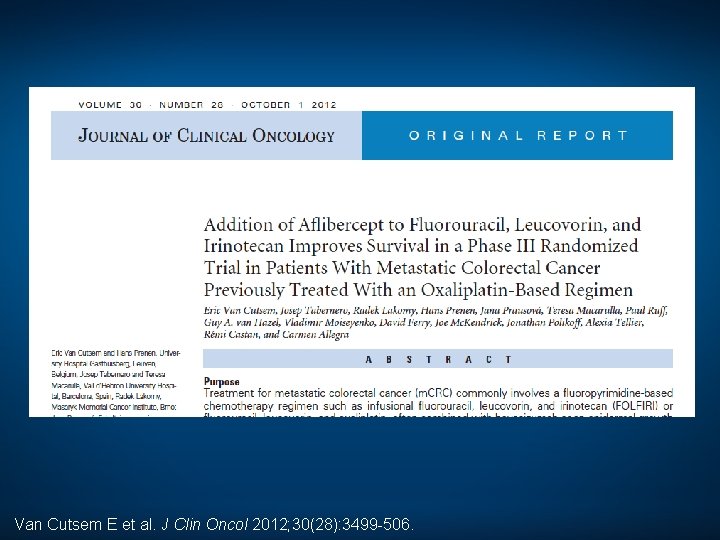
FDA Approves Ziv-Aflibercept with FOLFIRI in m. CRC “On August 3, 2012, the US Food and Drug Administration approved ziv-aflibercept injection for use in combination with 5 -fluorouracil, leucovorin, irinotecan (FOLFIRI) for the treatment of patients with metastatic colorectal cancer (m. CRC) that is resistant to or has progressed following an oxaliplatin‑containing regimen. ” The approval is based on positive results from the Phase III VELOUR trial. FDA's Office of Hematology and Oncology Products Press Release, August 3, 2012
Van Cutsem E et al. J Clin Oncol 2012; 30(28): 3499 -506.
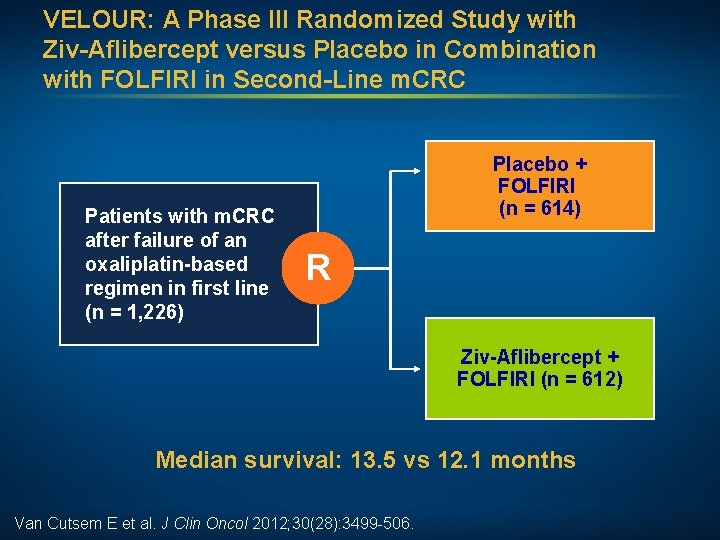
VELOUR: A Phase III Randomized Study with Ziv-Aflibercept versus Placebo in Combination with FOLFIRI in Second-Line m. CRC Patients with m. CRC after failure of an oxaliplatin-based regimen in first line (n = 1, 226) Placebo + FOLFIRI (n = 614) R Ziv-Aflibercept + FOLFIRI (n = 612) Median survival: 13. 5 vs 12. 1 months Van Cutsem E et al. J Clin Oncol 2012; 30(28): 3499 -506.
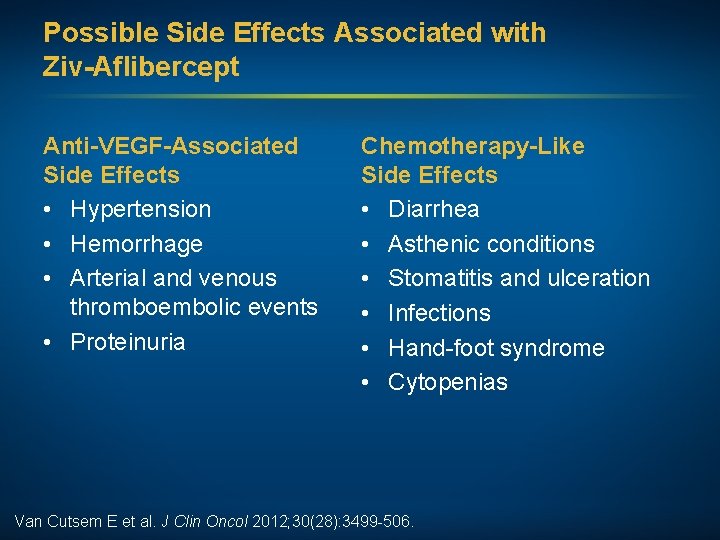
Possible Side Effects Associated with Ziv-Aflibercept Anti-VEGF-Associated Side Effects • Hypertension • Hemorrhage • Arterial and venous thromboembolic events • Proteinuria Chemotherapy-Like Side Effects • Diarrhea • Asthenic conditions • Stomatitis and ulceration • Infections • Hand-foot syndrome • Cytopenias Van Cutsem E et al. J Clin Oncol 2012; 30(28): 3499 -506.
Recent FDA Approval of Regorafenib and Integration into Clinical Practice
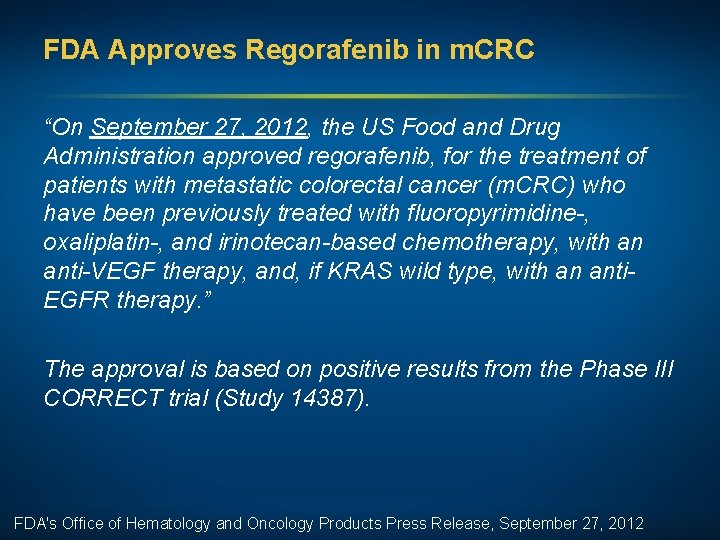
FDA Approves Regorafenib in m. CRC “On September 27, 2012, the US Food and Drug Administration approved regorafenib, for the treatment of patients with metastatic colorectal cancer (m. CRC) who have been previously treated with fluoropyrimidine-, oxaliplatin-, and irinotecan-based chemotherapy, with an anti-VEGF therapy, and, if KRAS wild type, with an anti. EGFR therapy. ” The approval is based on positive results from the Phase III CORRECT trial (Study 14387). FDA's Office of Hematology and Oncology Products Press Release, September 27, 2012
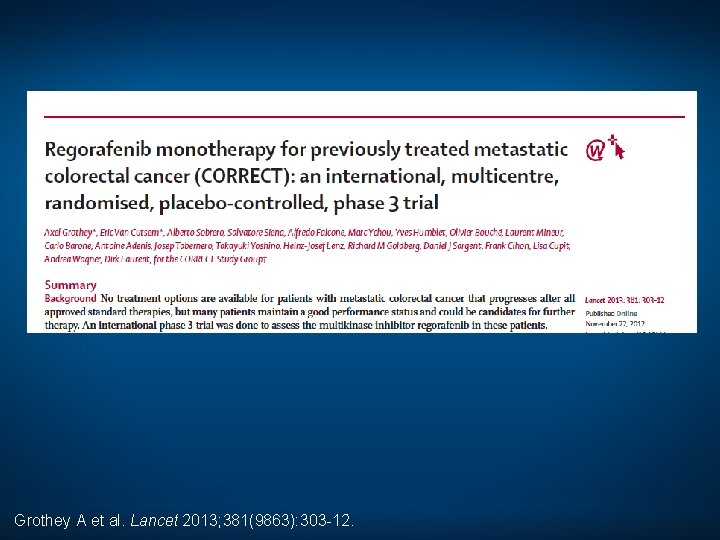
Grothey A et al. Lancet 2013; 381(9863): 303 -12.
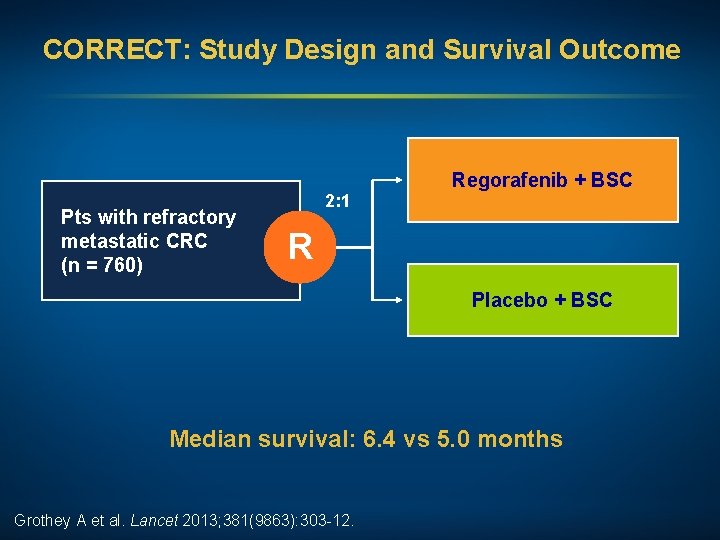
CORRECT: Study Design and Survival Outcome Pts with refractory metastatic CRC (n = 760) 2: 1 Regorafenib + BSC R Placebo + BSC Median survival: 6. 4 vs 5. 0 months Grothey A et al. Lancet 2013; 381(9863): 303 -12.
Identification and Management of Regorafenib-Related Side Effects
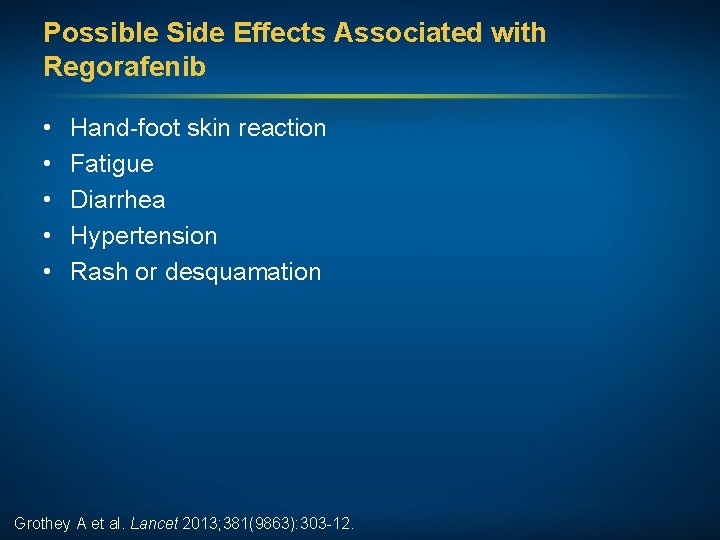
Possible Side Effects Associated with Regorafenib • • • Hand-foot skin reaction Fatigue Diarrhea Hypertension Rash or desquamation Grothey A et al. Lancet 2013; 381(9863): 303 -12.
Possible Side Effects Associated with Regorafenib — Hepatotoxicity “Severe and sometimes fatal hepatotoxicity has been observed in clinical trials. Monitor hepatic function prior to and during treatment. Interrupt and then reduce or discontinue regorafenib for hepatotoxicity as manifested by elevated liver function tests or hepatocellular necrosis, depending upon severity and persistence. ” Regorafenib Full Prescribing Information, Issued 9/2012
Similarities and Differences in HFS Observed with Commonly Used Anticancer Treatments
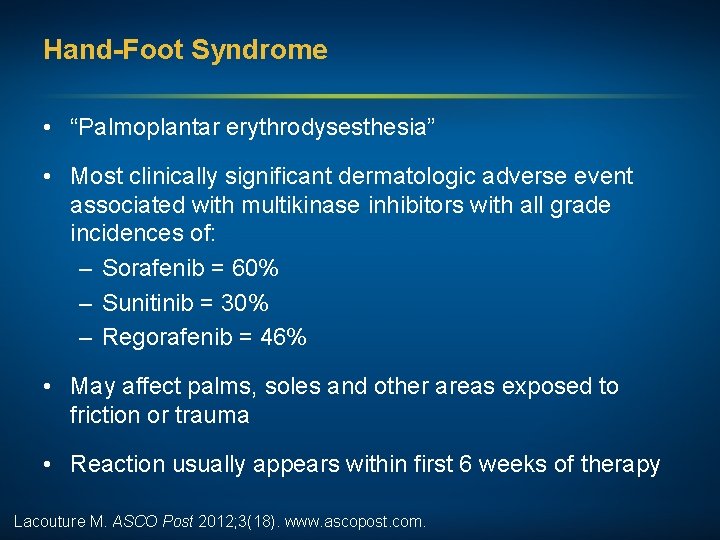
Hand-Foot Syndrome • “Palmoplantar erythrodysesthesia” • Most clinically significant dermatologic adverse event associated with multikinase inhibitors with all grade incidences of: – Sorafenib = 60% – Sunitinib = 30% – Regorafenib = 46% • May affect palms, soles and other areas exposed to friction or trauma • Reaction usually appears within first 6 weeks of therapy Lacouture M. ASCO Post 2012; 3(18). www. ascopost. com.
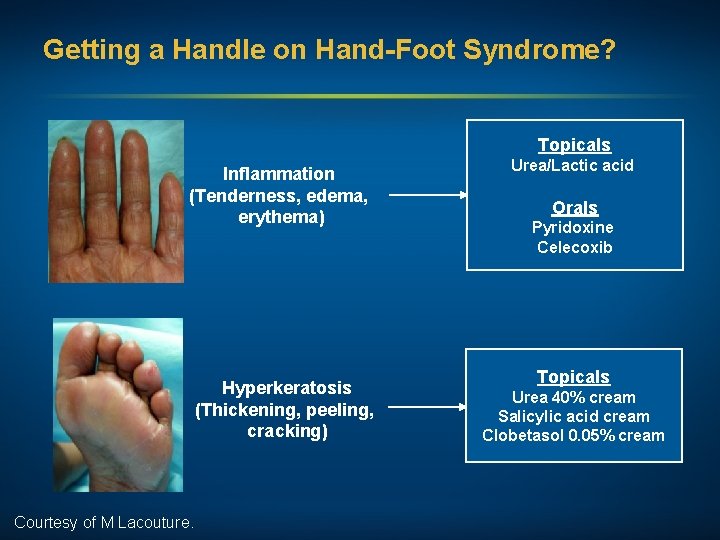
Getting a Handle on Hand-Foot Syndrome? Topicals Inflammation (Tenderness, edema, erythema) Hyperkeratosis (Thickening, peeling, cracking) Courtesy of M Lacouture. Urea/Lactic acid Orals Pyridoxine Celecoxib Topicals Urea 40% cream Salicylic acid cream Clobetasol 0. 05% cream
Case (from the practice of Ms Mitchell) • 62 yo married woman is followed for a year with anemia – Develops metastatic K-ras-mutant CRC to the liver and lungs • Received multiple lines of systemic treatment including various chemo agents plus bevacizumab – Hypertension requiring 3 medications • Currently receiving regorafenib – Continued hypertension, very mild hand-foot syndrome • Patient and family deeply resentful at the lost opportunity for earlier diagnosis and took legal action against the primary care team
MODULE 2: MANAGEMENT OF SIMULTANEOUSLY OCCURING PRIMARY TUMORS AND METASTASES
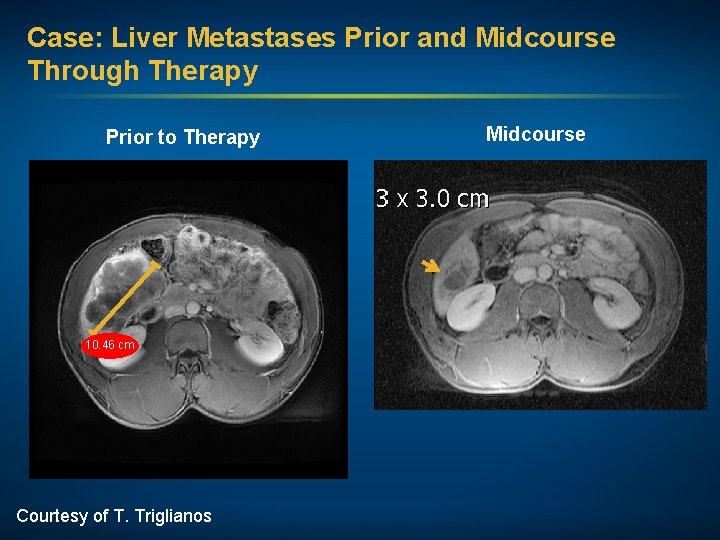
Case (from the practice of Ms Triglianos) • 27 yo married army sergeant with a 3 yo daughter • Presents with primary colon cancer and liver metastases • FOLFOX/bevacizumab x 12 – No major toxicity – Response in primary tumor and liver • Exercises every day to maintain “emotional balance”
Case: Liver Metastases Prior and Midcourse Through Therapy Prior to Therapy 10. 46 cm Courtesy of T. Triglianos Midcourse
Potential Risks and Benefits of Not Resecting the Primary Tumor
Role of Up-Front Systemic Therapy for Patients Presenting with a Primary Tumor and Simultaneous Metastatic Disease
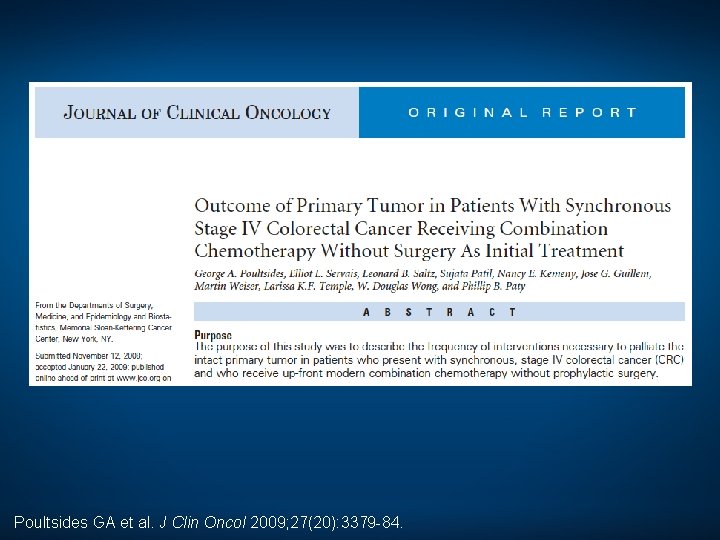
Poultsides GA et al. J Clin Oncol 2009; 27(20): 3379 -84.
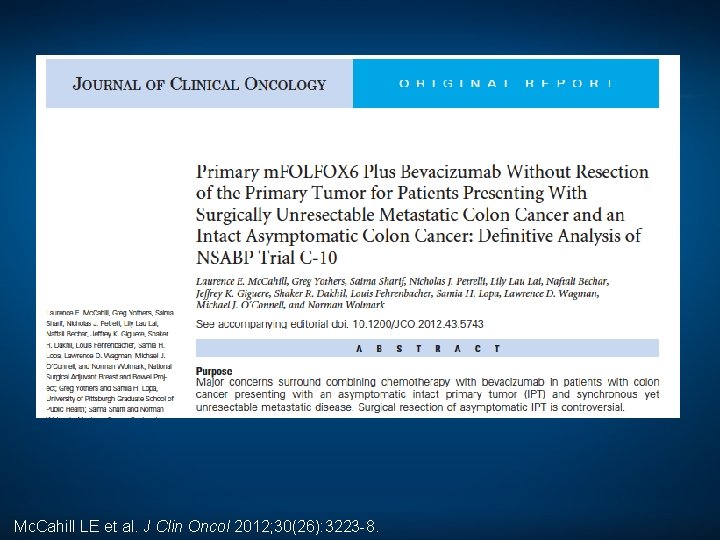
Mc. Cahill LE et al. J Clin Oncol 2012; 30(26): 3223 -8.
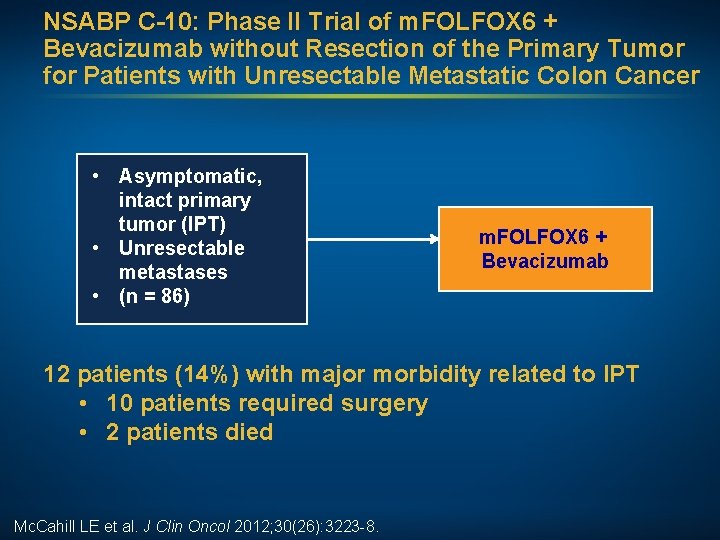
NSABP C-10: Phase II Trial of m. FOLFOX 6 + Bevacizumab without Resection of the Primary Tumor for Patients with Unresectable Metastatic Colon Cancer • Asymptomatic, intact primary tumor (IPT) • Unresectable metastases • (n = 86) m. FOLFOX 6 + Bevacizumab 12 patients (14%) with major morbidity related to IPT • 10 patients required surgery • 2 patients died Mc. Cahill LE et al. J Clin Oncol 2012; 30(26): 3223 -8.
Rationale for and Appropriate Timing of Bevacizumab Discontinuation for Patients Scheduled to Undergo Surgery
Case (from the practice of Ms Triglianos) • 27 yo married army sergeant with a 3 yo daughter • Presents with primary colon cancer and liver metastases • FOLFOX/bevacizumab x 12 – No major toxicity – Response in primary tumor and liver • Exercises every day to maintain “emotional balance”
Case (from the practice of Ms Mitchell) • 56 -year-old man who was a very successful, extremely hard-working banking executive • Presents with a primary rectosigmoid tumor and widespread metastatic disease • FOLFOX/bevacizumab – Dramatic symptom improvement and tumor regression • Prior to the diagnosis spent little time with his family – Since the diagnosis his lifestyle has changed dramatically
Case: Liver Metastases Treated with FOLFOX/Bevacizumab • May 2012: Colorectal cancer metastatic to the liver • Patient received FOLFOX/bevacizumab; noticeably less burden of disease visible in July 2012
Case: Rectal Mass Treated with FOLFOX/ Bevacizumab • May 2012: Patient receives FOLFOX/bevacizumab for rectal mass • July 2012: A response is seen on follow-up imaging
MODULE 3: CLINICAL APPROACHES FOR POTENTIALLY CURABLE HEPATIC METASTASES
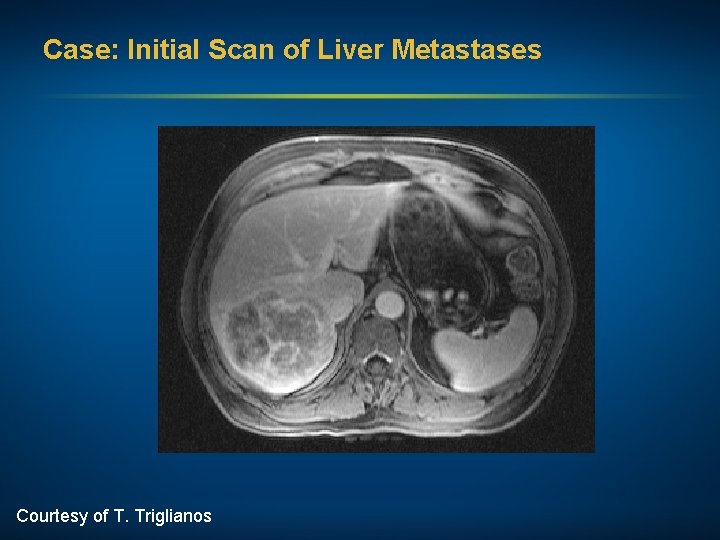
Case (from the practice of Ms Triglianos) • 72 -year-old college professor with medically controlled schizophrenia who was divorced from his wife of 40 years 2 years ago • Diagnosed in 2005 with Stage II colon cancer • Now presents with biopsy-proven liver metastases – Capecitabine plus bevacizumab
Case: Initial Scan of Liver Metastases Courtesy of T. Triglianos
Potential Role of Diet and Exercise in Reducing the Risk of CRC Recurrence
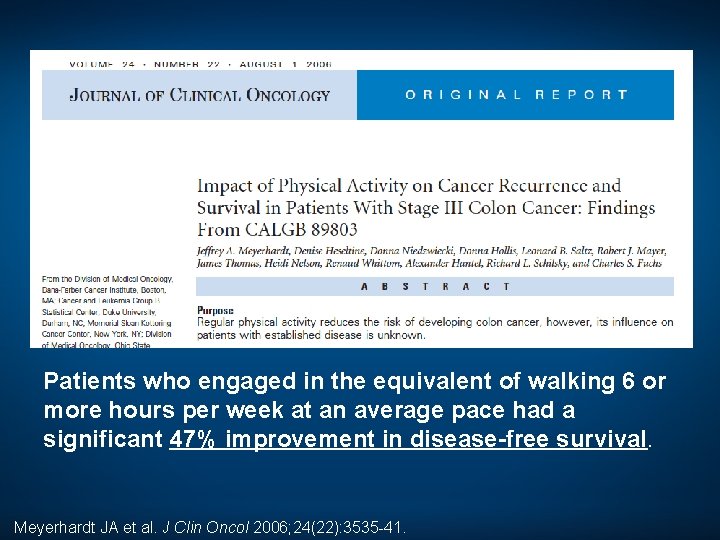
Patients who engaged in the equivalent of walking 6 or more hours per week at an average pace had a significant 47% improvement in disease-free survival. Meyerhardt JA et al. J Clin Oncol 2006; 24(22): 3535 -41.
MODULE 4: ROLE OF EGFR ANTIBODIES IN m. CRC
Case (from the practice of Ms Mitchell) • 46 -year-old single woman lives with her mother • K-ras wild-type m. CRC responds to treatment with FOLFOX/cetuximab – Severe treatment-associated dermatologic toxicity – Her face is erythematous, tender and painful – Previously very socially active but now feels so disfigured that she cannot leave her home or go to work • After disease progression: Switched to FOLFIRI/bev – After 4 cycles: Diagnosed with a pulmonary embolus • Started on irinotecan and cetuximab
Integration of EGFR Antibodies (Cetuximab, Panitumumab) Into Treatment of K-ras Wild-Type Disease
Optimal Approach to Prevention and Management of Dermatologic Complications Associated with EGFR Antibodies
EGFR Antibody-Induced Rash • Red papulopustules – Pruritus, tenderness in 62% • Cetuximab – All grade: 85% – Grade 3: 10% Sheperd et al NEJM 2004; Rosell et al, Ann Oncol 2007; Van Cutsem et al, J Clin Oncol 2008; Geyer et al. J Clin Oncol 2008
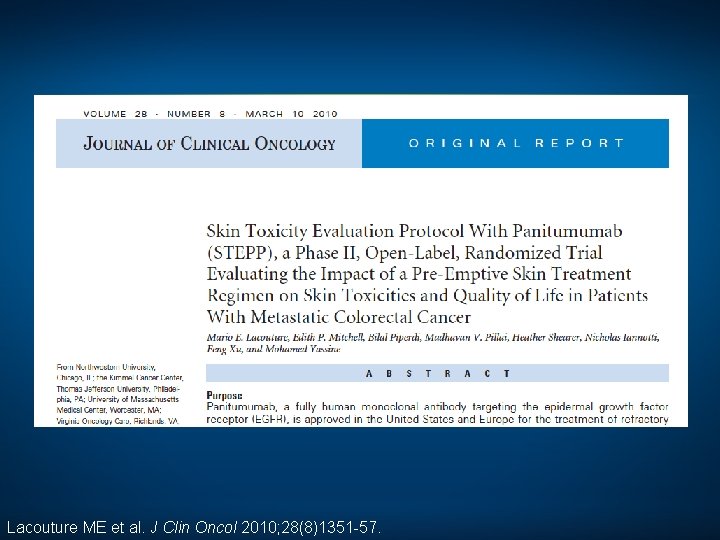
Lacouture ME et al. J Clin Oncol 2010; 28(8)1351 -57.
STEPP: Pre-emptive versus Reactive Treatment for Skin Toxicities Associated with the EGFR Antibodies • Pre-emptive skin treatment consisted of: – Skin moisturizer applied daily – Sunscreen before heading outdoors – Topical steroid applied at bedtime – Doxycycline • Pre-emptive skin treatment resulted in: – Decreased Grade ≥ 2 dermatologic toxicities – Less impairment of quality of life Lacouture ME et al. J Clin Oncol 2010; 28(8)1351 -57.
Incidence of Infusion Reactions in Patients Receiving EGFR Antibodies
MODULE 5: MANAGEMENT OF m. CRC WITH HEATED INTRAPERITONEAL CHEMOTHERAPY (HIPEC)
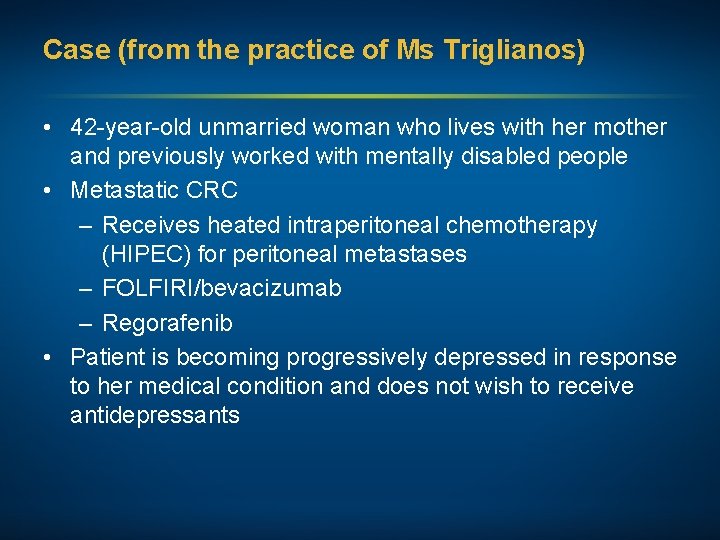
Case (from the practice of Ms Triglianos) • 42 -year-old unmarried woman who lives with her mother and previously worked with mentally disabled people • Metastatic CRC – Receives heated intraperitoneal chemotherapy (HIPEC) for peritoneal metastases – FOLFIRI/bevacizumab – Regorafenib • Patient is becoming progressively depressed in response to her medical condition and does not wish to receive antidepressants
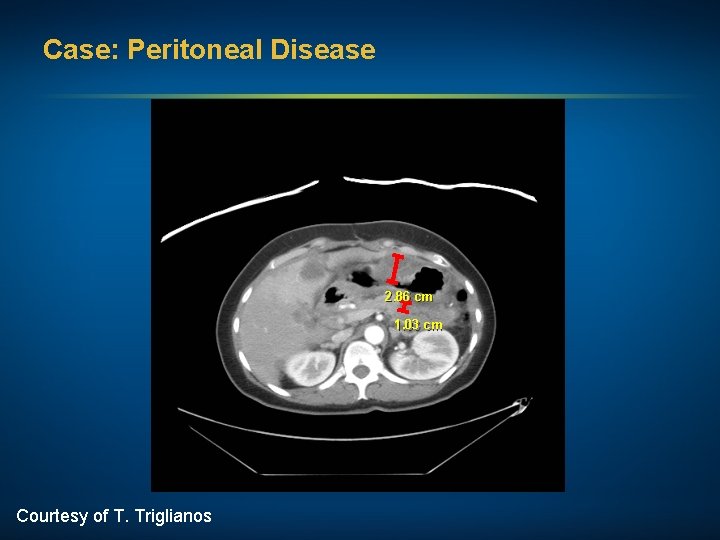
Case: Peritoneal Disease 2. 86 cm 1. 03 cm Courtesy of T. Triglianos
Role of HIPEC in the Therapeutic Management of m. CRC
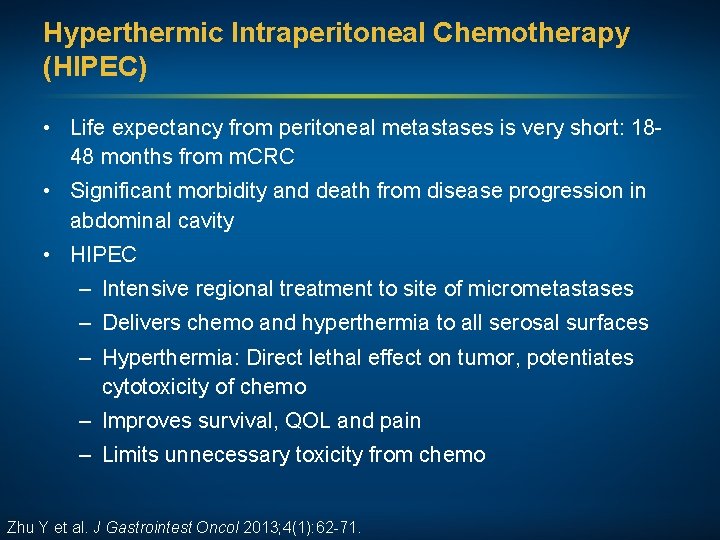
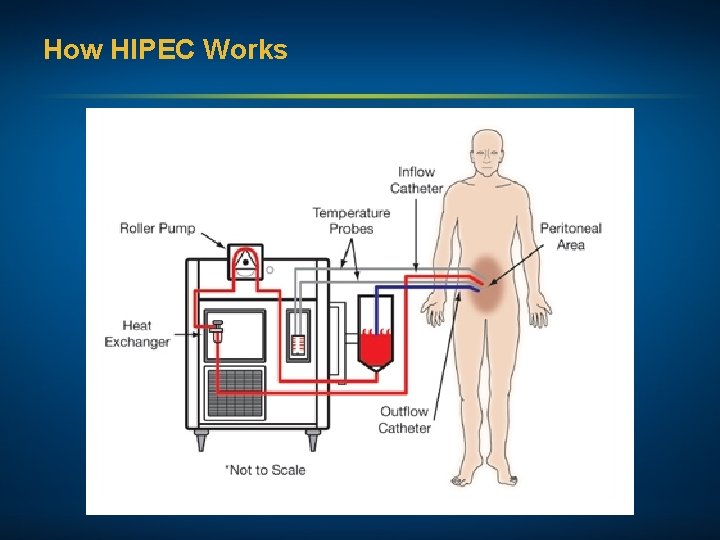
Hyperthermic Intraperitoneal Chemotherapy (HIPEC) • Life expectancy from peritoneal metastases is very short: 1848 months from m. CRC • Significant morbidity and death from disease progression in abdominal cavity • HIPEC – Intensive regional treatment to site of micrometastases – Delivers chemo and hyperthermia to all serosal surfaces – Hyperthermia: Direct lethal effect on tumor, potentiates cytotoxicity of chemo – Improves survival, QOL and pain – Limits unnecessary toxicity from chemo Zhu Y et al. J Gastrointest Oncol 2013; 4(1): 62 -71.
How HIPEC Works