Elements of Art Line is the path of
- Slides: 26
Elements of Art
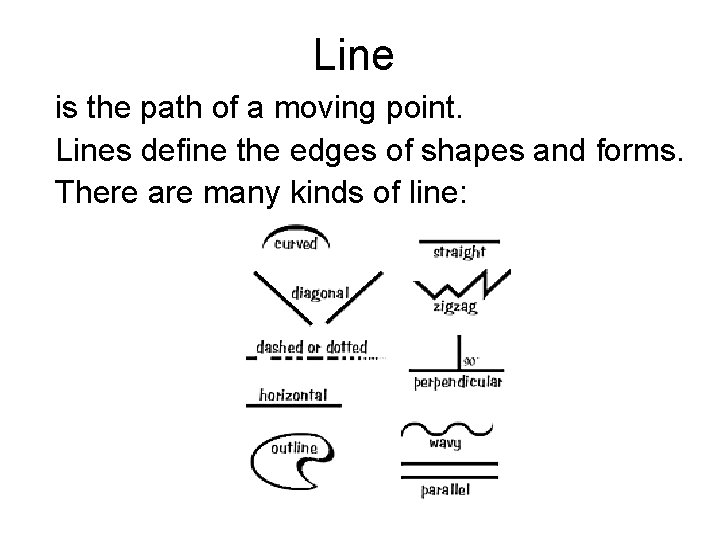
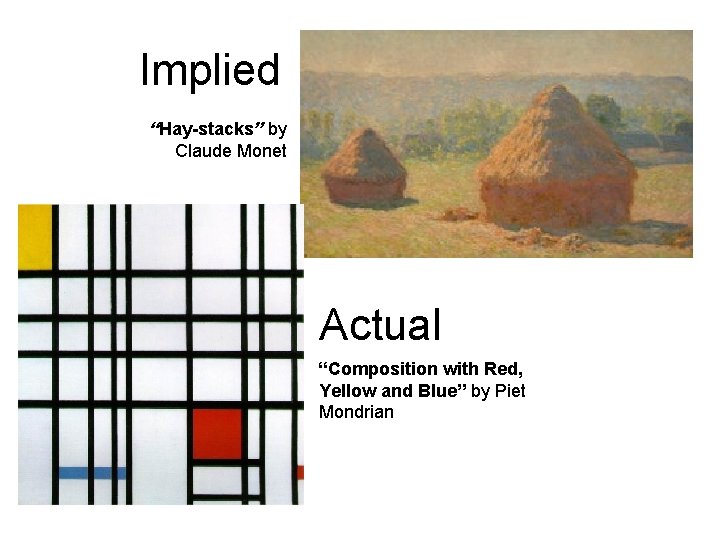
Line is the path of a moving point. Lines define the edges of shapes and forms. There are many kinds of line:
Implied “Hay-stacks” by Claude Monet Actual “Composition with Red, Yellow and Blue” by Piet Mondrian
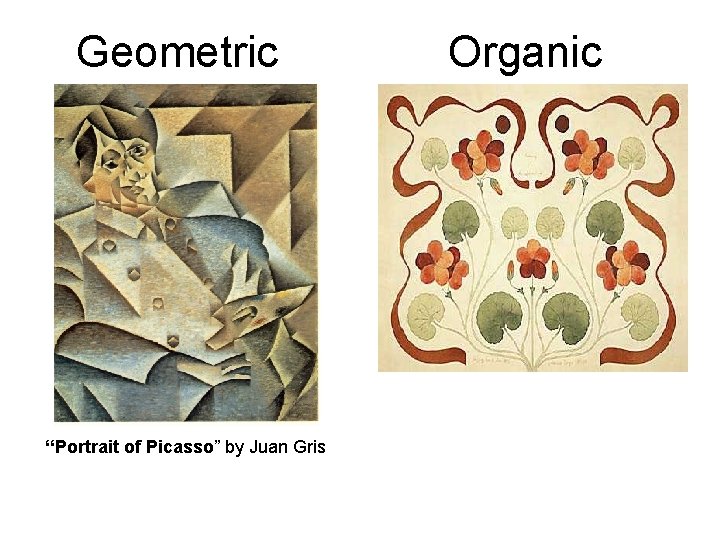
Geometric “Portrait of Picasso” by Juan Gris Organic
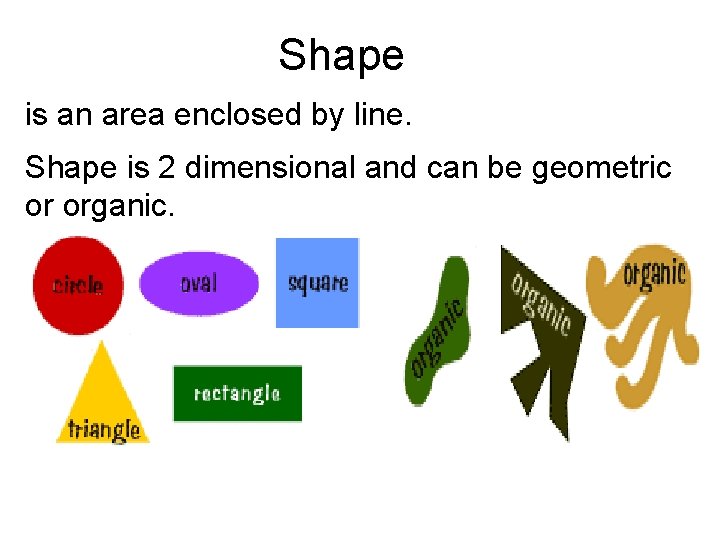
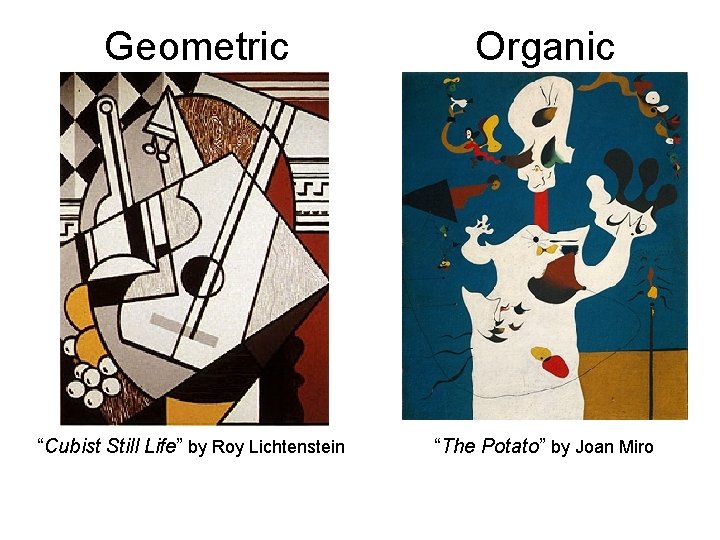
Shape is an area enclosed by line. Shape is 2 dimensional and can be geometric or organic.
Geometric Organic “Cubist Still Life” by Roy Lichtenstein “The Potato” by Joan Miro
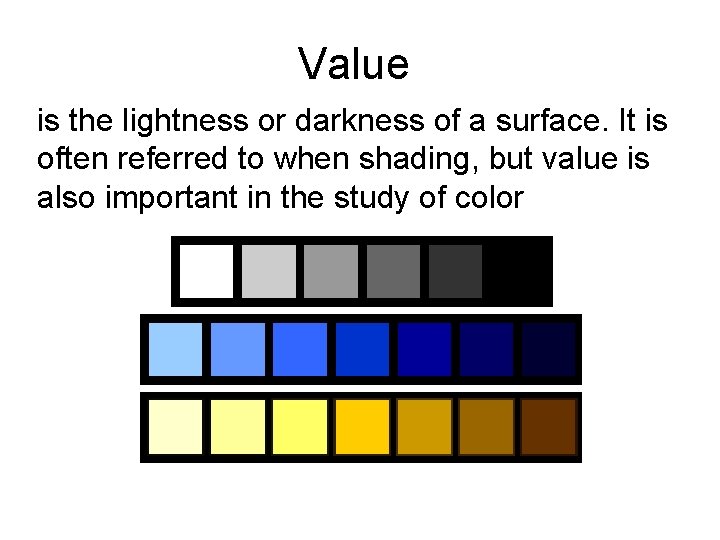
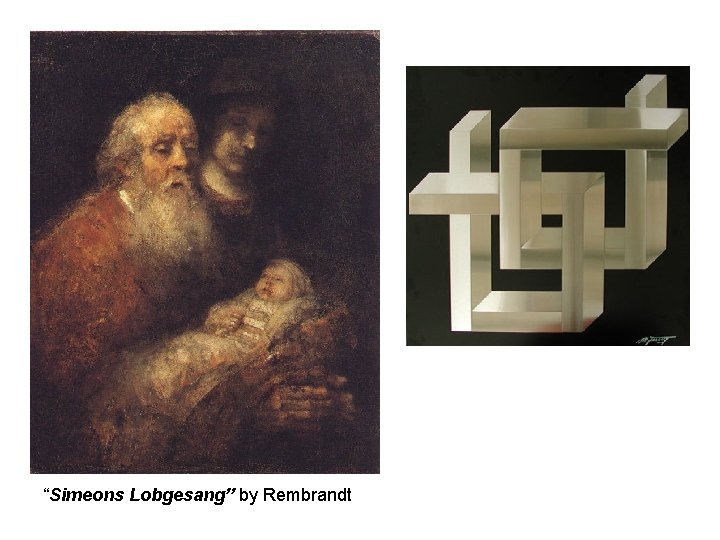
Value is the lightness or darkness of a surface. It is often referred to when shading, but value is also important in the study of color
“Simeons Lobgesang” by Rembrandt
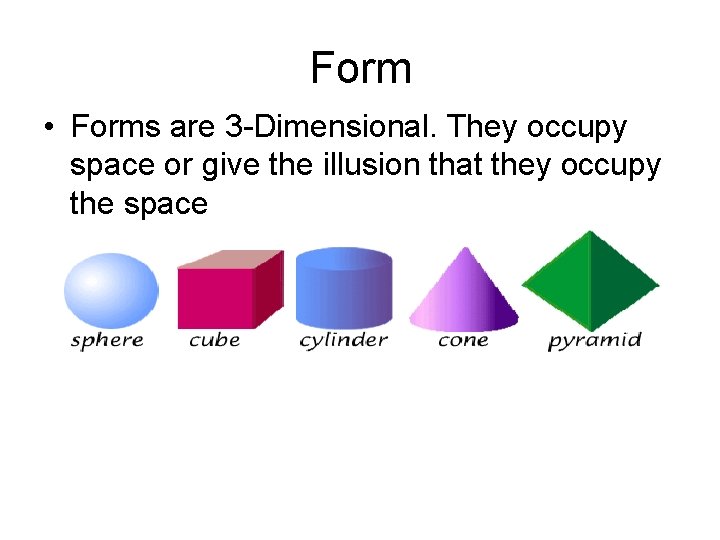
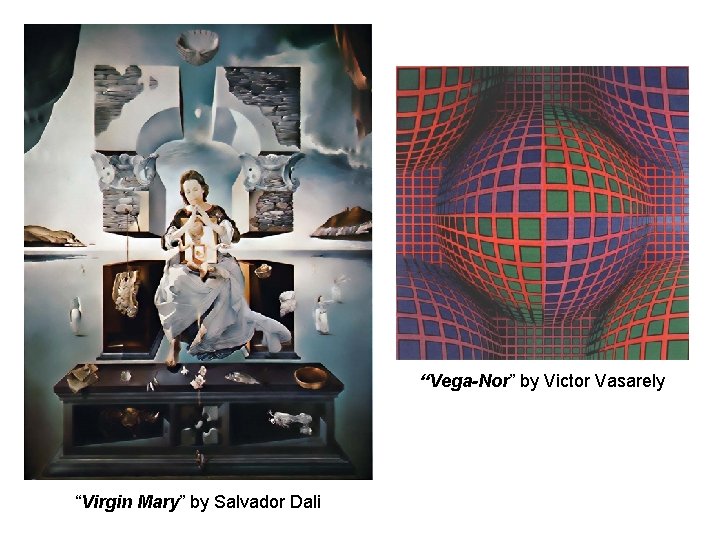
Form • Forms are 3 -Dimensional. They occupy space or give the illusion that they occupy the space
“Vega-Nor” by Victor Vasarely “Virgin Mary” by Salvador Dali
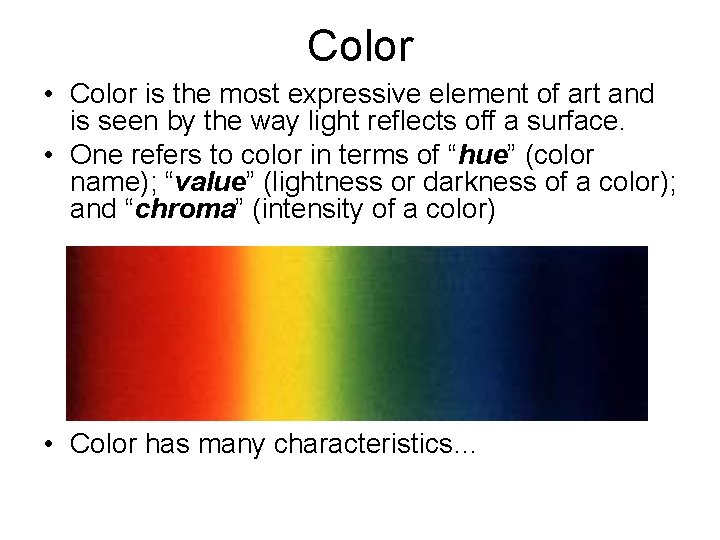
Color • Color is the most expressive element of art and is seen by the way light reflects off a surface. • One refers to color in terms of “hue” (color name); “value” (lightness or darkness of a color); and “chroma” (intensity of a color) • Color has many characteristics…
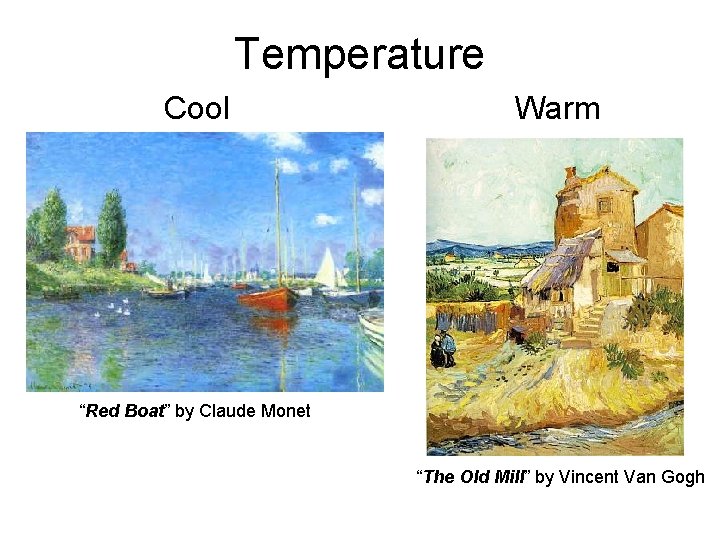
Temperature Cool Warm “Red Boat” by Claude Monet “The Old Mill” by Vincent Van Gogh
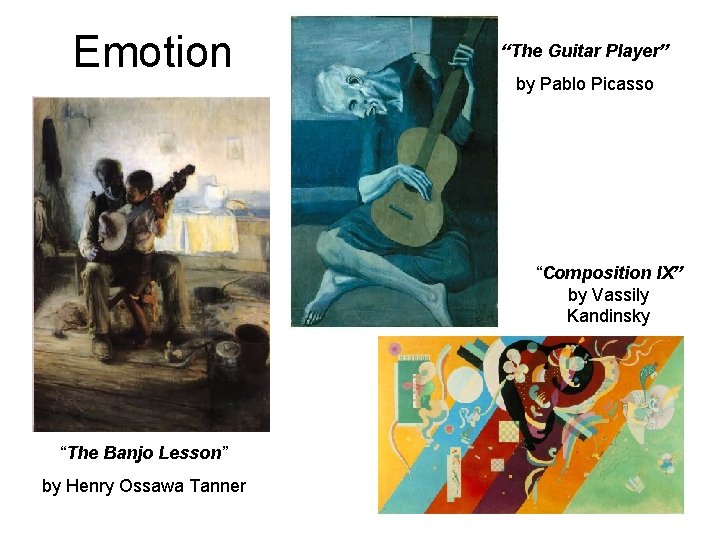
Emotion “The Guitar Player” by Pablo Picasso “Composition IX” by Vassily Kandinsky “The Banjo Lesson” by Henry Ossawa Tanner
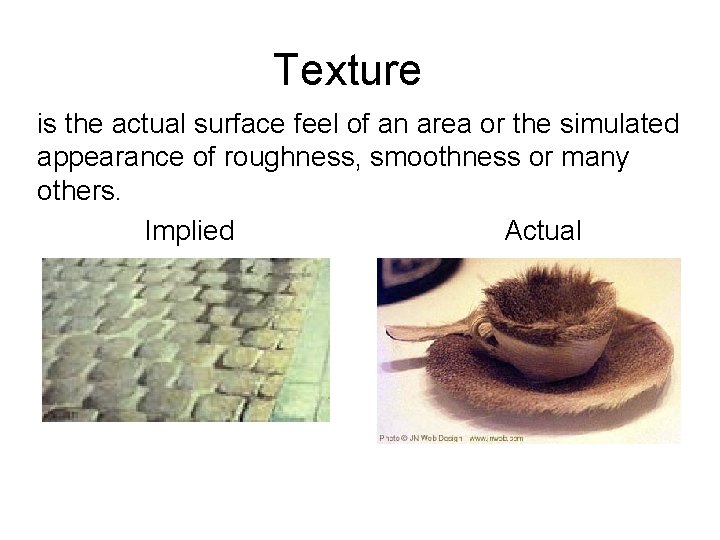
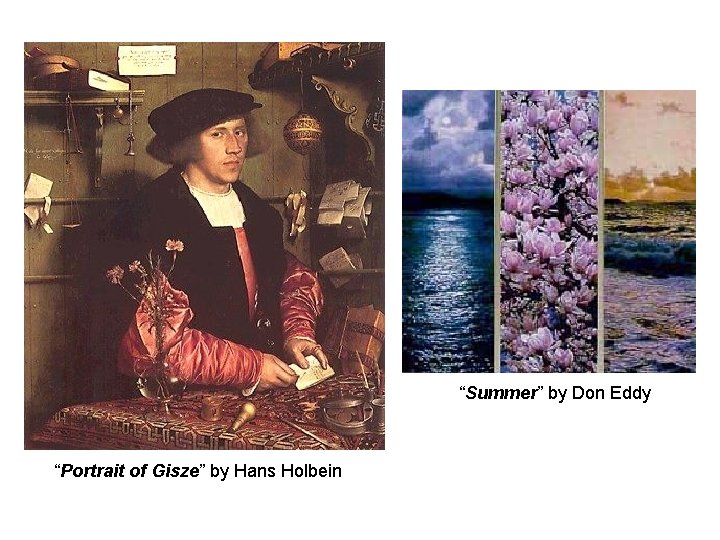
Texture is the actual surface feel of an area or the simulated appearance of roughness, smoothness or many others. Implied Actual
“Summer” by Don Eddy “Portrait of Gisze” by Hans Holbein
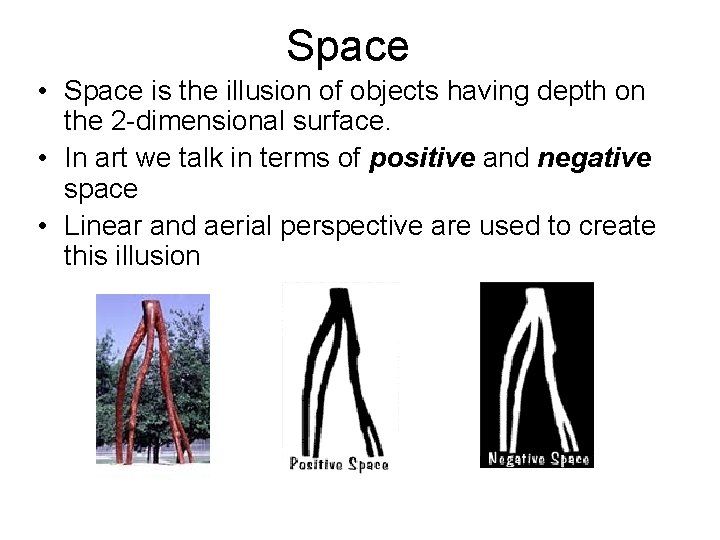
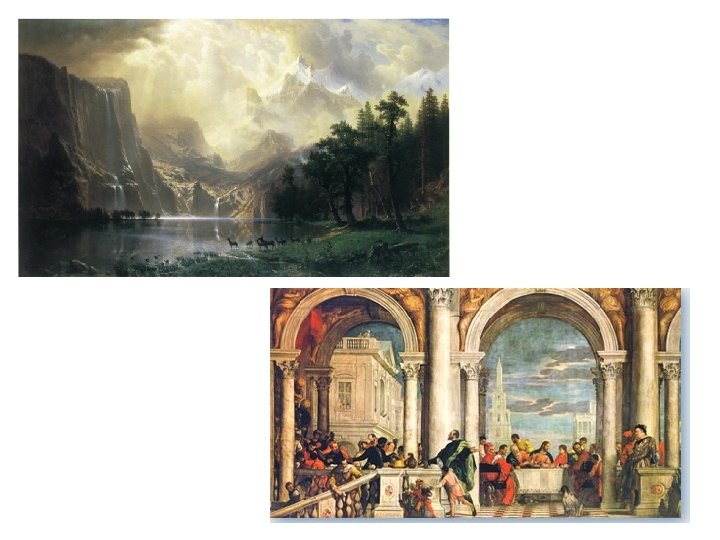
Space • Space is the illusion of objects having depth on the 2 -dimensional surface. • In art we talk in terms of positive and negative space • Linear and aerial perspective are used to create this illusion
Principles of Art
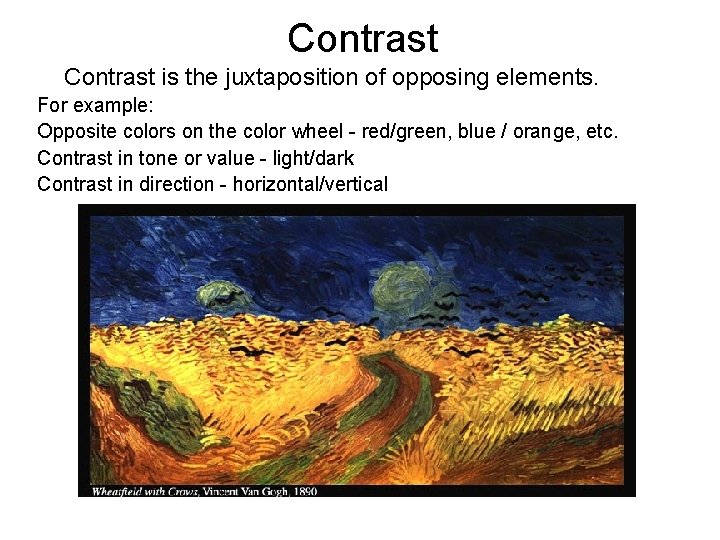
Contrast is the juxtaposition of opposing elements. For example: Opposite colors on the color wheel - red/green, blue / orange, etc. Contrast in tone or value - light/dark Contrast in direction - horizontal/vertical
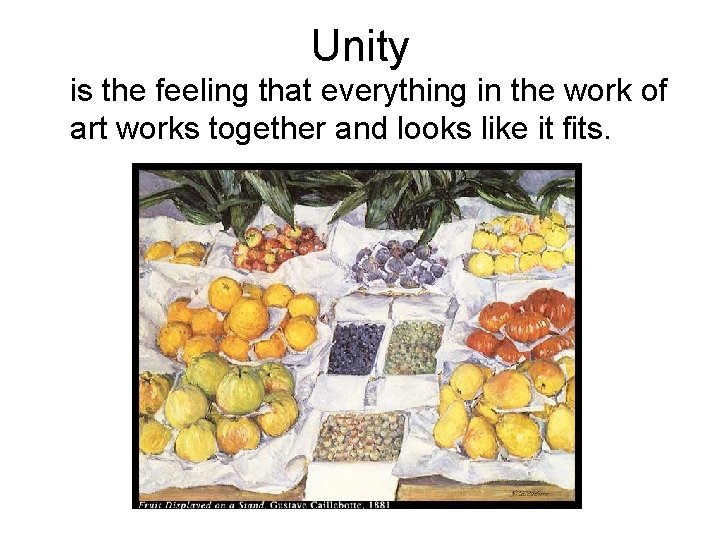
Unity is the feeling that everything in the work of art works together and looks like it fits.
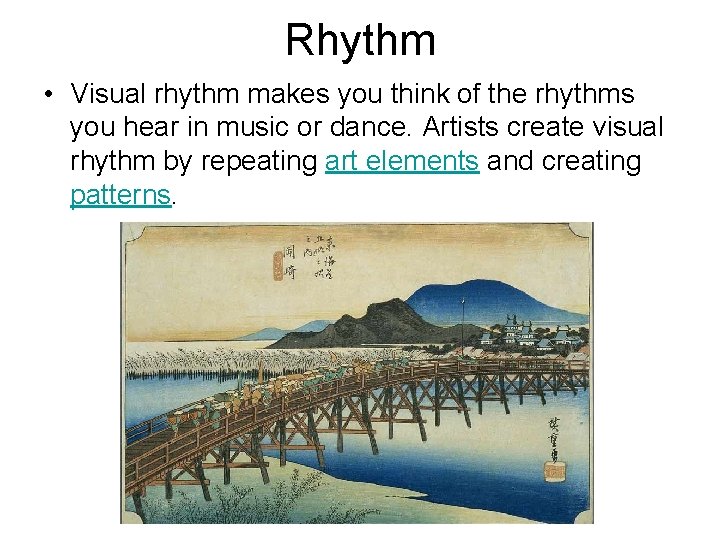
Rhythm • Visual rhythm makes you think of the rhythms you hear in music or dance. Artists create visual rhythm by repeating art elements and creating patterns.
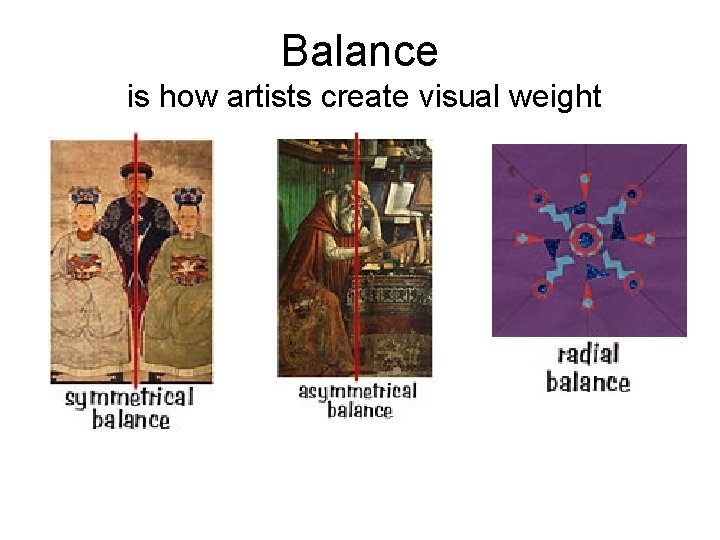
Balance is how artists create visual weight
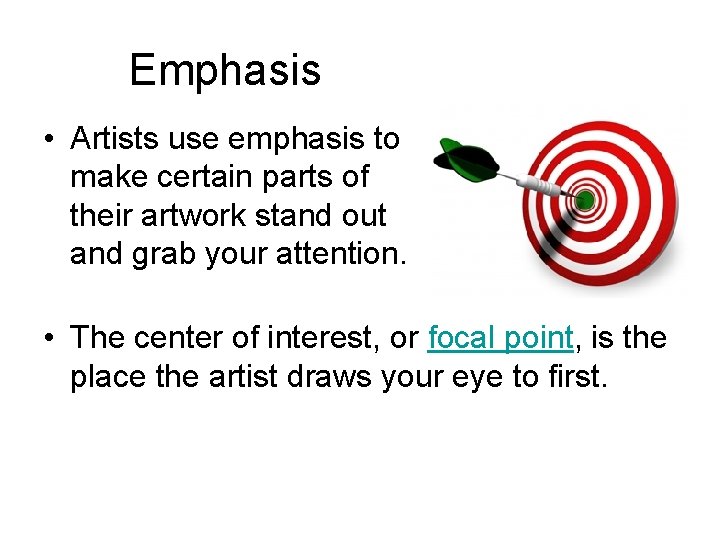
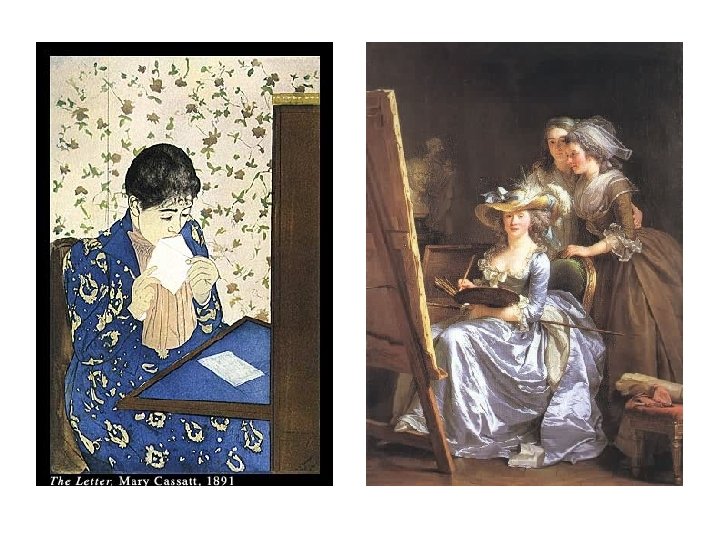
Emphasis • Artists use emphasis to make certain parts of their artwork stand out and grab your attention. • The center of interest, or focal point, is the place the artist draws your eye to first.
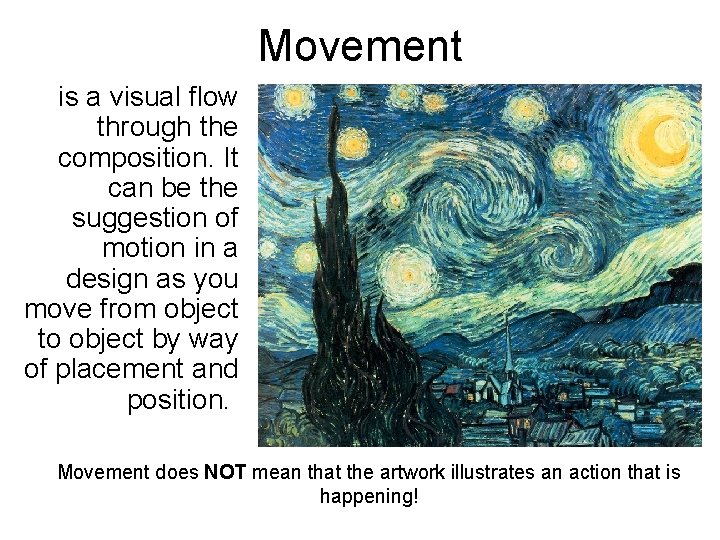
Movement is a visual flow through the composition. It can be the suggestion of motion in a design as you move from object to object by way of placement and position. Movement does NOT mean that the artwork illustrates an action that is happening!
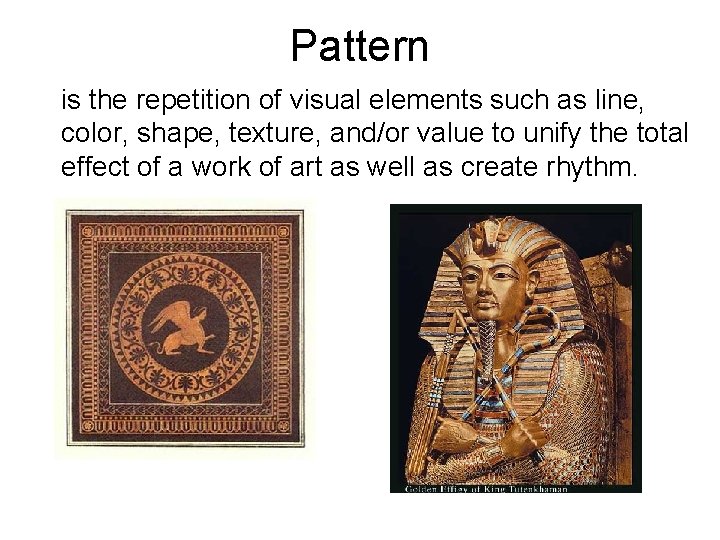
Pattern is the repetition of visual elements such as line, color, shape, texture, and/or value to unify the total effect of a work of art as well as create rhythm.