Infectious Endocarditis 1 Welcome to the module on

- Slides: 98
Infectious Endocarditis 1
Welcome to the module on Infectious Endocarditis!! Please take this brief pre-module quiz https: //docs. google. com/forms/d/10 ZW 70 g 7 bu. H 0 R 7 vky 6 v 6 Bl. Eo. BLs h 959 Lt. Sy. Ungk. UJQCc/viewform? usp=send_form 2
This module works a lot better in “presentation” mode 3
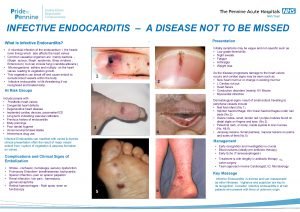
Infectious Endocarditis Overview o An infection of one or more of the heart’s four valves that causes a bulky and friable vegetation o An important and very serious infection, affecting thousands of patients annually in the United States, with high rates of morbidity and mortality o It can present acutely (over days to weeks), or sub-acutely (over weeks to months), with a wide variety of clinical manifestations related to diverse embolic, immunologic, and infectious complications o Diagnosing endocarditis requires an astute clinician with excellent physical exam skills and in-depth knowledge of pathophysiology 4
Outline (click to jump to a section) o Pathophysiology and immune response o Microbiology o Physical Exam findings o Diagnosis o Complications o Treatment o Special cases (culture negative, fungal, marantic, and prosthetic valve endocarditis) 5
Outline (click to jump to a section) o Pathophysiology and immune response o Microbiology o Physical Exam findings o Diagnosis o Complications o Treatment o Special cases 6
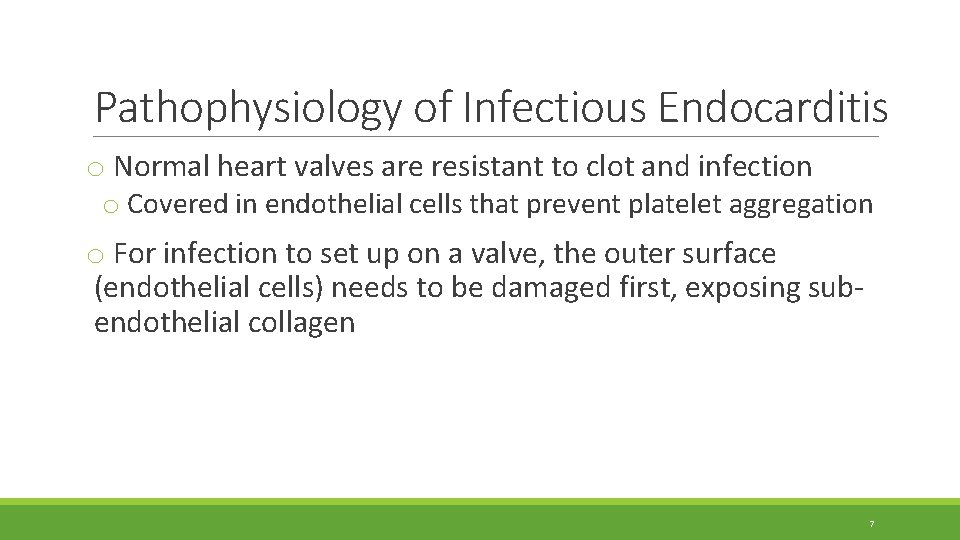
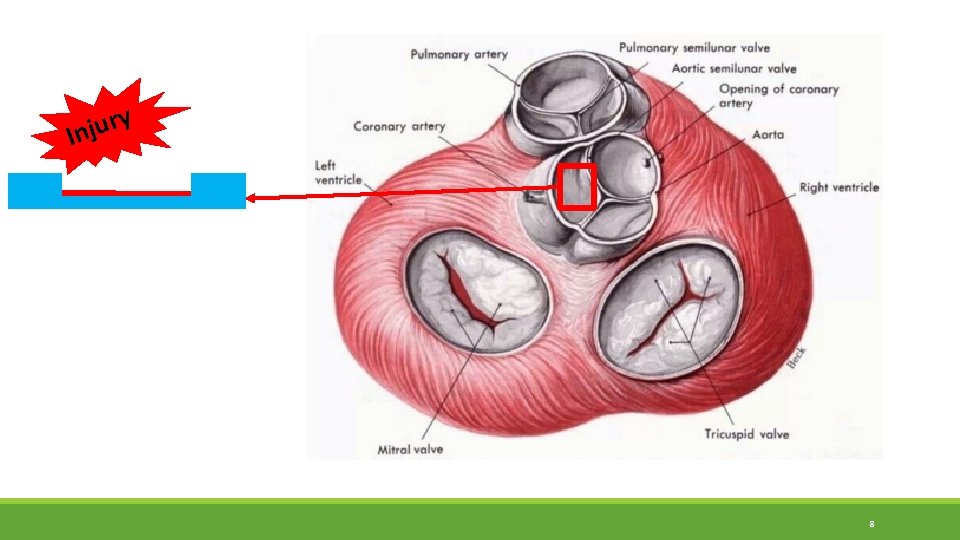
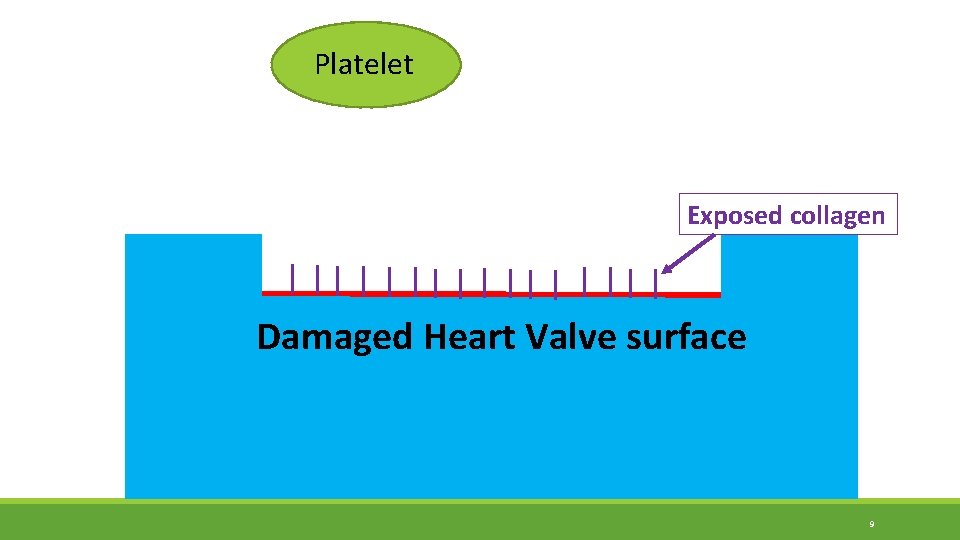
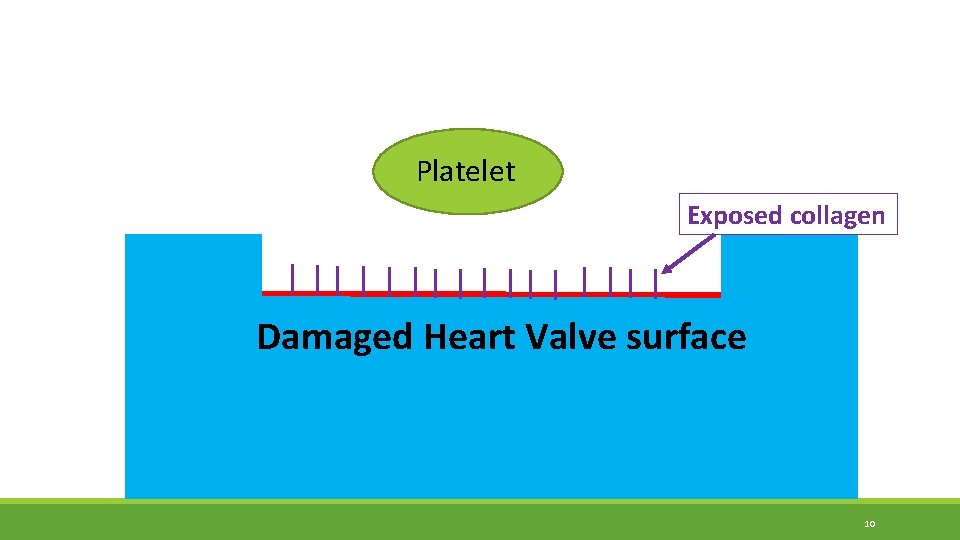
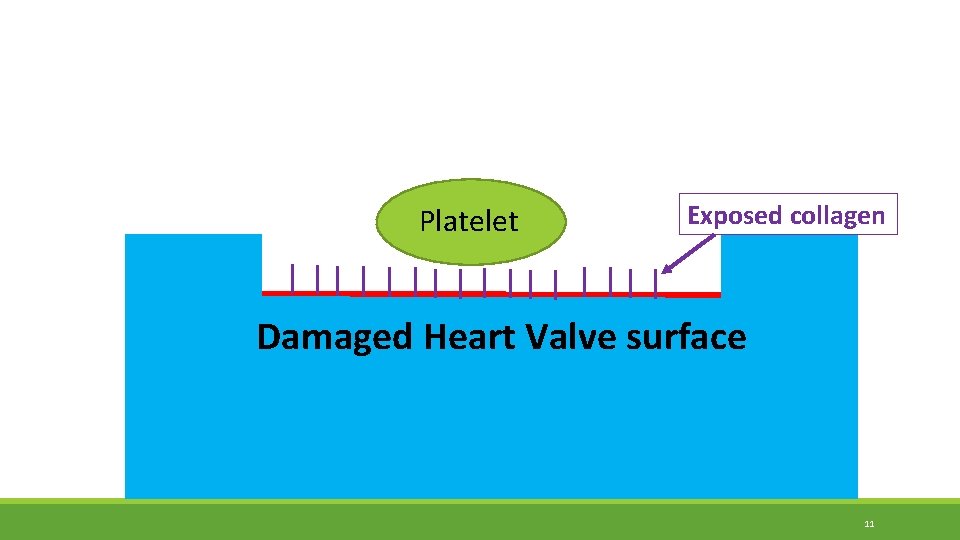
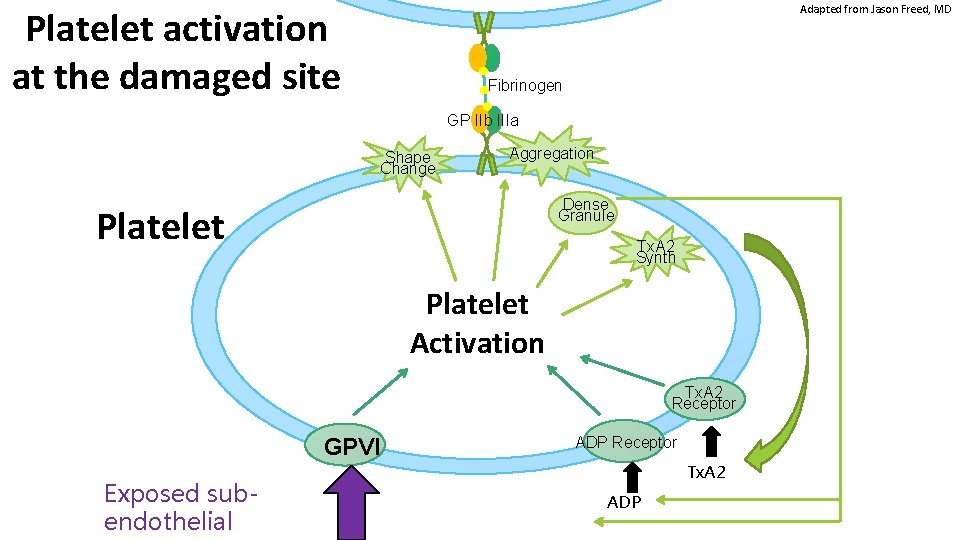
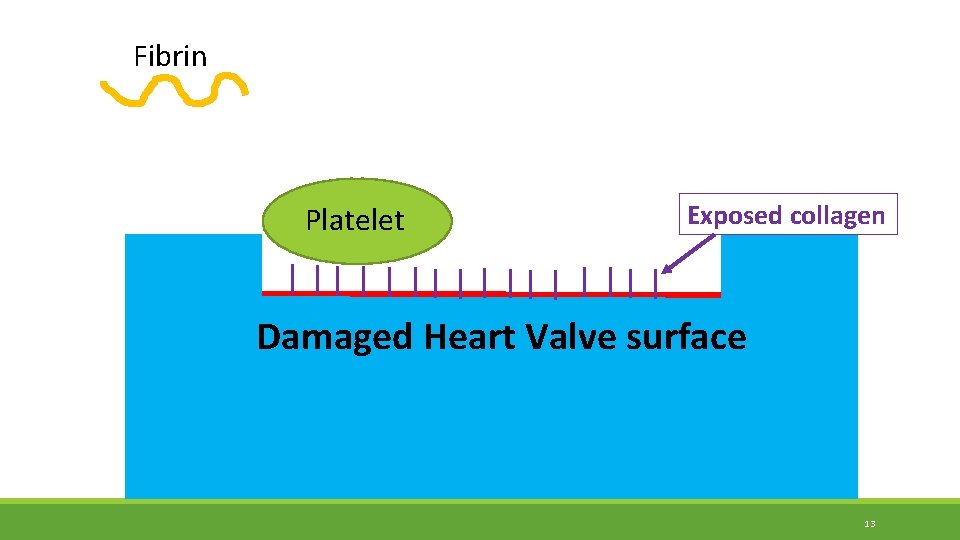
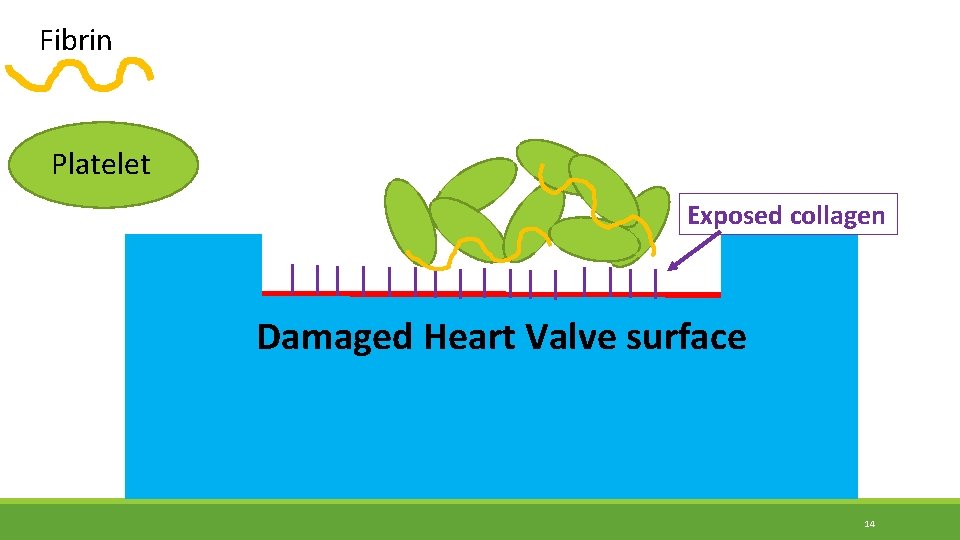
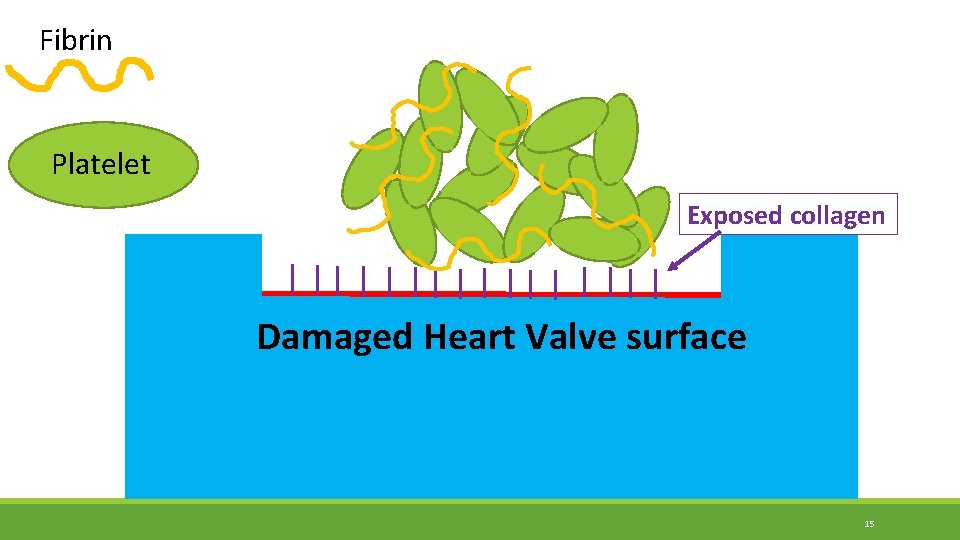
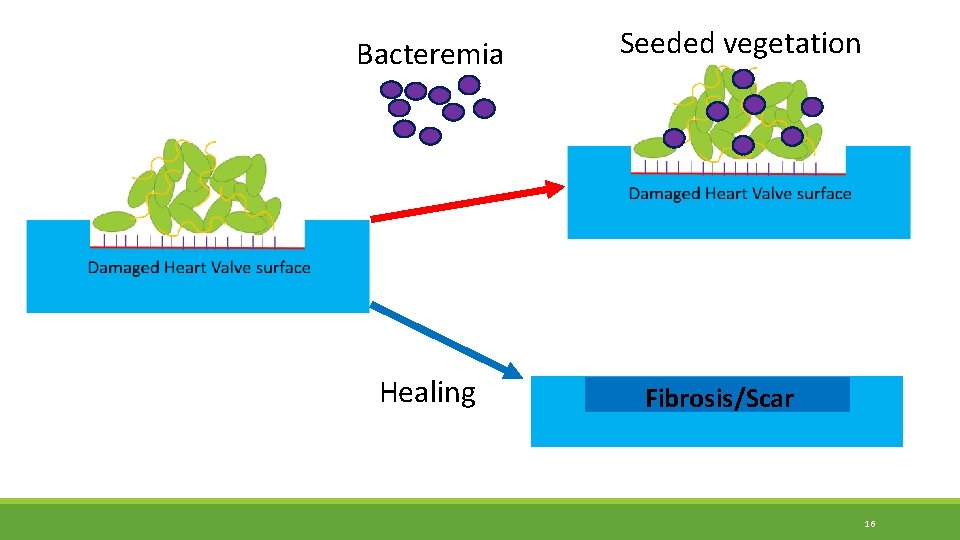
Pathophysiology of Infectious Endocarditis o Normal heart valves are resistant to clot and infection o Covered in endothelial cells that prevent platelet aggregation o For infection to set up on a valve, the outer surface (endothelial cells) needs to be damaged first, exposing subendothelial collagen 7
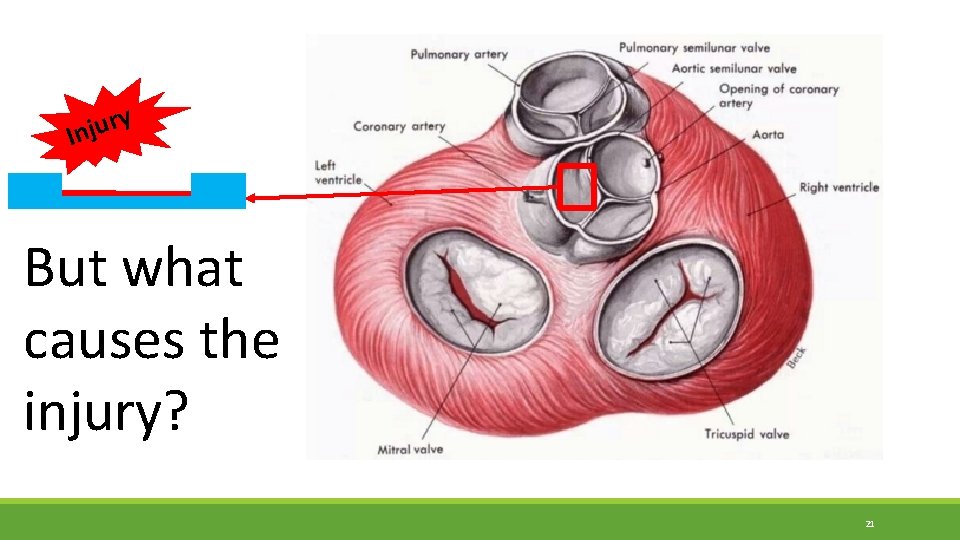
y r u j In 8
Platelet Exposed collagen Damaged Heart Valve surface 9
Platelet Exposed collagen Damaged Heart Valve surface 10
Platelet Exposed collagen Damaged Heart Valve surface 11
Adapted from Jason Freed, MD Platelet activation at the damaged site Fibrinogen GP IIb IIIa Shape Change Aggregation Dense Granule Platelet Tx. A 2 Synth Platelet Activation Tx. A 2 Receptor GPVI Exposed subendothelial ADP Receptor Tx. A 2 ADP 12
Fibrin Platelet Exposed collagen Damaged Heart Valve surface 13
Fibrin Platelet Exposed collagen Damaged Heart Valve surface 14
Fibrin Platelet Exposed collagen Damaged Heart Valve surface 15
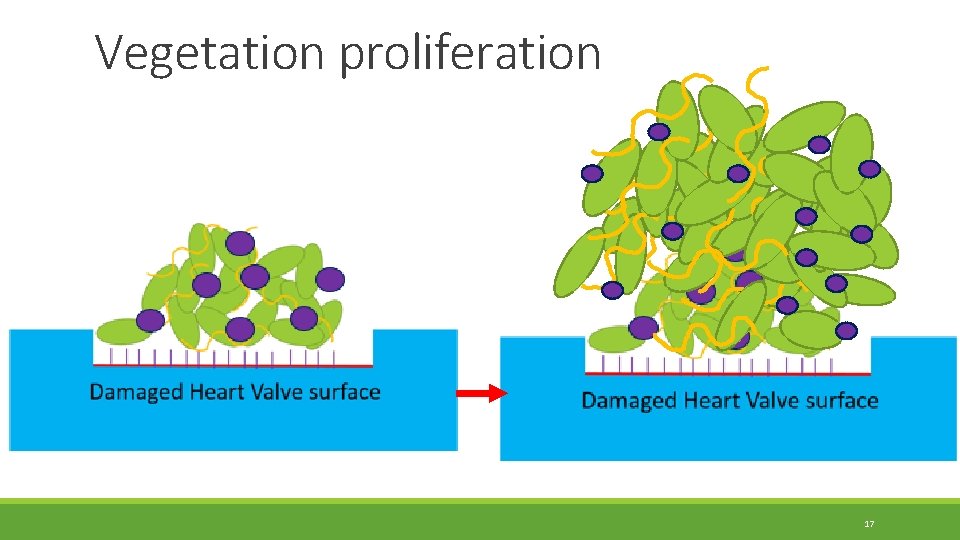
Bacteremia Healing Seeded vegetation Fibrosis/Scar 16
Vegetation proliferation 17
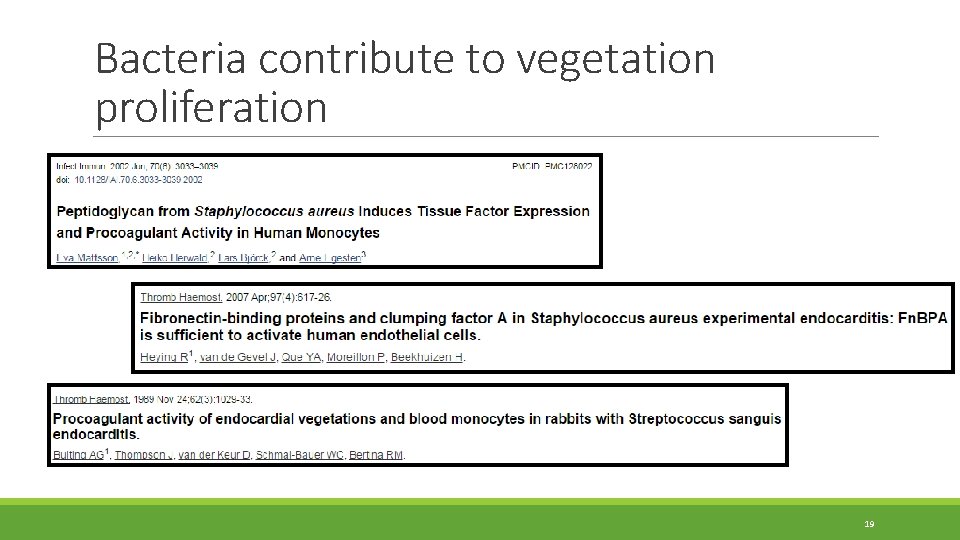
Bacteria contribute to vegetation proliferation o For instance, Staphylococcus aureus has certain virulence factors that directly contribute to platelet activation and aggregation o. Example virulence factor: Coagulase leads to more fibrin formation 18
Bacteria contribute to vegetation proliferation 19
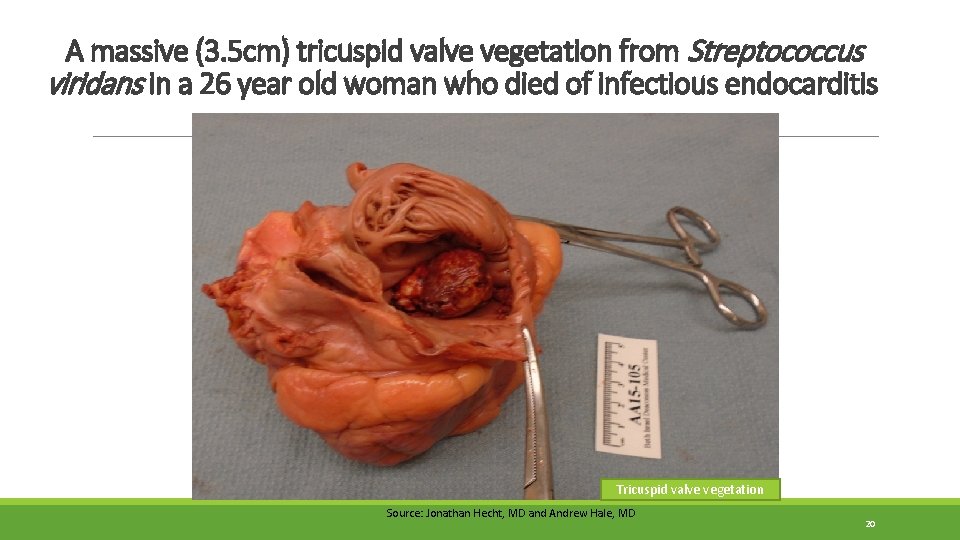
A massive (3. 5 cm) tricuspid valve vegetation from Streptococcus viridans in a 26 year old woman who died of infectious endocarditis Tricuspid valve vegetation Source: Jonathan Hecht, MD and Andrew Hale, MD 20
y r u j In But what causes the injury? 21
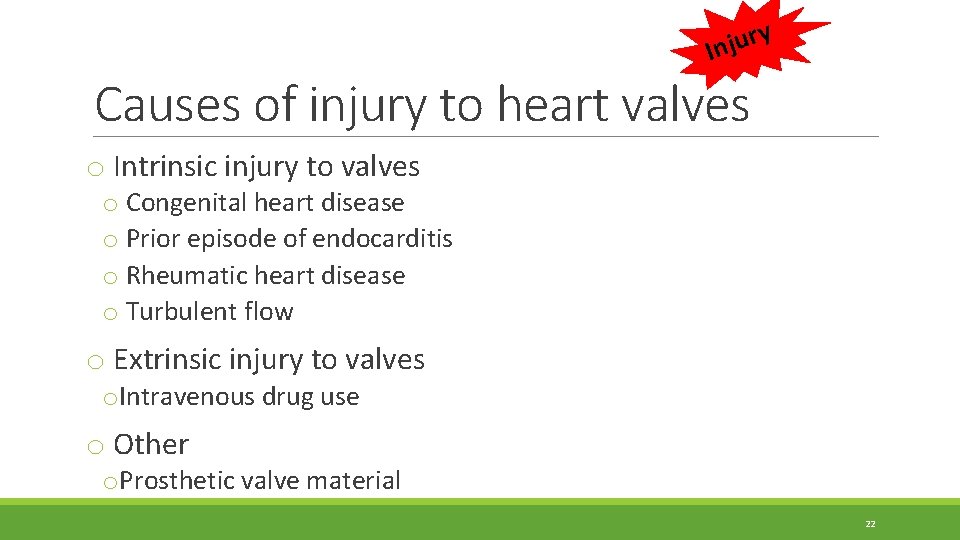
y r u j In Causes of injury to heart valves o Intrinsic injury to valves o Congenital heart disease o Prior episode of endocarditis o Rheumatic heart disease o Turbulent flow o Extrinsic injury to valves o. Intravenous drug use o Other o. Prosthetic valve material 22
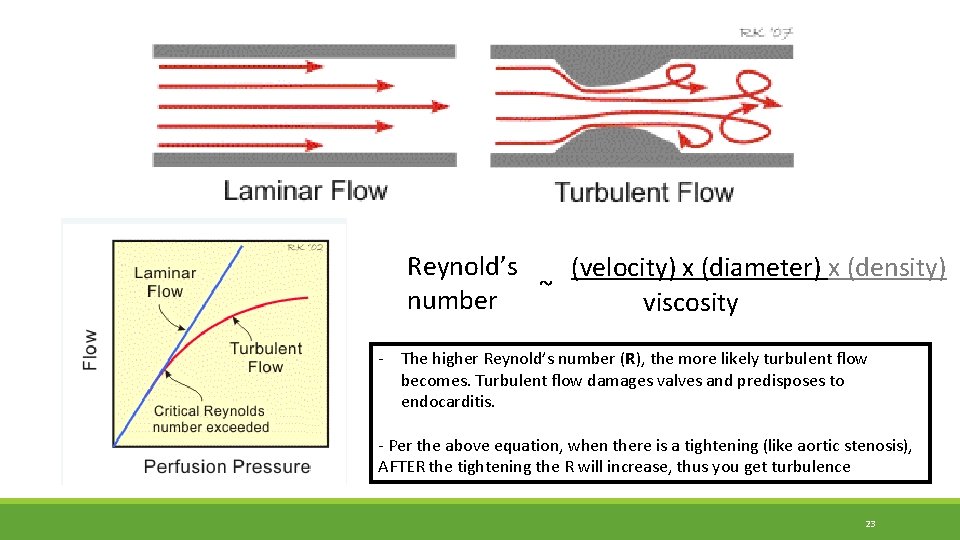
Reynold’s (velocity) x (diameter) x (density) number ~ viscosity - The higher Reynold’s number (R), the more likely turbulent flow becomes. Turbulent flow damages valves and predisposes to endocarditis. - Per the above equation, when there is a tightening (like aortic stenosis), AFTER the tightening the R will increase, thus you get turbulence 23
Some bacteria cause endocarditis more easily than others because they directly contribute to valve damage o Staphylococcus aureus secretes enzymes that make it easier to cause infectious endocarditis o Hyaluronidase: breaks down proteoglycans in connective tissue o Proteases: destroy tissue proteins 24
Immunologic response to endocarditis • The vegetation is highly inflammatory • The white blood cell count (WBC), Erythrocyte Sedimentation Rate (ESR) , C-Reactive Protein, and other acute phase reactants will be high • The immune system is highly activated • Rheumatoid Factor often elevated • Polyclonal immunoglobulin population creates immune complex deposition throughout the body • Osler Nodes • Glomerulonephritis 25
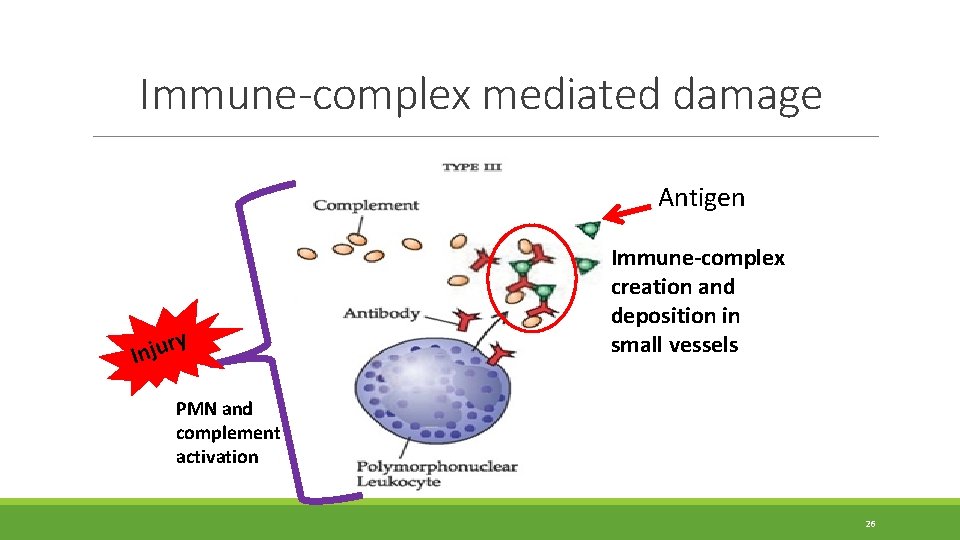
Immune-complex mediated damage Antigen y r u j In Immune-complex creation and deposition in small vessels PMN and complement activation 26
Question A 46 -year-old man with history of recent intravenous drug abuse presents with fever and is found to have infectious endocarditis. He states that the heroin he injects is not always pure. ◦ What cardiac valve do you think he is most likely to have an infectious endocarditis vegetation on? Why that one? 27
Answer Tricuspid valve. Intravenous drug users have a higher incidence of tricuspid valve involvement. This is from impurities (such as talc) within the injected drugs that directly damage the valves, and are mostly filtered out by the lungs. 28
Question He is found to have evidence of glomerulonephritis. Does this mean he must have left-sided (mitral or aortic valve) endocarditis? Why or why not? 29
Answer No, it could be right or left sided infectious endocarditis. Immune complexes can get through the pulmonary circulation and deposit systemically. 30
Question What would you expect the effect of aspirin to be on endocarditis vegetation size? 31
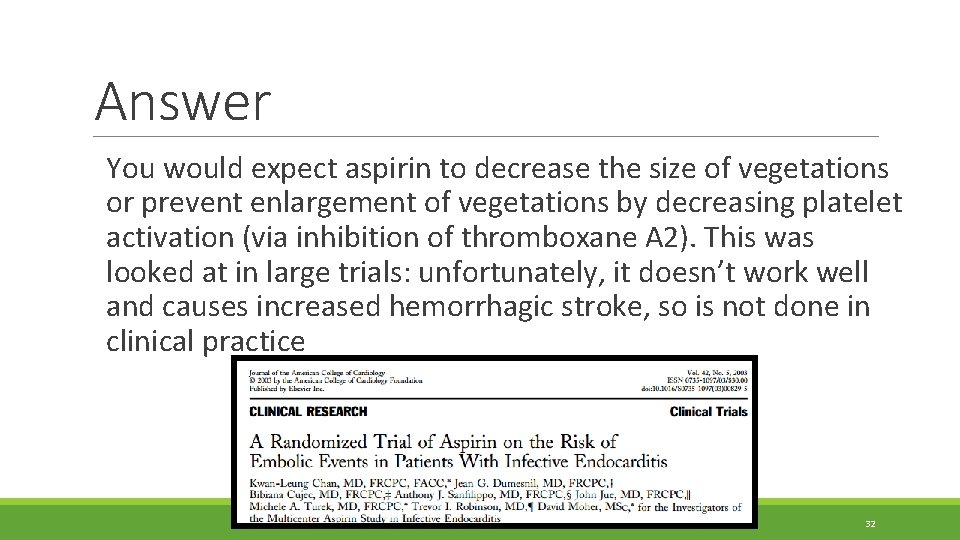
Answer You would expect aspirin to decrease the size of vegetations or prevent enlargement of vegetations by decreasing platelet activation (via inhibition of thromboxane A 2). This was looked at in large trials: unfortunately, it doesn’t work well and causes increased hemorrhagic stroke, so is not done in clinical practice 32
Outline (click to jump to a section) o Pathophysiology and immune response o Microbiology o Physical Exam findings o Diagnosis o Complications o Treatment o Special cases 33
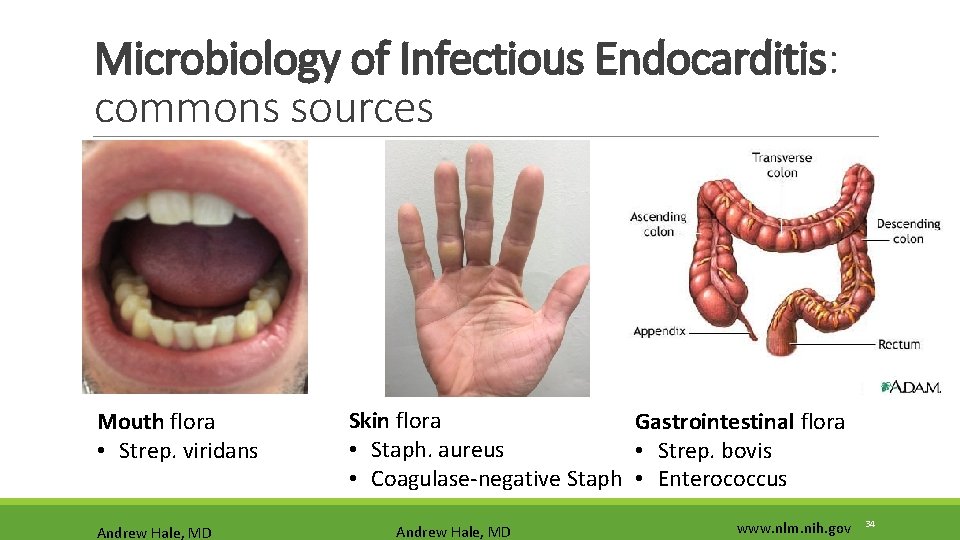
Microbiology of Infectious Endocarditis: commons sources Mouth flora • Strep. viridans Andrew Hale, MD Skin flora Gastrointestinal flora • Staph. aureus • Strep. bovis • Coagulase-negative Staph • Enterococcus Andrew Hale, MD www. nlm. nih. gov 34
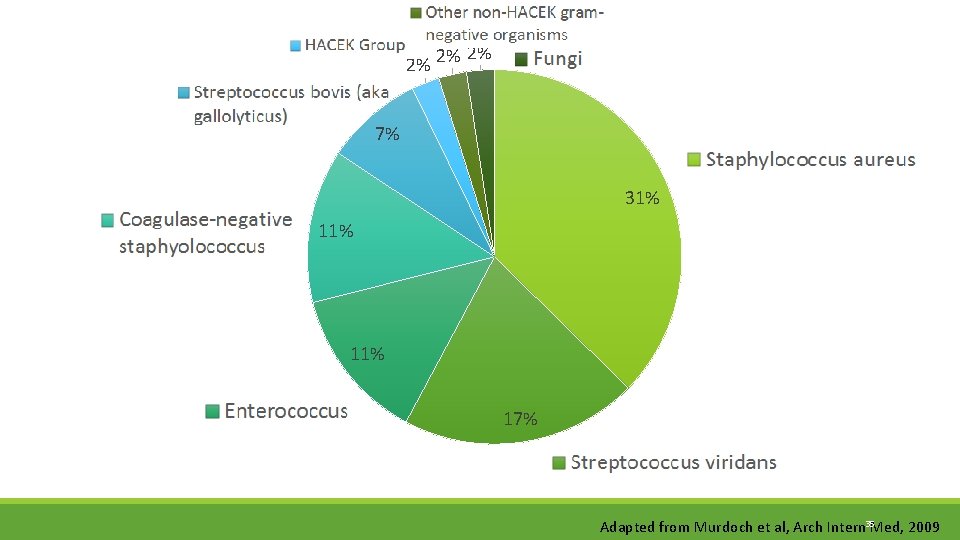
2% 2% 2% 7% 31% 11% 17% 35 Adapted from Murdoch et al, Arch Intern Med, 2009
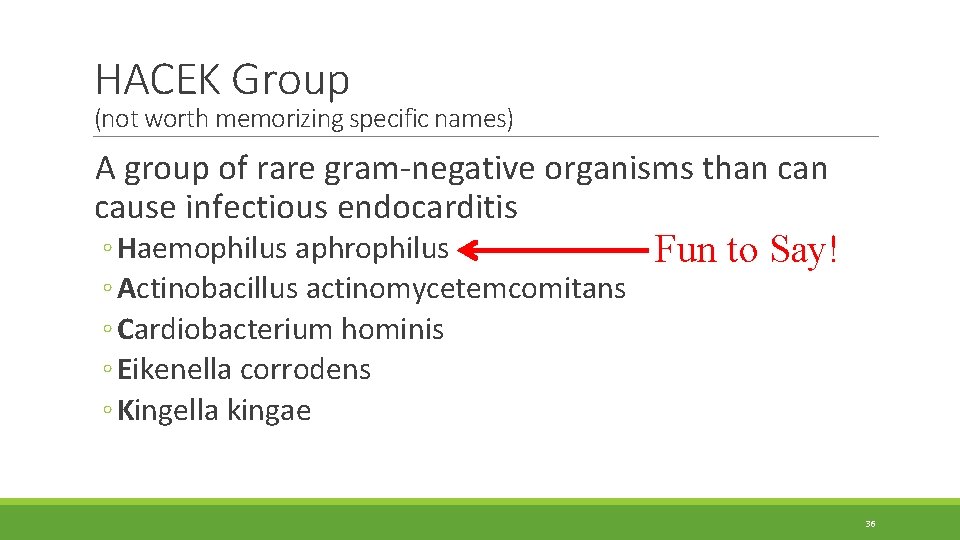
HACEK Group (not worth memorizing specific names) A group of rare gram-negative organisms than cause infectious endocarditis ◦ Haemophilus aphrophilus ◦ Actinobacillus actinomycetemcomitans ◦ Cardiobacterium hominis ◦ Eikenella corrodens ◦ Kingella kingae Fun to Say! 36
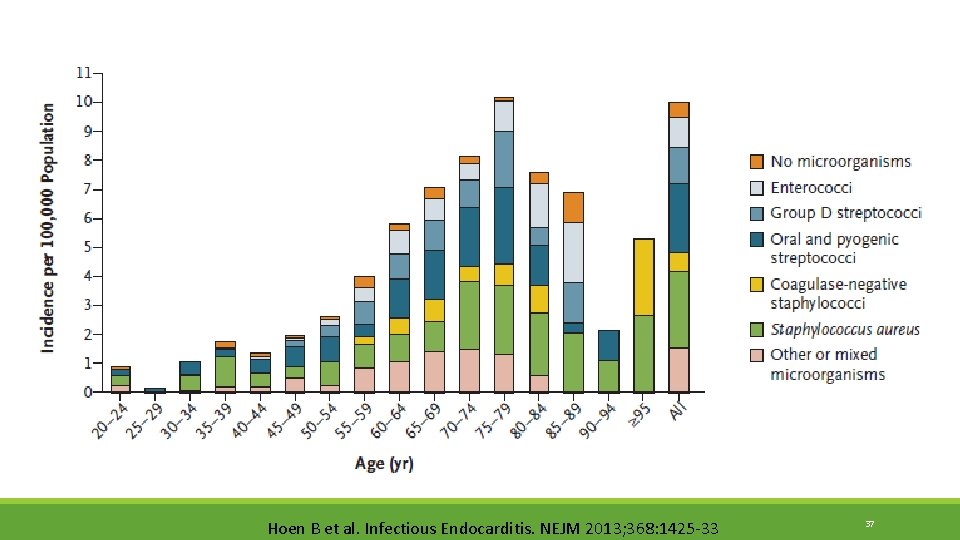
Hoen B et al. Infectious Endocarditis. NEJM 2013; 368: 1425 -33 37
Question Which of the following is NOT a significant risk-factor for endocarditis? ◦ A) Congenital valve disease ◦ B) Intravenous heroin use ◦ C) Recent dental cleaning ◦ D) Prosthetic heart valve ◦ E) Infectious endocarditis 5 years ago ◦ F) Rheumatic heart disease as a child ◦ G) Pneumonia in the last 30 days ◦ H) Recent colonoscopy 38
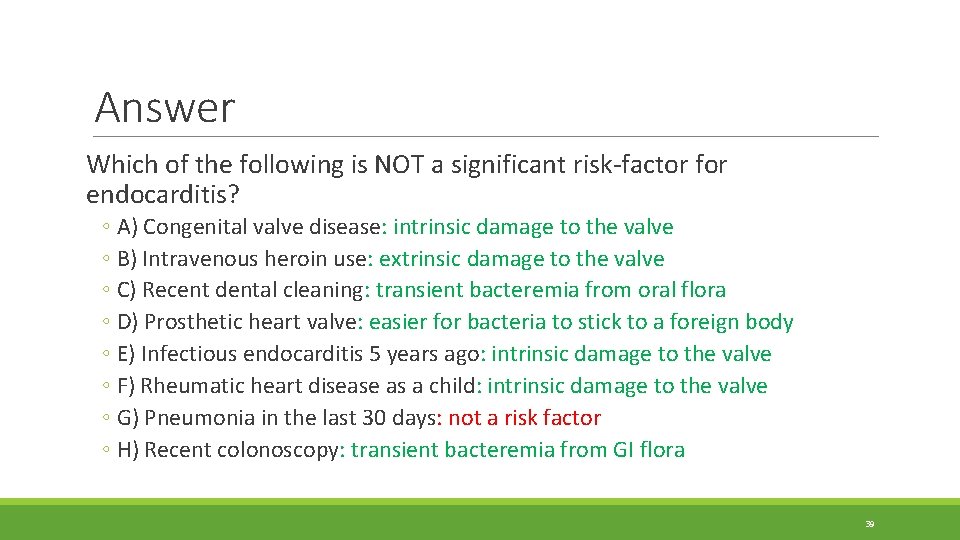
Answer Which of the following is NOT a significant risk-factor for endocarditis? ◦ A) Congenital valve disease: intrinsic damage to the valve ◦ B) Intravenous heroin use: extrinsic damage to the valve ◦ C) Recent dental cleaning: transient bacteremia from oral flora ◦ D) Prosthetic heart valve: easier for bacteria to stick to a foreign body ◦ E) Infectious endocarditis 5 years ago: intrinsic damage to the valve ◦ F) Rheumatic heart disease as a child: intrinsic damage to the valve ◦ G) Pneumonia in the last 30 days: not a risk factor ◦ H) Recent colonoscopy: transient bacteremia from GI flora 39
Outline (click to jump to a section) o Pathophysiology and immune response o Microbiology o Physical Exam findings o Diagnosis o Complications o Treatment o Special cases 40
Exam findings in Infectious Endocarditis o Several classic exam findings are seen in Infectious Endocarditis o They result from a combination of direct valve damage, vegetation break off and embolization, and immune-complex deposition 41
1) New heart murmurs (or worsening of old murmurs) o. The infection tends to destroy the valve, thus the valve becomes insufficient (starts to regurgitate) o If a patient had infectious endocarditis of the aortic valve, what would you expect to hear upon heart auscultation? ◦ Aortic regurgitation: a diastolic rumble, best heard at the left 3 rd intercostal space. An example can be listened to here: http: //www. wilkes. med. ucla. edu/ARMain. htm 42
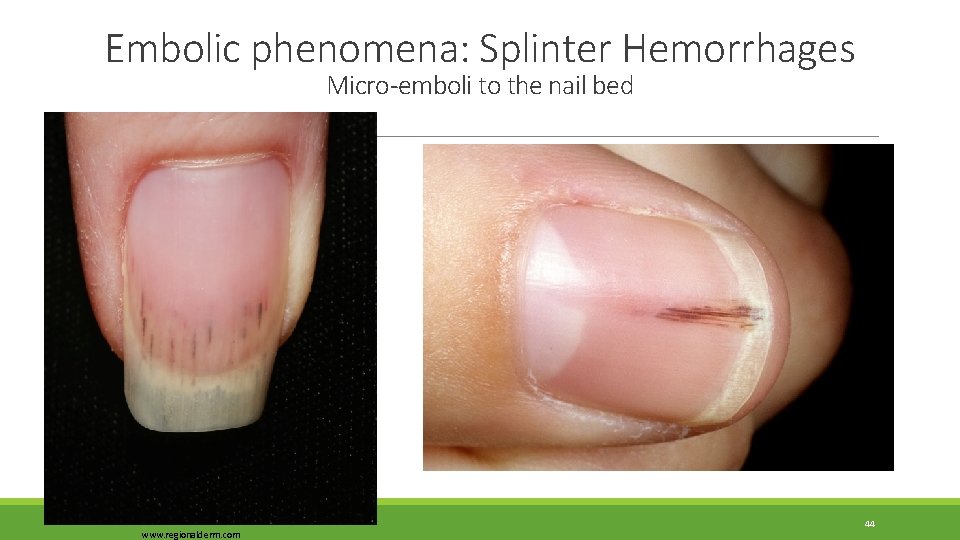
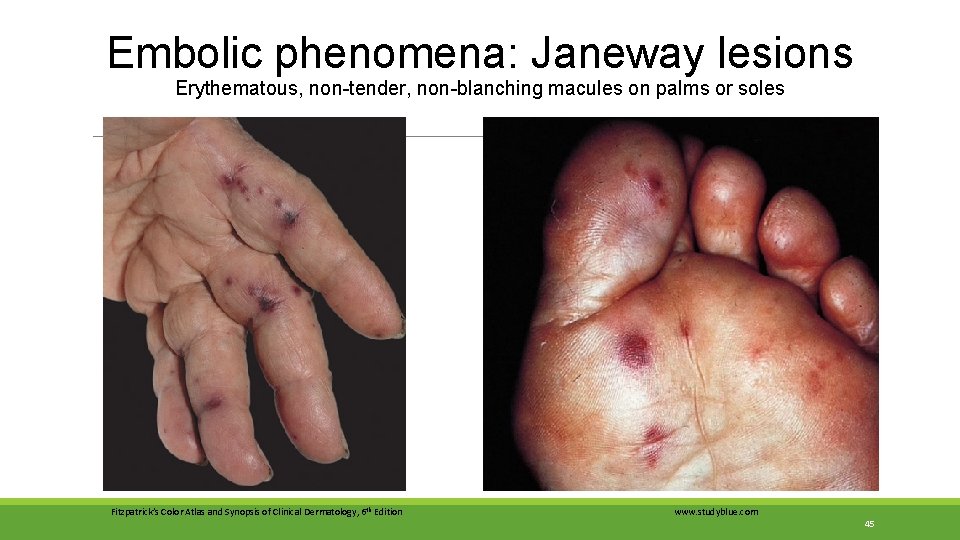
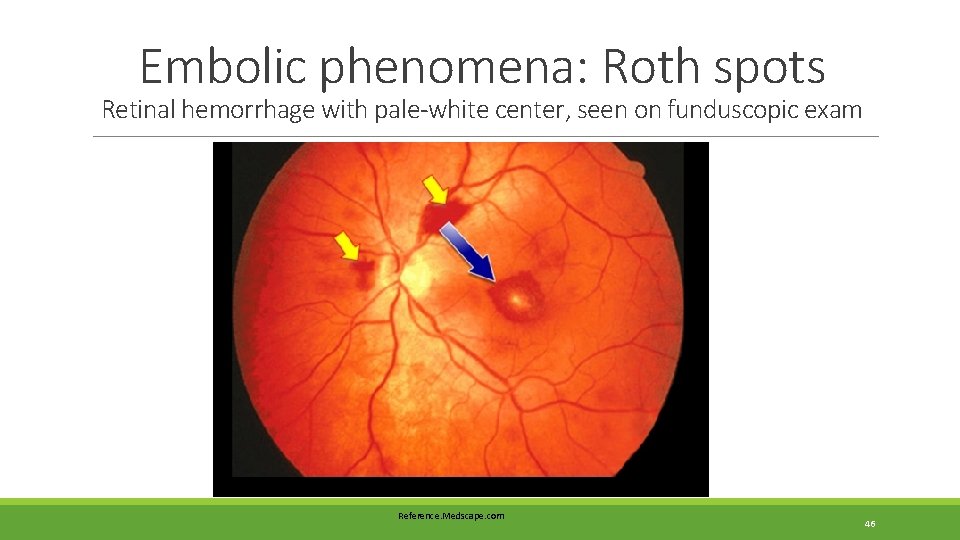
2) Embolic phenomena seen on exam ◦ Splinter hemorrhages ◦ Janeway lesions ◦ Roth spots 43
Embolic phenomena: Splinter Hemorrhages Micro-emboli to the nail bed www. regionalderm. com 44
Embolic phenomena: Janeway lesions Erythematous, non-tender, non-blanching macules on palms or soles Fitzpatrick’s Color Atlas and Synopsis of Clinical Dermatology, 6 th Edition www. studyblue. com 45
Embolic phenomena: Roth spots Retinal hemorrhage with pale-white center, seen on funduscopic exam Reference. Medscape. com 46
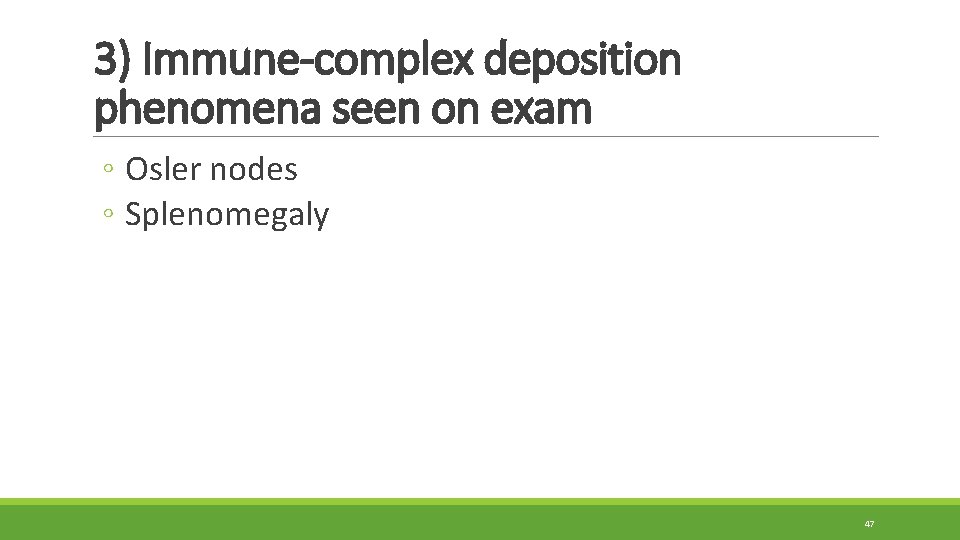
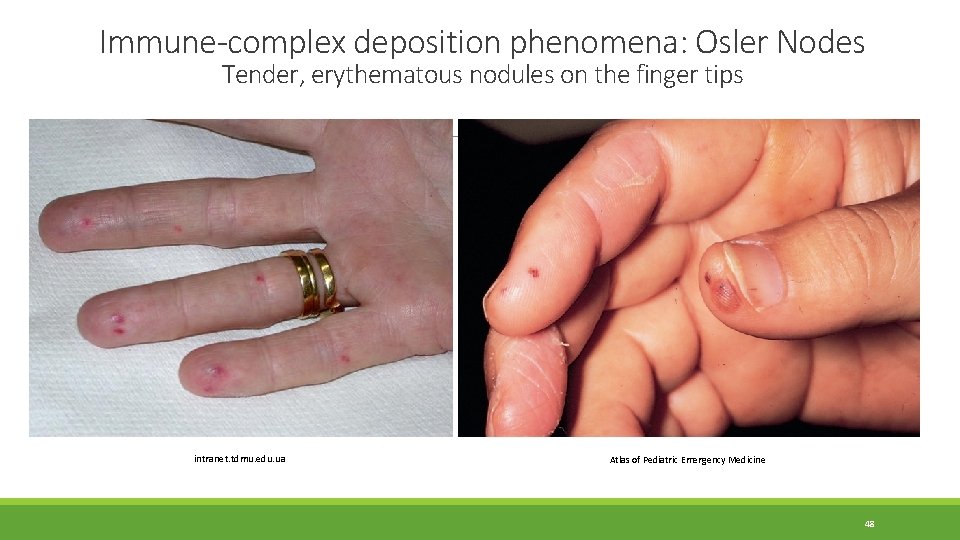
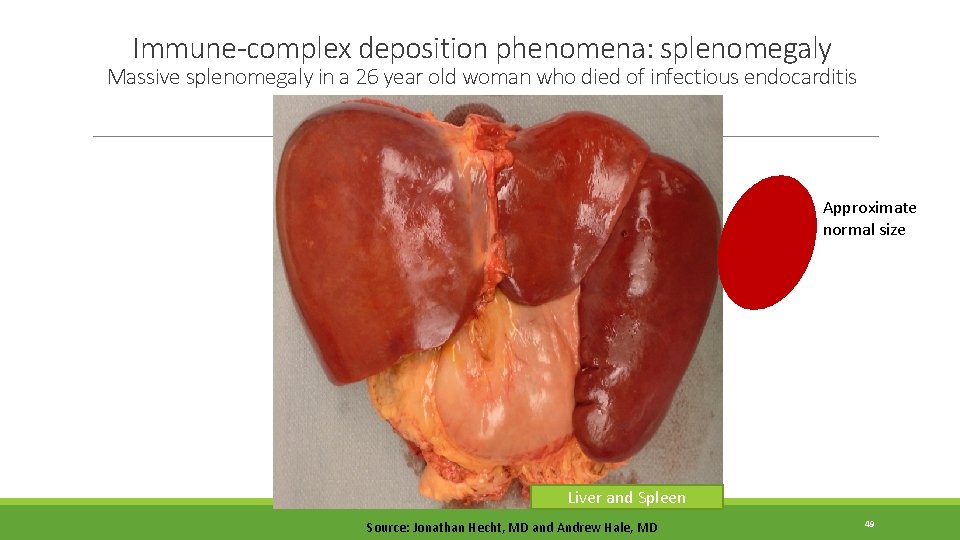
3) Immune-complex deposition phenomena seen on exam ◦ Osler nodes ◦ Splenomegaly 47
Immune-complex deposition phenomena: Osler Nodes Tender, erythematous nodules on the finger tips intranet. tdmu. edu. ua Atlas of Pediatric Emergency Medicine 48
Immune-complex deposition phenomena: splenomegaly Massive splenomegaly in a 26 year old woman who died of infectious endocarditis Approximate normal size Liver and Spleen Source: Jonathan Hecht, MD and Andrew Hale, MD 49
Question You are the intern rounding on a 59 -year-old patient with congenital bicuspid aortic valve and Strep viridans bacteremia. The issue of endocarditis is raised. Your Attending thoroughly examines the patient and finds no evidence of Janeway Lesions, Splinter hemorrhages, Roth Spots, or Osler nodes. He says: “I am very reassured by the lack of these findings that the patient does not have endocarditis” What is your response? 50
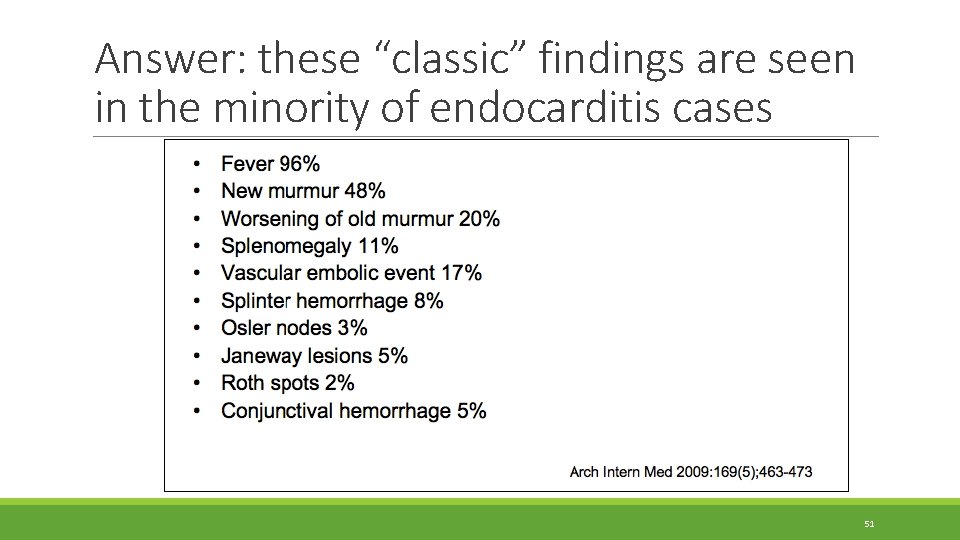
Answer: these “classic” findings are seen in the minority of endocarditis cases 51
Question o Osler nodes can be seen in both left and ride sided endocarditis, but splinter hemorrhages tend to be seen only in left sided endocarditis. What is the best explanation for this? 52
Answer o Osler nodes are an immune-complex mediated finding. Splinter hemorrhages are embolic phenomena. Thus unless a patient has a patent foramen ovale (PFO), you will not see splinter hemorrhages in right-sided (tricuspid or pulmonic valve) infectious endocarditis. Osler nodes can be seen in either because the immune-complexes are able to pass through the pulmonary circulation. 53
Outline (click to jump to a section) o Pathophysiology and immune response o Microbiology o Physical Exam findings o Diagnosis o Complications o Treatment o Special cases 54
How does one diagnose infectious endocarditis? A combination of clinical, physical exam, imaging, and microbiologic findings These are combined into the modified Duke Criteria 55
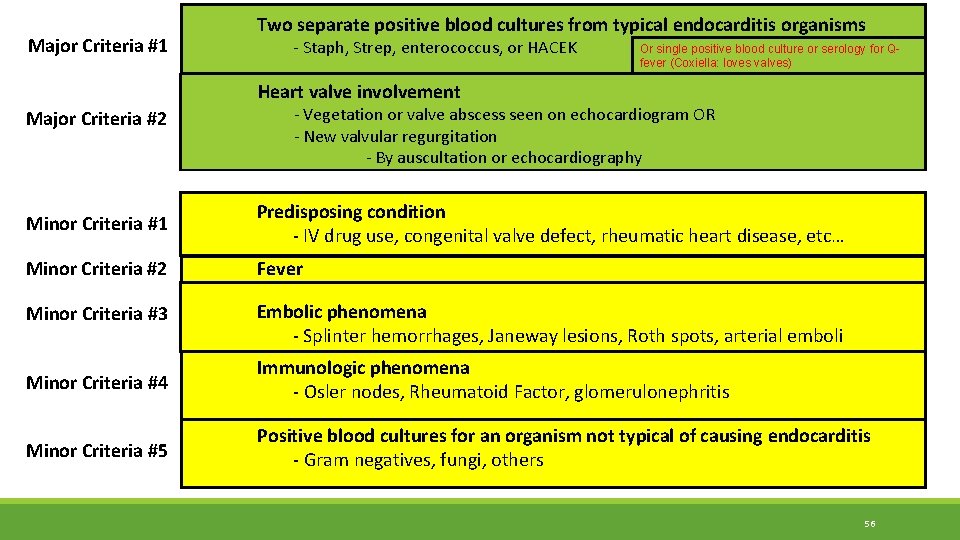
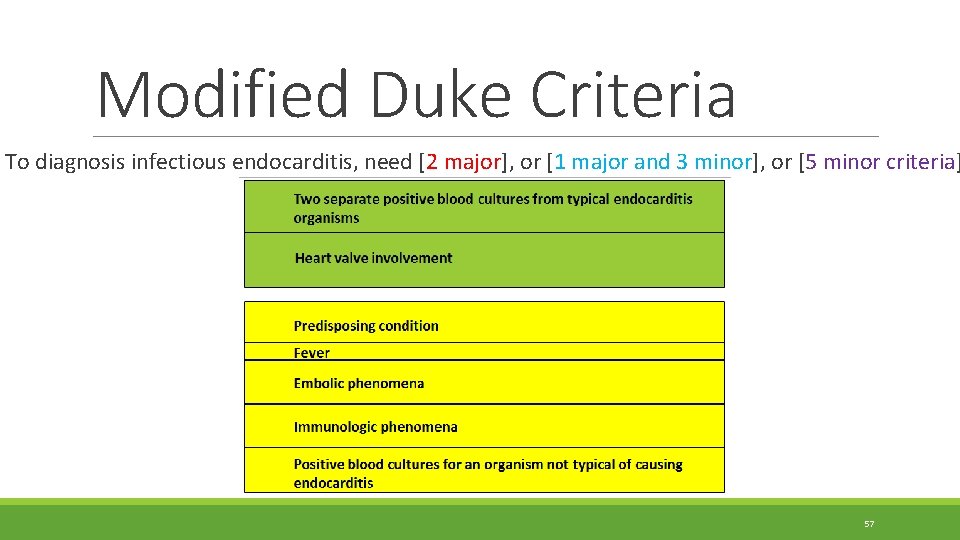
Major Criteria #1 Two separate positive blood cultures from typical endocarditis organisms - Staph, Strep, enterococcus, or HACEK Modified Duke Criteria Or single positive blood culture or serology for Qfever (Coxiella: loves valves) Heart valve involvement Major Criteria #2 - Vegetation or valve abscess seen on echocardiogram OR - New valvular regurgitation - By auscultation or echocardiography Minor Criteria #1 Predisposing condition - IV drug use, congenital valve defect, rheumatic heart disease, etc… Minor Criteria #2 Fever Minor Criteria #3 Embolic phenomena - Splinter hemorrhages, Janeway lesions, Roth spots, arterial emboli Minor Criteria #4 Immunologic phenomena - Osler nodes, Rheumatoid Factor, glomerulonephritis Minor Criteria #5 Positive blood cultures for an organism not typical of causing endocarditis - Gram negatives, fungi, others 56
Modified Duke Criteria To diagnosis infectious endocarditis, need [2 major], or [1 major and 3 minor], or [5 minor criteria] 57
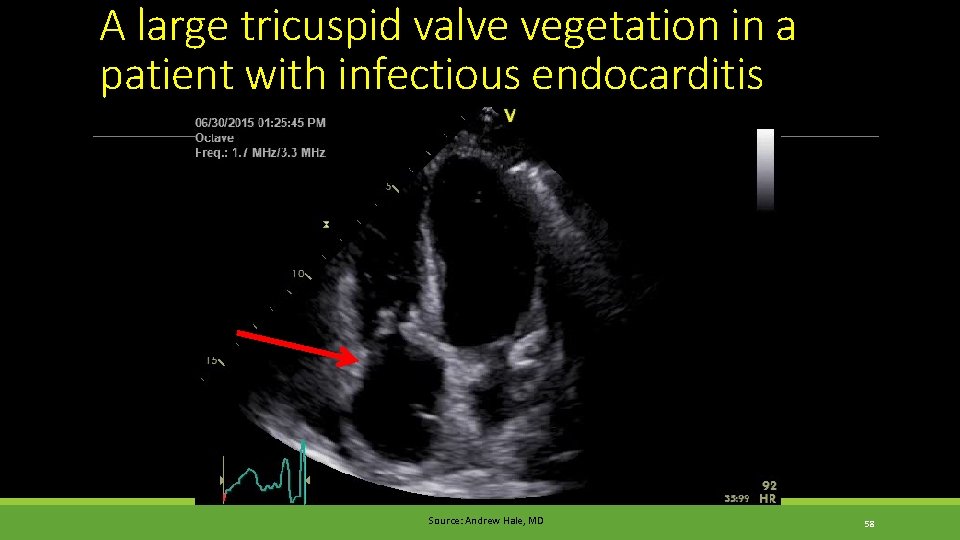
A large tricuspid valve vegetation in a patient with infectious endocarditis Source: Andrew Hale, MD 58
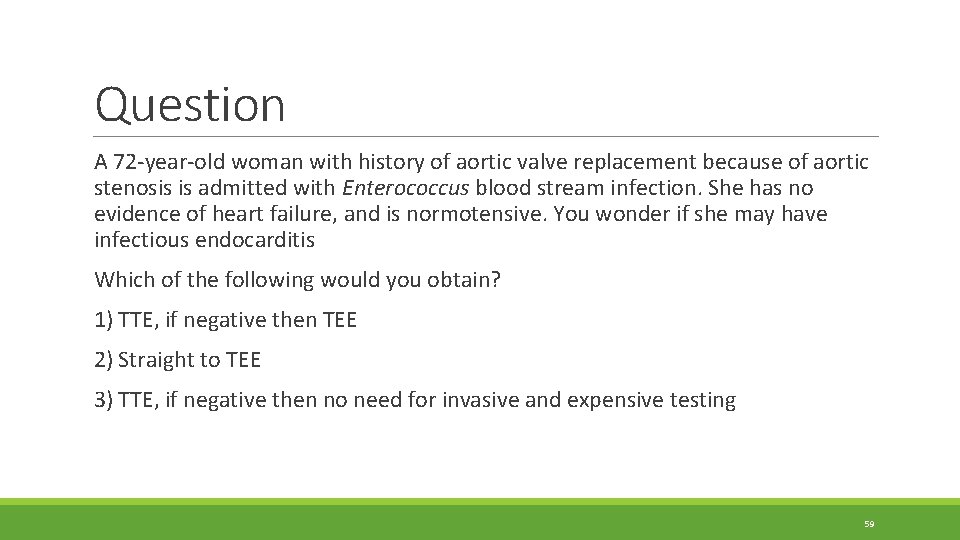
Question A 72 -year-old woman with history of aortic valve replacement because of aortic stenosis is admitted with Enterococcus blood stream infection. She has no evidence of heart failure, and is normotensive. You wonder if she may have infectious endocarditis Which of the following would you obtain? 1) TTE, if negative then TEE 2) Straight to TEE 3) TTE, if negative then no need for invasive and expensive testing 59
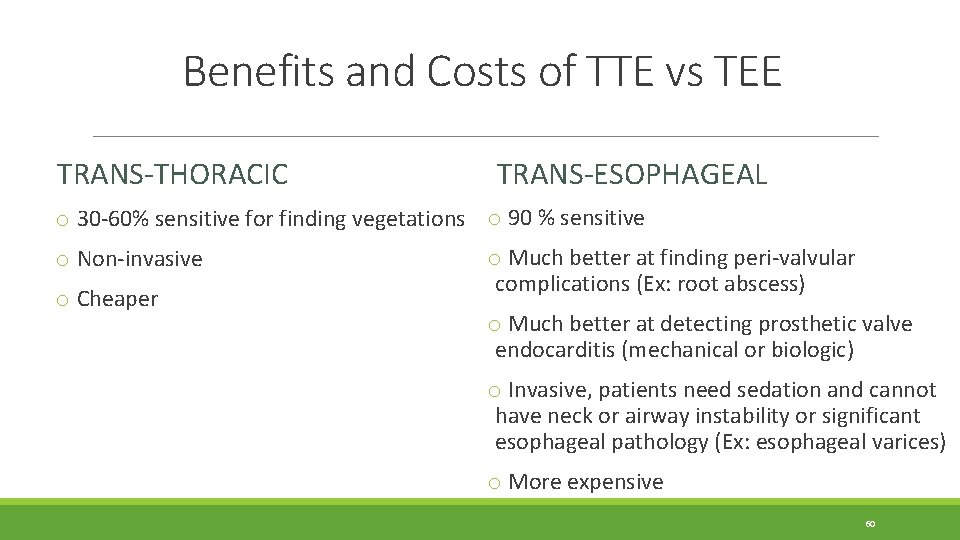
Benefits and Costs of TTE vs TEE TRANS-THORACIC TRANS-ESOPHAGEAL o 30 -60% sensitive for finding vegetations o 90 % sensitive o Non-invasive o Cheaper o Much better at finding peri-valvular complications (Ex: root abscess) o Much better at detecting prosthetic valve endocarditis (mechanical or biologic) o Invasive, patients need sedation and cannot have neck or airway instability or significant esophageal pathology (Ex: esophageal varices) o More expensive 60
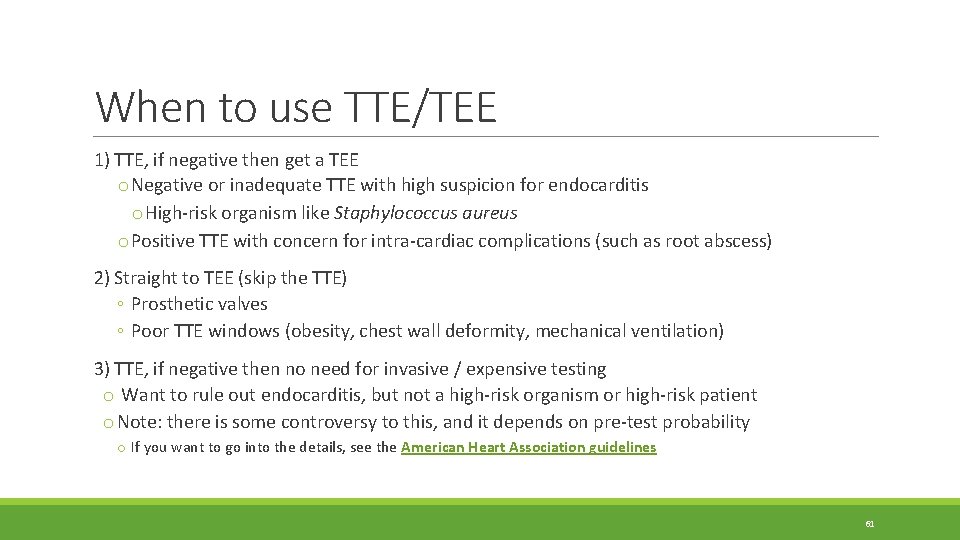
When to use TTE/TEE 1) TTE, if negative then get a TEE o Negative or inadequate TTE with high suspicion for endocarditis o High-risk organism like Staphylococcus aureus o Positive TTE with concern for intra-cardiac complications (such as root abscess) 2) Straight to TEE (skip the TTE) ◦ Prosthetic valves ◦ Poor TTE windows (obesity, chest wall deformity, mechanical ventilation) 3) TTE, if negative then no need for invasive / expensive testing o Want to rule out endocarditis, but not a high-risk organism or high-risk patient o Note: there is some controversy to this, and it depends on pre-test probability o If you want to go into the details, see the American Heart Association guidelines 61
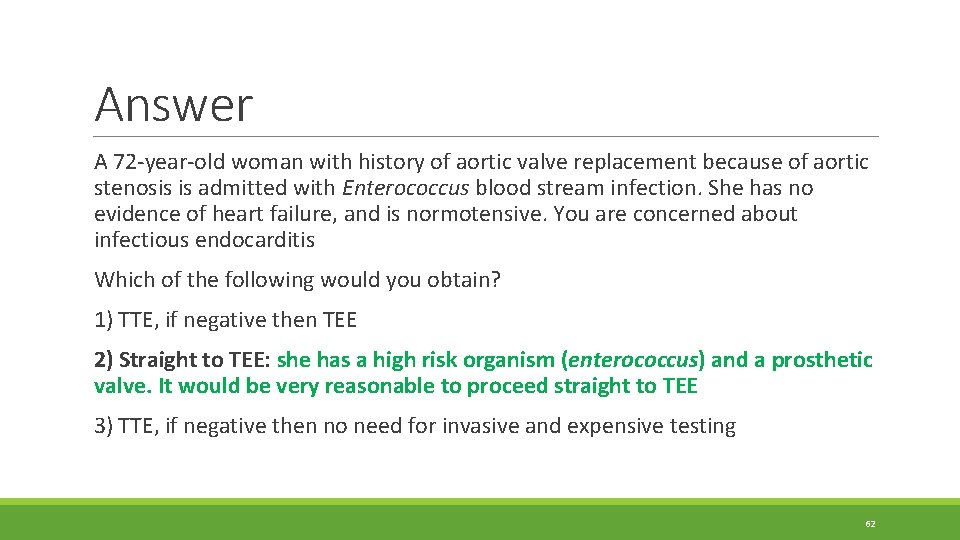
Answer A 72 -year-old woman with history of aortic valve replacement because of aortic stenosis is admitted with Enterococcus blood stream infection. She has no evidence of heart failure, and is normotensive. You are concerned about infectious endocarditis Which of the following would you obtain? 1) TTE, if negative then TEE 2) Straight to TEE: she has a high risk organism (enterococcus) and a prosthetic valve. It would be very reasonable to proceed straight to TEE 3) TTE, if negative then no need for invasive and expensive testing 62
Outline (click to jump to a section) o Pathophysiology and immune response o Microbiology o Physical Exam findings o Diagnosis o Complications o Treatment o Special cases 63
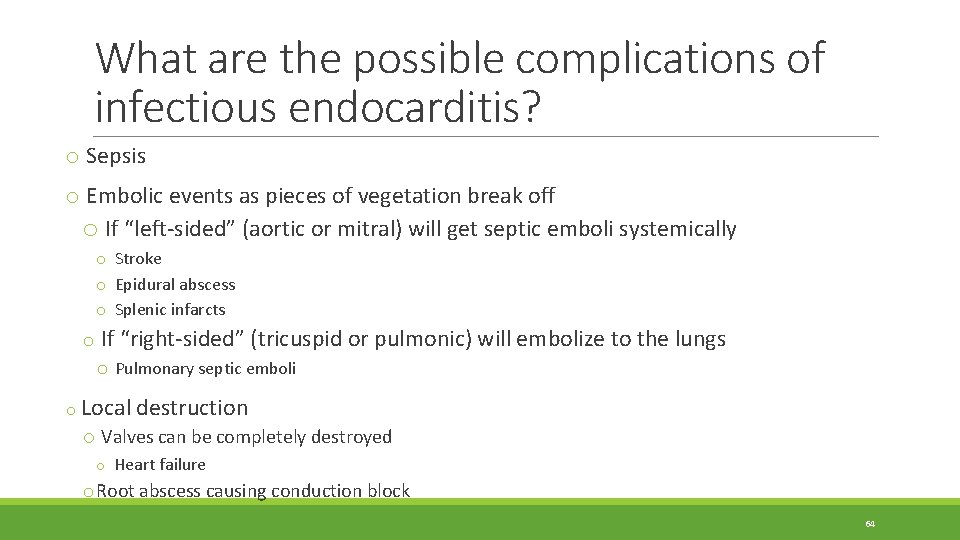
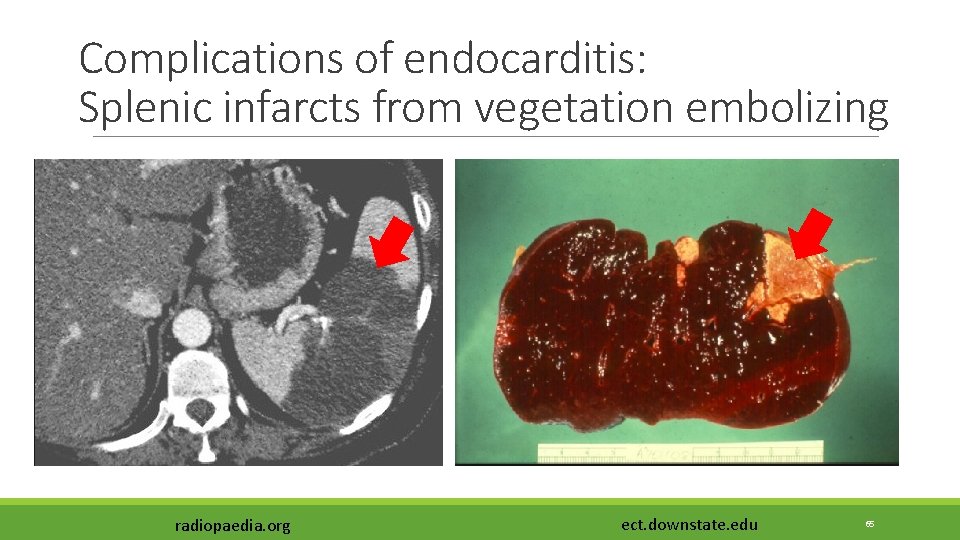
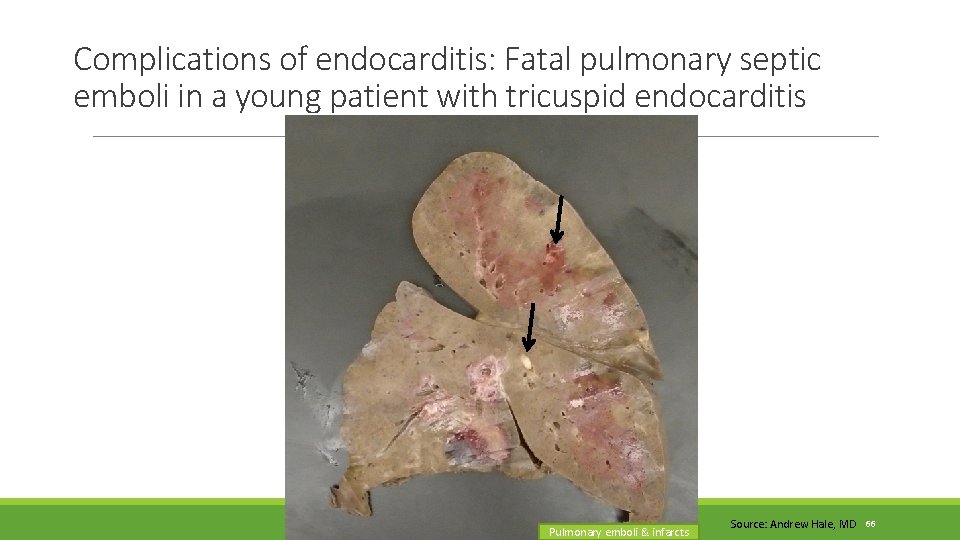
What are the possible complications of infectious endocarditis? o Sepsis o Embolic events as pieces of vegetation break off o If “left-sided” (aortic or mitral) will get septic emboli systemically o Stroke o Epidural abscess o Splenic infarcts o If “right-sided” (tricuspid or pulmonic) will embolize to the lungs o Pulmonary septic emboli o Local destruction o Valves can be completely destroyed o Heart failure o Root abscess causing conduction block 64
Complications of endocarditis: Splenic infarcts from vegetation embolizing radiopaedia. org ect. downstate. edu 65
Complications of endocarditis: Fatal pulmonary septic emboli in a young patient with tricuspid endocarditis Pulmonary emboli & infarcts Source: Andrew Hale, MD 66
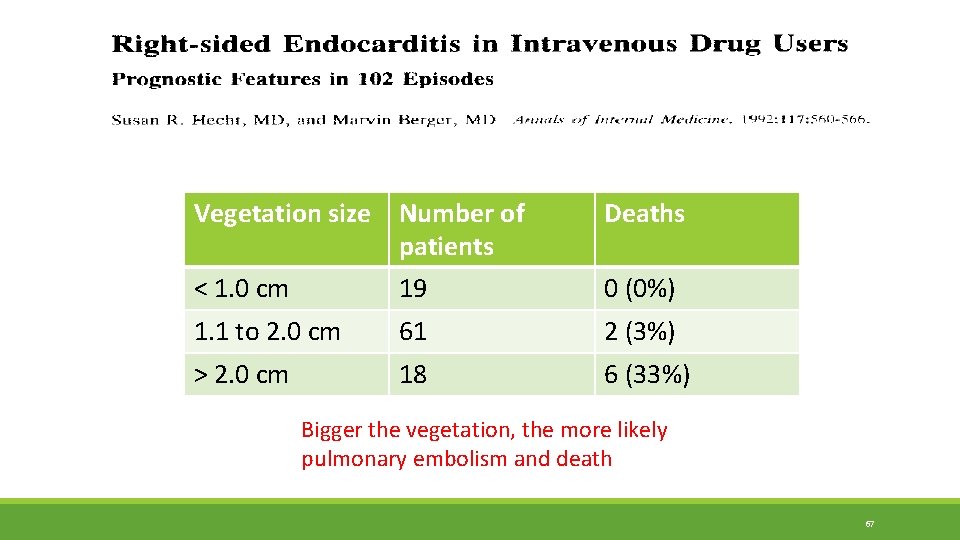
Vegetation size Number of patients < 1. 0 cm 19 Deaths 1. 1 to 2. 0 cm 61 2 (3%) > 2. 0 cm 18 6 (33%) 0 (0%) Bigger the vegetation, the more likely pulmonary embolism and death 67
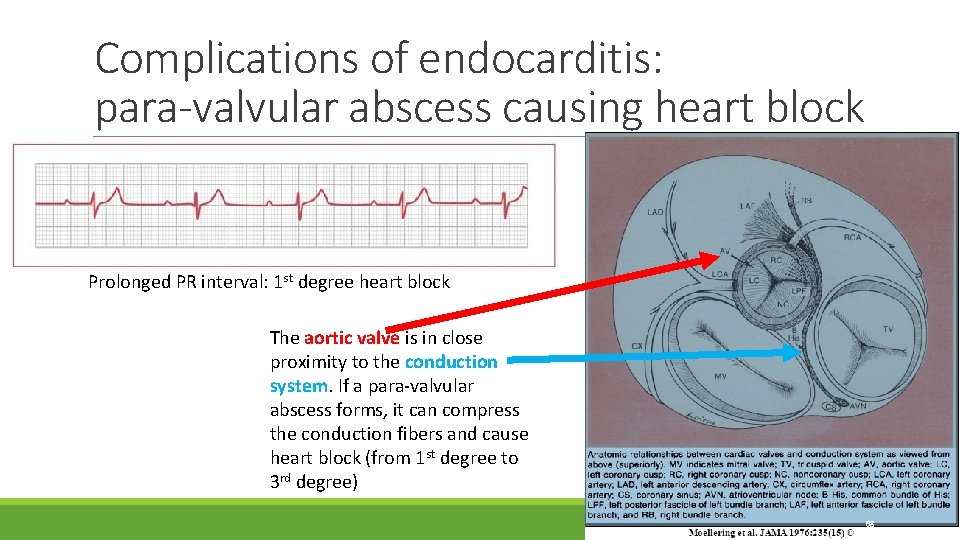
Complications of endocarditis: para-valvular abscess causing heart block Prolonged PR interval: 1 st degree heart block The aortic valve is in close proximity to the conduction system. If a para-valvular abscess forms, it can compress the conduction fibers and cause heart block (from 1 st degree to 3 rd degree) 68
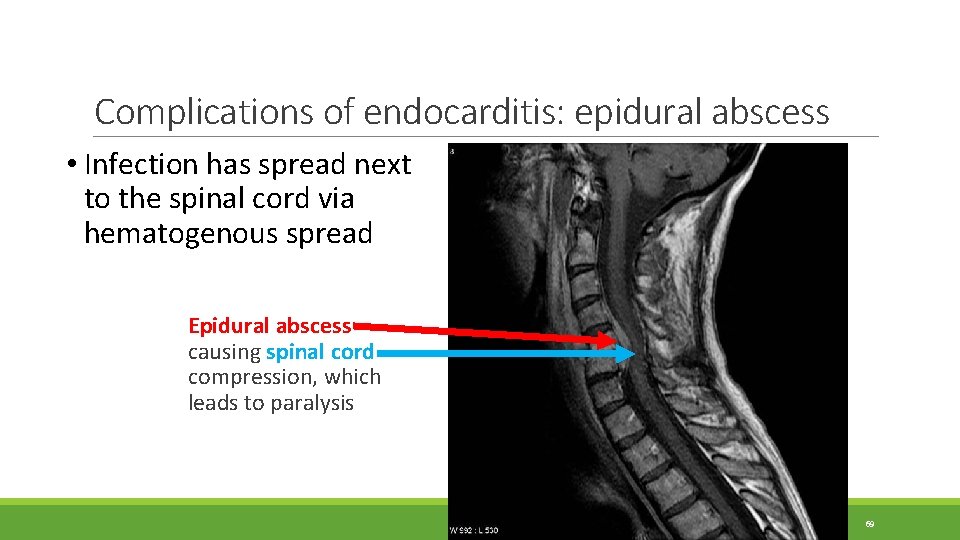
Complications of endocarditis: epidural abscess • Infection has spread next to the spinal cord via hematogenous spread Epidural abscess causing spinal cord compression, which leads to paralysis 69
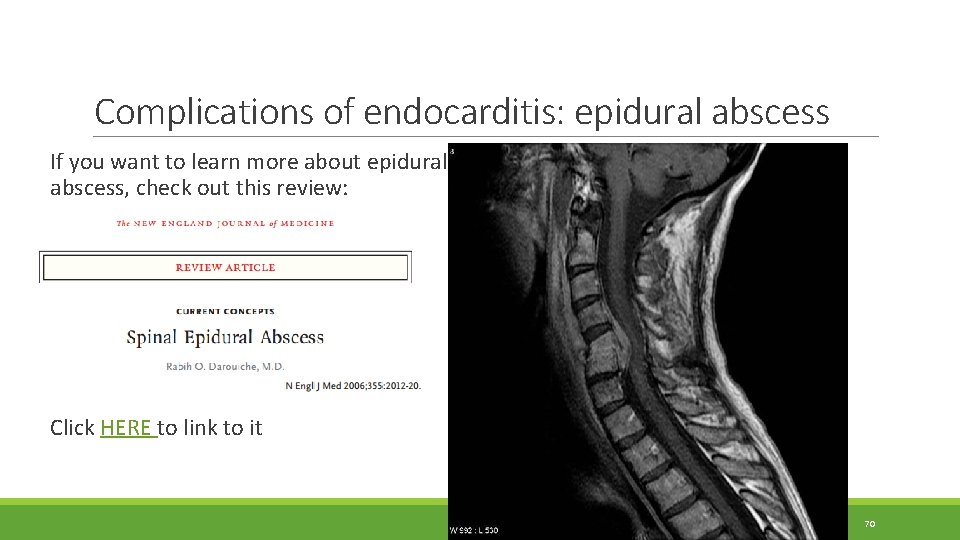
Complications of endocarditis: epidural abscess If you want to learn more about epidural abscess, check out this review: Click HERE to link to it 70
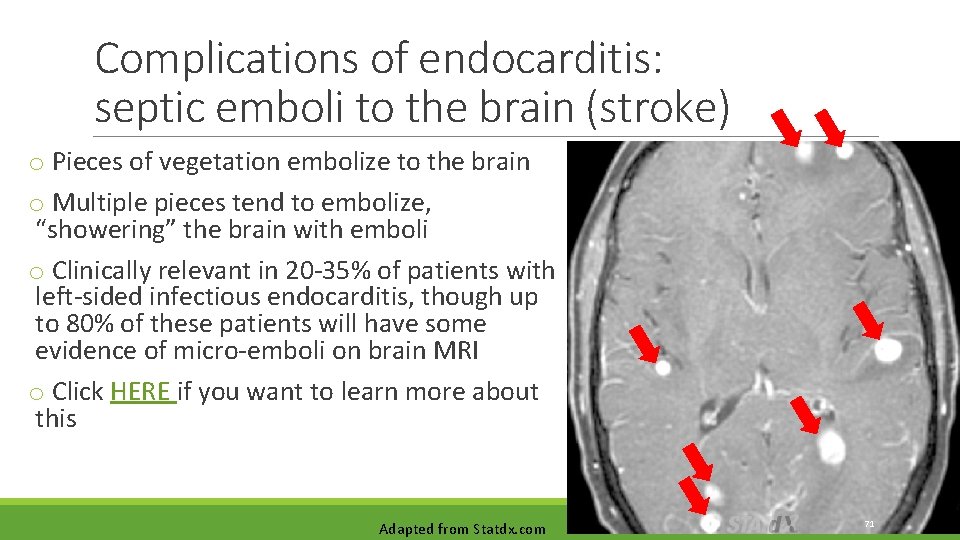
Complications of endocarditis: septic emboli to the brain (stroke) o Pieces of vegetation embolize to the brain o Multiple pieces tend to embolize, “showering” the brain with emboli o Clinically relevant in 20 -35% of patients with left-sided infectious endocarditis, though up to 80% of these patients will have some evidence of micro-emboli on brain MRI o Click HERE if you want to learn more about this Adapted from Statdx. com 71
Outline (click to jump to a section) o Pathophysiology and immune response o Microbiology o Physical Exam findings o Diagnosis o Complications o Treatment o Special cases 72
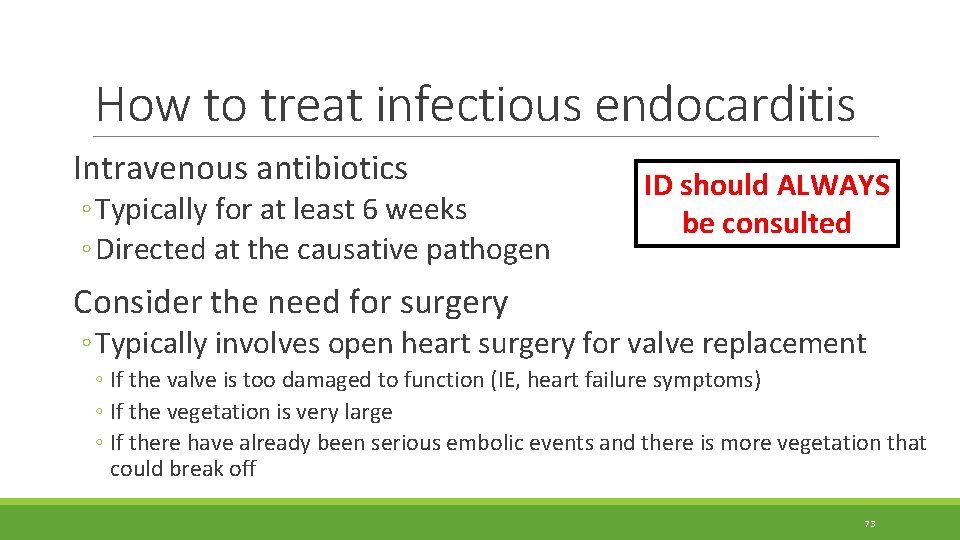
How to treat infectious endocarditis Intravenous antibiotics ◦ Typically for at least 6 weeks ◦ Directed at the causative pathogen ID should ALWAYS be consulted Consider the need for surgery ◦ Typically involves open heart surgery for valve replacement ◦ If the valve is too damaged to function (IE, heart failure symptoms) ◦ If the vegetation is very large ◦ If there have already been serious embolic events and there is more vegetation that could break off 73
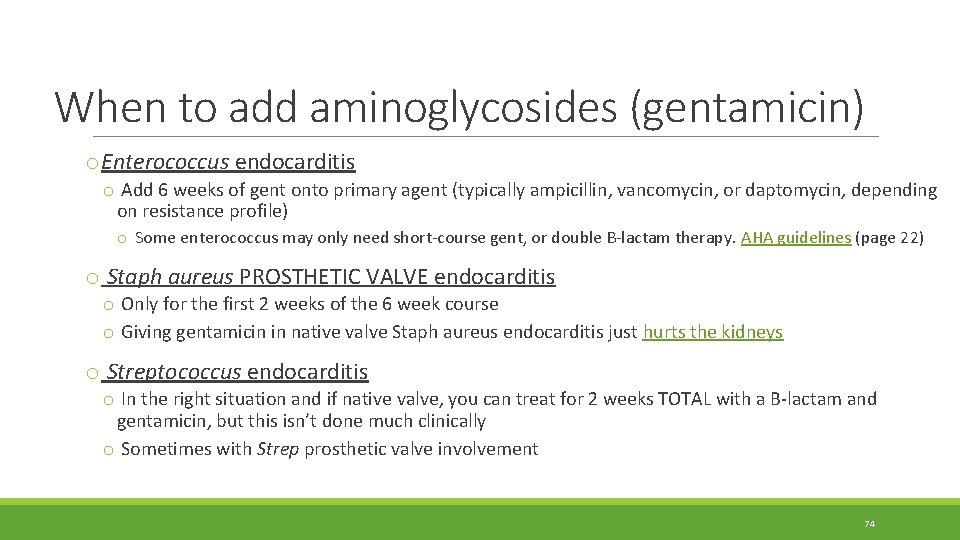
When to add aminoglycosides (gentamicin) o. Enterococcus endocarditis o Add 6 weeks of gent onto primary agent (typically ampicillin, vancomycin, or daptomycin, depending on resistance profile) o Some enterococcus may only need short-course gent, or double B-lactam therapy. AHA guidelines (page 22) o Staph aureus PROSTHETIC VALVE endocarditis o Only for the first 2 weeks of the 6 week course o Giving gentamicin in native valve Staph aureus endocarditis just hurts the kidneys o Streptococcus endocarditis o In the right situation and if native valve, you can treat for 2 weeks TOTAL with a B-lactam and gentamicin, but this isn’t done much clinically o Sometimes with Strep prosthetic valve involvement 74
When to add rifampin o Prosthetic valve endocarditis from Staph species (Staph aureus as well as coagulase-negative Staph (Co. NS)) o And that’s it! 75
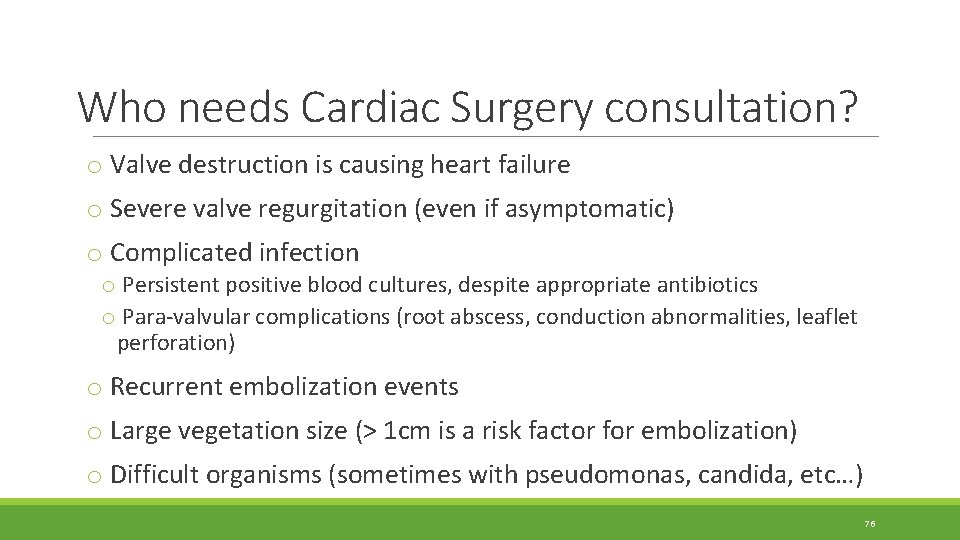
Who needs Cardiac Surgery consultation? o Valve destruction is causing heart failure o Severe valve regurgitation (even if asymptomatic) o Complicated infection o Persistent positive blood cultures, despite appropriate antibiotics o Para-valvular complications (root abscess, conduction abnormalities, leaflet perforation) o Recurrent embolization events o Large vegetation size (> 1 cm is a risk factor for embolization) o Difficult organisms (sometimes with pseudomonas, candida, etc…) 76
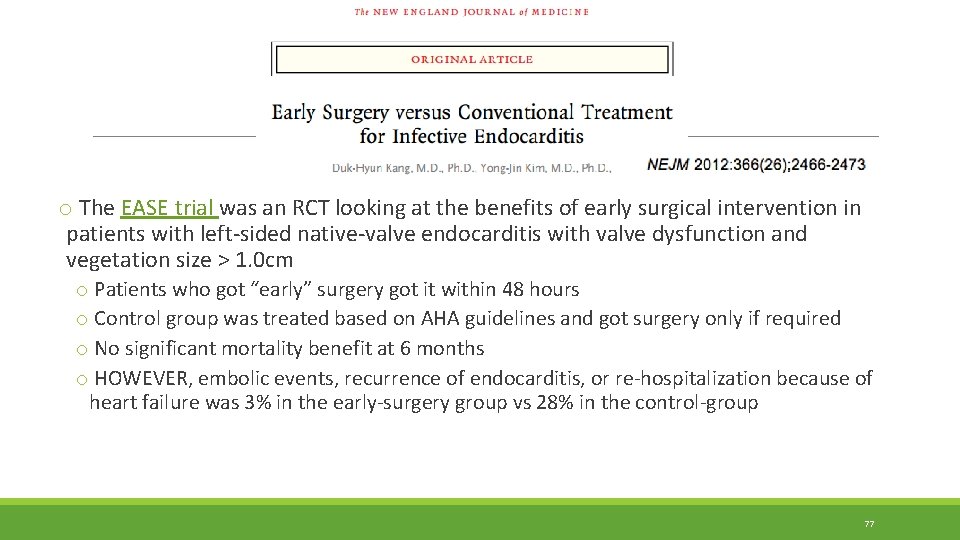
o The EASE trial was an RCT looking at the benefits of early surgical intervention in patients with left-sided native-valve endocarditis with valve dysfunction and vegetation size > 1. 0 cm o Patients who got “early” surgery got it within 48 hours o Control group was treated based on AHA guidelines and got surgery only if required o No significant mortality benefit at 6 months o HOWEVER, embolic events, recurrence of endocarditis, or re-hospitalization because of heart failure was 3% in the early-surgery group vs 28% in the control-group 77
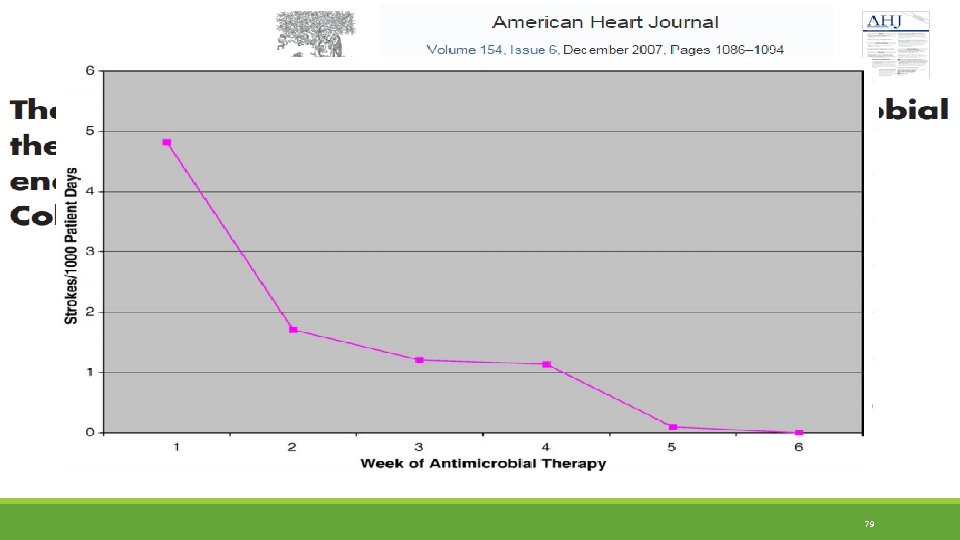
Question A 33 -year-old female patient who uses intravenous heroin is found to have a 1. 5 cm vegetation on her mitral valve. The primary team is worried about the risk of stroke How soon can we expect antibiotics to decrease her stroke risk? 78
79
Answer It takes at least a couple weeks for antibiotics to really decrease stroke risk. That is why large vegetations are an indication for surgery: because the risk of embolization is high and antibiotics won’t decrease risk for a while 80
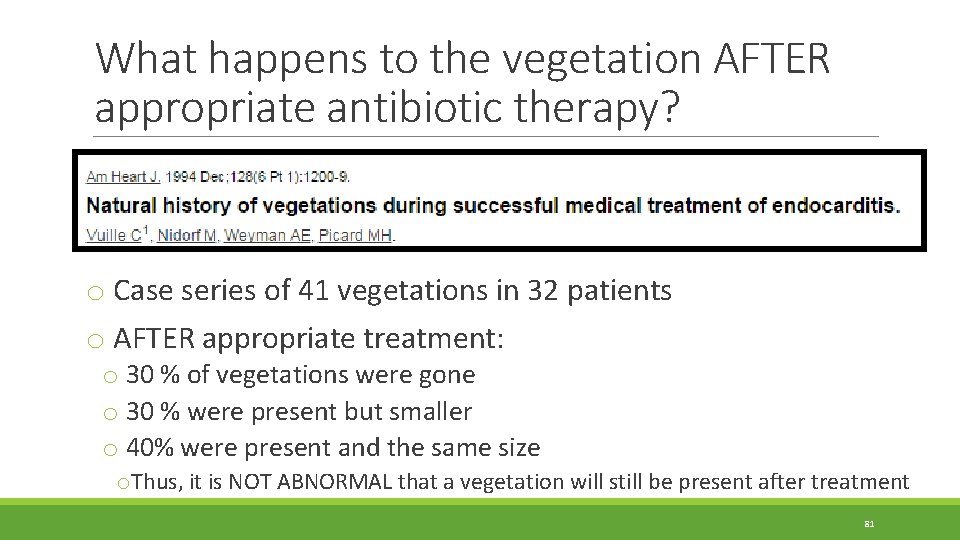
What happens to the vegetation AFTER appropriate antibiotic therapy? o Case series of 41 vegetations in 32 patients o AFTER appropriate treatment: o 30 % of vegetations were gone o 30 % were present but smaller o 40% were present and the same size o. Thus, it is NOT ABNORMAL that a vegetation will still be present after treatment 81
Question A 27 -year-old female patient is in the hospital with infectious endocarditis of the aortic valve. On electrocardiogram, you notice that she has Wenkebach phenomenon (2 nd degree heart block) Is her infection likely to respond to 6 weeks of antibiotics alone? Why or why not? 82
Answer No, antibiotics are unlikely to be enough. She has evidence of heart block. This implies she has a para-valvular abscess as a complication of her aortic valve endocarditis, compressing the His-Purkinje system. Antibiotics have trouble penetrating abscesses. This is also an indication for surgery to drain the abscess. 83
Outline (click to jump to a section) o Pathophysiology and immune response o Microbiology o Physical Exam findings o Diagnosis o Complications o Treatment o Special cases (culture negative, fungal, marantic, and prosthetic valve endocarditis) 84
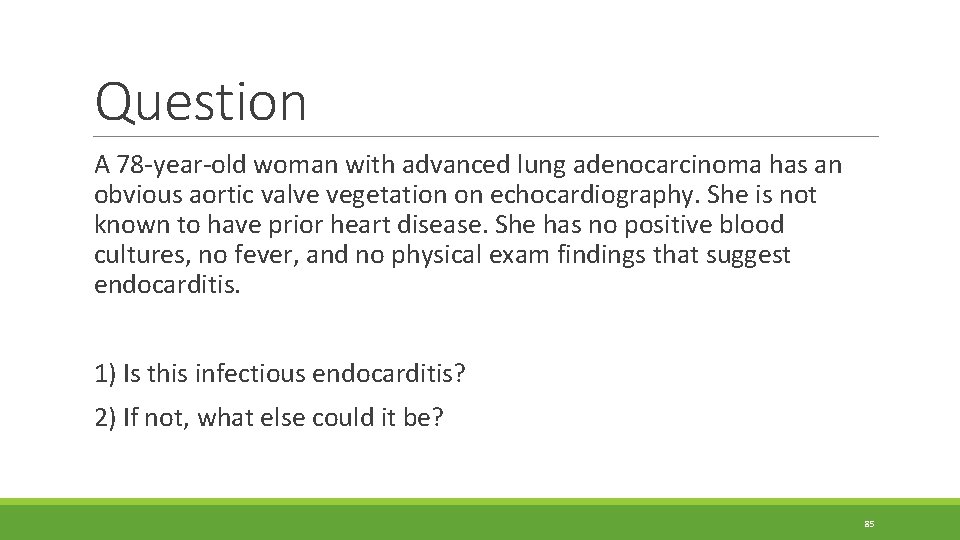
Question A 78 -year-old woman with advanced lung adenocarcinoma has an obvious aortic valve vegetation on echocardiography. She is not known to have prior heart disease. She has no positive blood cultures, no fever, and no physical exam findings that suggest endocarditis. 1) Is this infectious endocarditis? 2) If not, what else could it be? 85
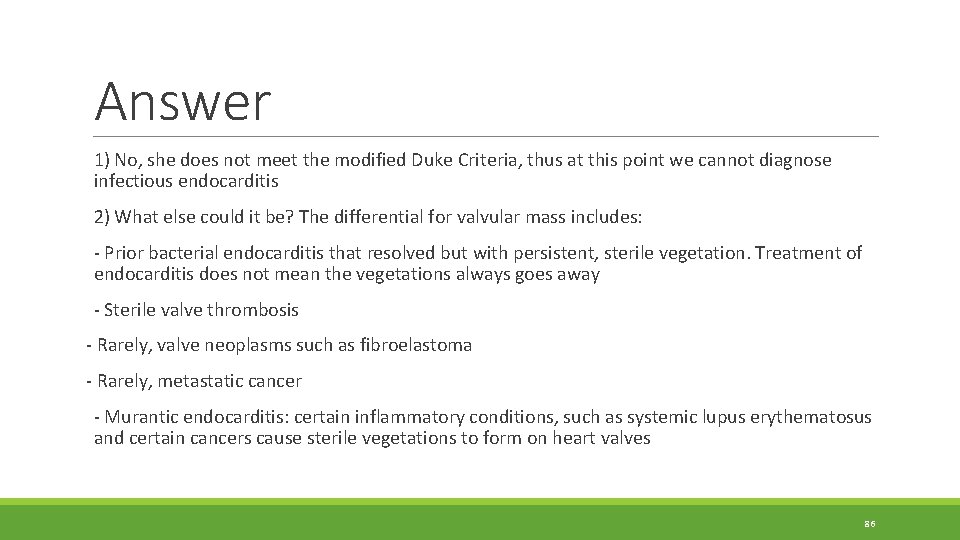
Answer 1) No, she does not meet the modified Duke Criteria, thus at this point we cannot diagnose infectious endocarditis 2) What else could it be? The differential for valvular mass includes: - Prior bacterial endocarditis that resolved but with persistent, sterile vegetation. Treatment of endocarditis does not mean the vegetations always goes away - Sterile valve thrombosis - Rarely, valve neoplasms such as fibroelastoma - Rarely, metastatic cancer - Murantic endocarditis: certain inflammatory conditions, such as systemic lupus erythematosus and certain cancers cause sterile vegetations to form on heart valves 86
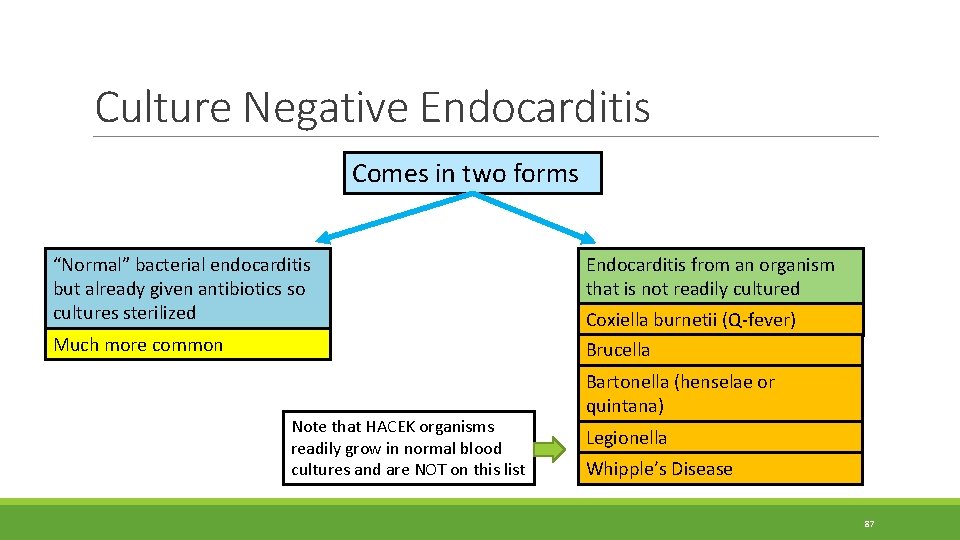
Culture Negative Endocarditis Comes in two forms “Normal” bacterial endocarditis but already given antibiotics so cultures sterilized Much more common Endocarditis from an organism that is not readily cultured Coxiella burnetii (Q-fever) Brucella Note that HACEK organisms readily grow in normal blood cultures and are NOT on this list Bartonella (henselae or quintana) Legionella Whipple’s Disease 87
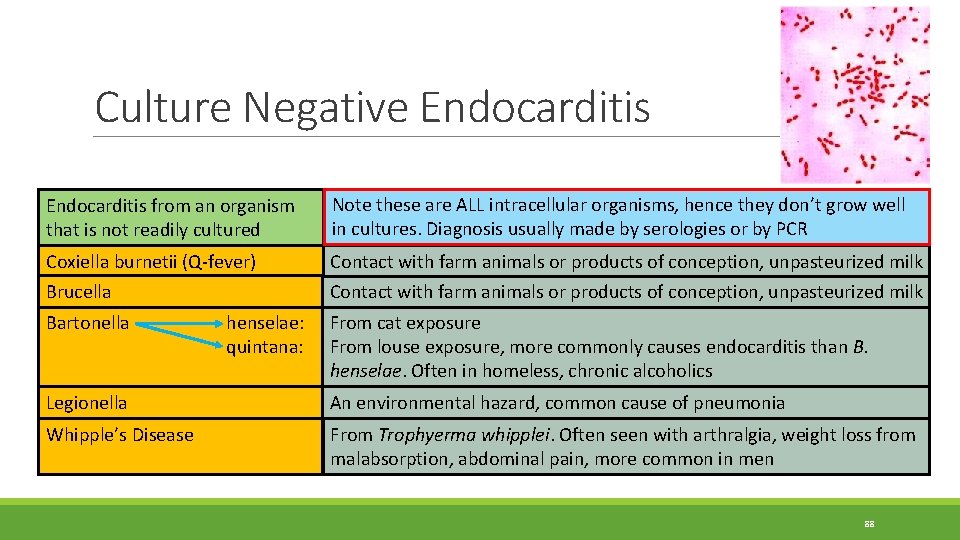
Culture Negative Endocarditis from an organism that is not readily cultured Note these are ALL intracellular organisms, hence they don’t grow well in cultures. Diagnosis usually made by serologies or by PCR Coxiella burnetii (Q-fever) Contact with farm animals or products of conception, unpasteurized milk Brucella Contact with farm animals or products of conception, unpasteurized milk Bartonella henselae: quintana: From cat exposure From louse exposure, more commonly causes endocarditis than B. henselae. Often in homeless, chronic alcoholics Legionella An environmental hazard, common cause of pneumonia Whipple’s Disease From Trophyerma whipplei. Often seen with arthralgia, weight loss from malabsorption, abdominal pain, more common in men 88
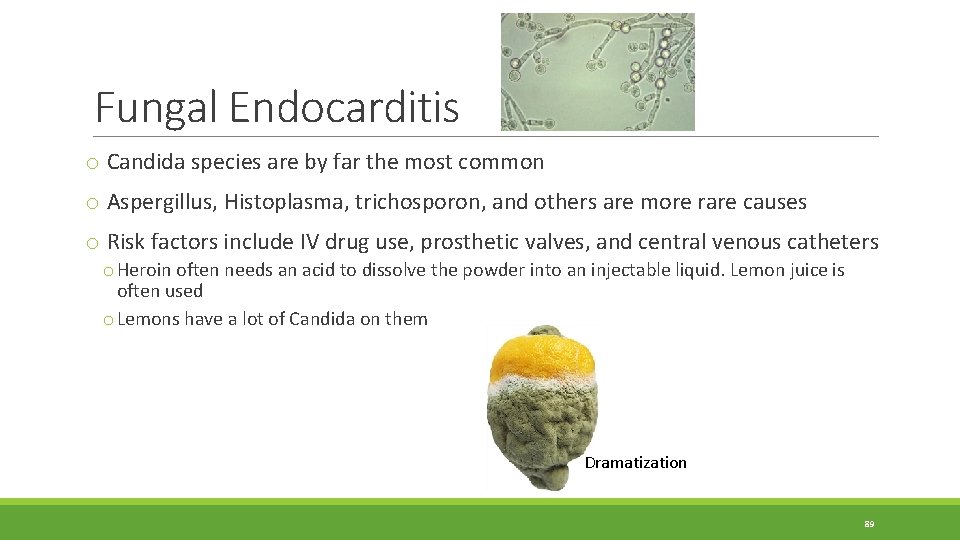
Fungal Endocarditis o Candida species are by far the most common o Aspergillus, Histoplasma, trichosporon, and others are more rare causes o Risk factors include IV drug use, prosthetic valves, and central venous catheters o Heroin often needs an acid to dissolve the powder into an injectable liquid. Lemon juice is often used o Lemons have a lot of Candida on them Dramatization 89
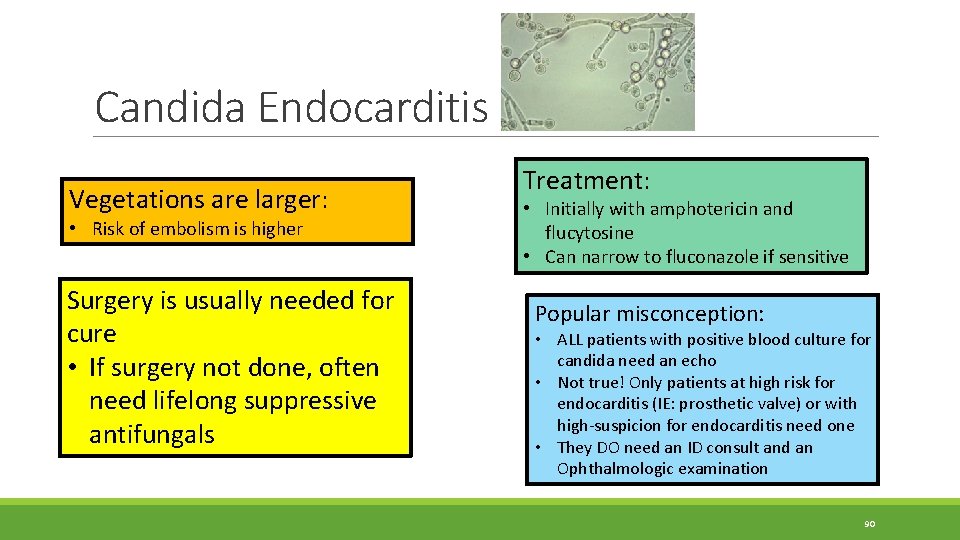
Candida Endocarditis Vegetations are larger: • Risk of embolism is higher Surgery is usually needed for cure • If surgery not done, often need lifelong suppressive antifungals Treatment: • Initially with amphotericin and flucytosine • Can narrow to fluconazole if sensitive Popular misconception: • ALL patients with positive blood culture for candida need an echo • Not true! Only patients at high risk for endocarditis (IE: prosthetic valve) or with high-suspicion for endocarditis need one • They DO need an ID consult and an Ophthalmologic examination 90
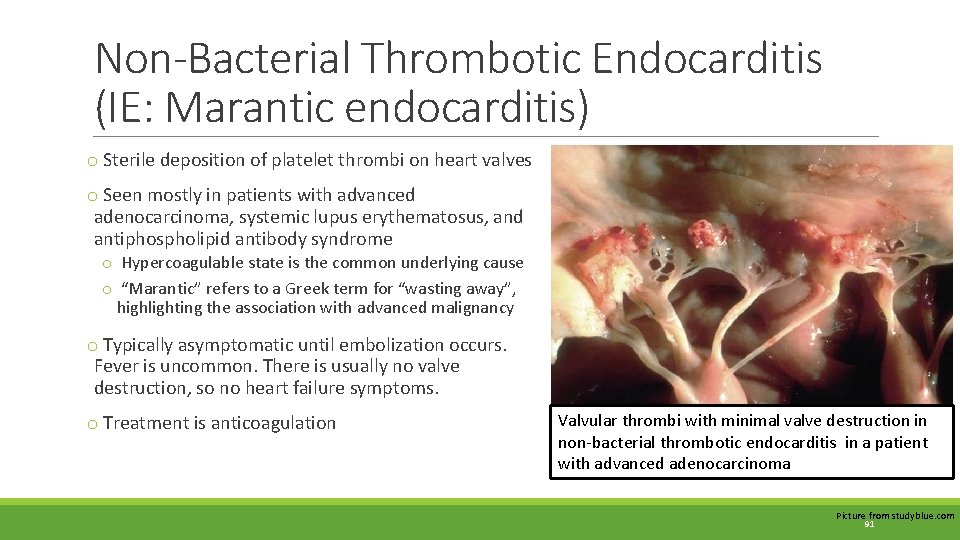
Non-Bacterial Thrombotic Endocarditis (IE: Marantic endocarditis) o Sterile deposition of platelet thrombi on heart valves o Seen mostly in patients with advanced adenocarcinoma, systemic lupus erythematosus, and antiphospholipid antibody syndrome o Hypercoagulable state is the common underlying cause o “Marantic” refers to a Greek term for “wasting away”, highlighting the association with advanced malignancy o Typically asymptomatic until embolization occurs. Fever is uncommon. There is usually no valve destruction, so no heart failure symptoms. o Treatment is anticoagulation Valvular thrombi with minimal valve destruction in non-bacterial thrombotic endocarditis in a patient with advanced adenocarcinoma Picture from studyblue. com 91
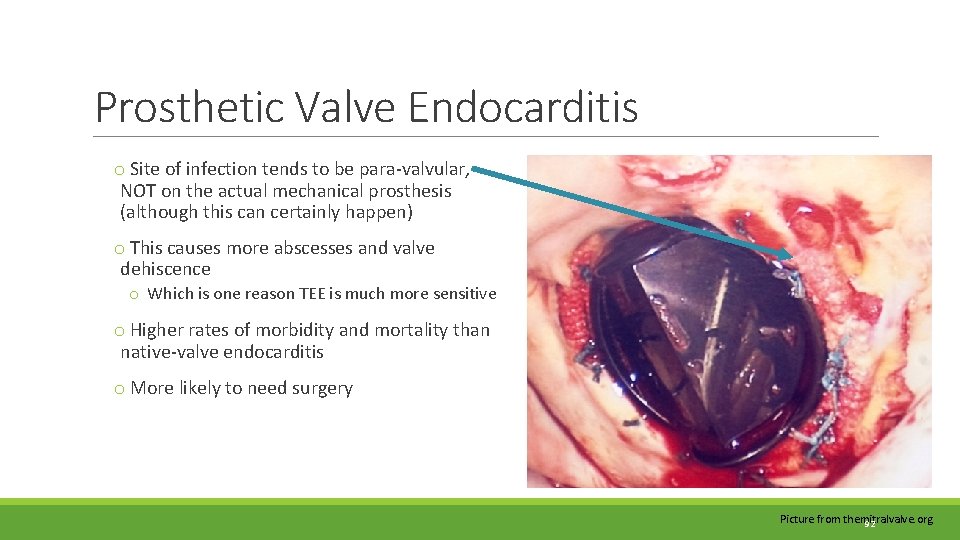
Prosthetic Valve Endocarditis o Site of infection tends to be para-valvular, NOT on the actual mechanical prosthesis (although this can certainly happen) o This causes more abscesses and valve dehiscence o Which is one reason TEE is much more sensitive o Higher rates of morbidity and mortality than native-valve endocarditis o More likely to need surgery Picture from themitralvalve. org 92
Question A 31 -year-old man with history of congenital heart disease s/p mechanical mitral valve replacement presents with Staph aureus (MSSA) bacteremia and TEE findings suggestive of prosthetic valve endocarditis. What antibiotic regimen would you give this patient? 93
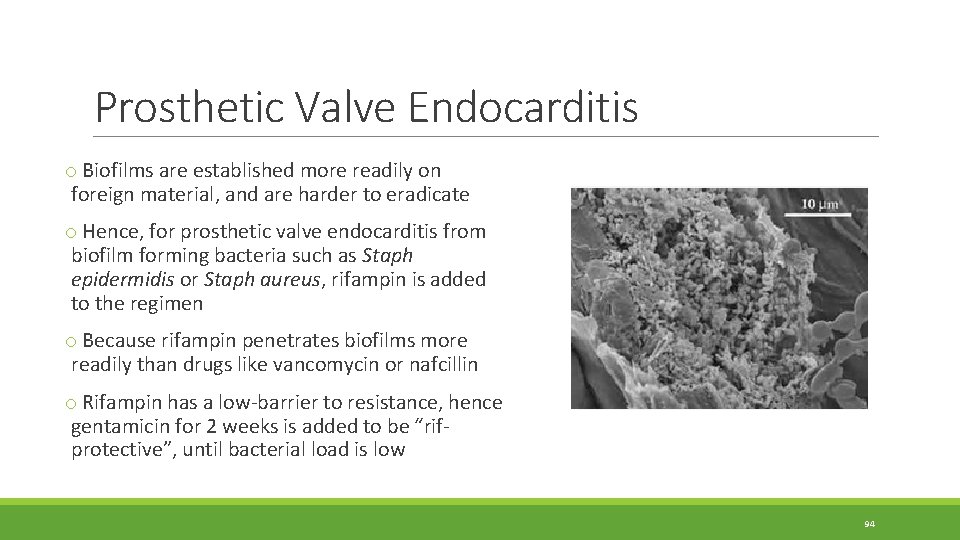
Prosthetic Valve Endocarditis o Biofilms are established more readily on foreign material, and are harder to eradicate o Hence, for prosthetic valve endocarditis from biofilm forming bacteria such as Staph epidermidis or Staph aureus, rifampin is added to the regimen o Because rifampin penetrates biofilms more readily than drugs like vancomycin or nafcillin o Rifampin has a low-barrier to resistance, hence gentamicin for 2 weeks is added to be “rifprotective”, until bacterial load is low 94
Answer A 31 -year-old man with history of congenital heart disease s/p mechanical mitral valve replacement presents with Staph aureus (MSSA) bacteremia and TEE findings suggestive of prosthetic valve endocarditis What antibiotic regimen would you give this patient? A regimen of nafcillin and rifampin for 6 weeks, with gentamicin for 2 weeks, would be reasonable 95
Infectious Endocarditis: Conclusions o An infection of one or more of the heart’s four valves that can cause a bulky and friable vegetation o An important and very serious infection, affecting thousands of patients annually in the United States, with high rates of morbidity and mortality o It can present acutely (over days to weeks), or sub-acutely (over weeks to months), with a wide variety of clinical manifestations related to diverse embolic, immunologic, and infectious complications o Diagnosing endocarditis requires an astute clinician with excellent physical exam skills and in-depth knowledge of pathophysiology 96
Congratulations! Please take the post-module quiz here https: //docs. google. com/forms/d/1 TRJv. Ik. Dlusp. NB 8 TZ 38 L_ w. Lvl. ARb. R 5 fz 2287 u. IQakh. PI/viewform? usp=send_form 97
References • Taha et al. Aspirin to prevent growth of vegetations and cerebral emboli in infective endocarditis. J Intern Med. 1992 May; 231(5): 543 -6. • Hoen B, Duval X. Infective endocarditis. N Engl J Med 2013; 369: 785. • Mansur AJ, Grinberg M, da Luz PL, Bellotti G. The complications of infective endocarditis. A reappraisal in the 1980 s. Arch Intern Med 1992; 152: 2428. • Bayer AS. Infective endocarditis. Clin Infect Dis 1993; 17: 313. • Hutter A, Moellering R. Assessment of the patient with suspected endocarditis. JAMA. 1976 Apr 12; 235(15): 1603 -5. • Ruttmann E, Willeit J, Ulmer H, et al. Neurological outcome of septic cardioembolic stroke after infective endocarditis. Stroke 2006; 37: 2094. • Speechly-Dick ME, Swanton RH. Osteomyelitis and infective endocarditis. Postgrad Med J 1994; 70: 885. • Pant S, Patel NJ, Deshmukh A, et al. Trends in infective endocarditis incidence, microbiology, and valve replacement in the United States from 2000 to 2011. J Am Coll Cardiol 2015; 65: 2070. • Fowler VG Jr, Miro JM, Hoen B, et al. Staphylococcus aureus endocarditis: a consequence of medical progress. JAMA 2005; 293: 3012. • Murdoch et al. Clinical presentation, etiology, and outcome of infective endocarditis in the 21 st century: the International Collaboration on Endocarditis-Prospective Cohort Study. Arch Intern Med. 2009; 169(5): 463. • Baddour et al. Circulation. 2005; 111: 394 -434 • Heidenreich et al. Am Jour Med 1999; 107: 198 -208 • And as listed on each individual slide 98