
Pathogens Viruses Todays Objectives Introduction to last weeks
Pathogens - Viruses
Today's Objectives • Introduction to last weeks lesson • Viruses – Transmission – Virus examples
In order to cause an infectious disease, a pathogen must • Gain entry in to a host • Establish and multiply in the host tissue • Overcome the normal host body defence for a time • Damage the host in some way
DISEASE TERMINOLOGY INFECTIOUS DISEASE ? NON – INFECTIOUS DISEASE ? RE S E FR R E H
DISEASE TERMINOLOGY INFECTIOUS DISEASE Is one caused by micro – organisms, which can successfully invade, establish and grow within the hosts tissues. Eg bacteria and viruses NON – INFECTIOUS DISEASE This does not involve micro – organisms e. g Diabetes (metabolic disease). RE S E FR R E H
What is a ZOONOTIC DISEASE ? RE S E FR R E H
ZOONOTIC DISEASE This is a disease passed from animal to man RE S E FR R E H

n a r T i m s n o i ss DIRECT CONTACT ? RE S E FR R E H
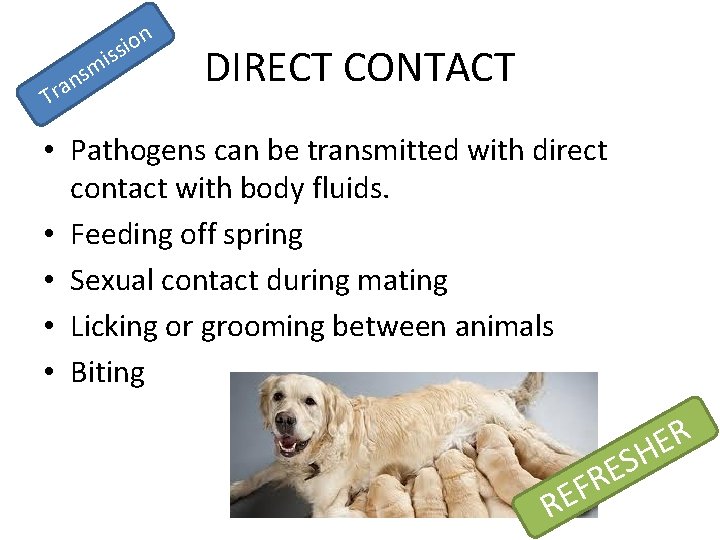
i m s n o i ss n a r T DIRECT CONTACT • Pathogens can be transmitted with direct contact with body fluids. • Feeding off spring • Sexual contact during mating • Licking or grooming between animals • Biting RE S E FR R E H

n a r T i m s n o i ss INDIRECT CONTACT ? RE S E FR R E H
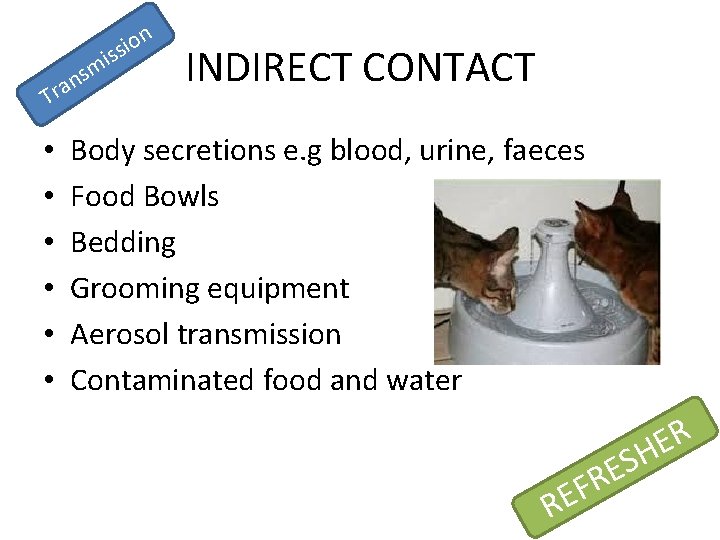
i m s n o i ss n a r T • • • INDIRECT CONTACT Body secretions e. g blood, urine, faeces Food Bowls Bedding Grooming equipment Aerosol transmission Contaminated food and water RE S E FR R E H

n a r T i m s n o i ss Fomite ? RE S E FR R E H
i m s n o i ss n a r T Fomite • A formite is an inanimate object which is capable of spreading disease. This can be: • Bedding • Feeding bowls • Grooming equipment • Litter trays • Clothing and shoes worn by a person RE S E FR R E H

n a r T i m s n o i ss Vector ? RE S E FR R E H
i m s n o i ss n a r T Vector • A vector is an organism which spreads disease from one host to another. • Commonly Invertebrates spread bacterial, viral and protozoan pathogens by two main mechanisms. Either via their bite, as in the case of malaria spread by mosquitoes, or via their faeces. RE S E FR R E H
Name 7 Pathogenic organisms ? RE S E FR R E H
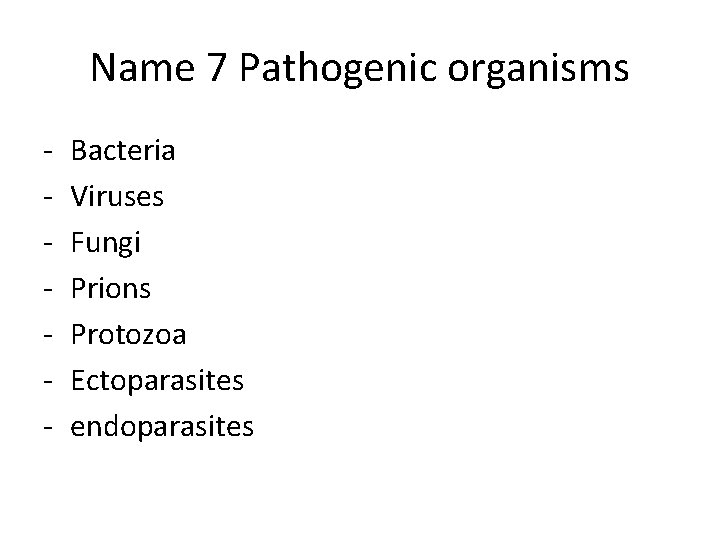
Name 7 Pathogenic organisms - Bacteria Viruses Fungi Prions Protozoa Ectoparasites endoparasites
Bacteria • Name three types of bacteria that can cause harm to animals • State if these types of bacteria are zoonotic. RE S E FR R E H
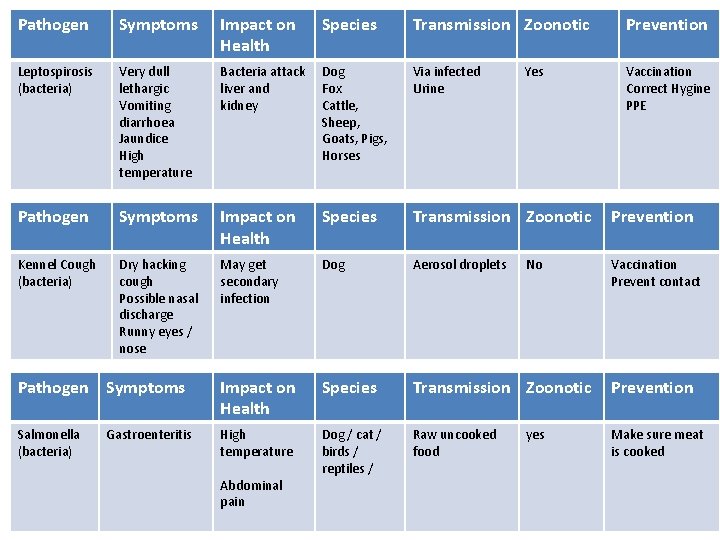
Pathogen Symptoms Impact on Health Species Transmission Zoonotic Prevention Leptospirosis (bacteria) Very dull lethargic Vomiting diarrhoea Jaundice High temperature Bacteria attack liver and kidney Dog Fox Cattle, Sheep, Goats, Pigs, Horses Via infected Urine Vaccination Correct Hygine PPE Pathogen Symptoms Impact on Health Species Transmission Zoonotic Prevention Kennel Cough (bacteria) Dry hacking cough Possible nasal discharge Runny eyes / nose May get secondary infection Dog Aerosol droplets Vaccination Prevent contact Pathogen Symptoms Impact on Health Species Transmission Zoonotic Prevention Salmonella (bacteria) High temperature Dog / cat / birds / reptiles / Raw uncooked food Make sure meat is cooked Gastroenteritis Abdominal pain Yes No yes

Today's Lesson – Viruses
Viruses • Viruses are extremely small and not classified as a living organism as they are incapable of reproduction without a host cell • A virus particle is little more than a package of DNA strands containing instructions for recreation. • Can only be seen under a electron microscope
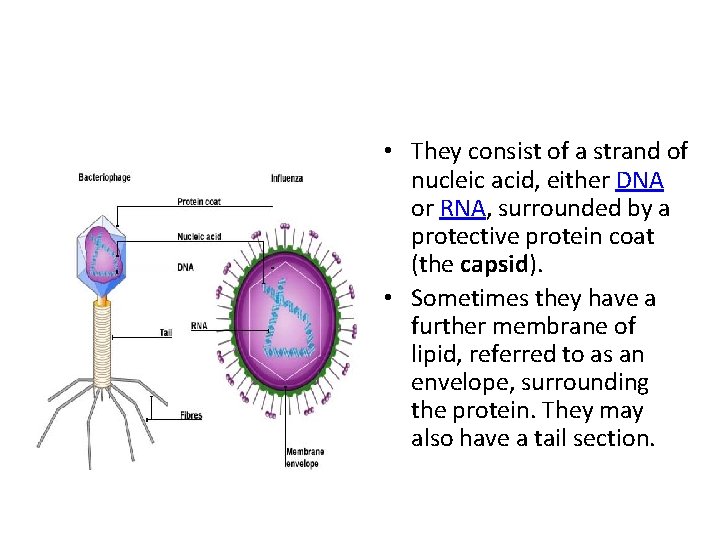
• They consist of a strand of nucleic acid, either DNA or RNA, surrounded by a protective protein coat (the capsid). • Sometimes they have a further membrane of lipid, referred to as an envelope, surrounding the protein. They may also have a tail section.
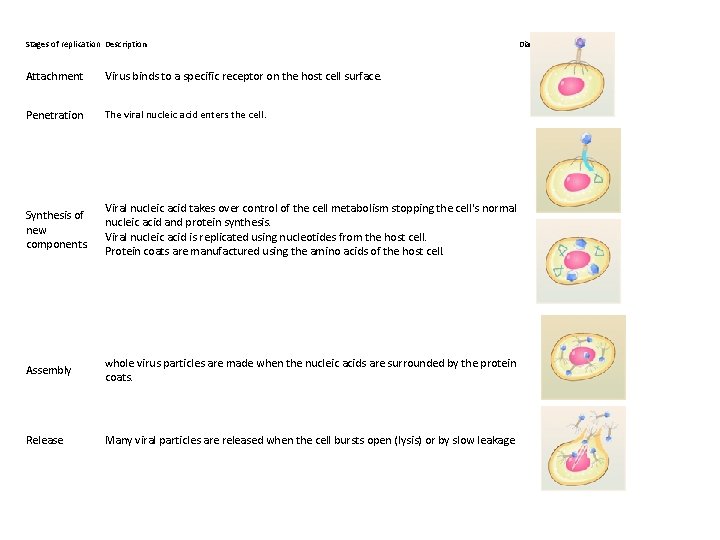
Stages of replication Description Attachment Virus binds to a specific receptor on the host cell surface. Penetration The viral nucleic acid enters the cell. Synthesis of new components. Viral nucleic acid takes over control of the cell metabolism stopping the cell's normal nucleic acid and protein synthesis. Viral nucleic acid is replicated using nucleotides from the host cell. Protein coats are manufactured using the amino acids of the host cell. Assembly Release Whole coats. virus particles are made when the nucleic acids are surrounded by the protein Many viral particles are released when the cell bursts open (lysis) or by slow leakage. Diagram
In groups • Research 3 pathogenic viruses that affect small animals (1 dog, 1 cat , 1 small animal) / 1 pathogen you choose must be zoonotic. – Assess what species it affects – Assess signs and symptoms – State how it is passed from host to host – Assess infection control and measures – Is pathogen zoonotic / how would you reduce zoonosis ? – State treatment and prevention
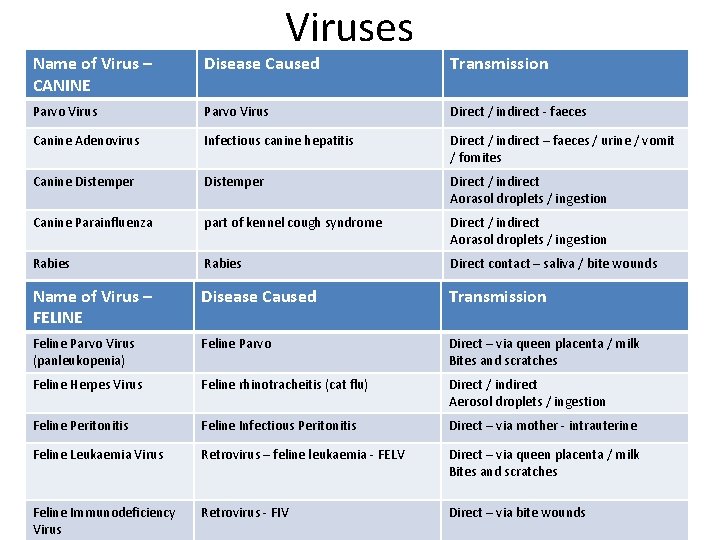
Viruses Name of Virus – CANINE Disease Caused Transmission Parvo Virus Direct / indirect - faeces Canine Adenovirus Infectious canine hepatitis Direct / indirect – faeces / urine / vomit / fomites Canine Distemper Direct / indirect Aorasol droplets / ingestion Canine Parainfluenza part of kennel cough syndrome Direct / indirect Aorasol droplets / ingestion Rabies Direct contact – saliva / bite wounds Name of Virus – FELINE Disease Caused Transmission Feline Parvo Virus (panleukopenia) Feline Parvo Direct – via queen placenta / milk Bites and scratches Feline Herpes Virus Feline rhinotracheitis (cat flu) Direct / indirect Aerosol droplets / ingestion Feline Peritonitis Feline Infectious Peritonitis Direct – via mother - intrauterine Feline Leukaemia Virus Retrovirus – feline leukaemia - FELV Direct – via queen placenta / milk Bites and scratches Feline Immunodeficiency Virus Retrovirus - FIV Direct – via bite wounds
Plenary Are you able to : – Name different pathogens? – Type of pathogens? – Host the pathogen attacks? – Is it zoonotic ? – How is it transmitted? Direct / Direct and examples? – Signs and symptoms? – Treatments? – Preventative Measures ?
Task • You are required to produce a presentation on Monday 6 th March to explain the following points on a selected pathogen ( Marc to give out examples in class) Name of pathogen Type of pathogen Host Is it zoonotic ? How is it transmitted? Direct / Indirect and examples – Signs and symptoms – Treatment – Preventative Measures – – – • https: //padlet. com/johnsonm v/h 4 waumxgqyyj
Names of pathogens to be investigated by learners ………
Leptospirosis

Parvo
Feline Leukaemia
Salmonella
Bordetella Bronchiseptica

Canine Distemper
Infectious Canine Hepatitis
Feline Infectious Peritonitis
Feline Immunodeficiency Virus (FIV)
Rabbit Haemorrhagic Disease (RHD)
Myxomatosis
Avian Flu,
Cat Flu
Dog Diseases - Canine Parvovirus • Canine parvovirus is a highly contagious viral disease that can produce a life-threatening illness. The virus attacks rapidly dividing cells in a dog’s body, most severely affecting the intestinal tract. Parvovirus also attacks the white blood cells, and when young animals are infected, the virus can damage the heart muscle and cause lifelong cardiac problems. Puppies are especially vulnerable and certain breeds — Rottweilers, Labrador Retrievers and Doberman Pinschers — are more susceptible than others. Symptoms: The general symptoms of parvovirus are lethargy, severe vomiting, loss of appetite and bloody, foul-smelling diarrhoea that can lead to life-threatening dehydration. Prevention: Vaccinate your dog against parvovirus. Treatment: Dogs infected with parvovirus need intensive treatment in a veterinary hospital, where they receive antibiotics, drugs to control the vomiting, intravenous fluids and other supportive therapies. Like other serious dog diseases, parvovirus requires immediate veterinary attention
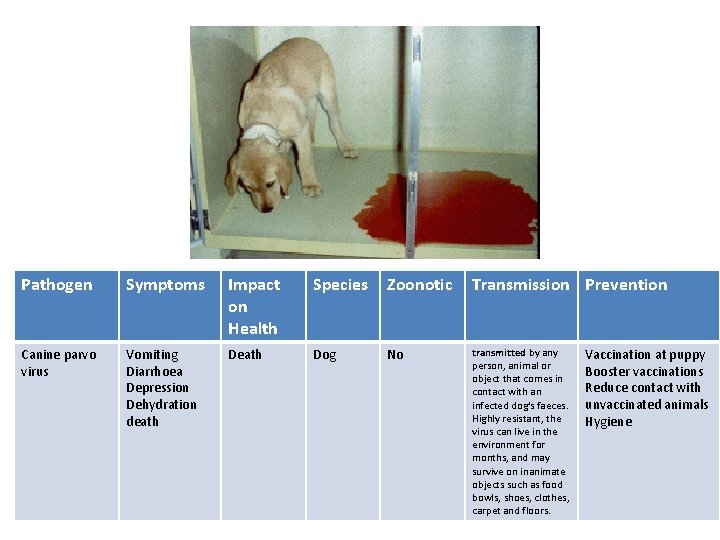
Pathogen Symptoms Impact on Health Species Zoonotic Transmission Prevention Canine parvo virus Vomiting Diarrhoea Depression Dehydration death Dog No transmitted by any person, animal or object that comes in contact with an infected dog's faeces. Highly resistant, the virus can live in the environment for months, and may survive on inanimate objects such as food bowls, shoes, clothes, carpet and floors. Vaccination at puppy Booster vaccinations Reduce contact with unvaccinated animals Hygiene
Dog Diseases - Canine Distemper • Canine distemper is a contagious and serious viral illness with no known cure. It is a serious illness that is fatal in most puppies and half of all affected dogs. Canine Distemper is caused by Paramyxovirus, closely related to Measles virus. It affects a dog’s respiratory, gastrointestinal and central nervous systems, as well as the conjunctival membranes of the eye. Young, unvaccinated puppies and non-immunized older dogs tend to be more susceptible to the disease. Symptoms: The first signs of canine distemper include sneezing, coughing and thick mucus coming from the eyes and nose. Fever, lethargy, sudden vomiting and diarrhoea, depression and/or loss of appetite are also symptoms of the virus. Prevention: Distemper has no medical cure, so it is very important to vaccinate your dog against it. Treatment: There is currently no available medication that can destroy the virus that causes canine distemper. Rather, supportive care is the mainstay of treatment. Veterinarians can offer intravenous fluids to prevent dehydration and antibiotics to ward off secondary infections while the infected dog builds up his immune response. Some dogs are able to survive the infection, while for others canine distemper can be fatal
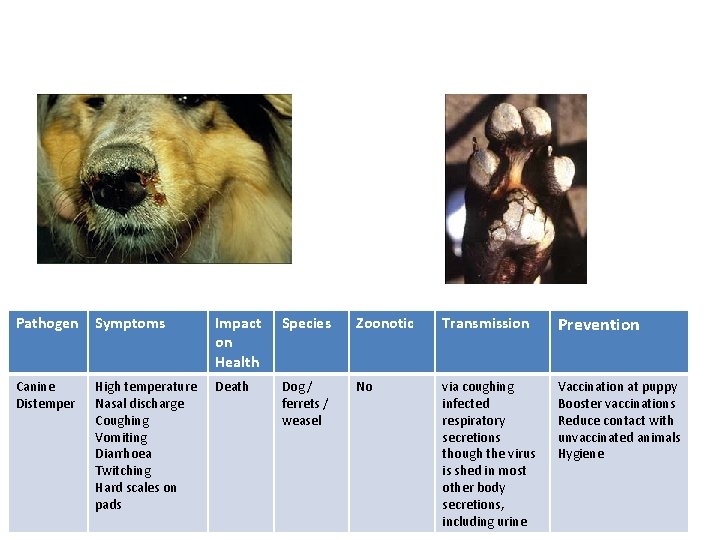
Pathogen Symptoms Impact on Health Species Zoonotic Transmission Prevention Canine Distemper High temperature Nasal discharge Coughing Vomiting Diarrhoea Twitching Hard scales on pads Death Dog / ferrets / weasel No via coughing infected respiratory secretions though the virus is shed in most other body secretions, including urine Vaccination at puppy Booster vaccinations Reduce contact with unvaccinated animals Hygiene
Dog Diseases - Canine Hepatitis • This is caused by Canine Adenovirus Type I and is a highly contagious viral disease transmitted only to dogs. Ingestion of saliva, urine or faeces of infected dogs is the main route by which the infection is spread. Symptoms: Common symptoms of hepatitis are fever, loss of appetite, depression and coughing. These may be accompanied by symptoms of liver disease (jaundice, vomiting) and in severe cases, haematomas in the mouth. Prevention: Vaccination is highly effective in preventing canine hepatitis. Treatment: There is no cure for hepatitis, but most infected dogs recover after a period on their own, during which time the symptoms are treated. Unless the environment is thoroughly disinfected, CAV-1 can survive for months.
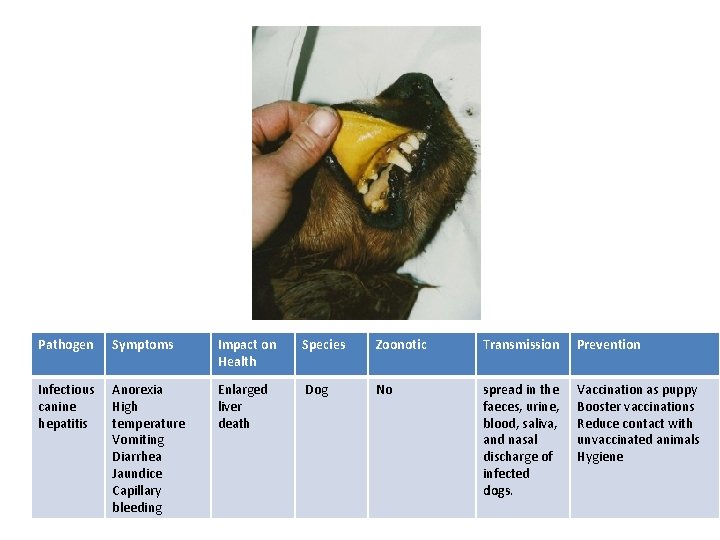
Pathogen Symptoms Impact on Health Species Zoonotic Transmission Prevention Infectious canine hepatitis Anorexia High temperature Vomiting Diarrhea Jaundice Capillary bleeding Enlarged liver death Dog No spread in the faeces, urine, blood, saliva, and nasal discharge of infected dogs. Vaccination as puppy Booster vaccinations Reduce contact with unvaccinated animals Hygiene
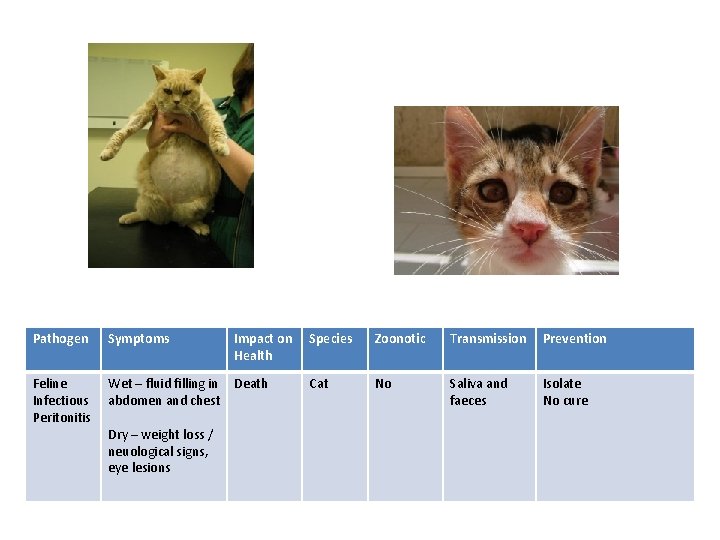
Pathogen Symptoms Feline Infectious Peritonitis Wet – fluid filling in Death abdomen and chest Dry – weight loss / neuological signs, eye lesions Impact on Health Species Zoonotic Transmission Prevention Cat No Saliva and faeces Isolate No cure
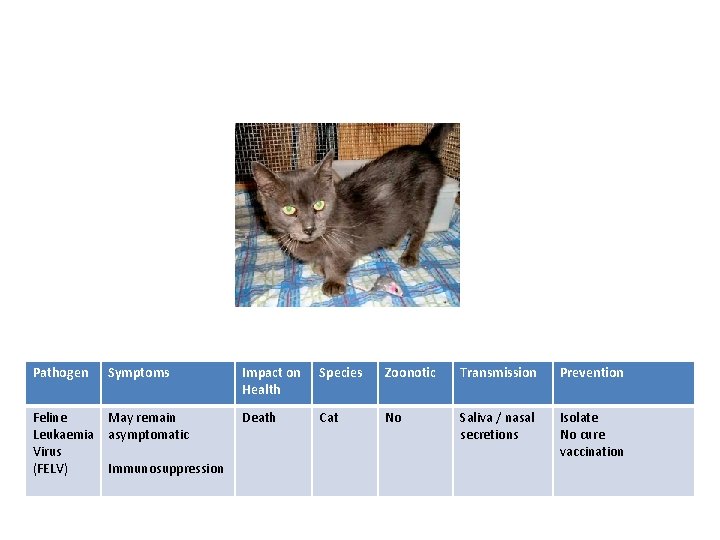
Pathogen Symptoms Impact on Health Species Zoonotic Transmission Prevention Feline Leukaemia Virus (FELV) May remain asymptomatic Death Cat No Saliva / nasal secretions Isolate No cure vaccination Immunosuppression
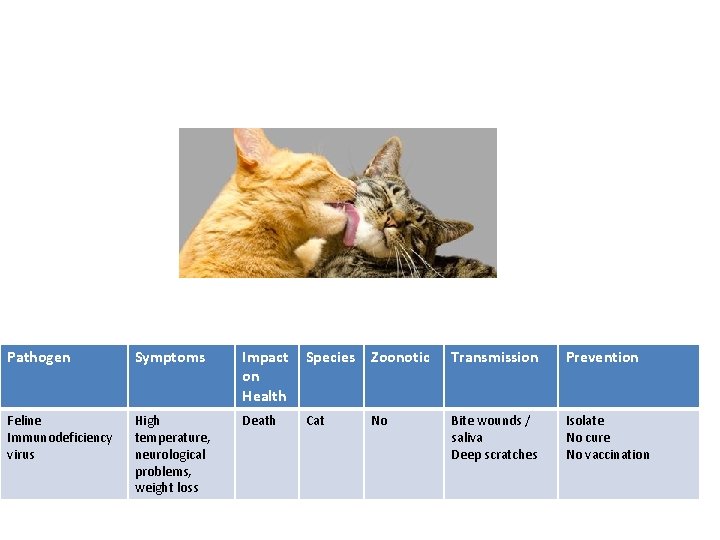
Pathogen Symptoms Impact on Health Species Zoonotic Transmission Prevention Feline Immunodeficiency virus High temperature, neurological problems, weight loss Death Cat No Bite wounds / saliva Deep scratches Isolate No cure No vaccination
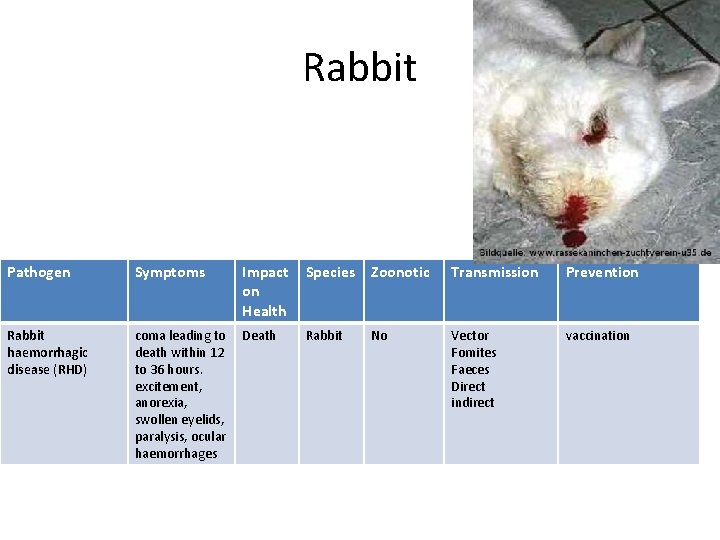
Rabbit Pathogen Symptoms Impact on Health Species Zoonotic Transmission Prevention Rabbit haemorrhagic disease (RHD) coma leading to death within 12 to 36 hours. excitement, anorexia, swollen eyelids, paralysis, ocular haemorrhages Death Rabbit No Vector Fomites Faeces Direct indirect vaccination
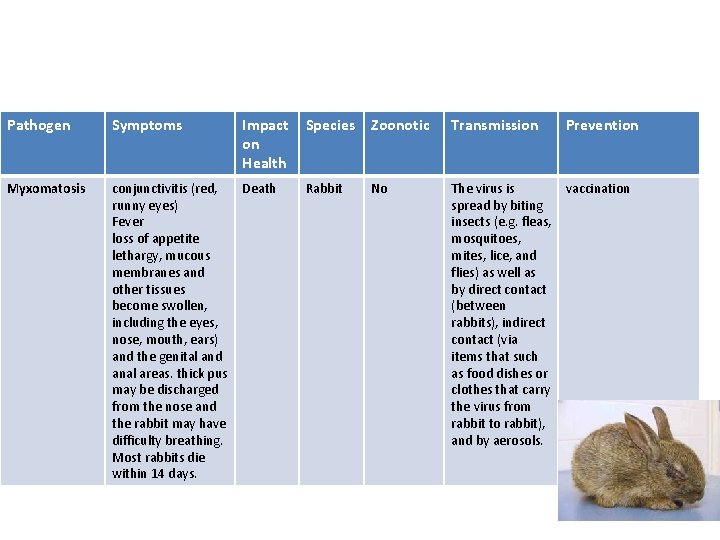
Pathogen Symptoms Impact on Health Species Zoonotic Transmission Prevention Myxomatosis conjunctivitis (red, runny eyes) Fever loss of appetite lethargy, mucous membranes and other tissues become swollen, including the eyes, nose, mouth, ears) and the genital and anal areas. thick pus may be discharged from the nose and the rabbit may have difficulty breathing. Most rabbits die within 14 days. Death Rabbit No The virus is vaccination spread by biting insects (e. g. fleas, mosquitoes, mites, lice, and flies) as well as by direct contact (between rabbits), indirect contact (via items that such as food dishes or clothes that carry the virus from rabbit to rabbit), and by aerosols.
• http: //www. fondleface. com/content. aspx? Pa ge=Canine-Hepatitis&Category=Dog Diseases&cmsid=41 Il 3 j. SMf 8 M=
- Slides: 53