The Maya The Moche The Nazca Maya Maya




- Slides: 63
The Maya & The Moche & The Nazca
Maya
Maya Classic Period 250 CE to 900 CE
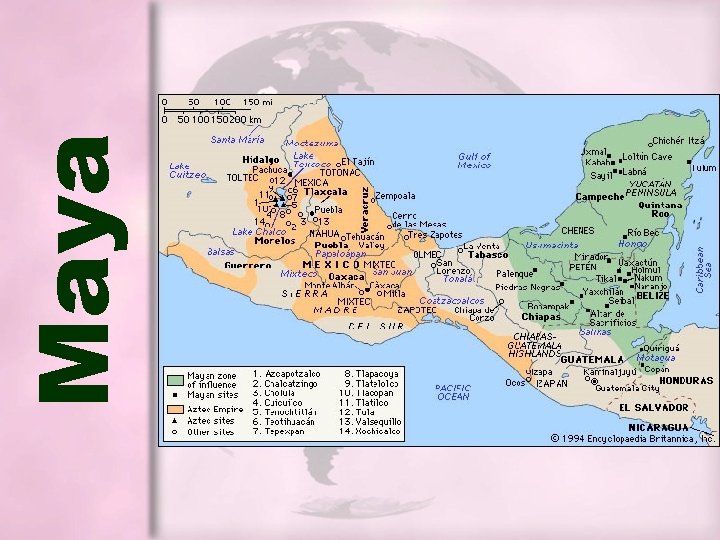
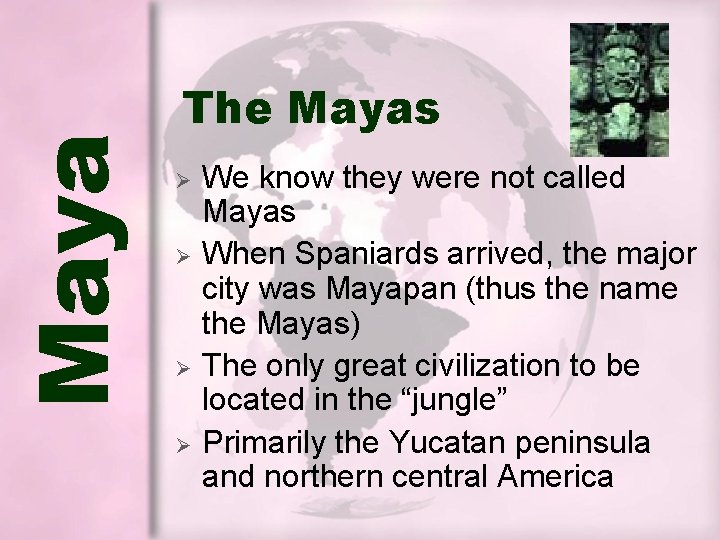
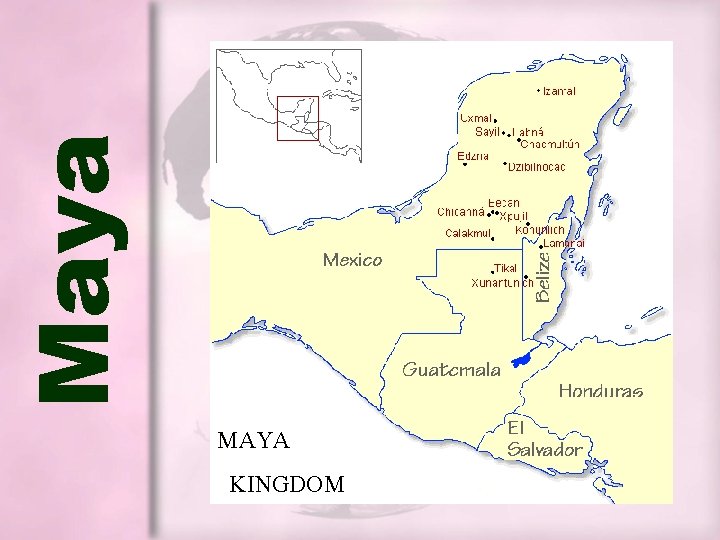
Maya The Mayas Ø Ø We know they were not called Mayas When Spaniards arrived, the major city was Mayapan (thus the name the Mayas) The only great civilization to be located in the “jungle” Primarily the Yucatan peninsula and northern central America
Maya MAYAS MAYA KINGDOM
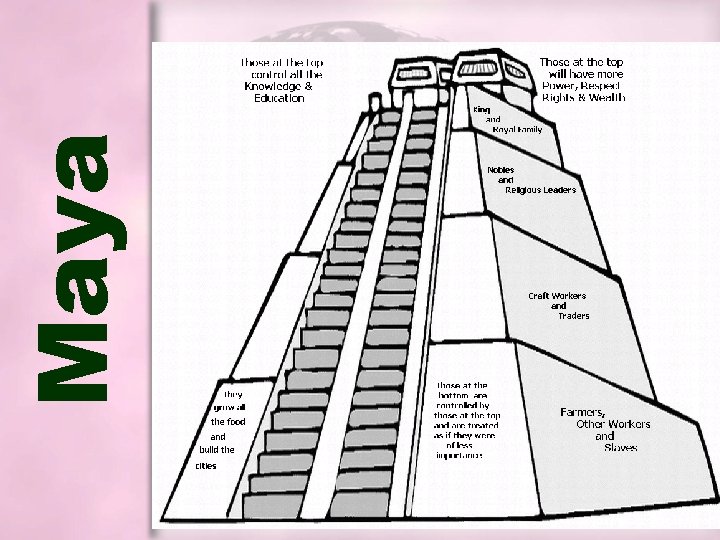
Maya Social Structure Ø The Social Pyramid Ø King & royal family Ø Priests Ø Nobles / wealthy Ø Commoners and low -level govern officers Ø Slaves and servants
Maya
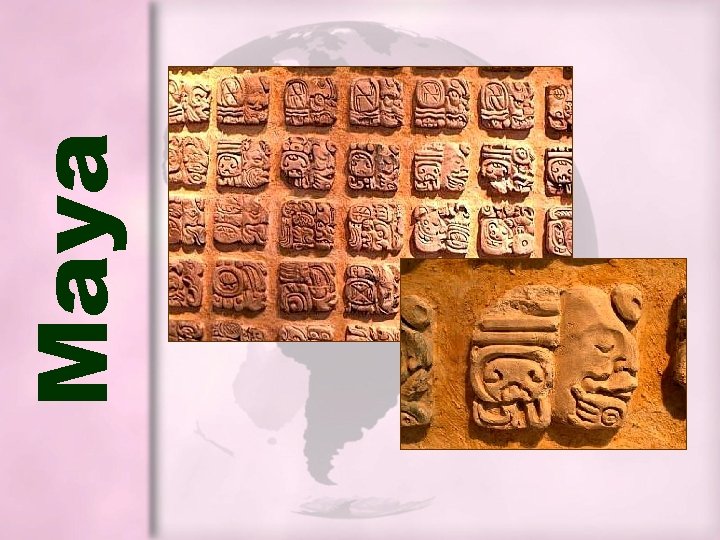
Maya hs Ø Ø Ø Mayans created the most advanced pre-colonial writing in the Western Hemisphere Over 800 different images were used to record their history Created bound “books” called Codices (Codex) king sky house child
Maya
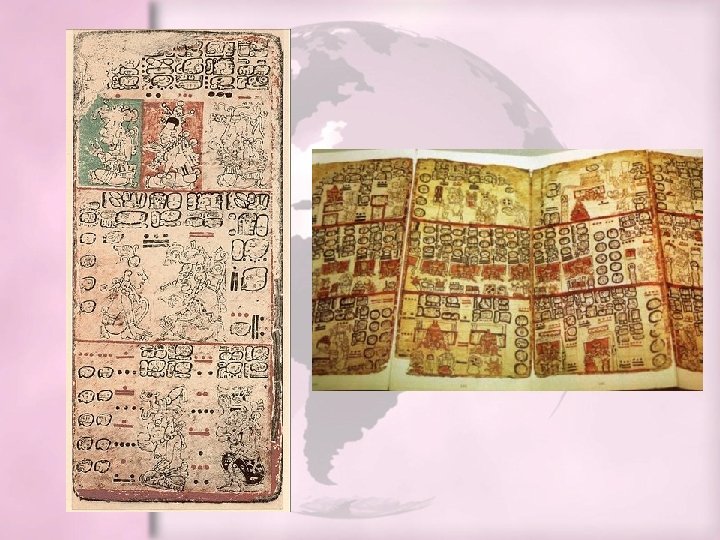
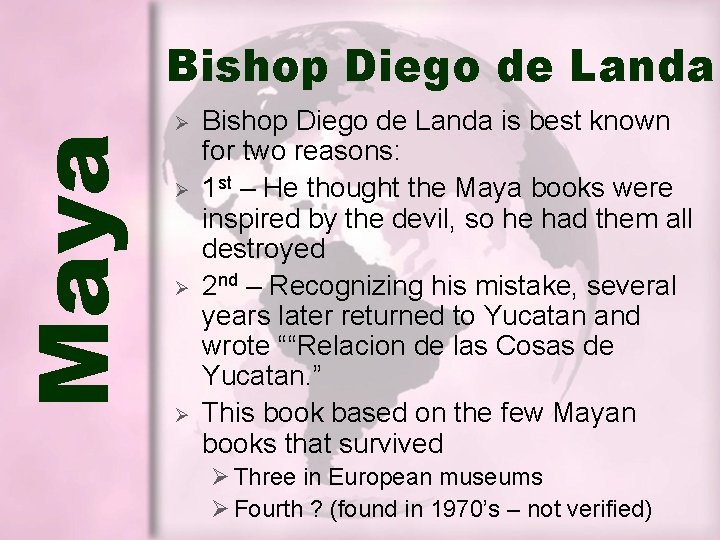
Maya Bishop Diego de Landa Ø Ø Bishop Diego de Landa is best known for two reasons: 1 st – He thought the Maya books were inspired by the devil, so he had them all destroyed 2 nd – Recognizing his mistake, several years later returned to Yucatan and wrote ““Relacion de las Cosas de Yucatan. ” This book based on the few Mayan books that survived Ø Three in European museums Ø Fourth ? (found in 1970’s – not verified)
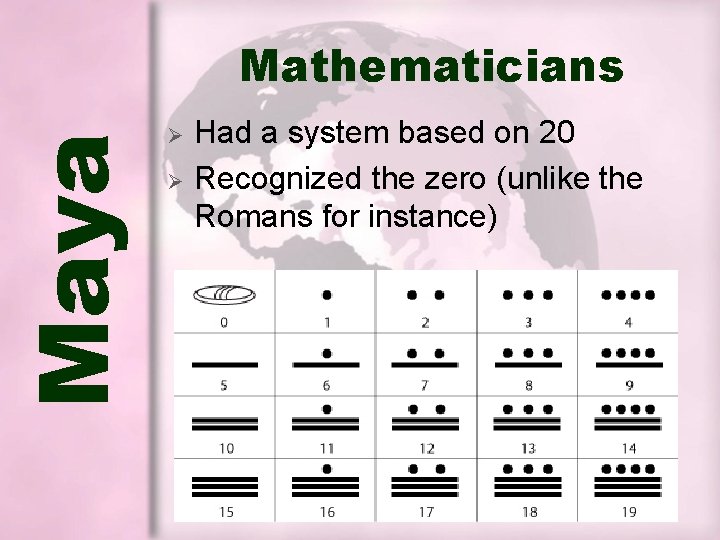
Maya Mathematicians Ø Ø Had a system based on 20 Recognized the zero (unlike the Romans for instance)
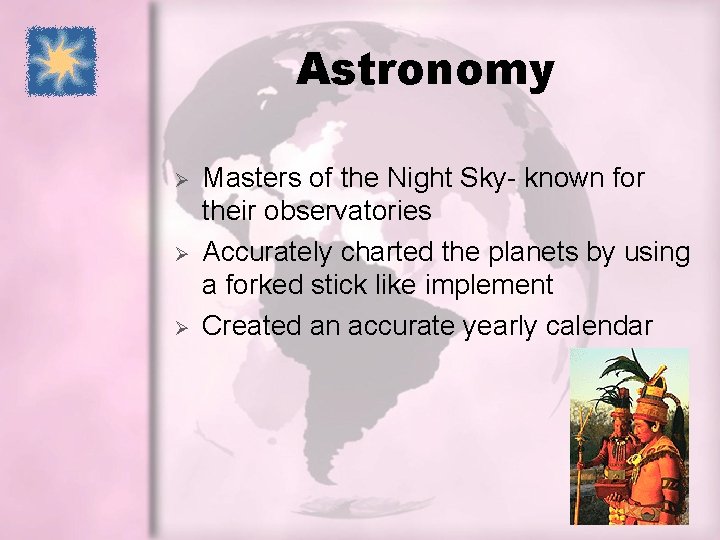
Astronomy Ø Ø Ø Masters of the Night Sky- known for their observatories Accurately charted the planets by using a forked stick like implement Created an accurate yearly calendar
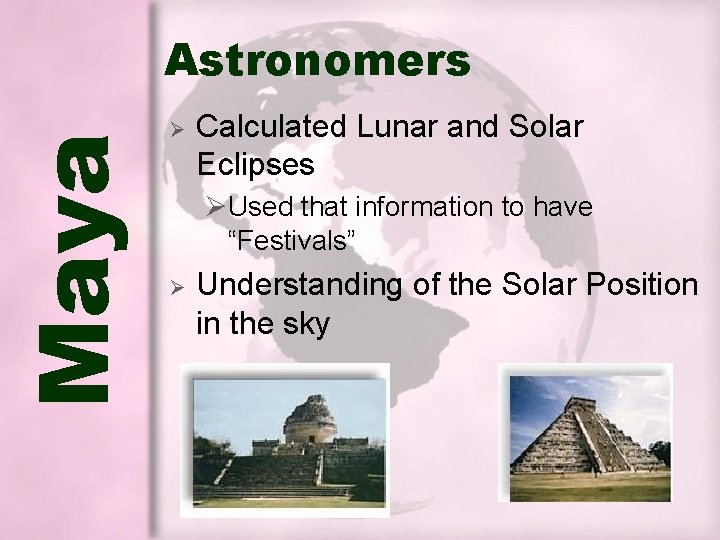
Maya Astronomers Ø Calculated Lunar and Solar Eclipses ØUsed that information to have “Festivals” Ø Understanding of the Solar Position in the sky
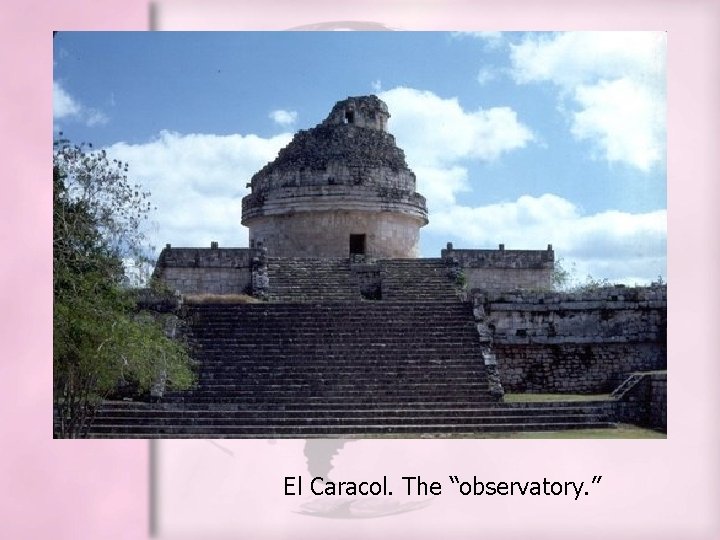
El Caracol. The “observatory. ”
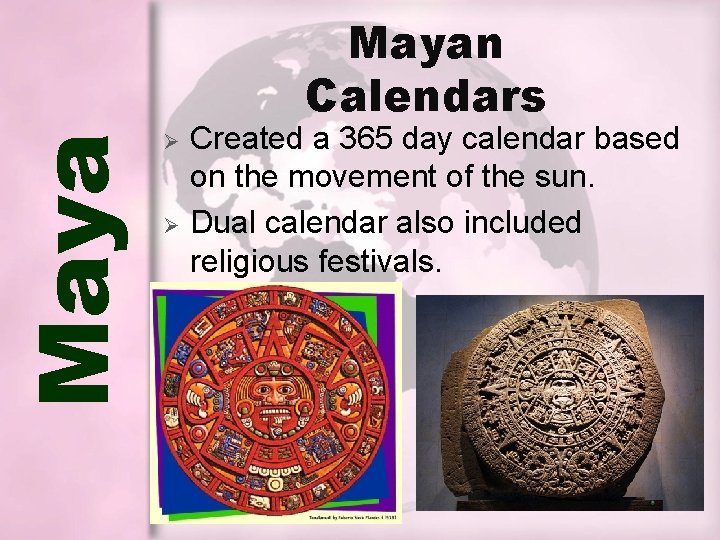
Mayan Calendars Ø Ø Created a 365 day calendar based on the movement of the sun. Dual calendar also included religious festivals.
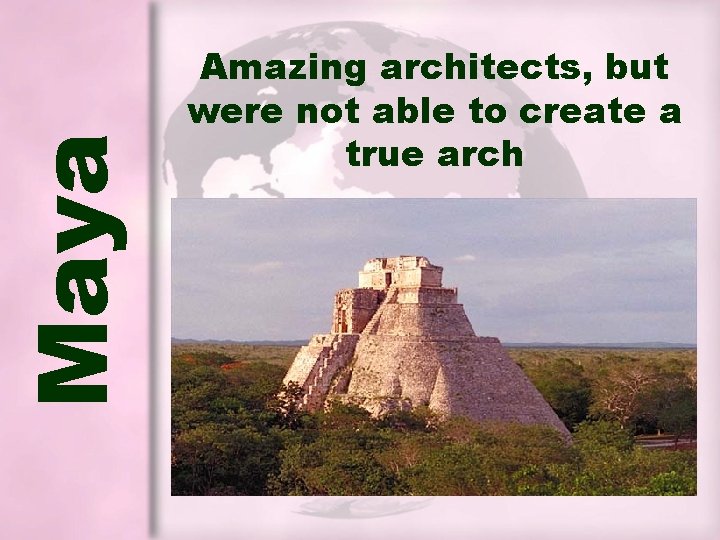
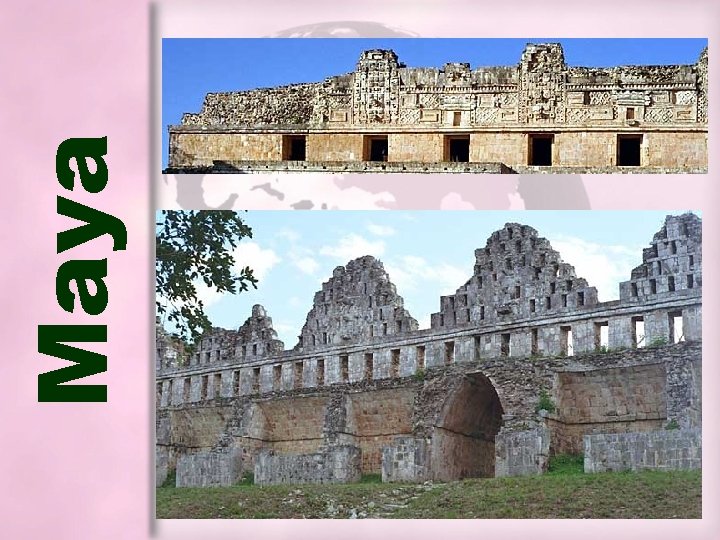
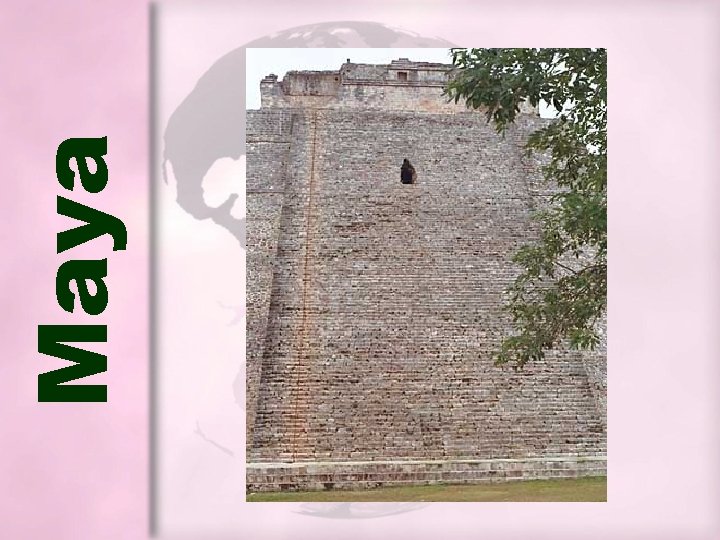
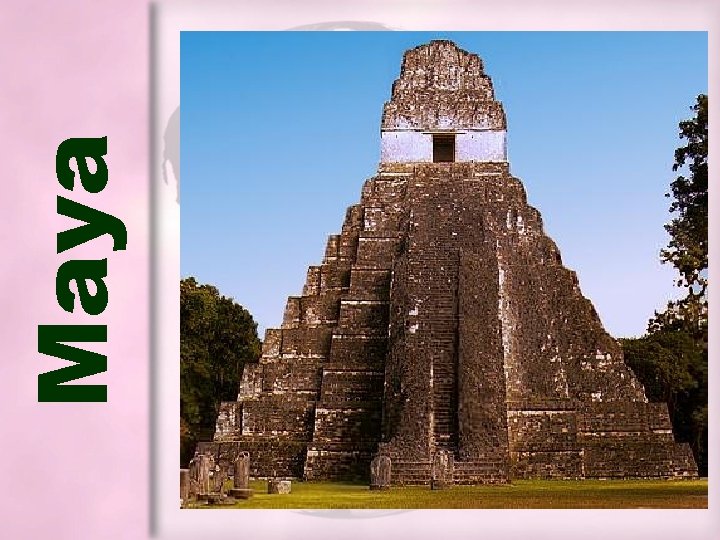
Maya Amazing architects, but were not able to create a true arch
Maya
Maya
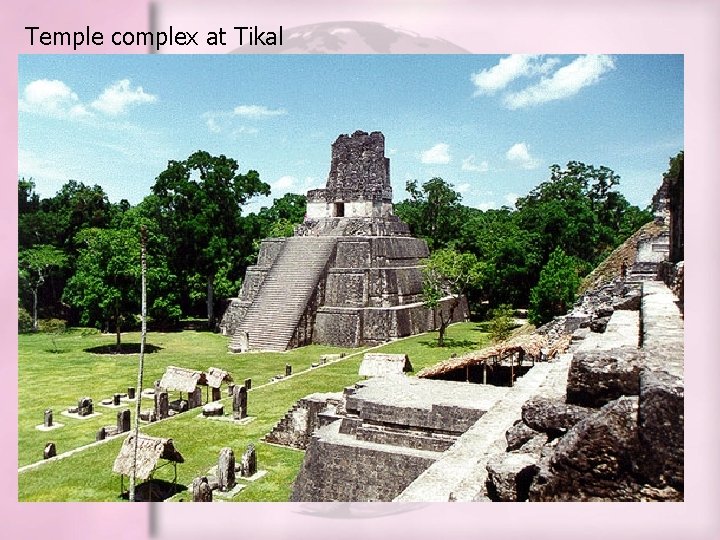
Temple complex at Tikal
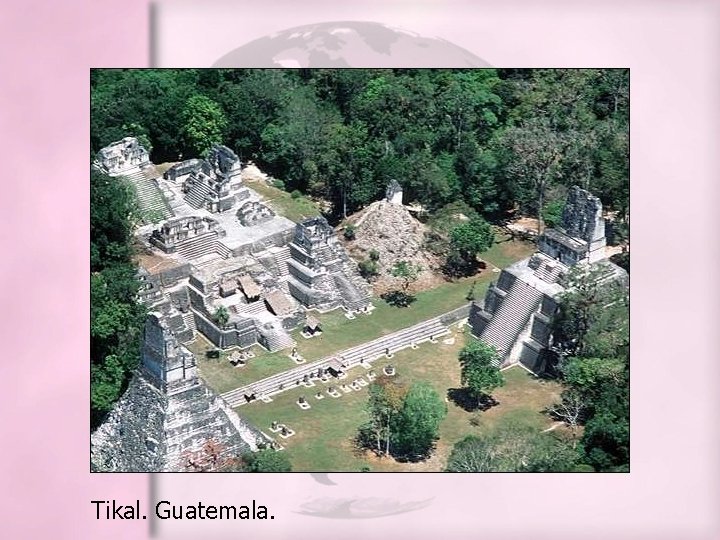
Tikal. Guatemala.
Maya
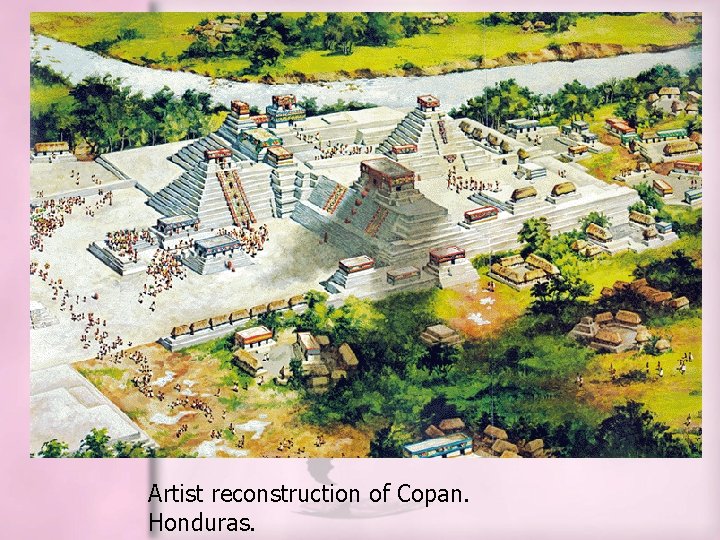
Artist reconstruction of Copan. Honduras.
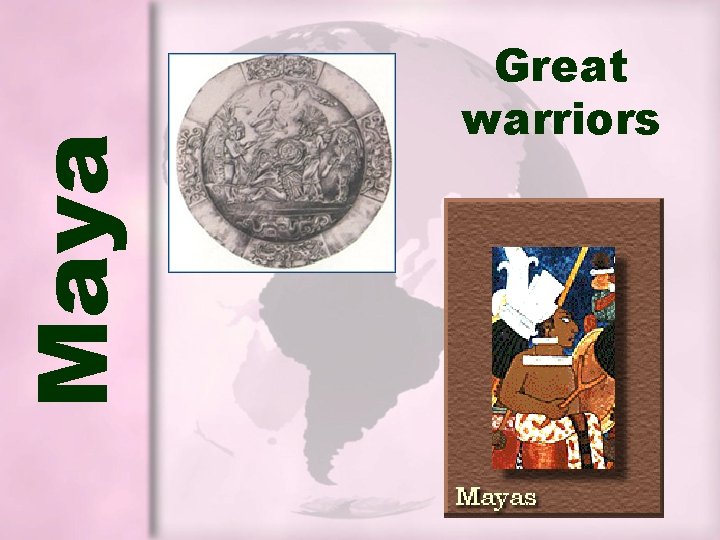
Maya Great warriors
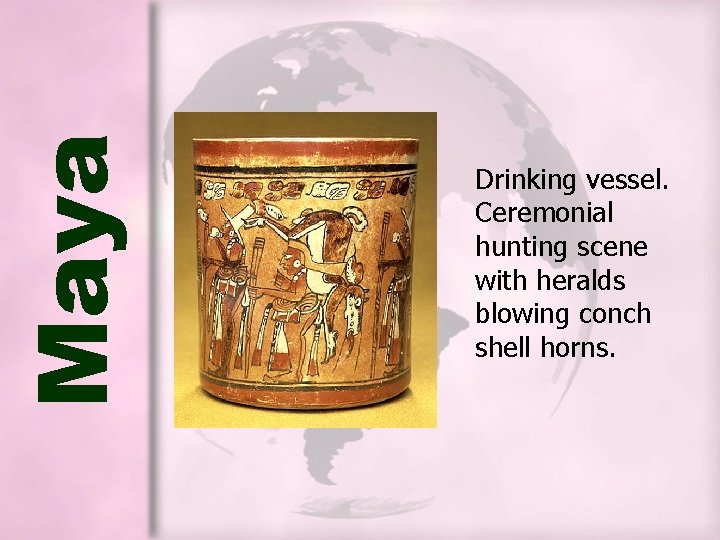
Maya Drinking vessel. Ceremonial hunting scene with heralds blowing conch shell horns.
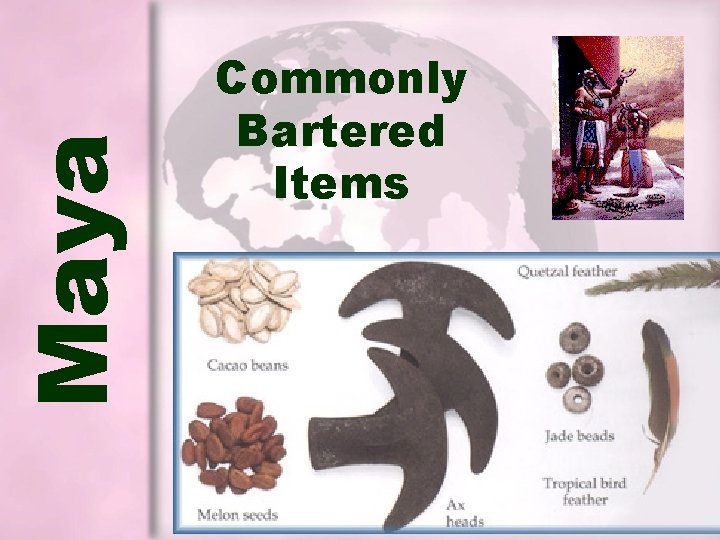
Mayan Economy Ø Ø Active Merchants A trade system existed through which salt, obsidian, jade, cacao, animal pelts, tropical bird feathers, luxury ceramics and other goods flowed. Goods from the highlands were traded with those of the lowlands. Obsidian was made into tools and weapons. People either bartered goods directly or exchanged them for cacao beans, which they used as currency.
Maya Commonly Bartered Items
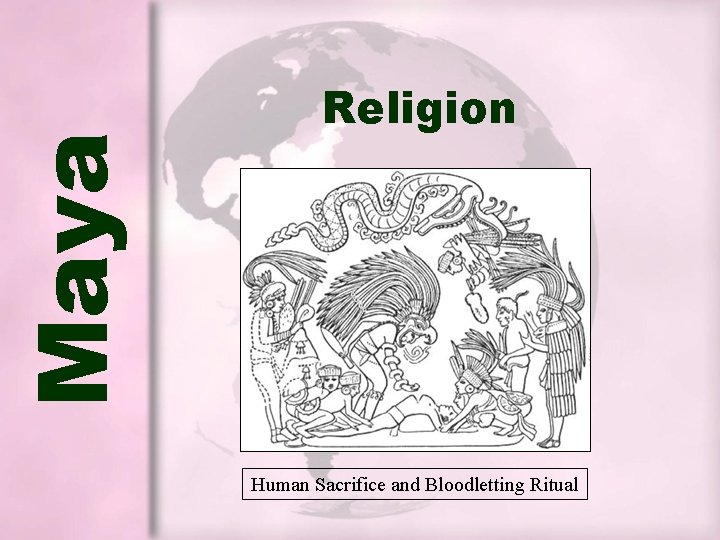
Maya Religion Human Sacrifice and Bloodletting Ritual
Maya Religion: Importance of Agriculture Ø Ø Ø Mayan religion reflected the fundamental role of agriculture in their society Popol Vuh, was the Mayan creation myth that taught that the gods had created human beings out of maize and water Gods kept the world in order and maintained the agricultural cycle in exchange for honors and sacrifices
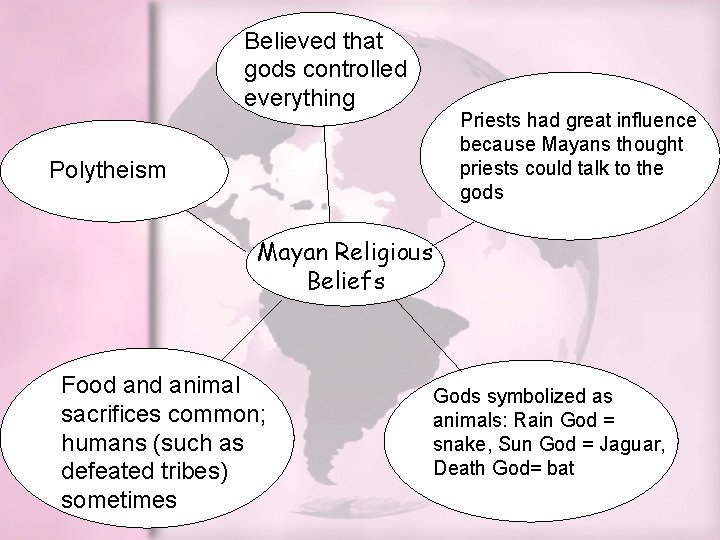
Believed that gods controlled everything Polytheism Priests had great influence because Mayans thought priests could talk to the gods Mayan Religious Beliefs Food animal sacrifices common; humans (such as defeated tribes) sometimes Gods symbolized as animals: Rain God = snake, Sun God = Jaguar, Death God= bat
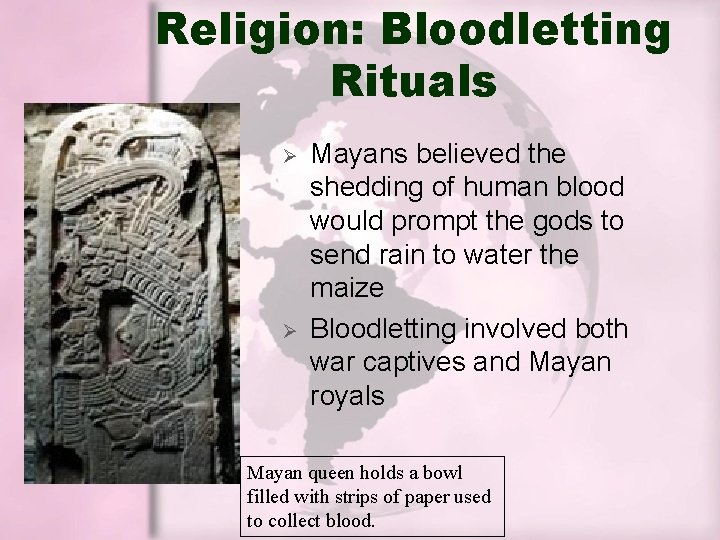
Religion: Bloodletting Rituals Ø Ø Mayans believed the shedding of human blood would prompt the gods to send rain to water the maize Bloodletting involved both war captives and Mayan royals Mayan queen holds a bowl filled with strips of paper used to collect blood.
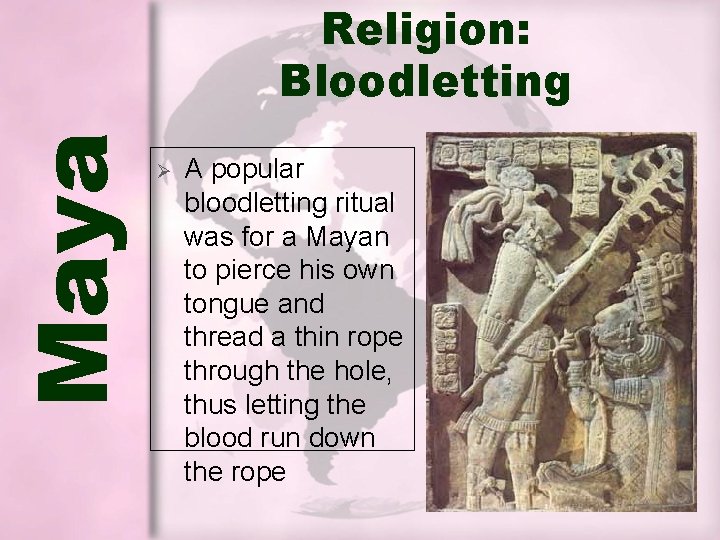
Maya Religion: Bloodletting Ø A popular bloodletting ritual was for a Mayan to pierce his own tongue and thread a thin rope through the hole, thus letting the blood run down the rope
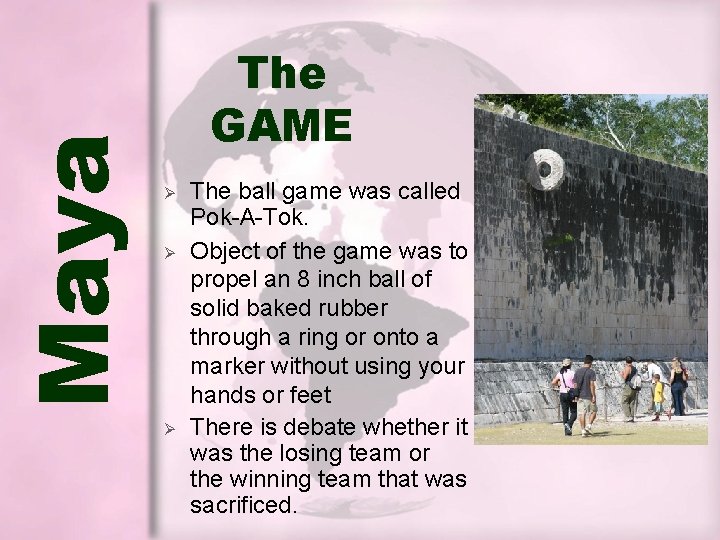
Maya Religion: The Ball Game Ø Ø Mayans inherited a rubber ball game from the Olmecs that was an important part of Mayan political and religious festivals High-ranking captives were forced to play the game for their very lives.
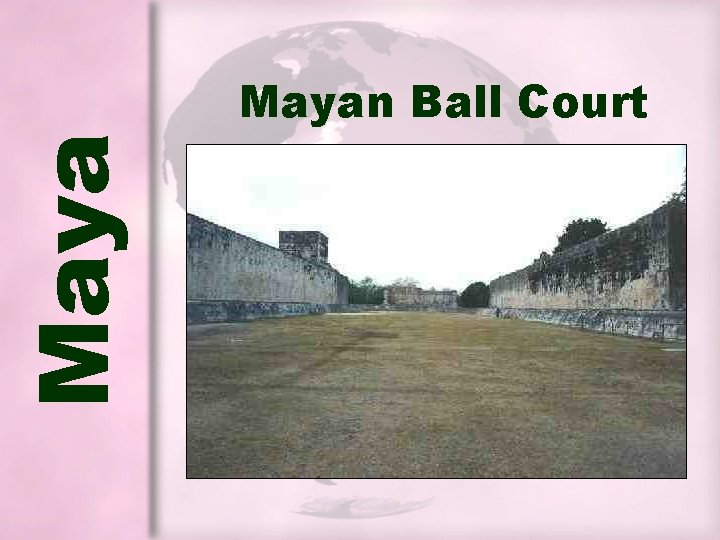
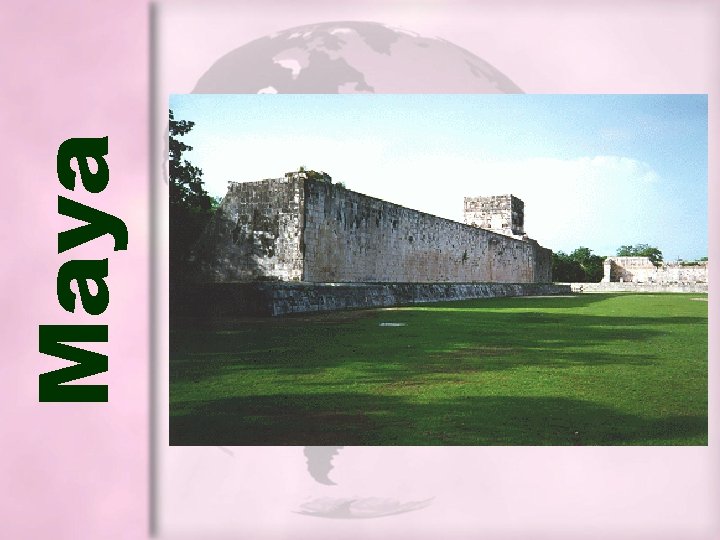
Mayan Ball Court
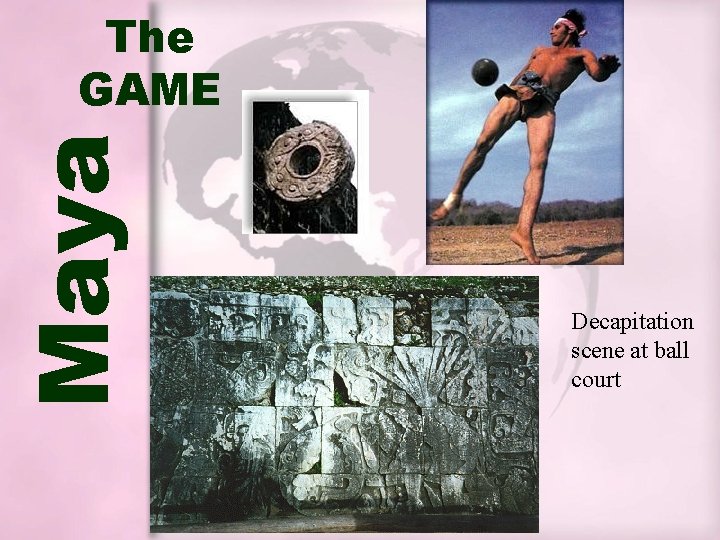
Maya The GAME Ø Ø Ø The ball game was called Pok-A-Tok. Object of the game was to propel an 8 inch ball of solid baked rubber through a ring or onto a marker without using your hands or feet There is debate whether it was the losing team or the winning team that was sacrificed.
Maya The GAME Decapitation scene at ball court
Maya
Maya Mystery Ø Debate over why several sites were abandoned
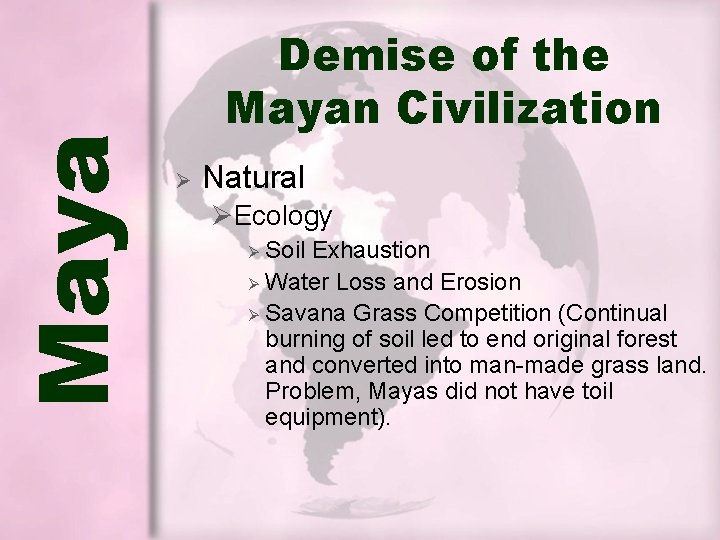
Maya Demise of the Mayan Civilization Ø Natural ØEcology Soil Exhaustion Ø Water Loss and Erosion Ø Savana Grass Competition (Continual burning of soil led to end original forest and converted into man-made grass land. Problem, Mayas did not have toil equipment). Ø
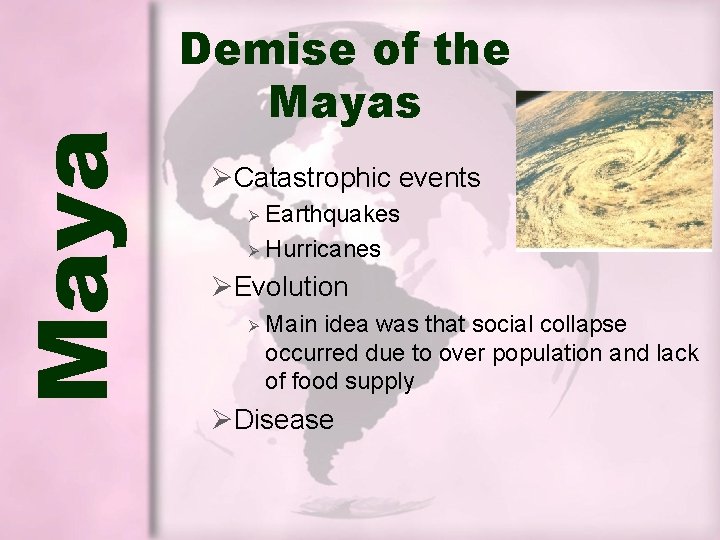
Maya Demise of the Mayas ØCatastrophic events Earthquakes Ø Hurricanes Ø ØEvolution Ø Main idea was that social collapse occurred due to over population and lack of food supply ØDisease
Maya Demise of the Mayas Ø Social ØDemography Ø Higher rate of female to male ratios led to a collapse of social order ØSocial Structure ØInvasion
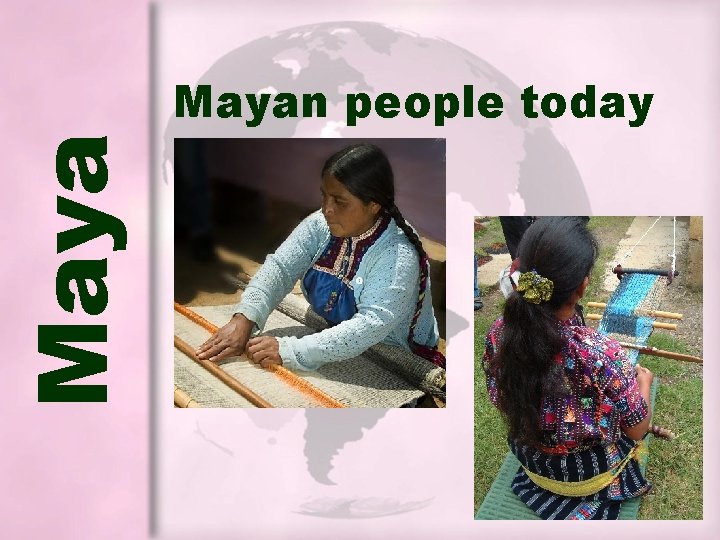
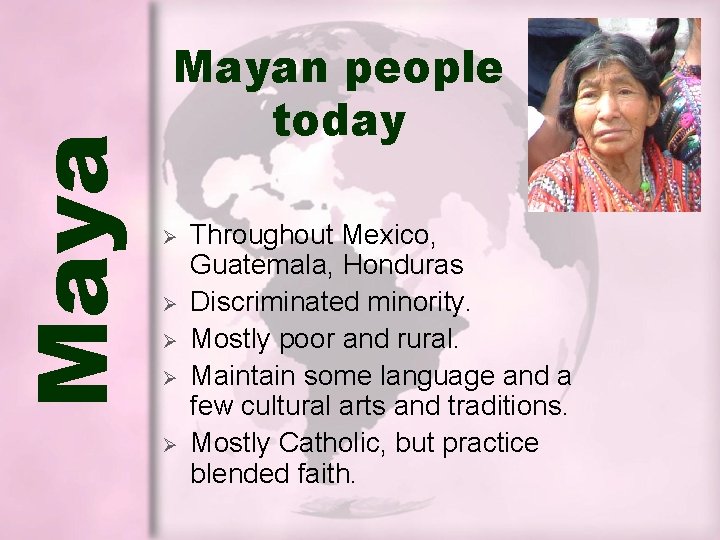
Mayan people today
Mayan people today Ø Ø Ø Throughout Mexico, Guatemala, Honduras Discriminated minority. Mostly poor and rural. Maintain some language and a few cultural arts and traditions. Mostly Catholic, but practice blended faith.
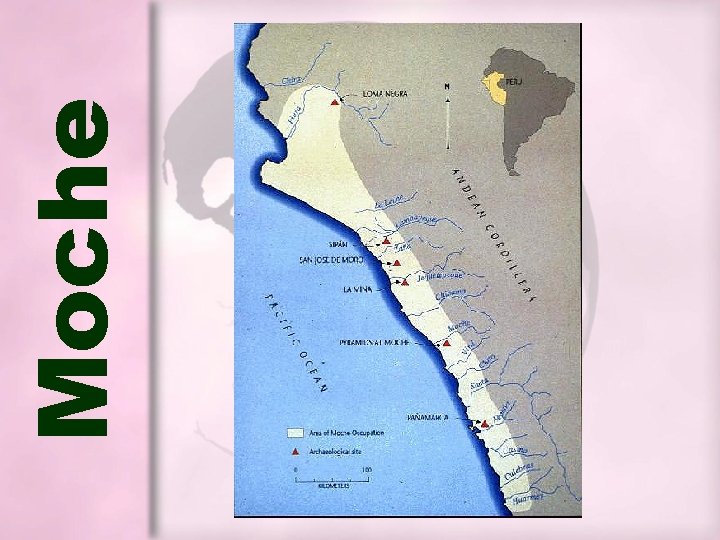
Moche
Moche The Moche culture Ø Ø Ø Found in the Lambayeque Valley, Peru from 100 to 700 AD. The culture left impressive archaeological sites and some of the most outstanding pottery to be seen in Peru's museums, is named after the river which flows into the ocean just south of Trujillo. The word Mochica has been used interchangeably with Moche and refers to a dialect spoken in the Trujillo area at the time of the conquest, though not necessarily spoken by the Moche people. Moche is now the preferred usage.
Moche Social Structure Ø Ø The most important people, especially the priests and warriors, were members of the urban classes and lived closest to the large ceremonial pyramids and other temples. They were surrounded by a middle class of artisans and then, in descending order: farmers and fishermen, servants, slaves and beggars.
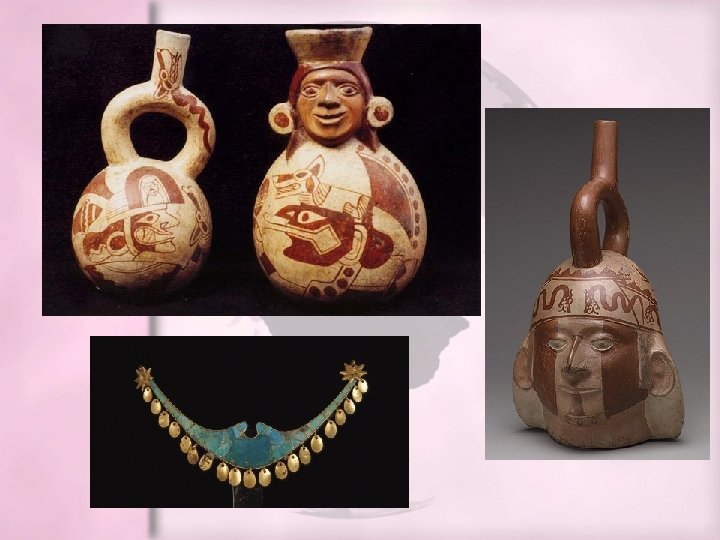
Moche Social Structure Ø Ø The priests and warriors were both honored and obeyed. They are the people most frequently shown in ceramics, which depict them being carried in litters wearing particularly fine jewelry or clothing. Their authority is evident from pots showing scenes of punishment, including the mutilation and death of those who dared to disobey.
Moche Ceramics and Metallurgy Ø Ø Clothing, musical instruments, tools and jewelry are all frequent subjects for ceramics. As there was no written language, most of what we know about the Moche comes from this wealth of pottery.
Moche Ceramics and Metallurgy Ø Ø The ceramics also show us that the Moche had well-developed weaving techniques but, because of rare rainstorms every few decades, most of their textiles have been destroyed. Metalwork, on the other hand, has survived. They used gold, silver and copper mainly for ornaments but some heavy copper implements have also been found.
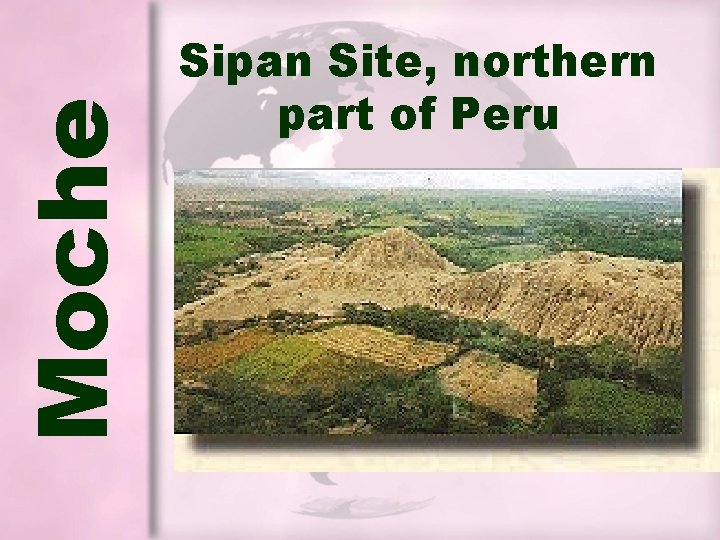
Moche Sipan Site, northern part of Peru
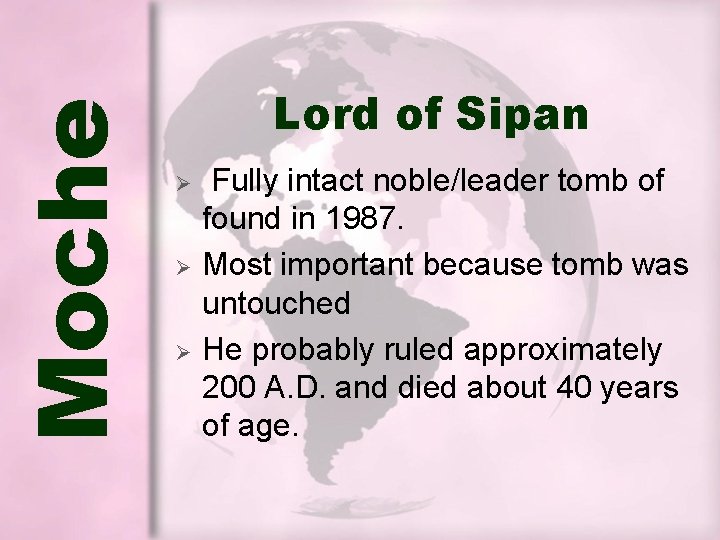
Moche Lord of Sipan Ø Ø Ø Fully intact noble/leader tomb of found in 1987. Most important because tomb was untouched He probably ruled approximately 200 A. D. and died about 40 years of age.
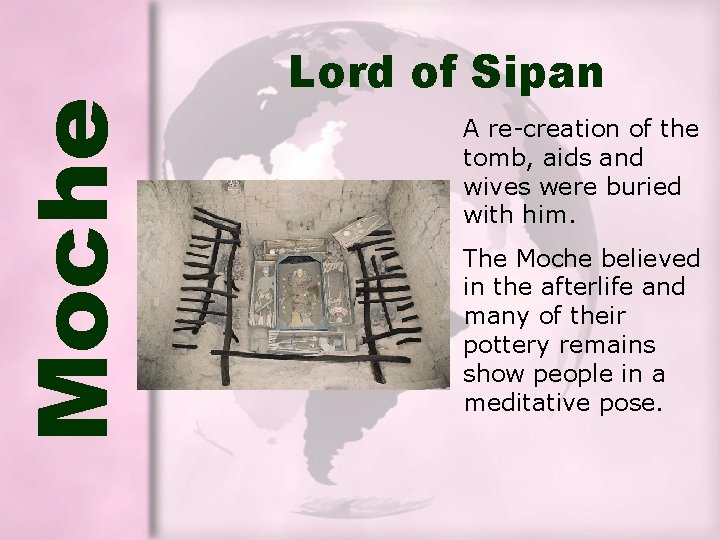
Moche Lord of Sipan A re-creation of the tomb, aids and wives were buried with him. The Moche believed in the afterlife and many of their pottery remains show people in a meditative pose.
Nazca
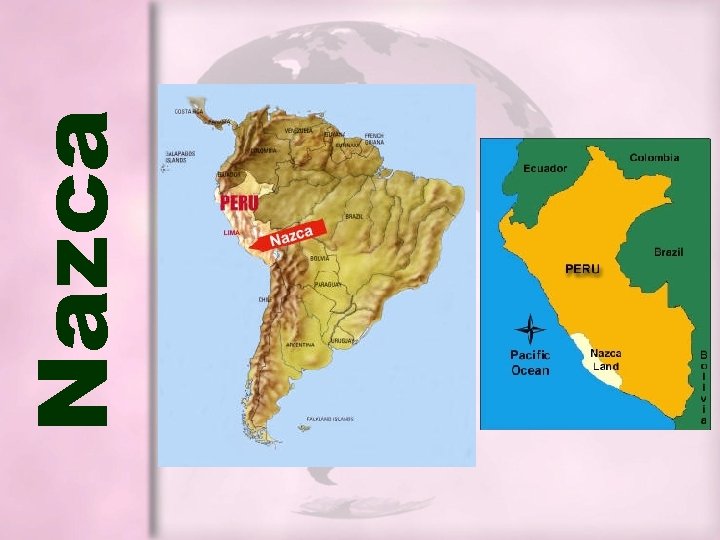
Nazca Ø Ø Ø Located on the south coast, began in 100 BC and was greatly influenced by Chavin and reached its height between the 3 rd and 9 th centuries AD. It was militaristic and aristocratic, with a strong social class structure. They built underground aqueducts to bring water from the mountains for agriculture.
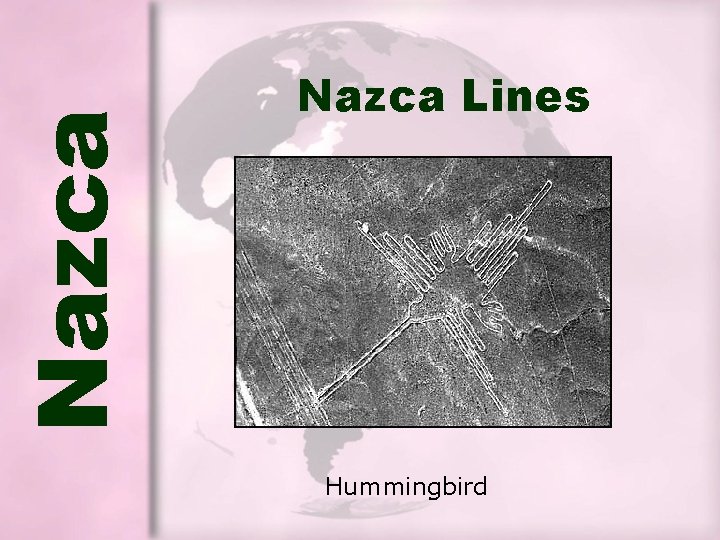
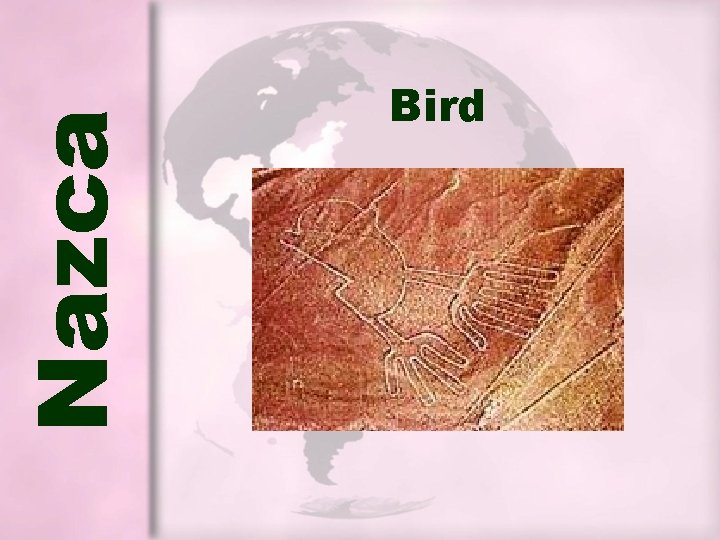
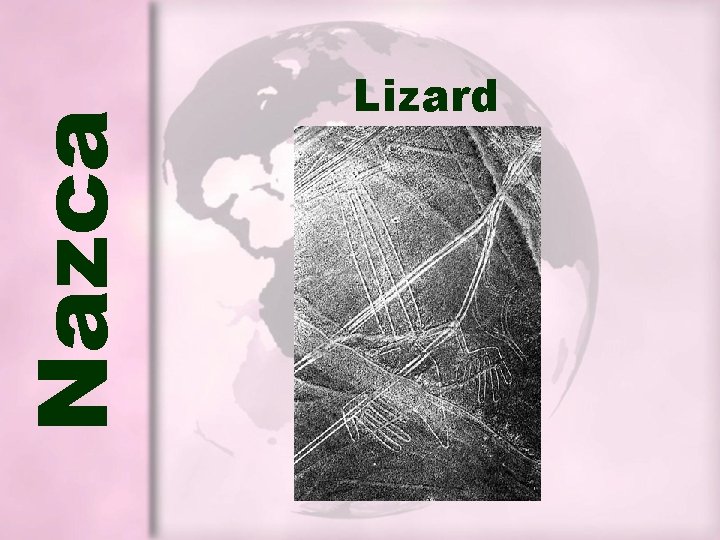
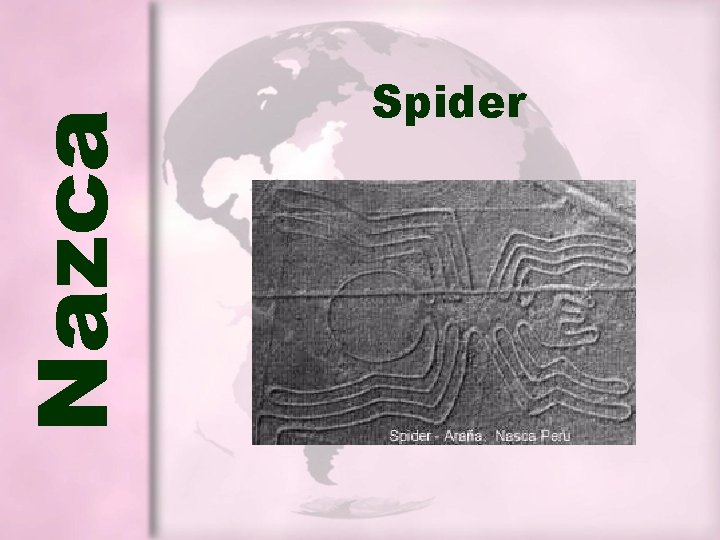
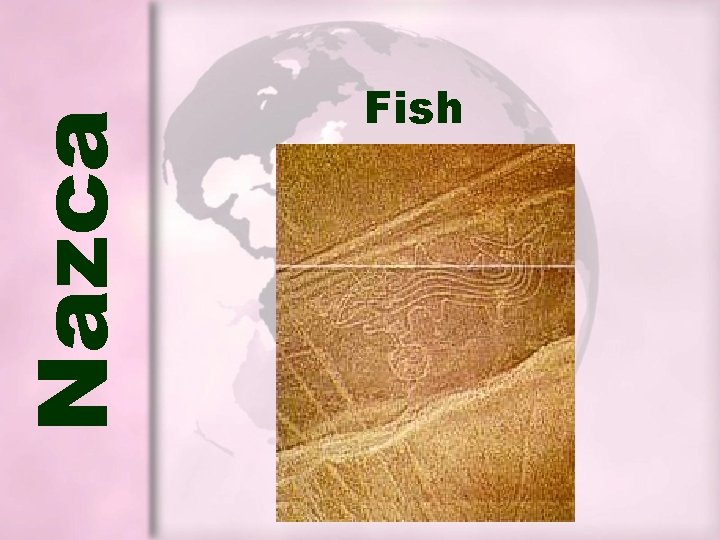
Nazca Ø Ø Nazca is best known for the Nazca Lines, geometric designs and animals constructed by paths across the desert and best seen from the air. Their purpose is not known but some archaeologists believe they are related to the mountain gods.
Nazca Lines Hummingbird
Nazca Bird
Nazca Lizard
Nazca Spider
Nazca Fish
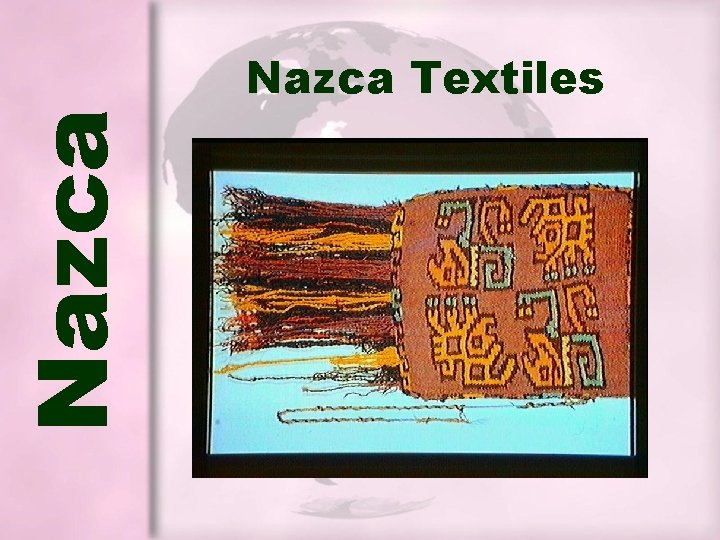
Nazca Textiles
Video: The Maya