Cloud Application Development Morgan Kauffman USA Mc Graw
- Slides: 60
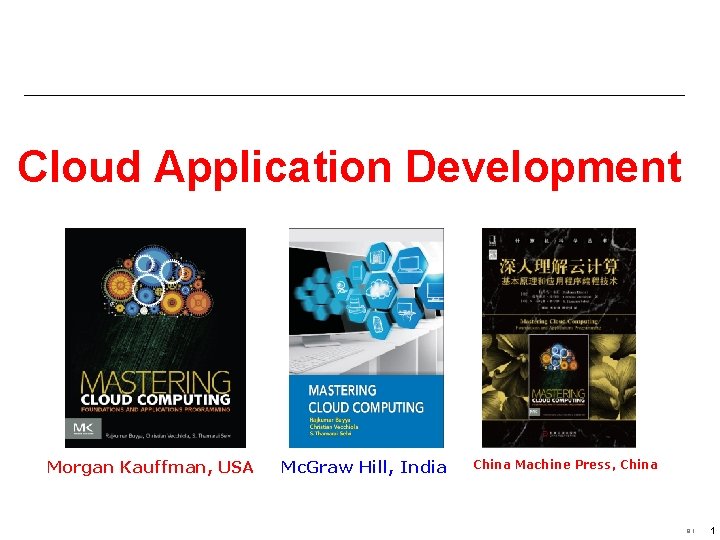
Cloud Application Development Morgan Kauffman, USA Mc. Graw Hill, India China Machine Press, China 9. 1 1
Unit 5 : Use Cases of Cloud Applications • Scientific Applications IBM Power Systems – Health care Analysis in the Cloud – Biology • Geo Science • Business and Consumer Applications • Productivity • Social Networking • Media Applications • Multiplayer online gaming 2
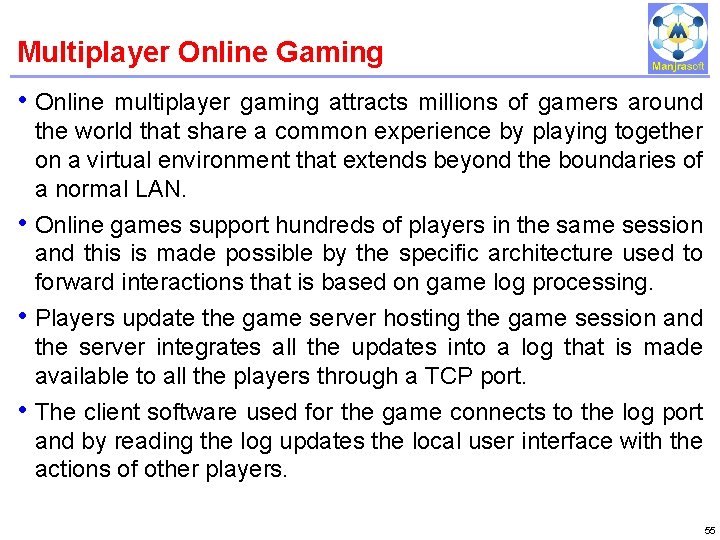
Unit 5 : Objectives IBM Power Systems After completing this unit you should be able to • Cloud Applications • Scientific Applications • Healthcare : ECG Analysis in the Cloud • Biology : Protein Structure Prediction • Geo. Science : Satellite Image Processing • Business and Consumer Applications • Productivity • Cloud Desktops : Eye. OS and XIOS/3 • Social Networking • Media Applications • Multiplayer Online Gaming • Summary 3
Unit 5 : Objectives After completing this unit you should be able to • Cloud Applications • Scientific Applications • Healthcare : ECG Analysis in the Cloud • Biology : Protein Structure Prediction • Geo. Science : Satellite Image Processing • Business and Consumer Applications • Productivity • Cloud Desktops : Eye. OS and XIOS/3 • Social Networking • Media Applications • Multiplayer Online Gaming • Summary IBM Power Systems 4
Cloud Applications IBM Power Systems • Cloud computing has gained huge popularity in industry due to its ability to host applications whose services can be delivered to consumers rapidly at minimal cost. • This chapter discusses various application case studies detailing their architecture and how they leveraged various Cloud technologies. • Applications from a range of domains from scientific to engineering, gaming, to social networking are considered. 5
Unit 5 : Objectives After completing this unit you should be able to • Cloud Applications • Scientific Applications • Healthcare : ECG Analysis in the Cloud • Biology : Protein Structure Prediction • Geo. Science : Satellite Image Processing • Business and Consumer Applications • Productivity • Cloud Desktops : Eye. OS and XIOS/3 • Social Networking • Media Applications • Multiplayer Online Gaming • Summary IBM Power Systems 6
Scientific Applications IBM Power Systems • Scientific applications are a sector that is increasingly using Cloud computing systems and technologies. • The immediate benefit seen by researchers and academics is the potentially infinite availability of computing resources and storage at sustainable prices if compared to a complete in-house deployment. • Cloud computing systems meet the needs of different types of applications in the scientific domain: HPC (High Performance Computing) applications, HTC (High Throughput Computing) applications, and data-intensive applications. • The opportunity for using Cloud resources is even more appealing since minimal changes need to be done to existing applications in order to leverage Cloud resources. 7
Unit 5 : Objectives After completing this unit you should be able to • Cloud Applications • Scientific Applications • Healthcare : ECG Analysis in the Cloud • Biology : Protein Structure Prediction • Geo. Science : Satellite Image Processing • Business and Consumer Applications • Productivity • Cloud Desktops : Eye. OS and XIOS/3 • Social Networking • Media Applications • Multiplayer Online Gaming • Summary IBM Power Systems 8
Healthcare : ECG Analysis in the Cloud IBM Power Systems • Healthcare is a domain where computer technology has found several and diverse applications: from supporting the business functions to assisting scientists in developing solutions to cure diseases. • An important application is the use of Cloud technologies for supporting doctors in providing more effective diagnostic processes. • In particular, we discuss electrocardiogram (ECG) data analysis on the Cloud. 9
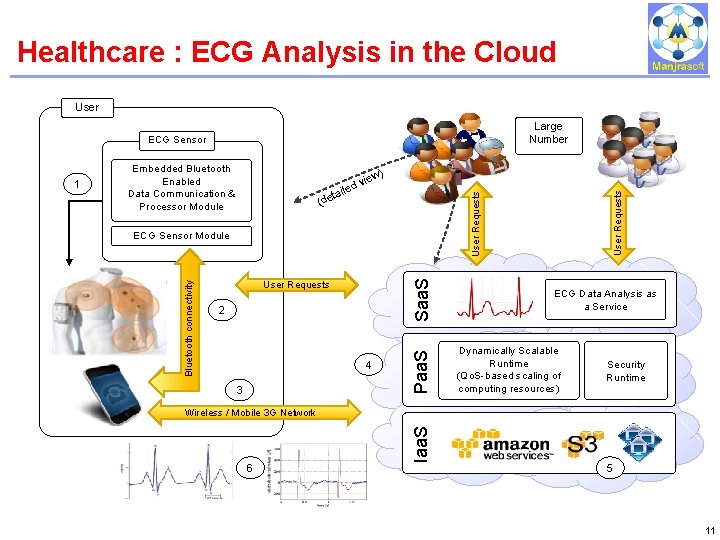
Healthcare : ECG Analysis in the Cloud IBM Power Systems • The capillary development of Internet connectivity and its accessibility from • • • any device at any time has made Cloud technologies an attractive option for developing health-monitoring systems. Electrocardiogram (ECG) data analysis and monitoring constitutes a case study that naturally fits in this scenario. ECG is the electrical manifestation of the contractile activity of the heart’s myocardium. This activity produces a specific waveform that is repeated overtime and that represents the heartbeat. The analysis of the shape of the waveform is used to identify arrhythmias and it is the most common way for detecting heart diseases. Cloud computing technologies allow the remote monitoring of a patient’s heartbeat data, its analysis in minimum time, and the notification of first-aid personnel and doctors should this data reveal potentially dangerous conditions. This way a patient at risk can be constantly monitored without going to hospital for ECG analysis. At the same time, doctors and first-aid personnel can instantly be notified with cases that require their attention. 10
Healthcare : ECG Analysis in the Cloud IBM Power Systems User Large Number ECG Sensor User Requests Saa. S 2 4 3 Paa. S User Requests ) iew dv e l i ta (de ECG Sensor Module Bluetooth connectivity ECG Data Analysis as a Service Dynamically Scalable Runtime (Qo. S-based scaling of computing resources) Security Runtime Wireless / Mobile 3 G Network 6 Iaa. S 1 Embedded Bluetooth Enabled Data Communication & Processor Module 5 11
Healthcare : ECG Analysis in the Cloud IBM Power Systems • Even though remote ECG monitoring does not necessarily require Cloud technologies, Cloud computing introduces opportunities that would be otherwise hardly achievable. • The first advantage is the elasticity of the Cloud infrastructure that can grow and • shrink according to the requests served. As a result, doctors and hospitals do not have to invest in large computing infrastructures designed after capacity planning, thus making a more effective use of budgets. The second advantage is ubiquity. Cloud computing technologies have now become easily accessible and promise to deliver systems with minimum or no downtime. Computing systems hosted in the Cloud are accessible from any Internet device through simple interfaces (such as SOAP and REST based web services). • This makes not only these systems ubiquitous but they can also be easily integrated • with other systems maintained in the hospital’s premises. Lastly, cost savings constitute another reason. Cloud services are priced on a pay-per-use basis and with volume prices in case of large numbers of service requests. These two models provide a set of flexible options that can be used to price the service, thus actually charging costs based on effective use rather than capital costs. 12
Unit 5 : Objectives After completing this unit you should be able to • Cloud Applications • Scientific Applications • Healthcare : ECG Analysis in the Cloud • Biology : Protein Structure Prediction • Geo. Science : Satellite Image Processing • Business and Consumer Applications • Productivity • Cloud Desktops : Eye. OS and XIOS/3 • Social Networking • Media Applications • Multiplayer Online Gaming • Summary IBM Power Systems 13
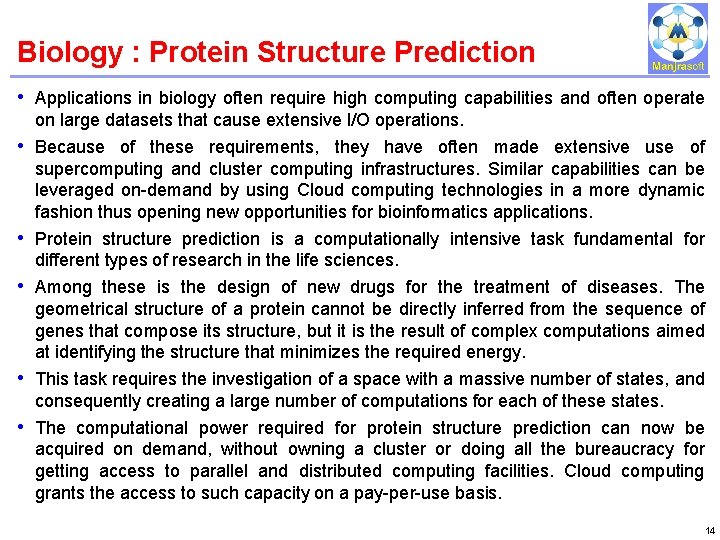
Biology : Protein Structure Prediction IBM Power Systems • Applications in biology often require high computing capabilities and often operate • • • on large datasets that cause extensive I/O operations. Because of these requirements, they have often made extensive use of supercomputing and cluster computing infrastructures. Similar capabilities can be leveraged on-demand by using Cloud computing technologies in a more dynamic fashion thus opening new opportunities for bioinformatics applications. Protein structure prediction is a computationally intensive task fundamental for different types of research in the life sciences. Among these is the design of new drugs for the treatment of diseases. The geometrical structure of a protein cannot be directly inferred from the sequence of genes that compose its structure, but it is the result of complex computations aimed at identifying the structure that minimizes the required energy. This task requires the investigation of a space with a massive number of states, and consequently creating a large number of computations for each of these states. The computational power required for protein structure prediction can now be acquired on demand, without owning a cluster or doing all the bureaucracy for getting access to parallel and distributed computing facilities. Cloud computing grants the access to such capacity on a pay-per-use basis. 14
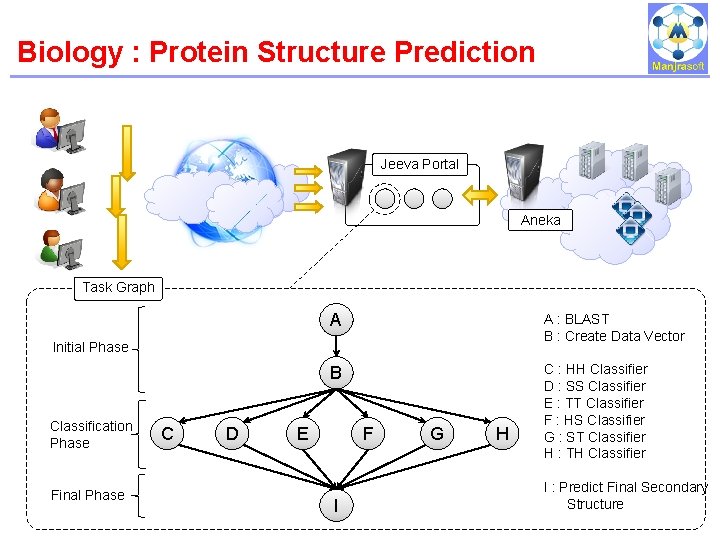
Biology : Protein Structure Prediction IBM Power Systems Jeeva Portal Aneka Task Graph A A : BLAST B : Create Data Vector B C : HH Classifier D : SS Classifier E : TT Classifier F : HS Classifier G : ST Classifier H : TH Classifier Initial Phase Classification Phase Final Phase C D E F I © Copyright IBM Corporation 2014 G H I : Predict Final Secondary Structure 15
Biology: Gene Expression Data Analysis for Cancer Diagnosis IBM Power Systems • Gene expression profiling is the measurement of the expression levels of thousands of genes at once. It is used to understand the biological processes that are triggered by the treatment at a cellular level. • Together with protein structure prediction, this activity is a fundamental component of drug design since it allows scientists to identify the effects of a specific treatment. • Another important application of gene expression profiling is cancer diagnosis and • • treatment. Cancer is a disease characterized by uncontrolled cell growth and proliferation. This behavior occurs because of genes regulating the cell growth mutate. This means that all the cancerous cells contain mutated genes. In this context, gene expression profiling is utilized to provide a more accurate classification of tumors. The classification of gene expression data samples into distinct classes is a challenging task. The dimensionality of typical gene expression data sets ranges from several thousands to over ten thousands genes. However, only small sample sizes are typically available for analysis. 16
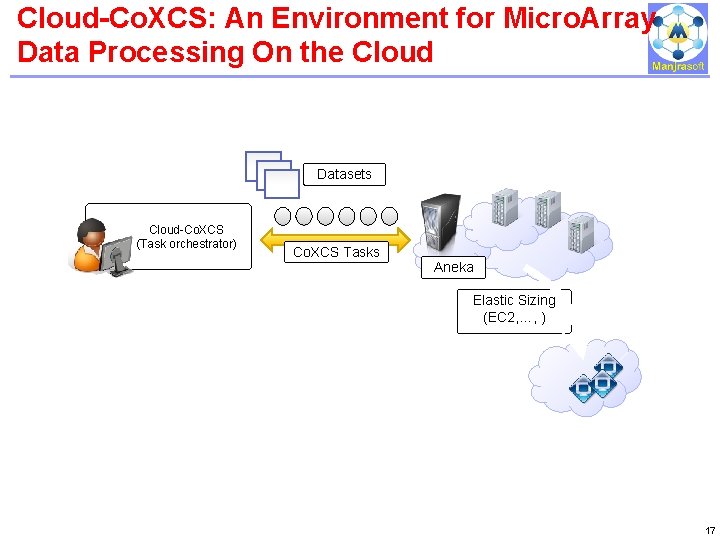
Cloud-Co. XCS: An Environment for Micro. Array Data Processing On the Cloud IBM Power Systems Datasets Cloud-Co. XCS (Task orchestrator) Co. XCS Tasks Aneka Elastic Sizing (EC 2, …, ) 17
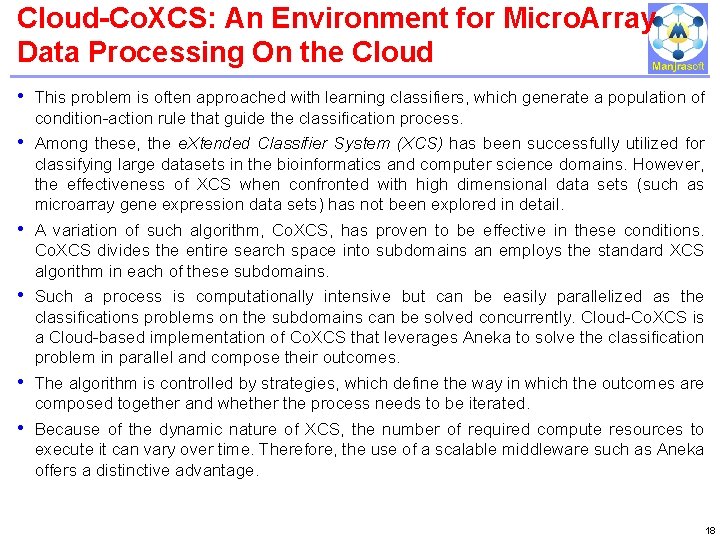
Cloud-Co. XCS: An Environment for Micro. Array Data Processing On the Cloud IBM Power Systems • This problem is often approached with learning classifiers, which generate a population of • condition-action rule that guide the classification process. Among these, the e. Xtended Classifier System (XCS) has been successfully utilized for classifying large datasets in the bioinformatics and computer science domains. However, the effectiveness of XCS when confronted with high dimensional data sets (such as microarray gene expression data sets) has not been explored in detail. • A variation of such algorithm, Co. XCS, has proven to be effective in these conditions. • • • Co. XCS divides the entire search space into subdomains an employs the standard XCS algorithm in each of these subdomains. Such a process is computationally intensive but can be easily parallelized as the classifications problems on the subdomains can be solved concurrently. Cloud-Co. XCS is a Cloud-based implementation of Co. XCS that leverages Aneka to solve the classification problem in parallel and compose their outcomes. The algorithm is controlled by strategies, which define the way in which the outcomes are composed together and whether the process needs to be iterated. Because of the dynamic nature of XCS, the number of required compute resources to execute it can vary over time. Therefore, the use of a scalable middleware such as Aneka offers a distinctive advantage. 18
Unit 5 : Objectives After completing this unit you should be able to • Cloud Applications • Scientific Applications • Healthcare : ECG Analysis in the Cloud • Biology : Protein Structure Prediction • Geo. Science : Satellite Image Processing • Business and Consumer Applications • Productivity • Cloud Desktops : Eye. OS and XIOS/3 • Social Networking • Media Applications • Multiplayer Online Gaming • Summary IBM Power Systems 19
Geo. Science : Satellite Image Processing IBM Power Systems • Geoscience applications collect, produce, and analyse massive amounts of geospatial and non-spatial data. • As the technology progresses and our planet becomes more instrumented • • (i. e. , through the deployment of sensors and satellites for monitoring), the volume of data that need to be processed increases significantly. In particular, the geographic information system (GIS) is a major element of geoscience applications. GIS applications capture, store, manipulate, analyze, manage, and present all types of geographically referenced data. This type of information is now becoming increasingly relevant to a wide variety of application domains: from advanced farming to civil security and also natural resources management. As a result, a considerable amount of geo-referenced data is ingested into computer systems for further processing and analysis. Cloud computing is an attractive option for executing these demanding tasks and extracting meaningful information for supporting decision makers. 20
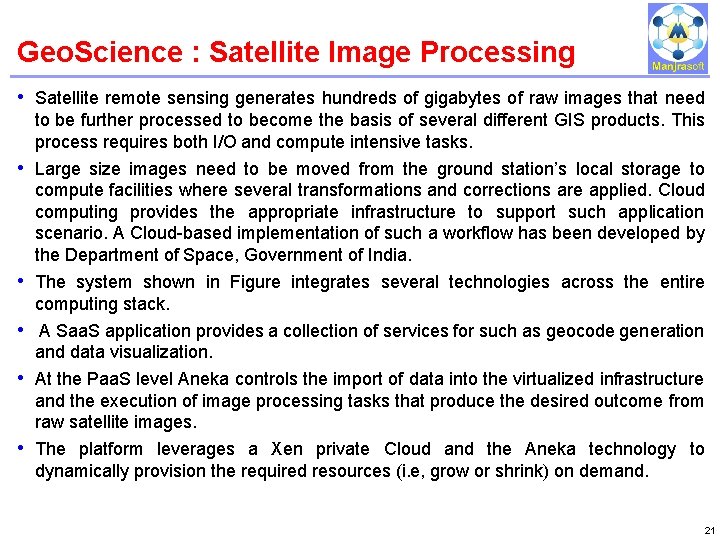
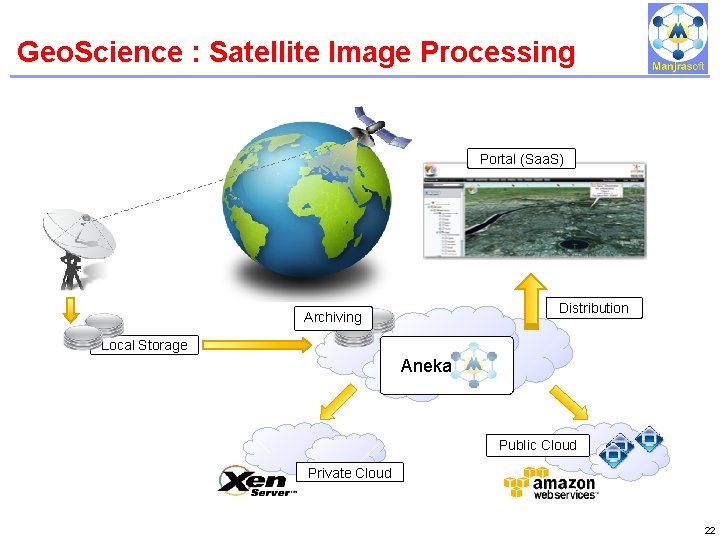
Geo. Science : Satellite Image Processing IBM Power Systems • Satellite remote sensing generates hundreds of gigabytes of raw images that need to be further processed to become the basis of several different GIS products. This process requires both I/O and compute intensive tasks. • Large size images need to be moved from the ground station’s local storage to • • compute facilities where several transformations and corrections are applied. Cloud computing provides the appropriate infrastructure to support such application scenario. A Cloud-based implementation of such a workflow has been developed by the Department of Space, Government of India. The system shown in Figure integrates several technologies across the entire computing stack. A Saa. S application provides a collection of services for such as geocode generation and data visualization. At the Paa. S level Aneka controls the import of data into the virtualized infrastructure and the execution of image processing tasks that produce the desired outcome from raw satellite images. The platform leverages a Xen private Cloud and the Aneka technology to dynamically provision the required resources (i. e, grow or shrink) on demand. 21
Geo. Science : Satellite Image Processing IBM Power Systems Portal (Saa. S) Distribution Archiving Local Storage Aneka Public Cloud Private Cloud 22
Unit 5 : Objectives After completing this unit you should be able to • Cloud Applications • Scientific Applications • Healthcare : ECG Analysis in the Cloud • Biology : Protein Structure Prediction • Geo. Science : Satellite Image Processing • Business and Consumer Applications • Productivity • Cloud Desktops : Eye. OS and XIOS/3 • Social Networking • Media Applications • Multiplayer Online Gaming • Summary IBM Power Systems 23
Business and Consumer Applications IBM Power Systems • The business and consumer sector is the one that probably benefits the most from Cloud computing technologies. • On the one hand the opportunity of transforming capital cost into operational costs makes Clouds an attractive option for all enterprises that are IT centric. • On the other hand, the sense of ubiquity that Cloud offers for accessing data and services makes it interesting for end users as well. • Moreover, the elastic nature of Cloud technologies does not require huge upfront investments, thus allowing new ideas to be quickly translated into products and services that can comfortably grow with the demand. • The combination of all these elements has made Cloud computing the preferred technology for a wide range of applications: from CRM and ERP systems to productivity and social networking applications 24
CRM and ERP IBM Power Systems • Customer Relationship Management (CRM) and Enterprise Resource Planning (ERP) applications are market segments that are flourishing in the Cloud, with CRM applications being more mature than ERP implementations. • Cloud CRM applications constitute a great opportunity for small enterprises and start • • -ups to have a fully functional CRM software without large upfront costs and by paying subscriptions. Moreover, customer relationship management is not an activity that requires specific needs and it can be easily moved to the Cloud. Such a characteristic, together with the possibility of having access to your business and customer data from everywhere and any device, has fostered the spread of Cloud CRM applications. ERP solutions on the Cloud are less mature and have to compete with wellestablished in-house solutions. ERP systems integrate several aspects of an enterprise: finance and accounting, human resources, manufacturing, supply chain management, project management, and customer relationship management. 25
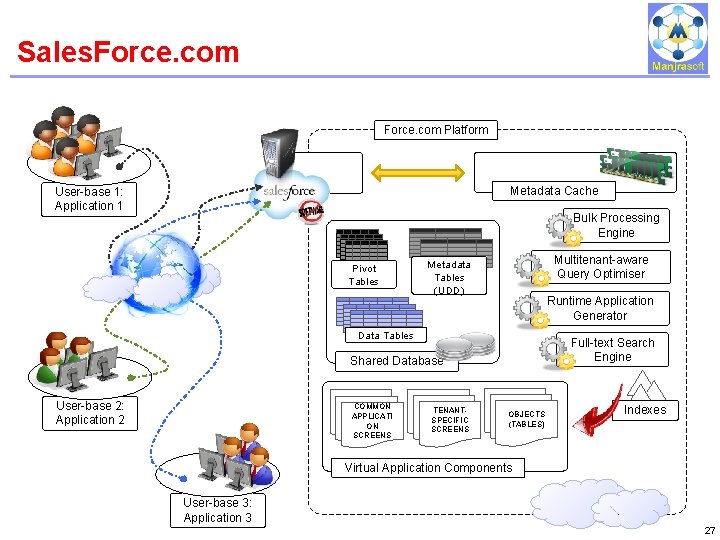
Sales. Force. com IBM Power Systems • Salesforce. com is probably the most popular and developed CRM solutions available today. As of today more than 100 thousands customers have chosen Safesforce. com to implement their CRM solutions. • The application provides customizable CRM solutions that can be integrated with additional features developed by third parties. Salesforce. com is based on the Force. com Cloud development platform. • This represents the scalable and high-performance middleware executing all the operations of all Salesforce. com applications. 26
Sales. Force. com IBM Power Systems Force. com Platform Metadata Cache User-base 1: Application 1 Bulk Processing Engine Pivot Tables Multitenant-aware Query Optimiser Metadata Tables (UDD) Runtime Application Generator Data Tables Full-text Search Engine Shared Database User-base 2: Application 2 COMMON APPLICATI ON SCREENS TENANTSPECIFIC SCREENS OBJECTS (TABLES) Indexes Virtual Application Components User-base 3: Application 3 27
Microsoft Dynamics CRM IBM Power Systems • Microsoft Dynamics CRM is the solution implemented by Microsoft for customer relationship management. Dynamics CRM is available either for installation on the enterprise’s premises or as an online solution priced with a monthly per user subscription. • The system is completely hosted in Microsoft’s data center across the world and • • offers to customers a 99. 9% SLA, with bonus credits in case the system does not fulfill the agreement. Each CRM instance is deployed on a separate database, and the application provides users with facilities for marketing, sales, and advanced customer relationship management. Dynamics CRM Online features can be accessed either through a web browser interface or programmatically by means of SOAP and RESTful web services. This allows Dynamics CRM to be easily integrated with both other Microsoft products and line of business applications. Dynamics CRM can be extended by developing plug-ins that allow implementing specific behaviors triggered on the occurrence of given events. Dynamics CRM can also leverage the capability of Windows Azure for the development and integration of new features. 28
Net. Suite IBM Power Systems • Net. Suite provides a collection of applications that help customers manage every aspect of the business enterprise. Its offering is divided in three major products: Net. Suite Global ERP, Net. Suite Global CRM+, and Net. Suite Global Ecommerce. Moreover, an all-in-one solution integrates all the three products together: Net. Suite One World. • The services delivered by the company are powered by two large datacenters on the • • • opposite coasts (east and west coasts) of the United States connected by redundant links. This allows Net. Suite to guarantee 99. 5% of uptime to its customers. Besides the pre-packaged solutions, Net. Suite also provides and infrastructure and a development environment for implementing customized applications. The Net. Suite Business Operating System (NS-BOS) is a complete stack of technologies for building Software-as-a-Service business applications that leverage the capabilities of Net. Suite products. On top of the Saa. S infrastructure, the Net. Suite Business Suite components offer accounting, ERP, CRM, and e-commerce capabilities. An online development environment, Suite. Flex, allows integrating such capabilities into new web applications, which are then packaged for distribution by Suite. Bundler. The entire infrastructure is hosted in the Net. Suite datacenters, which provide the warranties about the application uptime and availability. 29
Unit 5 : Objectives After completing this unit you should be able to • Cloud Applications • Scientific Applications • Healthcare : ECG Analysis in the Cloud • Biology : Protein Structure Prediction • Geo. Science : Satellite Image Processing • Business and Consumer Applications • Productivity • Cloud Desktops : Eye. OS and XIOS/3 • Social Networking • Media Applications • Multiplayer Online Gaming • Summary IBM Power Systems 30
Productivity IBM Power Systems • Productivity applications replicate in the Cloud some of the most common tasks that we are used to perform on our desktop: from document storage, to office automation, and complete desktop environment hosted in the Cloud. – Drop. Box and i. Cloud – Google Docs – Cloud Desktops/ Eye. OS and XIOS/3 31
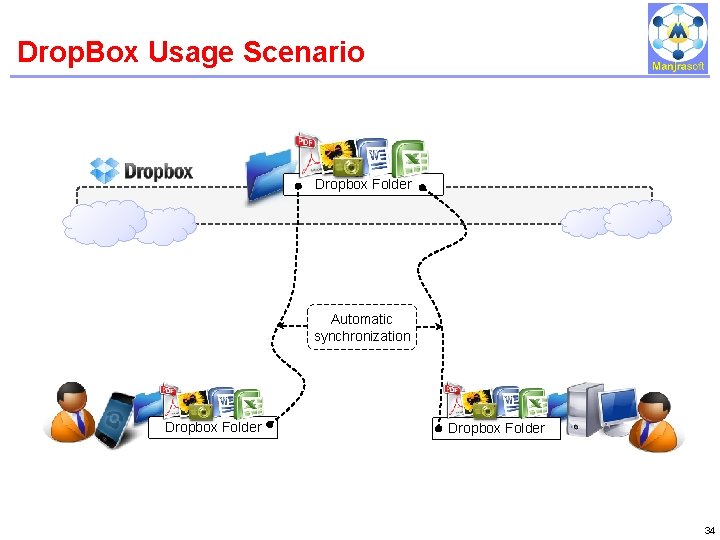
Drop. Box and i. Cloud IBM Power Systems • One of the core features of Cloud computing is to be available anywhere, at anytime, and • • • from any Internet connected device. Therefore, document storage constitutes a natural application for such technology. Online storage solutions are precedent to Cloud computing, but they have never become popular. With the development of Cloud technologies they have turn into Software-as-a-Service applications and become more usable as well as more advanced and accessible. Perhaps the most popular solution for online document storage is Dropbox. This is an online application that allows you to synchronise any file across any platform and any device in a seamless manner. Dropbox provides users with a free amount of storage that is accessible through the abstraction of a folder. Users can either access their Dropbox folder through a browser or by downloading and installing a Dropbox client, which provides access to the online storage by means of a special folder. All the modifications into this folder are silently synched so that changes are notified to all the local instances of the Dropbox folder across all the devices. The key advantage of Dropbox is its availability on different platforms (Windows, Mac, Linux, and mobile) and the capability to work seamlessly and transparently across all of them. 32
Drop. Box and i. Cloud IBM Power Systems • Another interesting application in this area is i. Cloud is a Cloud • based document sharing application provided by Apple to synchronise IOS-based devices in a completely transparent manner. Differently from Dropbox, which provides synchronization through the abstraction of a local folder, i. Cloud has been designed to be completely transparent once it has been set up: documents, photos, and videos are automatically synched as changes are made without any explicit operation. • This allows to efficiently automate common operations without any • human intervention: taking a picture with an i. Phone and having it automatically available in i. Photo on your Mac at home; editing a document in the i. Mac at home and having the changes updated in the i. Pad. Unfortunately, this capability is limited only to IOS devices and currently there are no plans to provide i. Cloud with a web-based interface that would make user’s content accessible even from unsupported platforms. 33
Drop. Box Usage Scenario IBM Power Systems Dropbox Folder Automatic synchronization Dropbox Folder 34
Google Docs IBM Power Systems • Google Docs is a Software-as-a-Service (Saa. S) application that delivers the basic office • automation capabilities with support for collaborative editing over the Web. The application is executed on top of Google distributed computing infrastructure that allows the system to dynamically scale according to the number the users using the service. Google Docs allows creating and editing text documents, spreadsheets, presentations, forms, and drawings. • It aims to substitute desktop products such as Microsoft Office and Open. Office and • • • provide similar interface and functionality as a Cloud service. It supports collaborative editing over the web for most of the applications included in the suite. This eliminates tedious mailing and synchronization tasks when documents need to be edited by multiple users. By being stored in the Google infrastructure these documents are always available from anywhere and any device that is connected to the Internet. Moreover, the suite allows users to work off-line in case the Internet connectivity is not available. The support of various formats such as those that are produced by the most popular desktop office solutions allows user to easily import and move documents in and out of Google Docs, thus eliminating barriers for the use of this application. Google Docs is a good example of what Cloud computing can deliver to end users: ubiquitous access to resources, elasticity, absence of installation and maintenance costs, and delivery of core functionalities as a service. 35
Unit 5 : Objectives After completing this unit you should be able to • Cloud Applications • Scientific Applications • Healthcare : ECG Analysis in the Cloud • Biology : Protein Structure Prediction • Geo. Science : Satellite Image Processing • Business and Consumer Applications • Productivity • Cloud Desktops : Eye. OS and XIOS/3 • Social Networking • Media Applications • Multiplayer Online Gaming • Summary IBM Power Systems 36
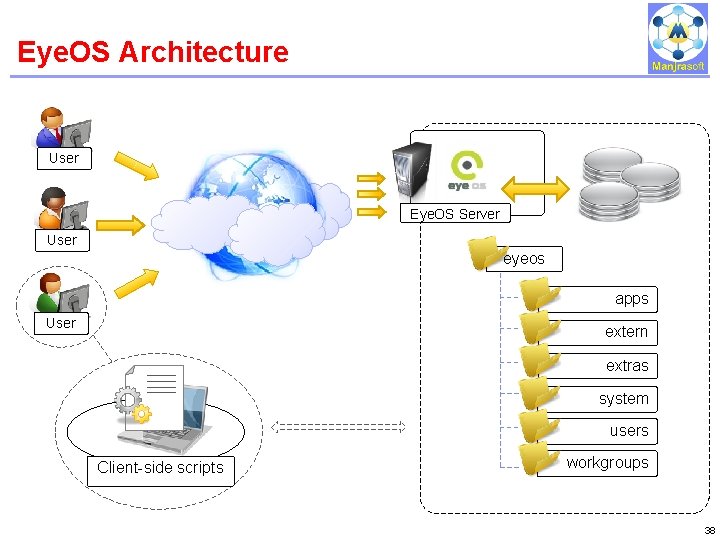
Cloud Desktops : Eye. OS and XIOS/3 IBM Power Systems • Asynchronous Javascript and XML (AJAX) technologies have considerably augmented the capabilities that can be implemented in web applications. • This is a fundamental aspect for Cloud computing that delivers a considerable amount of its services through the web browser. • Together with the opportunity of leveraging large-scale storage and computation, this technology has made possible the replication of complex desktop environments in the Cloud and made them available through the web browser. These applications are called Cloud desktops and rapidly gaining popularity. 37
Eye. OS Architecture IBM Power Systems User Eye. OS Server User eyeos apps User extern extras system users Client-side scripts workgroups 38
XIOS/3 IBM Power Systems • Xcerion XML Internet OS/3 (XIOS/3) is another example of a web desktop • environment. The service is delivered as part of the Cloud. Me application, which is a solution for Cloud document storage. • The key differentiator of XIOS/3 is its strong leverage on XML, used to implement • • many of the tasks of the OS: rendering user interfaces; defining application business logics; structuring file system organization; and even application development. The architecture of the OS concentrates most of the functionalities on the client side, while implementing server based functionalities by means of XML web services. The client side renders the user interface, orchestrates processes, and provides data binding capabilities on XML data that is exchanged with web services. • The server is responsible for implementing core functions such as transaction • management for documents edited in a collaborative mode, and core logic of installed application into the environment. XIOS/3 also provides an environment for developing application (XIDE), which allows users to quickly develop complex applications by visual tools for the user interface and XML documents for business logic. 39
XIOS/3 IBM Power Systems • XIOS/3 is released as open source software and implements a • market place where third parties can easily deploy applications that can be installed on top of the virtual desktop environment. It is possible to develop any type of application and feed it with data accessible through XML web services: developers have to define the user interface, bind UI components to service calls and operations, and provide the logic on how to process the data. • XIDE will package this information into a proper set of XML documents and the rest will be performed by XML virtual machine implemented in XIOS. • XIOS/3 is an advanced web desktop environment that focuses on the integration of services into the environment by means of XML-based services and simplifies collaboration with peers. 40
Unit 5 : Objectives After completing this unit you should be able to • Cloud Applications • Scientific Applications • Healthcare : ECG Analysis in the Cloud • Biology : Protein Structure Prediction • Geo. Science : Satellite Image Processing • Business and Consumer Applications • Productivity • Cloud Desktops : Eye. OS and XIOS/3 • Social Networking • Media Applications • Multiplayer Online Gaming • Summary IBM Power Systems 41
Social Networking IBM Power Systems • Social networking applications have considerably grown in the last years to become the most active sites on the web. In order to sustain their traffic and to serve millions of users seamlessly, • services like Twitter or Facebook, have leveraged Cloud computing technologies. • The possibility of continuously adding capacity while systems are running is the most attractive feature for social networks, which constantly increase their user base. 42
Facebook IBM Power Systems • Facebook is probably the most evident and interesting environment in social • • • networking. It became one of the largest web sites in the world with more than 800 million users. In order to sustain this incredible growth it has been fundamental to be capable of continuously adding capacity, developing new scalable technologies and software systems while keeping a high performance for a smooth user experience. Currently, the social network is backed by two data centers that have been built and optimized to reduce costs and impact on the environment. On top of this highly efficient infrastructure built and designed out of inexpensive hardware, a completely customized stack of open source technologies opportunely modified and refined constitutes the backend of largest social network. Taken all together, these technologies constitute a powerful platform for developing Cloud applications. This platform primarily supports Facebook itself and offers APIs to integrate third party applications with Facebook’s core infrastructure to deliver additional services such as social games and quizzes created by others. 43
Facebook IBM Power Systems • The reference stack serving Facebook is based on LAMP (Linux, Apache, • • • My. SQL, and PHP). This collection of technologies is accompanied by a collection of other services developed in-house. These services are developed in a variety of languages and implement specific functionalities such as search, new feeds, notifications, and others. While serving page requests, the social graph of the user is composed. The social graph identifies collection of interlinked information that is of relevance for a given user. Most of the user data is served by querying a distributed cluster of My. SQL instances, which mostly contain key-value pairs. This data is then cached for faster retrieval. The rest of the relevant information is then composed together by using the services mentioned before. These services are located closer to the data and developed in languages that provide a better performance than PHP. 44
Facebook IBM Power Systems • The development of services is facilitated by a set of tools • • • internally developed. One of the core elements is Thrift. This is a collection of abstractions (and language bindings) that allow cross-language development. Thrift allows services developed in different languages to communicate and exchange data. Bindings for Thrift in different languages take care of data serialization and deserialization, communication, and client and server boilerplate code. This simplifies the work of the developers that can quickly prototype services and leverage existing one. Other relevant services and tools are Scribe, which aggregates streaming log feeds, and applications for alerting and monitoring. 45
Unit 5 : Objectives After completing this unit you should be able to • Cloud Applications • Scientific Applications • Healthcare : ECG Analysis in the Cloud • Biology : Protein Structure Prediction • Geo. Science : Satellite Image Processing • Business and Consumer Applications • Productivity • Cloud Desktops : Eye. OS and XIOS/3 • Social Networking • Media Applications • Multiplayer Online Gaming • Summary IBM Power Systems 46
Media Applications IBM Power Systems • Media applications are a niche that has taken a considerable advantage from leveraging Cloud computing technologies. • In particular, video processing operations, such as encoding, transcoding, composition, and rendering, are good candidates for a Cloud-based environment. • These are computationally intensive tasks that can be easily offloaded to Cloud computing infrastructures. 47
Animoto IBM Power Systems • Animoto is perhaps the most popular example of media applications on the Cloud. The website provides users with a very straightforward interface for quickly creating videos out of images, music, and video fragments submitted by users. • Users select a specific theme for the video, upload the photos and videos and order • • • them in the sequence they want to appear, select the song for the music, and render the video. The process is executed in the background and the user is notified via e-mail once the video is rendered. The core value of Animoto is the ability to quickly create videos with stunning effects without the user intervention. A proprietary AI engine that selects the animation and transition effects according to pictures and music drives the rendering operation. Users only have to define the storyboard by organizing pictures and videos into the desired sequence. If not, the video can be rendered again and the engine will select a different composition, thus producing a different outcome every time. The service allows creating 30 seconds videos for free. By paying a monthly or a yearly subscription it is possible to produce videos of any length and to choose among a wider range of templates. 48
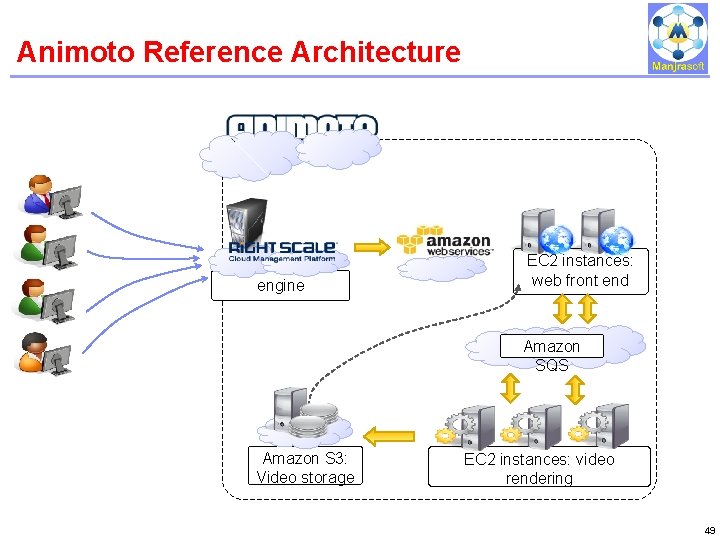
Animoto Reference Architecture IBM Power Systems Scalability engine EC 2 instances: web front end Amazon SQS Amazon S 3: Video storage EC 2 instances: video rendering 49
Maya Rendering with Aneka IBM Power Systems • Interesting applications of media processing are found in the engineering disciplines and the movie production industry. Operations such as rendering of models are now an integral part of the design workflow, which has become computationally demanding. • The visualization of mechanical models is not only used at the end of the design process, but it is iteratively used to improve the design. • It is then fundamental to perform such task as fast as possible. Cloud computing provides engineers with the necessary computing power to make this happen. 50
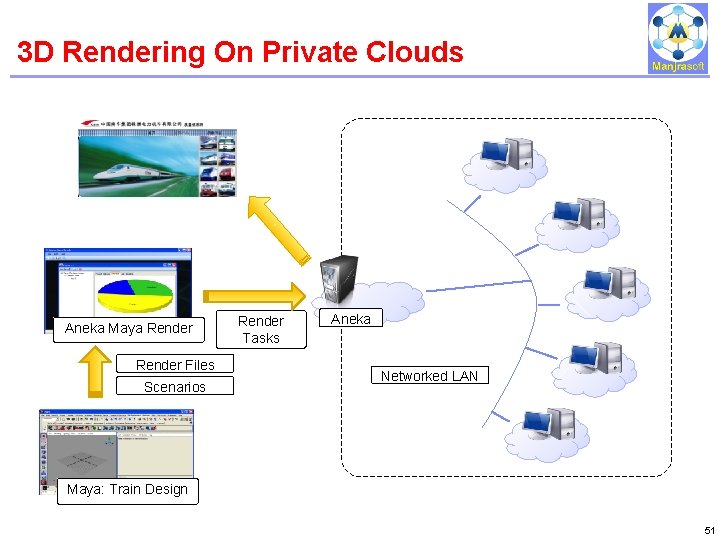
3 D Rendering On Private Clouds IBM Power Systems Aneka Maya Render Files Scenarios Render Tasks Aneka Networked LAN Maya: Train Design 51
Video Encoding on the Cloud : Encoding. com IBM Power Systems • Video encoding and transcoding are operations that can take a great benefit • • from using Cloud technologies: they are computationally intensive and potentially require considerable amount of storage. Moreover, with the continuous improvement of mobile devices as well as the diffusion of Internet, requests for video content have significantly increased. The variety of devices with video playback capabilities has led to an explosion of video formats through which a video can be delivered. Software and hardware for video encoding and transcoding often have prohibitive costs or are not flexible enough to support conversion from any format to any format. Cloud technologies present an opportunity for turning these tedious and often demanding tasks into services that can be easily integrated into different workflows or made available to everyone according to their needs. 52
Video Encoding on the Cloud : Encoding. com IBM Power Systems • Encoding. com is software solution that offers video transcoding services on • • demand leverage Cloud technology to provide both the horse-power required for video conversion and the storage for staging videos. The service integrates both with Amazon Web Services technologies (EC 2, S 3, and Cloud. Front) and Rackspace (Cloud Servers, Cloud Files, and Limelight CDN access). Users can access the services through a variety of interfaces: Encoding. com website, web service XML APIs, desktop applications, and watched folders. In order to use the service users have to specify the location of the video to transcode, the destination format, and the target location of the video. Encoding. com also offers other video editing operations such the insertion of thumbnails, watermarks, or logos. Moreover, it also extends its capabilities to audio and image conversion. The service provides different pricing options: monthly fee, pay-as-you-go (by batches), and special prices for high volumes. Encoding. com has up to now more than 2000 customers and has already processed more than 10 53 million videos.
Unit 5 : Objectives After completing this unit you should be able to • Cloud Applications • Scientific Applications • Healthcare : ECG Analysis in the Cloud • Biology : Protein Structure Prediction • Geo. Science : Satellite Image Processing • Business and Consumer Applications • Productivity • Cloud Desktops : Eye. OS and XIOS/3 • Social Networking • Media Applications • Multiplayer Online Gaming • Summary IBM Power Systems 54
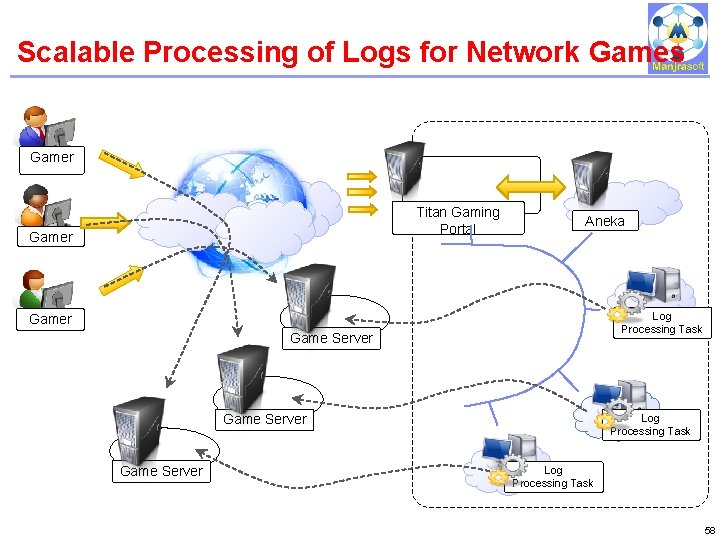
Multiplayer Online Gaming IBM Power Systems • Online multiplayer gaming attracts millions of gamers around • • the world that share a common experience by playing together on a virtual environment that extends beyond the boundaries of a normal LAN. Online games support hundreds of players in the same session and this is made possible by the specific architecture used to forward interactions that is based on game log processing. Players update the game server hosting the game session and the server integrates all the updates into a log that is made available to all the players through a TCP port. • The client software used for the game connects to the log port and by reading the log updates the local user interface with the actions of other players. 55
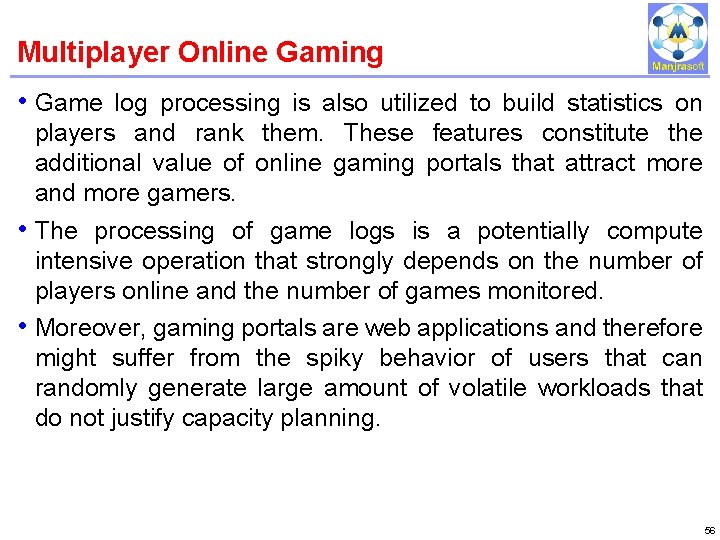
Multiplayer Online Gaming IBM Power Systems • Game log processing is also utilized to build statistics on players and rank them. These features constitute the additional value of online gaming portals that attract more and more gamers. • The processing of game logs is a potentially compute intensive operation that strongly depends on the number of players online and the number of games monitored. • Moreover, gaming portals are web applications and therefore might suffer from the spiky behavior of users that can randomly generate large amount of volatile workloads that do not justify capacity planning. 56
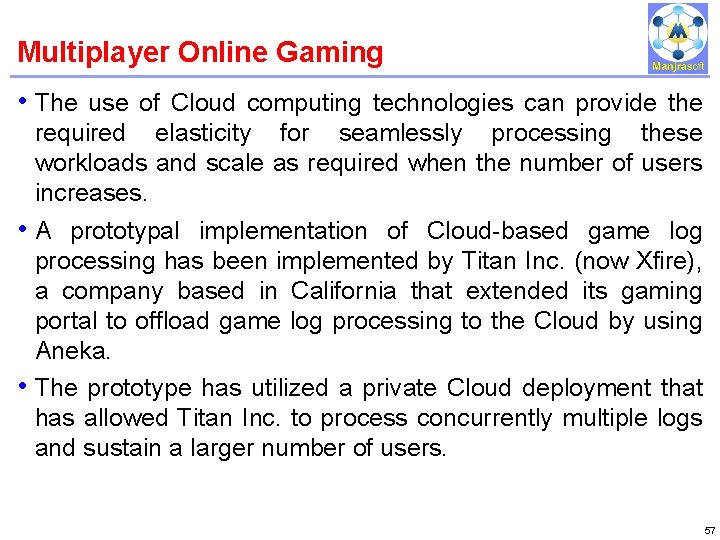
Multiplayer Online Gaming IBM Power Systems • The use of Cloud computing technologies can provide the required elasticity for seamlessly processing these workloads and scale as required when the number of users increases. • A prototypal implementation of Cloud-based game log processing has been implemented by Titan Inc. (now Xfire), a company based in California that extended its gaming portal to offload game log processing to the Cloud by using Aneka. • The prototype has utilized a private Cloud deployment that has allowed Titan Inc. to process concurrently multiple logs and sustain a larger number of users. 57
Scalable Processing of Logs for Network Games IBM Power Systems Gamer Titan Gaming Portal Gamer Aneka Log Processing Task Gamer Game Server Log Processing Task 58
Summary IBM Power Systems • In this chapter we presented a brief overview of applications developed for • • the Cloud or that leverage Cloud technologies in some form. Different application domains can take advantage from Cloud computing: from scientific application to business and consumer applications. Scientific applications take great benefit from the elastic scalability of Cloud environments that also provide the required degree of customization allowing the deployment and execution of scientific experiments. Business and consumer applications can leverage several other characteristics. CRM and ERP applications in the Cloud can reduce or even eliminate maintenance costs due to hardware management, system administration, and software upgrades. All these new opportunities have transformed the way in which we use these applications on a daily basis, but also introduced new challenges for developers that have to rethink their design to better benefit from elastic scalability, on demand resource provisioning, and ubiquity. These are key features of Cloud technology that make it an attractive solution in several domains. 59
References IBM Power Systems • Rajkumar Buyya, Christian Vecchiola, and Thamarai Selvi, • Mastering Cloud Computing, Mc. Graw Hill, ISBN-13: 978 -125 -902995 -0, New Delhi, India, 2013. Rajkumar Buyya, Christian Vecchiola, and Thamarai Selvi, Mastering Cloud Computing, Morgan Kaufmann, ISBN: 9780 -12 -411454 -8, Burlington, Massachusetts, USA, May 2013. – Chapter 10 • Section 10. 1 and 10. 2 • Thank you Dr. Raghav Kune for compiling slides. 60