
http zoi utia cas czmomentinvariants The slides accompanying
- Slides: 65
http: //zoi. utia. cas. cz/moment_invariants The slides accompanying the book J. Flusser, T. Suk, and B. Zitová Moments and Moment Invariants in Pattern Recognition
Copyright notice The slides can be used freely for non-profit education provided that the source is appropriately cited. Please report any usage on a regular basis (namely in university courses) to the authors. For commercial usage ask the authors for permission. The slides containing animations are not appropriate to print. © Jan Flusser, Tomas Suk, and Barbara Zitová, 2009
Contents 1. Introduction to moments 2. Invariants to translation, rotation and scaling 3. Affine moment invariants 4. Implicit invariants to elastic transformations 5. Invariants to convolution 6. Orthogonal moments 7. Algorithms for moment computation 8. Applications 9. Conclusion
Chapter 6
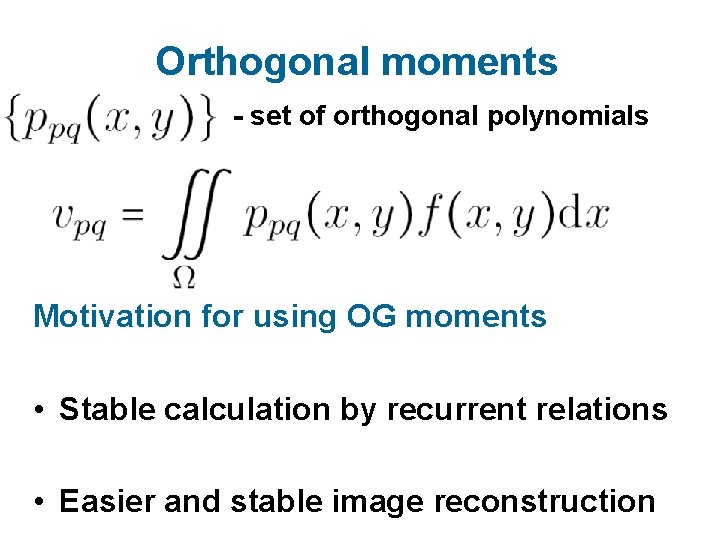
Orthogonal moments - set of orthogonal polynomials Motivation for using OG moments • Stable calculation by recurrent relations • Easier and stable image reconstruction
Numerical stability How to avoid numerical problems with high dynamic range of geometric moments?
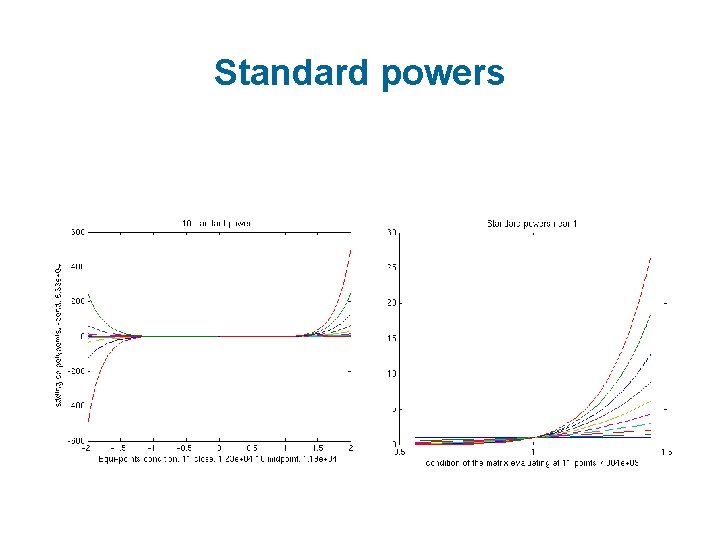
Standard powers
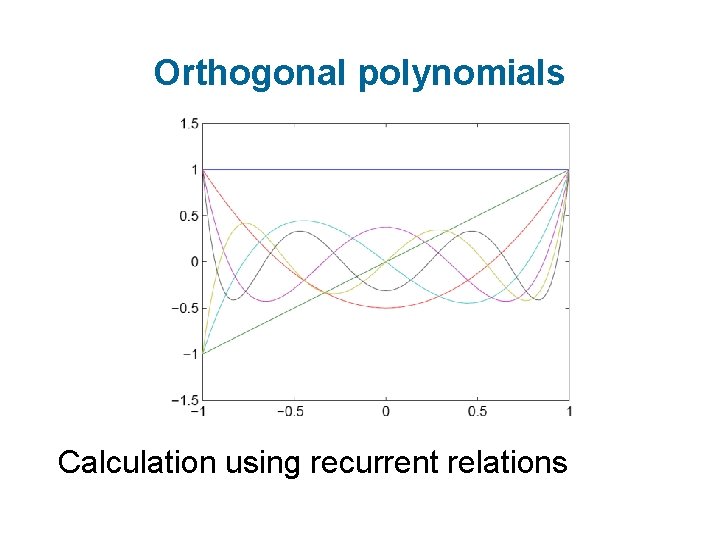
Orthogonal polynomials Calculation using recurrent relations
Two kinds of orthogonality • Moments (polynomials) orthogonal on a unit square • Moments (polynomials) orthogonal on a unit disk
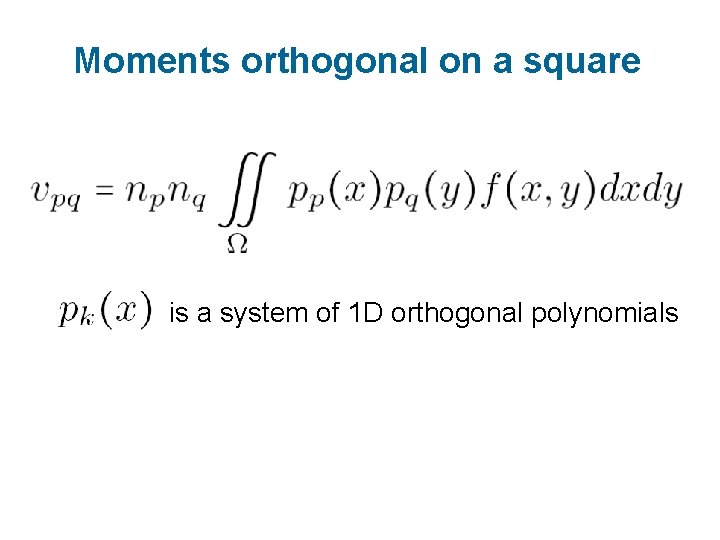
Moments orthogonal on a square is a system of 1 D orthogonal polynomials
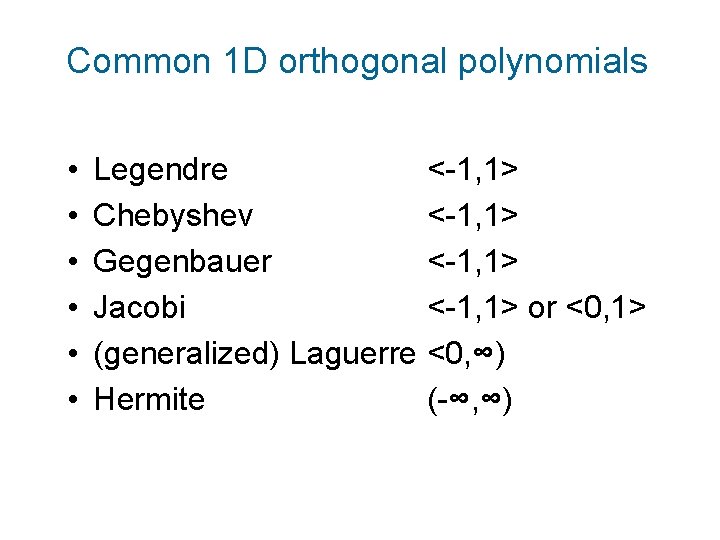
Common 1 D orthogonal polynomials • • • Legendre <-1, 1> Chebyshev <-1, 1> Gegenbauer <-1, 1> Jacobi <-1, 1> or <0, 1> (generalized) Laguerre <0, ∞) Hermite (-∞, ∞)
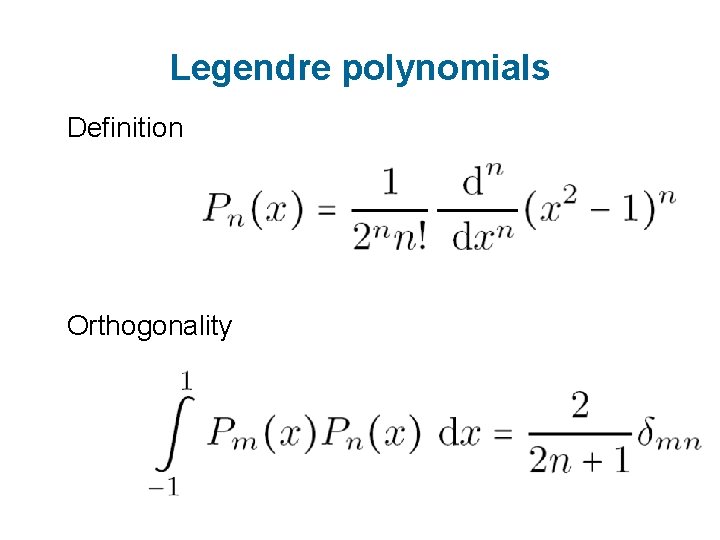
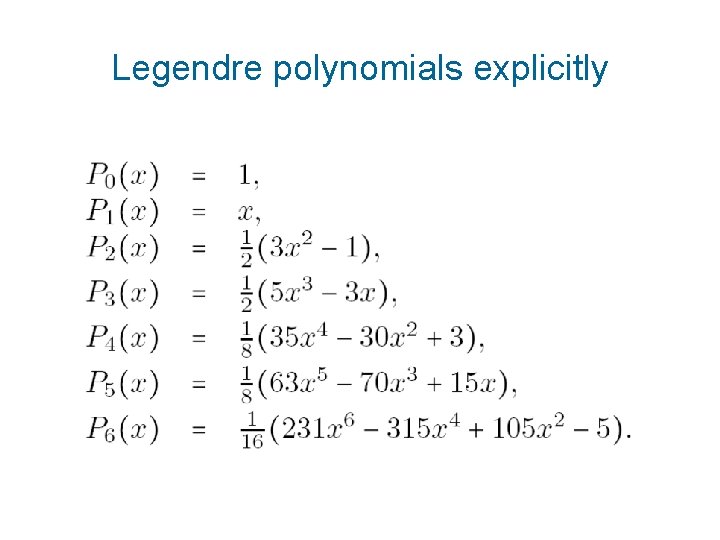
Legendre polynomials Definition Orthogonality
Legendre polynomials explicitly
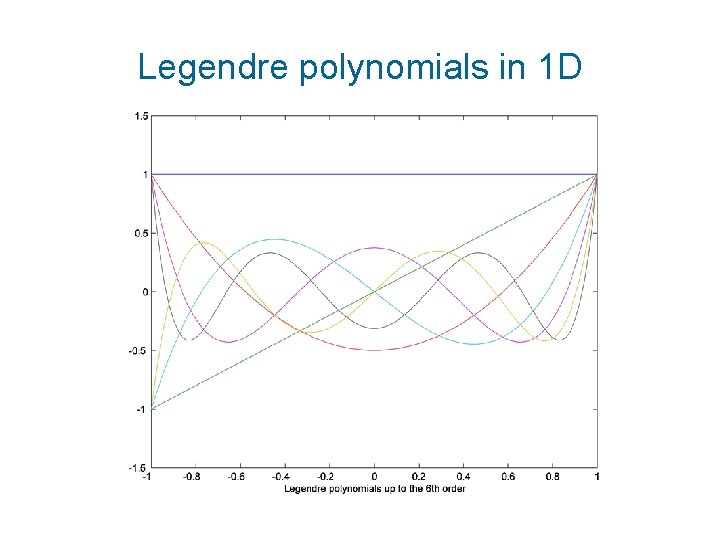
Legendre polynomials in 1 D
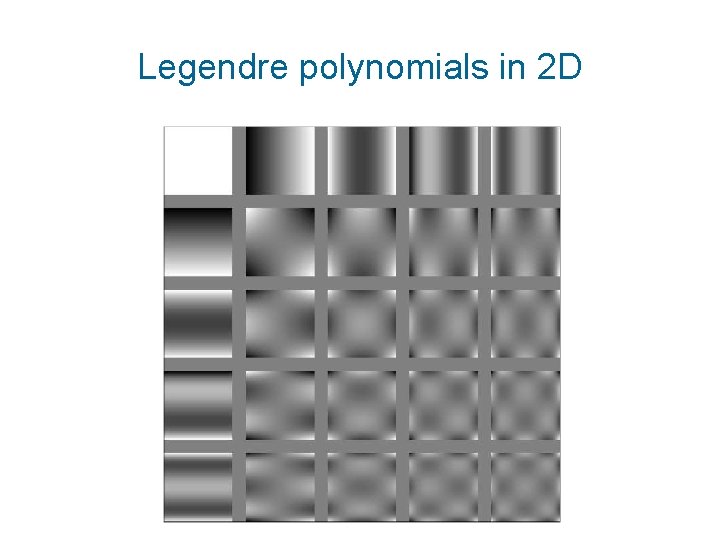
Legendre polynomials in 2 D
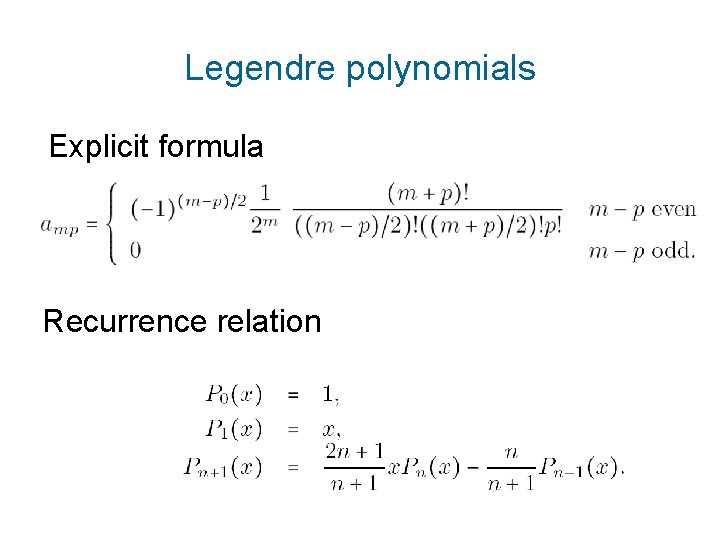
Legendre polynomials Explicit formula Recurrence relation
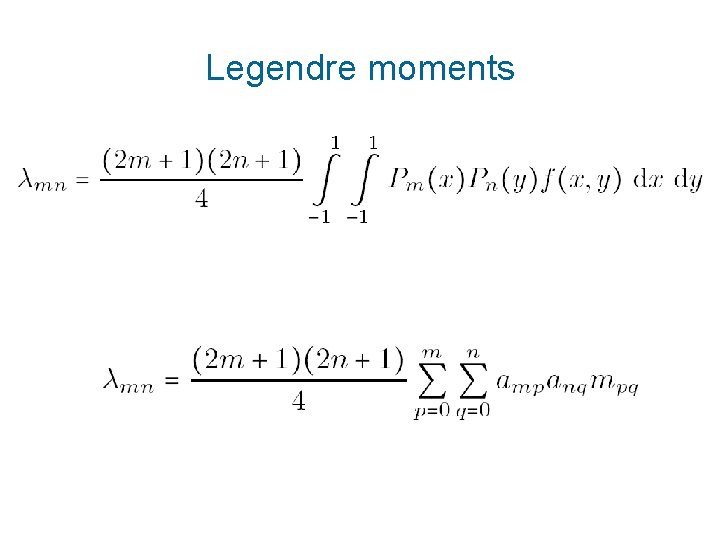
Legendre moments
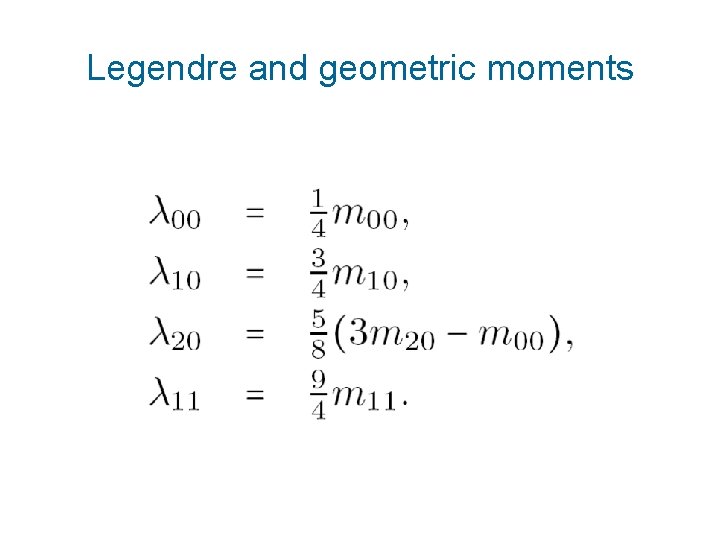
Legendre and geometric moments
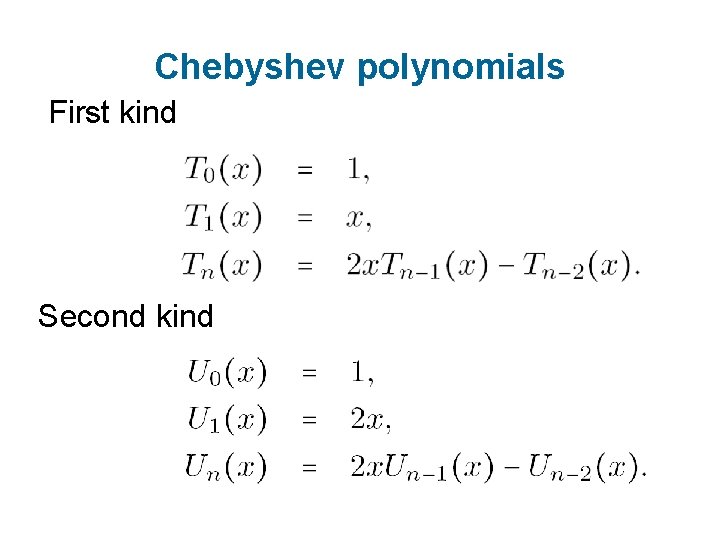
Chebyshev polynomials First kind Second kind
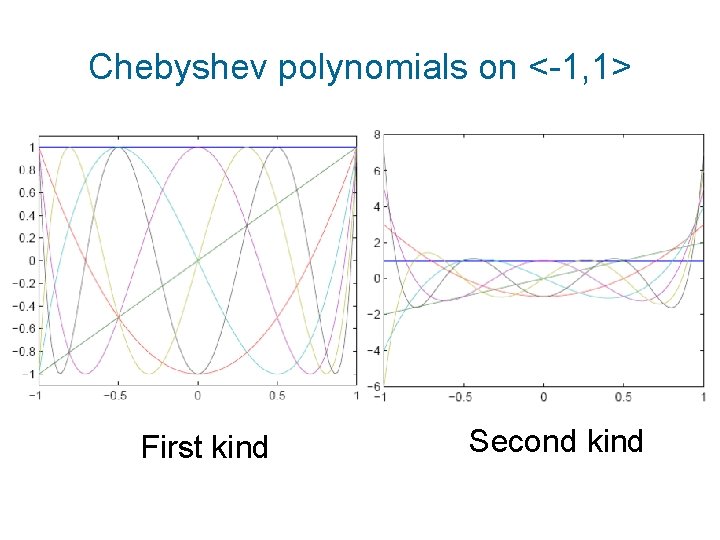
Chebyshev polynomials on <-1, 1> First kind Second kind
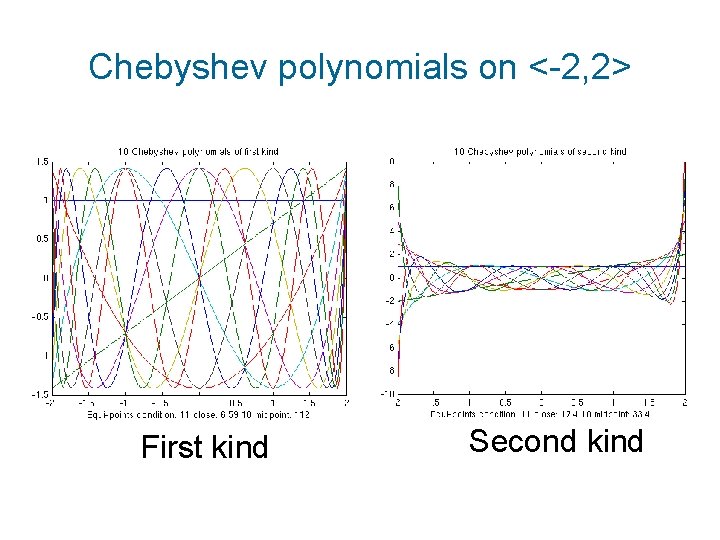
Chebyshev polynomials on <-2, 2> First kind Second kind
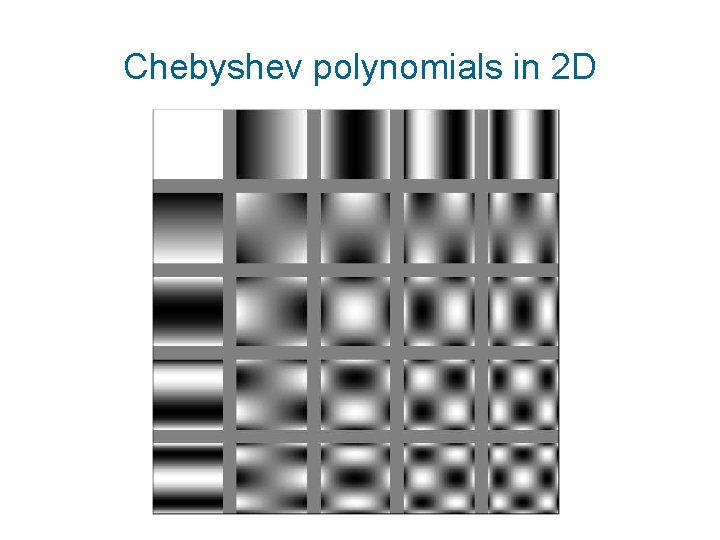
Chebyshev polynomials in 2 D
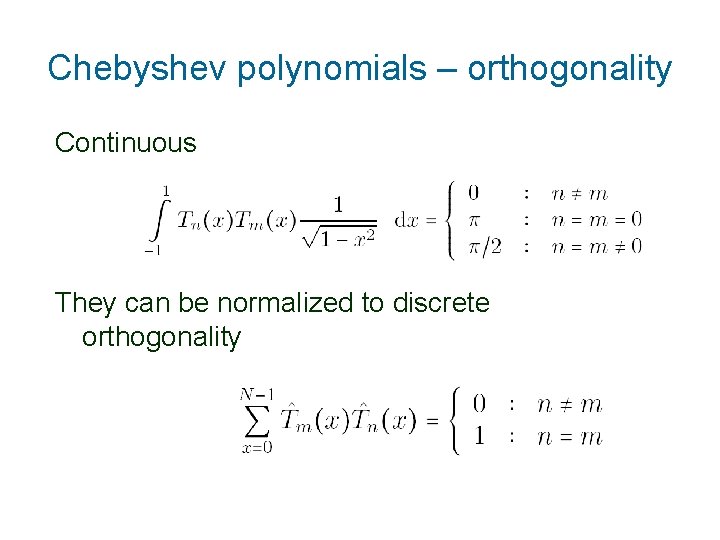
Chebyshev polynomials – orthogonality Continuous They can be normalized to discrete orthogonality
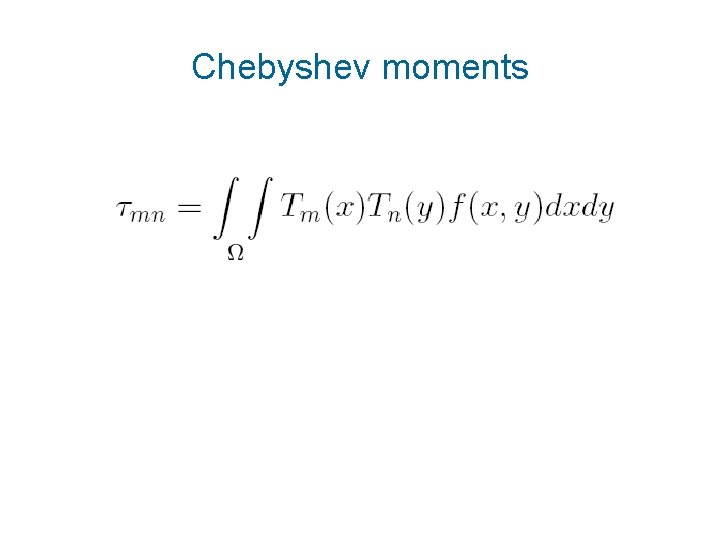
Chebyshev moments
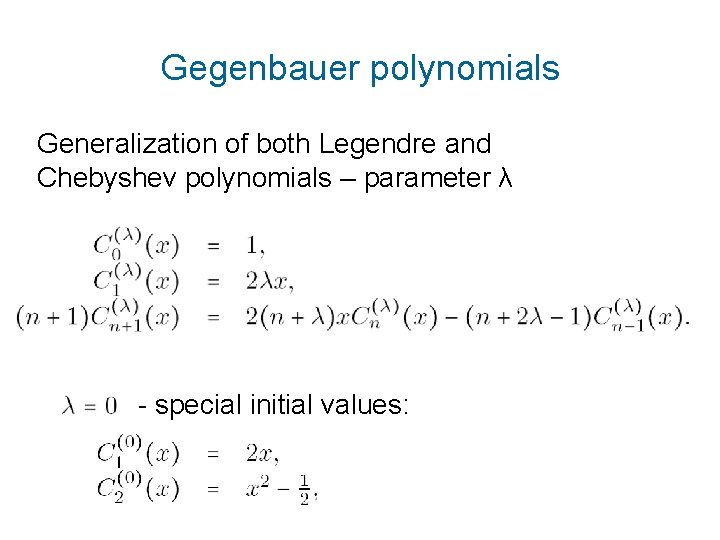
Gegenbauer polynomials Generalization of both Legendre and Chebyshev polynomials – parameter λ - special initial values:
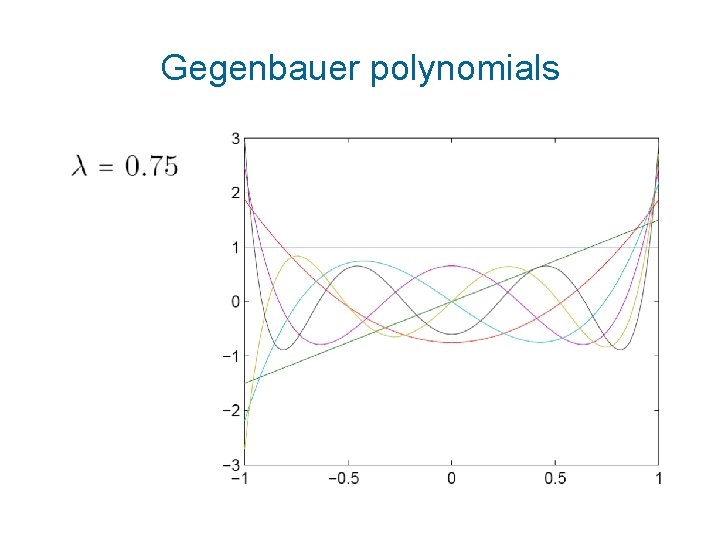
Gegenbauer polynomials
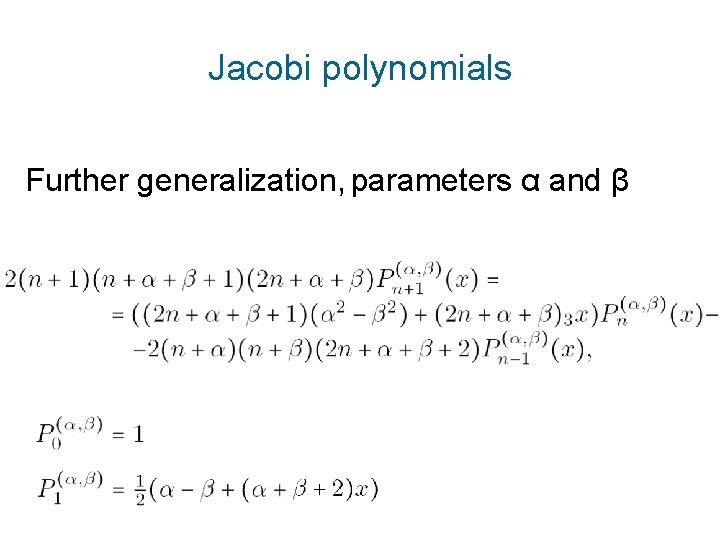
Jacobi polynomials Further generalization, parameters α and β
Laguerre and Hermite polynomials • Infinite interval of orthogonality • Suitable for particular applications only
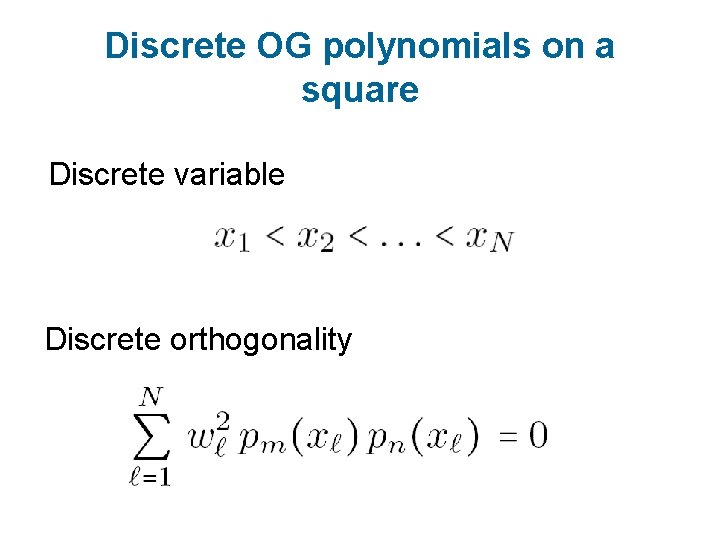
Discrete OG polynomials on a square Discrete variable Discrete orthogonality
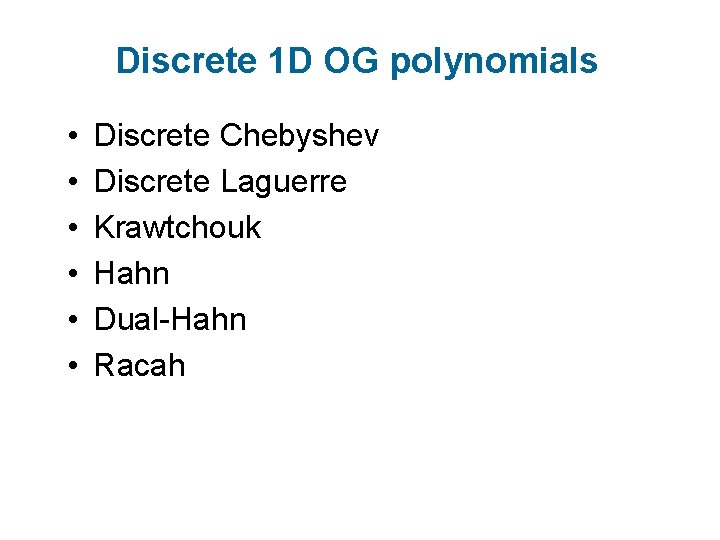
Discrete 1 D OG polynomials • • • Discrete Chebyshev Discrete Laguerre Krawtchouk Hahn Dual-Hahn Racah
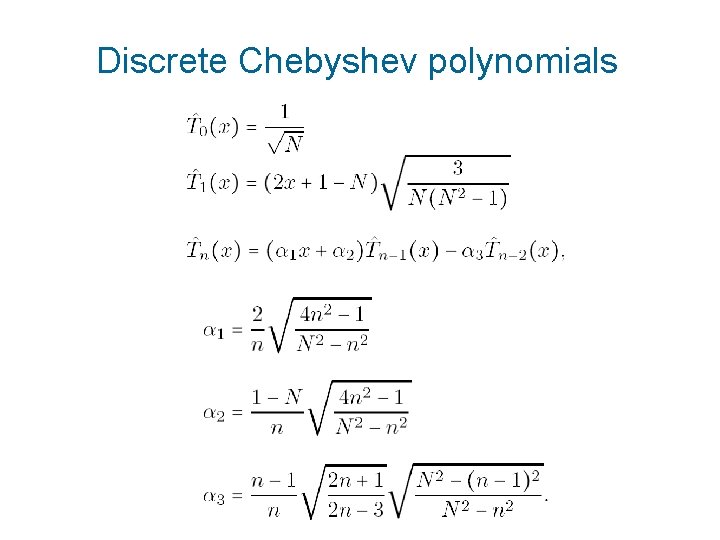
Discrete Chebyshev polynomials
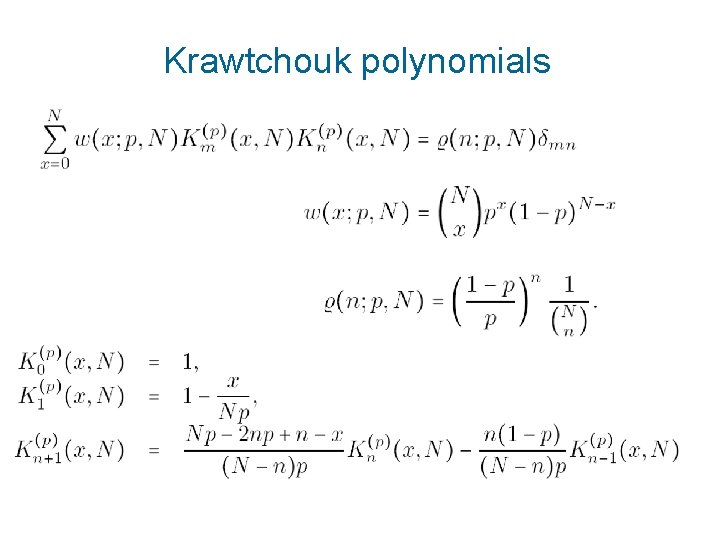
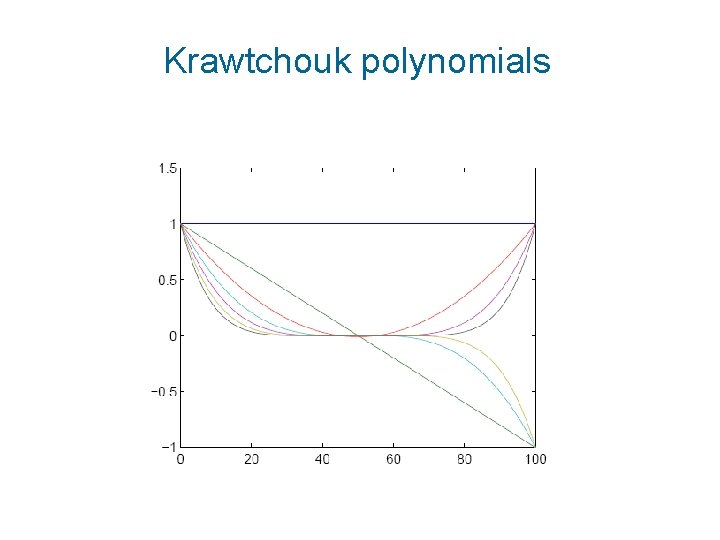
Krawtchouk polynomials
Krawtchouk polynomials
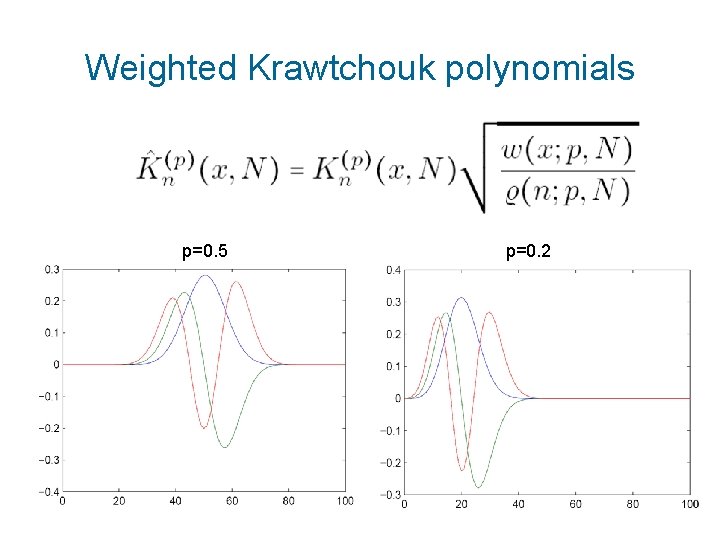
Weighted Krawtchouk polynomials p=0. 5 p=0. 2
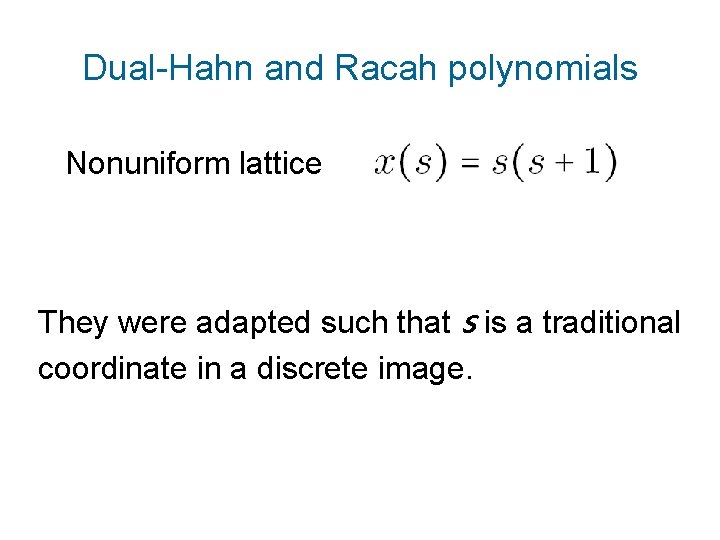
Dual-Hahn and Racah polynomials Nonuniform lattice They were adapted such that s is a traditional coordinate in a discrete image.
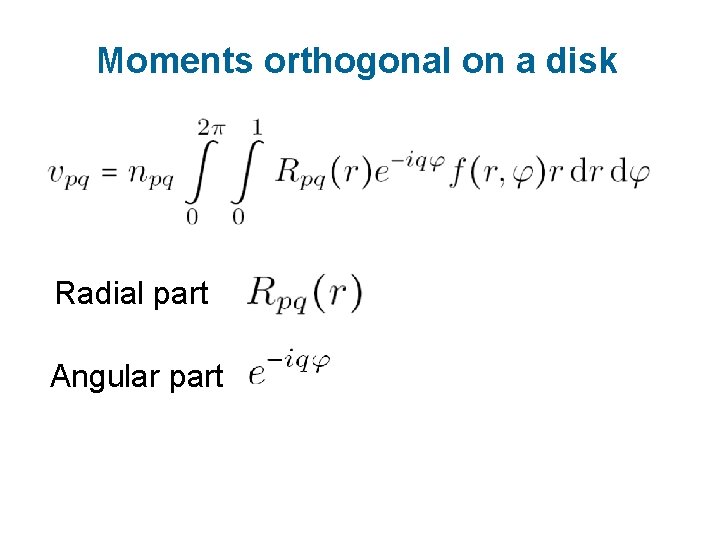
Moments orthogonal on a disk Radial part Angular part
Moments orthogonal on a disk • • • Zernike Pseudo-Zernike Orthogonal Fourier-Mellin Jacobi-Fourier Chebyshev-Fourier Radial harmonic Fourier
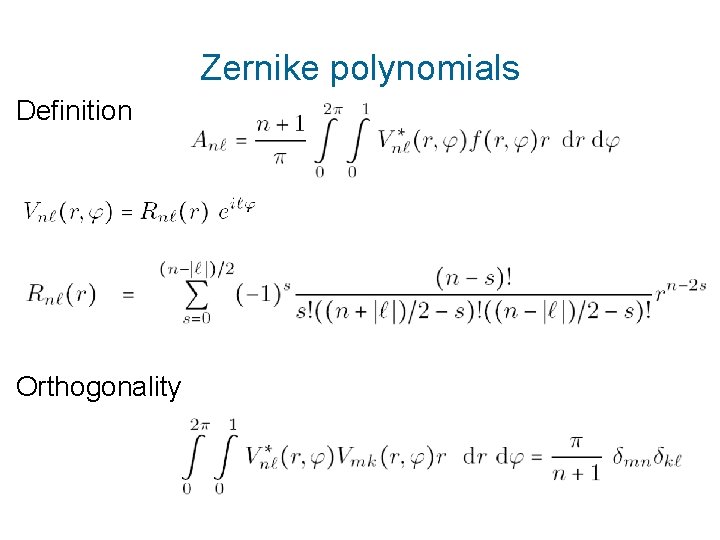
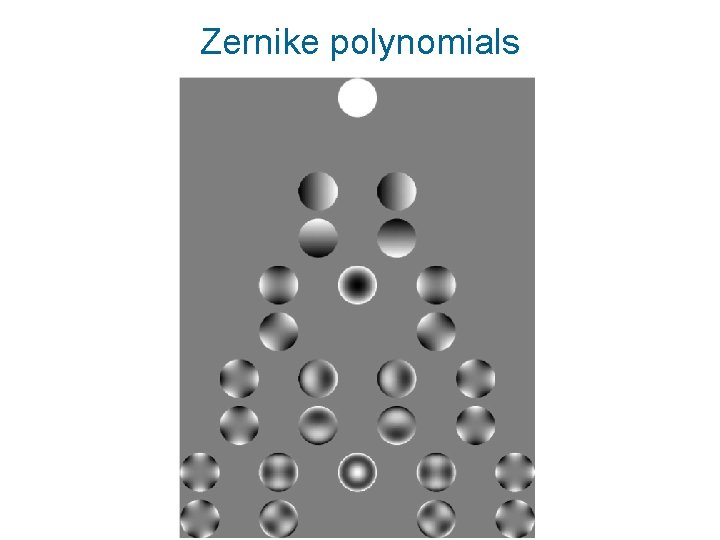
Zernike polynomials Definition Orthogonality
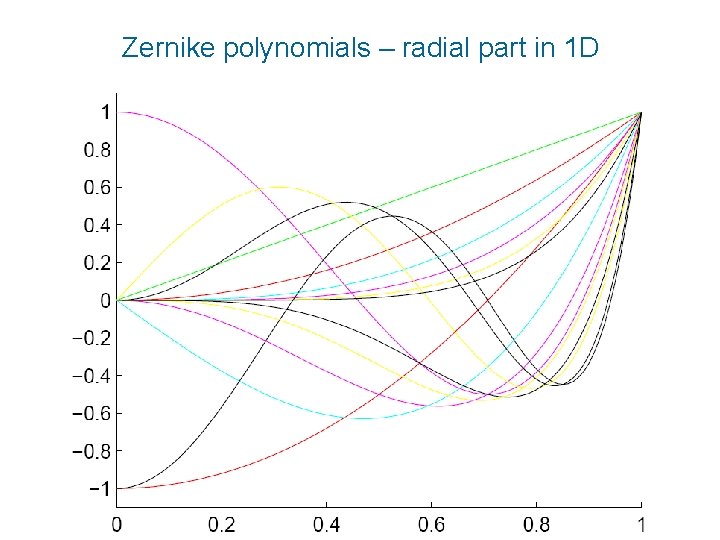
Zernike polynomials – radial part in 1 D
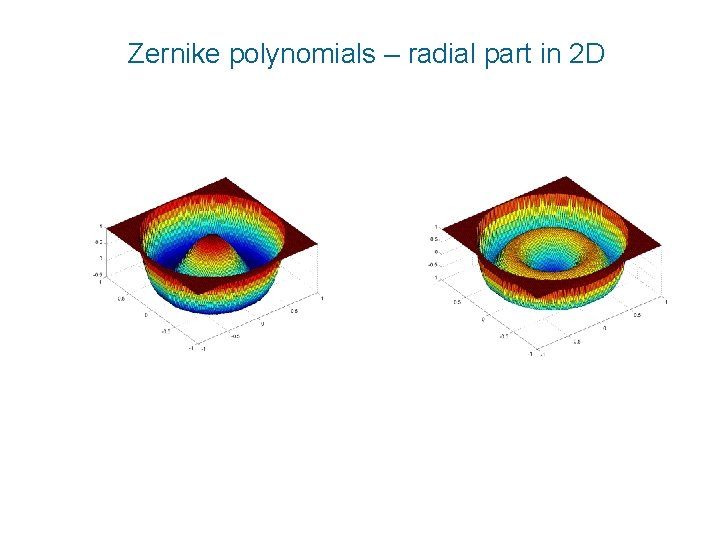
Zernike polynomials – radial part in 2 D
Zernike polynomials
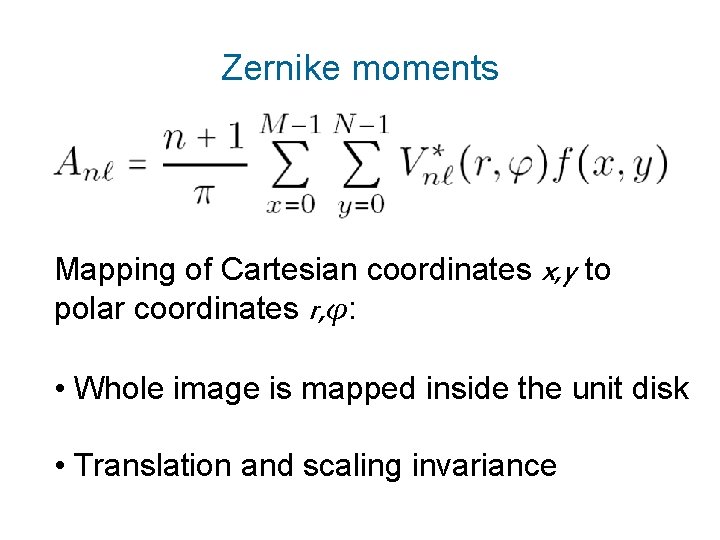
Zernike moments Mapping of Cartesian coordinates x, y to polar coordinates r, φ: • Whole image is mapped inside the unit disk • Translation and scaling invariance
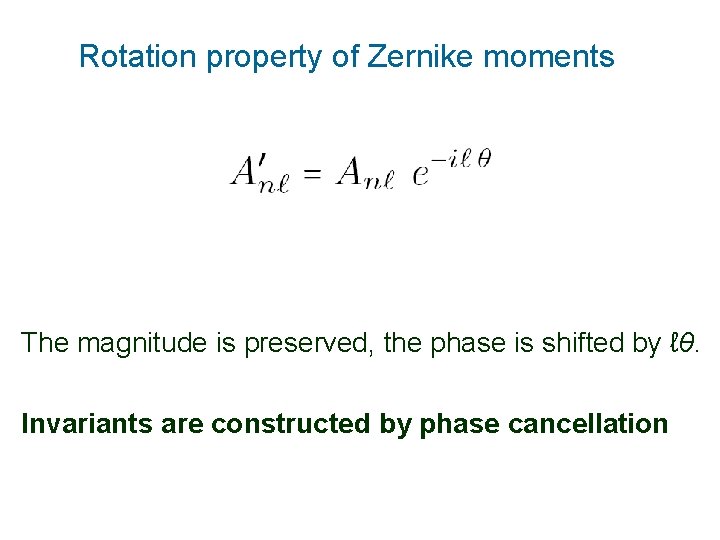
Rotation property of Zernike moments The magnitude is preserved, the phase is shifted by ℓθ. Invariants are constructed by phase cancellation
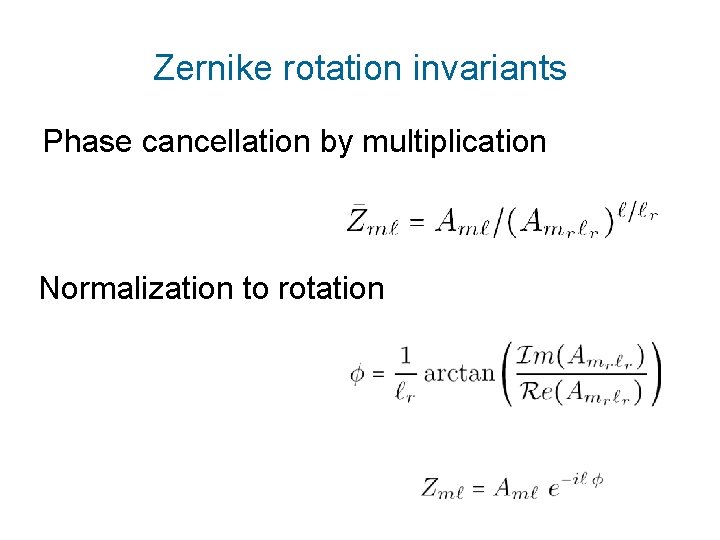
Zernike rotation invariants Phase cancellation by multiplication Normalization to rotation
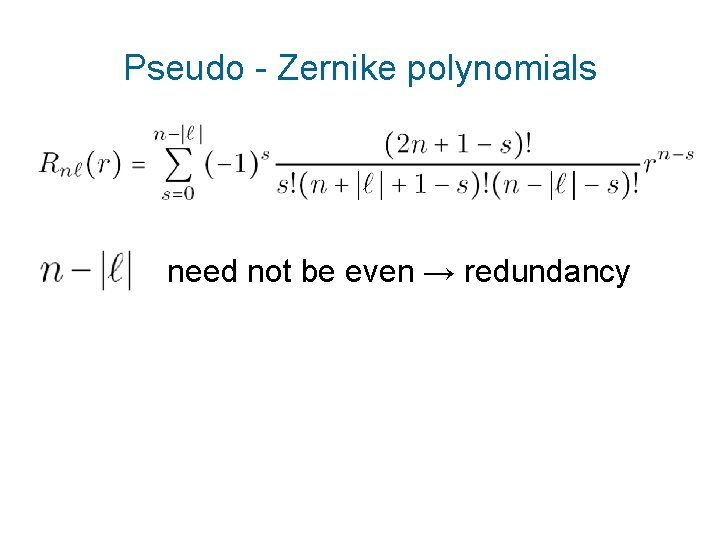
Pseudo - Zernike polynomials need not be even → redundancy
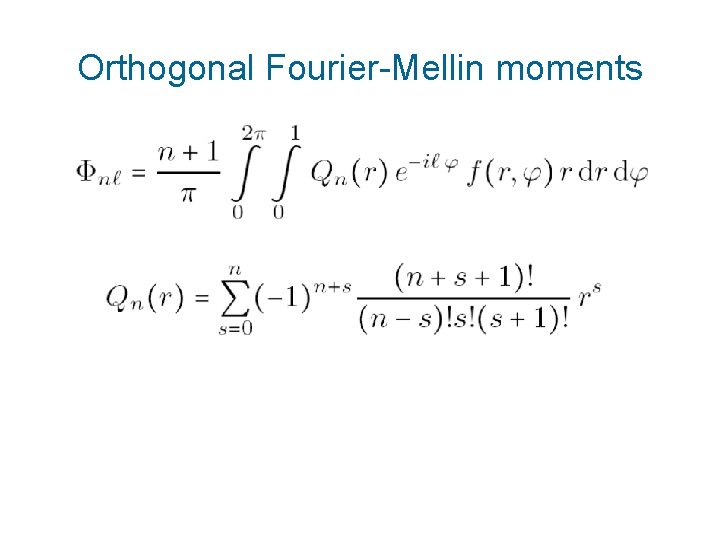
Orthogonal Fourier-Mellin moments
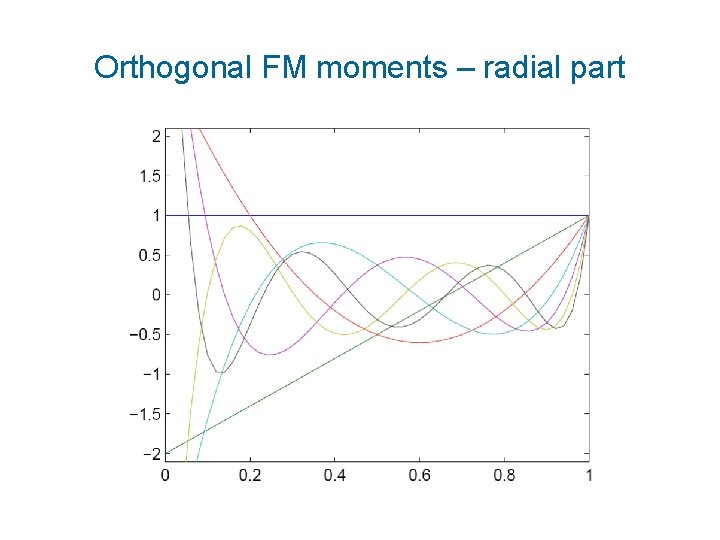
Orthogonal FM moments – radial part
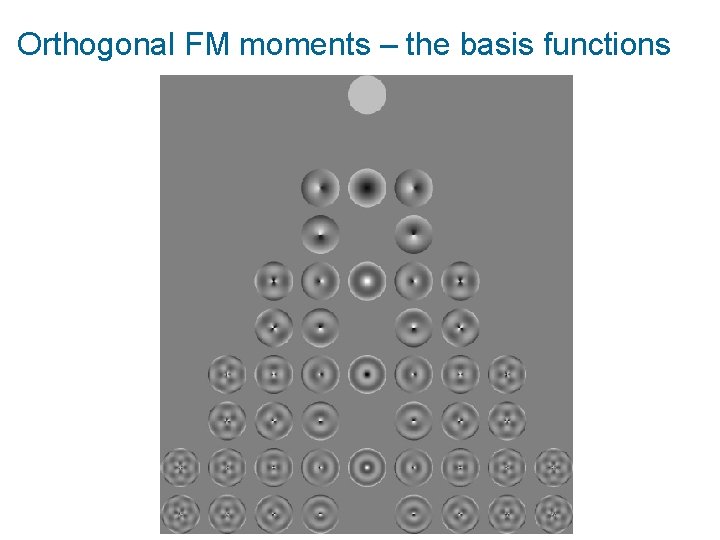
Orthogonal FM moments – the basis functions
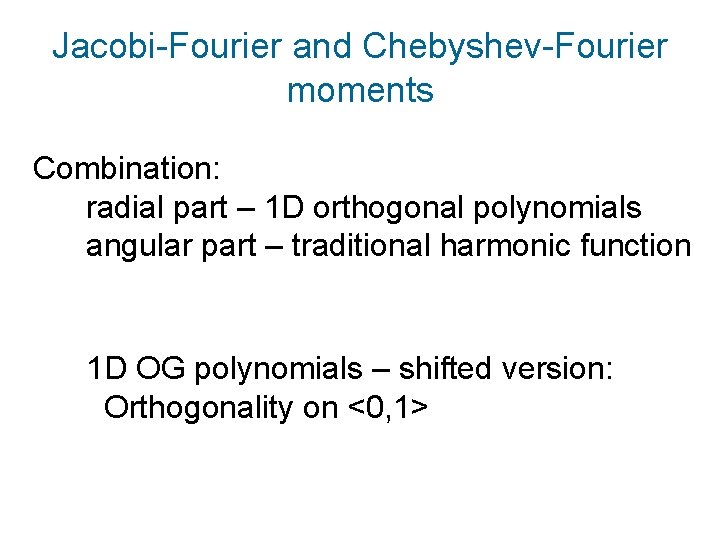
Jacobi-Fourier and Chebyshev-Fourier moments Combination: radial part – 1 D orthogonal polynomials angular part – traditional harmonic function 1 D OG polynomials – shifted version: Orthogonality on <0, 1>
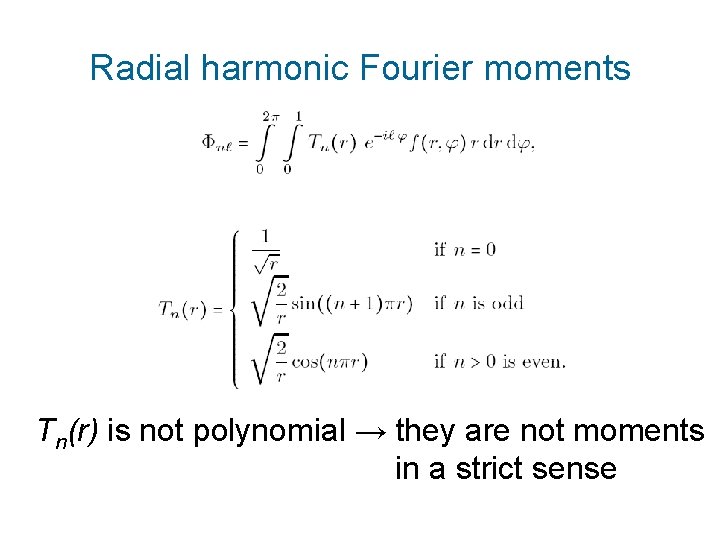
Radial harmonic Fourier moments Tn(r) is not polynomial → they are not moments in a strict sense
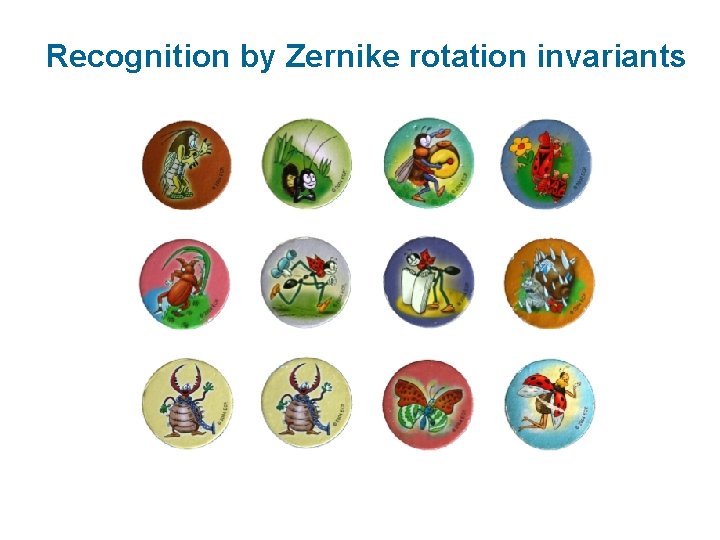
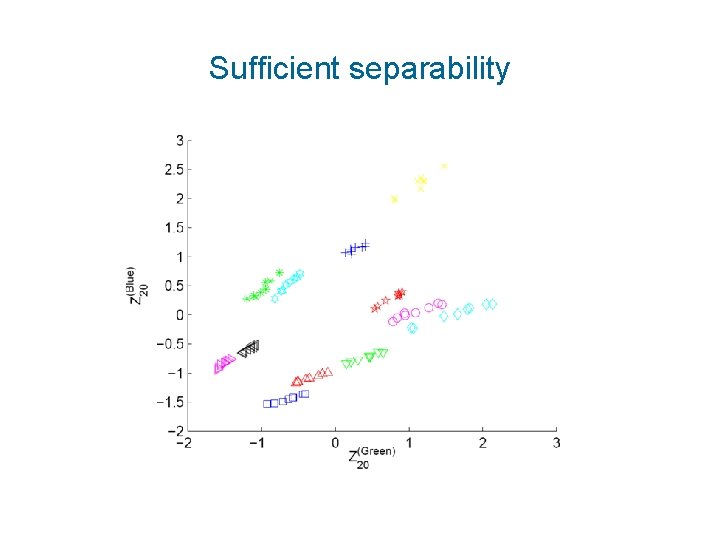
Recognition by Zernike rotation invariants
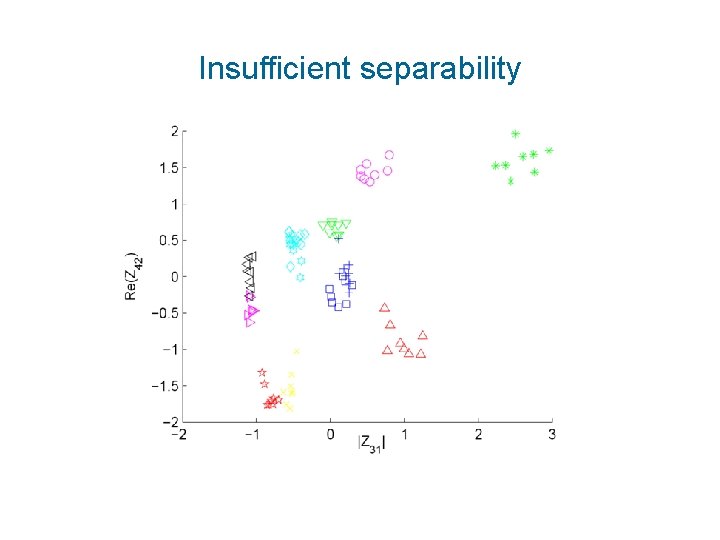
Insufficient separability
Sufficient separability
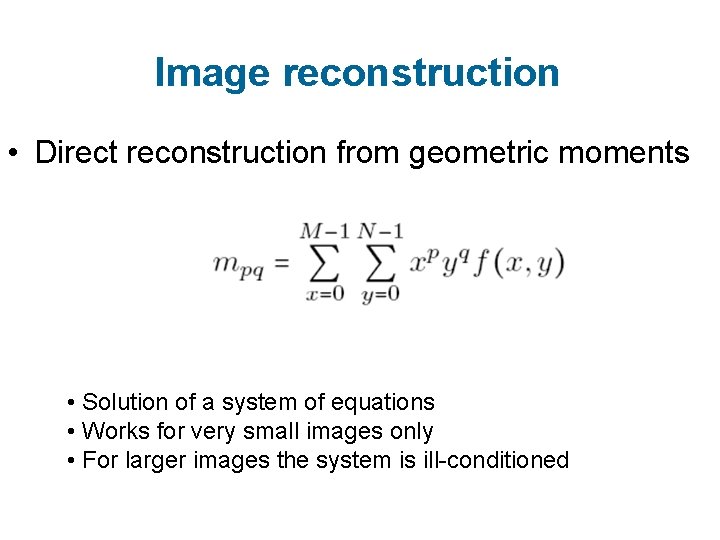
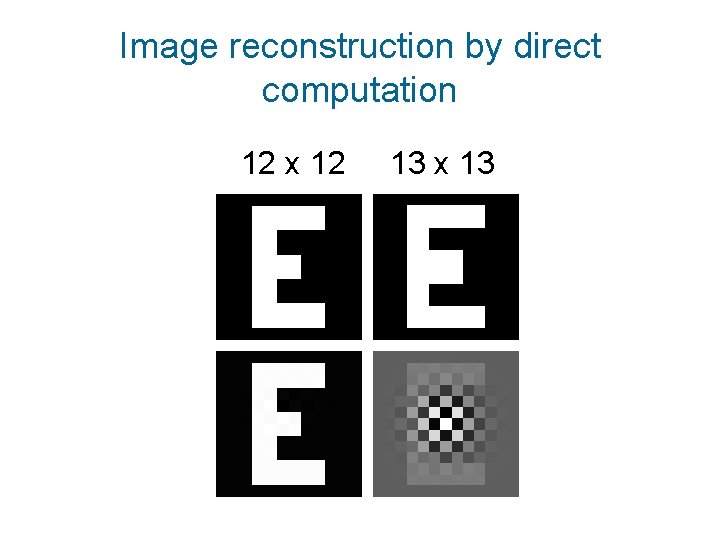
Image reconstruction • Direct reconstruction from geometric moments • Solution of a system of equations • Works for very small images only • For larger images the system is ill-conditioned
Image reconstruction by direct computation 12 x 12 13 x 13
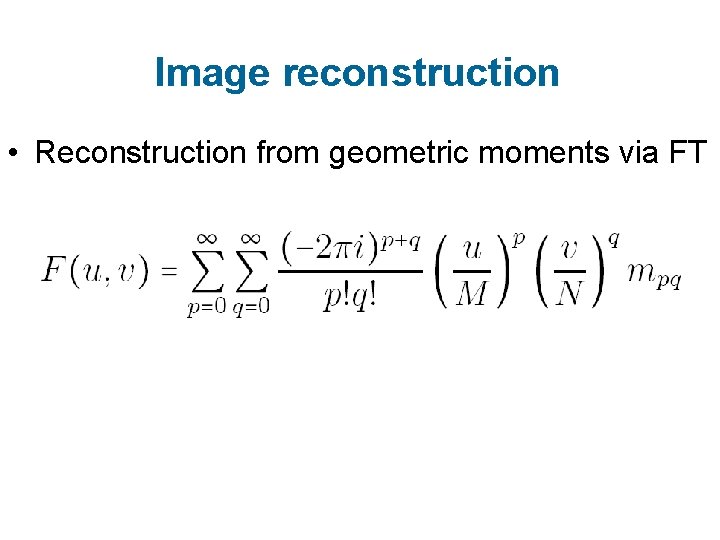
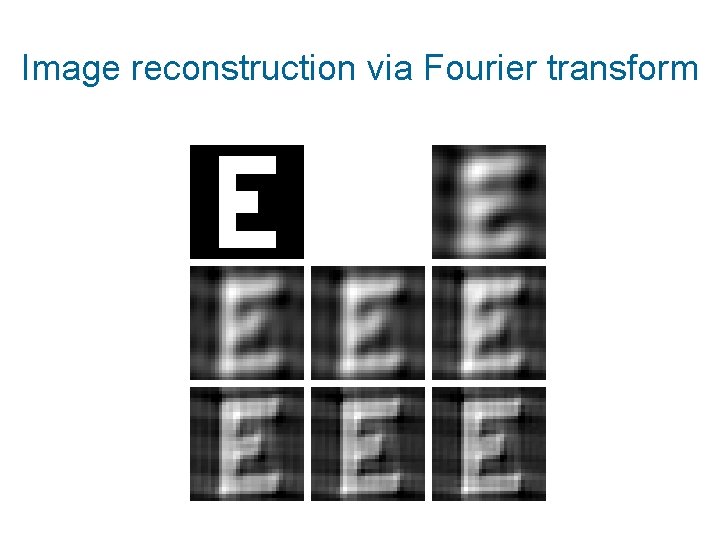
Image reconstruction • Reconstruction from geometric moments via FT
Image reconstruction via Fourier transform
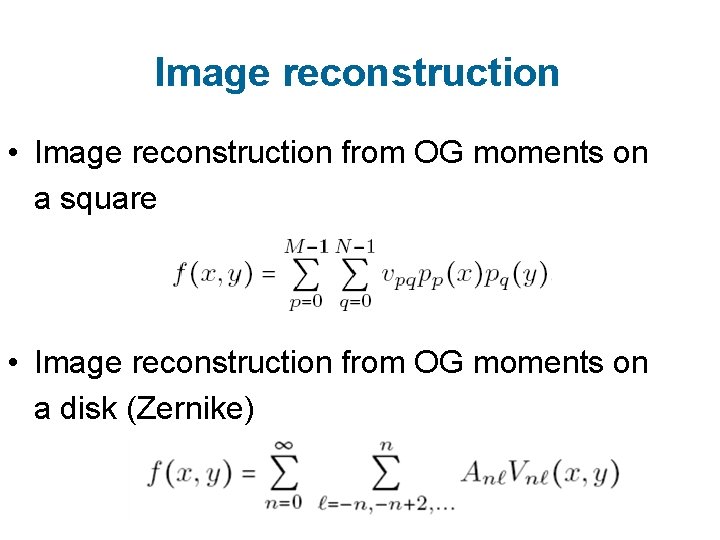
Image reconstruction • Image reconstruction from OG moments on a square • Image reconstruction from OG moments on a disk (Zernike)
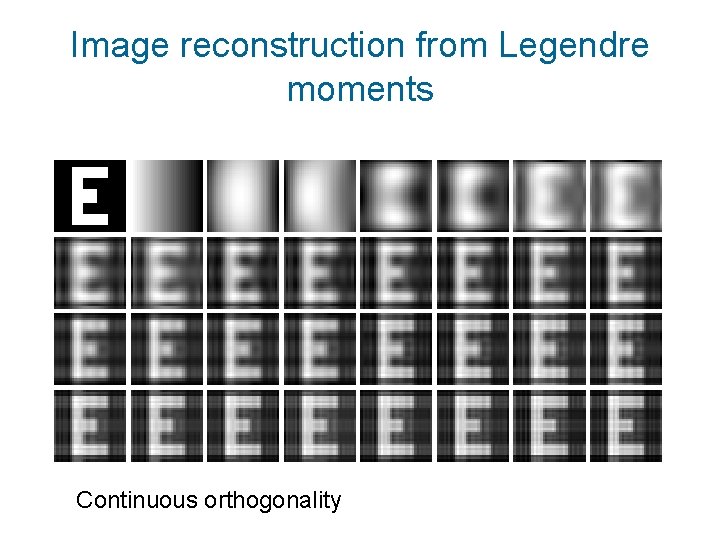
Image reconstruction from Legendre moments Continuous orthogonality
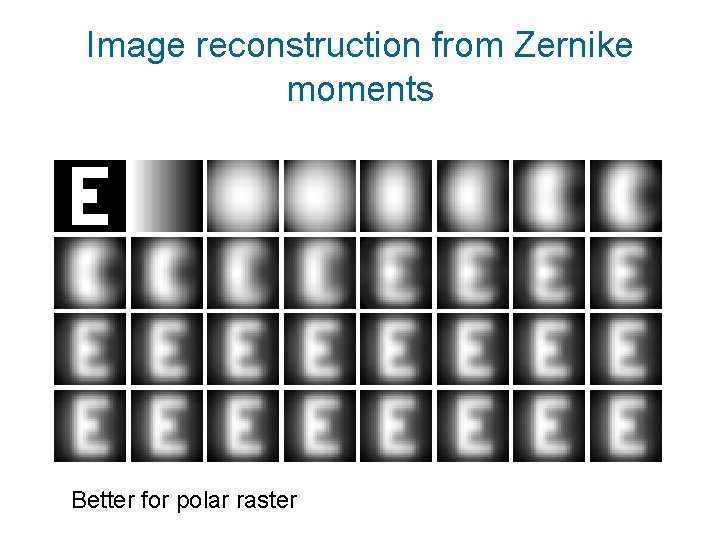
Image reconstruction from Zernike moments Better for polar raster
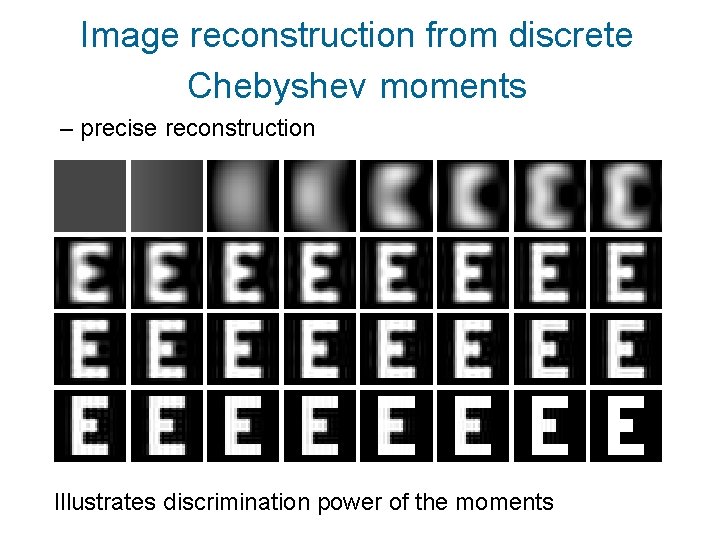
Image reconstruction from discrete Chebyshev moments – precise reconstruction Illustrates discrimination power of the moments
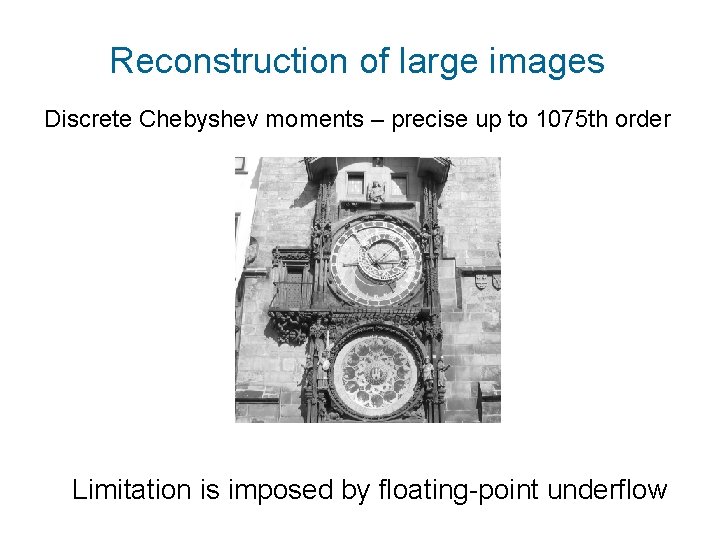
Reconstruction of large images Discrete Chebyshev moments – precise up to 1075 th order Limitation is imposed by floating-point underflow
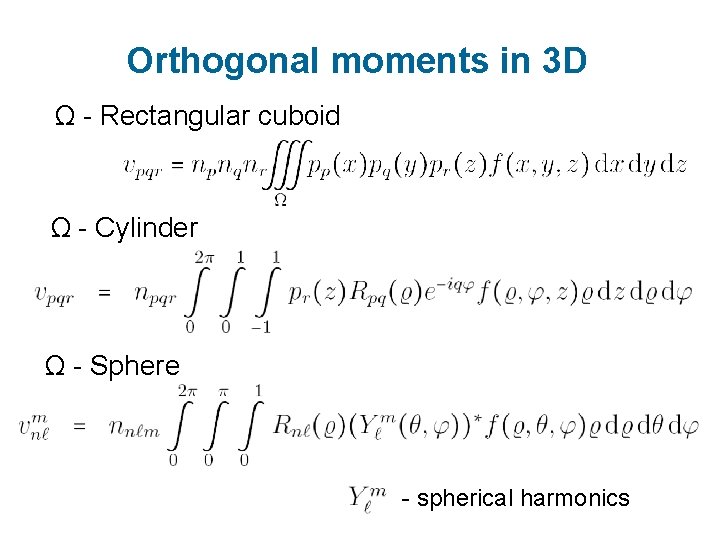
Orthogonal moments in 3 D Ω - Rectangular cuboid Ω - Cylinder Ω - Sphere - spherical harmonics
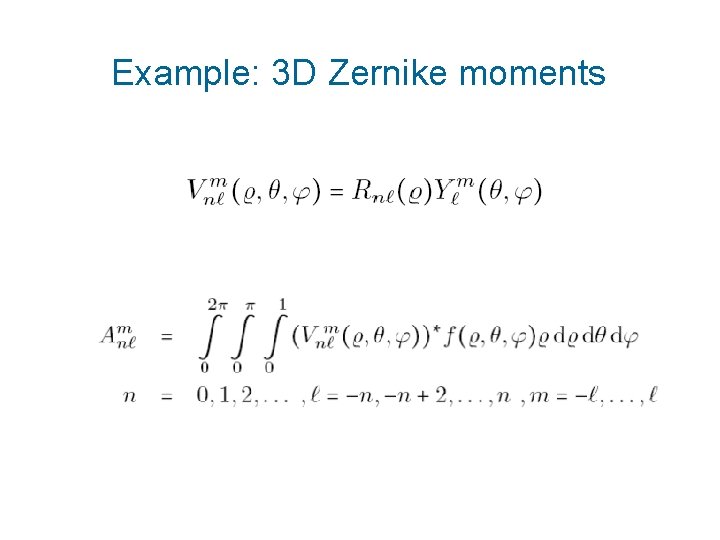
Example: 3 D Zernike moments
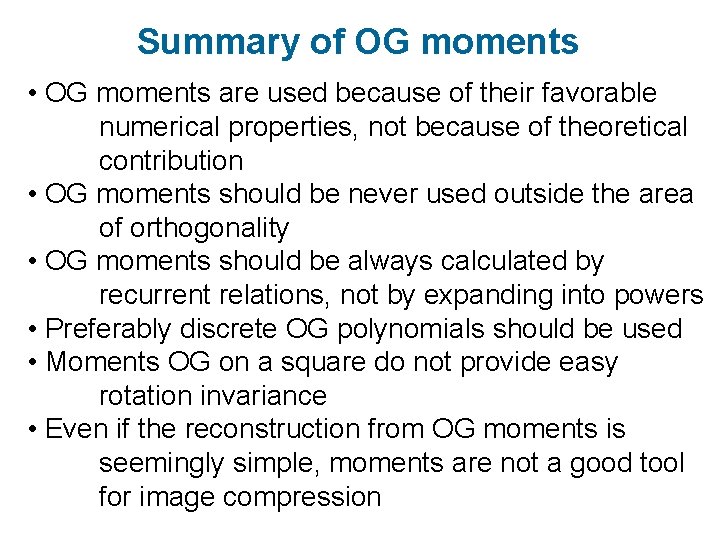
Summary of OG moments • OG moments are used because of their favorable numerical properties, not because of theoretical contribution • OG moments should be never used outside the area of orthogonality • OG moments should be always calculated by recurrent relations, not by expanding into powers • Preferably discrete OG polynomials should be used • Moments OG on a square do not provide easy rotation invariance • Even if the reconstruction from OG moments is seemingly simple, moments are not a good tool for image compression