Geographies of the National Question Dr Zoltn Grossman

- Slides: 79
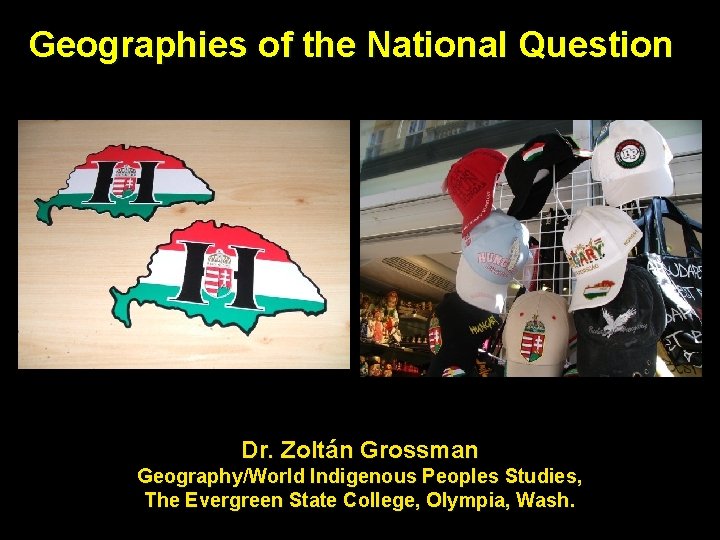
Geographies of the National Question Dr. Zoltán Grossman Geography/World Indigenous Peoples Studies, The Evergreen State College, Olympia, Wash.
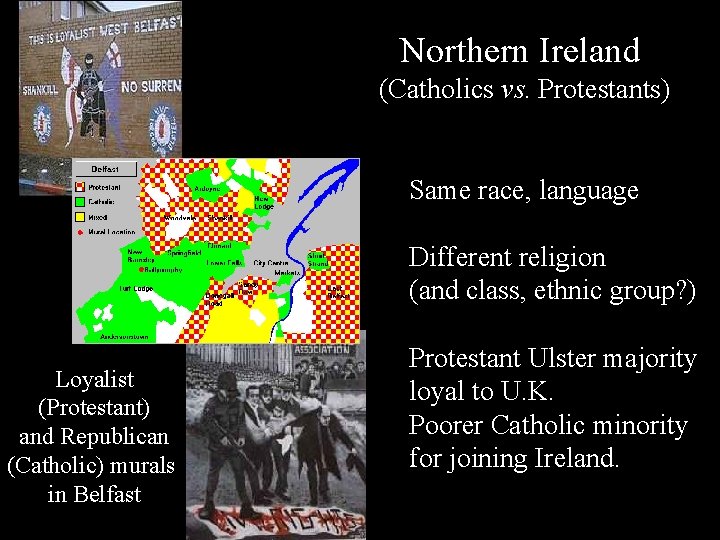
Northern Ireland (Catholics vs. Protestants) Same race, language Different religion (and class, ethnic group? ) Loyalist (Protestant) and Republican (Catholic) murals in Belfast Protestant Ulster majority loyal to U. K. Poorer Catholic minority for joining Ireland.
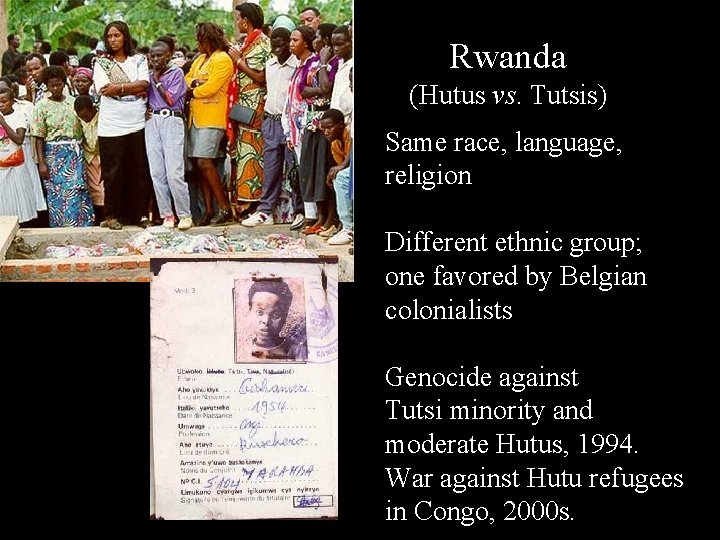
Rwanda (Hutus vs. Tutsis) Same race, language, religion Different ethnic group; one favored by Belgian colonialists Genocide against Tutsi minority and moderate Hutus, 1994. War against Hutu refugees in Congo, 2000 s.
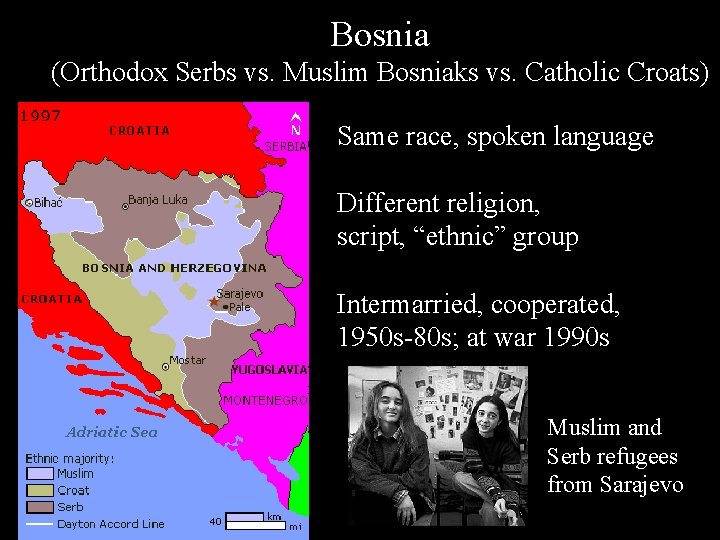
Bosnia (Orthodox Serbs vs. Muslim Bosniaks vs. Catholic Croats) Same race, spoken language Different religion, script, “ethnic” group Intermarried, cooperated, 1950 s-80 s; at war 1990 s Muslim and Serb refugees from Sarajevo
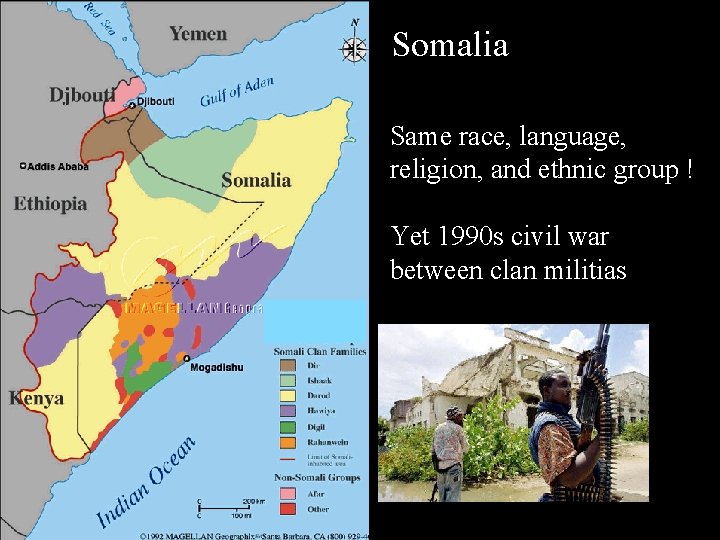
Somalia Same race, language, religion, and ethnic group ! Yet 1990 s civil war between clan militias
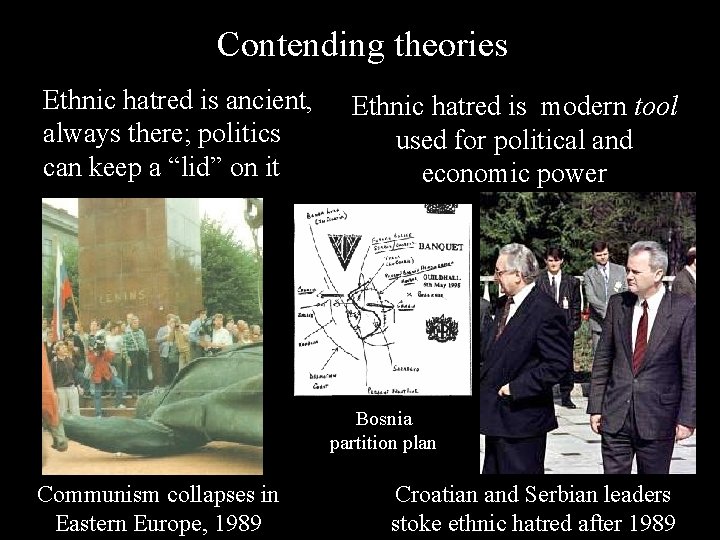
Contending theories Ethnic hatred is ancient, always there; politics can keep a “lid” on it Ethnic hatred is modern tool used for political and economic power Bosnia partition plan Communism collapses in Eastern Europe, 1989 Croatian and Serbian leaders stoke ethnic hatred after 1989
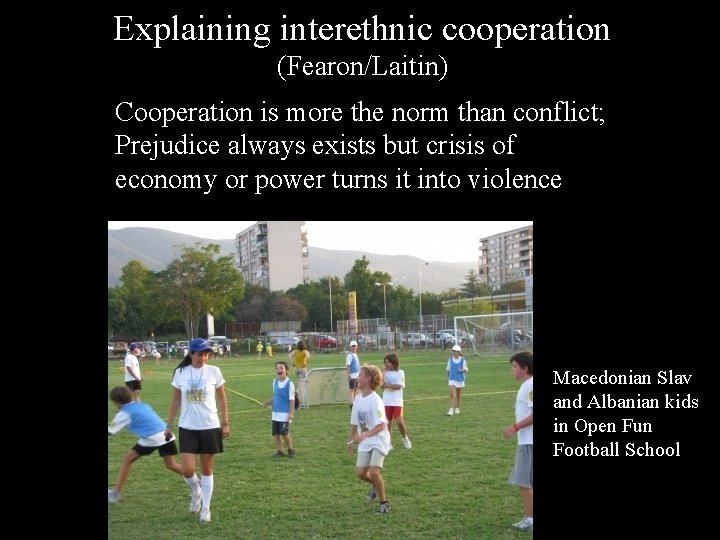
Explaining interethnic cooperation (Fearon/Laitin) Cooperation is more the norm than conflict; Prejudice always exists but crisis of economy or power turns it into violence Macedonian Slav and Albanian kids in Open Fun Football School
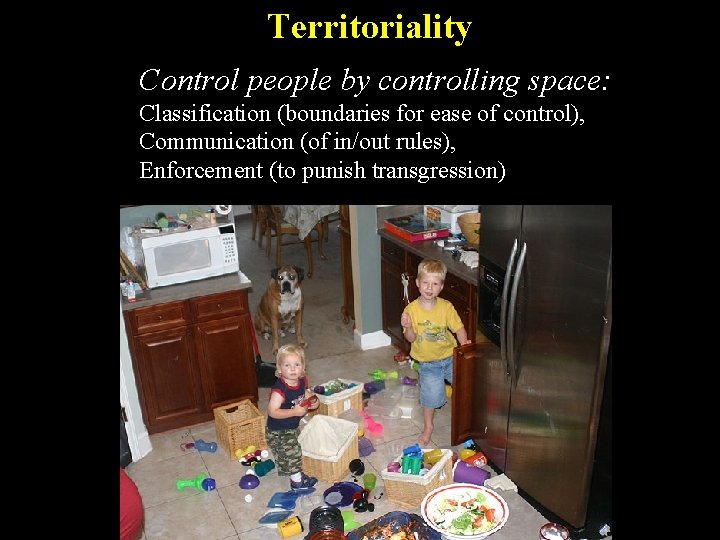
Territoriality Control people by controlling space: Classification (boundaries for ease of control), Communication (of in/out rules), Enforcement (to punish transgression)
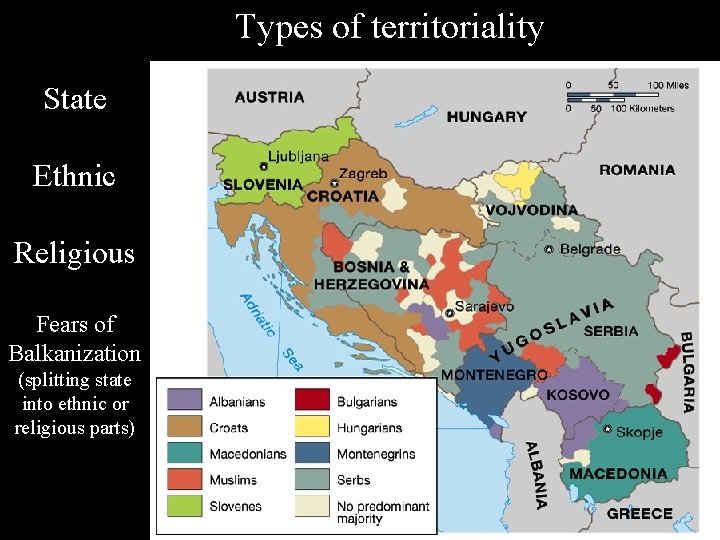
Types of territoriality State Ethnic Religious Fears of Balkanization (splitting state into ethnic or religious parts)
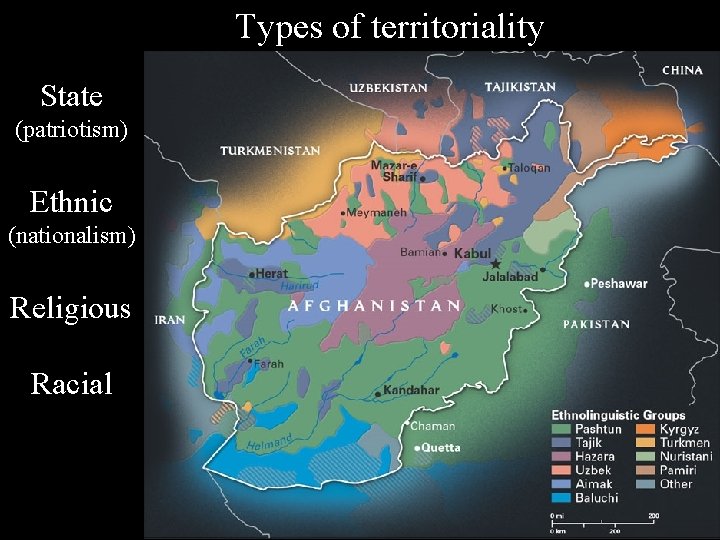
Types of territoriality State (patriotism) Ethnic (nationalism) Religious Racial
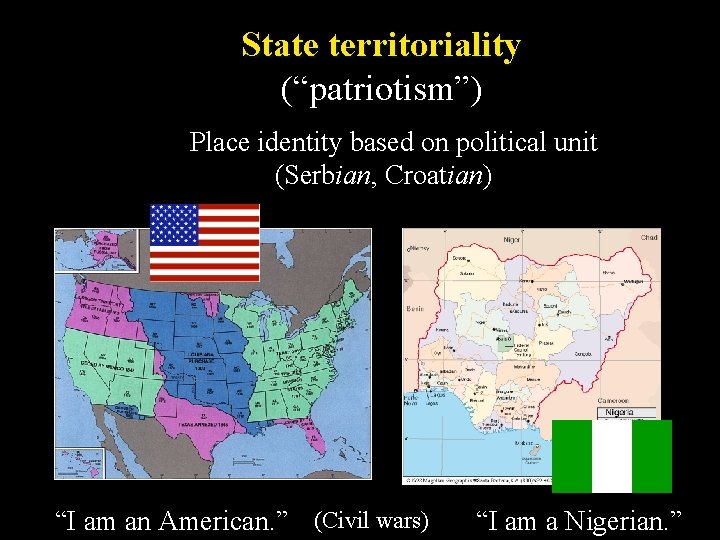
State territoriality (“patriotism”) Place identity based on political unit (Serbian, Croatian) “I am an American. ” (Civil wars) “I am a Nigerian. ”
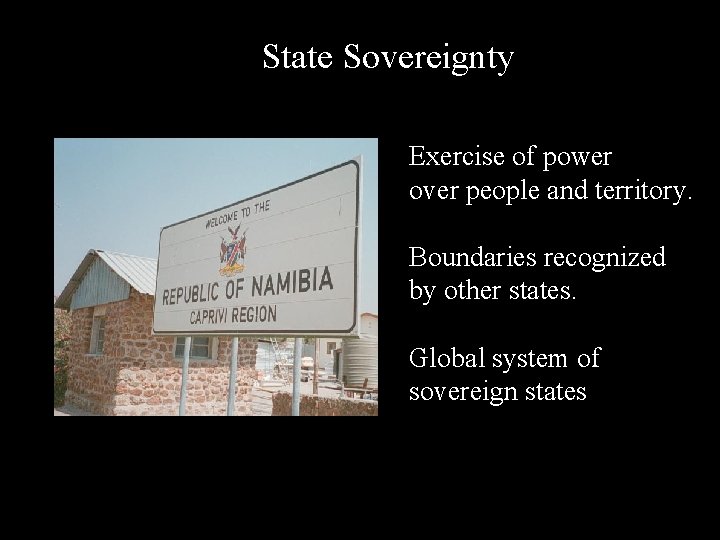
State Sovereignty Exercise of power over people and territory. Boundaries recognized by other states. Global system of sovereign states
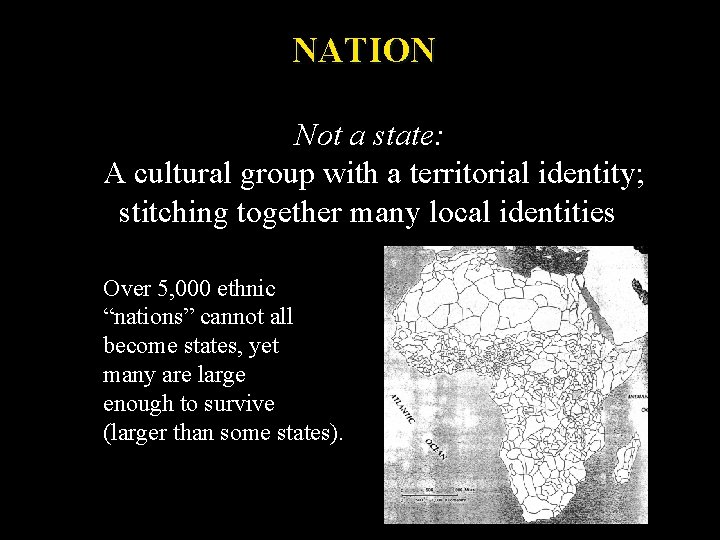
NATION Not a state: A cultural group with a territorial identity; stitching together many local identities Over 5, 000 ethnic “nations” cannot all become states, yet many are large enough to survive (larger than some states).
Theories of European nationhood Primordialism (nation is essential/family, in the “blood”) Instrumentalism (nation is top-down, self-serving project of elites) Constructivism (nation is constructed both by elites and masses)
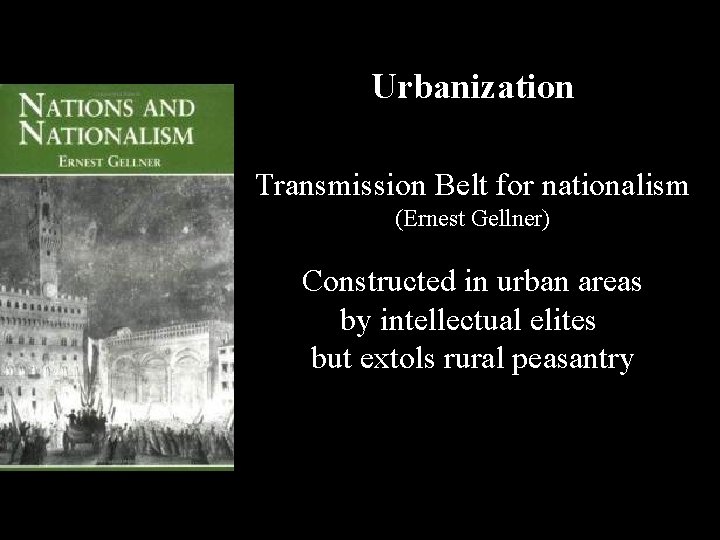
Urbanization Transmission Belt for nationalism (Ernest Gellner) Constructed in urban areas by intellectual elites but extols rural peasantry
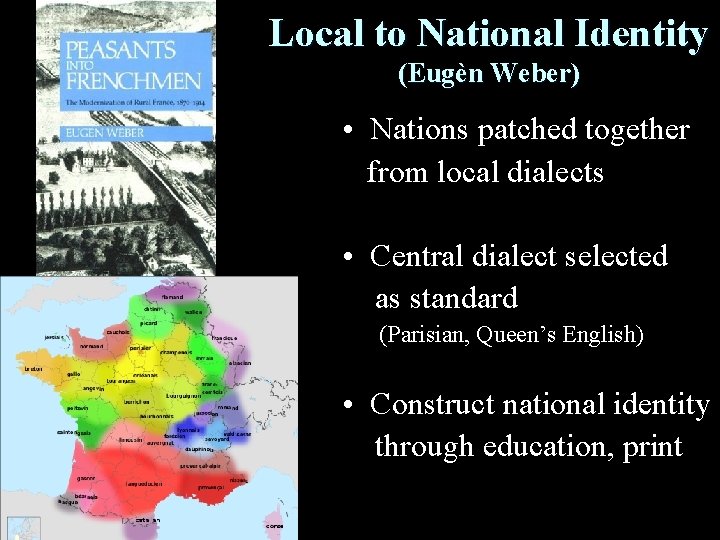
Local to National Identity (Eugèn Weber) • Nations patched together from local dialects • Central dialect selected as standard (Parisian, Queen’s English) • Construct national identity through education, print
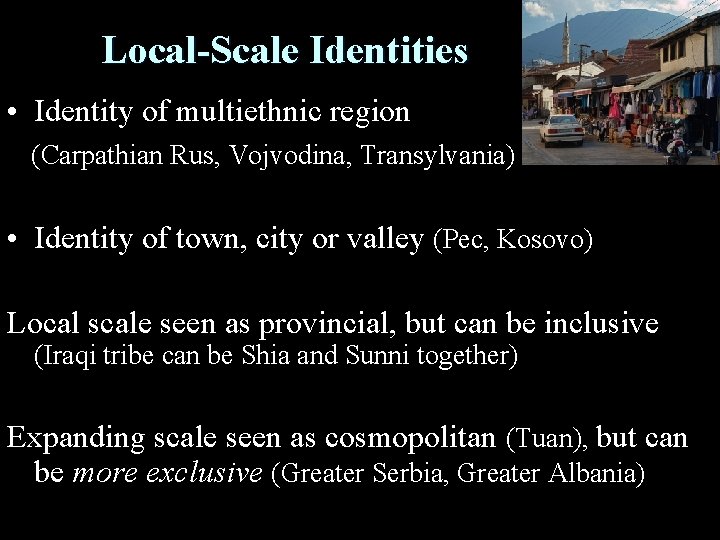
Local-Scale Identities • Identity of multiethnic region (Carpathian Rus, Vojvodina, Transylvania) • Identity of town, city or valley (Pec, Kosovo) Local scale seen as provincial, but can be inclusive (Iraqi tribe can be Shia and Sunni together) Expanding scale seen as cosmopolitan (Tuan), but can be more exclusive (Greater Serbia, Greater Albania)
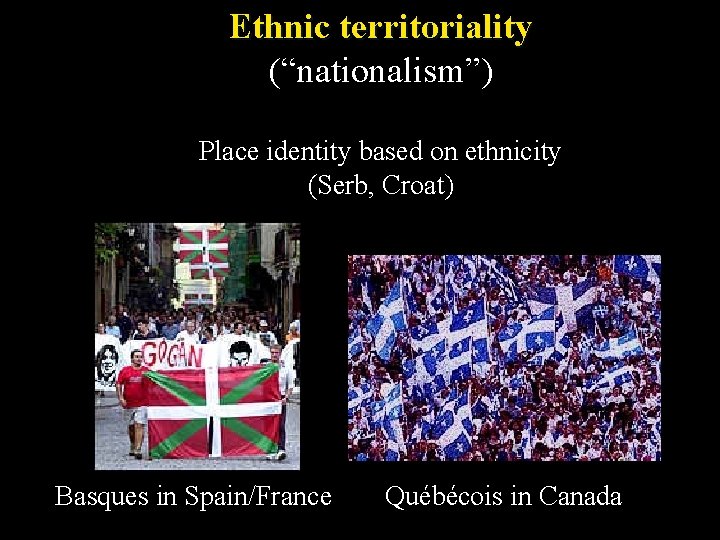
Ethnic territoriality (“nationalism”) Place identity based on ethnicity (Serb, Croat) Basques in Spain/France Québécois in Canada
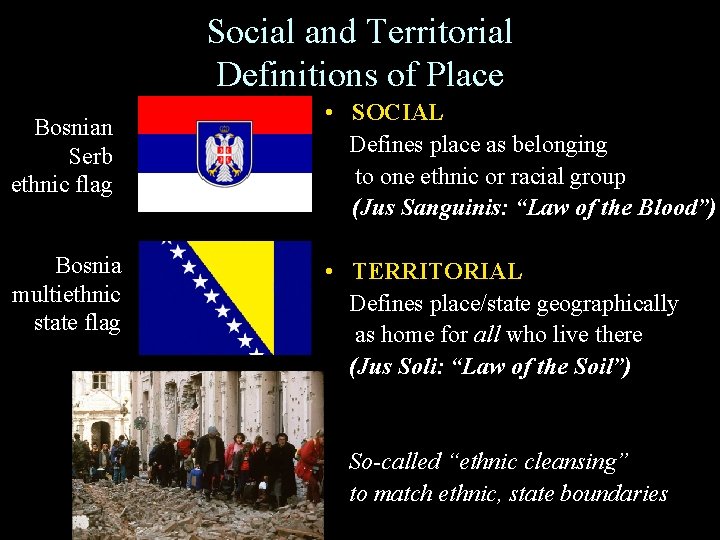
Social and Territorial Definitions of Place Bosnian Serb ethnic flag Bosnia multiethnic state flag • SOCIAL Defines place as belonging to one ethnic or racial group (Jus Sanguinis: “Law of the Blood”) • TERRITORIAL Defines place/state geographically as home for all who live there (Jus Soli: “Law of the Soil”) So-called “ethnic cleansing” to match ethnic, state boundaries
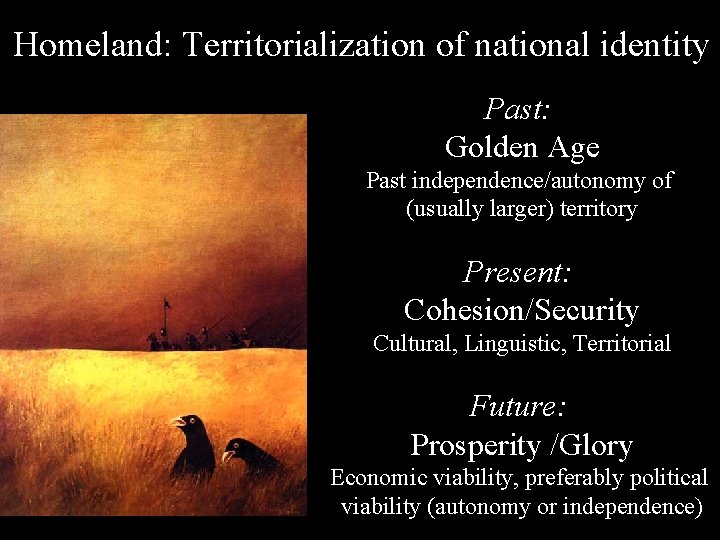
Homeland: Territorialization of national identity Past: Golden Age Past independence/autonomy of (usually larger) territory Present: Cohesion/Security Cultural, Linguistic, Territorial Future: Prosperity /Glory Economic viability, preferably political viability (autonomy or independence)
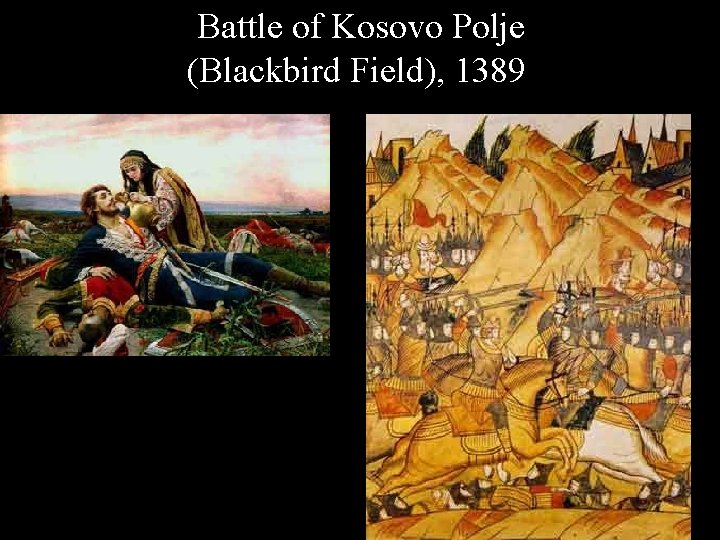
Battle of Kosovo Polje (Blackbird Field), 1389
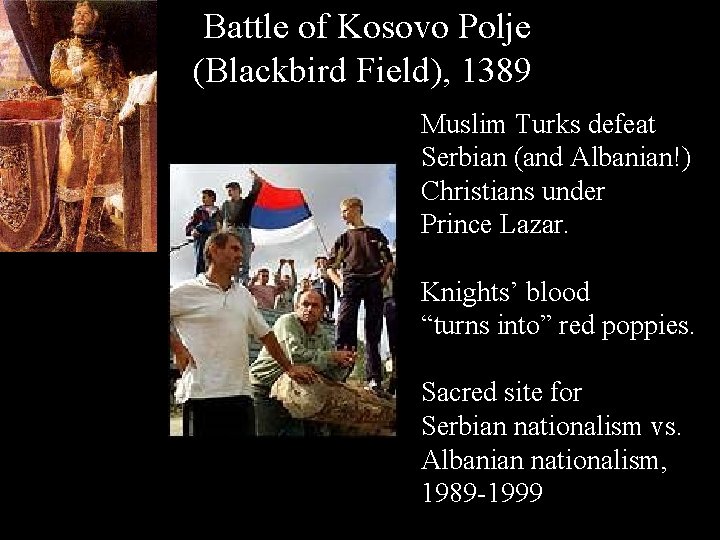
Battle of Kosovo Polje (Blackbird Field), 1389 Muslim Turks defeat Serbian (and Albanian!) Christians under Prince Lazar. Knights’ blood “turns into” red poppies. Sacred site for Serbian nationalism vs. Albanian nationalism, 1989 -1999
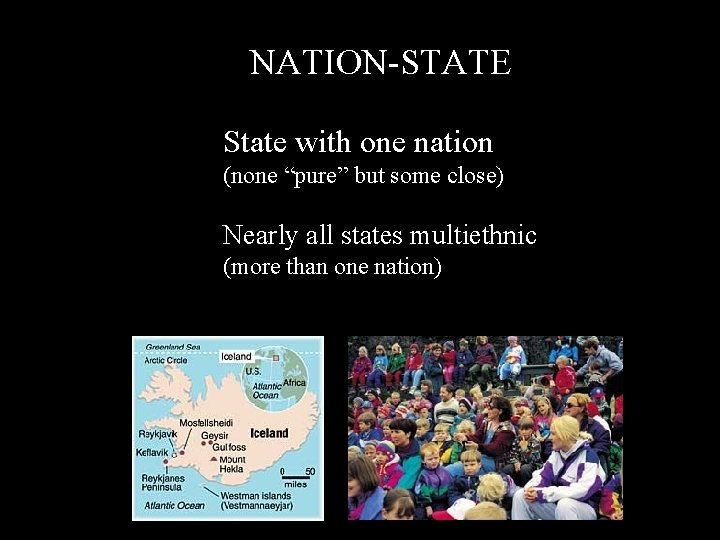
NATION-STATE State with one nation (none “pure” but some close) Nearly all states multiethnic (more than one nation)
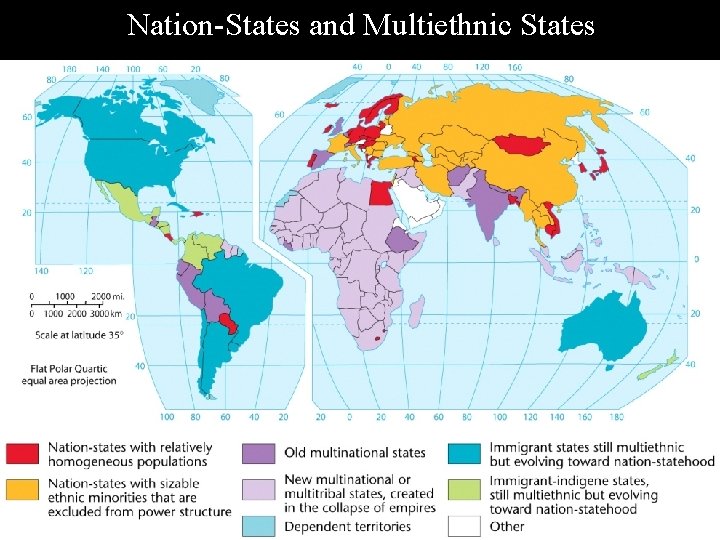
Nation-States and Multiethnic States
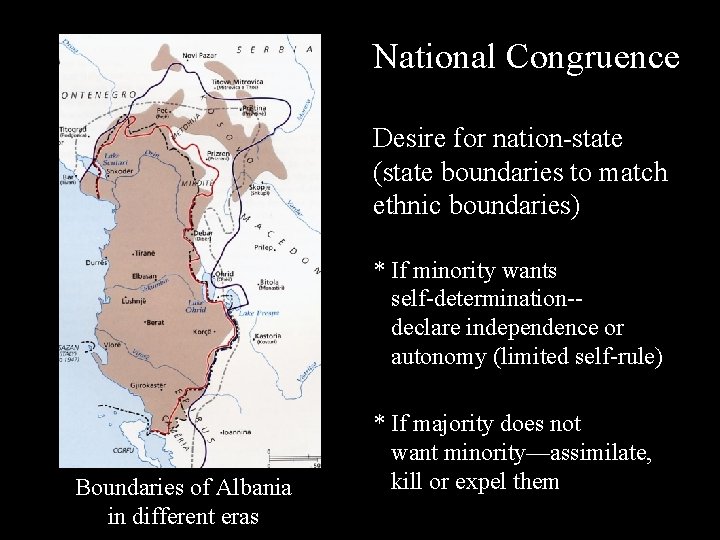
National Congruence Desire for nation-state (state boundaries to match ethnic boundaries) * If minority wants self-determination-declare independence or autonomy (limited self-rule) Boundaries of Albania in different eras * If majority does not want minority—assimilate, kill or expel them
Ethnic Territory Typology (John Coakley) • Cohesiveness (size) within territory • Concentration of total members in territory 1. Strong majority/High concentration (Slovenia) 2. Strong majority/Low concentration (Aland Swedes) 3. Weak plurality/High concentration (Bosnia) 4. Weak plurality/Low concentration (Birobijan Jews)
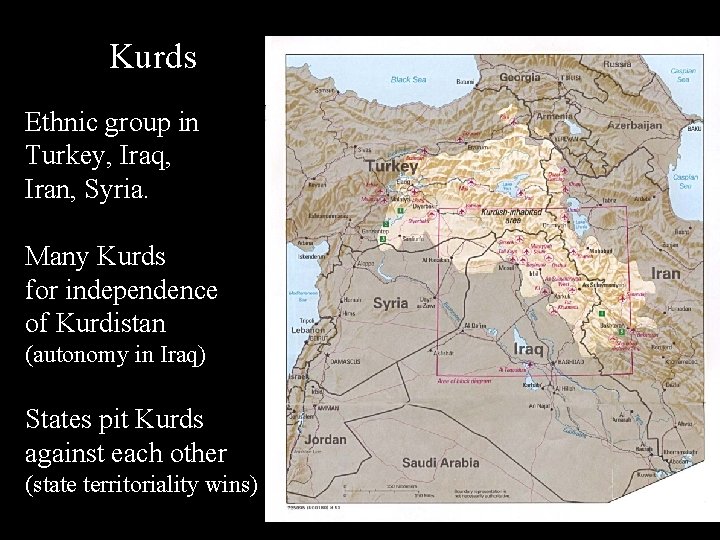
Kurds Ethnic group in Turkey, Iraq, Iran, Syria. Many Kurds for independence of Kurdistan (autonomy in Iraq) States pit Kurds against each other (state territoriality wins)
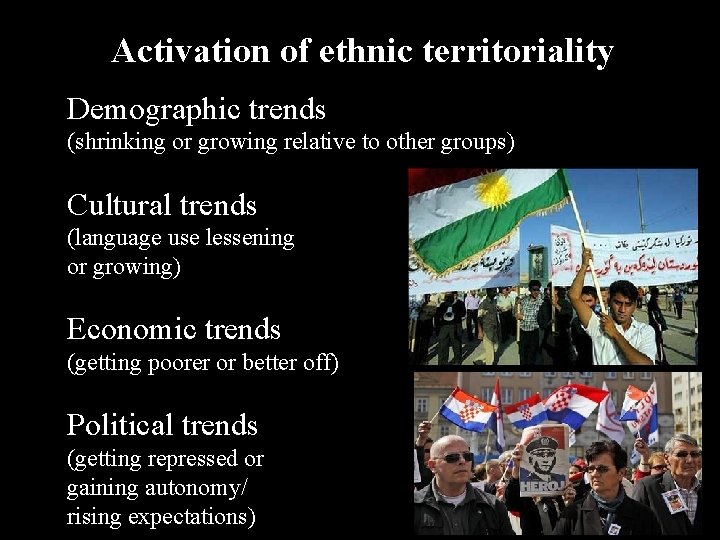
Activation of ethnic territoriality Demographic trends (shrinking or growing relative to other groups) Cultural trends (language use lessening or growing) Economic trends (getting poorer or better off) Political trends (getting repressed or gaining autonomy/ rising expectations)
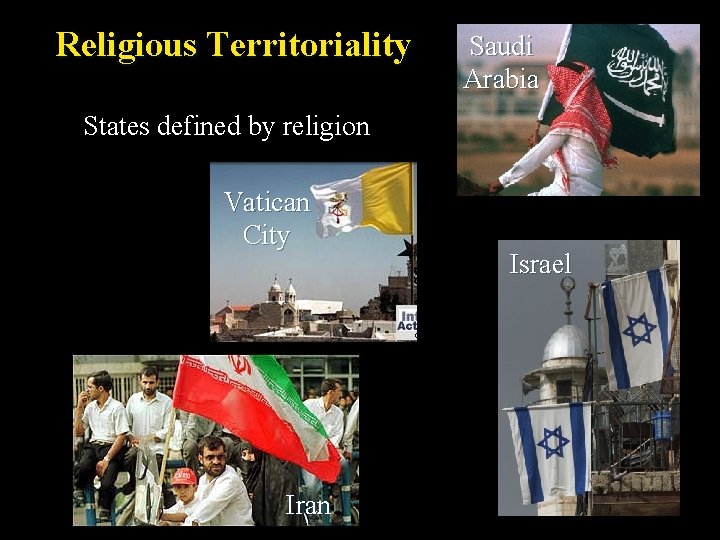
Religious Territoriality States defined by religion Vatican City Iran Saudi Arabia Vatican City Israel
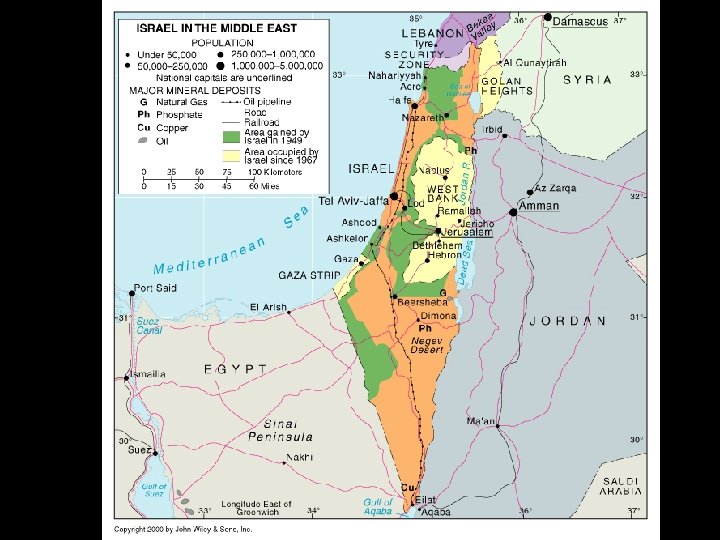
Israelis Zionism: Jewish (religious) territoriality Israelis are multiethnic European, Middle Eastern, Newer Russian, Ethiopian immigrants Arab Israeli minority
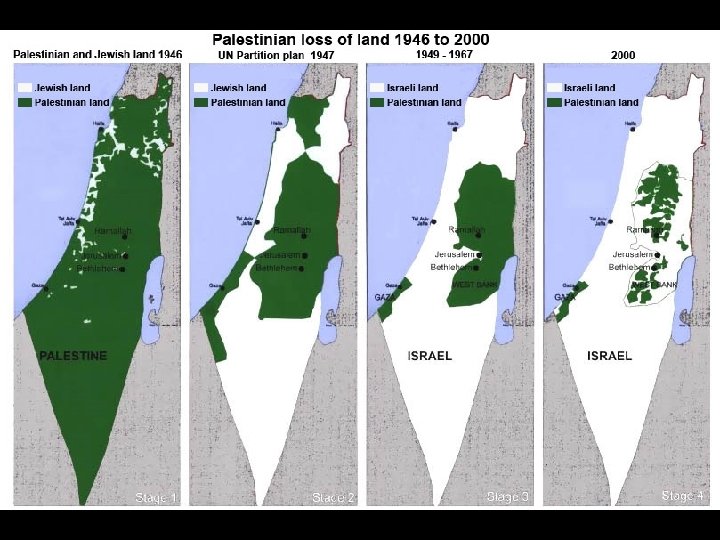
Palestinians (in West Bank, E. Jerusalem, Gaza Strip) Arab (ethnic) territoriality Palestinians are multireligious Muslims and Christians Ethnic nationalist movement, but later Islamist groups
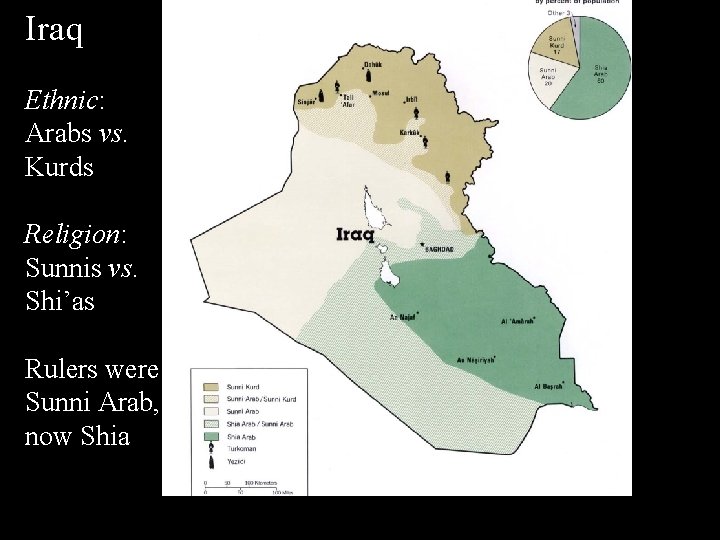
Iraq Ethnic: Arabs vs. Kurds Religion: Sunnis vs. Shi’as Rulers were Sunni Arab, now Shia
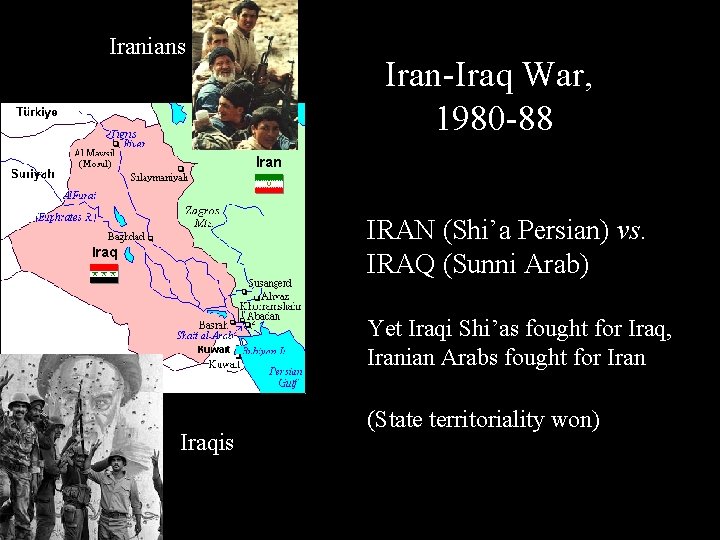
Iranians Iran-Iraq War, 1980 -88 IRAN (Shi’a Persian) vs. IRAQ (Sunni Arab) Yet Iraqi Shi’as fought for Iraq, Iranian Arabs fought for Iran Iraqis (State territoriality won)
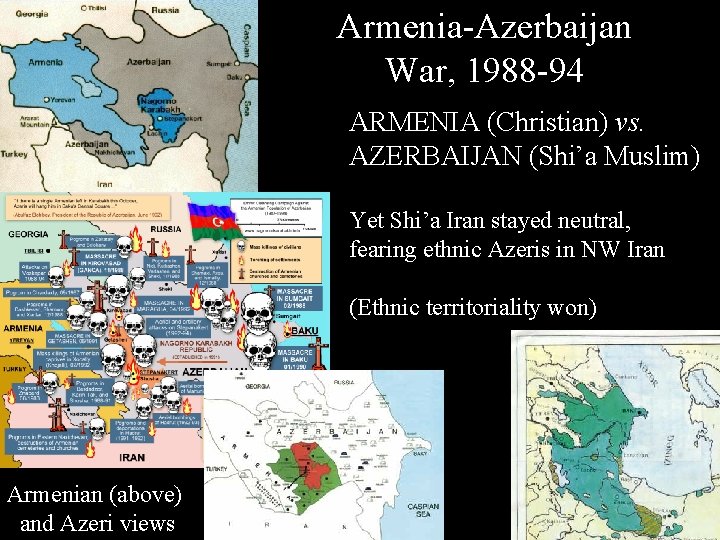
Armenia-Azerbaijan War, 1988 -94 ARMENIA (Christian) vs. AZERBAIJAN (Shi’a Muslim) Yet Shi’a Iran stayed neutral, fearing ethnic Azeris in NW Iran (Ethnic territoriality won) Armenian (above) and Azeri views
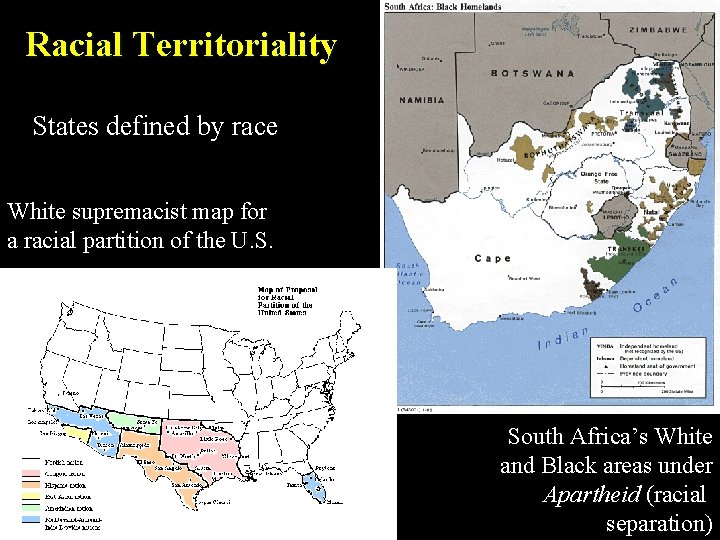
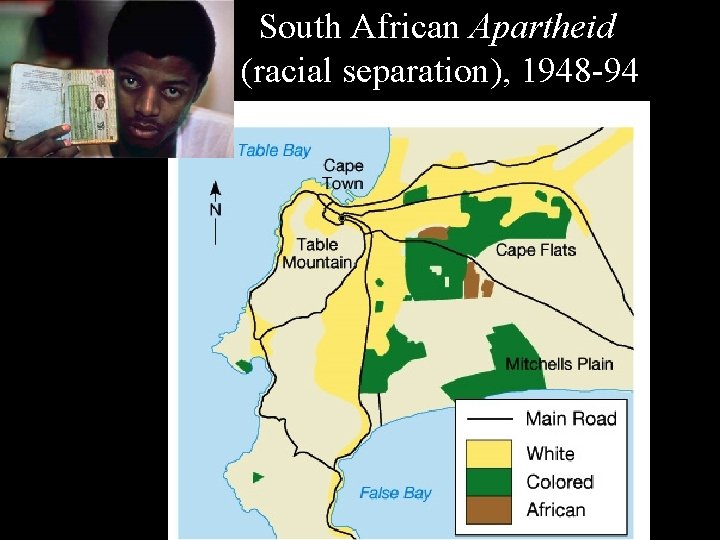
Racial Territoriality States defined by race White supremacist map for a racial partition of the U. S. South Africa’s White and Black areas under Apartheid (racial separation)
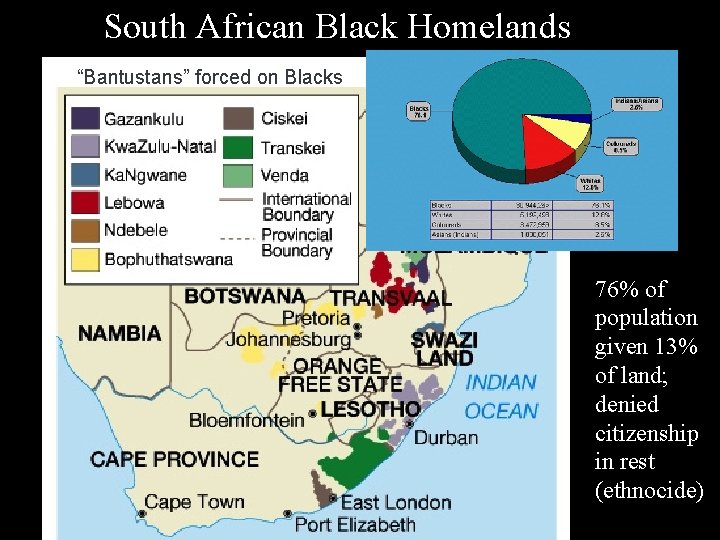
South African Black Homelands “Bantustans” forced on Blacks 76% of population given 13% of land; denied citizenship in rest (ethnocide)
South African Apartheid (racial separation), 1948 -94
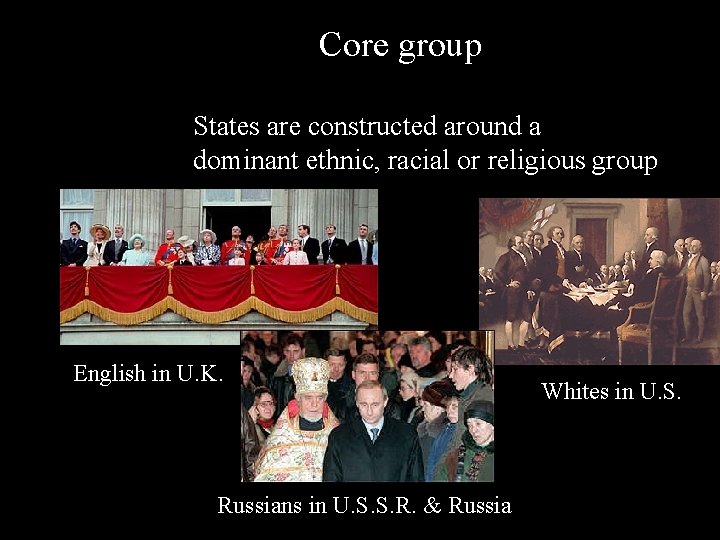
Core group States are constructed around a dominant ethnic, racial or religious group English in U. K. Russians in U. S. S. R. & Russia Whites in U. S.
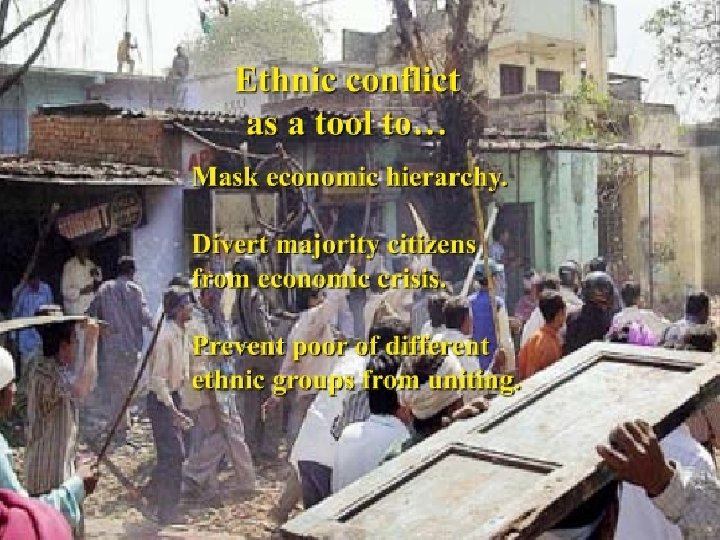
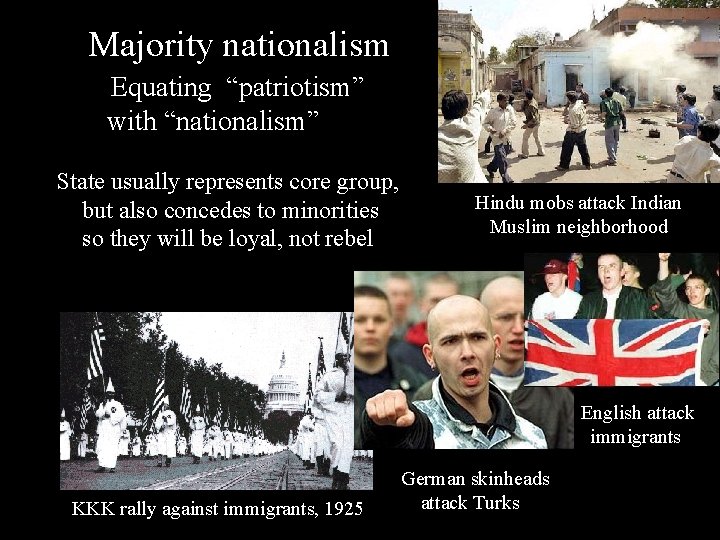
Majority nationalism Equating “patriotism” with “nationalism” State usually represents core group, but also concedes to minorities so they will be loyal, not rebel Hindu mobs attack Indian Muslim neighborhood English attack immigrants KKK rally against immigrants, 1925 German skinheads attack Turks
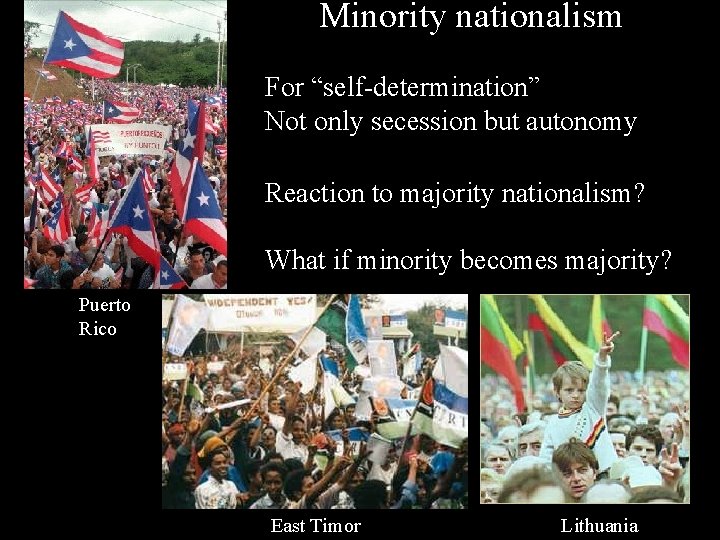
Minority nationalism For “self-determination” Not only secession but autonomy Reaction to majority nationalism? What if minority becomes majority? Puerto Rico East Timor Lithuania
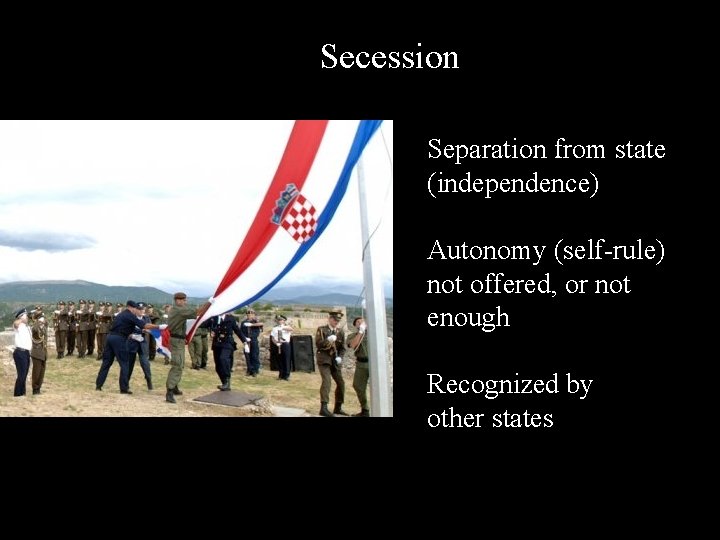
Secession Separation from state (independence) Autonomy (self-rule) not offered, or not enough Recognized by other states
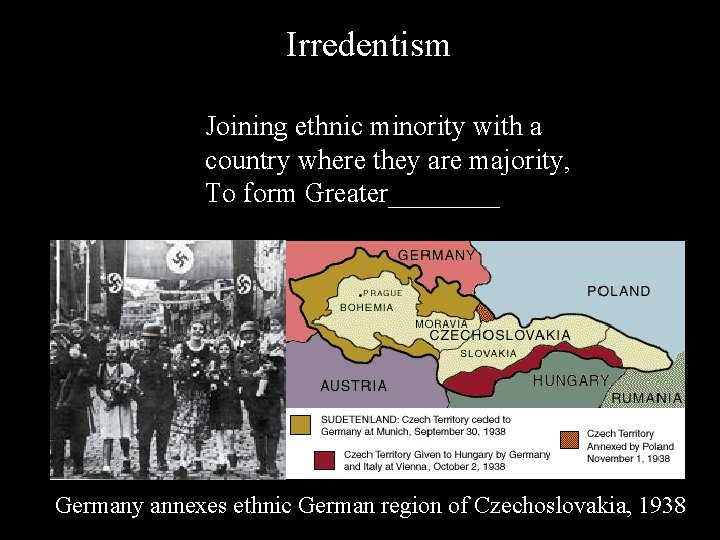
Irredentism Joining ethnic minority with a country where they are majority, To form Greater____ Germany annexes ethnic German region of Czechoslovakia, 1938
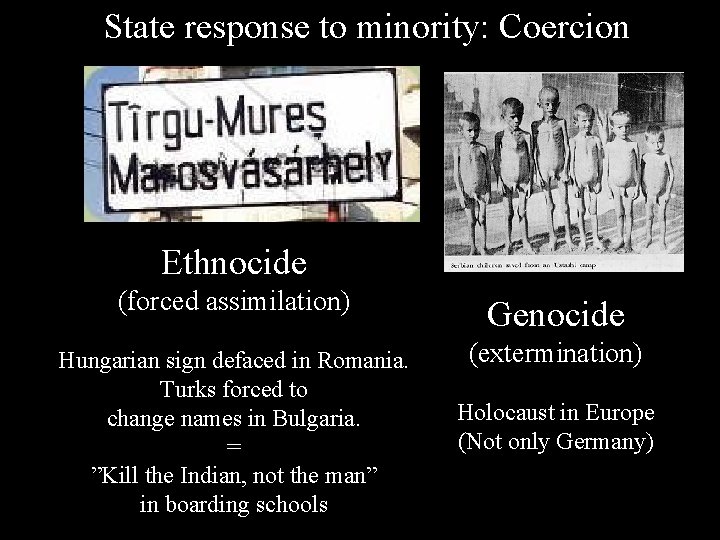
State response to minority: Coercion Ethnocide (forced assimilation) Genocide Hungarian sign defaced in Romania. Turks forced to change names in Bulgaria. = ”Kill the Indian, not the man” in boarding schools (extermination) Holocaust in Europe (Not only Germany)
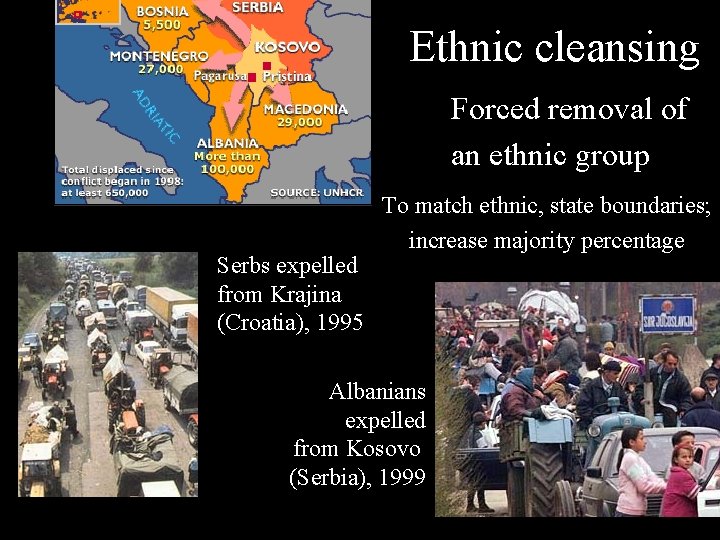
Ethnic cleansing Forced removal of an ethnic group Serbs expelled from Krajina (Croatia), 1995 To match ethnic, state boundaries; increase majority percentage Albanians expelled from Kosovo (Serbia), 1999
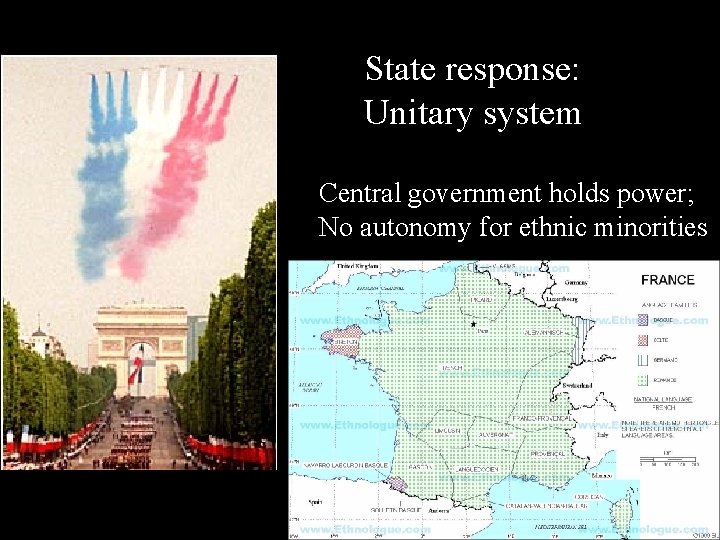
State response: Unitary system Central government holds power; No autonomy for ethnic minorities
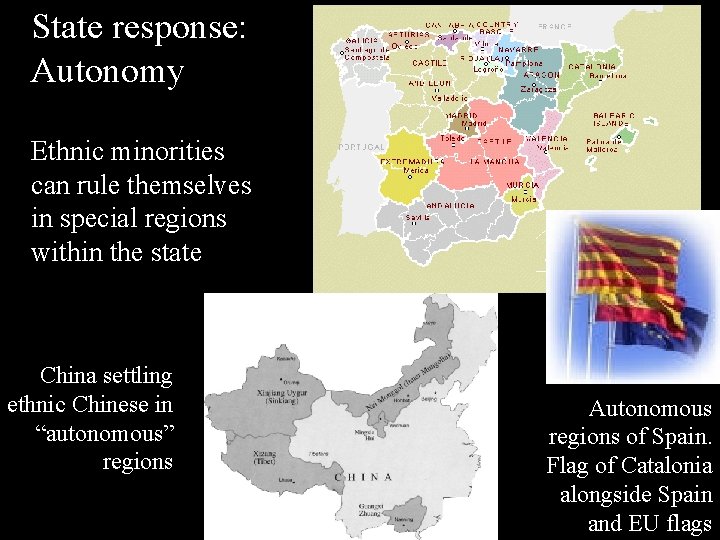
State response: Autonomy Ethnic minorities can rule themselves in special regions within the state China settling ethnic Chinese in “autonomous” regions Autonomous regions of Spain. Flag of Catalonia alongside Spain and EU flags
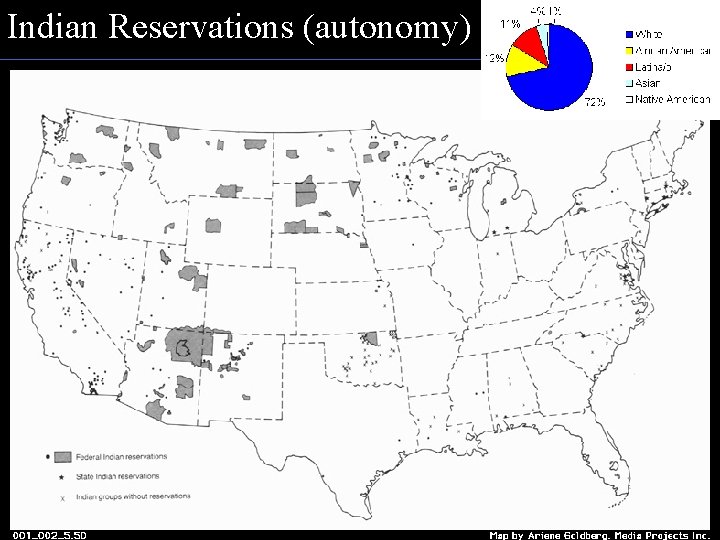
Indian Reservations (autonomy)
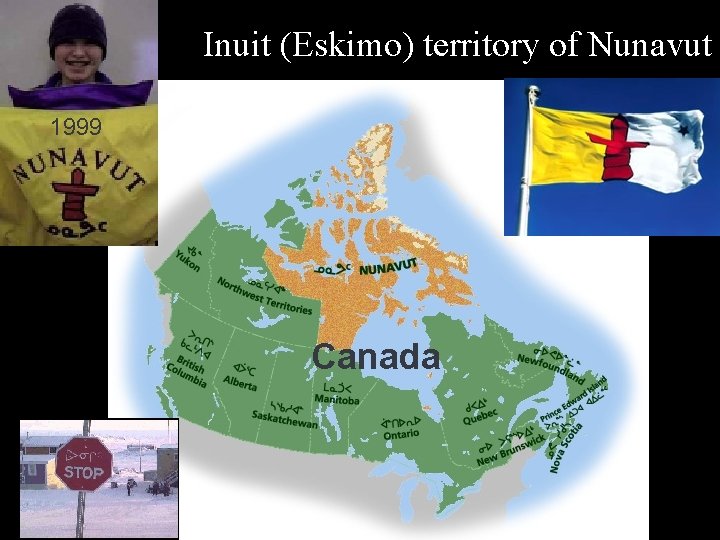
Inuit (Eskimo) territory of Nunavut 1999 Canada
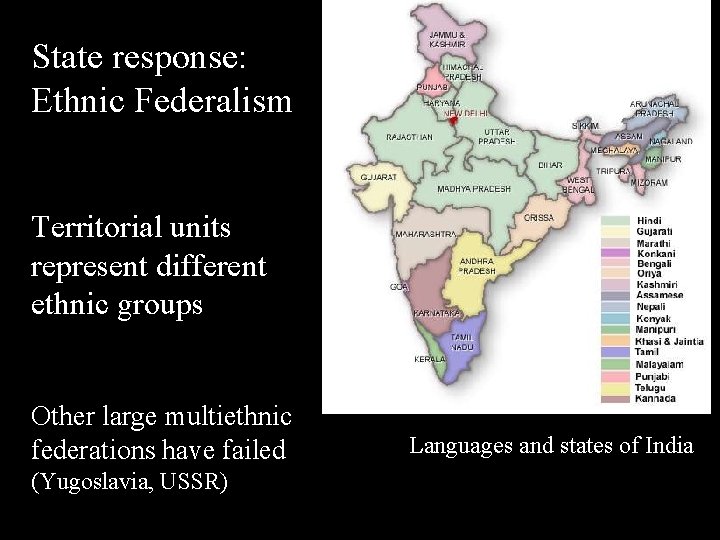
State response: Ethnic Federalism Territorial units represent different ethnic groups Other large multiethnic federations have failed (Yugoslavia, USSR) Languages and states of India
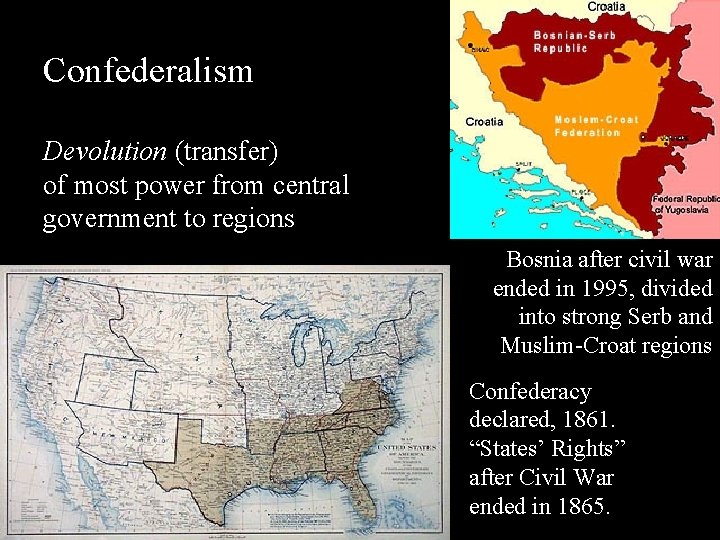
Confederalism Devolution (transfer) of most power from central government to regions Bosnia after civil war ended in 1995, divided into strong Serb and Muslim-Croat regions Confederacy declared, 1861. “States’ Rights” after Civil War ended in 1865.
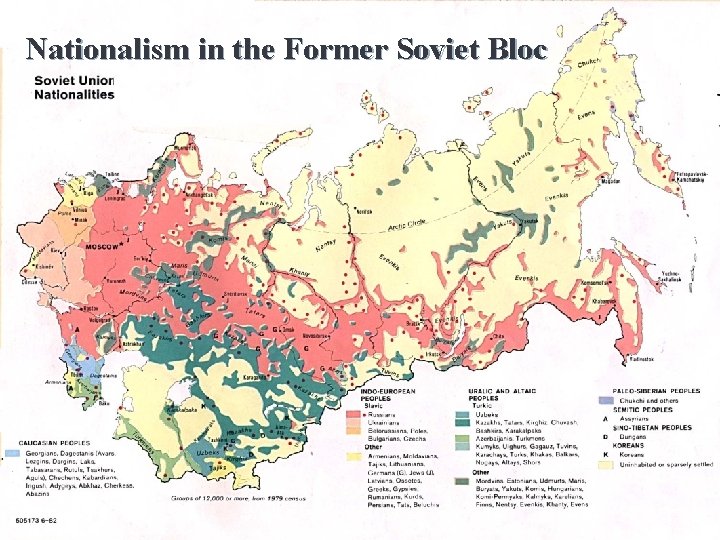
Nationalism in the Former Soviet Bloc
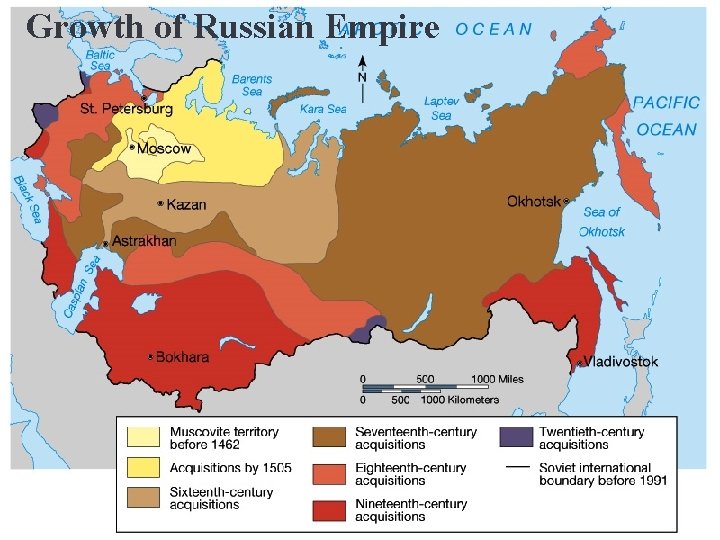
Growth of Russian Empire
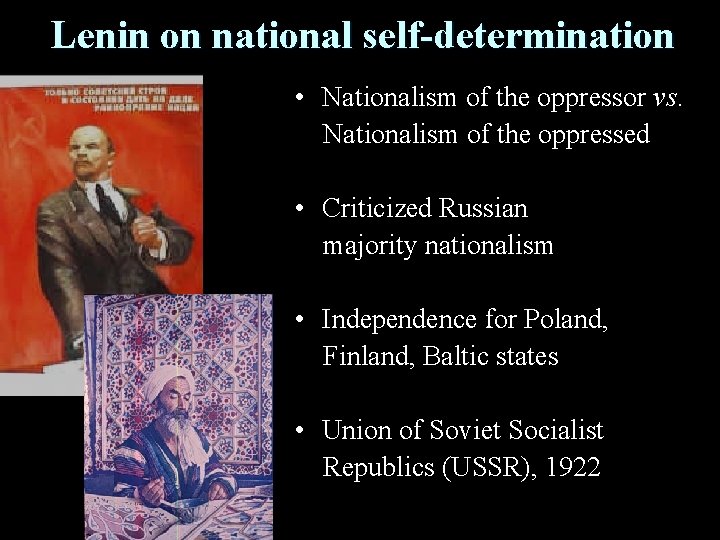
Lenin on national self-determination • Nationalism of the oppressor vs. Nationalism of the oppressed • Criticized Russian majority nationalism • Independence for Poland, Finland, Baltic states • Union of Soviet Socialist Republics (USSR), 1922
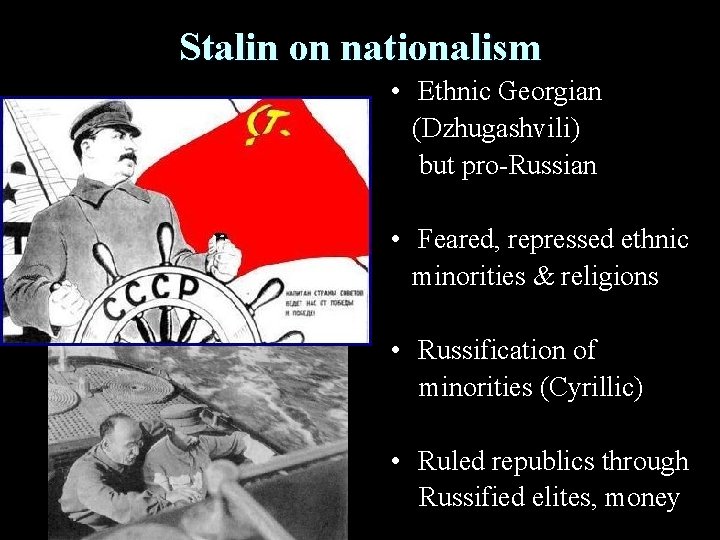
Stalin on nationalism • Ethnic Georgian (Dzhugashvili) but pro-Russian • Feared, repressed ethnic minorities & religions • Russification of minorities (Cyrillic) • Ruled republics through Russified elites, money
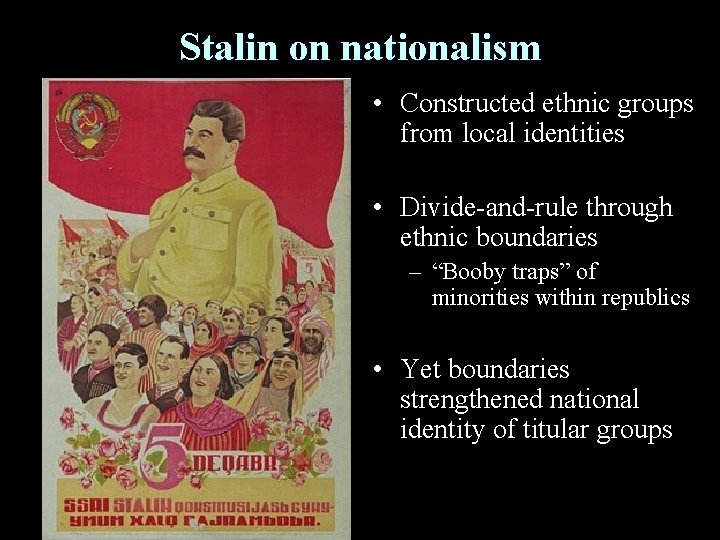
Stalin on nationalism • Constructed ethnic groups from local identities • Divide-and-rule through ethnic boundaries – “Booby traps” of minorities within republics • Yet boundaries strengthened national identity of titular groups
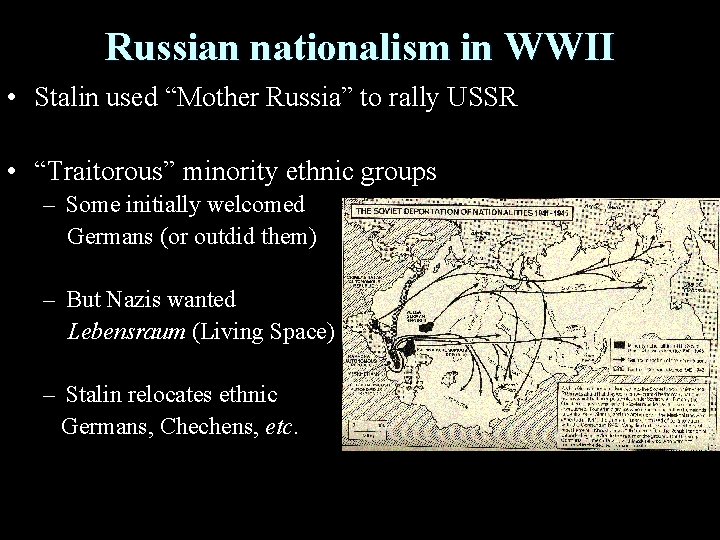
Russian nationalism in WWII • Stalin used “Mother Russia” to rally USSR • “Traitorous” minority ethnic groups – Some initially welcomed Germans (or outdid them) – But Nazis wanted Lebensraum (Living Space) – Stalin relocates ethnic Germans, Chechens, etc.
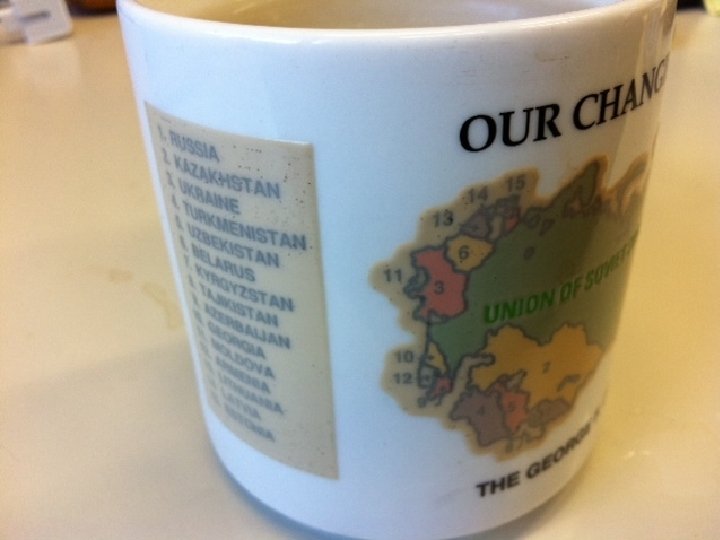
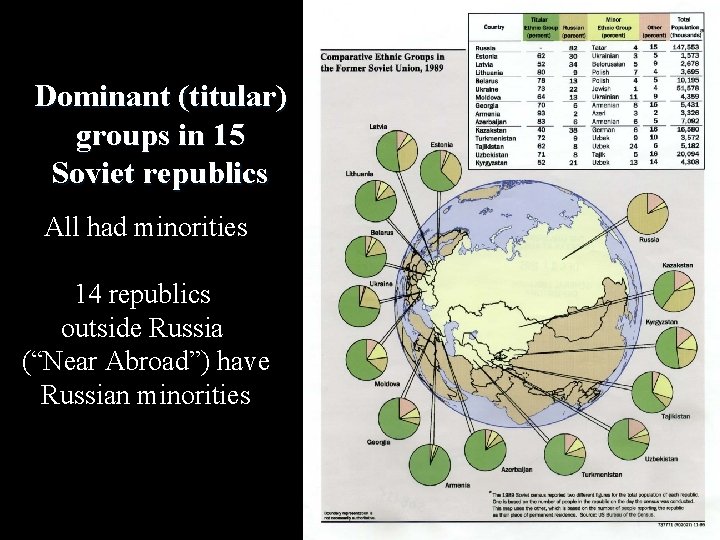
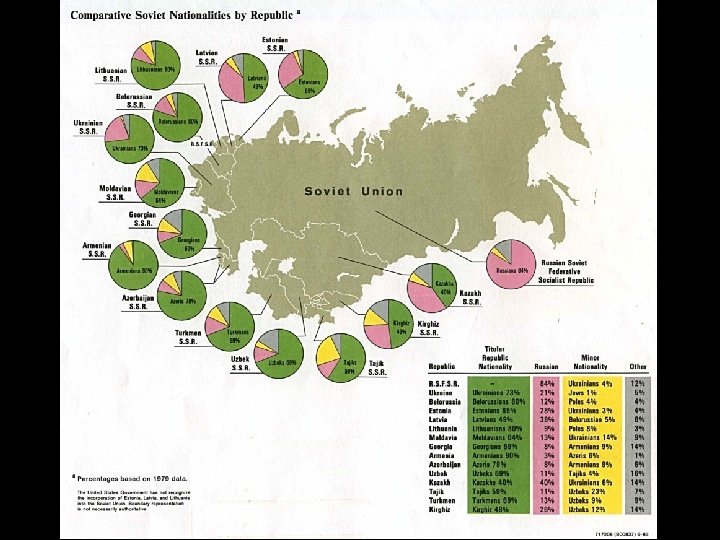
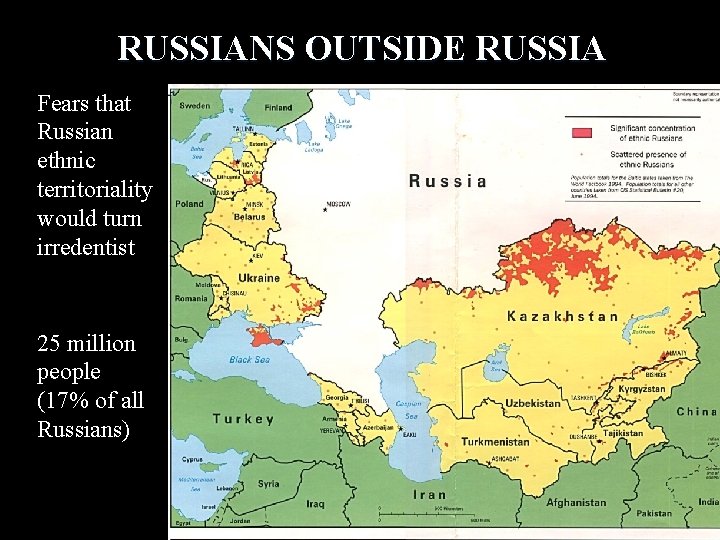
Dominant (titular) groups in 15 Soviet republics All had minorities 14 republics outside Russia (“Near Abroad”) have Russian minorities
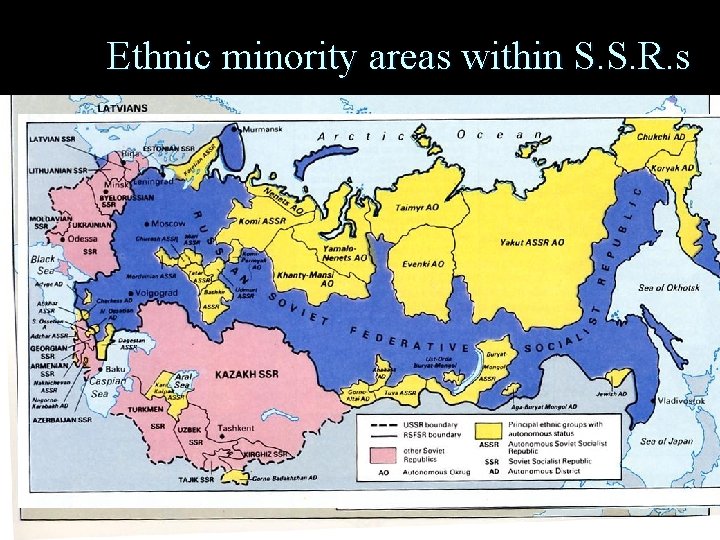
Ethnic minority areas within S. S. R. s
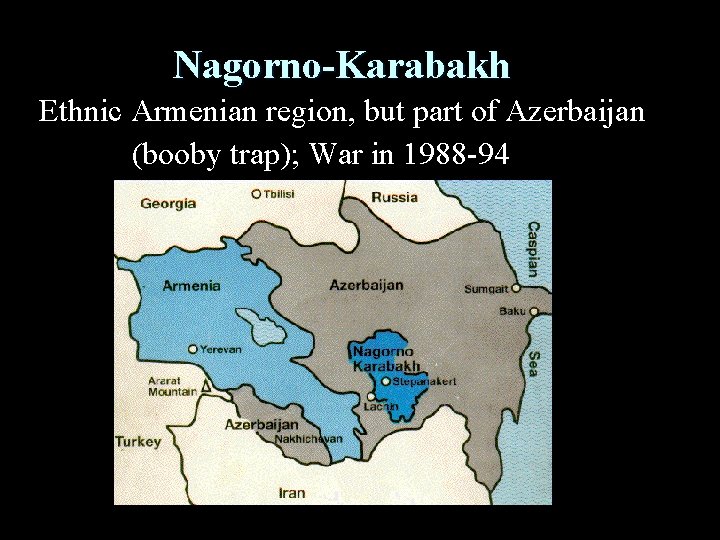
Nagorno-Karabakh Ethnic Armenian region, but part of Azerbaijan (booby trap); War in 1988 -94
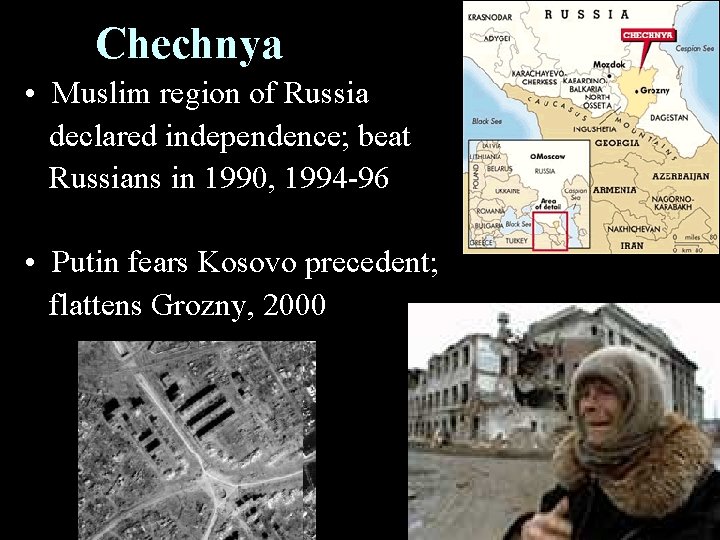
Chechnya • Muslim region of Russia declared independence; beat Russians in 1990, 1994 -96 • Putin fears Kosovo precedent; flattens Grozny, 2000
RUSSIANS OUTSIDE RUSSIA Fears that Russian ethnic territoriality would turn irredentist 25 million people (17% of all Russians)
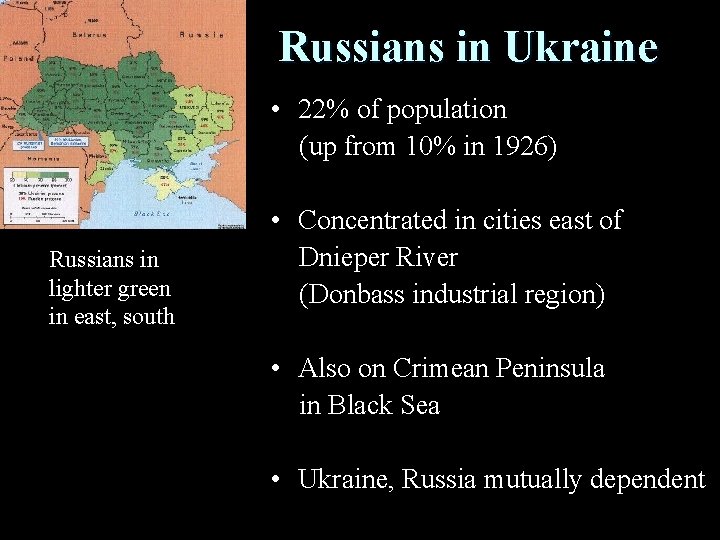
Russians in Ukraine • 22% of population (up from 10% in 1926) Russians in lighter green in east, south • Concentrated in cities east of Dnieper River (Donbass industrial region) • Also on Crimean Peninsula in Black Sea • Ukraine, Russia mutually dependent
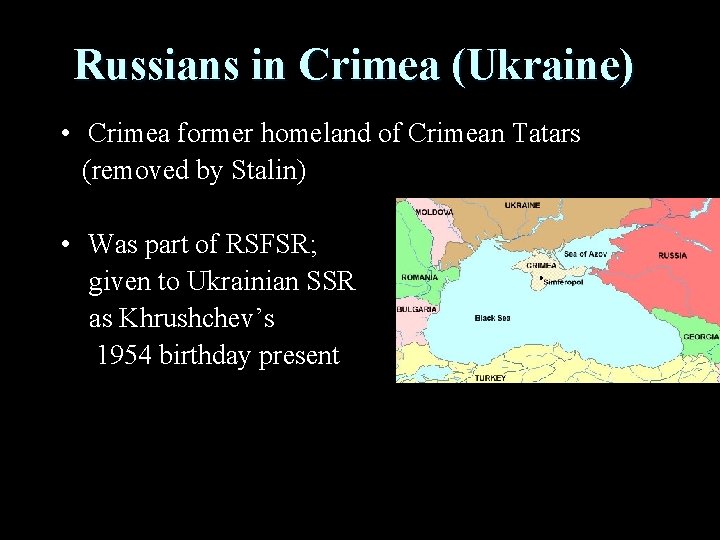
Russians in Crimea (Ukraine) • Crimea former homeland of Crimean Tatars (removed by Stalin) • Was part of RSFSR; given to Ukrainian SSR as Khrushchev’s 1954 birthday present
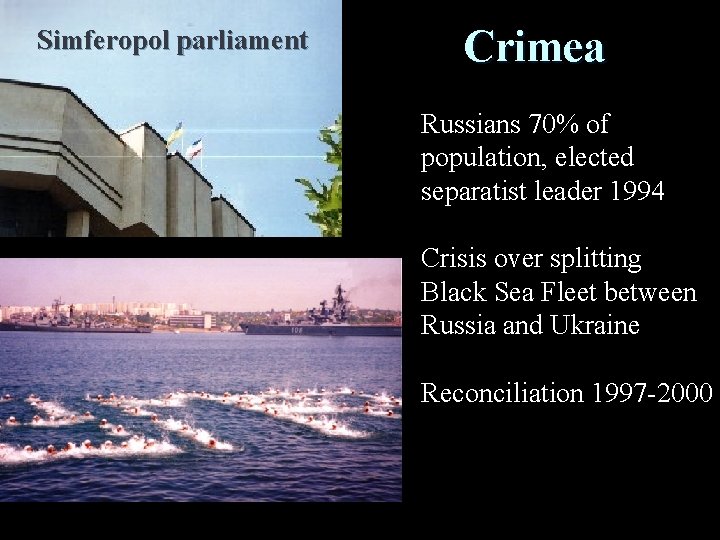
Simferopol parliament Crimea Russians 70% of population, elected separatist leader 1994 Crisis over splitting Black Sea Fleet between Russia and Ukraine Reconciliation 1997 -2000
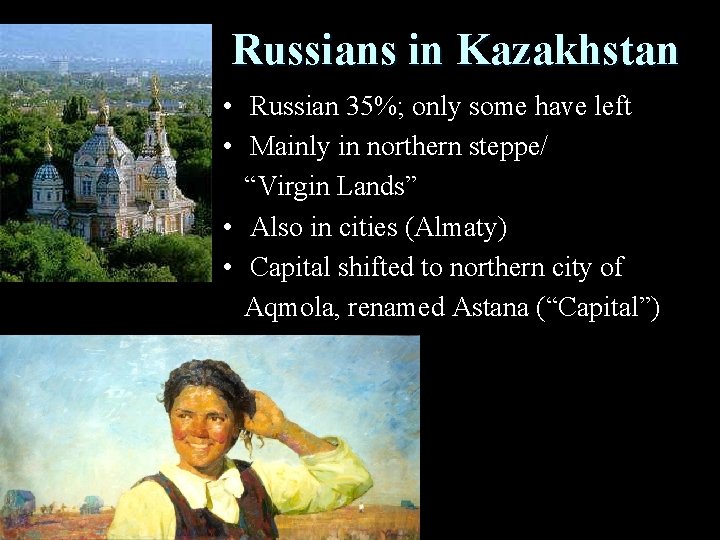
Russians in Kazakhstan • Russian 35%; only some have left • Mainly in northern steppe/ “Virgin Lands” • Also in cities (Almaty) • Capital shifted to northern city of Aqmola, renamed Astana (“Capital”)
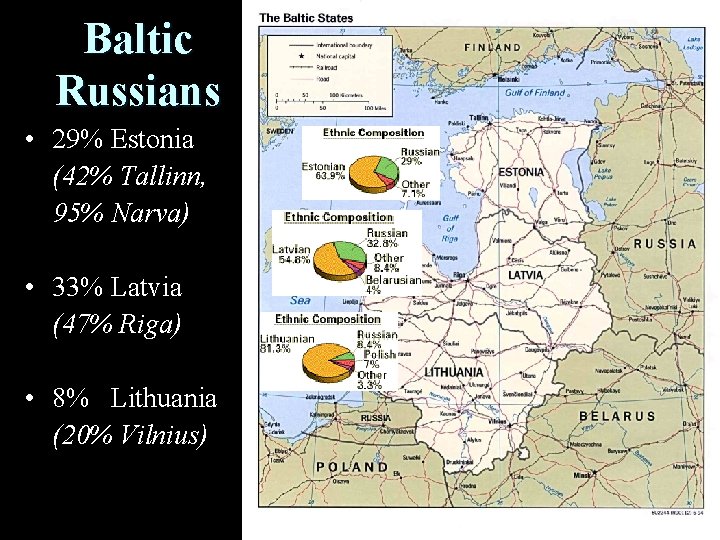
Baltic Russians • 29% Estonia (42% Tallinn, 95% Narva) • 33% Latvia (47% Riga) • 8% Lithuania (20% Vilnius)
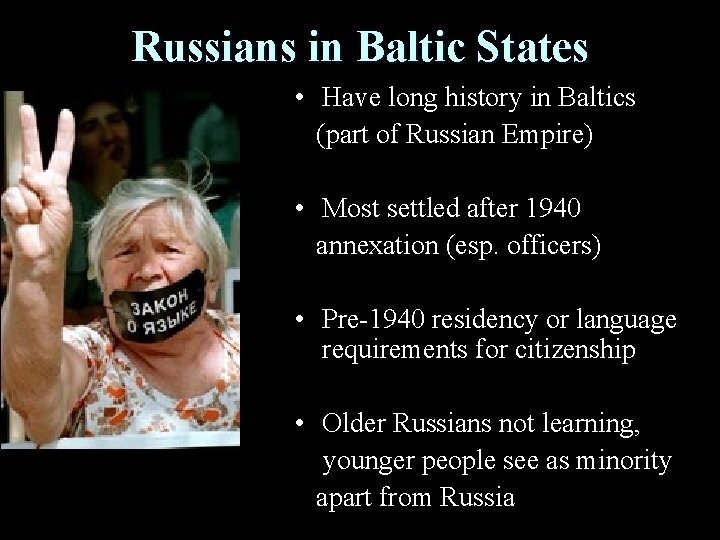
Russians in Baltic States • Have long history in Baltics (part of Russian Empire) • Most settled after 1940 annexation (esp. officers) • Pre-1940 residency or language requirements for citizenship • Older Russians not learning, younger people see as minority apart from Russia
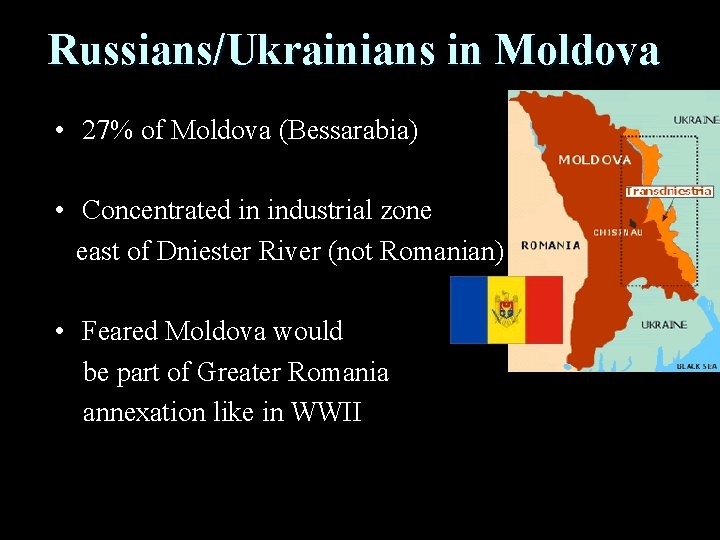
Russians/Ukrainians in Moldova • 27% of Moldova (Bessarabia) • Concentrated in industrial zone east of Dniester River (not Romanian) • Feared Moldova would be part of Greater Romania annexation like in WWII
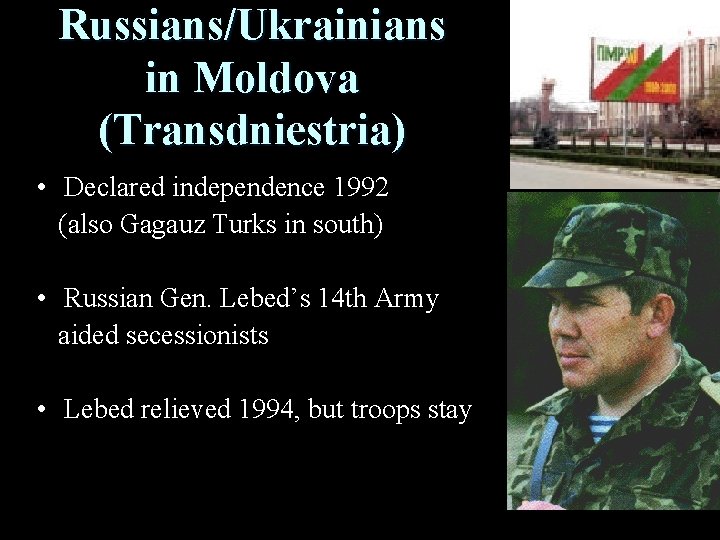
Russians/Ukrainians in Moldova (Transdniestria) • Declared independence 1992 (also Gagauz Turks in south) • Russian Gen. Lebed’s 14 th Army aided secessionists • Lebed relieved 1994, but troops stay
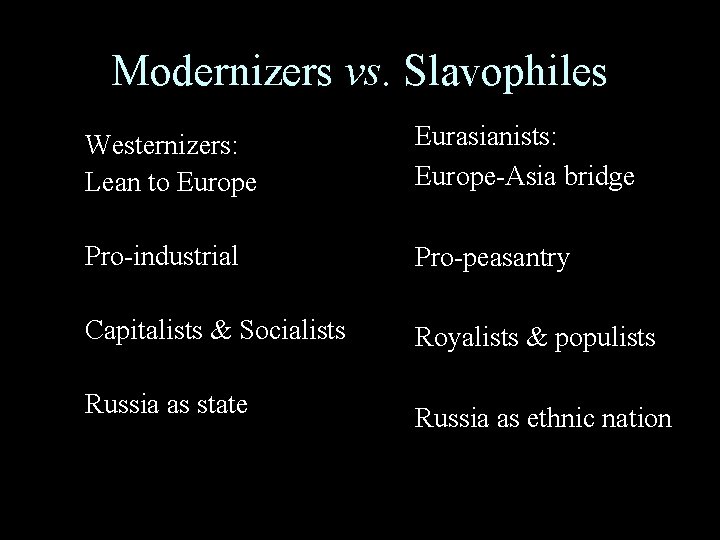
Modernizers vs. Slavophiles Westernizers: Lean to Europe Eurasianists: Europe-Asia bridge Pro-industrial Pro-peasantry Capitalists & Socialists Royalists & populists Russia as state Russia as ethnic nation
What is Russia? State vs. Ethnic Territoriality ETHNIC (Lebed, Slavophiles) Bring all Russians into Russia, but let Chechens go from Russia STATE (Yeltsin, Modernizers) Leave Russians outside Russia, but keep Chechens in Russia by force
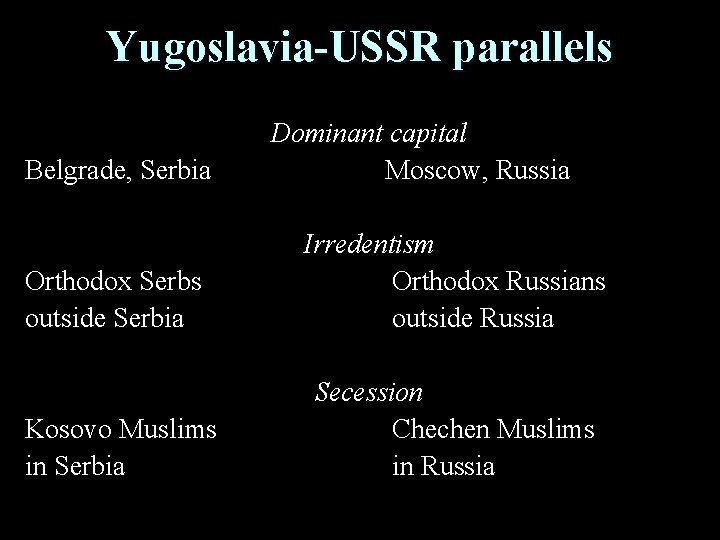
Yugoslavia-USSR parallels Belgrade, Serbia Dominant capital Moscow, Russia Orthodox Serbs outside Serbia Irredentism Orthodox Russians outside Russia Kosovo Muslims in Serbia Secession Chechen Muslims in Russia
Milosevic, Putin emphasize both ethnic and state territoriality; Overextend reach of Serbia & Russia