Colorectal Cancer J Clin Oncol 2018 368 773





- Slides: 108
Colorectal Cancer
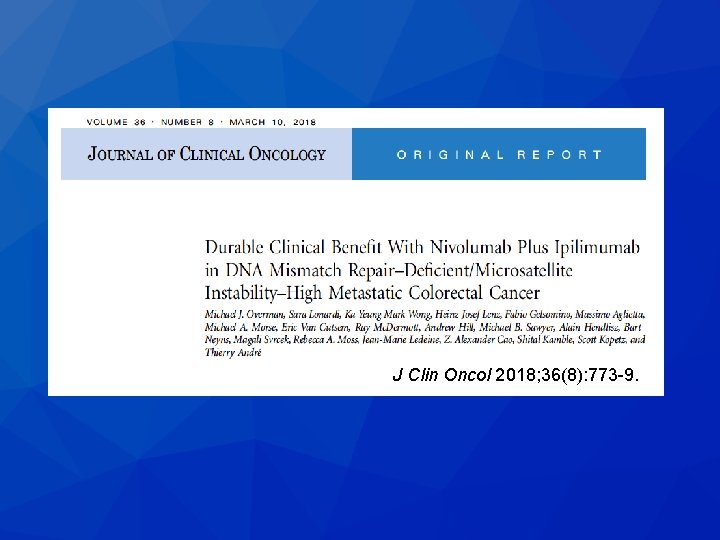
J Clin Oncol 2018; 36(8): 773 -9.
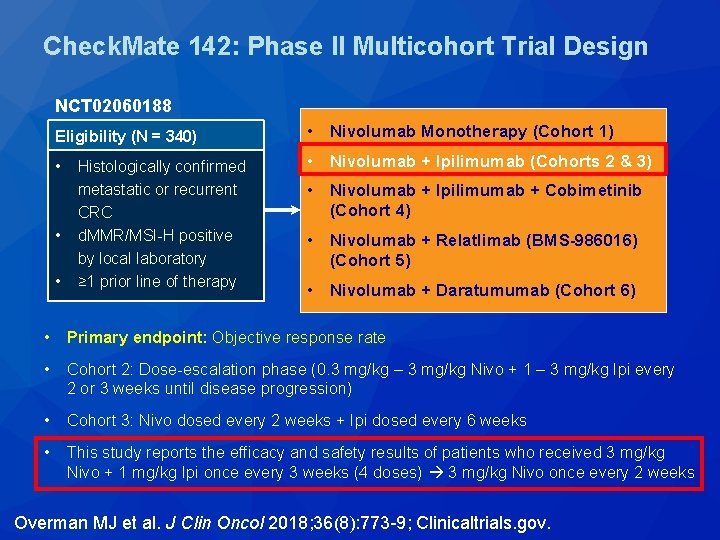
Check. Mate 142: Phase II Multicohort Trial Design NCT 02060188 Eligibility (N = 340) • Nivolumab Monotherapy (Cohort 1) • • Nivolumab + Ipilimumab (Cohorts 2 & 3) • • Histologically confirmed metastatic or recurrent CRC d. MMR/MSI-H positive by local laboratory ≥ 1 prior line of therapy • Nivolumab + Ipilimumab + Cobimetinib (Cohort 4) • Nivolumab + Relatlimab (BMS-986016) (Cohort 5) • Nivolumab + Daratumumab (Cohort 6) • Primary endpoint: Objective response rate • Cohort 2: Dose-escalation phase (0. 3 mg/kg – 3 mg/kg Nivo + 1 – 3 mg/kg Ipi every 2 or 3 weeks until disease progression) • Cohort 3: Nivo dosed every 2 weeks + Ipi dosed every 6 weeks • This study reports the efficacy and safety results of patients who received 3 mg/kg Nivo + 1 mg/kg Ipi once every 3 weeks (4 doses) 3 mg/kg Nivo once every 2 weeks Overman MJ et al. J Clin Oncol 2018; 36(8): 773 -9; Clinicaltrials. gov.
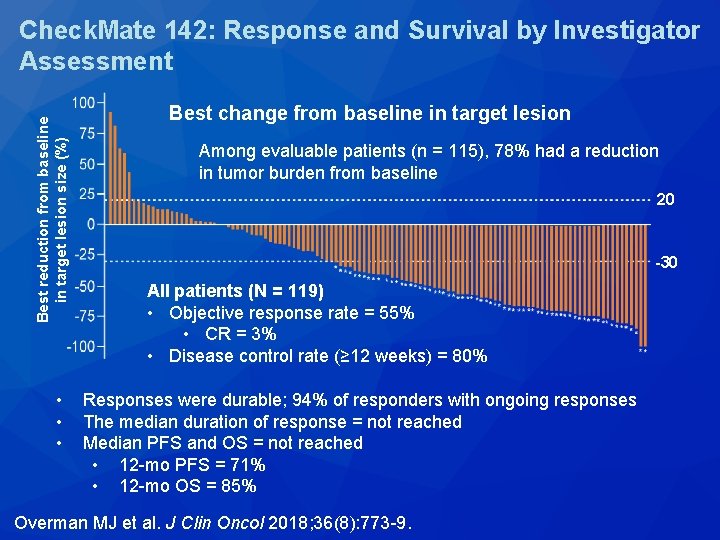
Best reduction from baseline in target lesion size (%) Check. Mate 142: Response and Survival by Investigator Assessment • • • Best change from baseline in target lesion Among evaluable patients (n = 115), 78% had a reduction in tumor burden from baseline 20 -30 All patients (N = 119) • Objective response rate = 55% • CR = 3% • Disease control rate (≥ 12 weeks) = 80% Responses were durable; 94% of responders with ongoing responses The median duration of response = not reached Median PFS and OS = not reached • 12 -mo PFS = 71% • 12 -mo OS = 85% Overman MJ et al. J Clin Oncol 2018; 36(8): 773 -9.
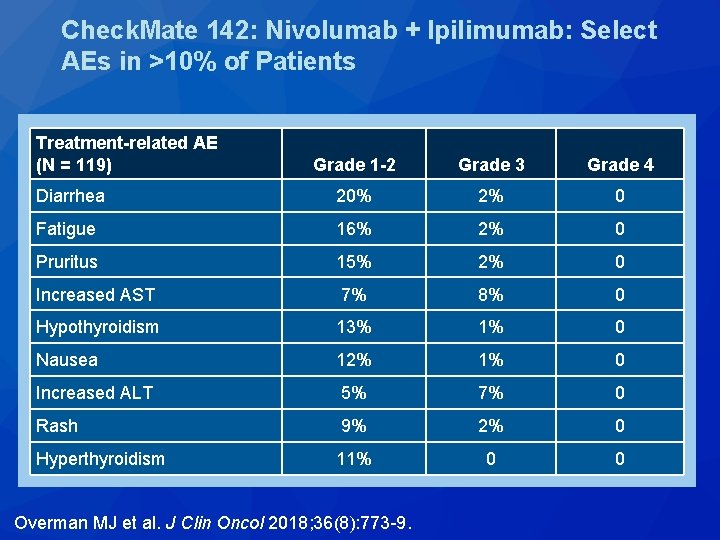
Check. Mate 142: Nivolumab + Ipilimumab: Select AEs in >10% of Patients Treatment-related AE (N = 119) Grade 1 -2 Grade 3 Grade 4 Diarrhea 20% 2% 0 Fatigue 16% 2% 0 Pruritus 15% 2% 0 Increased AST 7% 8% 0 Hypothyroidism 13% 1% 0 Nausea 12% 1% 0 Increased ALT 5% 7% 0 Rash 9% 2% 0 Hyperthyroidism 11% 0 0 Overman MJ et al. J Clin Oncol 2018; 36(8): 773 -9.
Efficacy and Safety Results from IMblaze 370, a Randomised Phase III Study Comparing Atezolizumab + Cobimetinib and Atezolizumab Monotherapy vs Regorafenib in Chemotherapy Refractory Metastatic Colorectal Cancer Bendell J et al. Proc ESMO 2018; Abstract LBA-004.
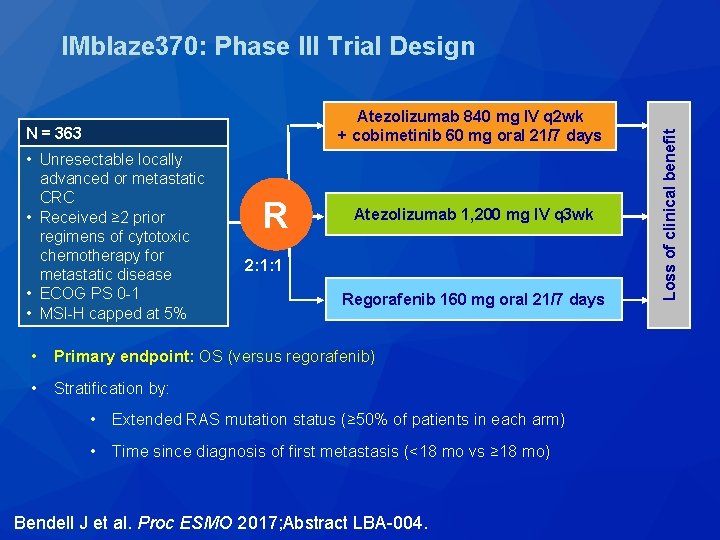
Atezolizumab 840 mg IV q 2 wk + cobimetinib 60 mg oral 21/7 days N = 363 • Unresectable locally advanced or metastatic CRC • Received ≥ 2 prior regimens of cytotoxic chemotherapy for metastatic disease • ECOG PS 0 -1 • MSI-H capped at 5% R Atezolizumab 1, 200 mg IV q 3 wk 2: 1: 1 Regorafenib 160 mg oral 21/7 days • Primary endpoint: OS (versus regorafenib) • Stratification by: • Extended RAS mutation status (≥ 50% of patients in each arm) • Time since diagnosis of first metastasis (<18 mo vs ≥ 18 mo) Bendell J et al. Proc ESMO 2017; Abstract LBA-004. Loss of clinical benefit IMblaze 370: Phase III Trial Design
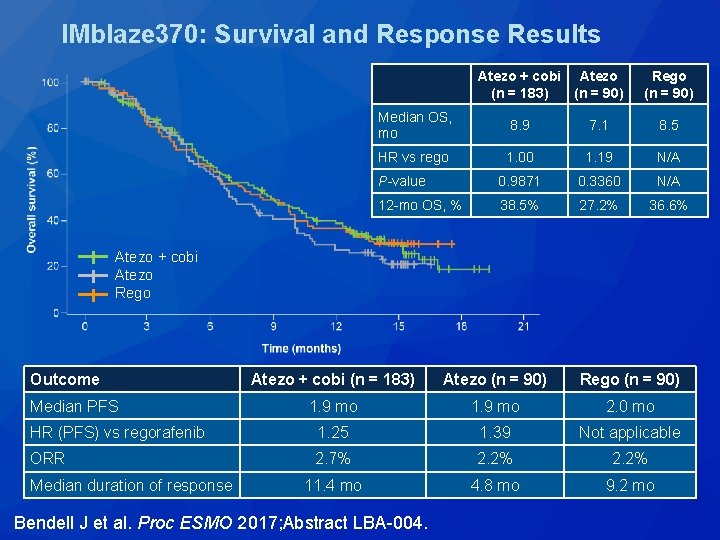
IMblaze 370: Survival and Response Results Atezo + cobi Atezo (n = 183) (n = 90) Rego (n = 90) Median OS, mo 8. 9 7. 1 8. 5 HR vs rego 1. 00 1. 19 N/A P-value 0. 9871 0. 3360 N/A 12 -mo OS, % 38. 5% 27. 2% 36. 6% Atezo + cobi Atezo Rego Outcome Atezo + cobi (n = 183) Atezo (n = 90) Rego (n = 90) 1. 9 mo 2. 0 mo HR (PFS) vs regorafenib 1. 25 1. 39 Not applicable ORR 2. 7% 2. 2% 11. 4 mo 4. 8 mo 9. 2 mo Median PFS Median duration of response Bendell J et al. Proc ESMO 2017; Abstract LBA-004.
IMblaze 370: Select AEs Occurring in ≥ 20% of Patients Atezo + cobi (n = 179) Atezo (n = 90) Rego (n = 80) Diarrhea 117 (65%) 17 (19%) 30 (38%) Rash 83 (46%) 8 (9%) 19 (24%) Nausea 66 (37%) 19 (21%) 11 (14%) 64 (36%) 23 (26%) 37 (46%) Pyrexia 59 (33%) 14 (16%) 20 (25%) Decreased appetite 48 (27%) 22 (24%) 33 (41%) Hypertension 9 (5%) 4 (4%) 25 (31%) Palmar-plantar erythrodysesthesia 3 (2%) 1 (1%) 42 (53%) All Grade AE Fatigue • (n = 119) Safety in the atezolizumab + cobimetinib arm was consistent with the known safety profiles of the individual agents. Bendell J et al. Proc ESMO 2017; Abstract LBA-004.
Regorafenib Dose Optimization Study (Re. DOS): Randomized Phase II Trial to Evaluate Dosing Strategies for Regorafenib in Refractory Metastatic CRC (m. CRC) — An ACCRU Network Study Regorafenib Dose Optimization Study (Re. DOS): Randomized Phase II Trial to Evaluate Escalating Dosing Strategy and Pre-Emptive Topical Steroids for Regorafenib in Refractory Metastatic Colorectal Cancer (m. CRC) — An ACCRU Network Study Bekaii-Saab TS et al. Gastrointestinal Cancers Symposium 2018; Abstract 611. Bekaii-Saab TS et al. Proc ESMO 2018; Abstract O-014.
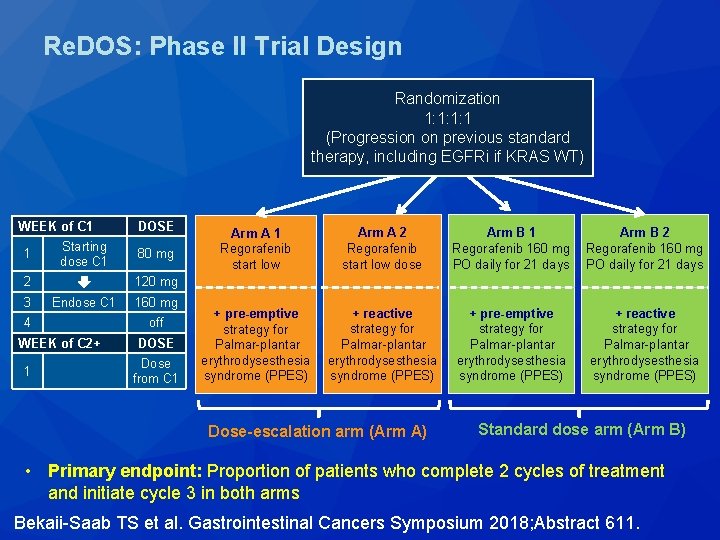
Re. DOS: Phase II Trial Design Randomization 1: 1: 1: 1 (Progression on previous standard therapy, including EGFRi if KRAS WT) WEEK of C 1 1 Starting dose C 1 2 3 80 mg Arm A 1 Regorafenib start low Arm A 2 Regorafenib start low dose + pre-emptive strategy for Palmar-plantar erythrodysesthesia syndrome (PPES) + reactive strategy for Palmar-plantar erythrodysesthesia syndrome (PPES) Arm B 1 Arm B 2 Regorafenib 160 mg PO daily for 21 days 120 mg Endose C 1 4 WEEK of C 2+ 1 DOSE 160 mg off DOSE Dose from C 1 Dose-escalation arm (Arm A) + pre-emptive strategy for Palmar-plantar erythrodysesthesia syndrome (PPES) + reactive strategy for Palmar-plantar erythrodysesthesia syndrome (PPES) Standard dose arm (Arm B) • Primary endpoint: Proportion of patients who complete 2 cycles of treatment and initiate cycle 3 in both arms Bekaii-Saab TS et al. Gastrointestinal Cancers Symposium 2018; Abstract 611.
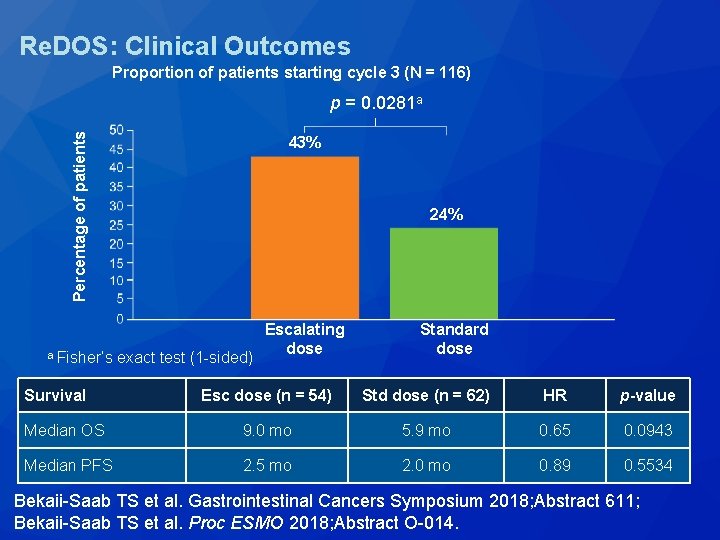
Re. DOS: Clinical Outcomes Proportion of patients starting cycle 3 (N = 116) Percentage of patients p = 0. 0281 a 43% 24% a Fisher’s exact test (1 -sided) Survival Escalating dose Standard dose Esc dose (n = 54) Std dose (n = 62) HR p-value Median OS 9. 0 mo 5. 9 mo 0. 65 0. 0943 Median PFS 2. 5 mo 2. 0 mo 0. 89 0. 5534 Bekaii-Saab TS et al. Gastrointestinal Cancers Symposium 2018; Abstract 611; Bekaii-Saab TS et al. Proc ESMO 2018; Abstract O-014.
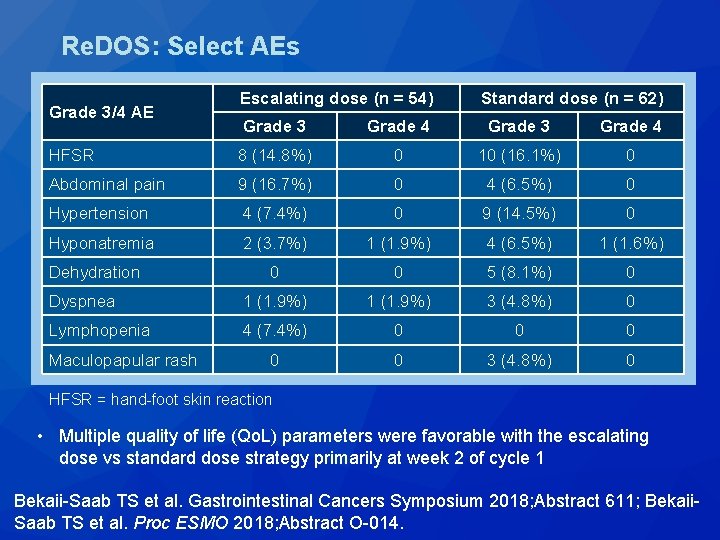
Re. DOS: Select AEs Grade 3/4 AE Escalating dose (n = 54) Standard dose (n = 62) (n = 119) Grade 3 Grade 4 HFSR 8 (14. 8%) 0 10 (16. 1%) 0 Abdominal pain 9 (16. 7%) 0 4 (6. 5%) 0 Hypertension 4 (7. 4%) 0 9 (14. 5%) 0 Hyponatremia 2 (3. 7%) 1 (1. 9%) 4 (6. 5%) 1 (1. 6%) 0 0 5 (8. 1%) 0 Dyspnea 1 (1. 9%) 3 (4. 8%) 0 Lymphopenia 4 (7. 4%) 0 0 0 3 (4. 8%) 0 Dehydration Maculopapular rash HFSR = hand-foot skin reaction • Multiple quality of life (Qo. L) parameters were favorable with the escalating dose vs standard dose strategy primarily at week 2 of cycle 1 Bekaii-Saab TS et al. Gastrointestinal Cancers Symposium 2018; Abstract 611; Bekaii. Saab TS et al. Proc ESMO 2018; Abstract O-014.
REVERCE: Randomized Phase II Study of Regorafenib Followed by Cetuximab versus the Reverse Sequence for m. CRC Patients Previously Treated with Fluoropyrimidine, Oxaliplatin, and Irinotecan Shitara K et al. Gastrointestinal Cancers Symposium 2018; Abstract 557.
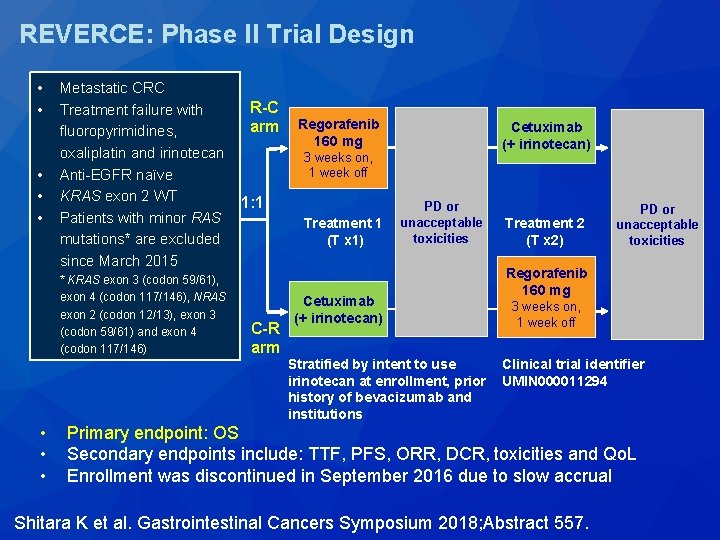
REVERCE: Phase II Trial Design • • • Metastatic CRC Treatment failure with fluoropyrimidines, oxaliplatin and irinotecan Anti-EGFR naïve KRAS exon 2 WT Patients with minor RAS mutations* are excluded since March 2015 * KRAS exon 3 (codon 59/61), exon 4 (codon 117/146), NRAS exon 2 (codon 12/13), exon 3 (codon 59/61) and exon 4 (codon 117/146) • • • R-C arm Regorafenib Cetuximab (+ irinotecan) 160 mg 3 weeks on, 1 week off 1: 1 Treatment 1 (T x 1) C-R arm Cetuximab (+ irinotecan) PD or unacceptable toxicities Treatment 2 (T x 2) PD or unacceptable toxicities Regorafenib 160 mg 3 weeks on, 1 week off Stratified by intent to use Clinical trial identifier irinotecan at enrollment, prior UMIN 000011294 history of bevacizumab and institutions Primary endpoint: OS Secondary endpoints include: TTF, PFS, ORR, DCR, toxicities and Qo. L Enrollment was discontinued in September 2016 due to slow accrual Shitara K et al. Gastrointestinal Cancers Symposium 2018; Abstract 557.
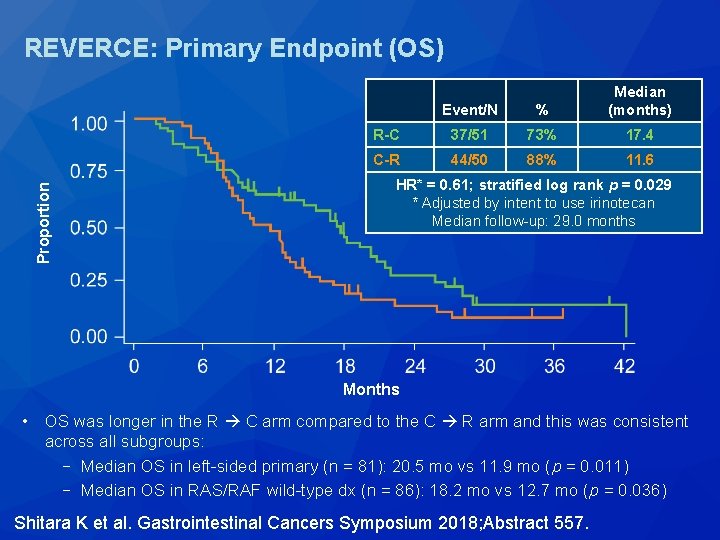
REVERCE: Primary Endpoint (OS) Event/N % Median (months) R-C 37/51 73% 17. 4 C-R 44/50 88% 11. 6 Proportion HR* = 0. 61; stratified log rank p = 0. 029 * Adjusted by intent to use irinotecan Median follow-up: 29. 0 months Months • OS was longer in the R C arm compared to the C R arm and this was consistent across all subgroups: – Median OS in left-sided primary (n = 81): 20. 5 mo vs 11. 9 mo (p = 0. 011) – Median OS in RAS/RAF wild-type dx (n = 86): 18. 2 mo vs 12. 7 mo (p = 0. 036) Shitara K et al. Gastrointestinal Cancers Symposium 2018; Abstract 557.
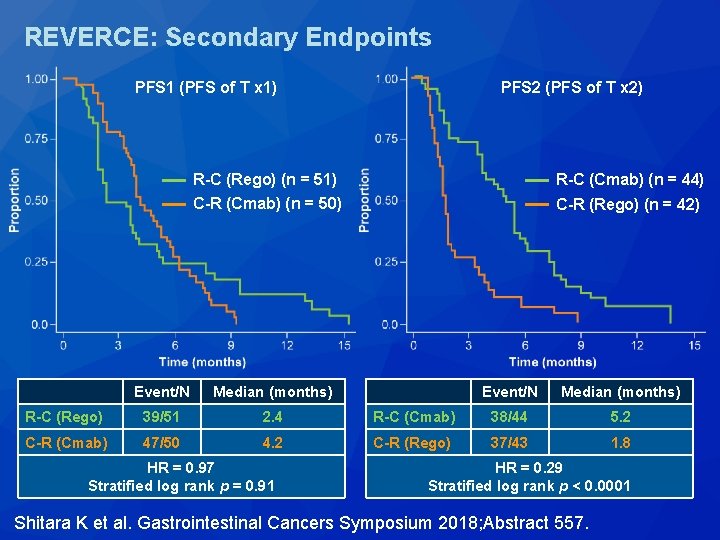
REVERCE: Secondary Endpoints PFS 1 (PFS of T x 1) PFS 2 (PFS of T x 2) R-C (Cmab) (n = 44) R-C (Rego) (n = 51) C-R (Cmab) (n = 50) Event/N Median (months) R-C (Rego) 39/51 2. 4 C-R (Cmab) 47/50 4. 2 HR = 0. 97 Stratified log rank p = 0. 91 C-R (Rego) (n = 42) Event/N Median (months) R-C (Cmab) 38/44 5. 2 C-R (Rego) 37/43 1. 8 HR = 0. 29 Stratified log rank p < 0. 0001 Shitara K et al. Gastrointestinal Cancers Symposium 2018; Abstract 557.
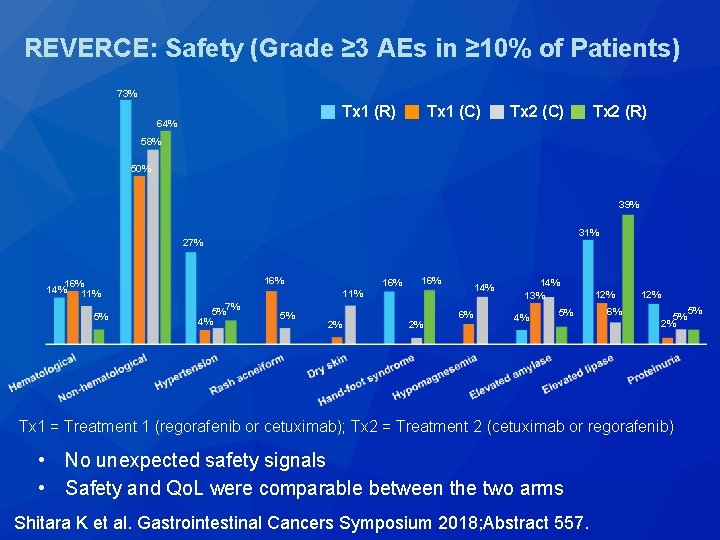
REVERCE: Safety (Grade ≥ 3 AEs in ≥ 10% of Patients) 73% Tx 1 (R) 64% Tx 1 (C) Tx 2 (R) 58% 50% 39% 31% 27% 16% 14% 11% 5% 11% 7% 5% 4% 5% 2% 16% 2% 14% 6% 14% 13% 4% 5% 12% 6% 12% 5% 2% Tx 1 = Treatment 1 (regorafenib or cetuximab); Tx 2 = Treatment 2 (cetuximab or regorafenib) • No unexpected safety signals • Safety and Qo. L were comparable between the two arms Shitara K et al. Gastrointestinal Cancers Symposium 2018; Abstract 557. 5%
J Clin Oncol 2018; 36(4): 350 -8.
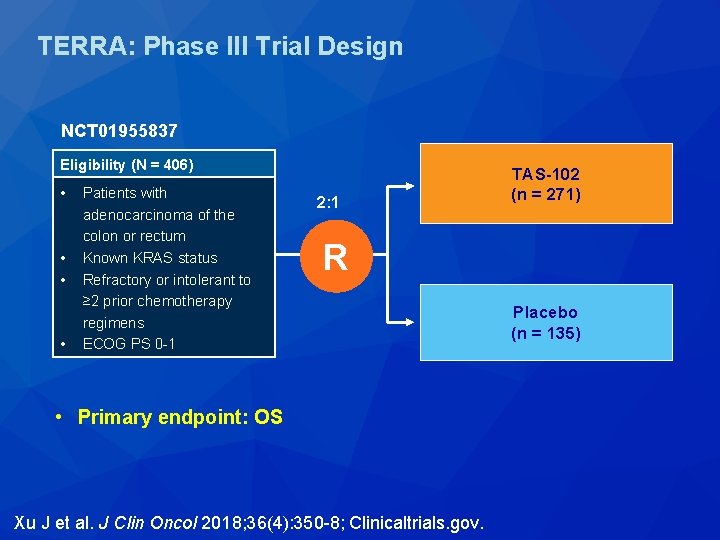
TERRA: Phase III Trial Design NCT 01955837 Eligibility (N = 406) • • Patients with adenocarcinoma of the colon or rectum Known KRAS status Refractory or intolerant to ≥ 2 prior chemotherapy regimens ECOG PS 0 -1 2: 1 TAS-102 (n = 271) R • Primary endpoint: OS Xu J et al. J Clin Oncol 2018; 36(4): 350 -8; Clinicaltrials. gov. Placebo (n = 135)
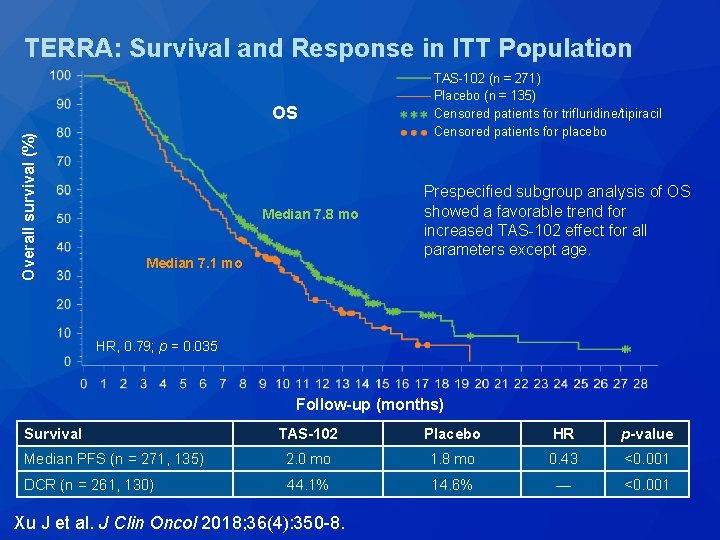
TERRA: Survival and Response in ITT Population Overall survival (%) OS Median 7. 8 mo Median 7. 1 mo TAS-102 (n = 271) Placebo (n = 135) Censored patients for trifluridine/tipiracil Censored patients for placebo Prespecified subgroup analysis of OS showed a favorable trend for increased TAS-102 effect for all parameters except age. HR, 0. 79; p = 0. 035 Follow-up (months) Survival TAS-102 Placebo HR p-value Median PFS (n = 271, 135) 2. 0 mo 1. 8 mo 0. 43 <0. 001 DCR (n = 261, 130) 44. 1% 14. 6% — <0. 001 Xu J et al. J Clin Oncol 2018; 36(4): 350 -8.
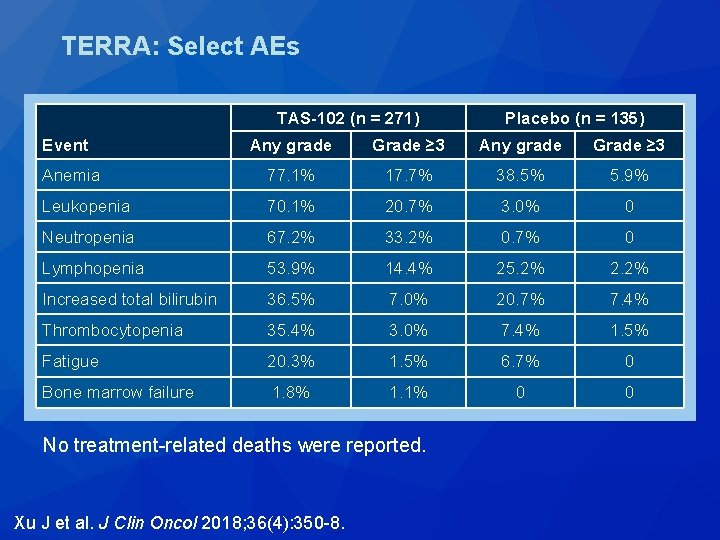
TERRA: Select AEs TAS-102 (n = 271) (n = 119) Placebo (n = 135) Any grade Grade ≥ 3 Anemia 77. 1% 17. 7% 38. 5% 5. 9% Leukopenia 70. 1% 20. 7% 3. 0% 0 Neutropenia 67. 2% 33. 2% 0. 7% 0 Lymphopenia 53. 9% 14. 4% 25. 2% 2. 2% Increased total bilirubin 36. 5% 7. 0% 20. 7% 7. 4% Thrombocytopenia 35. 4% 3. 0% 7. 4% 1. 5% Fatigue 20. 3% 1. 5% 6. 7% 0 Bone marrow failure 1. 8% 1. 1% 0 0 Event No treatment-related deaths were reported. Xu J et al. J Clin Oncol 2018; 36(4): 350 -8.
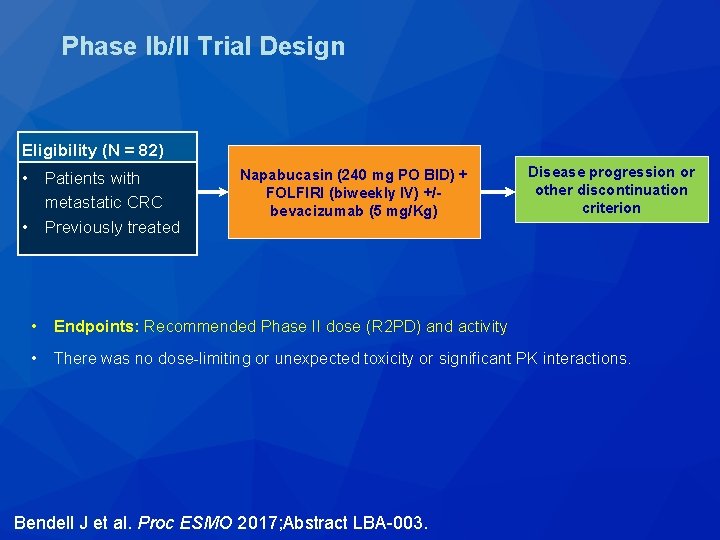
Phase Ib/II Study of Cancer Stemness Inhibitor Napabucasin in Combination with FOLFIRI ± Bevacizumab in m. CRC Patients Bendell J et al. Proc ESMO 2017; Abstract LBA-003.
Phase Ib/II Trial Design Eligibility (N = 82) • Patients with metastatic CRC • Previously treated Napabucasin (240 mg PO BID) + FOLFIRI (biweekly IV) +/bevacizumab (5 mg/Kg) Disease progression or other discontinuation criterion • Endpoints: Recommended Phase II dose (R 2 PD) and activity • There was no dose-limiting or unexpected toxicity or significant PK interactions. Bendell J et al. Proc ESMO 2017; Abstract LBA-003.
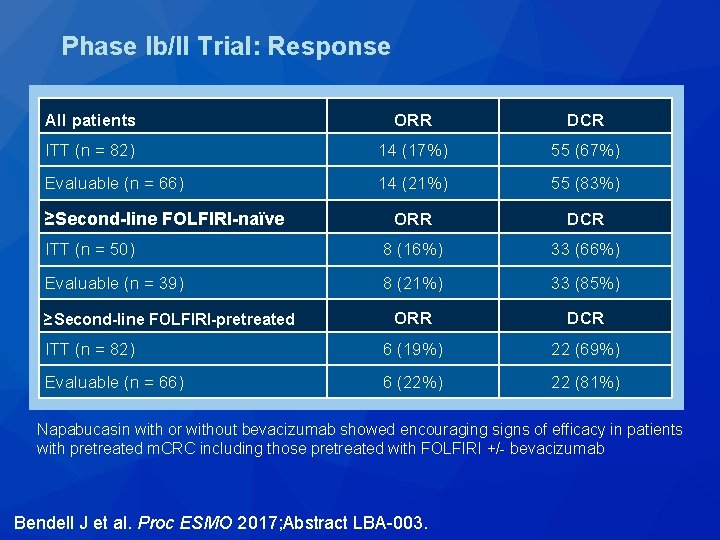
Phase Ib/II Trial: Response All patients ORR DCR ITT (n = 82) 14 (17%) 55 (67%) Evaluable (n = 66) 14 (21%) 55 (83%) ORR DCR 8 (16%) 33 (66%) 8 (21%) 33 (85%) ORR DCR ITT (n = 82) 6 (19%) 22 (69%) Evaluable (n = 66) 6 (22%) 22 (81%) ≥Second-line FOLFIRI-naïve ITT (n = 50) Evaluable (n = 39) ≥Second-line FOLFIRI-pretreated (n = 119) Napabucasin with or without bevacizumab showed encouraging signs of efficacy in patients with pretreated m. CRC including those pretreated with FOLFIRI +/- bevacizumab Bendell J et al. Proc ESMO 2017; Abstract LBA-003.
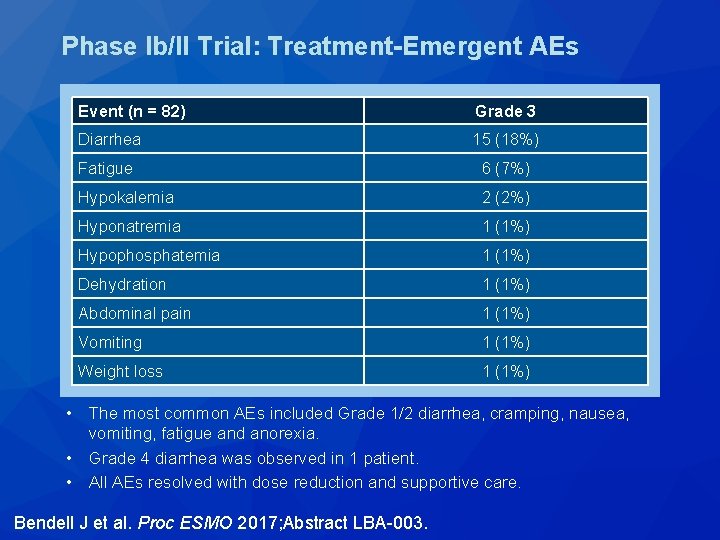
Phase Ib/II Trial: Treatment-Emergent AEs Event (n = 82) Grade 3 Diarrhea 15 (18%) Fatigue 6 (7%) Hypokalemia 2 (2%) Hyponatremia 1 (1%) Hypophosphatemia 1 (1%) Dehydration (n = 119) 1 (1%) Abdominal pain 1 (1%) Vomiting 1 (1%) Weight loss 1 (1%) • The most common AEs included Grade 1/2 diarrhea, cramping, nausea, vomiting, fatigue and anorexia. • Grade 4 diarrhea was observed in 1 patient. • All AEs resolved with dose reduction and supportive care. Bendell J et al. Proc ESMO 2017; Abstract LBA-003.
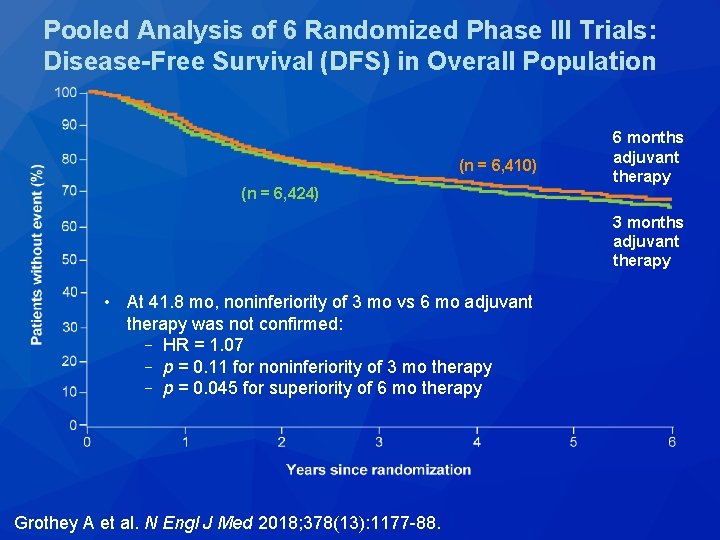
N Engl J Med 2018; 378(13): 1177 -88.
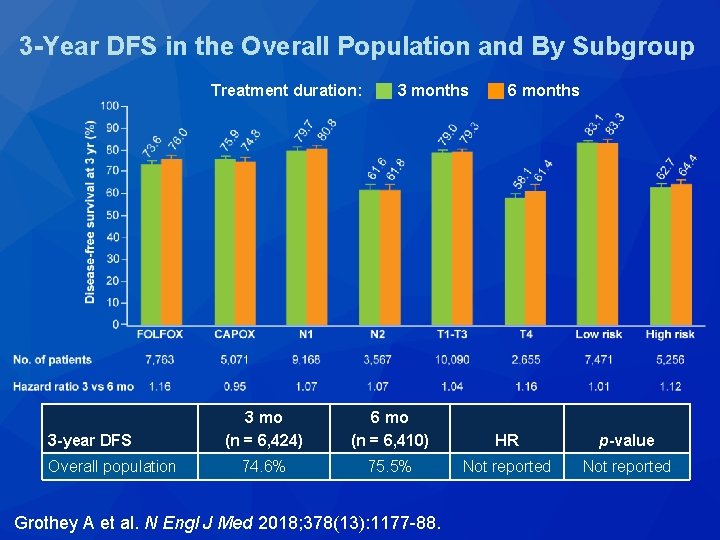
Pooled Analysis of 6 Randomized Phase III Trials: Disease-Free Survival (DFS) in Overall Population (n = 6, 410) (n = 6, 424) 6 months adjuvant therapy 3 months adjuvant therapy • At 41. 8 mo, noninferiority of 3 mo vs 6 mo adjuvant therapy was not confirmed: – HR = 1. 07 – p = 0. 11 for noninferiority of 3 mo therapy – p = 0. 045 for superiority of 6 mo therapy Grothey A et al. N Engl J Med 2018; 378(13): 1177 -88.
3 -Year DFS in the Overall Population and By Subgroup Treatment duration: 3 months 6 months 3 -year DFS Overall population 3 mo (n = 6, 424) 6 mo (n = 6, 410) HR p-value 74. 6% 75. 5% Not reported Grothey A et al. N Engl J Med 2018; 378(13): 1177 -88.
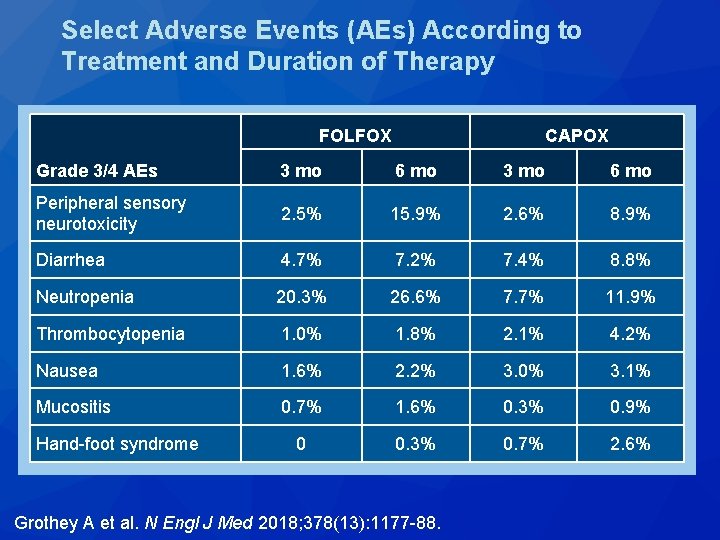
Select Adverse Events (AEs) According to Treatment and Duration of Therapy FOLFOX CAPOX Grade 3/4 AEs 3 mo 6 mo 3 mo 6 mo Peripheral sensory neurotoxicity 2. 5% 15. 9% 2. 6% 8. 9% Diarrhea 4. 7% 7. 2% 7. 4% 8. 8% Neutropenia 20. 3% 26. 6% 7. 7% 11. 9% Thrombocytopenia 1. 0% 1. 8% 2. 1% 4. 2% Nausea 1. 6% 2. 2% 3. 0% 3. 1% Mucositis 0. 7% 1. 6% 0. 3% 0. 9% 0 0. 3% 0. 7% 2. 6% Hand-foot syndrome Grothey A et al. N Engl J Med 2018; 378(13): 1177 -88.
Gastric Cancer
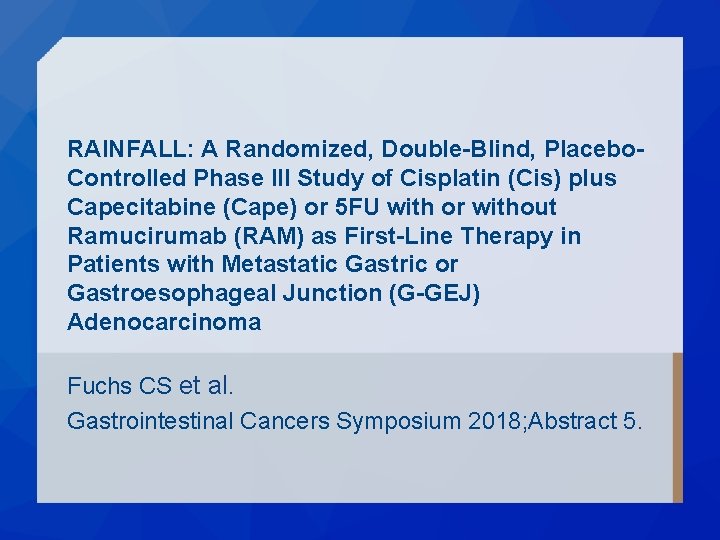
RAINFALL: A Randomized, Double-Blind, Placebo. Controlled Phase III Study of Cisplatin (Cis) plus Capecitabine (Cape) or 5 FU with or without Ramucirumab (RAM) as First-Line Therapy in Patients with Metastatic Gastric or Gastroesophageal Junction (G-GEJ) Adenocarcinoma Fuchs CS et al. Gastrointestinal Cancers Symposium 2018; Abstract 5.
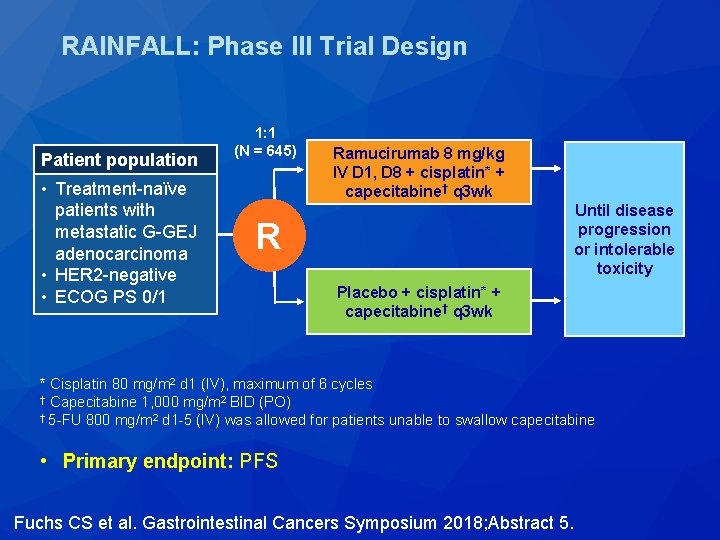
RAINFALL: Phase III Trial Design Patient population • Treatment-naïve patients with metastatic G-GEJ adenocarcinoma • HER 2 -negative • ECOG PS 0/1 1: 1 (N = 645) Ramucirumab 8 mg/kg IV D 1, D 8 + cisplatin* + capecitabine† q 3 wk Until disease progression or intolerable toxicity R Placebo + cisplatin* + capecitabine† q 3 wk * Cisplatin 80 mg/m 2 d 1 (IV), maximum of 6 cycles † Capecitabine 1, 000 mg/m 2 BID (PO) † 5 -FU 800 mg/m 2 d 1 -5 (IV) was allowed for patients unable to swallow capecitabine • Primary endpoint: PFS Fuchs CS et al. Gastrointestinal Cancers Symposium 2018; Abstract 5.
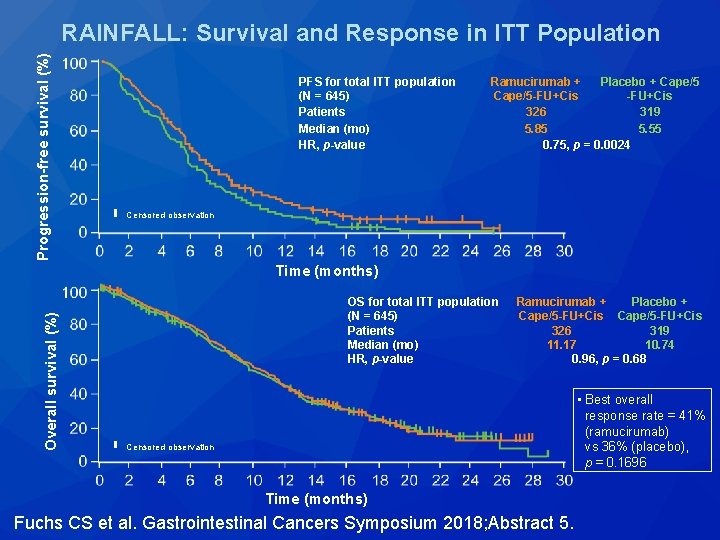
Progression-free survival (%) RAINFALL: Survival and Response in ITT Population PFS for total ITT population (N = 645) Patients Median (mo) HR, p-value Ramucirumab + Placebo + Cape/5 -FU+Cis 326 319 5. 85 5. 55 0. 75, p = 0. 0024 Censored observation Overall survival (%) Time (months) OS for total ITT population (N = 645) Patients Median (mo) HR, p-value Ramucirumab + Placebo + Cape/5 -FU+Cis 326 319 11. 17 10. 74 0. 96, p = 0. 68 • Best overall response rate = 41% (ramucirumab) vs 36% (placebo), p = 0. 1696 Censored observation Time (months) Fuchs CS et al. Gastrointestinal Cancers Symposium 2018; Abstract 5.
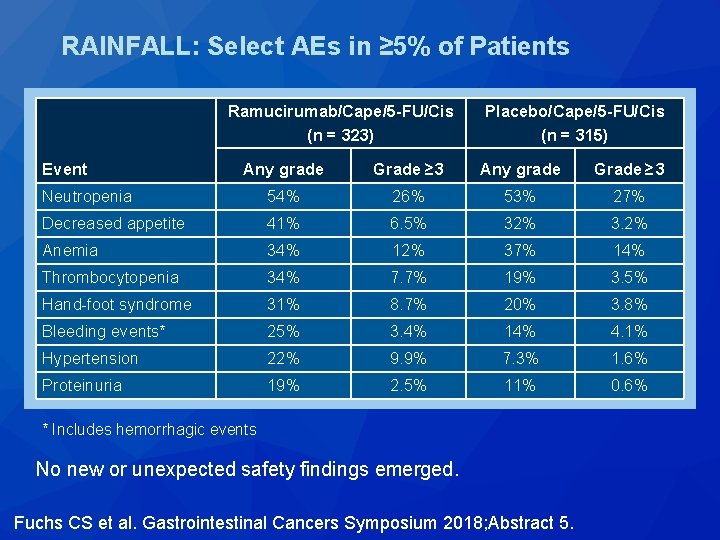
RAINFALL: Select AEs in ≥ 5% of Patients Ramucirumab/Cape/5 -FU/Cis (n = 323) (n = 119) Placebo/Cape/5 -FU/Cis (n = 315) Any grade Grade ≥ 3 Neutropenia 54% 26% 53% 27% Decreased appetite 41% 6. 5% 32% 3. 2% Anemia 34% 12% 37% 14% Thrombocytopenia 34% 7. 7% 19% 3. 5% Hand-foot syndrome 31% 8. 7% 20% 3. 8% Bleeding events* 25% 3. 4% 14% 4. 1% Hypertension 22% 9. 9% 7. 3% 1. 6% Proteinuria 19% 2. 5% 11% 0. 6% Event * Includes hemorrhagic events No new or unexpected safety findings emerged. Fuchs CS et al. Gastrointestinal Cancers Symposium 2018; Abstract 5.
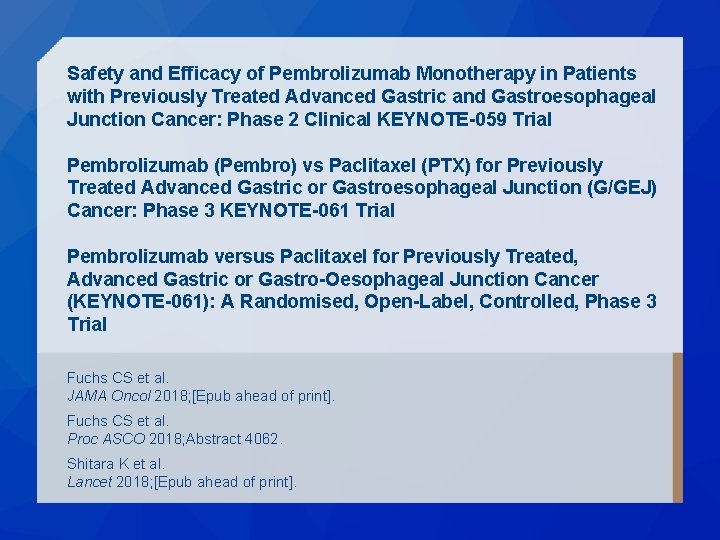
Safety and Efficacy of Pembrolizumab Monotherapy in Patients with Previously Treated Advanced Gastric and Gastroesophageal Junction Cancer: Phase 2 Clinical KEYNOTE-059 Trial Pembrolizumab (Pembro) vs Paclitaxel (PTX) for Previously Treated Advanced Gastric or Gastroesophageal Junction (G/GEJ) Cancer: Phase 3 KEYNOTE-061 Trial Pembrolizumab versus Paclitaxel for Previously Treated, Advanced Gastric or Gastro-Oesophageal Junction Cancer (KEYNOTE-061): A Randomised, Open-Label, Controlled, Phase 3 Trial Fuchs CS et al. JAMA Oncol 2018; [Epub ahead of print]. Fuchs CS et al. Proc ASCO 2018; Abstract 4062. Shitara K et al. Lancet 2018; [Epub ahead of print].
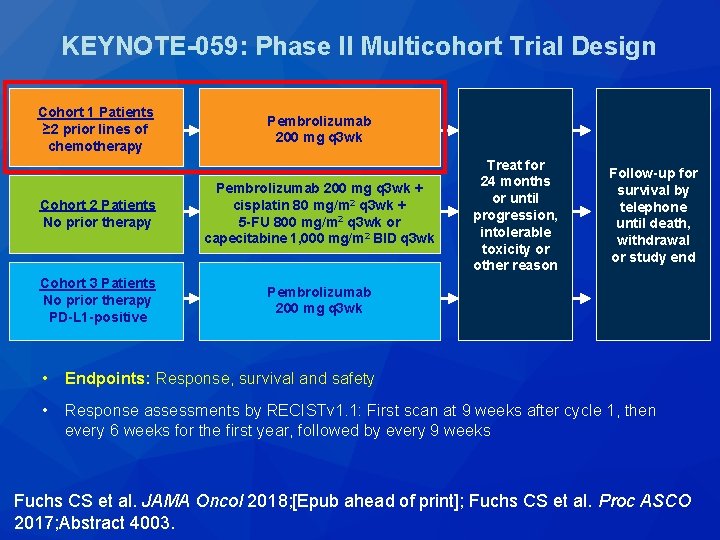
KEYNOTE-059: Phase II Multicohort Trial Design Cohort 1 Patients ≥ 2 prior lines of chemotherapy Pembrolizumab 200 mg q 3 wk Cohort 2 Patients No prior therapy Pembrolizumab 200 mg q 3 wk + cisplatin 80 mg/m 2 q 3 wk + 5 -FU 800 mg/m 2 q 3 wk or capecitabine 1, 000 mg/m 2 BID q 3 wk Cohort 3 Patients No prior therapy PD-L 1 -positive Pembrolizumab 200 mg q 3 wk Treat for 24 months or until progression, intolerable toxicity or other reason Follow-up for survival by telephone until death, withdrawal or study end • Endpoints: Response, survival and safety • Response assessments by RECISTv 1. 1: First scan at 9 weeks after cycle 1, then every 6 weeks for the first year, followed by every 9 weeks Fuchs CS et al. JAMA Oncol 2018; [Epub ahead of print]; Fuchs CS et al. Proc ASCO 2017; Abstract 4003.
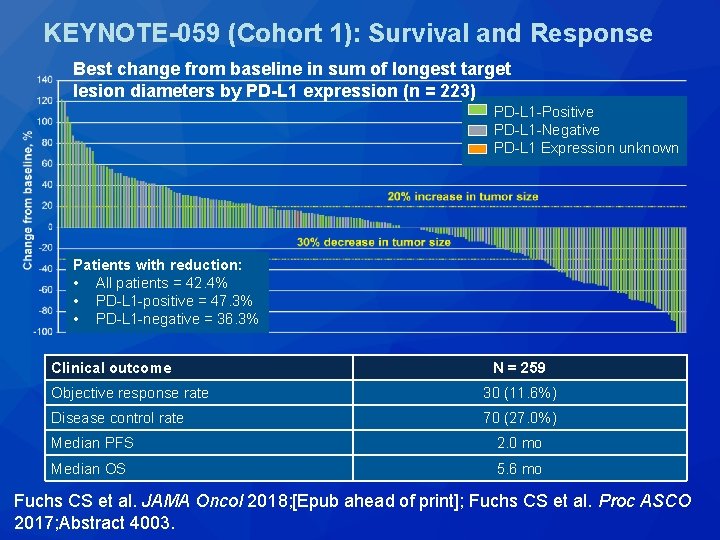
KEYNOTE-059 (Cohort 1): Survival and Response Best change from baseline in sum of longest target lesion diameters by PD-L 1 expression (n = 223) PD-L 1 -Positive PD-L 1 -Negative PD-L 1 Expression unknown Patients with reduction: • All patients = 42. 4% • PD-L 1 -positive = 47. 3% • PD-L 1 -negative = 36. 3% Clinical outcome N = 259 Objective response rate 30 (11. 6%) Disease control rate 70 (27. 0%) Median PFS 2. 0 mo Median OS 5. 6 mo Fuchs CS et al. JAMA Oncol 2018; [Epub ahead of print]; Fuchs CS et al. Proc ASCO 2017; Abstract 4003.
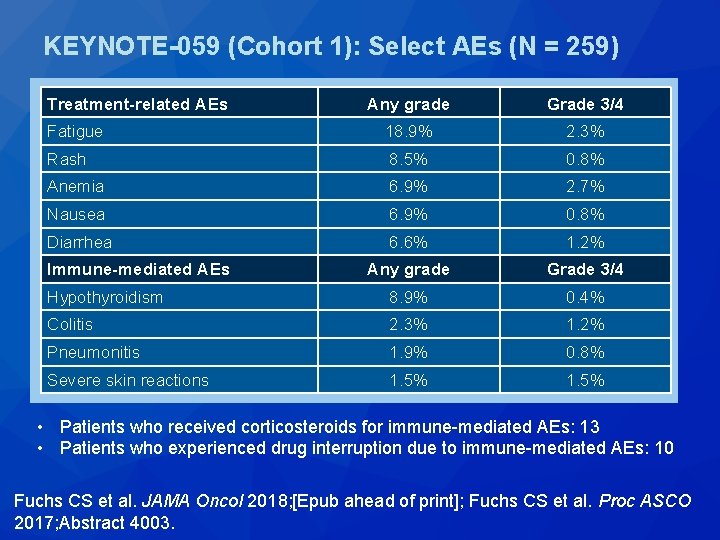
KEYNOTE-059 (Cohort 1): Select AEs (N = 259) Treatment-related AEs Any grade (n = 119) Grade 3/4 Fatigue 18. 9% 2. 3% Rash 8. 5% 0. 8% Anemia 6. 9% 2. 7% Nausea 6. 9% 0. 8% Diarrhea 6. 6% 1. 2% Any grade Grade 3/4 Hypothyroidism 8. 9% 0. 4% Colitis 2. 3% 1. 2% Pneumonitis 1. 9% 0. 8% Severe skin reactions 1. 5% Immune-mediated AEs • Patients who received corticosteroids for immune-mediated AEs: 13 • Patients who experienced drug interruption due to immune-mediated AEs: 10 Fuchs CS et al. JAMA Oncol 2018; [Epub ahead of print]; Fuchs CS et al. Proc ASCO 2017; Abstract 4003.
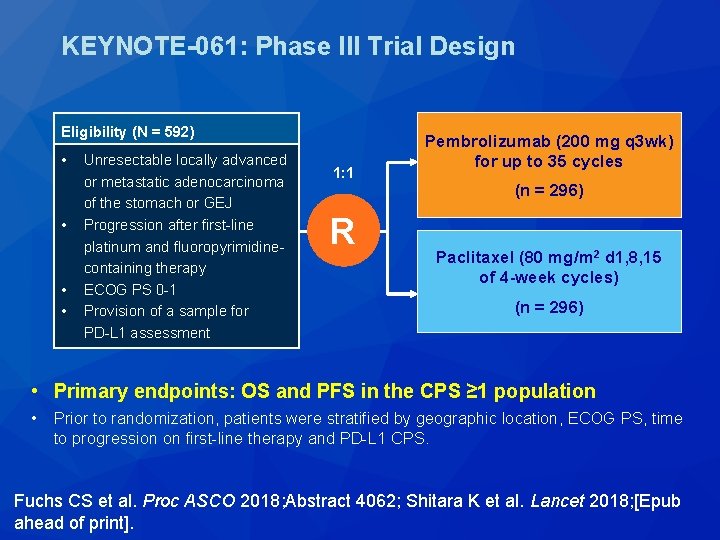
KEYNOTE-061: Phase III Trial Design Eligibility (N = 592) • • Unresectable locally advanced or metastatic adenocarcinoma of the stomach or GEJ Progression after first-line platinum and fluoropyrimidinecontaining therapy ECOG PS 0 -1 Provision of a sample for PD-L 1 assessment 1: 1 R Pembrolizumab (200 mg q 3 wk) for up to 35 cycles (n = 296) Paclitaxel (80 mg/m 2 d 1, 8, 15 of 4 -week cycles) (n = 296) • Primary endpoints: OS and PFS in the CPS ≥ 1 population • Prior to randomization, patients were stratified by geographic location, ECOG PS, time to progression on first-line therapy and PD-L 1 CPS. Fuchs CS et al. Proc ASCO 2018; Abstract 4062; Shitara K et al. Lancet 2018; [Epub ahead of print].
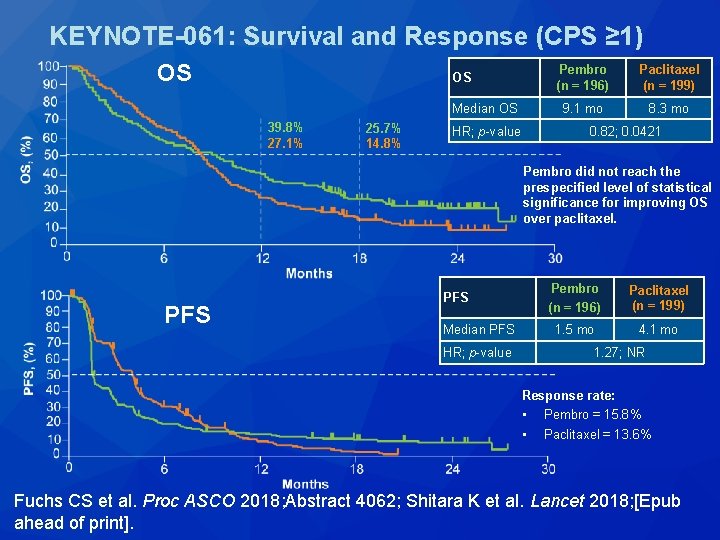
KEYNOTE-061: Survival and Response (CPS ≥ 1) OS OS Median OS 39. 8% 27. 1% 25. 7% 14. 8% HR; p-value Pembro (n = 196) Paclitaxel (n = 199) 9. 1 mo 8. 3 mo 0. 82; 0. 0421 Pembro did not reach the prespecified level of statistical significance for improving OS over paclitaxel. PFS Median PFS HR; p-value Pembro (n = 196) Paclitaxel (n = 199) 1. 5 mo 4. 1 mo 1. 27; NR Response rate: • • Pembro = 15. 8% Paclitaxel = 13. 6% Fuchs CS et al. Proc ASCO 2018; Abstract 4062; Shitara K et al. Lancet 2018; [Epub ahead of print].
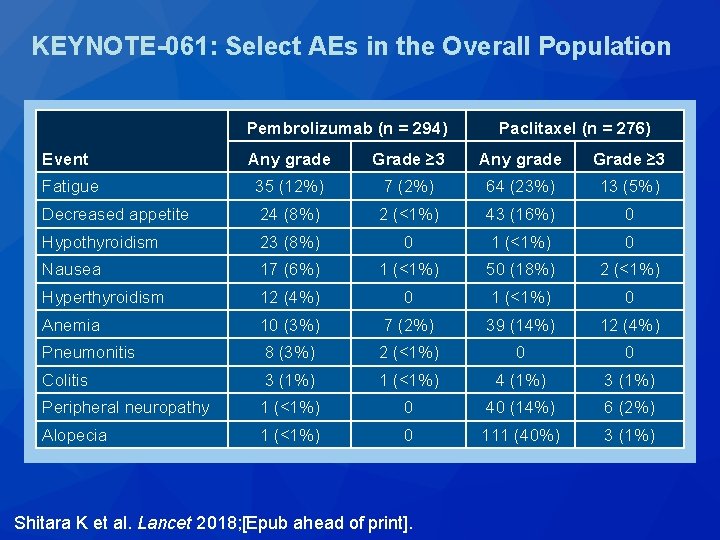
KEYNOTE-061: Select AEs in the Overall Population (n = 119) Pembrolizumab (n = 294) Paclitaxel (n = 276) Any grade Grade ≥ 3 Fatigue 35 (12%) 7 (2%) 64 (23%) 13 (5%) Decreased appetite 24 (8%) 2 (<1%) 43 (16%) 0 Hypothyroidism 23 (8%) 0 1 (<1%) 0 Nausea 17 (6%) 1 (<1%) 50 (18%) 2 (<1%) Hyperthyroidism 12 (4%) 0 1 (<1%) 0 Anemia 10 (3%) 7 (2%) 39 (14%) 12 (4%) Pneumonitis 8 (3%) 2 (<1%) 0 0 Colitis 3 (1%) 1 (<1%) 4 (1%) 3 (1%) Peripheral neuropathy 1 (<1%) 0 40 (14%) 6 (2%) Alopecia 1 (<1%) 0 111 (40%) 3 (1%) Event Shitara K et al. Lancet 2018; [Epub ahead of print].
Lancet 2017; 390(10111): 2461 -71.
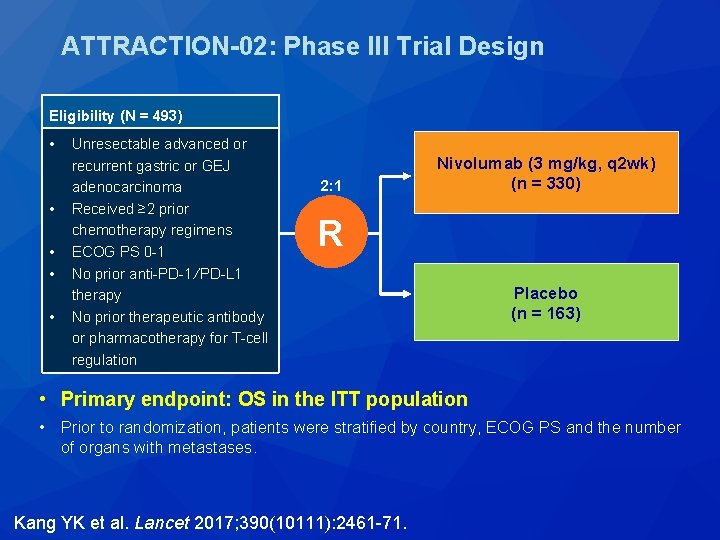
ATTRACTION-02: Phase III Trial Design Eligibility (N = 493) • • • Unresectable advanced or recurrent gastric or GEJ adenocarcinoma Received ≥ 2 prior chemotherapy regimens ECOG PS 0 -1 No prior anti-PD-1/PD-L 1 therapy No prior therapeutic antibody or pharmacotherapy for T-cell regulation 2: 1 Nivolumab (3 mg/kg, q 2 wk) (n = 330) R Placebo (n = 163) • Primary endpoint: OS in the ITT population • Prior to randomization, patients were stratified by country, ECOG PS and the number of organs with metastases. Kang YK et al. Lancet 2017; 390(10111): 2461 -71.
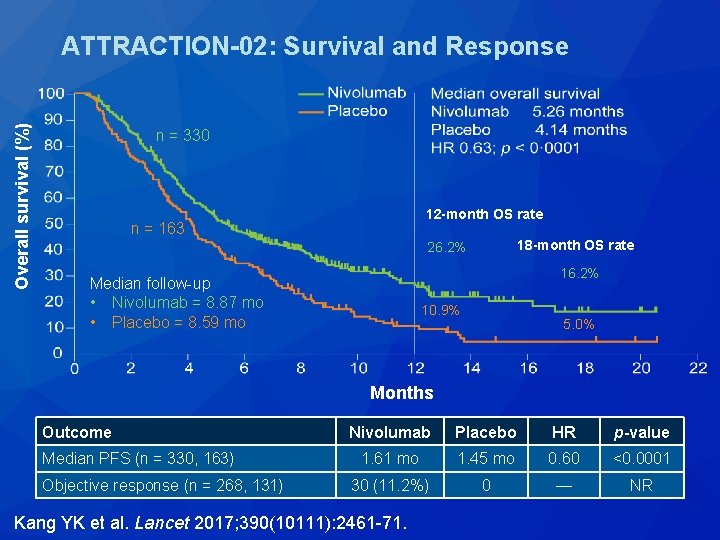
Overall survival (%) ATTRACTION-02: Survival and Response n = 330 12 -month OS rate n = 163 18 -month OS rate 26. 2% 16. 2% Median follow-up • Nivolumab = 8. 87 mo • Placebo = 8. 59 mo 10. 9% 5. 0% Months Outcome Median PFS (n = 330, 163) Objective response (n = 268, 131) Nivolumab Placebo HR p-value 1. 61 mo 1. 45 mo 0. 60 <0. 0001 30 (11. 2%) 0 — NR Kang YK et al. Lancet 2017; 390(10111): 2461 -71.
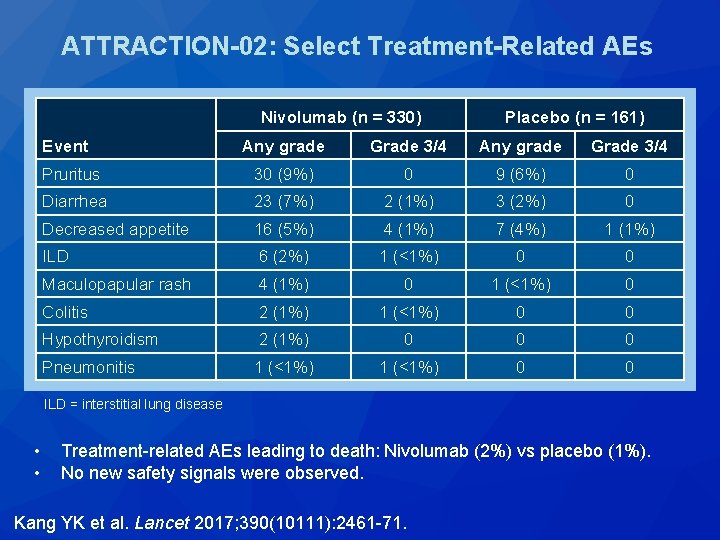
ATTRACTION-02: Select Treatment-Related AEs Nivolumab (n = 330) Placebo (n = 161) Any grade Grade 3/4 Pruritus 30 (9%) 0 9 (6%) 0 Diarrhea 23 (7%) 2 (1%) 3 (2%) 0 Decreased appetite 16 (5%) 4 (1%) 7 (4%) 1 (1%) ILD 6 (2%) 1 (<1%) 0 0 Maculopapular rash 4 (1%) 0 1 (<1%) 0 Colitis 2 (1%) 1 (<1%) 0 0 Hypothyroidism 2 (1%) 0 0 0 Pneumonitis 1 (<1%) 0 0 Event ILD = interstitial lung disease • • Treatment-related AEs leading to death: Nivolumab (2%) vs placebo (1%). No new safety signals were observed. Kang YK et al. Lancet 2017; 390(10111): 2461 -71.
Overall Survival Results from a Phase III Trial of Trifluridine/Tipiracil versus Placebo in Patients with Metastatic Gastric Cancer Refractory to Standard Therapies (TAGS) Tabernero J et al. Proc ESMO GI 2018; Abstract LBA-002.
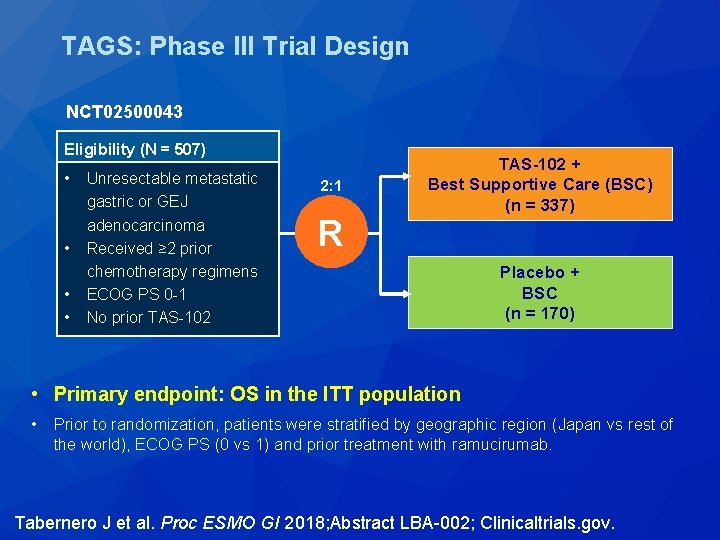
TAGS: Phase III Trial Design NCT 02500043 Eligibility (N = 507) • • Unresectable metastatic gastric or GEJ adenocarcinoma Received ≥ 2 prior chemotherapy regimens ECOG PS 0 -1 No prior TAS-102 2: 1 R TAS-102 + Best Supportive Care (BSC) (n = 337) Placebo + BSC (n = 170) • Primary endpoint: OS in the ITT population • Prior to randomization, patients were stratified by geographic region (Japan vs rest of the world), ECOG PS (0 vs 1) and prior treatment with ramucirumab. Tabernero J et al. Proc ESMO GI 2018; Abstract LBA-002; Clinicaltrials. gov.
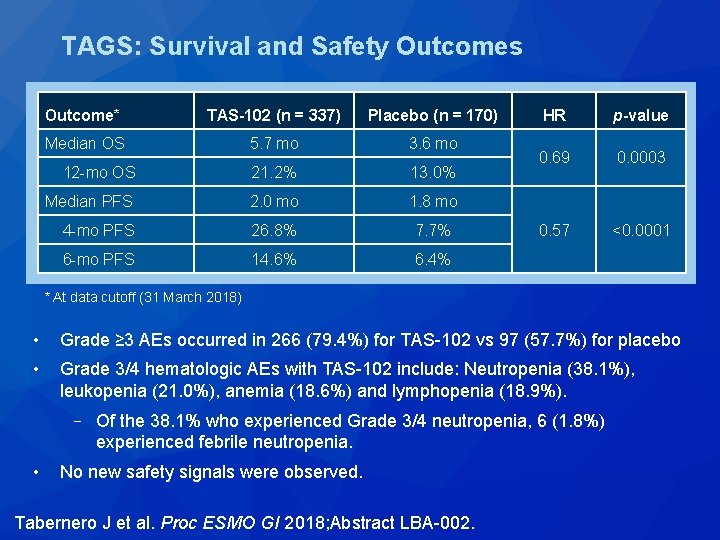
TAGS: Survival and Safety Outcomes (n = 119) Outcome* TAS-102 (n = 337) Placebo (n = 170) Median OS 5. 7 mo 3. 6 mo 12 -mo OS 21. 2% 13. 0% Median PFS 2. 0 mo 1. 8 mo 4 -mo PFS 26. 8% 7. 7% 6 -mo PFS 14. 6% 6. 4% HR p-value 0. 69 0. 0003 0. 57 <0. 0001 * At data cutoff (31 March 2018) • Grade ≥ 3 AEs occurred in 266 (79. 4%) for TAS-102 vs 97 (57. 7%) for placebo • Grade 3/4 hematologic AEs with TAS-102 include: Neutropenia (38. 1%), leukopenia (21. 0%), anemia (18. 6%) and lymphopenia (18. 9%). – Of the 38. 1% who experienced Grade 3/4 neutropenia, 6 (1. 8%) experienced febrile neutropenia. • No new safety signals were observed. Tabernero J et al. Proc ESMO GI 2018; Abstract LBA-002.
Lancet Oncol 2018; 19(5): 616 -28.
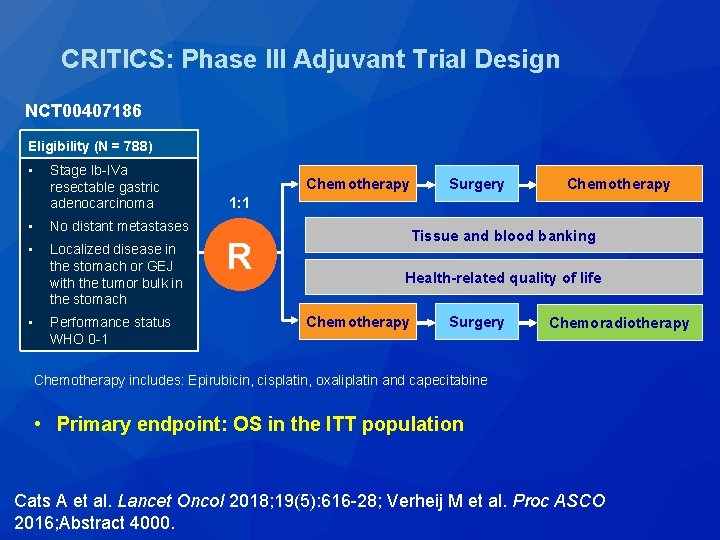
CRITICS: Phase III Adjuvant Trial Design NCT 00407186 Eligibility (N = 788) • Stage Ib-IVa resectable gastric adenocarcinoma • No distant metastases • Localized disease in the stomach or GEJ with the tumor bulk in the stomach • Performance status WHO 0 -1 Chemotherapy Surgery Chemotherapy 1: 1 R Tissue and blood banking Health-related quality of life Chemotherapy Surgery Chemoradiotherapy Chemotherapy includes: Epirubicin, cisplatin, oxaliplatin and capecitabine • Primary endpoint: OS in the ITT population Cats A et al. Lancet Oncol 2018; 19(5): 616 -28; Verheij M et al. Proc ASCO 2016; Abstract 4000.
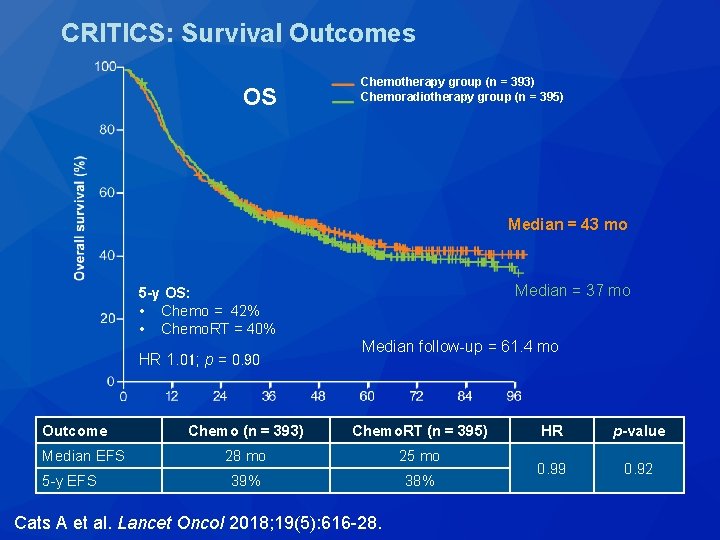
CRITICS: Survival Outcomes OS Chemotherapy group (n = 393) Chemoradiotherapy group (n = 395) Median = 43 mo Median = 37 mo 5 -y OS: • Chemo = 42% • Chemo. RT = 40% HR 1. 01; p = 0. 90 Outcome Median EFS 5 -y EFS Median follow-up = 61. 4 mo Chemo (n = 393) Chemo. RT (n = 395) 28 mo 25 mo 39% 38% Cats A et al. Lancet Oncol 2018; 19(5): 616 -28. HR p-value 0. 99 0. 92
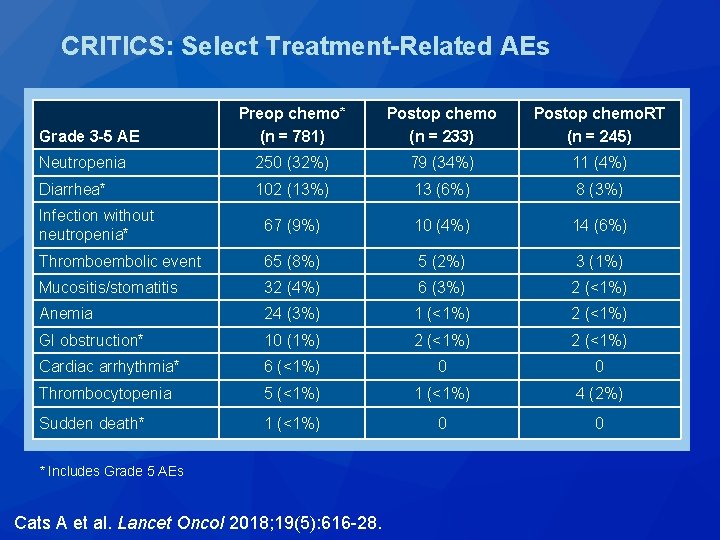
CRITICS: Select Treatment-Related AEs Preop chemo* (n = 781) Postop chemo (n = 233) Postop chemo. RT (n = 245) Neutropenia 250 (32%) 79 (34%) 11 (4%) Diarrhea* 102 (13%) 13 (6%) 8 (3%) Infection without neutropenia* 67 (9%) 10 (4%) 14 (6%) Thromboembolic event 65 (8%) 5 (2%) 3 (1%) Mucositis/stomatitis 32 (4%) 6 (3%) 2 (<1%) Anemia 24 (3%) 1 (<1%) 2 (<1%) GI obstruction* 10 (1%) 2 (<1%) Cardiac arrhythmia* 6 (<1%) 0 0 Thrombocytopenia 5 (<1%) 1 (<1%) 4 (2%) Sudden death* 1 (<1%) 0 0 Grade 3 -5 AE * Includes Grade 5 AEs Cats A et al. Lancet Oncol 2018; 19(5): 616 -28.
Pancreatic Cancer
Unicancer GI PRODIGE 24/CCTG PA. 6 Trial: A Multicenter International Randomized Phase III Trial of Adjuvant m. FOLFIRINOX versus Gemcitabine (gem) in Patients with Resected Pancreatic Ductal Adenocarcinomas Conroy T et al. Proc ASCO 2018; Abstract LBA 4001.
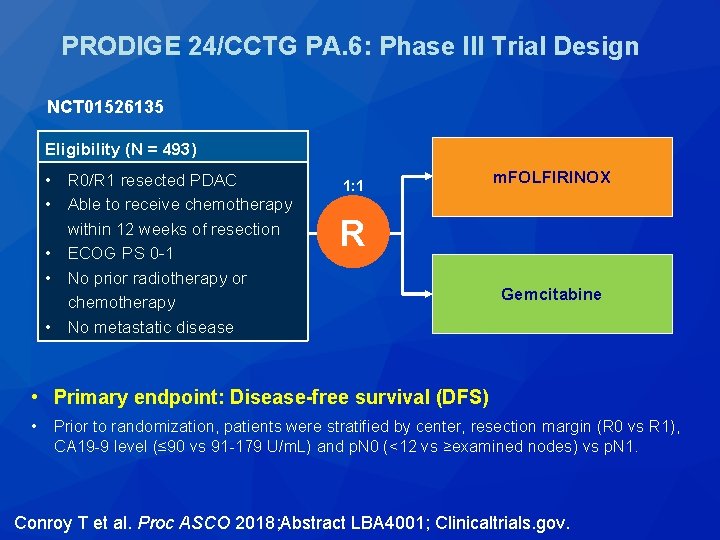
PRODIGE 24/CCTG PA. 6: Phase III Trial Design NCT 01526135 Eligibility (N = 493) • R 0/R 1 resected PDAC • Able to receive chemotherapy within 12 weeks of resection • ECOG PS 0 -1 • No prior radiotherapy or chemotherapy • No metastatic disease 1: 1 m. FOLFIRINOX R Gemcitabine • Primary endpoint: Disease-free survival (DFS) • Prior to randomization, patients were stratified by center, resection margin (R 0 vs R 1), CA 19 -9 level (≤ 90 vs 91 -179 U/m. L) and p. N 0 (<12 vs ≥examined nodes) vs p. N 1. Conroy T et al. Proc ASCO 2018; Abstract LBA 4001; Clinicaltrials. gov.
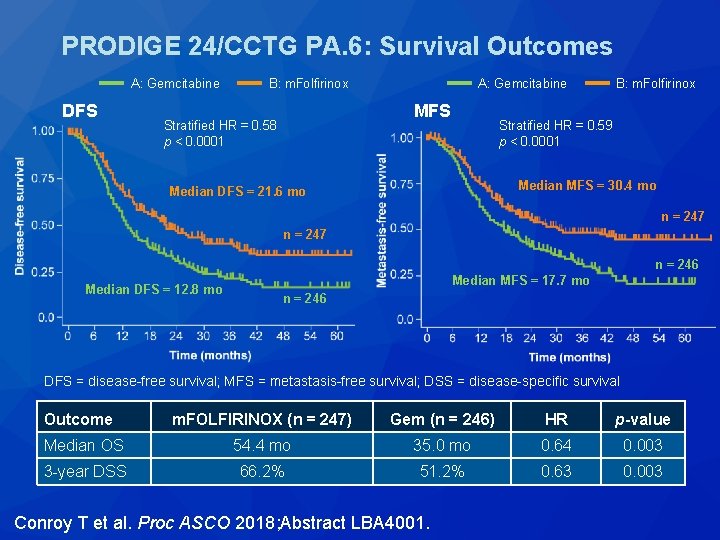
PRODIGE 24/CCTG PA. 6: Survival Outcomes A: Gemcitabine DFS B: m. Folfirinox A: Gemcitabine MFS Stratified HR = 0. 58 p < 0. 0001 B: m. Folfirinox Stratified HR = 0. 59 p < 0. 0001 Median MFS = 30. 4 mo Median DFS = 21. 6 mo n = 247 n = 246 Median DFS = 12. 8 mo Median MFS = 17. 7 mo n = 246 DFS = disease-free survival; MFS = metastasis-free survival; DSS = disease-specific survival Outcome m. FOLFIRINOX (n = 247) Gem (n = 246) HR p-value Median OS 54. 4 mo 35. 0 mo 0. 64 0. 003 3 -year DSS 66. 2% 51. 2% 0. 63 0. 003 Conroy T et al. Proc ASCO 2018; Abstract LBA 4001.
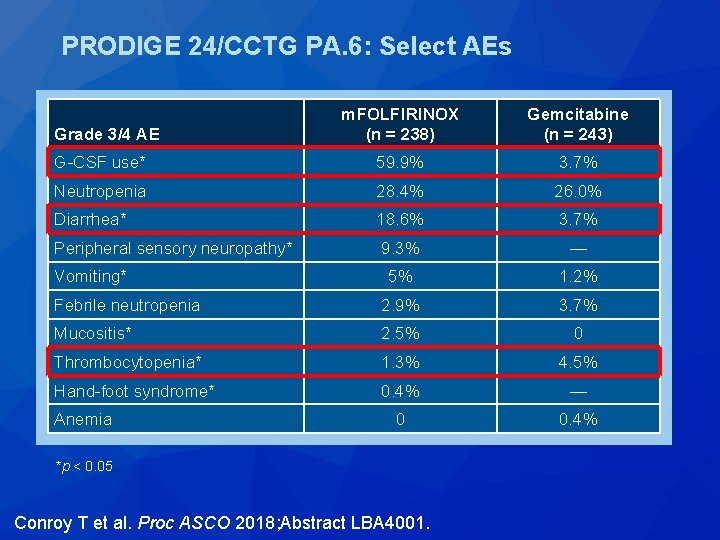
PRODIGE 24/CCTG PA. 6: Select AEs (n = 119) Grade 3/4 AE m. FOLFIRINOX Gemcitabine (n = 238) (n = 243) G-CSF use* 59. 9% 3. 7% Neutropenia 28. 4% 26. 0% Diarrhea* 18. 6% 3. 7% Peripheral sensory neuropathy* 9. 3% — 5% 1. 2% Febrile neutropenia 2. 9% 3. 7% Mucositis* 2. 5% 0 Thrombocytopenia* 1. 3% 4. 5% Hand-foot syndrome* 0. 4% — 0 0. 4% Vomiting* Anemia *p < 0. 05 Conroy T et al. Proc ASCO 2018; Abstract LBA 4001.
Preoperative Chemoradiotherapy versus Immediate Surgery for Resectable and Borderline Resectable Pancreatic Cancer (PREOPANC-1): A Randomized, Controlled, Multicenter Phase III Trial Van Tienhoven G et al. Proc ASCO 2018; Abstract LBA 4002.
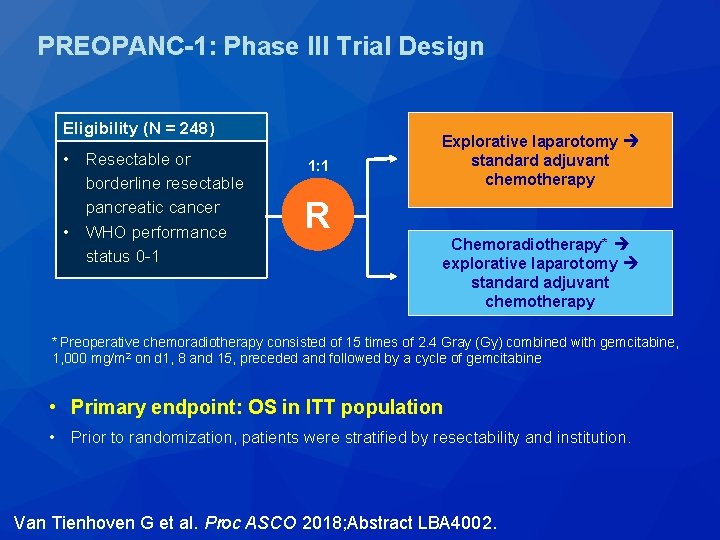
PREOPANC-1: Phase III Trial Design Eligibility (N = 248) • Resectable or borderline resectable pancreatic cancer • WHO performance status 0 -1 1: 1 R Explorative laparotomy standard adjuvant chemotherapy Chemoradiotherapy* explorative laparotomy standard adjuvant chemotherapy * Preoperative chemoradiotherapy consisted of 15 times of 2. 4 Gray (Gy) combined with gemcitabine, 1, 000 mg/m 2 on d 1, 8 and 15, preceded and followed by a cycle of gemcitabine • Primary endpoint: OS in ITT population • Prior to randomization, patients were stratified by resectability and institution. Van Tienhoven G et al. Proc ASCO 2018; Abstract LBA 4002.
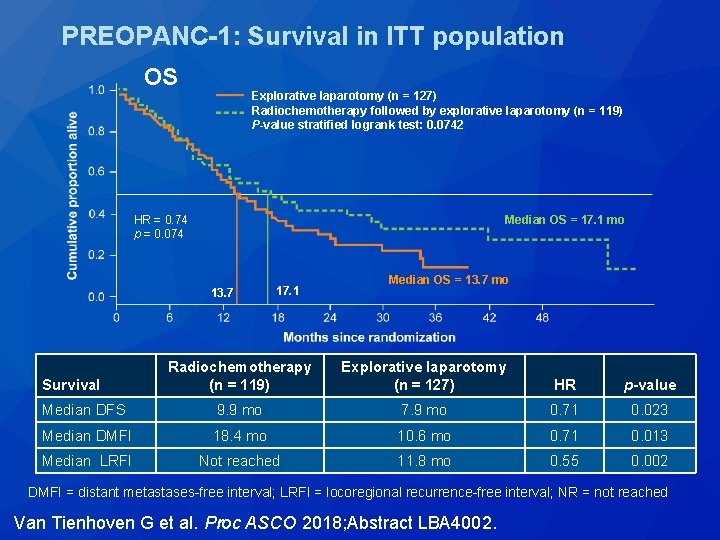
PREOPANC-1: Survival in ITT population OS Explorative laparotomy (n = 127) Radiochemotherapy followed by explorative laparotomy (n = 119) P-value stratified logrank test: 0. 0742 HR = 0. 74 p = 0. 074 Median OS = 17. 1 mo 13. 7 Survival 17. 1 Radiochemotherapy (n = 119) Median OS = 13. 7 mo Explorative laparotomy (n = 127) HR p-value Median DFS 9. 9 mo 7. 9 mo 0. 71 0. 023 Median DMFI 18. 4 mo 10. 6 mo 0. 71 0. 013 Median LRFI Not reached 11. 8 mo 0. 55 0. 002 DMFI = distant metastases-free interval; LRFI = locoregional recurrence-free interval; NR = not reached Van Tienhoven G et al. Proc ASCO 2018; Abstract LBA 4002.
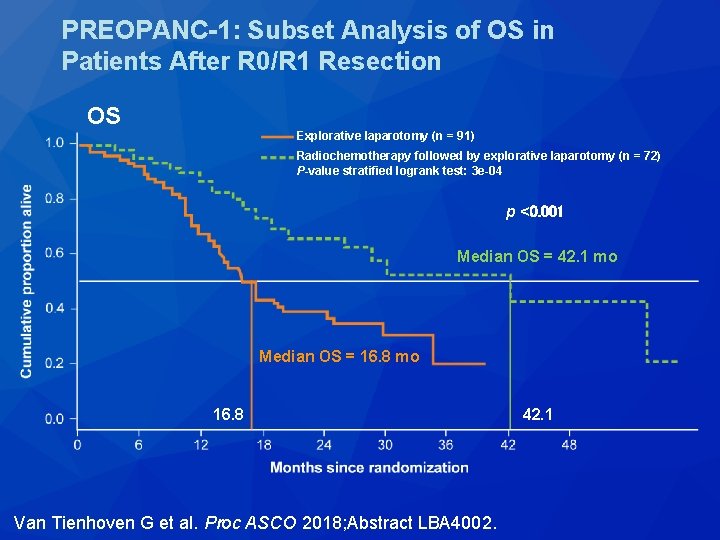
PREOPANC-1: Subset Analysis of OS in Patients After R 0/R 1 Resection OS Explorative laparotomy (n = 91) Radiochemotherapy followed by explorative laparotomy (n = 72) P-value stratified logrank test: 3 e-04 p <0. 001 Median OS = 42. 1 mo Median OS = 16. 8 mo 16. 8 Van Tienhoven G et al. Proc ASCO 2018; Abstract LBA 4002. 42. 1
FOLFIRINOX until Progression, FOLFIRINOX with Maintenance Treatment, or Sequential Treatment with Gemcitabine and FOLFIRI. 3 for First-Line Treatment of Metastatic Pancreatic Cancer: A Randomized Phase II Trial (PRODIGE 35 PANOPTIMOX) Dahan L et al. Proc ASCO 2018; Abstract 4000.
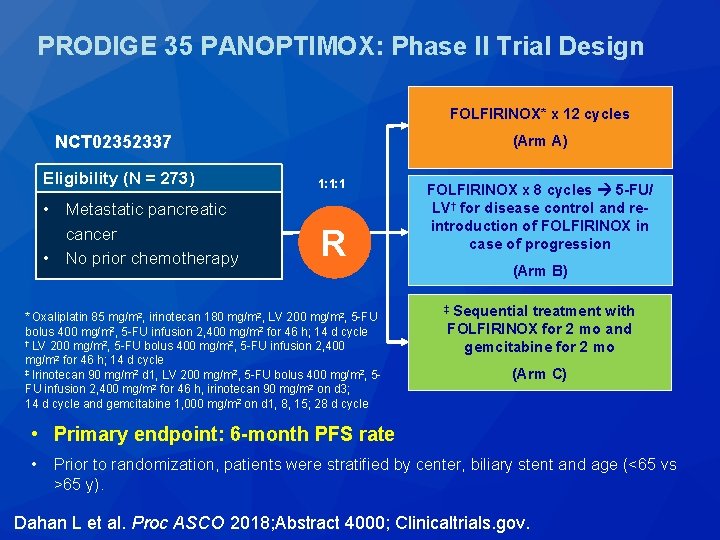
PRODIGE 35 PANOPTIMOX: Phase II Trial Design FOLFIRINOX* x 12 cycles NCT 02352337 (Arm A) Eligibility (N = 273) 1: 1: 1 • Metastatic pancreatic cancer • No prior chemotherapy R * Oxaliplatin 85 mg/m 2, irinotecan 180 mg/m 2, LV 200 mg/m 2, 5 -FU bolus 400 mg/m 2, 5 -FU infusion 2, 400 mg/m 2 for 46 h; 14 d cycle † LV 200 mg/m 2, 5 -FU bolus 400 mg/m 2, 5 -FU infusion 2, 400 mg/m 2 for 46 h; 14 d cycle ‡ Irinotecan 90 mg/m 2 d 1, LV 200 mg/m 2, 5 -FU bolus 400 mg/m 2, 5 FU infusion 2, 400 mg/m 2 for 46 h, irinotecan 90 mg/m 2 on d 3; 14 d cycle and gemcitabine 1, 000 mg/m 2 on d 1, 8, 15; 28 d cycle FOLFIRINOX x 8 cycles 5 -FU/ LV† for disease control and reintroduction of FOLFIRINOX in case of progression (Arm B) ‡ Sequential treatment with FOLFIRINOX for 2 mo and gemcitabine for 2 mo (Arm C) • Primary endpoint: 6 -month PFS rate • Prior to randomization, patients were stratified by center, biliary stent and age (<65 vs >65 y). Dahan L et al. Proc ASCO 2018; Abstract 4000; Clinicaltrials. gov.
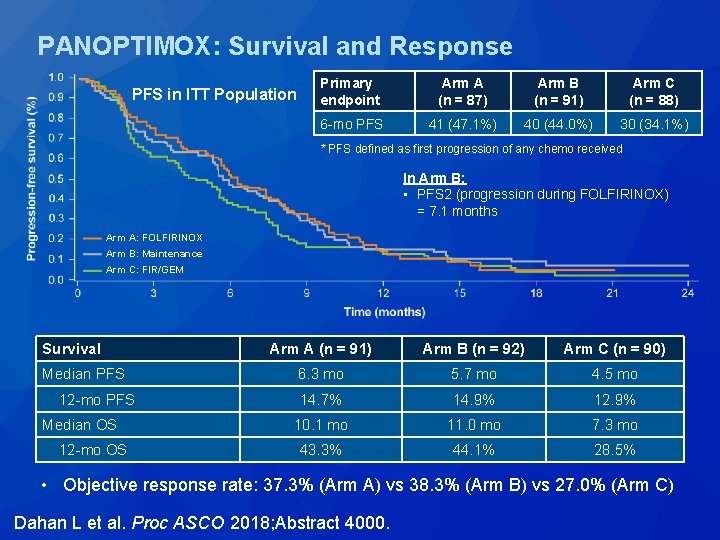
PANOPTIMOX: Survival and Response PFS in ITT Population Primary endpoint Arm A (n = 87) Arm B (n = 91) Arm C (n = 88) 6 -mo PFS 41 (47. 1%) 40 (44. 0%) 30 (34. 1%) * PFS defined as first progression of any chemo received In Arm B: • PFS 2 (progression during FOLFIRINOX) = 7. 1 months Arm A: FOLFIRINOX Arm B: Maintenance Arm C: FIR/GEM Survival Arm A (n = 91) Arm B (n = 92) Arm C (n = 90) Median PFS 6. 3 mo 5. 7 mo 4. 5 mo 12 -mo PFS 14. 7% 14. 9% 12. 9% 10. 1 mo 11. 0 mo 7. 3 mo 43. 3% 44. 1% 28. 5% Median OS 12 -mo OS • Objective response rate: 37. 3% (Arm A) vs 38. 3% (Arm B) vs 27. 0% (Arm C) Dahan L et al. Proc ASCO 2018; Abstract 4000.
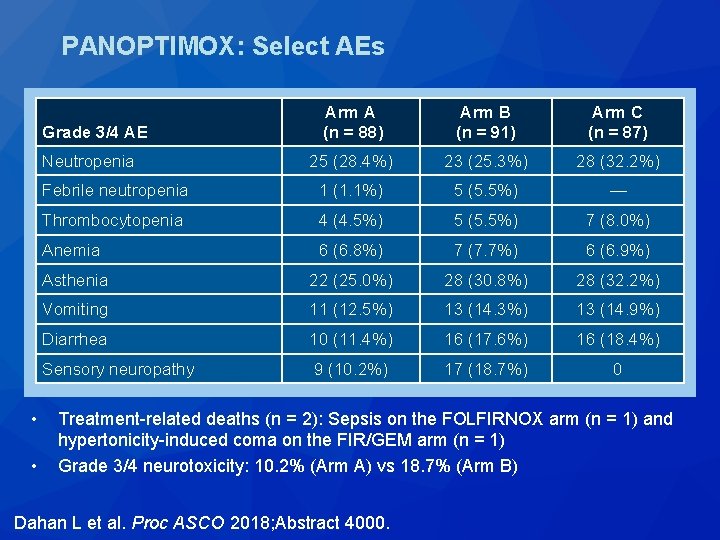
PANOPTIMOX: Select AEs Arm A (n = 88) Arm B (n = 91) Arm C (n = 87) 25 (28. 4%) 23 (25. 3%) 28 (32. 2%) Febrile neutropenia 1 (1. 1%) 5 (5. 5%) — Thrombocytopenia 4 (4. 5%) 5 (5. 5%) 7 (8. 0%) Anemia 6 (6. 8%) 7 (7. 7%) 6 (6. 9%) Asthenia 22 (25. 0%) 28 (30. 8%) 28 (32. 2%) Vomiting 11 (12. 5%) 13 (14. 3%) 13 (14. 9%) Diarrhea 10 (11. 4%) 16 (17. 6%) 16 (18. 4%) Sensory neuropathy 9 (10. 2%) 17 (18. 7%) 0 Grade 3/4 AE Neutropenia • • (n = 119) Treatment-related deaths (n = 2): Sepsis on the FOLFIRNOX arm (n = 1) and hypertonicity-induced coma on the FIR/GEM arm (n = 1) Grade 3/4 neurotoxicity: 10. 2% (Arm A) vs 18. 7% (Arm B) Dahan L et al. Proc ASCO 2018; Abstract 4000.
J Clin Oncol 2018; 36(4): 359 -66.
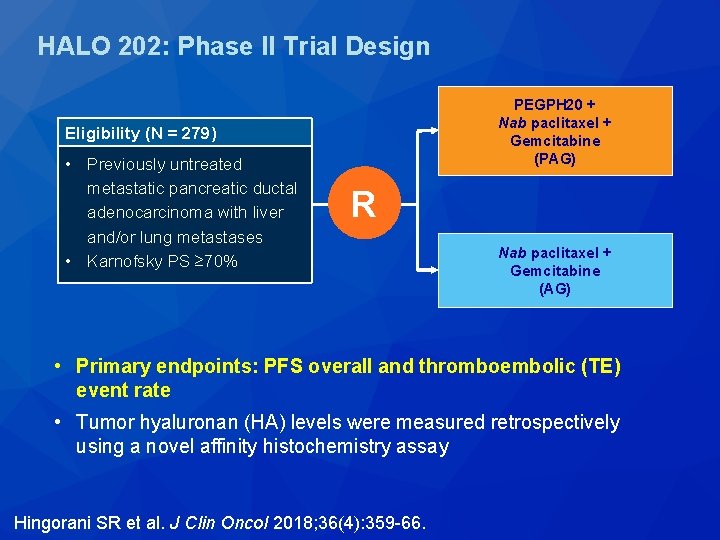
HALO 202: Phase II Trial Design PEGPH 20 + Nab paclitaxel + Gemcitabine (PAG) Eligibility (N = 279) • Previously untreated metastatic pancreatic ductal adenocarcinoma with liver and/or lung metastases • Karnofsky PS ≥ 70% R Nab paclitaxel + Gemcitabine (AG) • Primary endpoints: PFS overall and thromboembolic (TE) event rate • Tumor hyaluronan (HA) levels were measured retrospectively using a novel affinity histochemistry assay Hingorani SR et al. J Clin Oncol 2018; 36(4): 359 -66.
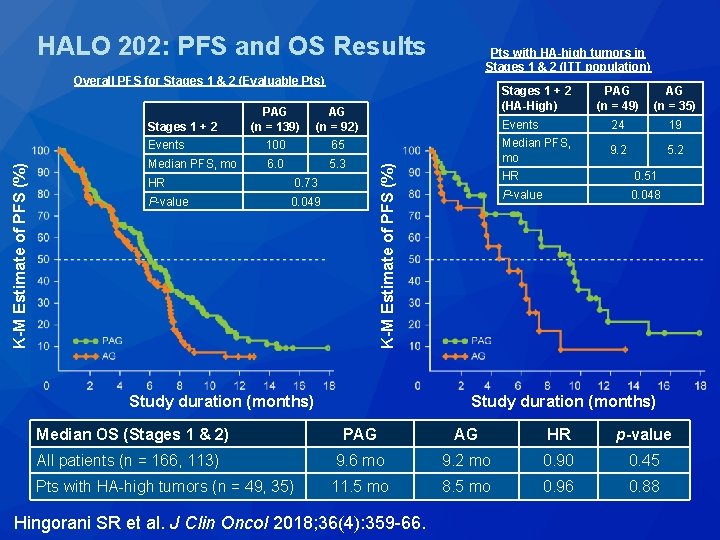
HALO 202: PFS and OS Results Pts with HA-high tumors in Stages 1 & 2 (ITT population) Overall PFS for Stages 1 & 2 (Evaluable Pts) AG (n = 92) Events 100 65 Median PFS, mo 6. 0 5. 3 K-M Estimate of PFS (%) HR 0. 73 P-value 0. 049 K-M Estimate of PFS (%) PAG (n = 139) Stages 1 + 2 (HA-High) Study duration (months) Median OS (Stages 1 & 2) PAG (n = 49) AG (n = 35) Events 24 19 Median PFS, mo 9. 2 5. 2 HR 0. 51 P-value 0. 048 Study duration (months) PAG AG HR p-value All patients (n = 166, 113) 9. 6 mo 9. 2 mo 0. 90 0. 45 Pts with HA-high tumors (n = 49, 35) 11. 5 mo 8. 5 mo 0. 96 0. 88 Hingorani SR et al. J Clin Oncol 2018; 36(4): 359 -66.
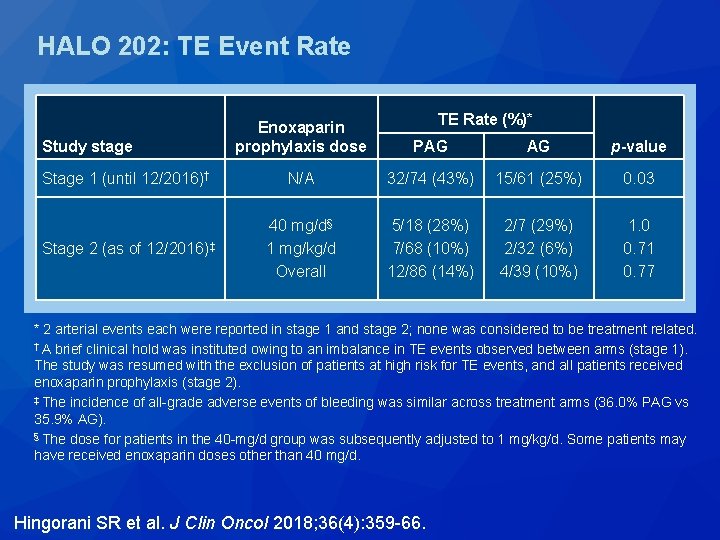
HALO 202: TE Event Rate TE Rate (%)* Enoxaparin prophylaxis dose PAG AG p-value Stage 1 (until 12/2016)† N/A 32/74 (43%) 15/61 (25%) 0. 03 Stage 2 (as of 12/2016)‡ 40 mg/d§ 1 mg/kg/d Overall 5/18 (28%) 7/68 (10%) 12/86 (14%) 2/7 (29%) 2/32 (6%) 4/39 (10%) 1. 0 0. 71 0. 77 Study stage * 2 arterial events each were reported in stage 1 and stage 2; none was considered to be treatment related. † A brief clinical hold was instituted owing to an imbalance in TE events observed between arms (stage 1). The study was resumed with the exclusion of patients at high risk for TE events, and all patients received enoxaparin prophylaxis (stage 2). ‡ The incidence of all-grade adverse events of bleeding was similar across treatment arms (36. 0% PAG vs 35. 9% AG). § The dose for patients in the 40 -mg/d group was subsequently adjusted to 1 mg/kg/d. Some patients may have received enoxaparin doses other than 40 mg/d. Hingorani SR et al. J Clin Oncol 2018; 36(4): 359 -66.
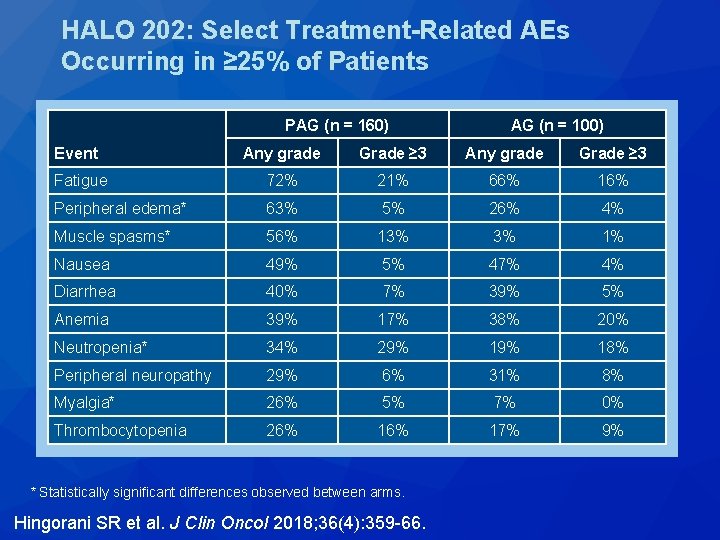
HALO 202: Select Treatment-Related AEs Occurring in ≥ 25% of Patients PAG (n = 160) AG (n = 100) Any grade Grade ≥ 3 Fatigue 72% 21% 66% 16% Peripheral edema* 63% 5% 26% 4% Muscle spasms* 56% 13% 3% 1% Nausea 49% 5% 47% 4% Diarrhea 40% 7% 39% 5% Anemia 39% 17% 38% 20% Neutropenia* 34% 29% 18% Peripheral neuropathy 29% 6% 31% 8% Myalgia* 26% 5% 7% 0% Thrombocytopenia 26% 17% 9% Event * Statistically significant differences observed between arms. Hingorani SR et al. J Clin Oncol 2018; 36(4): 359 -66.
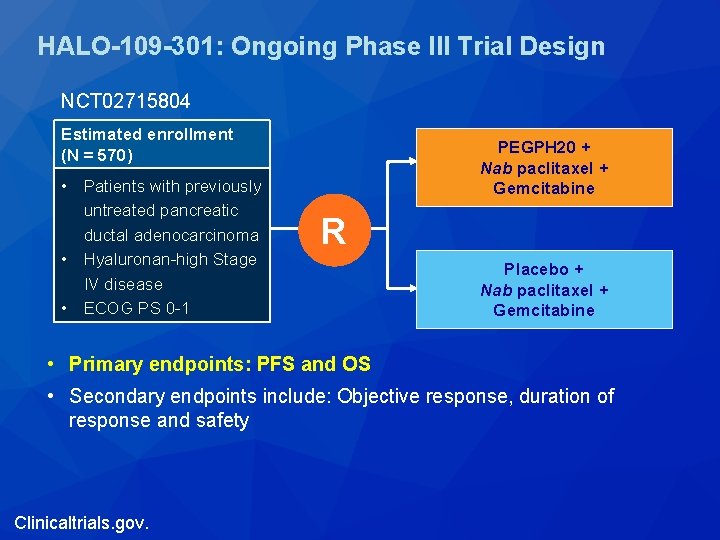
HALO-109 -301: Ongoing Phase III Trial Design NCT 02715804 Estimated enrollment (N = 570) • Patients with previously untreated pancreatic ductal adenocarcinoma • Hyaluronan-high Stage IV disease • ECOG PS 0 -1 PEGPH 20 + Nab paclitaxel + Gemcitabine R Placebo + Nab paclitaxel + Gemcitabine • Primary endpoints: PFS and OS • Secondary endpoints include: Objective response, duration of response and safety Clinicaltrials. gov.
Cancer 2017; 123(23): 4680 -6.
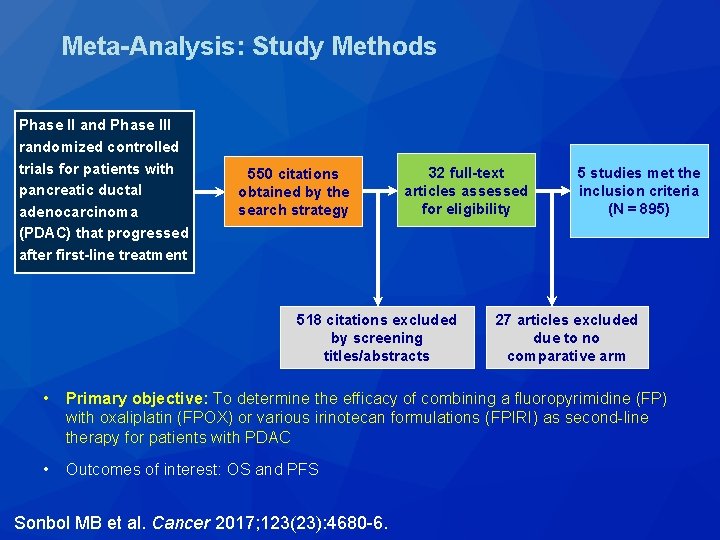
Meta-Analysis: Study Methods Phase II and Phase III randomized controlled trials for patients with pancreatic ductal adenocarcinoma (PDAC) that progressed after first-line treatment 550 citations obtained by the search strategy 32 full-text articles assessed for eligibility 518 citations excluded by screening titles/abstracts 5 studies met the inclusion criteria (N = 895) 27 articles excluded due to no comparative arm • Primary objective: To determine the efficacy of combining a fluoropyrimidine (FP) with oxaliplatin (FPOX) or various irinotecan formulations (FPIRI) as second-line therapy for patients with PDAC • Outcomes of interest: OS and PFS Sonbol MB et al. Cancer 2017; 123(23): 4680 -6.
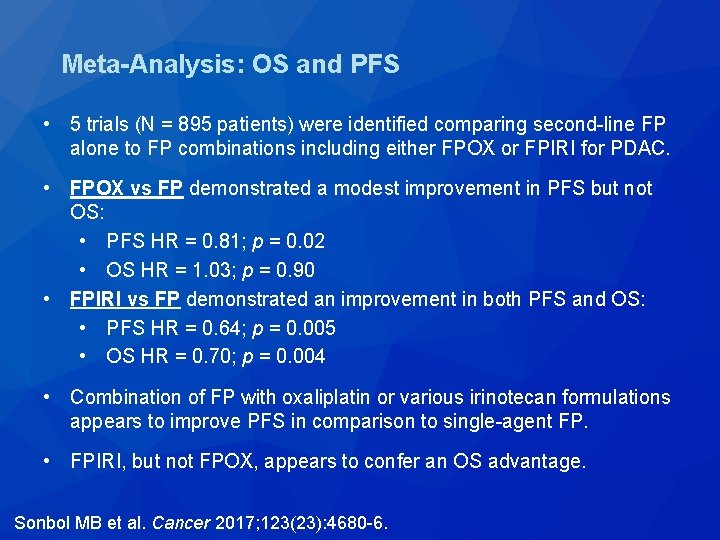
Meta-Analysis: OS and PFS • 5 trials (N = 895 patients) were identified comparing second-line FP alone to FP combinations including either FPOX or FPIRI for PDAC. • FPOX vs FP demonstrated a modest improvement in PFS but not OS: • PFS HR = 0. 81; p = 0. 02 • OS HR = 1. 03; p = 0. 90 • FPIRI vs FP demonstrated an improvement in both PFS and OS: • PFS HR = 0. 64; p = 0. 005 • OS HR = 0. 70; p = 0. 004 • Combination of FP with oxaliplatin or various irinotecan formulations appears to improve PFS in comparison to single-agent FP. • FPIRI, but not FPOX, appears to confer an OS advantage. Sonbol MB et al. Cancer 2017; 123(23): 4680 -6.
Phase 1 b/2 Trial of Cancer Stemness Inhibitor Napabucasin (NAPA) + Nab-Paclitaxel (n. PTX) and Gemcitabine (Gem) in Metastatic Pancreatic Adenocarcinoma (m. PDAC) Bekaii-Saab TS et al. Proc ASCO 2018; Abstract 4110.
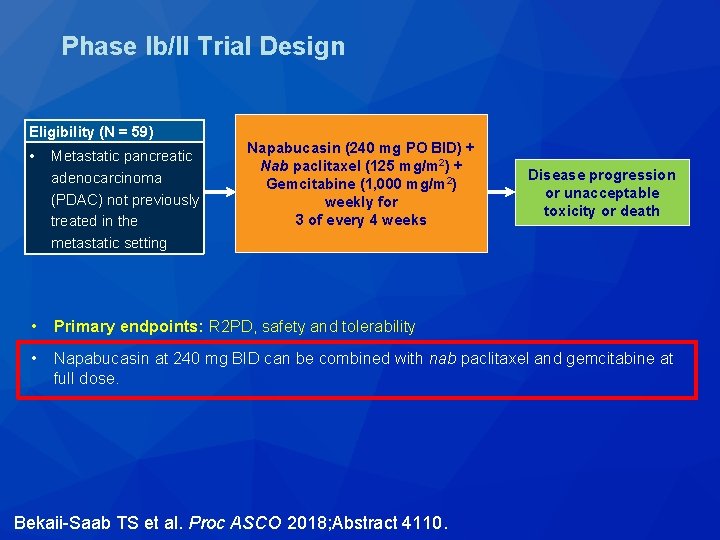
Phase Ib/II Trial Design Eligibility (N = 59) • Metastatic pancreatic adenocarcinoma (PDAC) not previously treated in the metastatic setting Napabucasin (240 mg PO BID) + Nab paclitaxel (125 mg/m 2) + Gemcitabine (1, 000 mg/m 2) weekly for 3 of every 4 weeks Disease progression or unacceptable toxicity or death • Primary endpoints: R 2 PD, safety and tolerability • Napabucasin at 240 mg BID can be combined with nab paclitaxel and gemcitabine at full dose. Bekaii-Saab TS et al. Proc ASCO 2018; Abstract 4110.
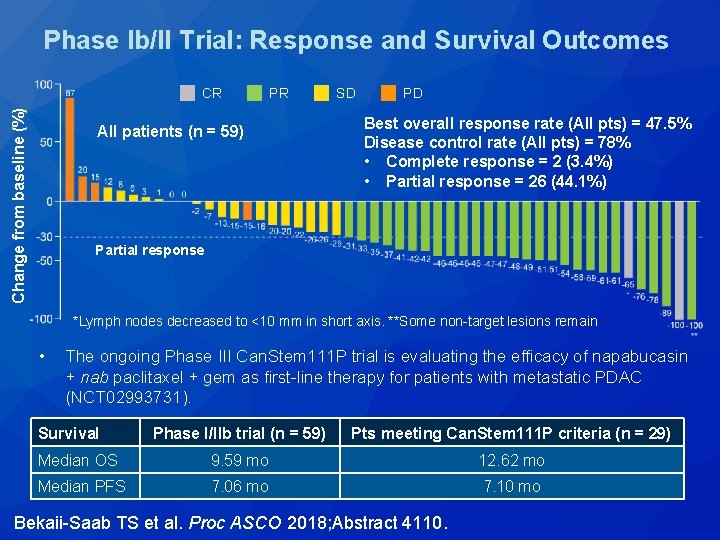
Phase Ib/II Trial: Response and Survival Outcomes Change from baseline (%) CR PR All patients (n = 59) SD PD Best overall response rate (All pts) = 47. 5% Disease control rate (All pts) = 78% • Complete response = 2 (3. 4%) • Partial response = 26 (44. 1%) Partial response *Lymph nodes decreased to <10 mm in short axis. **Some non-target lesions remain • The ongoing Phase III Can. Stem 111 P trial is evaluating the efficacy of napabucasin + nab paclitaxel + gem as first-line therapy for patients with metastatic PDAC (NCT 02993731). Survival Phase I/IIb trial (n = 59) Pts meeting Can. Stem 111 P criteria (n = 29) Median OS 9. 59 mo 12. 62 mo Median PFS 7. 06 mo 7. 10 mo Bekaii-Saab TS et al. Proc ASCO 2018; Abstract 4110.
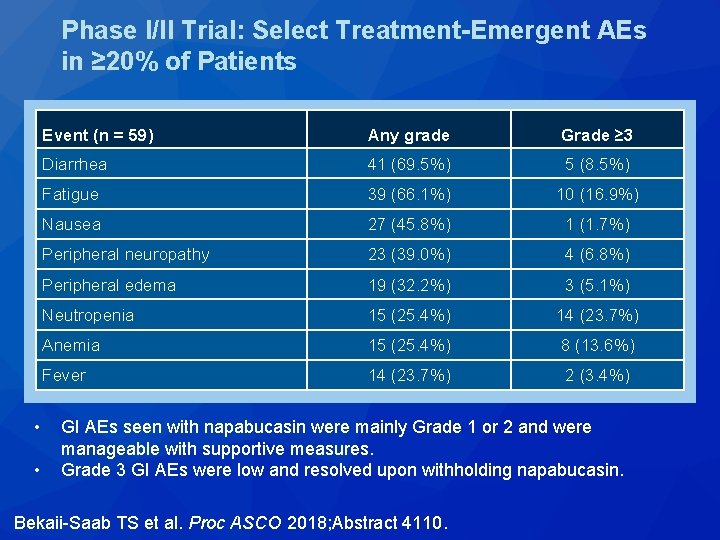
Phase I/II Trial: Select Treatment-Emergent AEs in ≥ 20% of Patients (n = 119) • • Event (n = 59) Any grade Grade ≥ 3 Diarrhea 41 (69. 5%) 5 (8. 5%) Fatigue 39 (66. 1%) 10 (16. 9%) Nausea 27 (45. 8%) 1 (1. 7%) Peripheral neuropathy 23 (39. 0%) 4 (6. 8%) Peripheral edema 19 (32. 2%) 3 (5. 1%) Neutropenia 15 (25. 4%) 14 (23. 7%) Anemia 15 (25. 4%) 8 (13. 6%) Fever 14 (23. 7%) 2 (3. 4%) GI AEs seen with napabucasin were mainly Grade 1 or 2 and were manageable with supportive measures. Grade 3 GI AEs were low and resolved upon withholding napabucasin. Bekaii-Saab TS et al. Proc ASCO 2018; Abstract 4110.
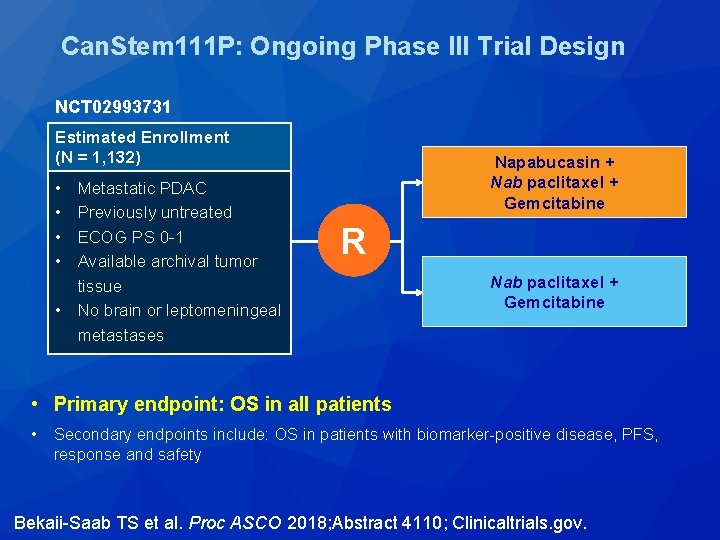
Can. Stem 111 P: Ongoing Phase III Trial Design NCT 02993731 Estimated Enrollment (N = 1, 132) • • Metastatic PDAC Previously untreated ECOG PS 0 -1 Available archival tumor tissue • No brain or leptomeningeal metastases Napabucasin + Nab paclitaxel + Gemcitabine R Nab paclitaxel + Gemcitabine • Primary endpoint: OS in all patients • Secondary endpoints include: OS in patients with biomarker-positive disease, PFS, response and safety Bekaii-Saab TS et al. Proc ASCO 2018; Abstract 4110; Clinicaltrials. gov.
J Clin Oncol 2018; 36(24): 2545 -56.
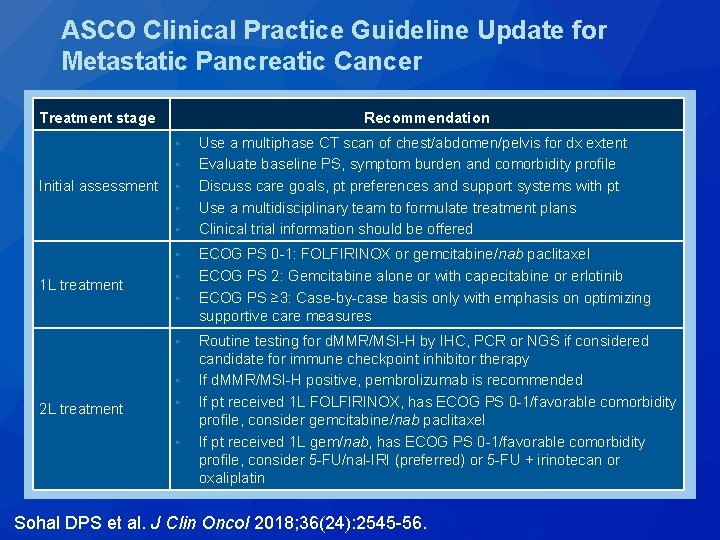
ASCO Clinical Practice Guideline Update for Metastatic Pancreatic Cancer Treatment stage Recommendation • • Initial assessment • • 1 L treatment • • 2 L treatment • • Use a multiphase CT scan of chest/abdomen/pelvis for dx extent Evaluate baseline PS, symptom burden and comorbidity profile Discuss care goals, pt preferences and support systems with pt Use a multidisciplinary team to formulate treatment plans Clinical trial information should be offered ECOG PS 0 -1: FOLFIRINOX or gemcitabine/nab paclitaxel ECOG PS 2: Gemcitabine alone or with capecitabine or erlotinib ECOG PS ≥ 3: Case-by-case basis only with emphasis on optimizing supportive care measures Routine testing for d. MMR/MSI-H by IHC, PCR or NGS if considered candidate for immune checkpoint inhibitor therapy If d. MMR/MSI-H positive, pembrolizumab is recommended If pt received 1 L FOLFIRINOX, has ECOG PS 0 -1/favorable comorbidity profile, consider gemcitabine/nab paclitaxel If pt received 1 L gem/nab, has ECOG PS 0 -1/favorable comorbidity profile, consider 5 -FU/nal-IRI (preferred) or 5 -FU + irinotecan or oxaliplatin Sohal DPS et al. J Clin Oncol 2018; 36(24): 2545 -56.
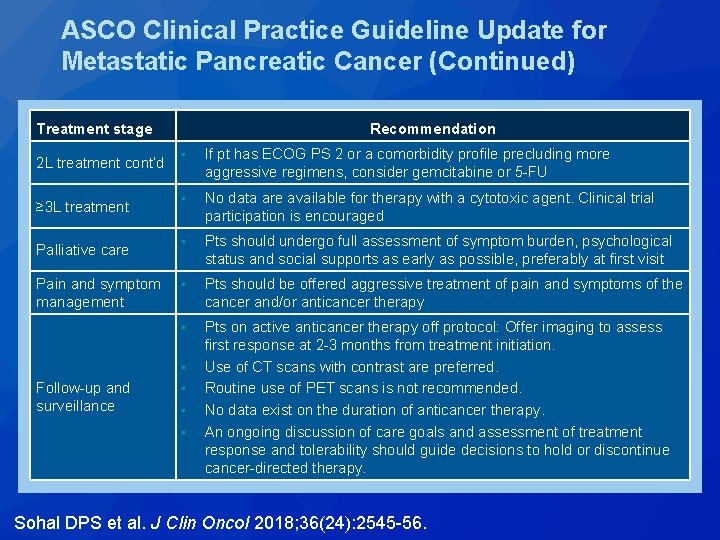
ASCO Clinical Practice Guideline Update for Metastatic Pancreatic Cancer (Continued) Treatment stage 2 L treatment cont’d ≥ 3 L treatment Palliative care Pain and symptom management Recommendation • If pt has ECOG PS 2 or a comorbidity profile precluding more aggressive regimens, consider gemcitabine or 5 -FU • No data are available for therapy with a cytotoxic agent. Clinical trial participation is encouraged • Pts should undergo full assessment of symptom burden, psychological status and social supports as early as possible, preferably at first visit • Pts should be offered aggressive treatment of pain and symptoms of the cancer and/or anticancer therapy • Pts on active anticancer therapy off protocol: Offer imaging to assess first response at 2 -3 months from treatment initiation. Use of CT scans with contrast are preferred. Routine use of PET scans is not recommended. No data exist on the duration of anticancer therapy. An ongoing discussion of care goals and assessment of treatment response and tolerability should guide decisions to hold or discontinue cancer-directed therapy. • Follow-up and surveillance • • • Sohal DPS et al. J Clin Oncol 2018; 36(24): 2545 -56.
Hepatocellular Cancer
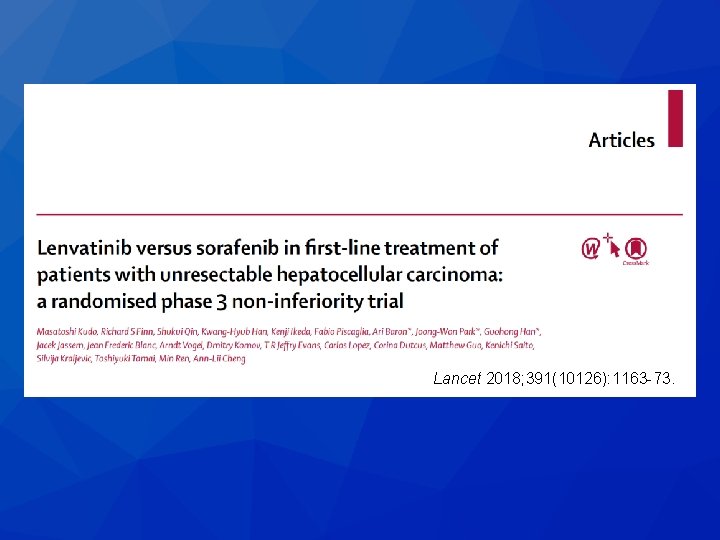
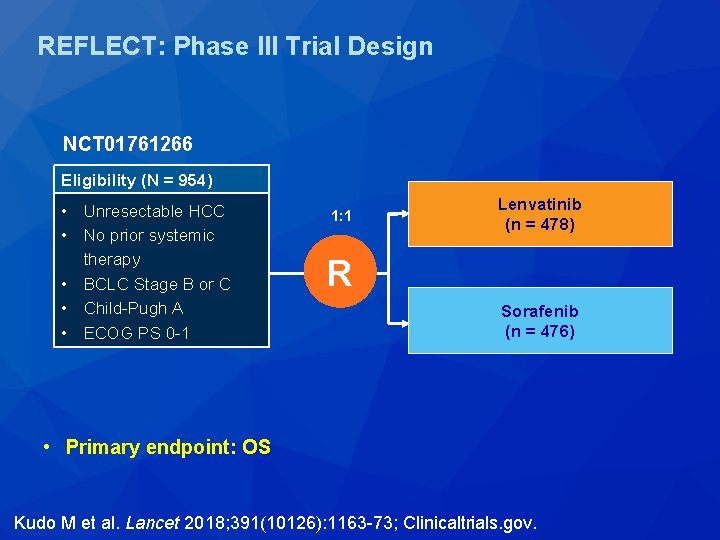
Lancet 2018; 391(10126): 1163 -73.
REFLECT: Phase III Trial Design NCT 01761266 Eligibility (N = 954) • Unresectable HCC • No prior systemic therapy • BCLC Stage B or C • Child-Pugh A • ECOG PS 0 -1 1: 1 Lenvatinib (n = 478) R Sorafenib (n = 476) • Primary endpoint: OS Kudo M et al. Lancet 2018; 391(10126): 1163 -73; Clinicaltrials. gov.
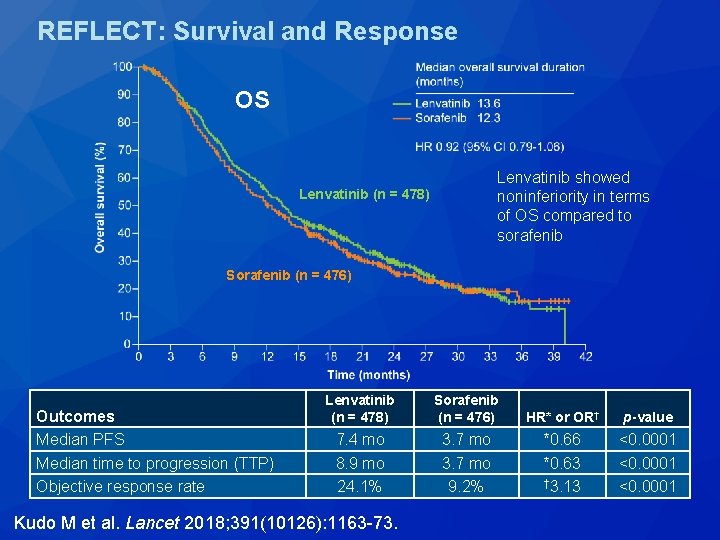
REFLECT: Survival and Response OS Lenvatinib showed noninferiority in terms of OS compared to sorafenib Lenvatinib (n = 478) Sorafenib (n = 476) Outcomes Median PFS Median time to progression (TTP) Objective response rate Lenvatinib (n = 478) Sorafenib (n = 476) HR* or OR† p-value 7. 4 mo 8. 9 mo 24. 1% 3. 7 mo 9. 2% *0. 66 *0. 63 † 3. 13 <0. 0001 Kudo M et al. Lancet 2018; 391(10126): 1163 -73.
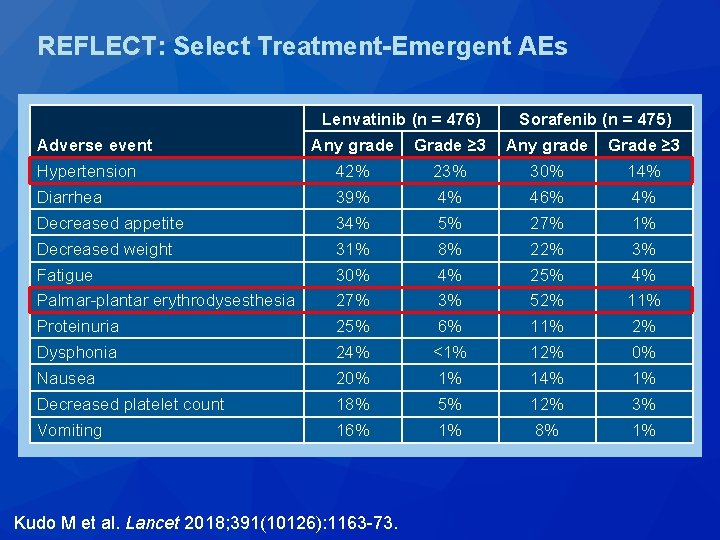
REFLECT: Select Treatment-Emergent AEs Lenvatinib (n = 476) Sorafenib (n = 475) Any grade 42% Grade ≥ 3 23% Any grade 30% Grade ≥ 3 14% Diarrhea 39% 4% 46% 4% Decreased appetite 34% 5% 27% 1% Decreased weight 31% 8% 22% 3% Fatigue Palmar-plantar erythrodysesthesia Proteinuria 30% 27% 25% 4% 3% 6% 25% 52% 11% 4% 11% 2% Dysphonia 24% <1% 12% 0% Nausea 20% 1% 14% 1% Decreased platelet count 18% 5% 12% 3% Vomiting 16% 1% 8% 1% Adverse event Hypertension Kudo M et al. Lancet 2018; 391(10126): 1163 -73.
N Engl J Med 2018; 379(1): 54 -63.
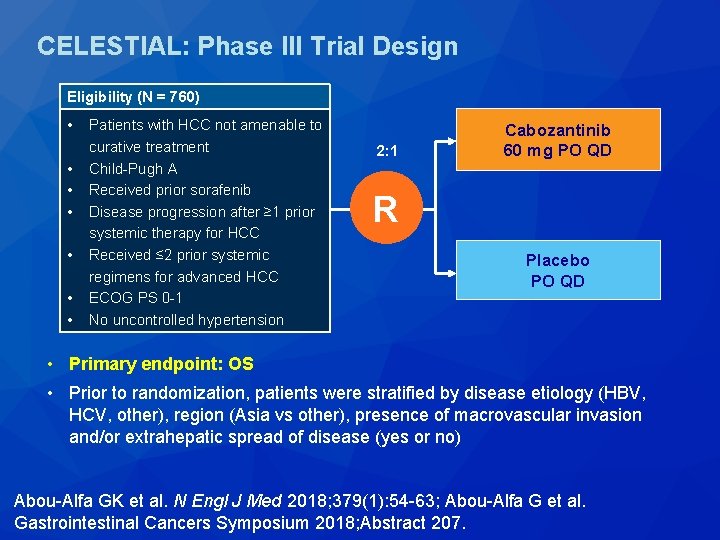
CELESTIAL: Phase III Trial Design Eligibility (N = 760) • • Patients with HCC not amenable to curative treatment Child-Pugh A Received prior sorafenib Disease progression after ≥ 1 prior systemic therapy for HCC Received ≤ 2 prior systemic regimens for advanced HCC ECOG PS 0 -1 No uncontrolled hypertension 2: 1 Cabozantinib 60 mg PO QD R Placebo PO QD • Primary endpoint: OS • Prior to randomization, patients were stratified by disease etiology (HBV, HCV, other), region (Asia vs other), presence of macrovascular invasion and/or extrahepatic spread of disease (yes or no) Abou-Alfa GK et al. N Engl J Med 2018; 379(1): 54 -63; Abou-Alfa G et al. Gastrointestinal Cancers Symposium 2018; Abstract 207.
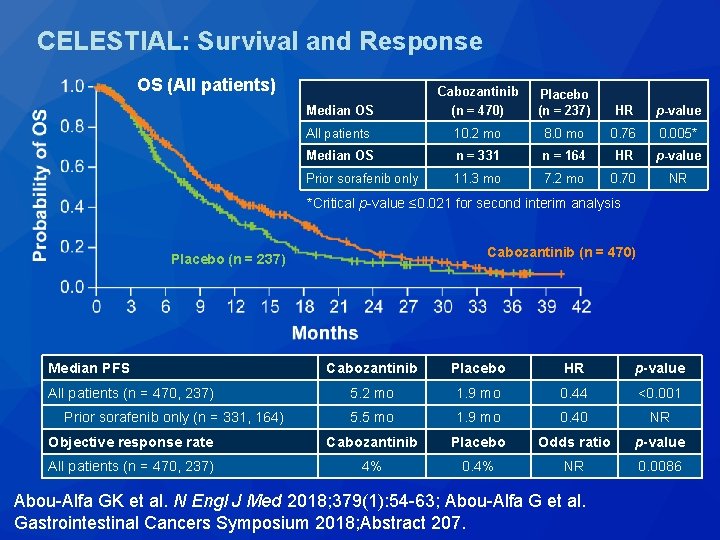
CELESTIAL: Survival and Response OS (All patients) Median OS Cabozantinib (n = 470) Placebo (n = 237) HR p-value All patients 10. 2 mo 8. 0 mo 0. 76 0. 005* Median OS n = 331 n = 164 HR p-value Prior sorafenib only 11. 3 mo 7. 2 mo 0. 70 NR *Critical p-value ≤ 0. 021 for second interim analysis Cabozantinib (n = 470) Placebo (n = 237) Median PFS Cabozantinib Placebo HR p-value All patients (n = 470, 237) 5. 2 mo 1. 9 mo 0. 44 <0. 001 Prior sorafenib only (n = 331, 164) 5. 5 mo 1. 9 mo 0. 40 NR Objective response rate Cabozantinib Placebo Odds ratio p-value All patients (n = 470, 237) 4% 0. 4% NR 0. 0086 Abou-Alfa GK et al. N Engl J Med 2018; 379(1): 54 -63; Abou-Alfa G et al. Gastrointestinal Cancers Symposium 2018; Abstract 207.
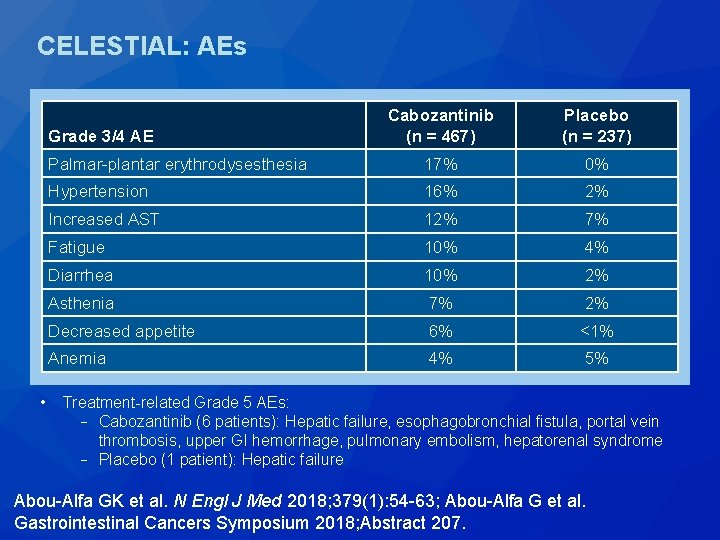
CELESTIAL: AEs Cabozantinib (n = 467) Placebo (n = 237) Palmar-plantar erythrodysesthesia 17% 0% Hypertension 16% 2% Increased AST 12% 7% Fatigue 10% 4% Diarrhea 10% 2% Asthenia 7% 2% Decreased appetite 6% <1% Anemia 4% 5% Grade 3/4 AE • Treatment-related Grade 5 AEs: – Cabozantinib (6 patients): Hepatic failure, esophagobronchial fistula, portal vein thrombosis, upper GI hemorrhage, pulmonary embolism, hepatorenal syndrome – Placebo (1 patient): Hepatic failure Abou-Alfa GK et al. N Engl J Med 2018; 379(1): 54 -63; Abou-Alfa G et al. Gastrointestinal Cancers Symposium 2018; Abstract 207.
Updated OS Analysis from the International, Phase 3, Randomized, Placebo-Controlled RESORCE Trial of Regorafenib for Patients with Hepatocellular Carcinoma (HCC) who Progressed on Sorafenib Treatment Bruix J et al. Proc ESMO World Congress GI 2017; Abstract O-009.
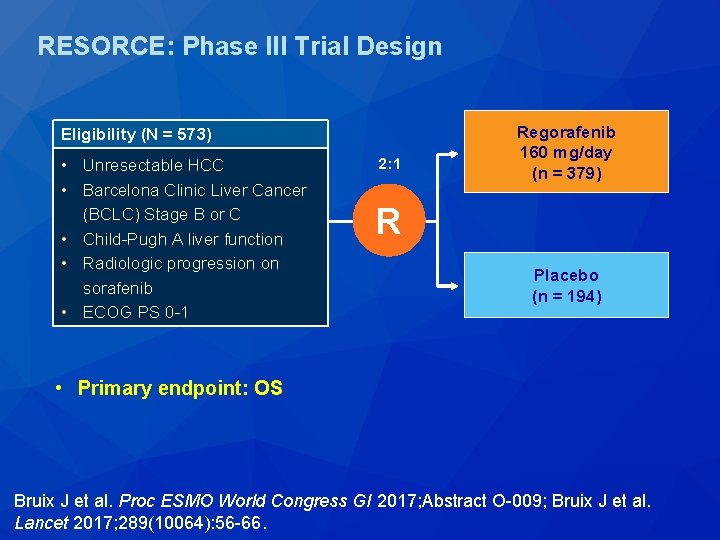
RESORCE: Phase III Trial Design Eligibility (N = 573) • Unresectable HCC • Barcelona Clinic Liver Cancer (BCLC) Stage B or C • Child-Pugh A liver function • Radiologic progression on sorafenib • ECOG PS 0 -1 2: 1 Regorafenib 160 mg/day (n = 379) R Placebo (n = 194) • Primary endpoint: OS Bruix J et al. Proc ESMO World Congress GI 2017; Abstract O-009; Bruix J et al. Lancet 2017; 289(10064): 56 -66.
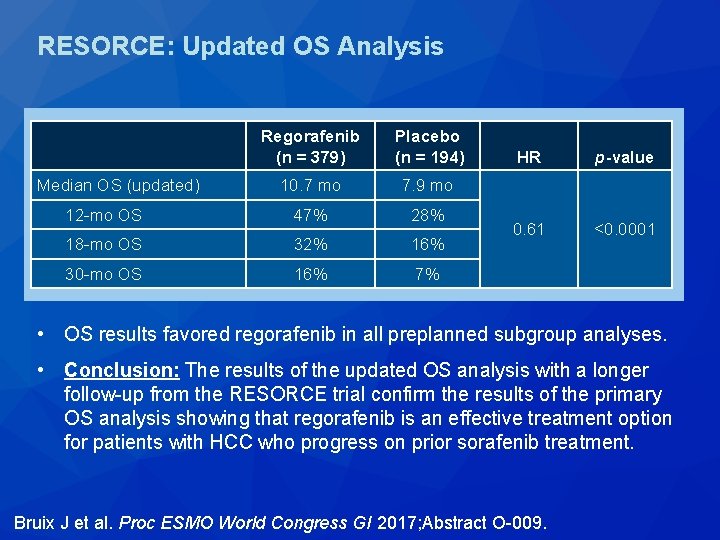
RESORCE: Updated OS Analysis Regorafenib (n = 379) Placebo (n = 194) 10. 7 mo 7. 9 mo 12 -mo OS 47% 28% 18 -mo OS 32% 16% 30 -mo OS 16% 7% Median OS (updated) HR p-value 0. 61 <0. 0001 • OS results favored regorafenib in all preplanned subgroup analyses. • Conclusion: The results of the updated OS analysis with a longer follow-up from the RESORCE trial confirm the results of the primary OS analysis showing that regorafenib is an effective treatment option for patients with HCC who progress on prior sorafenib treatment. Bruix J et al. Proc ESMO World Congress GI 2017; Abstract O-009.
REACH-2: A Randomized, Double-Blind, Placebo. Controlled Phase 3 Study of Ramucirumab versus Placebo as Second-Line Treatment in Patients with Advanced Hepatocellular Carcinoma (HCC) and Elevated Baseline Alpha-Fetoprotein (AFP) Following First-Line Sorafenib Zhu AX et al. Proc ASCO 2018; Abstract 4003.
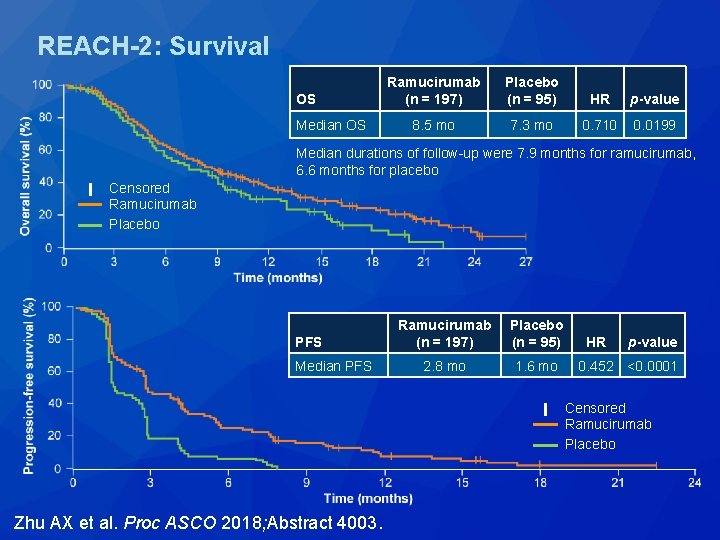
REACH-2: Survival OS Ramucirumab (n = 197) Placebo (n = 95) HR p-value 8. 5 mo 7. 3 mo 0. 710 0. 0199 Median OS Median durations of follow-up were 7. 9 months for ramucirumab, 6. 6 months for placebo Censored Ramucirumab Placebo PFS Median PFS Ramucirumab (n = 197) Placebo (n = 95) 2. 8 mo 1. 6 mo HR p-value 0. 452 <0. 0001 Censored Ramucirumab Placebo Zhu AX et al. Proc ASCO 2018; Abstract 4003.
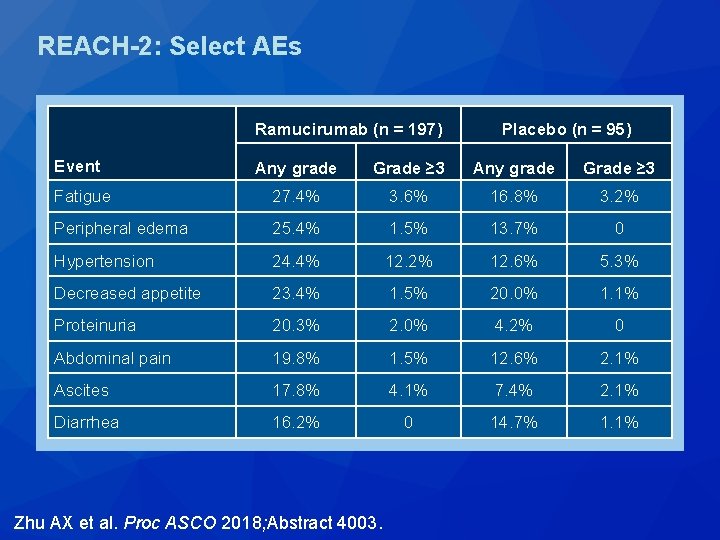
REACH-2: Select AEs Ramucirumab (n = 197) Event Placebo (n = 95) Any grade Grade ≥ 3 Fatigue 27. 4% 3. 6% 16. 8% 3. 2% Peripheral edema 25. 4% 1. 5% 13. 7% 0 Hypertension 24. 4% 12. 2% 12. 6% 5. 3% Decreased appetite 23. 4% 1. 5% 20. 0% 1. 1% Proteinuria 20. 3% 2. 0% 4. 2% 0 Abdominal pain 19. 8% 1. 5% 12. 6% 2. 1% Ascites 17. 8% 4. 1% 7. 4% 2. 1% Diarrhea 16. 2% 0 14. 7% 1. 1% Zhu AX et al. Proc ASCO 2018; Abstract 4003.
Lancet Oncol 2018; . 940 -52: (7)19
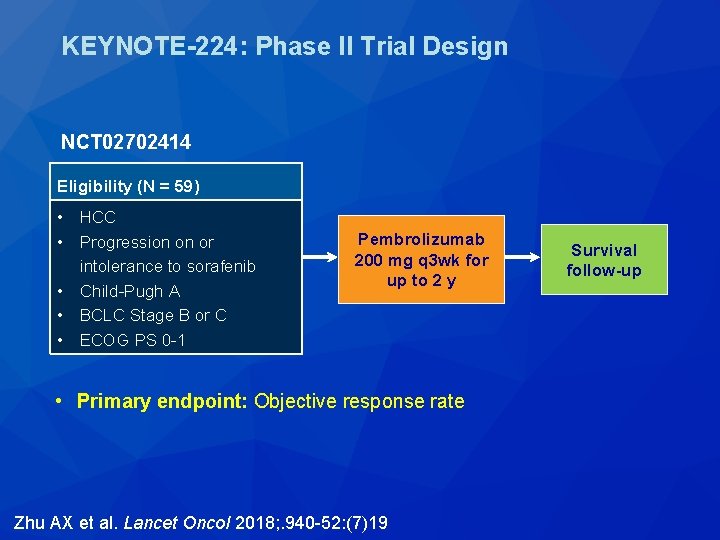
KEYNOTE-224: Phase II Trial Design NCT 02702414 Eligibility (N = 59) • HCC • Progression on or intolerance to sorafenib • Child-Pugh A • BCLC Stage B or C • ECOG PS 0 -1 Pembrolizumab 200 mg q 3 wk for up to 2 y • Primary endpoint: Objective response rate Zhu AX et al. Lancet Oncol 2018; . 940 -52: (7)19 Survival follow-up
KEYNOTE-224: Response and Survival Results Change from baseline (%) Maximum Percentage Changes from Baseline in Target Lesions Study cohort (n = 104) Uninfected (n = 57) HCV infected (n = 26) HBV infected (n = 21) • Objective response rate = 18/104 (17%) – CR = 1 (1%) • Disease control rate = 64/104 (62%) • Median time to response = 2. 1 mo • Median duration of response = Not reached • Median OS = 12. 9 mo; 12 -mo OS = 54% • Median PFS = 4. 9 mo; 12 -mo PFS = 28% Zhu AX et al. Lancet Oncol 2018; . 940 -52: (7)19
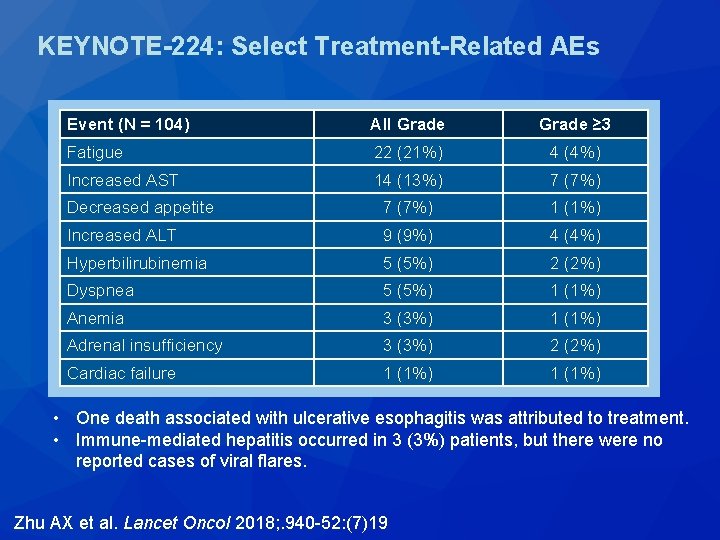
KEYNOTE-224: Select Treatment-Related AEs Event (N = 104) All Grade ≥ 3 Fatigue 22 (21%) 4 (4%) Increased AST 14 (13%) 7 (7%) Decreased appetite 7 (7%) 1 (1%) Increased ALT 9 (9%) 4 (4%) Hyperbilirubinemia 5 (5%) 2 (2%) Dyspnea 5 (5%) 1 (1%) Anemia 3 (3%) 1 (1%) Adrenal insufficiency 3 (3%) 2 (2%) Cardiac failure 1 (1%) • One death associated with ulcerative esophagitis was attributed to treatment. • Immune-mediated hepatitis occurred in 3 (3%) patients, but there were no reported cases of viral flares. Zhu AX et al. Lancet Oncol 2018; . 940 -52: (7)19
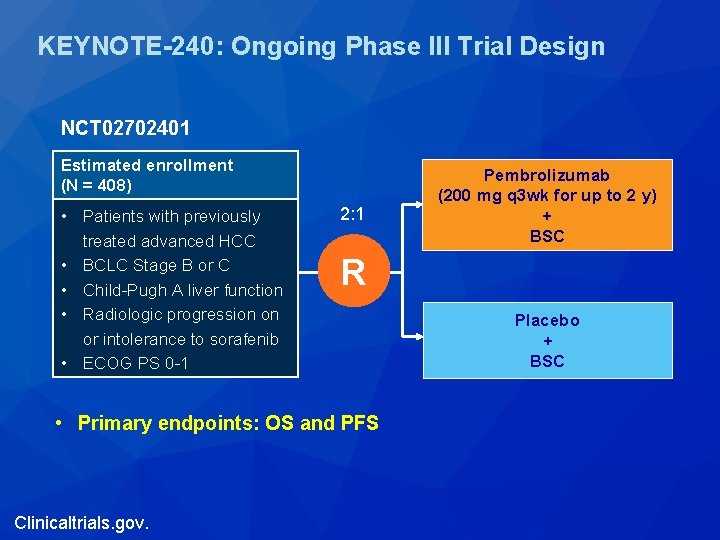
KEYNOTE-240: Ongoing Phase III Trial Design NCT 02702401 Estimated enrollment (N = 408) • Patients with previously treated advanced HCC • BCLC Stage B or C • Child-Pugh A liver function • Radiologic progression on or intolerance to sorafenib • ECOG PS 0 -1 2: 1 R • Primary endpoints: OS and PFS Clinicaltrials. gov. Pembrolizumab (200 mg q 3 wk for up to 2 y) + BSC Placebo + BSC
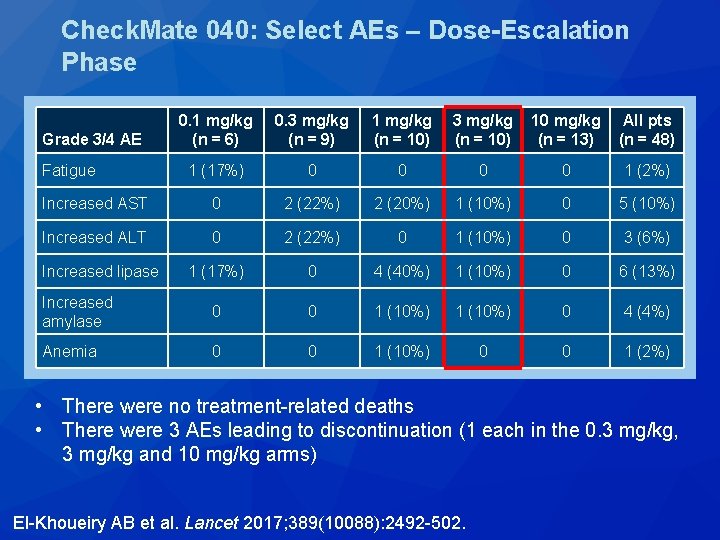
Lancet 2017; 389(10088): 2492 -502.
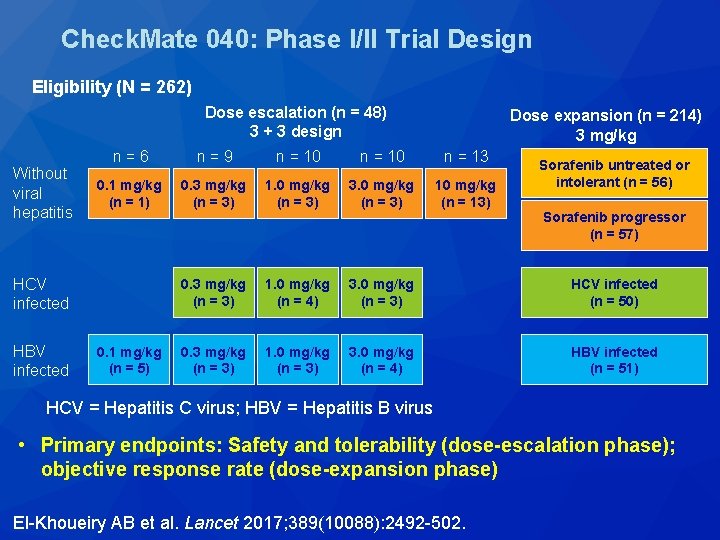
Check. Mate 040: Phase I/II Trial Design Eligibility (N = 262) Dose escalation (n = 48) 3 + 3 design Without viral hepatitis n = 6 n = 9 n = 10 n = 13 0. 1 mg/kg (n = 1) 0. 3 mg/kg (n = 3) 1. 0 mg/kg (n = 3) 3. 0 mg/kg (n = 3) 10 mg/kg (n = 13) 0. 3 mg/kg (n = 3) 1. 0 mg/kg (n = 4) 3. 0 mg/kg (n = 3) HCV infected (n = 50) 0. 3 mg/kg (n = 3) 1. 0 mg/kg (n = 3) 3. 0 mg/kg (n = 4) HBV infected (n = 51) HCV infected HBV infected Dose expansion (n = 214) 3 mg/kg 0. 1 mg/kg (n = 5) Sorafenib untreated or intolerant (n = 56) Sorafenib progressor (n = 57) HCV = Hepatitis C virus; HBV = Hepatitis B virus • Primary endpoints: Safety and tolerability (dose-escalation phase); objective response rate (dose-expansion phase) El-Khoueiry AB et al. Lancet 2017; 389(10088): 2492 -502.
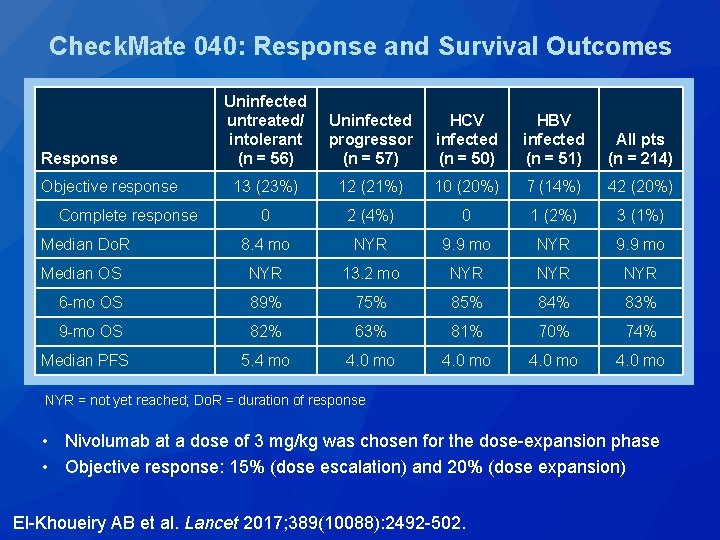
Check. Mate 040: Response and Survival Outcomes Uninfected untreated/ intolerant (n = 56) Uninfected progressor (n = 57) HCV infected (n = 50) HBV infected (n = 51) All pts (n = 214) 13 (23%) 12 (21%) 10 (20%) 7 (14%) 42 (20%) 0 2 (4%) 0 1 (2%) 3 (1%) Median Do. R 8. 4 mo NYR 9. 9 mo Median OS NYR 13. 2 mo NYR NYR 6 -mo OS 89% 75% 84% 83% 9 -mo OS 82% 63% 81% 70% 74% Median PFS 5. 4 mo 4. 0 mo Response Objective response Complete response NYR = not yet reached; Do. R = duration of response • Nivolumab at a dose of 3 mg/kg was chosen for the dose-expansion phase • Objective response: 15% (dose escalation) and 20% (dose expansion) El-Khoueiry AB et al. Lancet 2017; 389(10088): 2492 -502.
Check. Mate 040: Select AEs – Dose-Escalation Phase 0. 1 mg/kg (n = 6) 0. 3 mg/kg (n = 9) 1 mg/kg (n = 10) 3 mg/kg (n = 10) 10 mg/kg (n = 13) All pts (n = 48) 1 (17%) 0 0 1 (2%) Increased AST 0 2 (22%) 2 (20%) 1 (10%) 0 5 (10%) Increased ALT 0 2 (22%) 0 1 (10%) 0 3 (6%) 1 (17%) 0 4 (40%) 1 (10%) 0 6 (13%) Increased amylase 0 0 1 (10%) 0 4 (4%) Anemia 0 0 1 (10%) 0 0 1 (2%) Grade 3/4 AE Fatigue Increased lipase • There were no treatment-related deaths • There were 3 AEs leading to discontinuation (1 each in the 0. 3 mg/kg, 3 mg/kg and 10 mg/kg arms) El-Khoueiry AB et al. Lancet 2017; 389(10088): 2492 -502.
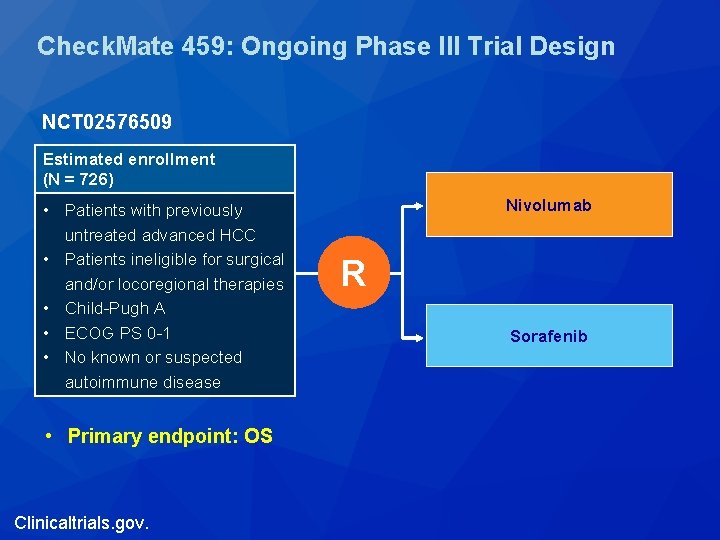
Check. Mate 459: Ongoing Phase III Trial Design NCT 02576509 Estimated enrollment (N = 726) • Patients with previously untreated advanced HCC • Patients ineligible for surgical and/or locoregional therapies • Child-Pugh A • ECOG PS 0 -1 • No known or suspected autoimmune disease • Primary endpoint: OS Clinicaltrials. gov. Nivolumab R Sorafenib