
DT 56 a Novel Technology for Hormonal Balance
DT 56 a- Novel Technology for Hormonal Balance During Menopause Prof. Andrea R. Genazzani , MD, Ph. D, Hc. D, FRCOG, FACOG President of the International Society of Gynecological Endocrinology (ISGE) President of the European Society of Gynecology (ESG) General Secretary of the International Academy of Human Reproduction (IAHR) University of Pisa, Italy
The Anatomy and Pathology of Menopause What are the biochemical changes in a woman’s body that lead to menopause?
The Anatomy and Pathology of Menopause The decrease in the production of E 2 Reduction of Estrogen Receptor Stimulation Metabolic & Physical Changes Dramatic Reduction of Women’s Quality of Life

The Biochemical Mechanism During Fertility How does E 2 have a unique and specific impact on each and every tissue?
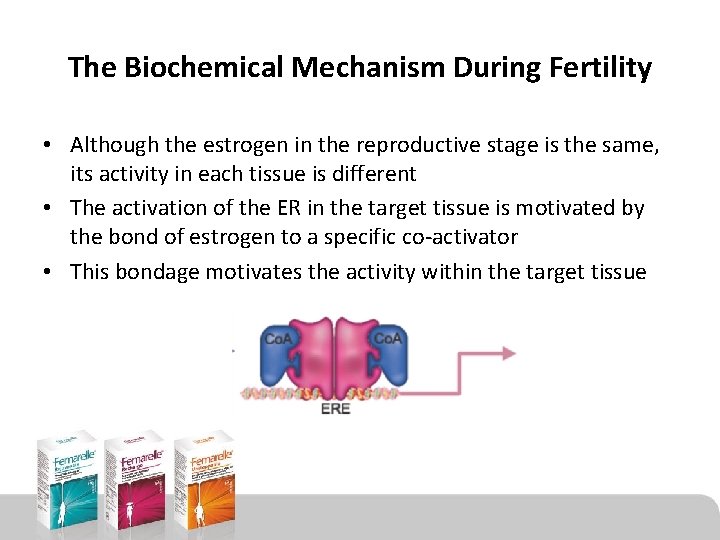
The Biochemical Mechanism During Fertility • Although the estrogen in the reproductive stage is the same, its activity in each tissue is different • The activation of the ER in the target tissue is motivated by the bond of estrogen to a specific co-activator • This bondage motivates the activity within the target tissue

The Ideal Model that Mimics the Biochemical Mo. A What is the right model that will create the hormonal balance that we desire for the healthy aging of our patients?
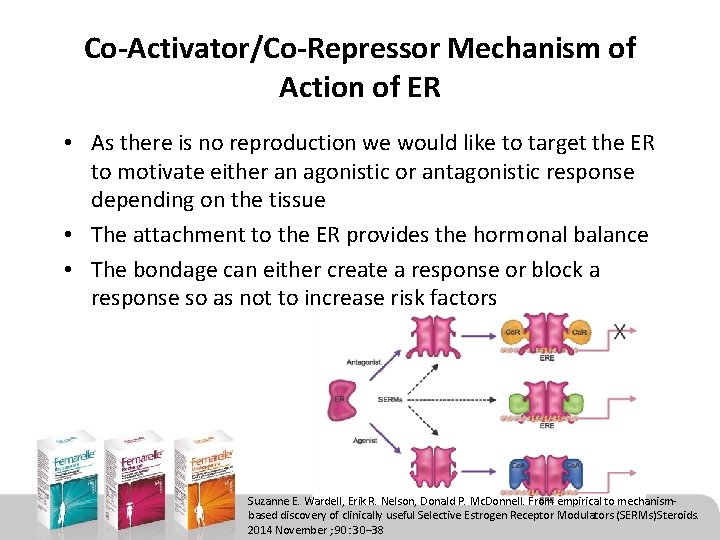
Co-Activator/Co-Repressor Mechanism of Action of ER • As there is no reproduction we would like to target the ER to motivate either an agonistic or antagonistic response depending on the tissue • The attachment to the ER provides the hormonal balance • The bondage can either create a response or block a response so as not to increase risk factors Suzanne E. Wardell, Erik R. Nelson, Donald P. Mc. Donnell. From empirical to mechanismbased discovery of clinically useful Selective Estrogen Receptor Modulators (SERMs)Steroids. 2014 November ; 90: 30– 38
The Solution for the Ideal Model • DT 56 a (Femarelle) is a complex SERM that has the ability to attach to the ER mimicking the bondage of E 2 with a Co. Activator or Co-Repressor depending on the target tissue. • The complex is based on a group of compounds that mimics the different bondage thus, having a different effect in the different tissues
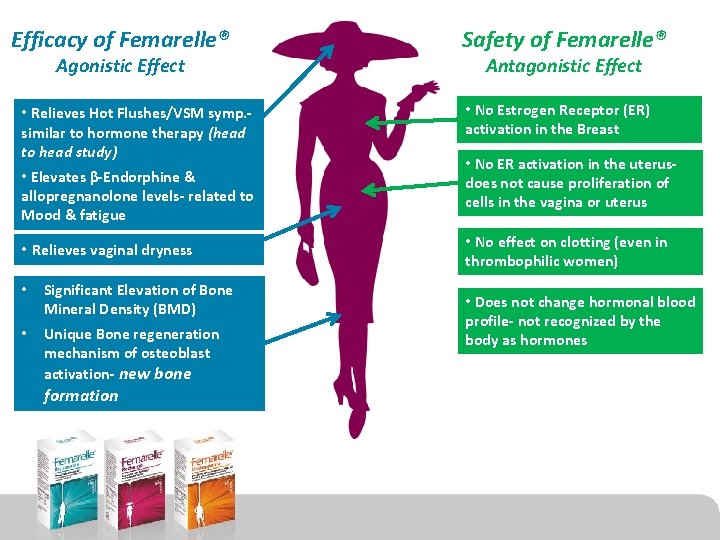
Efficacy of Femarelle® Agonistic Effect • Relieves Hot Flushes/VSM symp. similar to hormone therapy (head to head study) • Elevates β-Endorphine & allopregnanolone levels- related to Mood & fatigue • Relieves vaginal dryness • Significant Elevation of Bone Mineral Density (BMD) • Unique Bone regeneration mechanism of osteoblast activation- new bone formation Safety of Femarelle® Antagonistic Effect • No Estrogen Receptor (ER) activation in the Breast • No ER activation in the uterusdoes not cause proliferation of cells in the vagina or uterus • No effect on clotting (even in thrombophilic women) • Does not change hormonal blood profile- not recognized by the body as hormones
Effect of Femarelle ® on the Brain Related to Anxiolytic and Opiod Properties • It has been well established that certain neurotransmitters have a positive effect on various brain derived symptoms such as HF, sleep dist. , mood disorders… • This study evaluates whether Femarelle® has a similar effect on these neurotransmitters as estrogen. Method: • Evaluation of brain content of: • Allopregnanolone- reduces anxiety, stress and has the ability to create calm. • Beta-endorphin- act as an analgesic in the body, it is involved in response to stress, emotional regulation, pain mechanism, and reward system, it increases relaxation and promotes overall well-being. Results: • OVX induced an important and significant reduction of AP in all regions examined (except for the adrenal glands) and serum. Similarly, β-END was reduced in all brain areas Genazanni AR et al. Brain-Region responsiveness to DT 56 a (Femarelle) Administration on Allopregnanolone and Opioid Content in Ovariectomized Rats. Menopause 2009; 16(5): 10371043
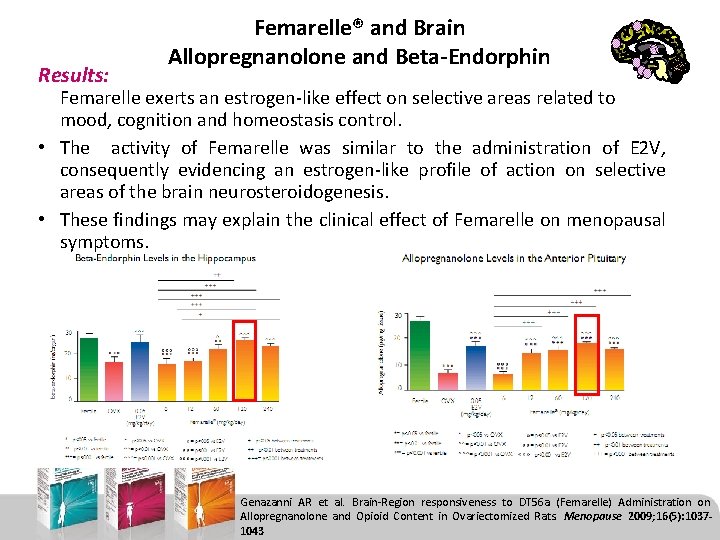
Results: Femarelle® and Brain Allopregnanolone and Beta-Endorphin Femarelle exerts an estrogen-like effect on selective areas related to mood, cognition and homeostasis control. • The activity of Femarelle was similar to the administration of E 2 V, consequently evidencing an estrogen-like profile of action on selective areas of the brain neurosteroidogenesis. • These findings may explain the clinical effect of Femarelle on menopausal symptoms. Genazanni AR et al. Brain-Region responsiveness to DT 56 a (Femarelle) Administration on Allopregnanolone and Opioid Content in Ovariectomized Rats. Menopause 2009; 16(5): 10371043
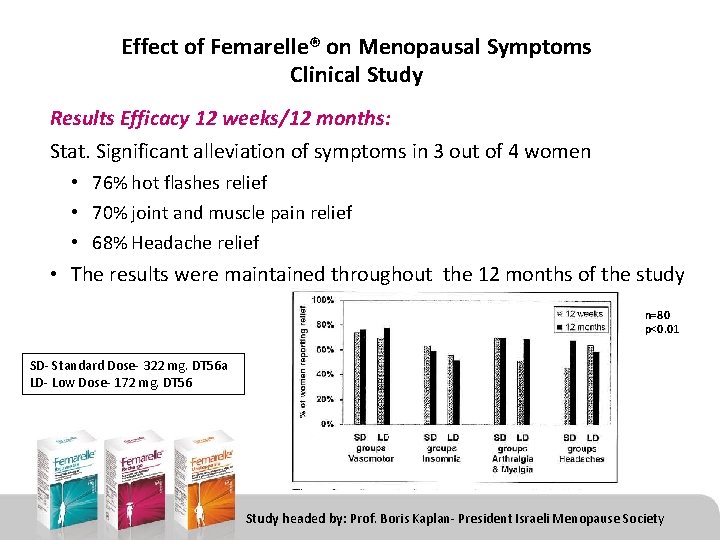
Effect of Femarelle® on Menopausal Symptoms Clinical Study Results Efficacy 12 weeks/12 months: Stat. Significant alleviation of symptoms in 3 out of 4 women • 76% hot flashes relief • 70% joint and muscle pain relief • 68% Headache relief • The results were maintained throughout the 12 months of the study n=80 p<0. 01 SD- Standard Dose- 322 mg. DT 56 a LD- Low Dose- 172 mg. DT 56 Study headed by: Prof. Boris Kaplan- President Israeli Menopause Society
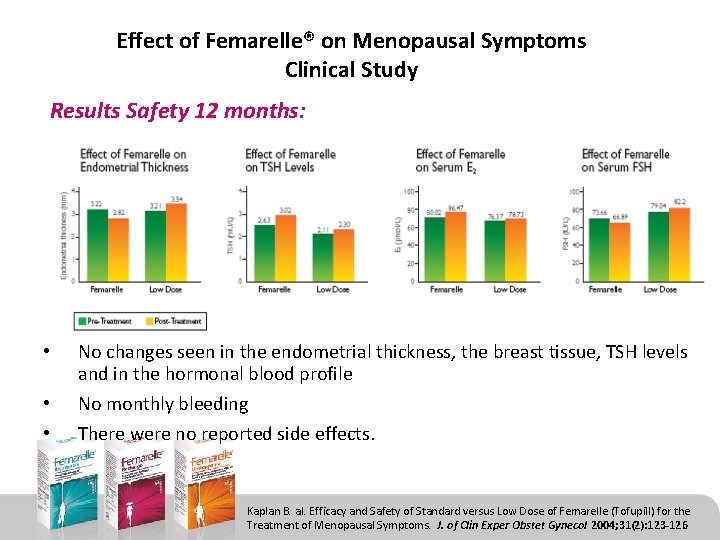
Effect of Femarelle® on Menopausal Symptoms Clinical Study Results Safety 12 months: • No changes seen in the endometrial thickness, the breast tissue, TSH levels and in the hormonal blood profile • • No monthly bleeding There were no reported side effects. Kaplan B. al. Efficacy and Safety of Standard versus Low Dose of Femarelle (Tofupill) for the Treatment of Menopausal Symptoms. J. of Clin Exper Obstet Gynecol 2004; 31(2): 123 -126
Effect of Femarelle® vs. HT & Control on Menopausal Symptoms Clinical Study Method: • • 89 postmenopausal women were studied prospectively. • 27 women - Femarelle • 26 women- Activelle, Novo-Nordisk • 36 symptomatic women not wishing to receive any treatment served as controls Menopausal symptoms as assessed through the Kupperman index, serum lipids and lipoproteins, calcium, as well as bone mineral density, endometrial thickness, and mammography were assessed at baseline and at 12 months. Results: • • • Femarelle decreased menopausal symptoms significantly and in the same degree as Activelle (p<0. 001) No significant change in lumbar spine BMD T- score in both treatment arms compared to the control group which was significantly lower No differences in endometrial thickness or mammography classification, serum lipids or lipoproteins Labos G. , Trakakis E. et al Efficacy and safety of DT 56 a (Femarelle) compared to hormone therapy in Greek postmenopausal women. J Endocrinol. Invest. 2013; 36: 521 -526
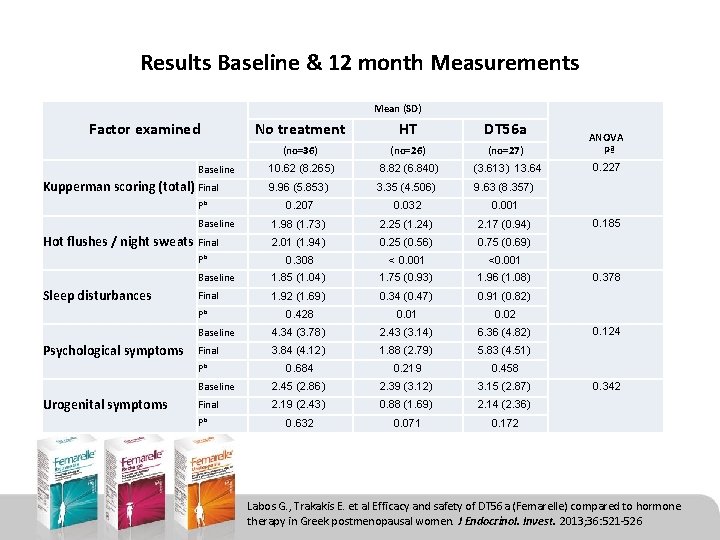
Results Baseline & 12 month Measurements Mean (SD) No treatment HT DT 56 a (no=36) (no=27) ANOVA Pª 10. 62 (8. 265) 8. 82 (6. 840) (3. 613) 13. 64 0. 227 9. 96 (5. 853) 3. 35 (4. 506) 9. 63 (8. 357) 0. 207 0. 032 0. 001 1. 98 (1. 73) 2. 25 (1. 24) 2. 17 (0. 94) 2. 01 (1. 94) 0. 25 (0. 56) 0. 75 (0. 69) 0. 308 < 0. 001 <0. 001 Baseline 1. 85 (1. 04) 1. 75 (0. 93) 1. 96 (1. 08) Final 1. 92 (1. 69) 0. 34 (0. 47) 0. 91 (0. 82) 0. 428 0. 01 0. 02 Baseline 4. 34 (3. 78) 2. 43 (3. 14) 6. 36 (4. 82) Final 3. 84 (4. 12) 1. 88 (2. 79) 5. 83 (4. 51) 0. 684 0. 219 0. 458 Baseline 2. 45 (2. 86) 2. 39 (3. 12) 3. 15 (2. 87) Final 2. 19 (2. 43) 0. 88 (1. 69) 2. 14 (2. 36) 0. 632 0. 071 0. 172 Factor examined Baseline Kupperman scoring (total) Final Pᵇ Baseline Hot flushes / night sweats Final Pᵇ Sleep disturbances Pᵇ Psychological symptoms Pᵇ Urogenital symptoms Pᵇ 0. 185 0. 378 0. 124 0. 342 Labos G. , Trakakis E. et al Efficacy and safety of DT 56 a (Femarelle) compared to hormone therapy in Greek postmenopausal women. J Endocrinol. Invest. 2013; 36: 521 -526
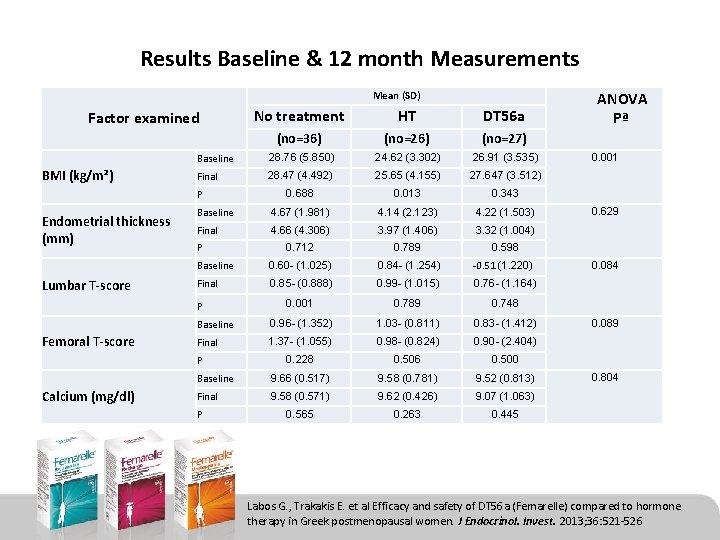
Results Baseline & 12 month Measurements Mean (SD) No treatment HT DT 56 a (no=36) (no=27) Baseline 28. 76 (5. 850) 24. 62 (3. 302) 26. 91 (3. 535) Final 28. 47 (4. 492) 25. 65 (4. 155) 27. 647 (3. 512) 0. 688 0. 013 0. 343 Baseline 4. 67 (1. 981) 4. 14 (2. 123) 4. 22 (1. 503) Final 4. 66 (4. 306) 3. 97 (1. 406) 3. 32 (1. 004) 0. 712 0. 789 0. 598 Baseline 0. 60 - (1. 025) 0. 84 - (1. 254) -0. 51 (1. 220) Final 0. 85 - (0. 888) 0. 99 - (1. 015) 0. 76 - (1. 164) 0. 001 0. 789 0. 748 Baseline 0. 96 - (1. 352) 1. 03 - (0. 811) 0. 83 - (1. 412) Final 1. 37 - (1. 055) 0. 98 - (0. 824) 0. 90 - (2. 404) 0. 228 0. 506 0. 500 Baseline 9. 66 (0. 517) 9. 58 (0. 781) 9. 52 (0. 813) Final 9. 58 (0. 571) 9. 62 (0. 426) 9. 07 (1. 063) 0. 565 0. 263 0. 445 Factor examined BMI (kg/m²) P Endometrial thickness (mm) Lumbar T-score P P Femoral T-score P Calcium (mg/dl) P ANOVA Pª 0. 001 0. 629 0. 084 0. 089 0. 804 Labos G. , Trakakis E. et al Efficacy and safety of DT 56 a (Femarelle) compared to hormone therapy in Greek postmenopausal women. J Endocrinol. Invest. 2013; 36: 521 -526
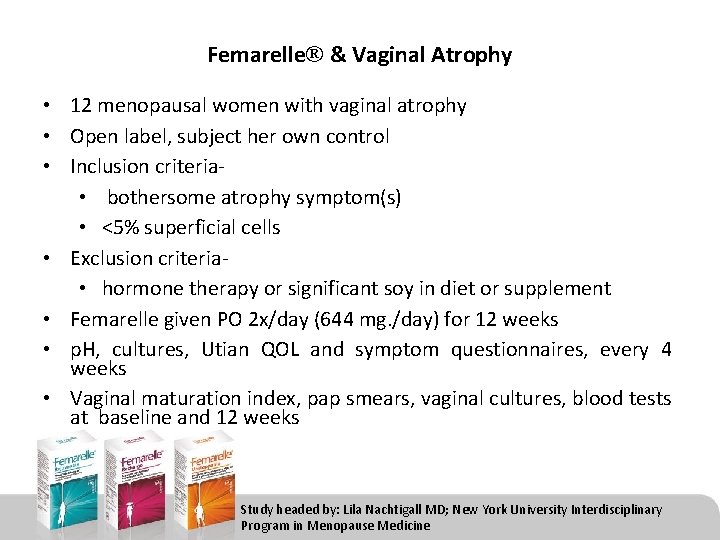
Femarelle® & Vaginal Atrophy • 12 menopausal women with vaginal atrophy • Open label, subject her own control • Inclusion criteria • bothersome atrophy symptom(s) • <5% superficial cells • Exclusion criteria- • hormone therapy or significant soy in diet or supplement • Femarelle given PO 2 x/day (644 mg. /day) for 12 weeks • p. H, cultures, Utian QOL and symptom questionnaires, every 4 weeks • Vaginal maturation index, pap smears, vaginal cultures, blood tests at baseline and 12 weeks Study headed by: Lila Nachtigall MD; New York University Interdisciplinary Program in Menopause Medicine
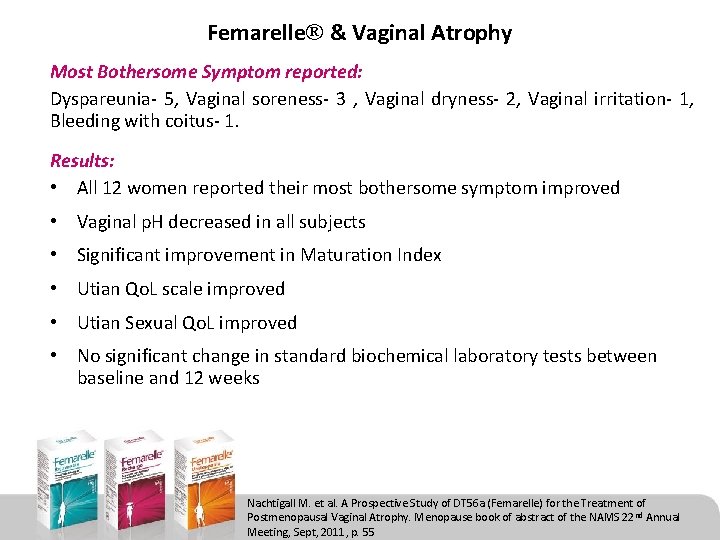
Femarelle® & Vaginal Atrophy Most Bothersome Symptom reported: Dyspareunia- 5, Vaginal soreness- 3 , Vaginal dryness- 2, Vaginal irritation- 1, Bleeding with coitus- 1. Results: • All 12 women reported their most bothersome symptom improved • Vaginal p. H decreased in all subjects • Significant improvement in Maturation Index • Utian Qo. L scale improved • Utian Sexual Qo. L improved • No significant change in standard biochemical laboratory tests between baseline and 12 weeks Nachtigall M. et al. A Prospective Study of DT 56 a (Femarelle) for the Treatment of Postmenopausal Vaginal Atrophy. Menopause book of abstract of the NAMS 22 nd Annual Meeting, Sept, 2011, p. 55
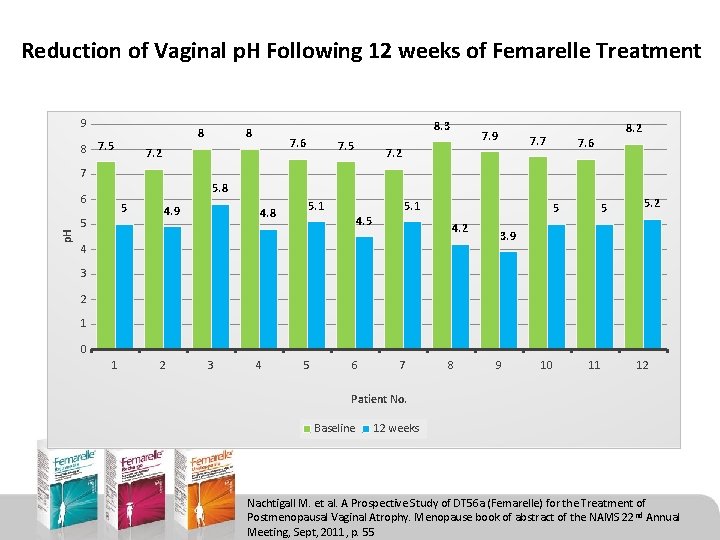
Reduction of Vaginal p. H Following 12 weeks of Femarelle Treatment 9 8 8 7. 5 8. 3 8 7. 6 7. 2 7. 5 7. 9 8. 2 7. 7 7. 2 7. 6 7 5. 8 p. H 6 5 5 4. 9 4. 8 5. 1 4. 5 5 4. 2 4 5 5. 2 3. 9 3 2 1 0 1 2 3 4 5 6 7 8 9 10 11 12 Patient No. Baseline 12 weeks Nachtigall M. et al. A Prospective Study of DT 56 a (Femarelle) for the Treatment of Postmenopausal Vaginal Atrophy. Menopause book of abstract of the NAMS 22 nd Annual Meeting, Sept, 2011, p. 55
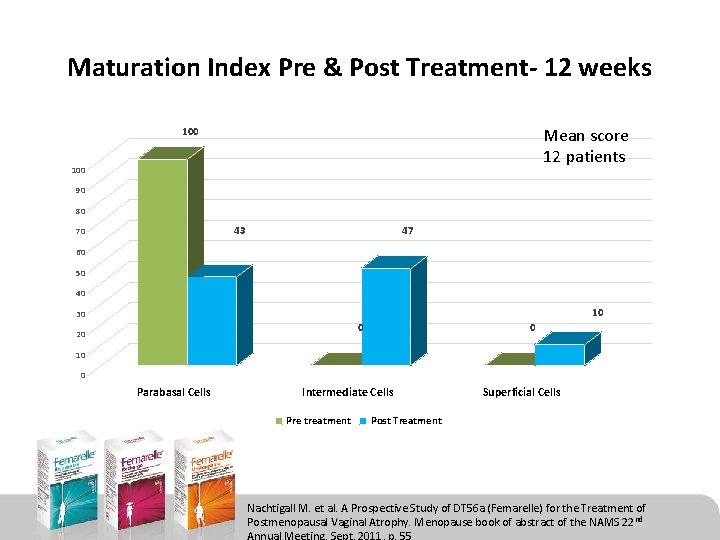
Maturation Index Pre & Post Treatment- 12 weeks Mean score 12 patients 100 90 80 43 70 47 60 50 40 10 30 0 20 0 10 0 Parabasal Cells Intermediate Cells Pre treatment Superficial Cells Post Treatment Nachtigall M. et al. A Prospective Study of DT 56 a (Femarelle) for the Treatment of Postmenopausal Vaginal Atrophy. Menopause book of abstract of the NAMS 22 nd
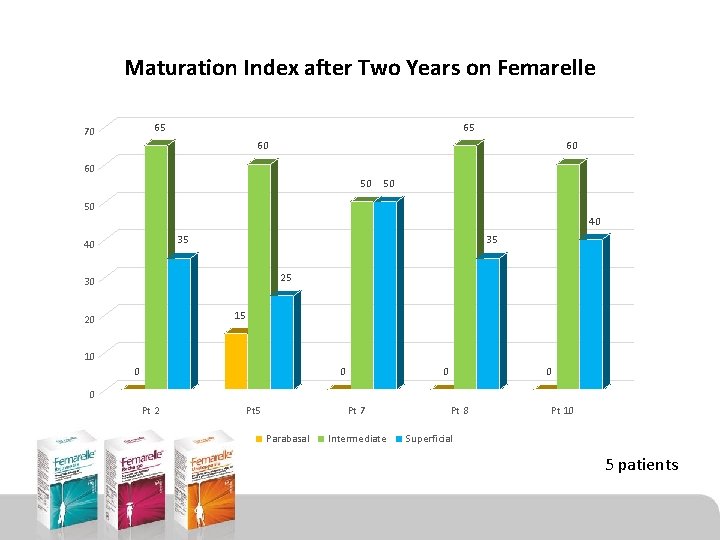
Maturation Index after Two Years on Femarelle 65 70 65 60 60 60 50 50 50 40 35 25 30 15 20 10 0 0 Pt 2 Pt 5 Pt 7 Parabasal Intermediate Pt 8 Pt 10 Superficial 5 patients
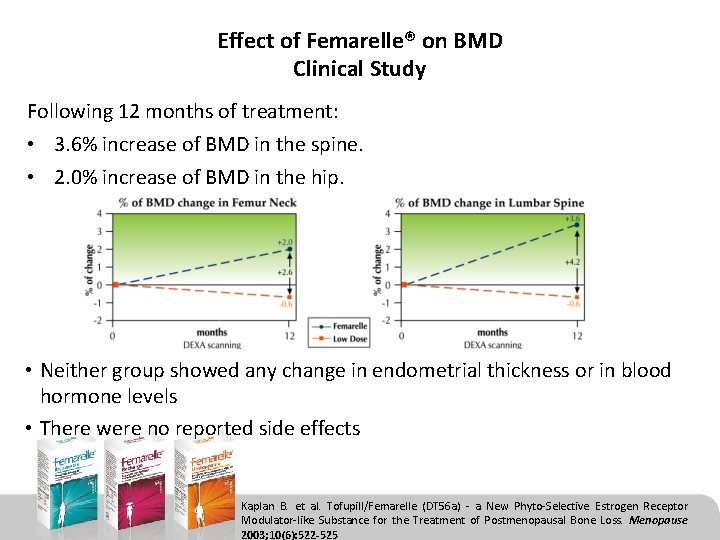
Effect of Femarelle® on BMD Clinical Study Following 12 months of treatment: • 3. 6% increase of BMD in the spine. • 2. 0% increase of BMD in the hip. • Neither group showed any change in endometrial thickness or in blood hormone levels • There were no reported side effects Kaplan B. et al. Tofupill/Femarelle (DT 56 a) - a New Phyto-Selective Estrogen Receptor Modulator-like Substance for the Treatment of Postmenopausal Bone Loss. Menopause 2003; 10(6): 522 -525
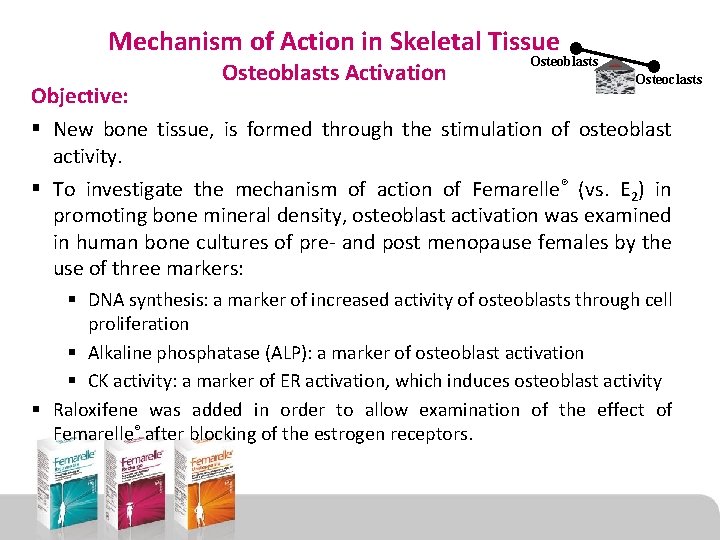
Mechanism of Action in Skeletal Tissue Osteoblasts Activation Osteoblasts Osteoclasts Objective: § New bone tissue, is formed through the stimulation of osteoblast activity. § To investigate the mechanism of action of Femarelle® (vs. E 2) in promoting bone mineral density, osteoblast activation was examined in human bone cultures of pre- and post menopause females by the use of three markers: § DNA synthesis: a marker of increased activity of osteoblasts through cell proliferation § Alkaline phosphatase (ALP): a marker of osteoblast activation § CK activity: a marker of ER activation, which induces osteoblast activity § Raloxifene was added in order to allow examination of the effect of Femarelle® after blocking of the estrogen receptors.
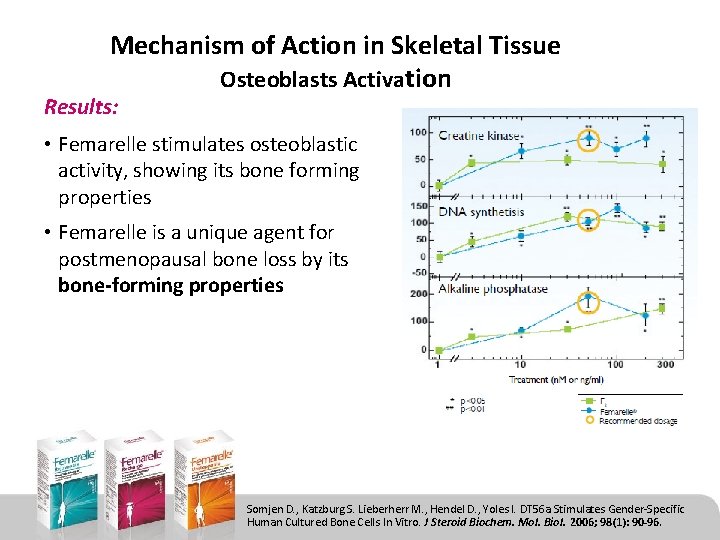
Mechanism of Action in Skeletal Tissue Osteoblasts Activation Results: • Femarelle stimulates osteoblastic activity, showing its bone forming properties • Femarelle is a unique agent for postmenopausal bone loss by its bone-forming properties Somjen D. , Katzburg S. Lieberherr M. , Hendel D. , Yoles I. DT 56 a Stimulates Gender-Specific Human Cultured Bone Cells In Vitro. J Steroid Biochem. Mol. Biol. 2006; 98(1): 90 -96.
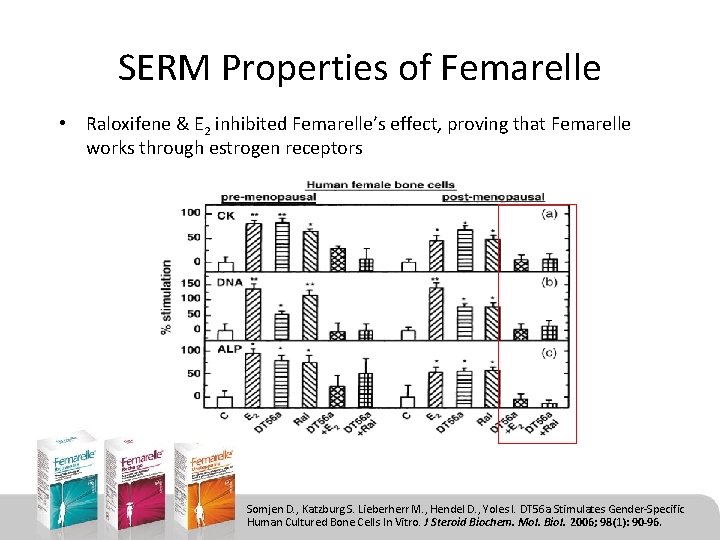
SERM Properties of Femarelle • Raloxifene & E 2 inhibited Femarelle’s effect, proving that Femarelle works through estrogen receptors Somjen D. , Katzburg S. Lieberherr M. , Hendel D. , Yoles I. DT 56 a Stimulates Gender-Specific Human Cultured Bone Cells In Vitro. J Steroid Biochem. Mol. Biol. 2006; 98(1): 90 -96.
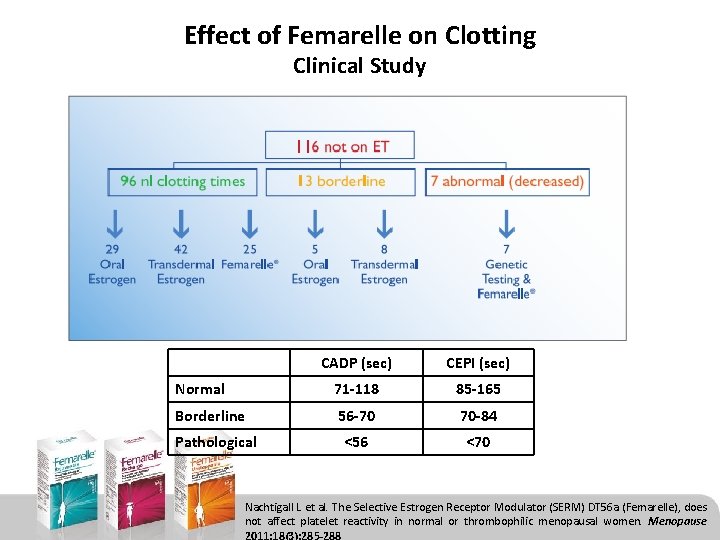
Effect of Femarelle on Clotting Clinical Study CADP (sec) CEPI (sec) Normal 71 -118 85 -165 Borderline 56 -70 70 -84 <56 <70 Pathological Nachtigall L et al. The Selective Estrogen Receptor Modulator (SERM) DT 56 a (Femarelle), does not affect platelet reactivity in normal or thrombophilic menopausal women. Menopause 2011; 18(3): 285 -288
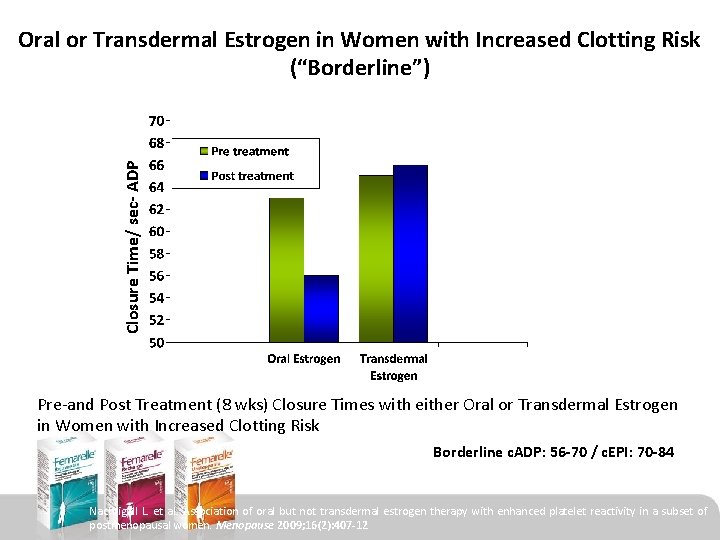
Closure Time/ sec- ADP Oral or Transdermal Estrogen in Women with Increased Clotting Risk (“Borderline”) Pre-and Post Treatment (8 wks) Closure Times with either Oral or Transdermal Estrogen in Women with Increased Clotting Risk Borderline c. ADP: 56 -70 / c. EPI: 70 -84 Nachtigall L. et al. Association of oral but not transdermal estrogen therapy with enhanced platelet reactivity in a subset of postmenopausal women. Menopause 2009; 16(2): 407 -12
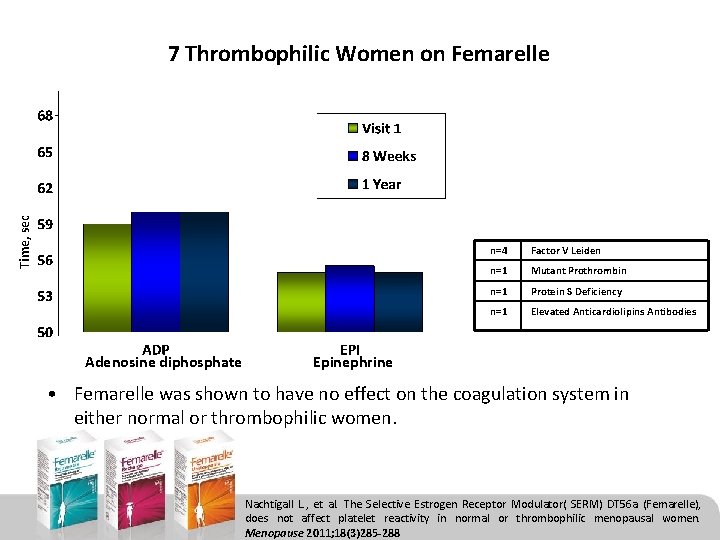
Time, sec 7 Thrombophilic Women on Femarelle Adenosine diphosphate n=4 Factor V Leiden n=1 Mutant Prothrombin n=1 Protein S Deficiency n=1 Elevated Anticardiolipins Antibodies Epinephrine • Femarelle was shown to have no effect on the coagulation system in either normal or thrombophilic women. Nachtigall L. , et al. The Selective Estrogen Receptor Modulator( SERM) DT 56 a (Femarelle), does not affect platelet reactivity in normal or thrombophilic menopausal women. Menopause 2011; 18(3)285 -288
Effect of Femarelle on Breast Cancer Cells Objective: Examine the effect of Femarelle® on MCF-7 breast cancer tissue culture –Estrogen dependent human breast cancer (70 % of all breast cancers) Methods: Cells were seeded for 96 hrs. in estrogen-depleted medium, following addition of Femarelle or E 2 at various concentrations for additional 72 hrs. § Estrogen dose: pharmacological dose (2 mg. ) § Femarelle dose: incremental dosage- pharmacological dose (PD- 644 mg. ) - 66, 000 times PD
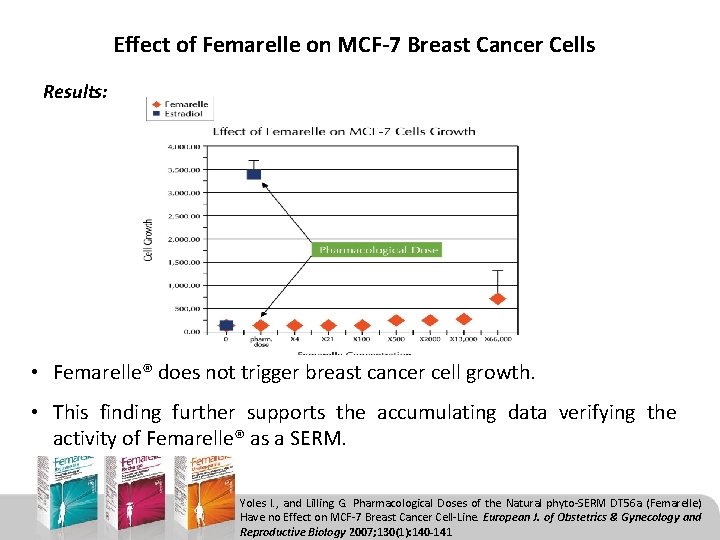
Effect of Femarelle on MCF-7 Breast Cancer Cells Results: • Femarelle® does not trigger breast cancer cell growth. • This finding further supports the accumulating data verifying the activity of Femarelle® as a SERM. Yoles I. , and Lilling G. Pharmacological Doses of the Natural phyto-SERM DT 56 a (Femarelle) Have no Effect on MCF-7 Breast Cancer Cell-Line. European J. of Obstetrics & Gynecology and Reproductive Biology 2007; 130(1): 140 -141
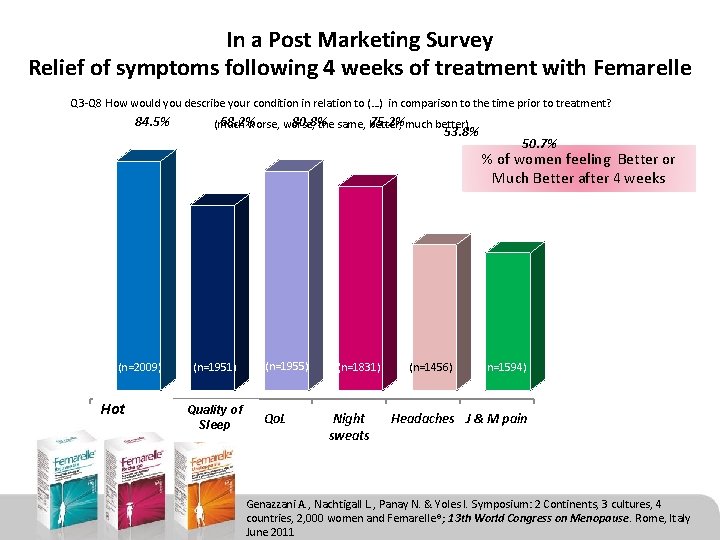
In a Post Marketing Survey Relief of symptoms following 4 weeks of treatment with Femarelle Q 3 -Q 8 How would you describe your condition in relation to (…) in comparison to the time prior to treatment? 84. 5% 68. 2% 80. 8% 75. 2% (much worse, the same, better, much better) 53. 8% 50. 7% % of women feeling Better or Much Better after 4 weeks (n=2009) Hot flushes (n=1951) Quality of Qo. S Sleep (n=1955) Qo. L (n=1831) Night sweats (n=1456) (n=1594) Headaches J & M pain Genazzani A. , Nachtigall L. , Panay N. & Yoles I. Symposium: 2 Continents, 3 cultures, 4 countries, 2, 000 women and Femarelle®; 13 th World Congress on Menopause. Rome, Italy June 2011
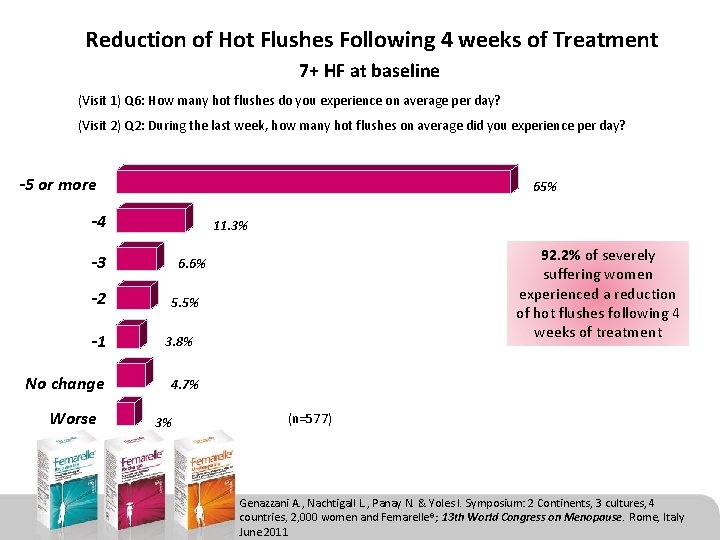
Reduction of Hot Flushes Following 4 weeks of Treatment 7+ HF at baseline (Visit 1) Q 6: How many hot flushes do you experience on average per day? (Visit 2) Q 2: During the last week, how many hot flushes on average did you experience per day? -5 or more 65% -4 11. 3% -3 -2 -1 No change Worse 92. 2% of severely suffering women experienced a reduction of hot flushes following 4 weeks of treatment 6. 6% 5. 5% 3. 8% 4. 7% 3% (n=577) Genazzani A. , Nachtigall L. , Panay N. & Yoles I. Symposium: 2 Continents, 3 cultures, 4 countries, 2, 000 women and Femarelle®; 13 th World Congress on Menopause. Rome, Italy June 2011
International Post Marketing Survey- Spanish Results • 631 women in Spanish post marketing survey • Overall 84. 4% reported their hot flushes were better or much better after 4 weeks of treatment • The effect was seen within the first 2 weeks and increased within the 1 st month of treatment • Publication of Spanish arm by Dr. Borrego in Climacterics: 17 • “Conclusion: Treatment with DT 56 a resulted in a significant reduction in the number and intensity of hot flushes in postmenopausal women, especially in those with frequent symptoms, and these effects were observed within the first month of treatment. ” Sánchez-Borrego R, Mendoza N, Llaneza P. A prospective study of DT 56 a (Femarelle®) for the treatment of menopause symptoms; Climacteric. 2015; 18(6): 813 -6
Published Articles: 1. Yoles I. et al. Efficacy and Safety of Standard versus Low Dose of Femarelle (Tofupill) for the Treatment of Menopausal Symptoms. J. of Clin Exper Obstet Gynecol 2004; 31(2): 123 -26. 2. Labos G. , Trakakis E. et al Efficacy and safety of DT 56 a (Femarelle) compared to hormone therapy in Greek postmenopausal women. J Endocrinol. Invest. 2013; 36(7): 521 -6 3. Genazzani AR et al. Brain region responsiveness to DT 56 a (Femarelle) administration on allopregnanolone and opioid content in ovariectomized rats. Menopause 2009; 16(5): 1037 -43. 4. Genazzani A. , Nachtigall L. , Panay N. & Yoles I. Symposium: 2 Continents, 3 cultures, 4 countries, 2, 000 women and Femarelle®; 13 th World Congress on Menopause. Rome, Italy June 2011 5. Nachtigall M. et al. A Prospective Study of DT 56 a (Femarelle) for the Treatment of Postmenopausal Vaginal Atrophy. Menopause book of abstract of the NAMS 22 nd Annual Meeting, Sept, 2011, p. 55 6. Yoles I. et al. Tofupill/Femarelle (DT 56 a) - a New Phyto-Selective Estrogen Receptor Modulator-like Substance for the Treatment of Postmenopausal Bone Loss. Menopause 2003; 10(6): 522 -25 7. Somjen D, Yoles I. DT 56 a (Tofupill/Femarelle), selectively stimulates creatine kinase specific activity in skeletal tissues of rats but not in the uterus. J. of Steroid Biochemistry & Molecular Biology 2003; 86(1): 93 -98 8. Somjen D. et al. DT 56 a (Femarelle/Tofupill) Stimulates Bone Formation in Female Rats. British J. of Obstetrics & Gynecology 2005; 112(7): 981 -85. 9. Somjen D. , Katzburg S. Lieberherr M. , Hendel D. , Yoles I. DT 56 a Stimulates Gender-Specific Human Cultured Bone Cells In Vitro. J. of Steroid Biochemistry & Molecular Biology 2006; 98(1): 90 -96. 10. Somjen D. et al. The Effects of Native and Synthetic Estrogenic Compounds as well as Vitamin D Less-Calcemic Analogs on Adipocytes Content in Rat Bone Marrow. J Endocrinol Invest. 2011; 34(2): 106 -10 11. Yoles I. , and Lilling G. Pharmacological Doses of the Natural phyto-SERM DT 56 a (Femarelle) Have no Effect on MCF-7 Breast Cancer Cell-Line. European J. of Obstetrics & Gynecology & Reproductive Biology 2006; 130(1): 140 -141. 12. Nachtigall M et al. The selective estrogen receptor modulator DT 56 a (Femarelle) does not affect platelet reactivity in normal or thrombophilic postmenopausal women. Menopause 2011; 18, (3): 285 -288 13. Nachtigall L. et al. Association of oral but not transdermal estrogen therapy with enhanced platelet reactivity in a subset of postmenopausal women. Menopause 2009; 16(2): 407 -412 14. Oropeza M. V, Orozco S, Ponce H, Campos M. G. Tofupill lacks peripheral estrogen-like actions in the rat reproductive tract. Reproductive Toxicology 2005; 20(2): 261 -66. 15. Somjen D, Yoles I. DT 56 a (Femarelle): a Natural Selective Estrogen Receptor Modulator (SERM). J. of Steroid Biochemistry & Molecular Biology 2007; 104: 252 -58. 16. Somjen D. et al. DT 56 a (Femarelle); contrary to estradiol-17β; is effective in human derived female osteoblasts in hyperglycemic condition. J Steroid Biochem Mol Biol. 2011; 123: 25 -29 17. Bedell S. , Nachtigall M. , Naftolin F. The pros and cons of plant estrogens for menopause; J. Steroid Biochem. Mol. Biol. 2014; 139: 225 -236 18. Sánchez-Borrego R, Mendoza N, Llaneza P. A prospective study of DT 56 a (Femarelle®) for the treatment of menopause symptoms; Climacteric. 2015; 18(6): 813 -6 19. Sánchez-Borrego R et al. Efficacy and safety of a phyto-SERM as an alternative to hormone therapy; Climacteric. 2015 Jun; 18(3): 350 -7
- Slides: 35