
Searches for exoplanets Dijana Dominis Prester University of
- Slides: 35
Searches for exoplanets Dijana Dominis Prester University of Rijeka Department of physics LHC Days Split, 8. 10. 2010.
Why do we search for exoplanets? • Extraterrestrial life? • Exobiology • Understanding of the structure and formation of planetary and stellar systems
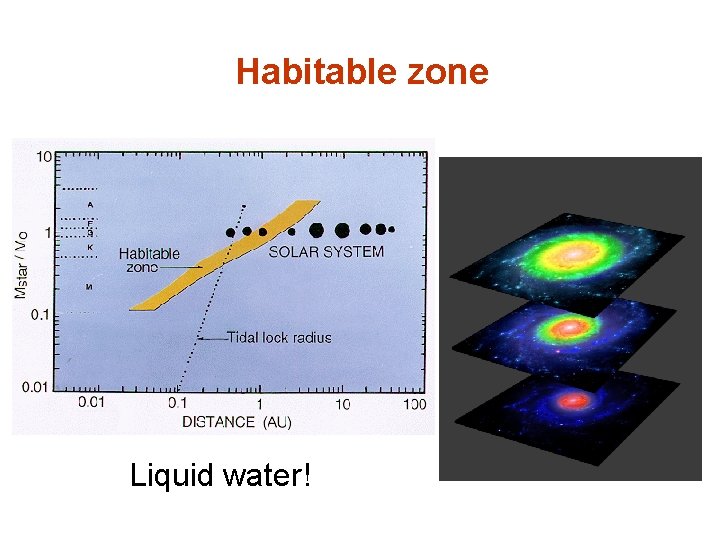
Habitable zone Liquid water!
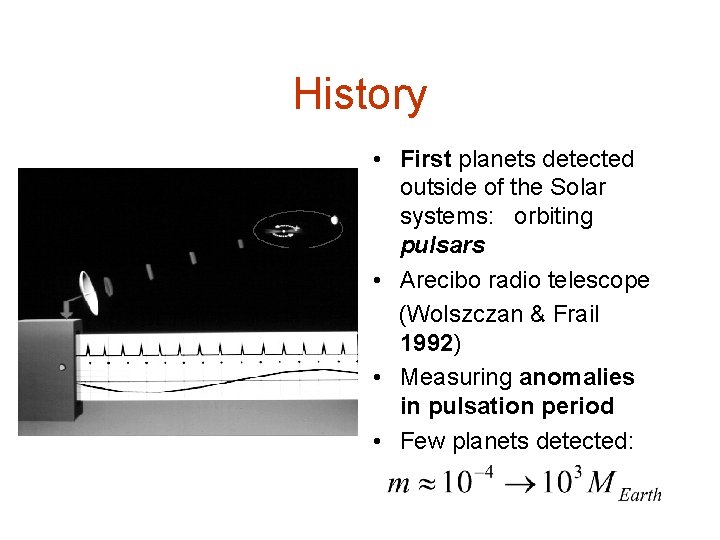
History • First planets detected outside of the Solar systems: orbiting pulsars • Arecibo radio telescope (Wolszczan & Frail 1992) • Measuring anomalies in pulsation period • Few planets detected:
Extrasolar planet definition? • Pulsars formed by supernova explosion - planets formed by mass ejection? • “Extrasolar planet is a planet orbiting a star different from the Sun” (IAU) • Definition excludes planets orbiting pulsars, and free-floating planets • At the moment around 500 exoplanets detected • Mainly by indirect detection methods (optical observations of stars)
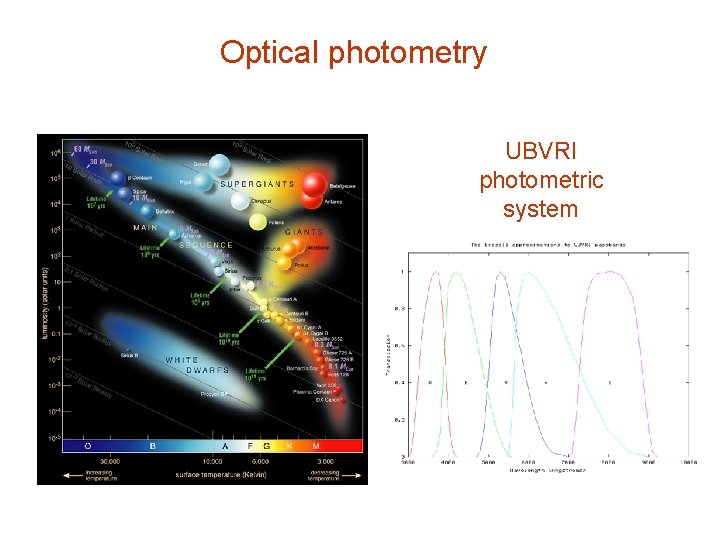
Optical photometry UBVRI photometric system
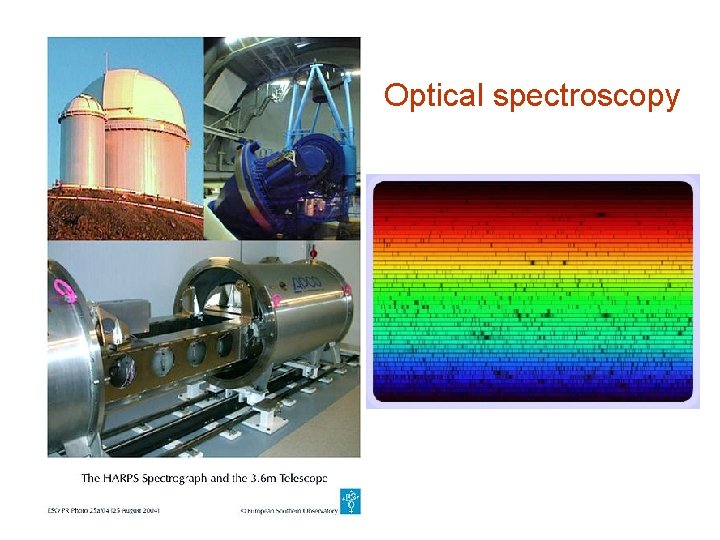
Optical spectroscopy
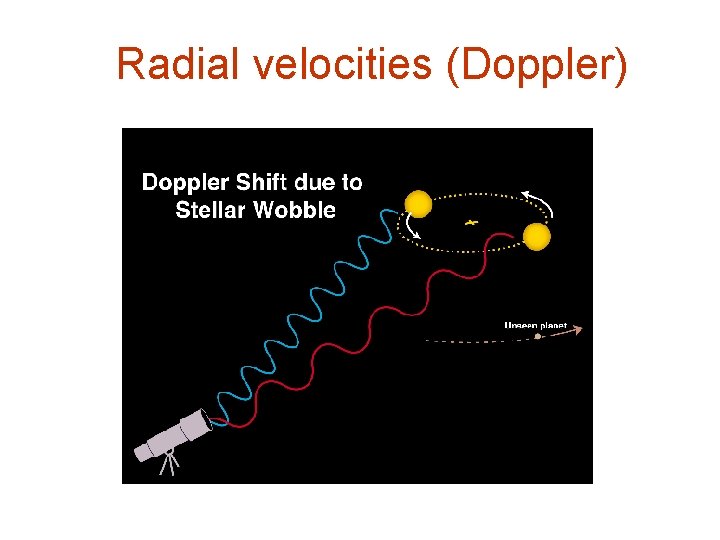
Radial velocities (Doppler)
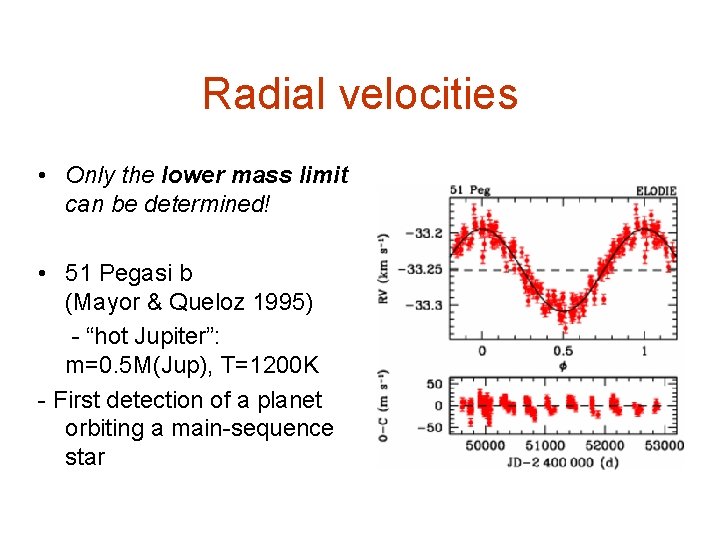
Radial velocities • Only the lower mass limit can be determined! • 51 Pegasi b (Mayor & Queloz 1995) - “hot Jupiter”: m=0. 5 M(Jup), T=1200 K - First detection of a planet orbiting a main-sequence star
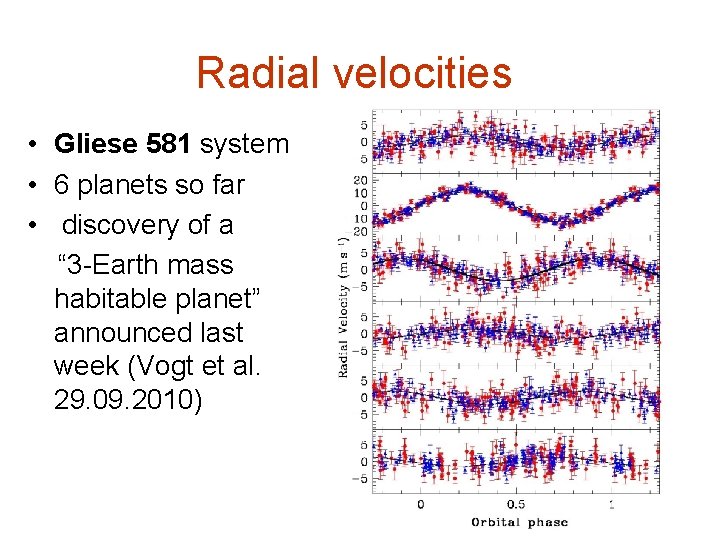
Radial velocities • Gliese 581 system • 6 planets so far • discovery of a “ 3 -Earth mass habitable planet” announced last week (Vogt et al. 29. 09. 2010)
Radial velocities + Astrometry • Out of 490 planet detections, 459 by RV • The most efficient method for. . . • detecting extrasolar planets? • detecting planet candidates? • For ex. HD 43848: The former mass of 25 MJ (planet) has now been revised to 102 MJ (brown dwarf) using astrometry (Sahlmann et al. 29. 09. 2010)
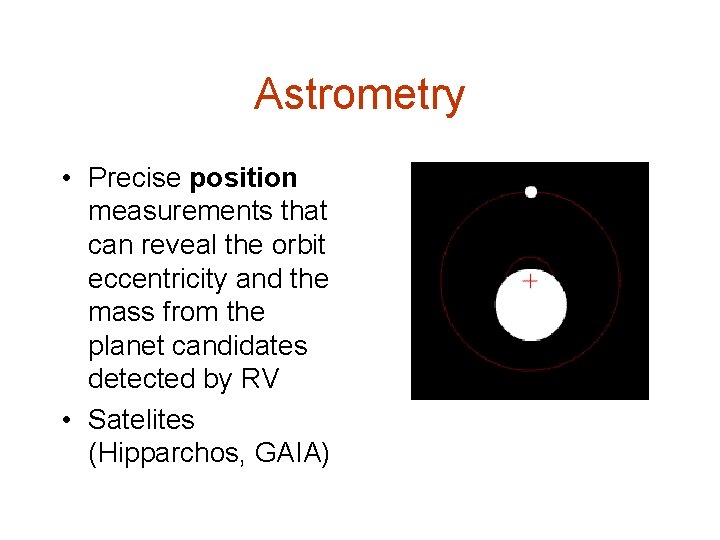
Astrometry • Precise position measurements that can reveal the orbit eccentricity and the mass from the planet candidates detected by RV • Satelites (Hipparchos, GAIA)
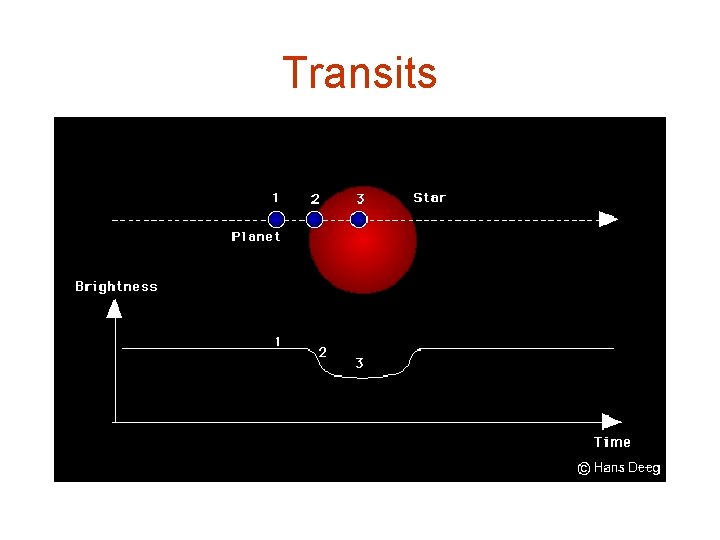
Transits
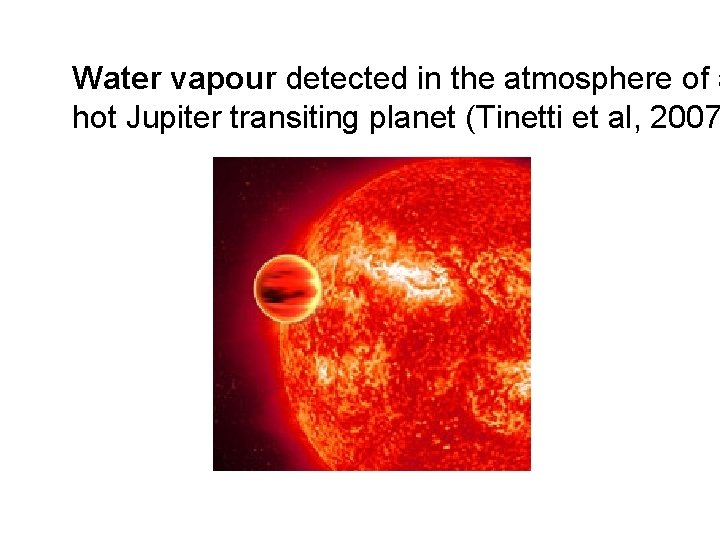
Water vapour detected in the atmosphere of a hot Jupiter transiting planet (Tinetti et al, 2007
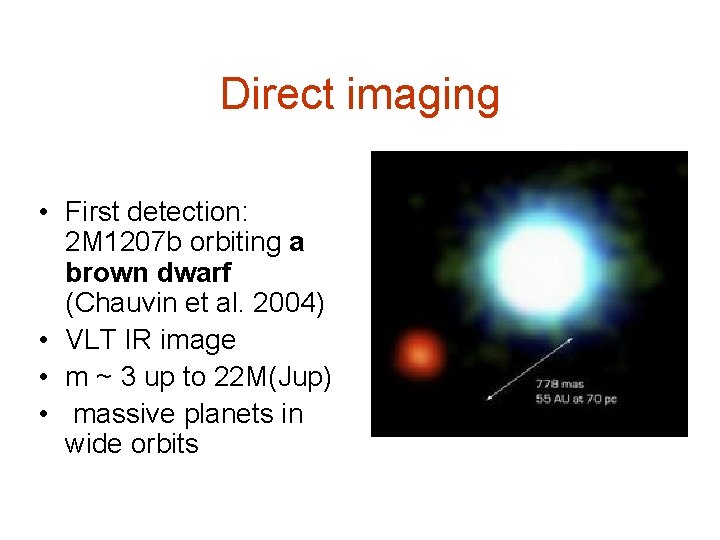
Direct imaging • First detection: 2 M 1207 b orbiting a brown dwarf (Chauvin et al. 2004) • VLT IR image • m ~ 3 up to 22 M(Jup) • massive planets in wide orbits
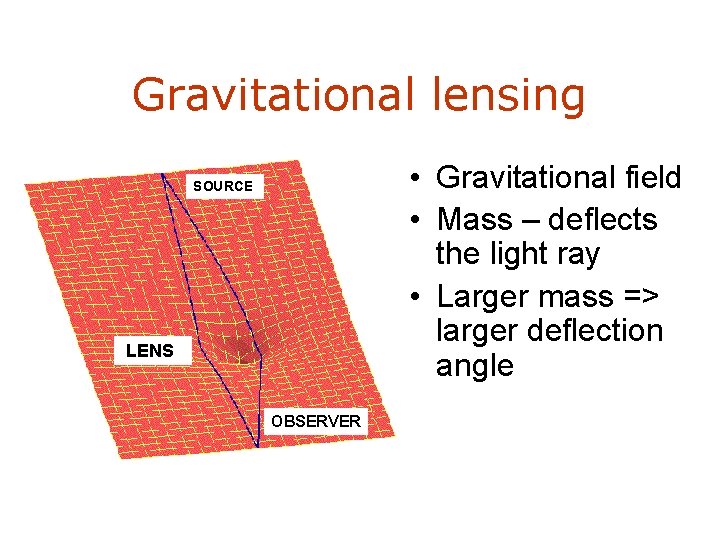
Gravitational lensing • Gravitational field • Mass – deflects the light ray • Larger mass => larger deflection angle SOURCE LENS OBSERVER
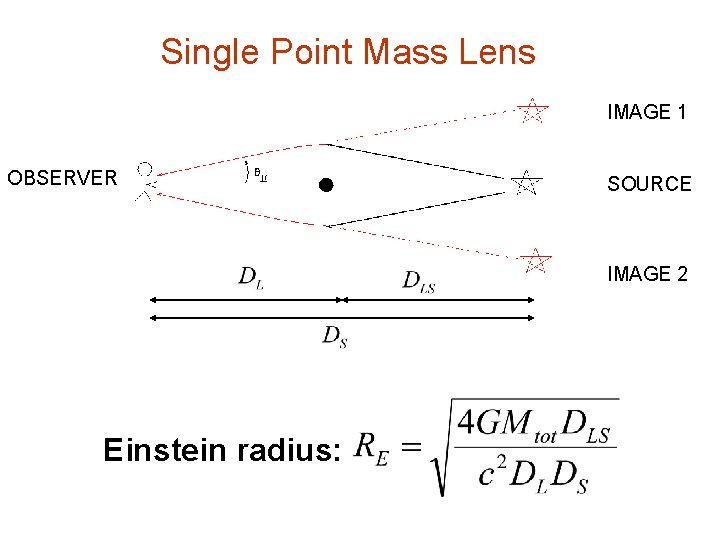
Single Point Mass Lens IMAGE 1 OBSERVER SOURCE IMAGE 2 Einstein radius:
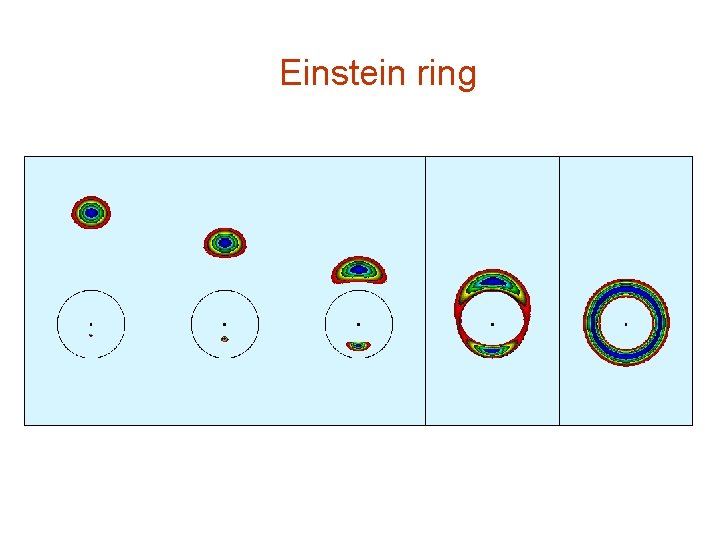
Einstein ring
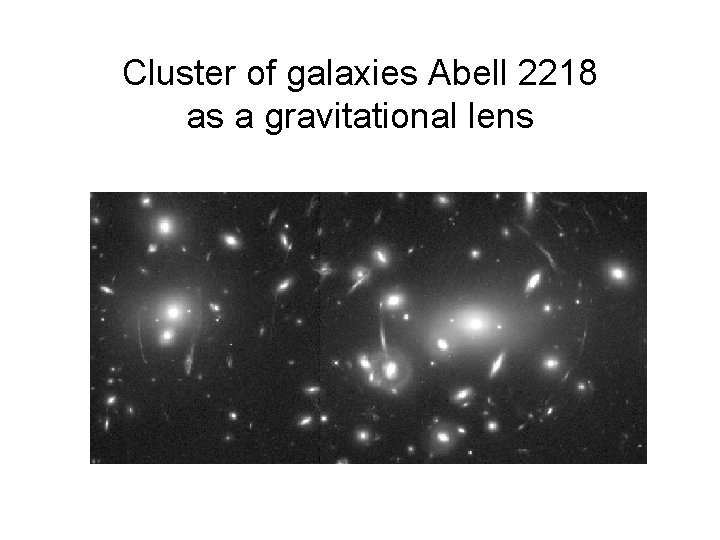
Cluster of galaxies Abell 2218 as a gravitational lens
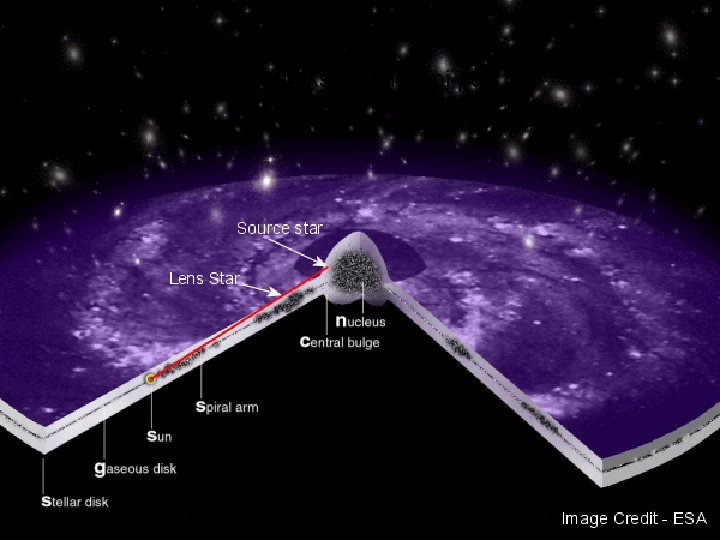
Naša galaksija (Mliječni put)
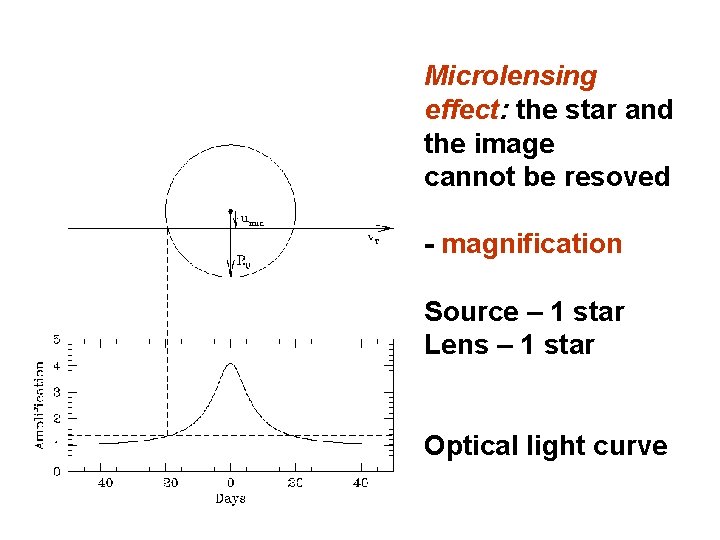
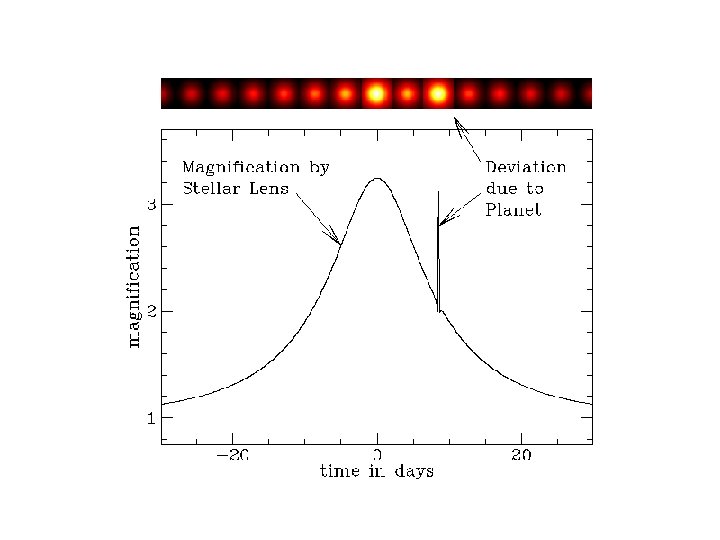
Microlensing effect: the star and the image cannot be resoved - magnification Source – 1 star Lens – 1 star Optical light curve
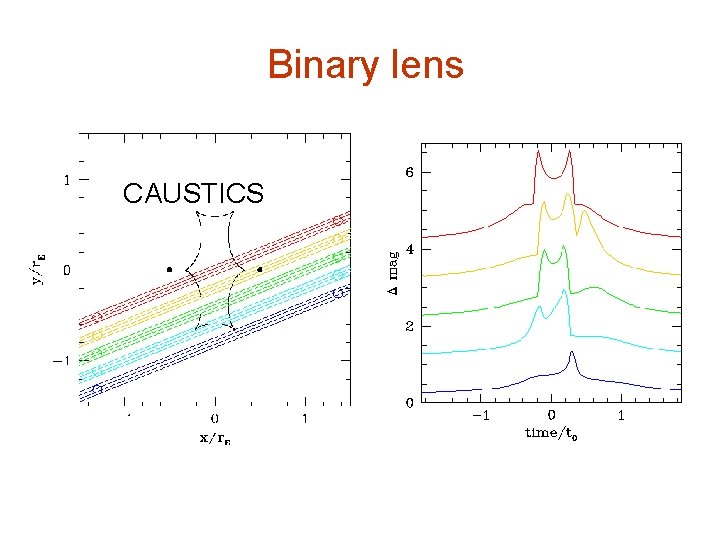
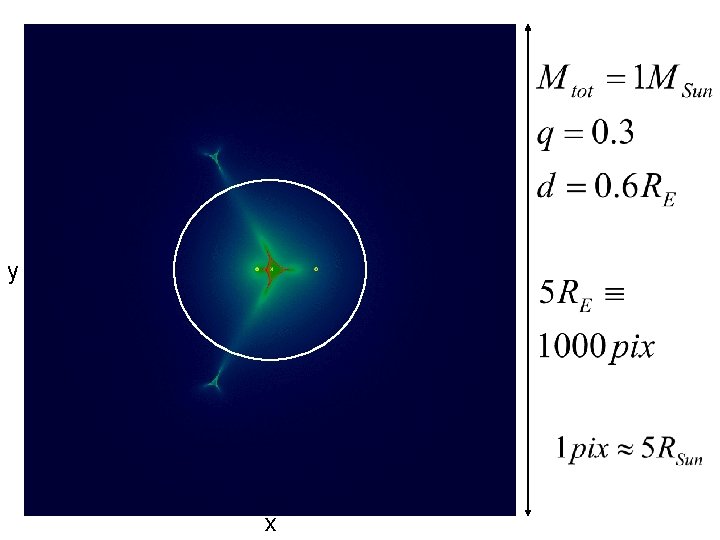
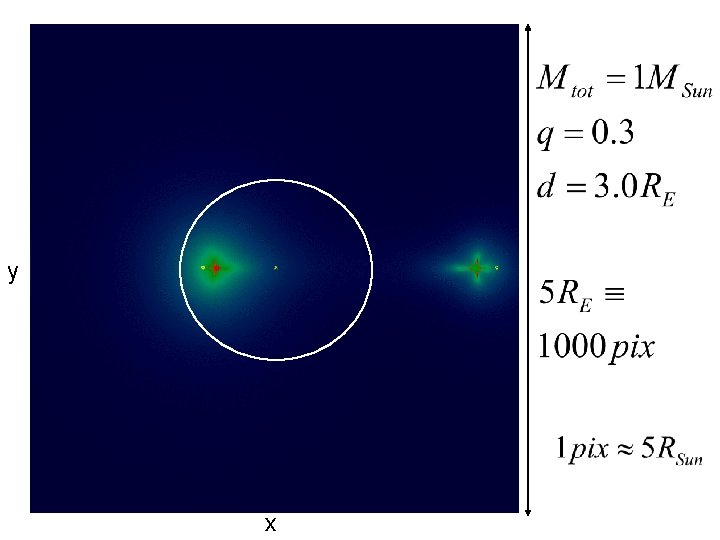
Binary lens CAUSTICS
y x
y x
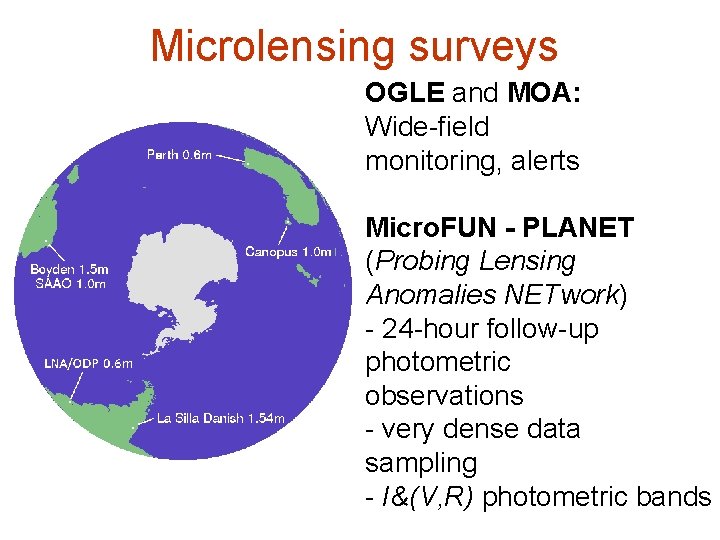
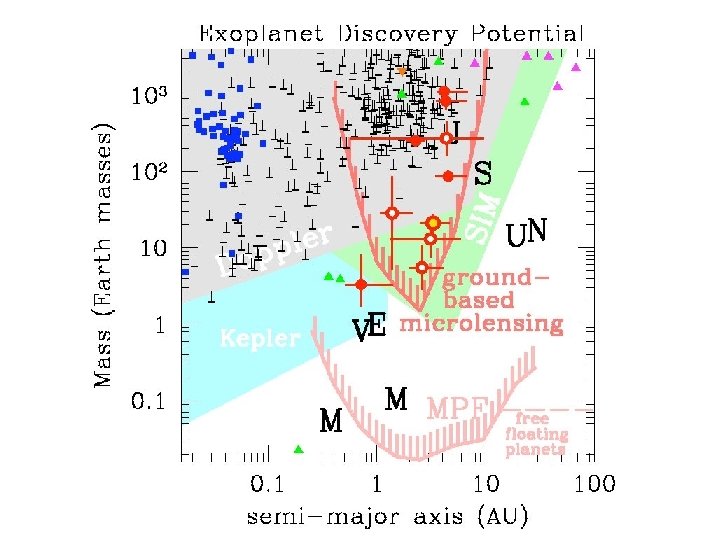
Microlensing surveys OGLE and MOA: Wide-field monitoring, alerts Micro. FUN - PLANET (Probing Lensing Anomalies NETwork) - 24 -hour follow-up photometric observations - very dense data sampling - I&(V, R) photometric bands
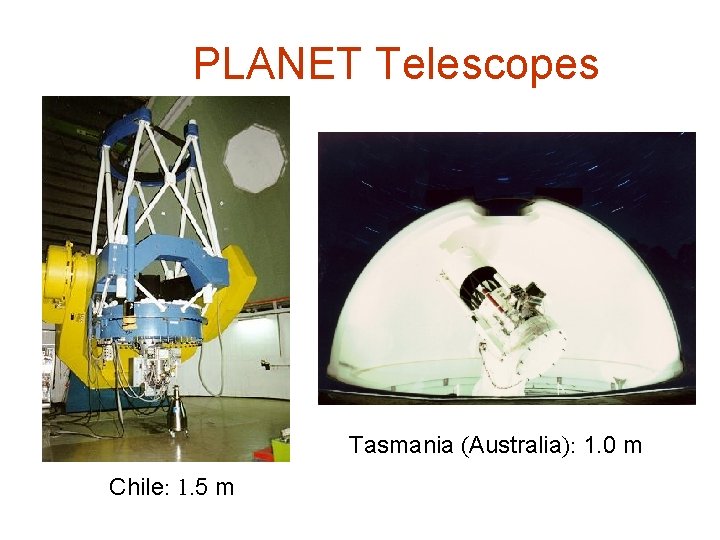
PLANET Telescopes Tasmania (Australia): 1. 0 m Chile: 1. 5 m
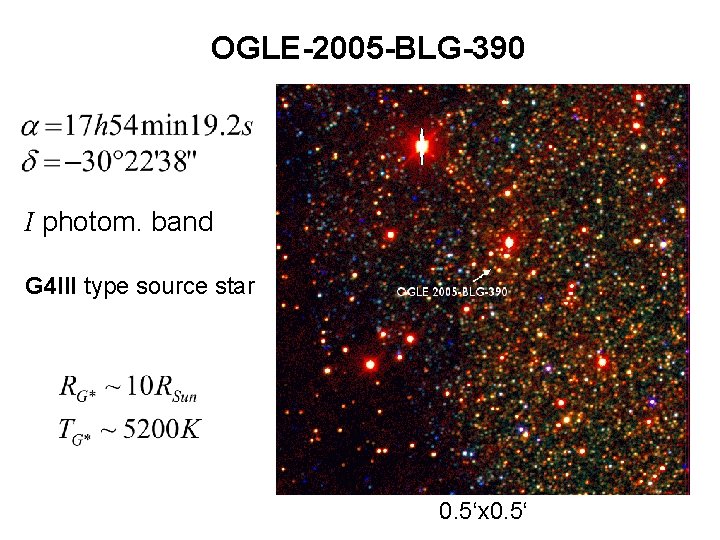
OGLE-2005 -BLG-390 I photom. band G 4 III type source star 0. 5‘x 0. 5‘
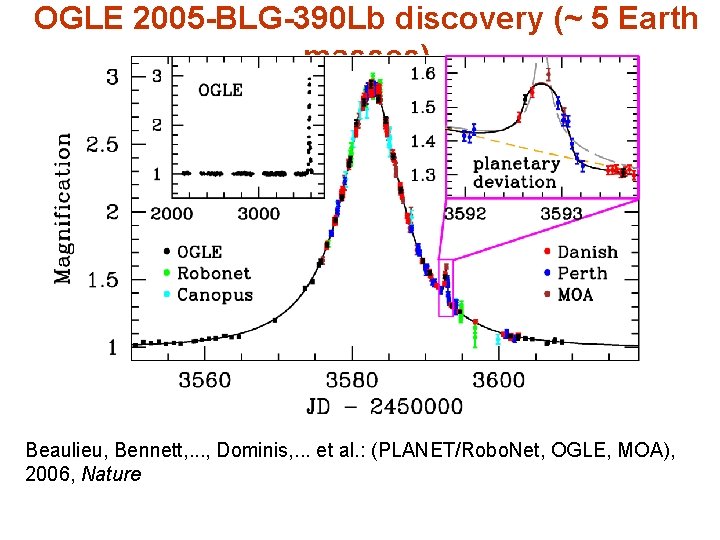
OGLE 2005 -BLG-390 Lb discovery (~ 5 Earth masses) Beaulieu, Bennett, . . . , Dominis, . . . et al. : (PLANET/Robo. Net, OGLE, MOA), 2006, Nature
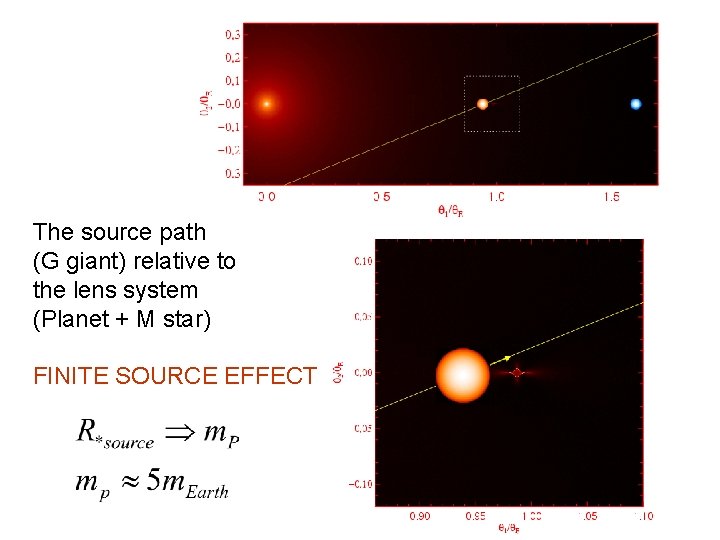
The source path (G giant) relative to the lens system (Planet + M star) FINITE SOURCE EFFECT
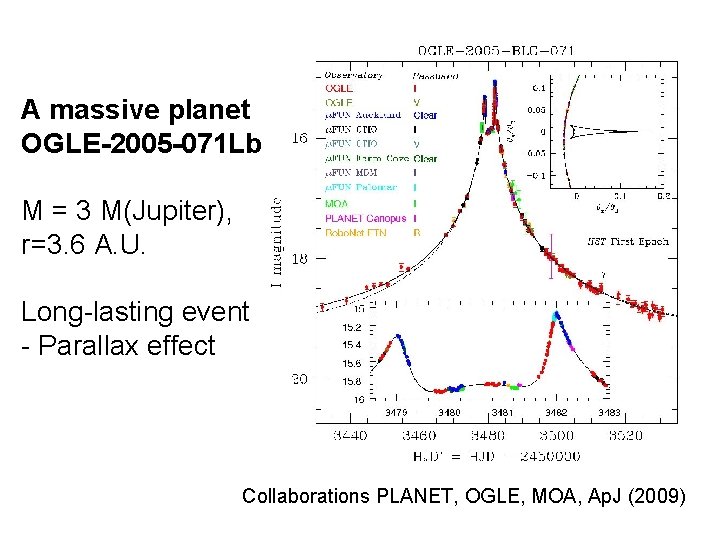
A massive planet OGLE-2005 -071 Lb M = 3 M(Jupiter), r=3. 6 A. U. Long-lasting event - Parallax effect Collaborations PLANET, OGLE, MOA, Ap. J (2009)
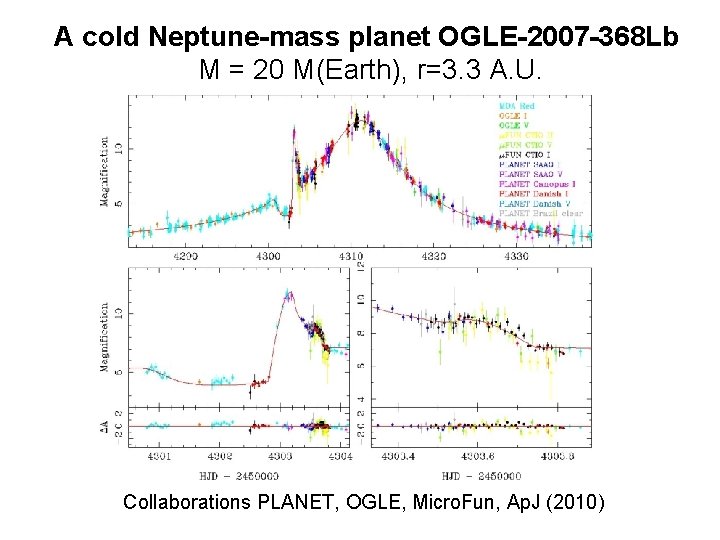
A cold Neptune-mass planet OGLE-2007 -368 Lb M = 20 M(Earth), r=3. 3 A. U. Collaborations PLANET, OGLE, Micro. Fun, Ap. J (2010)
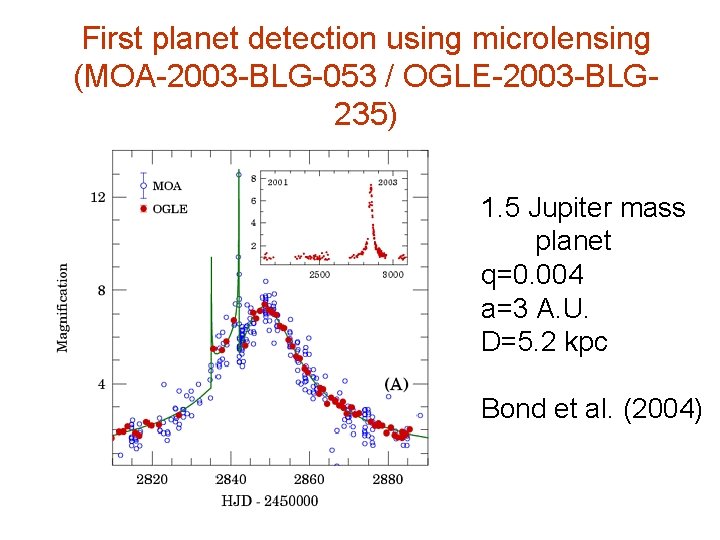
First planet detection using microlensing (MOA-2003 -BLG-053 / OGLE-2003 -BLG 235) 1. 5 Jupiter mass planet q=0. 004 a=3 A. U. D=5. 2 kpc Bond et al. (2004)
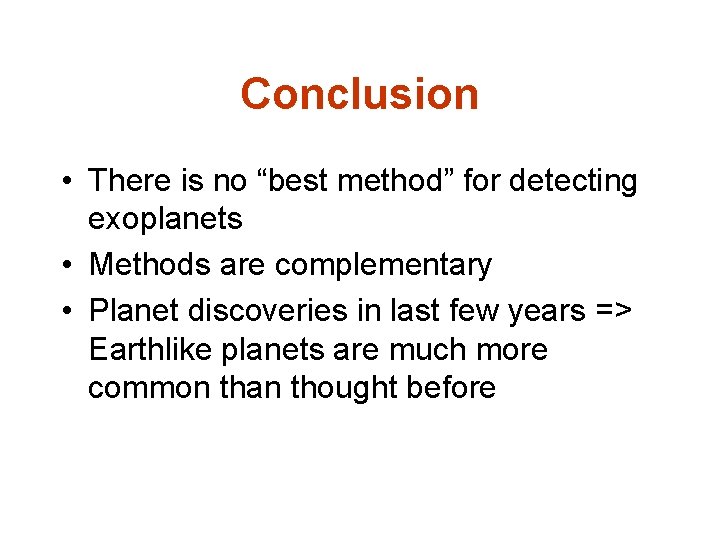
Conclusion • There is no “best method” for detecting exoplanets • Methods are complementary • Planet discoveries in last few years => Earthlike planets are much more common than thought before