
Module 8 ERPositive Metastatic Breast Cancer Elizabeth OReilly

Module 8: ER-Positive Metastatic Breast Cancer Elizabeth O’Reilly, MSN, MPH, ANP-BC Sara Hurvitz, MD
Disclosures for Ms O’Reilly No financial interests or affiliations to disclose
Disclosures for Dr Hurvitz § Salary: none § Royalty: none § Receipt of Intellectual Property Rights/Patent Holder: none § Consulting Fees (e. g. , advisory boards): none § Fees for Non-CME Services Received Directly from a Commercial Interest or their Agents (e. g. , speakers’ bureau): none § Contracted Research: Amgen, Ambrx, Bayer, BI, Genentech/Roche, GSK, Lilly, Novartis, Dignitana, Pfizer, Merrimack, OBI Pharma, PUMA, Macrogenics, Seattle Genetics, Pieris, Ambryx, Daiichi Sankyo, Immunomedics § Ownership Interest (stocks, stock options or other ownership interest excluding diversified mutual funds): none § Other: none
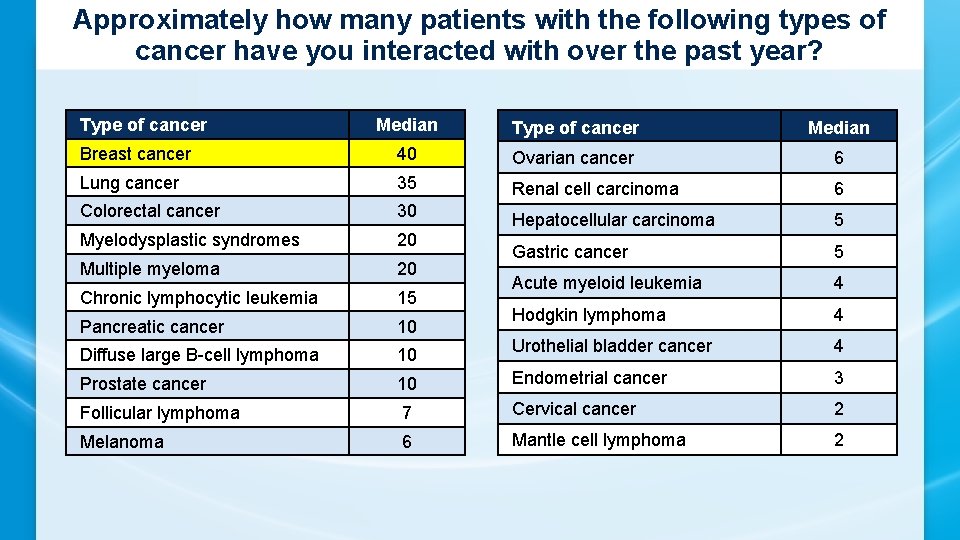
Approximately how many patients with the following types of cancer have you interacted with over the past year? Type of cancer Median Breast cancer 40 Ovarian cancer 6 Lung cancer 35 Renal cell carcinoma 6 Colorectal cancer 30 Myelodysplastic syndromes 20 Hepatocellular carcinoma 5 Multiple myeloma 20 Gastric cancer 5 Chronic lymphocytic leukemia 15 Acute myeloid leukemia 4 Pancreatic cancer 10 Hodgkin lymphoma 4 Diffuse large B-cell lymphoma 10 Urothelial bladder cancer 4 Prostate cancer 10 Endometrial cancer 3 Follicular lymphoma 7 Cervical cancer 2 Melanoma 6 Mantle cell lymphoma 2
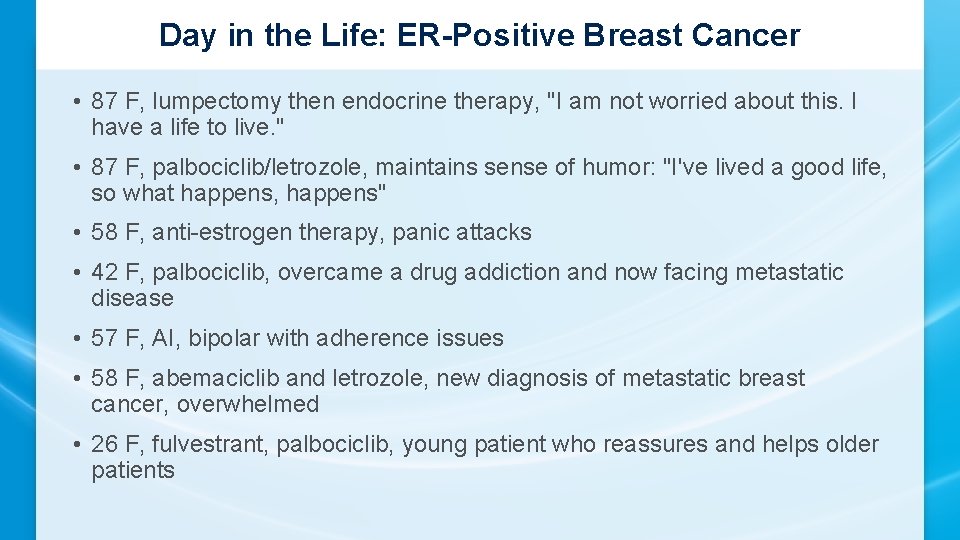
Day in the Life: ER-Positive Breast Cancer • 87 F, lumpectomy then endocrine therapy, "I am not worried about this. I have a life to live. " • 87 F, palbociclib/letrozole, maintains sense of humor: "I've lived a good life, so what happens, happens" • 58 F, anti-estrogen therapy, panic attacks • 42 F, palbociclib, overcame a drug addiction and now facing metastatic disease • 57 F, AI, bipolar with adherence issues • 58 F, abemaciclib and letrozole, new diagnosis of metastatic breast cancer, overwhelmed • 26 F, fulvestrant, palbociclib, young patient who reassures and helps older patients
Day in the Life: ER-Positive Breast Cancer • 70 F, Palbociclib/letrozole PD fulvestrant/alpelisib, PIK 3 CA and BRCA somatic mutations • 63 F, exemestane tamoxifen, Hx endometrial ca, BRCA 2 mutation positive, Intolerance to AI • 50 F, fulvestrant/denosumab, socioeconomical issues/lack of insurance caused her to stop treatment before becoming metastatic • 88 F, palbociclib/letrozole/denosumab, stoic and lives alone • 41 F, ribociclib, she thought she hurt her back at work but presented with metastatic disease
Day in the Life: ER-Positive Breast Cancer • 69 F, ribociclib, cares for her young grandchildren • 76 F, palbociclib, had to go to a nursing home because her husband recently passed away • 72 F, palbociclib and fulvestrant, positive attitude • 79 F, anastrozole, retired nurse • 52 F, palbociclib, always happy, retired school counselor • 71 F, endocrine therapy, mental health issues • 66 F, endocrine therapy, caregiving burden
Case 3: 48 yo originally with node-positive breast cancer • 2008: 48 yo woman diagnosed with R sided, invasive ductal carcinoma, grade 2 of 3. ER positive, PR positive, HER 2 negative. Neoadjuvant AC/T, then mastectomy with residual cancer measuring 2. 7 cm and 1 of 12 axillary LN. Received postmastectomy radiation and then OFS and tamoxifen. • 2013: Bone-only metastases; started letrozole. Disease largely followed by tumor markers. • 2015: Progression fulvestrant and palbociclib. • 2016: Genomic testing of primary tumor at DFCI PIK 3 Ca wildtype • Late 2017: Progression capecitabine. • 2019: Progression in bones; no visceral disease abemaciclib.
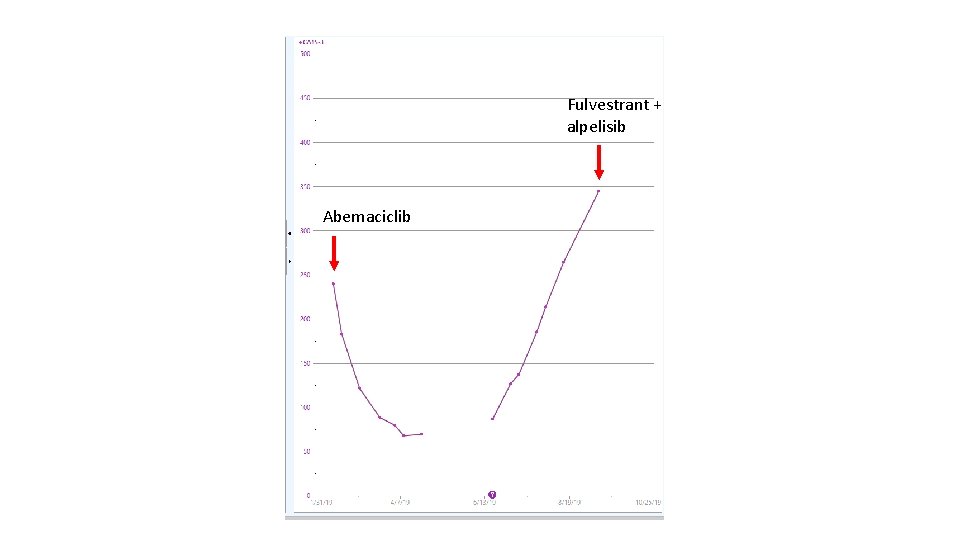
Fulvestrant + alpelisib Abemaciclib
Abemaciclib toxicities/dose reductions • Diarrhea — common, greatest 1 st month, loperamide and can add alternating diphenoxylate/atropine • Fatigue • Nausea • Neutropenia/thrombocytopenia • Pneumonitis
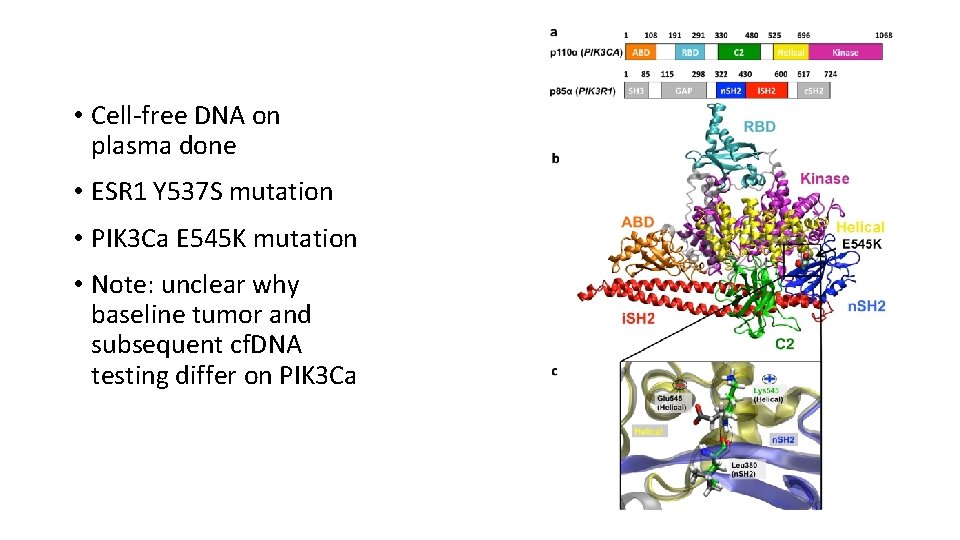
• Cell-free DNA on plasma done • ESR 1 Y 537 S mutation • PIK 3 Ca E 545 K mutation • Note: unclear why baseline tumor and subsequent cf. DNA testing differ on PIK 3 Ca
Alpelisib toxicities • Initiated fulvestrant and alpelisib therapy • Monitored fasting glucose weekly • Patient developed hyperglycemia by week 2 with glucose = 271 • Added metformin dosed at 500 mg qd • Hyperglycemia incidence 79% (grade 3 or 4 = 39%), we tell patients to purchase glucometer, measure fasting glucose levels, keep a diary. FPG at least 1/week x first 2 weeks, then monthly, and as clinically indicated. Monitor Hb. A 1 c q 3 months.
Alpelisib toxicities • Other toxicities: Rash (onset as early as a few days or delayed as late as 1 year) diarrhea (incidence 58%) N/V and abdominal pain (incidence 45%) stomatitis (incidence 30%) fatigue/weakness (incidence 42%) pneumonitis (incidence 1. 8%)

Module 8: ER-Positive Breast Cancer Sara A Hurvitz, MD, FACP Associate Professor of Medicine
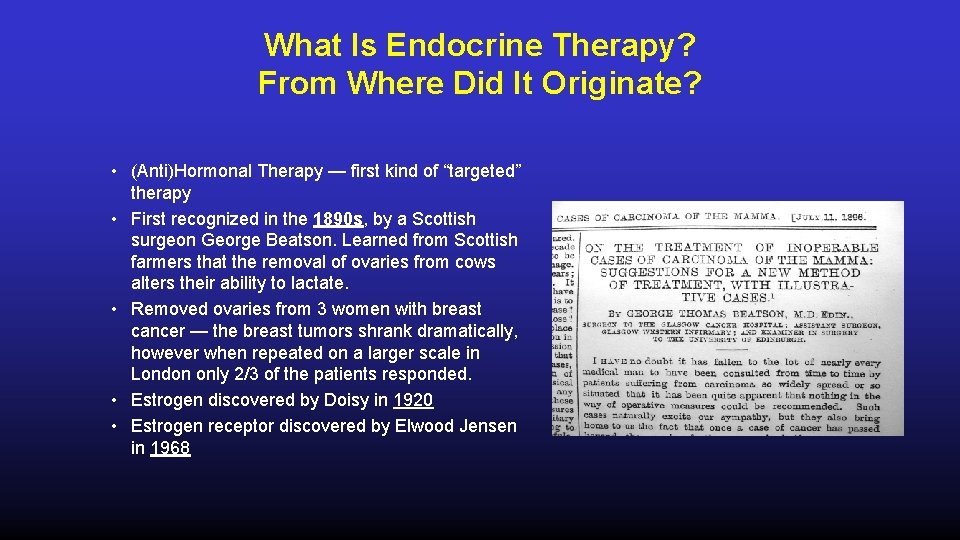
What Is Endocrine Therapy? From Where Did It Originate? • (Anti)Hormonal Therapy — first kind of “targeted” therapy • First recognized in the 1890 s, by a Scottish surgeon George Beatson. Learned from Scottish farmers that the removal of ovaries from cows alters their ability to lactate. • Removed ovaries from 3 women with breast cancer — the breast tumors shrank dramatically, however when repeated on a larger scale in London only 2/3 of the patients responded. • Estrogen discovered by Doisy in 1920 • Estrogen receptor discovered by Elwood Jensen in 1968
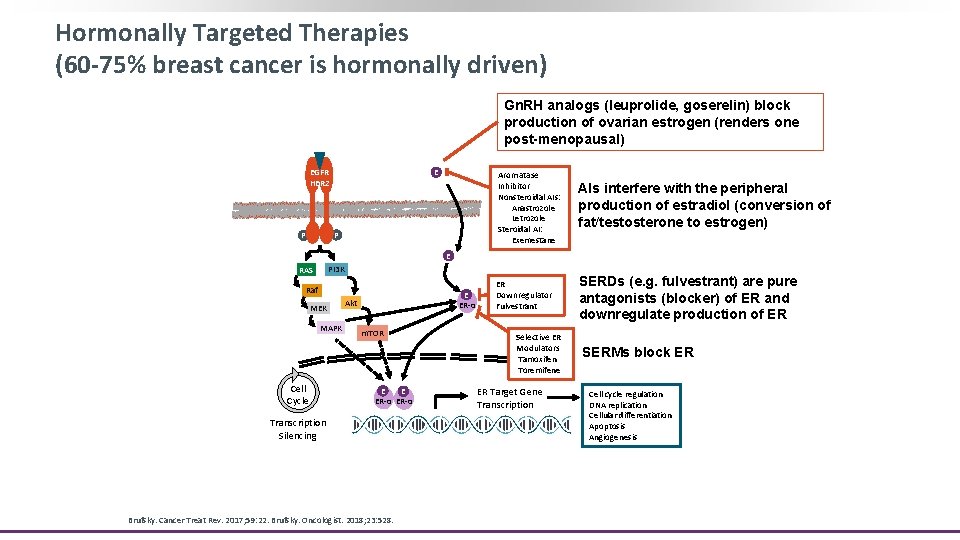
Hormonally Targeted Therapies (60 -75% breast cancer is hormonally driven) Gn. RH analogs (leuprolide, goserelin) block production of ovarian estrogen (renders one post-menopausal) EGFR HER 2 E P P Aromatase Inhibitor Nonsteroidal AIs: Anastrozole Letrozole Steroidal AI: Exemestane AIs interfere with the peripheral production of estradiol (conversion of fat/testosterone to estrogen) ER Downregulator Fulvestrant SERDs (e. g. fulvestrant) are pure antagonists (blocker) of ER and downregulate production of ER E PI 3 K RAS Raf MEK MAPK Cell Cycle E ER-α Akt m. TOR E E ER-α Transcription Silencing Brufsky. Cancer Treat Rev. 2017; 59: 22. Brufsky. Oncologist. 2018; 23: 528. Selective ER Modulators Tamoxifen Toremifene ER Target Gene Transcription SERMs block ER Cell cycle regulation DNA replication Cellular differentiation Apoptosis Angiogenesis
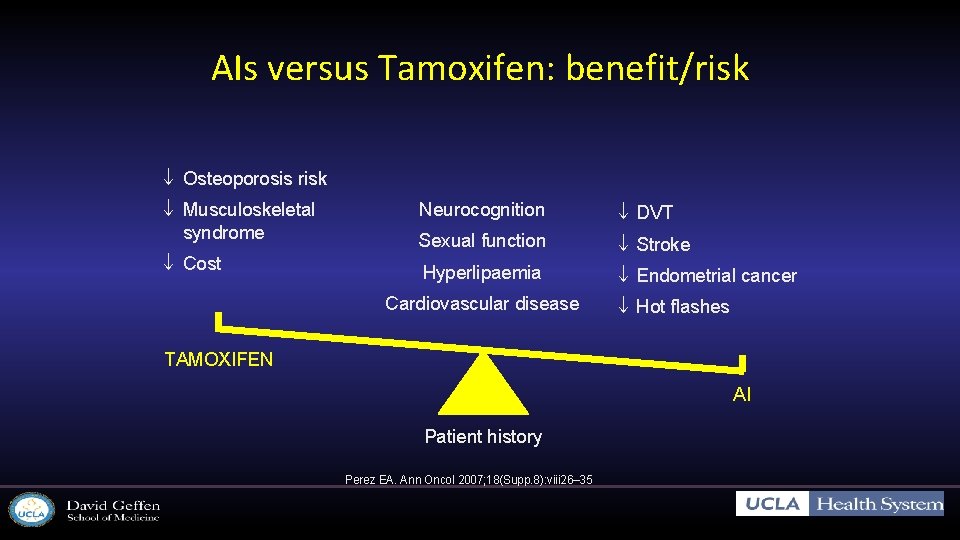
AIs versus Tamoxifen: benefit/risk ¯ Osteoporosis risk ¯ Musculoskeletal syndrome ¯ Cost Neurocognition ¯ DVT Sexual function ¯ Stroke Hyperlipaemia ¯ Endometrial cancer Cardiovascular disease ¯ Hot flashes TAMOXIFEN AI Patient history Perez EA. Ann Oncol 2007; 18(Supp. 8): viii 26– 35
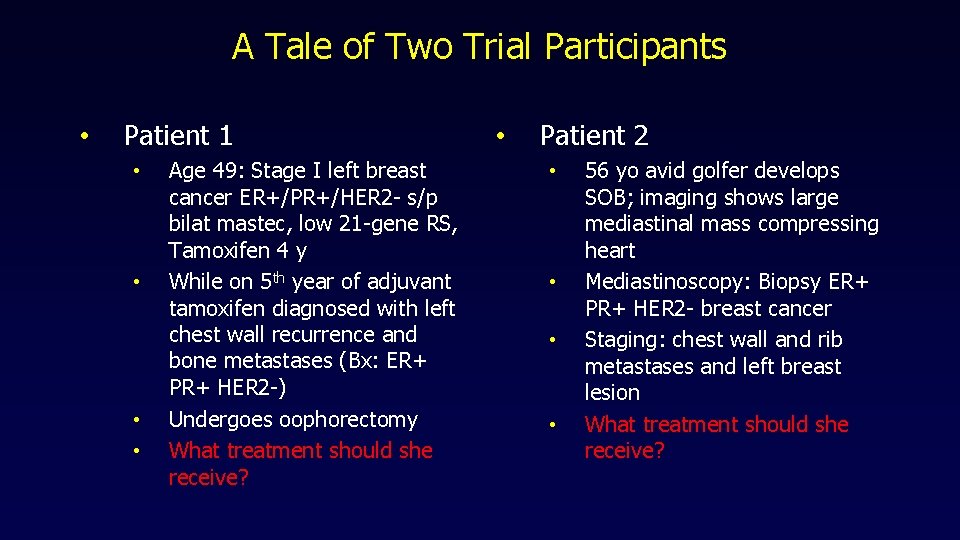
A Tale of Two Trial Participants • Patient 1 • • Age 49: Stage I left breast cancer ER+/PR+/HER 2 - s/p bilat mastec, low 21 -gene RS, Tamoxifen 4 y While on 5 th year of adjuvant tamoxifen diagnosed with left chest wall recurrence and bone metastases (Bx: ER+ PR+ HER 2 -) Undergoes oophorectomy What treatment should she receive? • Patient 2 • • 56 yo avid golfer develops SOB; imaging shows large mediastinal mass compressing heart Mediastinoscopy: Biopsy ER+ PR+ HER 2 - breast cancer Staging: chest wall and rib metastases and left breast lesion What treatment should she receive?
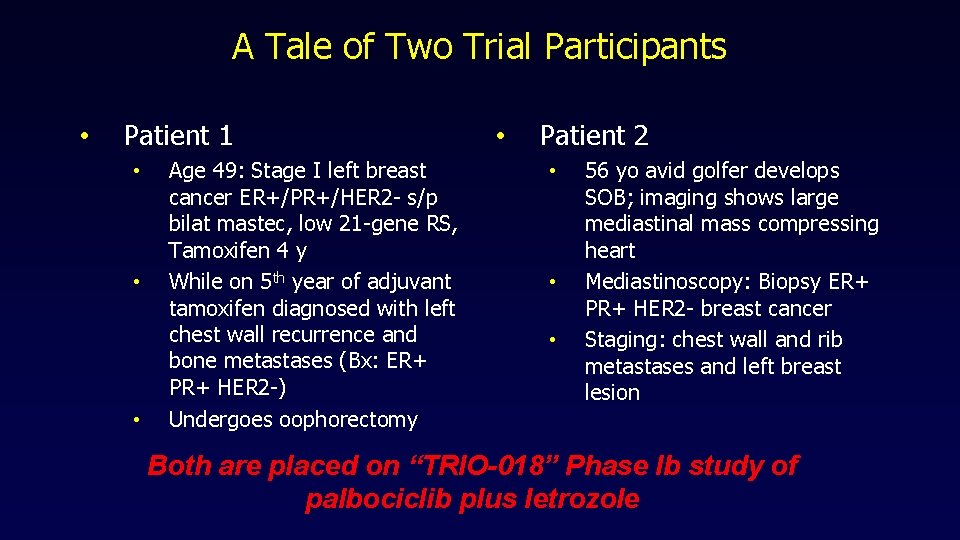
A Tale of Two Trial Participants • Patient 1 • • • Age 49: Stage I left breast cancer ER+/PR+/HER 2 - s/p bilat mastec, low 21 -gene RS, Tamoxifen 4 y While on 5 th year of adjuvant tamoxifen diagnosed with left chest wall recurrence and bone metastases (Bx: ER+ PR+ HER 2 -) Undergoes oophorectomy • Patient 2 • • • 56 yo avid golfer develops SOB; imaging shows large mediastinal mass compressing heart Mediastinoscopy: Biopsy ER+ PR+ HER 2 - breast cancer Staging: chest wall and rib metastases and left breast lesion Both are placed on “TRIO-018” Phase Ib study of palbociclib plus letrozole
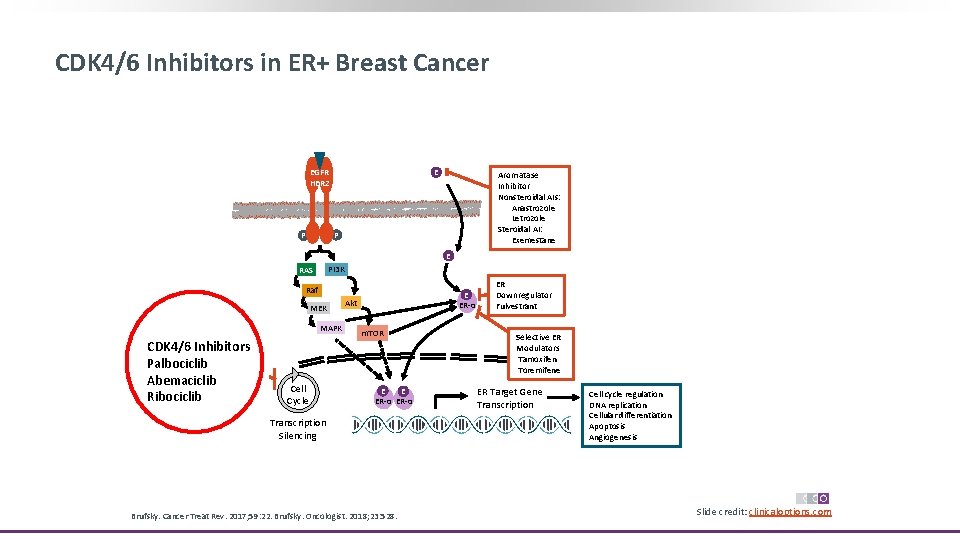
CDK 4/6 Inhibitors in ER+ Breast Cancer EGFR HER 2 E Aromatase Inhibitor Nonsteroidal AIs: Anastrozole Letrozole Steroidal AI: Exemestane P P E PI 3 K RAS Raf MEK MAPK CDK 4/6 Inhibitors Palbociclib Abemaciclib Ribociclib Cell Cycle E ER-α Akt m. TOR E E ER-α Transcription Silencing Brufsky. Cancer Treat Rev. 2017; 59: 22. Brufsky. Oncologist. 2018; 23: 528. ER Downregulator Fulvestrant Selective ER Modulators Tamoxifen Toremifene ER Target Gene Transcription Cell cycle regulation DNA replication Cellular differentiation Apoptosis Angiogenesis Slide credit: clinicaloptions. com
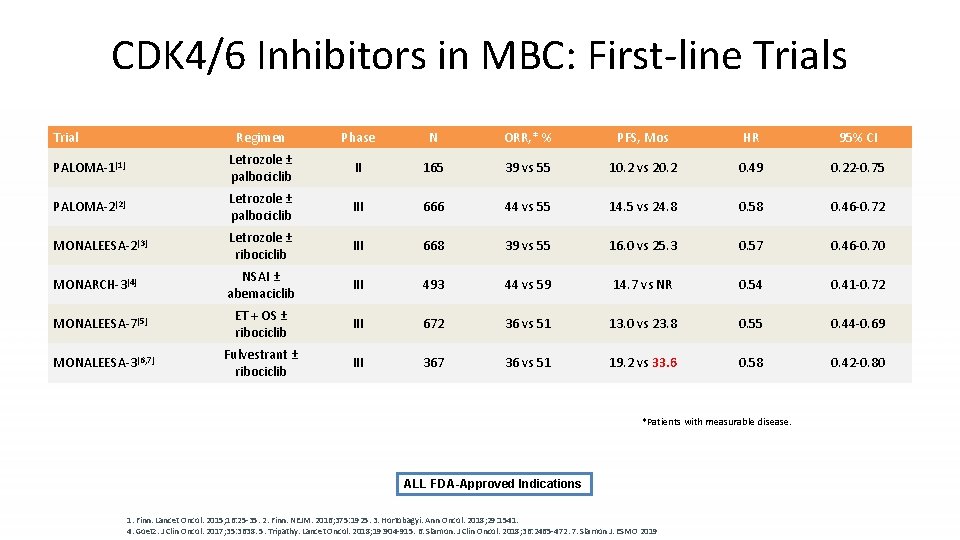
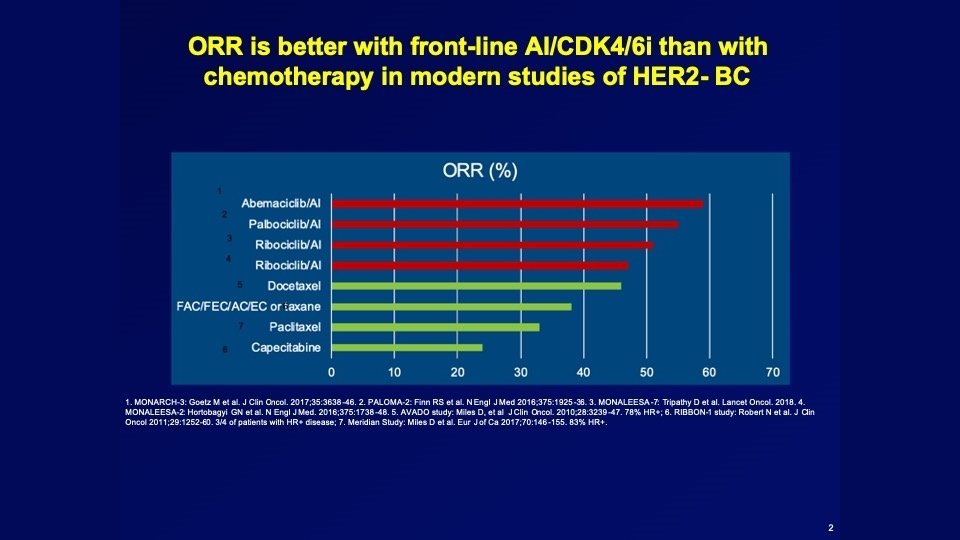
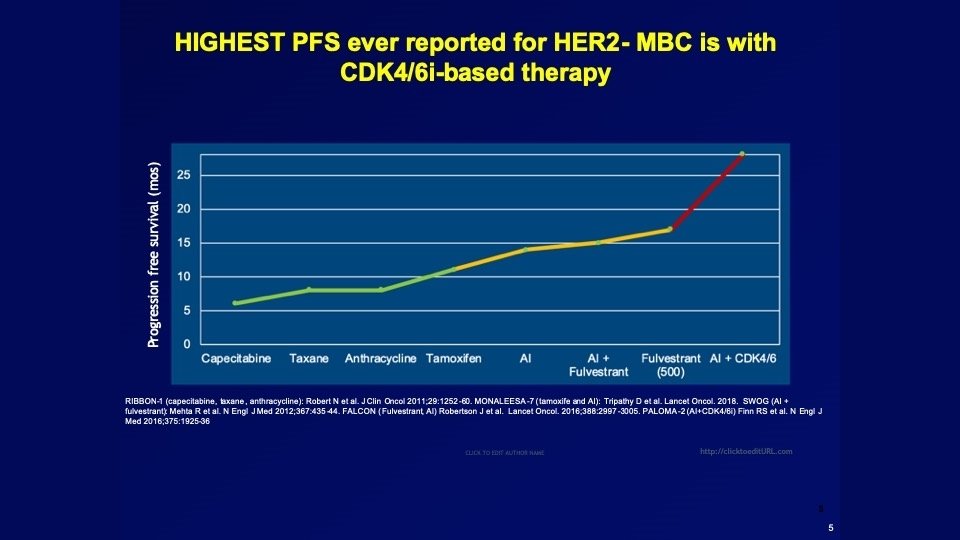
CDK 4/6 Inhibitors in MBC: First-line Trials Trial Regimen Phase N ORR, * % PFS, Mos HR 95% CI PALOMA-1[1] Letrozole ± palbociclib II 165 39 vs 55 10. 2 vs 20. 2 0. 49 0. 22 -0. 75 PALOMA-2[2] Letrozole ± palbociclib III 666 44 vs 55 14. 5 vs 24. 8 0. 58 0. 46 -0. 72 MONALEESA-2[3] Letrozole ± ribociclib III 668 39 vs 55 16. 0 vs 25. 3 0. 57 0. 46 -0. 70 MONARCH-3[4] NSAI ± abemaciclib III 493 44 vs 59 14. 7 vs NR 0. 54 0. 41 -0. 72 MONALEESA-7[5] ET + OS ± ribociclib III 672 36 vs 51 13. 0 vs 23. 8 0. 55 0. 44 -0. 69 MONALEESA-3[6, 7] Fulvestrant ± ribociclib III 367 36 vs 51 19. 2 vs 33. 6 0. 58 0. 42 -0. 80 *Patients with measurable disease. ALL FDA-Approved Indications 1. Finn. Lancet Oncol. 2015; 16: 25 -35. 2. Finn. NEJM. 2016; 375: 1925. 3. Hortobagyi. Ann Oncol. 2018; 29: 1541. 4. Goetz. J Clin Oncol. 2017; 35: 3638. 5. Tripathy. Lancet Oncol. 2018; 19: 904 -915. 6. Slamon. J Clin Oncol. 2018; 36: 2465 -472. 7. Slamon J. ESMO 2019
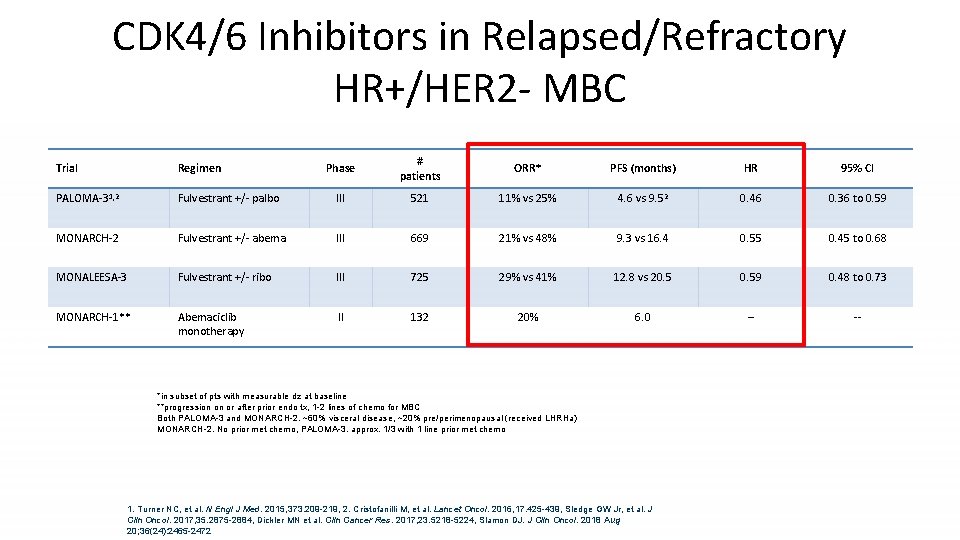
CDK 4/6 Inhibitors in Relapsed/Refractory HR+/HER 2 - MBC Phase # patients ORR* PFS (months) HR 95% CI Fulvestrant +/- palbo III 521 11% vs 25% 4. 6 vs 9. 52 0. 46 0. 36 to 0. 59 MONARCH-2 Fulvestrant +/- abema III 669 21% vs 48% 9. 3 vs 16. 4 0. 55 0. 45 to 0. 68 MONALEESA-3 Fulvestrant +/- ribo III 725 29% vs 41% 12. 8 vs 20. 59 0. 48 to 0. 73 MONARCH-1** Abemaciclib monotherapy II 132 20% 6. 0 -- -- Trial Regimen PALOMA-31, 2 *in subset of pts with measurable dz at baseline **progression on or after prior endo tx; 1 -2 lines of chemo for MBC Both PALOMA-3 and MONARCH-2: ~60% visceral disease; ~20% pre/perimenopausal (received LHRHa) MONARCH-2: No prior met chemo; PALOMA-3: approx. 1/3 with 1 line prior met chemo 1. Turner NC, et al. N Engl J Med. 2015; 373: 209 -219; 2. Cristofanilli M, et al. Lancet Oncol. 2016; 17: 425 -439; Sledge GW Jr, et al. J Clin Oncol. 2017; 35: 2875 -2884; Dickler MN et al. Clin Cancer Res. 2017; 23: 5218 -5224; Slamon DJ. J Clin Oncol. 2018 Aug 20; 36(24): 2465 -2472

The Survival Data Are In!
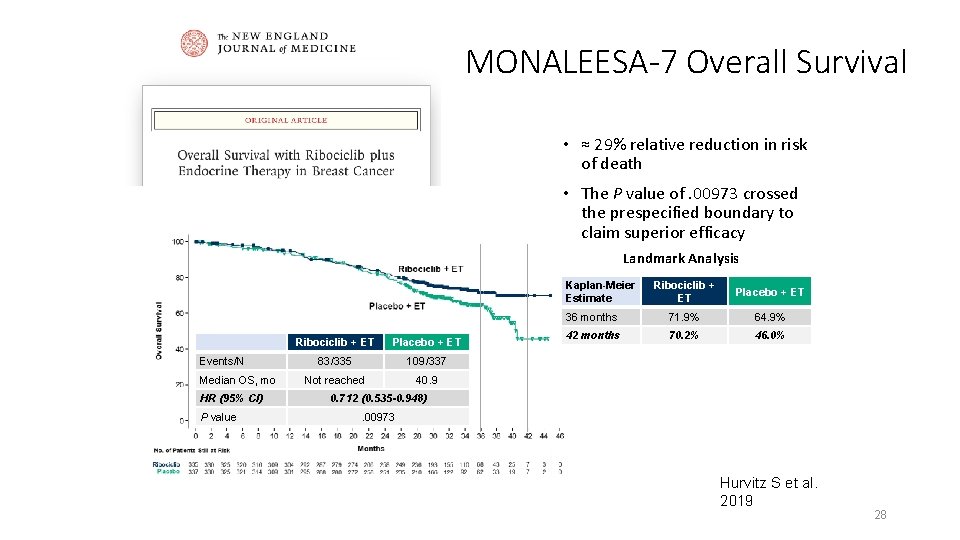
MONALEESA-7 Overall Survival • ≈ 29% relative reduction in risk of death • The P value of. 00973 crossed the prespecified boundary to claim superior efficacy Landmark Analysis Kaplan-Meier Estimate Events/N Median OS, mo HR (95% CI) P value Ribociclib + ET Placebo + ET 83/335 109/337 Not reached 40. 9 Ribociclib + ET Placebo + ET 36 months 71. 9% 64. 9% 42 months 70. 2% 46. 0% 0. 712 (0. 535 -0. 948). 00973 Dr Sara Hurvitz S et al. 2019 28
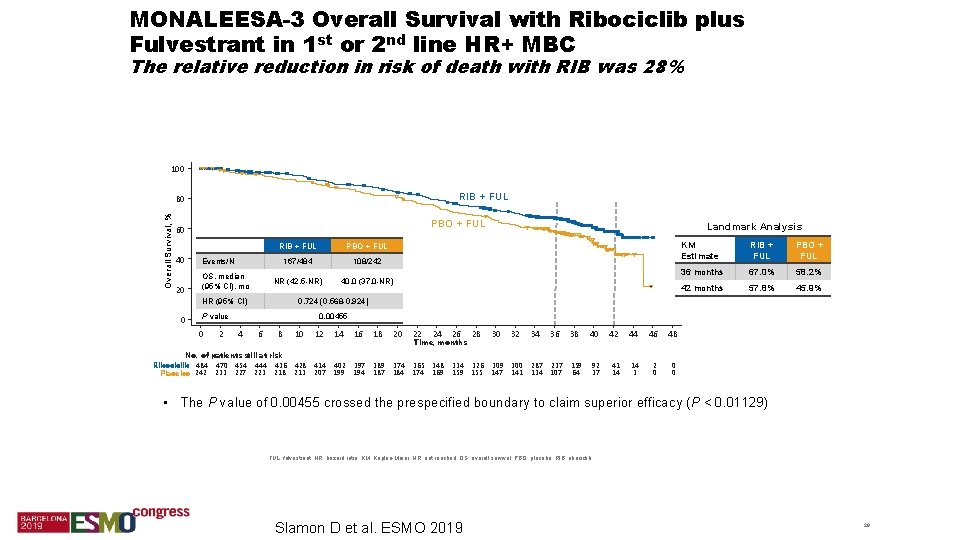
MONALEESA-3 Overall Survival with Ribociclib plus Fulvestrant in 1 st or 2 nd line HR+ MBC The relative reduction in risk of death with RIB was 28% 100 RIB + FUL Overall Survival, % 80 PBO + FUL 60 40 20 RIB + FUL PBO + FUL 167/484 108/242 NR (42. 5 -NR) 40. 0 (37. 0 -NR) Events/N OS, median (95% CI), mo HR (95% CI) 0 2 KM Estimate RIB + FUL PBO + FUL 36 months 67. 0% 58. 2% 42 months 57. 8% 45. 9% 0. 724 (0. 568 -0. 924) P value 0 Landmark Analysis 0. 00455 4 6 8 10 12 14 16 18 20 22 24 26 28 Time, months No. of patients still at risk Ribociclib 484 470 454 444 436 428 414 402 397 389 374 365 348 Placebo 242 233 227 223 218 213 207 199 194 187 184 174 169 334 159 326 155 30 32 34 36 38 40 42 44 46 48 309 147 300 141 287 134 237 107 159 64 92 37 41 14 14 3 2 0 0 0 • The P value of 0. 00455 crossed the prespecified boundary to claim superior efficacy (P < 0. 01129) FUL, fulvestrant; HR, hazard ratio; KM, Kaplan-Meier; NR, not reached; OS, overall survival; PBO, placebo; RIB, ribociclib. Slamon D et al. ESMO 2019 29

MONARCH 2: OVERALL SURVIVAL WITH ABEMACICLIB IN PATIENTS WHOSE DISEASE HAS PROGRESSED ON ENDOCRINE THERAPY Sledge G et al. ESMO 2019
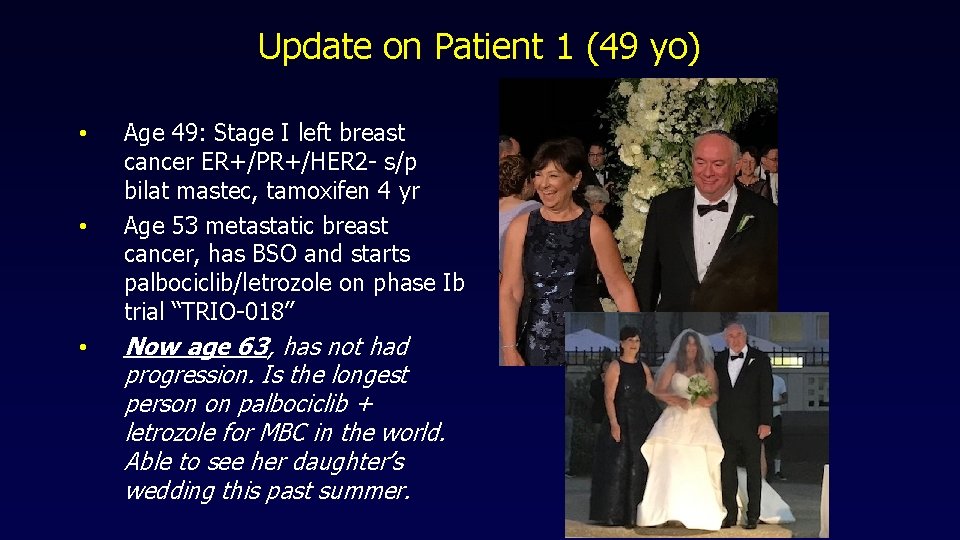
Update on Patient 1 (49 yo) • • • Age 49: Stage I left breast cancer ER+/PR+/HER 2 - s/p bilat mastec, tamoxifen 4 yr Age 53 metastatic breast cancer, has BSO and starts palbociclib/letrozole on phase Ib trial “TRIO-018” Now age 63, has not had progression. Is the longest person on palbociclib + letrozole for MBC in the world. Able to see her daughter’s wedding this past summer.
Update on Patient 2 (56 yo) • • 56 yo avid golfer develops SOB; imaging shows large mediastinal mass compressing heart Mediastinoscopy: Biopsy ER+ PR+ HER 2 - breast cancer Staging: chest wall and rib metastases and left breast lesion Placed on TRIO-018 phase Ib study of palbociclib plus letrozole Achieves PR on this therapy and remains on study for 46 cycles (3. 5 years) Progression of disease in bones at age of 60 What therapy do we recommend now?
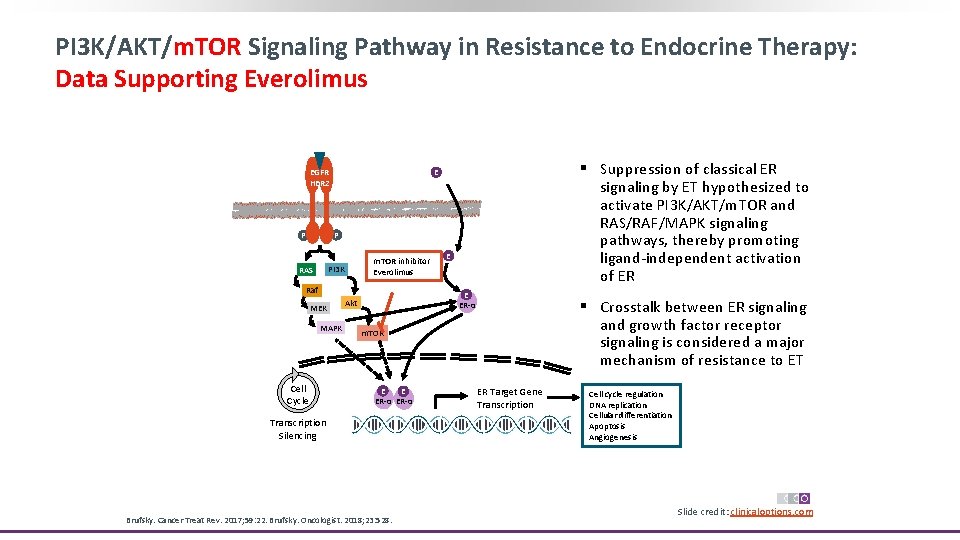
PI 3 K/AKT/m. TOR Signaling Pathway in Resistance to Endocrine Therapy: Data Supporting Everolimus EGFR HER 2 § Suppression of classical ER signaling by ET hypothesized to activate PI 3 K/AKT/m. TOR and RAS/RAF/MAPK signaling pathways, thereby promoting ligand-independent activation of ER E P P m. TOR inhibitor Everolimus PI 3 K RAS Raf MEK MAPK Cell Cycle E E ER-α Akt § Crosstalk between ER signaling and growth factor receptor signaling is considered a major mechanism of resistance to ET m. TOR E E ER-α Transcription Silencing Brufsky. Cancer Treat Rev. 2017; 59: 22. Brufsky. Oncologist. 2018; 23: 528. ER Target Gene Transcription Cell cycle regulation DNA replication Cellular differentiation Apoptosis Angiogenesis Slide credit: clinicaloptions. com
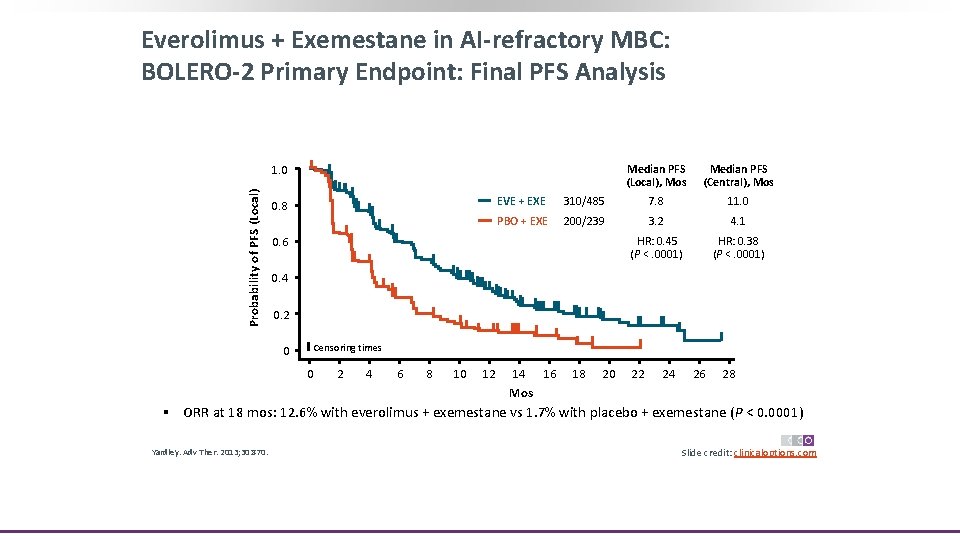
Everolimus + Exemestane in AI-refractory MBC: BOLERO-2 Primary Endpoint: Final PFS Analysis Probability of PFS (Local) 1. 0 0. 8 Events (Local), n/N Median PFS (Local), Mos Median PFS (Central), Mos EVE + EXE 310/485 7. 8 11. 0 PBO + EXE 200/239 3. 2 4. 1 HR: 0. 45 (P <. 0001) HR: 0. 38 (P <. 0001) 0. 6 0. 4 0. 2 Censoring times 0 0 2 4 6 8 10 12 14 16 Mos 18 20 22 24 26 28 § ORR at 18 mos: 12. 6% with everolimus + exemestane vs 1. 7% with placebo + exemestane (P < 0. 0001) Yardley. Adv Ther. 2013; 30: 870. Slide credit: clinicaloptions. com
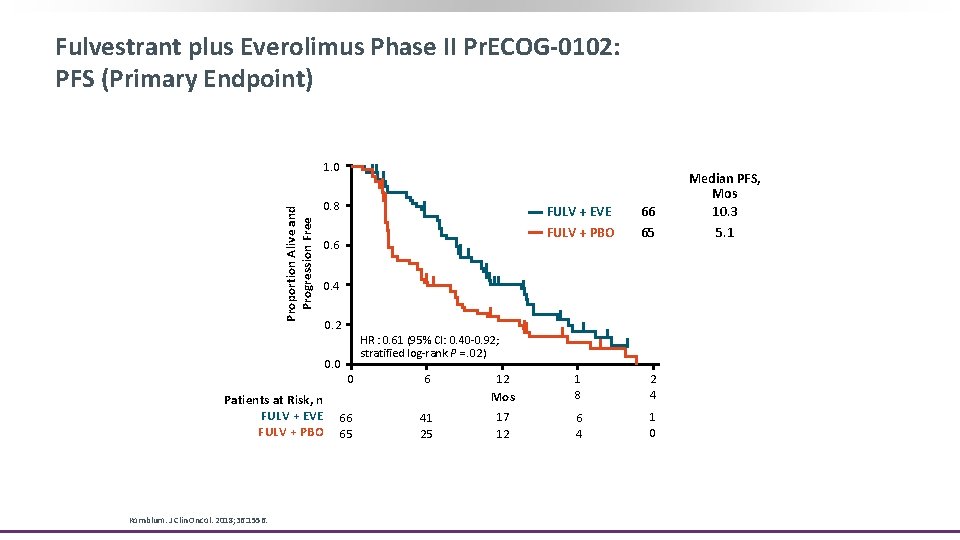
Fulvestrant plus Everolimus Phase II Pr. ECOG-0102: PFS (Primary Endpoint) Proportion Alive and Progression Free 1. 0 0. 8 0. 6 0. 4 0. 2 0. 0 Patients at Risk, n FULV + EVE FULV + PBO Kornblum. J Clin Oncol. 2018; 36: 1556. Patients, n FULV + EVE 66 FULV + PBO 65 HR : 0. 61 (95% CI: 0. 40 -0. 92; stratified log-rank P =. 02) 0 6 66 65 41 25 12 Mos 17 12 1 8 2 4 6 4 1 0 Median PFS, Mos 10. 3 5. 1
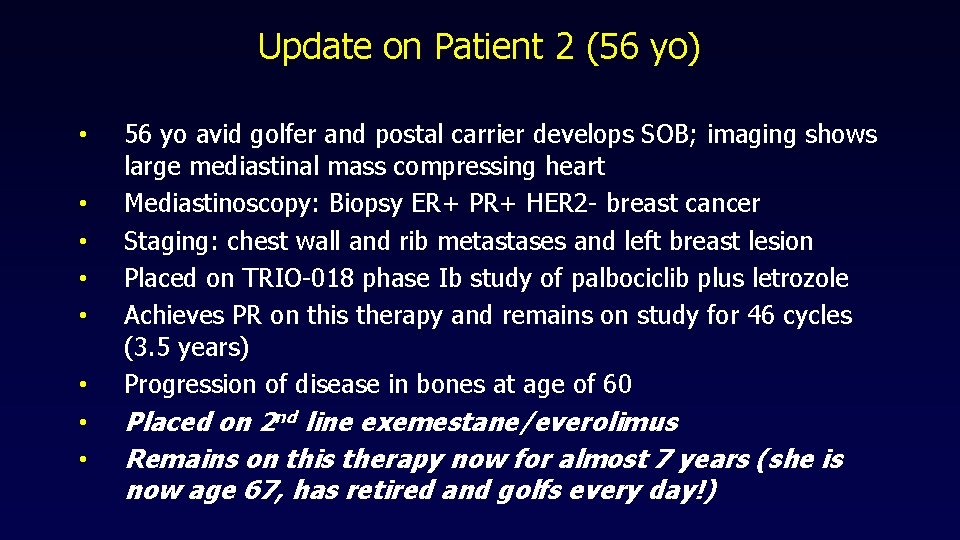
Update on Patient 2 (56 yo) • • 56 yo avid golfer and postal carrier develops SOB; imaging shows large mediastinal mass compressing heart Mediastinoscopy: Biopsy ER+ PR+ HER 2 - breast cancer Staging: chest wall and rib metastases and left breast lesion Placed on TRIO-018 phase Ib study of palbociclib plus letrozole Achieves PR on this therapy and remains on study for 46 cycles (3. 5 years) Progression of disease in bones at age of 60 Placed on 2 nd line exemestane/everolimus Remains on this therapy now for almost 7 years (she is now age 67, has retired and golfs every day!)
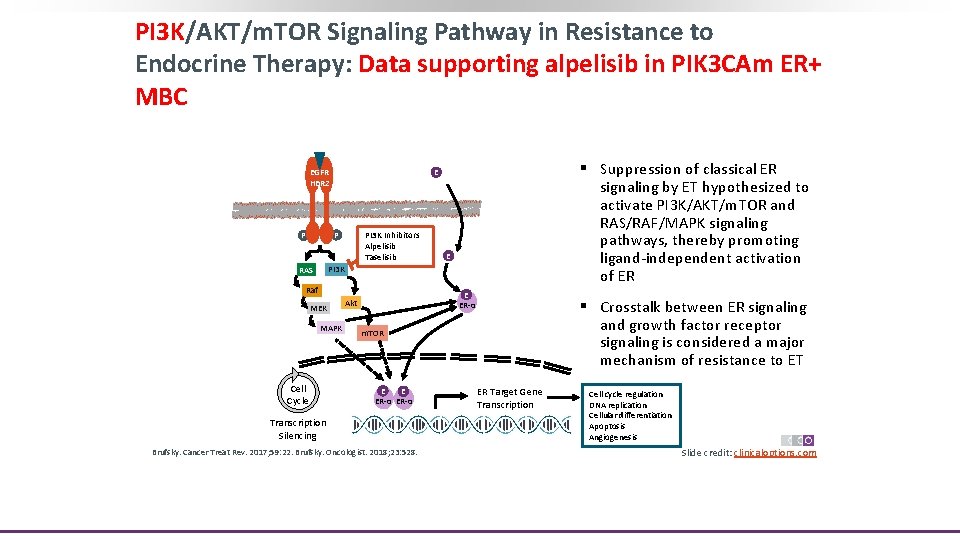
PI 3 K/AKT/m. TOR Signaling Pathway in Resistance to Endocrine Therapy: Data supporting alpelisib in PIK 3 CAm ER+ MBC EGFR HER 2 P P § Suppression of classical ER signaling by ET hypothesized to activate PI 3 K/AKT/m. TOR and RAS/RAF/MAPK signaling pathways, thereby promoting ligand-independent activation of ER E PI 3 K Inhibitors Alpelisib Taselisib E PI 3 K RAS Raf MEK MAPK Cell Cycle E ER-α Akt § Crosstalk between ER signaling and growth factor receptor signaling is considered a major mechanism of resistance to ET m. TOR E E ER-α Transcription Silencing Brufsky. Cancer Treat Rev. 2017; 59: 22. Brufsky. Oncologist. 2018; 23: 528. ER Target Gene Transcription Cell cycle regulation DNA replication Cellular differentiation Apoptosis Angiogenesis Slide credit: clinicaloptions. com
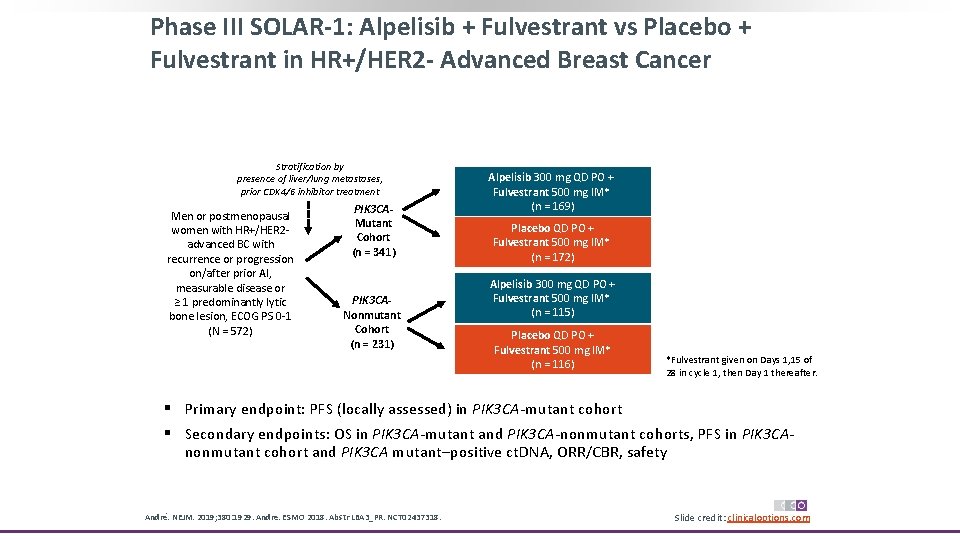
Phase III SOLAR-1: Alpelisib + Fulvestrant vs Placebo + Fulvestrant in HR+/HER 2 - Advanced Breast Cancer Stratification by presence of liver/lung metastases, prior CDK 4/6 inhibitor treatment Men or postmenopausal women with HR+/HER 2 - advanced BC with recurrence or progression on/after prior AI, measurable disease or ≥ 1 predominantly lytic bone lesion, ECOG PS 0 -1 (N = 572) PIK 3 CAMutant Cohort (n = 341) PIK 3 CANonmutant Cohort (n = 231) Alpelisib 300 mg QD PO + Fulvestrant 500 mg IM* (n = 169) Placebo QD PO + Fulvestrant 500 mg IM* (n = 172) Alpelisib 300 mg QD PO + Fulvestrant 500 mg IM* (n = 115) Placebo QD PO + Fulvestrant 500 mg IM* (n = 116) *Fulvestrant given on Days 1, 15 of 28 in cycle 1, then Day 1 thereafter. § Primary endpoint: PFS (locally assessed) in PIK 3 CA-mutant cohort § Secondary endpoints: OS in PIK 3 CA-mutant and PIK 3 CA-nonmutant cohorts, PFS in PIK 3 CAnonmutant cohort and PIK 3 CA mutant–positive ct. DNA, ORR/CBR, safety André. NEJM. 2019; 380: 1929. Andre. ESMO 2018. Abstr LBA 3_PR. NCT 02437318. Slide credit: clinicaloptions. com
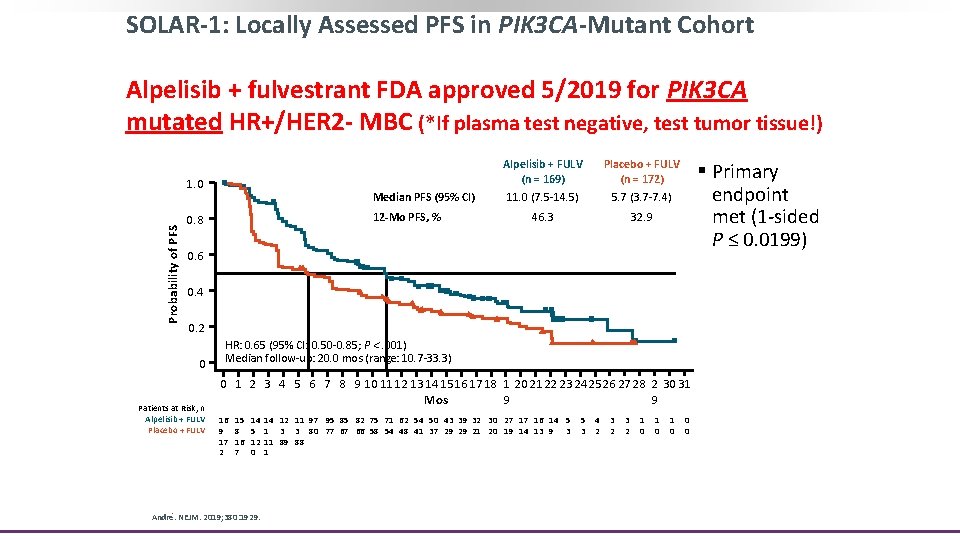
SOLAR-1: Locally Assessed PFS in PIK 3 CA-Mutant Cohort Alpelisib + fulvestrant FDA approved 5/2019 for PIK 3 CA mutated HR+/HER 2 - MBC (*If plasma test negative, test tumor tissue!) Probability of PFS 1. 0 Median PFS (95% CI) 12 -Mo PFS, % 0. 8 Alpelisib + FULV (n = 169) Placebo + FULV (n = 172) 11. 0 (7. 5 -14. 5) 5. 7 (3. 7 -7. 4) 46. 3 32. 9 § Primary endpoint met (1 -sided P ≤ 0. 0199) 0. 6 0. 4 0. 2 0 Patients at Risk, n Alpelisib + FULV Placebo + FULV HR: 0. 65 (95% CI: 0. 50 -0. 85; P <. 001) Median follow-up: 20. 0 mos (range: 10. 7 -33. 3) 0 1 2 3 4 5 6 7 8 9 10 1112 13 141516 1718 1 202122 23242526 2728 2 3031 Mos 9 9 16 9 17 2 15 8 16 7 14 5 12 0 André. NEJM. 2019; 380: 1929. 14 12 11 97 95 85 82 75 71 62 54 50 43 39 32 30 27 17 16 14 5 1 3 3 80 77 67 66 58 54 48 41 37 29 29 21 20 19 14 13 9 3 11 89 88 1 5 3 4 2 3 2 1 0 1 0 0 0
Summary • • CDK 4/6 inhibitors have led to substantial PFS and OS benefits in metastatic disease and should be offered to all patients with HR+ MBC in front-line or 2 nd-line setting After progression on endocrine therapy • Test tumor for PIK 3 CA (ct. DNA or tissue) • If positive (and not uncontrolled diabetic), alpelisib + endocrine therapy • If negative, everolimus + endocrine therapy • Encourage enrollment on clinical trials!
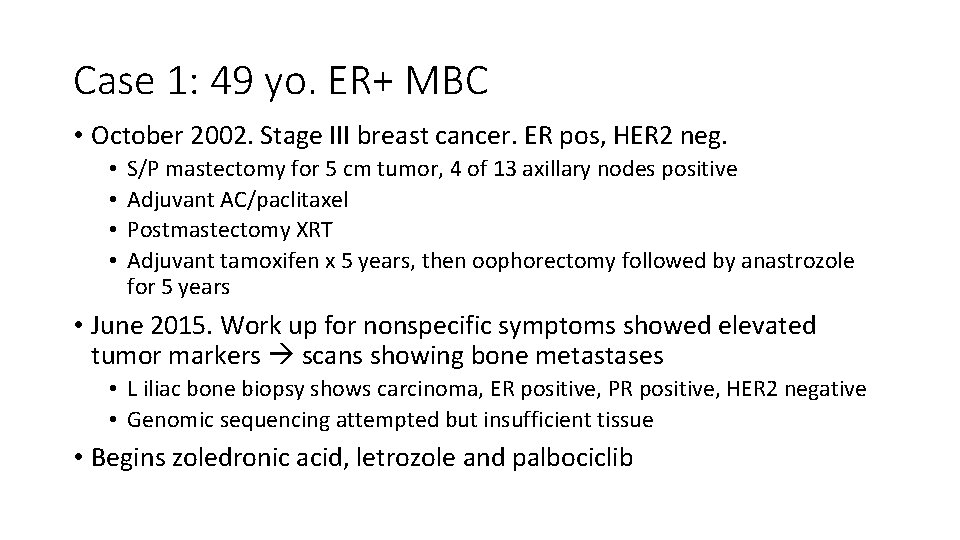
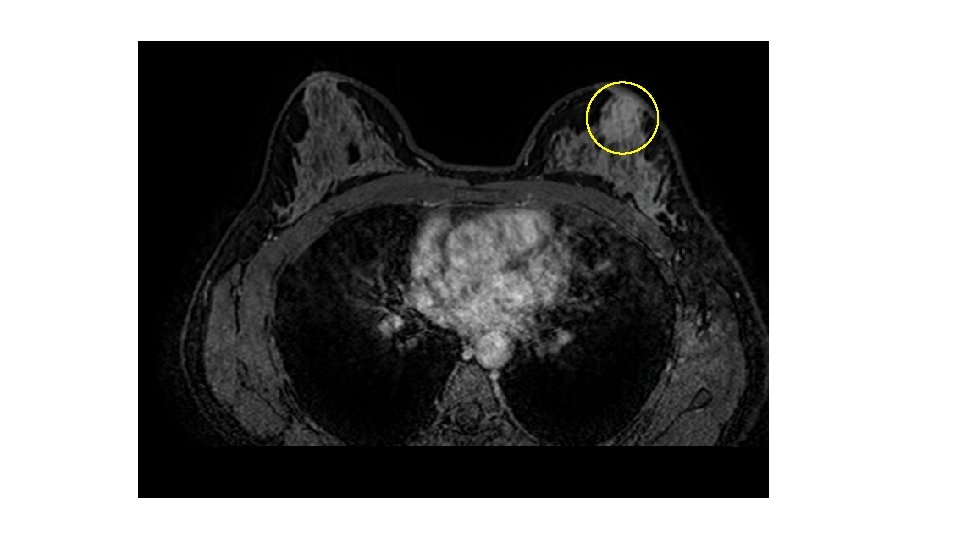
Case 1: 49 yo. ER+ MBC • October 2002. Stage III breast cancer. ER pos, HER 2 neg. • • S/P mastectomy for 5 cm tumor, 4 of 13 axillary nodes positive Adjuvant AC/paclitaxel Postmastectomy XRT Adjuvant tamoxifen x 5 years, then oophorectomy followed by anastrozole for 5 years • June 2015. Work up for nonspecific symptoms showed elevated tumor markers scans showing bone metastases • L iliac bone biopsy shows carcinoma, ER positive, PR positive, HER 2 negative • Genomic sequencing attempted but insufficient tissue • Begins zoledronic acid, letrozole and palbociclib
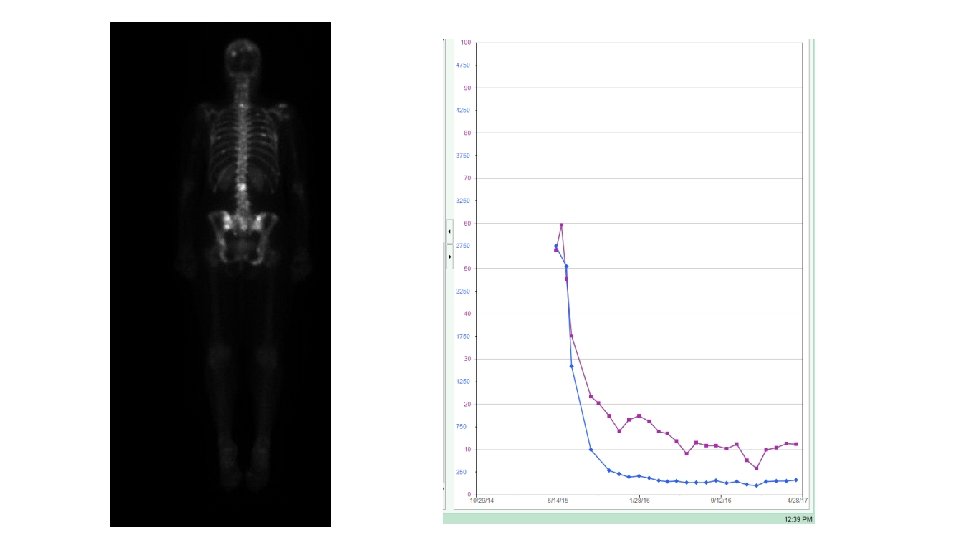
• Palbociclib complicated by: Anxiety over tumor markers — results and lack of consistency between labs Isolated neutropenia cycle 1 but remained on full dose
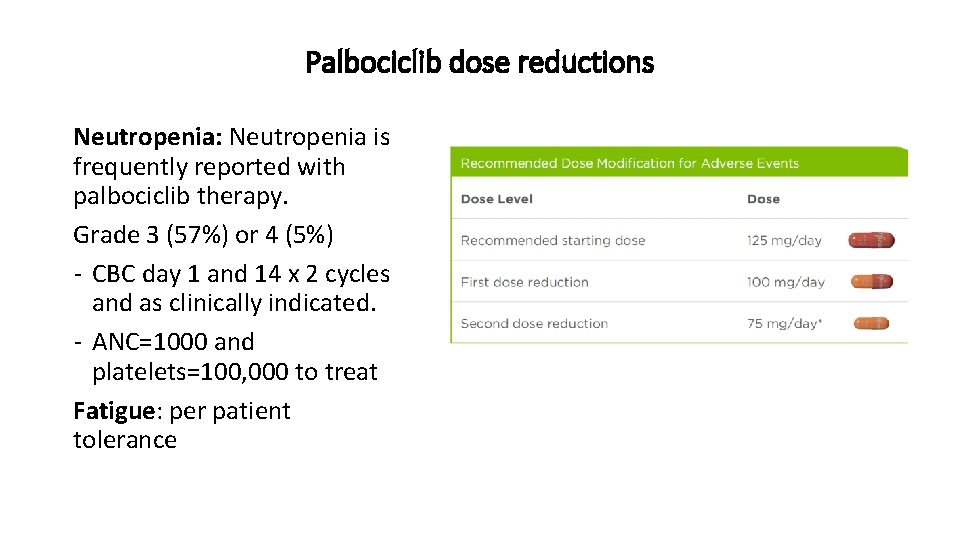
Palbociclib dose reductions Neutropenia: Neutropenia is frequently reported with palbociclib therapy. Grade 3 (57%) or 4 (5%) - CBC day 1 and 14 x 2 cycles and as clinically indicated. - ANC=1000 and platelets=100, 000 to treat Fatigue: per patient tolerance
Serum tumor markers in breast cancer • CEA and CA 15 -3 most widely used • Not useful for: Early stage disease-lack of sensitivity/specificity. Mammogram and histopathology are primary modalities for detecting early breast cancer Surveillance after primary breast cancer treatment – not sensitive nor specific for breast cancer relapse. Many patients need reassurance about this. • Most useful for monitoring selected patients with metastatic disease per ASCO clinical guidelines look at trends not isolated values nonspecific scans are gold standard variations between labs seen with our patients Kokko R et al Ca 15 -3 in the follow up of localized breast cancer: a prospective study. Eur J Cancer 2002; 38: 1189; Emens LA et al. The follow up of breast cancer to Guide Decisions on Systemic therapy for Women With Metastatic Breast Cancer: Semin Oncol, 2003; 30: 338; Van. Poznak et al. Use of Biomarkers to Guide Decsions on Systemic Therapy for Women with Metastatic Breast CAncer: ASCO Clinical Practice Guidelines. J Clin Oncol 2015: 33: 2695
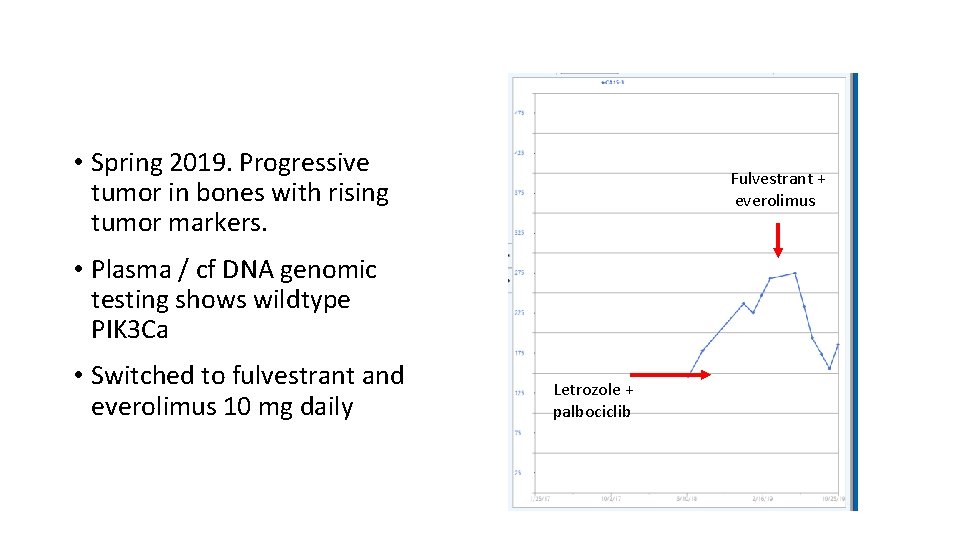
• Spring 2019. Progressive tumor in bones with rising tumor markers. Fulvestrant + everolimus • Plasma / cf DNA genomic testing shows wildtype PIK 3 Ca • Switched to fulvestrant and everolimus 10 mg daily Letrozole + palbociclib
Managing everolimus toxicities dexamethasone elixir BID 1 st cycle to prevent mouth sores diarrhea/nausea pneumonitis — be on lookout for symptoms

Special Issues in Oncology Care Professional burnout
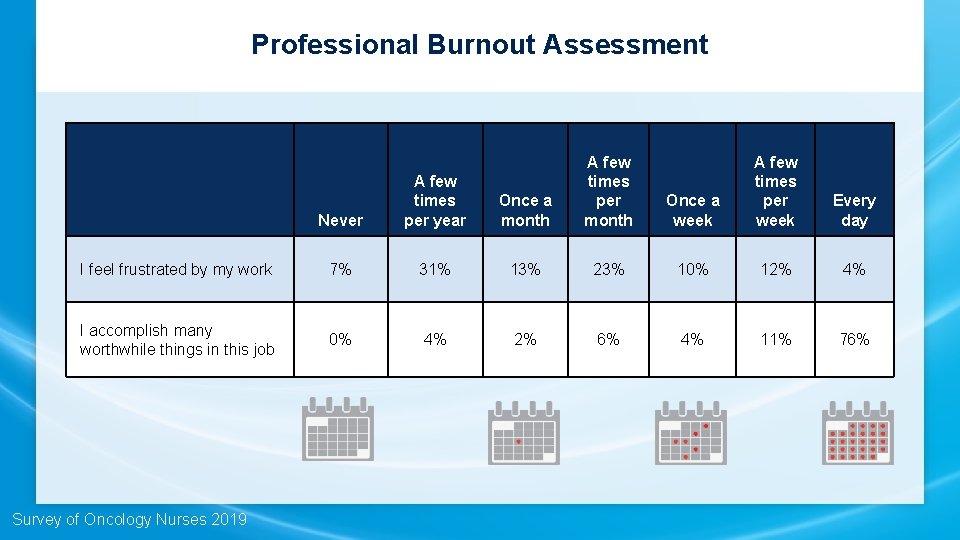
Professional Burnout Assessment Never A few times per year Once a month A few times per month I feel frustrated by my work 7% 31% 13% 23% 10% 12% 4% I accomplish many worthwhile things in this job 0% 4% 2% 6% 4% 11% 76% Survey of Oncology Nurses 2019 Once a week A few times per week Every day
- Slides: 50