
History of Viscum Album Use In Medicine Learning
History of Viscum Album Use In Medicine
Learning Objectives • Understand why viscum is such an important topic in the field of Integrative Oncology • Understand the long history of safe use of mistletoe in traditional medicine • In particular to dispel the misconception of extreme toxicity of viscum a. through understanding the various species and families referred to collectively as “mistletoe” • Develop and understanding of the historical applications of viscum a. in medicine from antiquities to present • Understand how the botanical specialties of mistletoe lead to its eventual use in oncology care
Module Outline • Importance of viscum in Integrative Oncology (IO) • Fundamental botanical description of viscum a. • Review of the recorded historical application of viscum in medicine • History of its current use in cancer care
The Global Cancer Problem
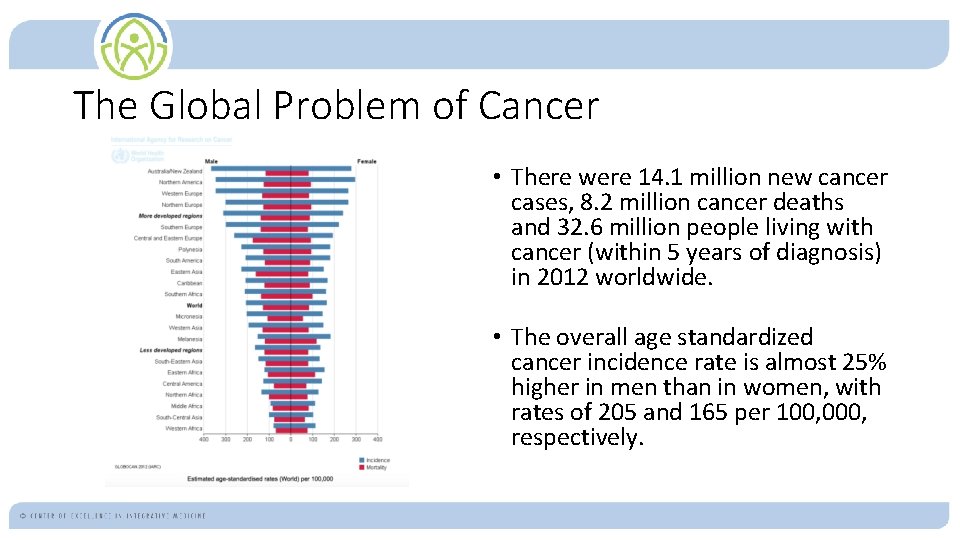
The Global Problem of Cancer • There were 14. 1 million new cancer cases, 8. 2 million cancer deaths and 32. 6 million people living with cancer (within 5 years of diagnosis) in 2012 worldwide. • The overall age standardized cancer incidence rate is almost 25% higher in men than in women, with rates of 205 and 165 per 100, 000, respectively.
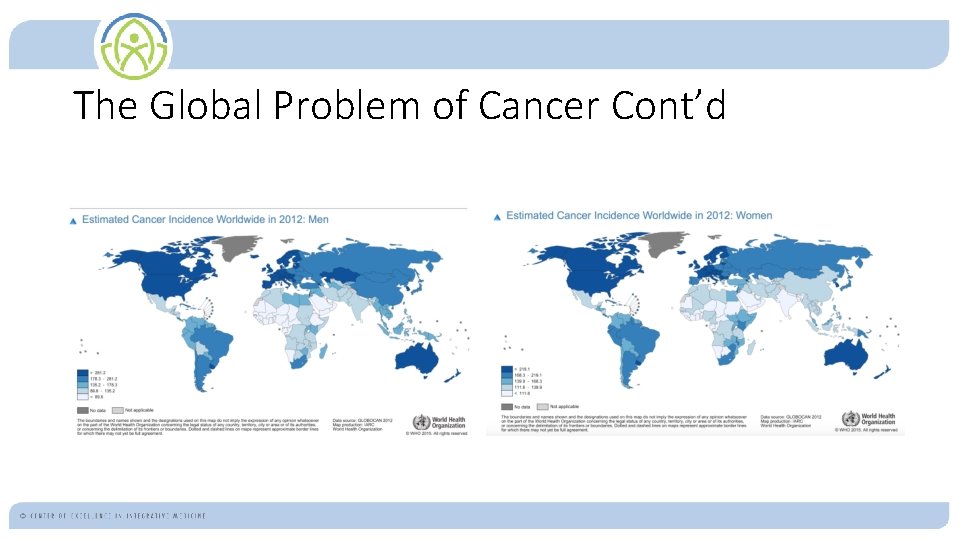
The Global Problem of Cancer Cont’d
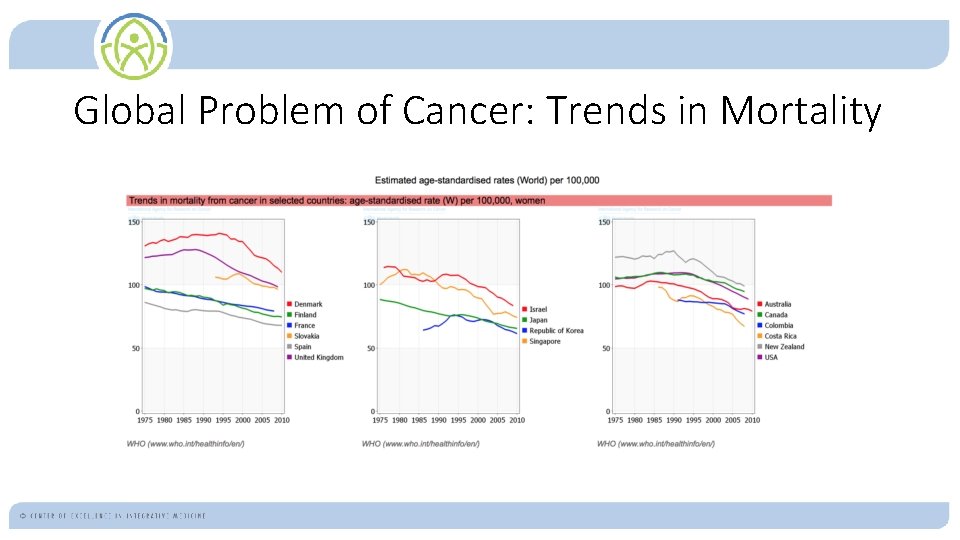
Global Problem of Cancer: Trends in Mortality
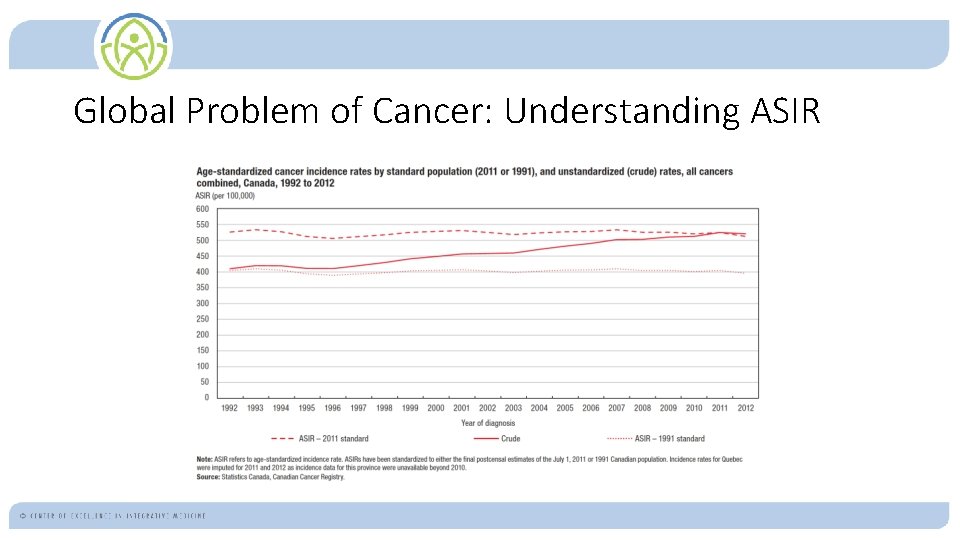
Global Problem of Cancer: Understanding ASIR
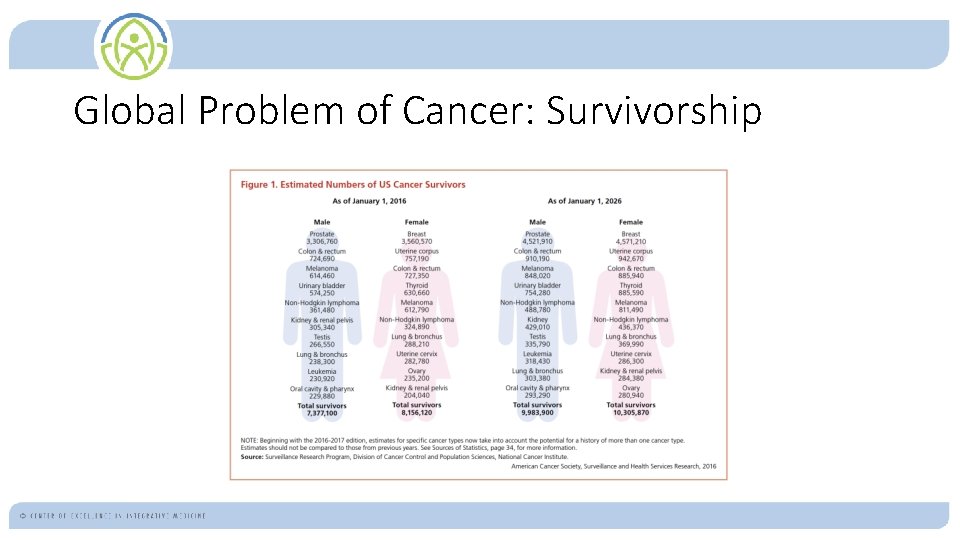
Global Problem of Cancer: Survivorship
Implications of Survivorship • 1 in 4 cancer survivors report reduced QOL due to physical problems • 1 in 10 cancer survivors report reduced QOL due to mental/emotional problems • Individuals with more aggressive or invasive treatments and reduce QOL during treatment are at increased risk of long-term QOL impacts
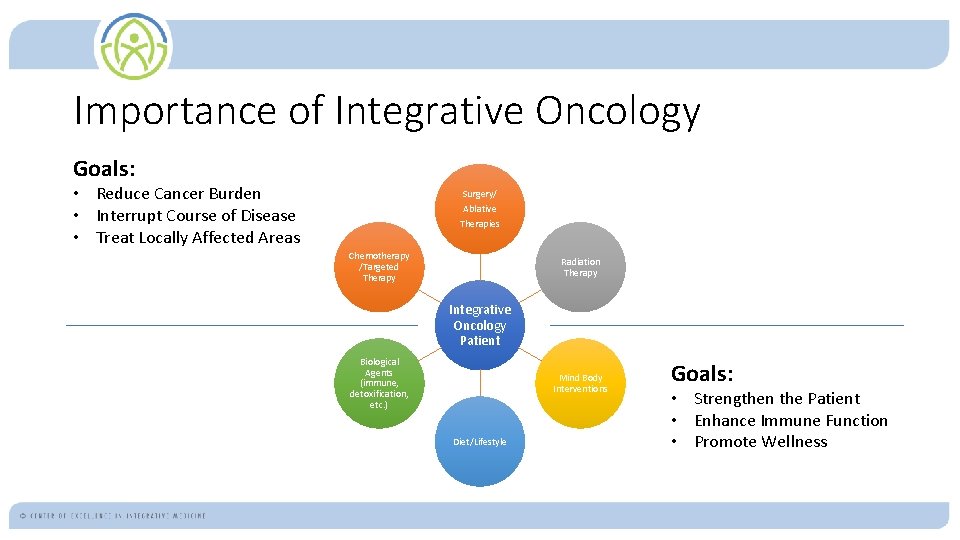
Importance of Integrative Oncology Goals: • Reduce Cancer Burden • Interrupt Course of Disease • Treat Locally Affected Areas Surgery/ Ablative Therapies Chemotherapy /Targeted Therapy Radiation Therapy Integrative Oncology Patient Biological Agents (immune, detoxification, etc. ) Mind Body Interventions Diet/Lifestyle Goals: • Strengthen the Patient • Enhance Immune Function • Promote Wellness
Viscum In IO: Multidimensional Therapeutic • Viscum is one of the most well researched integrative cancer therapeutic • Studies have shown it may have positive impacts on: • Quality of Life • Side Effects of Conventional Care • Survival • Can positively impact patients throughout the treatment spectrum: • • Curative Palliative Restorative Preventive (In high risk patient groups)
Botanical Properties of Viscum
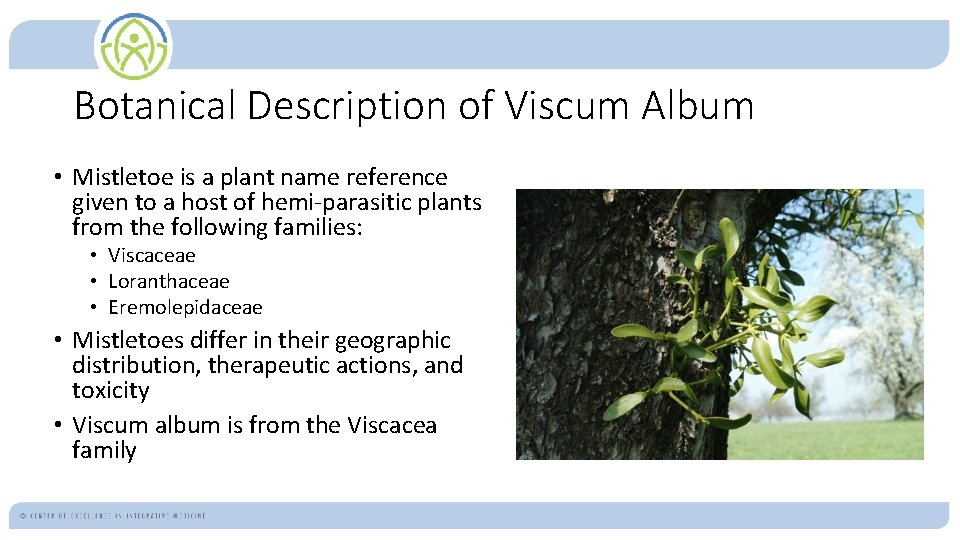
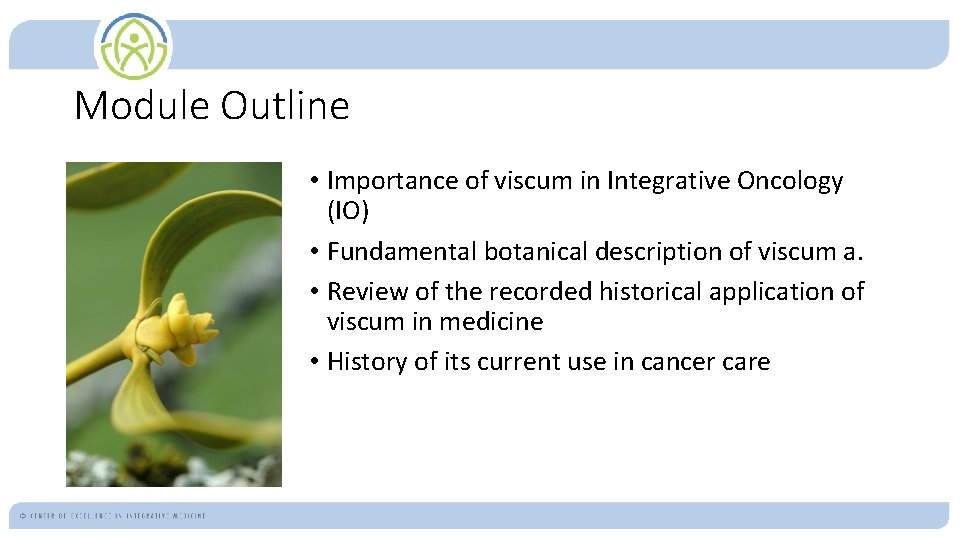
Botanical Description of Viscum Album • Mistletoe is a plant name reference given to a host of hemi-parasitic plants from the following families: • Viscaceae • Loranthaceae • Eremolepidaceae • Mistletoes differ in their geographic distribution, therapeutic actions, and toxicity • Viscum album is from the Viscacea family
Viscacea: European Mistletoe/North American • The Viscacea family is comprised of 7 genera with a total of 400 species • The Viscum genus is composed of ~100 species • Most species are found in Africa and mainland tropical Asia • There are only a few viscum species which have adapted to european climate – Viscum album the most prominent of those • In North America mistletoe or Phoradendron serotinum, is part of the viscacea family in the genus Phoradendron
Botanical Specialties of Viscum: Host Tree Interaction • • It is a parasitic plant relying on the host tree to provide it with nutrients It does not have root but rather sinkers to extract nutrients After years of infection, viscum reduces growth of the host trees Viscum album has subspecies that grow specifically on certain host trees • Many trees, especially hardwood, have both mechanical and chemical barriers to viscum infection • A host tree that is susceptible to one viscum infection will often host many (up to 50) further viscum bushes • Susceptibility to viscum appears to be an inherited trait past to host tree progeny
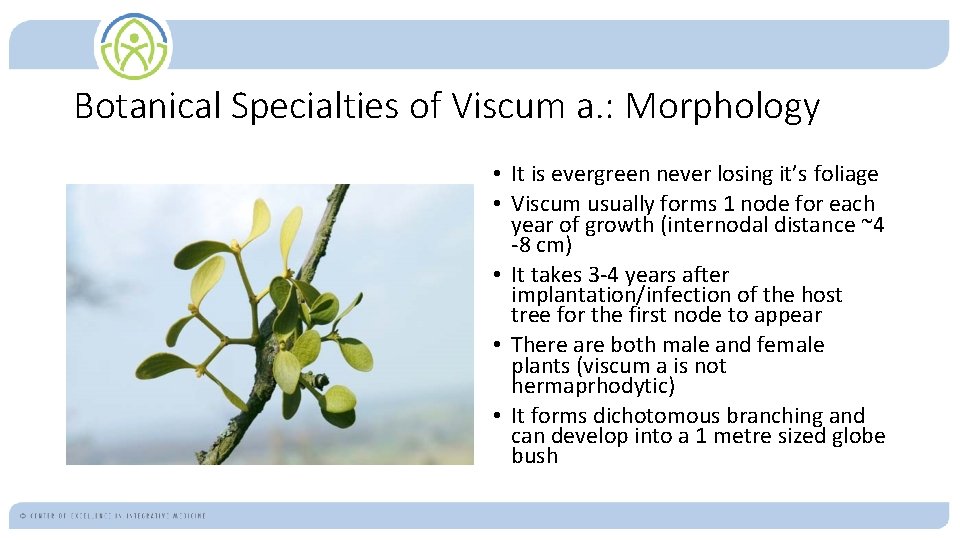
Botanical Specialties of Viscum a. : Morphology • It is evergreen never losing it’s foliage • Viscum usually forms 1 node for each year of growth (internodal distance ~4 -8 cm) • It takes 3 -4 years after implantation/infection of the host tree for the first node to appear • There are both male and female plants (viscum a is not hermaprhodytic) • It forms dichotomous branching and can develop into a 1 metre sized globe bush
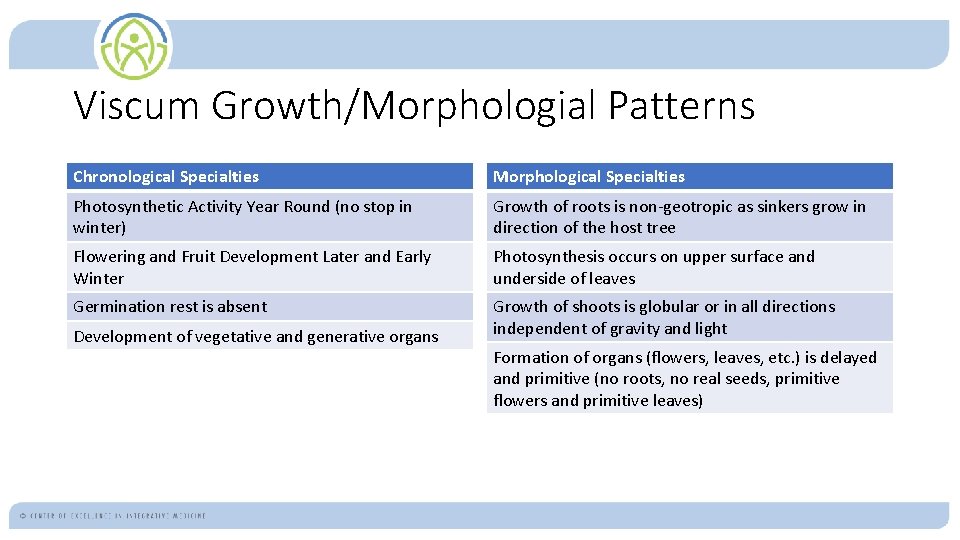
Viscum Growth/Morphologial Patterns Chronological Specialties Morphological Specialties Photosynthetic Activity Year Round (no stop in winter) Growth of roots is non-geotropic as sinkers grow in direction of the host tree Flowering and Fruit Development Later and Early Winter Photosynthesis occurs on upper surface and underside of leaves Germination rest is absent Growth of shoots is globular or in all directions independent of gravity and light Development of vegetative and generative organs Formation of organs (flowers, leaves, etc. ) is delayed and primitive (no roots, no real seeds, primitive flowers and primitive leaves)
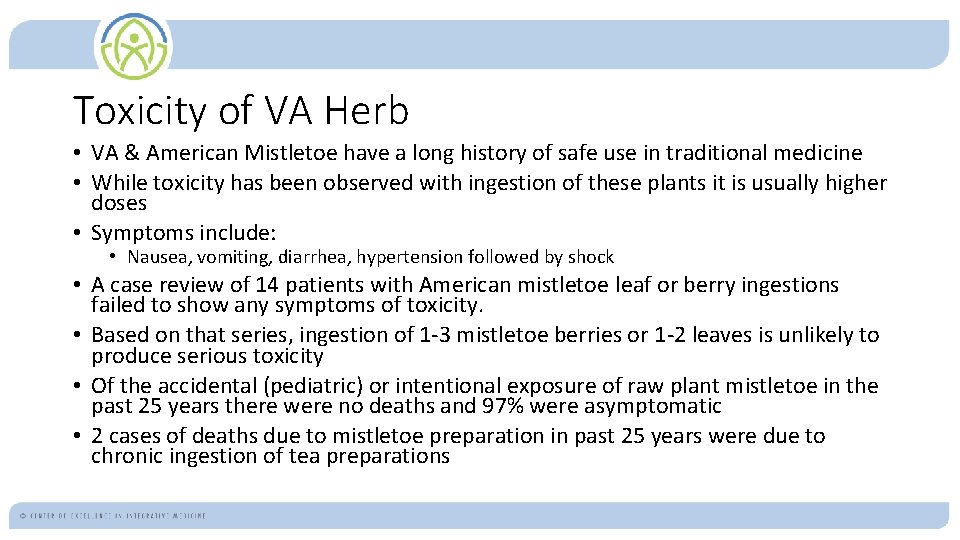
Toxicity of VA Herb • VA & American Mistletoe have a long history of safe use in traditional medicine • While toxicity has been observed with ingestion of these plants it is usually higher doses • Symptoms include: • Nausea, vomiting, diarrhea, hypertension followed by shock • A case review of 14 patients with American mistletoe leaf or berry ingestions failed to show any symptoms of toxicity. • Based on that series, ingestion of 1 -3 mistletoe berries or 1 -2 leaves is unlikely to produce serious toxicity • Of the accidental (pediatric) or intentional exposure of raw plant mistletoe in the past 25 years there were no deaths and 97% were asymptomatic • 2 cases of deaths due to mistletoe preparation in past 25 years were due to chronic ingestion of tea preparations
Traditional Use of Viscum in Medicine
Viscum a. Use in Traditional Medicine • Viscum album (along with other mistletoes) have a long history of traditional uses in many cultures • Visum’s unique attribute for flowering and bearing fruit in winter likely marked it as unique • The druids had the most extensive history for the use of mistletoe • The oak tree was sacred to the druids and thus mistletoe became important by association to this tree
Ancient Historical Use of VA • The druids would say “healing all things” in the gathering ceremony for mistletoe • Druidic use focused on the following areas: • General Tonic (likely related to immune support or increasing resistance to infection) • Fertility • Epilepsy • During the Roman conquest of Europe there was a significant exchange of healing methods and viscum a began its use in Greco-Roman society • Celcus (a Roman naturalist) was one of the first to record the use of mistletoe in medicine in De Medicina (50 BC). Illnesses treated: • Cancer like illnesses (as an emollient) • Epilepsy • Fertility
Modern Historical Use of VA • Paracelcus (1494 – 1541) & John Colbatch (1670 – 1728) – epilepsy • Albrecht von Haller (1708 – 1777) - spasmolytic, gynecological complaints • Gerhard Madhaus (1890 -1942) – degenerative and inflammatory joint disease • In the late 19 th and early 20 th century VA was used for weakness of the heart and later hypertension and arteriosclerosis
Modern History of VA Use in Cancer • Steiner posited VA would have potent effects in cancer in lectures provided to doctors in the early 20 th century • He had suggested specialized ways of harvesting and processing mistletoe (differing interpretations have led to different viscum preparations) • Consistently he recommended different medications be created from mistletoe plants growing on different host trees • Dr. Ita Wegman developed the first injectable VA for cancer patients 1917 -20
Conclusion • While improvements are being made in cancer, it is a growing problem for aging populations • Cost effective therapies that not only improve survival, but address issues like quality of life and long-term treatments effects are needed • Viscum has a long history of use in traditional medicine throughout the past 2, 000 years • While potentially toxic in large doses of fresh herb, it is safe in the most extremely high doses used clinically
- Slides: 25