
Newcastle Cancer Centre at the Northern Institute for


- Slides: 26
Newcastle Cancer Centre at the Northern Institute for Cancer Research Getting that “first” post-doc job Anthony Moorman Professor of Genetic Epidemiology (Thank to Professor Jane Endicott for improvements and ideas)
Overview of session • Negotiating the academic career pathway • Planning and preparation • Selecting the right post-doc for you • Applying for the job • Questions
The dream
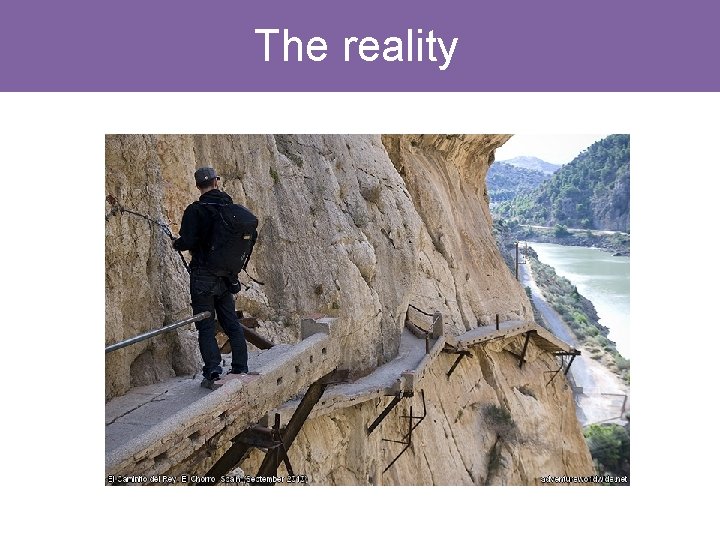
The reality
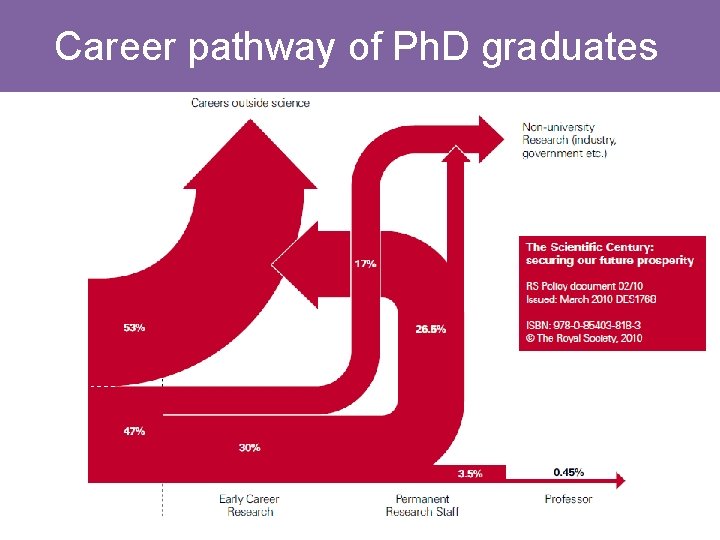
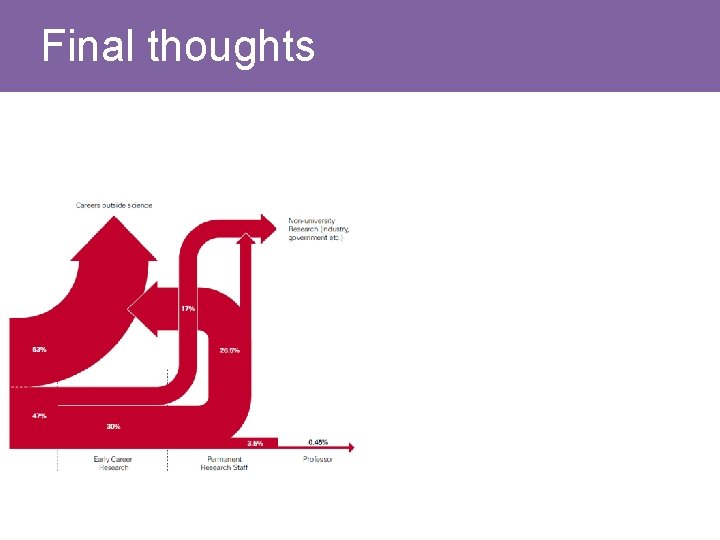
Career pathway of Ph. D graduates
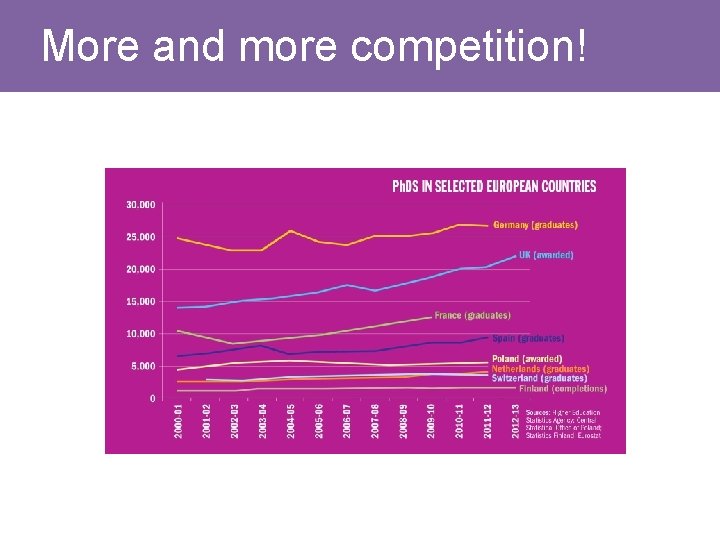
More and more competition!
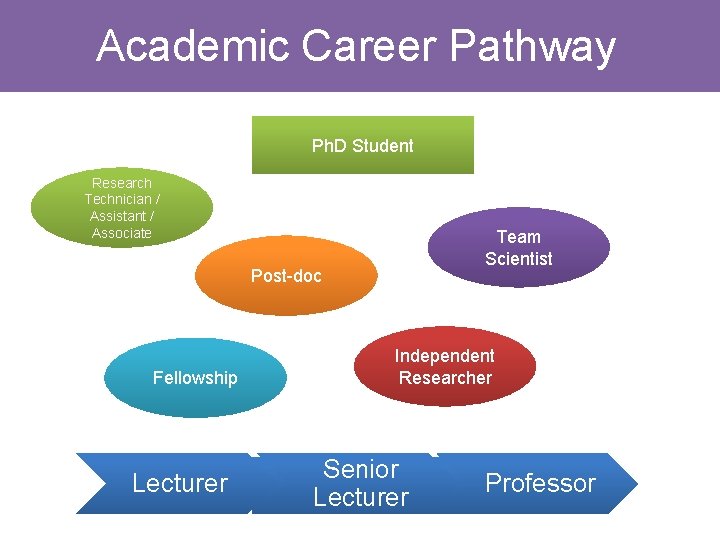
Academic Career Pathway Ph. D Student Research Technician / Assistant / Associate Team Scientist Post-doc Fellowship Lecturer Independent Researcher Senior Tenured Academic Position Lecturer Professor
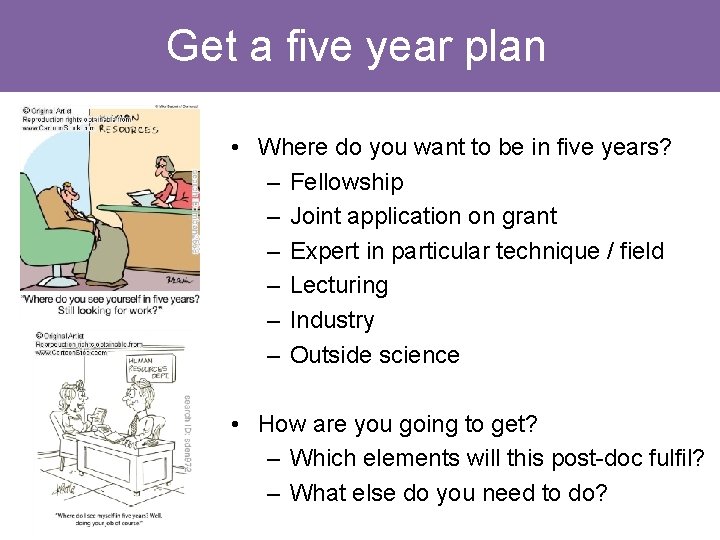
Get a five year plan • Where do you want to be in five years? – Fellowship – Joint application on grant – Expert in particular technique / field – Lecturing – Industry – Outside science • How are you going to get? – Which elements will this post-doc fulfil? – What else do you need to do?
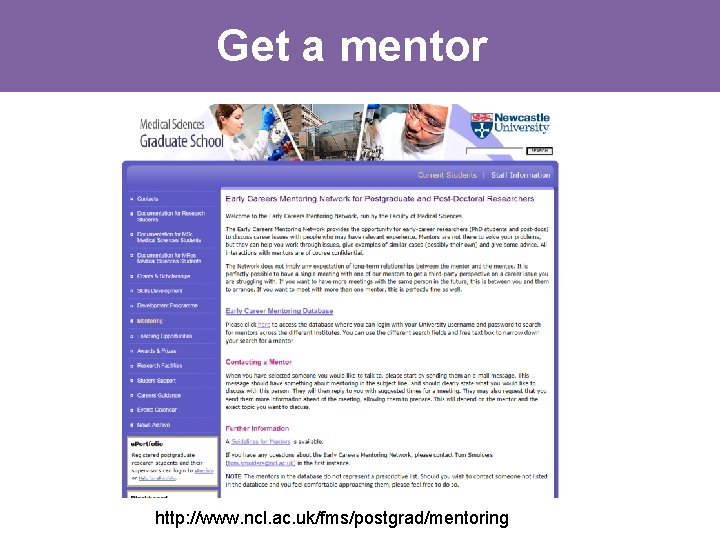
Get a mentor http: //www. ncl. ac. uk/fms/postgrad/mentoring
Seek out other sources of advice Peer support groups Talk to visiting speakers (organised postdoc/student sessions after talks), Colleagues at meetings Journal web pages (E. g, Nature Career Column, see https: //www. nature. com/articles/d 41586 -018 -07860 -6, "Six project-management tips for your Ph. D” and https: //www. nature. com/articles/d 41586 -018 -07332 -x, “Twenty things I wish I’d known when I started my Ph. D” as examples of recent relevant articles”
Laying the foundations of a good CV • Finish your Ph. D on time • Publications – First author > Joint first author > Second author • Techniques / Methodologies (quantify) – Basic – State-of-the-art • Present research at conferences – Spoken / Platform presentation – Poster presentation – International > National > Local • Outreach, Impact and Public understanding of Science • Make the most of in-house training courses (formal training in methods, presentation, writing, management, being a mentor/supervisor) • Networking
Networking • It's not what you know but who you know that makes the difference. [Anon] • It isn't just what you know, and it isn't just who you know. It's actually who you know, who knows you, and what you do for a living. [Bob Burg]
Networking • Make yourself known – Talk to PIs etc in your institute – Accept any invitation to meet external speakers – Do “research in progress” talks. Prepare well in advance. • Attend conferences – Don’t be afraid to ask questions – Introduce yourself to leaders in the field – Ask your supervisor(s) to introduce you – If you have a poster make sure to display on time and for full length of time. Be in attendance during “poster” sessions. – Use conferences as ways to gauge where a field is going, hear potential supervisors speak- think ahead
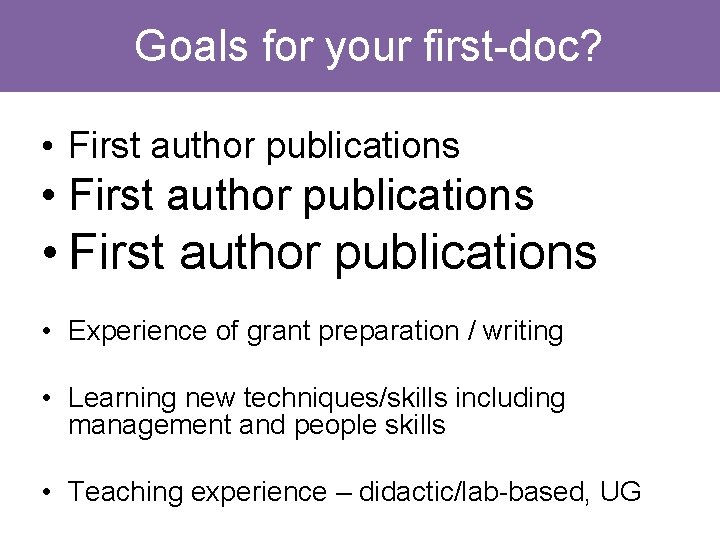
Goals for your first-doc? • First author publications • Experience of grant preparation / writing • Learning new techniques/skills including management and people skills • Teaching experience – didactic/lab-based, UG
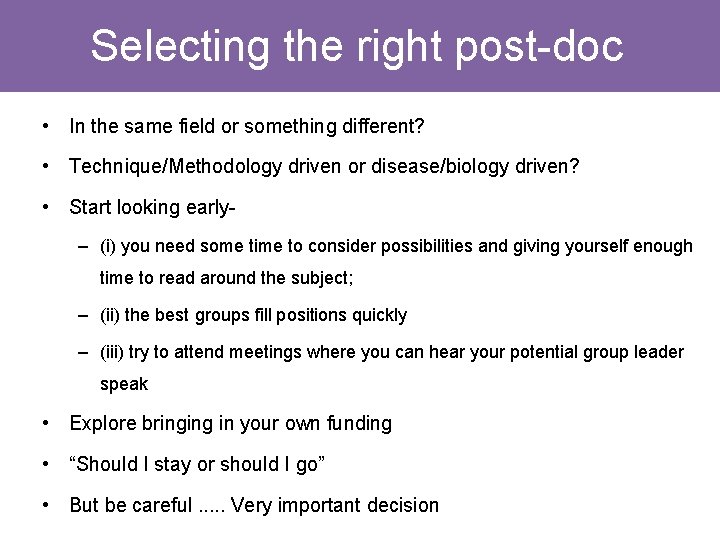
Selecting the right post-doc • In the same field or something different? • Technique/Methodology driven or disease/biology driven? • Start looking early– (i) you need some time to consider possibilities and giving yourself enough time to read around the subject; – (ii) the best groups fill positions quickly – (iii) try to attend meetings where you can hear your potential group leader speak • Explore bringing in your own funding • “Should I stay or should I go” • But be careful. . . Very important decision
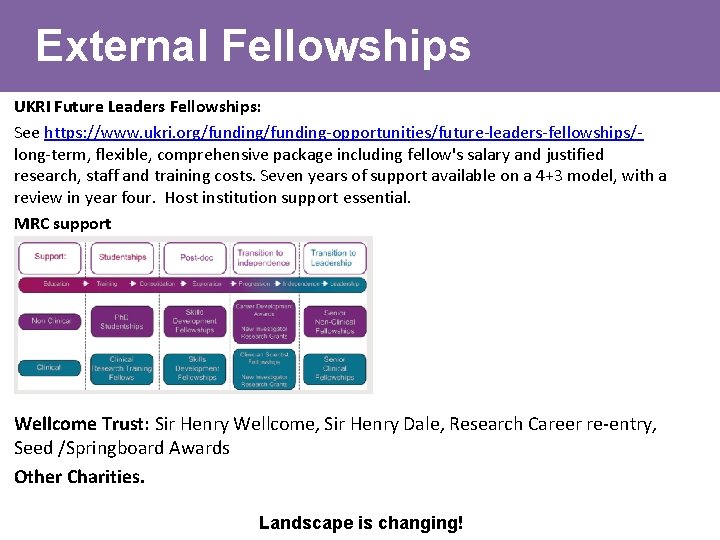
External Fellowships UKRI Future Leaders Fellowships: See https: //www. ukri. org/funding-opportunities/future-leaders-fellowships/long-term, flexible, comprehensive package including fellow's salary and justified research, staff and training costs. Seven years of support available on a 4+3 model, with a review in year four. Host institution support essential. MRC support Wellcome Trust: Sir Henry Wellcome, Sir Henry Dale, Research Career re-entry, Seed /Springboard Awards Other Charities. Landscape is changing!
Newcastle Fellowships • Currently two main research fellowship schemes for outstanding postdoctoral scientists: Faculty Fellowships for early career scientists and Newcastle University Research Fellowships (NURF) for early to mid-career scientists. Fellows will be based in one of the following Institutes. See https: //www. ncl. ac. uk/medicalsciences/research/careerdevelopment/fellowship/#overview Landscape is changing!
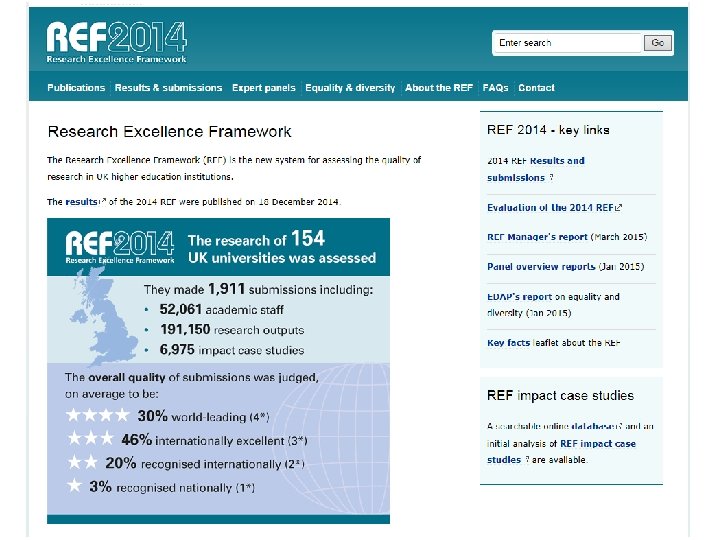
Assessing a potential position (1) • Are they. . –. . . leaders in the field? –. . . the next big thing? –. . . journeymen? –. . . the weakest link? • What is environment like? • What would make you attractive to them? • Aim as high as possible • Look up the RAE (REF) rating of university/department/unit • Literature search – including citation index • Money – How much have they got and from where – Cross reference their website from funders’ websites
Assessing a potential position (2) • Group metrics / dynamics – Who is publishing as first author / corresponding author? – Size of group – Ratio of senior : junior staff – Clinically active heads of lab • Who do they collaborate with? – Website PLUS publications • Use your contacts to gather informal information
Preparing your CV • Clear & Concise • Divide into sections – Qualifications (including training courses) – Research Skills • Be honest, Quantify, Official training – Other skills (e. g. languages etc) – Meetings / Conferences • Presentations • Publications • Mission / Personal Statements
Applying for a position • Do not apply cold. – Contact PI in advance. Ask questions about project and team. • Read their papers. • Try to find project application via funder website. • Covering letter – Write, re-write and re-write
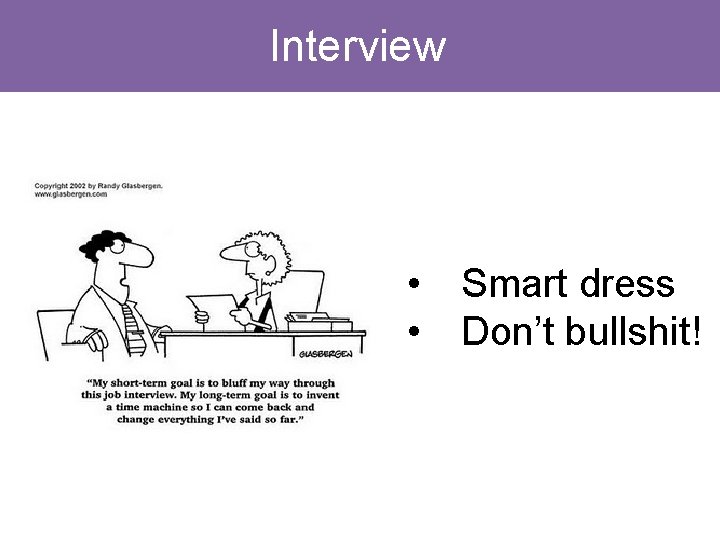
Interview • Smart dress • Don’t bullshit!
Interview (cont’d) • Be prepared to …. – Give a brief interesting overview of Ph. D – contextualise – Discuss research interests of PI offering the job – What your ideal next experiment would be if there were no financial or logistical problems. – Describe how did you trouble-shoot a technical problem – How you approach writing your first author paper • Ask some questions – Research related – What have former post-docs gone on to do? – Teaching opportunities
Final thoughts