Liquids and Solids 10 1 Intermolecular Forces 10

- Slides: 96
Liquids and Solids 10. 1 Intermolecular Forces 10. 2 The Liquid State 10. 3 An Introduction to Structures and Types of Solids 10. 4 Structure and Bonding in Metals 10. 5 Carbon and Silicon: Network Atomic Solids 10. 6 Molecular Solids 10. 7 Ionic Solids 10. 8 Vapor Pressure and Changes of State 10. 9 Phase Diagrams
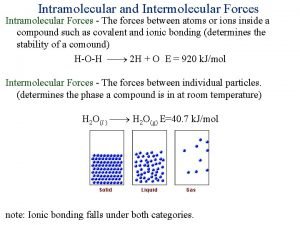
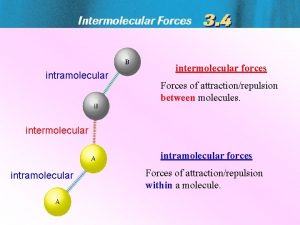
Intra-molecular Forces • Forces “within” molecules. • Covalent bonds are “intra-molecular forces – forces that hold atoms together in a molecule. • The strength of covalent bonds determine the stability of the molecule.
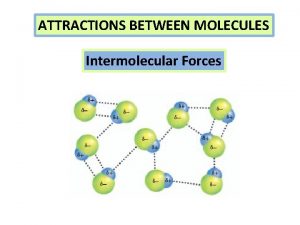
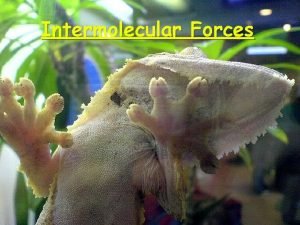
Intermolecular Forces • Forces that hold molecules together in liquids and solids; • much weaker forces compared with covalent or ionic bonds – energy: 5 -15 k. J/mol • The strength of intermolecular forces determine the physical states of substances and their physical properties: Such as melting point, boiling point, vapor pressure, etc.
Types of Intermolecular Forces • Dipole–dipole attractions • Hydrogen bonding • London dispersion forces
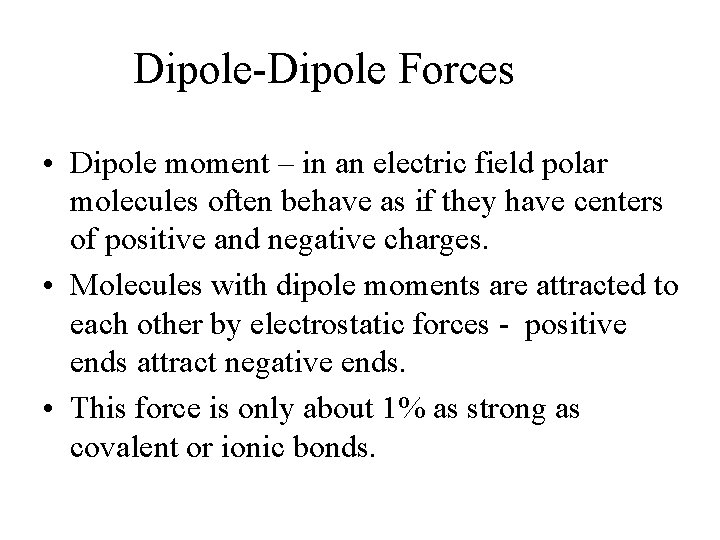
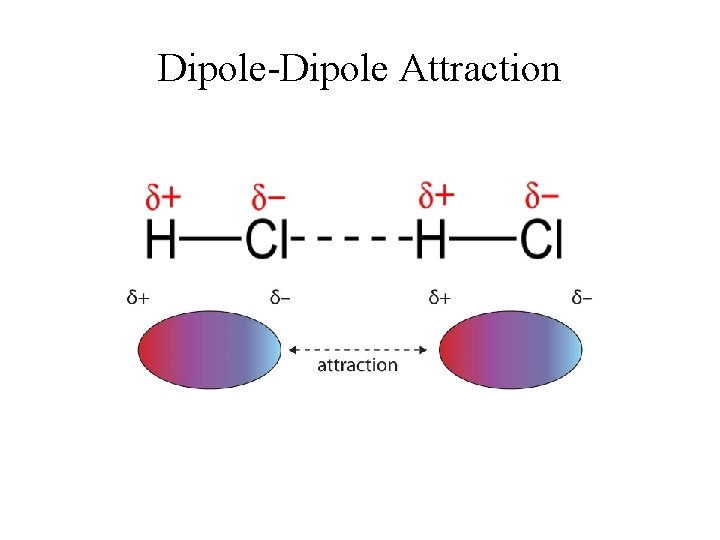
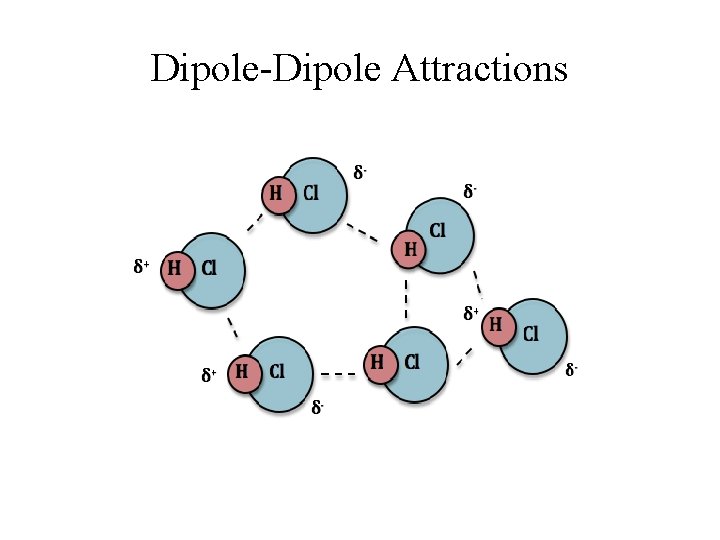
Dipole-Dipole Forces • Dipole moment – in an electric field polar molecules often behave as if they have centers of positive and negative charges. • Molecules with dipole moments are attracted to each other by electrostatic forces - positive ends attract negative ends. • This force is only about 1% as strong as covalent or ionic bonds.
Dipole-Dipole Attraction
Dipole-Dipole Attractions
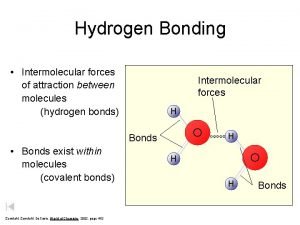
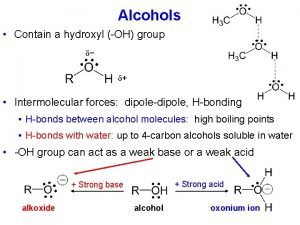
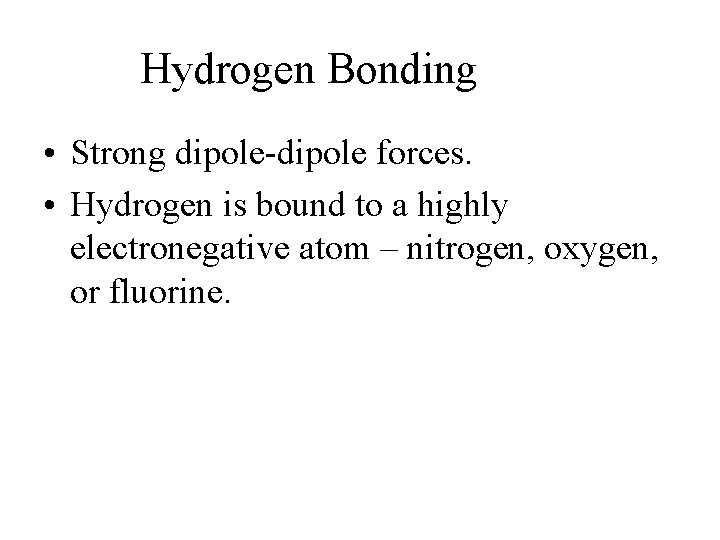
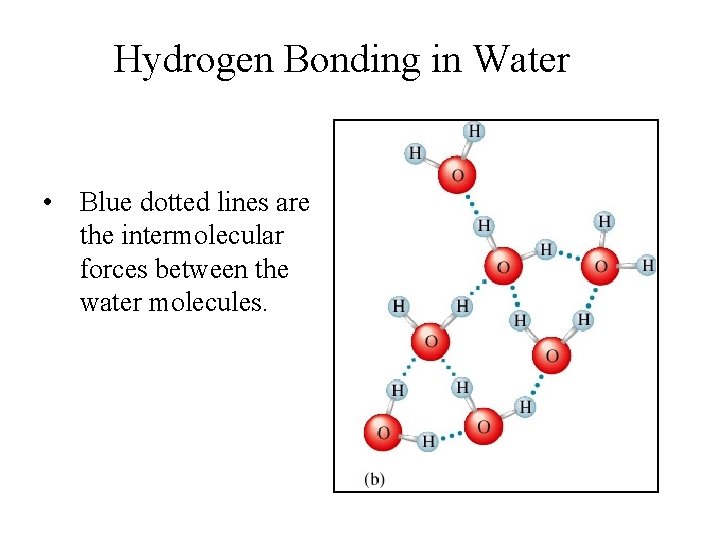
Hydrogen Bonding • Strong dipole-dipole forces. • Hydrogen is bound to a highly electronegative atom – nitrogen, oxygen, or fluorine.
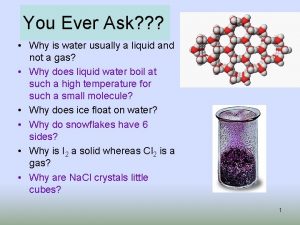
Hydrogen Bonding in Water • Blue dotted lines are the intermolecular forces between the water molecules.
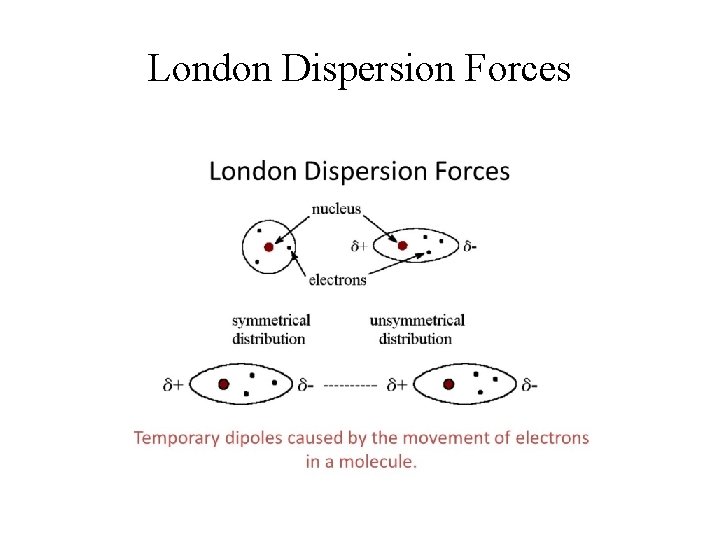
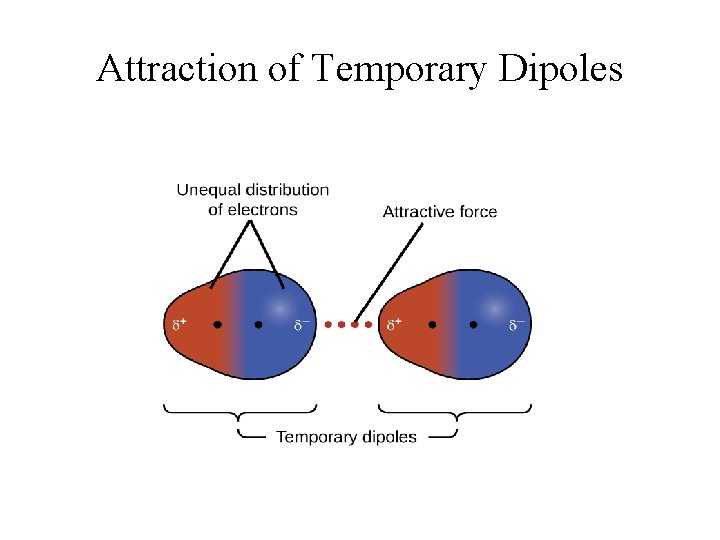
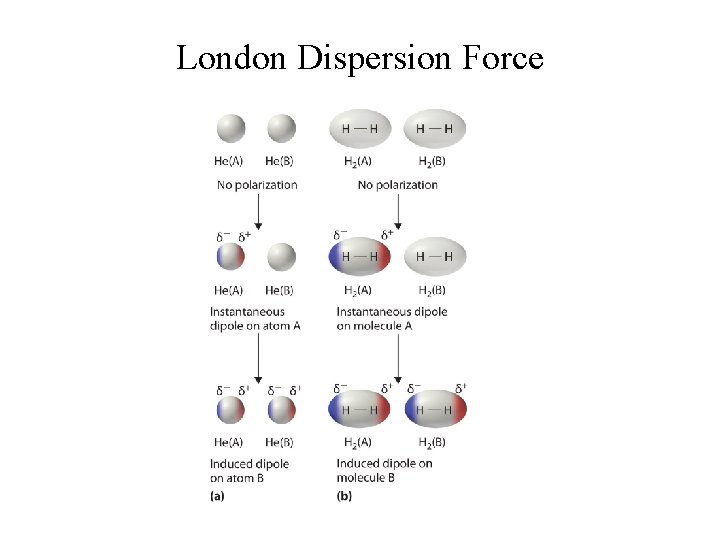
London Dispersion Forces • Instantaneous dipole-dipole attractions between molecules due to charge polarization in a molecule; • One polarized molecule then induces neighboring molecules to be polarized, which results in dipole interactions between neighboring molecules. • LDF occurs in all molecules – polar and nonpolar. • It is very important in nonpolar and in large molecules.
London Dispersion Forces
Attraction of Temporary Dipoles
London Dispersion Force
Physical Properties of Liquids • The following properties are directly influenced by intermolecular forces: Vapor pressure Boiling point Enthalpy of vaporization ( Hvap) Viscosity Surface tension Capillary action
Intermolecular Forces and Physical Properties of Liquids • Strong intermolecular forces lead to: Low vapor pressure for liquids High boiling point High enthalpy of vaporization High viscosity High surface tension High capillary action
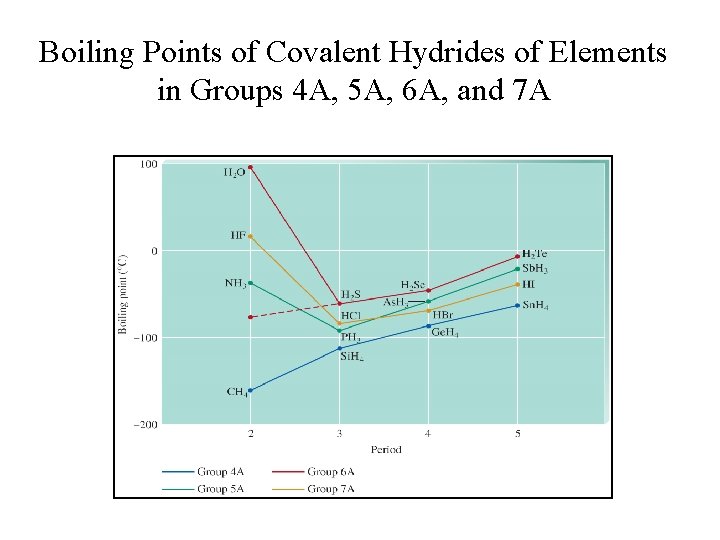
Boiling Points of Covalent Hydrides of Elements in Groups 4 A, 5 A, 6 A, and 7 A
Melting and Boiling Points • In general, the stronger the intermolecular forces, the higher the melting and boiling points.
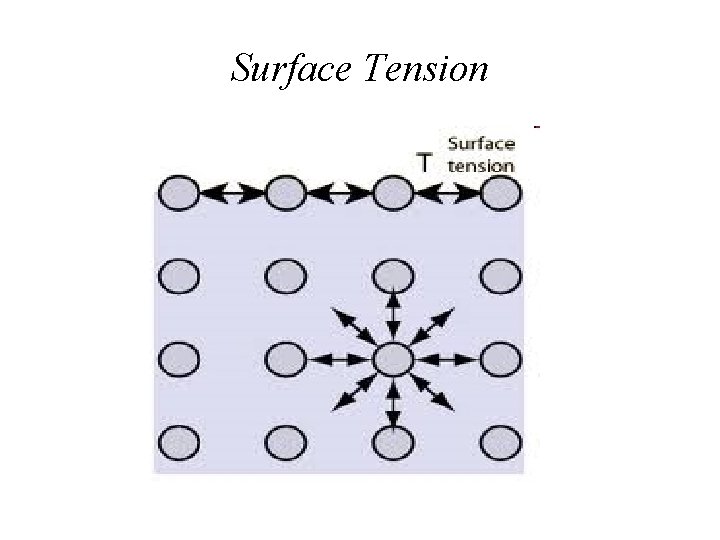
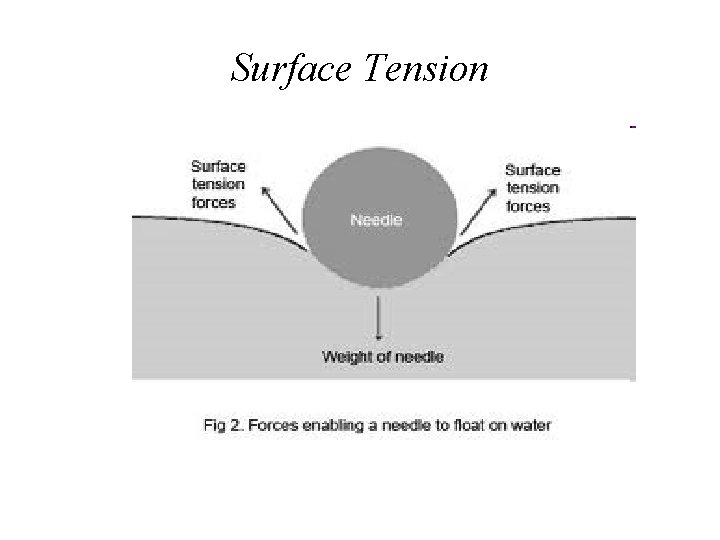
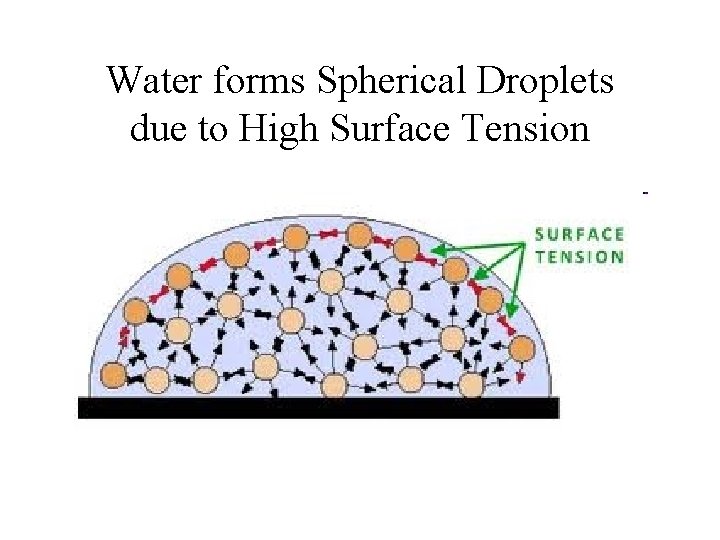
Properties of Liquids • Low compressibility, lack of rigidity, and higher density compared with gases. • Surface tension – force that holds molecules on liquid surface together, which resists a liquid to increase its surface area: § Liquids with strong intermolecular forces have high surface tension.
Surface Tension
Surface Tension
Viscosity • Liquid’s resistance to flow: § Liquids with large intermolecular forces or molecular complexity tend to be highly viscous.
Capillary Action • Spontaneous rising of liquid inside capillaries; • Capillary action due to: § Cohesive forces – intermolecular forces among molecules of liquids, and § Adhesive forces – forces between liquid molecules and container walls.
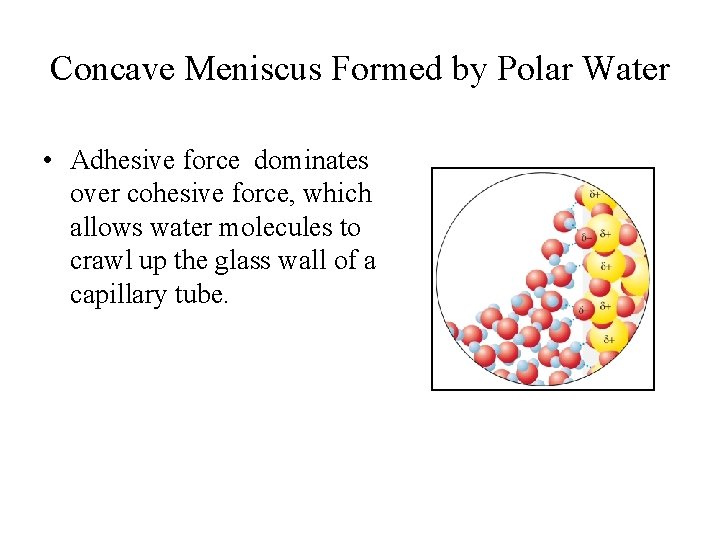
Concave Meniscus Formed by Polar Water • Adhesive force dominates over cohesive force, which allows water molecules to crawl up the glass wall of a capillary tube.
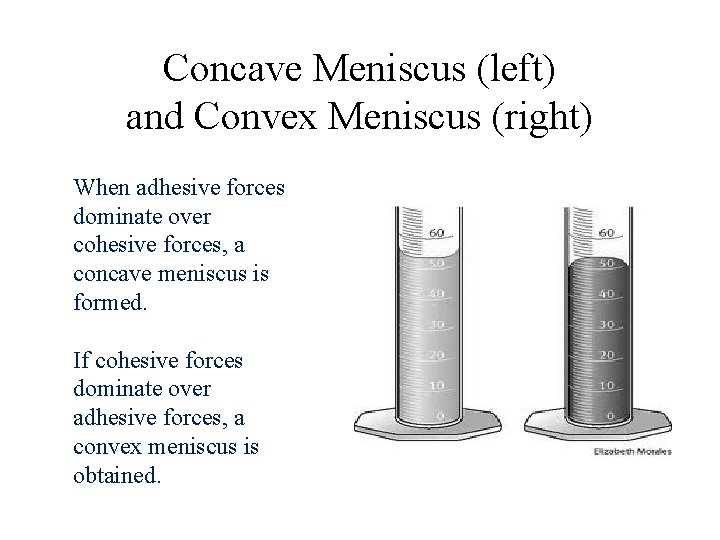
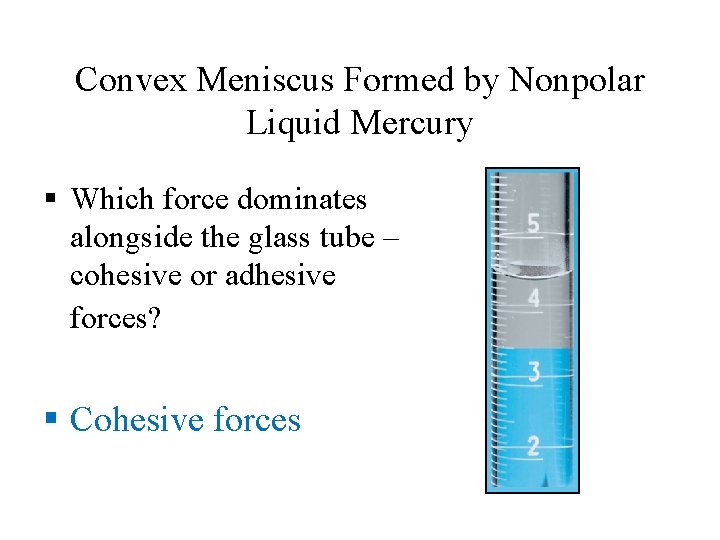
Concave Meniscus (left) and Convex Meniscus (right) When adhesive forces dominate over cohesive forces, a concave meniscus is formed. If cohesive forces dominate over adhesive forces, a convex meniscus is obtained.
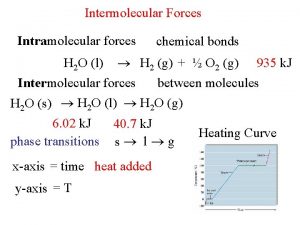
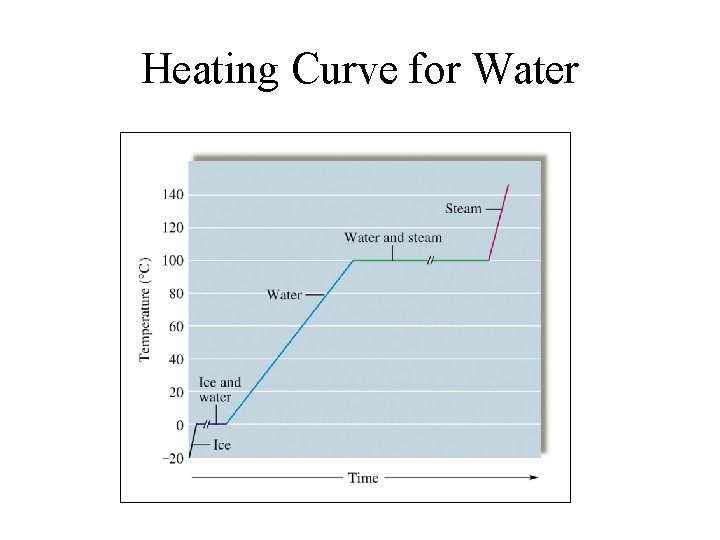
Heating Curve for Water
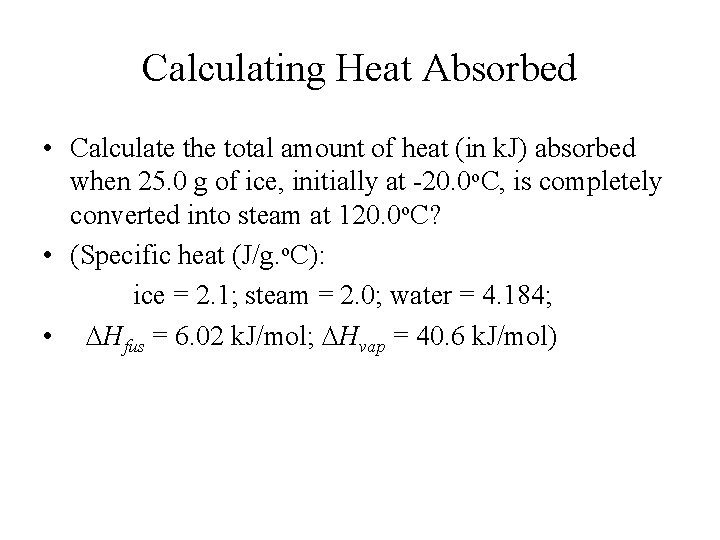
Calculating Heat Absorbed • Calculate the total amount of heat (in k. J) absorbed when 25. 0 g of ice, initially at -20. 0 o. C, is completely converted into steam at 120. 0 o. C? • (Specific heat (J/g. o. C): ice = 2. 1; steam = 2. 0; water = 4. 184; • Hfus = 6. 02 k. J/mol; Hvap = 40. 6 k. J/mol)
Dipole-Dipole Forces
Hydrogen Bonding
Hydrogen Bonding in Water
London Dispersion Forces
Phase Changes • When a substance changes from solid to liquid to gas, the molecules remain intact. • Phase Changes are due to changes in the forces between molecules, but not those within molecules.
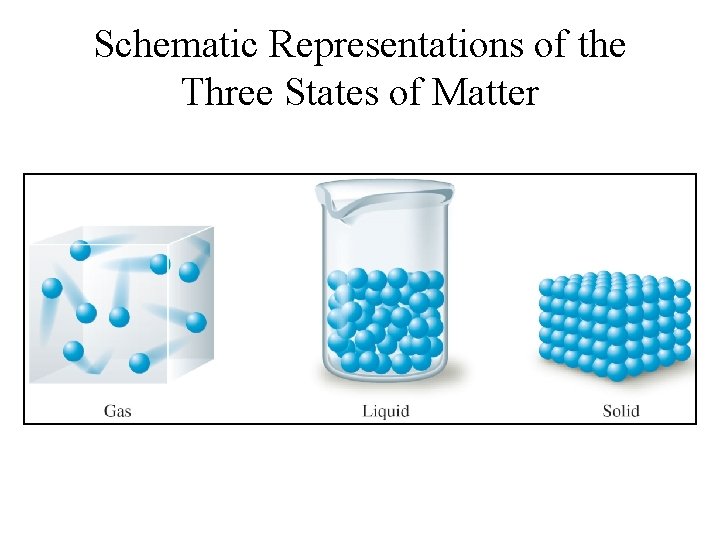
Phase Changes • Solid to Liquid § As a substance absorbs energy, molecular motions within the substance increase, which eventually a disorder characteristic of a liquid. • Liquid to Gas § As more energy is absorbed, molecular motions and disorder continue to increase; § Eventually all intermolecular forces are broken and molecules break away from each other - a gaseous state is formed.
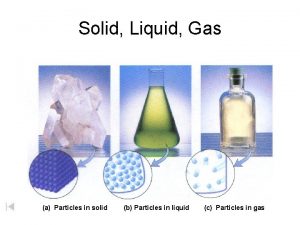
Schematic Representations of the Three States of Matter
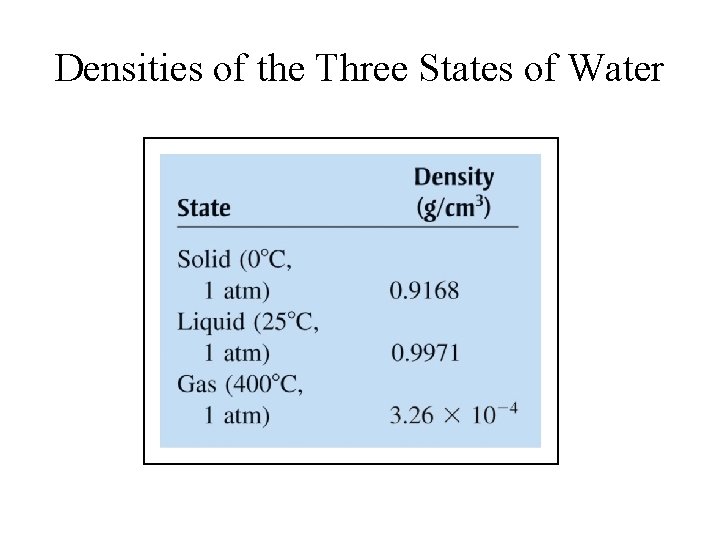
Densities of the Three States of Water
Water forms Spherical Droplets due to High Surface Tension
Convex Meniscus Formed by Nonpolar Liquid Mercury § Which force dominates alongside the glass tube – cohesive or adhesive forces? § Cohesive forces
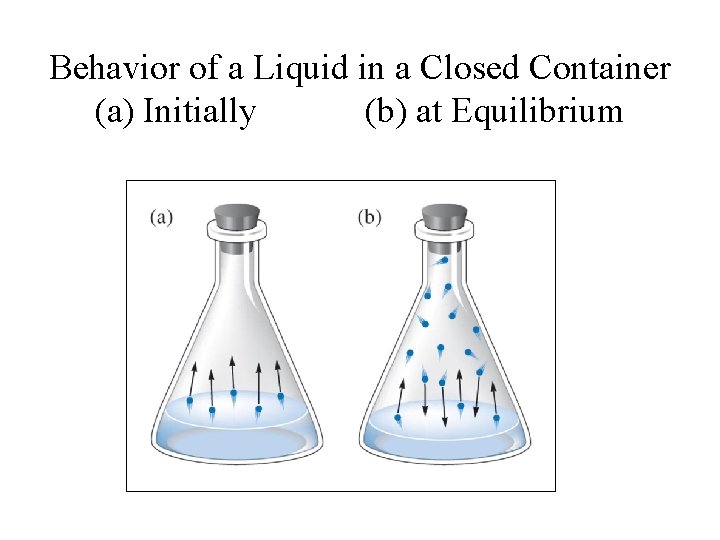
Behavior of a Liquid in a Closed Container (a) Initially (b) at Equilibrium
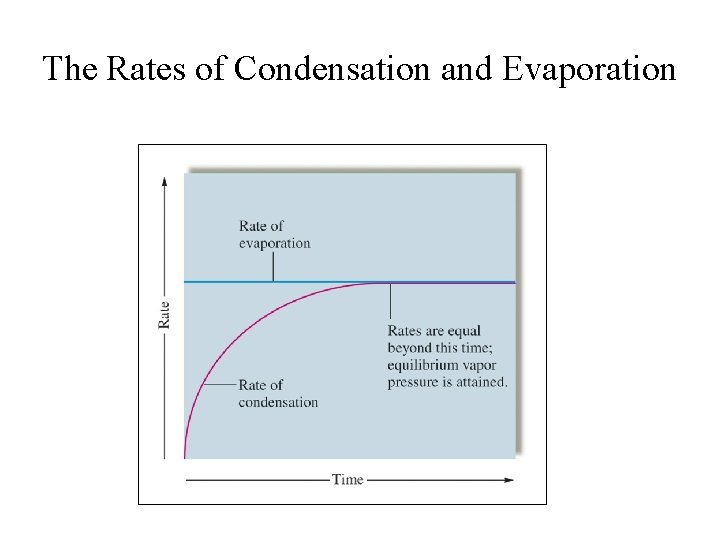
The Rates of Condensation and Evaporation
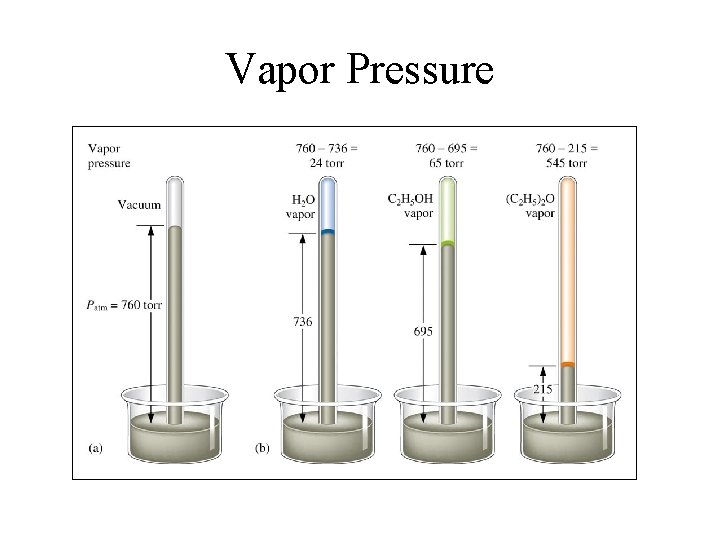
Vapor Pressure • Pressure of vapor in equilibrium with the liquid. • At equilibrium no net change in the amount of liquid or vapor • Evaporation rate = Condensation rate.
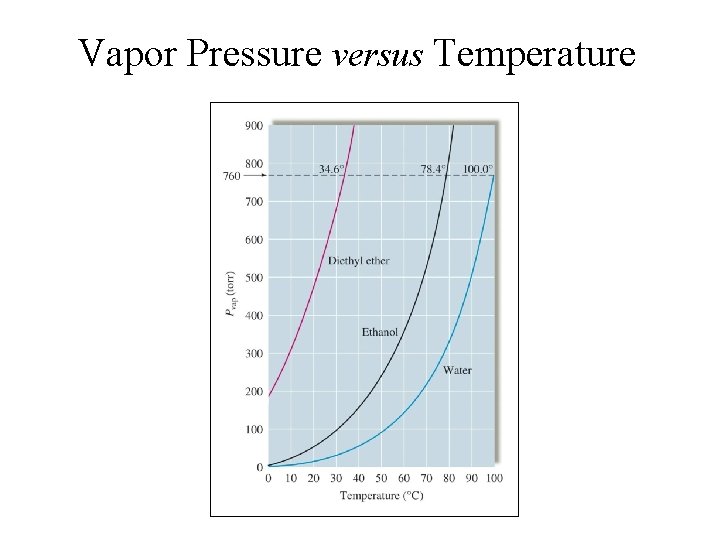
Vapor Pressure versus Temperature
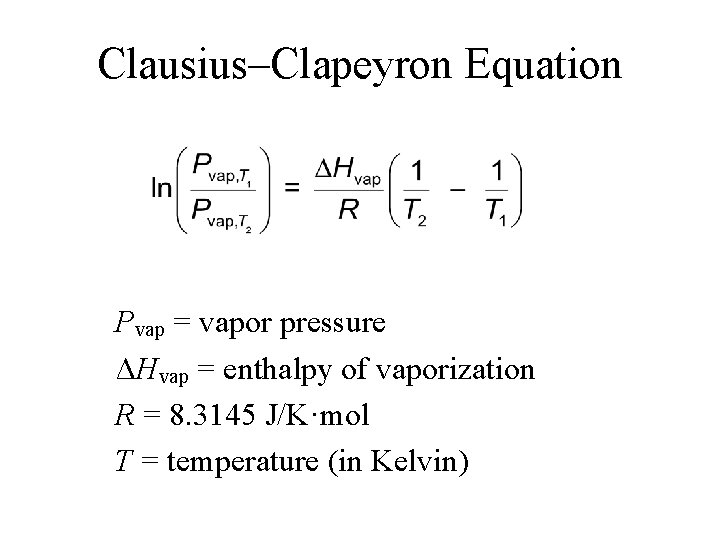
Clausius–Clapeyron Equation Pvap = vapor pressure ΔHvap = enthalpy of vaporization R = 8. 3145 J/K·mol T = temperature (in Kelvin)
Vapor Pressure
Vapor Pressure • Liquids with strong intermolecular forces have relatively low vapor pressures. • Vapor pressure increases as the temperature increases.
Concept Check What is the vapor pressure of water at 100°C? How do you know? 1 atm
Phase Diagram • A convenient way of representing the phases of a substance as a function of temperature and pressure: § Triple point § Critical point § Phase equilibrium lines
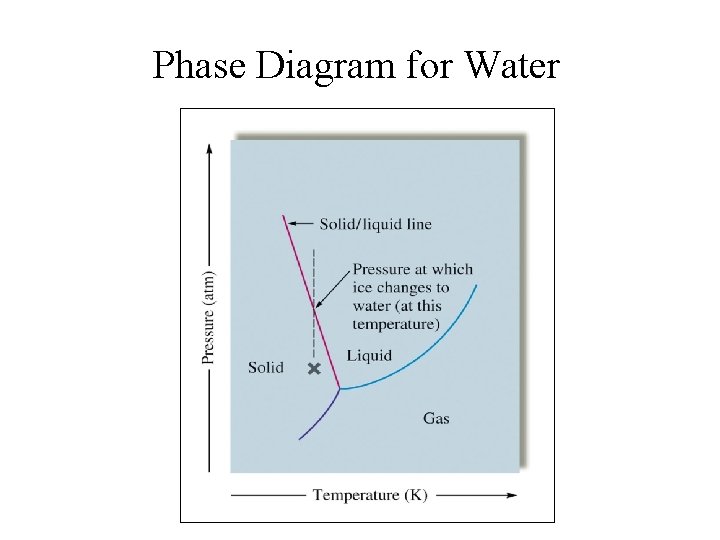
Phase Diagram for Water
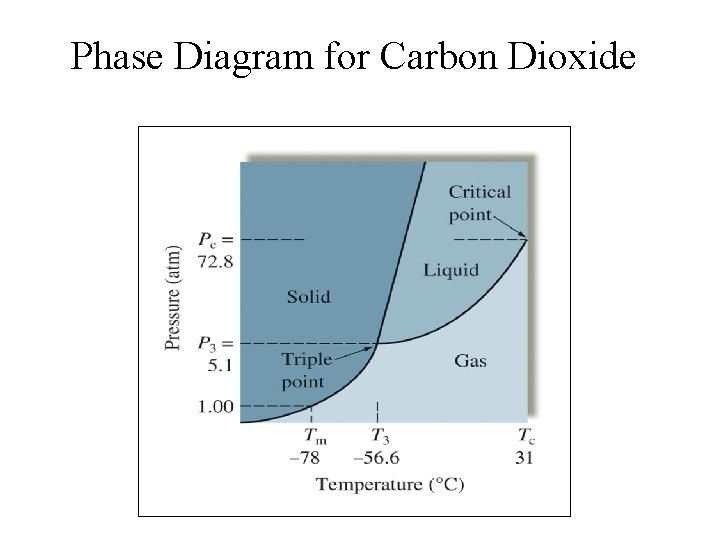
Phase Diagram for Carbon Dioxide
Changes of State
Concept Check Which are stronger, intramolecular bonds or intermolecular forces? How do you know?
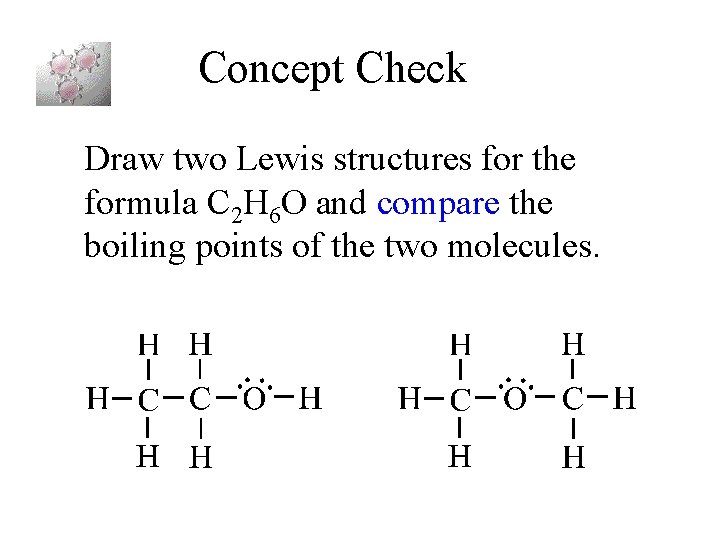
Concept Check Draw two Lewis structures for the formula C 2 H 6 O and compare the boiling points of the two molecules.
Concept Check Which molecule is capable of forming stronger intermolecular forces? N 2 Explain. H 2 O
Concept Check Which gas would behave more ideally at the same conditions of P and T? CO Why? or N 2
Concept Check The vapor pressure of water at 25°C is 23. 8 torr, and the heat of vaporization of water at 25°C is 43. 9 k. J/mol. Calculate the vapor pressure of water at 65°C. 194 torr
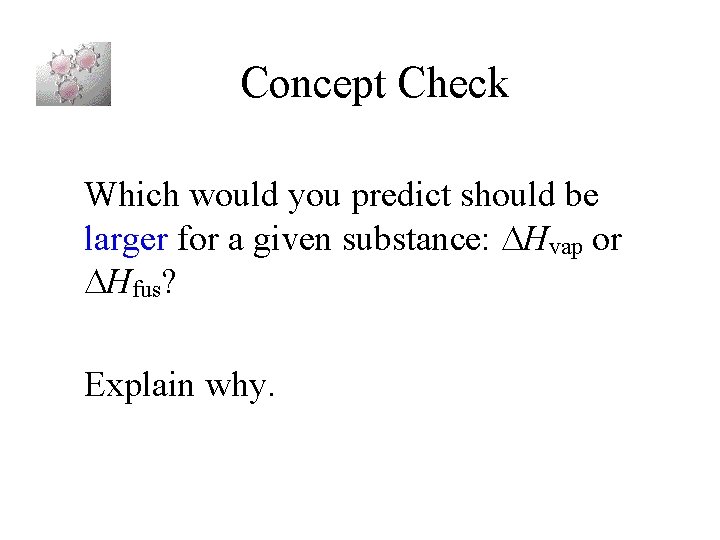
Concept Check Which would you predict should be larger for a given substance: Hvap or Hfus? Explain why.
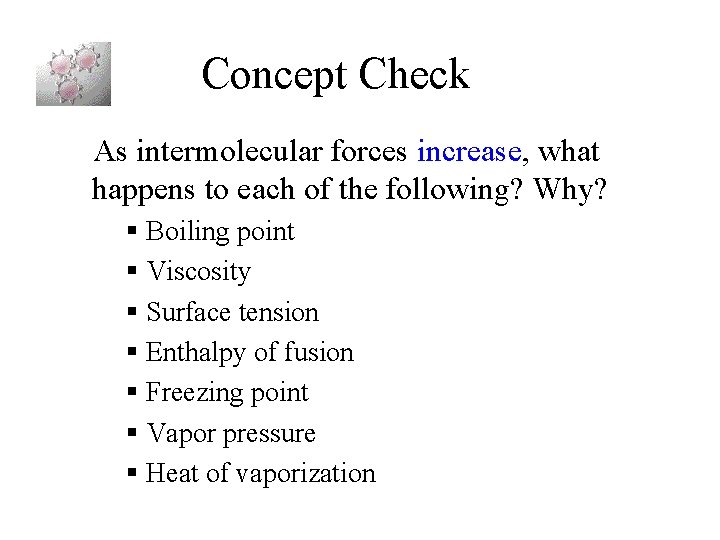
Concept Check As intermolecular forces increase, what happens to each of the following? Why? § Boiling point § Viscosity § Surface tension § Enthalpy of fusion § Freezing point § Vapor pressure § Heat of vaporization
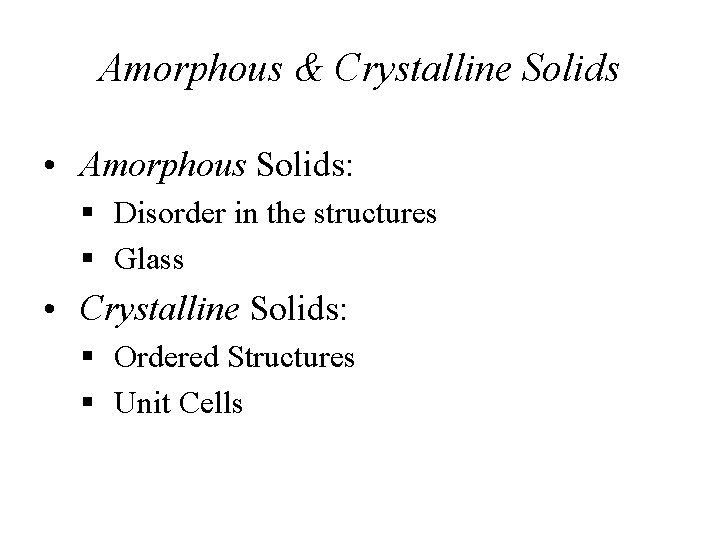
Amorphous & Crystalline Solids • Amorphous Solids: § Disorder in the structures § Glass • Crystalline Solids: § Ordered Structures § Unit Cells
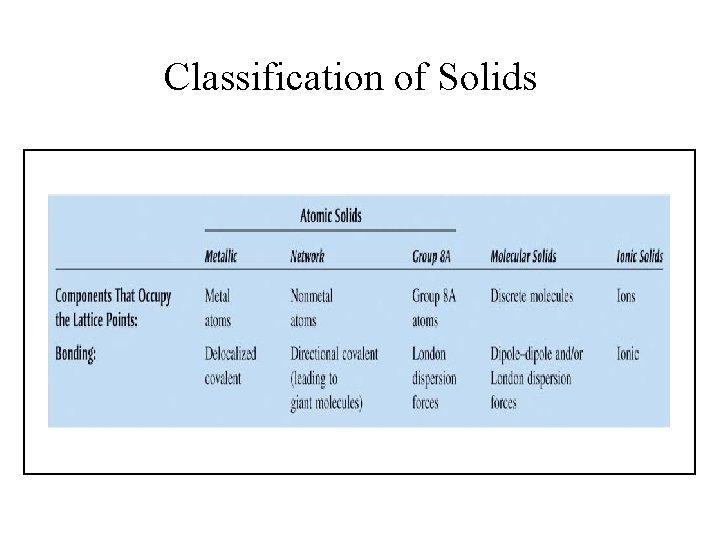
Classification of Solids
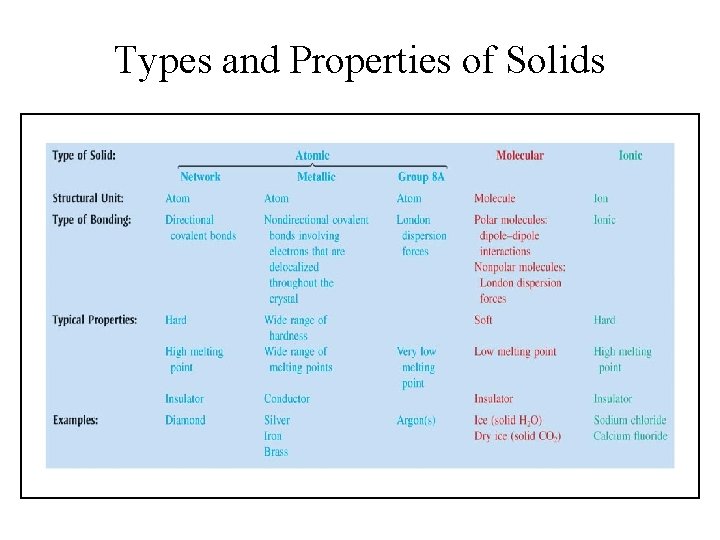
Types and Properties of Solids
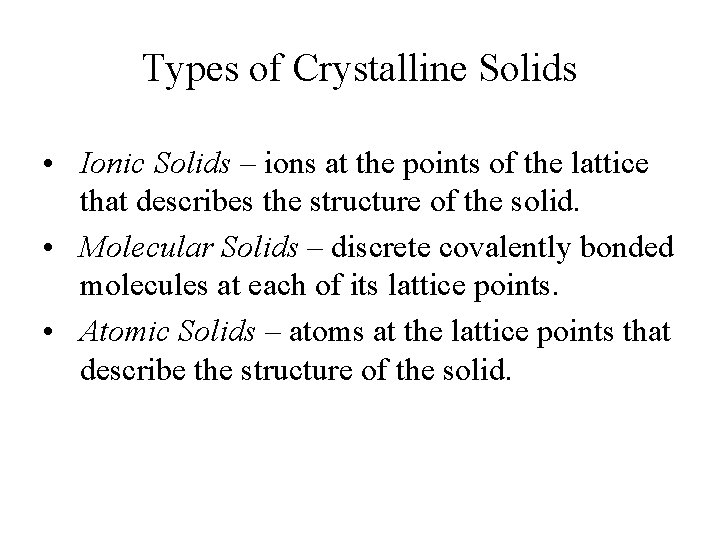
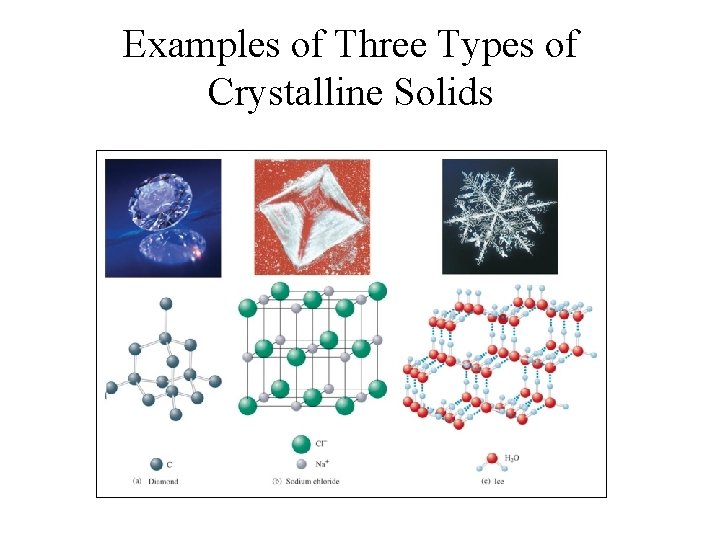
Types of Crystalline Solids • Ionic Solids – ions at the points of the lattice that describes the structure of the solid. • Molecular Solids – discrete covalently bonded molecules at each of its lattice points. • Atomic Solids – atoms at the lattice points that describe the structure of the solid.
Examples of Three Types of Crystalline Solids
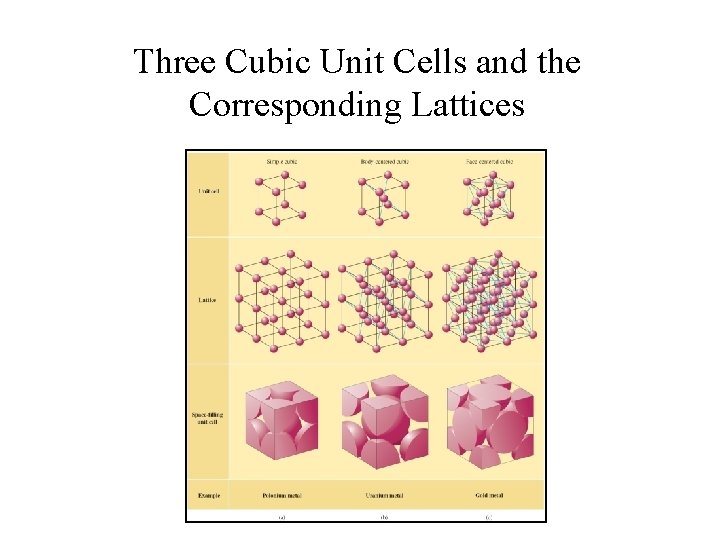
Three Cubic Unit Cells and the Corresponding Lattices
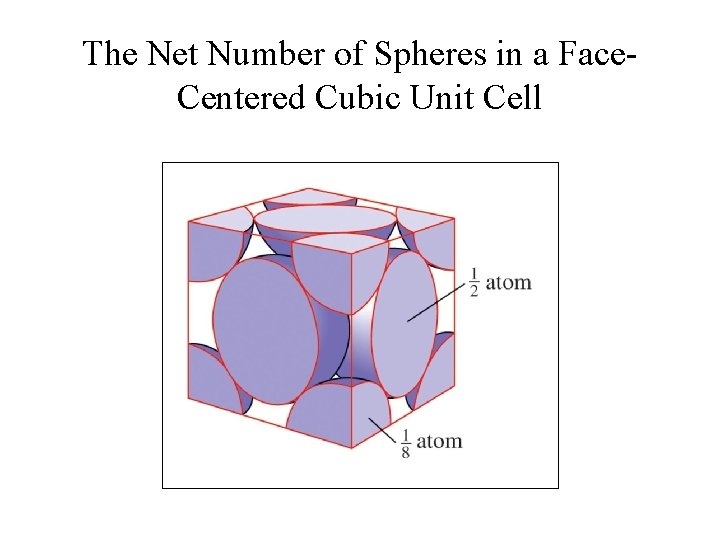
The Net Number of Spheres in a Face. Centered Cubic Unit Cell
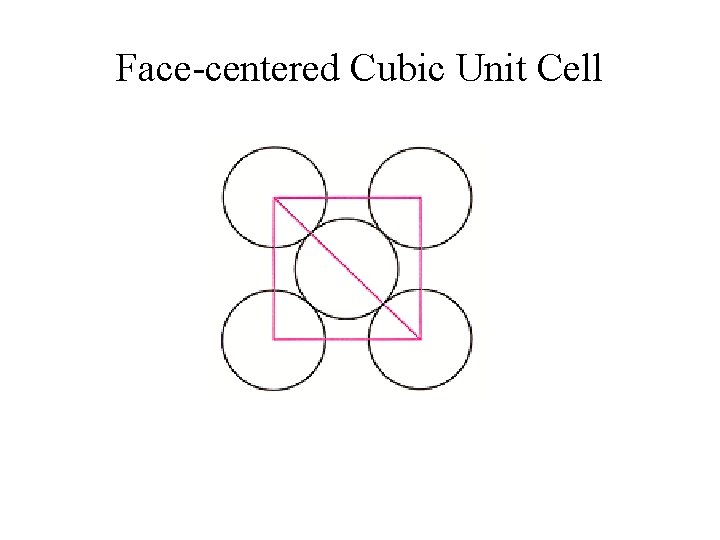
Face-centered Cubic Unit Cell
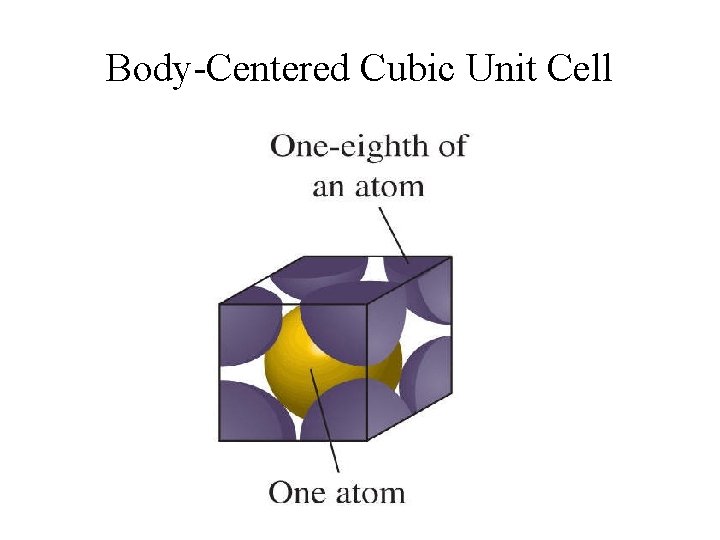
Body-Centered Cubic Unit Cell
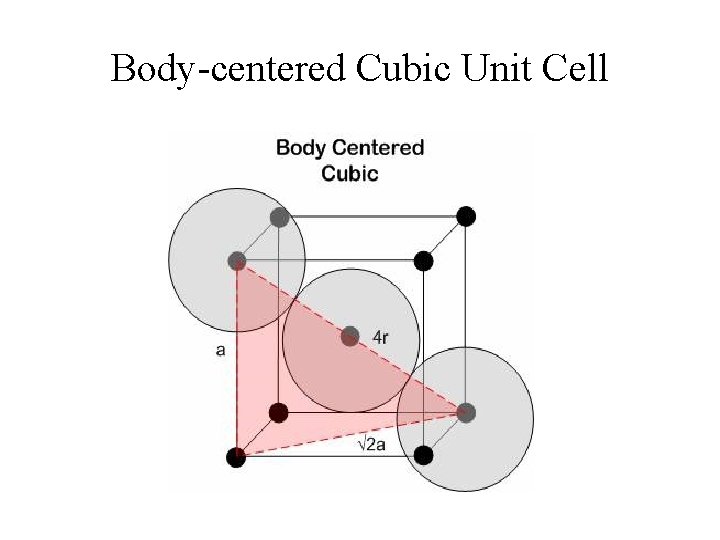
Body-centered Cubic Unit Cell
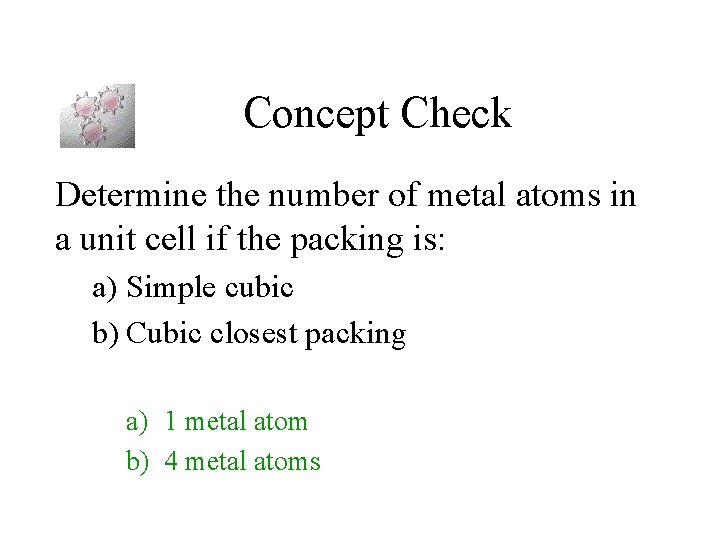
Concept Check Determine the number of metal atoms in a unit cell if the packing is: a) Simple cubic b) Cubic closest packing a) 1 metal atom b) 4 metal atoms
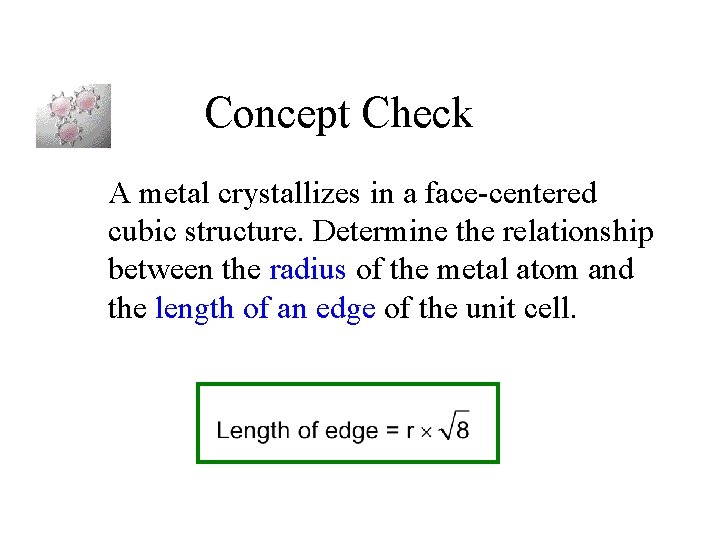
Concept Check A metal crystallizes in a face-centered cubic structure. Determine the relationship between the radius of the metal atom and the length of an edge of the unit cell.
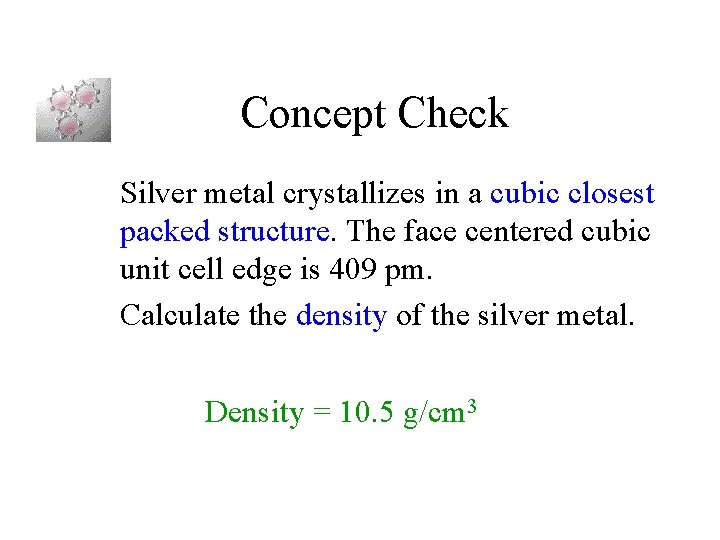
Concept Check Silver metal crystallizes in a cubic closest packed structure. The face centered cubic unit cell edge is 409 pm. Calculate the density of the silver metal. Density = 10. 5 g/cm 3
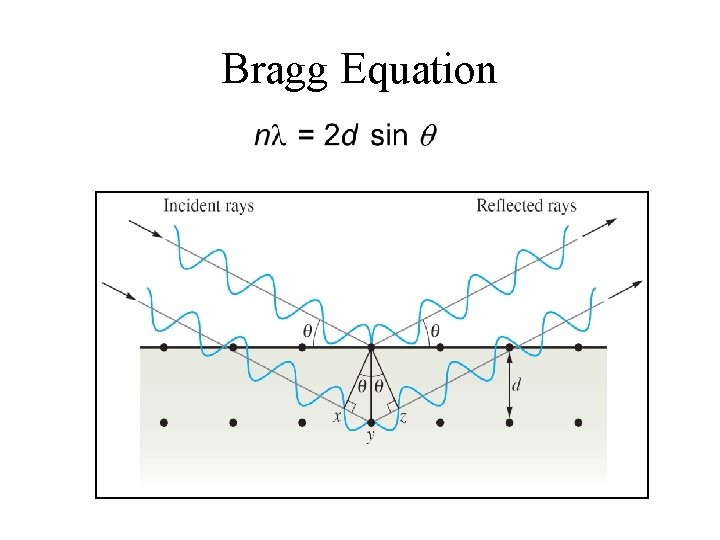
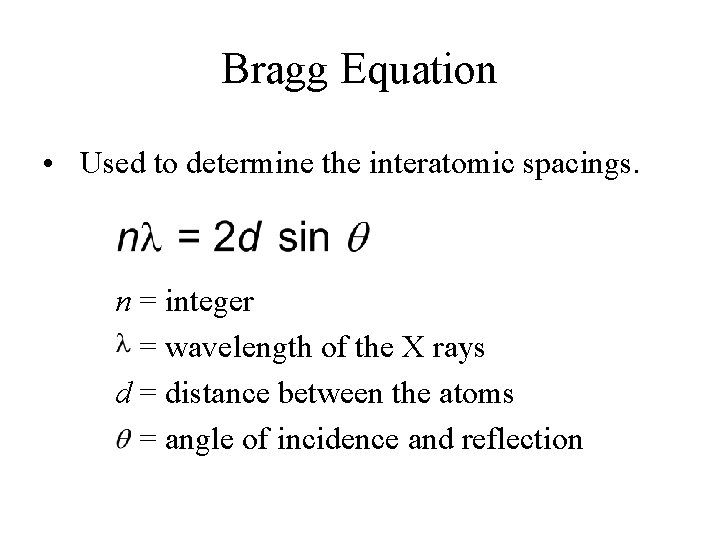
Bragg Equation
Bragg Equation • Used to determine the interatomic spacings. n = integer = wavelength of the X rays d = distance between the atoms = angle of incidence and reflection
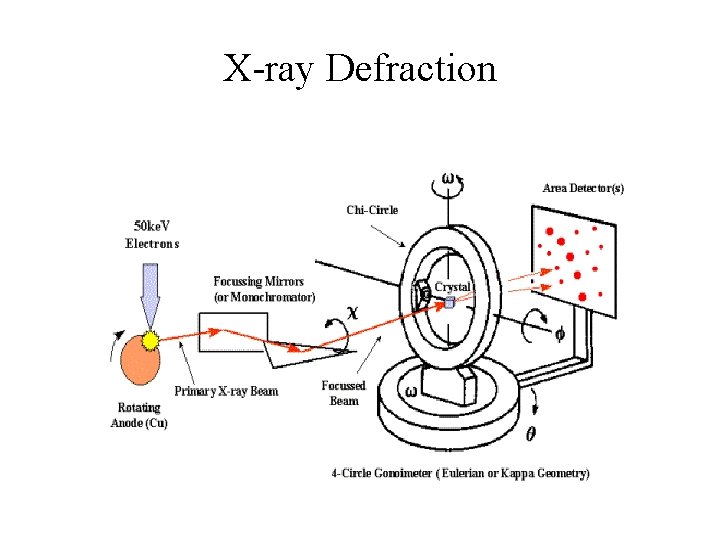
X-ray Defraction
Ionic Solid Crystal
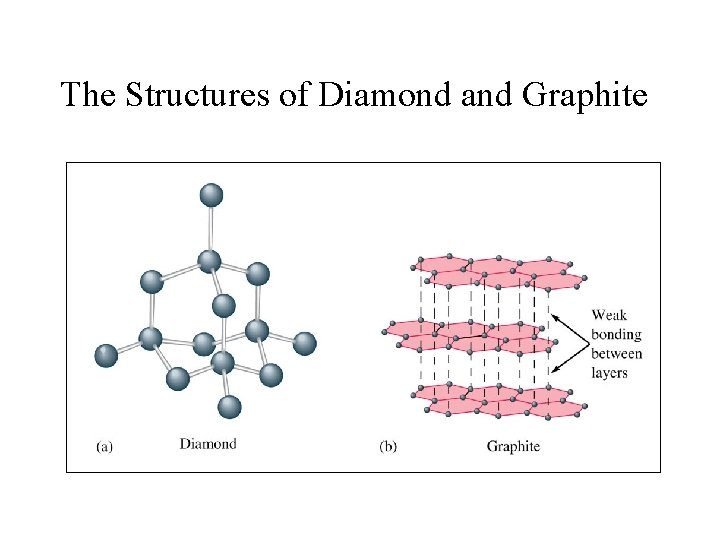
Network Solids
The Structures of Diamond and Graphite
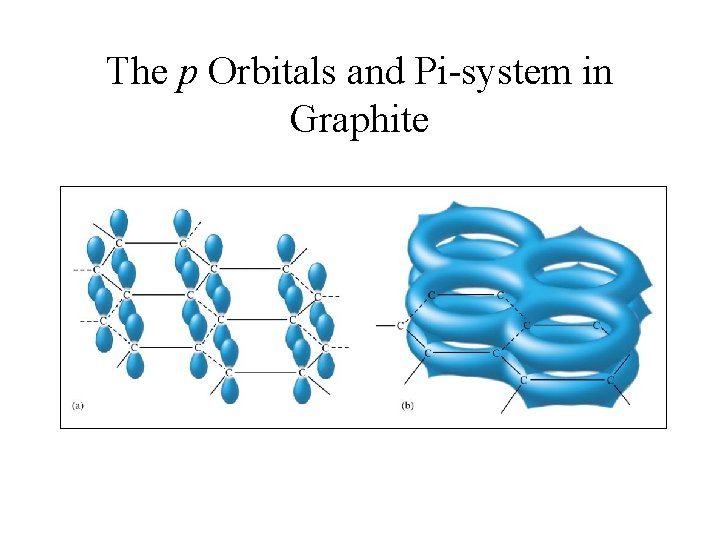
The p Orbitals and Pi-system in Graphite
Bonding Models for Metals • Electron Sea Model • Band Model (MO Model)
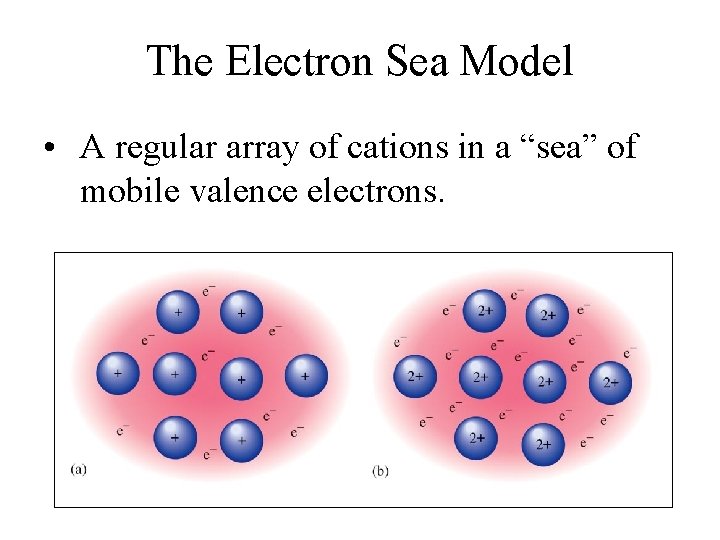
The Electron Sea Model • A regular array of cations in a “sea” of mobile valence electrons.
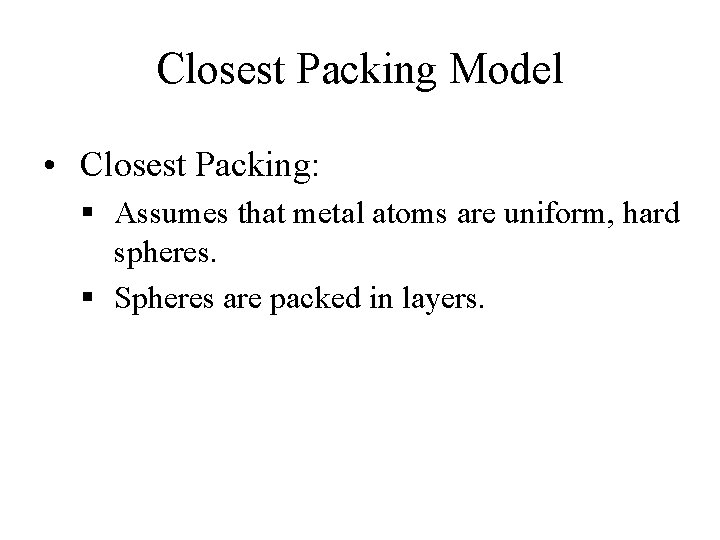
Closest Packing Model • Closest Packing: § Assumes that metal atoms are uniform, hard spheres. § Spheres are packed in layers.
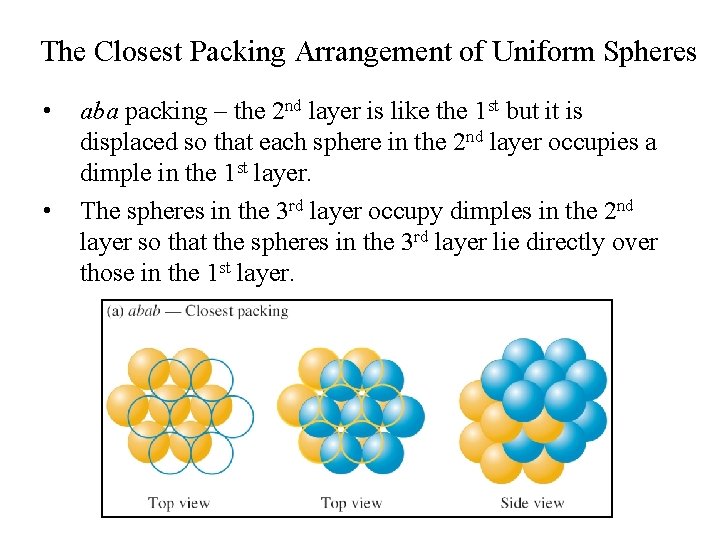
The Closest Packing Arrangement of Uniform Spheres • • aba packing – the 2 nd layer is like the 1 st but it is displaced so that each sphere in the 2 nd layer occupies a dimple in the 1 st layer. The spheres in the 3 rd layer occupy dimples in the 2 nd layer so that the spheres in the 3 rd layer lie directly over those in the 1 st layer.
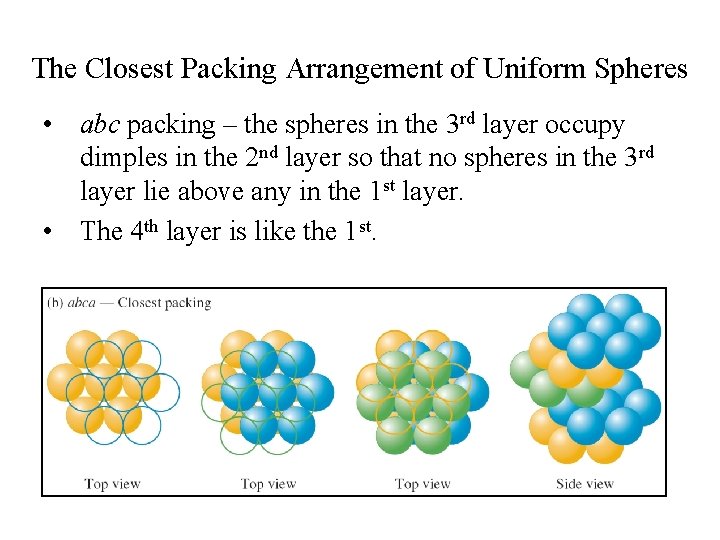
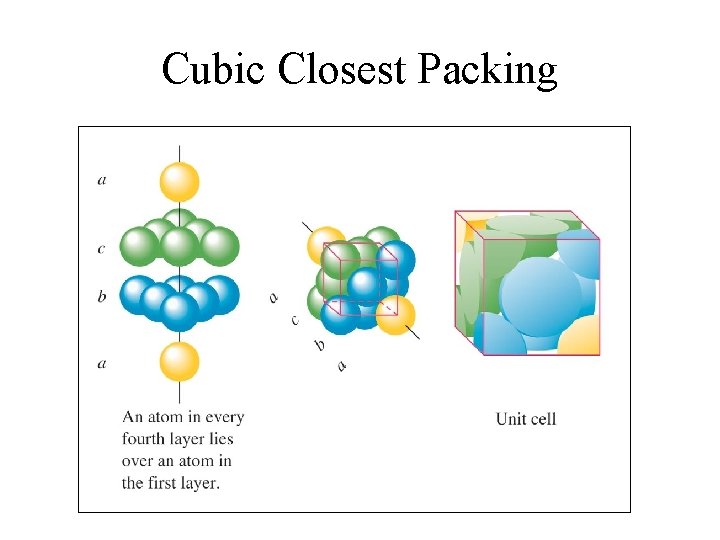
The Closest Packing Arrangement of Uniform Spheres • abc packing – the spheres in the 3 rd layer occupy dimples in the 2 nd layer so that no spheres in the 3 rd layer lie above any in the 1 st layer. • The 4 th layer is like the 1 st.
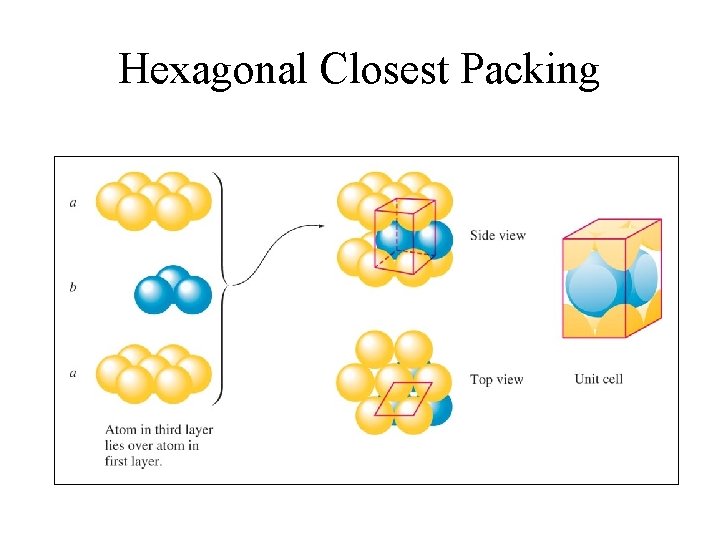
Hexagonal Closest Packing
Cubic Closest Packing
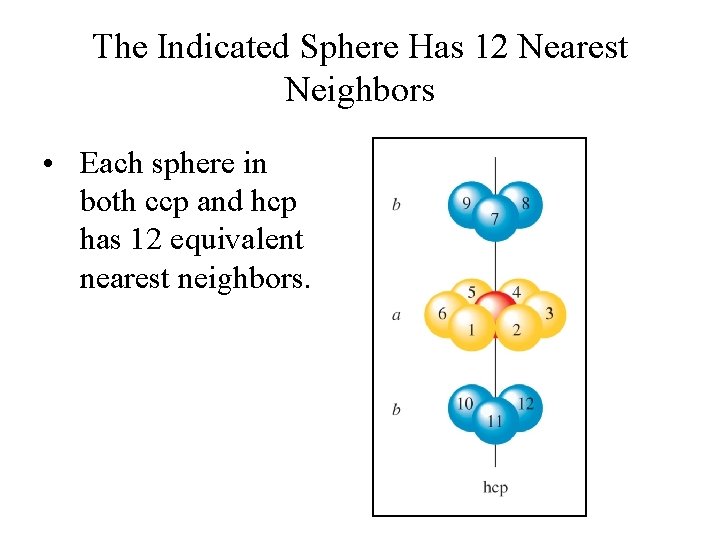
The Indicated Sphere Has 12 Nearest Neighbors • Each sphere in both ccp and hcp has 12 equivalent nearest neighbors.
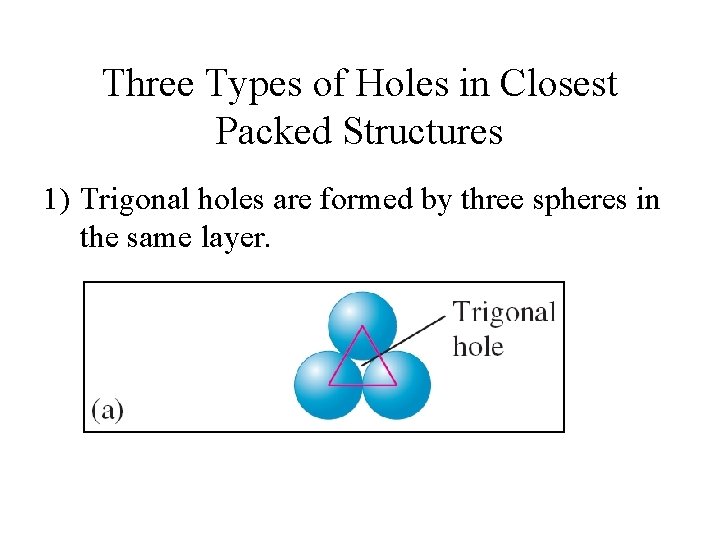
Three Types of Holes in Closest Packed Structures 1) Trigonal holes are formed by three spheres in the same layer.
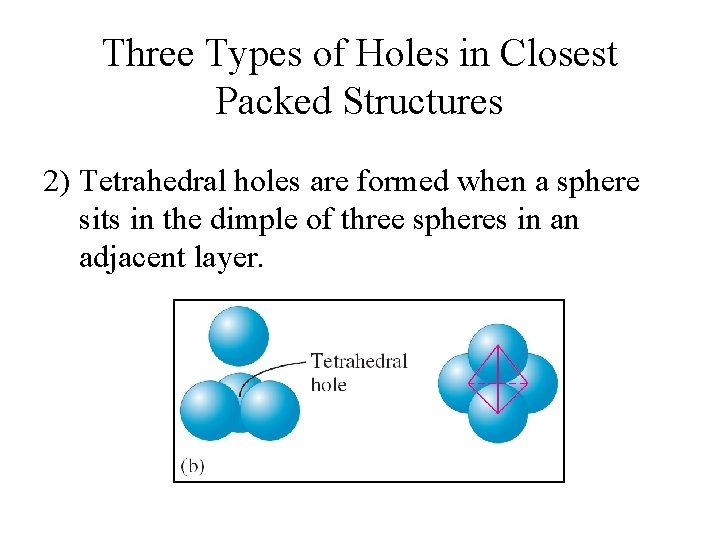
Three Types of Holes in Closest Packed Structures 2) Tetrahedral holes are formed when a sphere sits in the dimple of three spheres in an adjacent layer.
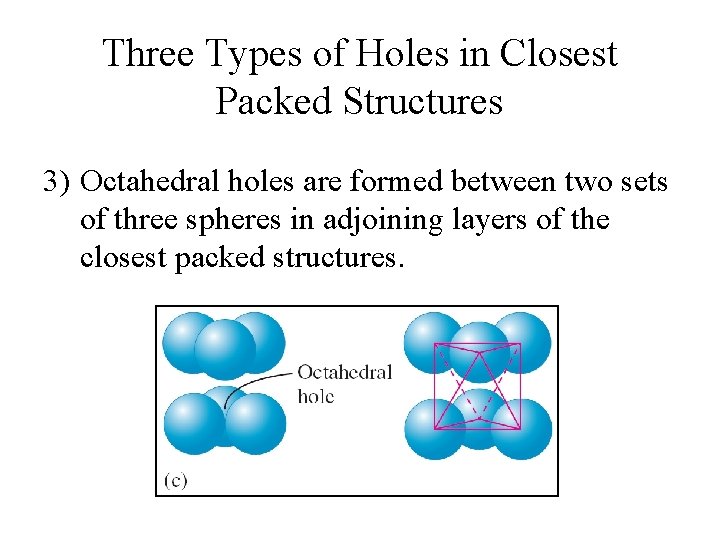
Three Types of Holes in Closest Packed Structures 3) Octahedral holes are formed between two sets of three spheres in adjoining layers of the closest packed structures.
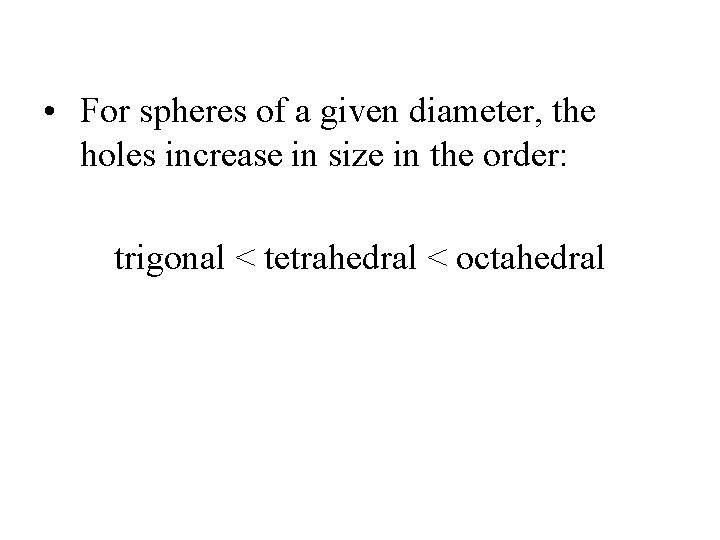
• For spheres of a given diameter, the holes increase in size in the order: trigonal < tetrahedral < octahedral
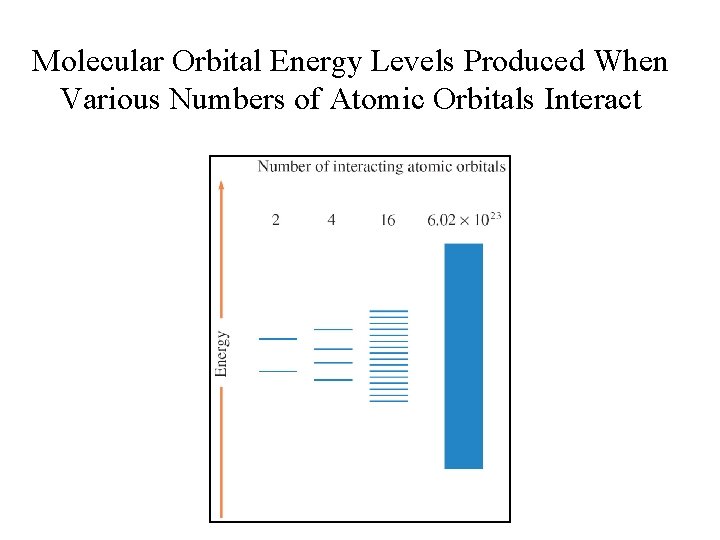
Molecular Orbital Energy Levels Produced When Various Numbers of Atomic Orbitals Interact
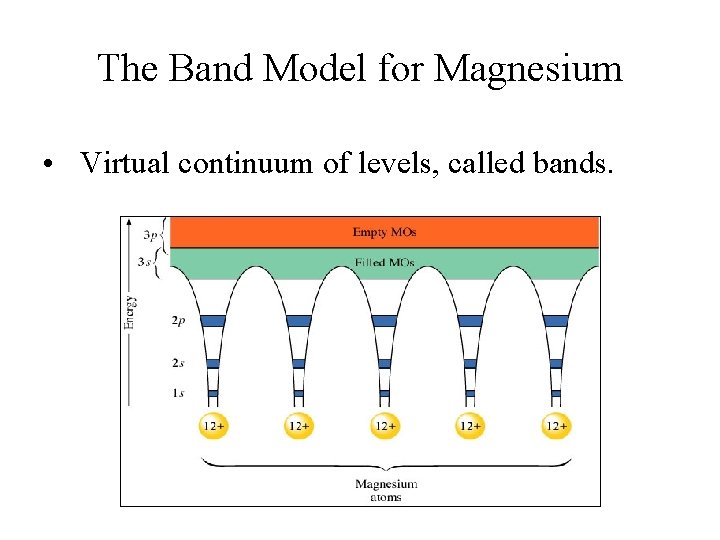
The Band Model for Magnesium • Virtual continuum of levels, called bands.
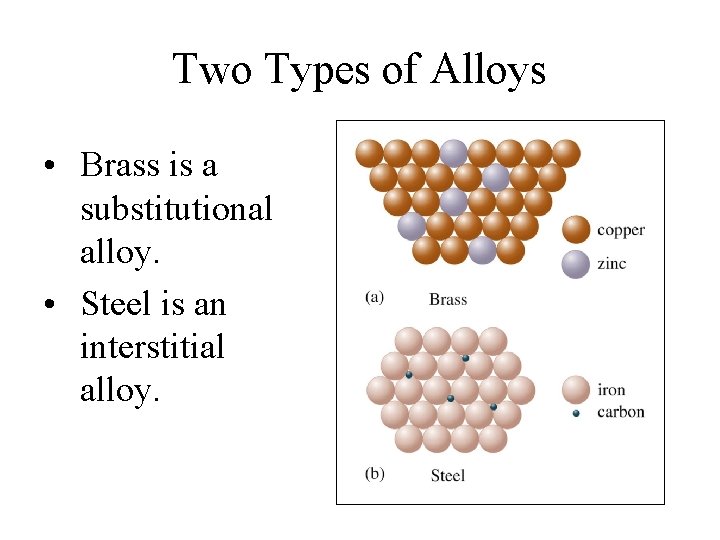
Metal Alloys • Substitutional Alloy – some of the host metal atoms are replaced by other metal atoms of similar size. • Interstitial Alloy – some of the holes in the closest packed metal structure are occupied by small atoms.
Two Types of Alloys • Brass is a substitutional alloy. • Steel is an interstitial alloy.
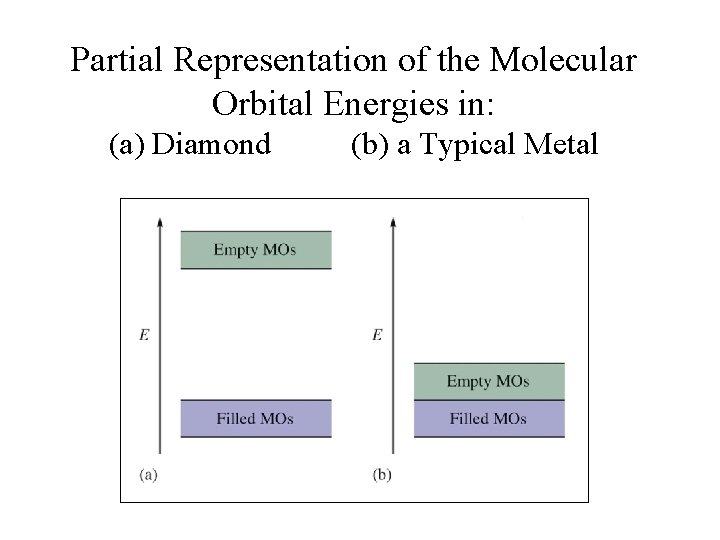
Partial Representation of the Molecular Orbital Energies in: (a) Diamond (b) a Typical Metal
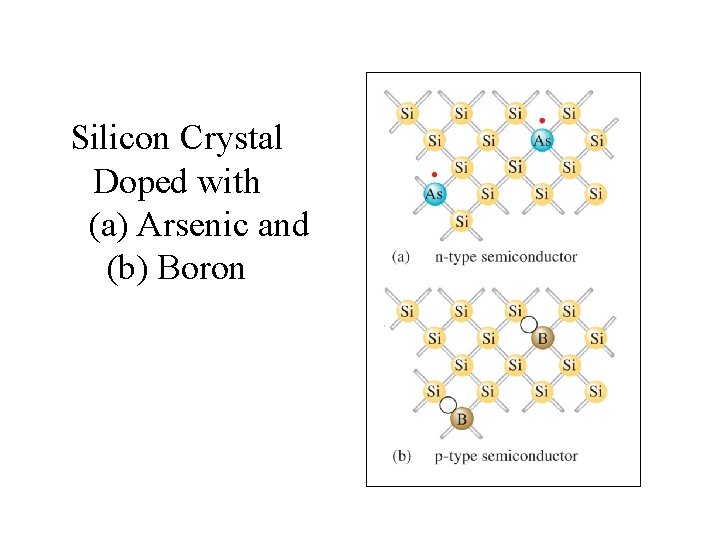
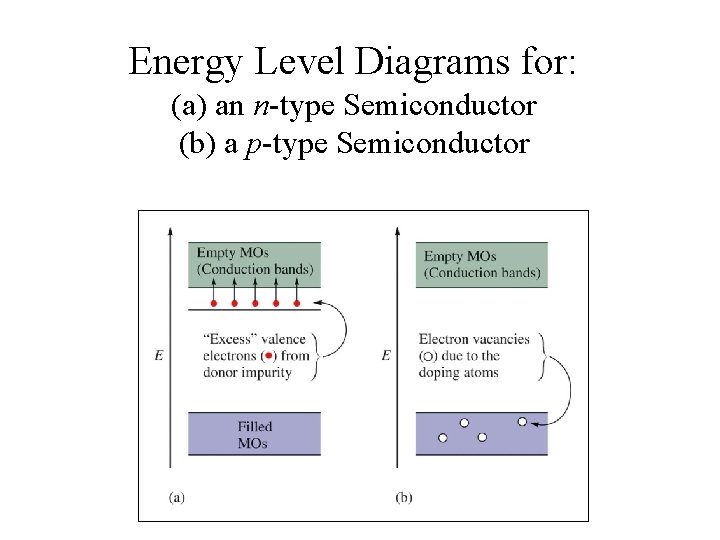
Semiconductors • n-type semiconductor – substance whose conductivity is increased by doping it with atoms having more valence electrons than the atoms in the host crystal. • p-type semiconductor – substance whose conductivity is increased by doping it with atoms having fewer valence electrons than the atoms of the host crystal.
Silicon Crystal Doped with (a) Arsenic and (b) Boron
Energy Level Diagrams for: (a) an n-type Semiconductor (b) a p-type Semiconductor
Ceramics • Typically made from clays (which contain silicates) and hardened by firing at high temperatures. • Nonmetallic materials that are strong, brittle, and resistant to heat and attack by chemicals.