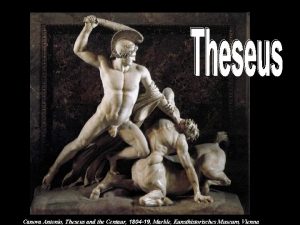
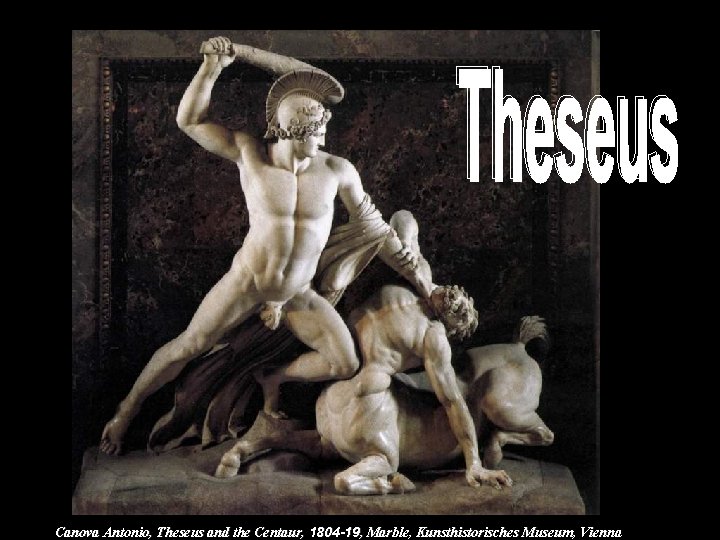
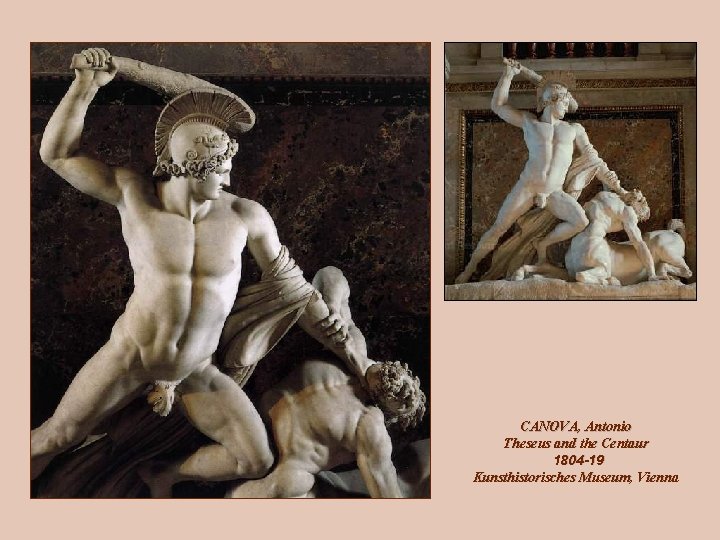
Canova Antonio Theseus and the Centaur 1804 19
- Slides: 94
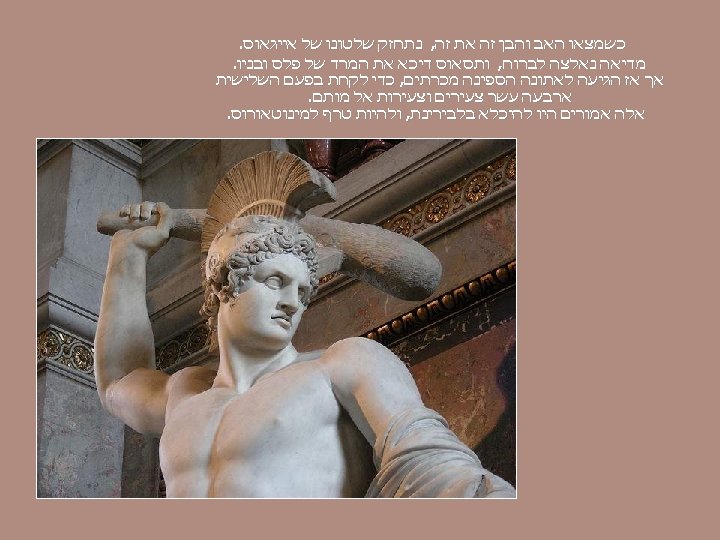
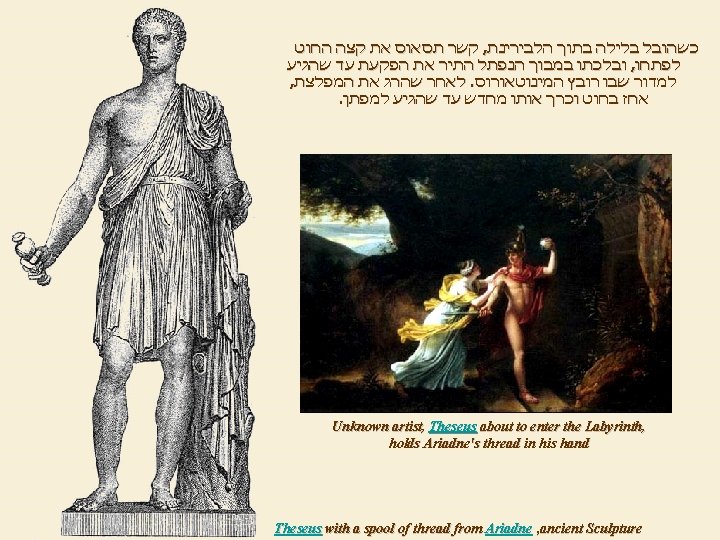
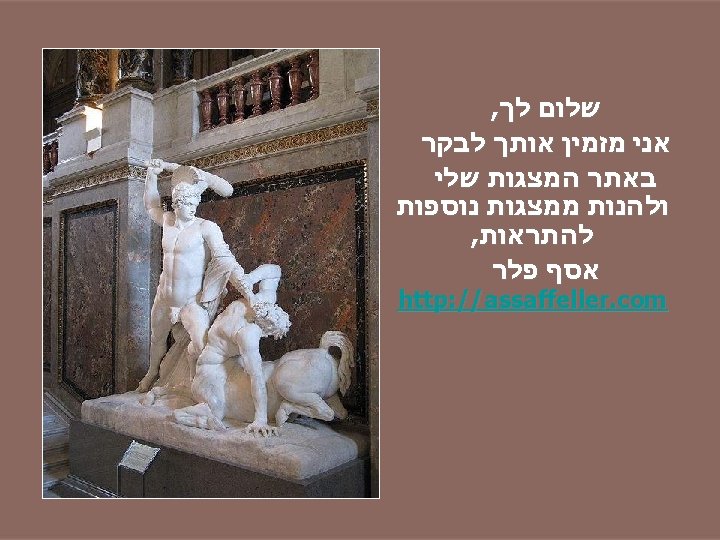
Canova Antonio, Theseus and the Centaur, 1804 -19, Marble, Kunsthistorisches Museum, Vienna
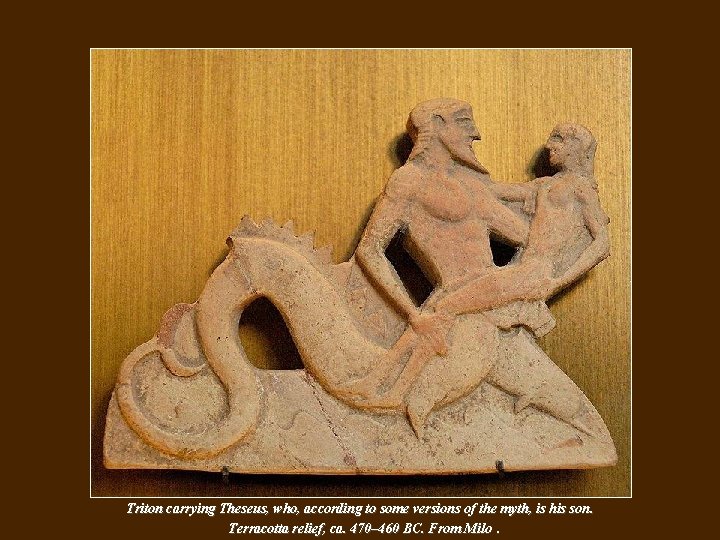
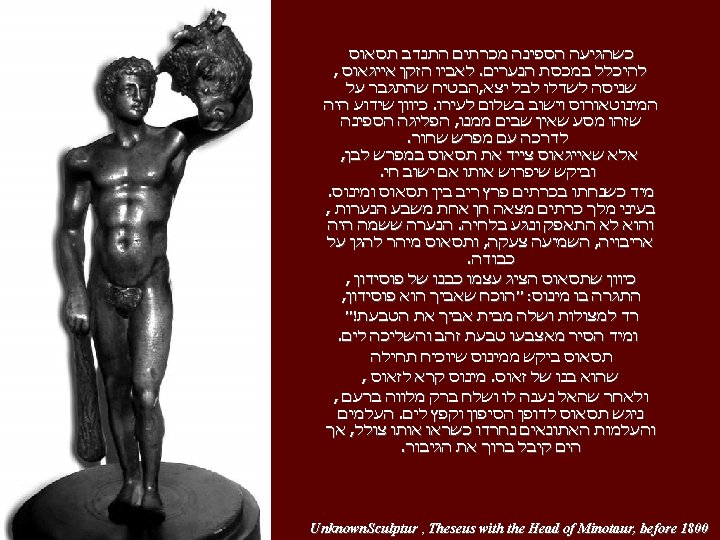
Triton carrying Theseus, who, according to some versions of the myth, is his son. Terracotta relief, ca. 470– 460 BC. From Milo.
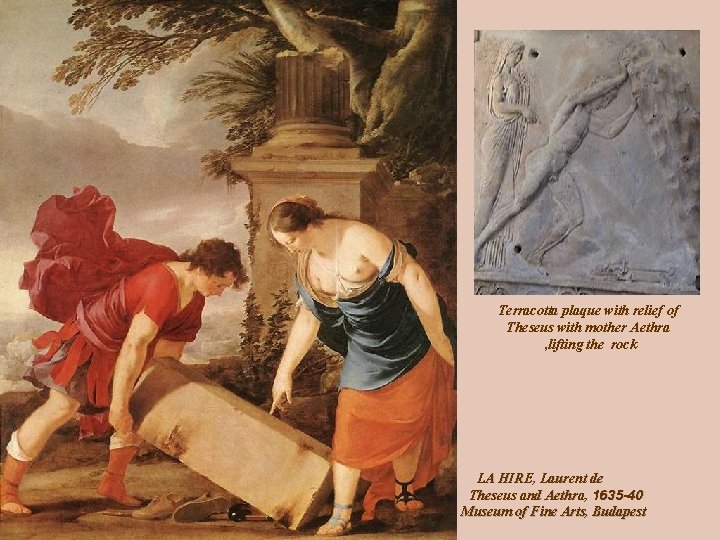
Terracotta plaque with relief of Theseus with mother Aethra , lifting the rock LA HIRE, Laurent de Theseus and Aethra, 1635 -40 Museum of Fine Arts, Budapest
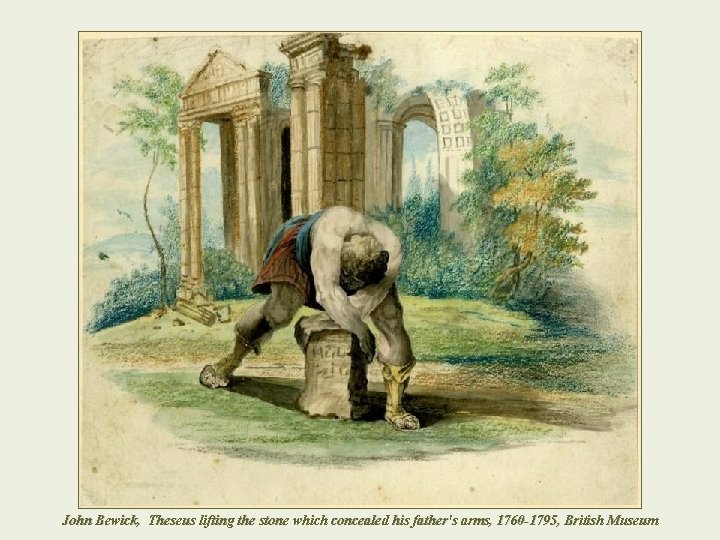
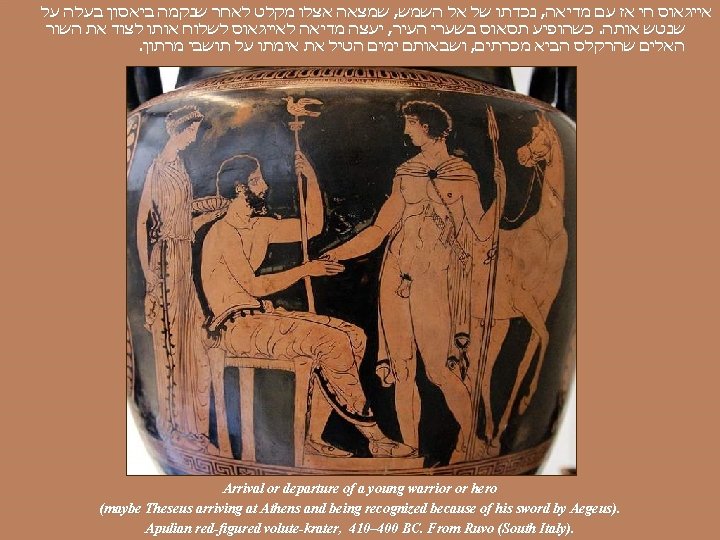
John Bewick, Theseus lifting the stone which concealed his father's arms, 1760 -1795, British Museum
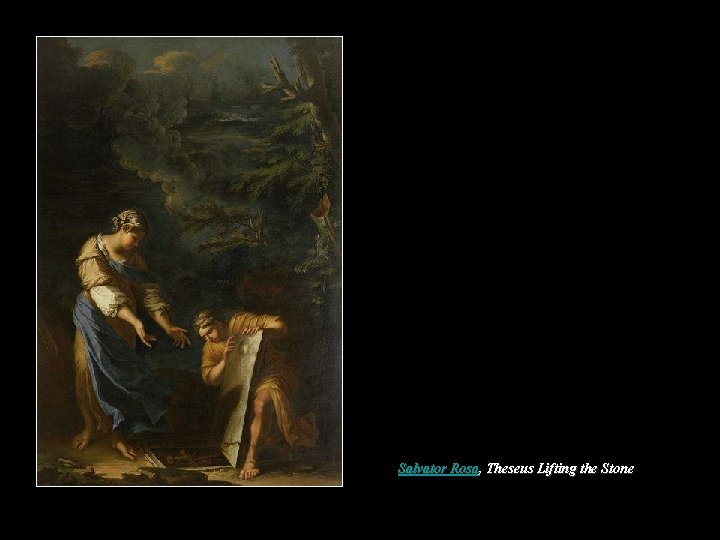
Salvator Rosa, Theseus Lifting the Stone
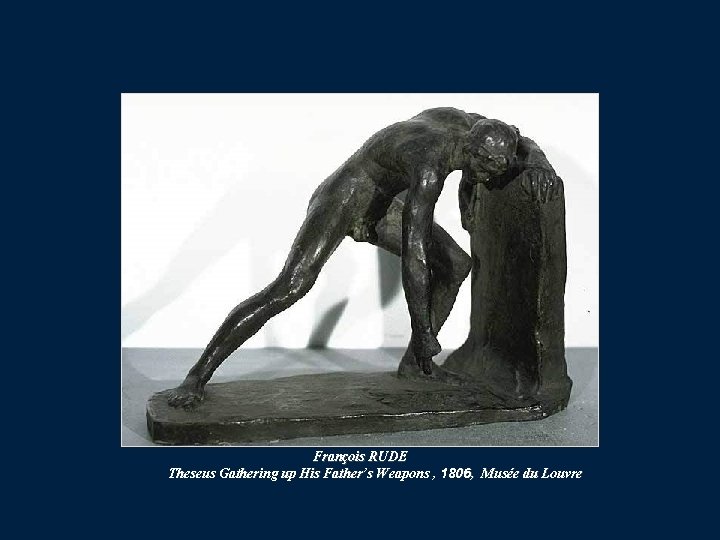
François RUDE Theseus Gathering up His Father’s Weapons , 1806, Musée du Louvre
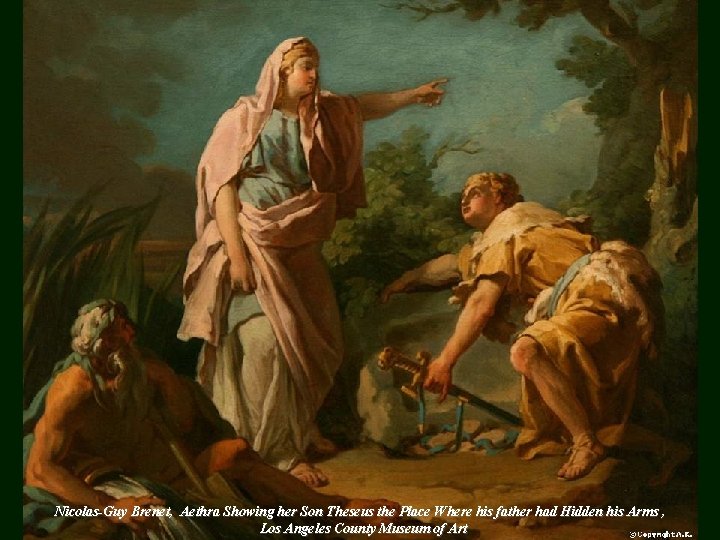
Nicolas-Guy Brenet, Aethra Showing her Son Theseus the Place Where his father had Hidden his Arms , Los Angeles County Museum of Art
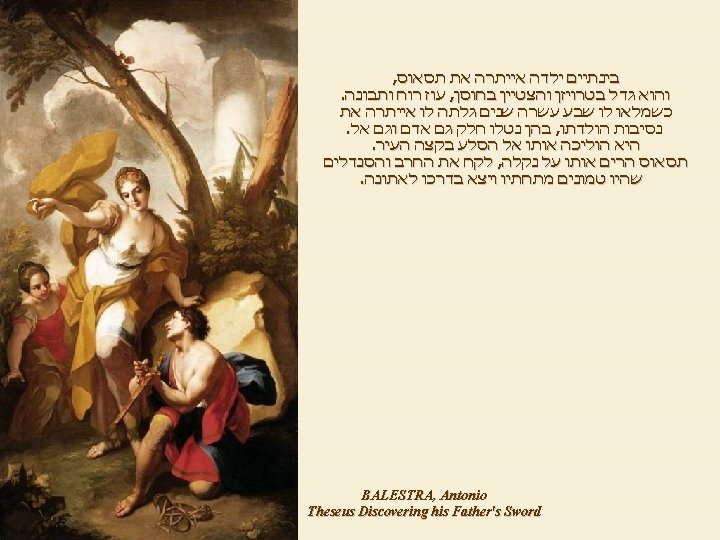
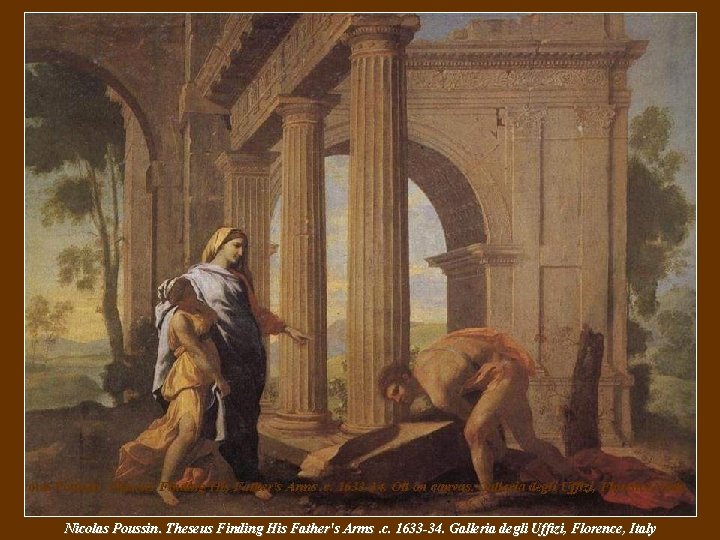
Nicolas Poussin. Theseus Finding His Father's Arms. c. 1633 -34. Galleria degli Uffizi, Florence, Italy
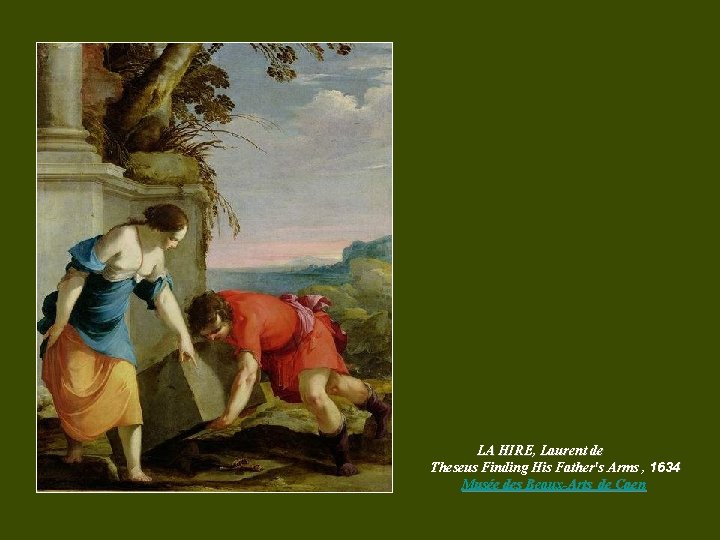
LA HIRE, Laurent de Theseus Finding His Father's Arms , 1634 Musée des Beaux-Arts de Caen
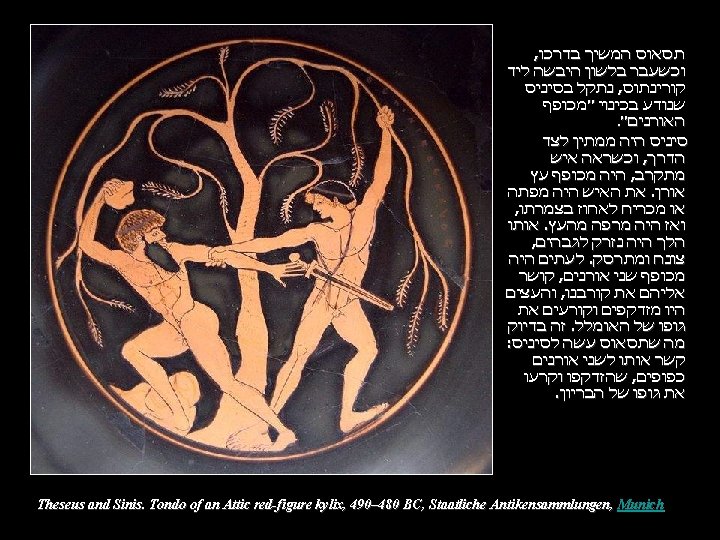
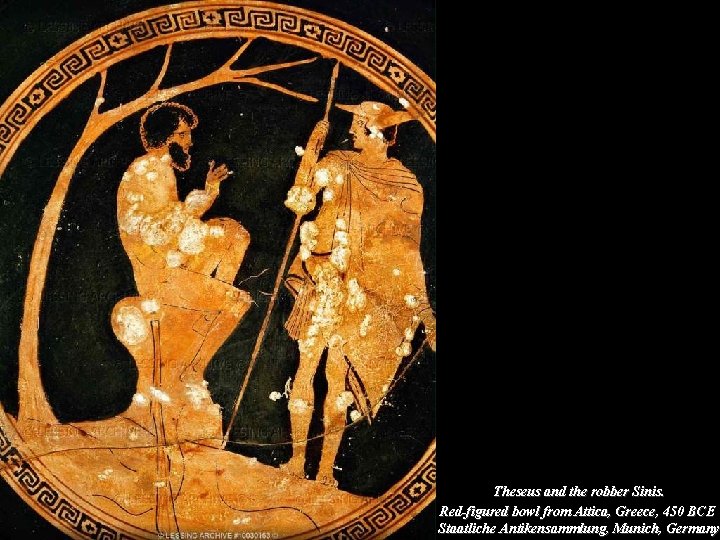
Theseus and the robber Sinis. Red-figured bowl from Attica, Greece, 450 BCE. Staatliche Antikensammlung, Munich, Germany
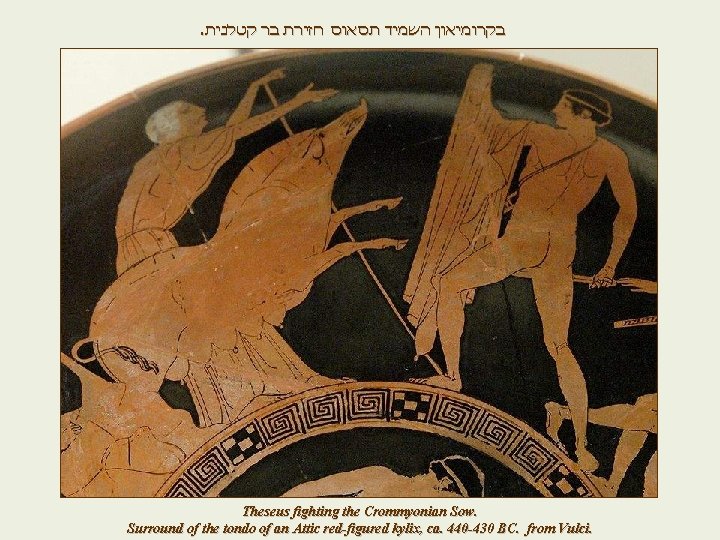
. בקרומיאון השמיד תסאוס חזירת בר קטלנית Theseus fighting the Crommyonian Sow. Surround of the tondo of an Attic red-figured kylix, ca. 440 -430 BC. from Vulci.
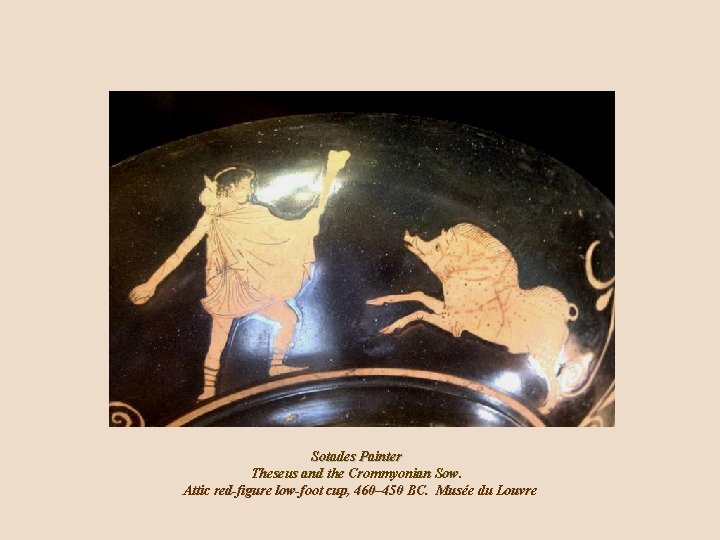
Sotades Painter Theseus and the Crommyonian Sow. Attic red-figure low-foot cup, 460– 450 BC. Musée du Louvre
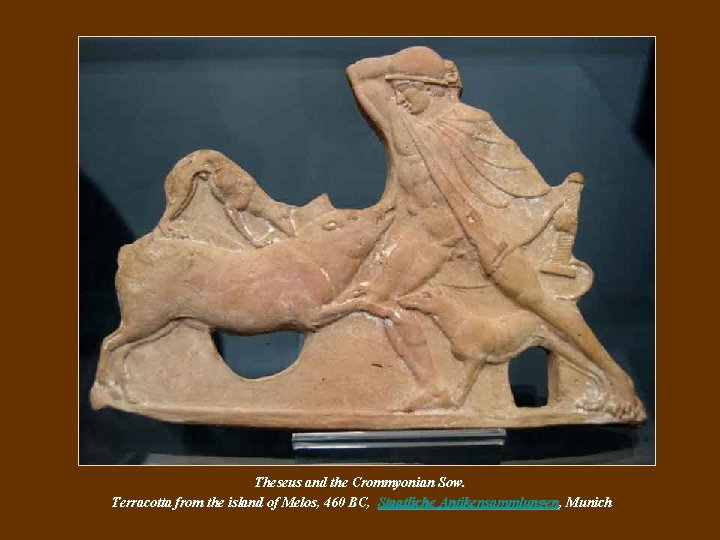
Theseus and the Crommyonian Sow. Terracotta from the island of Melos, 460 BC, Staatliche Antikensammlungen, Munich
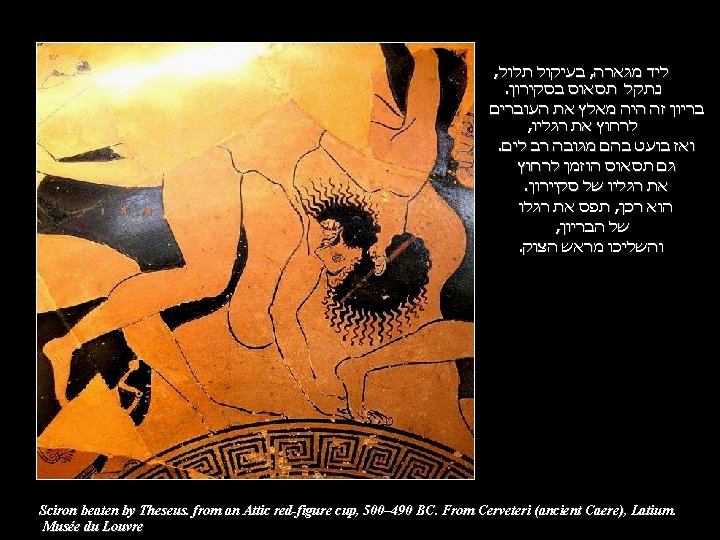
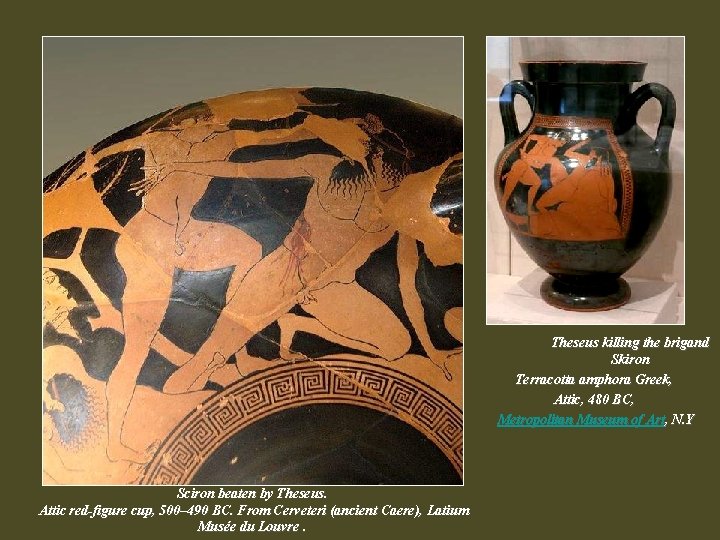
Theseus killing the brigand Skiron Terracotta amphora Greek, Attic, 480 BC, Metropolitan Museum of Art, N. Y Sciron beaten by Theseus. Attic red-figure cup, 500– 490 BC. From Cerveteri (ancient Caere), Latium Musée du Louvre.
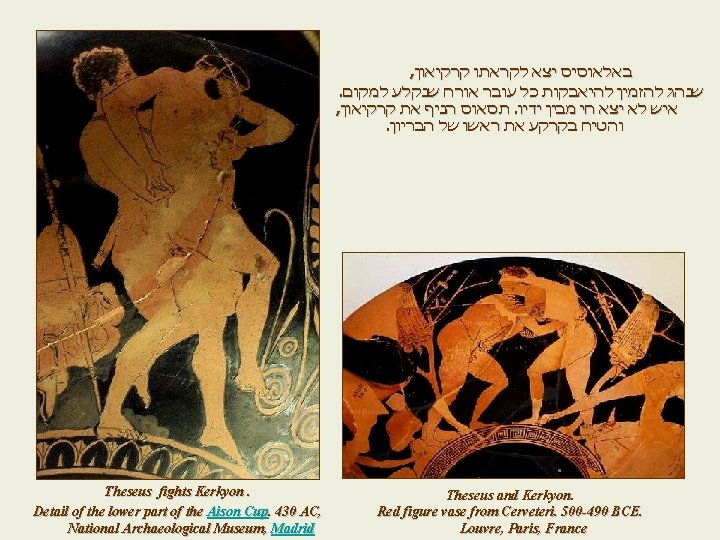
, באלאוסיס יצא לקראתו קרקיאון . שנהג להזמין להיאבקות כל עובר אורח שנקלע למקום , תסאוס הניף את קרקיאון. איש לא יצא חי מבין ידיו . והטיח בקרקע את ראשו של הבריון Theseus fights Kerkyon. Detail of the lower part of the Aison Cup. 430 AC, National Archaeological Museum, Madrid Theseus and Kerkyon. Red figure vase from Cerveteri. 500 -490 BCE. Louvre, Paris, France
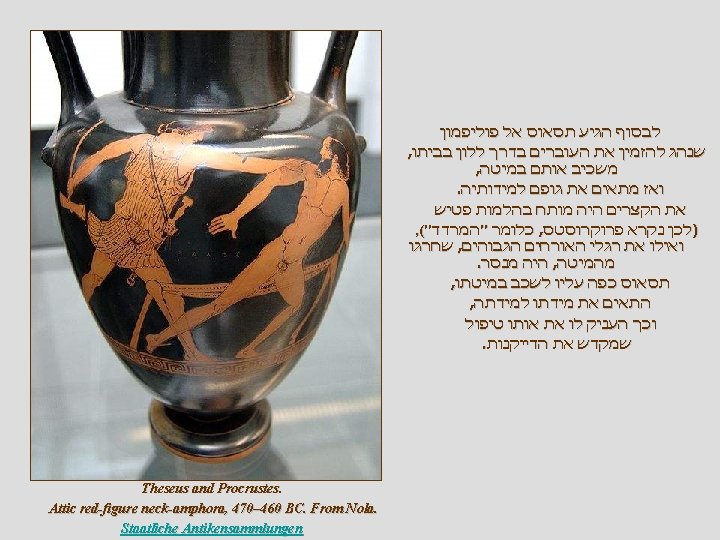
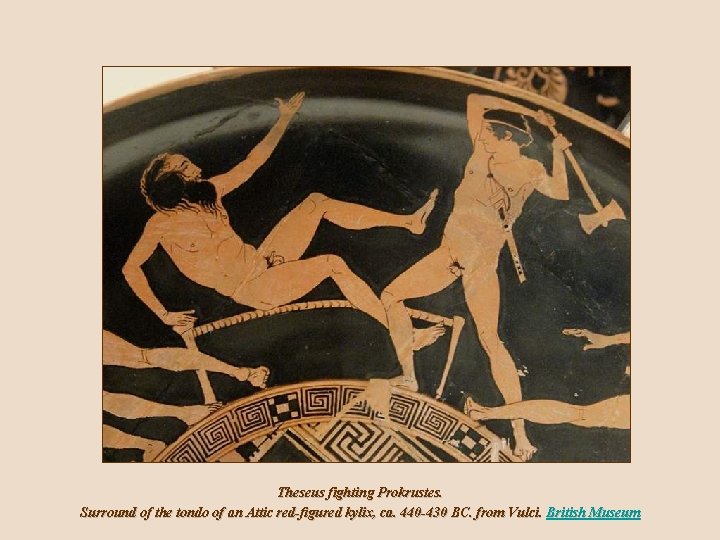
Theseus fighting Prokrustes. Surround of the tondo of an Attic red-figured kylix, ca. 440 -430 BC. from Vulci. British Museum
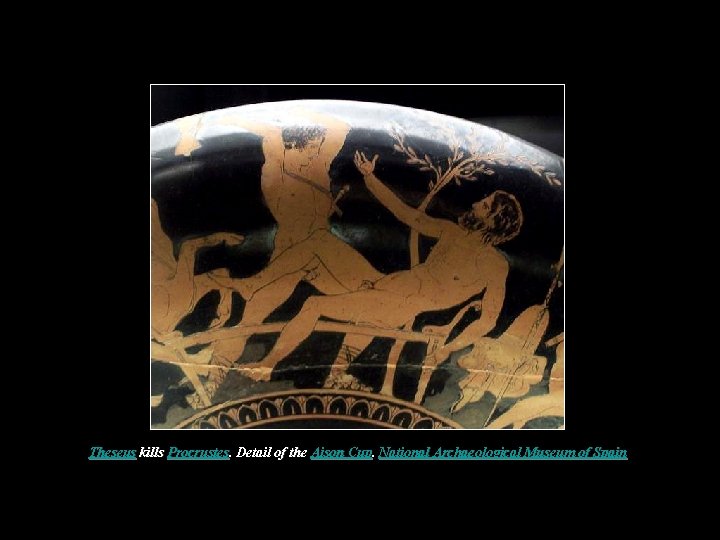
Theseus kills Procrustes. Detail of the Aison Cup. National Archaeological Museum of Spain
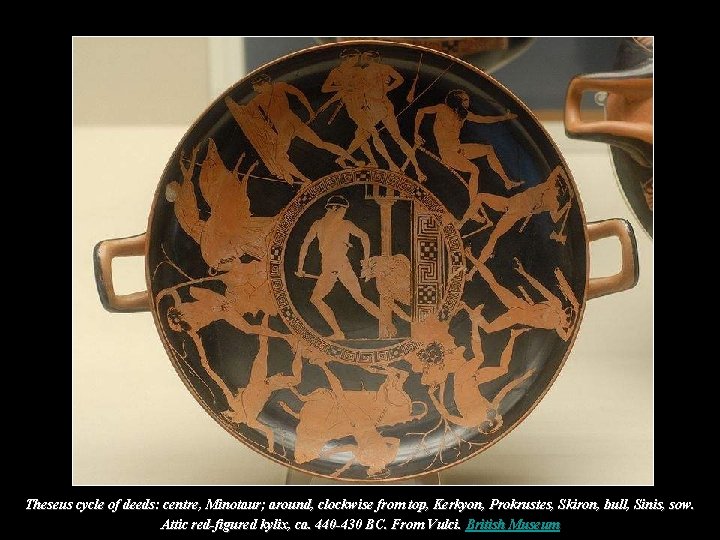
Theseus cycle of deeds: centre, Minotaur; around, clockwise from top, Kerkyon, Prokrustes, Skiron, bull, Sinis, sow. Attic red-figured kylix, ca. 440 -430 BC. From Vulci. British Museum
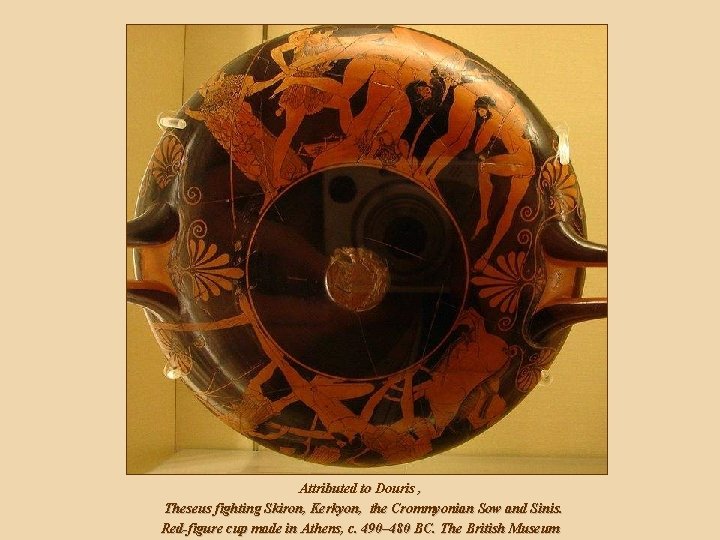
Attributed to Douris , Theseus fighting Skiron, Kerkyon, the Crommyonian Sow and Sinis. Red-figure cup made in Athens, c. 490– 480 BC. The British Museum
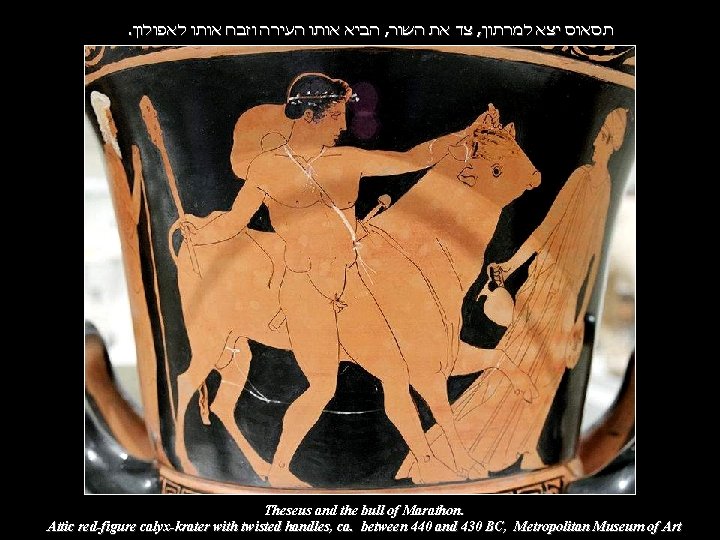
. הביא אותו העירה וזבח אותו לאפולון , צד את השור , תסאוס יצא למרתון Theseus and the bull of Marathon. Attic red-figure calyx-krater with twisted handles, ca. between 440 and 430 BC, Metropolitan Museum of Art
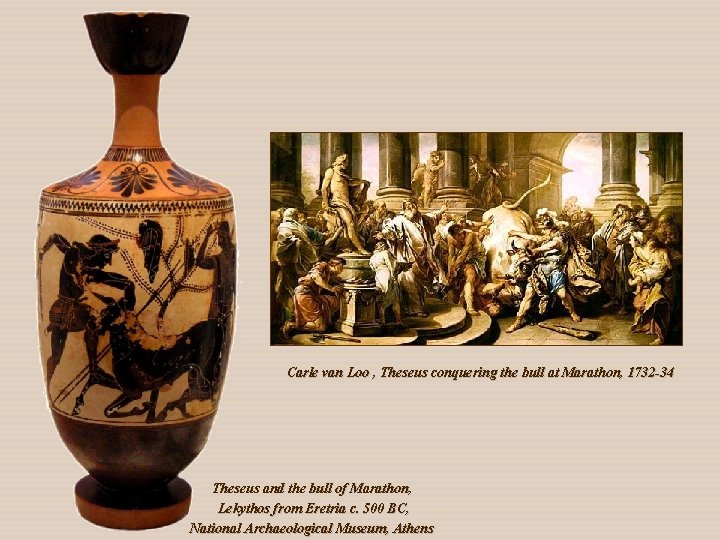
Carle van Loo , Theseus conquering the bull at Marathon, 1732 -34 Theseus and the bull of Marathon, Lekythos from Eretria c. 500 BC, National Archaeological Museum, Athens
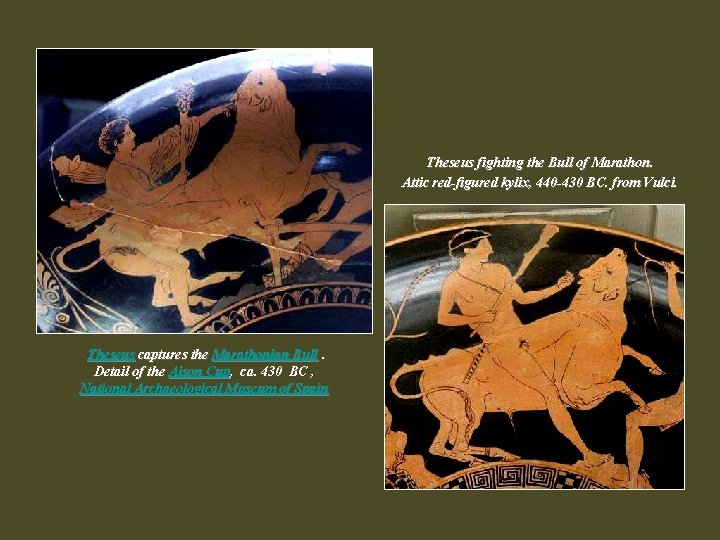
Theseus fighting the Bull of Marathon. Attic red-figured kylix, 440 -430 BC. from Vulci. Theseus captures the Marathonian Bull. Detail of the Aison Cup, ca. 430 BC , National Archaeological Museum of Spain
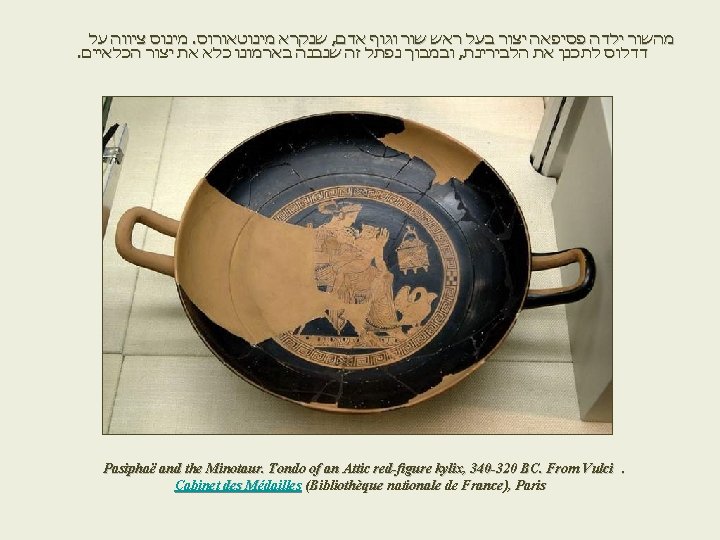
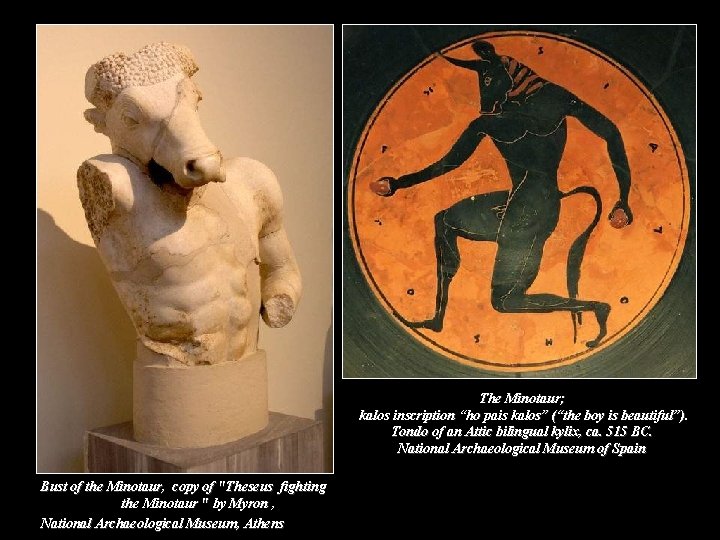
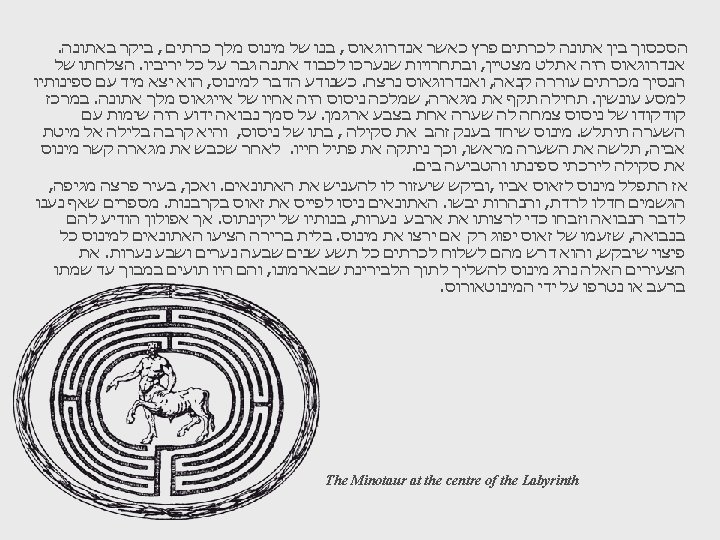
The Minotaur; kalos inscription “ho pais kalos” (“the boy is beautiful”). Tondo of an Attic bilingual kylix, ca. 515 BC. National Archaeological Museum of Spain Bust of the Minotaur, copy of "Theseus fighting the Minotaur " by Myron , National Archaeological Museum, Athens
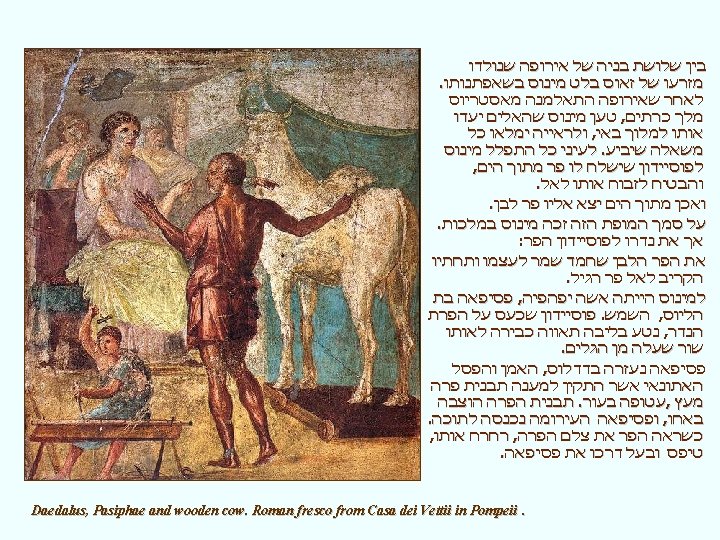
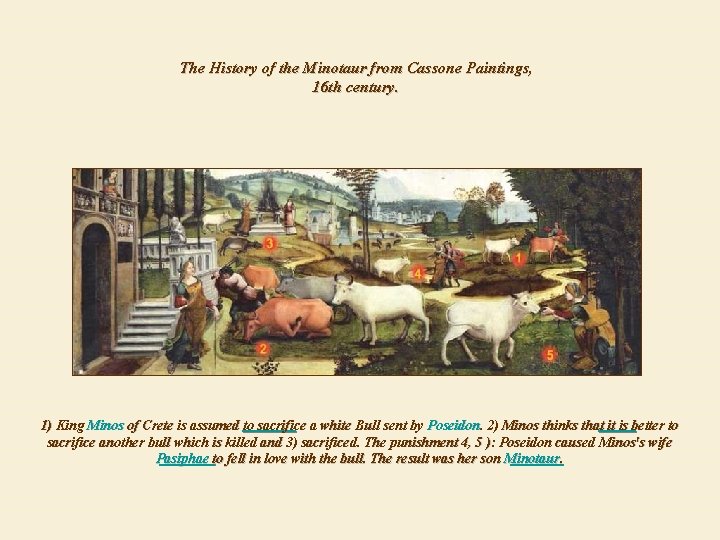
The History of the Minotaur from Cassone Paintings, 16 th century. 1) King Minos of Crete is assumed to sacrifice a white Bull sent by Poseidon. 2) Minos thinks that it is better to sacrifice another bull which is killed and 3) sacrificed. The punishment 4, 5 ): Poseidon caused Minos's wife Pasiphae to fell in love with the bull. The result was her son Minotaur.
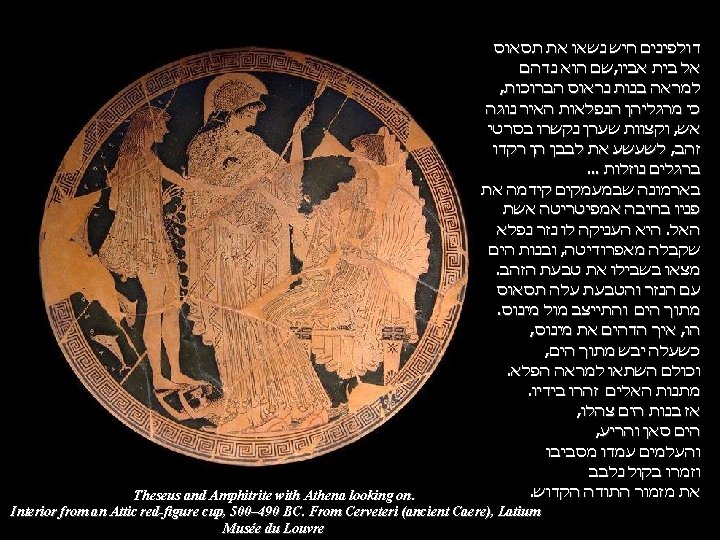
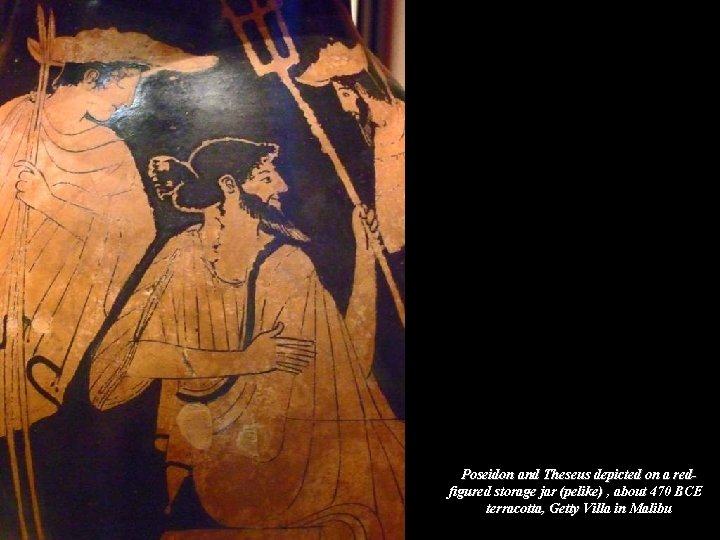
Poseidon and Theseus depicted on a redfigured storage jar (pelike) , about 470 BCE terracotta, Getty Villa in Malibu
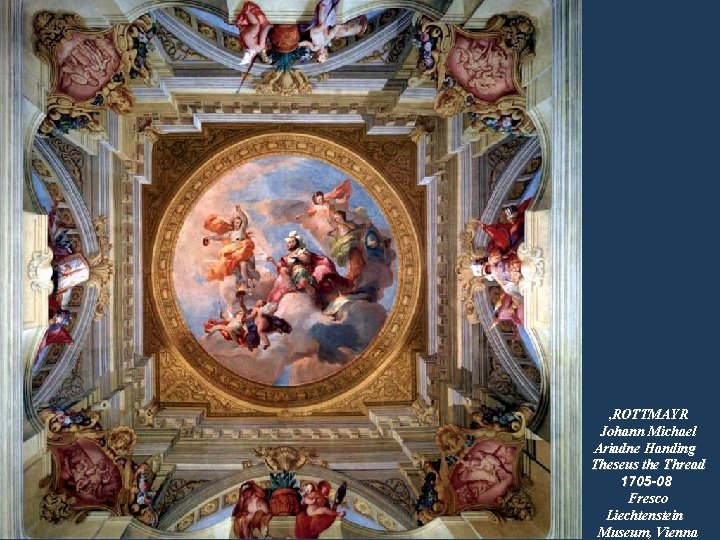
, ROTTMAYR Johann Michael Ariadne Handing Theseus the Thread 1705 -08 Fresco Liechtenstein Museum, Vienna
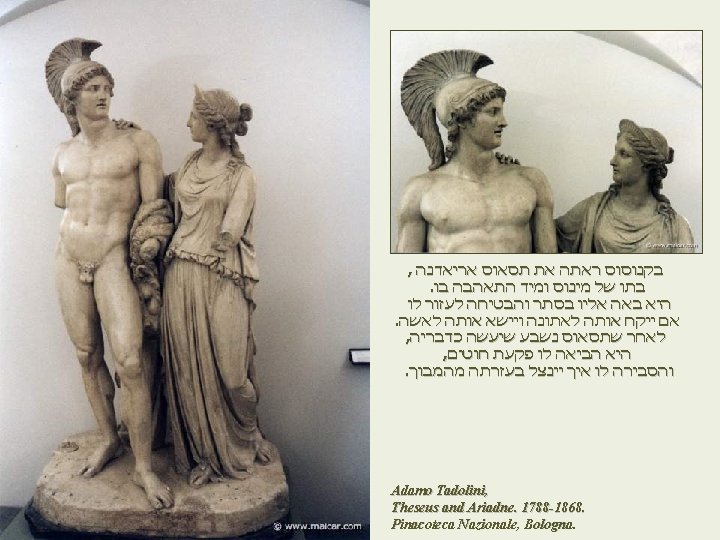
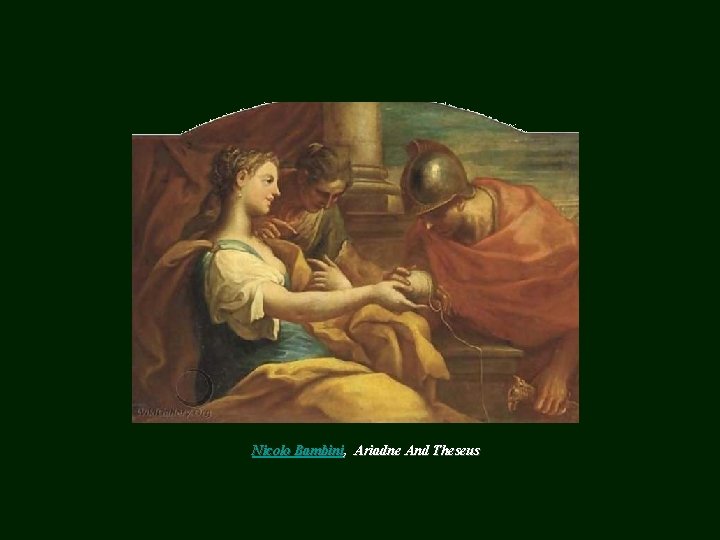
Nicolo Bambini, Ariadne And Theseus
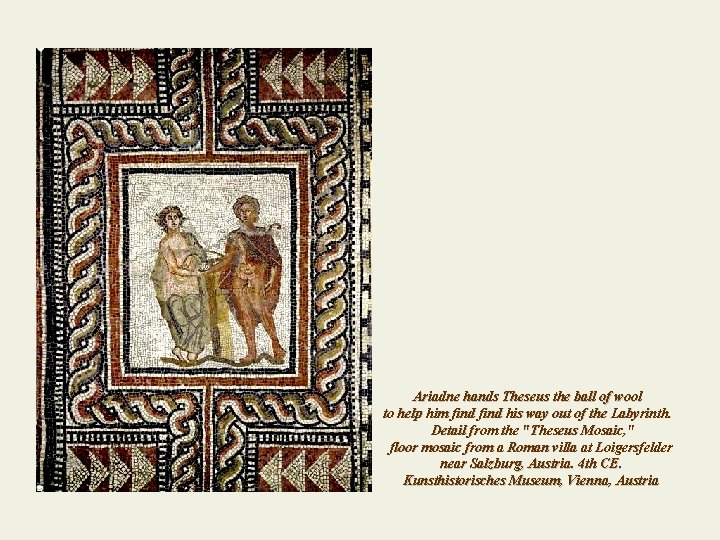
Ariadne hands Theseus the ball of wool to help him find his way out of the Labyrinth. Detail from the "Theseus Mosaic, " floor mosaic from a Roman villa at Loigersfelder near Salzburg, Austria. 4 th CE. Kunsthistorisches Museum, Vienna, Austria
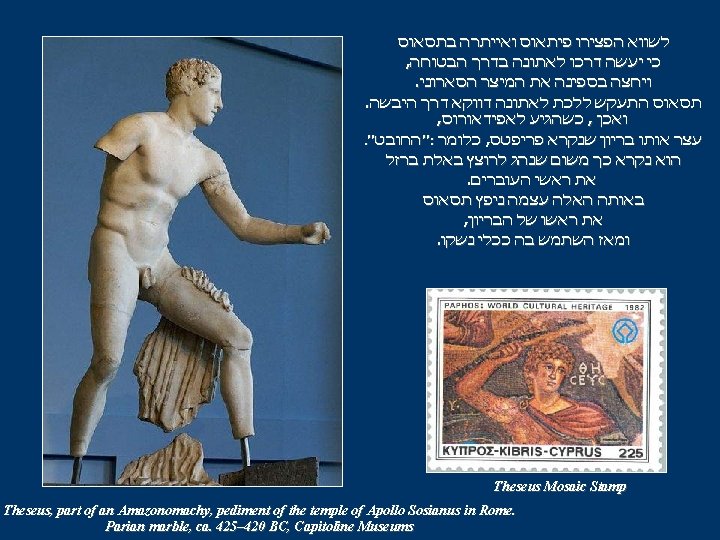
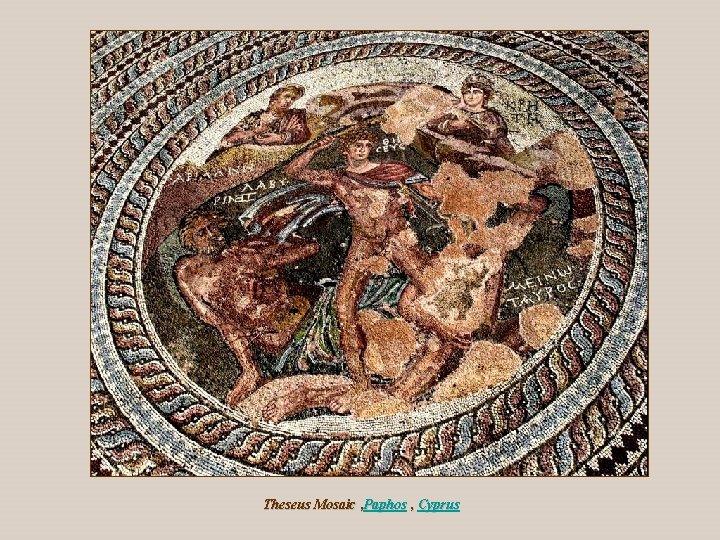
Theseus Mosaic , Paphos , Cyprus
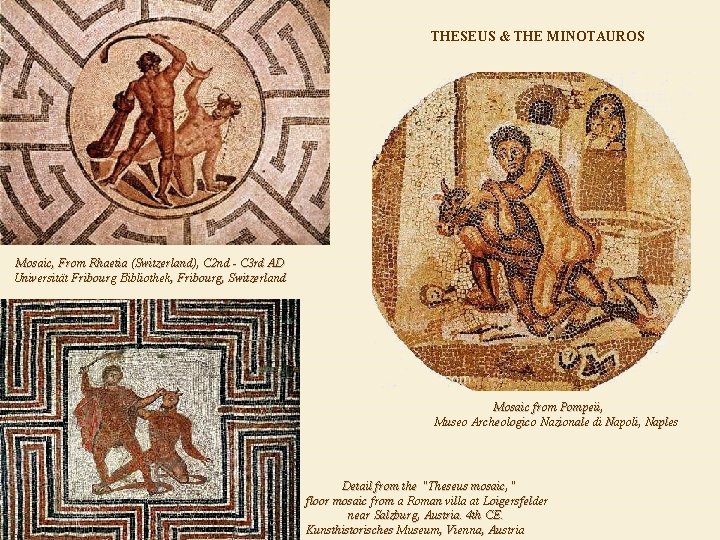
THESEUS & THE MINOTAUROS Mosaic, From Rhaetia (Switzerland), C 2 nd - C 3 rd AD Universität Fribourg Bibliothek, Fribourg, Switzerland Mosaic from Pompeii, Museo Archeologico Nazionale di Napoli, Naples Detail from the "Theseus mosaic, " floor mosaic from a Roman villa at Loigersfelder near Salzburg, Austria. 4 th CE. Kunsthistorisches Museum, Vienna, Austria
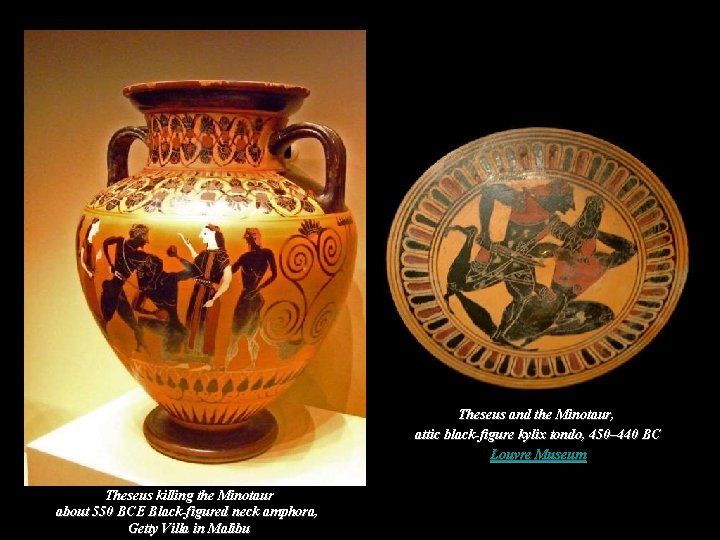
Theseus and the Minotaur, attic black-figure kylix tondo, 450– 440 BC Louvre Museum Theseus killing the Minotaur about 550 BCE Black-figured neck amphora, Getty Villa in Malibu
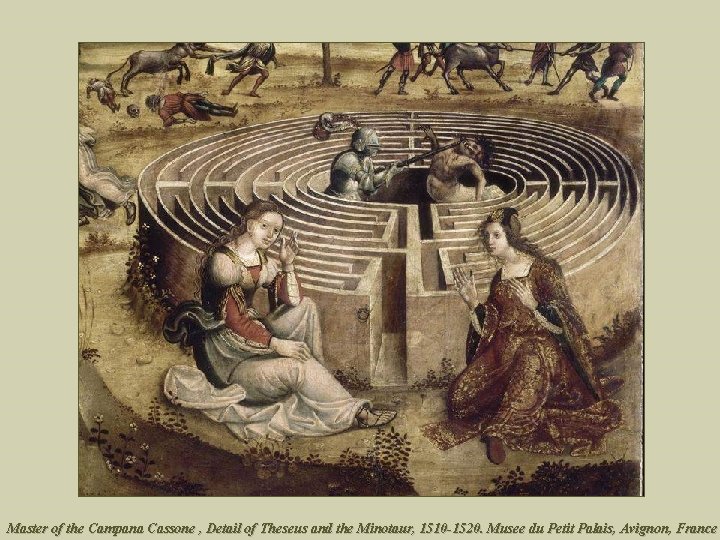
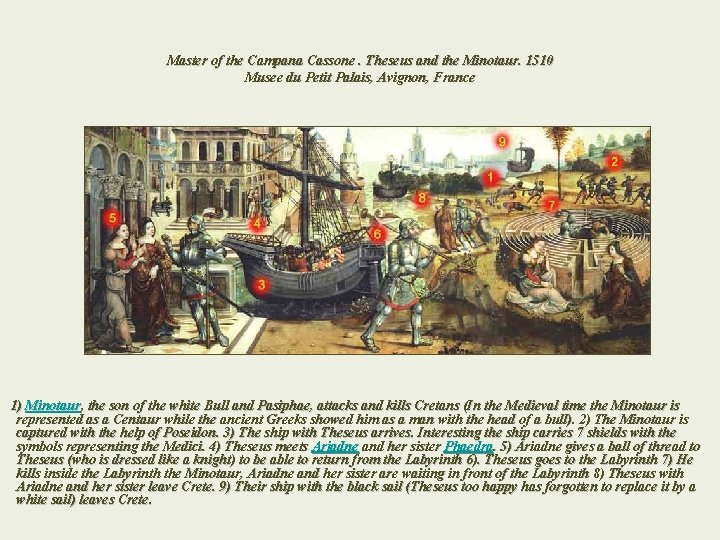
Master of the Campana Cassone , Detail of Theseus and the Minotaur, 1510 -1520. Musee du Petit Palais, Avignon, France
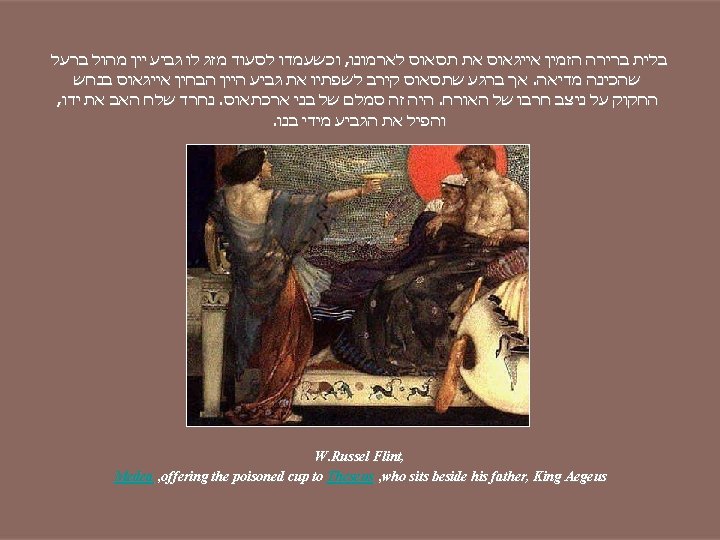
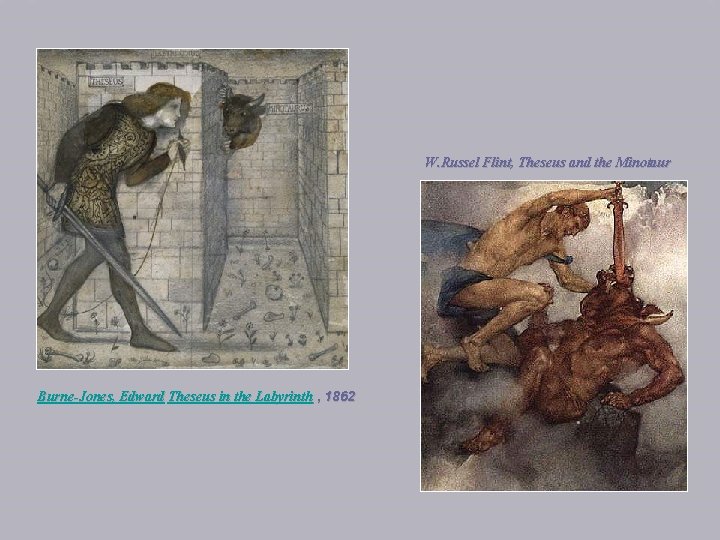
W. Russel Flint, Theseus and the Minotaur Burne-Jones, Edward Theseus in the Labyrinth , 1862
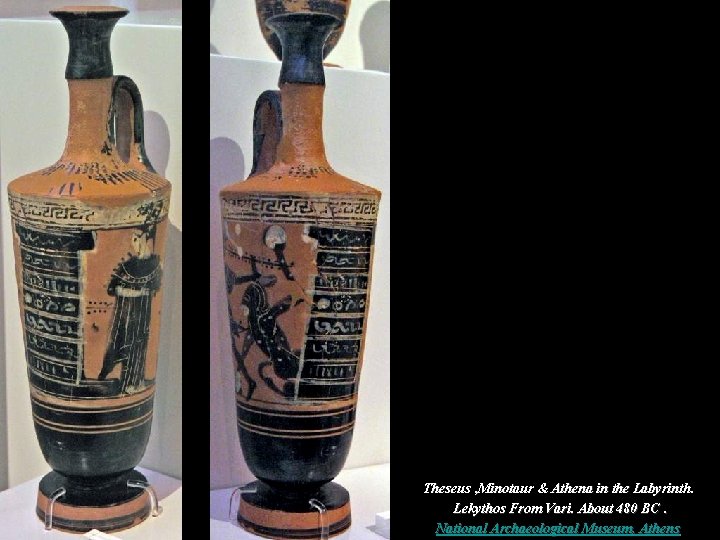
Theseus , Minotaur & Athena in the Labyrinth. Lekythos From Vari. About 480 BC. National Archaeological Museum, Athens
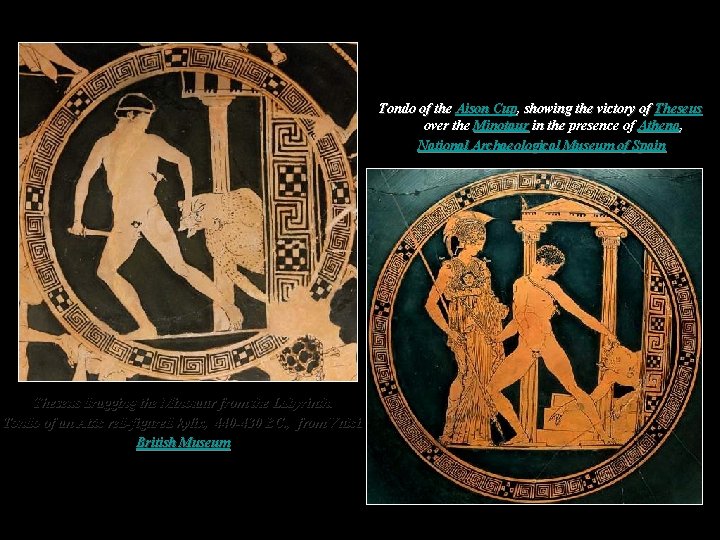
Tondo of the Aison Cup, showing the victory of Theseus over the Minotaur in the presence of Athena, National Archaeological Museum of Spain Theseus dragging the Minotaur from the Labyrinth. Tondo of an Attic red-figured kylix, 440 -430 BC. , from Vulci. British Museum
CANOVA, Antonio Theseus and the Centaur 1804 -19 Kunsthistorisches Museum, Vienna
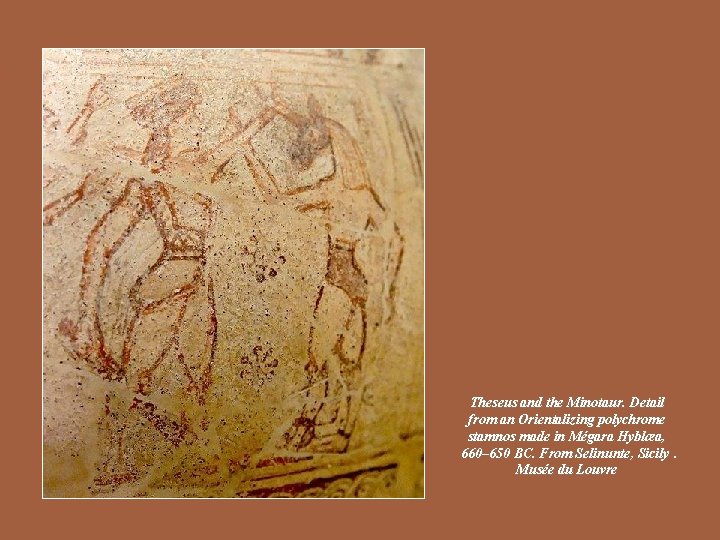
Theseus and the Minotaur. Detail from an Orientalizing polychrome stamnos made in Mégara Hyblæa, 660– 650 BC. From Selinunte, Sicily. Musée du Louvre
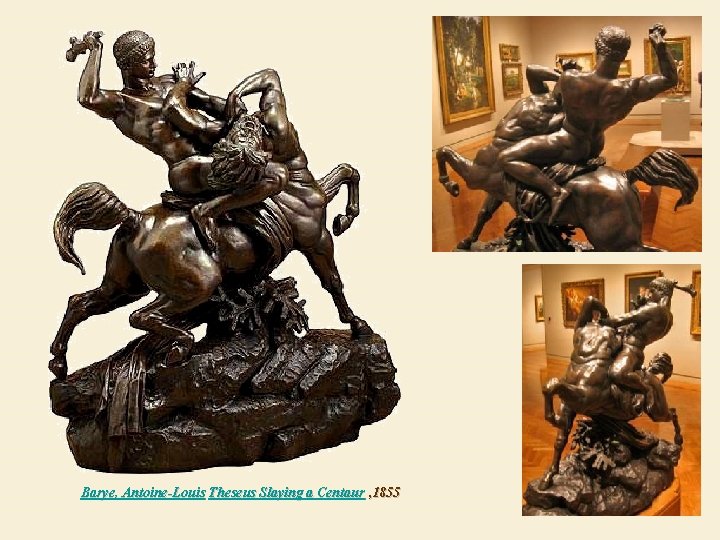
Barye, Antoine-Louis Theseus Slaying a Centaur , 1855
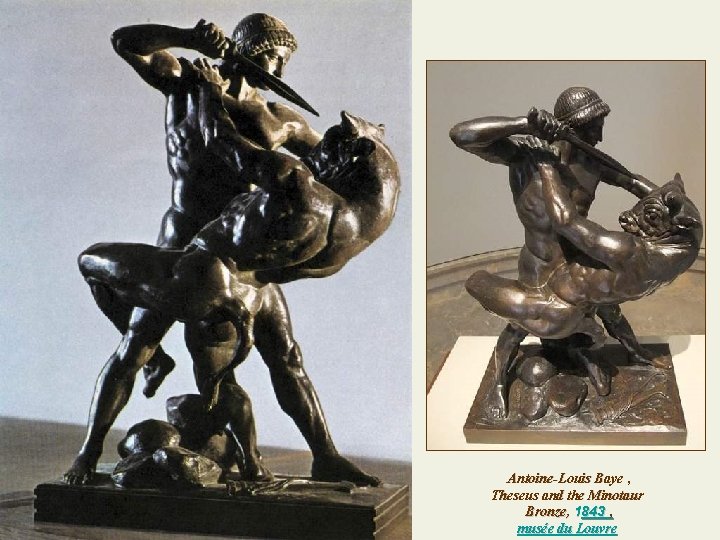
Antoine-Louis Baye , Theseus and the Minotaur Bronze, 1843 , musée du Louvre
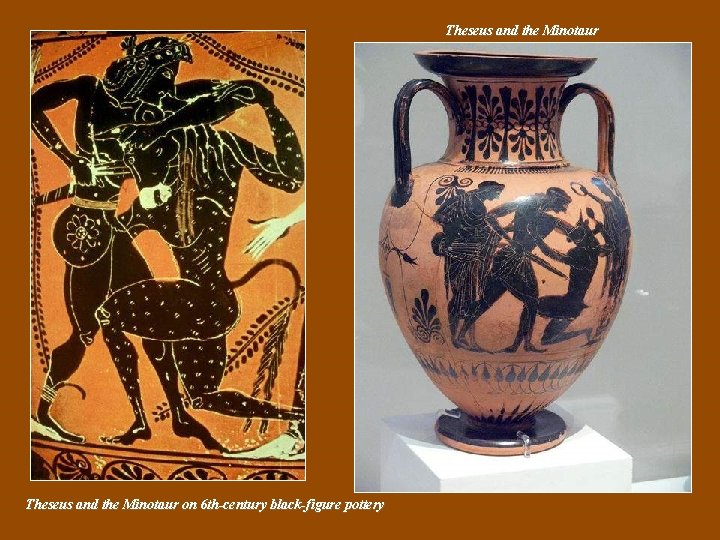
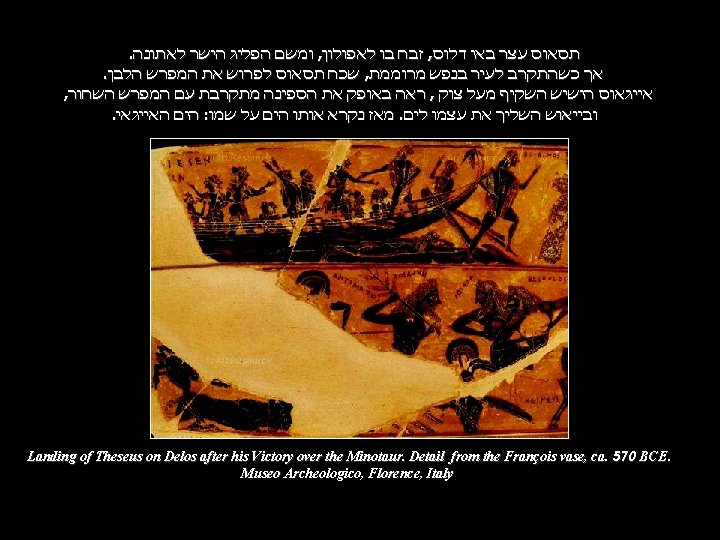
Theseus and the Minotaur on 6 th-century black-figure pottery
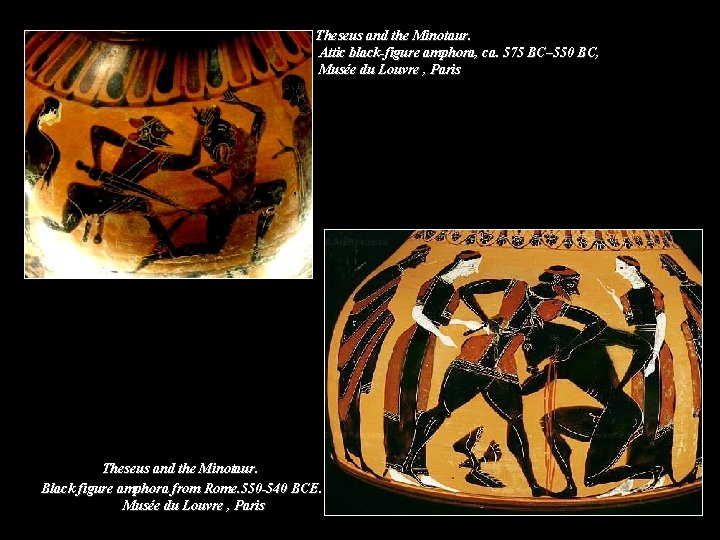
Theseus and the Minotaur. Attic black-figure amphora, ca. 575 BC– 550 BC, Musée du Louvre , Paris Theseus and the Minotaur. Black figure amphora from Rome. 550 -540 BCE. Musée du Louvre , Paris
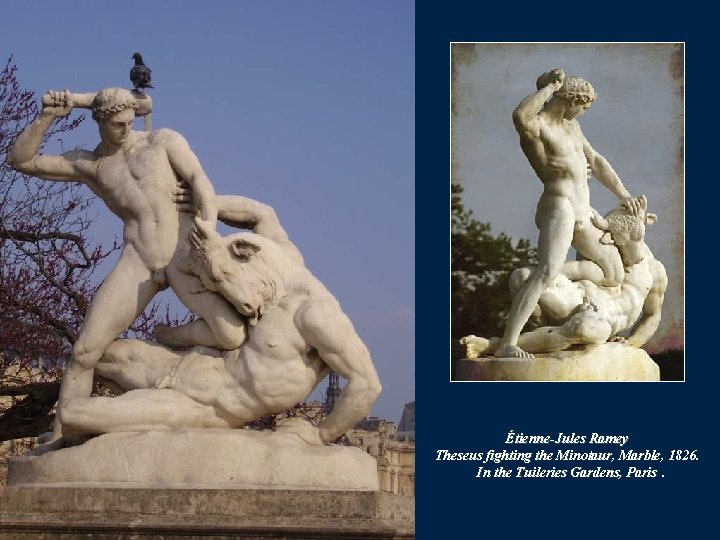
Étienne-Jules Ramey Theseus fighting the Minotaur, Marble, 1826. In the Tuileries Gardens, Paris.
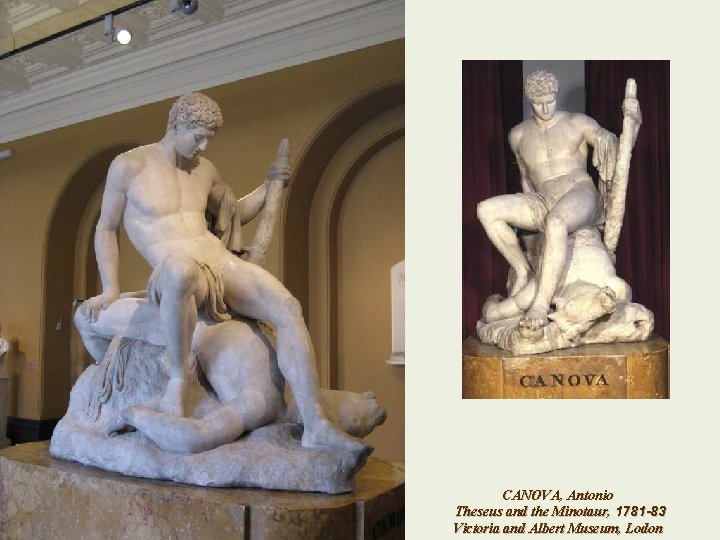
CANOVA, Antonio Theseus and the Minotaur, 1781 -83 Victoria and Albert Museum, Lodon
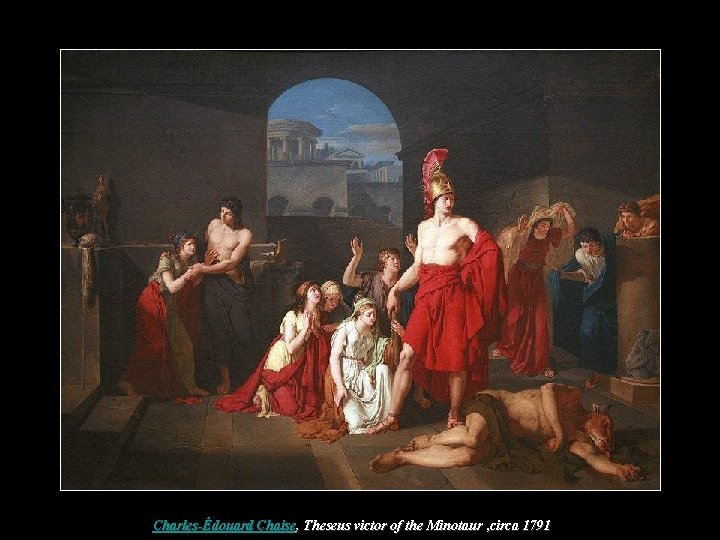
Charles-Édouard Chaise, Theseus victor of the Minotaur , circa 1791
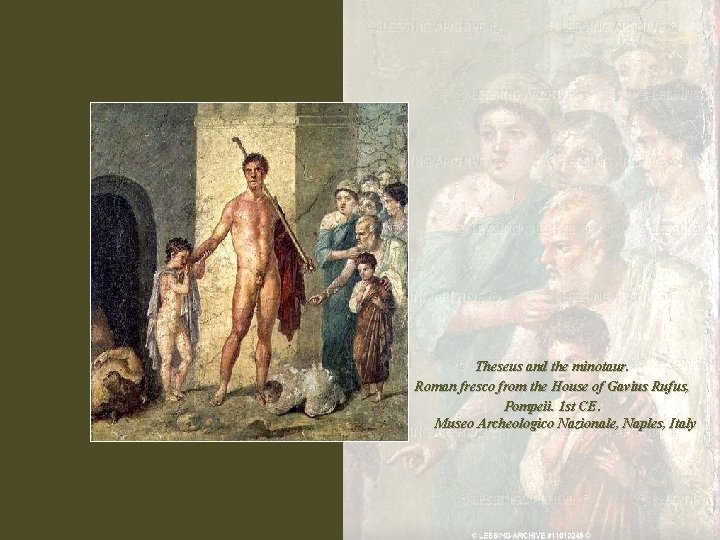
Theseus and the minotaur. Roman fresco from the House of Gavius Rufus, Pompeii. 1 st CE. Museo Archeologico Nazionale, Naples, Italy
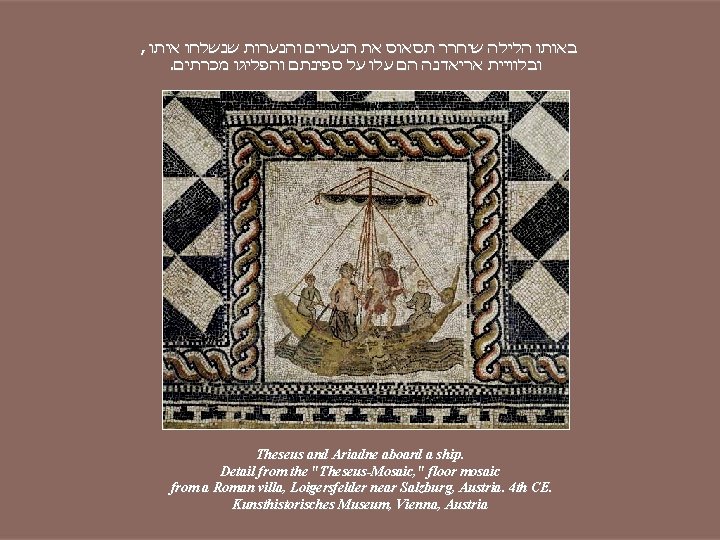
, באותו הלילה שיחרר תסאוס את הנערים והנערות שנשלחו איתו . ובלוויית אריאדנה הם עלו על ספינתם והפליגו מכרתים Theseus and Ariadne aboard a ship. Detail from the "Theseus-Mosaic, " floor mosaic from a Roman villa, Loigersfelder near Salzburg, Austria. 4 th CE. Kunsthistorisches Museum, Vienna, Austria
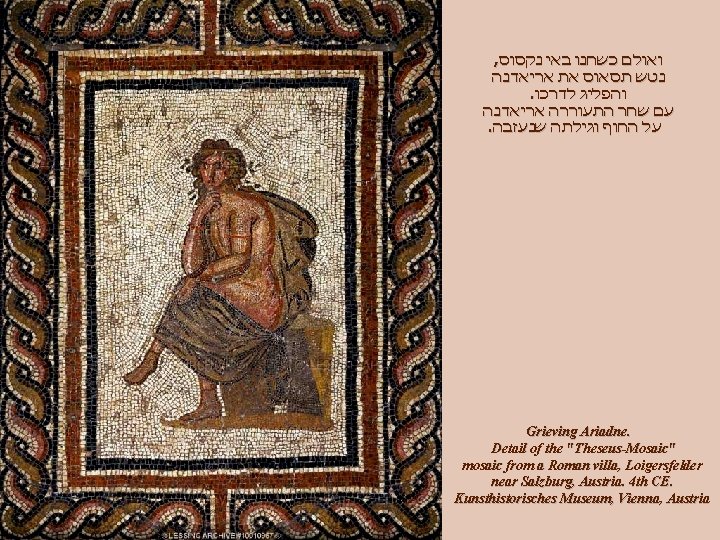
, ואולם כשחנו באי נקסוס נטש תסאוס את אריאדנה . והפליג לדרכו עם שחר התעוררה אריאדנה . על החוף וגילתה שנעזבה Grieving Ariadne. Detail of the "Theseus-Mosaic" mosaic from a Roman villa, Loigersfelder near Salzburg, Austria. 4 th CE. Kunsthistorisches Museum, Vienna, Austria
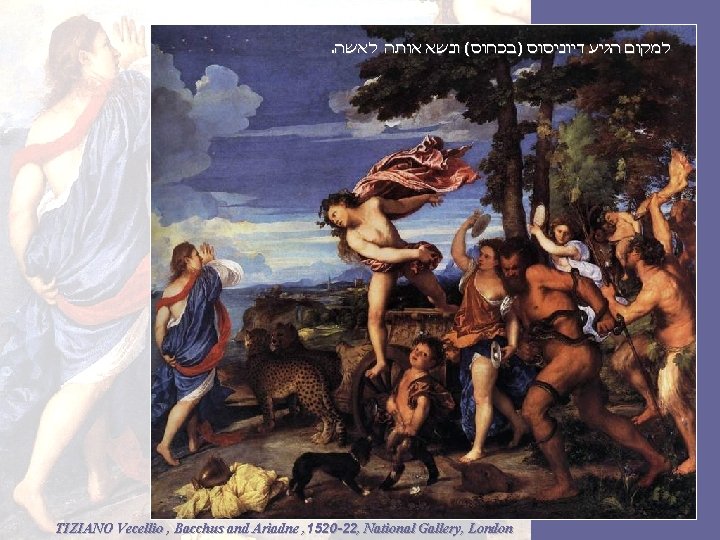
. למקום הגיע דיוניסוס )בכחוס( ונשא אותה לאשה TIZIANO Vecellio , Bacchus and Ariadne , 1520 -22, National Gallery, London
Master of the Campana Cassone. Theseus and the Minotaur. 1510 Musee du Petit Palais, Avignon, France 1) Minotaur, the son of the white Bull and Pasiphae, attacks and kills Cretans (In the Medieval time the Minotaur is represented as a Centaur while the ancient Greeks showed him as a man with the head of a bull). 2) The Minotaur is captured with the help of Poseidon. 3) The ship with Theseus arrives. Interesting the ship carries 7 shields with the symbols representing the Medici. 4) Theseus meets Ariadne and her sister Phaedra. 5) Ariadne gives a ball of thread to Theseus (who is dressed like a knight) to be able to return from the Labyrinth 6). Theseus goes to the Labyrinth 7) He kills inside the Labyrinth the Minotaur, Ariadne and her sister are waiting in front of the Labyrinth 8) Theseus with Ariadne and her sister leave Crete. 9) Their ship with the black sail (Theseus too happy has forgotten to replace it by a white sail) leaves Crete.
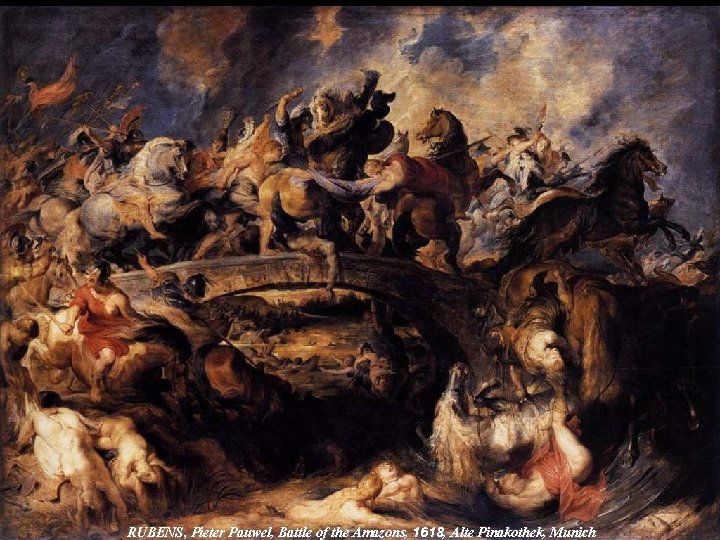
RUBENS, Pieter Pauwel, Battle of the Amazons, 1618, Alte Pinakothek, Munich
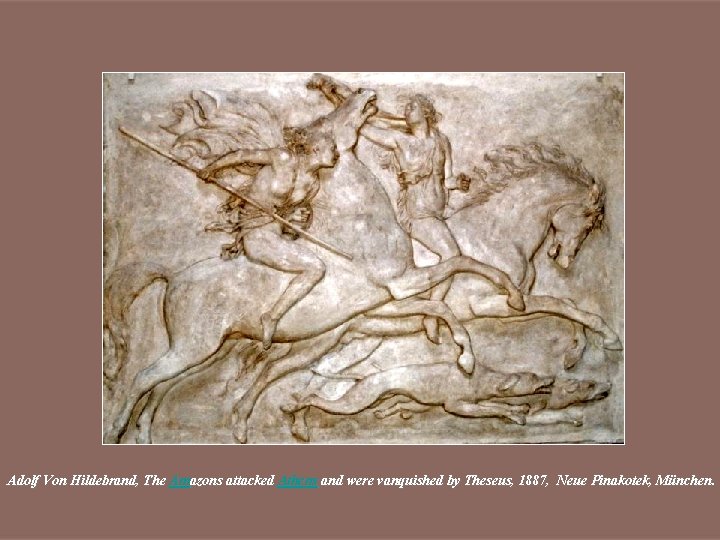
Adolf Von Hildebrand, The Amazons attacked Athens and were vanquished by Theseus, 1887, Neue Pinakotek, München.
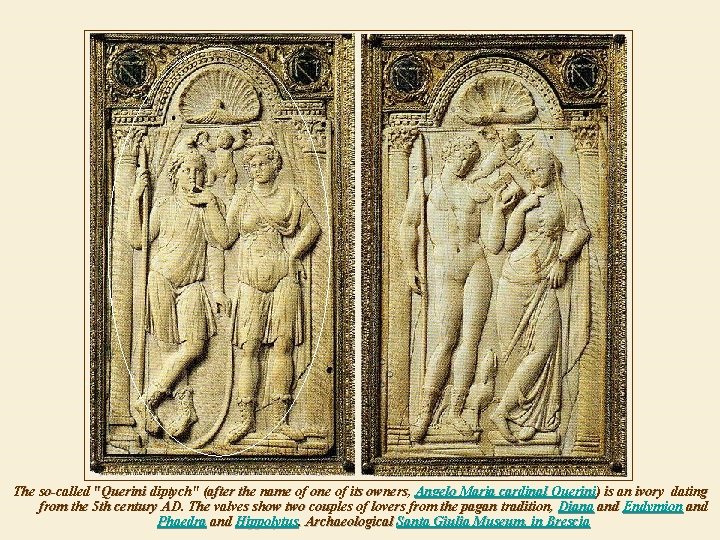
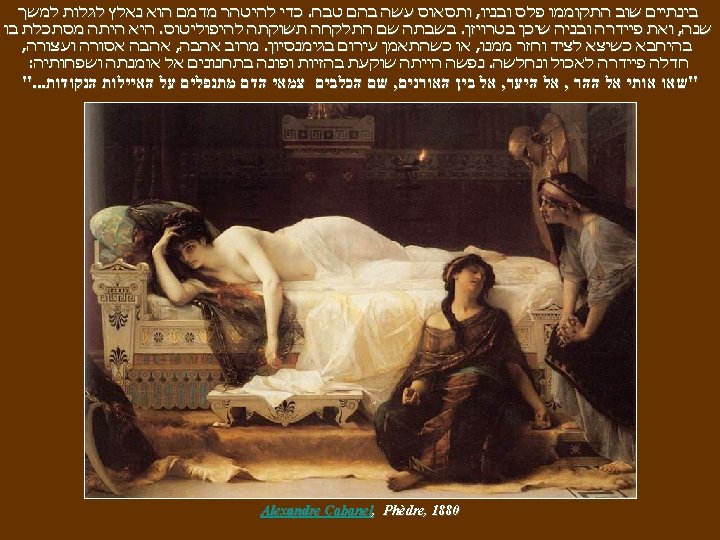
The so-called "Querini diptych" (after the name of one of its owners, Angelo Maria cardinal Querini) is an ivory dating from the 5 th century AD. The valves show two couples of lovers from the pagan tradition, Diana and Endymion and Phaedra and Hippolytus. Archaeological Santa Giulia Museum, in Brescia
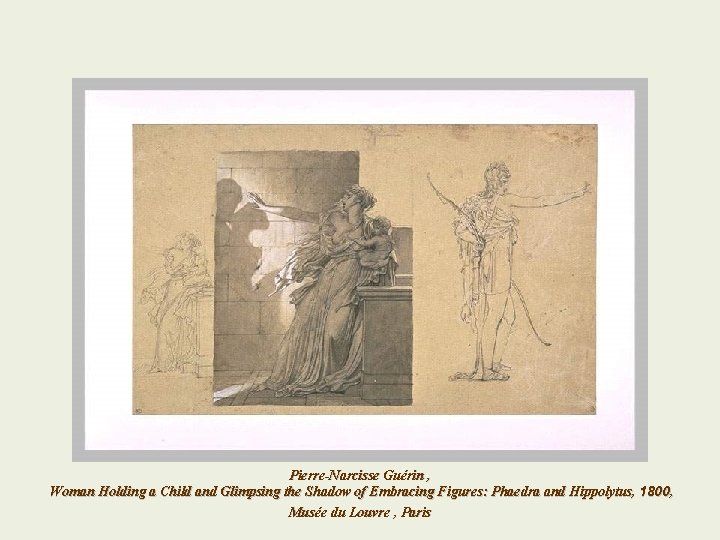
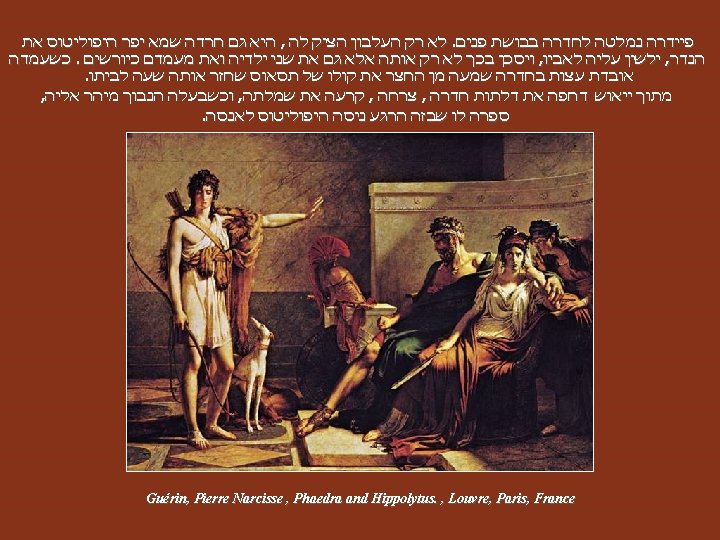
Pierre-Narcisse Guérin , Woman Holding a Child and Glimpsing the Shadow of Embracing Figures: Phaedra and Hippolytus, 1800, Musée du Louvre , Paris
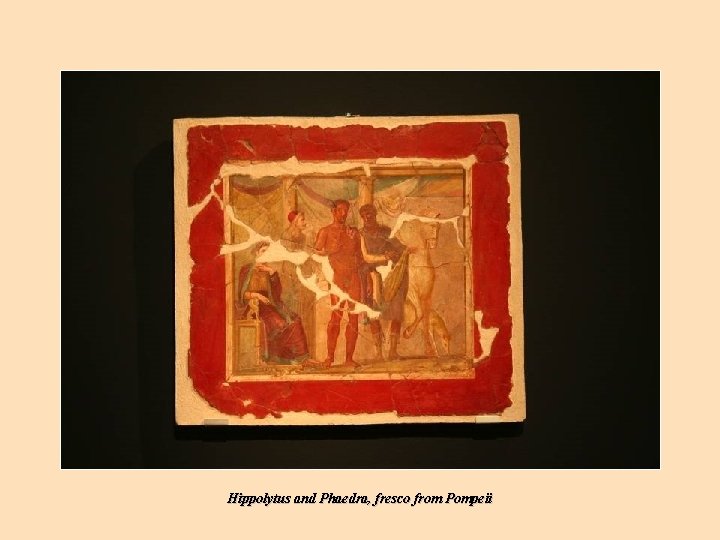
Hippolytus and Phaedra, fresco from Pompeii
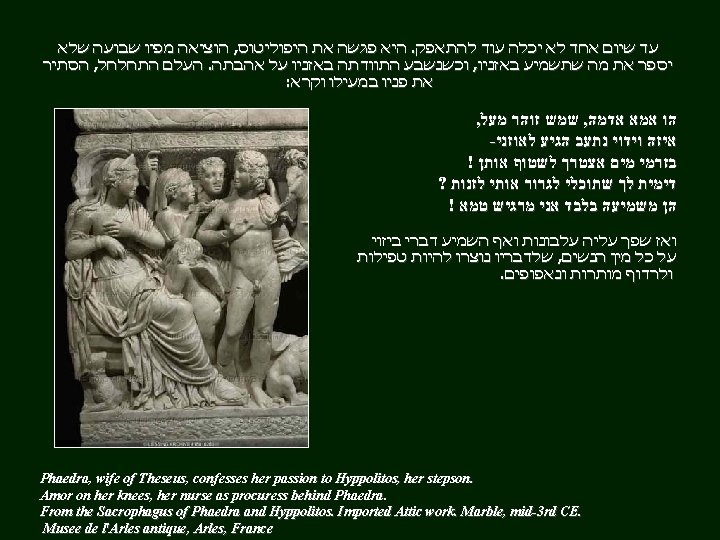
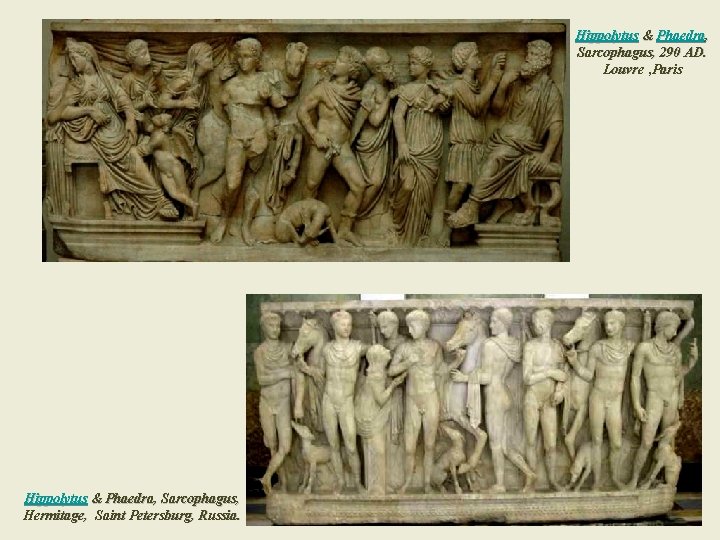
Hippolytus & Phaedra, Sarcophagus, 290 AD. Louvre , Paris Hippolytus & Phaedra, Sarcophagus, Hermitage, Saint Petersburg, Russia.
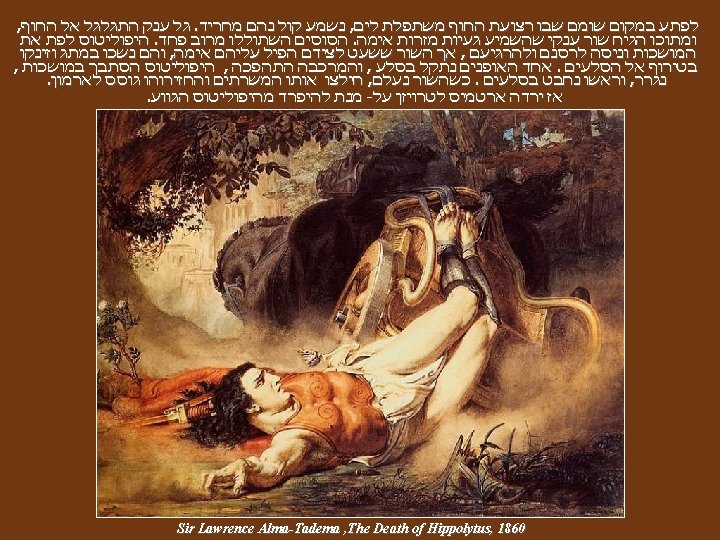
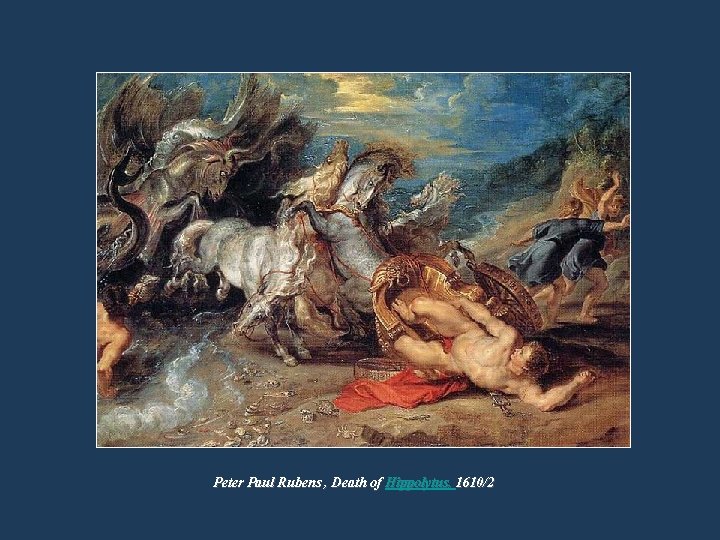
Peter Paul Rubens , Death of Hippolytus, 1610/2
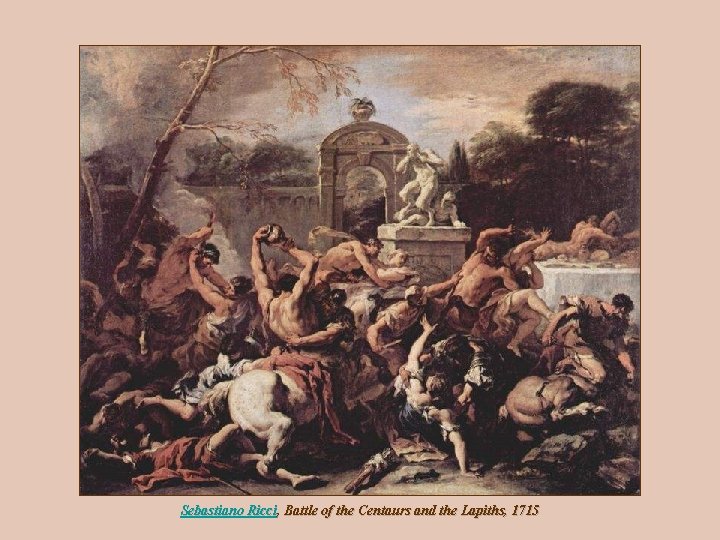
Sebastiano Ricci, Battle of the Centaurs and the Lapiths, 1715
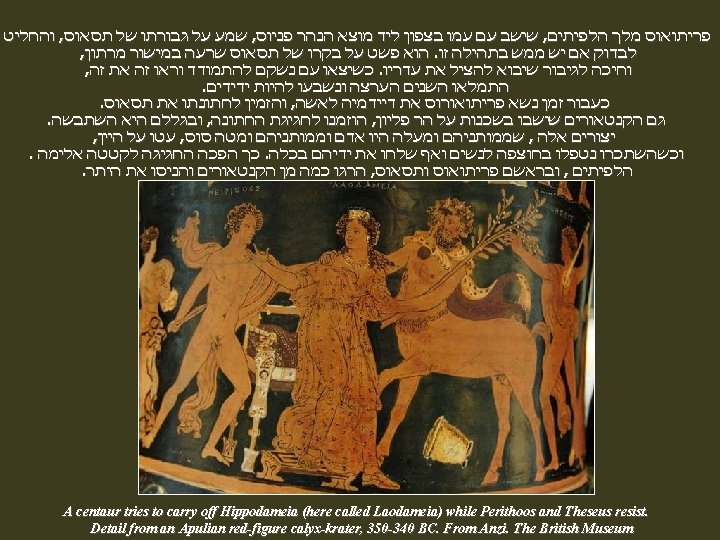
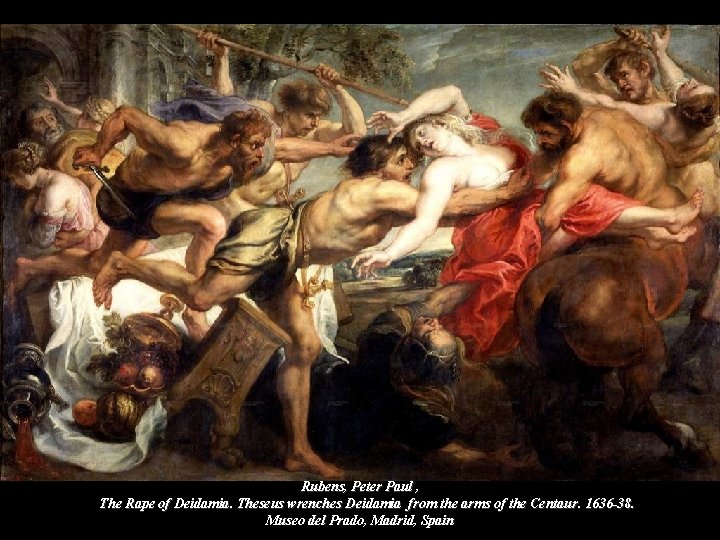
Rubens, Peter Paul , The Rape of Deidamia. Theseus wrenches Deidamia from the arms of the Centaur. 1636 -38. Museo del Prado, Madrid, Spain
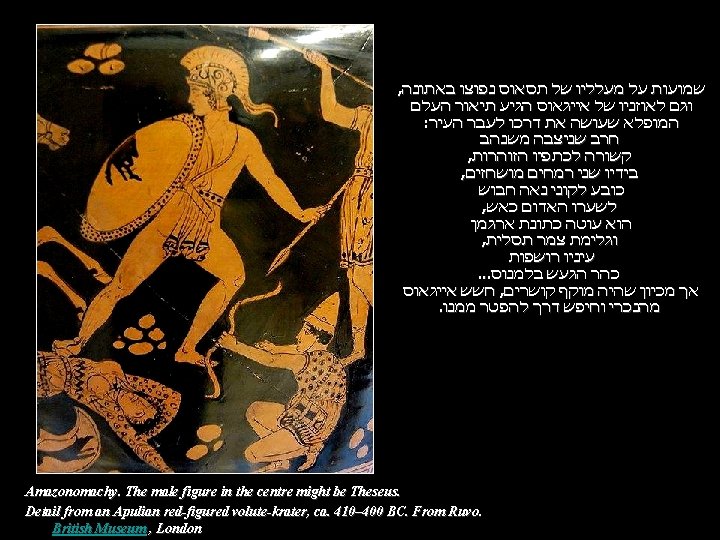
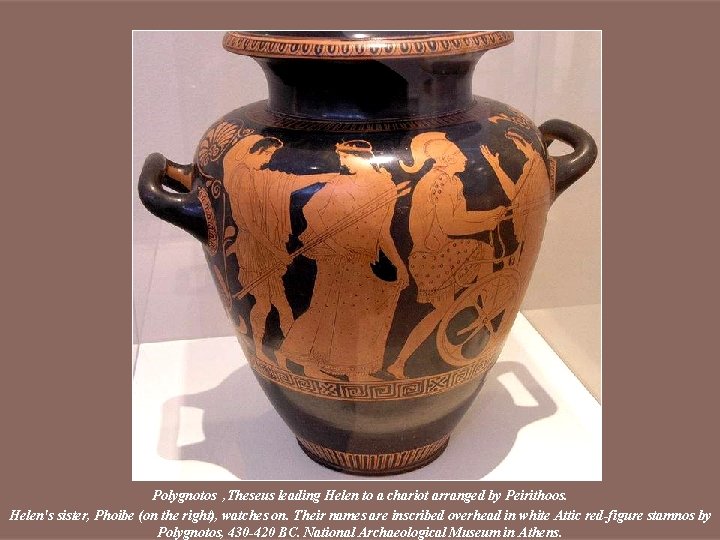
Polygnotos , Theseus leading Helen to a chariot arranged by Peirithoos. Helen's sister, Phoibe (on the right), watches on. Their names are inscribed overhead in white Attic red-figure stamnos by Polygnotos, 430 -420 BC. National Archaeological Museum in Athens.
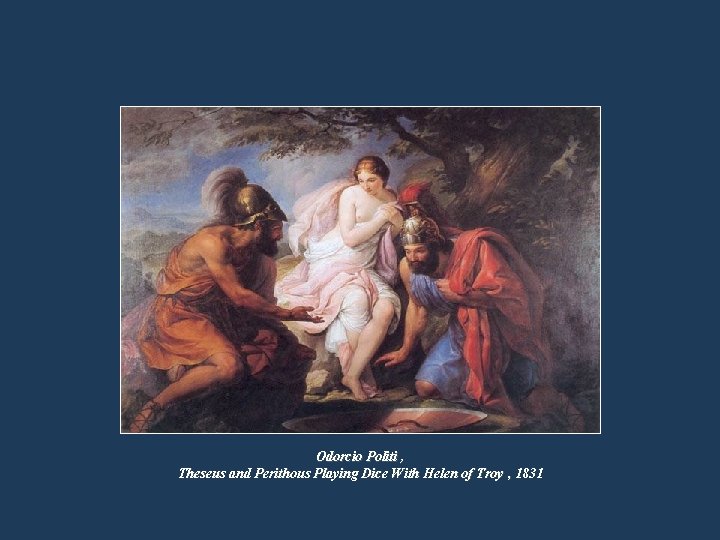
Odorcio Politi , Theseus and Perithous Playing Dice With Helen of Troy , 1831
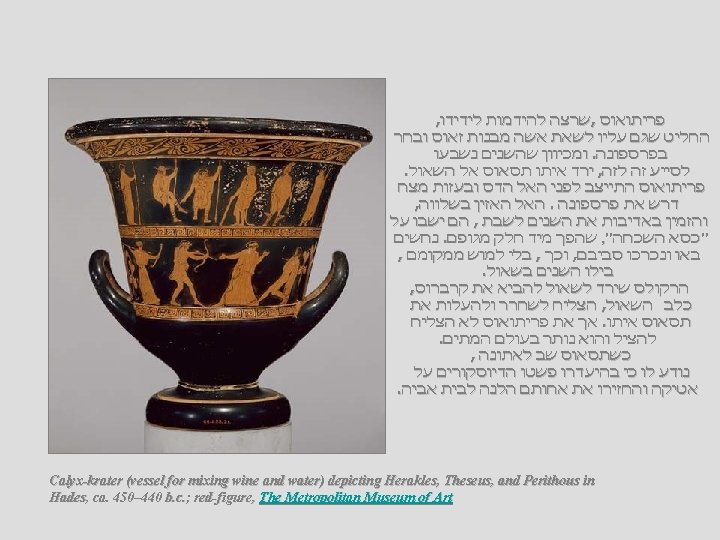
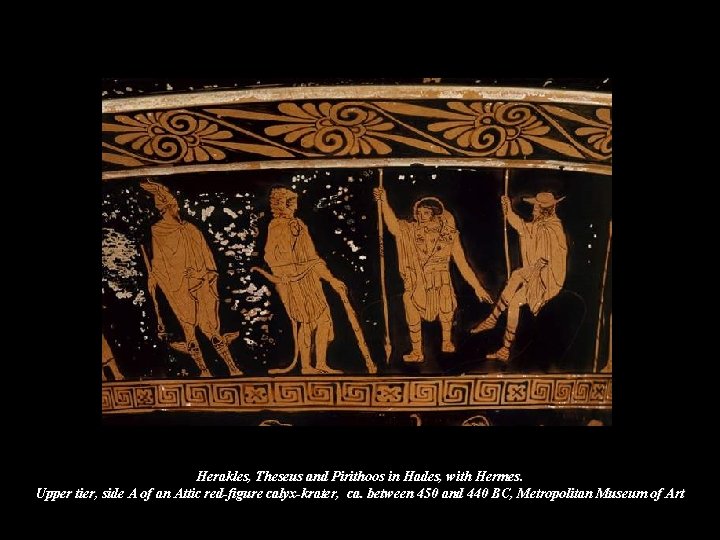
Herakles, Theseus and Pirithoos in Hades, with Hermes. Upper tier, side A of an Attic red-figure calyx-krater, ca. between 450 and 440 BC, Metropolitan Museum of Art
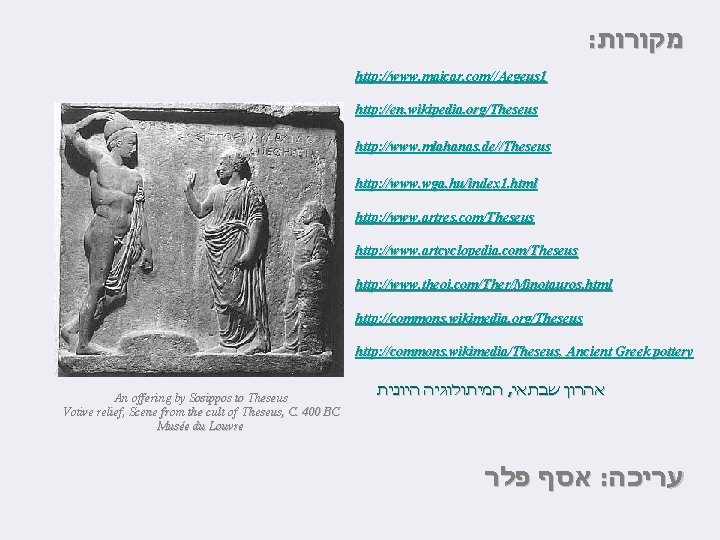
: מקורות http: //www. maicar. com//Aegeus 1 http: //en. wikipedia. org/Theseus http: //www. mlahanas. de//Theseus http: //www. wga. hu/index 1. html http: //www. artres. com/Theseus http: //www. artcyclopedia. com/Theseus http: //www. theoi. com/Ther/Minotauros. html http: //commons. wikimedia. org/Theseus http: //commons. wikimedia/Theseus, Ancient Greek pottery An offering by Sosipposs to Theseus Votive relief, Scene from the cult of Theseus, C. 400 BC Musée du Louvre המיתולוגיה היונית , אהרון שבתאי אסף פלר : עריכה