Project logo CENTAUR Duration 3 years Type of
- Slides: 11
Project logo CENTAUR Duration: 3 years Type of Action: Innovation Action Nr of participants: 7 Total funding: € 2 548 395 This project has received funding from the European Union’s Horizon 2020 research and innovation programme under grant agreement No 641931.
Background • Risk of urban flooding is increasing in Europe as a result of climate change and urbanisation • Urban flooding causes property damage, health risks, and economic disruption and is a threat to the natural environment • Urban flooding commonly occurs when the local sewer network is incapable of conveying the runoff from rainfall during and after intense storm events • Typical responses are ‘capital intensive’ – e. g. constructing additional in-sewer storage or construction of upstream sustainable drainage systems (Su. DS) • Such responses are costly, disruptive and may take valuable land in urban areas
Aims • Reduce flood risk through more effective use of existing sewer network infrastructure • In-sewer flows managed dynamically by Flow Control Device (FCD) • FCD operated by Local Monitoring and Control System (LMCS) • LMCS uses real time water level data to drive a Fuzzy Logic control algorithm • System is autonomous and local, can be installed in existing infrastructure with minimal cost • Project brings together wide range of expertise from water utilities, SMEs and academia
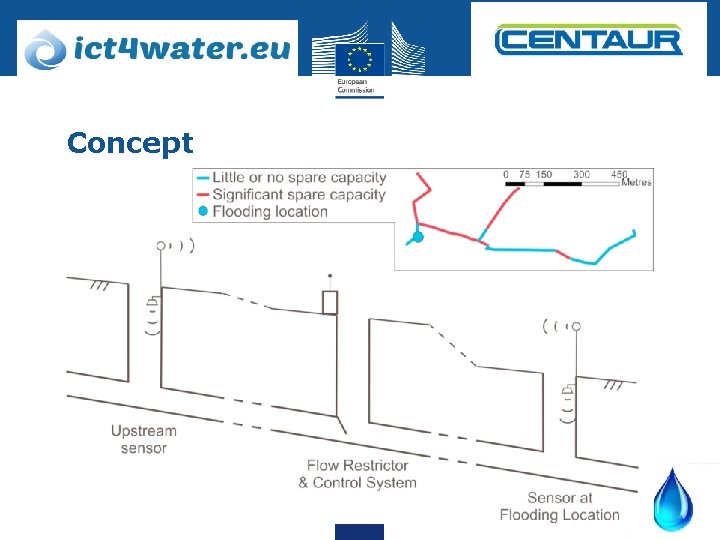
Concept
Project outputs • CENTAUR system developed using ‘virtual’ testing and a full -scale laboratory facility • Field trials at two sites: • Pilot site in Coimbra, PT now live • Demonstration site in Toulouse, FR selected, installation early 2018 • Initial marketing underway • Planning stage for semi-commercial system(s) to be installed in UK during 2018
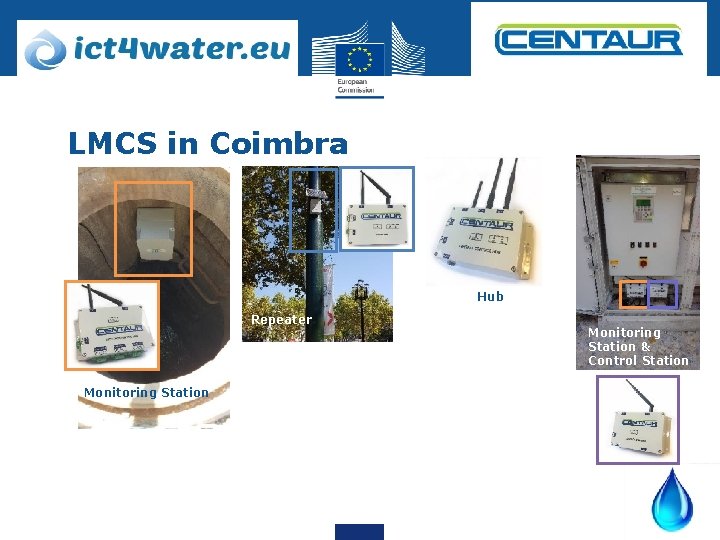
LMCS: Architecture • Wireless monitoring and control system • Monitoring Station - monitors water levels • Hub - collects data, applies FL control algorithm, send control, signals, reports to online dashboard • Control Station – communicates with FCD • Repeaters – where needed increase signal range
LMCS in Coimbra Hub Repeater Monitoring Station & Control Station
Online dashboard • Allows operational visibility • On screen alarms • Remote reconfiguration
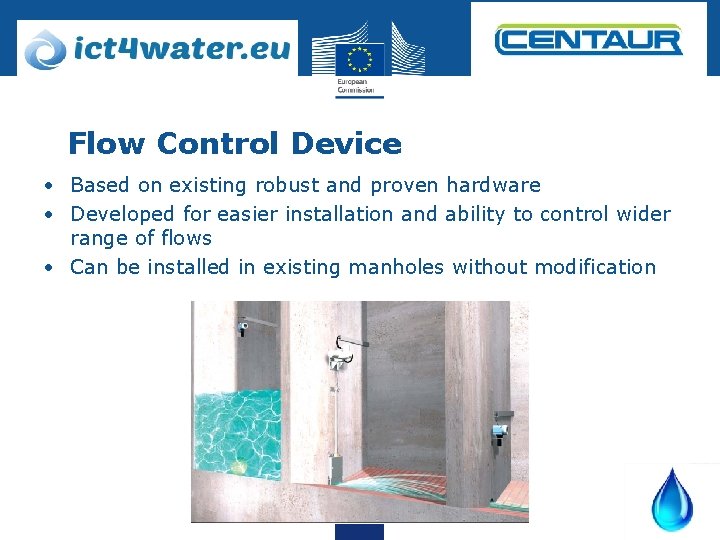
Flow Control Device • Based on existing robust and proven hardware • Developed for easier installation and ability to control wider range of flows • Can be installed in existing manholes without modification
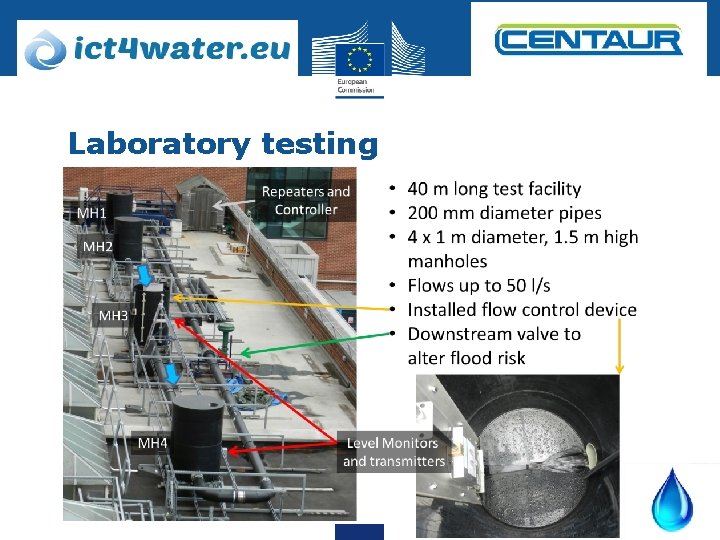
Laboratory testing
Challenges/ Lessons/Conclusions • LMCS final prototype developed from initial ‘beta’ system. • Improved communications, reduced power consumption, developed for easy deployment and re-configuration • Unexpected delays in field installation electricity supply • Overcome, second site selected with known nearby supply • A novel, cost effective and flexible system has been developed – designed for “slip-in/slip out” installation. • Technology has potential to be applied achieve different objectives in the water sector, again using existing infrastructure • e. g. better pollution control, reduced energy consumption.