Out of Many A History of the American

- Slides: 73
Out of Many A History of the American People Seventh Edition Brief Sixth Edition Chapter 15 The Coming Crisis the 1850 s Out of Many: A History of the American People, Brief Sixth Edition John Mack Faragher • Mari Jo Buhle • Daniel Czitrom • Susan H. Armitage Copyright © 2012 by Pearson Education, Inc. All rights reserved.
The Coming Crisis the 1850 s • • • America in 1850 Cracks in National Unity The Crisis of the National Party System The Differences Deepen The South Secedes Conclusion
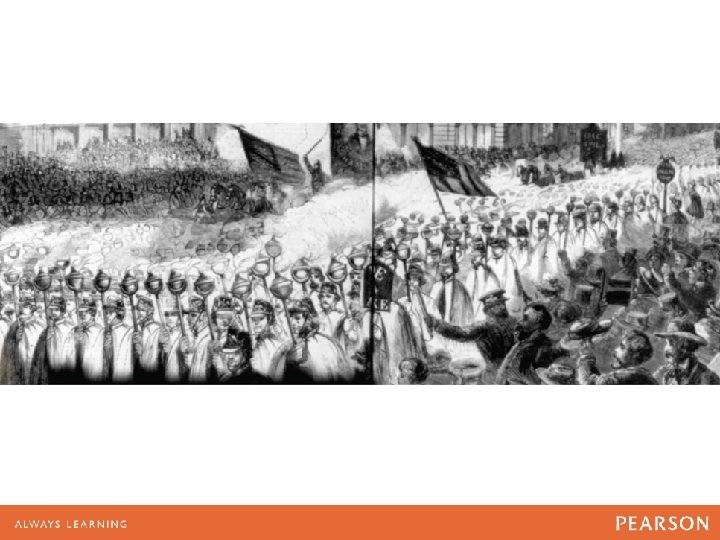
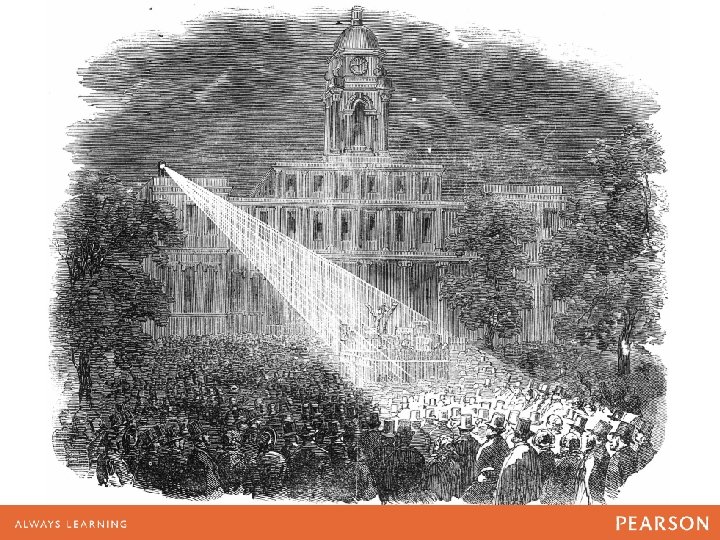
Grand procession of Wide-Awakes at New York on the evening of October 3, 1860.
Chapter Focus Questions • Why did people in the North and the South tend to see the issue of slavery so differently? • Why were the politicians of the 1850 s unable to find a lasting political compromise on the issue of slavery? • What was the intent of the Compromise of 1850?
Chapter Focus Questions (cont’d) • What explains the end of the Second American Party System and the rise of the Republican Party? • Why did the South secede following the Republican Party victory in the election of 1860?
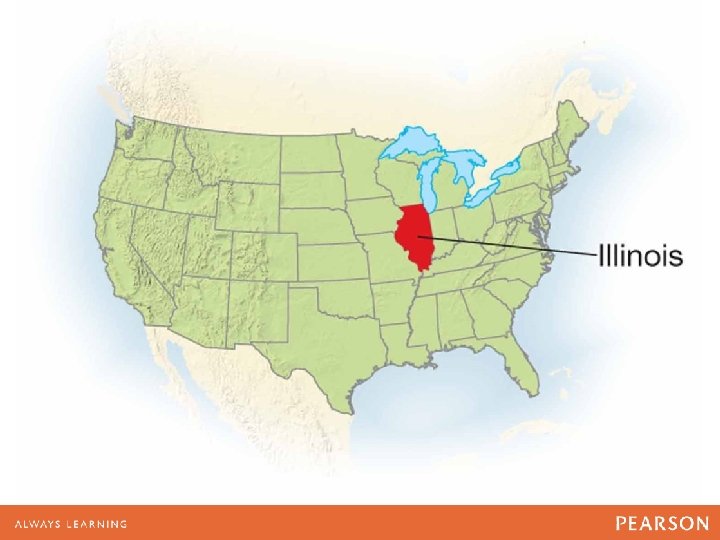
North America and Illinois
Illinois Communities Debate Slavery • Illinois voters gathered in 1858 to hear Stephen A. Douglas and Abraham Lincoln debate slavery and the future of the Union. • Douglas accused Lincoln of favoring social equality of whites and blacks. • Lincoln denied this and accused Douglas of supporting the spread of slavery.
Illinois Communities Debate Slavery (cont'd) • Although Douglas won the senatorial election, the debates established both Lincoln and the Republican Party as contenders for national power. • The debates demonstrated that the slavery question had divided American communities, but that Americans strongly valued their democratic institutions.
America in 1850
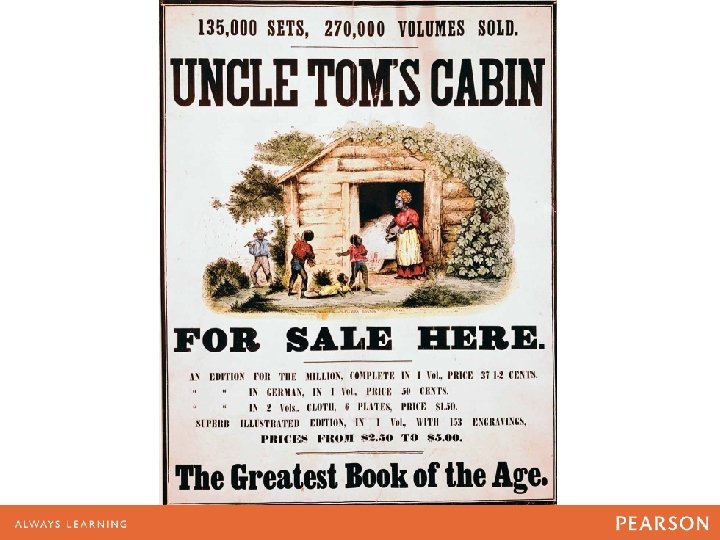
Uncle Tom’s Cabin
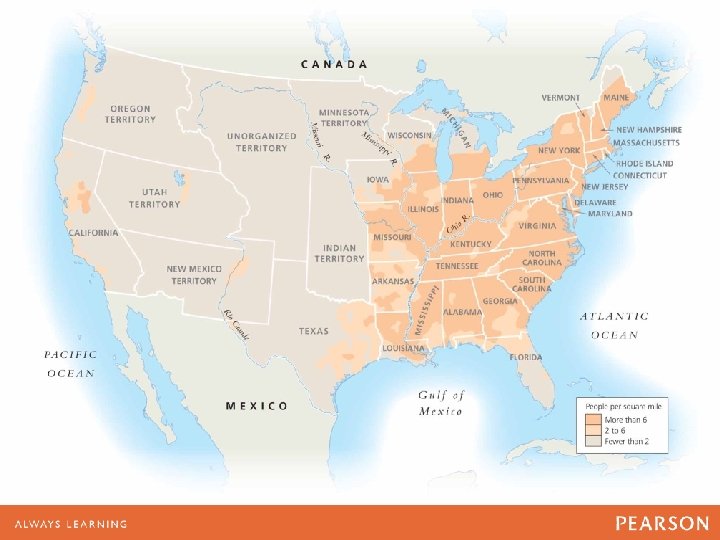
MAP 15. 1 U. S. Population and Settlement, 1850
Expansion and Growth • America had grown rapidly in the first half of the nineteenth century. • Population tripled and national wealth doubled between 1800 and 1850. • The nation had experienced great but unequal growth of wealth, industry, and urbanization.
Expansion and Growth (cont'd) • Southern economic influence was waning, undermining the South’s role in national politics.
Politics, Culture, and National Identity Pride in democracy was one unifying theme in a growing sense of national identity and new middle-class values, institutions, and culture that supported it.
Politics, Culture, and National Identity • An American Renaissance produced writers who focused on social criticism, including: § Walt Whitman and Emily Dickinson who experimented with poetic form § Nathaniel Hawthorne and Herman Melville who wrote about the darker side of human nature
Politics, Culture, and National Identity (cont'd) § Frederick Douglass’s autobiography and Harriet Beecher Stowe’s Uncle Tom’s Cabin condemn slavery
Cracks in National Unity
Political crisis brought on by the application of California for statehood
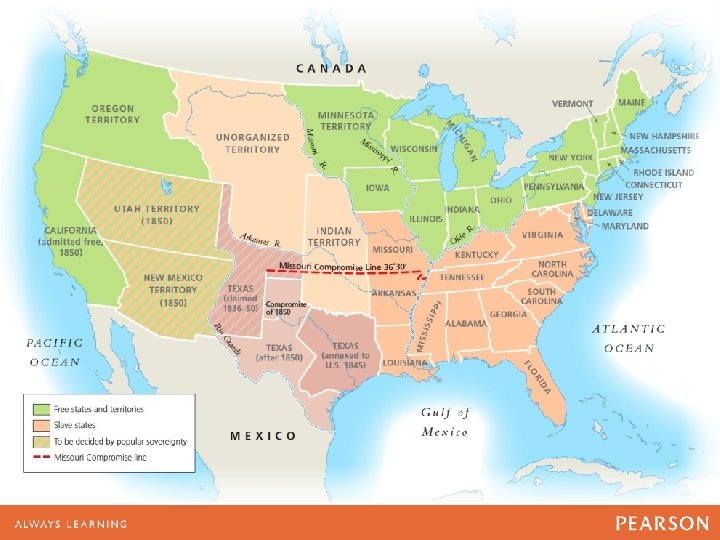
MAP 15. 2 The Compromise of 1850
The Compromise of 1850 • The Compromise of 1850 was actually five separate bills • California came in as a free state. • Other southwest territories were to be settled by popular sovereignty. • A stronger fugitive slave law was enacted. • The slave trade was outlawed in Washington, D. C.
The Compromise of 1850 (cont'd) • The Texas–New Mexico border dispute was settled.
Political Parties Split over Slavery • The national party system had forced Whigs and Democrats to forge intersectional coalitions. • By 1848 sectional interests were eroding these coalitions. • Sectional divisions in religious and other organizations had begun to divide the country.
Political Parties Split over Slavery (cont'd) • Increasingly, slavery and freedom had become the dividing line in politics and society, forcing uncompromising choices.
Congressional Divisions • Millard Fillmore became president (weak, indecisive) • John C. Calhoun had laid out the states’ rights defense by claiming that: § territories common property of each of the states, and § Congress could not discriminate against slave owners.
Congressional Divisions (cont'd) • Northerners grew increasingly concerned over what they saw as a southern conspiracy to control the government: the “slave power. ”
Two Communities, Two Perspectives • Both North and South: § were committed to expansion, but each viewed manifest destiny in its own terms; and § shared a commitment to basic rights and liberties but saw the other as infringing on them.
Two Communities, Two Perspectives (cont’d) • Two perspectives: § Northerners viewed their region as a dynamic society that offered opportunity to the common man, in contrast to the stagnant slave owning aristocracy of the South. § Southerners viewed their section as promoting equality for whites by keeping blacks in a perpetual state of bondage.
Two Communities, Two Perspectives (cont'd) • The chances for national reconciliation were slim.
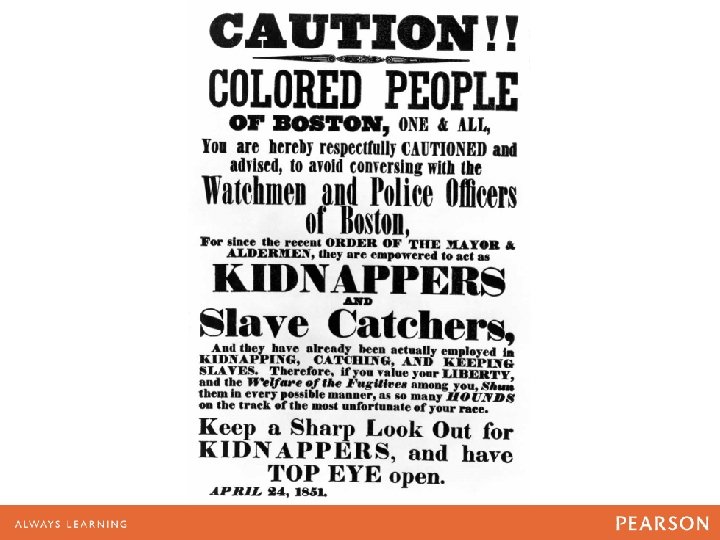
The Fugitive Slave Law • The nation divided • The Fugitive Slave Law of 1850—U. S. support of slave catchers § Mobs of northerners unsuccessfully tried to prevent the law from being carried out. § Boston especially emerged as a center of resistance to slavery and the Fugitive Slave Law.
The Fugitive Slave Law (cont'd) • Frederick Douglass and Harriet Jacobs § described their experiences as slaves, helping to raise Northerners’ consciousness.
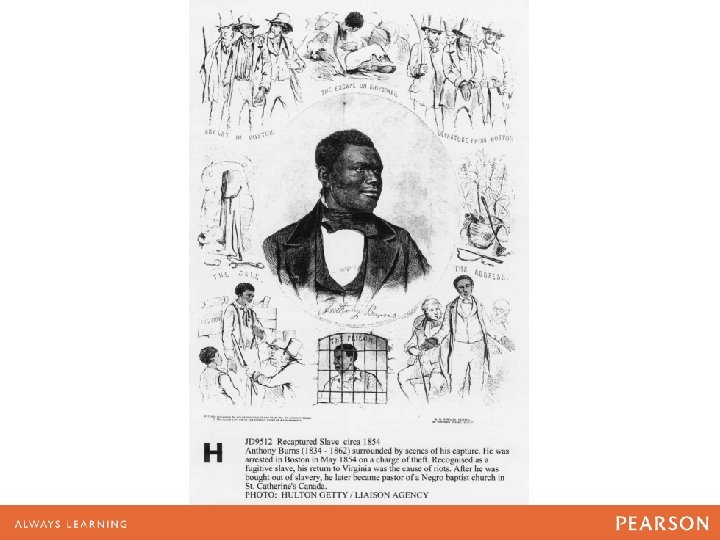
Escaped slave Anthony Burns
Handbill warning free African Americans of danger
The Election of 1852 • The growing polarization of opinion strained the party system. • Democrats struggled to nominate Franklin Pierce, while Whigs settled on war hero Winfield Scott. • General apathy characterized the election: turnout fell below 70%. • Franklin Pierce easily won with strong immigrant and Free Soiler support.
“Young America”: The Politics of Expansion • Between 1845 and 1848, the United States became a continental nation. • The “Young America” movement pushed for expansion into Latin America. • After a failed offer to buy Cuba from Spain, the Ostend Manifesto revealed Southern ambitions to gain more slave territory.
“Young America”: The Politics of Expansion (cont'd) • The Compromise of 1850 showed the dangers of reopening territorial issues.
The Crisis of the National Party System
“Bleeding Kansas. ”
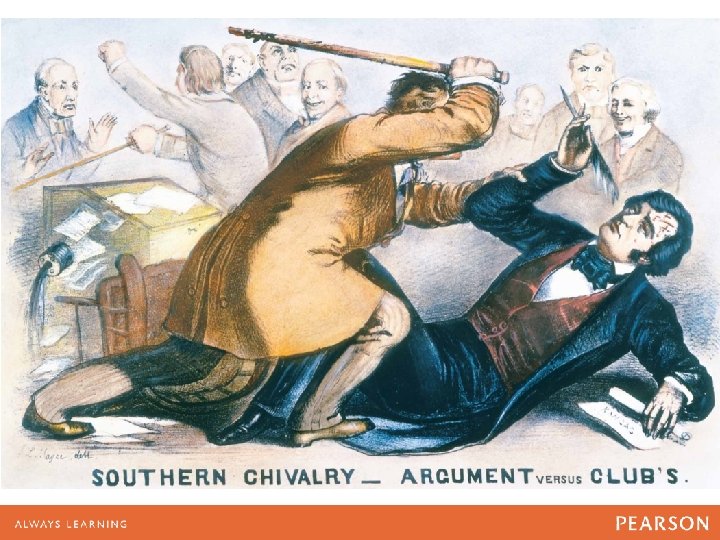
Brooks Beats Sumner
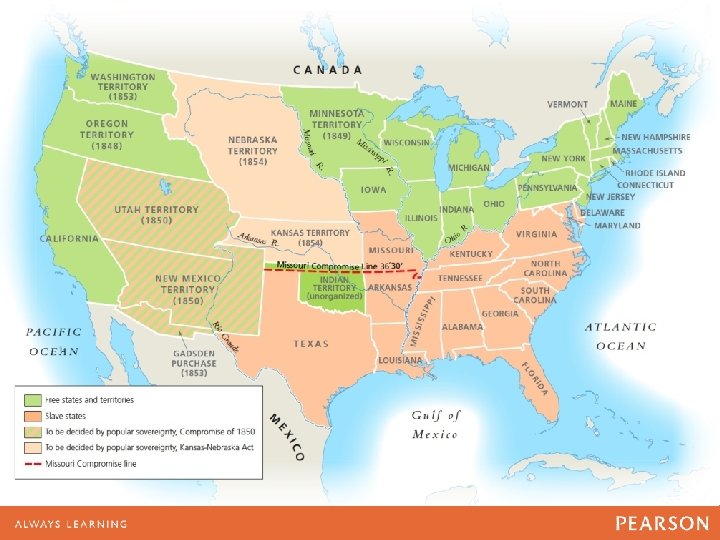
MAP 15. 3 The Kansas-Nebraska Act, 1854
The Kansas-Nebraska Act • Stephen Douglas pushed through a bill to open the Kansas territory. • To win southern support Douglas’ bill declared that the territory would be organized on the principle of popular sovereignty, even though slavery in that territory had been banned under the Missouri Compromise.
The Kansas-Nebraska Act (cont’d) • The Kansas-Nebraska Act proved to: § destroy the Whig Party § nearly destroy the northern wing of the Democratic Party § negate treaties with Indians removed to Kansas in the 1830 s.
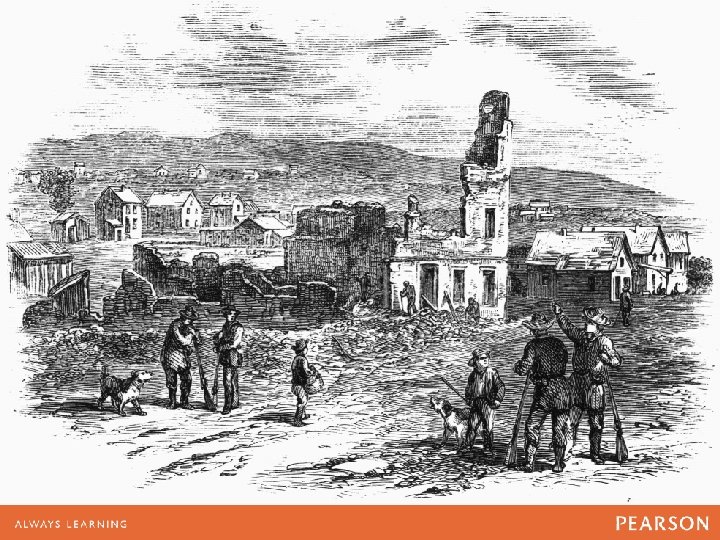
“Bleeding Kansas” • Kansas a battleground of sectional politics • Election day: Proslavery Missourians crossed over the border and took control of the territorial legislature. • Northerners founded free-soil communities. • By the summer of 1856 open warfare erupted.
“Bleeding Kansas” (cont'd) • Pro-slaver’s sack of the town of Lawrence was answered by abolitionist John Brown’s murder of five proslavery settlers at Pottawatomie Creek.
The Politics of Nativism • An outburst of anti-immigrant feeling: Reformers were appalled by the influx of Irish into American cities. • Former Whigs formed the “Know-Nothing” or American Party to prevent what they saw as a takeover by the immigrants. • After success in 1854, the Know-Nothings succumbed to sectional divisions.
The Politics of Nativism (cont'd) • In response an expansionist, free soil Republican Party emerged.
Nighttime meeting of supporters of the Know. Nothing Party in New York City
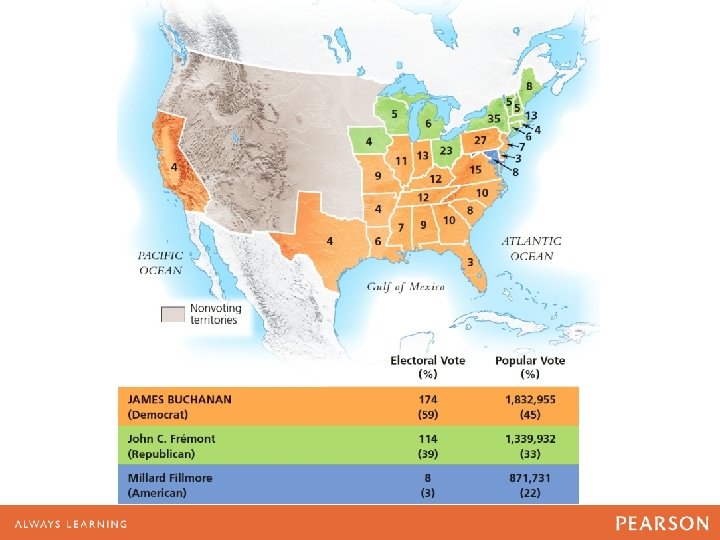
MAP 15. 4 The Election of 1856
The Republican Party and the Election of 1856 • The Republican Party linked many Free. Soil supporters and former Whigs, nominating John C. Frémont. • In 1856, Democrats nominated Pennsylvanian James Buchanan as a compromise candidate. • Know-Nothings ran Millard Fillmore.
The Republican Party and the Election of 1856 (cont’d) • While Frémont ran strongly in the North, Buchanan carried nearly the entire South and won. • Republican leaders realized that, in 1860, they could win with only two more Northern states and no Southern support.
The Differences Deepen
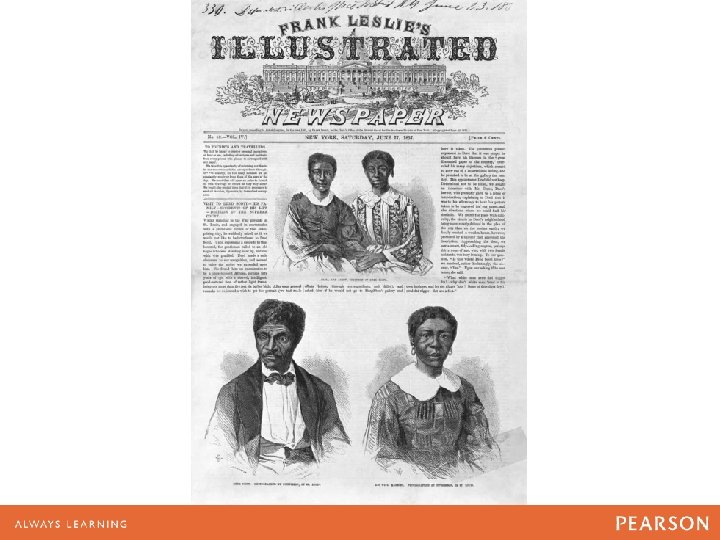
Sympathetic portraits of Harriet and Dred Scott and their daughters in 1857
The Dred Scott Decision • The question of free soil and slavery § Supreme Court: ruled that Congress could not ban slavery in the territories and that black people did not have the right to bring suits before federal court because they were not citizens. § Republican leaders denounced a conspiracy between Buchanan and the Supreme Court to subvert the election by delaying the decision.
The Dred Scott Decision (cont’d) • The question of free soil and slavery § While Southerners applauded the decision, Northerners denounced it.
The Lecompton Constitution • Conflict continued in Kansas as freesoilers: § organized their own territorial government § boycotted the proslavery government’s elections for a constitutional convention • The proslavery “Lecompton constitution” was submitted to Congress.
The Lecompton Constitution (cont’d) • Stephen Douglas fought against it, alienating his southern supporters. • Congress rejected the constitution and only came into the Union as a free state in 1861. • The defeat of Lecompton came as Congress continued to divide along sectional lines.
The Panic of 1857 • Adding to the conflict was a financial panic and sharp depression in 1857 and 1858. • The Panic affected northern more than southern exports. • Southerners believed the Panic showed the superiority of their slave based, “King Cotton” economic system.
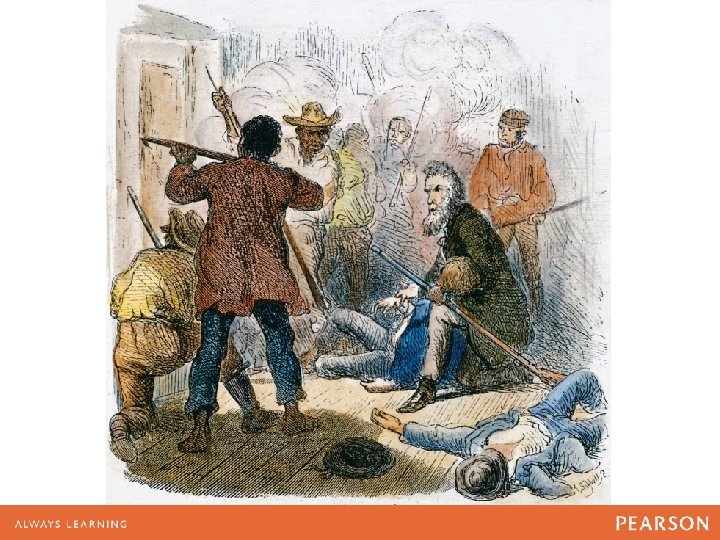
John Brown’s Raid • Sectional tensions intensified when John Brown raided the federal arsenal at Harper’s Ferry in an unsuccessful effort to instigate a slave revolt. • Brown was hanged but southern opinion was shocked by northern attempts to make Brown a martyr and northern support for slave revolts. • Talk of secession mounted in the South.
John Brown and his followers are shown trapped inside the armory at Harpers Ferry in October 1859
The South Secedes
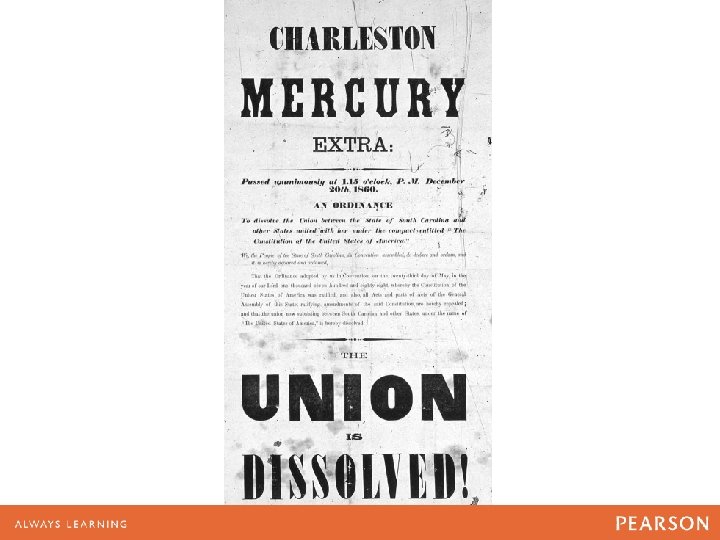
This special edition of the Charleston Mercury was issued on December 20, 1860, the day South Carolina voted to secede from the Union.
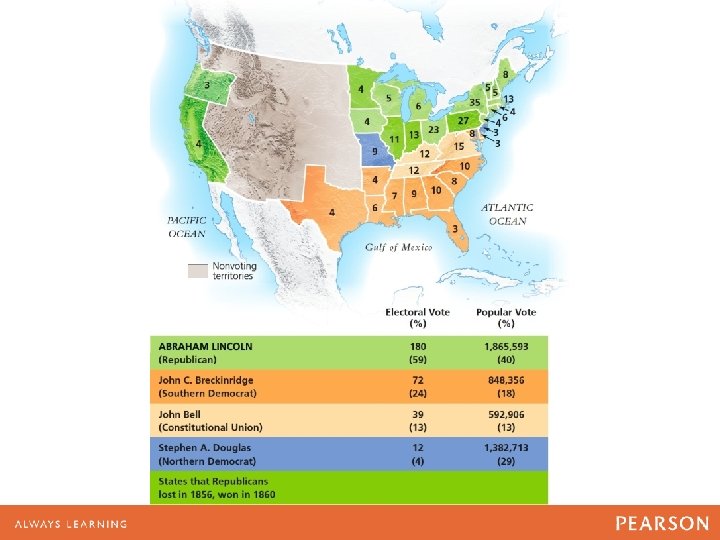
MAP 15. 5 The Election of 1860
The Election of 1860 • In the election of 1860, four candidates ran for president. § The Democrats split over a proposed slave code for the territories. - Stephen Douglas won the nomination but Southerners nominated John C. Breckinridge. § Southern and border state Whigs created the Constitutional Union Party and nominated John Bell.
The Election of 1860 (cont'd) • In the election of 1860, four candidates ran for president. § Republicans nominated Abraham Lincoln, a moderate.
The Election of 1860 (cont'd) • Breckinridge and Lincoln represented the extreme positions on slavery in the territories. • Douglas and Bell tried to find a middle ground. • Lincoln won the election with 180 electoral votes by virtually sweeping the North but with no votes from ten Southern states which excluded him from their ballots.
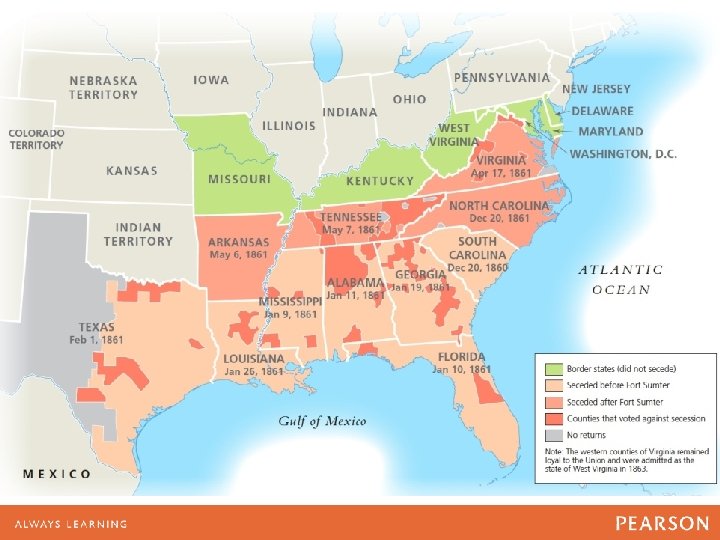
MAP 15. 6 The South Secedes
The South Leaves the Union • Southerners responded to the election of 1860 by initiating secession movements. • The Lower South seceded, eight slave states did not act. • Republicans had mistakenly believed the South would not secede; secessions miscalculated in believing Lincoln would allow them to leave peacefully.
The North’s Political Options • The North appeared to have three options: § Offer the South a compromise over slavery to maintain the Union; § Let the secessionist states go in peace; or § Use force to maintain the Union.
Establishment of the Confederacy • Seven secessionist states established the Confederate States of America in February 1861. • The Confederate Constitution was identical to the U. S. document but guaranteed states’ rights and protected slavery. • Jefferson Davis, a moderate, was chosen as its president.
Establishment of the Confederacy (cont'd) • Davis tried to portray secession as a legal, peaceful step.
Lincoln’s Inauguration “I am loath to close. We are not enemies, but friends. We must not be enemies. Though passion may have strained, it must not break our bonds of affection. The mystic chords of memory, stretching from every battlefield, and patriot grave, to every living heart and hearthstone, all over this broad land, will yet swell the chorus of the Union, when again touched, as surely they will be, by the better angels of our nature. ” Abraham Lincoln Inaugural Address, March 4, 1861
Conclusion
The Coming Crisis, the 1850 s • Americans in 1850, proud of their nation, did not anticipate the crises of the next decade. As compromise failed, the party system collapsed, with Southern Democrats rejecting a Northern Republican president. • Divided by slavery, Americans had no recourse but civil war.
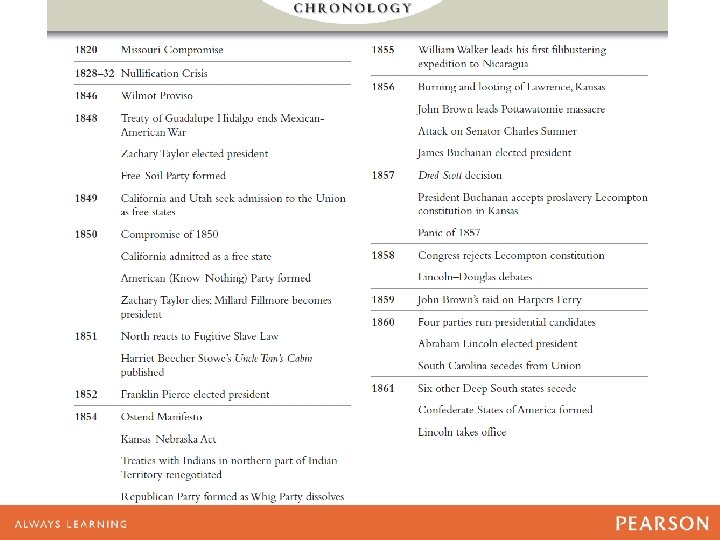
Chronology