
Male Reproductive System Organs of Male Reproduction Gonads









- Slides: 122
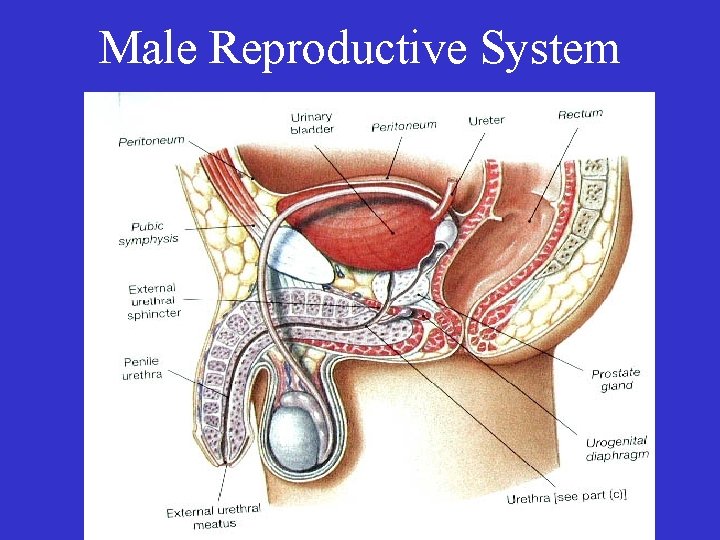
Male Reproductive System
• Organs of Male Reproduction – Gonads (Testes) • produce gametes (sperm) • secrete the sex steroid hormones
• Organs of Male Reproduction – Ducts (reproductive tract) • Store Sperm • Transport sperm
• Organs of Male Reproduction – Accessory Organs • Secrete substances that support sperm
• Organs of Male Reproduction –External genitalia • Penis • scrotum
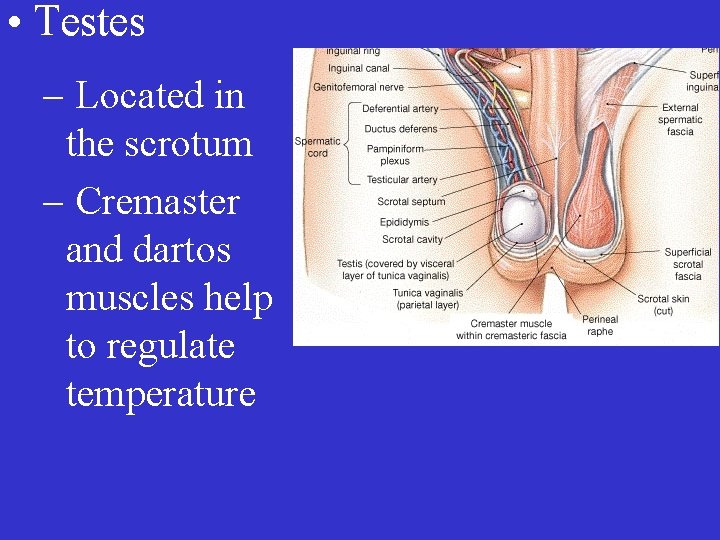
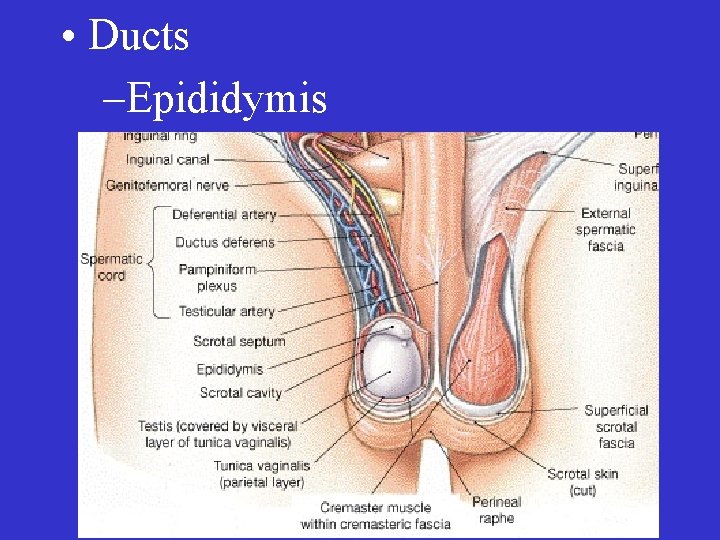
• Testes – Located in the scrotum – Cremaster and dartos muscles help to regulate temperature
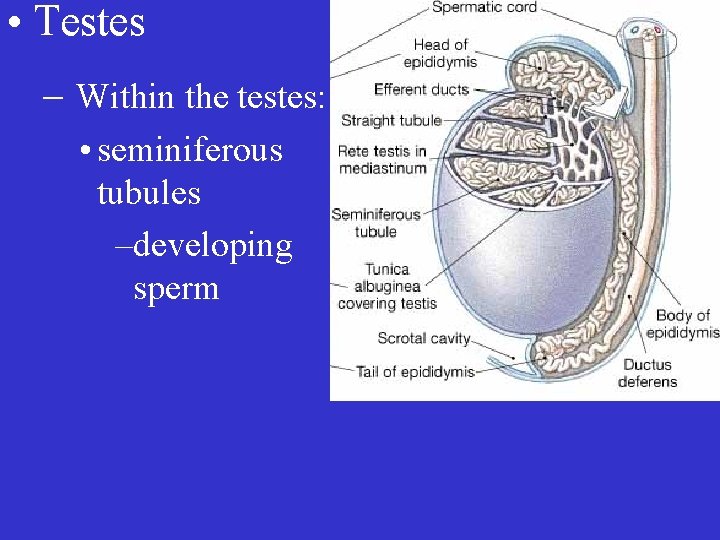
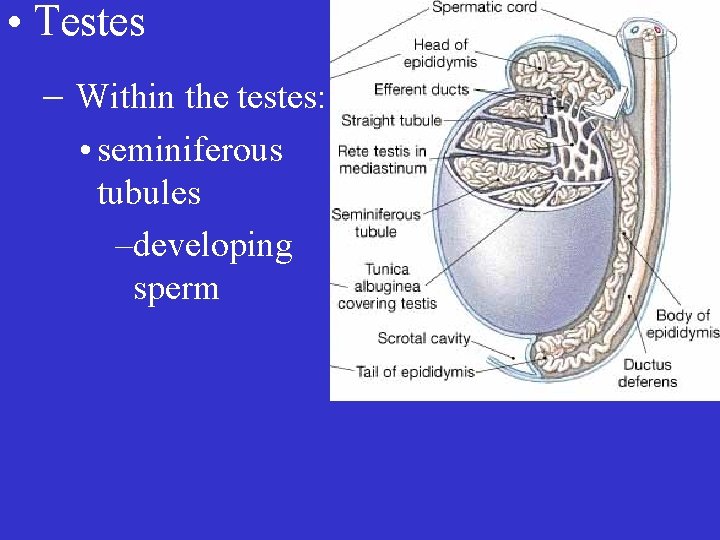
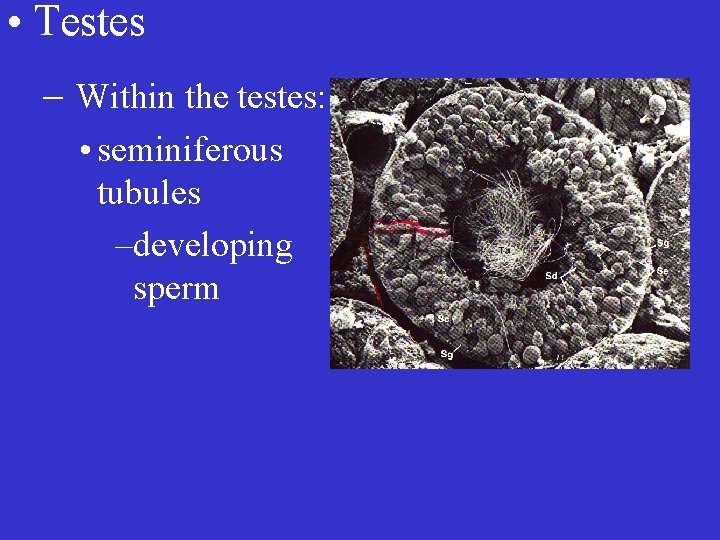
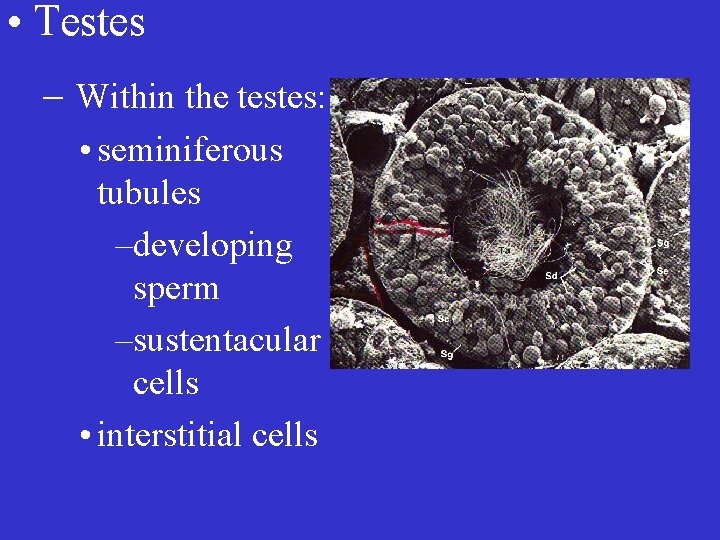
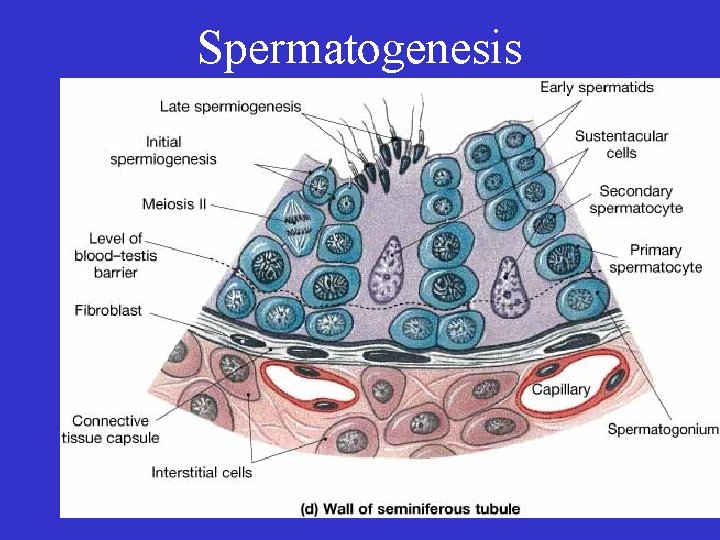
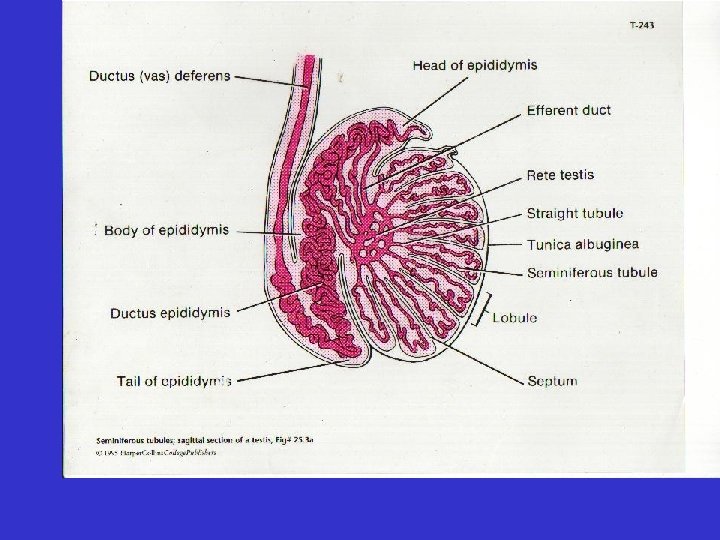
• Testes – Within the testes: • seminiferous tubules –developing sperm
• Testes – Within the testes: • seminiferous tubules –developing sperm
• Testes – Within the testes: • seminiferous tubules –developing sperm
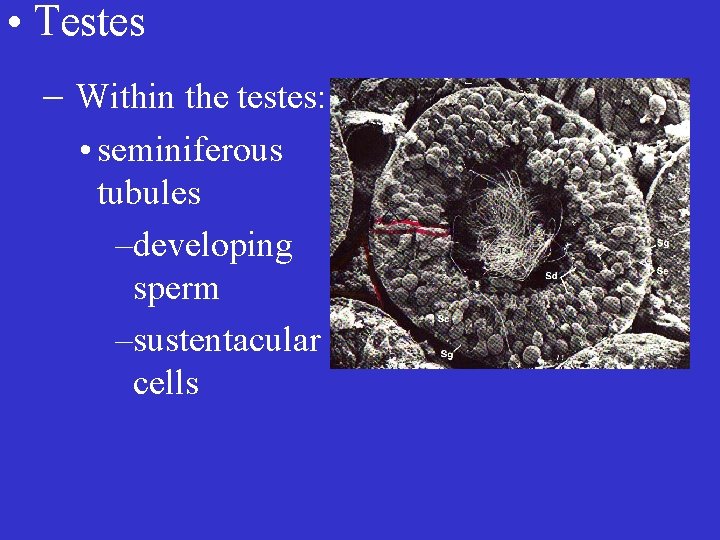
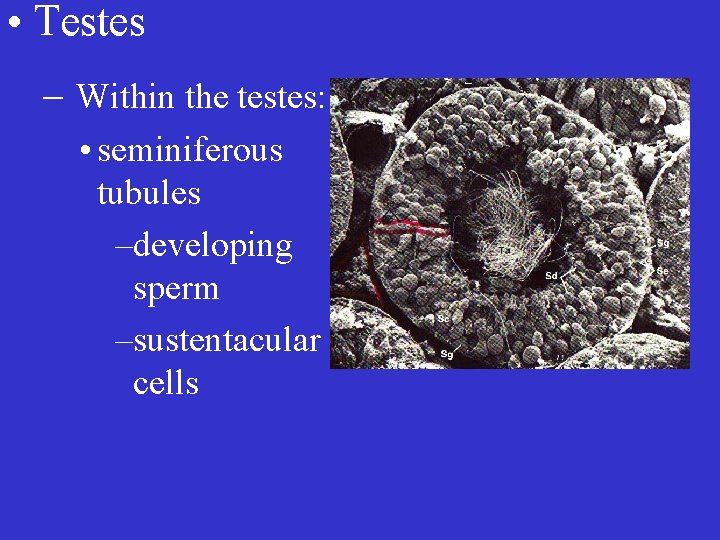
• Testes – Within the testes: • seminiferous tubules –developing sperm –sustentacular cells
• Testes – Within the testes: • seminiferous tubules –developing sperm –sustentacular cells
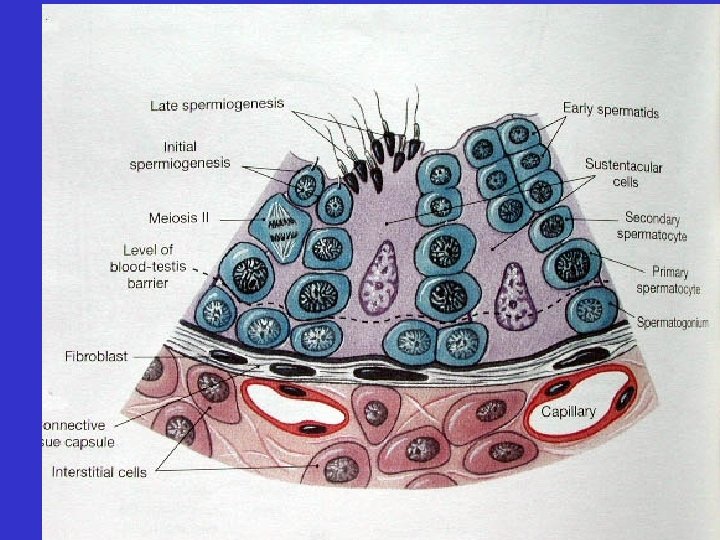
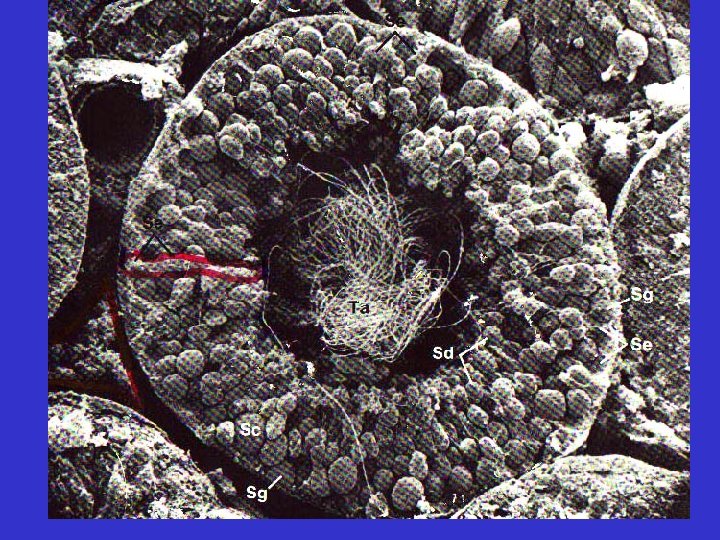
• Testes – Within the testes: • seminiferous tubules –developing sperm –sustentacular cells • interstitial cells
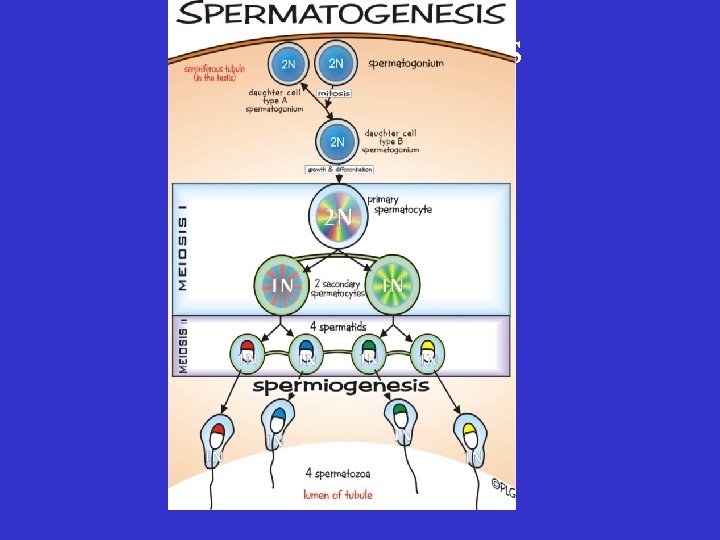
Spermatogenesis
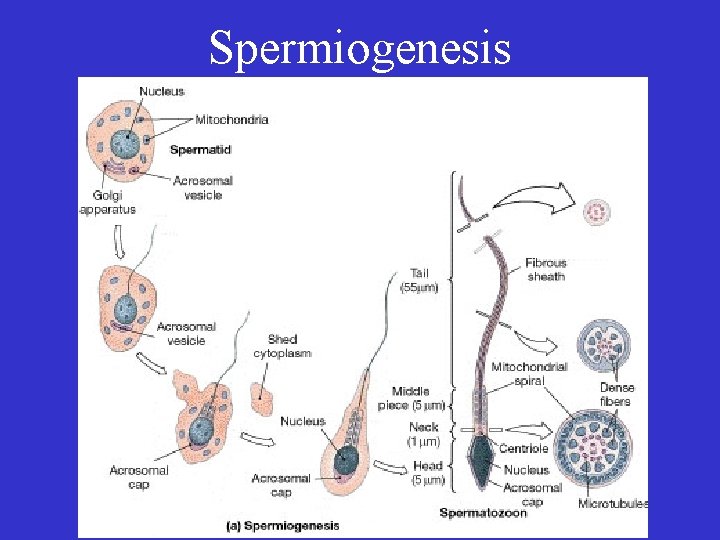
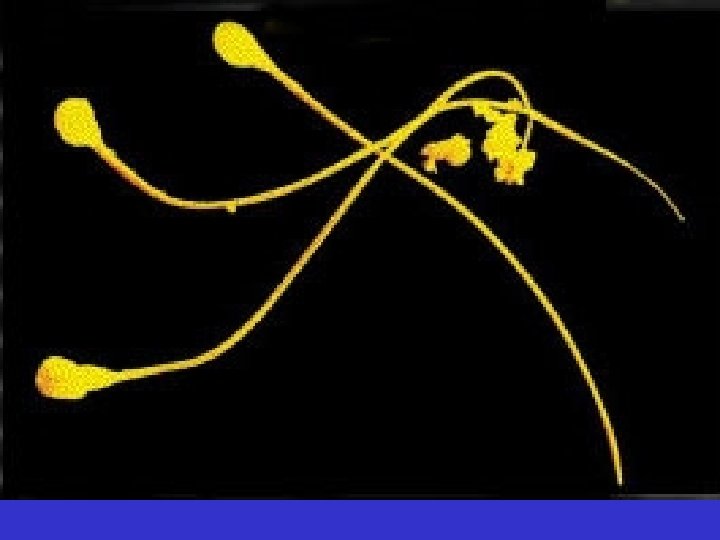
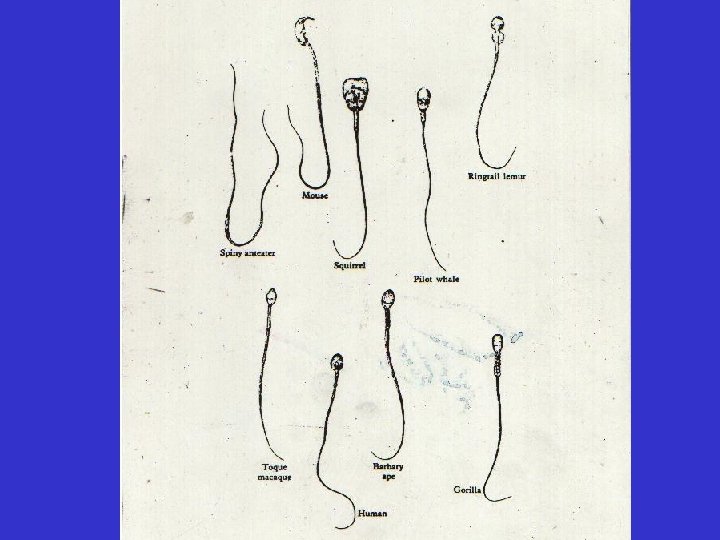
Spermiogenesis
Spermatogenesis
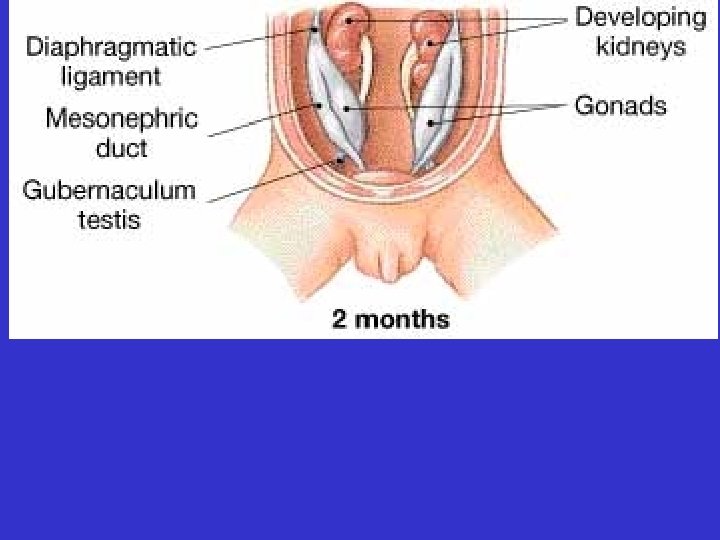
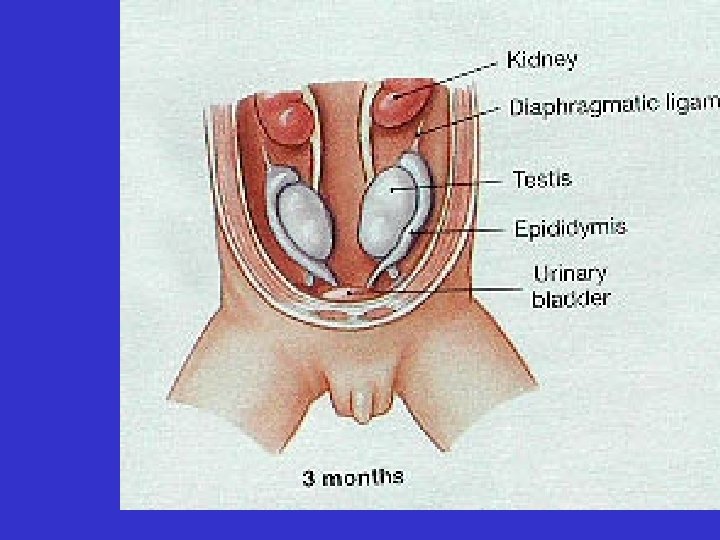
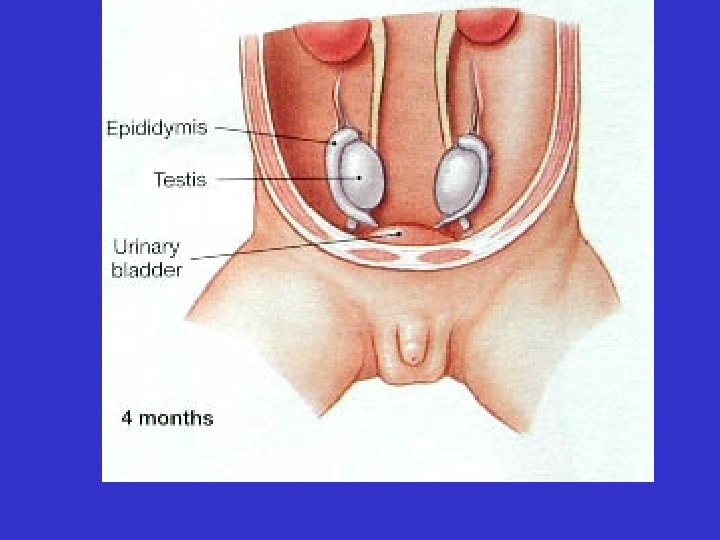
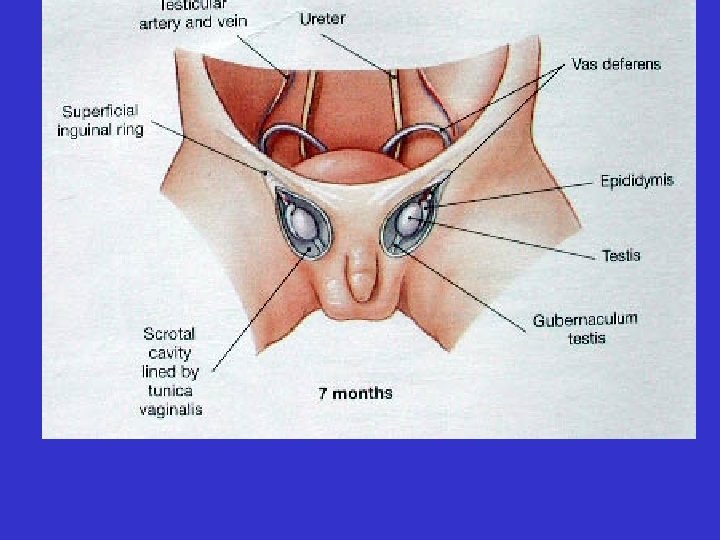
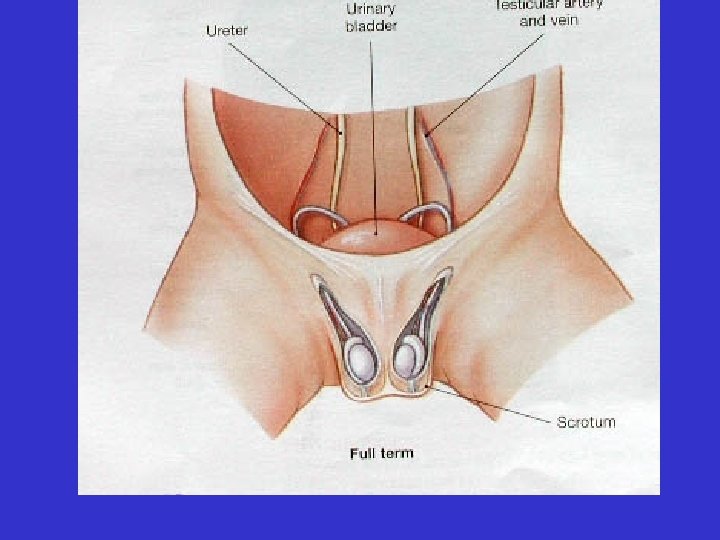
• The testes descend from the abdomen during fetal development
• Ducts
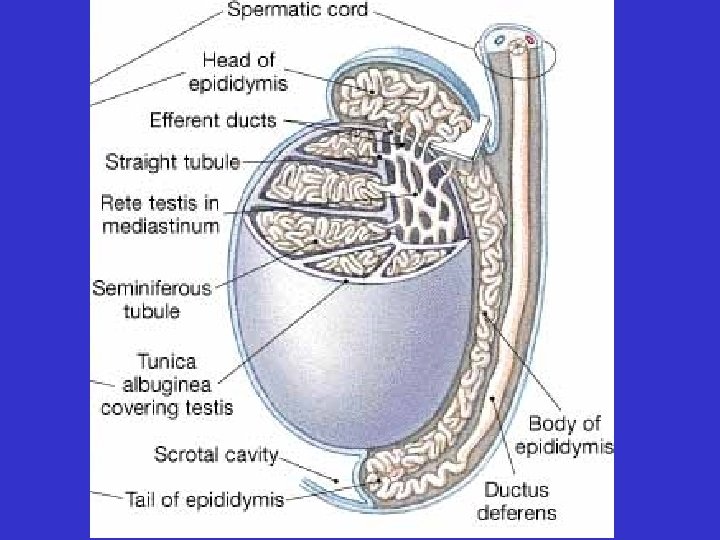
• Ducts –Epididymis
• Ducts –Epididymis
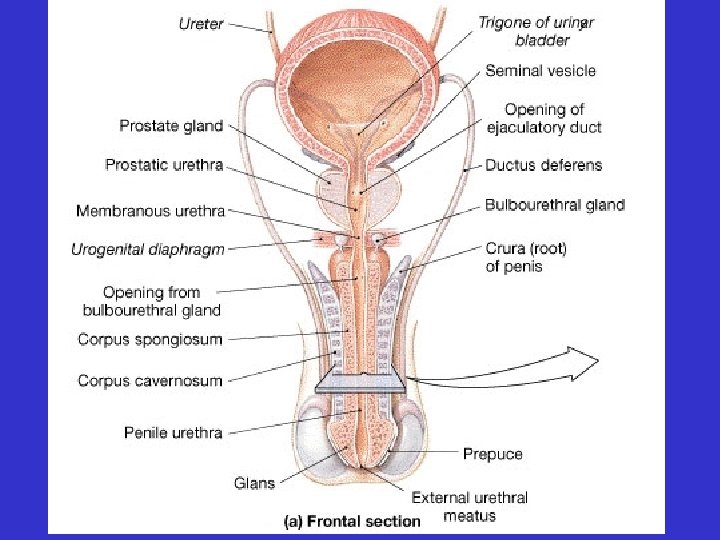
• Ducts –Epididymis – Vas deferens
• Ducts –Epididymis – Vas deferens
• Ducts –Epididymis – Vas deferens – Ejaculatory duct
• Ducts –Epididymis – Vas deferens – Ejaculatory duct
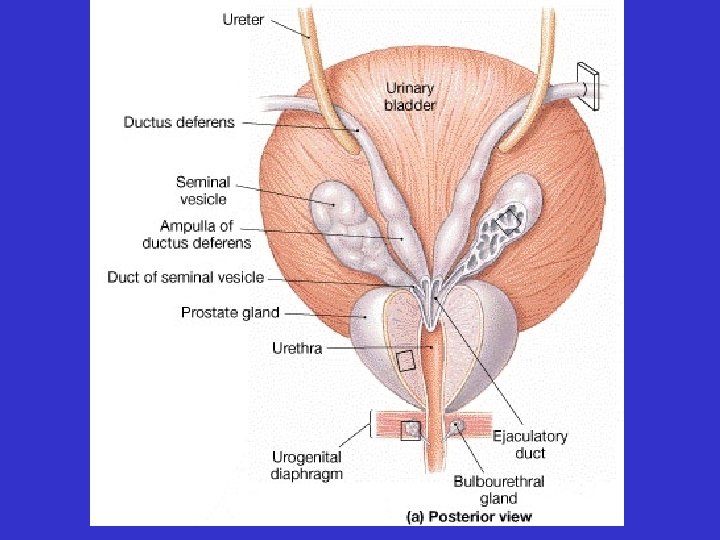
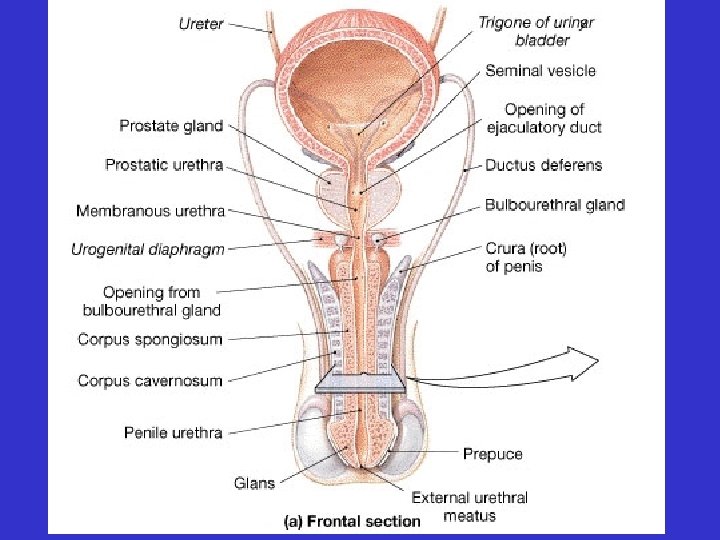
• Ducts –Epididymis – Vas deferens – Ejaculatory duct – Urethra
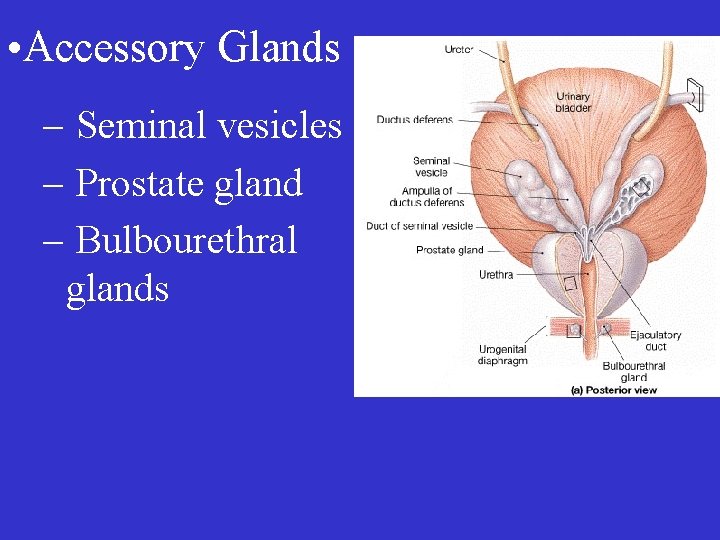
• Accessory Glands – Seminal vesicles – Prostate gland – Bulbourethral glands
• Semen
• Semen – sperm plus seminal fluid
• Semen – sperm plus seminal fluid – 20 -150 million sperm/ml
• Semen – sperm plus seminal fluid – 20 -150 million sperm/ml – includes prostaglandins,
• Semen – sperm plus seminal fluid – 20 -150 million sperm/ml – includes prostaglandins, bicarbonate,
• Semen – sperm plus seminal fluid – 20 -150 million sperm/ml – includes prostaglandins, bicarbonate, fructose,
• Semen – sperm plus seminal fluid – 20 -150 million sperm/ml – includes prostaglandins, bicarbonate, fructose, antibiotics,
• Semen – sperm plus seminal fluid – 20 -150 million sperm/ml – includes prostaglandins, bicarbonate, fructose, antibiotics, & enzymes that activate sperm
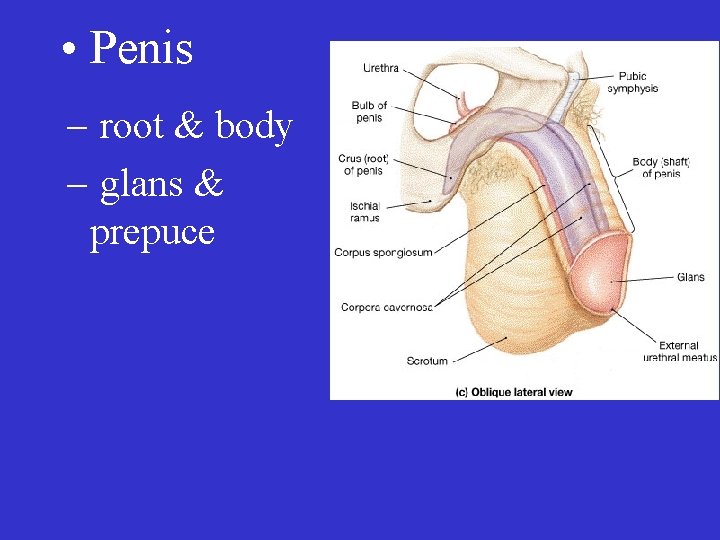
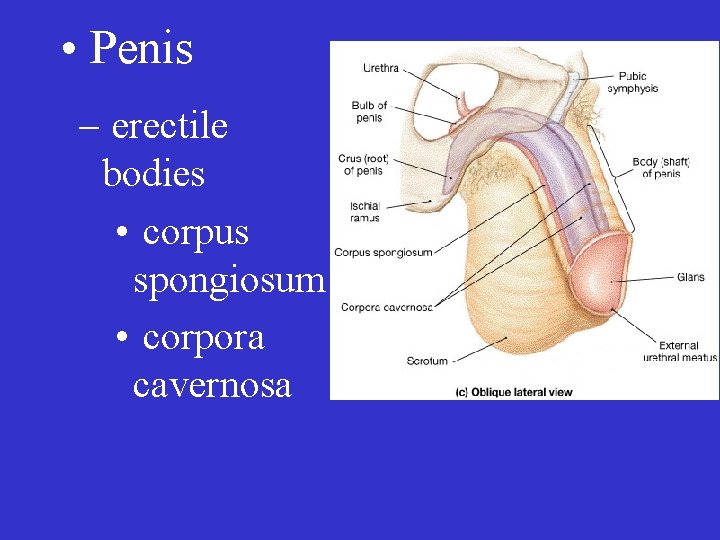
• Penis – root & body – glans & prepuce
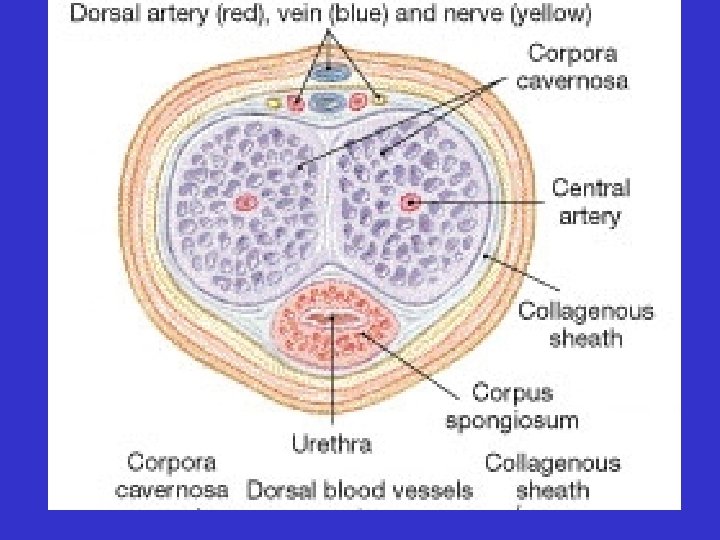
• Penis – erectile bodies • corpus spongiosum • coropora cavernosa
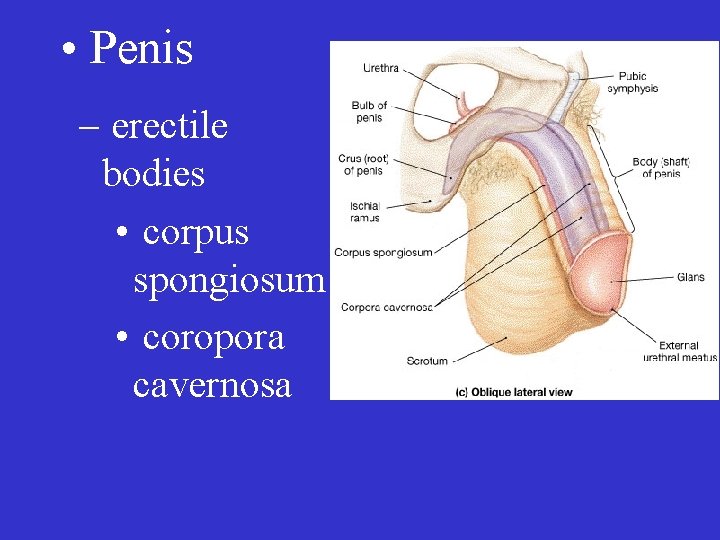
• Penis – erectile bodies • corpus spongiosum • corpora cavernosa
• Penis –erections under the control of parasympathetic stimulation – ejaculation: sympathetic
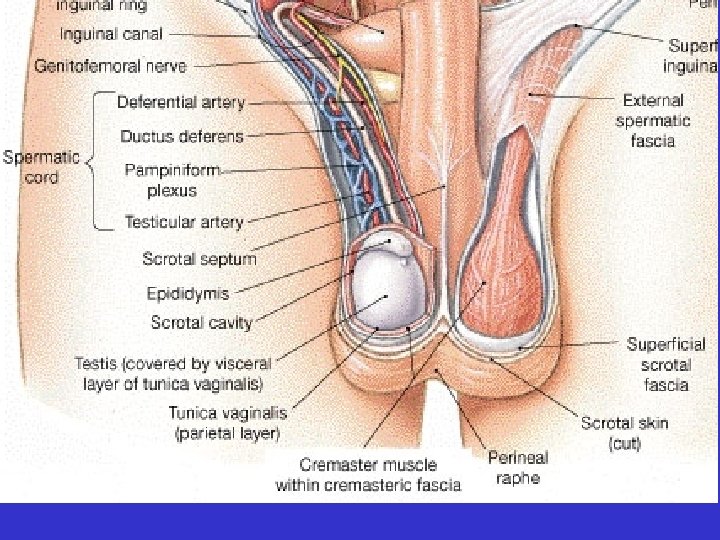
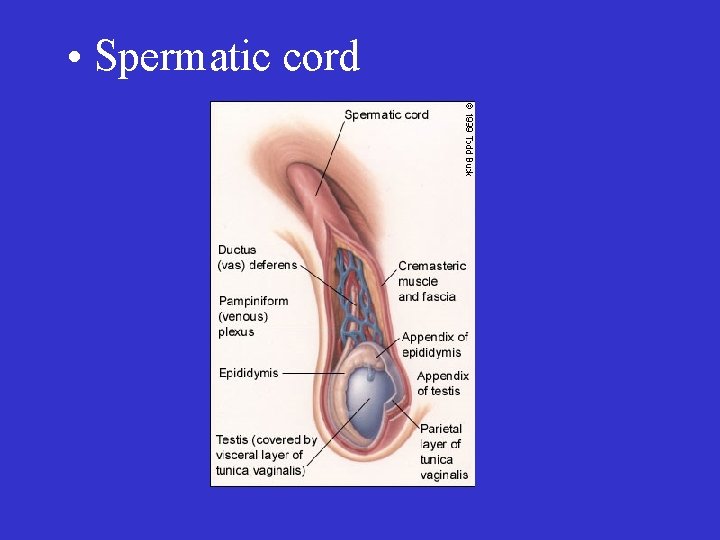
• Spermatic cord
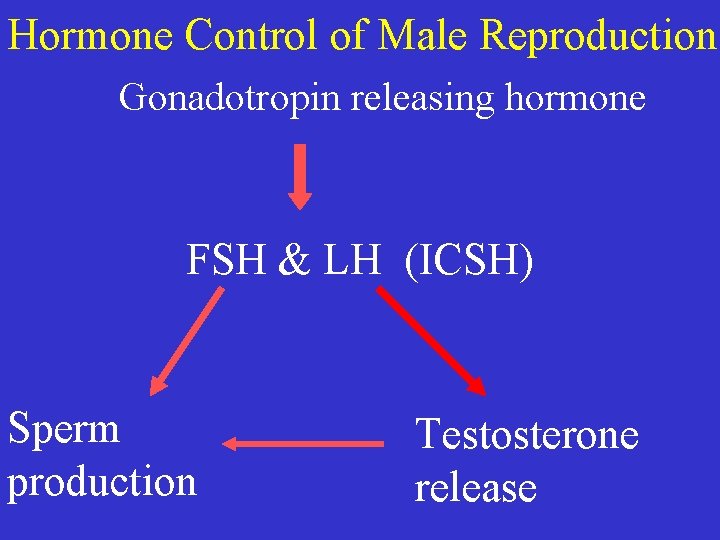
Hormone Control of Male Reproduction Gonadotropin releasing hormone FSH & LH (ICSH) Sperm production Testosterone release
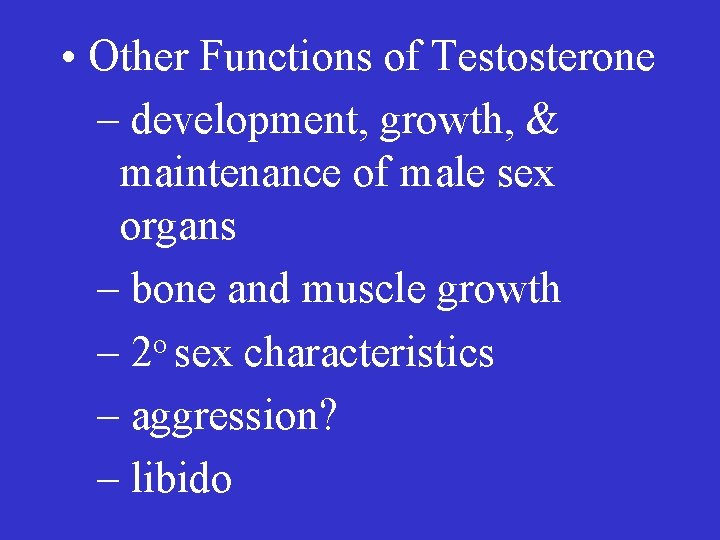
• Other Functions of Testosterone – development, growth, & maintenance of male sex organs – bone and muscle growth – 2 o sex characteristics – aggression? – libido
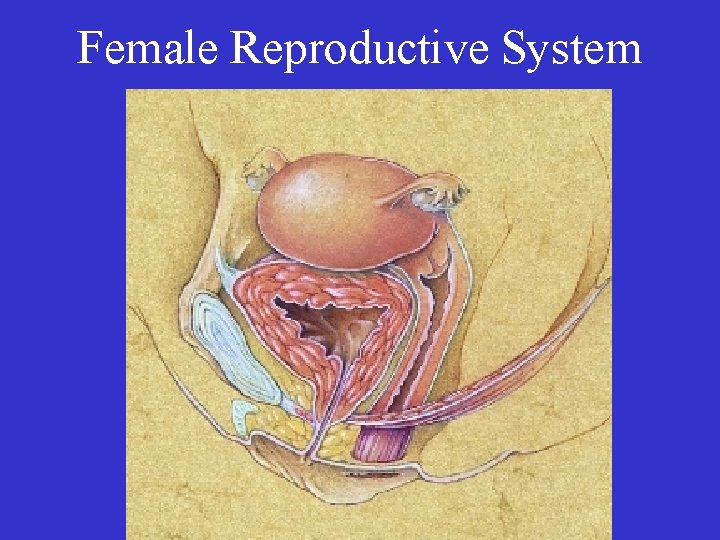
Female Reproductive System
• Organs of Female Reproduction – Gonads (Ovaries)
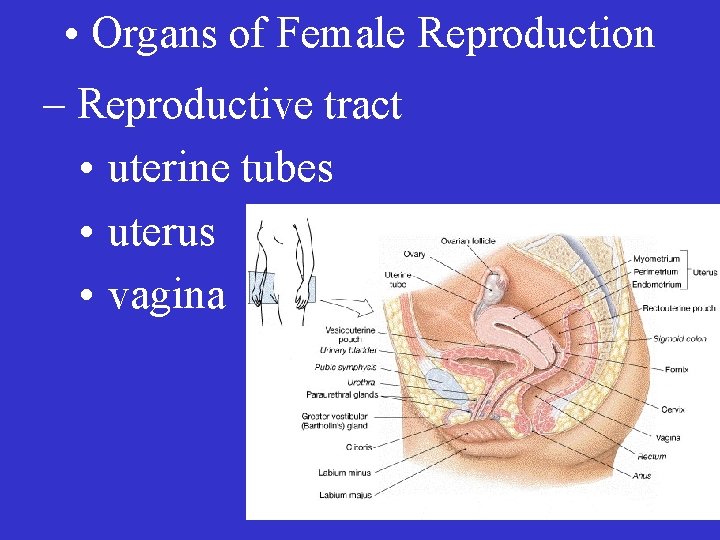
• Organs of Female Reproduction – Reproductive tract • uterine tubes • uterus • vagina
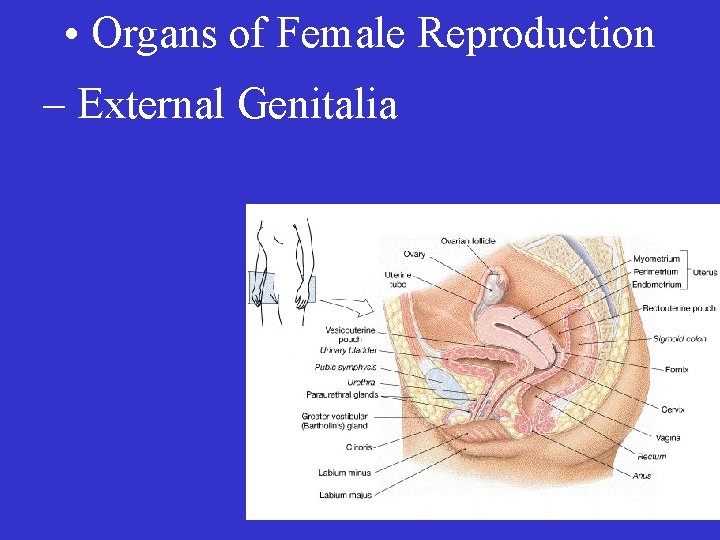
• Organs of Female Reproduction – External Genitalia
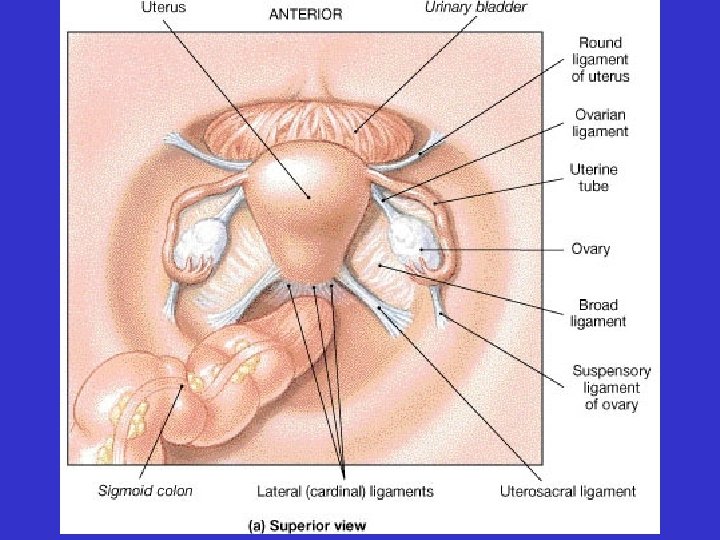
• Ovaries –Held in place by ligaments • ovarian ligaments • suspensory ligaments
• Ovaries – Produce gametes (ova) – Secrete the sex steroid hormones
• Ovaries – Contain thousands of follicles – Each follicle contains one ovum
• Ovaries – each month one follicle matures – at ovulation: a mature follicle releases an ovum
• Ovaries – hormones secreted include • estrogens • progestins (progesterone)
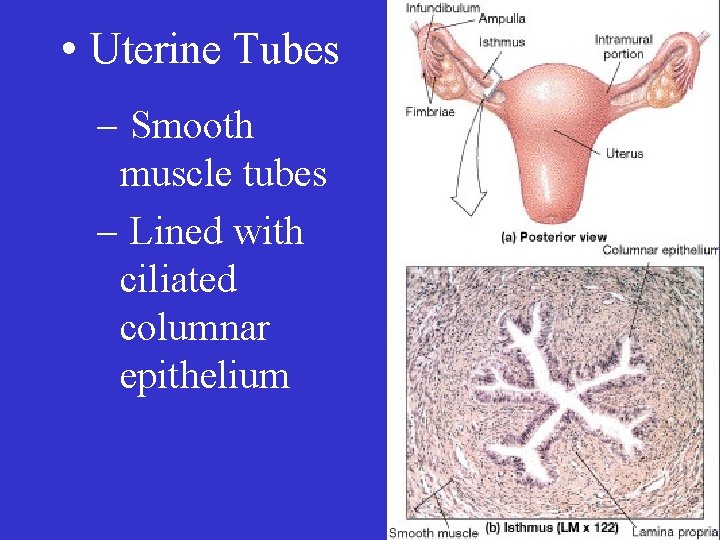
• Uterine Tubes – Smooth muscle tubes – Lined with ciliated columnar epithelium
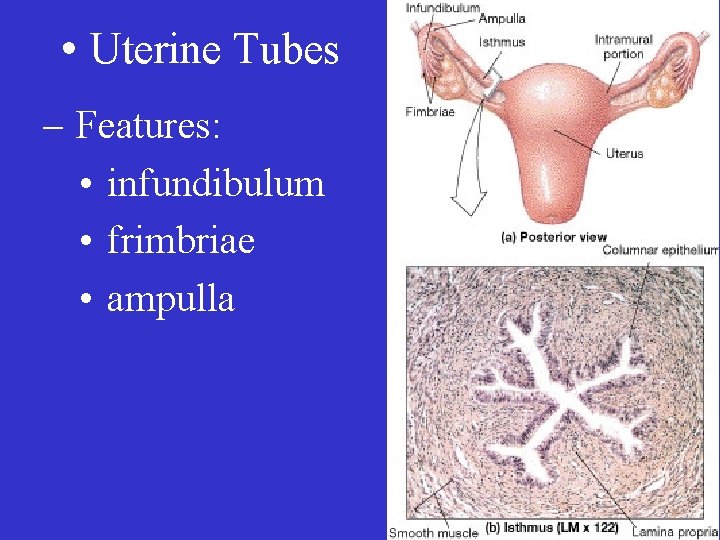
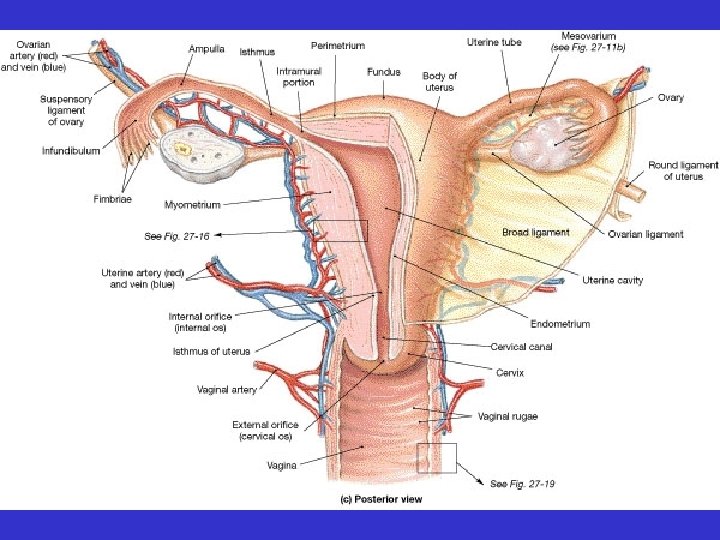
• Uterine Tubes – Features: • infundibulum • frimbriae • ampulla
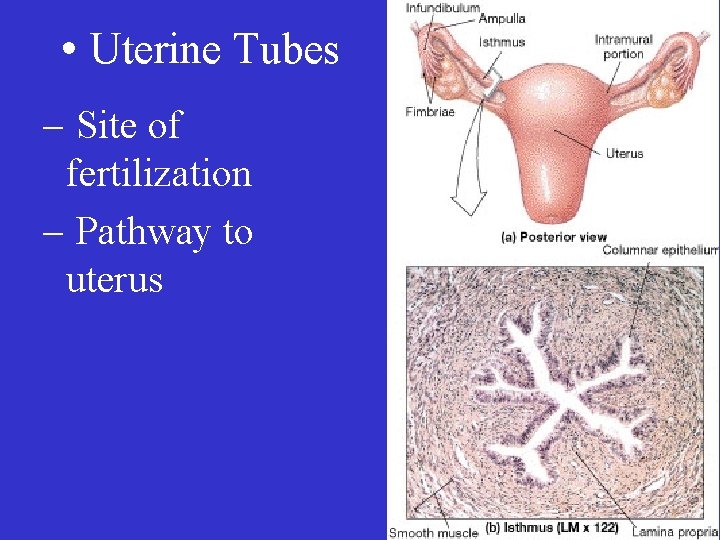
• Uterine Tubes – Site of fertilization – Pathway to uterus
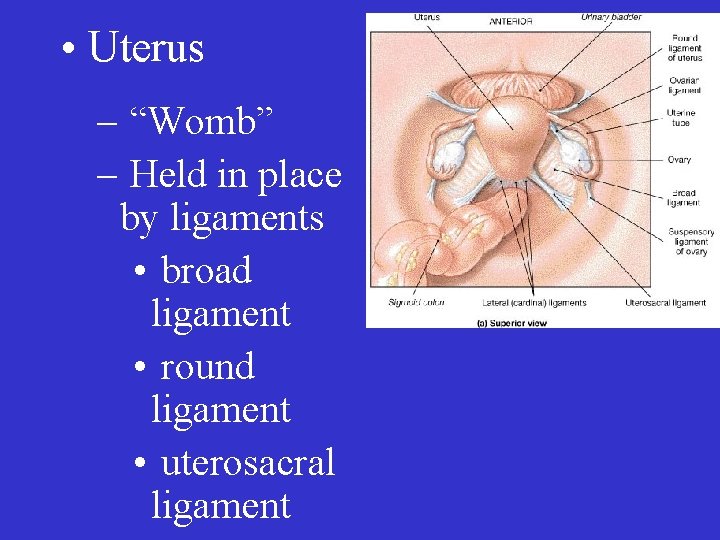
• Uterus – “Womb” – Held in place by ligaments • broad ligament • round ligament • uterosacral ligament
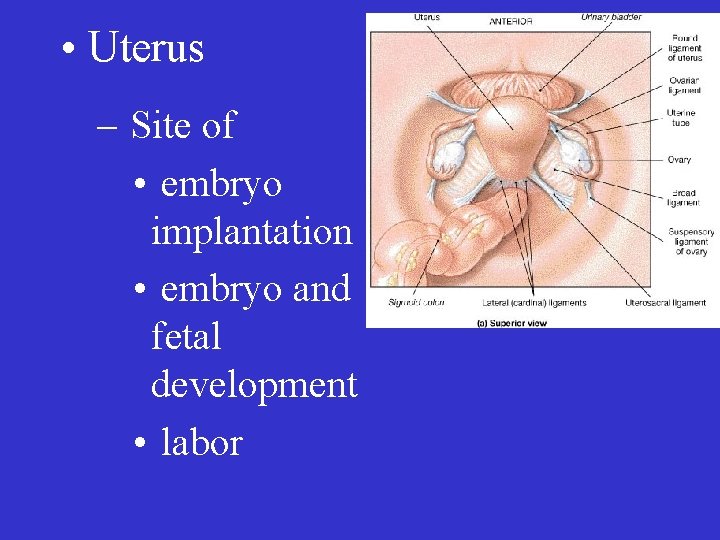
• Uterus – Site of • embryo implantation • embryo and fetal development • labor
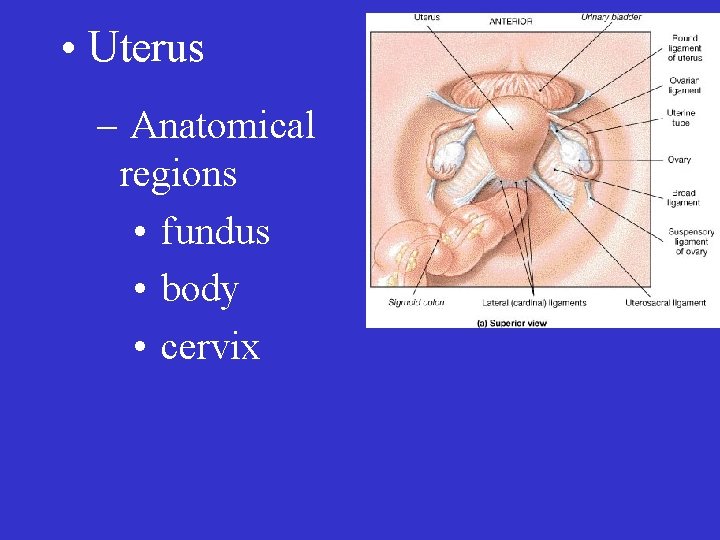
• Uterus – Anatomical regions • fundus • body • cervix
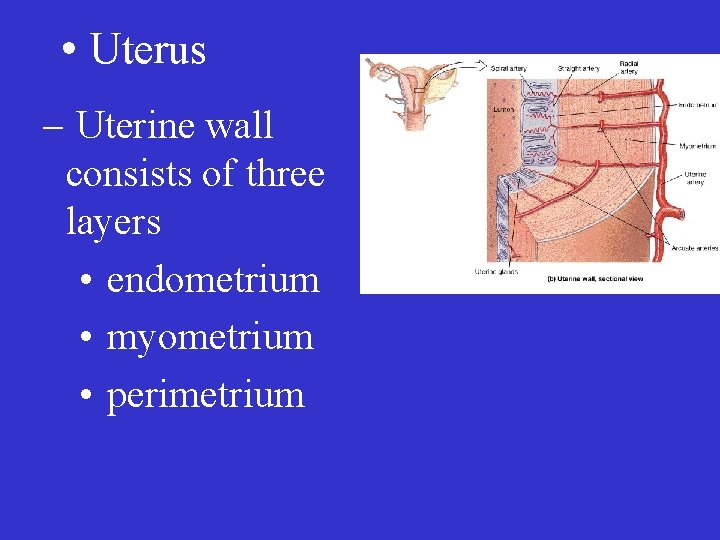
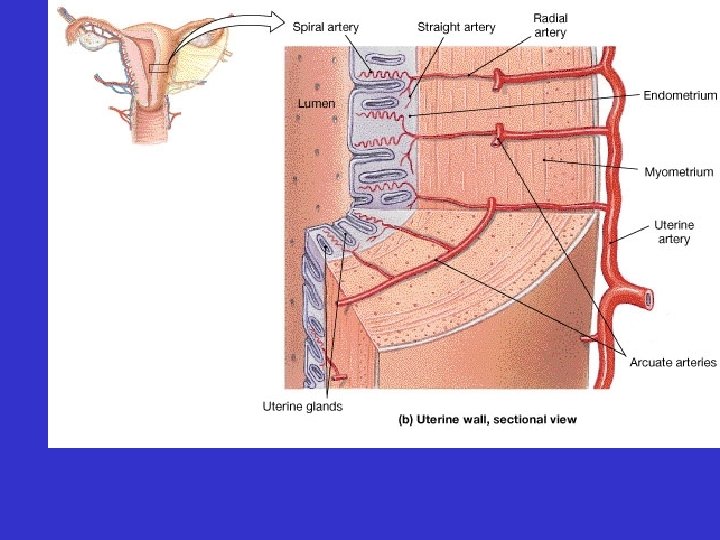
• Uterus – Uterine wall consists of three layers • endometrium • myometrium • perimetrium
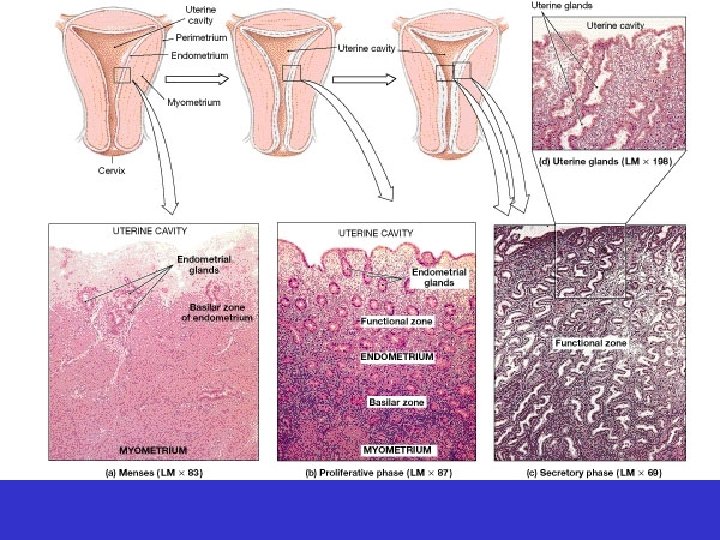
• Uterus – Endometrium divided into • functional zone • basilar zone
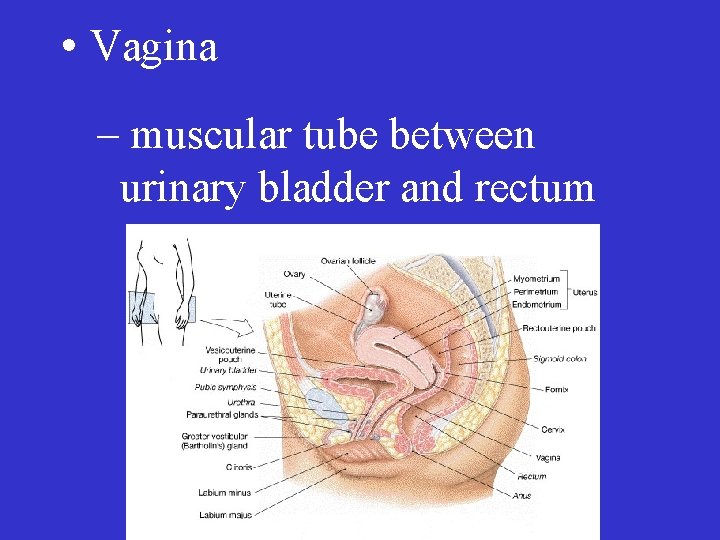
• Vagina – muscular tube between urinary bladder and rectum
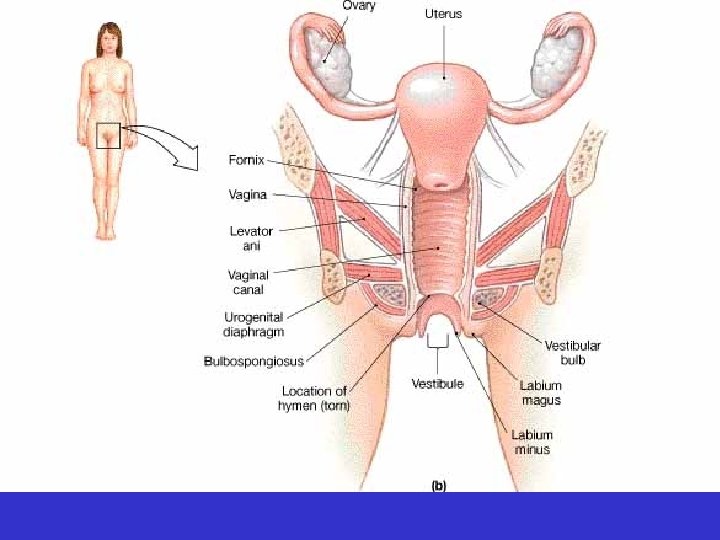
• Vagina – pathway for sperm – pathway for menstrual flow – birth canal – vaginal opening may be partially covered by the hymen
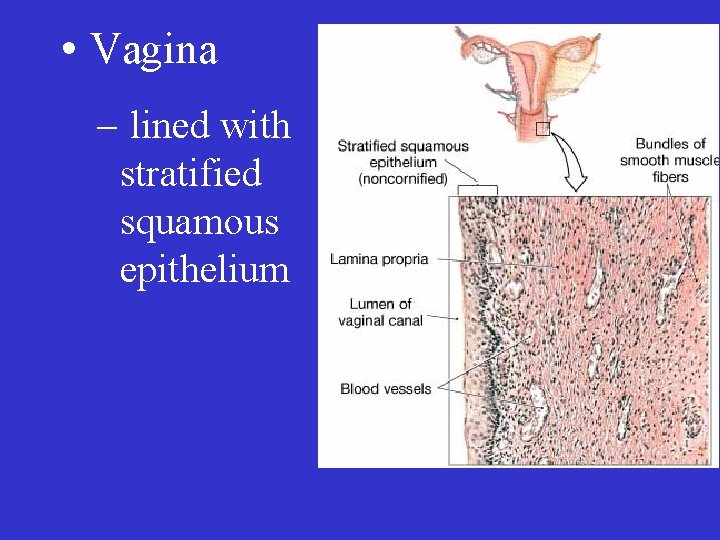
• Vagina – lined with stratified squamous epithelium
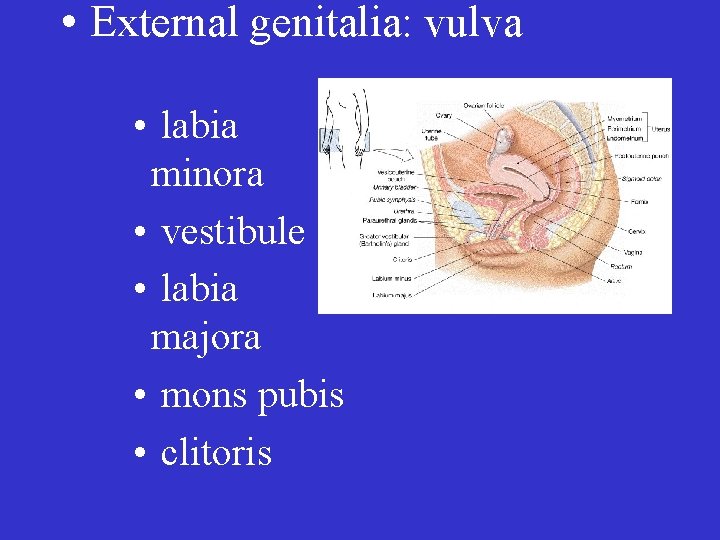
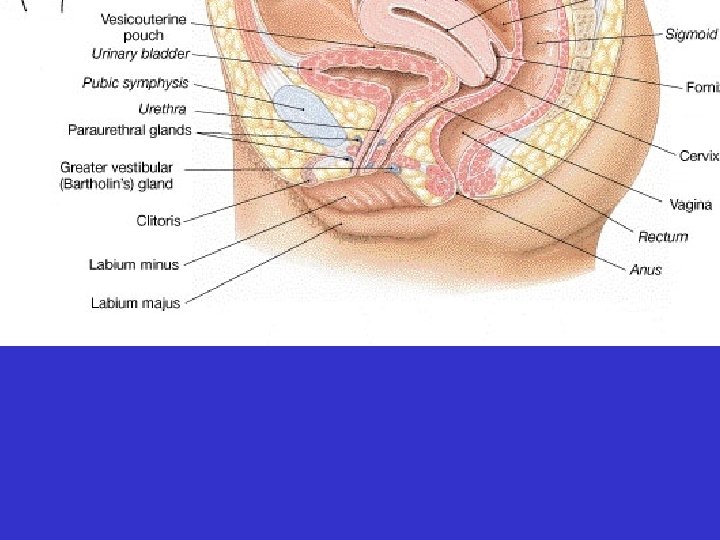
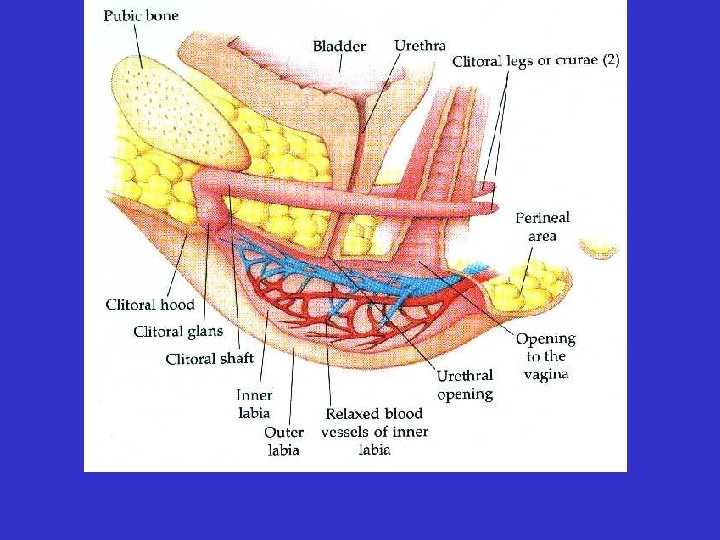
• External genitalia: vulva • labia minora • vestibule • labia majora • mons pubis • clitoris
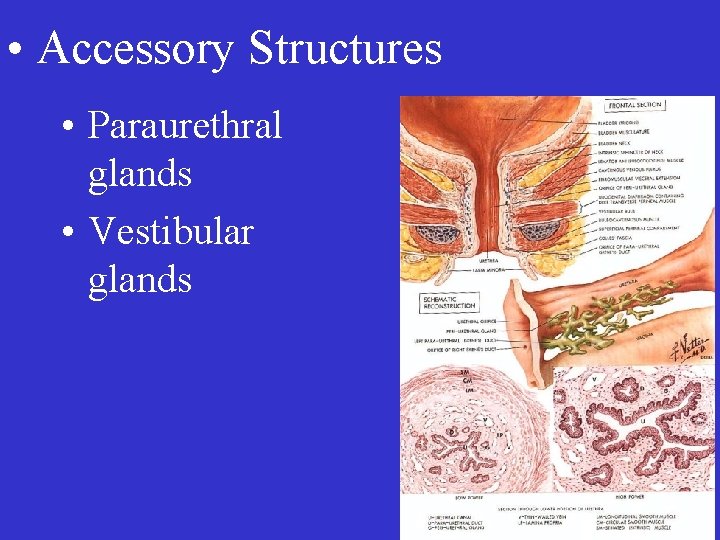
• Accessory Structures • Paraurethral glands • Vestibular glands
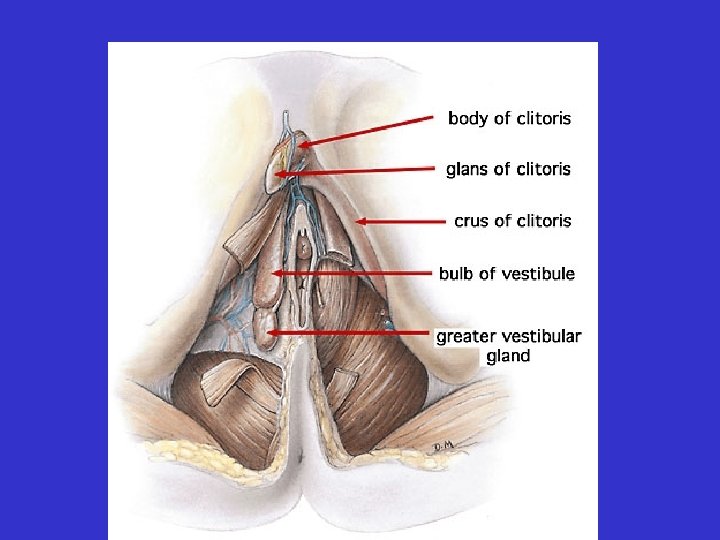
• Accessory Structures • Vestibular Bulb
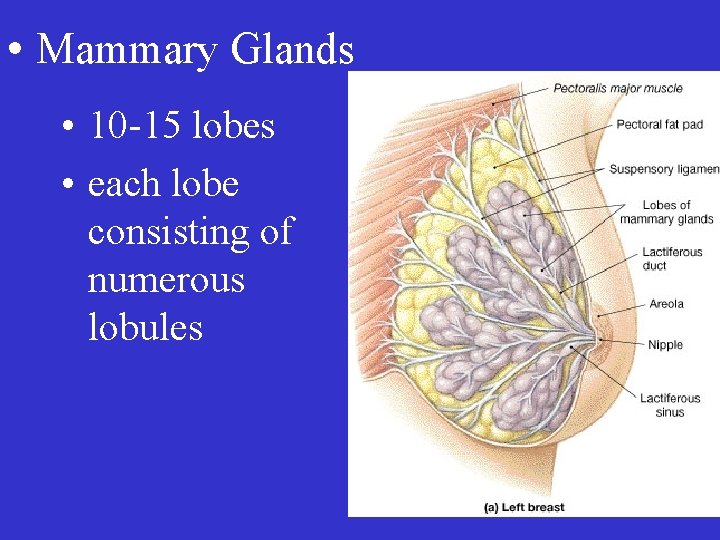
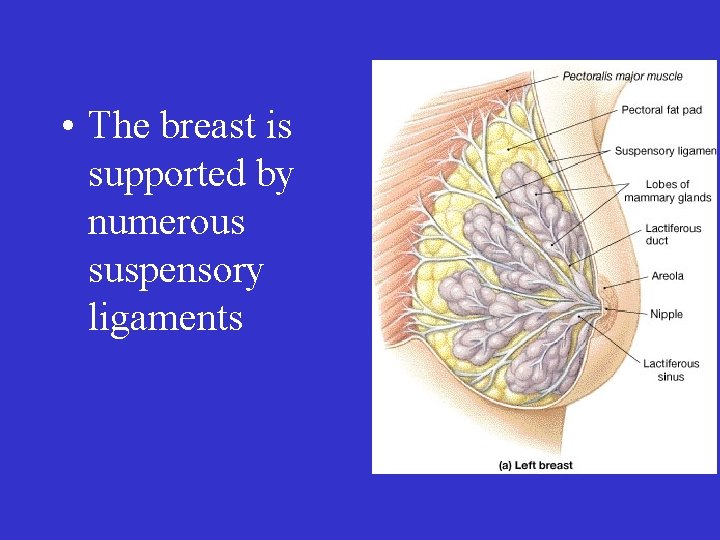
• Mammary Glands • 10 -15 lobes • each lobe consisting of numerous lobules
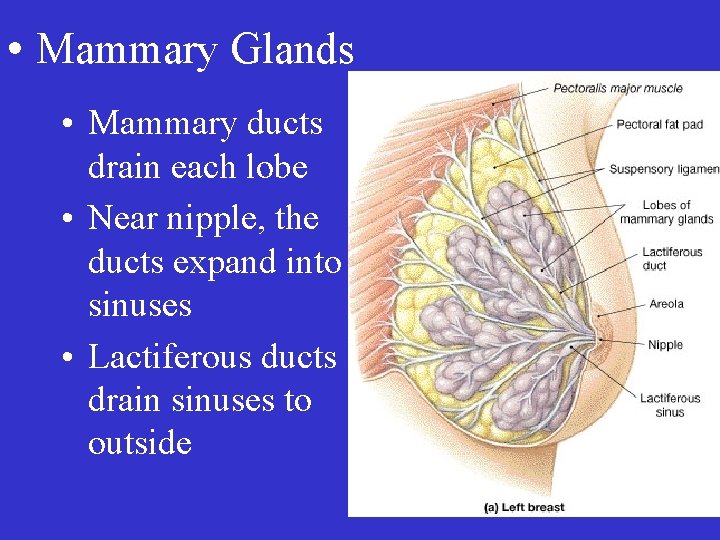
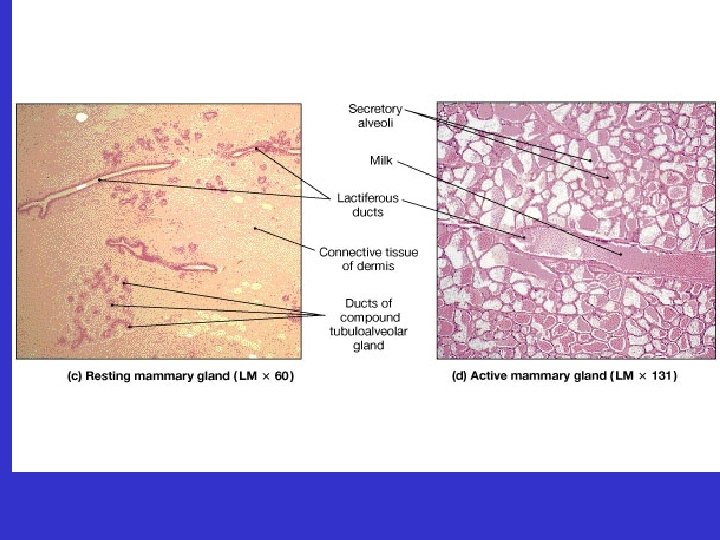
• Mammary Glands • Mammary ducts drain each lobe • Near nipple, the ducts expand into sinuses • Lactiferous ducts drain sinuses to outside
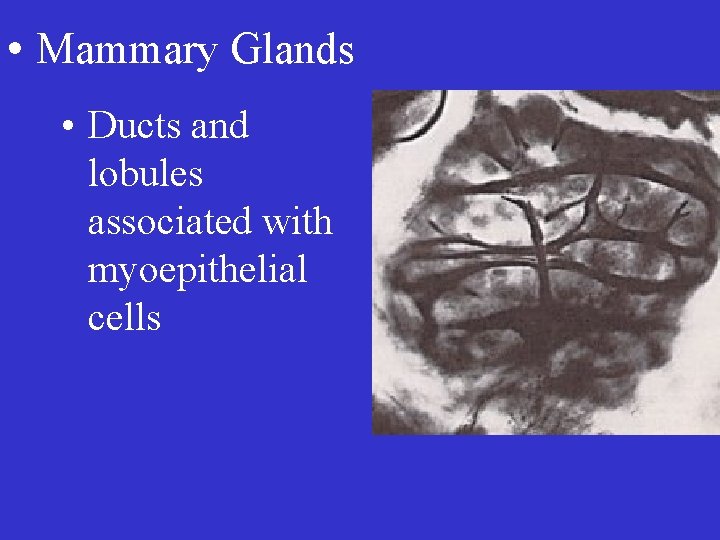
• Mammary Glands • Ducts and lobules associated with myoepithelial cells
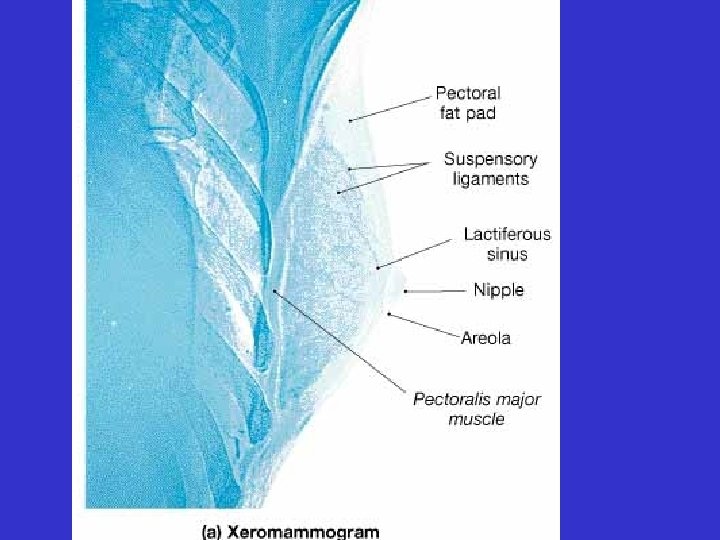
• The breast is supported by numerous suspensory ligaments
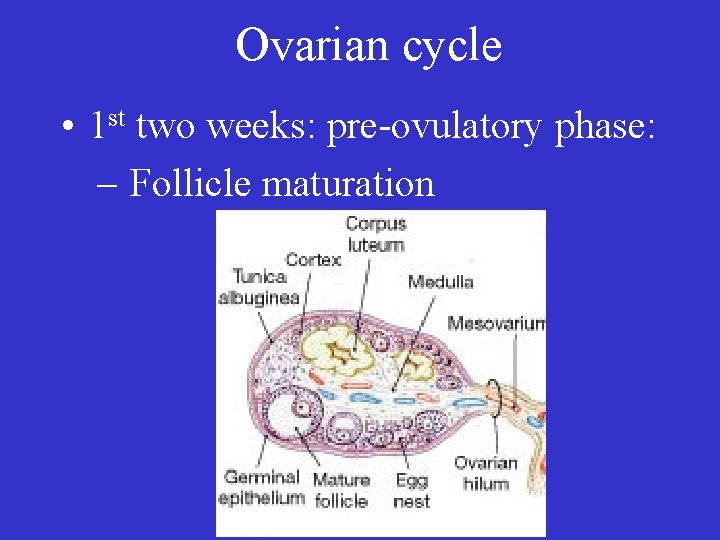
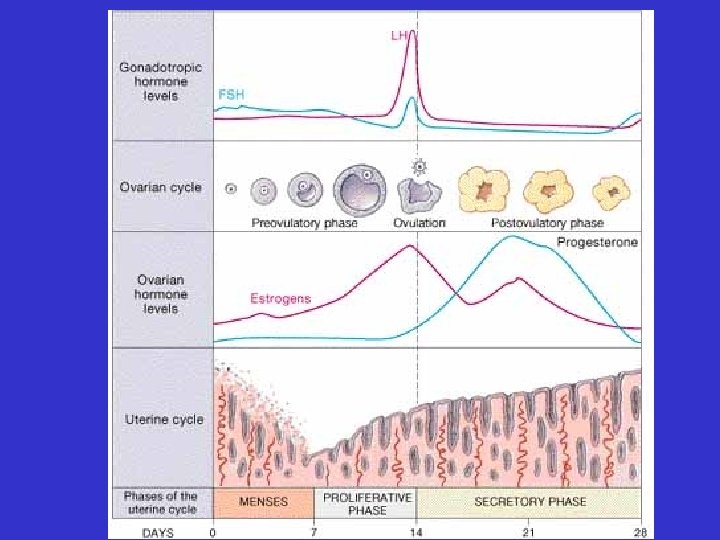
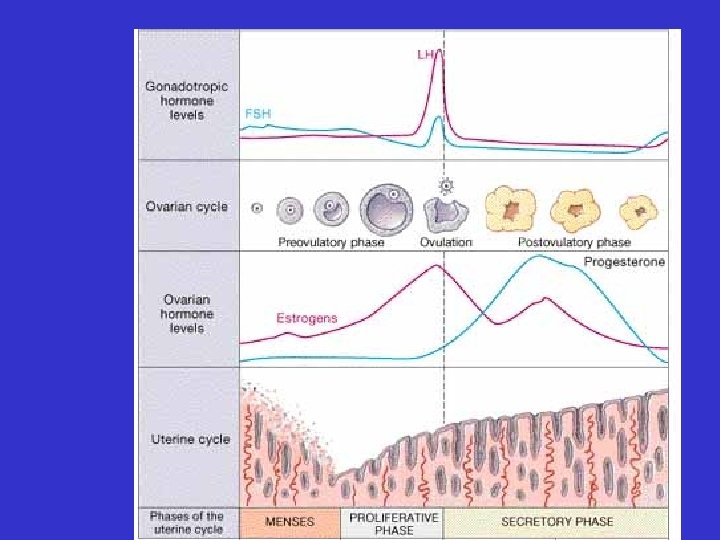
Ovarian cycle • 1 st two weeks: pre-ovulatory phase: – Follicle maturation
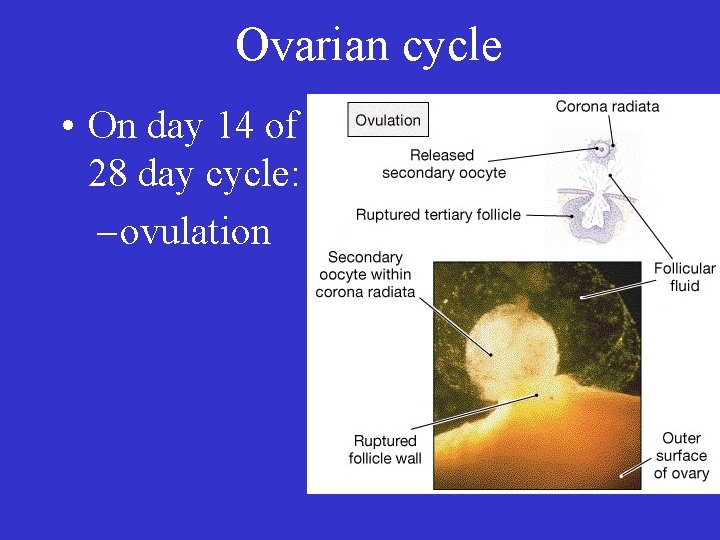
Ovarian cycle • On day 14 of a 28 day cycle: – ovulation
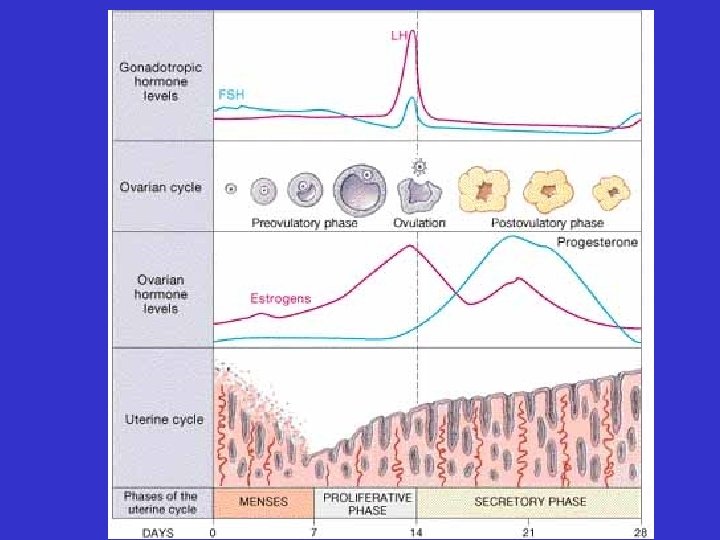
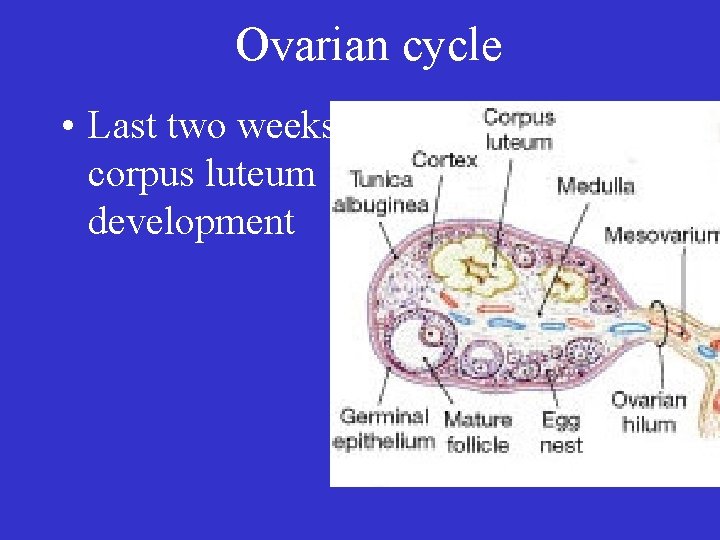
Ovarian cycle • Last two weeks: corpus luteum development
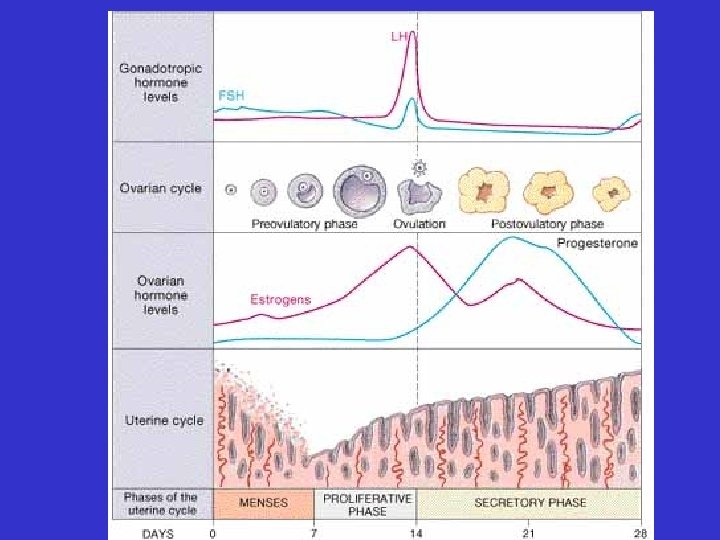
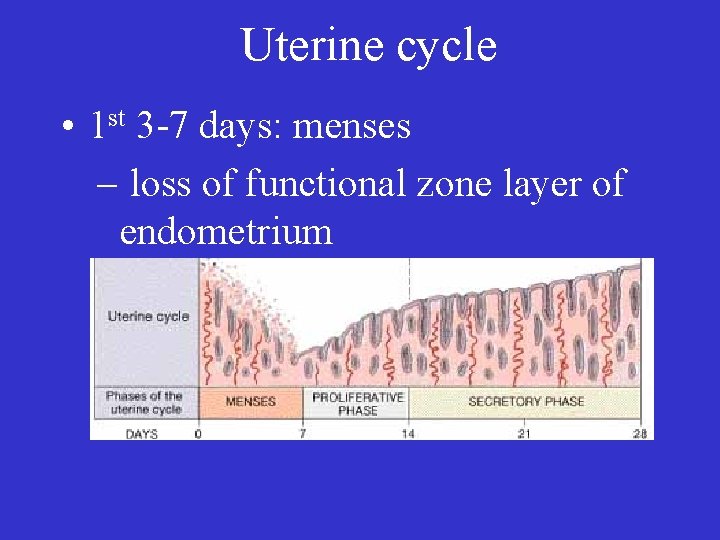
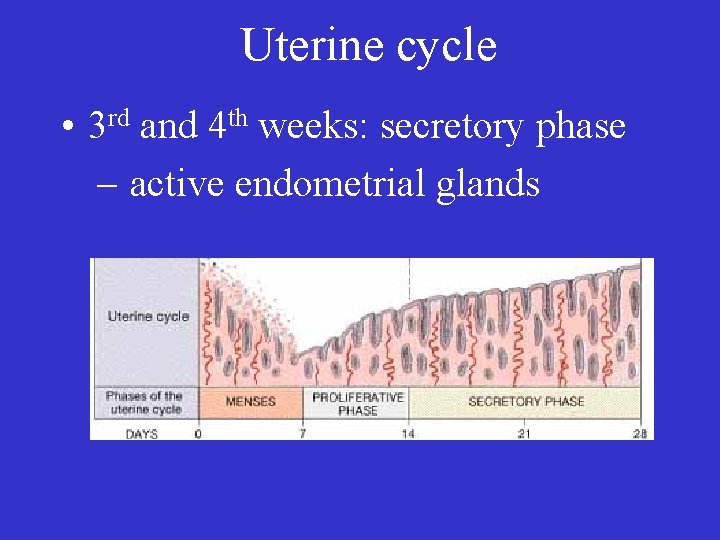
Uterine cycle • 1 st 3 -7 days: menses – loss of functional zone layer of endometrium
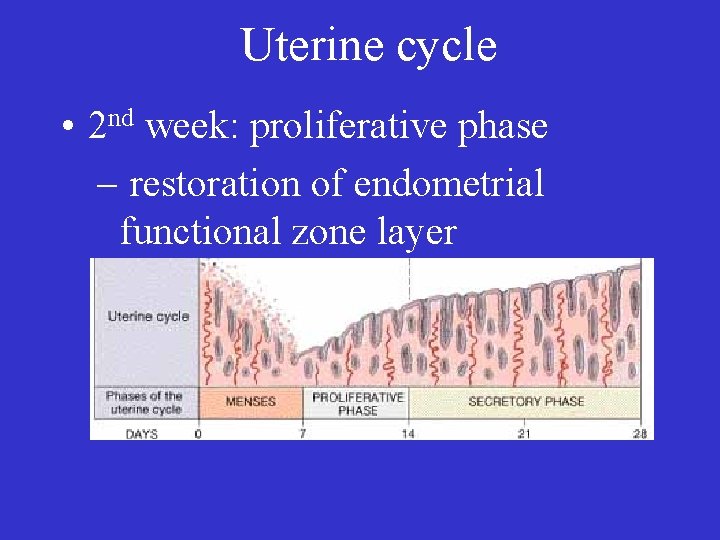
Uterine cycle • 2 nd week: proliferative phase – restoration of endometrial functional zone layer
Uterine cycle • 3 rd and 4 th weeks: secretory phase – active endometrial glands
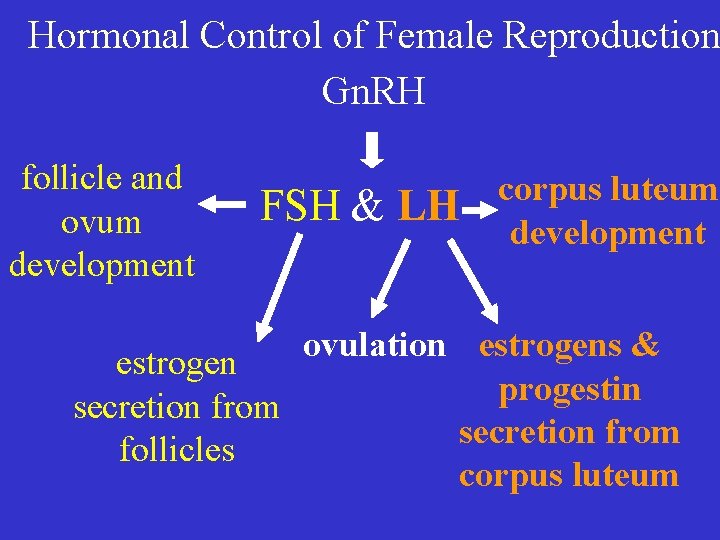
Hormonal Control of Female Reproduction Gn. RH follicle and ovum development FSH & LH corpus luteum development ovulation estrogens & estrogen progestin secretion from follicles corpus luteum
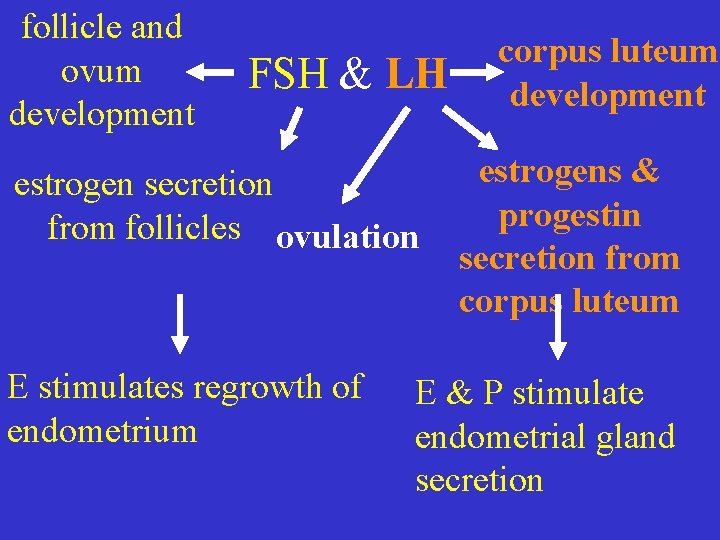
follicle and ovum development FSH & LH estrogen secretion from follicles ovulation E stimulates regrowth of endometrium corpus luteum development estrogens & progestin secretion from corpus luteum E & P stimulate endometrial gland secretion
• If (after two weeks) no pregnancy: – corpus luteum shuts down. – E & P secretion stops – endometrium loses hormonal support – menses begins
• If a successful fertilization occurs: – corpus luteum does not shut down. – E & P secretion continues – endometrium is maintained – pregnancy continues
• Why doesn’t the corpus luteum shut down if an early embryo is present?
• Other Functions of Estrogen – development, growth, & maintenance of female sex organs – bone and muscle growth – 2 o sex characteristics – libido
• General Function of Progestins – preparation of the body for pregnancy
Thank you ulnar nerve.