
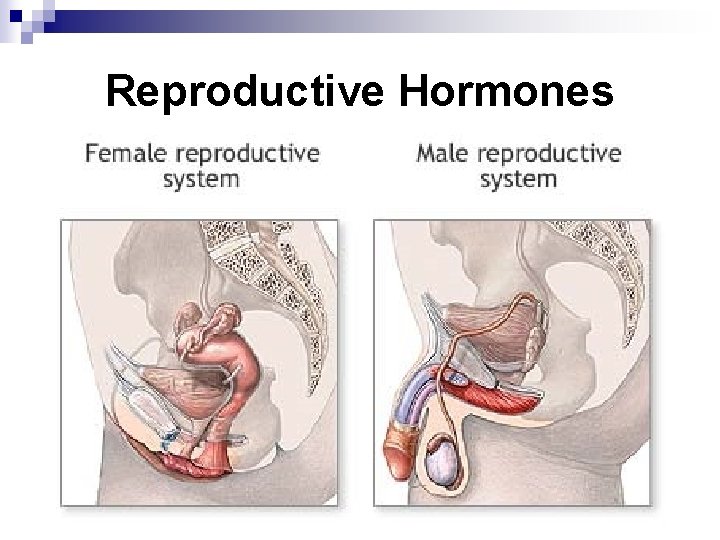
Reproductive Hormones Reproductive Hormones Male gonads testes produce



- Slides: 22
Reproductive Hormones
Reproductive Hormones Male gonads (testes) produce sperm. Female gonads (ovaries) produce eggs.
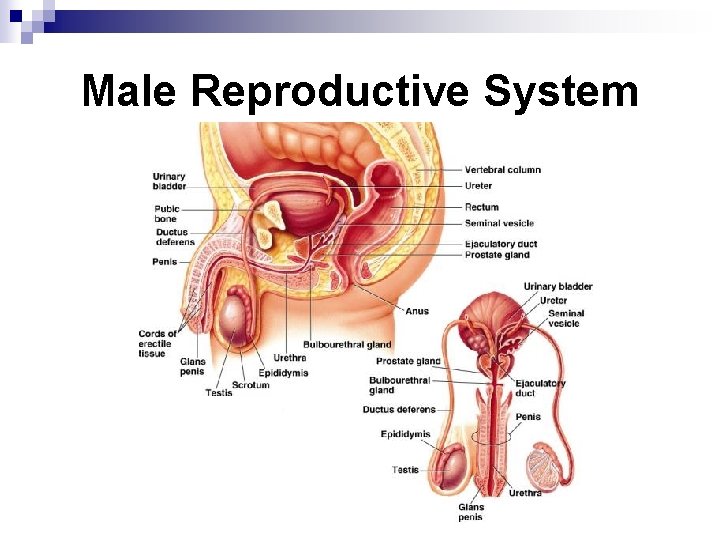
Male Reproductive System
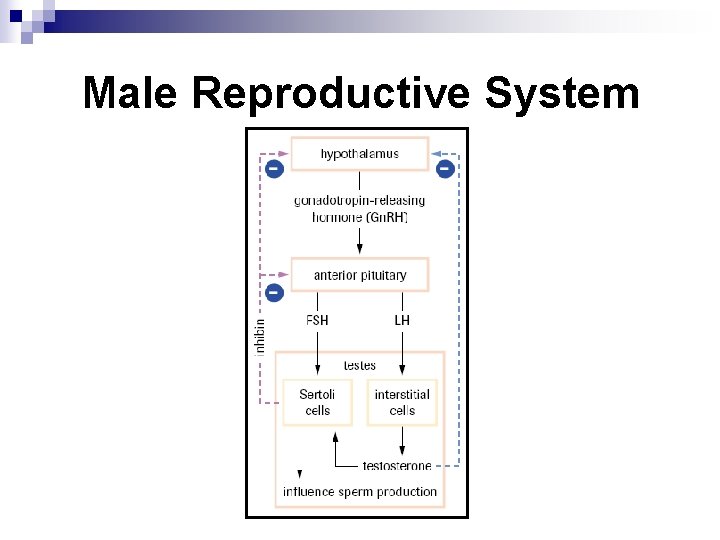
Male Reproductive System n n Sex hormones: androsterone & testosterone. Function: ¨ Stimulates spermatogenesis. ¨ Stimulates secondary sex characteristics. ¨ Increases secretion of body oils. ¨ Increases sex drive.
Male Reproductive System
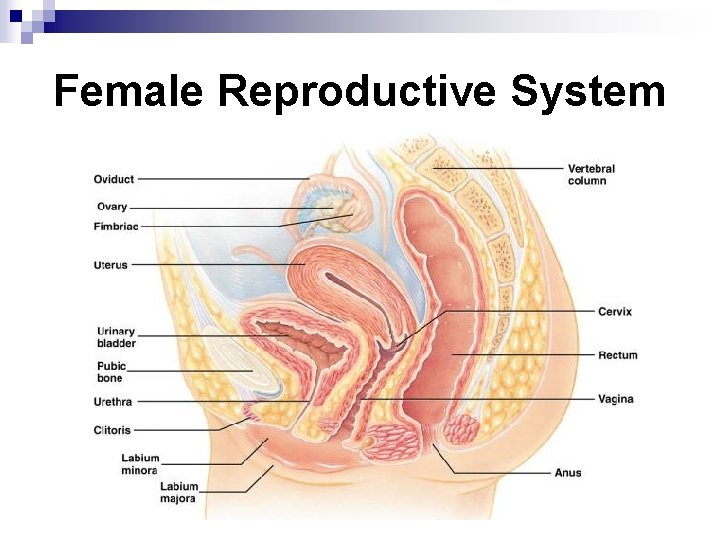
Female Reproductive System
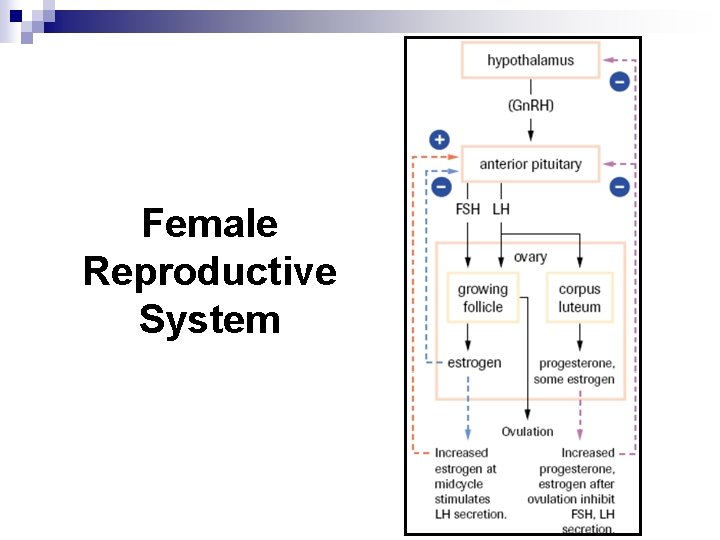
Female Reproductive System Sex hormones: Estrogen & Progesterone
Female Reproductive System Ovaries contain cells called follicles. n Follicles consist of: n ¨ Primary oocyte. ¨ Granulosa cells.
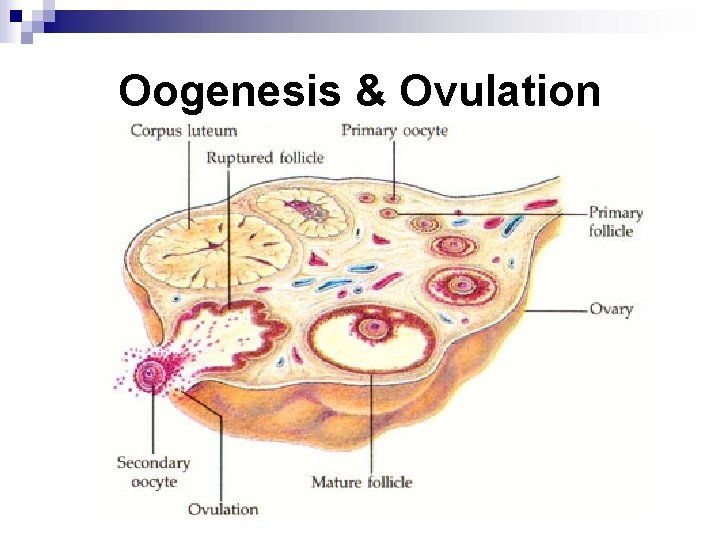
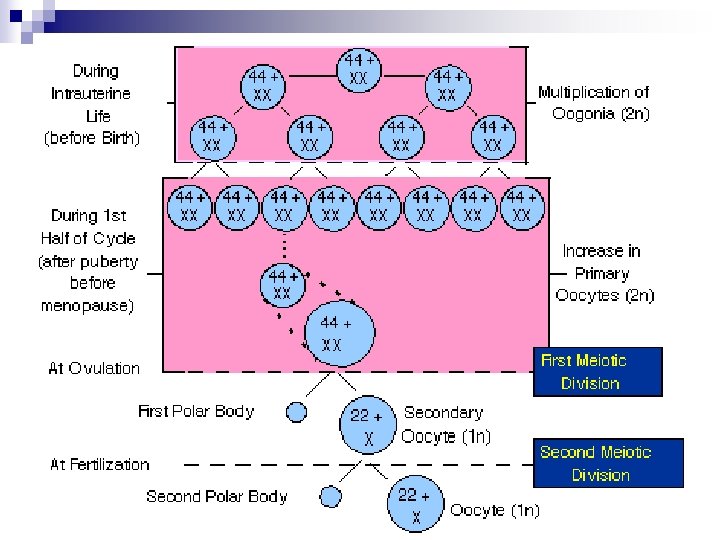
OOgenesis FSH & LH released. n Primary oocyte undergoes meiosis I. n ¨ Forms body. n a secondary oocyte and a polar Granulosa cells divide. ¨ Forms a fluid-filled cavity (antrum) around the secondary oocyte. ¨ Serves as nutrition for oocyte.
Ovulation n Secondary oocyte ruptures ovarian wall. ¨ Enters n the fallopian tubes. Remaining follicle cells form the corpus luteum. ¨ Secretes estrogen and progesterone.
Oogenesis & Ovulation
Meiosis II Dependent on Fertilization n No fertilization? ¨ Corpus luteum degenerates and leaves a scar (corpus albicans). n Fertilization? ¨ Meiosis II occurs. ¨ Secondary oocyte divides to form a fertilized egg/ovum (zygote) & a polar body.
Female Reproductive System
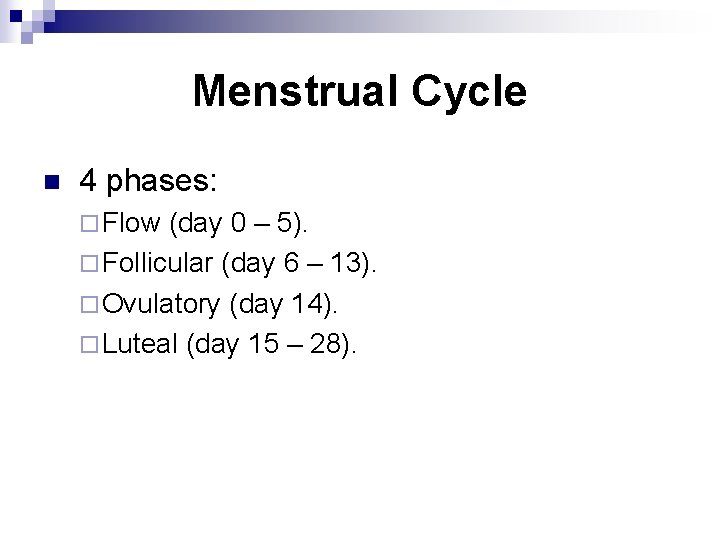
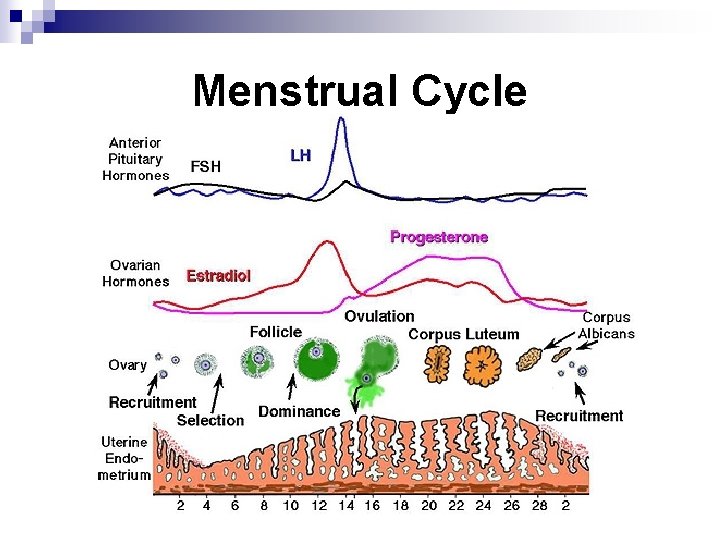
Menstrual Cycle n 4 phases: ¨ Flow (day 0 – 5). ¨ Follicular (day 6 – 13). ¨ Ovulatory (day 14). ¨ Luteal (day 15 – 28).
Menstrual Cycle Flow Phase: n Shedding of endometrium. n Marks beginning of menstrual cycle.
Menstrual Cycle Follicular Phase: n Development of follicle. n Estrogen secreted. ¨ Triggers thickening of endometrium.
Menstrual Cycle Ovulatory Phase: n Ovulation occurs. ¨ Secondary oocyte released from ovary.
Menstrual Cycle Luteal Phase: n Corpus luteum develops. ¨ Secretes estrogen and progesterone. ¨ Endometrium continues to thicken. * Progesterone inhibits further ovulation & prevents uterine contractions.
Menstrual Cycle n No fertilization? ¨ Estrogen and progesterone decreases. ¨ Uterine contractions cause the shedding of the endometrium.
Menstrual Cycle
*Males and females both have male and female sex hormones, but in varying levels.