
Which organs are involved in the Respiratory system
- Slides: 16
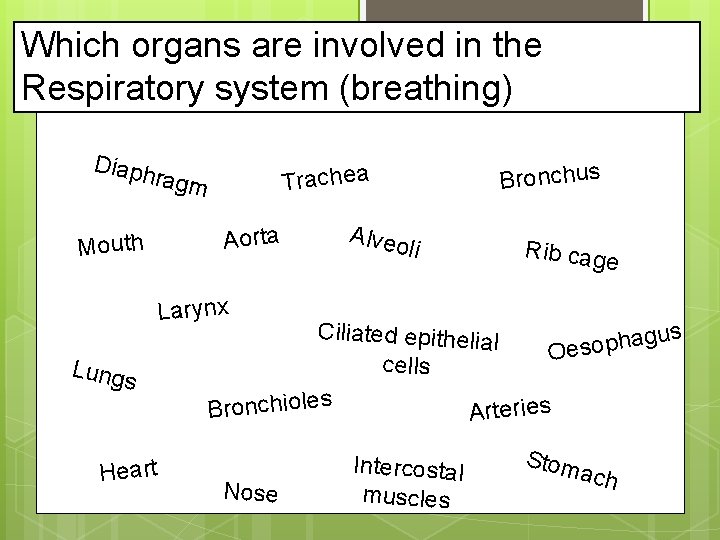
Which organs are involved in the Respiratory system (breathing) Diaph ragm Aorta Mouth Bronchus Trachea Alveo li Rib cag e Larynx Lung s Heart Ciliated epithelial gus a h p o s e O cells Bronchioles Arteries Nose Intercostal muscles Stom ach
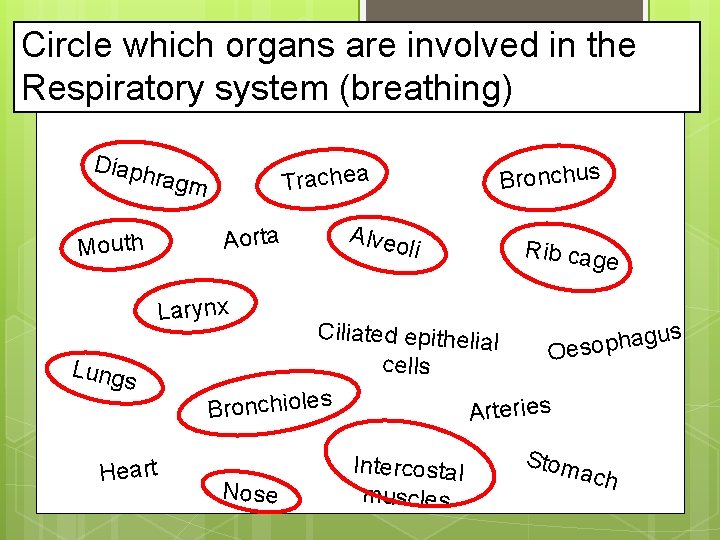
Circle which organs are involved in the Respiratory system (breathing) Diaph ragm Aorta Mouth Bronchus Trachea Alveo li Rib cag e Larynx Lung s Heart Ciliated epithelial gus a h p o s e O cells Bronchioles Arteries Nose Intercostal muscles Stom ach
Respiratory system and breathing Lesson objectives: To know about the breathing system and be able to identify all the organs involved. To be able to explain how breathing occurs.
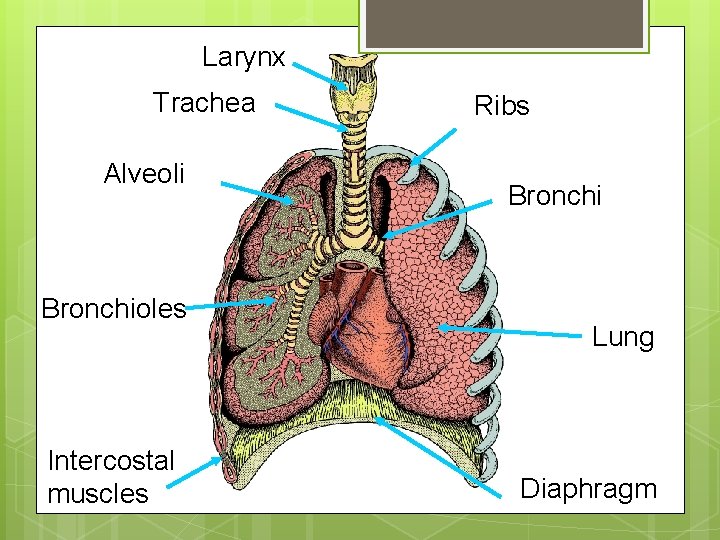
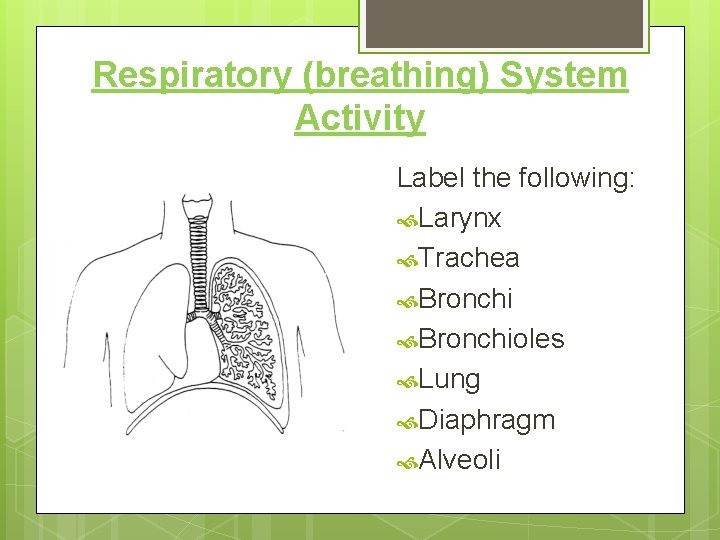
Larynx Trachea Alveoli Bronchioles Intercostal muscles Ribs Bronchi Lung Diaphragm
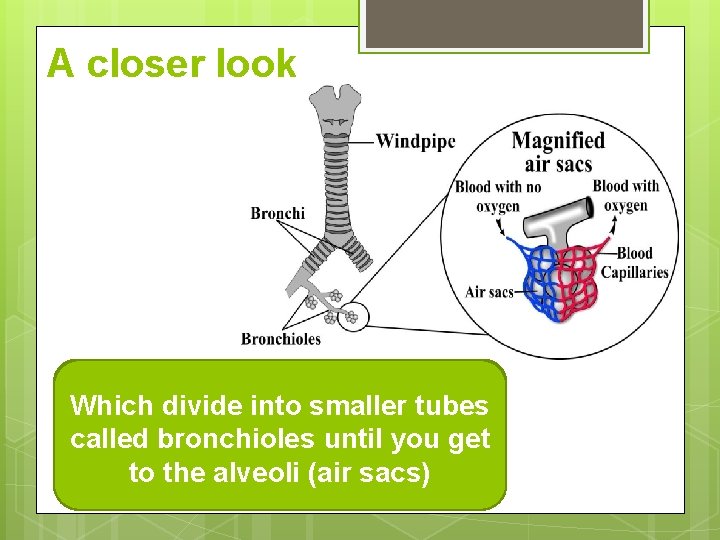
A closer look Which divide into smaller tubes The Which tube divides leading into to two the lungs smaller is called bronchioles until … you get tubes called the trachea bronchi to the alveoli (air sacs)
Respiratory (breathing) System Activity Label the following: Larynx Trachea Bronchioles Lung Diaphragm Alveoli
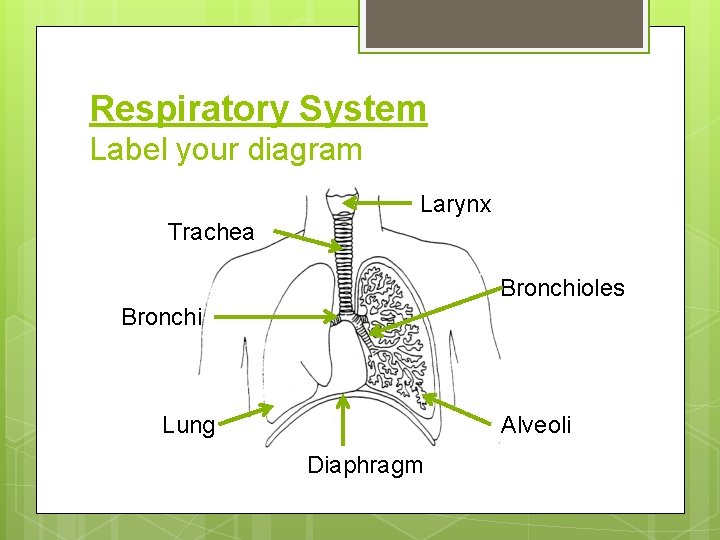
Respiratory System Label your diagram Larynx Trachea Bronchioles Bronchi Lung Alveoli Diaphragm
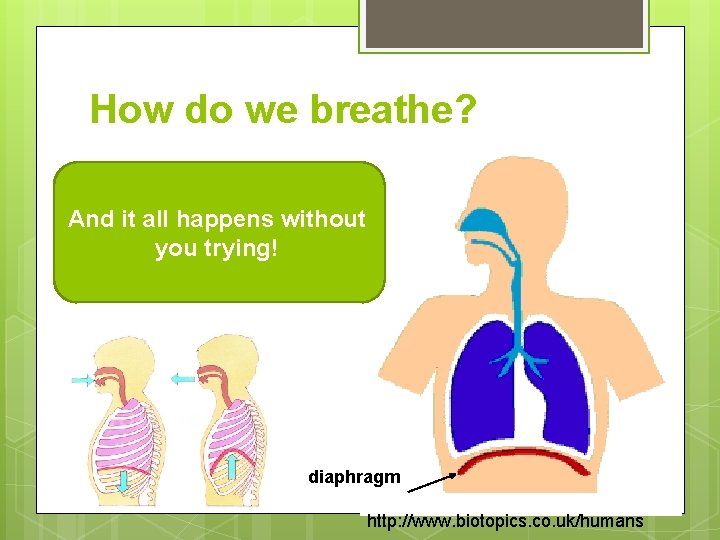
How do we breathe? And itlungs all the happens without the The the Watch When lungs diaphragm how expand are diaphragm itsqueezed controls isand a very air is you and powerful moves air breathing drawn istrying! down forced muscle. up in. ……out diaphragm http: //www. biotopics. co. uk/humans
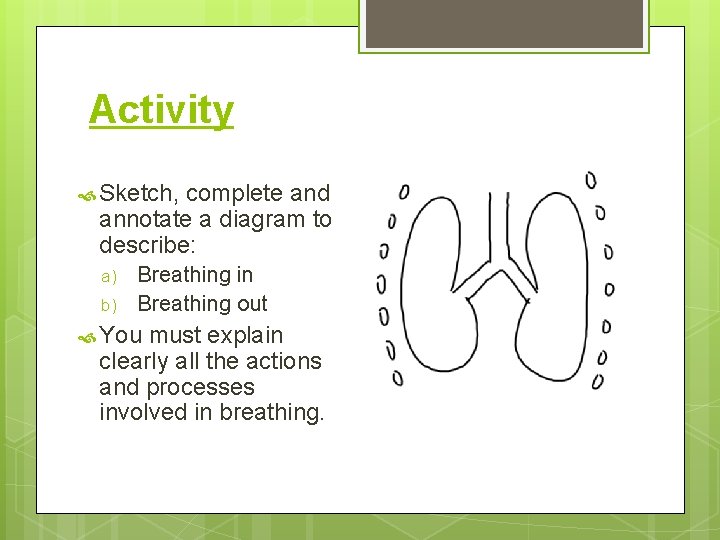
Activity Sketch, complete and annotate a diagram to describe: a) b) Breathing in Breathing out You must explain clearly all the actions and processes involved in breathing.
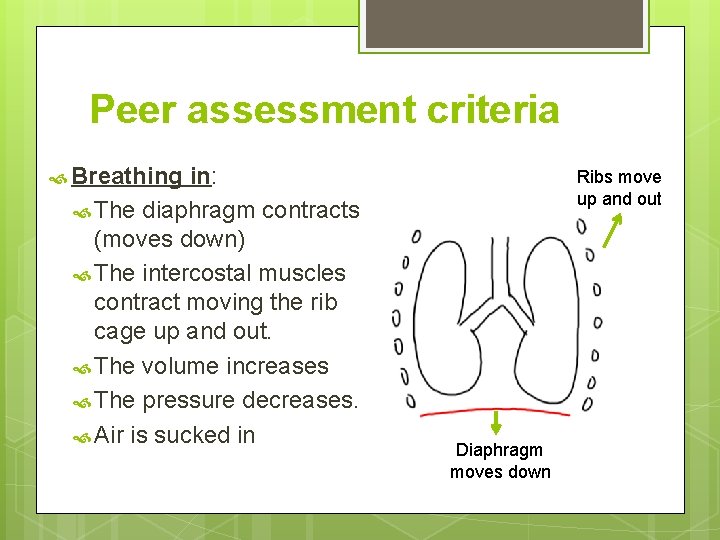
Peer assessment criteria Breathing in: The diaphragm contracts (moves down) The intercostal muscles contract moving the rib cage up and out. The volume increases The pressure decreases. Air is sucked in Ribs move up and out Diaphragm moves down
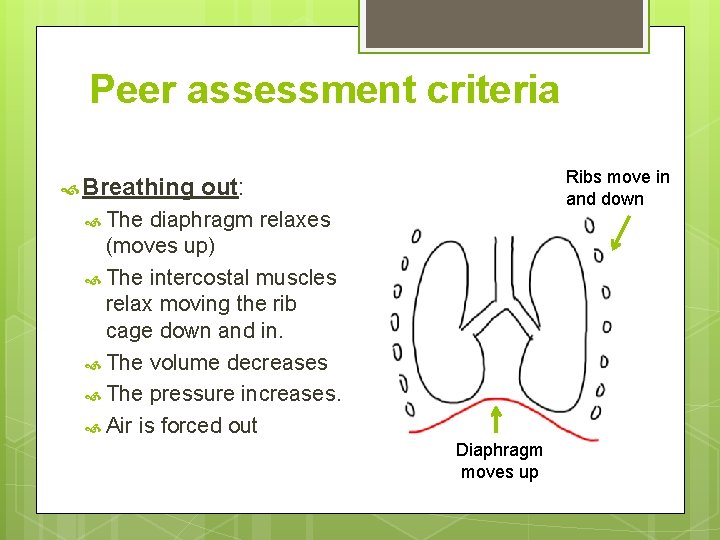
Peer assessment criteria Breathing Ribs move in and down out: The diaphragm relaxes (moves up) The intercostal muscles relax moving the rib cage down and in. The volume decreases The pressure increases. Air is forced out Diaphragm moves up
Plenary
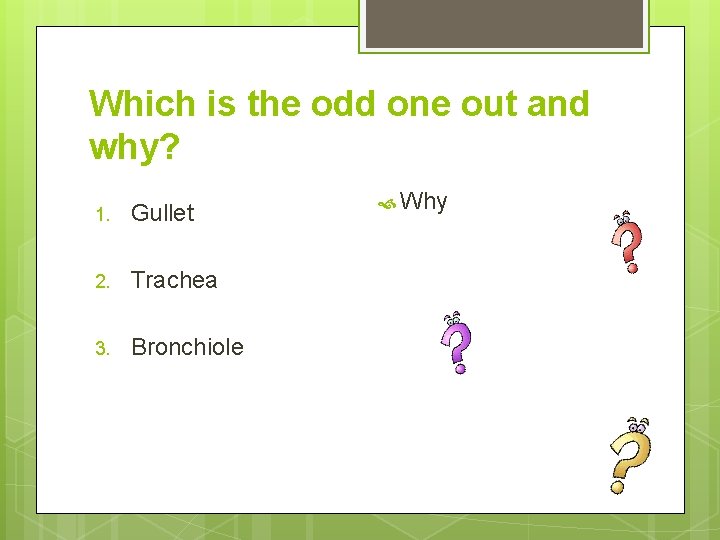
Which is the odd one out and why? 1. Gullet 2. Trachea 3. Bronchiole Why
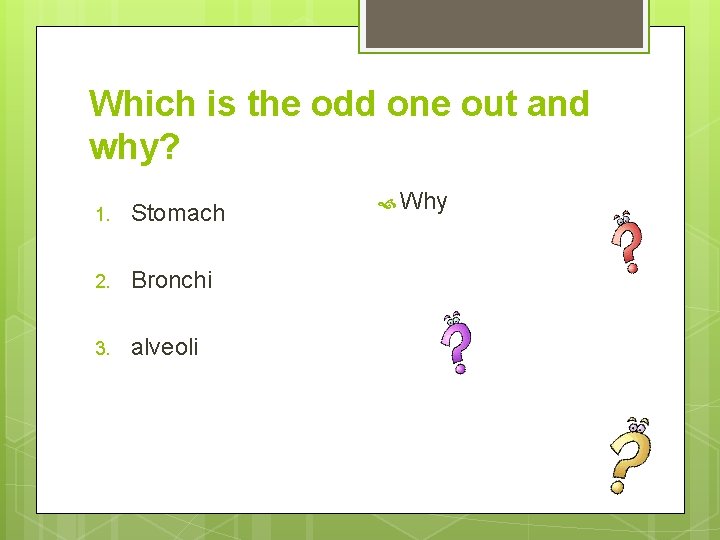
Which is the odd one out and why? 1. Stomach 2. Bronchi 3. alveoli Why
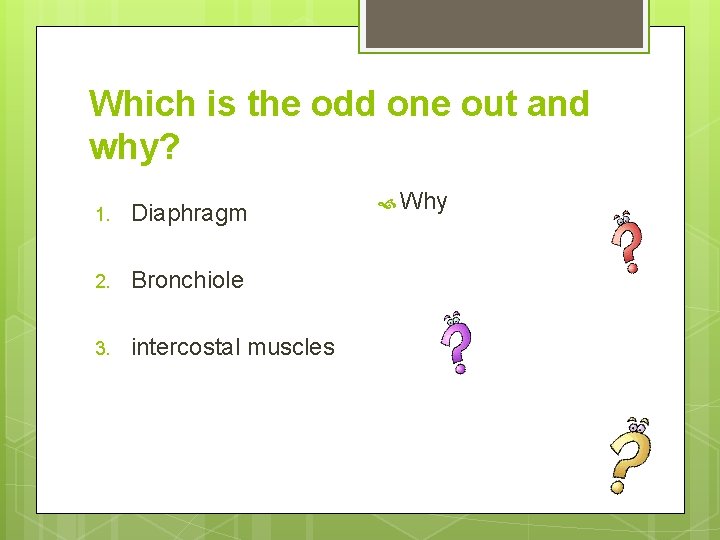
Which is the odd one out and why? 1. Diaphragm 2. Bronchiole 3. intercostal muscles Why
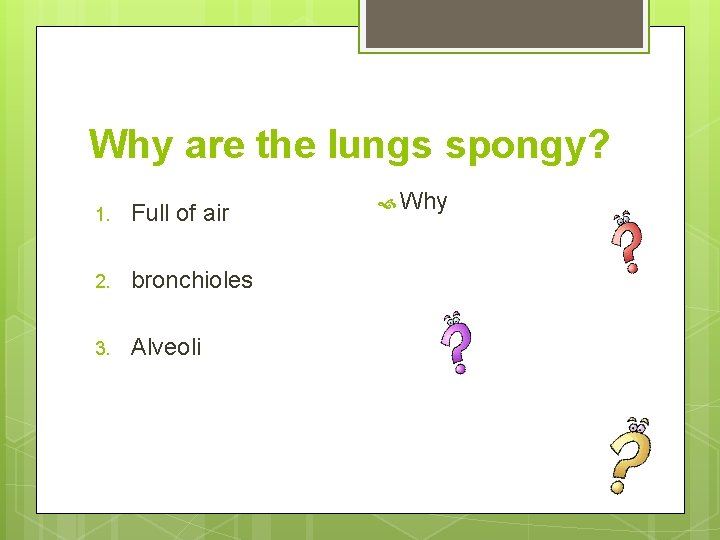
Why are the lungs spongy? 1. Full of air 2. bronchioles 3. Alveoli Why