WarmUp In each of the following groups which
- Slides: 73
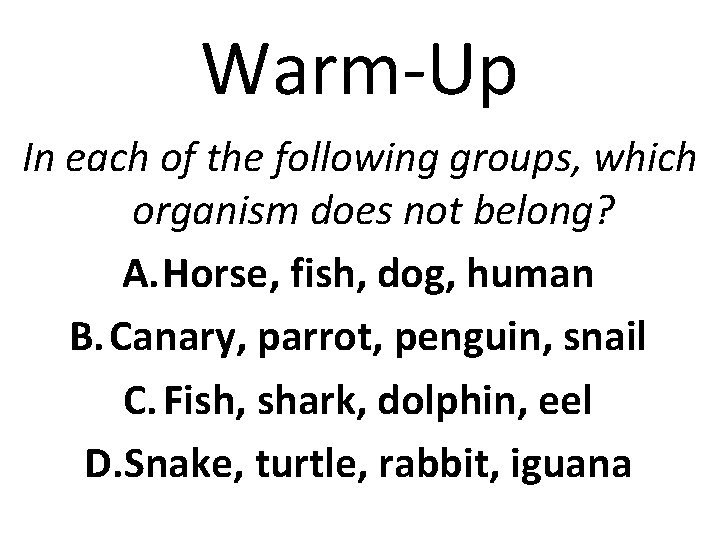
Warm-Up In each of the following groups, which organism does not belong? A. Horse, fish, dog, human B. Canary, parrot, penguin, snail C. Fish, shark, dolphin, eel D. Snake, turtle, rabbit, iguana
Warm-Up In the previous examples, was there always only one right way to group and classify the organisms? Why or why not?
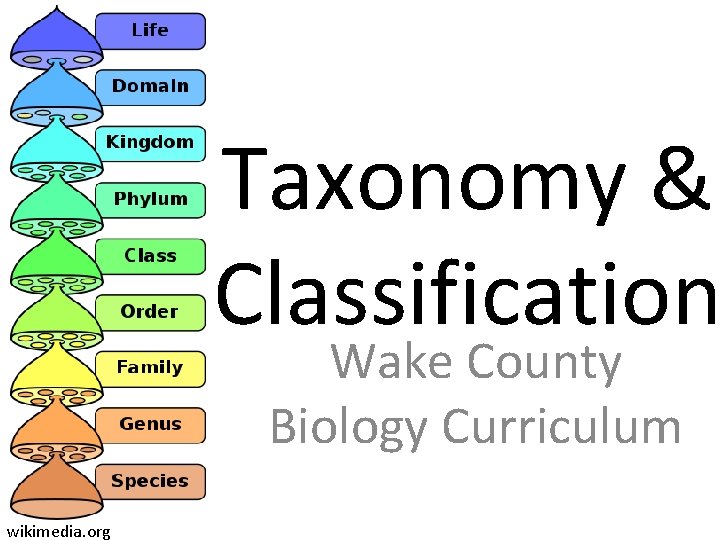
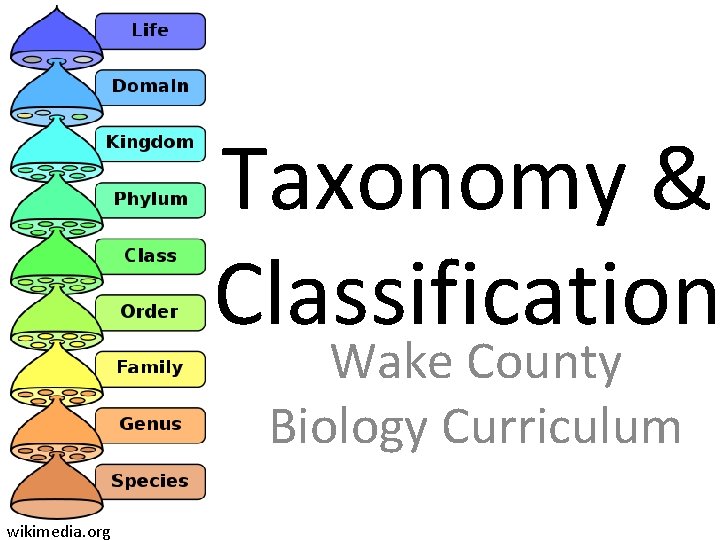
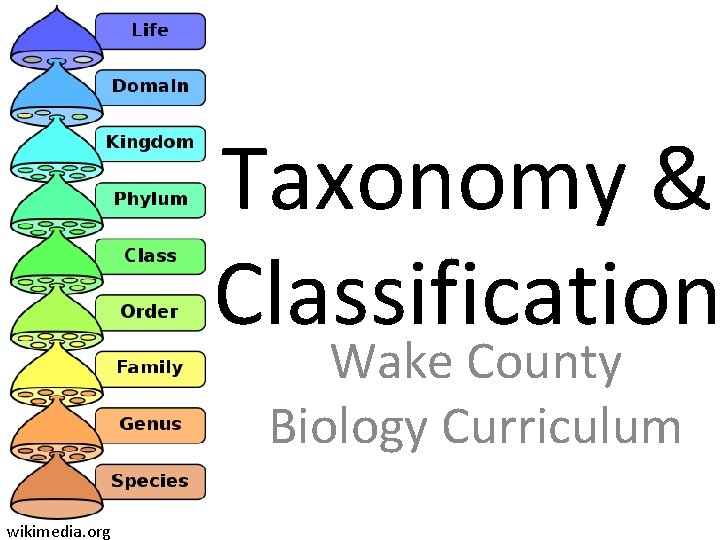
Taxonomy & Classification Wake County Biology Curriculum wikimedia. org
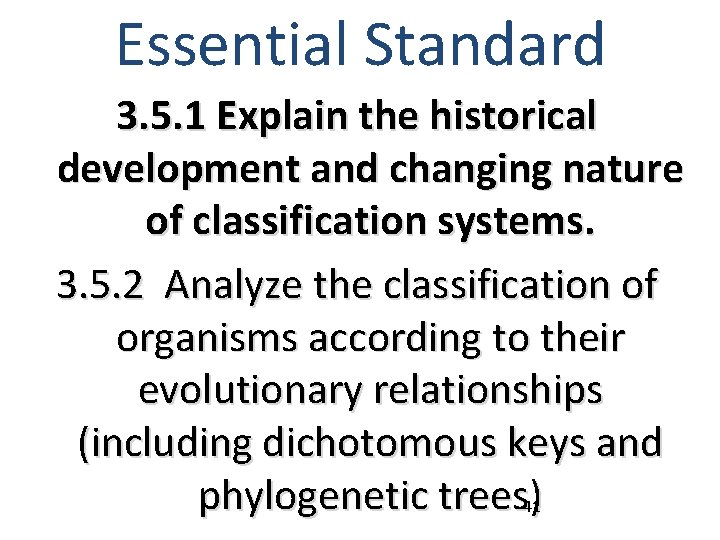
Essential Standard 3. 5. 1 Explain the historical development and changing nature of classification systems. 3. 5. 2 Analyze the classification of organisms according to their evolutionary relationships (including dichotomous keys and phylogenetic trees) 4
How do we classify organisms? How do we figure out what is related to what? • The world is filled with millions of different organisms… • To study how they relate to one another, we need to name them and organize them into groups • Organisms used to be sorted by physical similarities…
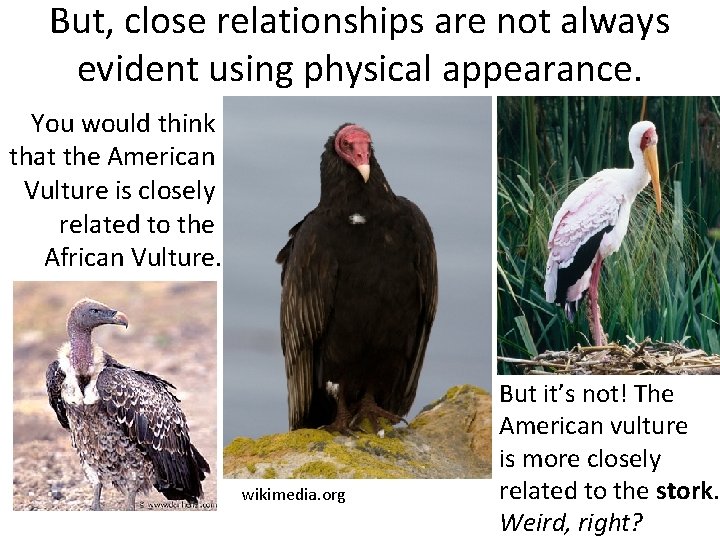
But, close relationships are not always evident using physical appearance. You would think that the American Vulture is closely related to the African Vulture. wikimedia. org But it’s not! The American vulture is more closely related to the stork. Weird, right?
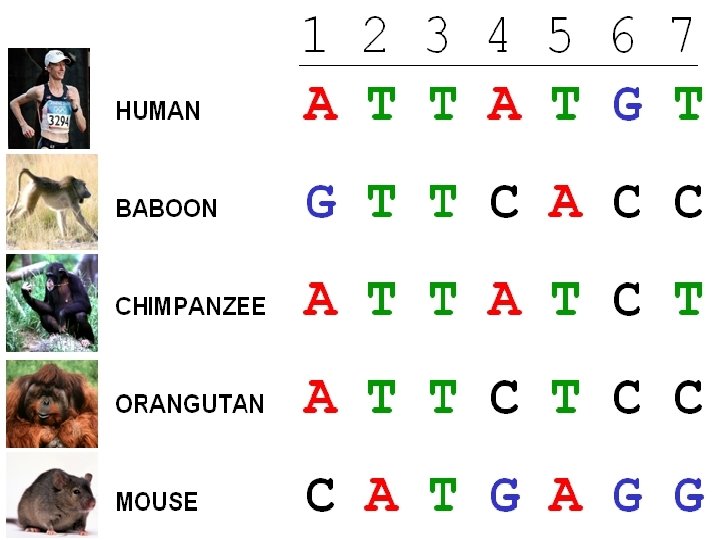
Evolutionary : Phylogeny Classification • Now that we know and understand DNA, we have been able to compare species and identify organisms that are closely related by using DNA, and not just by physical similarities.
A phylogenetic tree is a diagram that shows how species are related to each other through common ancestors.
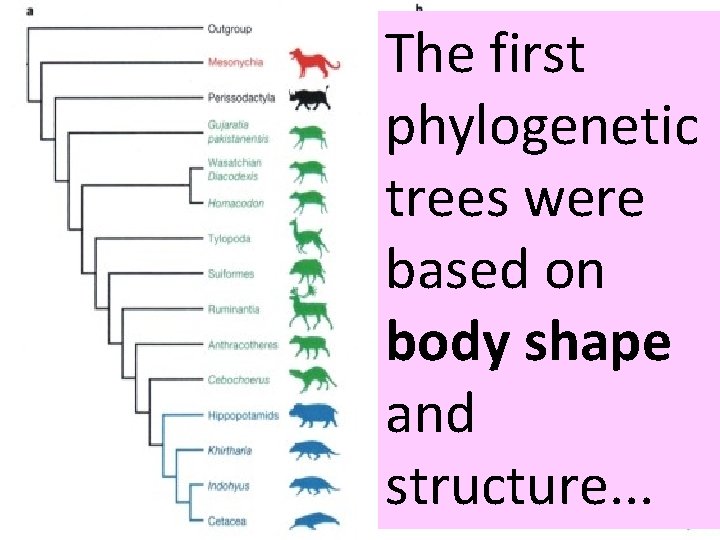
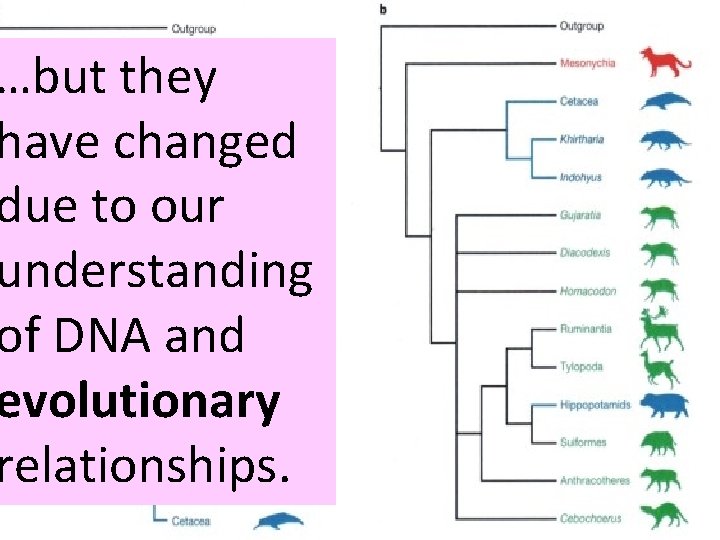
Dr. Jessica Theodor The first phylogenetic trees were based on body shape and structure. . .
…but they have changed due to our understanding of DNA and evolutionary relationships. Dr. Jessica Theodor
artsci. wustl. edu
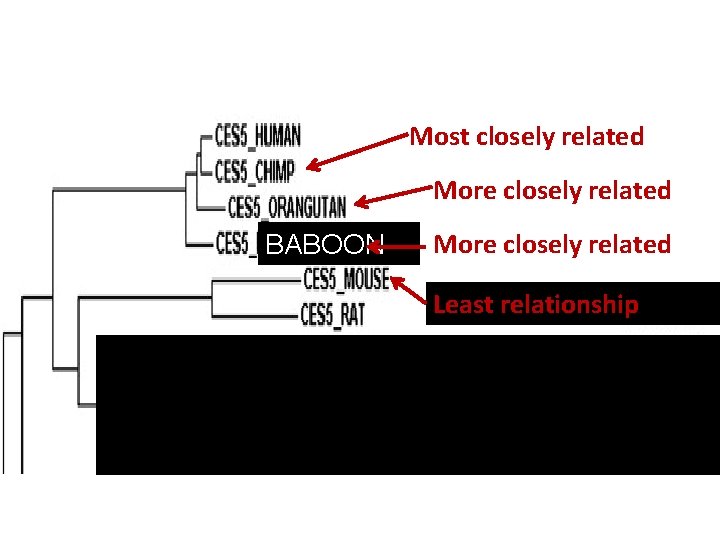
Most closely related More closely related BABOON More closely related Least relationship
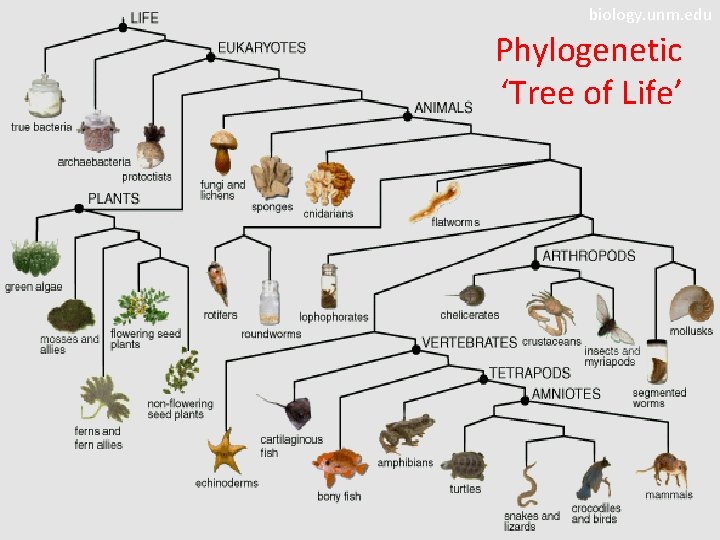
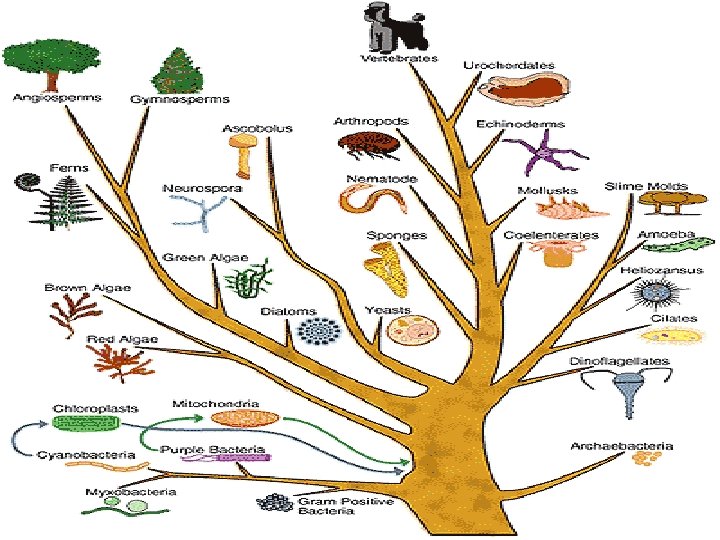
biology. unm. edu Phylogenetic ‘Tree of Life’
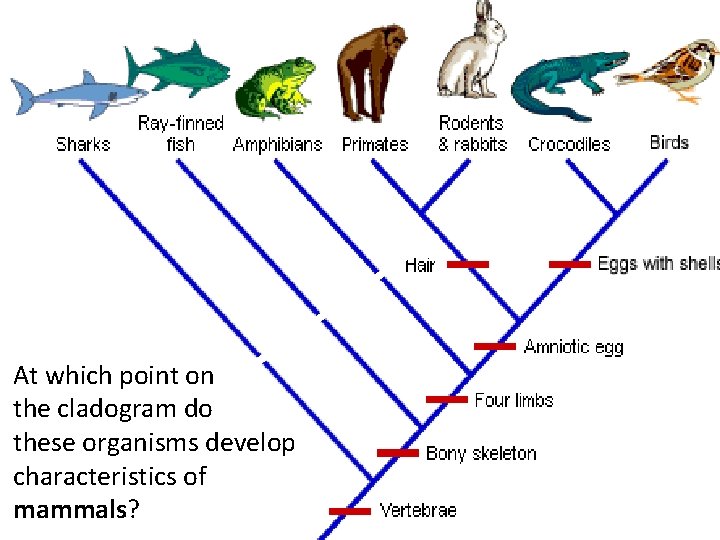
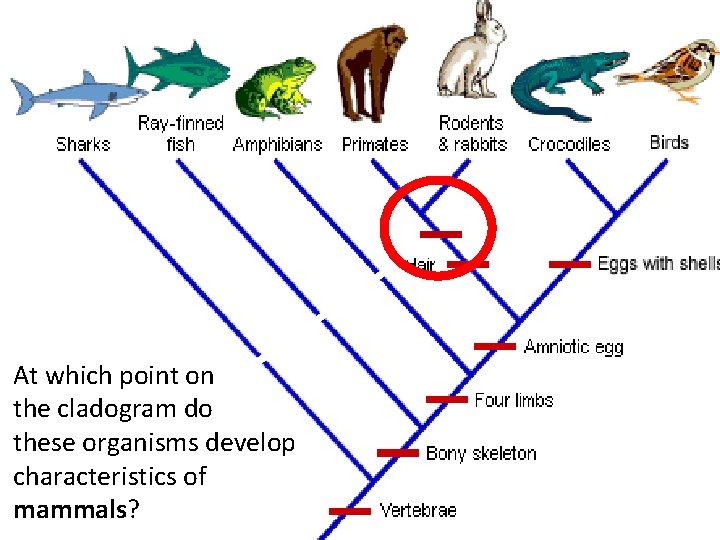
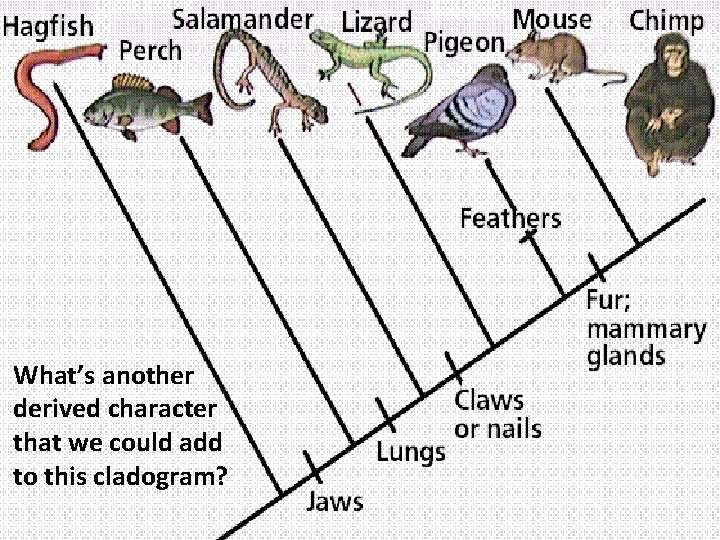
Cladograms • A cladogram is a diagram that shows the evolutionary relationships among a group of organisms and their derived characters • (It looks like a phylogenetic tree, but it has physical characteristics attached to it).
Cladograms • Derived characters are traits that show up later in the cladogram • Cladistics: tracing the derived characters that are shared amongst organisms
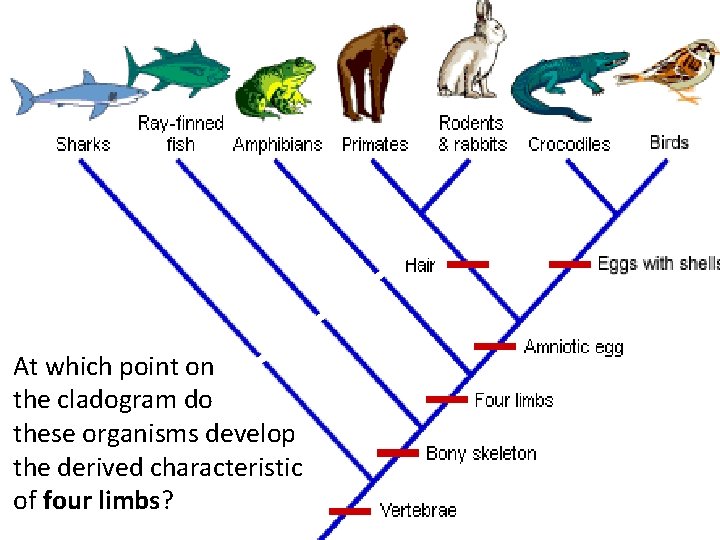
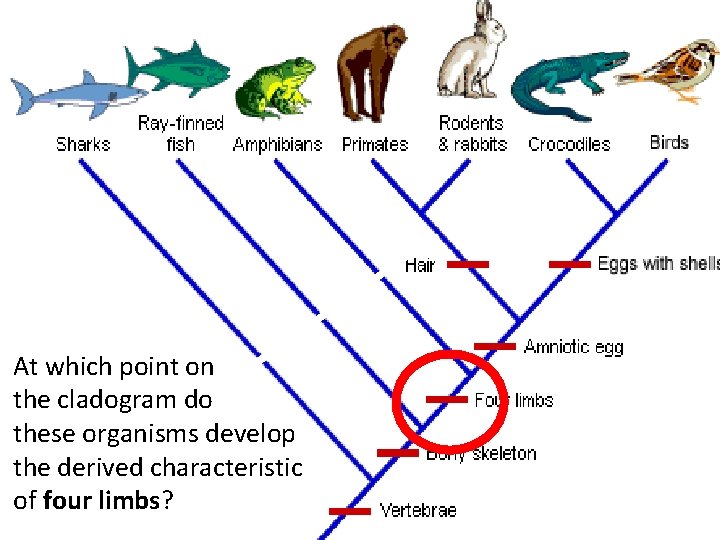
Where would “live At which point on birth” or do the cladogram these organisms develop placentas the derived characteristic appear? of four limbs? schoolworkhelper. net
Where would “live At which point on birth” or do the cladogram these organisms develop placentas the derived characteristic appear? of four limbs? schoolworkhelper. net
Where would “live At which point on birth” or do the cladogram these organisms develop placentas characteristics of appear? mammals? schoolworkhelper. net
Where would “live At which point on birth” or do the cladogram these organisms develop placentas characteristics of appear? mammals? schoolworkhelper. net
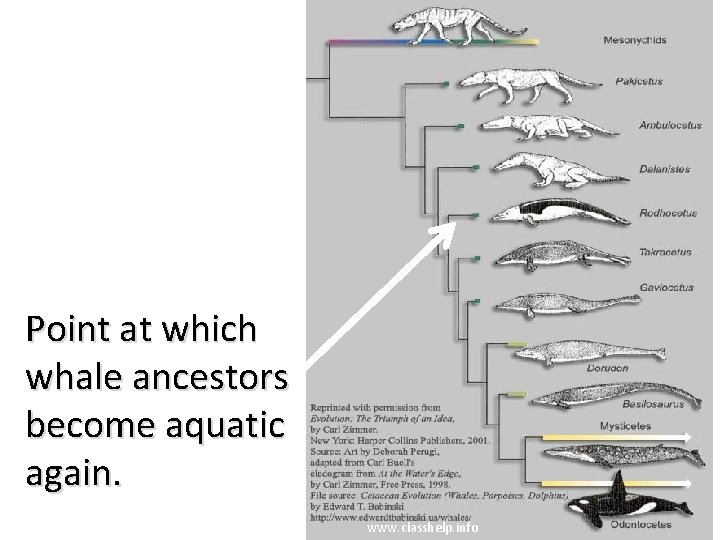
Point at which whale ancestors become aquatic again. www. classhelp. info
What’s another derived character that we could add to this cladogram?
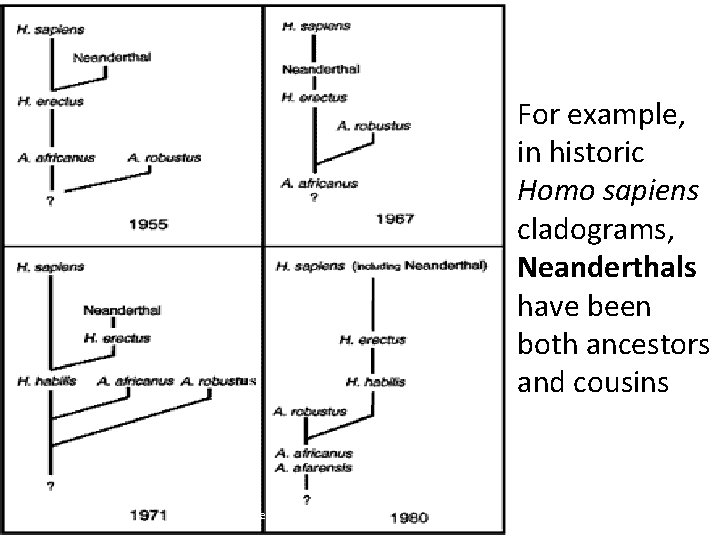
For example, in historic Homo sapiens cladograms, Neanderthals have been both ancestors and cousins www. answersingenesis. org
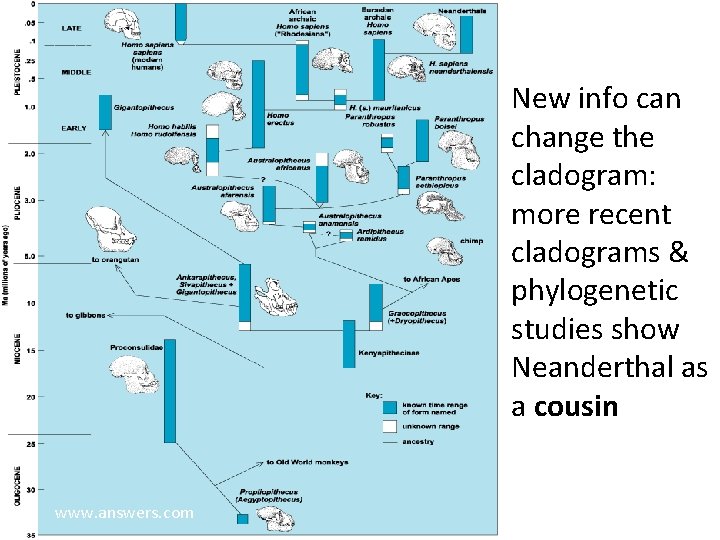
New info can change the cladogram: more recent cladograms & phylogenetic studies show Neanderthal as a cousin www. answers. com
Taxonomy & Classification Wake County Biology Curriculum wikimedia. org
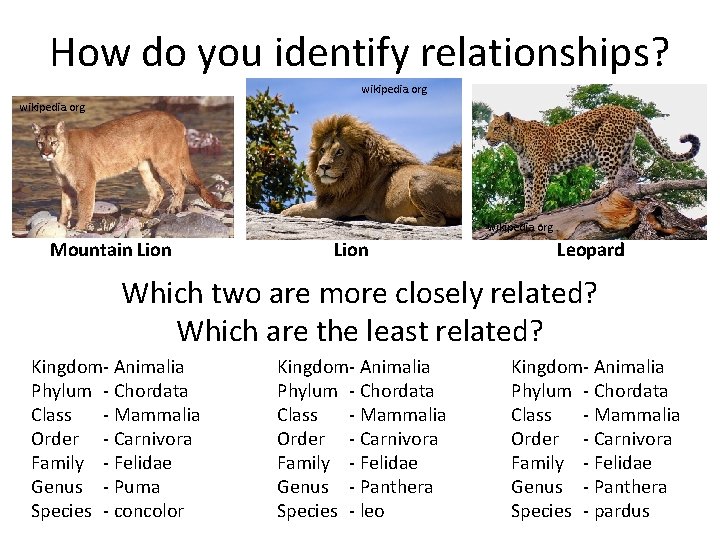
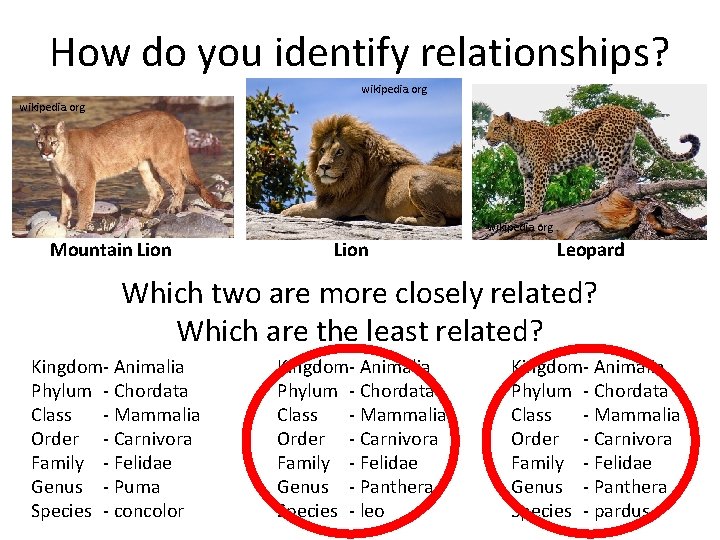
How do you identify relationships? wikipedia. org Mountain Lion Leopard Which two are more closely related? Which are the least related? Kingdom- Animalia Phylum - Chordata Class - Mammalia Order - Carnivora Family - Felidae Genus - Puma Species - concolor Kingdom- Animalia Phylum - Chordata Class - Mammalia Order - Carnivora Family - Felidae Genus - Panthera Species - leo Kingdom- Animalia Phylum - Chordata Class - Mammalia Order - Carnivora Family - Felidae Genus - Panthera Species - pardus
How do you identify relationships? wikipedia. org Mountain Lion Leopard Which two are more closely related? Which are the least related? Kingdom- Animalia Phylum - Chordata Class - Mammalia Order - Carnivora Family - Felidae Genus - Puma Species - concolor Kingdom- Animalia Phylum - Chordata Class - Mammalia Order - Carnivora Family - Felidae Genus - Panthera Species - leo Kingdom- Animalia Phylum - Chordata Class - Mammalia Order - Carnivora Family - Felidae Genus - Panthera Species - pardus
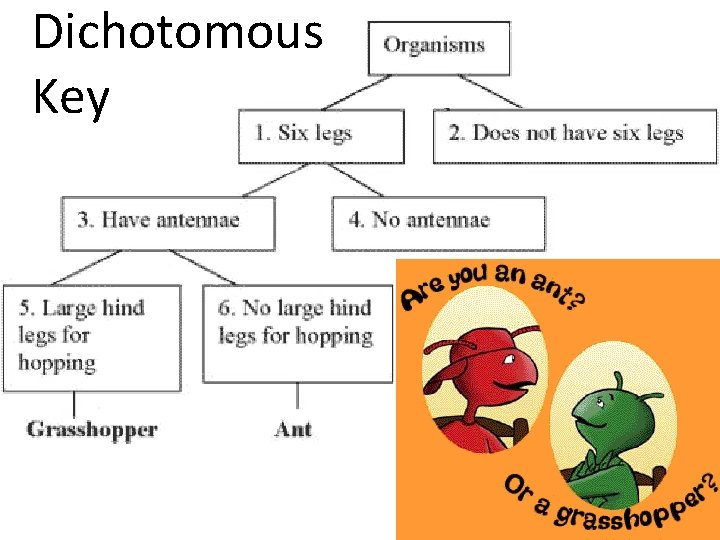
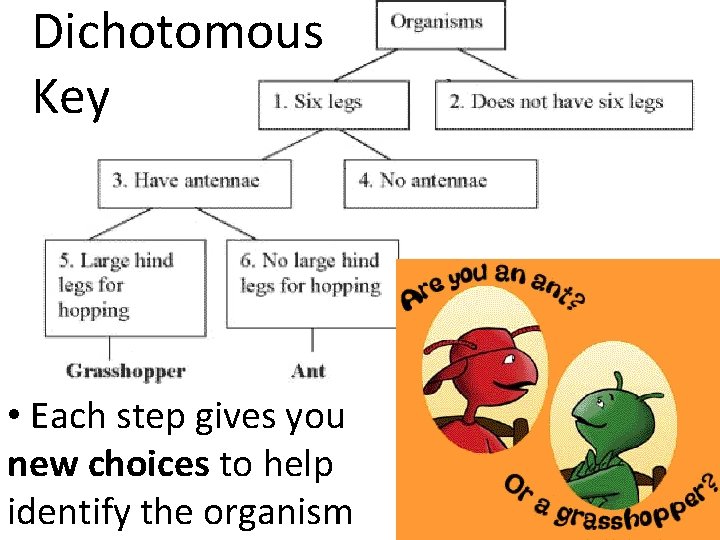
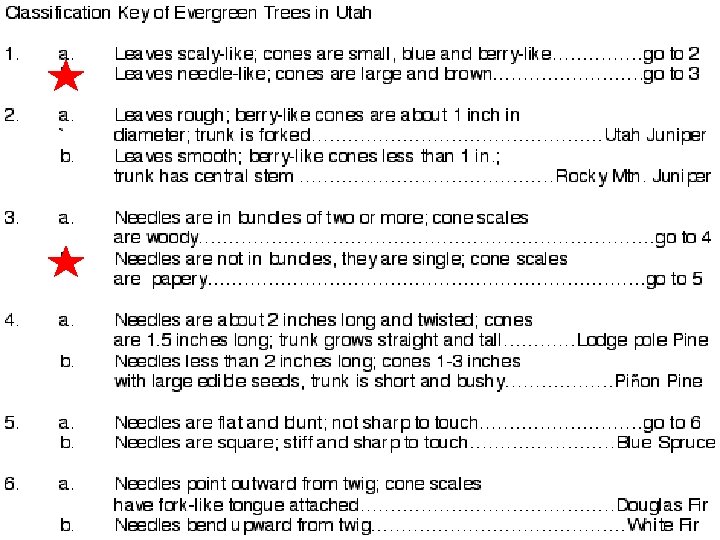
How do we identify different or unknown related organisms? • A tool known as a dichotomous key is used to identify different species of related organisms.
Dichotomous Key
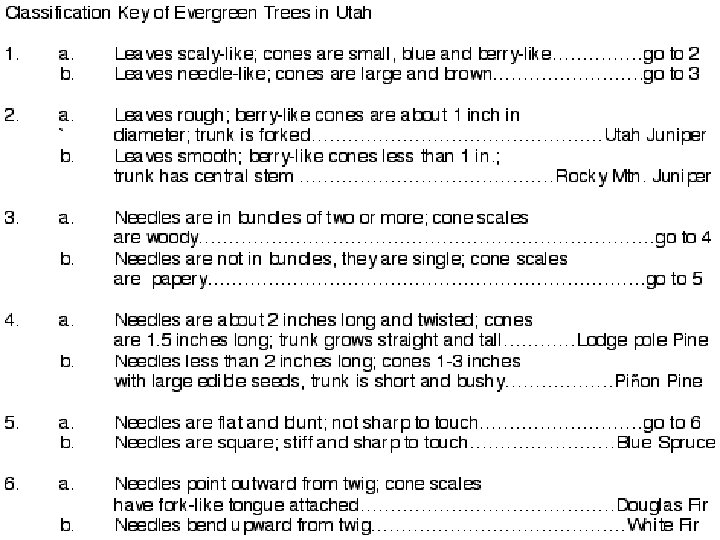
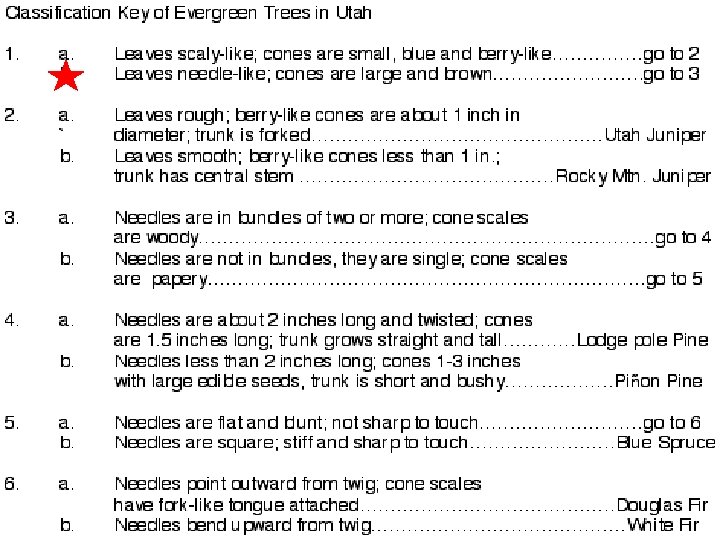
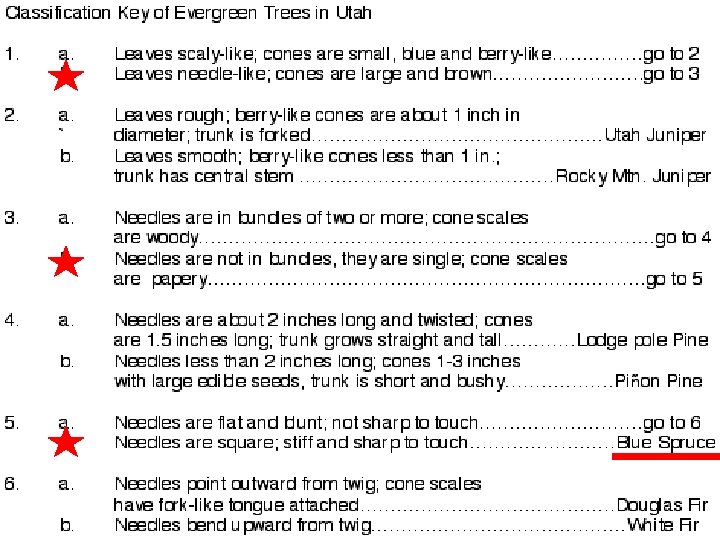
Dichotomous Key • Each step gives you new choices to help identify the organism
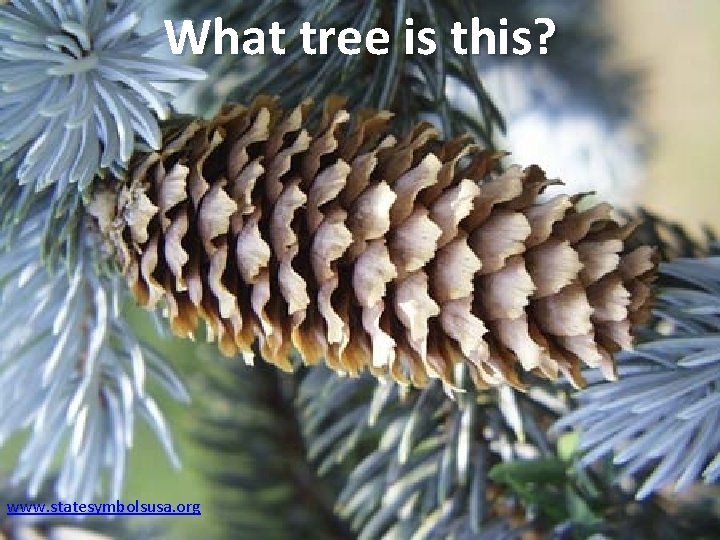
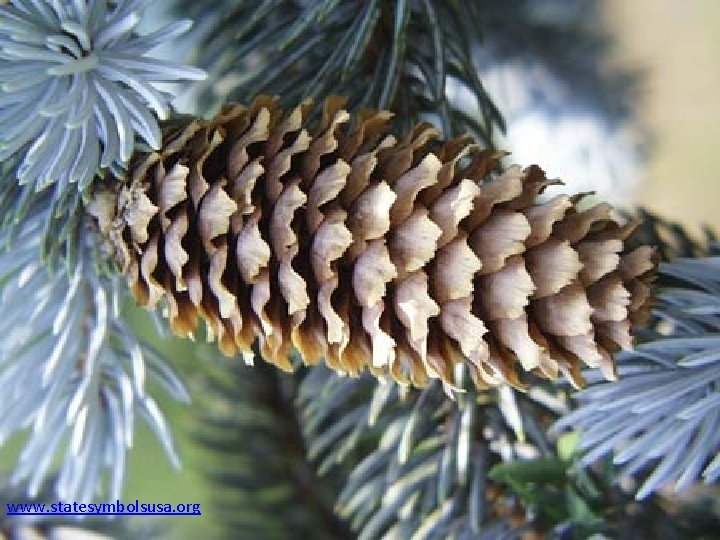
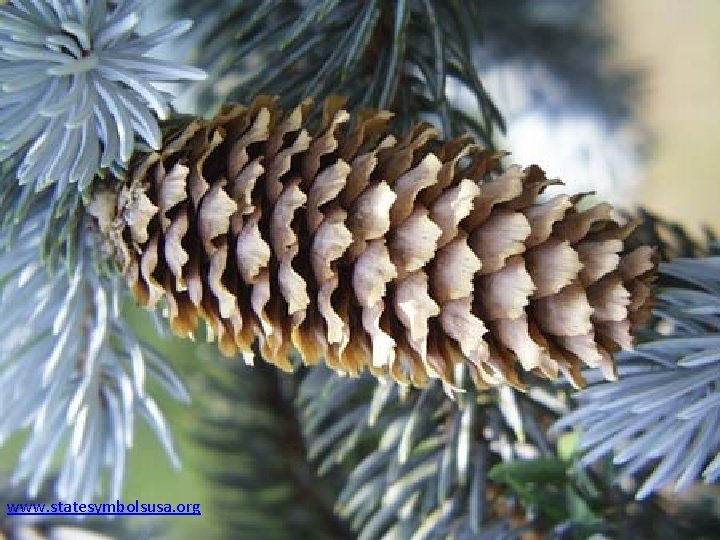
What tree is this? www. statesymbolsusa. org
www. schools. utah. gov
www. statesymbolsusa. org
www. schools. utah. gov
www. statesymbolsusa. org
www. schools. utah. gov
www. statesymbolsusa. org
www. schools. utah. gov
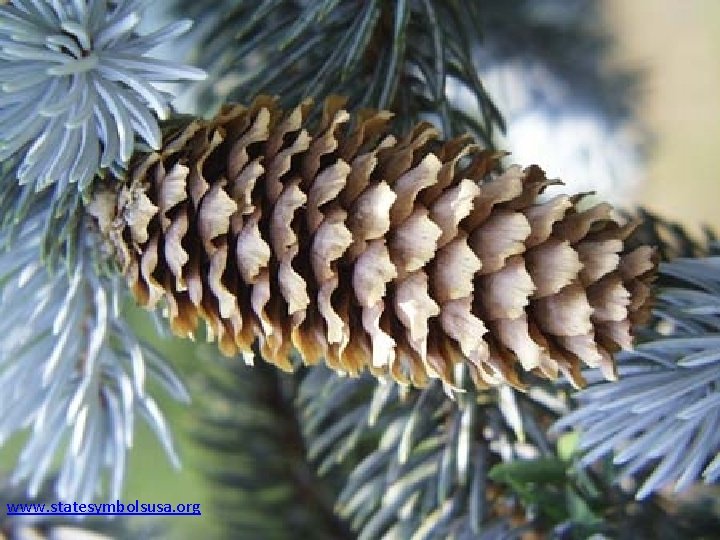
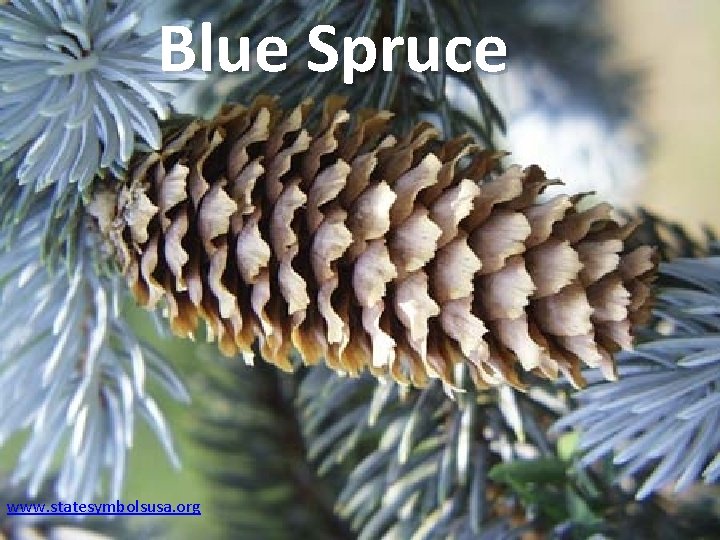
Blue Spruce www. statesymbolsusa. org
Taxonomy & Classification Wake County Biology Curriculum wikimedia. org
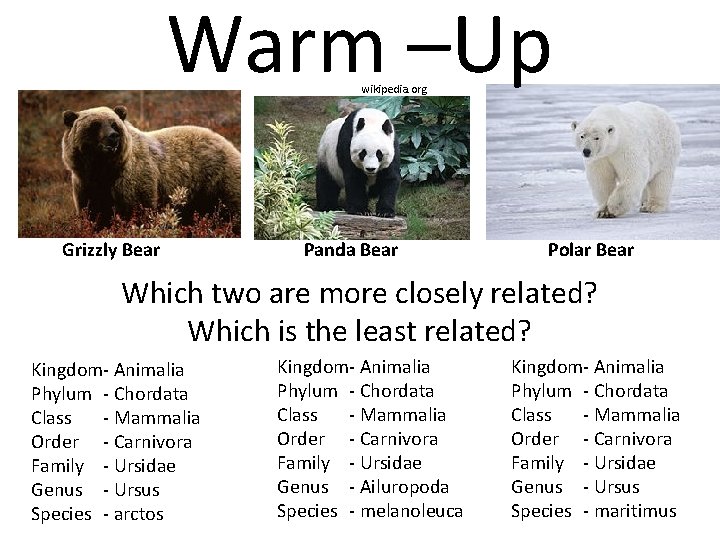
Warm –Up wikipedia. org Grizzly Bear Panda Bear Polar Bear Which two are more closely related? Which is the least related? Kingdom- Animalia Phylum - Chordata Class - Mammalia Order - Carnivora Family - Ursidae Genus - Ursus Species - arctos Kingdom- Animalia Phylum - Chordata Class - Mammalia Order - Carnivora Family - Ursidae Genus - Ailuropoda Species - melanoleuca Kingdom- Animalia Phylum - Chordata Class - Mammalia Order - Carnivora Family - Ursidae Genus - Ursus Species - maritimus
Essential Standard 3. 5. 1 Explain the historical development and changing nature of classification systems. 3. 5. 2 Analyze the classification of organisms according to their evolutionary relationships (including dichotomous keys and phylogenetic trees)41
Taxonomy & Classification • The world is filled with millions of different organisms… • To study how they interact and how they are related, we need to name them and organize them into groups • This grouping and naming process is called taxonomy or classification
How do we classify living things? • The first recorded attempt at classification was by Aristotle, who attempted to classify all the kinds of animals in his History of Animals (Historia Animalium in Latin). • He grouped the types of creatures according to their similarities: animals with blood/animals without blood, and animals that live in water and animals that live on land
Classification of Living things • Think back to the grouping activities that we’ve done recently: is there more than one way to sort or classify a group of living things?
Early Attempts of Classification Using Common Names • A big problem was that some organisms had different names depending on the region: • A puma, mountain lion, cougar, and a panther are all the same species, but they have different names depending on the region • In the UK, “buzzard” means “hawk”. In the US, “buzzard” means “vulture”
Classification of Living things • Aristotle came up with another innovation: a binomial naming system • "Binomial" means "two names, " and according to this system each kind of organism can be defined by the two names of its "genus and difference. ” • His system wasn’t perfect, however…
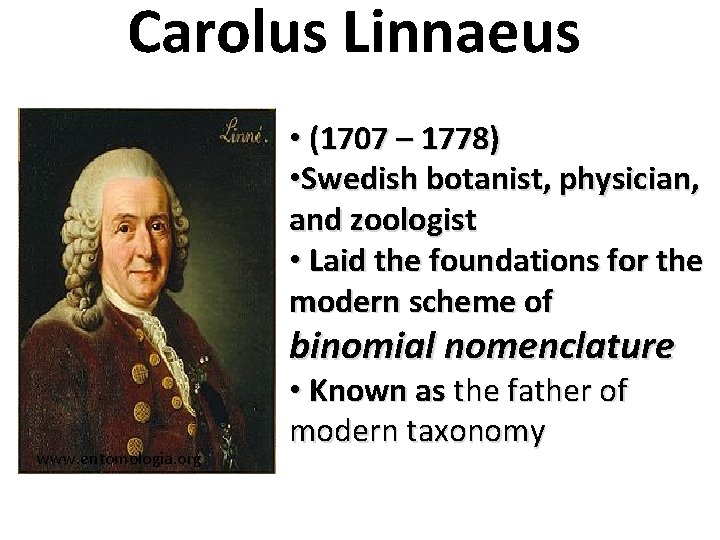
Carolus Linnaeus • (1707 – 1778) • Swedish botanist, physician, and zoologist • Laid the foundations for the modern scheme of binomial nomenclature www. entomologia. org • Known as the father of modern taxonomy
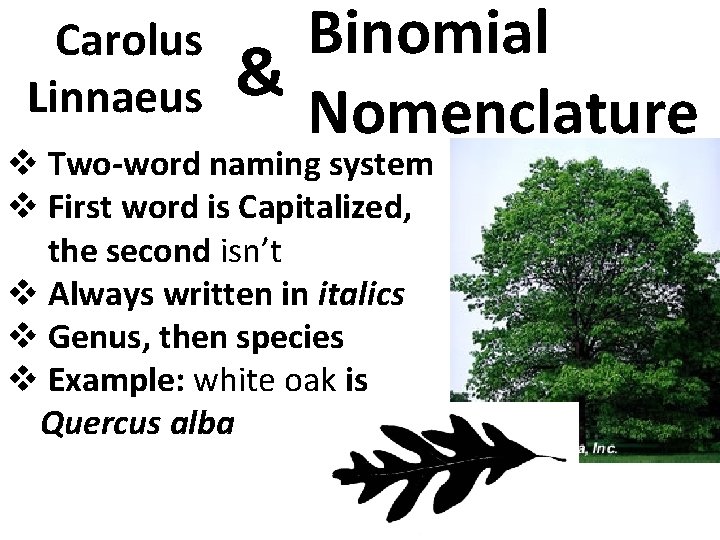
Carolus Linnaeus Binomial & Nomenclature v Two-word naming system v First word is Capitalized, the second isn’t v Always written in italics v Genus, then species v Example: white oak is Quercus alba employees. csbsju. edu
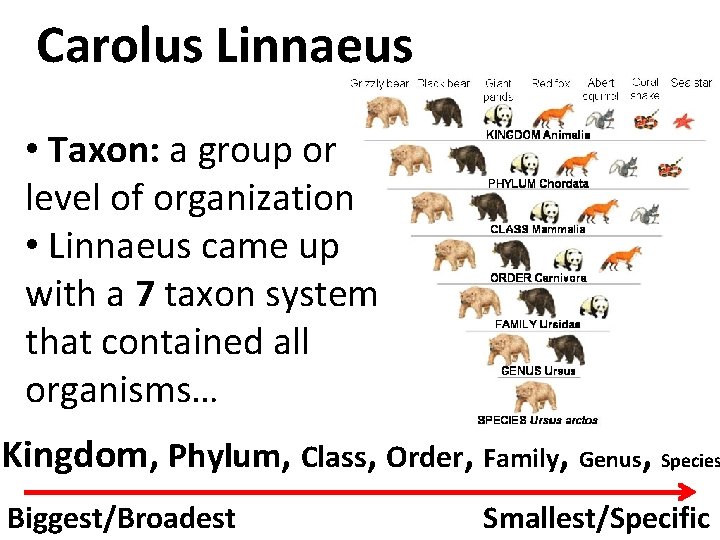
Carolus Linnaeus • Taxon: a group or level of organization • Linnaeus came up with a 7 taxon system that contained all organisms… Kingdom, Phylum, Class, Order, Family, Genus, Species Biggest/Broadest Smallest/Specific www. goldiesroom. org
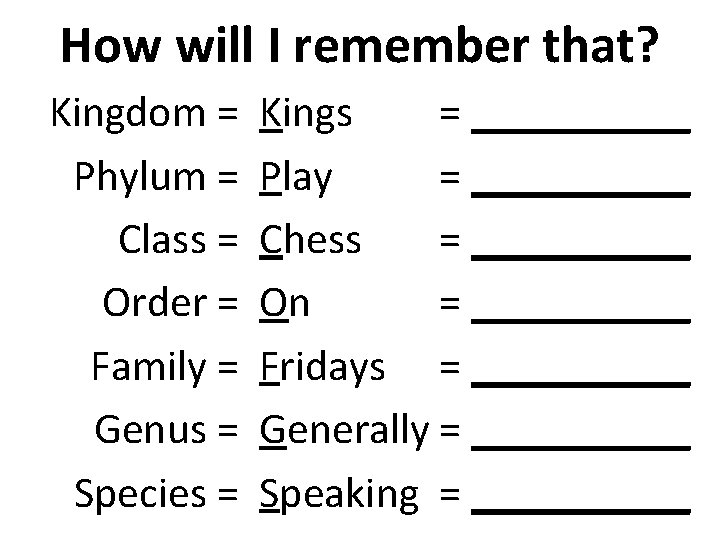
How will I remember that? Kingdom = Phylum = Class = Order = Family = Genus = Species = Kings = _____ Play = _____ Chess = _____ On = _____ Fridays = _____ Generally = _____ Speaking = _____
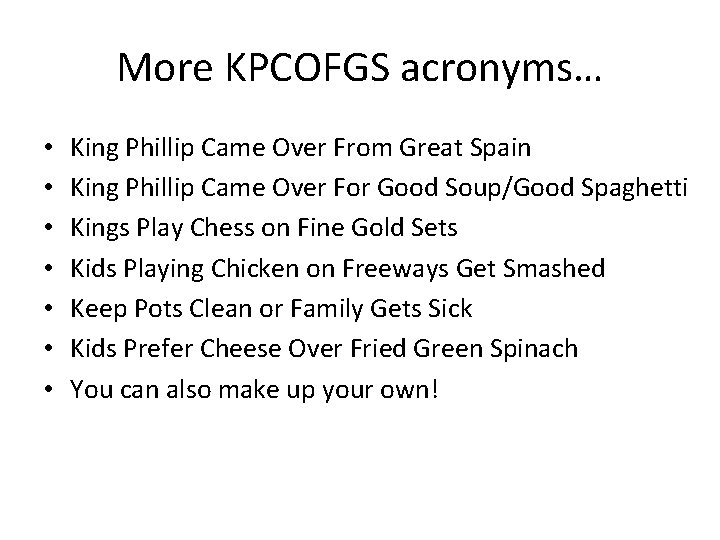
More KPCOFGS acronyms… • • King Phillip Came Over From Great Spain King Phillip Came Over For Good Soup/Good Spaghetti Kings Play Chess on Fine Gold Sets Kids Playing Chicken on Freeways Get Smashed Keep Pots Clean or Family Gets Sick Kids Prefer Cheese Over Fried Green Spinach You can also make up your own!
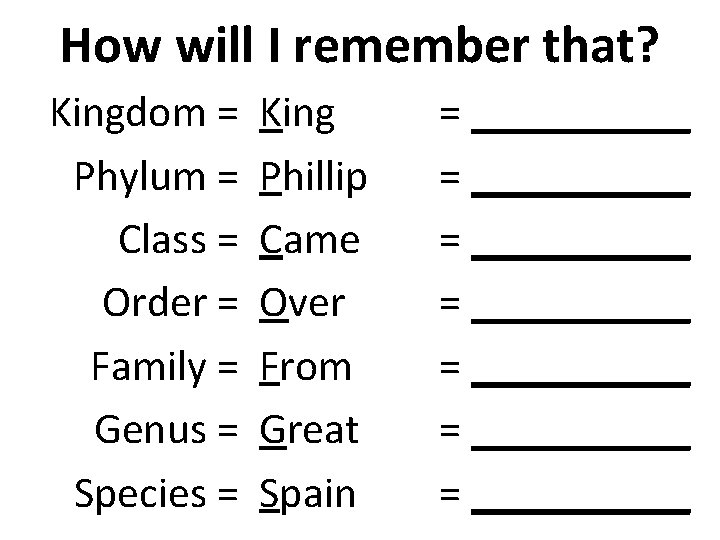
How will I remember that? Kingdom = Phylum = Class = Order = Family = Genus = Species = King Phillip Came Over From Great Spain = __________ = __________ = _____
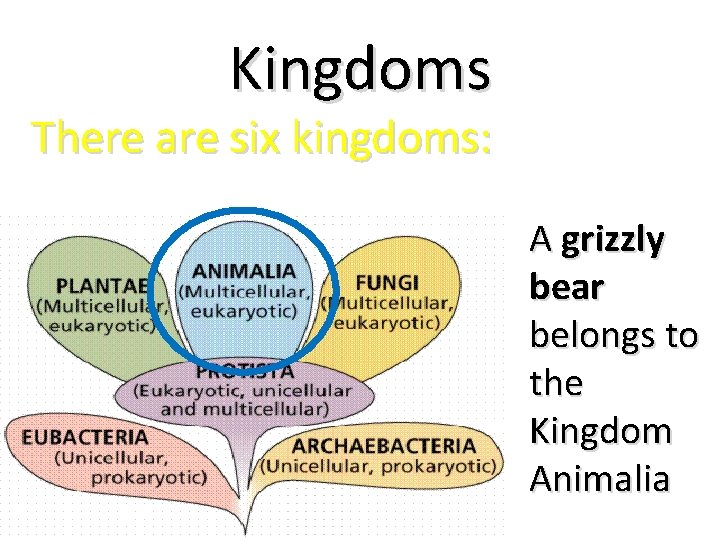
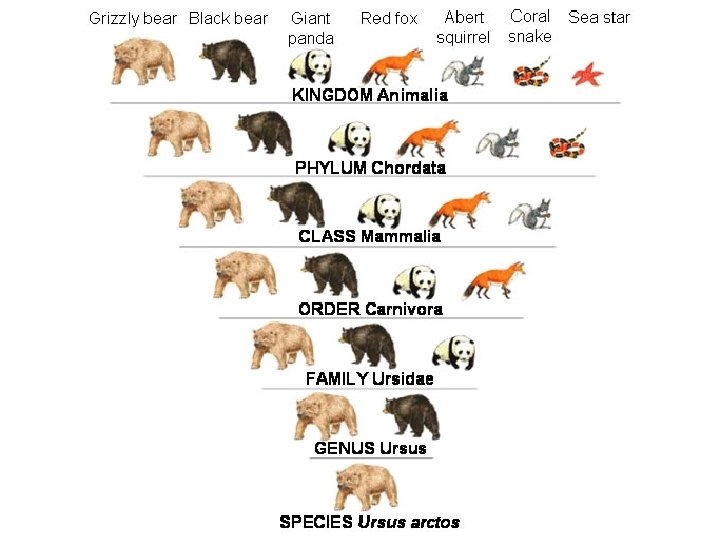
Kingdoms There are six kingdoms: www. cartage. org. lb A grizzly bear belongs to the Kingdom Animalia
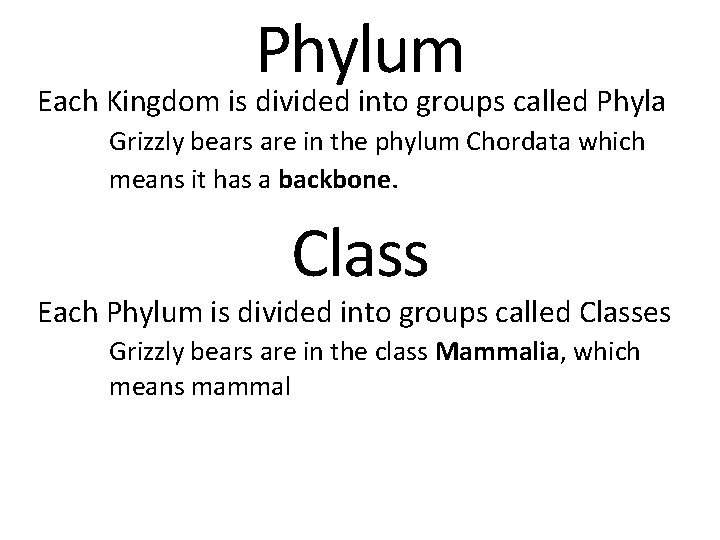
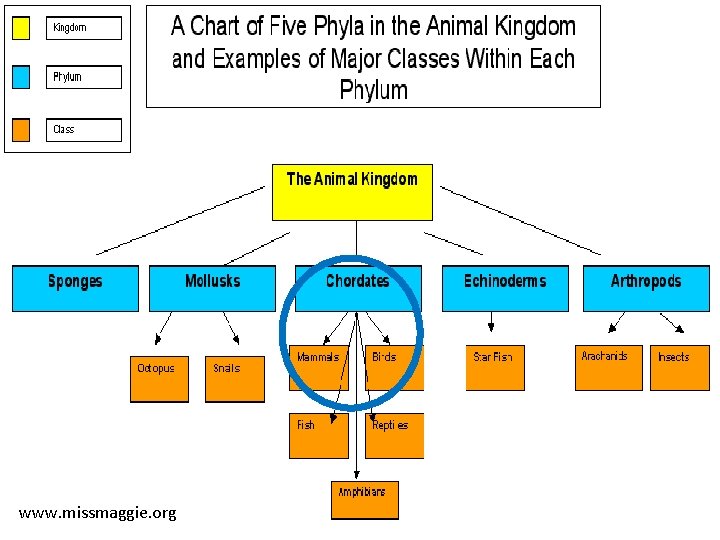
Phylum Each Kingdom is divided into groups called Phyla Grizzly bears are in the phylum Chordata which means it has a backbone. Class Each Phylum is divided into groups called Classes Grizzly bears are in the class Mammalia, which means mammal
www. missmaggie. org
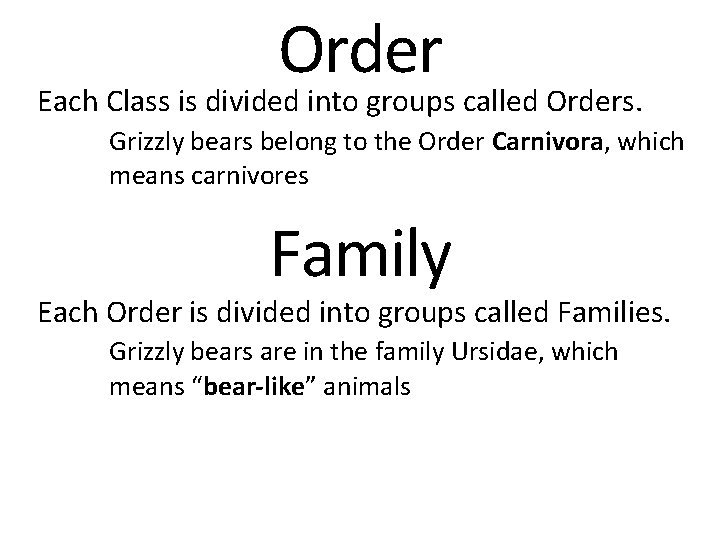
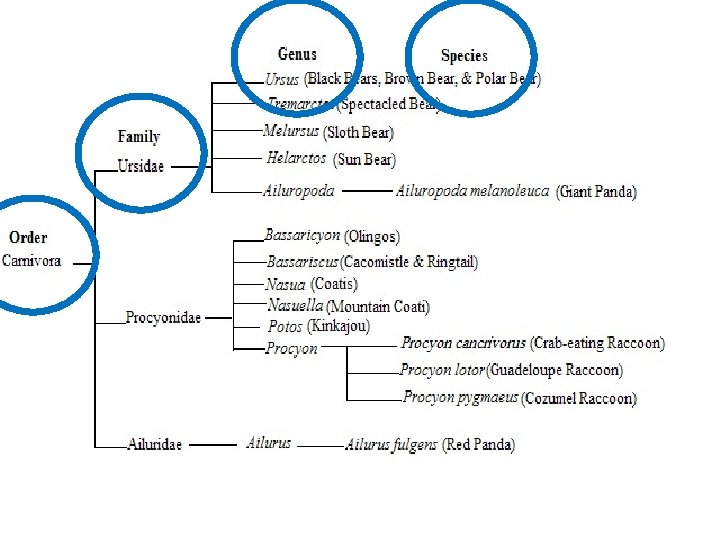
Order Each Class is divided into groups called Orders. Grizzly bears belong to the Order Carnivora, which means carnivores Family Each Order is divided into groups called Families. Grizzly bears are in the family Ursidae, which means “bear-like” animals
bioweb. uwlax. edu
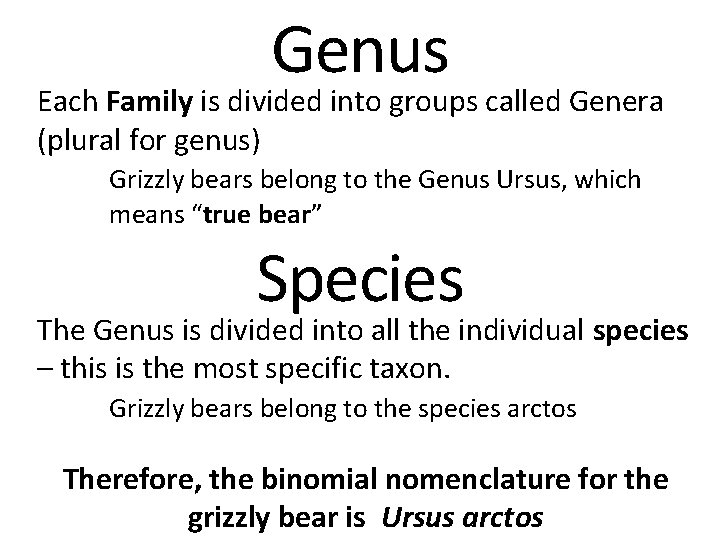
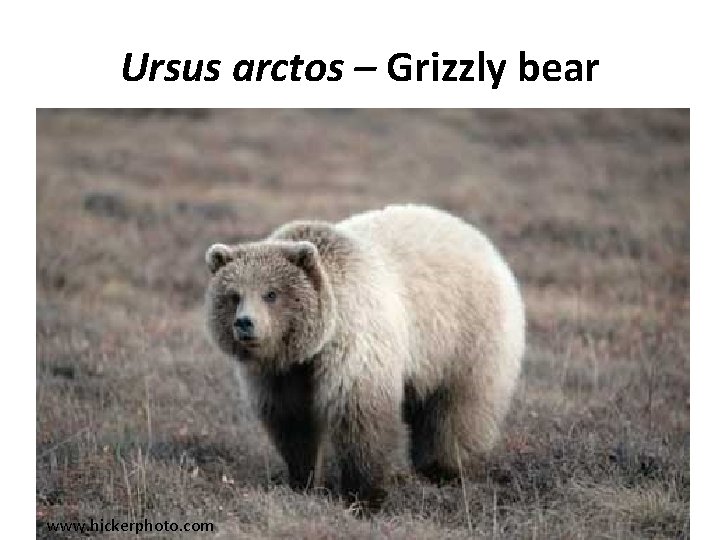
Genus Each Family is divided into groups called Genera (plural for genus) Grizzly bears belong to the Genus Ursus, which means “true bear” Species The Genus is divided into all the individual species – this is the most specific taxon. Grizzly bears belong to the species arctos Therefore, the binomial nomenclature for the grizzly bear is Ursus arctos
Ursus arctos – Grizzly bear www. hickerphoto. com
History of the Kingdoms… v 1700’s – two kingdoms: Plant and Animal v Late 1800’s – three kingdoms: Plant, Animal, Protists v 1950’s – Monera, Protista, Fungi, Plant, and Animal v 1990’s – Eubacteria, Archaebacteria, Protista, Fungi, Plant, and Animal … 6 KINGDOMS!
Kingdom #1: Archaebacteria Ø Unicellular prokaryotes Ø The simplest life form, the smallest genome Ø Can live in the most extreme environments Ø Some are thermophiles --- why scientists now believe that life first evolved at deep ocean volcanic vents. Ø Cell walls do not have peptidoglycan
Kingdom #2: Eubacteria Ø Unicellular prokaryotes Ø Live in ecologically diverse environments Ø Can be free-living in natural surroundings Ø Some can be deadly or cause disease Ø Some photosynthesize Ø Some need oxygen, others are killed by it Ø Thick, rigid cell walls that have peptidoglycan
Kingdom #3: Protista ØEukaryotes ØMost diverse kingdom ØMostly unicellular but some are multicellular ØSome photosynthesize but some are heterotrophic, some are plant-like and some are animal-like. Ø Ex. algae, amoebas, slime molds, protists, blue-green algae, paramecium
Kingdom #4 Fungi Ø Eukaryotes Ø Decomposers - most feed on dead or decaying organic matter Ø Secrete digestive enzymes into their food source and then absorb the nutrients Ø Cell walls with chitin Ø Can be parasitic (ex. athlete’s foot) ØMulticellular (ex. mushrooms) and singlecelled (ex. yeasts)
Kingdom #5 Plantae: Ø Eukaryotes Ø Multicellular Ø Photosynthetic autotrophs Ø Chlorophyll Ø Cell walls contain cellulose Ø Ex. mosses, ferns, flowers, trees
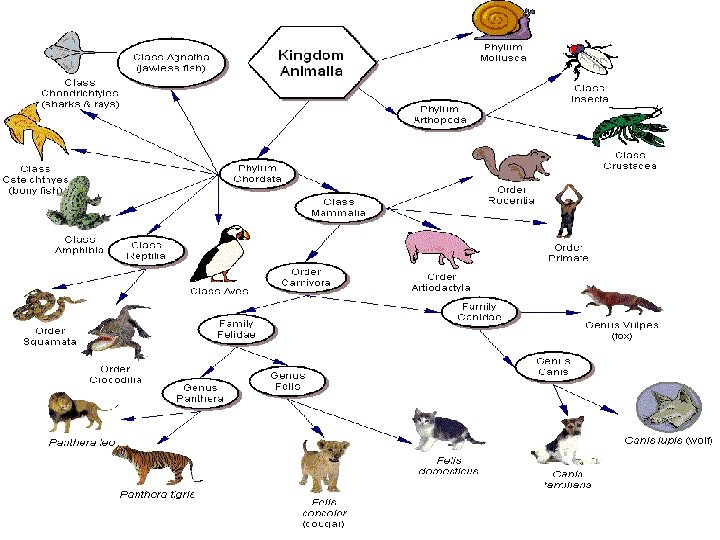
Kingdom #6 Animalia Ø Eukaryotes Ø Multicellular Ø Heterotrophs Ø No cell walls Ø Many are motile Ø Ex. sponges, worms, insects, vertebrates
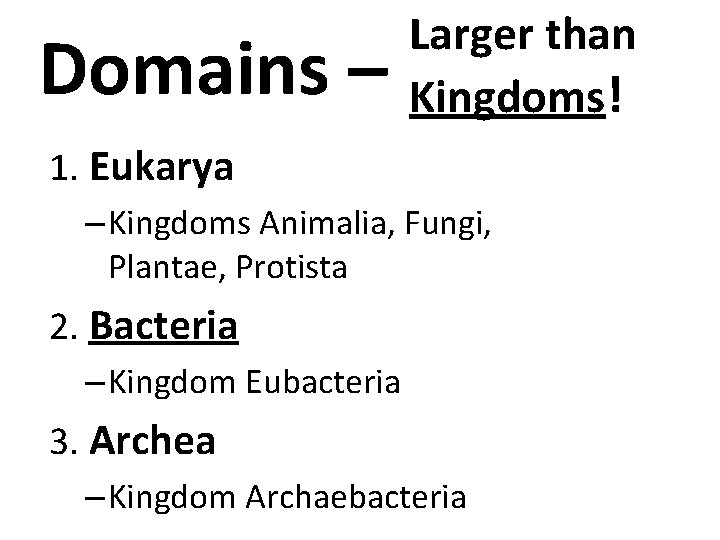
Domains – Larger than Kingdoms! 1. Eukarya – Kingdoms Animalia, Fungi, Plantae, Protista 2. Bacteria – Kingdom Eubacteria 3. Archea – Kingdom Archaebacteria
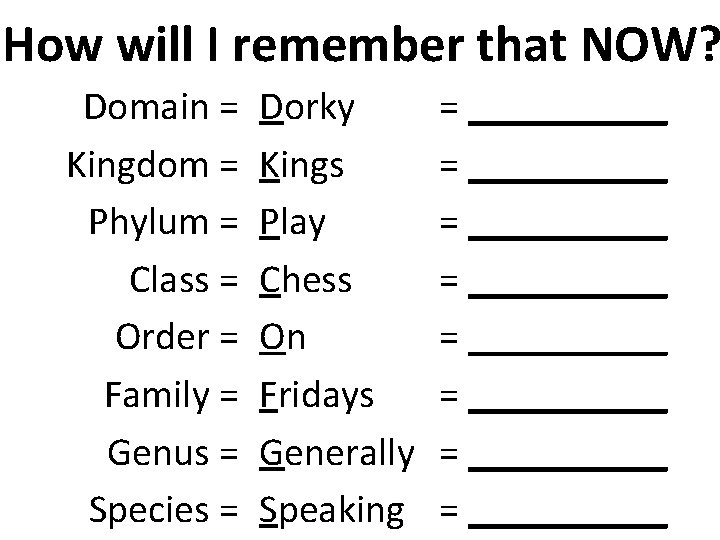
How will I remember that NOW? Domain = Kingdom = Phylum = Class = Order = Family = Genus = Species = Dorky Kings Play Chess On Fridays Generally Speaking = __________ = __________
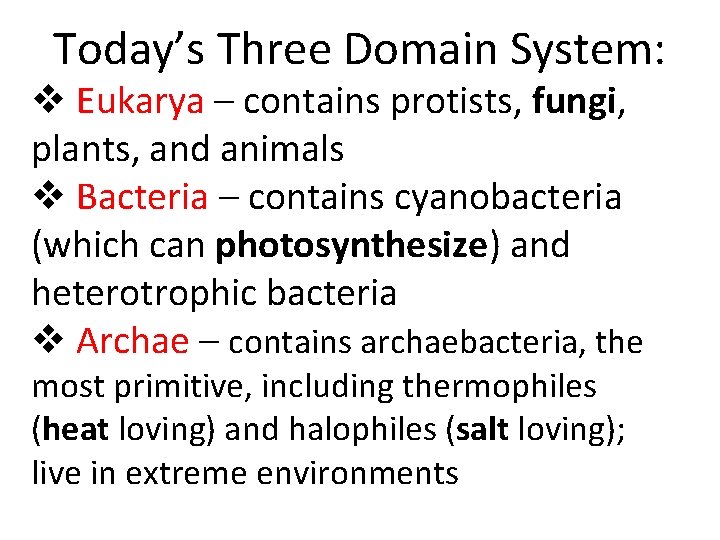
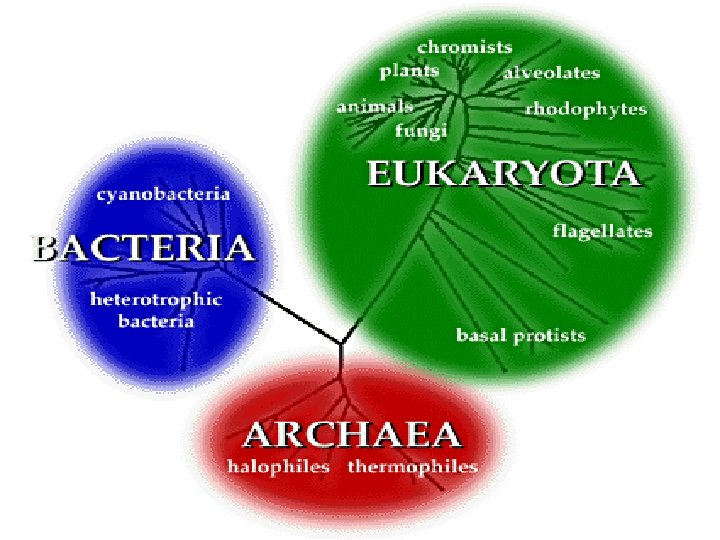
Today’s Three Domain System: v Eukarya – contains protists, fungi, plants, and animals v Bacteria – contains cyanobacteria (which can photosynthesize) and heterotrophic bacteria v Archae – contains archaebacteria, the most primitive, including thermophiles (heat loving) and halophiles (salt loving); live in extreme environments
Three Domains