The Word of God is not wholly contained
















- Slides: 63
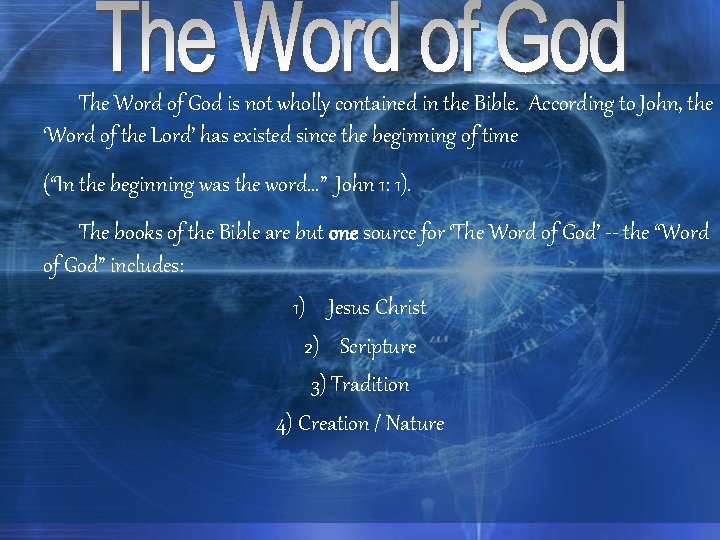
The Word of God is not wholly contained in the Bible. According to John, the ‘Word of the Lord’ has existed since the beginning of time (“In the beginning was the word…” John 1: 1). The books of the Bible are but one source for ‘The Word of God’ -- the “Word of God” includes: 1) Jesus Christ 2) Scripture 3) Tradition 4) Creation / Nature
Church Tradition as a Moral Guide Jesus did not leave us orphans • "I commend you because you remember me in everything and maintain the traditions even as I have delivered them to you" (1 Cor. 11: 2). • "So then, brothers and sisters, stand firm and hold to the traditions which you were taught by us, either by word of mouth or by letter. " (2 Thess. 2: 15) • "You, then, my son, be strong in the grace that is in Christ Jesus, and what you have heard from me before many witnesses entrust to faithful men who will be able to teach others also" (2 Tim. 2: 1 -2). • “The _______ is the pillar and foundation of truth. ” I Timothy 3: 15
Again, the Catholic Church understands the need to interpret correctly the truth of all the Bible. The Bible itself warns us that there will be incorrect interpretation without authority. All interpretations of scripture cannot be equally true; therefore, there must be an Authority to whom truth and error can be appealed. “In them [Paul’s Letters] there are some things hard to understand that the ignorant and unstable distort to their own destruction, just as they do the other scriptures. ” -- 2 Peter 3: 16 -------------------“Many deceivers have gone out into the world, those who do not acknowledge Jesus Christ as coming in the flesh; such is the deceitful one. . . Anyone who is so ‘progressive’ as not to remain in the teaching of Christ does not have God; whoever remains in the teaching has the Father and the Son. ” -- 2 John 7 -10
“I now feel a need to write to encourage you to contend for the faith that was once for all handed down to the holy ones [the Apostles]. . . for there have been some intruders…godless persons, who distort the grace of our God into impurity and who deny our only Master and Lord, Jesus Christ. ” Jude 1: 3 -4 “There were also false prophets among the people, just as there will be false teachers among you, who will introduce destructive heresies and even deny the Master who ransomed them…” 2 Peter 2: 1
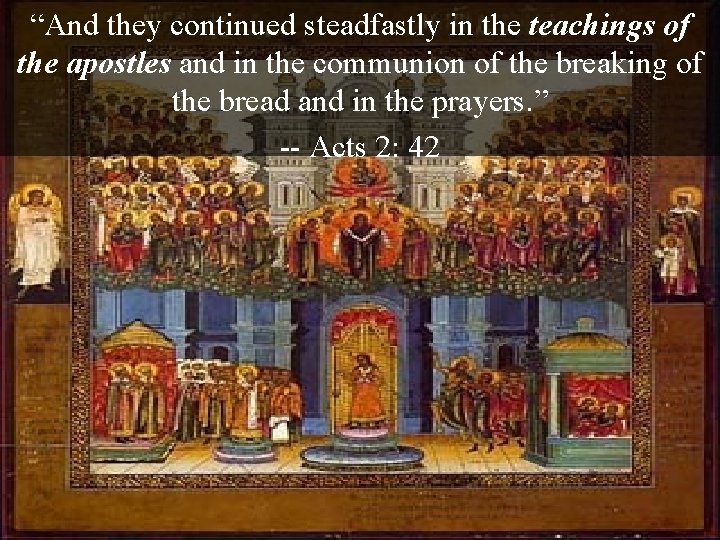
“And they continued steadfastly in the teachings of the apostles and in the communion of the breaking of the bread and in the prayers. ” -- Acts 2: 42
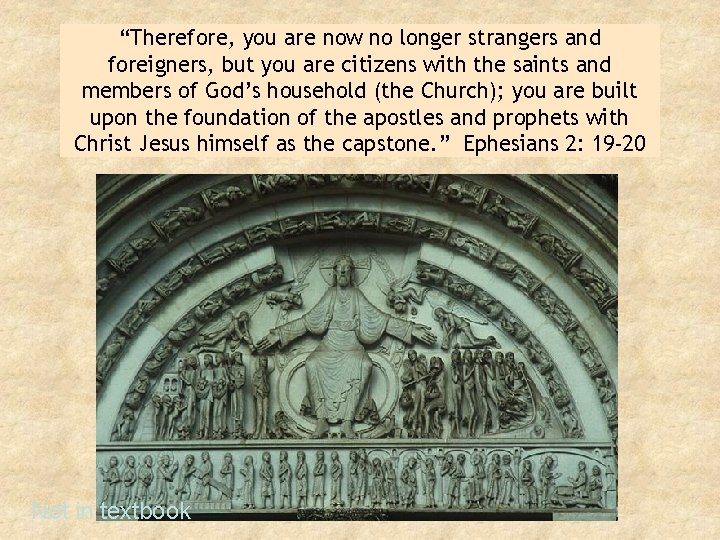
“Therefore, you are now no longer strangers and foreigners, but you are citizens with the saints and members of God’s household (the Church); you are built upon the foundation of the apostles and prophets with Christ Jesus himself as the capstone. ” Ephesians 2: 19 -20 Not in textbook
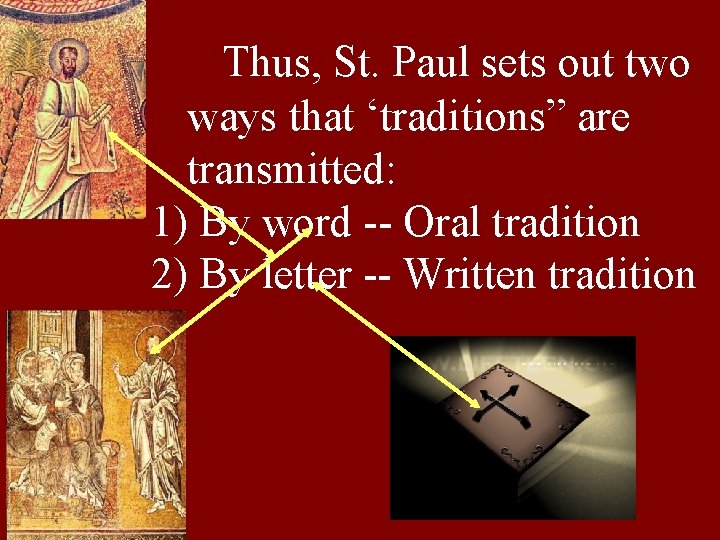
Thus, St. Paul sets out two ways that ‘traditions” are transmitted: 1) By word -- Oral tradition 2) By letter -- Written tradition
The Bible itself teaches that it is not the only source of revelation • “Now Jesus did many other signs in the presence of his disciples that are not written in this book. ” John 20: 30 • “There also many other things that Jesus did, but if these were to be described individually, I do not think the whole world would contain the books that would be written. ” John 21: 25
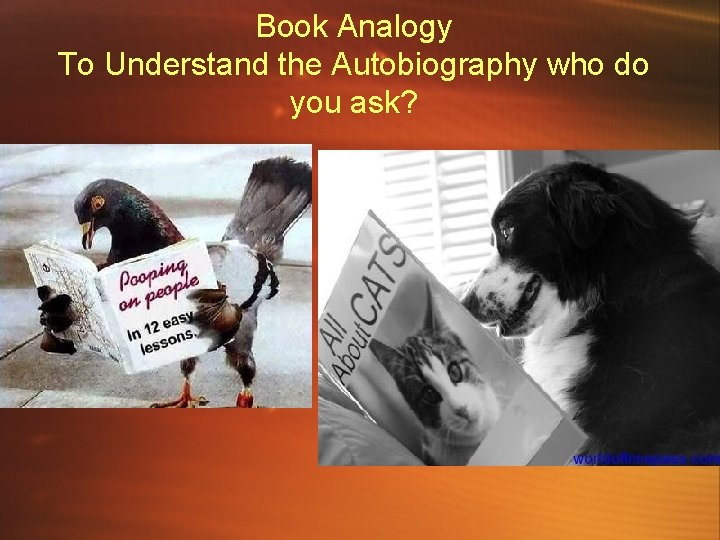
Book Analogy To Understand the Autobiography who do you ask?
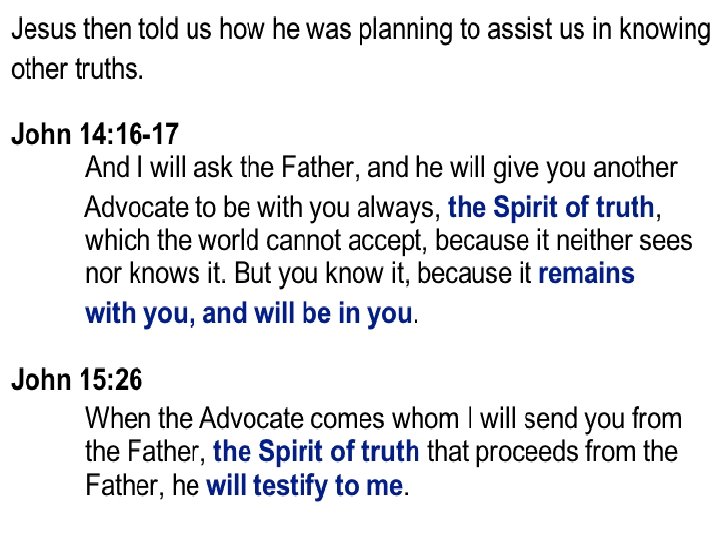
1. Tradition and following tradition is clearly found in the New Testament 2. The Church is called to unity and oneness in both the Gospels and Paul’s Letters. 3. The authority and structure of the Church is found and established in the New Testament. 4. It is through the power and inspiration of the Holy Spirit that the Church is guided into all truth. 5. The Church came before the Bible
Unity & Oneness in the Scriptures • so in Christ we who are many form one body, and each member belongs to all the others. Romans 12: 5 • 5 May • 10 I • My brothers, some from Chloe's household have informed me that there are quarrels among you. 12 What I mean is this: One of you says, "I follow Paul"; another, "I follow Apollos"; another, "I follow Cephas [a]"; still another, "I follow Christ. " 13 Is Christ divided? Was Paul crucified for you? Were you baptized into[b] the name of Paul? 1 Corinthians 1: 11 -13 the God who gives endurance and encouragement give you a spirit of unity among yourselves as you follow Christ Jesus, 6 so that with one heart and voice you may glorify the God and Father of our Lord Jesus Christ. Romans 15: 5 -7 appeal to you, brothers, in the name of our Lord Jesus Christ, that all of you agree with one another so that there may be no divisions among you and that you may be perfectly united in mind and thought. 1 Corinthians 1: 9 -11
Unity & Oneness in the Scriptures • 10 to another miraculous powers, to another prophecy, to another distinguishing between spirits, to another speaking in different kinds of tongues, [a] and to still another the interpretation of tongues. [b] 11 All these are the work of one and the same Spirit, and he gives them to each one, just as he determines. 12 The body is a unit, though it is made up of many parts; and though all its parts are many, they form one body. So it is with Christ. 1 Corinthians 12: 10 -12 • 27 Whatever happens, conduct yourselves in a manner worthy of the gospel of Christ. Then, whether I come and see you or only hear about you in my absence, I will know that you stand firm in one spirit, contending as one man for the faith of the gospel 28 Philippians 1: 26 -28 • 1 If you have any encouragement from being united with Christ, if any comfort from his love, if any fellowship with the Spirit, if any tenderness and compassion, 2 then make my joy complete by being like-minded, having the same love, being one in spirit and purpose. 3 Do nothing out of selfish ambition or vain conceit, but in humility consider others better than yourselves. Philippians 2: 1 -3
7 So neither he who plants nor he who waters is anything, but only God, who makes all things grow. 8 The man who plants and the man who waters have one purpose, and each will be rewarded according to his own labor. 9 For we are God's fellow workers; you are God's field, God's building. 1 Corinthians 3: 7 -9 • 16 Is not the cup of thanksgiving for which we give thanks a participation in the blood of Christ? And is not the bread that we break a participation in the body of Christ? 17 Because there is one bread, we, who are many, are one body, for we all partake of the one bread. 1 Corinthians 10: 16 -18
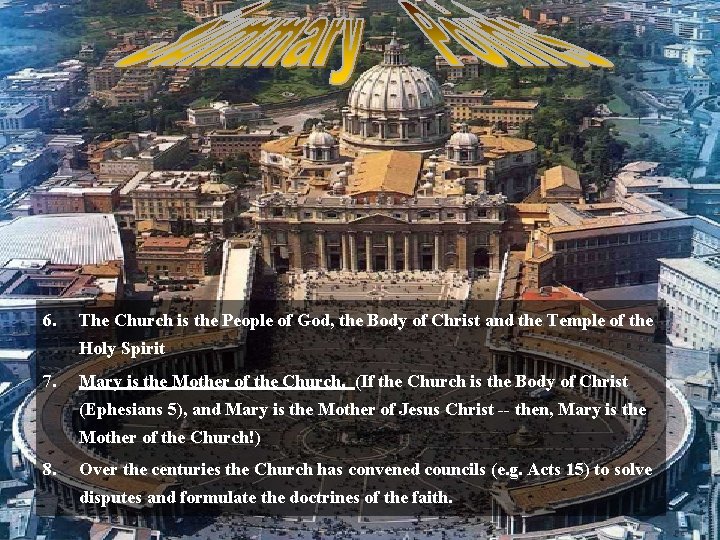
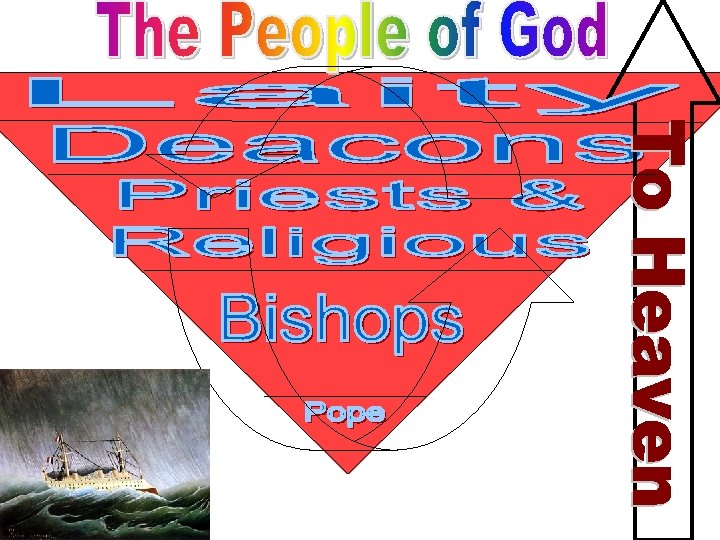
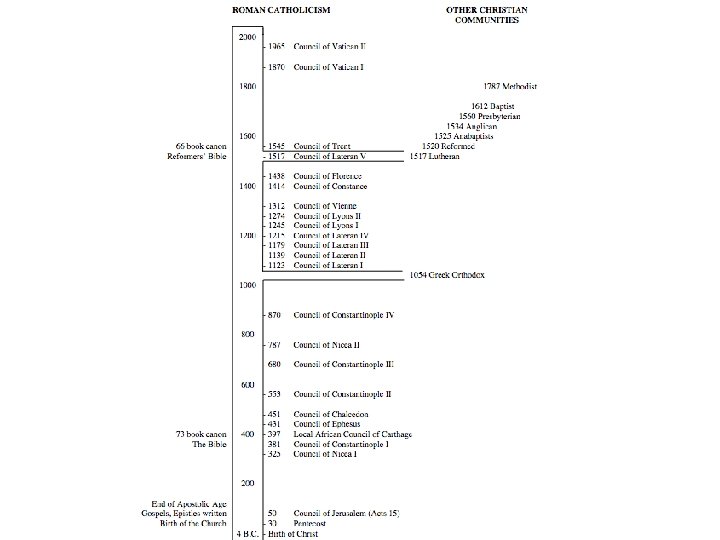
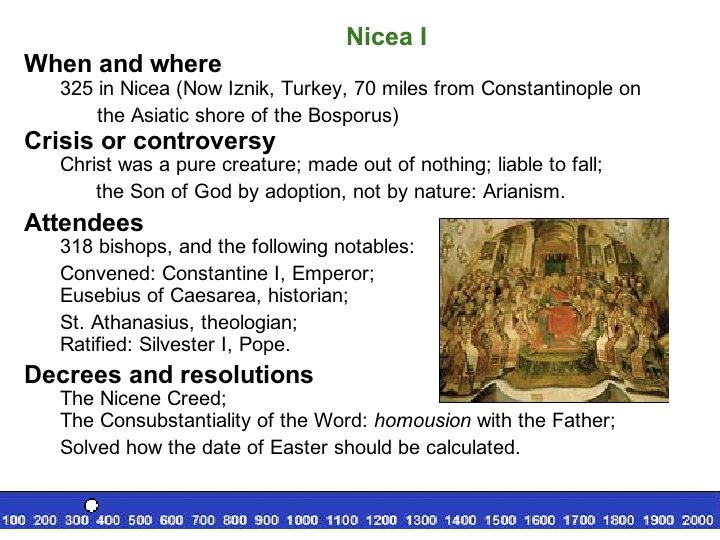
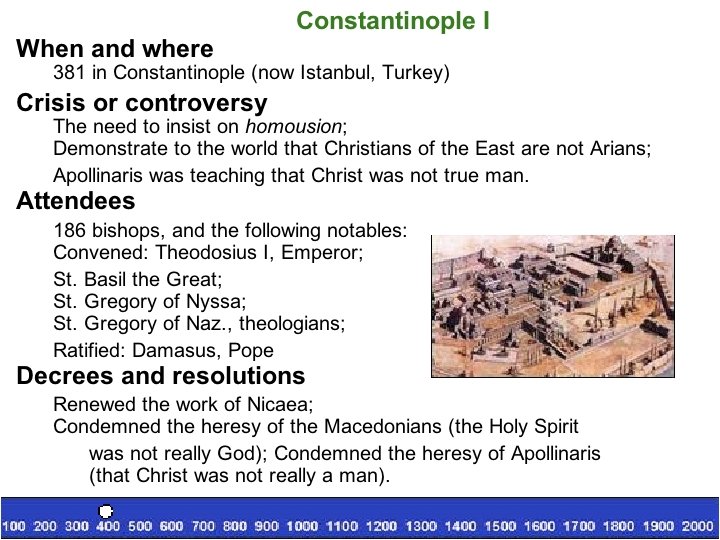
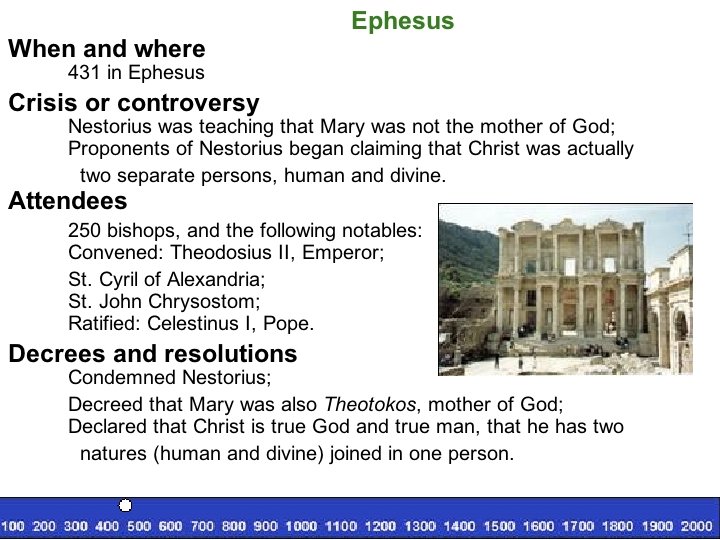
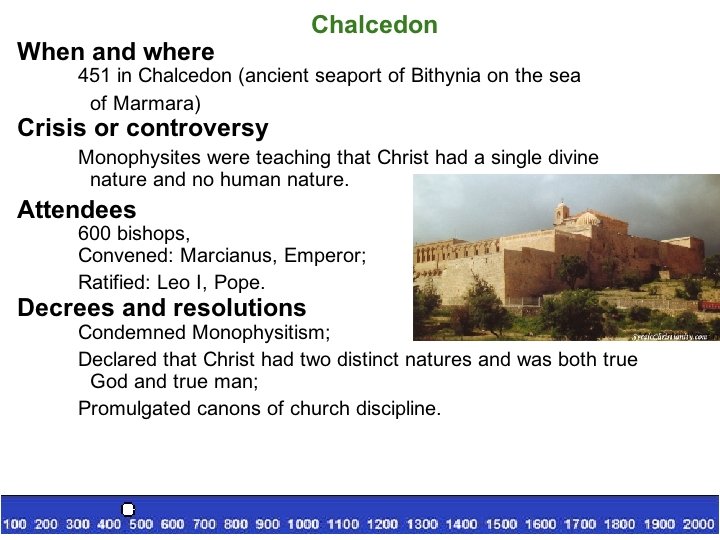
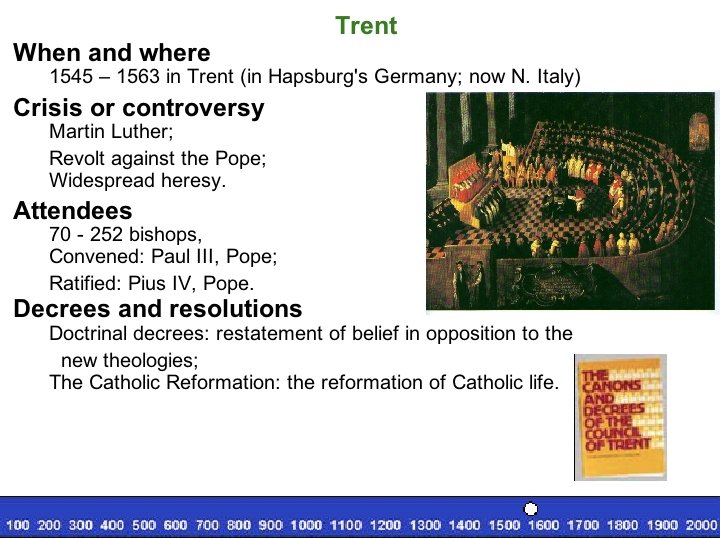
6. The Church is the People of God, the Body of Christ and the Temple of the Holy Spirit 7. Mary is the Mother of the Church. (If the Church is the Body of Christ (Ephesians 5), and Mary is the Mother of Jesus Christ -- then, Mary is the Mother of the Church!) 8. Over the centuries the Church has convened councils (e. g. Acts 15) to solve disputes and formulate the doctrines of the faith.
• God created the world for the sake of communion with his divine life -- The Church Christians of the first centuries said, "The world was created for the sake of the Church. ” God created the world for the sake of communion with his divine life, a communion brought about by the "convocation" of men in Christ, and this "convocation" is the Church. • Just as God's will is creation and is called "the world, " so his intention is the salvation of men, and it is called "the Church. " Catechism Catholic Church 760
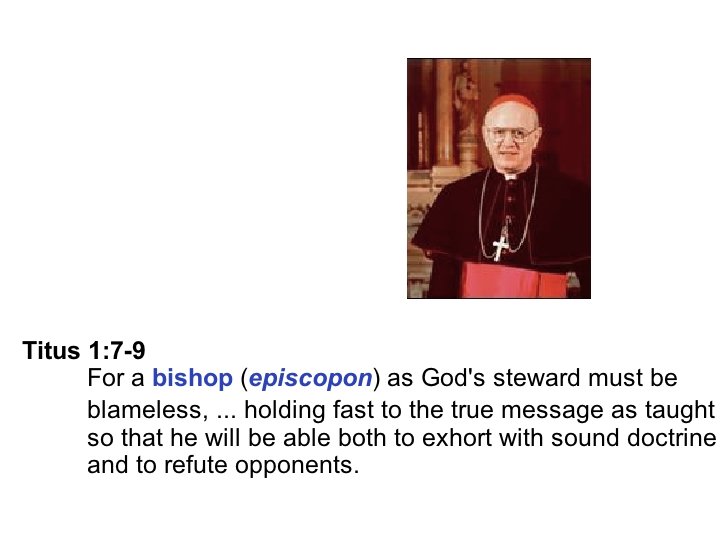
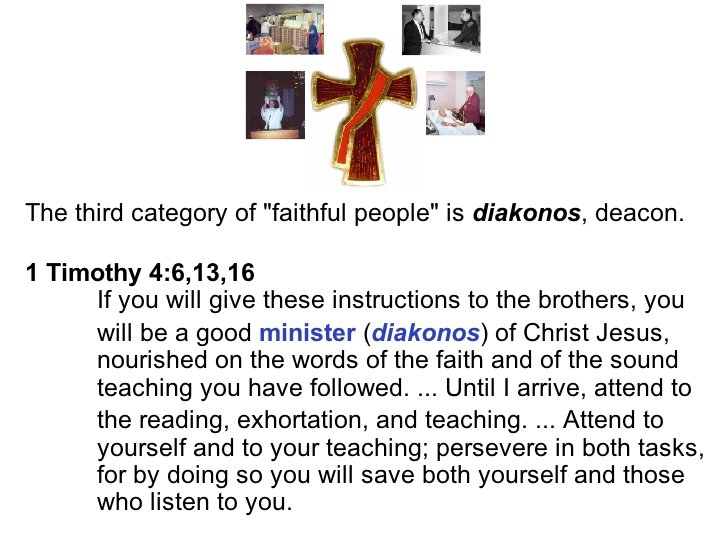
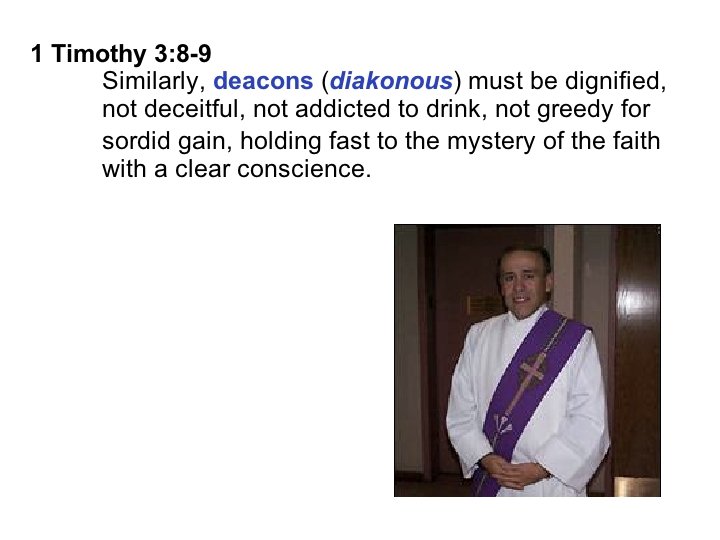
Paul describes who the ‘faithful people’ are who are to hand on the Revelation of God. The first category are the ‘episcopos’ Episcopos = the bishops I Timothy 3: 1 -2 “This saying is trustworthy; whoever aspires to the office of bishop (Episcopos) desires a noble task. ”
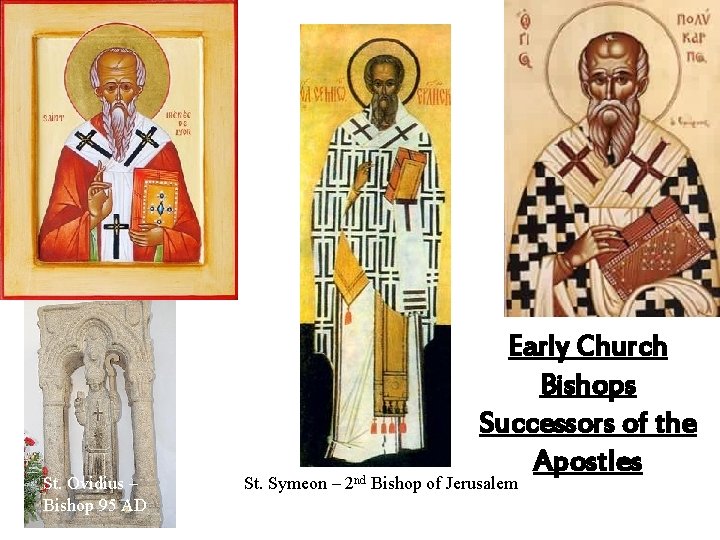
St. Ovidius – Bishop 95 AD Early Church Bishops Successors of the Apostles St. Symeon – 2 nd Bishop of Jerusalem
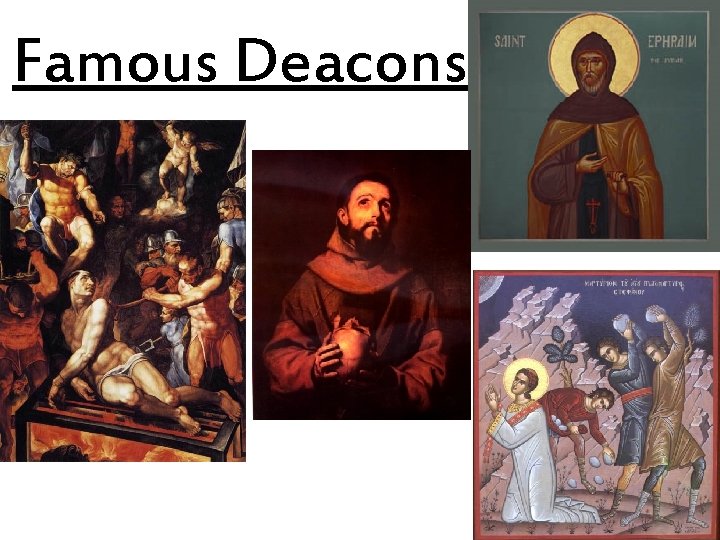
Famous Deacons
The Biblical Model for Handing on the Faith and Refuting Error The Council of Jerusalem -- Acts 15 ü Acts 15: 1 -- Error in teaching noted by community. ü Acts 15: 2 -- Dissension, controversy ü ü ü ü Acts 15: 2 -- Apostles and presbyters convene to discuss controversy. Acts 15: 7 -11 -- Discussion and debate Acts 15: 12 -- Barnabas and Paul speak Acts 15: 13 -21 -- The apostle James speaks Acts 15: 22 -- Problem is resolved Acts 15: 22 -23 -- Decree is promulgated Acts 15: 28 -- The authority of the Holy Spirit is appealed to through prayer.
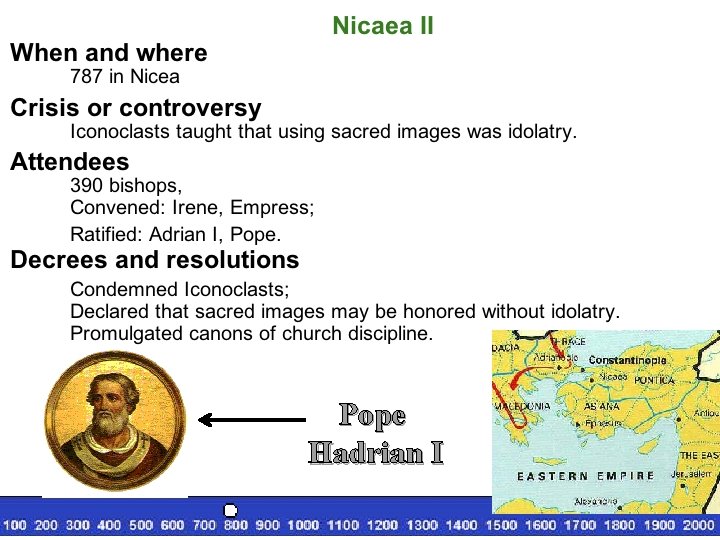
Pope Hadrian I
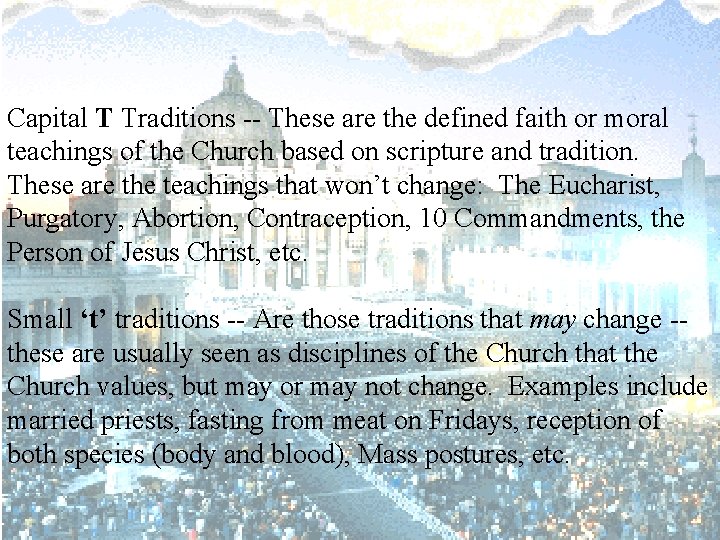
Capital T Traditions -- These are the defined faith or moral teachings of the Church based on scripture and tradition. These are the teachings that won’t change: The Eucharist, Purgatory, Abortion, Contraception, 10 Commandments, the Person of Jesus Christ, etc. Small ‘t’ traditions -- Are those traditions that may change -these are usually seen as disciplines of the Church that the Church values, but may or may not change. Examples include married priests, fasting from meat on Fridays, reception of both species (body and blood), Mass postures, etc.
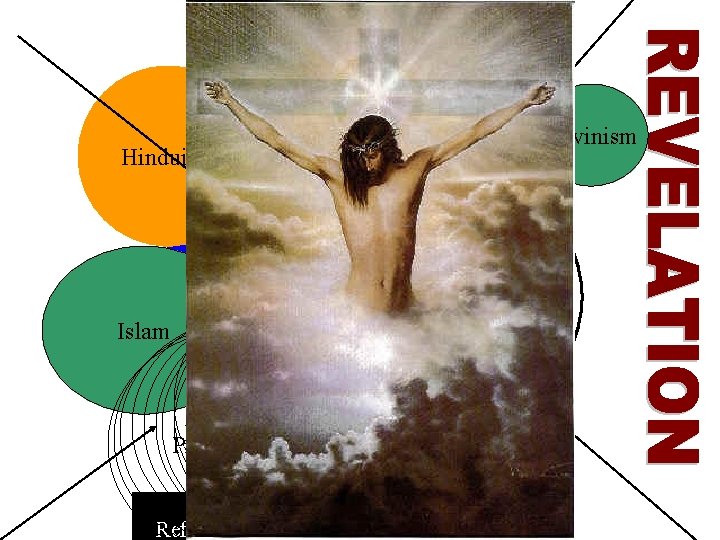
Buddhism Gavinism Hinduism Catholic Church “Truth Subsists” Islam Orthodoxy Protestantism Protestantism Protestantism Judaism Reform/Conservative/Orthodox and Hasidic
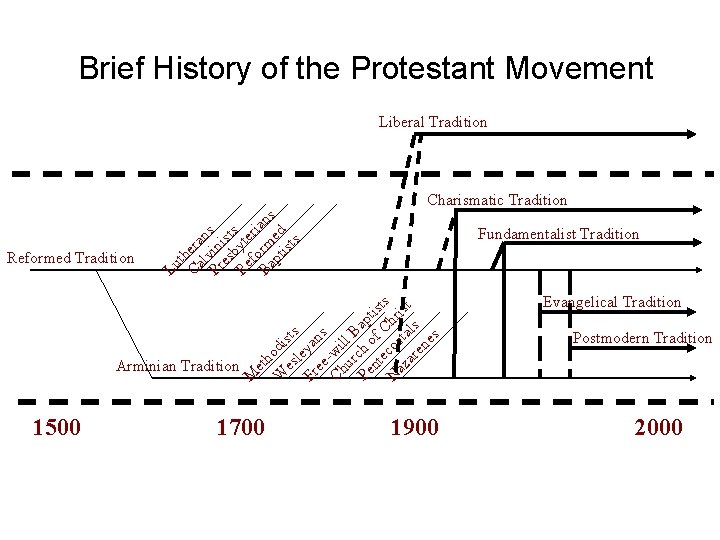
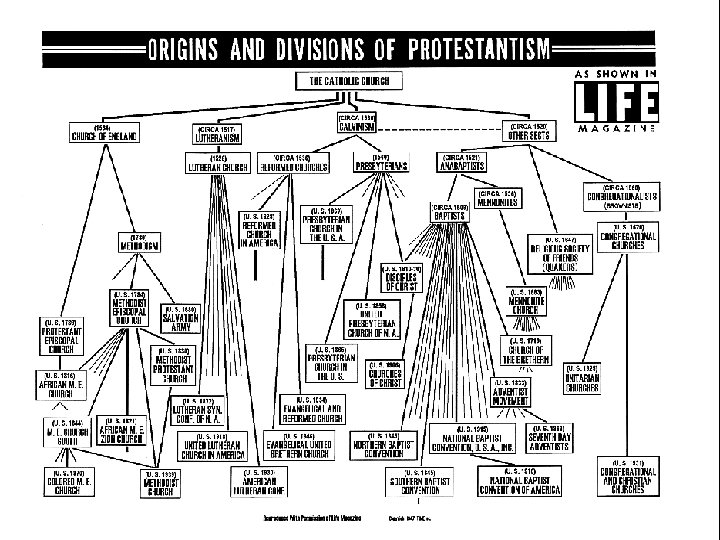
Brief History of the Protestant Movement Liberal Tradition Fundamentalist Tradition Evangelical Tradition Postmodern Tradition M Arminian Tradition et h W odi es sts l Fr eya ee ns Ch -wi ur ll B Pe ch ap nt of tist e C N cos hr s az ta ist ar ls en es Lu Reformed Tradition th Ca era l n Pr vin s es ist Re byte s f r Ba orm ians pt ed ist s Charismatic Tradition 1500 1700 1900 2000