
Crown Jewels 4 Learning 2013 Clip Art Microsoft

- Slides: 24
© Crown Jewels 4 Learning, 2013 Clip Art: Microsoft Office and Teacher’s Clipart
As more and more people came to the New World, settlements called colonies were established. Life in each colony was affected by the climate, geography, and people who settled there.
© Crown Jewels 4 Learning, 2013
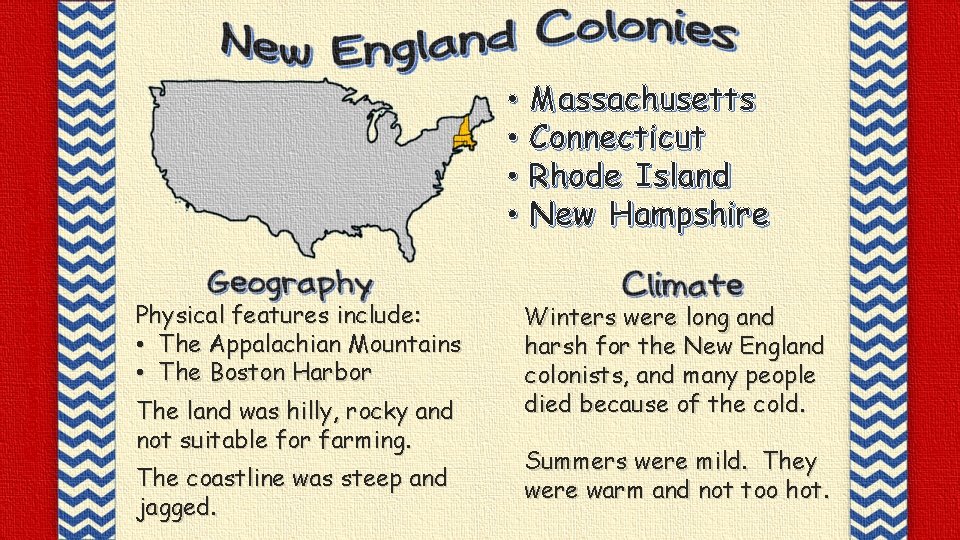
© Crown Jewels 4 Learning, 2013 • • Physical features include: • The Appalachian Mountains • The Boston Harbor The land was hilly, rocky and not suitable for farming. The coastline was steep and jagged. Massachusetts Connecticut Rhode Island New Hampshire Winters were long and harsh for the New England colonists, and many people died because of the cold. Summers were mild. They were warm and not too hot.
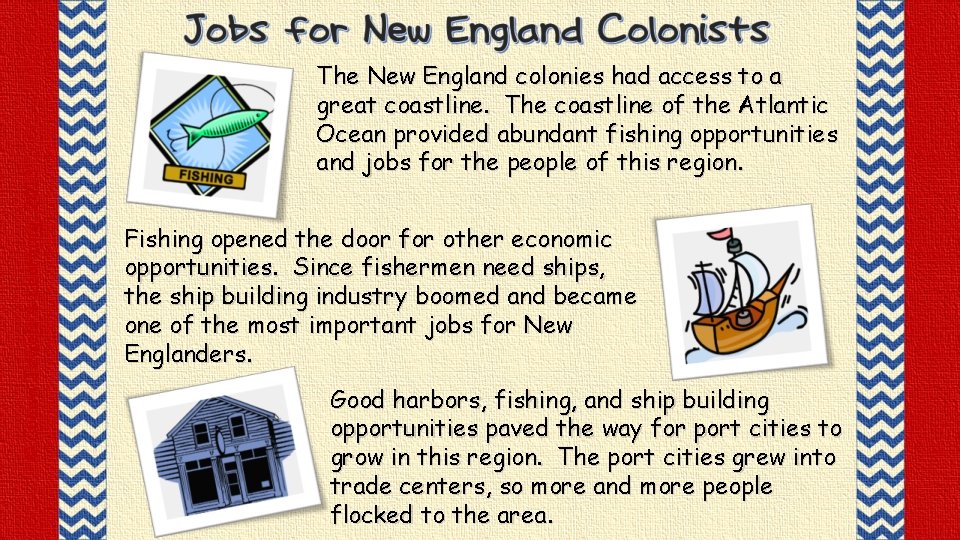
© Crown Jewels 4 Learning, 2013 The New England colonies had access to a great coastline. The coastline of the Atlantic Ocean provided abundant fishing opportunities and jobs for the people of this region. Fishing opened the door for other economic opportunities. Since fishermen need ships, the ship building industry boomed and became one of the most important jobs for New Englanders. Good harbors, fishing, and ship building opportunities paved the way for port cities to grow in this region. The port cities grew into trade centers, so more and more people flocked to the area.
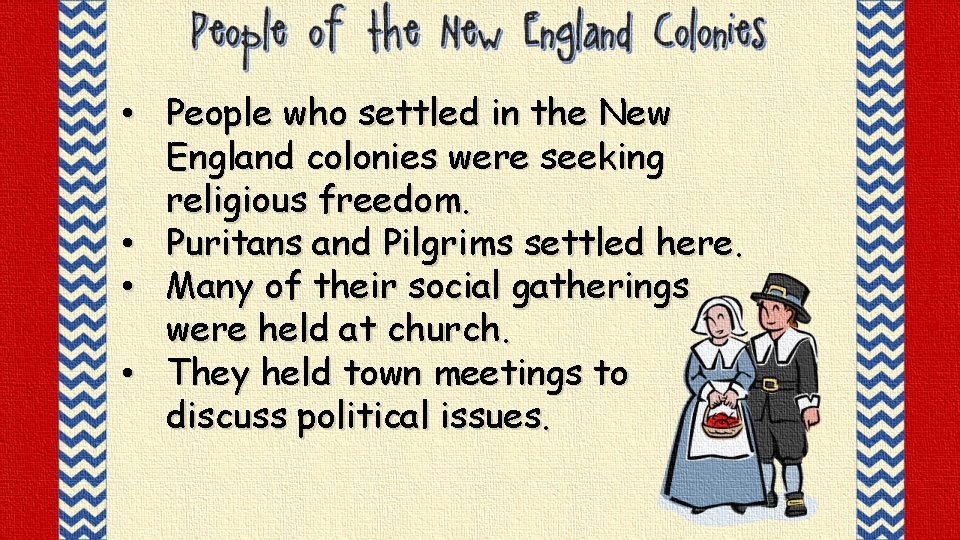
© Crown Jewels 4 Learning, 2013 • People who settled in the New England colonies were seeking religious freedom. • Puritans and Pilgrims settled here. • Many of their social gatherings were held at church. • They held town meetings to discuss political issues.
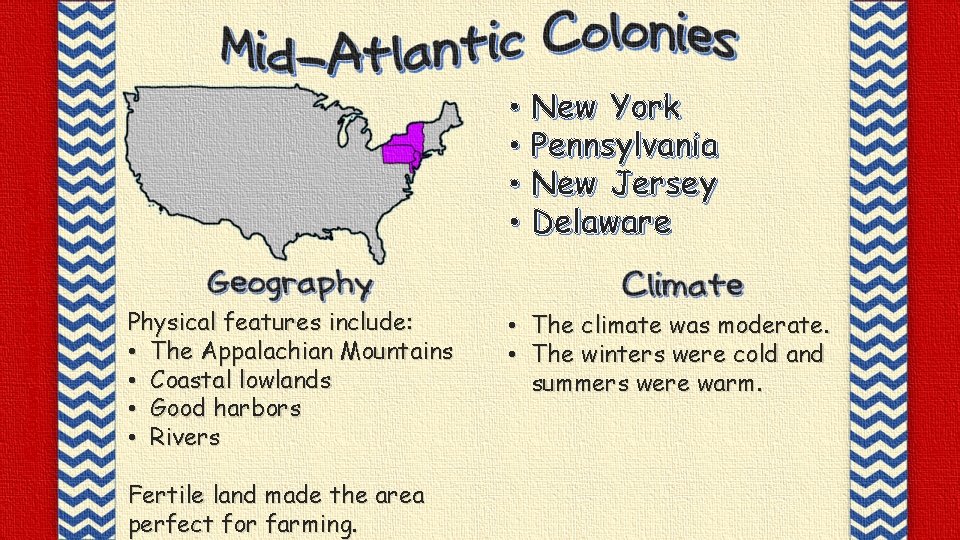
© Crown Jewels 4 Learning, 2013 • • Physical features include: • The Appalachian Mountains • Coastal lowlands • Good harbors • Rivers Fertile land made the area perfect for farming. New York Pennsylvania New Jersey Delaware • The climate was moderate. • The winters were cold and summers were warm.
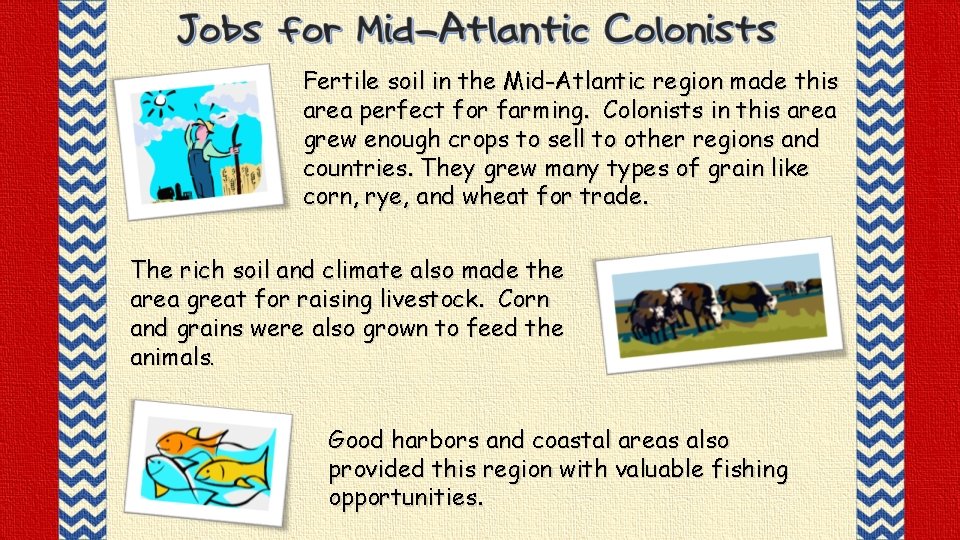
The rich soil and climate also made the area great for raising livestock. Corn and grains were also grown to feed the animals. Good harbors and coastal areas also provided this region with valuable fishing opportunities. © Crown Jewels 4 Learning, 2013 Fertile soil in the Mid-Atlantic region made this area perfect for farming. Colonists in this area grew enough crops to sell to other regions and countries. They grew many types of grain like corn, rye, and wheat for trade.
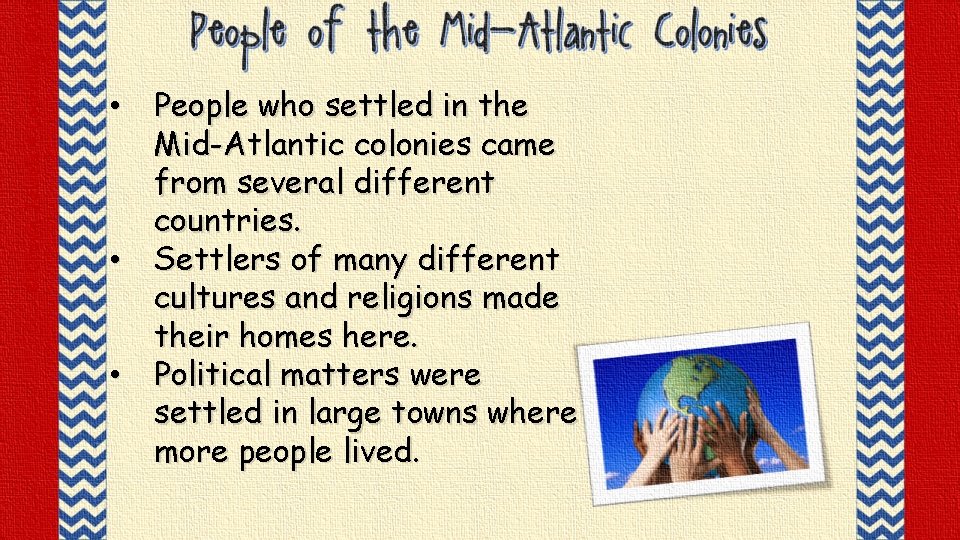
© Crown Jewels 4 Learning, 2013 • People who settled in the Mid-Atlantic colonies came from several different countries. • Settlers of many different cultures and religions made their homes here. • Political matters were settled in large towns where more people lived.
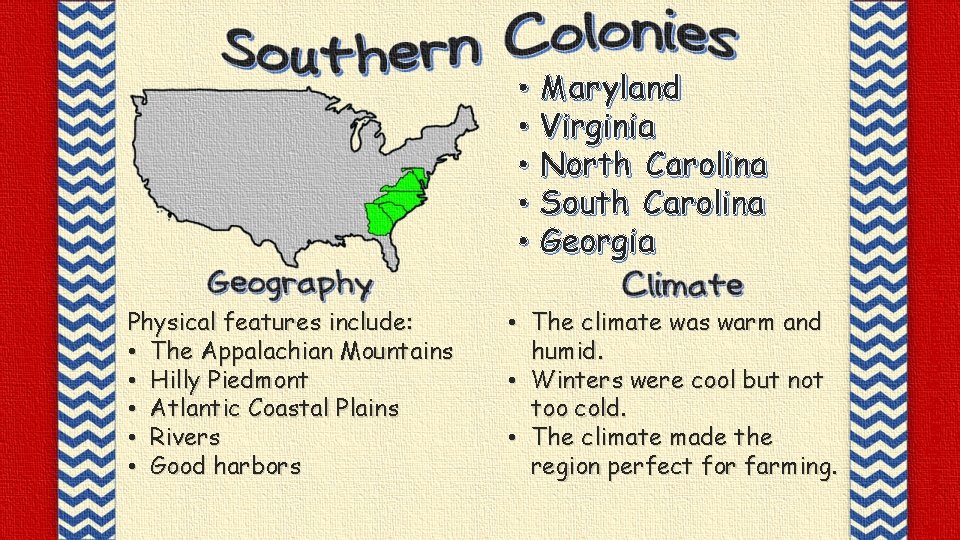
Physical features include: • The Appalachian Mountains • Hilly Piedmont • Atlantic Coastal Plains • Rivers • Good harbors Maryland Virginia North Carolina South Carolina Georgia • The climate was warm and humid. • Winters were cool but not too cold. • The climate made the region perfect for farming. © Crown Jewels 4 Learning, 2013 • • •
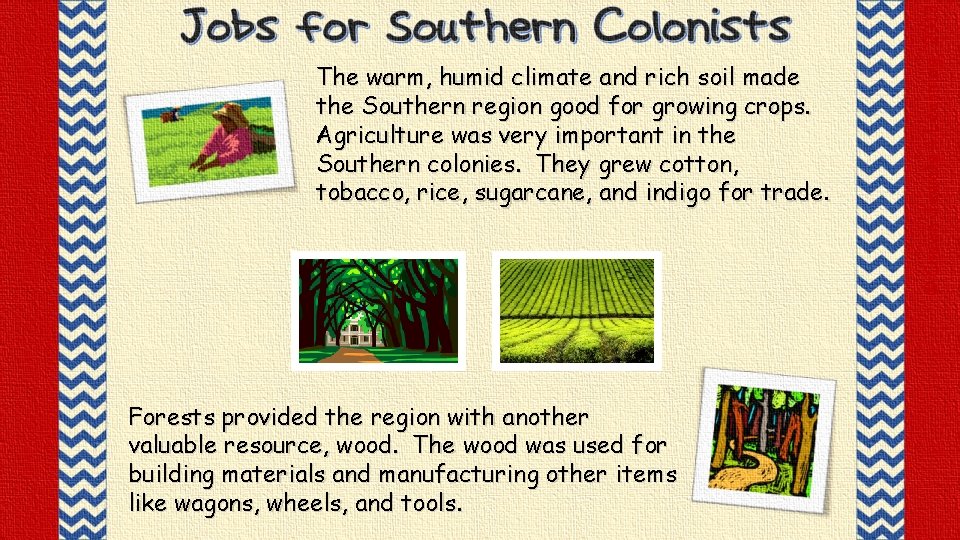
Forests provided the region with another valuable resource, wood. The wood was used for building materials and manufacturing other items like wagons, wheels, and tools. © Crown Jewels 4 Learning, 2013 The warm, humid climate and rich soil made the Southern region good for growing crops. Agriculture was very important in the Southern colonies. They grew cotton, tobacco, rice, sugarcane, and indigo for trade.
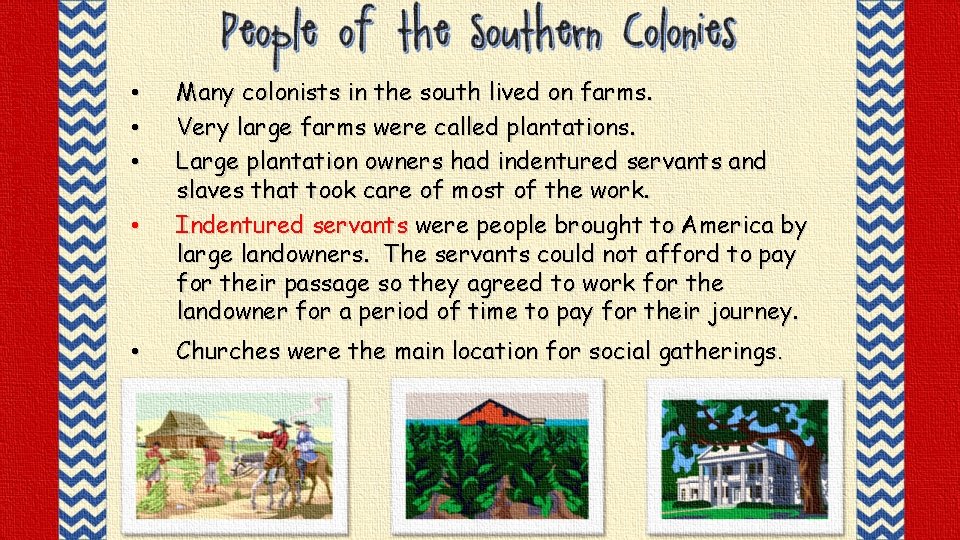
© Crown Jewels 4 Learning, 2013 • • • Many colonists in the south lived on farms. Very large farms were called plantations. Large plantation owners had indentured servants and slaves that took care of most of the work. Indentured servants were people brought to America by large landowners. The servants could not afford to pay for their passage so they agreed to work for the landowner for a period of time to pay for their journey. Churches were the main location for social gatherings.
© Crown Jewels 4 Learning, 2013 Let’s Review! You may use your graphic organizer or a partner to help you answer the following questions. Teacher Note: Incorrect responses disappear with one click.
People who lived in the New England colonies most likely had which of the following jobs? a. Farming b. Raising livestock c. Ship building and fishing © Crown Jewels 4 Learning, 2013
What was the climate like for the people of the New England colonies? a. Harsh winters and mild summers b. Warm, humid summers and mild winters. c. Cold winters and hot summers © Crown Jewels 4 Learning, 2013
© Crown Jewels 4 Learning, 2013 Which colonial region was settled by Puritans and Pilgrims seeking religious freedom? a. New England b. Southern c. Mid-Atlantic
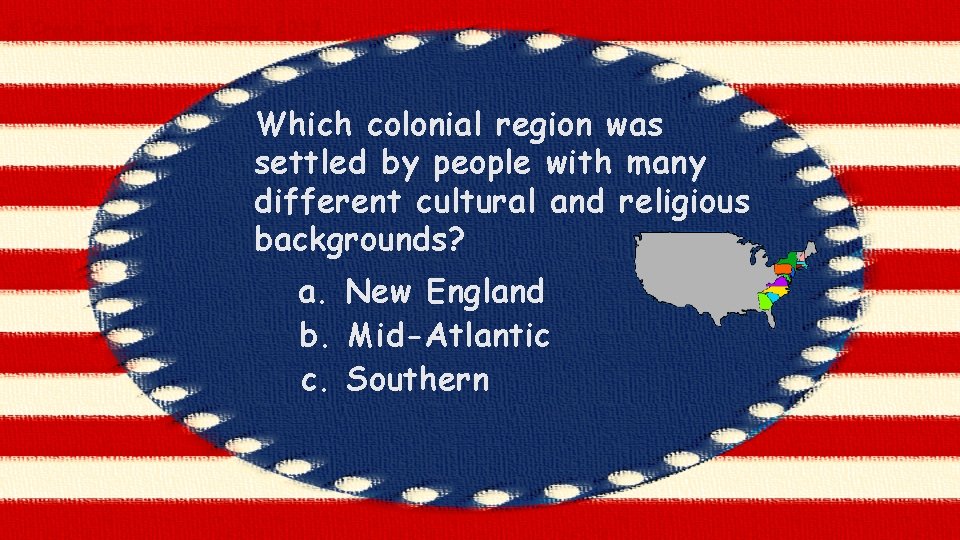
© Crown Jewels 4 Learning, 2013 Which colonial region was settled by people with many different cultural and religious backgrounds? a. New England b. Mid-Atlantic c. Southern
Which colonial region was likely the home for livestock owners and farmers? a. New England b. Mid-Atlantic c. Southern © Crown Jewels 4 Learning, 2013
© Crown Jewels 4 Learning, 2013 Which colonial region contained rocky soil and a jagged coastline? a. Southern b. Mid-Atlantic c. New England
Which colonists were farmers and plantation owners who grew cotton and tobacco? a. New England b. Southern c. Mid-Atlantic © Crown Jewels 4 Learning, 2013
Which crops were grown by colonists living in the Southern region? a. Corn, cotton, tobacco, and indigo b. Grains like wheat and rye c. Watermelon, apples, and peaches © Crown Jewels 4 Learning, 2013
Large farms, called _____, were spread throughout the Southern colonies. a. Plantations b. Trade centers c. Settlements © Crown Jewels 4 Learning, 2013
Which colonial region had access to good harbors where trade centers were established? a. New England b. Mid-Atlantic c. Southern d. All of the above © Crown Jewels 4 Learning, 2013
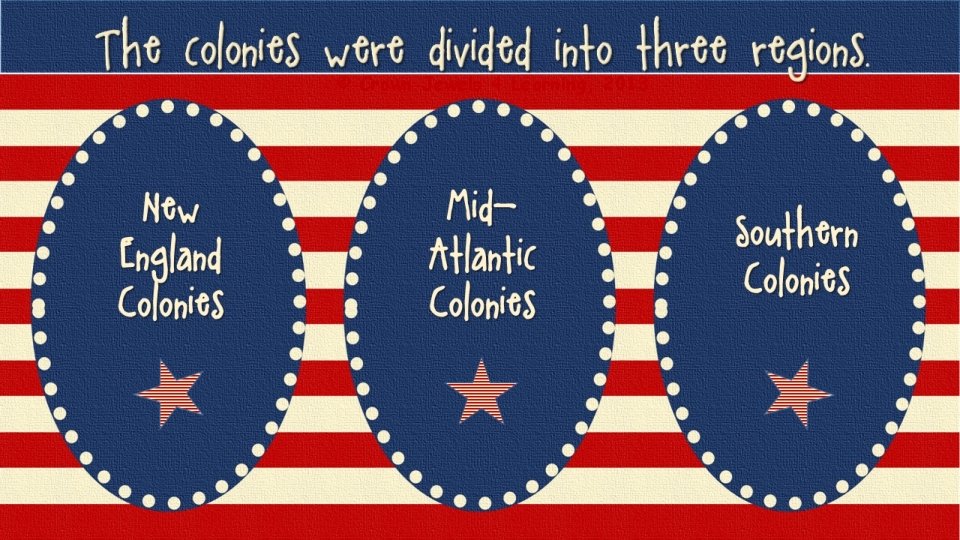
© Crown Jewels 4 Learning, 2013 3 -2 -1 Review Name the 3 colonial regions. ___________, ______ List 2 things that affected life in the regions. ________, ________ Write 1 important thing to remember. __________________