The 73 rd Annual ConferenceMeeting of the Ogden





- Slides: 62
The 73 rd Annual Conference/Meeting of the Ogden Surgical-Medical Society May 15 -18, 2018 Abdul Nasser Kaadan, MD, Ph. D Visiting International Professor Weber State University
Islamic Medicine Also known as Arabic medicine, refers to the science of medicine developed in the Islamic Golden Age, and written in Arabic, the lingua franca of Islamic civilization. Medieval Islamic physicians largely retained their authority until the rise of medicine as a part of the natural sciences, beginning with the Age of Enlightenment, nearly six hundred years after their textbooks were written. Aspects of their writings remain of interest to physicians even today.
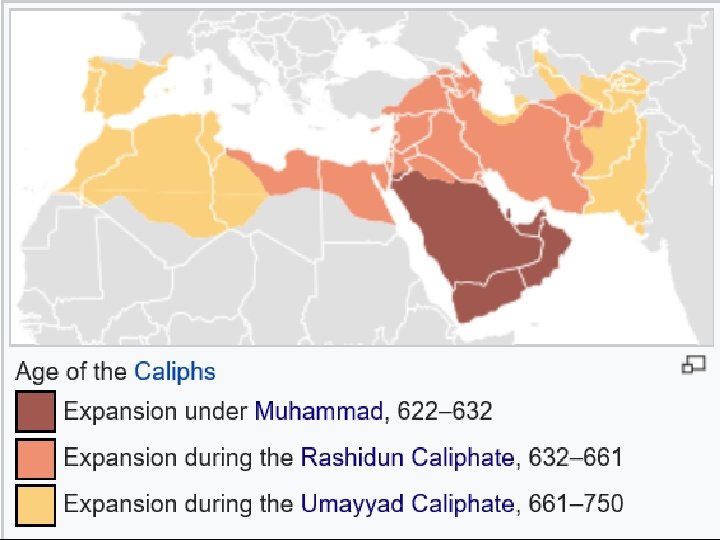
The Islamic Golden Age Is the era in the history of Islam, traditionally dated from the 8 th century to the end of 16 th centuries, during which much of the historically Islamic world was science, economic development, and cultural works flourished. This period is traditionally understood to have begun during the reign of the caliph Harun al-Rashid (786 to 809) with the inauguration of the House of Wisdom in Baghdad, where scholars from various parts of the world, with different cultural backgrounds were mandated to gather and translate all of the world's classical knowledge into the Arabic language.
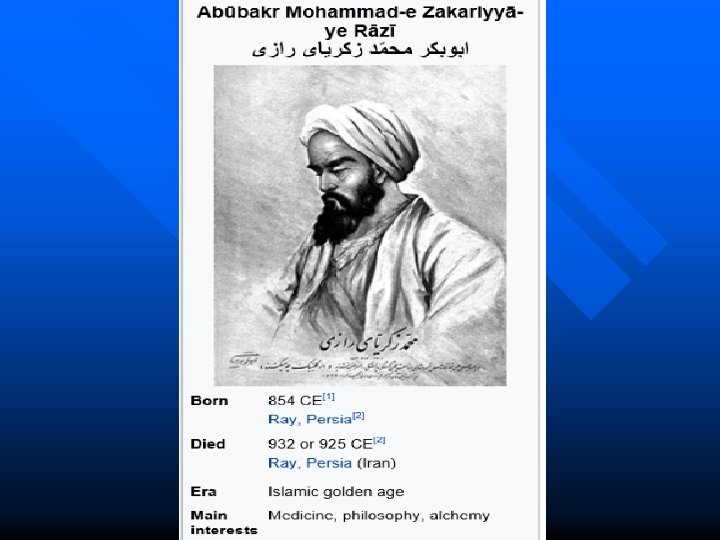
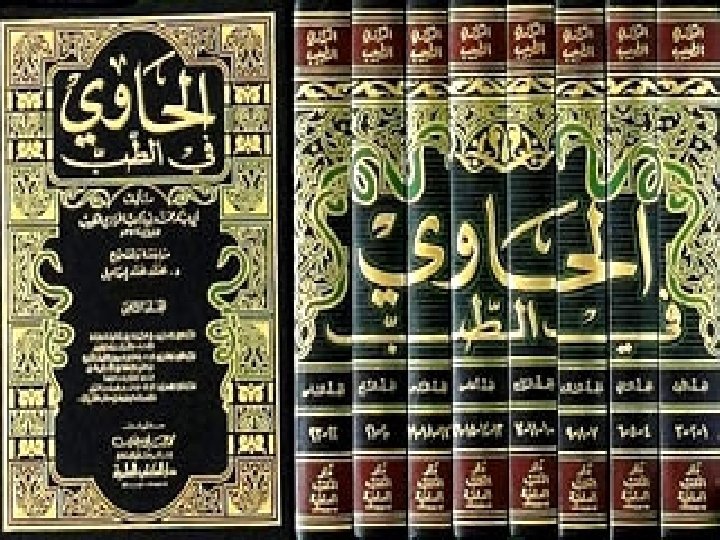
* Al-Razi composed more than two hundred books related to medicine, pharmacy, philosophy, music and many other sciences. * He wrote on almost every aspect of medicine.
* He is considered the first who founded the experimental science especially in the field of medicine and chemistry. * No one before and during al. Razi time was interested in the experimental science in its methodical form
* This book is extremely important source for our knowledge of Greek, Indian and early Arabic Medicine. * al-Razi was meticulous about crediting his sources.
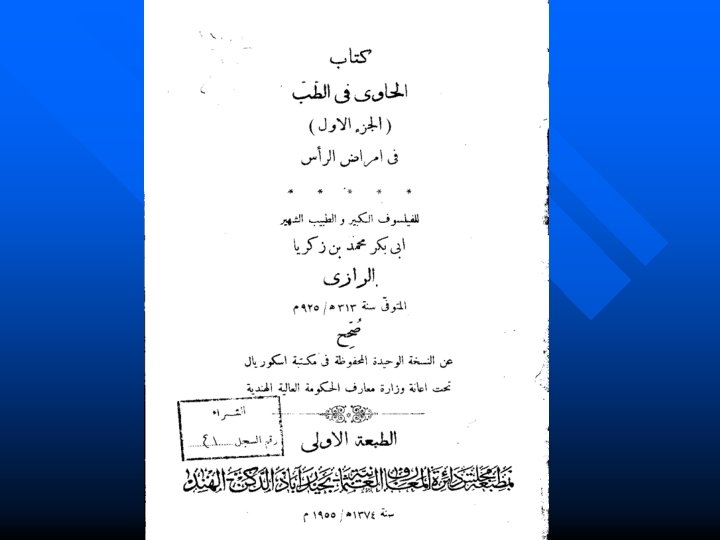
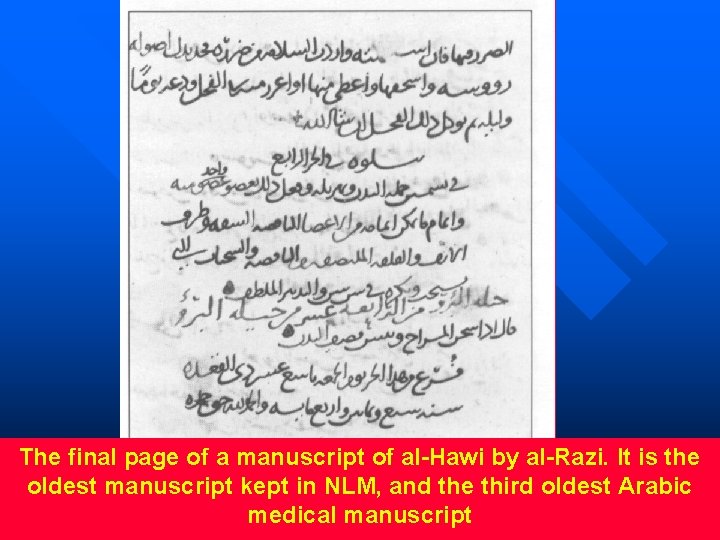
Thefinalpageof ofaamanuscriptof ofal-Hawiby byal-Razi. It. Itis isthe The oldestmanuscriptkeptin in. NLM, andthe thethirdoldest. Arabic oldest medical manuscript medical
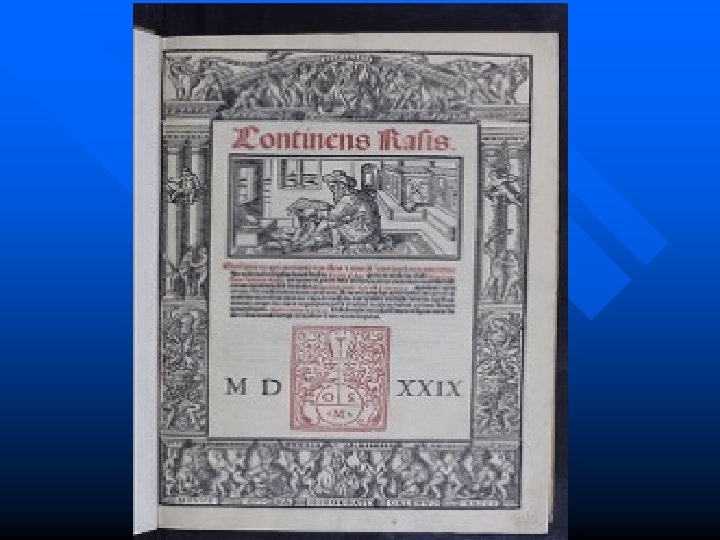
* This comprehensive book on medicine translated into Latin in 1279 under the title of Liber Continens by Faraj ben Salem
* Then it was translated many times into Latin. * It became among the nine relying on books of the medical college library of Paris in 1395.
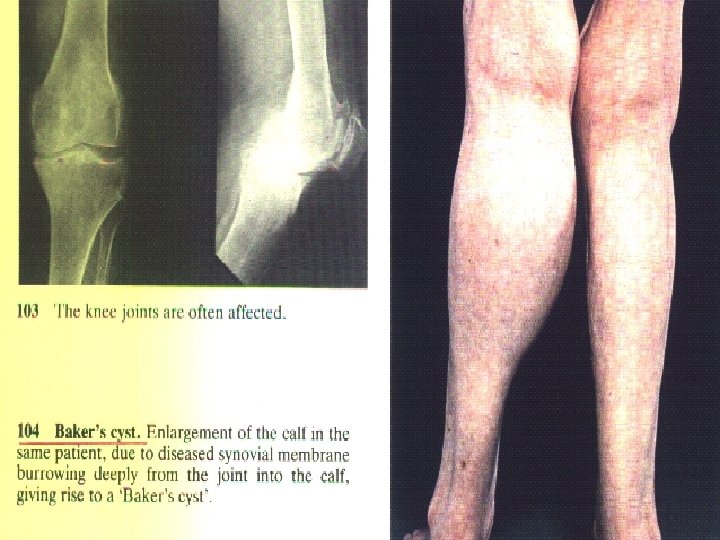
- Al-Razi is considered the first who described what is called now Baker’s cyst. Which is attributed to the English surgeon William Baker (1839 -1896) who described it in 1877.
- He mentioned to the necessity of removing the patella (patellectomy) in the cases of comminuted fracture of the patella, which is attributed to Brooke who described it in 1937, and is called Brooke method.
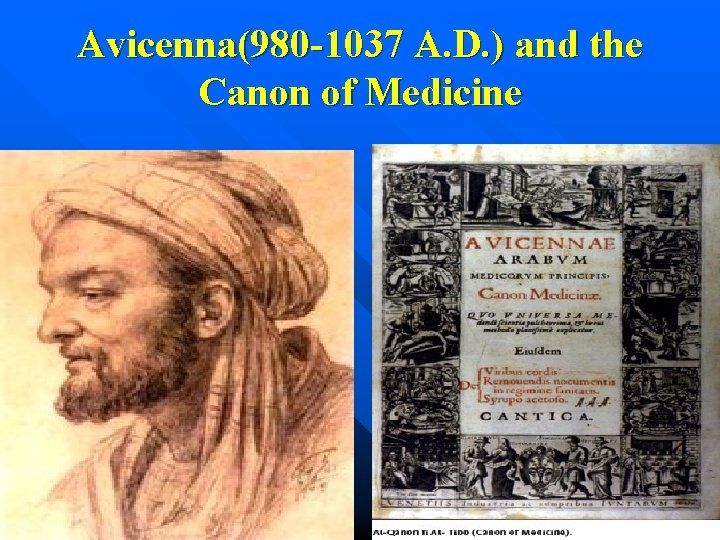
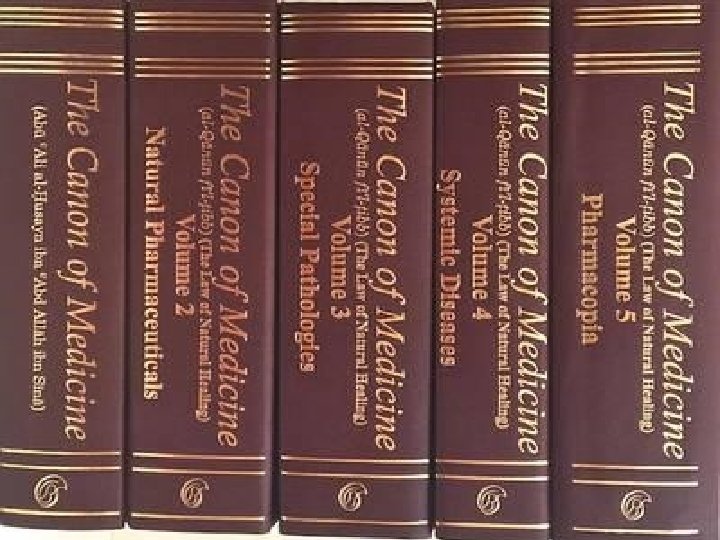
Avicenna(980 -1037 A. D. ) and the Canon of Medicine
*Some recent historians consider him as a philosopher more than a physician, but *Others consider him as a prince of the physicians during the Middle Ages.
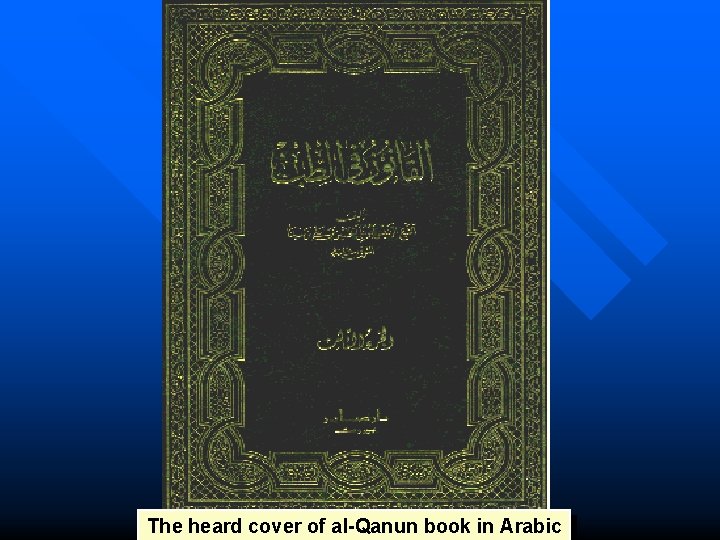
The heard cover of al-Qanun book in Arabic
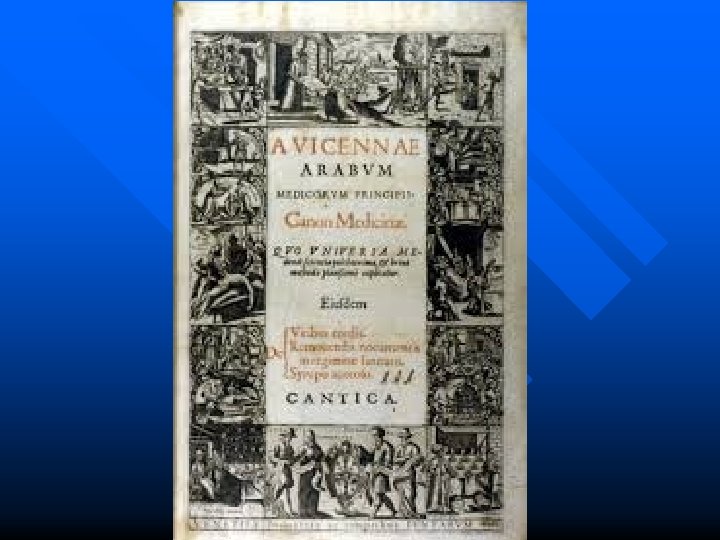
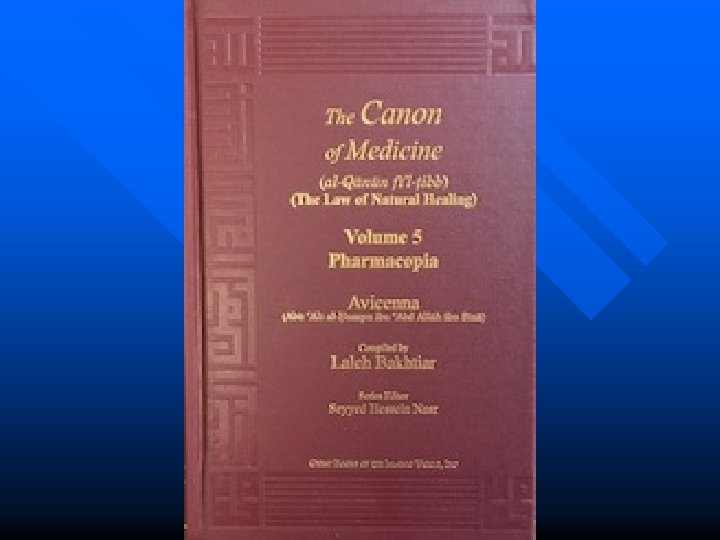
*Al-Qanun Fit-tib (Code of Laws in Medicine) represents the most important work. * William Osler described it the most famous medical textbook ever written.
*It is considered a unique reference or document containing all medical knowledge until the time of Ibn-Sina himself. * His way of explanation made al-Canon book the most widespread in the Islamic and European countries.
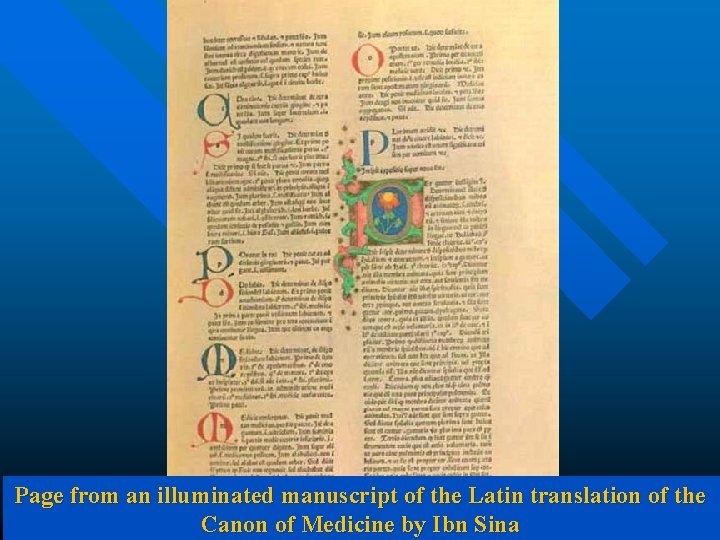
Page from an illuminated manuscript of the Latin translation of the Canon of Medicine by Ibn Sina
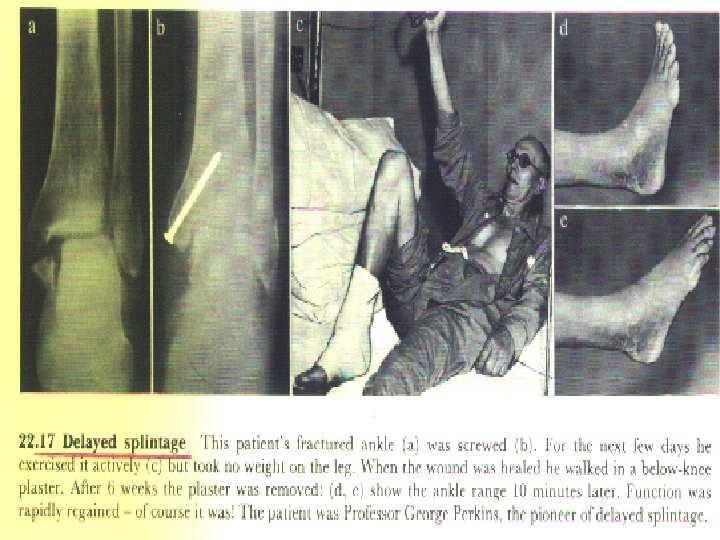
Ibn Sina drew attention to the necessity of not splinting the fracture immediately, advising postponing it beyond the fifth day. Today, this is called the Theory of Delayed Splintage; now Professor George Perkins is considered the pioneer of this theory.
Apley AG, Solomon L: Apley’s System of Orthopedic and th Fractures, p. 344, 6 ed. , Butterworth & Co. , Ltd. , London, 1982.
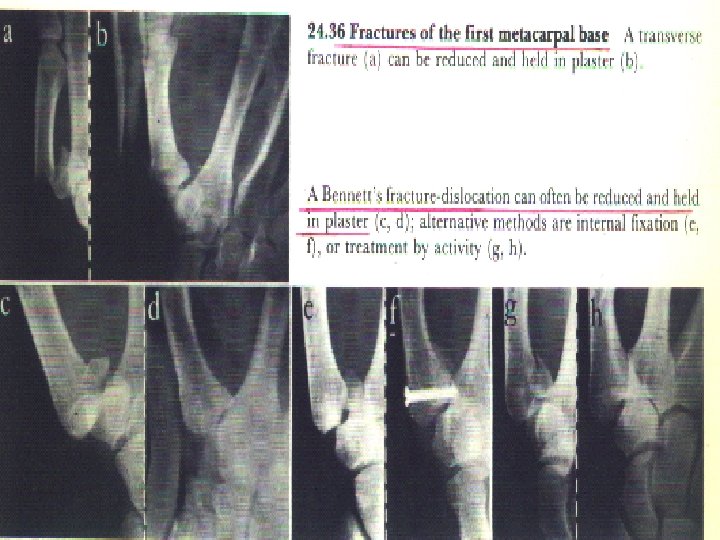
Ibn Sina talked about what is called now “Bennett’s fracture 1882” Described by Edward H. Bennett, Dublin surgeon (1837 -1907).
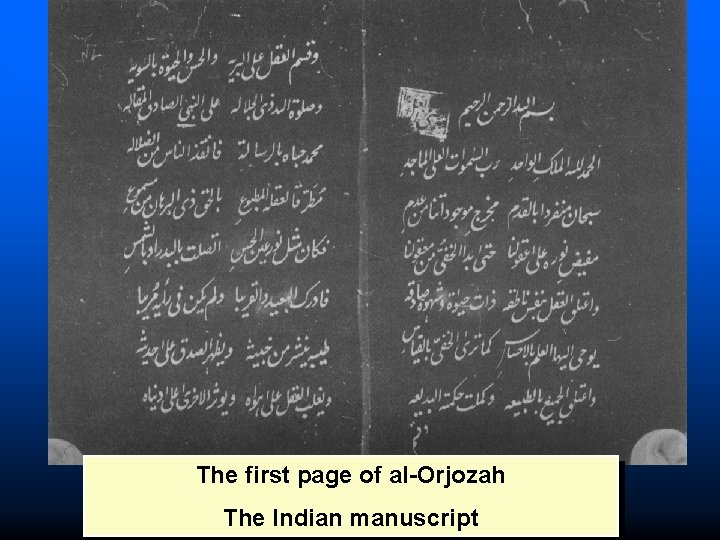
The first page of al-Orjozah The Indian manuscript
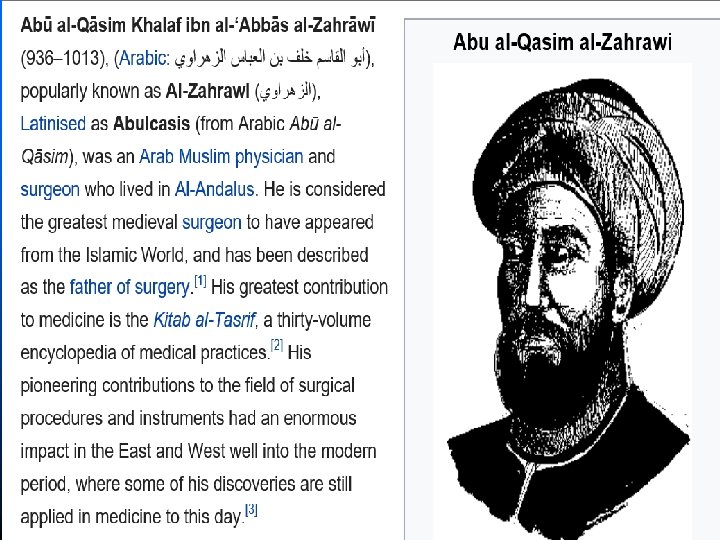
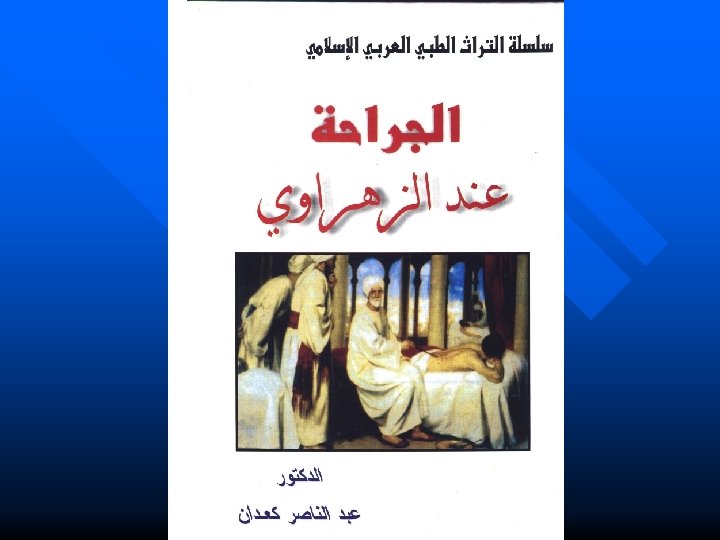
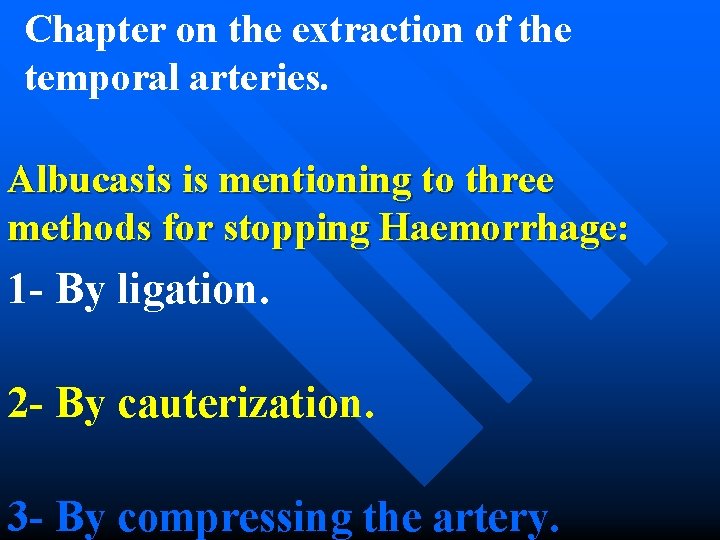
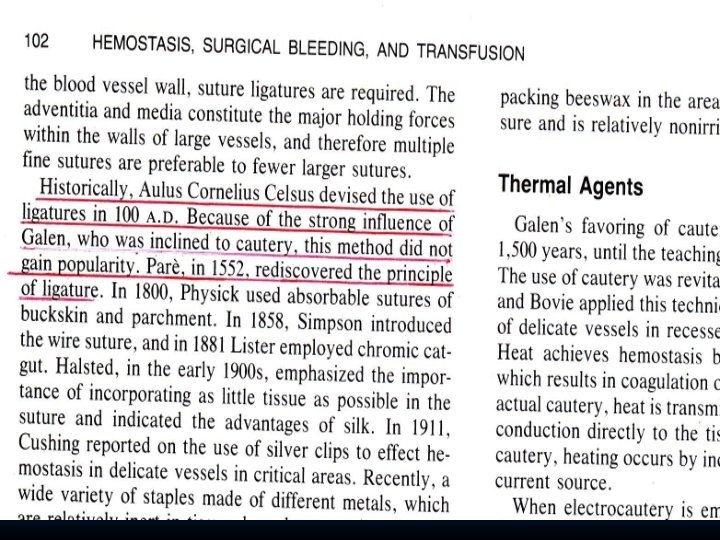
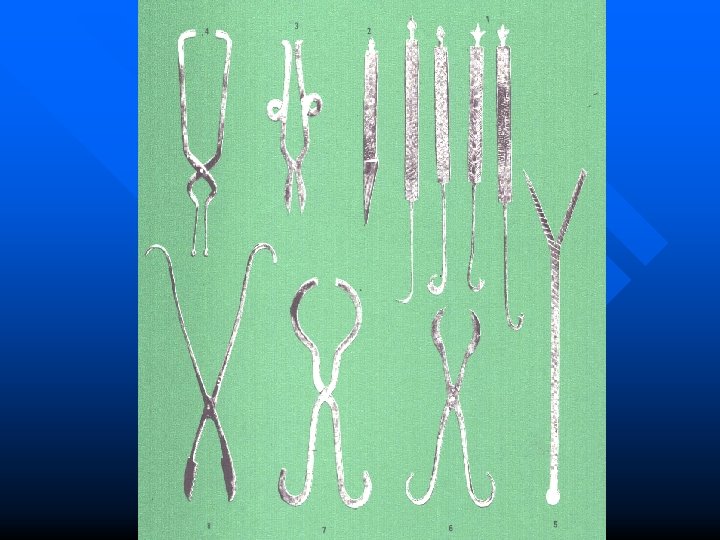
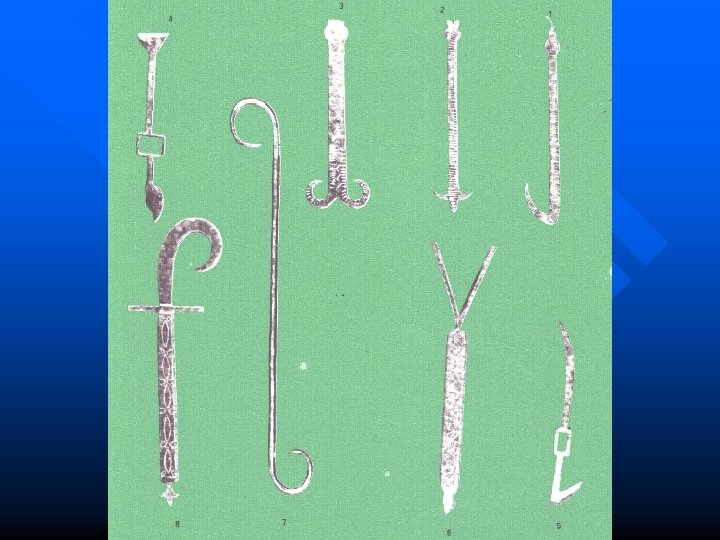
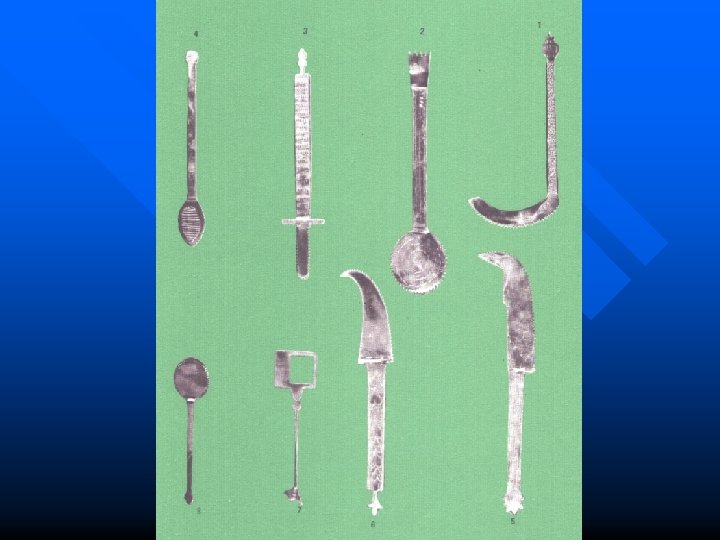
Chapter on the extraction of the temporal arteries. Albucasis is mentioning to three methods for stopping Haemorrhage: 1 - By ligation. 2 - By cauterization. 3 - By compressing the artery.
Albucasis mentioned to what is called now Trendelenburg Position Which described by German Surgeon Freidrich Trendelenburg (1844 -1924).
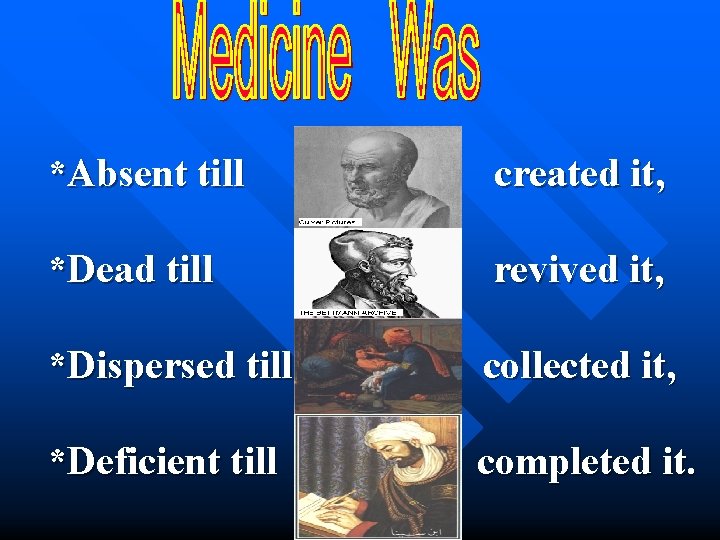
*Absent till created it, *Dead till revived it, *Dispersed till collected it, *Deficient till completed it.