Simplicity Truth Zen Kevin T Kelly Conor MayoWilson
- Slides: 159
Simplicity Truth Zen Kevin T. Kelly Conor Mayo-Wilson Hanti Lin Department of Philosophy Carnegie Mellon University http: //www. andrew. cmu. edu/user/kk 3 n/ockham/Ockham. htm
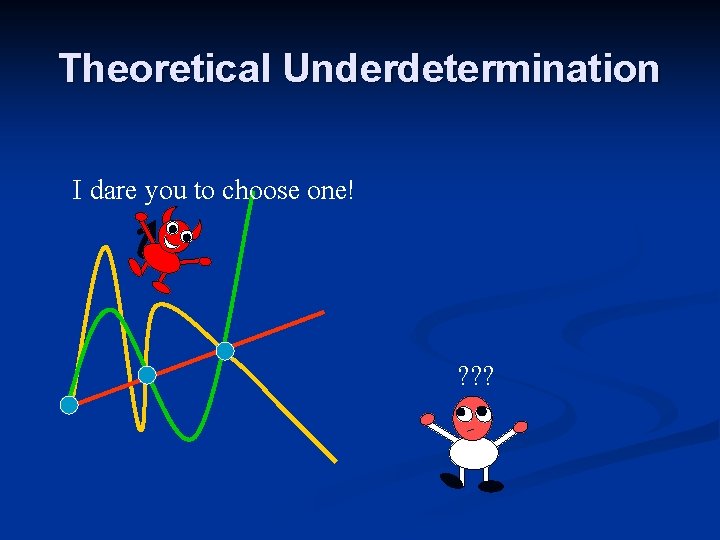
Theoretical Underdetermination I dare you to choose one! ? ? ?
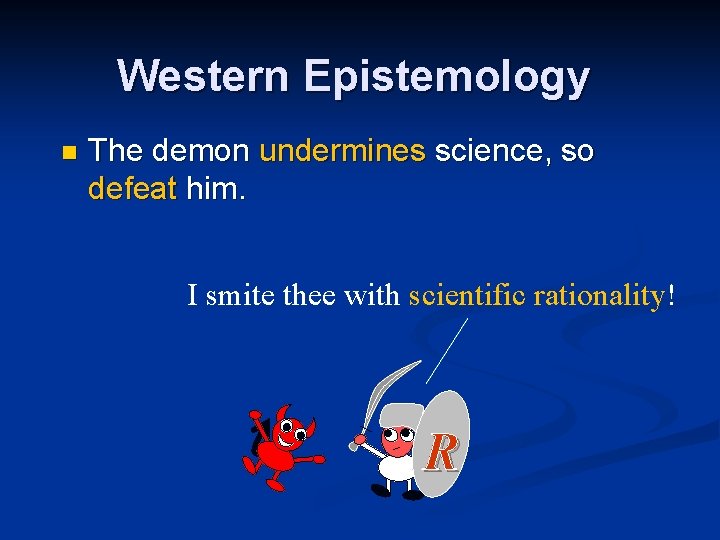
Western Epistemology n The demon undermines science, so defeat him. I smite thee with scientific rationality! R
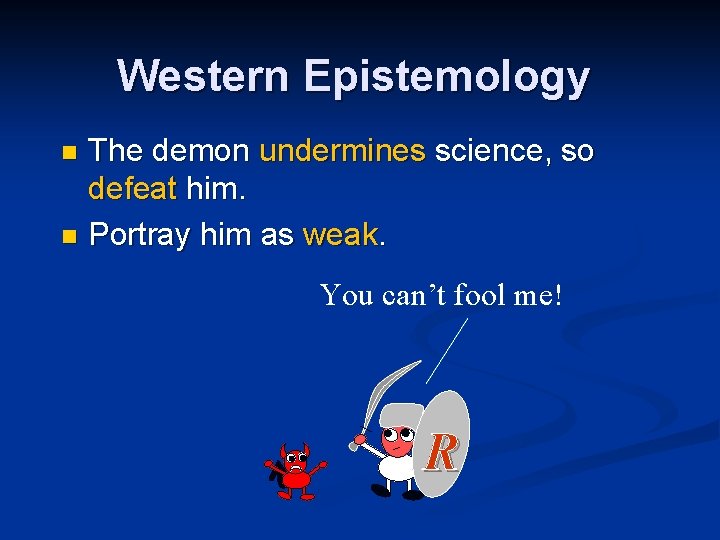
Western Epistemology The demon undermines science, so defeat him. n Portray him as weak. n You can’t fool me! R
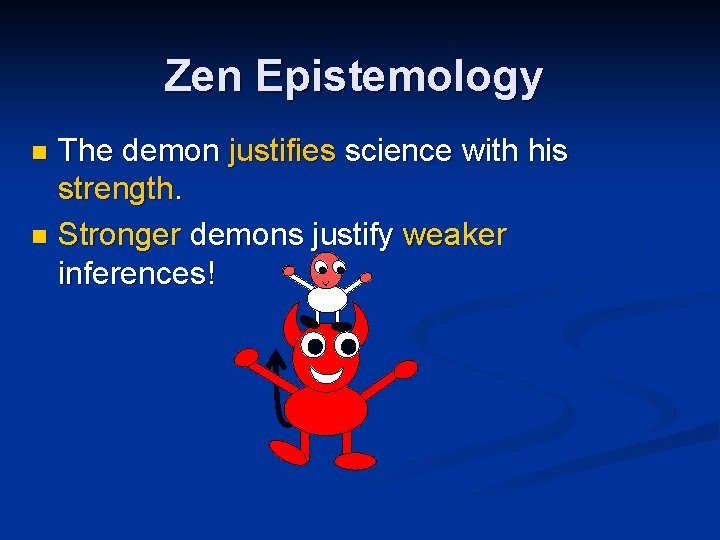
Zen Epistemology The demon justifies science with his strength. n Stronger demons justify weaker inferences! n
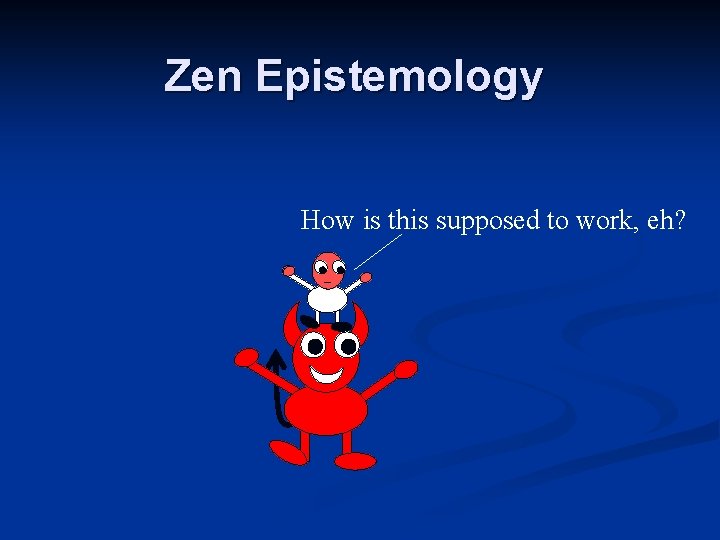
Zen Epistemology How is this supposed to work, eh?
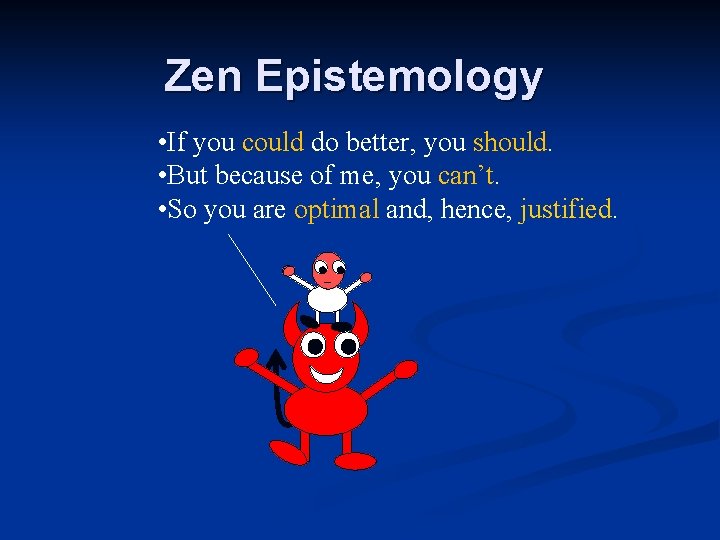
Zen Epistemology • If you could do better, you should. • But because of me, you can’t. • So you are optimal and, hence, justified.
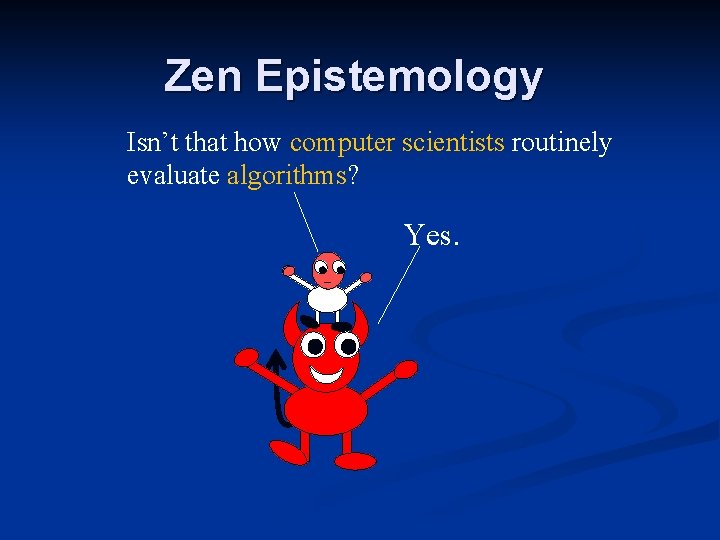
Zen Epistemology Isn’t that how computer scientists routinely evaluate algorithms? Yes.
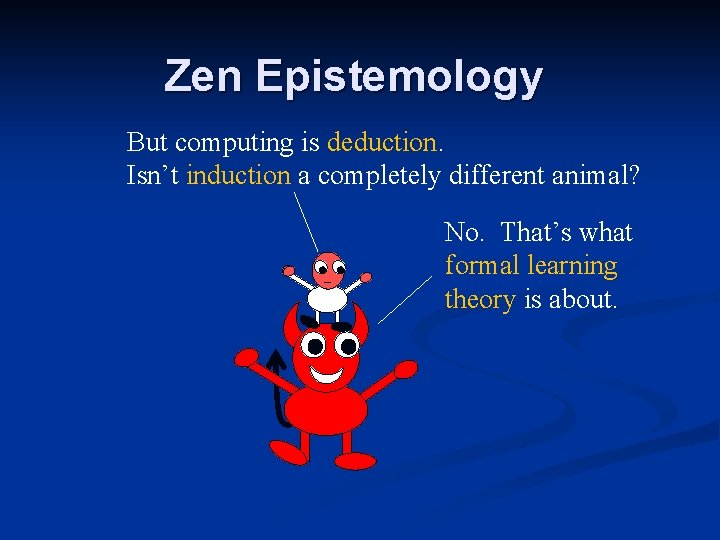
Zen Epistemology But computing is deduction. Isn’t induction a completely different animal? No. That’s what formal learning theory is about.
Zen Epistemology Cool. But how does it apply to science?
Ockham’s Razor
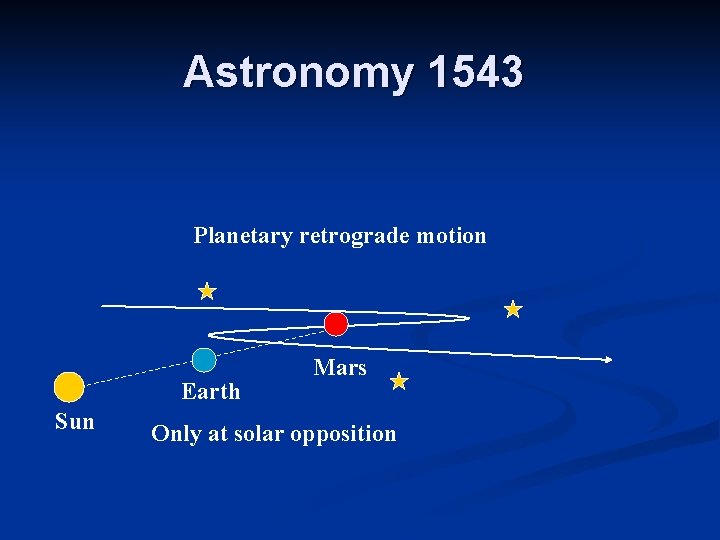
Astronomy 1543 Planetary retrograde motion Earth Sun Mars Only at solar opposition
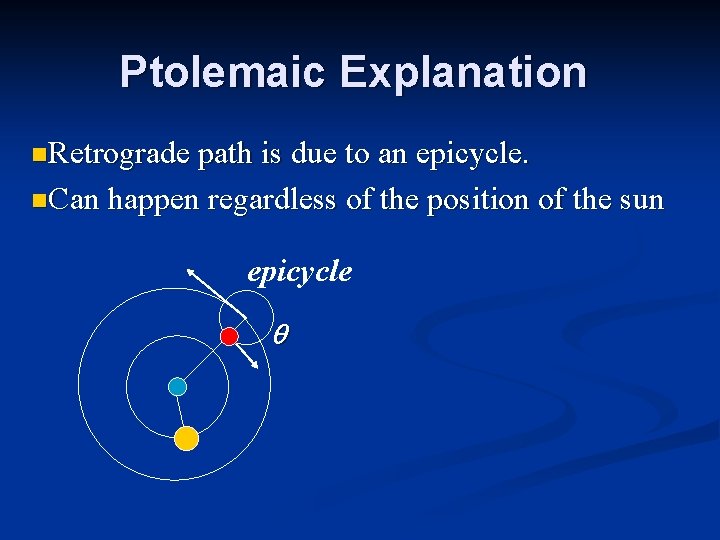
Ptolemaic Explanation n. Retrograde path is due to an epicycle. n. Can happen regardless of the position of the sun epicycle q
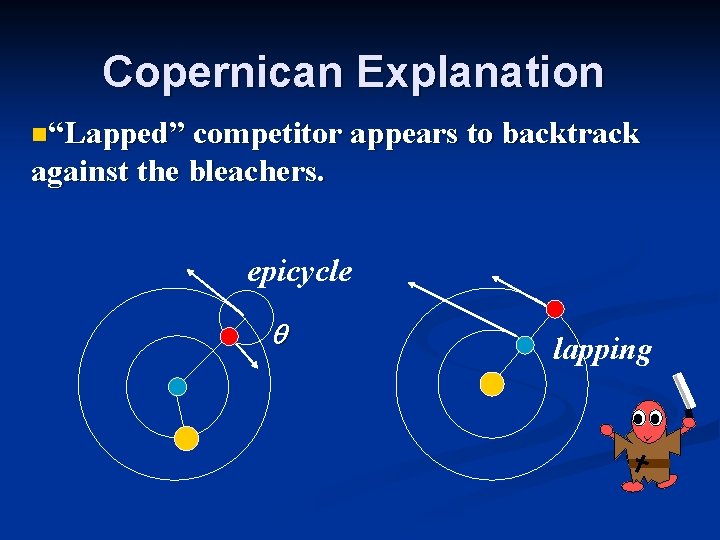
Copernican Explanation n“Lapped” competitor appears to backtrack against the bleachers. epicycle q lapping
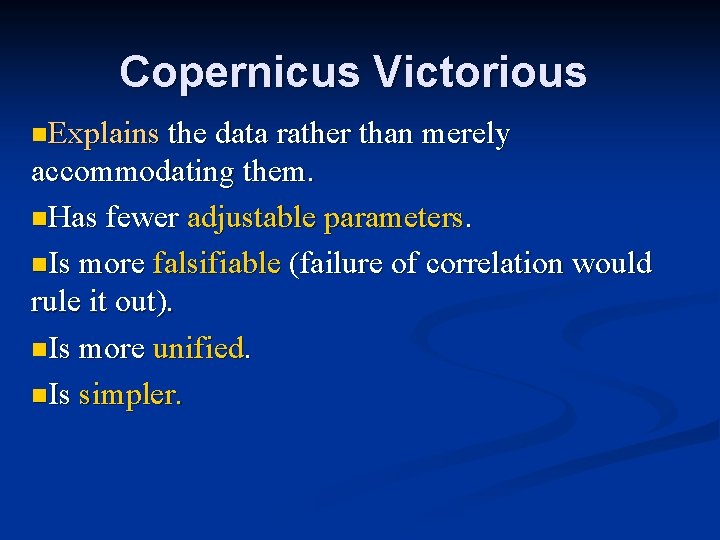
Copernicus Victorious n. Explains the data rather than merely accommodating them. n. Has fewer adjustable parameters. n. Is more falsifiable (failure of correlation would rule it out). n. Is more unified. n. Is simpler.
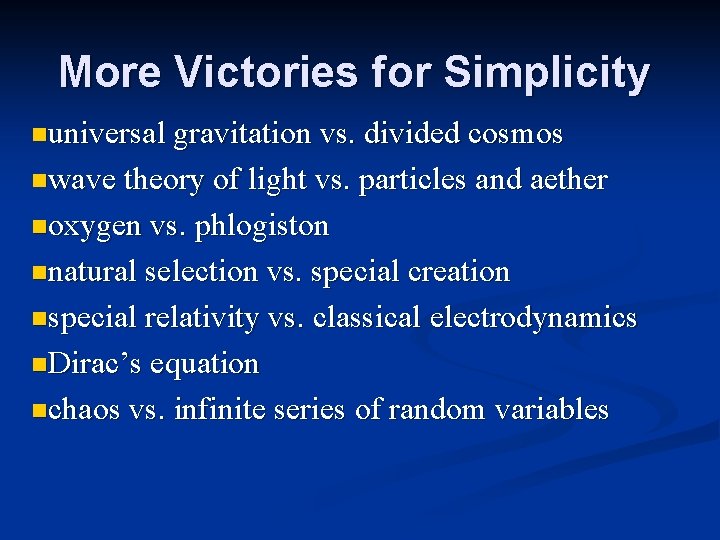
More Victories for Simplicity nuniversal gravitation vs. divided cosmos nwave theory of light vs. particles and aether noxygen vs. phlogiston nnatural selection vs. special creation nspecial relativity vs. classical electrodynamics n. Dirac’s equation nchaos vs. infinite series of random variables
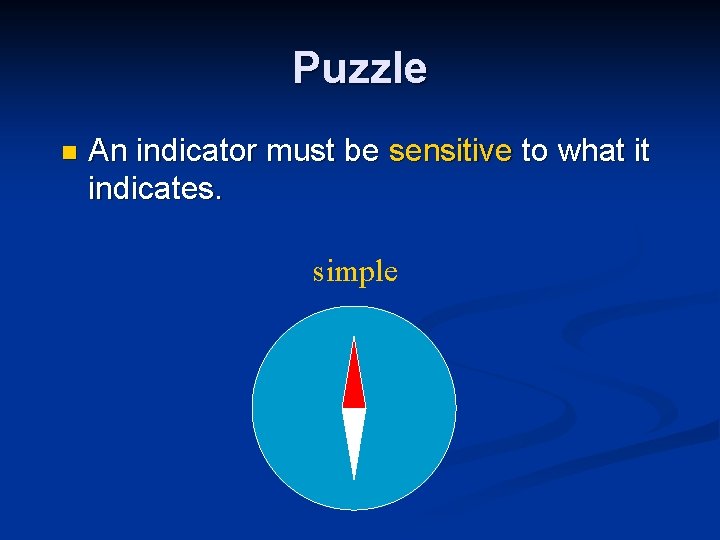
Puzzle n An indicator must be sensitive to what it indicates. simple
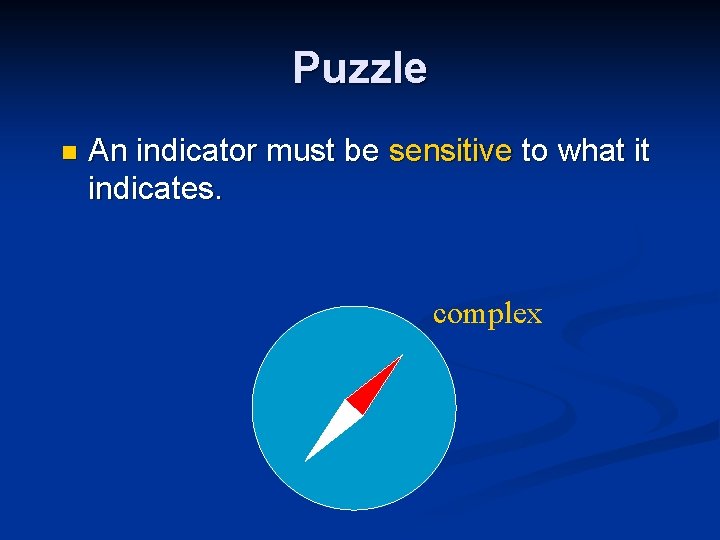
Puzzle n An indicator must be sensitive to what it indicates. complex
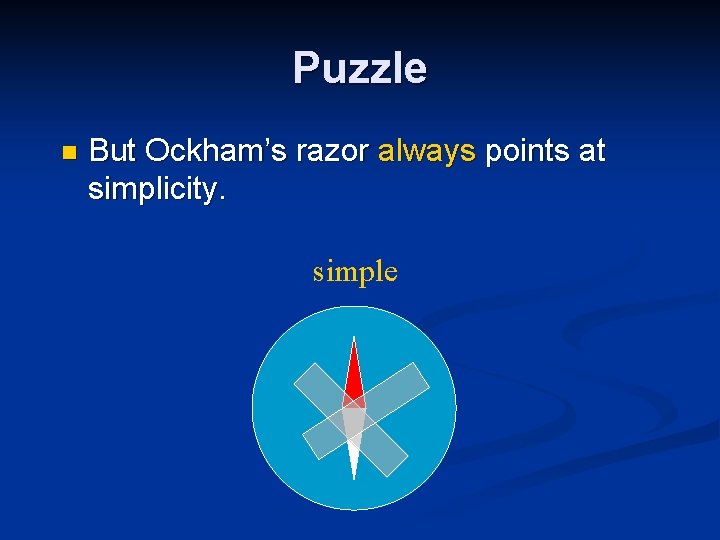
Puzzle n But Ockham’s razor always points at simplicity. simple
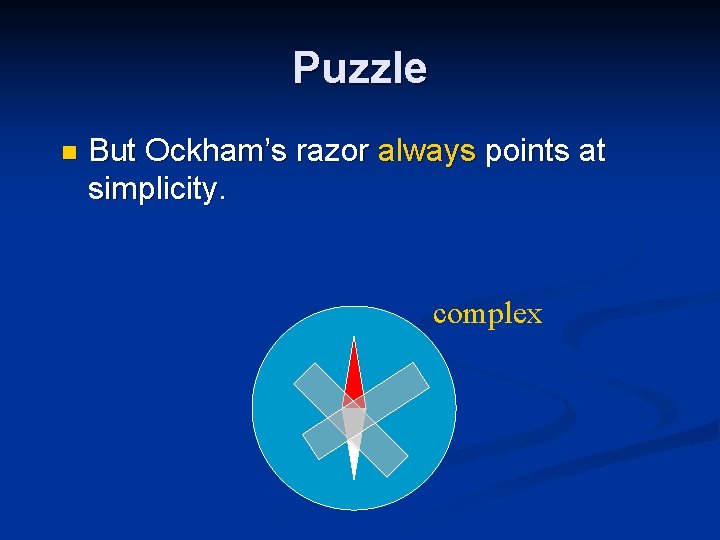
Puzzle n But Ockham’s razor always points at simplicity. complex
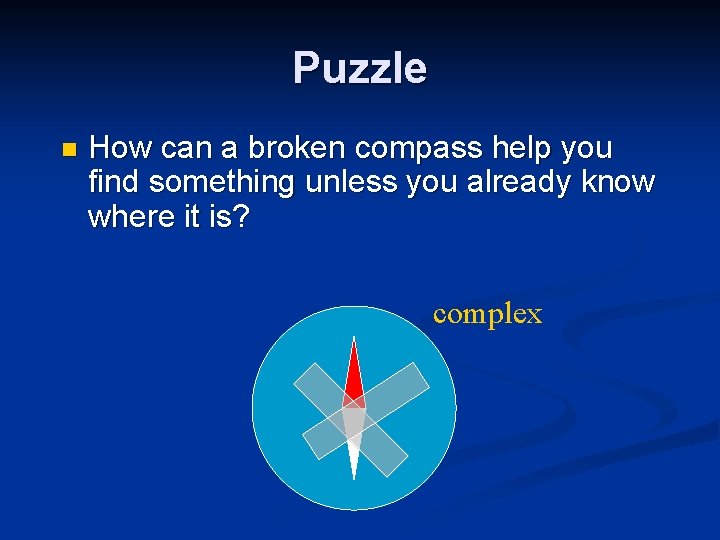
Puzzle n How can a broken compass help you find something unless you already know where it is? complex
Metaphysicians for Ockham Somehow, I don’t like the sound of that…
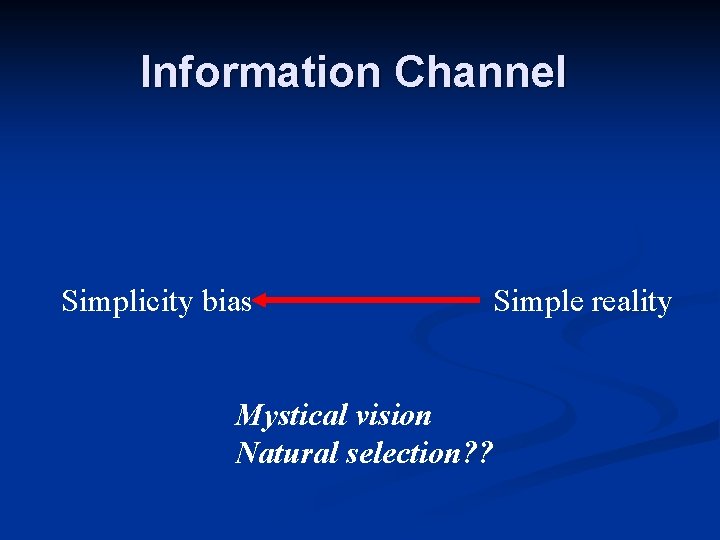
Information Channel Simplicity bias Simple reality Mystical vision Natural selection? ?
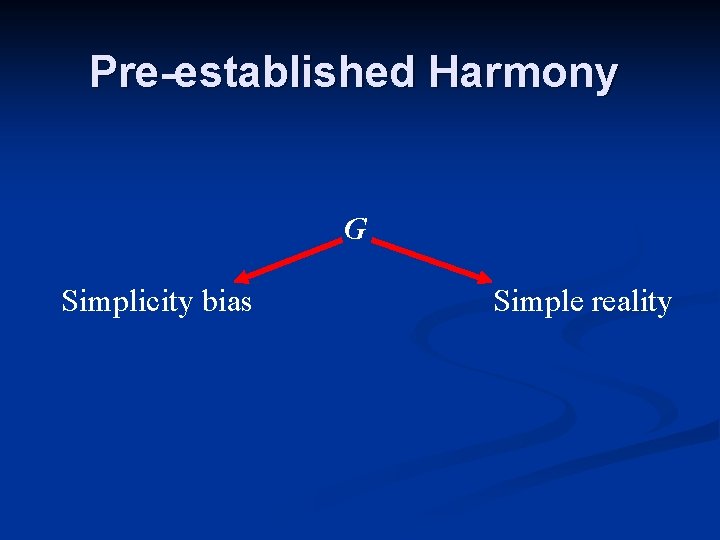
Pre-established Harmony G Simplicity bias Simple reality
Idealism Simplicity bias Simple reality
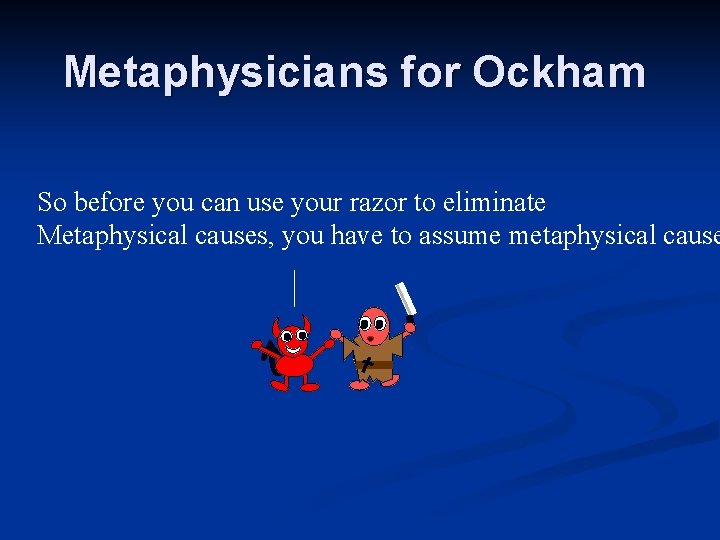
Metaphysicians for Ockham So before you can use your razor to eliminate Metaphysical causes, you have to assume metaphysical cause
Theoretical “Virtues” Simpler theories: 1. Are more unified; 2. Explain better; 3. Are more falsifiable. But the truth might not be virtuous. Wishful thinking to assume otherwise.
Statistical Explanations 1. Prior Simplicity Bias Bayes, BIC, MDL, MML, etc. 2. Risk Minimization SRM, AIC, cross-validation, etc.
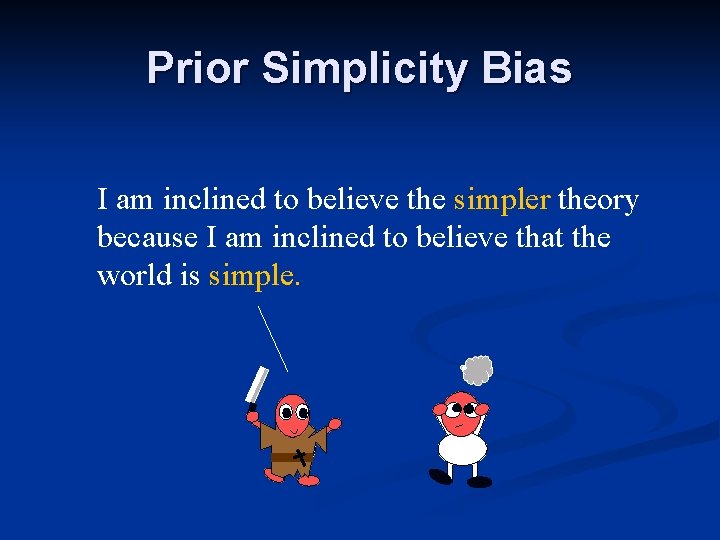
Prior Simplicity Bias I am inclined to believe the simpler theory because I am inclined to believe that the world is simple.
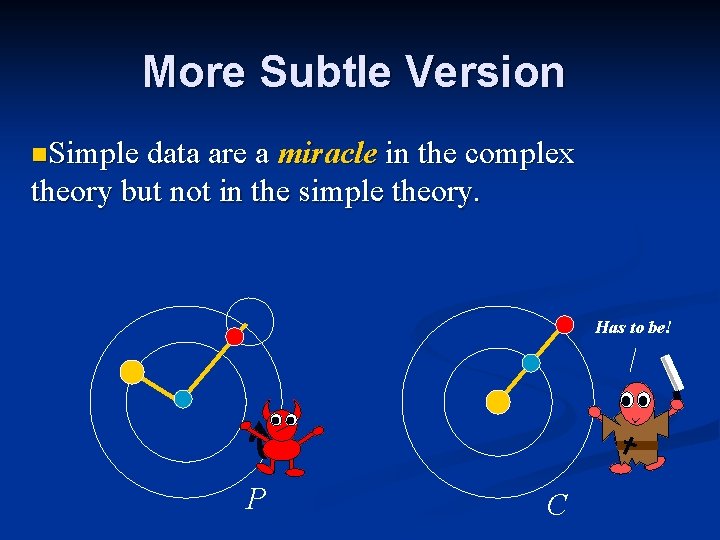
More Subtle Version n. Simple data are a miracle in the complex theory but not in the simple theory. Has to be! P C
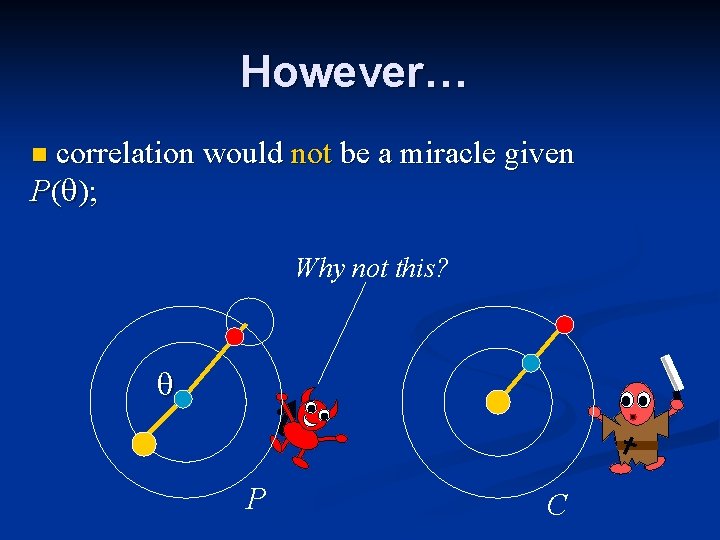
However… correlation would not be a miracle given P(q); n Why not this? q P C
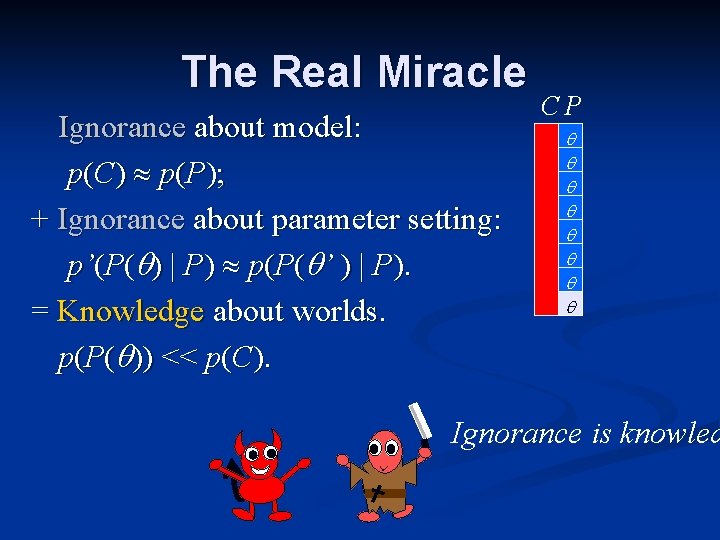
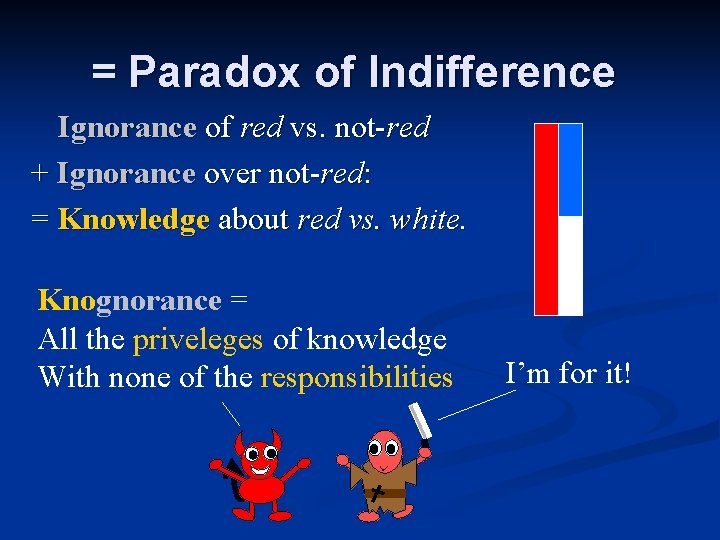
The Real Miracle Ignorance about model: p(C) p(P); + Ignorance about parameter setting: p’(P(q) | P) p(P(q’ ) | P). = Knowledge about worlds. p(P(q)) << p(C). CP q q q q Ignorance is knowled
= Paradox of Indifference Ignorance of red vs. not-red + Ignorance over not-red: = Knowledge about red vs. white. Knognorance = All the priveleges of knowledge With none of the responsibilities q q I’m for it!
In Any Event The coherentist foundations of Bayesianism have nothing to do with short-run truth -conduciveness. Not so loud!
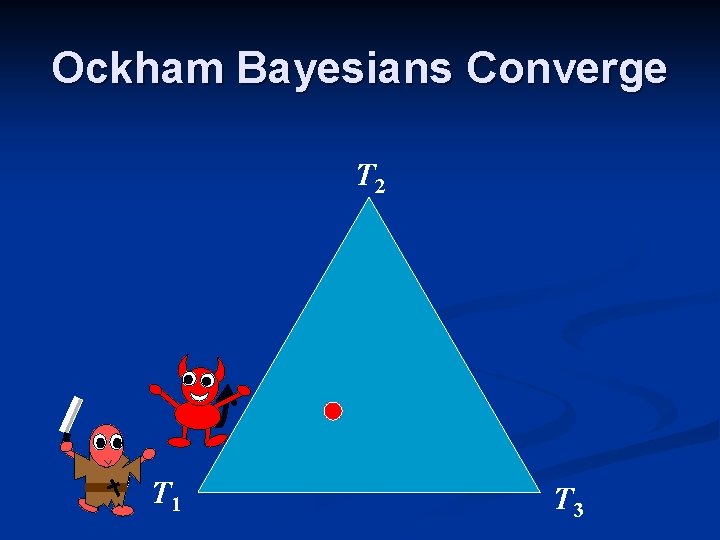
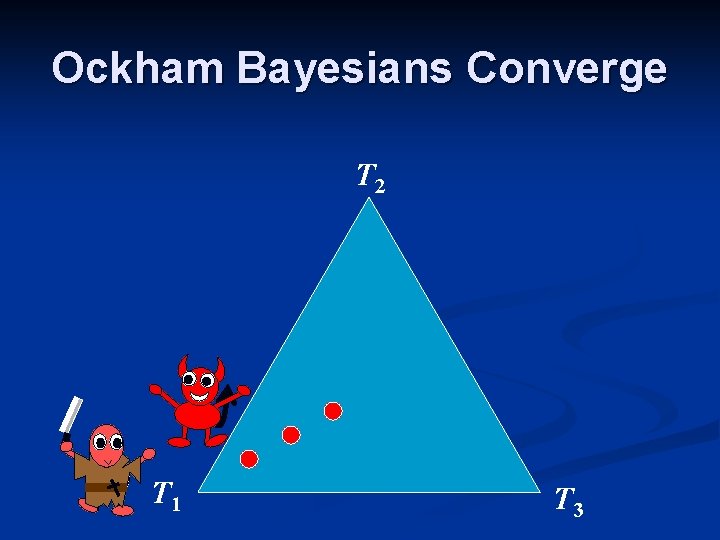
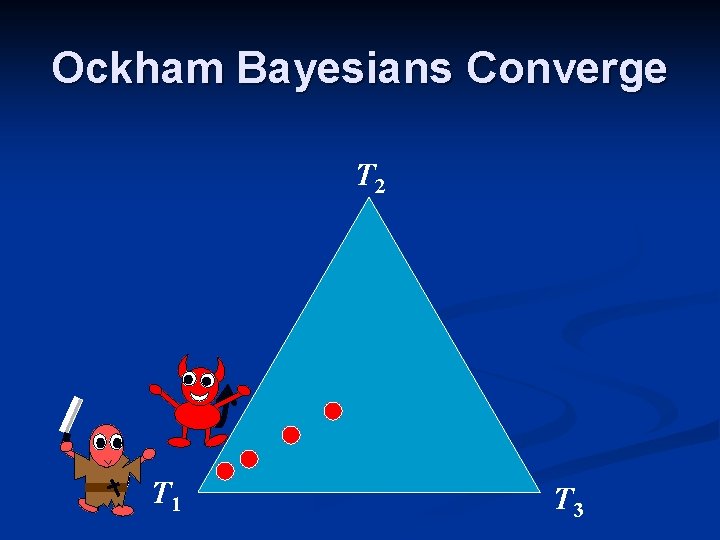
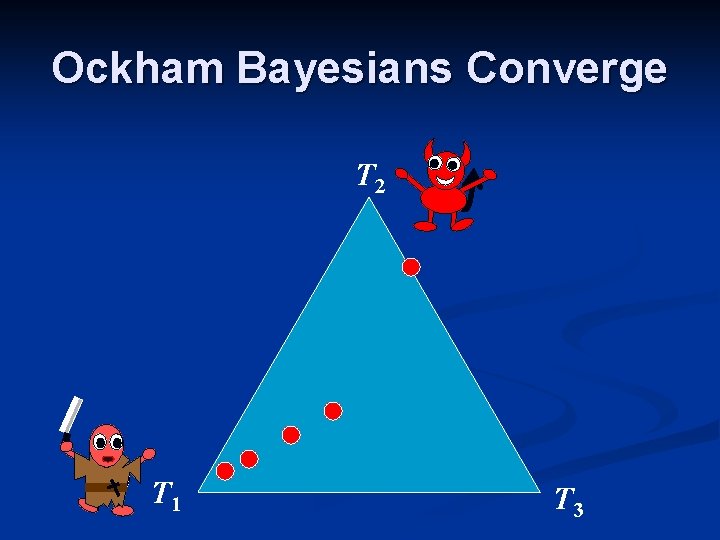
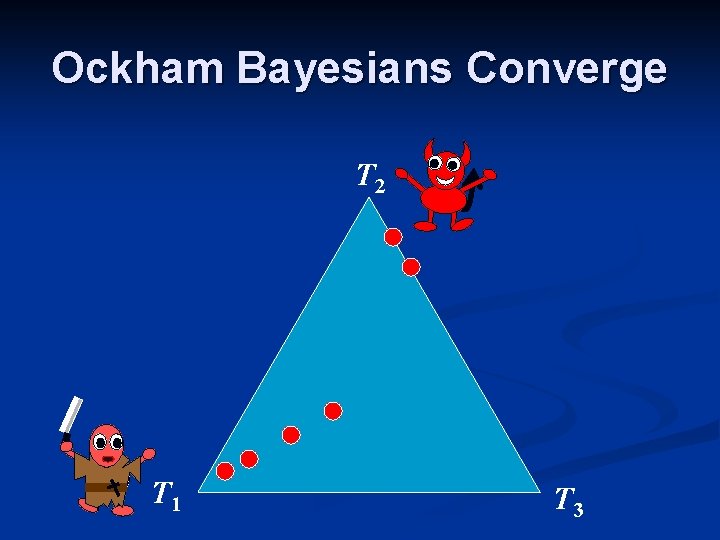
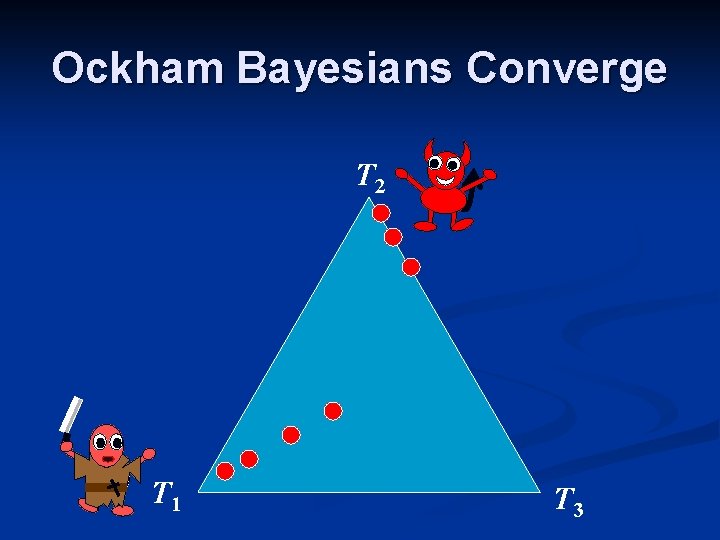
Ockham Bayesians Converge T 2 T 1 T 3
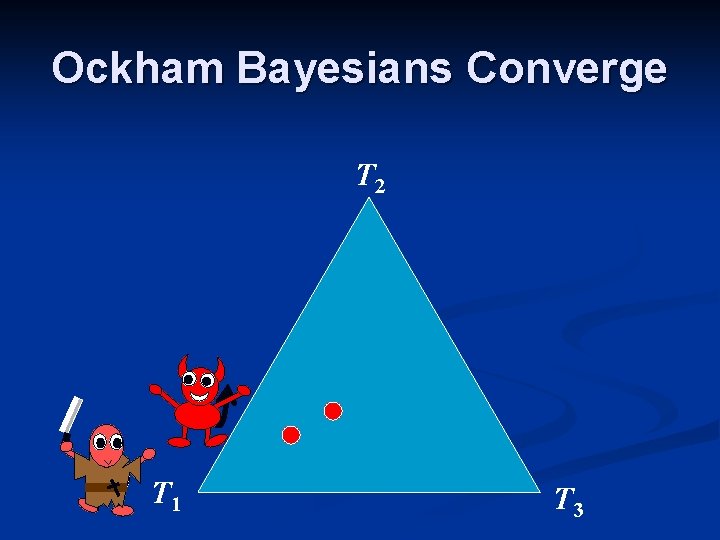
Ockham Bayesians Converge T 2 T 1 T 3
Ockham Bayesians Converge T 2 T 1 T 3
Ockham Bayesians Converge T 2 T 1 T 3
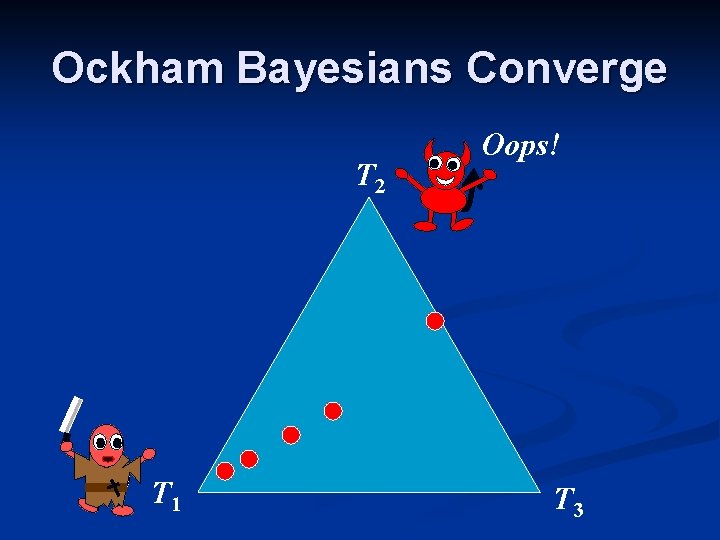
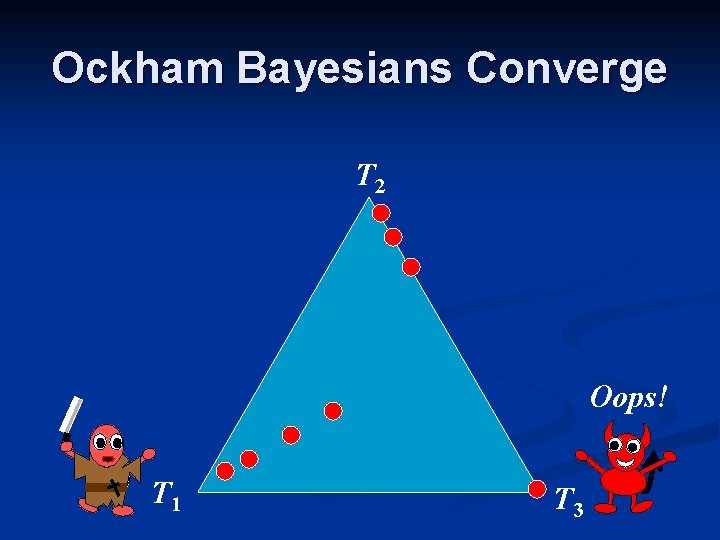
Ockham Bayesians Converge T 2 T 1 Oops! T 3
Ockham Bayesians Converge T 2 T 1 T 3
Ockham Bayesians Converge T 2 T 1 T 3
Ockham Bayesians Converge T 2 T 1 T 3
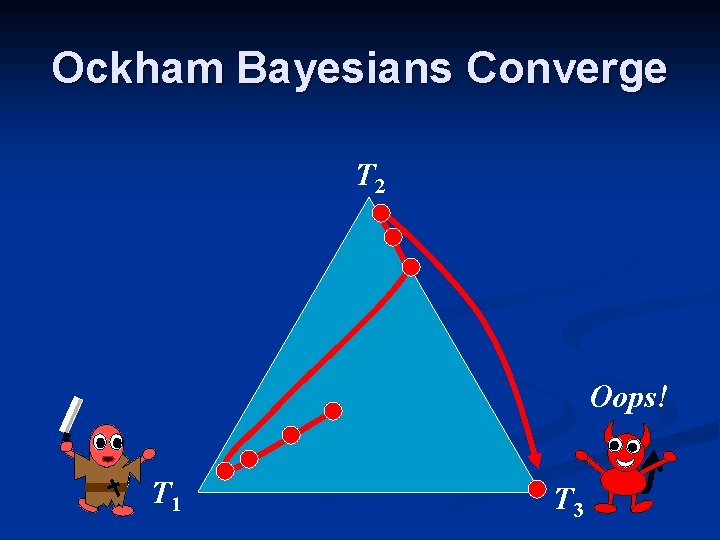
Ockham Bayesians Converge T 2 Oops! T 1 T 3
Ockham Bayesians Converge T 2 Oops! T 1 T 3
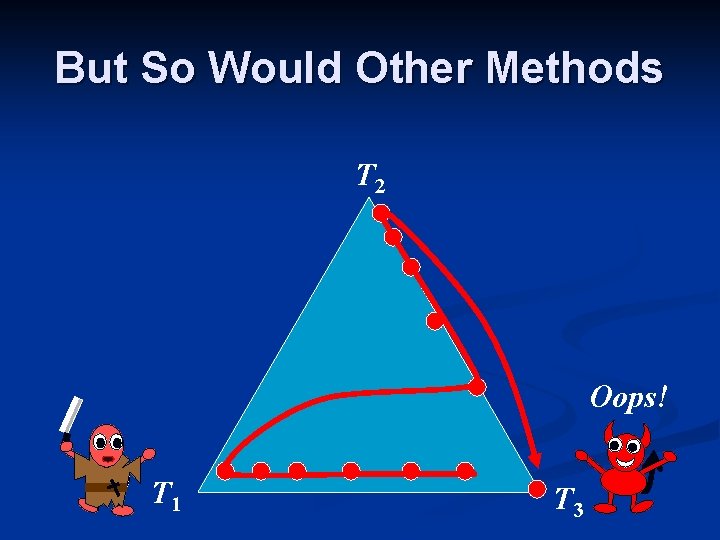
But So Would Other Methods T 2 Oops! T 1 T 3
Summary of Bayesian Approach n Prior-based explanations of Ockham’s razor are circular. n Convergence-based explanations of Ockham’s razor fail to single out Ockham’s razor.
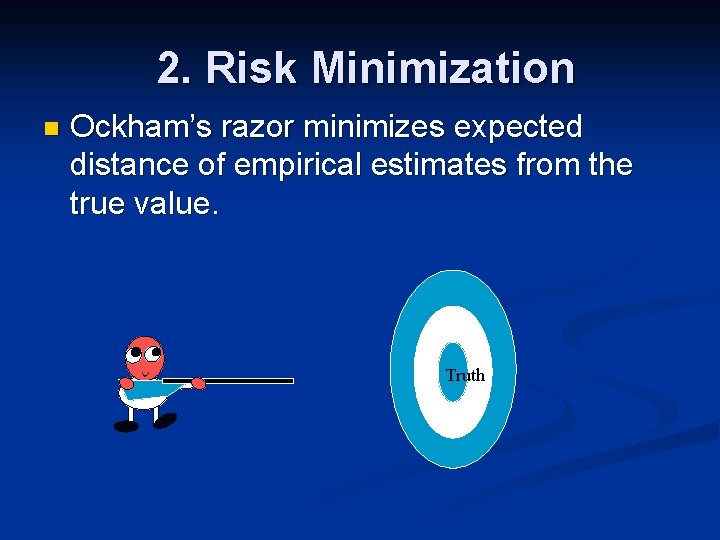
2. Risk Minimization n Ockham’s razor minimizes expected distance of empirical estimates from the true value. Truth
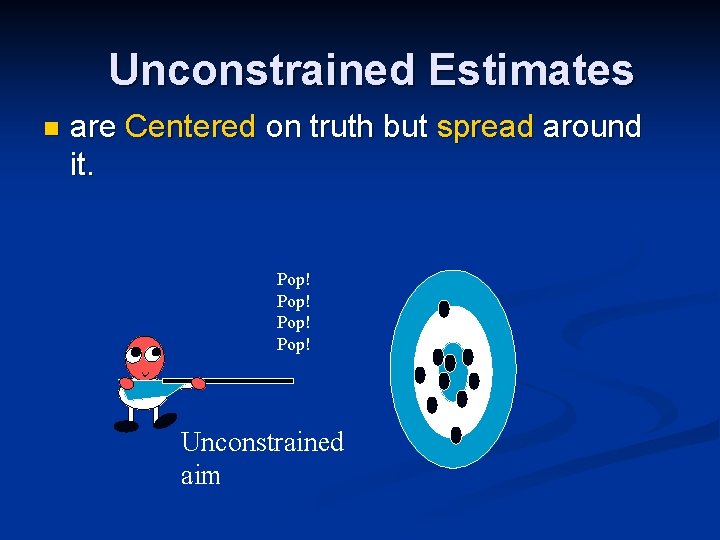
Unconstrained Estimates n are Centered on truth but spread around it. Pop! Unconstrained aim
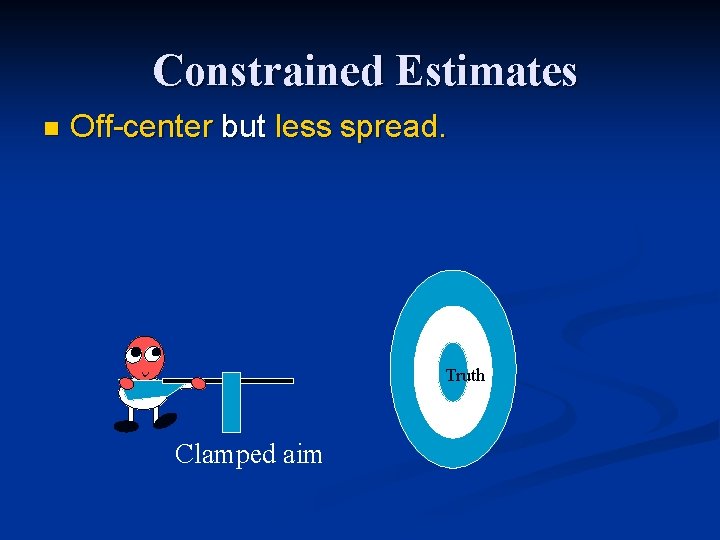
Constrained Estimates n Off-center but less spread. Truth Clamped aim
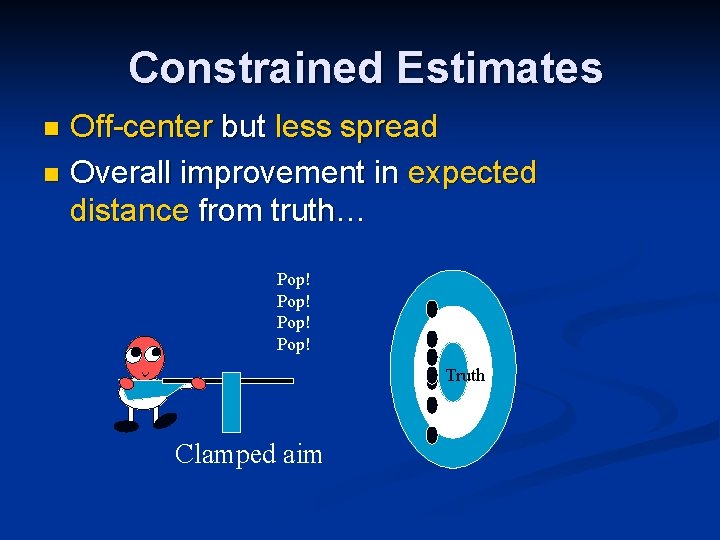
Constrained Estimates Off-center but less spread n Overall improvement in expected distance from truth… n Pop! Truth Clamped aim
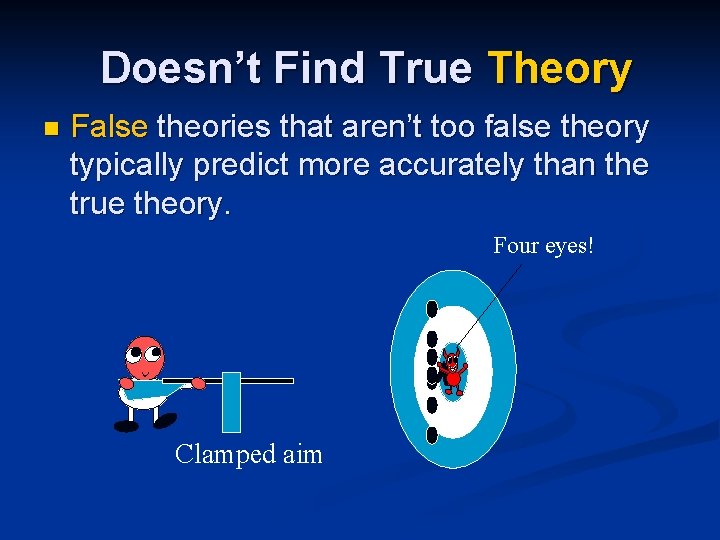
Doesn’t Find True Theory n False theories that aren’t too false theory typically predict more accurately than the true theory. Four eyes! Clamped aim
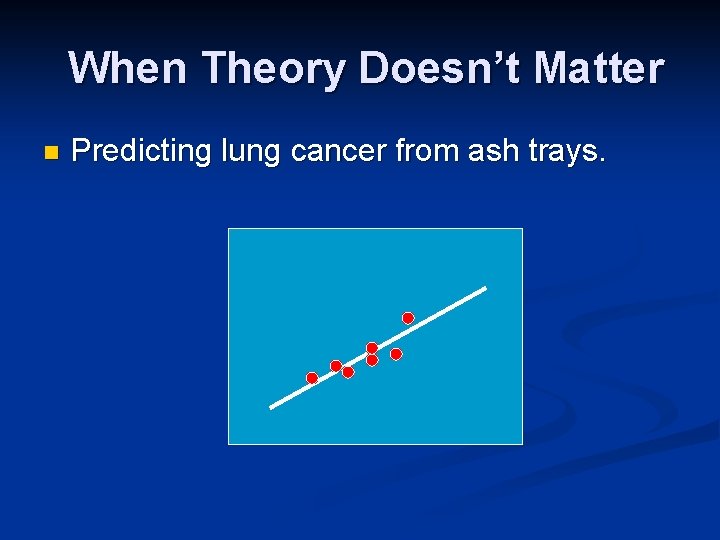
When Theory Doesn’t Matter n Predicting lung cancer from ash trays.
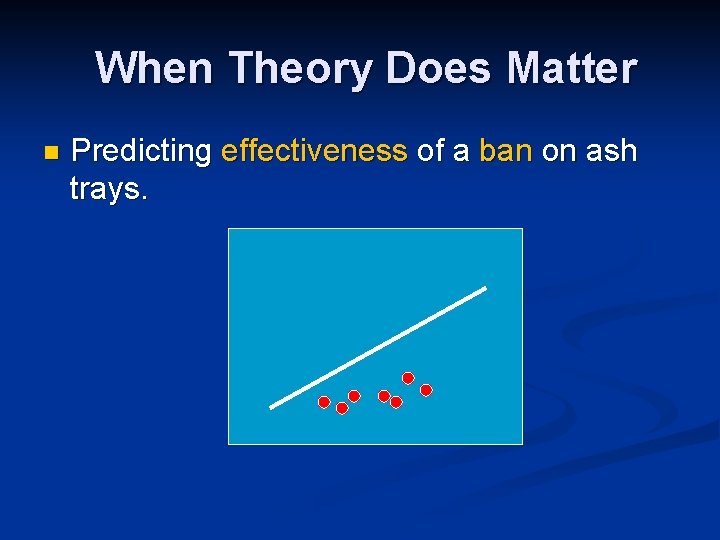
When Theory Does Matter n Predicting effectiveness of a ban on ash trays.
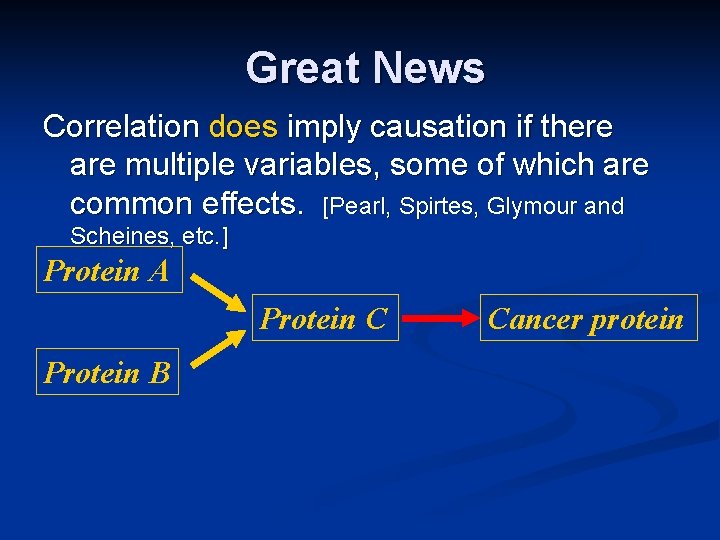
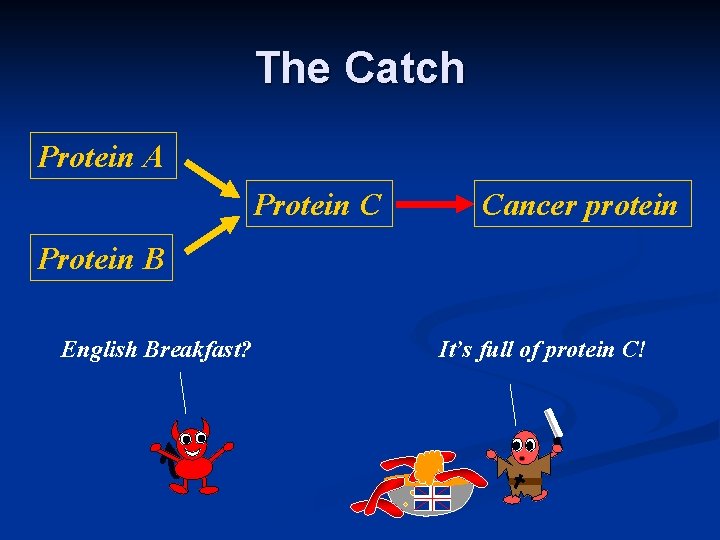
Great News Correlation does imply causation if there are multiple variables, some of which are common effects. [Pearl, Spirtes, Glymour and Scheines, etc. ] Protein A Protein C Protein B Cancer protein
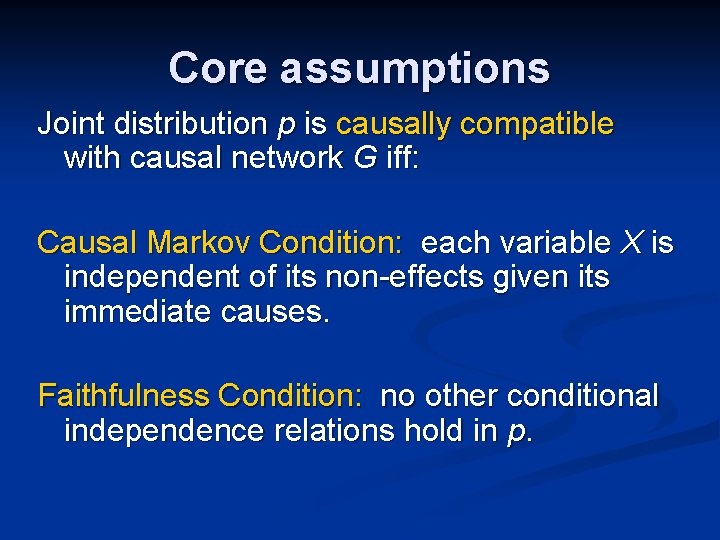
Core assumptions Joint distribution p is causally compatible with causal network G iff: Causal Markov Condition: each variable X is independent of its non-effects given its immediate causes. Faithfulness Condition: no other conditional independence relations hold in p.
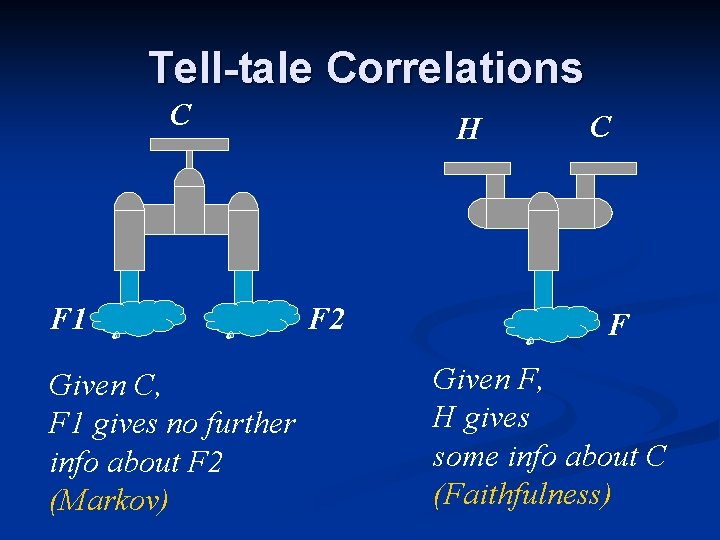
Tell-tale Correlations C F 1 Given C, F 1 gives no further info about F 2 (Markov) H F 2 C F Given F, H gives some info about C (Faithfulness)
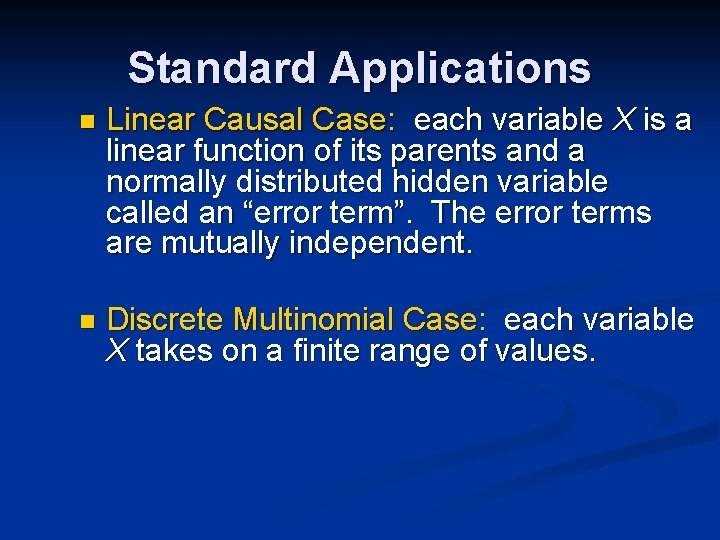
Standard Applications n Linear Causal Case: each variable X is a linear function of its parents and a normally distributed hidden variable called an “error term”. The error terms are mutually independent. n Discrete Multinomial Case: each variable X takes on a finite range of values.
The Catch Protein A Protein C Cancer protein Protein B English Breakfast? It’s full of protein C!
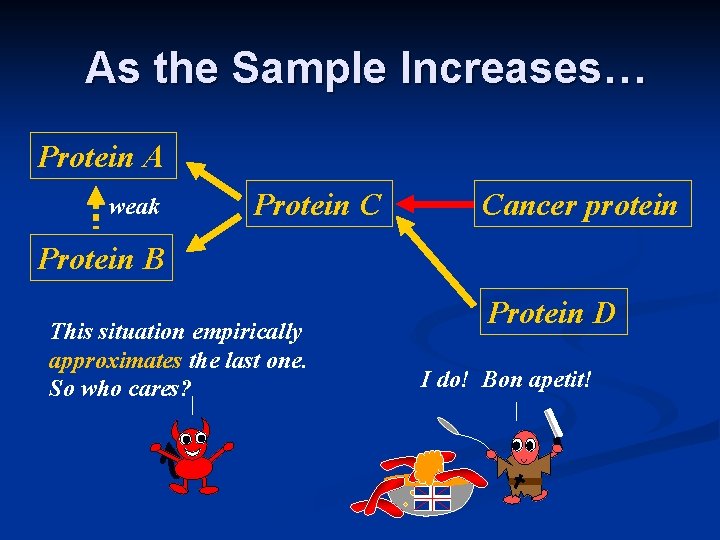
As the Sample Increases… Protein A weak Protein C Cancer protein Protein B This situation empirically approximates the last one. So who cares? Protein D I do! Bon apetit!
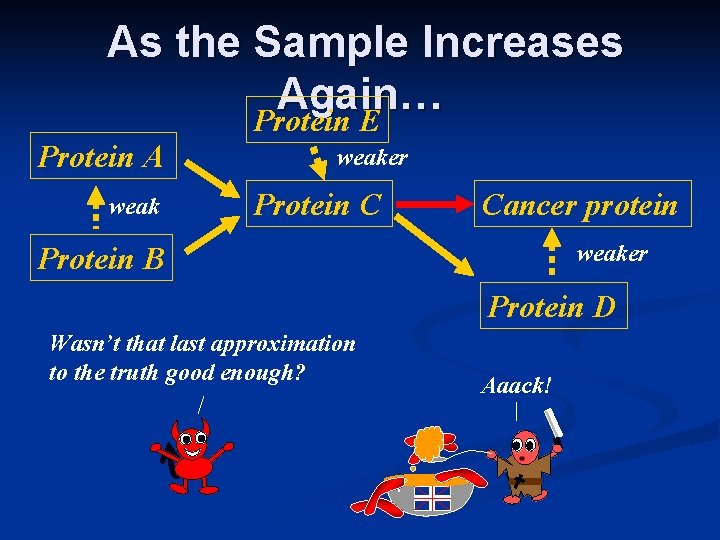
As the Sample Increases Again… Protein E Protein A weaker Protein C Cancer protein weaker Protein B Protein D Wasn’t that last approximation to the truth good enough? Aaack!
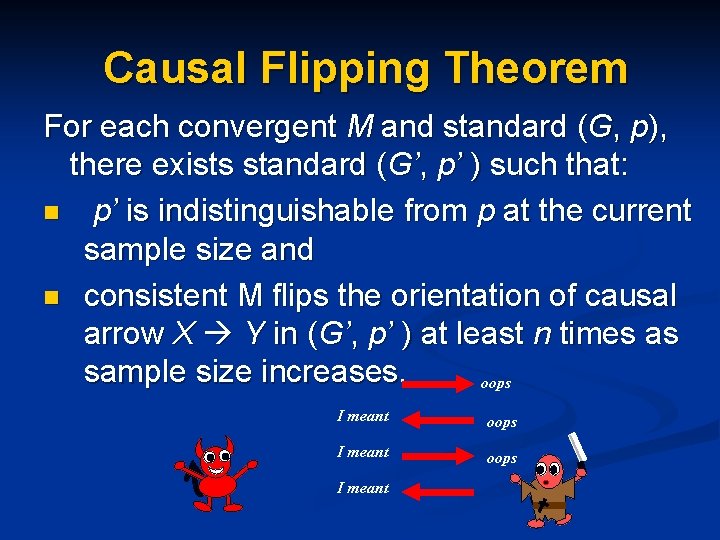
Causal Flipping Theorem For each convergent M and standard (G, p), there exists standard (G’, p’ ) such that: n p’ is indistinguishable from p at the current sample size and n consistent M flips the orientation of causal arrow X Y in (G’, p’ ) at least n times as sample size increases. oops I meant
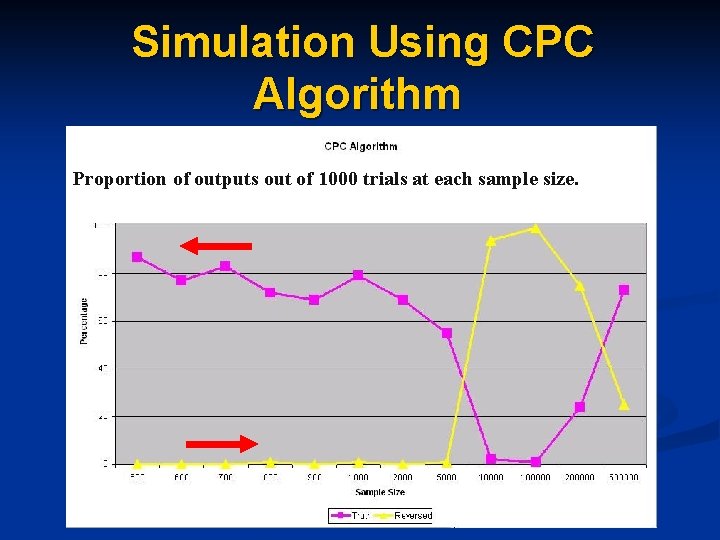
Simulation Using CPC Algorithm Proportion of outputs out of 1000 trials at each sample size.
Zen Response Many explanations have been offered to make sense of the here-today-gonetomorrow nature of medical wisdom — what we are advised with confidence one year is reversed the next — but the simplest one is that it is the natural rhythm of science. n (Do We Really Know What Makes us Healthy, NY Times Magazine, Sept. 16, 2007). n
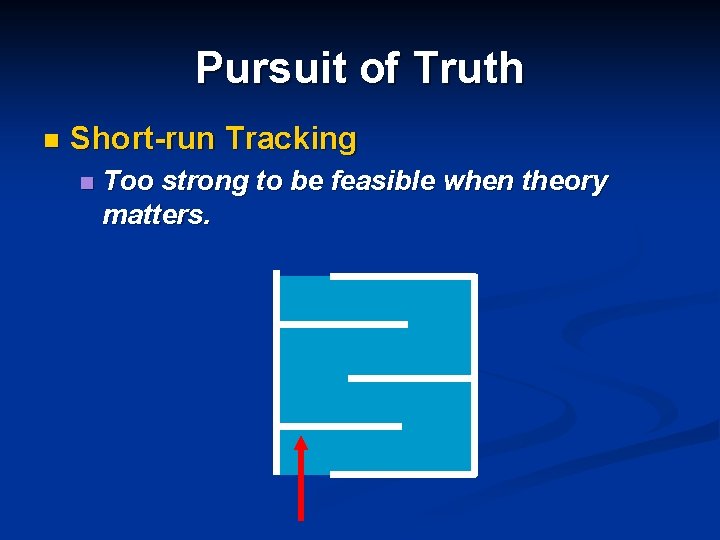
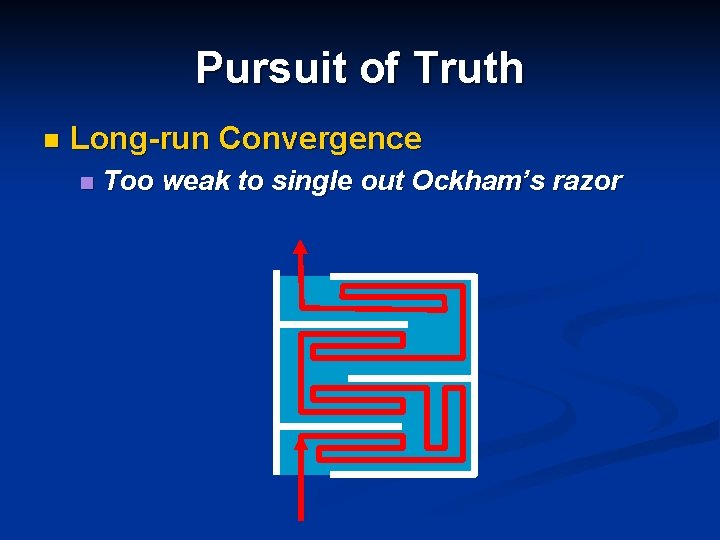
Pursuit of Truth n Short-run Tracking n Too strong to be feasible when theory matters.
Pursuit of Truth n Long-run Convergence n Too weak to single out Ockham’s razor
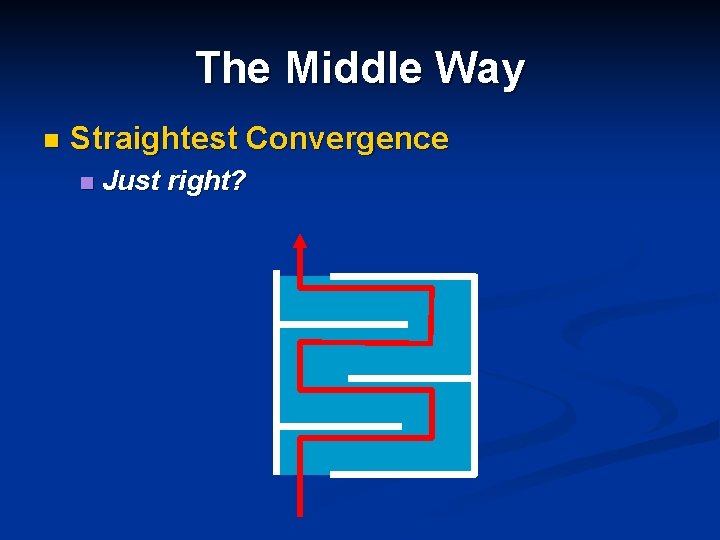
The Middle Way n Straightest Convergence n Just right?
Ancient Roots "Living in the midst of ignorance and considering themselves intelligent and enlightened, the senseless people go round and round, following crooked courses, just like the blind led by the blind. " Katha Upanishad, I. ii. 5, c. 600 BCE.
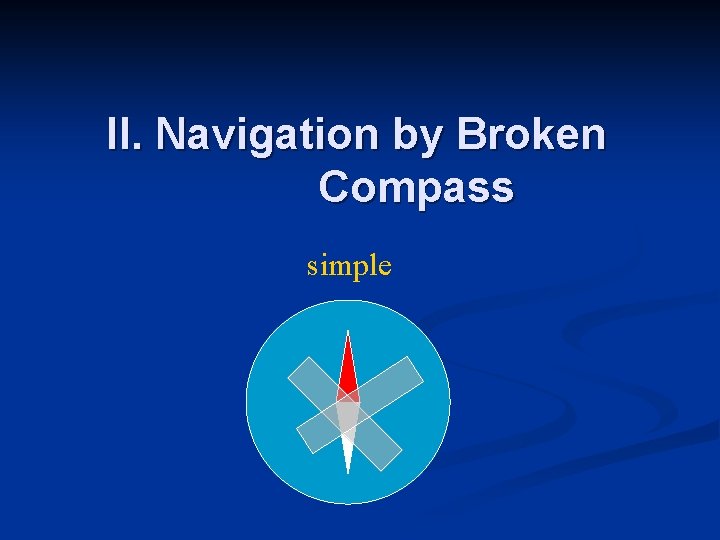
II. Navigation by Broken Compass simple
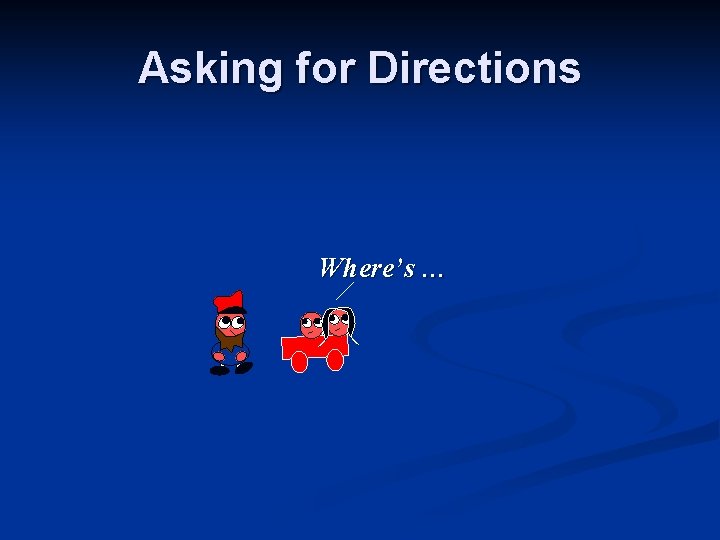
Asking for Directions Where’s …
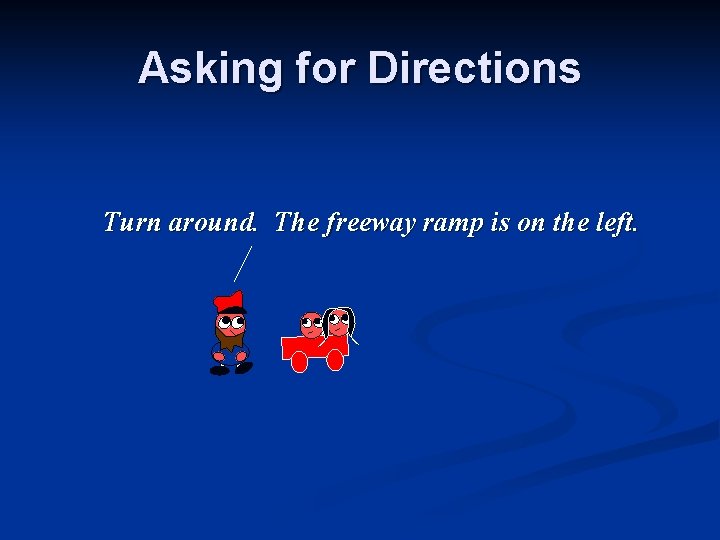
Asking for Directions Turn around. The freeway ramp is on the left.
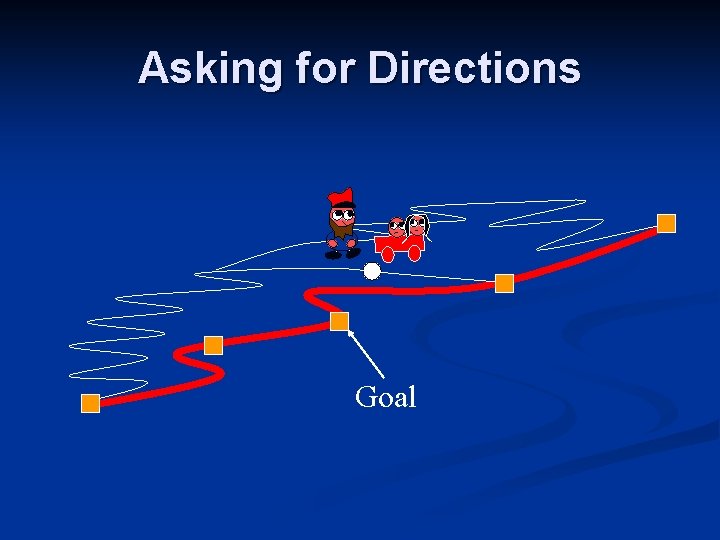
Asking for Directions Goal
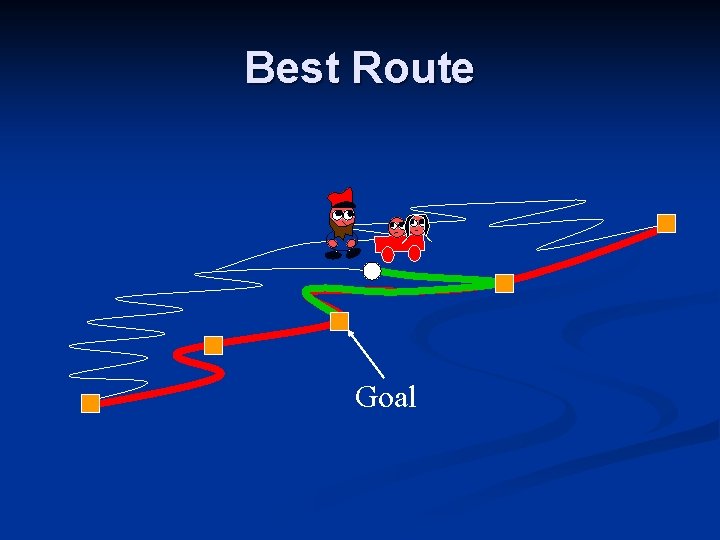
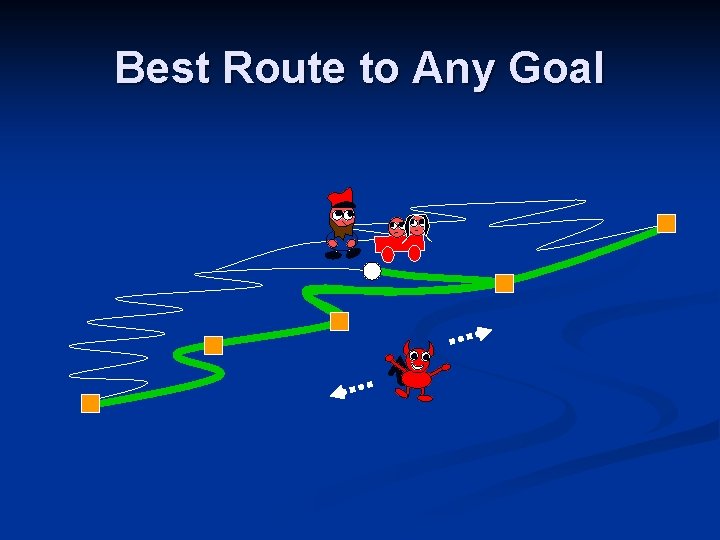
Best Route Goal
Best Route to Any Goal
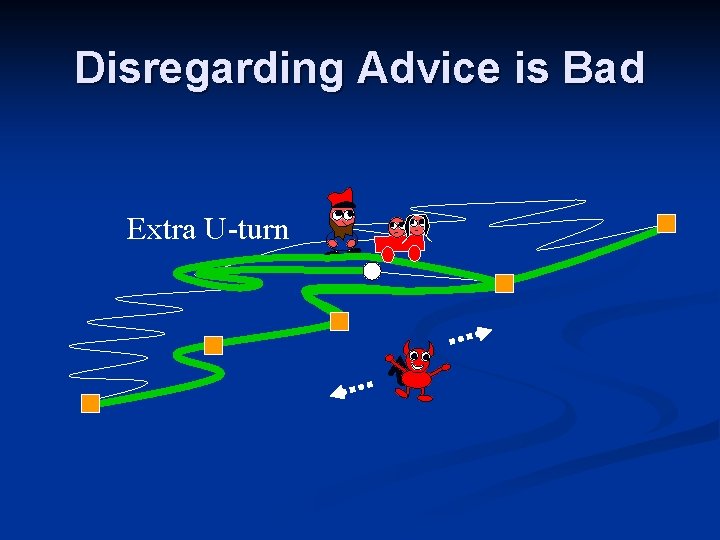
Disregarding Advice is Bad Extra U-turn
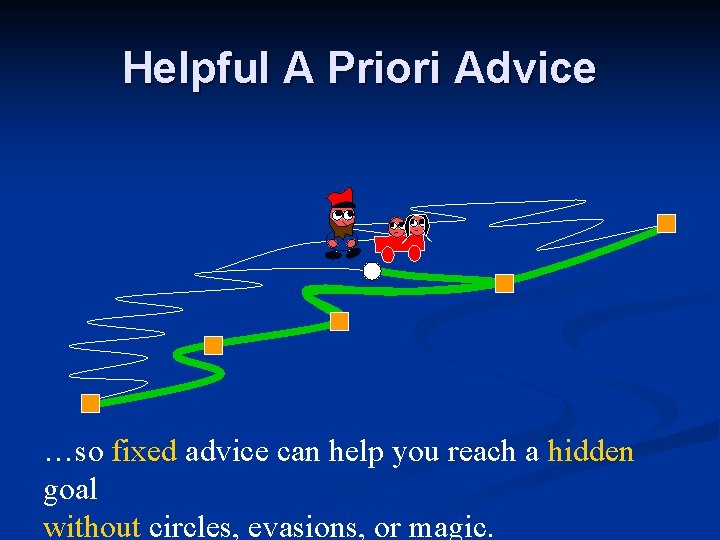
Helpful A Priori Advice …so fixed advice can help you reach a hidden goal without circles, evasions, or magic.
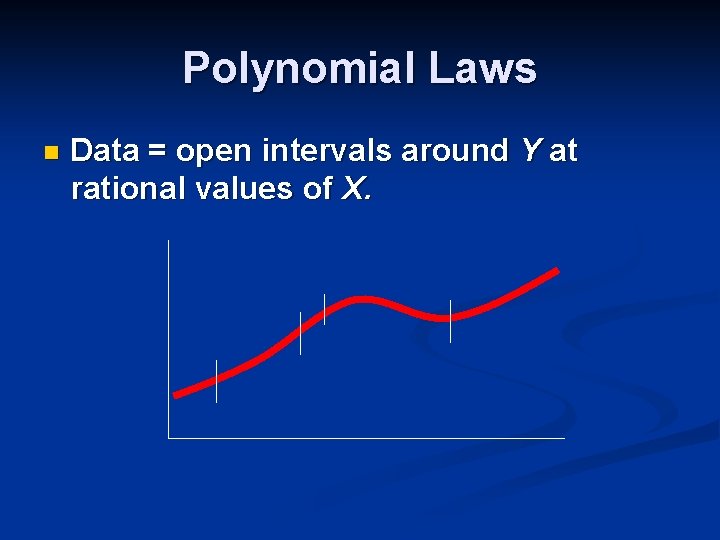
Polynomial Laws n Data = open intervals around Y at rational values of X.
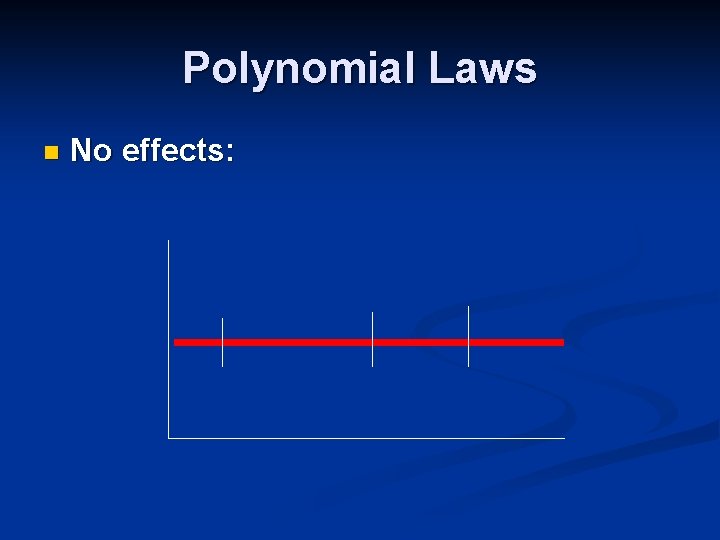
Polynomial Laws n No effects:
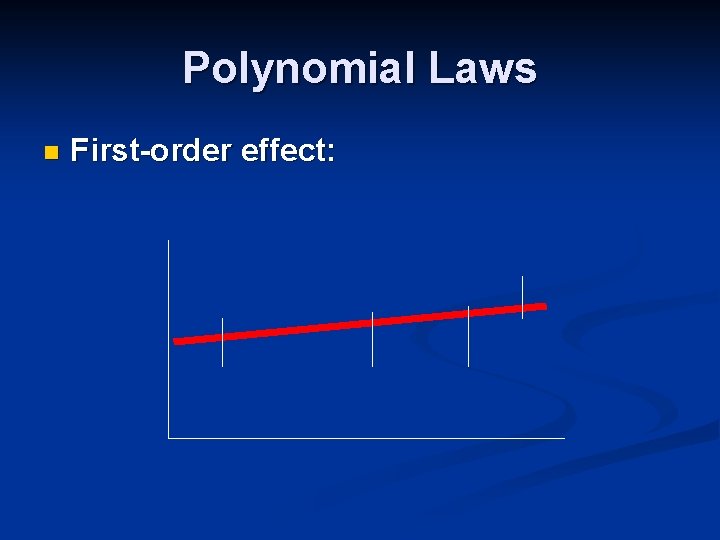
Polynomial Laws n First-order effect:
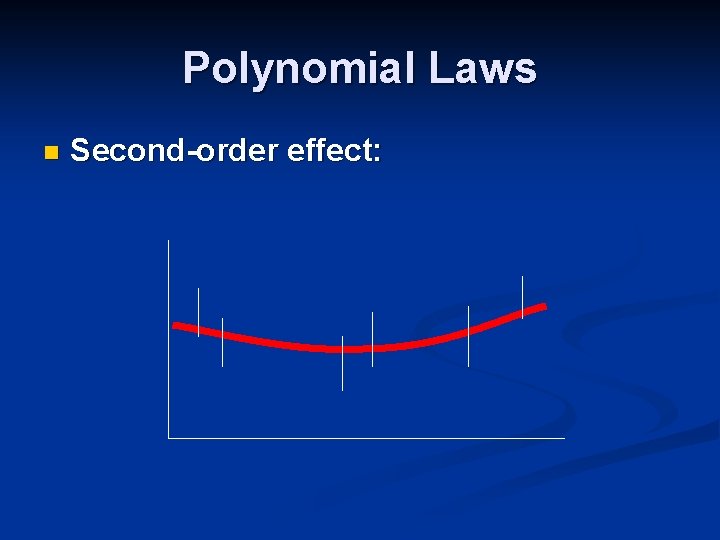
Polynomial Laws n Second-order effect:
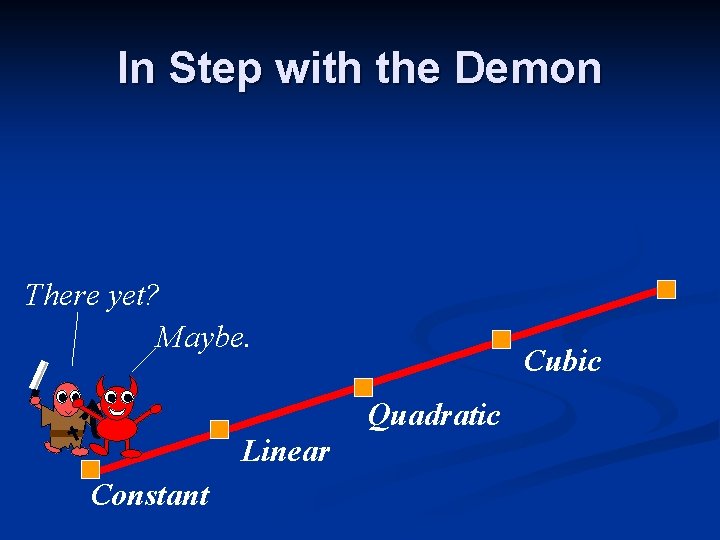
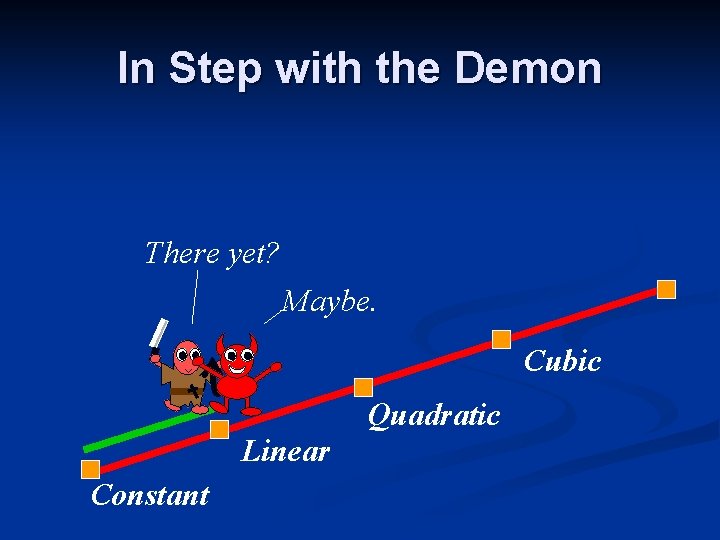
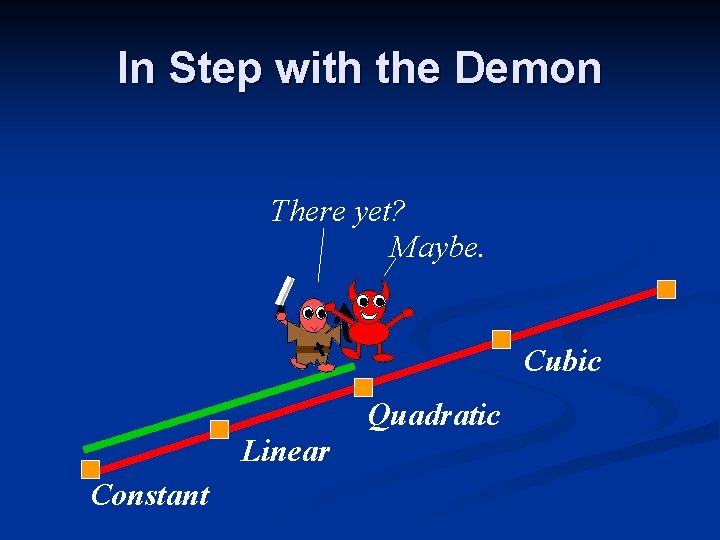
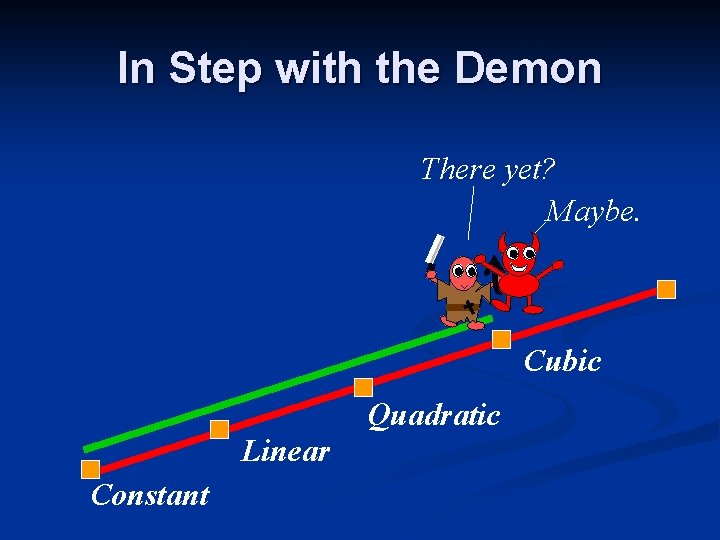
In Step with the Demon There yet? Maybe. Cubic Quadratic Linear Constant
In Step with the Demon There yet? Maybe. Cubic Quadratic Linear Constant
In Step with the Demon There yet? Maybe. Cubic Quadratic Linear Constant
In Step with the Demon There yet? Maybe. Cubic Quadratic Linear Constant
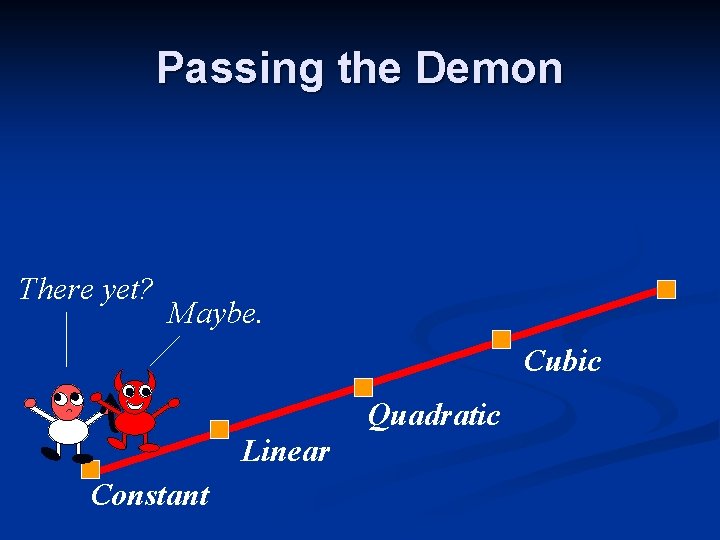
Passing the Demon There yet? Maybe. Cubic Quadratic Linear Constant
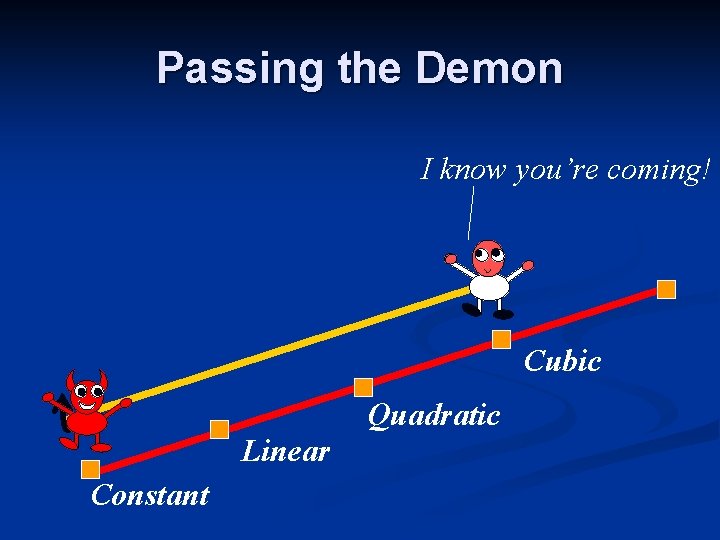
Passing the Demon I know you’re coming! Cubic Quadratic Linear Constant
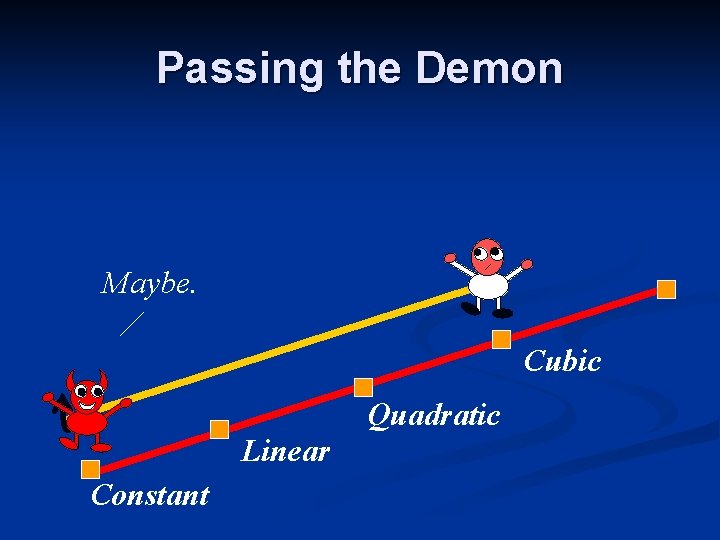
Passing the Demon Maybe. Cubic Quadratic Linear Constant
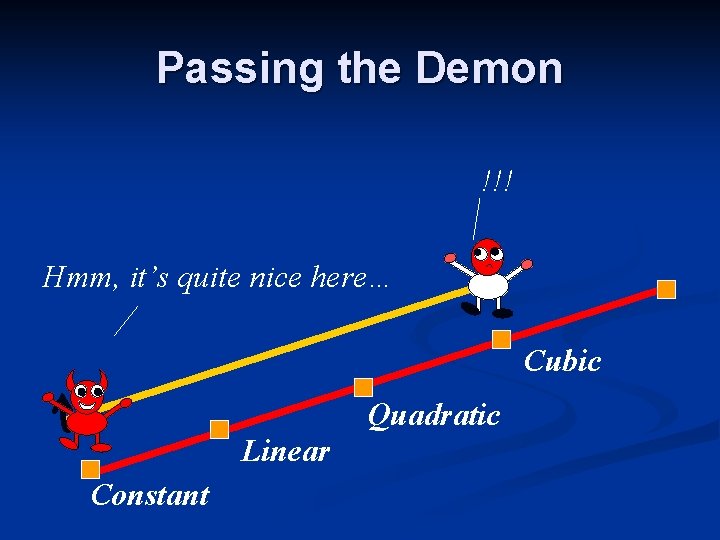
Passing the Demon !!! Hmm, it’s quite nice here… Cubic Quadratic Linear Constant
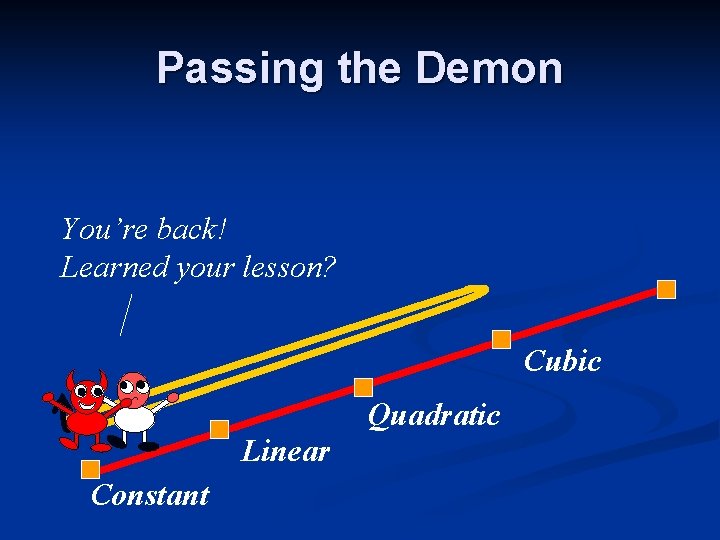
Passing the Demon You’re back! Learned your lesson? Cubic Quadratic Linear Constant
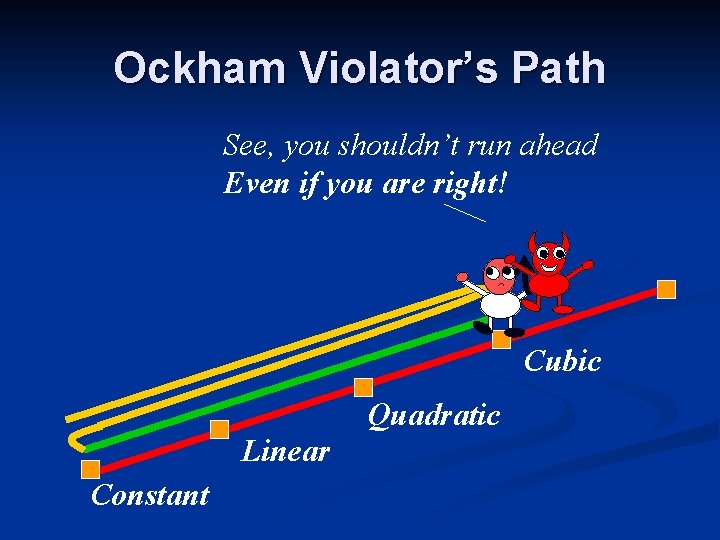
Ockham Violator’s Path See, you shouldn’t run ahead Even if you are right! Cubic Quadratic Linear Constant
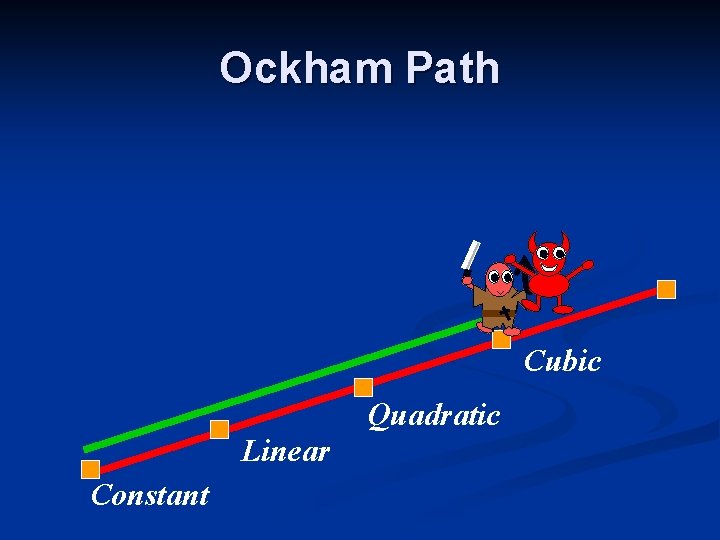
Ockham Path Cubic Quadratic Linear Constant
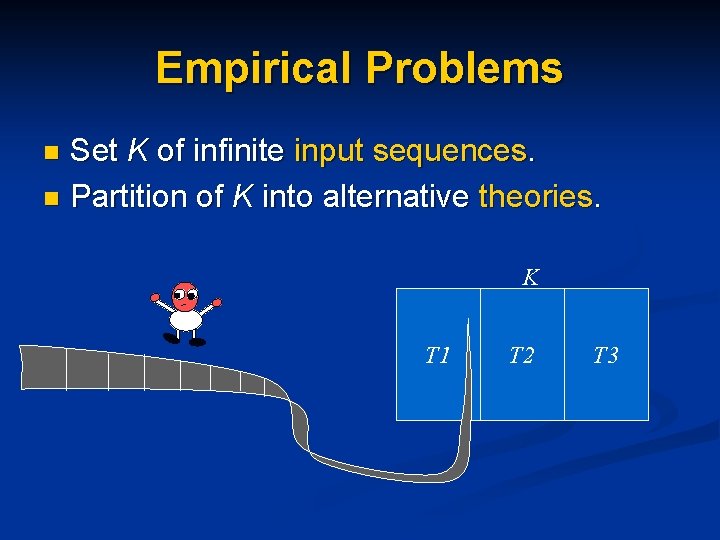
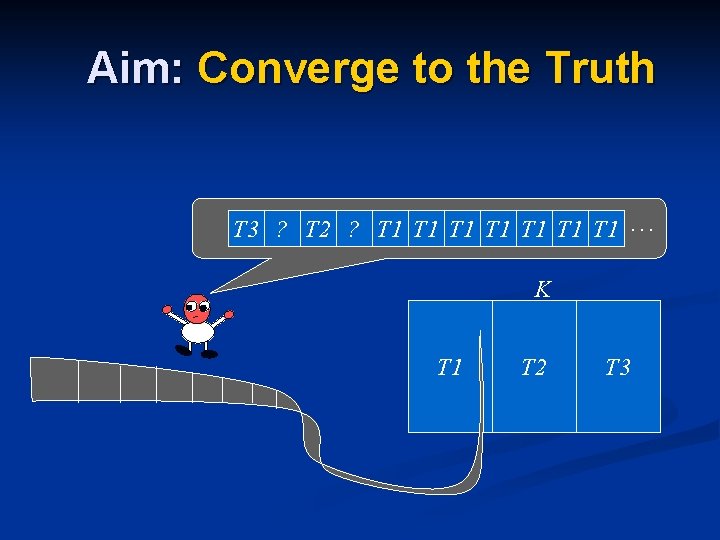
Empirical Problems Set K of infinite input sequences. n Partition of K into alternative theories. n K T 1 T 2 T 3
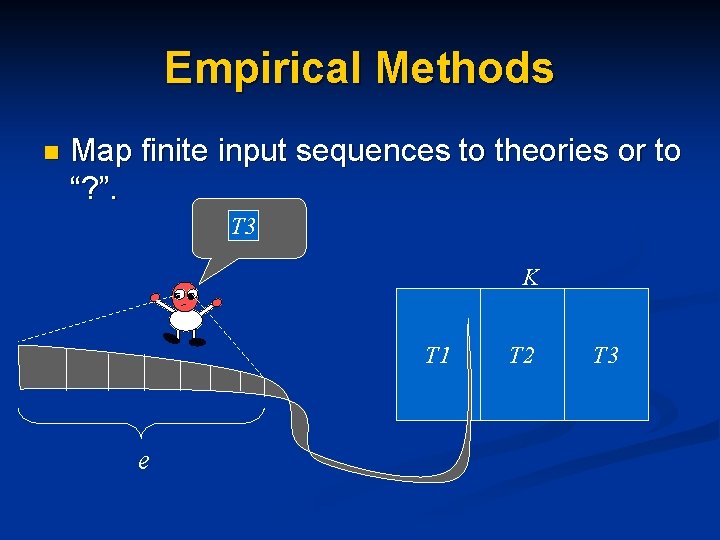
Empirical Methods n Map finite input sequences to theories or to “? ”. T 3 K T 1 e T 2 T 3
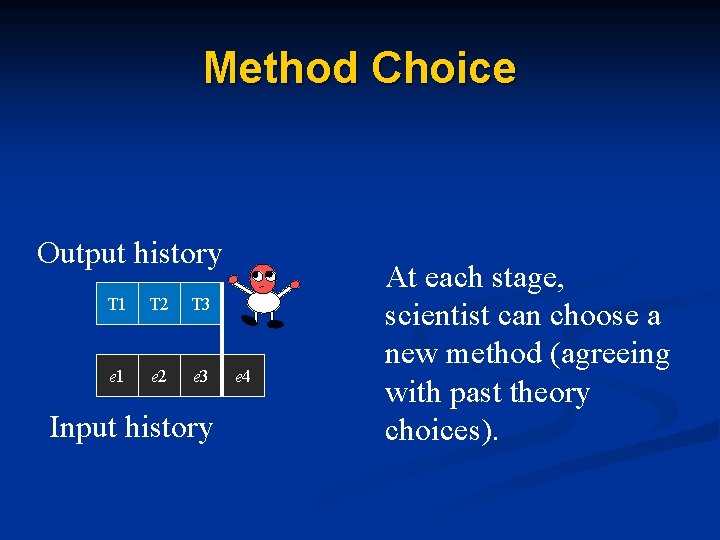
Method Choice Output history T 1 T 2 T 3 e 1 e 2 e 3 Input history e 4 At each stage, scientist can choose a new method (agreeing with past theory choices).
Aim: Converge to the Truth T 3 ? T 2 ? T 1 T 1 K T 1 T 2 T 3 . . .
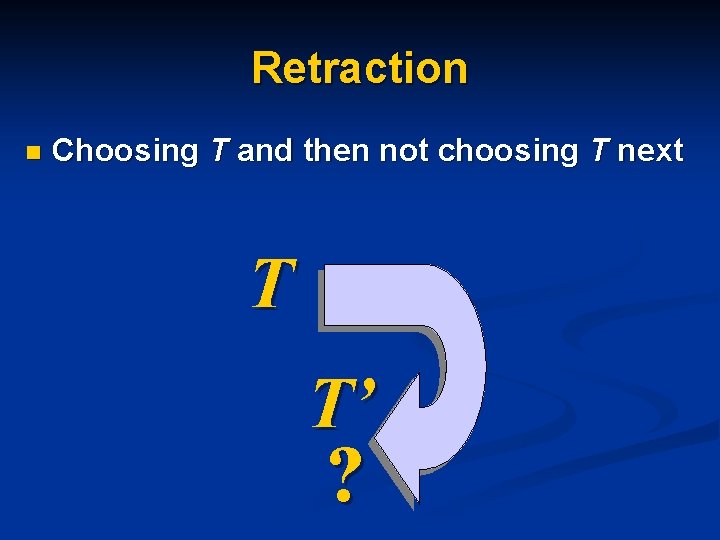
Retraction n Choosing T and then not choosing T next T T’ ?
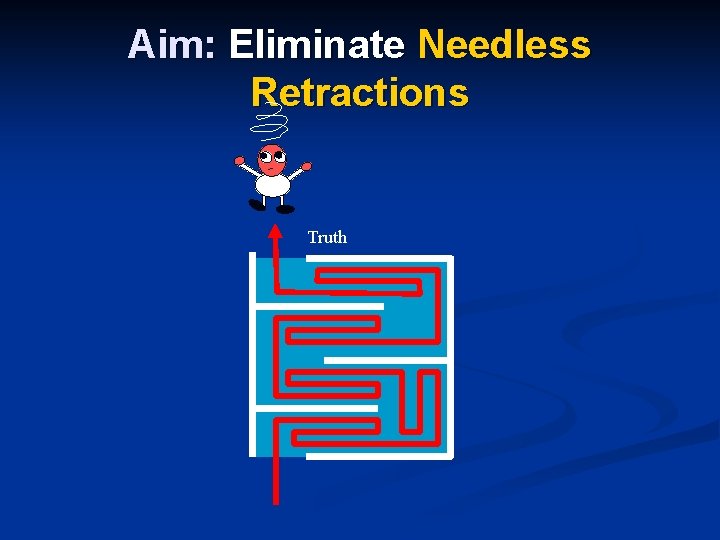
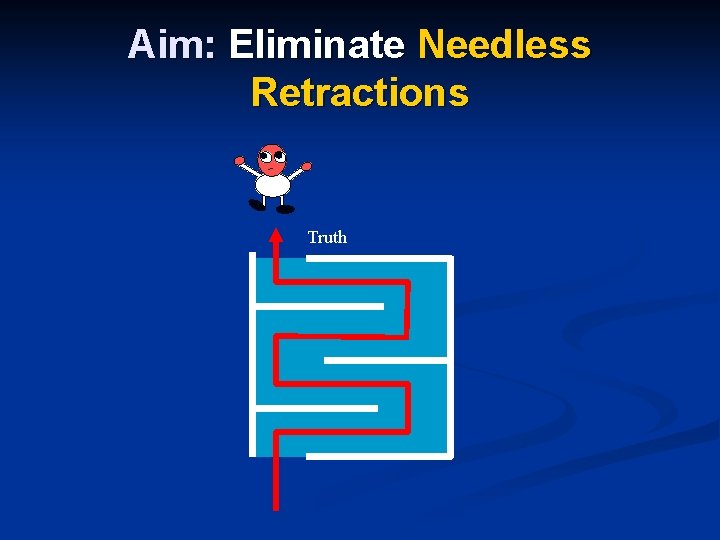
Aim: Eliminate Needless Retractions Truth
Aim: Eliminate Needless Retractions Truth
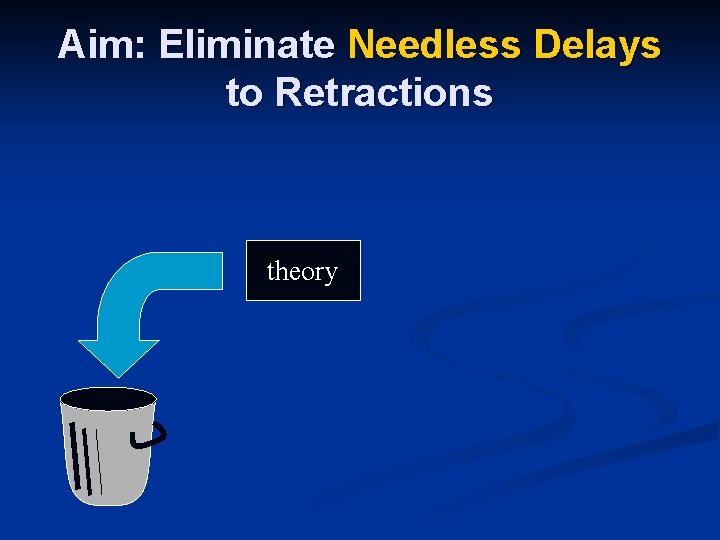
Aim: Eliminate Needless Delays to Retractions theory
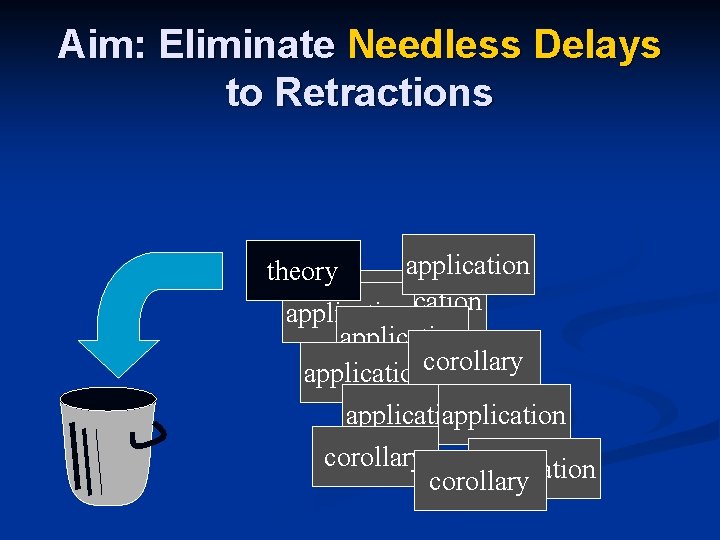
Aim: Eliminate Needless Delays to Retractions application theory applicationcorollary application corollary
An Epistemic Motive 1. Future retraction is Gettier situation even if current belief is true. 2. If Gettier situations are bad, more of them are worse.
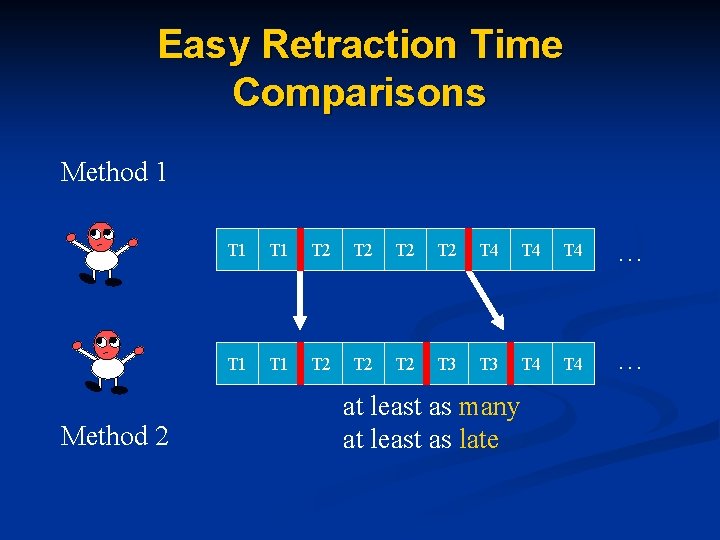
Easy Retraction Time Comparisons Method 1 Method 2 T 1 T 2 T 2 T 4 T 4 . . . T 1 T 2 T 2 T 3 T 4 . . . at least as many at least as late
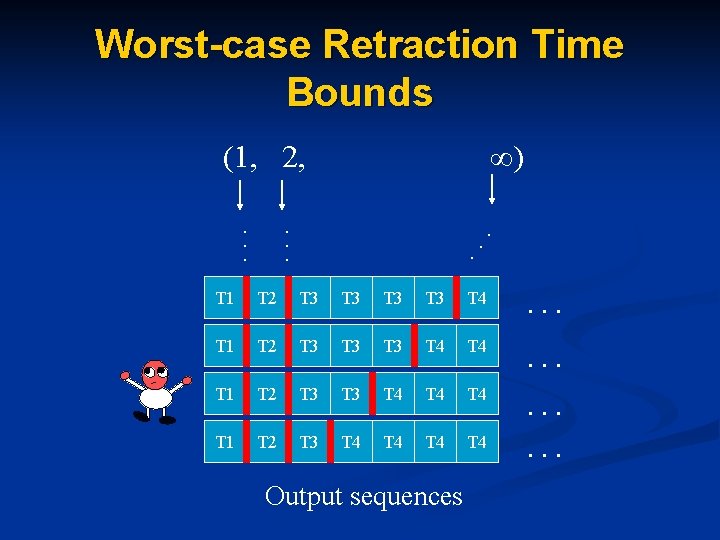
Worst-case Retraction Time Bounds (1, 2, ∞). . T 1 T 2 T 3 T 3 T 4 . . . T 1 T 2 T 3 T 4 T 4 . . . Output sequences
IV. Ockham Without Circles, Evasions, or Magic
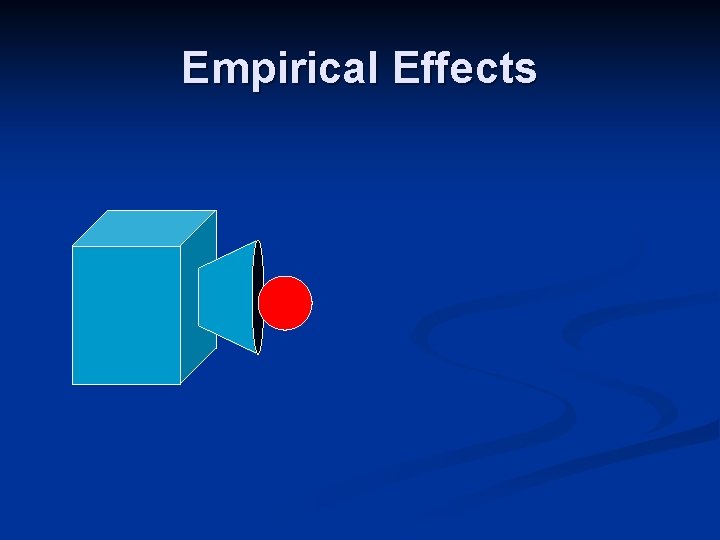
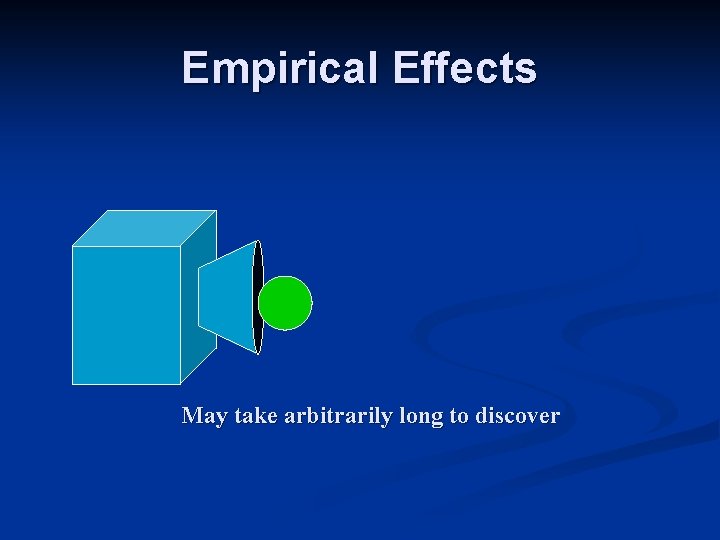
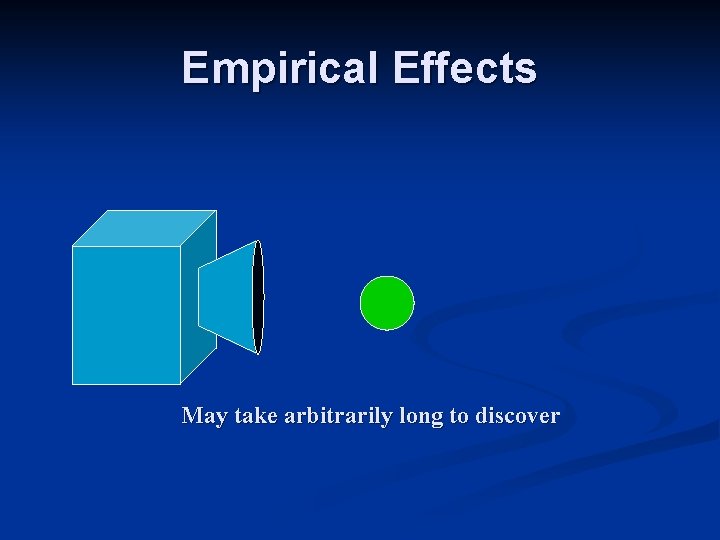
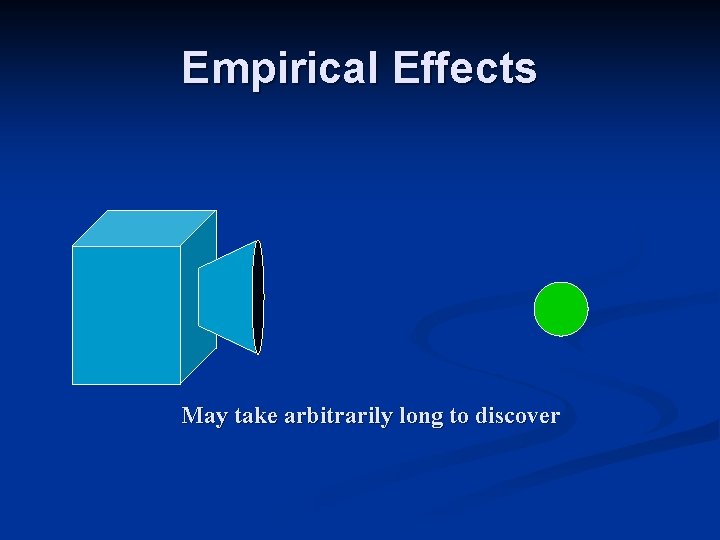
Empirical Effects
Empirical Effects
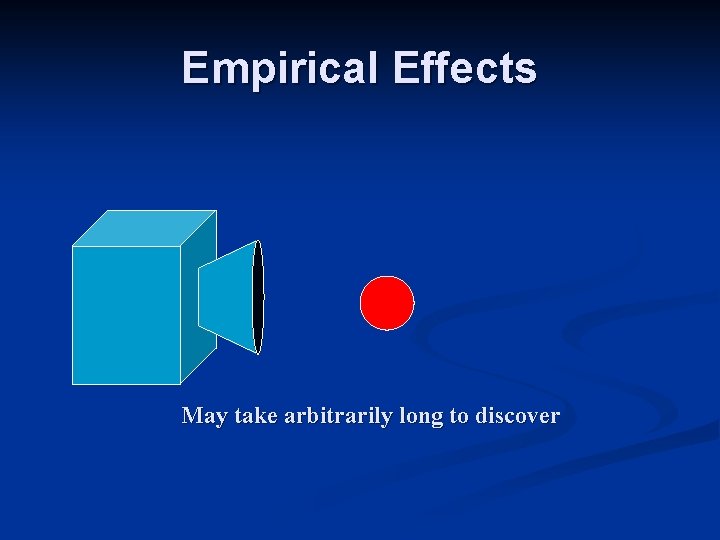
Empirical Effects May take arbitrarily long to discover
Empirical Effects May take arbitrarily long to discover
Empirical Effects May take arbitrarily long to discover
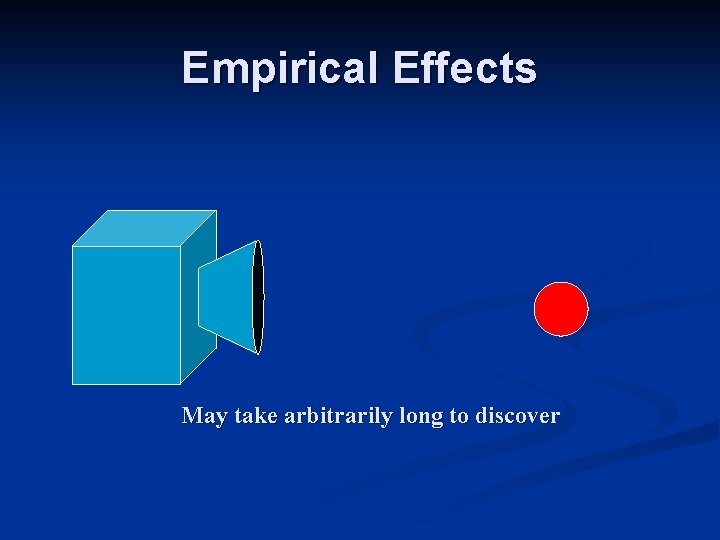
Empirical Effects May take arbitrarily long to discover
Empirical Effects May take arbitrarily long to discover
Empirical Effects May take arbitrarily long to discover
Empirical Effects May take arbitrarily long to discover
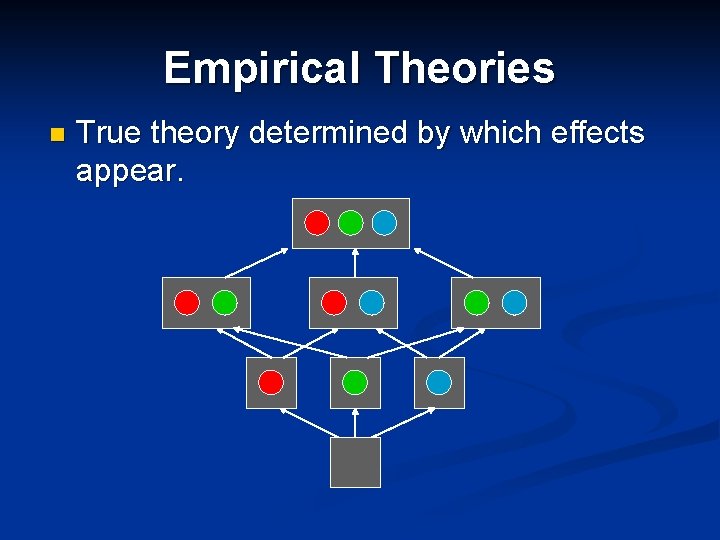
Empirical Theories n True theory determined by which effects appear.
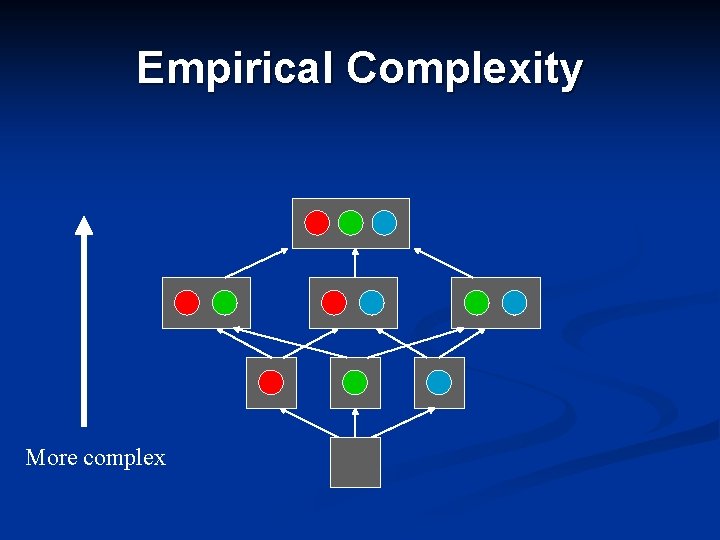
Empirical Complexity More complex
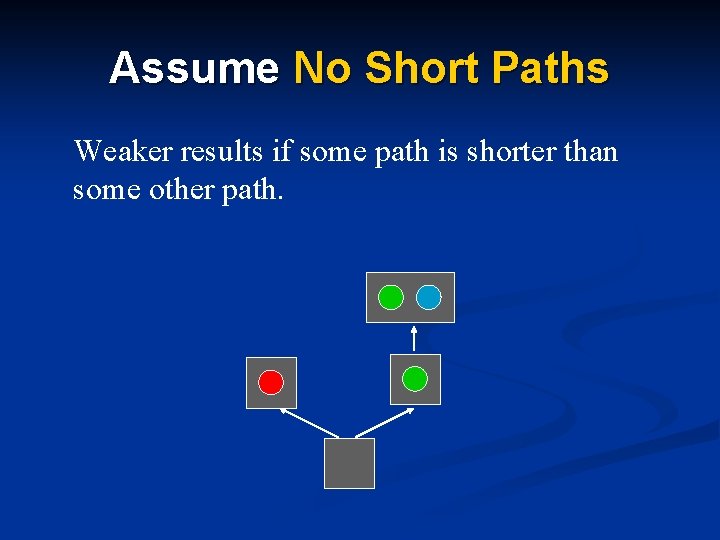
Assume No Short Paths Weaker results if some path is shorter than some other path.
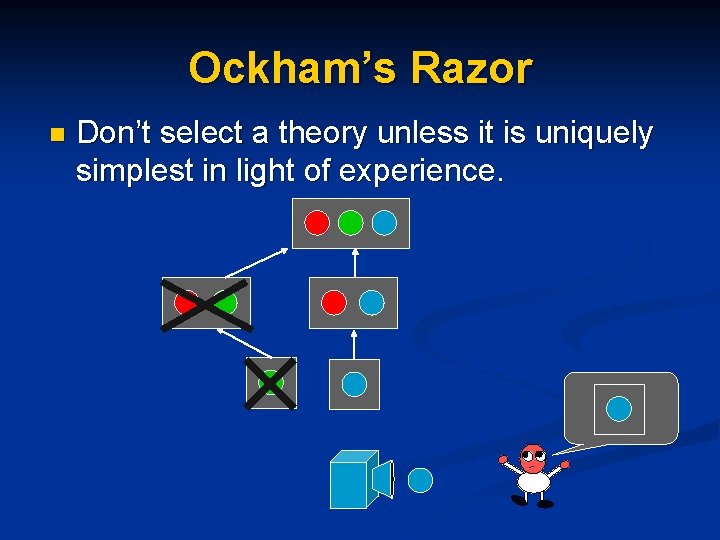
Ockham’s Razor n Don’t select a theory unless it is uniquely simplest in light of experience.
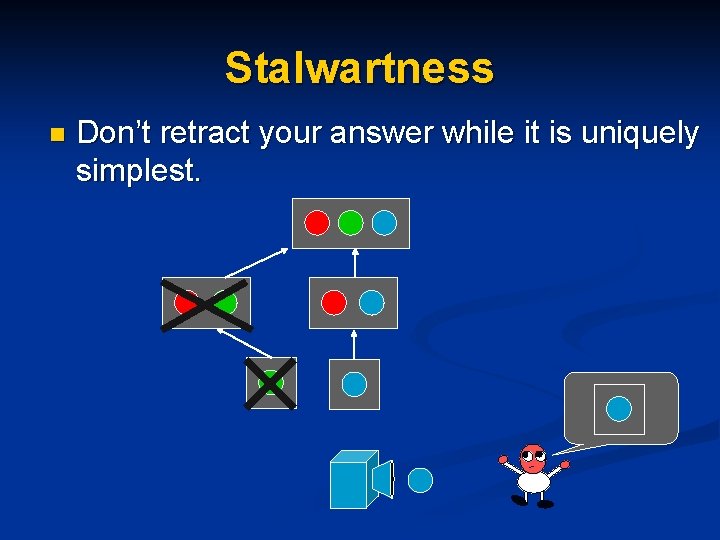
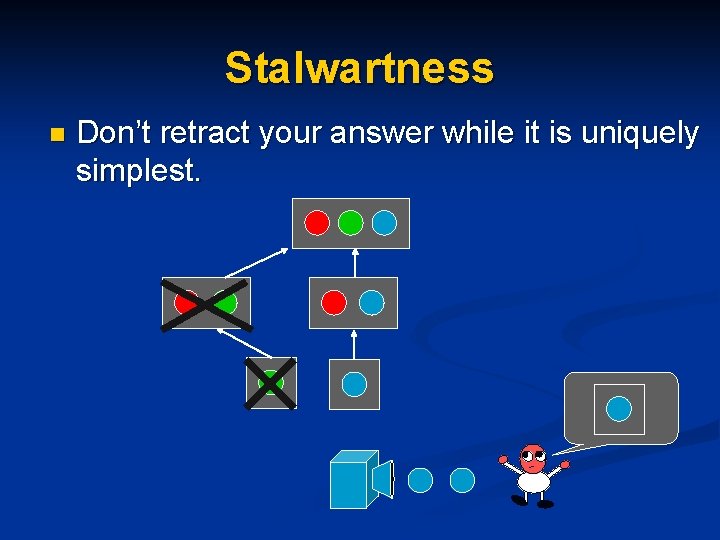
Stalwartness n Don’t retract your answer while it is uniquely simplest.
Stalwartness n Don’t retract your answer while it is uniquely simplest.
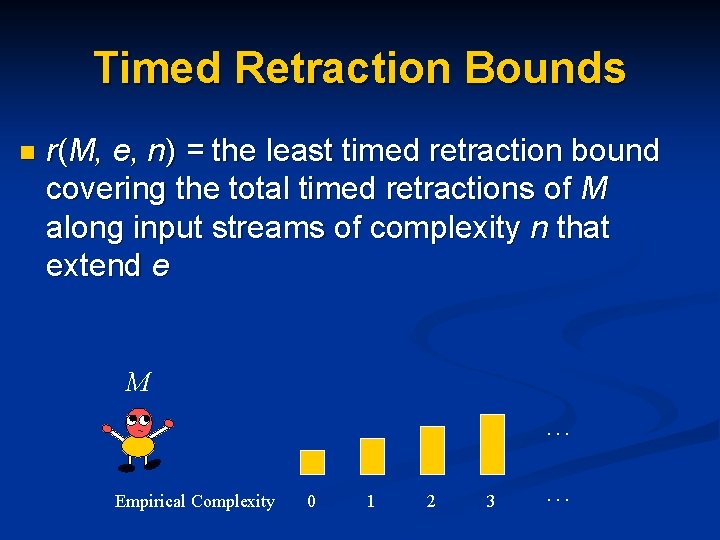
Timed Retraction Bounds n r(M, e, n) = the least timed retraction bound covering the total timed retractions of M along input streams of complexity n that extend e M. . . Empirical Complexity 0 1 2 3 . . .
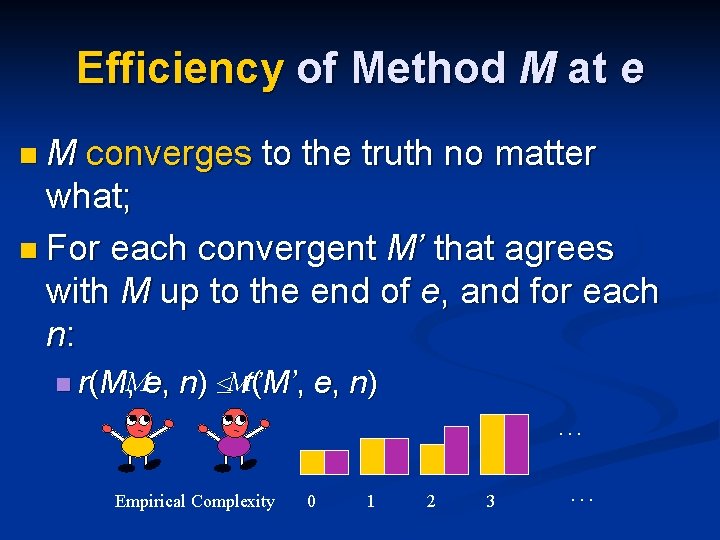
Efficiency of Method M at e n. M converges to the truth no matter what; n For each convergent M’ that agrees with M up to the end of e, and for each n: n r(M, Me, n) M’ r(M’, e, n). . . Empirical Complexity 0 1 2 3 . . .
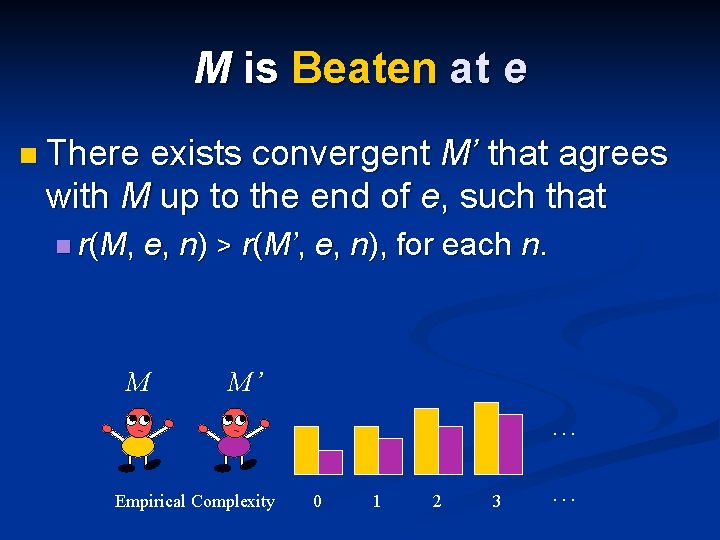
M is Beaten at e n There exists convergent M’ that agrees with M up to the end of e, such that n r(M, e, n) > r(M’, e, n), for each n. M M’. . . Empirical Complexity 0 1 2 3 . . .
Basic Idea n Ockham efficiency: Nature can force arbitary, convergent M to produce the successive answers down an effect path arbitrarily late, so stalwart, Ockham solutions are efficient.
Basic Idea n Unique Ockham efficiency: A violator of Ockham’s razor or stalwartness can be forced into an extra retraction or a late retraction at the time of the violation, so the violator is beaten by each stalwart, Ockham solution.
Ockham Efficiency Theorem Let M be a solution. n The following are equivalent: n M is henceforth Ockham and stalwart; n M is henceforth efficient; n M is henceforth never beaten. n
Some Applications n n n Polynomial laws Conservation laws Causal networks
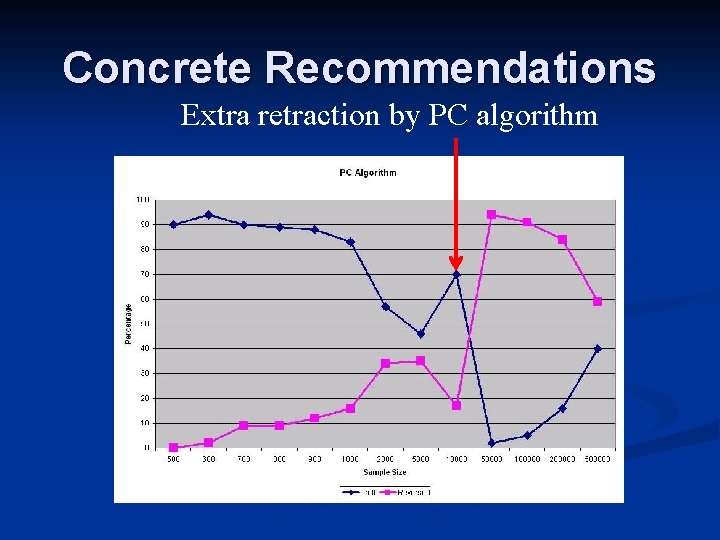
Concrete Recommendations Extra retraction by PC algorithm
Generalizations n n n Generalized Simplicity Bayesian retractions Mixed Strategies n Times of retractions in chance n Expected retraction times Drop the no short paths assumption… Retractions weighted by content… Statistical inference…
Conclusions Ockham’s razor is necessary for staying on the straightest path to the true theory but does not point at the true theory. n A priori justification---no evasions or circles are required. n Analogous to computational complexity theory. n
IV. Simplicity
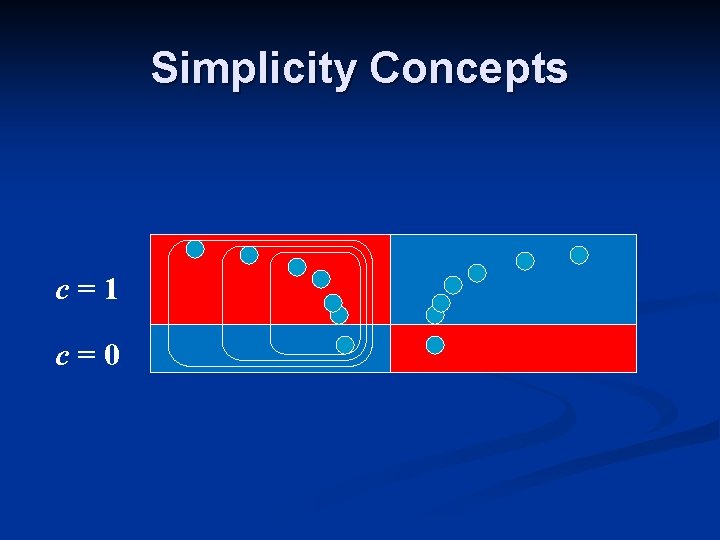
Approach n Empirical complexity reflects nested problems of induction posed by the problem. n Hence, simplicity is question-relative but topologically invariant.
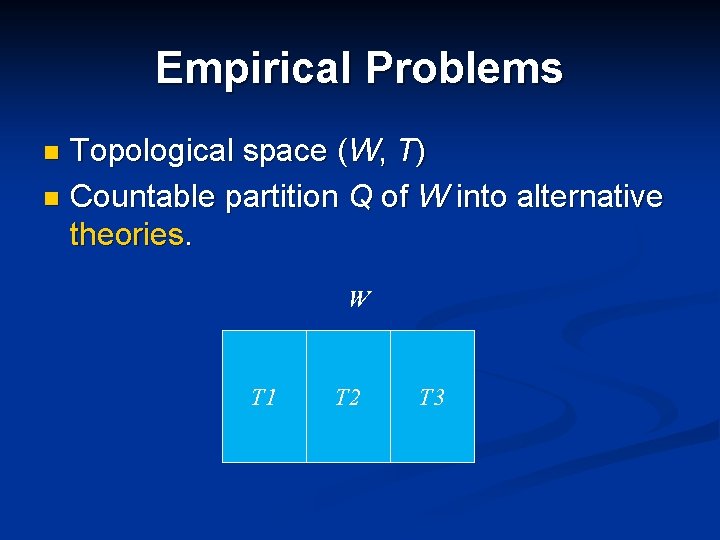
Empirical Problems Topological space (W, T) n Countable partition Q of W into alternative theories. n W T 1 T 2 T 3
Why Topology? n Topology is the pure mathematics of (ideal) verifiability. n Proof: The tautology and contradiction are verifiable; n If A, B are verifiable, A & B is verifiable; n If A 1, A 2, … are verifiable, A 1 v A 2 v… is verifiable. n
Simplicity Concepts c=1 c=0
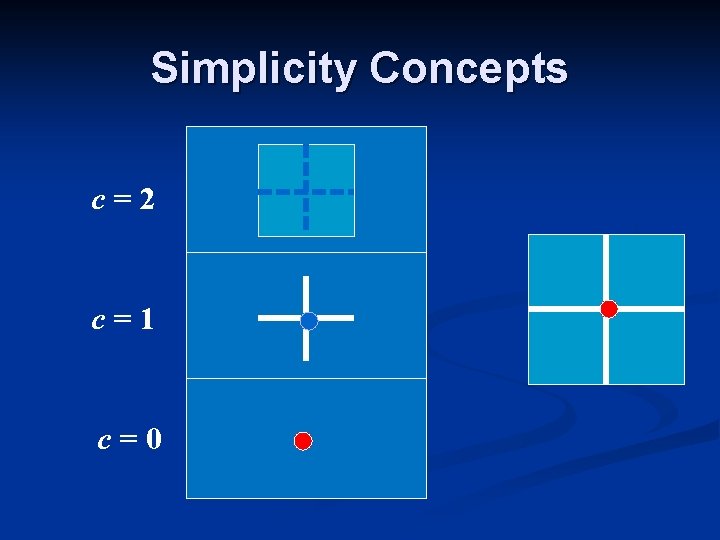
Simplicity Concepts c=2 c=1 c=0
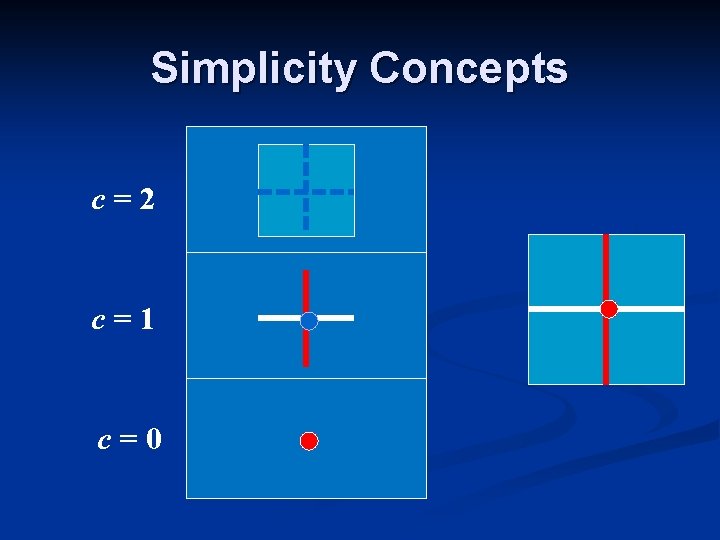
Simplicity Concepts c=2 c=1 c=0
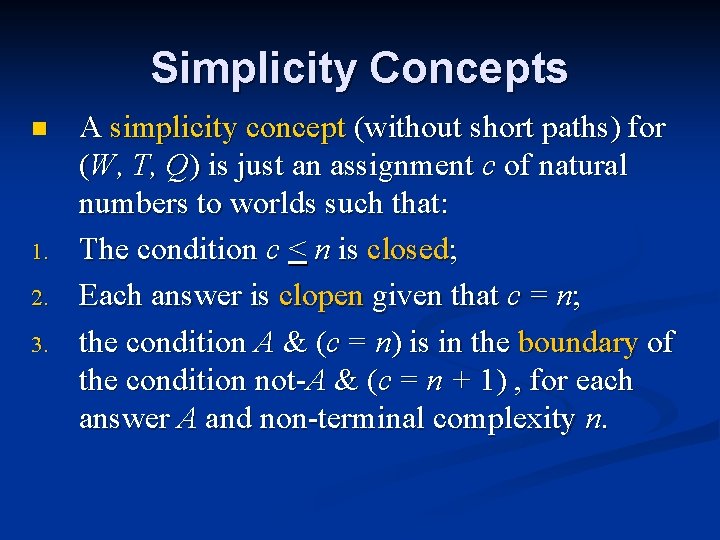
Simplicity Concepts n 1. 2. 3. A simplicity concept (without short paths) for (W, T, Q) is just an assignment c of natural numbers to worlds such that: The condition c < n is closed; Each answer is clopen given that c = n; the condition A & (c = n) is in the boundary of the condition not-A & (c = n + 1) , for each answer A and non-terminal complexity n.
Virtues n n Can still prove the Ockham efficiency theorem. Grounds simplicity in the logic of the question. Topologically invariant---grue-proof relative to question. Generalizes dimension---works for continuous and discrete spaces.
AGM Belief Revision n n No induction without refutation. After refutation, almost anything goes. Greedy---leaps to new theory immediately. No concern with truth-conduciveness. Not much like science or even standard Bayesians
Stalwart Ockham Method n n Can delay expansion to new Ockham theory after a surprise, as a Bayesian would. Converges to truth with optimal efficiency. Scientifically natural. More like Bayesian with standard prior.
V. Bayesian Efficiency
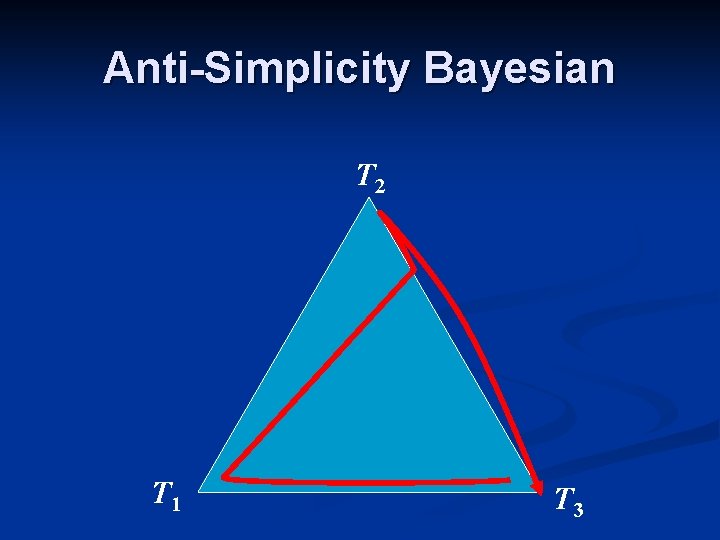
Anti-Simplicity Bayesian T 2 T 1 T 3
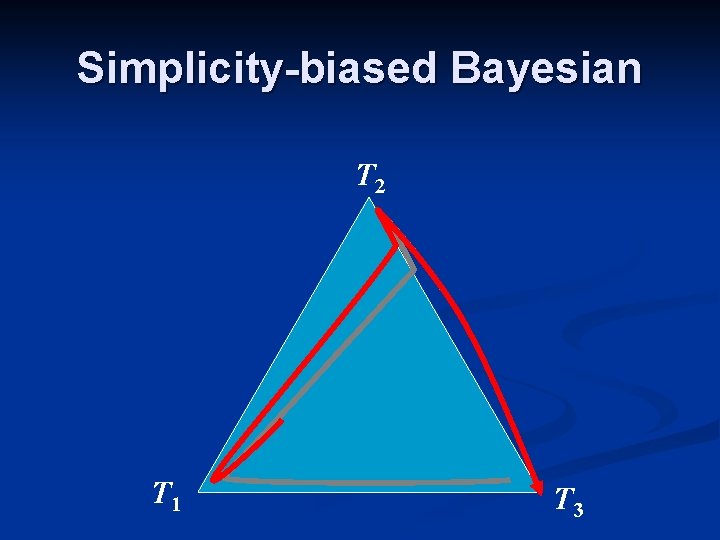
Simplicity-biased Bayesian T 2 T 1 T 3
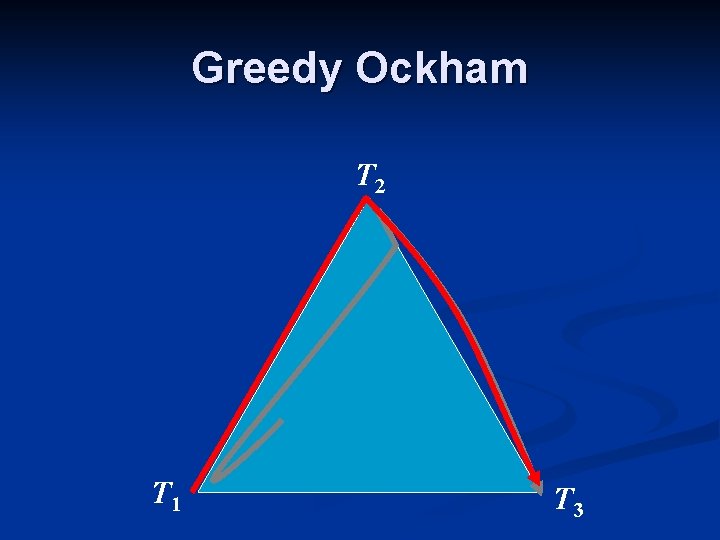
Greedy Ockham T 2 T 1 T 3
Focus on Retractions n n Euclidean distance measures retractions + expansions. Charge for retractions only.
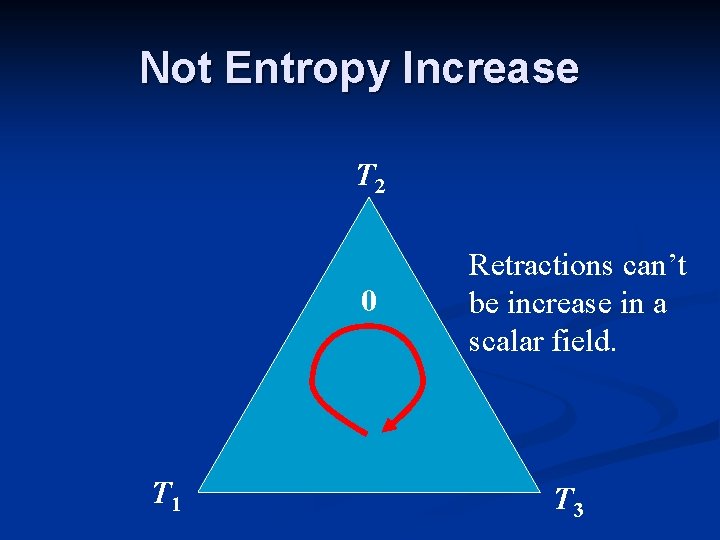
Not Entropy Increase T 2 0 T 1 Retractions can’t be increase in a scalar field. T 3
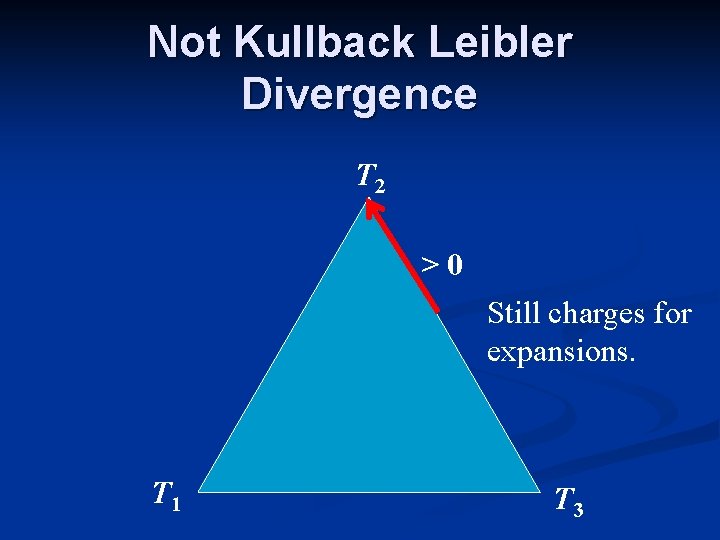
Not Kullback Leibler Divergence T 2 >0 Still charges for expansions. T 1 T 3
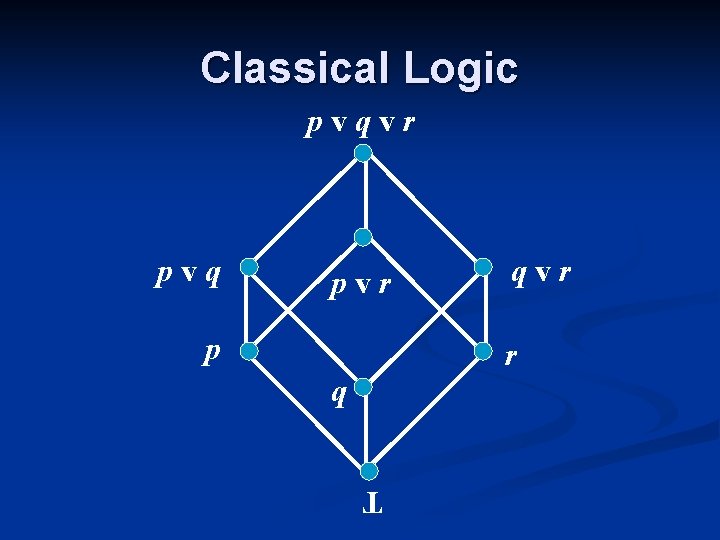
Classical Logic pvqvr pvq pvr p qvr r q T
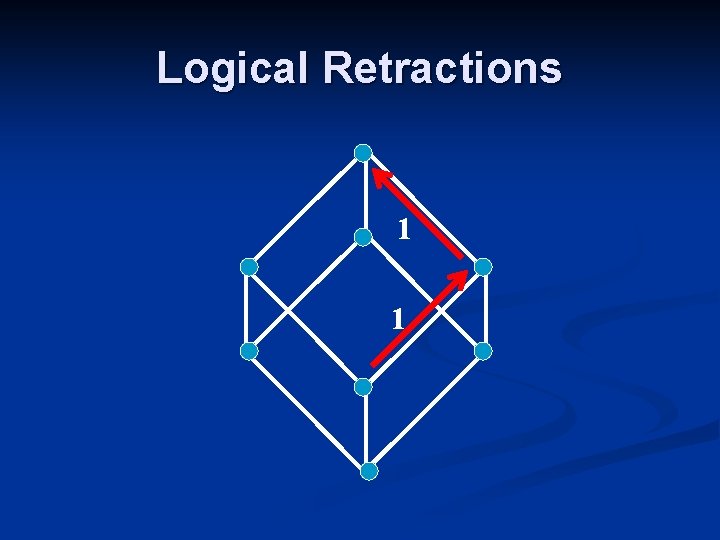
Logical Retractions 1 1
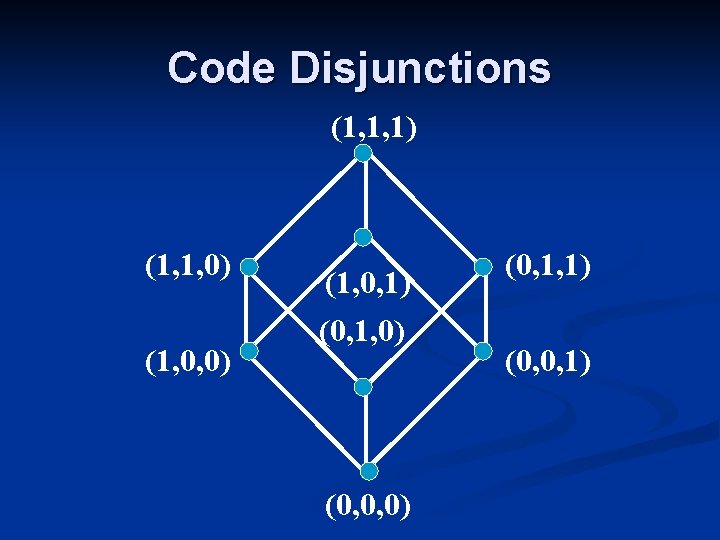
Code Disjunctions (1, 1, 1) (1, 1, 0) (1, 0, 1) (0, 1, 0) (0, 0, 0) (0, 1, 1) (0, 0, 1)
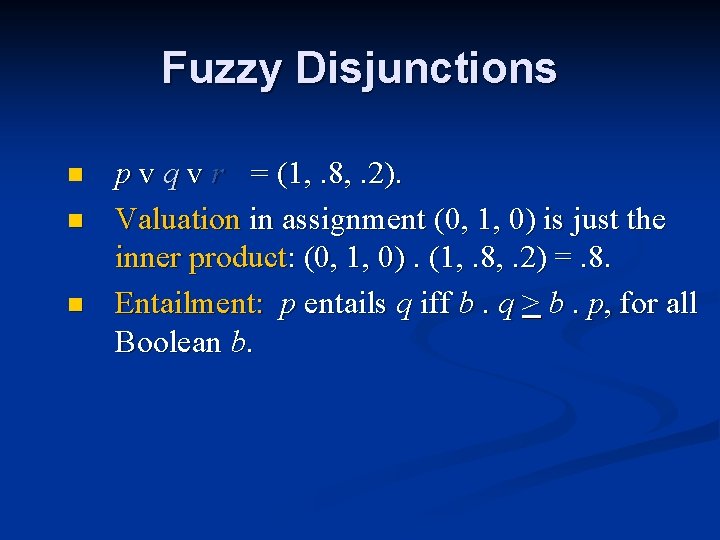
Fuzzy Disjunctions n n n p v q v r = (1, . 8, . 2). Valuation in assignment (0, 1, 0) is just the inner product: (0, 1, 0). (1, . 8, . 2) =. 8. Entailment: p entails q iff b. q > b. p, for all Boolean b.
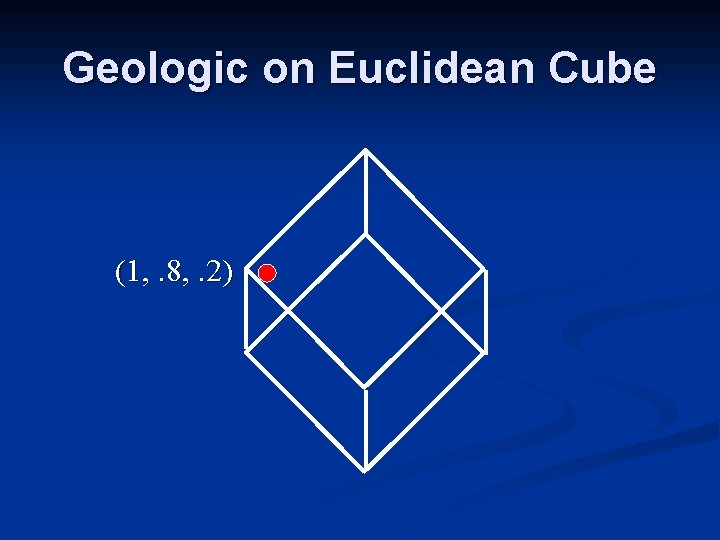
Geologic on Euclidean Cube (1, . 8, . 2)
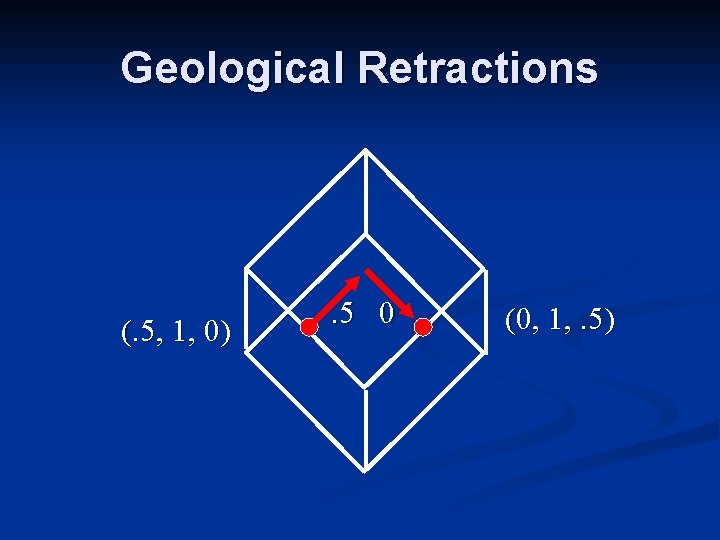
Geological Retractions (. 5, 1, 0) . 5 0 (0, 1, . 5)
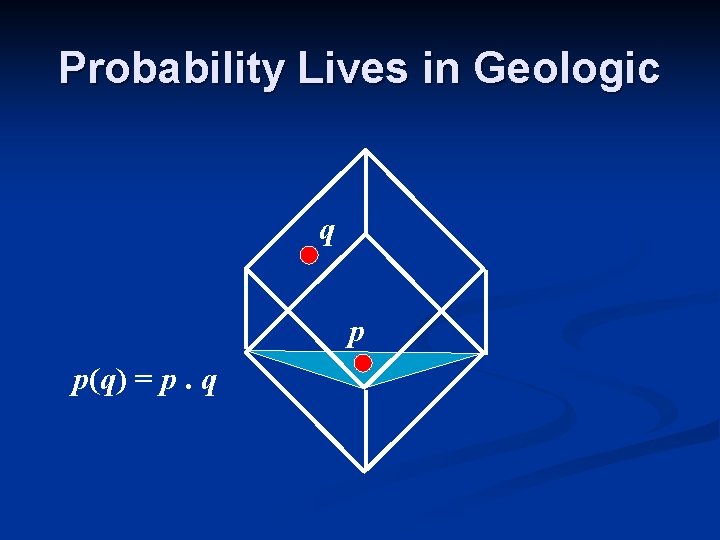
Probability Lives in Geologic q p p(q) = p. q
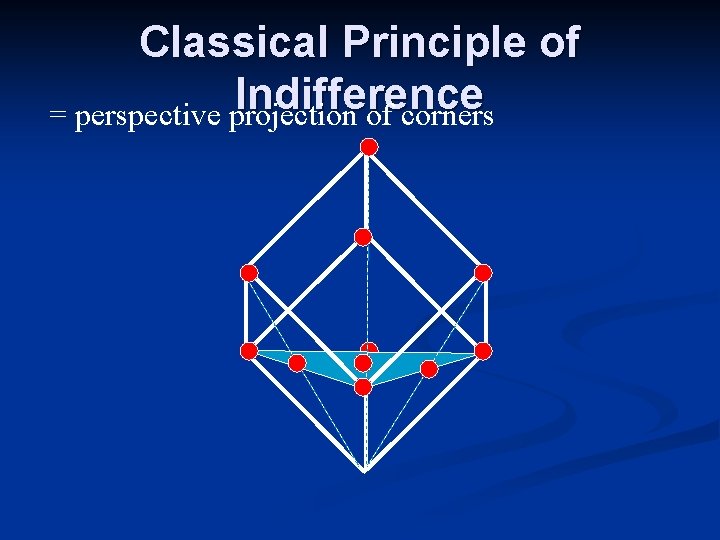
Classical Principle of Indifference = perspective projection of corners
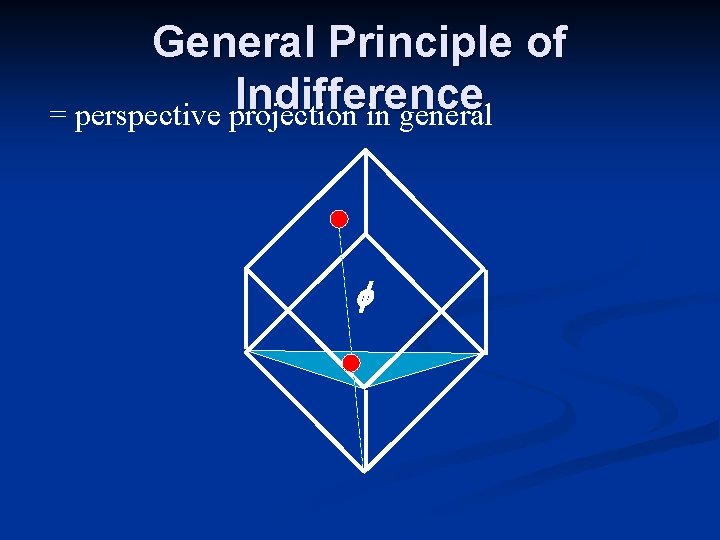
General Principle of Indifference = perspective projection in general f
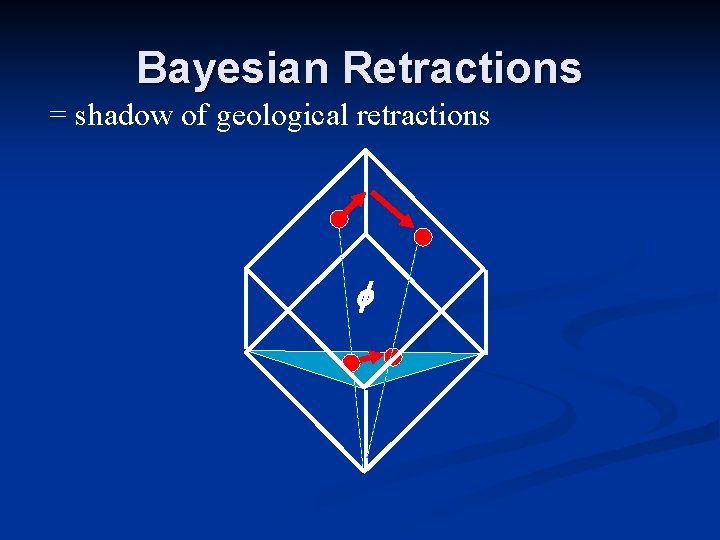
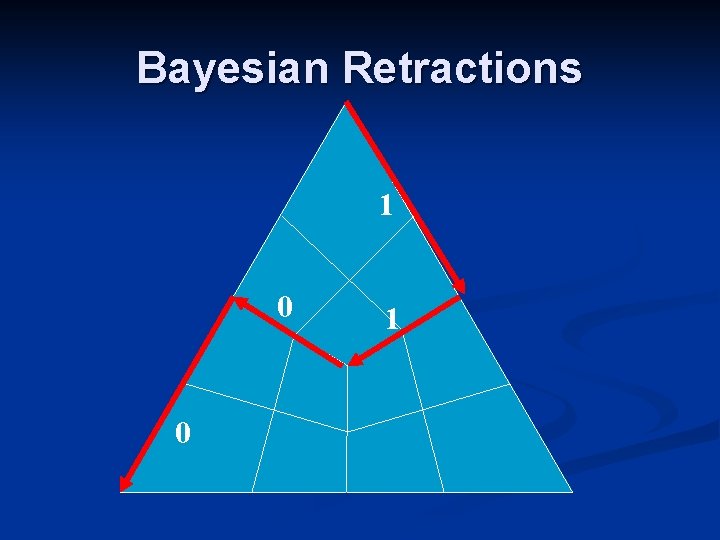
Bayesian Retractions = shadow of geological retractions f
Bayesian Retractions 1 0 0 1
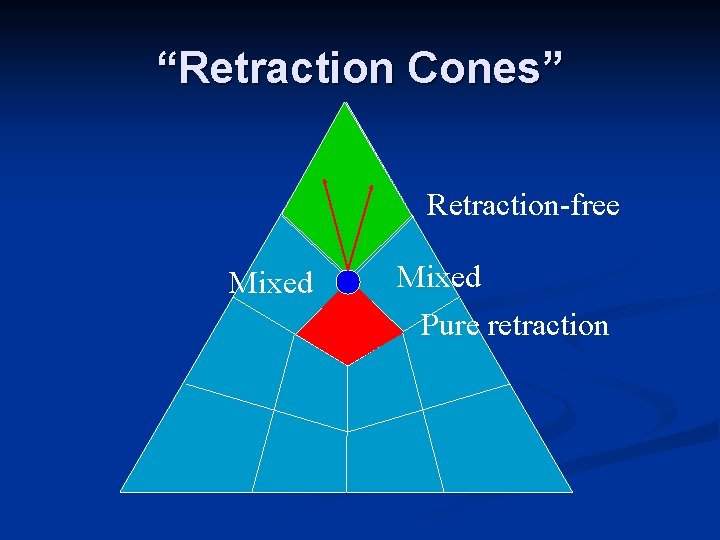
“Retraction Cones” Retraction-free Mixed Pure retraction
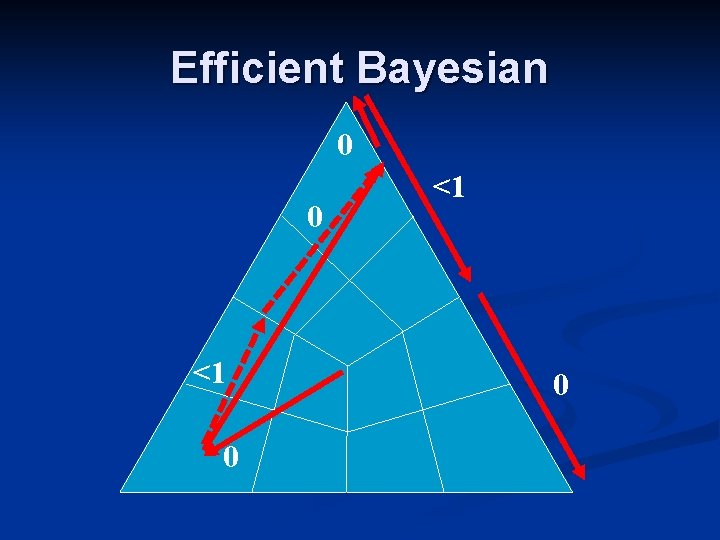
Efficient Bayesian 0 0 <1 0