What sees is the mind Elkins Universe of
- Slides: 22
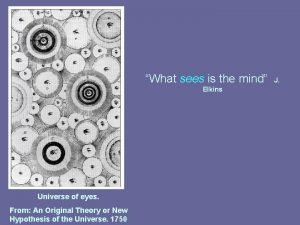
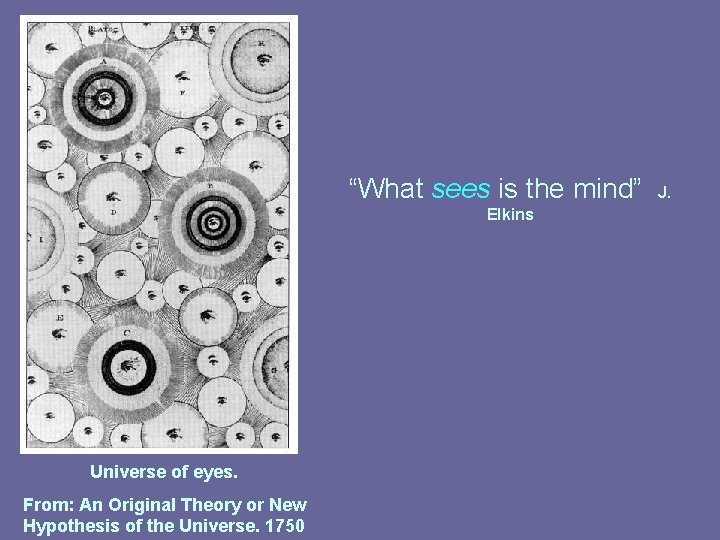
“What sees is the mind” Elkins Universe of eyes. From: An Original Theory or New Hypothesis of the Universe. 1750 J.
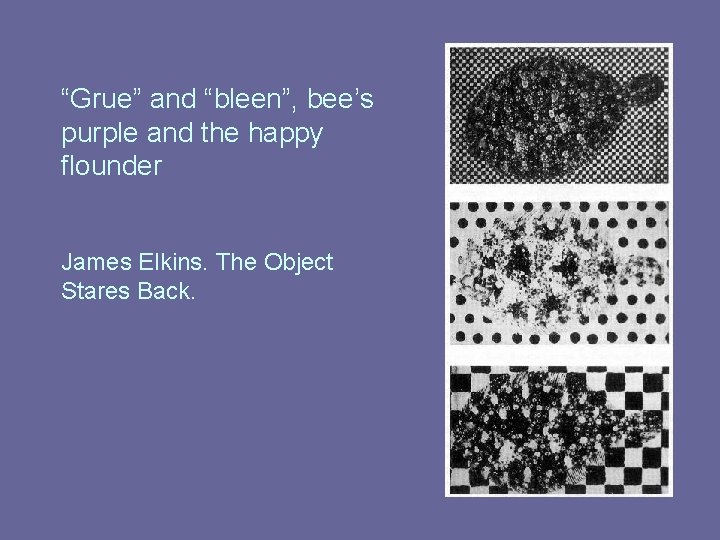
“Grue” and “bleen”, bee’s purple and the happy flounder James Elkins. The Object Stares Back.
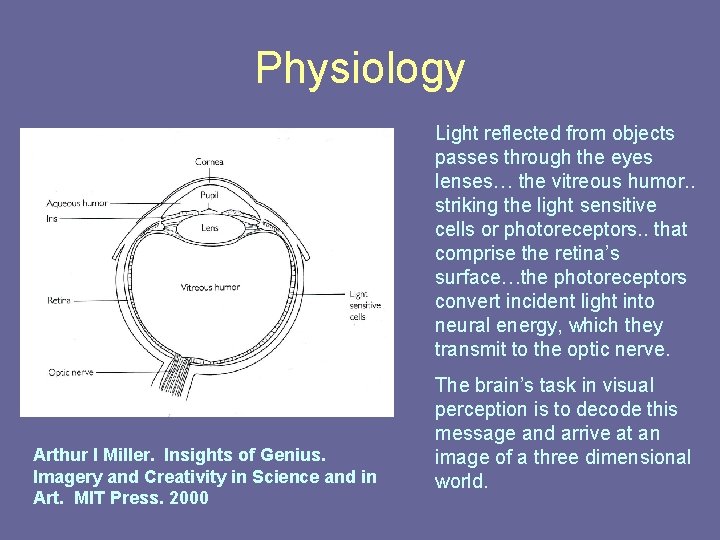
Physiology Light reflected from objects passes through the eyes lenses… the vitreous humor. . striking the light sensitive cells or photoreceptors. . that comprise the retina’s surface…the photoreceptors convert incident light into neural energy, which they transmit to the optic nerve. Arthur I Miller. Insights of Genius. Imagery and Creativity in Science and in Art. MIT Press. 2000 The brain’s task in visual perception is to decode this message and arrive at an image of a three dimensional world.
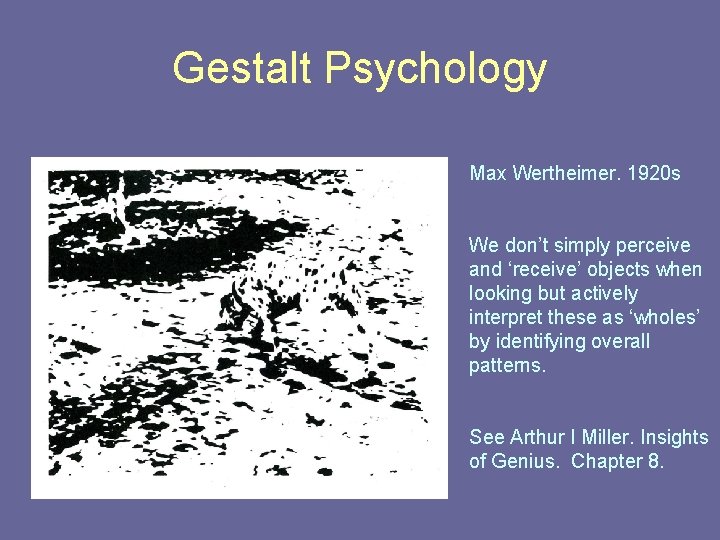
Gestalt Psychology Max Wertheimer. 1920 s We don’t simply perceive and ‘receive’ objects when looking but actively interpret these as ‘wholes’ by identifying overall patterns. See Arthur I Miller. Insights of Genius. Chapter 8.
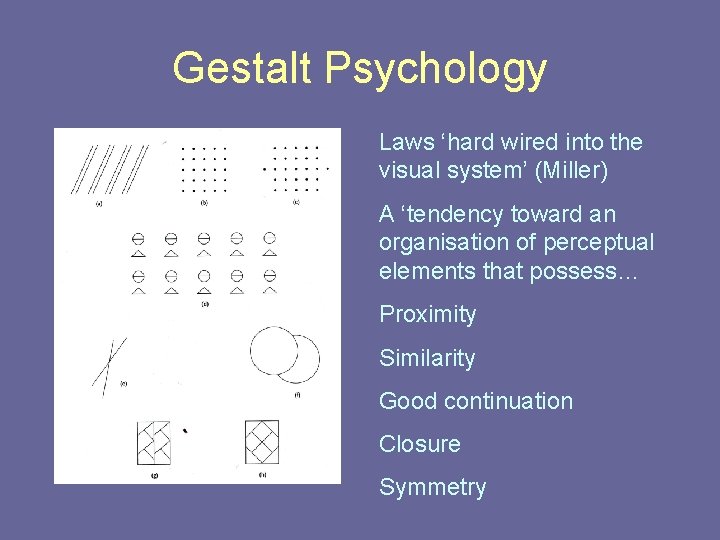
Gestalt Psychology Laws ‘hard wired into the visual system’ (Miller) A ‘tendency toward an organisation of perceptual elements that possess… Proximity Similarity Good continuation Closure Symmetry
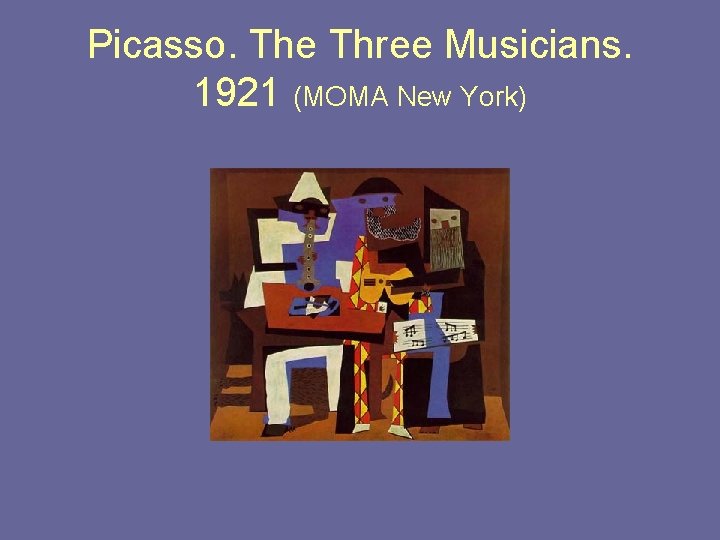
Picasso. The Three Musicians. 1921 (MOMA New York)
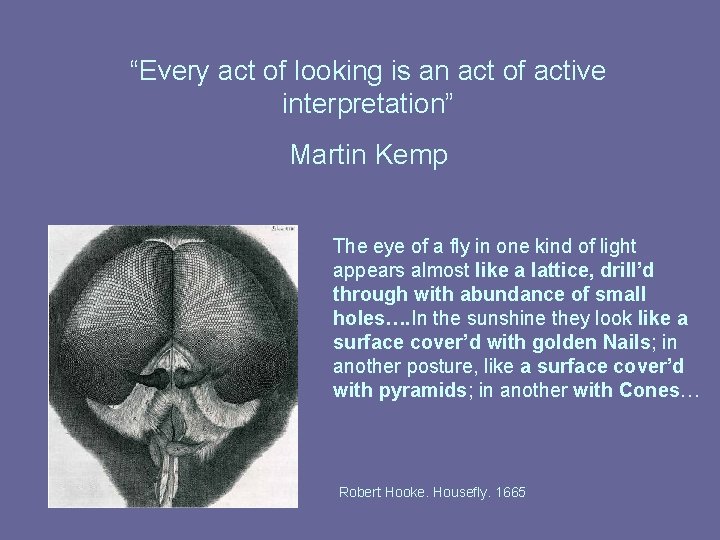
“Every act of looking is an act of active interpretation” Martin Kemp The eye of a fly in one kind of light appears almost like a lattice, drill’d through with abundance of small holes…. In the sunshine they look like a surface cover’d with golden Nails; in another posture, like a surface cover’d with pyramids; in another with Cones… Robert Hooke. Housefly. 1665
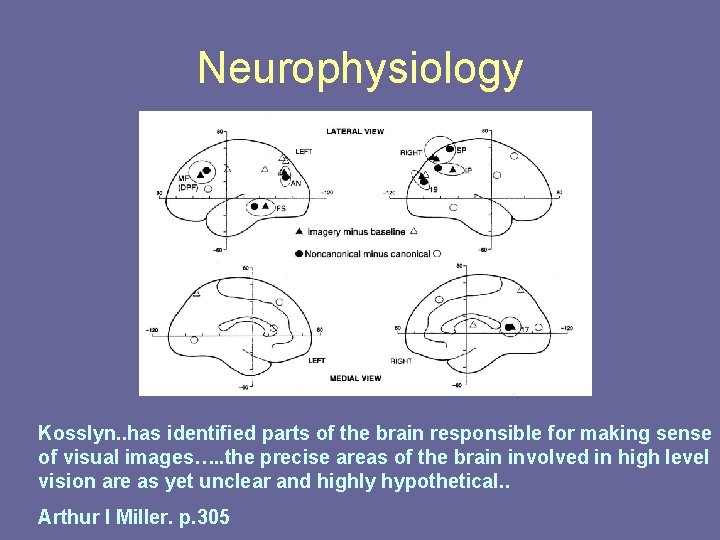
Neurophysiology Kosslyn. . has identified parts of the brain responsible for making sense of visual images…. . the precise areas of the brain involved in high level vision are as yet unclear and highly hypothetical. . Arthur I Miller. p. 305
“we have – through a hundred years of photography and two decades of film – been enormously enriched in this respect. We may say that we see the world with entirely different eyes” Laszlo Moholy-Nagy. 1925
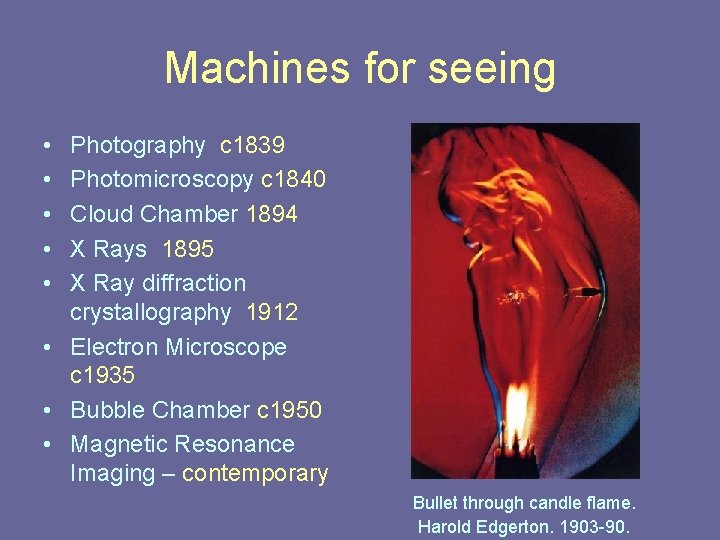
Machines for seeing • • • Photography c 1839 Photomicroscopy c 1840 Cloud Chamber 1894 X Rays 1895 X Ray diffraction crystallography 1912 • Electron Microscope c 1935 • Bubble Chamber c 1950 • Magnetic Resonance Imaging – contemporary Bullet through candle flame. Harold Edgerton. 1903 -90.
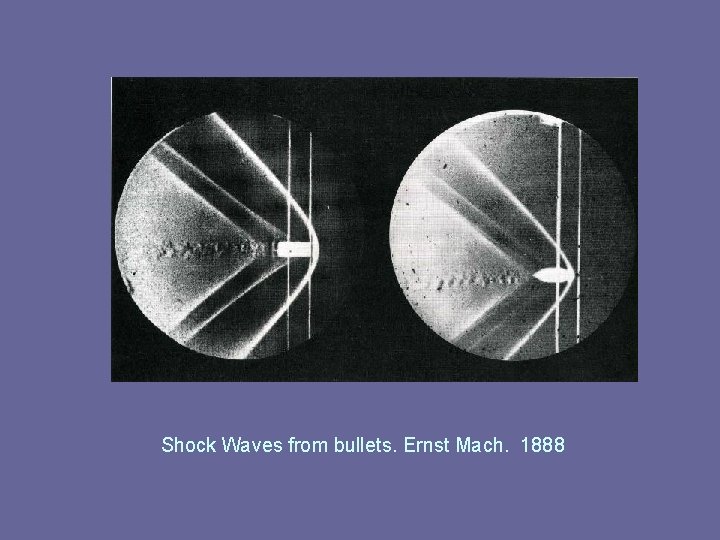
Shock Waves from bullets. Ernst Mach. 1888
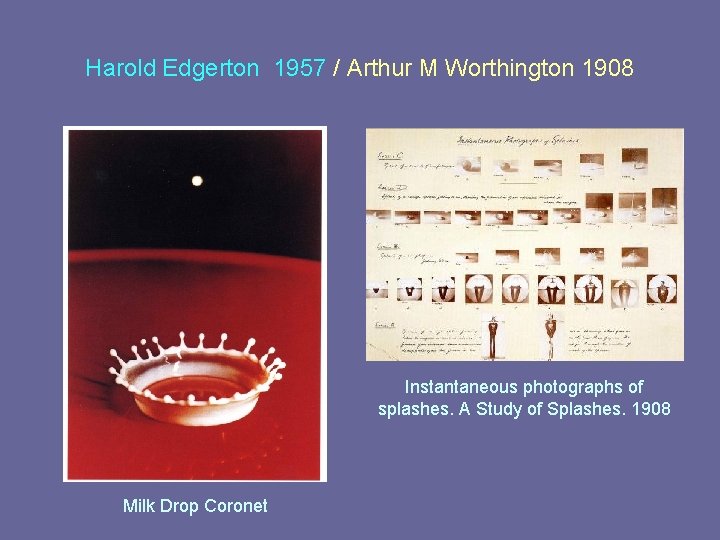
Harold Edgerton 1957 / Arthur M Worthington 1908 Instantaneous photographs of splashes. A Study of Splashes. 1908 Milk Drop Coronet
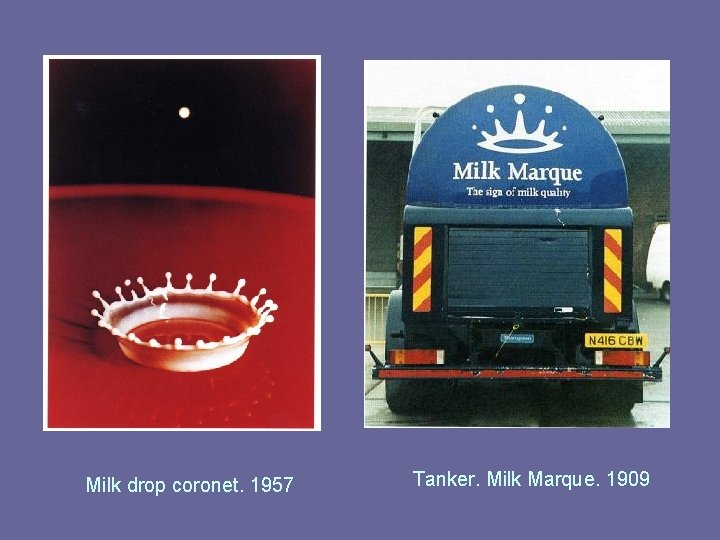
Milk drop coronet. 1957 Tanker. Milk Marque. 1909
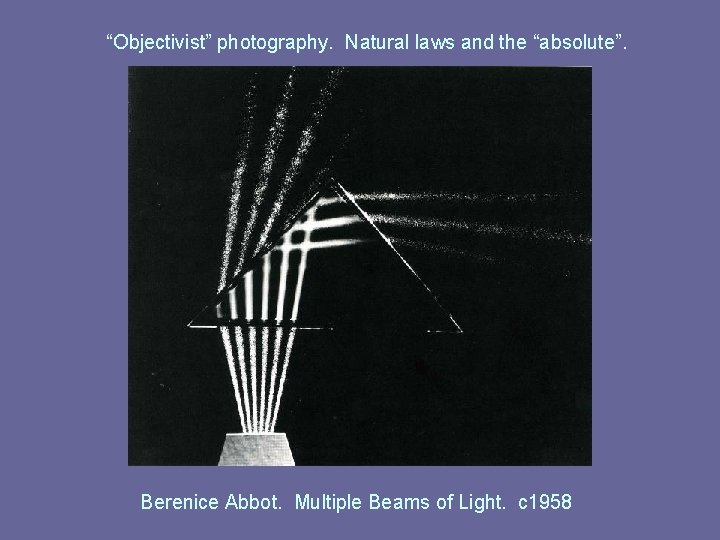
“Objectivist” photography. Natural laws and the “absolute”. Berenice Abbot. Multiple Beams of Light. c 1958
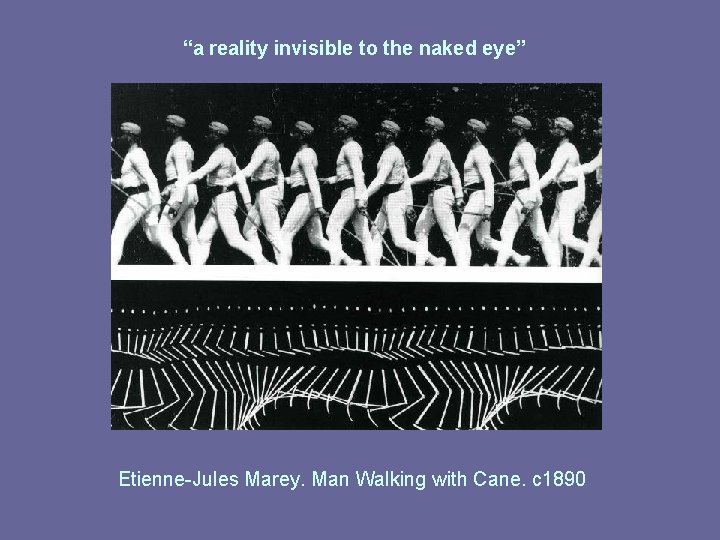
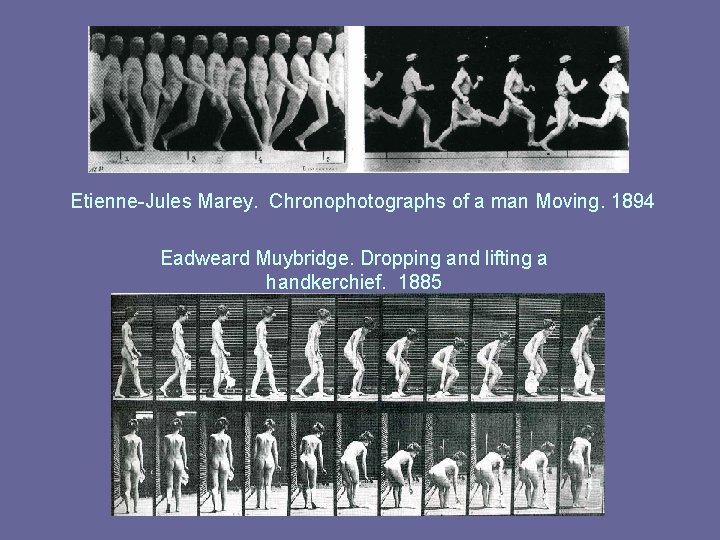
“a reality invisible to the naked eye” Etienne-Jules Marey. Man Walking with Cane. c 1890
Etienne-Jules Marey. Chronophotographs of a man Moving. 1894 Eadweard Muybridge. Dropping and lifting a handkerchief. 1885
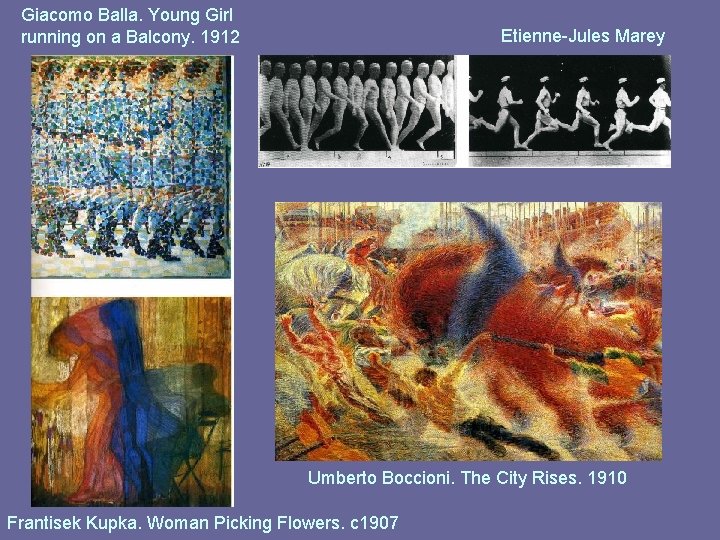
Giacomo Balla. Young Girl running on a Balcony. 1912 Etienne-Jules Marey Umberto Boccioni. The City Rises. 1910 Frantisek Kupka. Woman Picking Flowers. c 1907
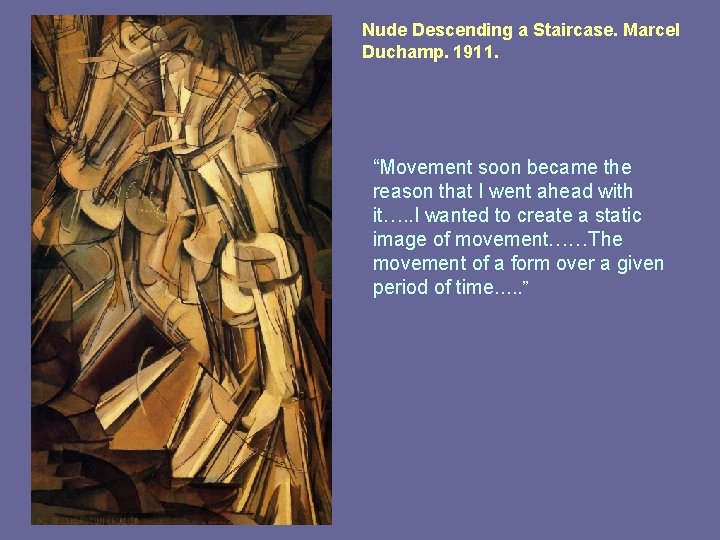
Nude Descending a Staircase. Marcel Duchamp. 1911. “Movement soon became the reason that I went ahead with it…. . I wanted to create a static image of movement……The movement of a form over a given period of time…. . ”
Philosophy • Maurice Merleau Ponty (1908 -61) • The Phenomenology of Perception. 1945 • ‘I am not the outcome or meeting point of numerous causal agencies…. . I cannot conceive of myself as nothing but a bit of the world, a mere object of biological, psychological or sociological investigation…. I am the absolute source’
The Phenomenology of Perception – Merleau-Ponty – pp 235 & 239 • Our own body is in the world as the heart is in the organism: it keeps the visual spectacle constantly alive, it breathes life into it. . . . We shall need to reawaken our experience of the world as it appears to us in so far as we are in the world through our body…. by thus remaking contact with the body and with the world, we shall also rediscover ourself….
‘The landscape thinks itself in me and I am its consciousness’ Cezanne
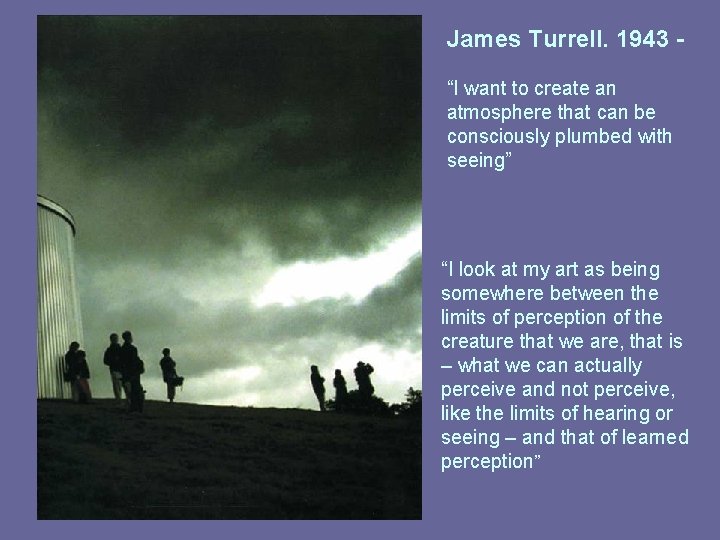
James Turrell. 1943 “I want to create an atmosphere that can be consciously plumbed with seeing” “I look at my art as being somewhere between the limits of perception of the creature that we are, that is – what we can actually perceive and not perceive, like the limits of hearing or seeing – and that of learned perception”